
Written By: Dean Shali
Fact Checked By: Sabré Cook
Reviewed By: Tamara Warren
Basically, the wheel can look really great on your car and still it can be completely wrong for your suspension side.
As, most of the drivers only thinks that wheel fitment is only about having stylish, bigger rims, wider tires or getting more aggressive stance.
But, you need to make sure about the wheel measurement as that literally controls how your entire vehicle behaves on the road: which is known as “WHEEL OFFSET”.
Even, few millimeters of difference can completely change the way a car steers, corners, brakes and handles the bumps.
As well as, it determines whether your tires clear the suspension safely or they’ll just scrape against the fenders every time you turn the vehicle.
Not only this, it also affects the wheel bearings pressure, steering geometry, tire wear patterns, fuel efficiency and even highway stability at the high speeds as well.
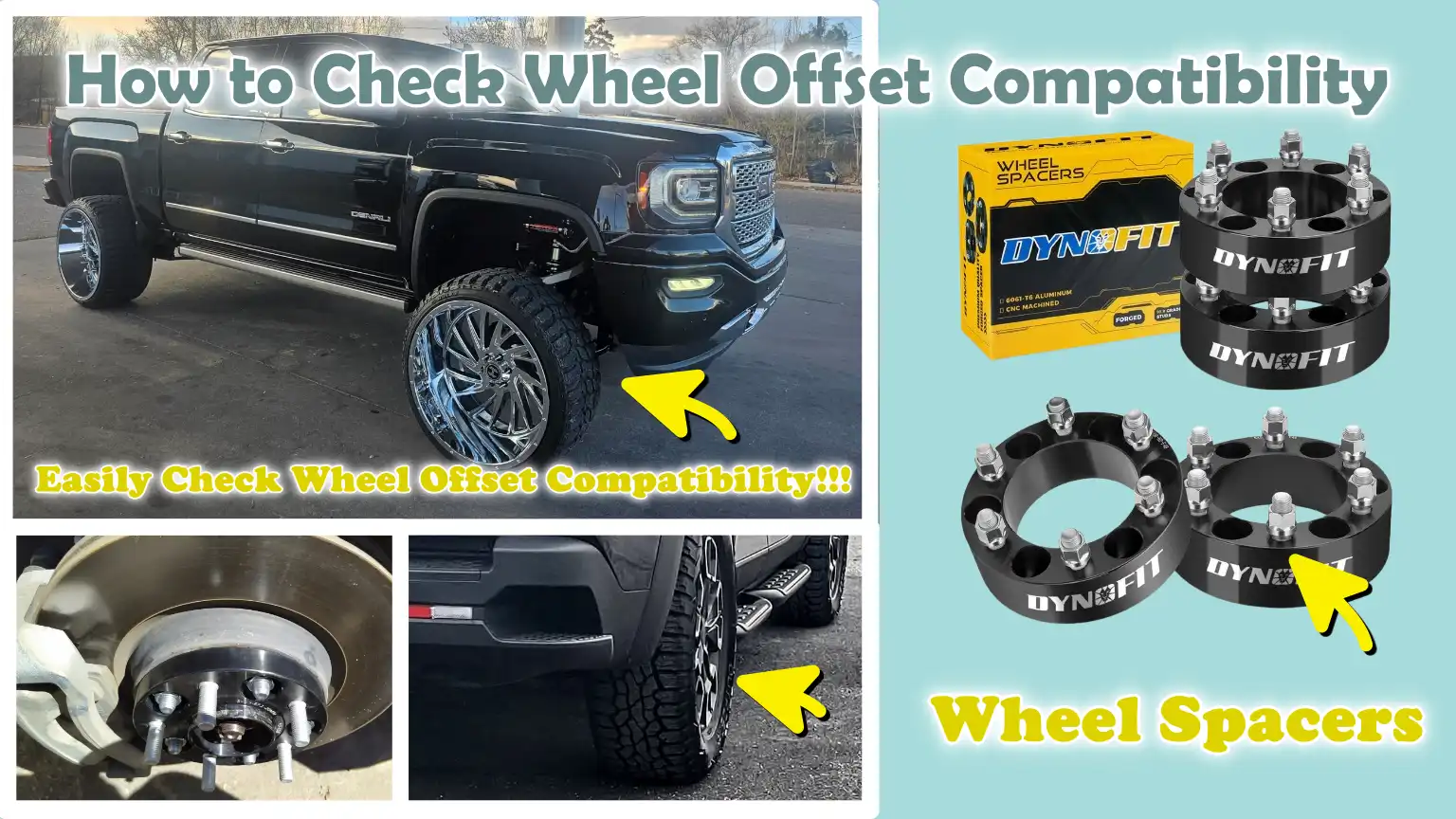
That’s why, in this guide we have shown you How to Check Wheel Offset Compatibility so that you can understand about the offset and carefully check the clearance so that you can have everything in place.
Know, What is Wheel Offset?
Wheel offset is one of the most critical measurements in wheel fitment; yet, many drivers do not fully understand its impact on safety, handling and daily driving.
It determines the wheel’s positioning relative to your vehicle’s suspension, brakes and fenders.
Even if two wheels share the exact same diameter and width, differing offsets can mean that one wheel fits perfectly, while the other rubs against a component or causes steering issues.
Wheel offset directly influences how far inward a wheel sits toward the suspension components, or how far outward it protrudes toward the fender lip.
Because modern vehicles are designed with precise suspension geometry, even a slight deviation in offset can affect tire clearance, steering response, wheel bearing load and, over the long term, component wear.
Understanding wheel offset is crucial before installing aftermarket wheels, as aesthetics alone do not guarantee a safe and proper fitment.
1. Know All About Wheel Offset
Wheel offset is the measured distance between the wheel’s mounting surface and the wheel’s true centerline.
The mounting surface is the flat portion of the wheel that makes contact with the vehicle’s hub.
The centerline represents the exact midpoint of the wheel’s total width.
Offset is typically measured in millimeters and is often stamped on the back of the wheel.
This measurement indicates whether the wheel sits closer to the suspension components or protrudes further outward toward the fender.
As offset alters the wheel’s positioning without changing its diameter, it plays a pivotal role in achieving a proper fitment.
One wheel may look exactly like another, but due to differing offsets, significant clearance issues can arise.
Manufacturers calculate this measurement with great precision, as it influences how the wheel aligns with the suspension system and how forces are transmitted during driving.
2. A Simple Explanation of Wheel Offset
The easiest way to understand wheel offset is to think of it as the specific position where the wheel sits on your vehicle.
It determines whether the wheel sits deeper inside the wheel arch or protrudes outward toward the fender.
If the mounting point shifts closer to the front face of the wheel, the wheel moves inward.
Conversely, if the mounting point shifts toward the rear face, the wheel moves outward.
This subtle alteration changes the available clearance around the brakes, struts, control arms and fenders.
This is why two wheels of the exact same size can perform very differently once installed on a vehicle.
Offset is not merely about vehicle aesthetics; it impacts steering feel, suspension performance and how the tires make contact with the road, among other factors.
Therefore, it is one of the most critical considerations to keep in mind when selecting wheels.
3. The Distance Between the Wheel’s Mounting Surface and Centerline
The actual offset measurement is derived by comparing the wheel’s centerline to its hub mounting pad.
To determine the centerline, the total width of the wheel is measured and divided into two equal halves.
The mounting surface is the specific area where the wheel bolts directly onto the hub.
The distance between these two points establishes the offset value.
If the mounting pad is positioned exactly in the center, the wheel is said to have zero offset.
If the mounting pad is located toward the outer side of the wheel, it has a positive offset.
Conversely, if it is situated toward the inner side, it has a negative offset.
This distance determines how the wheel fits within the vehicle’s wheel well and impacts all surrounding components, including the suspension, brake parts and body panels.
Even a slight variation in this distance can completely alter the way the wheel fits.
4. Types of Wheel Offset
Wheel offset is generally categorized into three types: positive offset, negative offset and zero offset.
These categories describe the position of the mounting pad relative to the wheel’s centerline.
Each type alters the way the wheel fits onto the vehicle, thereby affecting both its functional performance and its visual appearance.
Nowadays, positive offset is predominantly used in passenger cars, as it integrates well with modern suspension designs and keeps the wheels securely tucked within the fenders.
Negative offset is more common in off-road vehicles and certain specialized setups, as it pushes the wheels outward, thereby widening the vehicle’s stance.
Zero offset is less frequently faced, although it can still be found in certain specific types of vehicles.
Selecting the correct type is crucial, as choosing the wrong category can lead to issues such as wheel rubbing, compromised handling and excessive stress on steering components.
Positive Offset
Positive offset means that the wheel’s mounting surface is positioned closer to the outer face of the wheel.
Consequently, the majority of the wheel is pushed inward, toward the suspension system.
Positive offset is predominantly used in modern sedans, SUVs and crossovers, as it facilitates better packaging, supports front-wheel-drive layouts and aids in maintaining proper suspension alignment.
Positive offset centers the wheel beneath the vehicle’s body while simultaneously providing ample clearance for brake components and steering movement.
If the positive offset is excessive, the wheel may sit too far inward, potentially causing it to rub against the struts, brake calipers, or the inner walls of the wheel well.
This can also reduce turning clearance and lead to unwanted contact during suspension compression.
The correct positive offset ensures smooth handling and positions the wheel precisely in accordance with the manufacturer’s original design specifications.
Negative Offset
Negative offset signifies that the mounting surface is situated closer to the inner face of the wheel.
As a result, the wheel is pushed outward, giving the vehicle a wider stance.
Negative offset is frequently observed in lifted trucks, older rear-wheel-drive vehicles and off-road setups where an increased track width is desired.
In some instances, this can enhance the vehicle’s aesthetic appeal and improve lateral stability; however, it also places increased stress on the wheel bearings, hubs and steering components.
When the wheel protrudes too far outward, it can impose excessive loads on the suspension components, particularly during cornering and heavy braking.
Excessive negative offset can lead to contact with the fender and increase the risk of body damage from road debris.
While this may appear aggressive visually, negative offset should be utilized with caution to avoid mechanical complications.
Zero Offset
Zero offset signifies that the wheel’s mounting surface is positioned exactly at the center of the wheel.
This results in equal wheel depth on both sides of the hub.
The wheel remains balanced between the suspension components and the outer fender.
Zero offset is less common in modern factory-built vehicles, although it may be utilized in certain specialized wheels, vintage cars and specific high-performance applications.
While it creates a symmetrical wheel position, this does not imply that it is the correct choice for every vehicle.
As modern suspension systems are engineered around specific offset values, replacing factory-installed positive-offset wheels with zero-offset wheels can result in significant alterations to steering geometry and clearance.
Even if the wheel physically bolts onto the hub, the overall fitment may still be incorrect.
5. Why Do Manufacturers Use Specific Offsets?
Automobile manufacturers invest years in designing wheel offsets to ensure a perfect match with the suspension system, steering system, brake package and body dimensions.
Offset is selected not merely to ensure that the wheel fits, but also to maintain safe driving dynamics.
Engineers carefully consider factors such as tire clearance, suspension travel, brake cooling, steering precision, load distribution and long-term durability.
Factory wheel offset helps to correctly distribute forces during braking, acceleration and cornering.
It also ensures that the tires do not come into contact with suspension components throughout the full range of steering lock and suspension compression.
Making significant changes to the offset can disrupt this balance and lead to undesirable side effects such as: bump steer, premature bearing wear, or tire rubbing.
For this reason, matching the factory offset or staying within the specified range is generally the safest approach.
Suspension Geometry
Suspension geometry refers to the precise relationship between the wheels, steering components and suspension arms.
Wheel offset plays a direct role in this system, as it alters the point where the tire makes contact with the road relative to the suspension’s pivot points.
When a significant change is made to the offset, the steering angles and load paths also shift.
This can adversely affect alignment, handling precision and cornering stability.
Suspension components are designed to accommodate a specific wheel position; therefore, shifting the wheel inward or outward alters the way these components interact with one another.
An incorrect offset can result in uneven suspension travel and place excessive stress on the joints.
Maintaining the correct offset preserves the factory suspension geometry and ensures that the vehicle performs exactly as it was designed to.
Steering Stability
Wheel offset impacts steering stability because it alters the scrub radius, the distance between the tire’s contact patch and the steering axis.
This affects the feel of the steering wheel, particularly when turning, braking, or driving on uneven roads.
If the offset is incorrect, the steering may feel heavy, light, unstable, or overly sensitive to minor road imperfections.
Drivers may experience the vehicle pulling to one side, wandering, or vibrating at highway speeds.
Steering systems are tuned for a specific wheel position; therefore, even a slight deviation in offset can compromise the vehicle’s handling.
The correct offset ensures reliable steering stability and instills greater confidence when cornering or navigating emergency situations.
Fender Clearance
Fender clearance refers to the space available between the tire and the vehicle’s exterior body panels.
Offset directly influences this clearance, as it determines how far outward the wheel protrudes.
A low offset can push the tire too close to the fender lip, potentially causing the tire to rub against the fender during turns, when the suspension compresses, or when carrying heavy loads.
This issue is further exacerbated when wider tires or lowered suspension systems are utilized.
The correct offset centers the wheel precisely within the wheel arch, providing ample room for tire movement while the vehicle is in motion.
Maintaining proper fender clearance helps protect the tires from damage and prevents them from rubbing against fender liners or bodywork.
Brake Fitment
Modern braking systems are larger than ever before, particularly in high-performance cars, trucks and SUVs.
Brake calipers require significant clearance within the wheel barrel and behind the spokes.
Here, the role of offset is crucial, as it alters the position of the wheel relative to the brake assembly.
If the wheel offset pushes the wheel too far inward, it may interfere with the brake caliper or other brake components.
This can compromise braking performance or generate dangerous friction.
Manufacturers select a specific wheel offset to ensure adequate clearance for the brakes while simultaneously maintaining proper geometry for the suspension system.
It is essential to verify offset compatibility when replacing wheels, as brake fitment issues are common with aftermarket wheels.
Load Distribution
Each wheel supports a portion of the vehicle’s weight, while also handling the forces generated during braking, cornering and road impacts.
Offset influences how these forces are distributed across the wheel bearings, hubs and suspension joints.
If the wheel protrudes too far outward, the stress placed on these components increases.
This can accelerate wear and tear on the wheel bearings and suspension parts.
Conversely, if the wheel is recessed too far inward, clearance-related issues may arise and the balance of load distribution can be disrupted.
Manufacturers select specific offsets to distribute loads evenly and minimize mechanical stress.
Proper load distribution enhances durability, ride comfort and overall safety, particularly during high-speed driving and heavy braking.
Understand, Why Wheel Offset Compatibility Is Really Important
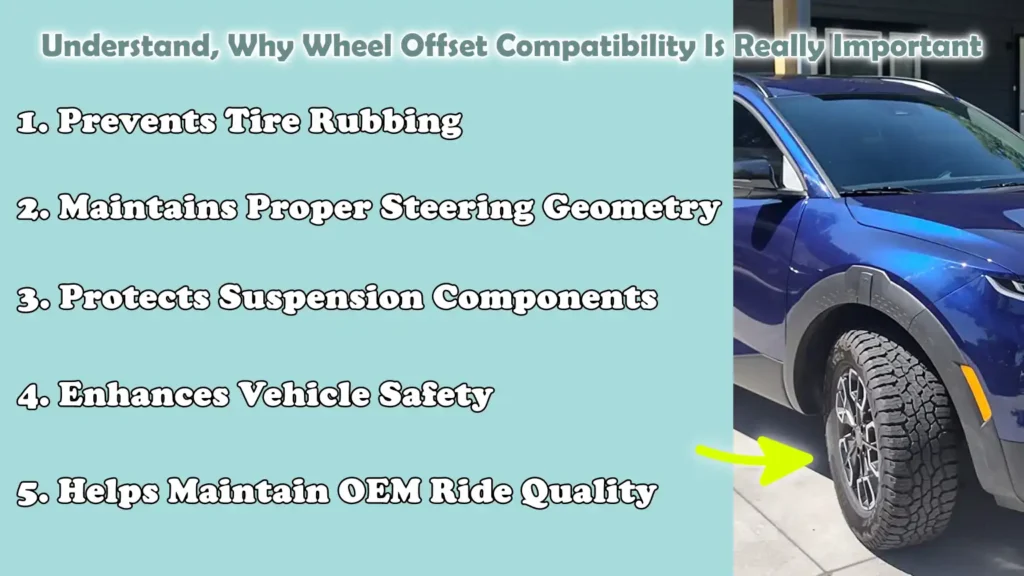
Wheel offset compatibility is crucial because it directly impacts how safely and correctly a wheel fits onto your vehicle.
Offset determines whether the wheel sits further inward, closer to suspension components, or further outward, closer to the fender.
Even a slight discrepancy in offset can lead to rubbing, steering-related issues, compromised handling and accelerated wear on critical components.
Many wheels may bolt on correctly, but this does not necessarily mean they are safely fitted.
Verifying offset compatibility helps protect your tires, suspension and overall driving safety.
1. Prevents Tire Rubbing
Correct wheel offset helps prevent tire rubbing by positioning the wheel correctly within the wheel arch.
If the offset is incorrect, the tire may make contact with the fender, suspension strut, or inner wheel well while turning or driving over uneven terrain.
Over time, this can result in rubbing noises, tire damage and wear on the body liner.
Tire rubbing is often more pronounced when carrying heavy loads or driving on rough roads.
The correct offset ensures that the tire has sufficient clearance to move freely during normal suspension travel.
2. Maintains Proper Steering Geometry
Wheel offset influences steering geometry, which dictates how the vehicle responds when you turn the steering wheel.
If a wheel is positioned too far inward or outward, it alters the steering angle and the tire’s contact point with the road surface.
This can cause the steering to feel unstable, heavy, or less precise.
Drivers may perceive that the vehicle is pulling to one side, wandering, or exhibiting poor handling characteristics at high speeds.
Maintaining the correct offset preserves the factory steering balance and ensures reliable handling.
3. Protects Suspension Components
Correct offset protects suspension components by positioning the wheel load exactly where the vehicle was designed to support it.
Incorrect offset places excessive stress on wheel bearings, ball joints and tie rods, as the wheel shifts away from its intended position.
Over time, this can lead to accelerated component wear, vibrations and increased repair costs.
Suspension systems perform optimally when the wheel’s position remains close to the original factory design.
The correct offset helps alleviate stress and extend the lifespan of these components.
4. Enhances Vehicle Safety
Wheel offset compatibility improves safety by influencing how the vehicle performs during braking, cornering and highway driving.
Incorrect offset can negatively impact vehicle stability, cause premature tire wear and compromise steering reliability.
During sudden braking or sharp turns, improper wheel positioning can alter the tires’ grip on the road surface.
This can lead to reduced vehicle control, particularly in emergency situations.
The correct offset ensures that the vehicle remains stable and safe during everyday driving.
5. Helps Maintain OEM Ride Quality
The correct wheel offset helps preserve the ride quality originally engineered by the manufacturer.
The factory offset is selected to strike a balance between comfort, handling and suspension travel.
If the offset deviates significantly, the ride may become rougher, noisier, or less stable.
Drivers may experience excessive vibration in the steering wheel and observe uneven tire wear.
Staying close to the OEM offset helps maintain smooth handling, comfort and alignment consistency.
Understand About the Signs That Your Wheel Offset May Be Incorrect
An incorrect wheel offset often begins to exhibit warning signs immediately after installing new wheels; however, many drivers initially fail to recognize them.
Even if the wheel is securely bolted to the hub, its positioning may still be incorrect, impacting steering, suspension clearance and tire performance.
As offset determines the wheel’s position within the wheel arch, even a slight discrepancy can lead to rubbing, vibrations and handling issues.
These symptoms may manifest gradually and worsen over time, particularly when turning, braking, or driving at highway speeds.
Promptly identifying these signs can prevent tire damage, excessive suspension wear and costly repair bills.
1. Tires Rub When Turning
Tire rubbing while turning is one of the most common indicators of an incorrect wheel offset.
This typically occurs when the wheel protrudes too far outward toward the fender or sits too far inward toward the suspension components.
When executing sharp turns, the tire shifts slightly and may make contact with the fender liner, wheel arch, or suspension strut.
Drivers often hear a rubbing sound or feel a sensation of resistance in the steering wheel while driving.
Even minor rubbing can compromise the structural integrity of the tire’s sidewall.
If rubbing occurs only during full-lock turns or while driving over uneven terrain, the wheel offset should be inspected immediately.
2. Wheels Protrude Excessively
If your wheels protrude further beyond the fenders than usual, the offset may be too low or excessively negative.
This pushes the wheels outward, thereby altering the vehicle’s actual track width.
While some drivers appreciate this aesthetic, wheels that protrude excessively can lead to rubbing, cause road debris and pebbles to kick up and strike the vehicle’s body and increase stress on the wheel bearings.
In some regions, this may also constitute a violation of local regulations regarding vehicle fitment.
Wheels should be properly seated within the wheel arches, rather than protruding significantly beyond the vehicle’s body.
3. Wheels Set Too Deep Within the Fenders
Wheels that sit unusually deep within the fenders often feature an excessive positive offset.
This means the wheels have been pushed too far inward, towards the suspension components.
Although this may not appear to be an issue from the outside, it can reduce inner clearance and lead to rubbing against the struts, brake calipers, or control arms.
Wheels that are set too deep can also give the vehicle an unbalanced appearance and negatively impact its handling.
If the wheels appear significantly more recessed compared to the factory fitment, the offset may be incorrect.
4. Unstable Steering
Incorrect wheel offset can alter the steering geometry and cause the steering to feel unstable.
Drivers may perceive the car drifting, wobbling, or reacting differently than usual while cornering.
The steering may feel significantly lighter, heavier, or less precise than before.
This occurs because the offset shifts the position of the tire’s contact patch relative to the steering axis.
This issue often becomes more pronounced at higher speeds or when driving on uneven road surfaces.
If there is a change in steering behavior after installing new wheels, the offset should be checked.
5. Uneven Tire Wear
Uneven tire wear is a common, long-term symptom of incorrect offset.
When the position of the wheel shifts, the tire may fail to maintain consistent contact with the road surface.
This can lead to excessive wear on the inner edge, outer edge, or specific sections of the tire tread.
Over time, this reduces the tire’s lifespan and negatively impacts traction.
Although alignment issues can also cause uneven wear, offset problems often contribute to this issue by altering the wheel’s position relative to the suspension geometry.
Regular tire inspections can help identify this problem early on.
6. Excessive Road Vibration
When the wheel offset is incorrect, excessive vibration may be felt in the steering wheel or the vehicle’s body.
When a wheel deviates from its intended position, it alters the way forces from the road are transmitted through the suspension system.
This can result in significant vibration, particularly at higher speeds.
While these vibrations may resemble those caused by unbalanced wheels, an incorrect offset could actually be the underlying cause.
If vibrations begin after installing new wheels and persist even after balancing them, the wheel offset should be checked.
7. Suspension Clearance Issues
Suspension clearance issues arise when a wheel comes into excessively close proximity to the struts, springs, control arms, or brake components.
This frequently occurs when the offset is too extreme, effectively pushing the wheel inward.
Although the tire may not be in constant contact, very little space remains between the moving components of the suspension system.
Contact or collision between these parts can occur while cornering or when the suspension compresses.
Insufficient clearance also increases the risk of damage, particularly when the suspension is operating under heavy loads.
The correct offset ensures that adequate clearance is maintained throughout the full range of suspension travel.
8. Poor Handling at Highway Speeds
Poor handling on the highway is a definitive indication that the wheel offset is likely incorrect.
The vehicle may feel less stable, require frequent steering corrections, or react unpredictably when changing lanes.
This occurs because offset directly influences steering geometry, tire contact and suspension balance.
At higher speeds, even minor errors in wheel fitment become clearly apparent.
The driver may experience a sensation of the vehicle drifting or feel a lack of confidence while cornering.
If the vehicle’s handling characteristics have changed following the installation of new wheels, the offset may be compromising its stability.
Now, Understand About Wheel Offset Measurement
Understanding wheel offset measurement is crucial, as this single figure determines exactly where a wheel will sit on your vehicle and how securely it will fit.
Many drivers focus solely on wheel size, but the offset often dictates whether or not the wheel will interfere with the suspension, brakes, or fenders.
The offset value is typically stamped directly onto the wheel itself and is measured with great precision, as a difference of even 5 to 10 millimeters can significantly alter the fitment.
This seemingly minor discrepancy can impact steering dynamics, tire wear, the load placed on wheel bearings and the vehicle’s overall handling.
Knowing how offset is measured makes it much easier to compare aftermarket options against factory wheels, thereby helping you avoid costly fitment errors.
1. What “ET” Means on a Wheel
The letters “ET” found on many wheels stand for the German term “Einpresstiefe,” which translates to “insertion depth”.
Simply put, “ET” indicates the wheel’s offset value.
It represents the distance between the wheel’s mounting surface and its centerline.
This marking is typically stamped on the back of the wheel or in the area surrounding the mounting hub.
Manufacturers use “ET” because it provides a standardized method for identifying the offset, regardless of the wheel’s specific design.
When purchasing wheels, understanding the ET value allows you to make accurate fitment comparisons, helping you determine whether a particular wheel will sit deeper inside the fender or protrude further outward.
Example: ET35
The designation “ET35” indicates that the wheel’s offset is a positive 35 millimeters.
This means that the mounting surface is positioned 35 millimeters outward from the wheel’s centerline, specifically, toward the front face of the wheel.
Simply put, this wheel will sit further inward compared to a wheel with a lower offset.
For instance, on wheels of the same width, an ET35 offset positions the wheel 10 millimeters further inward than an ET25 offset.
This subtle difference can impact suspension clearance and fender fitment.
Although 10 millimeters may seem insignificant, it can be sufficient to cause wheel rubbing or alter the vehicle’s handling characteristics.
Therefore, verifying the correct offset specifications is crucial when replacing wheels.
2. Measuring Offset in Millimeters
Wheel offset is invariably measured in millimeters, as precision is paramount when installing wheels.
The use of millimeters facilitates precise comparisons between wheels, a necessity, given that even a minor discrepancy can compromise vehicle safety.
Although offset figures such as: 35 mm or 45 mm, may appear small, these values can alter the wheel’s positioning significantly enough to result in noticeable changes to handling and clearance.
As suspension systems are engineered with extremely tight tolerances, even a 5 mm difference can impact brake clearance or tire positioning.
Measuring offset in millimeters enables manufacturers to maintain precise fitment standards across various vehicle models.
3. How Offset Alters Wheel Positioning
Offset alters the position of wheels by shifting them either inward or outward relative to the hub.
This determines the amount of space (clearance) available between the wheel and the internal suspension components, as well as the distance between the wheel and the outer fender.
As the offset value increases, the wheel shifts further inward, moving closer to the suspension system.
Conversely, as the offset value decreases, the wheel shifts further outward, moving closer to the edge of the fender.
This effect is not merely aesthetic; it also impacts steering geometry, weight distribution and the way the suspension functions.
Therefore, wheel offset should always be considered in conjunction with wheel width, as these two measurements combined determine the final fitment.
4. High Positive Offset
A high positive offset means that the wheel is positioned further inward, closer to the suspension components.
This occurs when the mounting pad is situated closer to the outer face of the wheel.
Compared to a wheel with an ET35 offset, a wheel with an ET50 offset will sit further inward, provided that both wheels share the same width.
While this may improve clearance relative to the outer fender, it can reduce the available space (clearance) around the strut, spring and brake components.
An excessively high positive offset can lead to rubbing on the inner side and may cause the wheel to appear too deeply recessed within the wheel well.
If the wheel’s positioning deviates significantly from factory specifications, it can also negatively impact steering performance.
5. Low Positive Offset
A lower positive offset means that a wheel with a smaller positive offset sits further outward compared to a wheel with a larger positive offset.
For instance, assuming identical wheel widths, a wheel with an ET30 offset will sit further outward than a wheel with an ET45 offset.
This widens the vehicle’s stance and can enhance its aesthetic appeal; however, it also reduces the available space inside the fender (fender clearance).
If the offset becomes too low, the tire may protrude outward and could rub against the fender while cornering or driving on uneven terrain.
A lower positive offset can also place increased stress on the wheel bearings, as the wheel’s load shifts further outward.
Thorough verification is essential before installing such wheels.
6. Changes in Negative Offset
Negative offset pushes the wheel even further outward, as its mounting surface is positioned behind the wheel’s centerline.
This creates a “deep-dish” look, often seen on trucks and off-road vehicles.
While negative offset can increase track width and give the vehicle a more aggressive appearance, it also increases the leverage, and consequently, the stress, exerted on suspension components.
This can lead to premature wear of wheel bearings, heavier steering feel and an increased risk of tire-to-fender rubbing.
Installing negative offset wheels on vehicles that were not originally designed for them can create significant fitment issues.
Negative offset should only be utilized after precise measurements confirm that there is adequate clearance and that the suspension system will continue to function correctly.
Tools
| Tools | Why It Is Needed | How to Use It |
|---|---|---|
| Tape Measure | A tape measure helps you determine the wheel’s width, backspacing and the distance between the mounting surface and the wheel’s edges. This is crucial because the calculation of wheel offset relies on accurate width measurements. Even a minor error in measurement can alter the final offset result. | If possible, remove the wheel and measure its full width from its outer edge to the opposite edge. Measure carefully in millimeters or inches and convert units if necessary. Use the tape measure again to check the clearance, the space, between the tire and the suspension components or fenders. |
| Straight Edge or Ruler | A straight edge helps establish a flat reference plane across the wheel’s surface, allowing you to measure backspacing accurately. This method yields more precise measurements compared to using a tape measure alone. It is particularly useful when you are manually checking for wheel offset. | Place the straight edge across the back of the wheel, ensuring it rests completely flat from one edge to the other. Then, using a ruler or tape measure, measure the distance from the straight edge down to the mounting pad. |
| Jack and Jack Stands | These tools are required to safely lift the vehicle, enabling you to remove the wheel and check for clearance. You cannot accurately assess the wheel’s fitment while the wheel is bearing the vehicle’s full weight and resting on the ground. Safety is paramount, as having stable support is essential when taking measurements near suspension components. | Use a jack to lift the vehicle at its designated lifting points. Place jack stands beneath the vehicle before you begin your work. Never rely solely on the jack while removing a wheel or checking suspension clearance. |
| Wheel Offset Calculator | A wheel offset calculator helps you compare your current wheel setup against a new wheel size and offset configuration. It indicates how far inward or outward the wheel will shift. This makes it easier to anticipate potential issues related to wheel rubbing or clearance before purchasing new wheels. | Enter your current wheel width and offset, then enter the size and offset of the new wheel. The calculator displays the changes in inner clearance and outer protrusion. Use these results to compare against the available space on your vehicle. |
| Manufacturer Specifications | Factory specifications provide the original wheel size and the recommended offset range for your vehicle. This is one of the most reliable methods for determining what will safely fit on your vehicle. It establishes the baseline that engineers utilized during the design phase. | Consult your owner’s manual, the label located on the door frame, the service manual, or official fitment data. Compare the offset of the new wheels against the range specified by the factory to determine if it falls within safe specifications. |
| Bolt Pattern Gauge | A bolt pattern gauge confirms the spacing between the wheel bolts (lugs) and their arrangement. Although it does not directly measure offset, it is essential because, even if the offset is correct, the wheel will not fit if the bolt pattern is incorrect. | Place the gauge against the wheel hub or align it with the wheel’s lug holes. Match the number of bolts and the spacing between them against the markings on the gauge. Verify both the bolt pattern and the offset prior to installation. |
| Notebook or Mobile App for Measurements | Recording your measurements helps prevent errors during the comparison process. Verifying the correct offset involves multiple dimensions and overlooking even a single measurement can lead to incorrect decisions regarding fitment. Keeping detailed notes also makes it easier to compare different wheel options. | Record the width and offset of your existing wheels, your tire size and all clearance measurements. Use a mobile app or notes application to save this data and compare these figures when purchasing new wheels. |
So, How to Determine Your Current Wheel Offset
Determining your current wheel offset before purchasing new wheels is crucial, as the factory offset serves as the best reference for ensuring a safe fitment.
Many wheel-related issues arise when people replace their wheels without verifying the original offset.
Your current offset indicates the position of the wheel relative to the suspension, fenders and brake system.
Once you have this figure, it becomes much easier to compare aftermarket options and assess whether a new wheel will fit safely.
There are several reliable methods for obtaining this measurement, including checking for markings on the wheel, consulting factory specifications, performing a VIN lookup, or manually measuring the wheel.
1. Check for Markings on the Wheel
The easiest way to determine wheel offset is to look directly for markings on the wheel itself.
On most factory and aftermarket wheels, offset information is either stamped onto or cast into the metal.
It typically appears as a number preceded by “ET” such as: ET35 or ET45.
This number indicates the offset in millimeters.
This method is generally the quickest, as the manufacturer has already inscribed the precise specifications.
However, dirt, brake dust, or corrosion may make the markings difficult to read; therefore, cleaning the wheel may be necessary.
2. Common Locations on the Wheel
Wheel offset markings are typically located on the back of the wheel, where they remain invisible once installed.
Common locations include the inner barrel, near the hub mounting surface, behind one of the spokes, or on the back of the central hub area.
On some wheels, the offset may also be listed alongside other dimensional markings, such as width and diameter.
If you do not find it immediately, carefully inspect the entire back side of the wheel.
The marking may be deeply stamped into the metal or cast directly into the wheel’s structure.
3. Consult the Manufacturer’s Specifications
Consulting the manufacturer’s specifications is one of the most accurate methods for confirming the original wheel offset.
Vehicle manufacturers publish detailed information regarding wheel size and offset, as the suspension and steering systems are designed based on these specific figures.
This information is often provided in the owner’s manual, service manual, dealership parts database, or official wheel fitment charts.
Checking factory specifications is particularly helpful when the markings on the wheel are missing or difficult to read.
It also helps confirm whether the wheels currently installed are the originals or if they have already been replaced by a previous owner.
4. Use a VIN-Based Fitment Lookup
A VIN-based fitment lookup retrieves information about the original factory wheels by utilizing the Vehicle Identification Number (VIN).
As the VIN contains specific details regarding the vehicle’s exact trim level and equipment package, it can provide more accurate fitment information compared to a general model-based search.
This is particularly beneficial for vehicles that offer multiple wheel options depending on the trim level.
Many dealership systems and reputable wheel fitment databases use VIN data to verify the correct offset.
This is the easiest method for checking factory specifications without having to remove the wheel.
5. Measure the Offset Yourself
When there are no markings on the wheel, or when you wish to double-check the fitment, it is beneficial to measure the offset yourself.
This method takes a little more time; however, if the measurements are taken carefully, the results will be accurate.
You will need to determine the wheel’s width, its centerline and the distance from the mounting pad.
By comparing these measurements, you can calculate the actual offset yourself.
This is often the best approach when purchasing used wheels or when inspecting custom aftermarket wheels whose specifications are unclear.
Measure the Total Width of the Wheel
Begin by measuring the total width of the wheel, from one outer edge to the other.
This is crucial because the centerline depends on the wheel’s overall width.
Place the wheel upright on the ground and use a tape measure to take the measurement at the widest point.
Measure carefully, as even minor errors can affect the final offset result.
For greater accuracy, record the width in millimeters.
This measurement serves as the foundation for all subsequent calculations.
Determine the Wheel’s Centerline
The centerline represents the exact midpoint of the wheel’s width.
To determine it, divide the wheel’s total width by two.
For example, if the wheel is 200 millimeters wide, the centerline will be at 100 millimeters.
This point is used as a reference for measuring the offset.
Essentially, the offset is the distance between this centerline and the wheel’s mounting surface.
Accurately determining the centerline is essential to obtain a correct result.
Measure the Distance to the Mounting Pad
The mounting pad is the flat surface where the wheel attaches to the hub using wheel bolts.
To measure its position, place the wheel face-down and lay a straight edge across the back of the wheel.
Measure the distance from the straight edge down to the mounting pad.
This distance is referred to as ‘backspacing’.
It indicates how far inward the wheel protrudes from the mounting point.
This measurement is crucial for comparison against the centerline and for determining the offset.
Calculate the Offset
To calculate the offset, subtract the centerline measurement from the mounting pad distance.
If the mounting pad is located at a greater distance from the centerline, the wheel’s offset is ‘positive’.
If it is located closer to the centerline, the wheel’s offset is ‘negative’.
For example, if the wheel’s centerline is 100 millimeters and the mounting pad distance is 135 millimeters, the offset is a positive 35 millimeters, or ET35.
This method yields reliable results and helps confirm whether your current wheels align with the factory specifications.
How to Check Wheel Offset Compatibility – Quick Process
Checking wheel offset compatibility means ensuring that a new wheel fits correctly relative to your vehicle’s suspension, steering, tires and fenders.
A wheel’s bolt pattern and diameter may be correct, but if its offset positions it too far inward or outward, it may still not be compatible.
Even a slight discrepancy can impact tire clearance, steering feel and suspension wear.
The safest approach is to compare the new wheel against the factory setup and carefully verify all clearances before installation.
Verifying proper fitment can help prevent rubbing, vibrations and costly repairs.
1. Determine Your Vehicle’s Factory Offset Range
The first step is to identify your vehicle’s original factory offset range.
This provides the safest starting point, as manufacturers design wheel positioning to align with the vehicle’s suspension geometry, brakes and steering systems.
You can find this information in your owner’s manual, service manual, or a reliable fitment database.
For many vehicles, even a slight deviation from the factory offset can cause problems.
Starting with the factory specifications ensures that all subsequent comparisons are more accurate and reduces the likelihood of selecting the wrong wheel.
2. Compare the New Wheel’s Offset to the OEM Offset
Once you have determined the factory offset, compare it to the offset of the new wheel.
This difference indicates how much further inward or outward the new wheel will sit.
For example, assuming the wheel width remains constant, switching from an ET45 offset to an ET35 offset will cause the wheel to shift 10 millimeters outward.
While this may seem like a minor adjustment, it can significantly impact fender clearance and the load placed on the wheel bearings.
Comparing specifications before installing the wheels helps you anticipate the outcome of the fitment.
It also makes it easier to determine whether spacers or other modifications will be necessary.
3. Check Inner Suspension Clearance
Inner clearance refers to the space between the wheel and suspension components such as: struts, springs, control arms and brake parts.
This area is often overlooked because visually inspecting it can be somewhat challenging.
If the wheel sits too far inward, the tire may rub against these components while turning or when driving over uneven terrain.
After comparing offsets, always check the clearance (gap) on the inner side of the wheel.
There should be sufficient space to accommodate tire flex and suspension travel under normal driving conditions.
4. Check Outer Fender Clearance
Outer fender clearance is the distance between the tire and the edge of the fender.
If the wheel protrudes too far outward, the tire may rub against the fender while turning, driving over potholes, or carrying heavy loads.
This often occurs when wheels with a lower offset are used.
Check how much space remains between the outer sidewall of the tire and the wheel arch.
The tire must be positioned within the fender such that there is sufficient clearance to accommodate suspension compression.
This is particularly crucial for vehicles that have been lowered or fitted with wider tires.
5. Consider Changes in Wheel Width
Changes in wheel width are critical because width and offset work in tandem.
A wider wheel can reduce clearance on both the inner and outer sides, even if the offset remains unchanged.
For instance, adding one inch to the wheel width alters the available space at both the inner and outer edges of the wheel.
Many fitment issues arise because people overlook wheel width and focus solely on comparing offsets.
To determine the correct final positioning, always consider the wheel width in conjunction with the offset.
This yields more accurate fitment results.
6. Check for Tire Compatibility
Tire size also impacts wheel offset compatibility, as tires are often wider than the wheels themselves.
Even if the wheel fits correctly, if the tire’s sidewall protrudes beyond the edges of the wheel, it may rub against other components.
Tire width, sidewall profile and brand-specific designs, all these factors influence the final clearance.
Always cross-reference the tire dimensions with the wheel width and offset.
This helps prevent rubbing issues and ensures that adequate clearance remains for the tire, even when the suspension is moving through its full range of travel.
7. Check Steering Lock Clearance
Steering lock clearance refers to checking the available space when the steering wheel is turned fully to the left and fully to the right.
This is crucial because many rubbing issues only manifest when the steering is at full lock.
When making sharp turns, the tires come into very close proximity to the fenders, liners and suspension components.
A wheel that appears to fit perfectly in a straight-ahead position may rub severely when turning.
Always check for wheel clearance by turning the steering to full lock before driving the vehicle.
This is one of the easiest ways to immediately identify issues related to wheel offset.
8. Consider Suspension Modifications
Suspension modifications can alter the impact of wheel offset on fitment.
Lowering springs, coilovers, lift kits and aftermarket suspension components can reduce the clearance available around the wheels.
A wheel that fits perfectly with a factory suspension setup may begin to rub after the vehicle has been lowered.
Lifted vehicles may also require different offsets to ensure adequate clearance.
Always take suspension modifications into account when selecting new wheels.
Offset compatibility checks should be based on the vehicle’s current suspension configuration, rather than solely on factory wheel specifications.
How Wheel Width Affects Offset Compatibility
Wheel width has a significant impact on offset compatibility, as offset alone does not provide the complete picture regarding fitment.
Two wheels may share the exact same offset, but if their widths differ, their actual fitment can vary substantially.
As wheel width increases, the wheel occupies more space, extending both inward and outward.
This implies that a wider wheel may rub against other vehicle components, even if its offset aligns perfectly with factory specifications.
Many fitment errors occur because people compare only the offset while overlooking the width.
To select the correct wheel, it is essential to consider both width and offset simultaneously, as these two factors collectively determine the wheel’s final positioning, the clearance available for suspension components and its proximity to the fender.
Even, there’s vehicle engineering studies that shows that the offset changes can alter the scrub radius, which is how it directly affects steering feel and braking stability as well, so the research also found out that measurable differences in the vehicle handling whenever the wheel position actually changes, that actually proves that even small offset differences can influence how a vehicle tracks, turns and responds during the emergency braking, that’s why you should always check the offset before changing the wheels.[¹]
1. Narrow vs Wide Wheels
Narrow wheels typically present fewer clearance issues, as they occupy less space within the wheel arch.
They leave greater clearance between the tire and suspension components, which often simplifies the fitment process.
Wide wheels carry a higher risk of rubbing, as their increased width extends outward toward both the suspension and the fender.
Even if the offset remains constant, a wider wheel alters the wheel’s final positioning and can significantly reduce the available clearance.
This is why fitting wide wheels correctly often necessitates a different offset.
Always compare the width in conjunction with the offset, particularly when installing larger aftermarket wheels.
2. Understanding “Aggressive Fitment”
Aggressive fitment is a setup in which the wheel sits closer to the vehicle’s outer fender, giving the car a wider and more commanding stance.
This effect is typically achieved through a combination of wider wheels and a lower offset.
While this lends the vehicle a sporty aesthetic, aggressive fitment often reduces fender clearance, increasing the likelihood of the wheels rubbing against the fenders when cornering or when the suspension compresses.
Furthermore, shifting the wheel’s weight outward can place increased stress on the wheel bearings and steering components.
An aggressive setup must always be measured with extreme precision, as modifications made solely to enhance aesthetics can compromise both safety and the structural integrity of the suspension system.
3. Understanding “Flush Fitment”
Flush fitment is a setup in which the outer edge of the wheel aligns almost perfectly with the fender line.
The wheel does not protrude beyond the vehicle’s body; instead, it fills the wheel arch more uniformly compared to factory-installed wheels.
Many drivers prefer “flush fitment” because it enhances the vehicle’s aesthetics without appearing overly exaggerated.
Achieving this typically requires a meticulous matching of wheel offset and width.
Even a slight discrepancy in the offset can result in the wheel either protruding too far outward or sitting too far inward.
A proper “flush fitment” ensures that the wheel appears perfectly aligned and positioned correctly, while also maintaining the necessary clearance between suspension components and tires for safe driving.
4. Information on ‘Stretched Tires’
A ‘stretched tire’ is a tire mounted on a wheel that is wider than the tire’s specified width limit.
The result is that the tire’s sidewalls are pulled inward, giving the tire a distinctly “stretched” appearance.
Some enthusiasts employ this technique when installing wider wheels to create additional clearance between the wheel and the fender.
While this approach may, in some instances, help reduce outer-edge rubbing, it alters the way the tire contacts the road surface and can compromise the structural integrity of the sidewalls.
‘Stretched tires’ can also negatively impact the vehicle’s ride comfort, cornering grip and tire longevity.
In this context, wheel offset remains a critical factor; even if the tire sidewalls are tightly stretched, the wheel itself may still protrude excessively outward.
5. The Impact of ‘Deep Dish Wheels’
‘Deep dish wheels’ feature a distinctive outer lip and are frequently utilized for custom or performance-oriented styling purposes.
These wheels typically require a low or negative offset, as their mounting pad is positioned further inward.
Consequently, the wheel shifts outward, thereby altering the vehicle’s overall “stance”.
If not measured correctly, ‘deep dish wheels’ can lead to clearance issues, as they often bring the tire into very close proximity with the fender.
These wheels can also increase the load placed on the wheel bearings, given that the wheel’s centerline is situated significantly further away from the hub.
Although ‘deep dish wheels’ are aesthetically popular, they should always be carefully evaluated to ensure offset compatibility.
Know, Common Mistakes Related to Wheel Offset
Mistakes regarding wheel offset are very common, as many people focus solely on the wheel’s size or style, forgetting to consider how the wheel will actually fit on the vehicle.
The wheel’s diameter and bolt pattern may be correct, but if the offset is wrong, it still won’t fit properly.
This can lead to tire rubbing, steering difficulties, premature suspension wear and issues with brake clearance.
Many of these problems do not manifest immediately; instead, they become apparent when turning, braking, or driving over uneven terrain.
Understanding the most common mistakes allows you to avoid costly repairs and ensure that your new wheels fit correctly before installation.
1. Overlooking Wheel Width
Ignoring wheel width while checking for offset is one of the biggest mistakes one can make.
Offset does not function in isolation, as the wheel’s width alters the final positioning of the wheel on both its inner and outer sides.
A wider wheel occupies more space, extending inward toward suspension components and outward toward the fenders.
Even if the offset value appears correct, excessive width can still lead to rubbing issues.
Many drivers simply compare offset specifications and assume the wheel will fit, but the width often alters the available clearance far more significantly than anticipated.
Always check both measurements in conjunction.
2. Choosing Wheels Solely Based on Aesthetics
Many people select wheels based solely on their visual appeal, paying very little attention to their actual fitment.
A wheel might look attractive online or on another vehicle, but every vehicle has specific parameters regarding its suspension design and wheel clearance.
Overly stylish wheels may protrude too far outward, potentially leading to rubbing issues or compromising the vehicle’s handling.
A wheel that looks good is not necessarily safe.
Correct wheel fitment should always take precedence over aesthetics, as the positioning of the wheels directly impacts the performance of the steering, braking and suspension systems.
3. Overlooking Brake Clearance
Brake clearance is often overlooked when selecting wheels.
Modern vehicles may feature large brake calipers that require ample space behind the spokes and within the inner barrel of the wheel.
Even if the wheel’s offset matches the vehicle’s specifications, a poorly designed wheel profile can interfere with the braking system.
This can complicate the installation process or create dangerous rubbing issues.
Brake fitment should always be verified, as aftermarket wheels vary significantly in their spoke profiles and inner barrel depths.
Simply matching the offset does not guarantee adequate brake clearance.
4. Failing to Check Suspension Travel
Another common mistake is checking wheel fitment only while the vehicle is stationary.
When the vehicle is in motion, the suspension is constantly active, particularly when facing potholes, cornering, or carrying heavy loads.
A wheel that appears to fit perfectly while the vehicle is stationary may rub against other vehicle components when the suspension compresses.
Therefore, it is crucial to verify the fitment across the entire range of the suspension’s travel.
Wheels require adequate clearance in all driving conditions, not just when the vehicle is stationary.
Proper verification can prevent hidden rubbing issues that might otherwise only surface after the wheels have been installed.
5. Assuming That All Wheels of the Same Size Will Fit Identically
Many drivers assume that wheels of the same size will always fit in the exact same way; however, this is not the case.
Two wheels may share identical diameter and width specifications, yet differ in their offset.
Even wheels with the same offset may fit differently, depending on their specific spoke design, barrel profile and brake clearance requirements.
Variations in the manufacturing process can also impact wheel fitment.
Rather than assuming that all wheels of a specific size are interchangeable, each wheel model should be individually verified to ensure a proper fit.
Even a minor discrepancy can lead to significant problems.
6. Skipping the Test Fit
Skipping the test fit can prove to be one of the most costly mistakes.
Installing wheels without conducting an initial check can lead to rubbing issues, compromise vehicle handling and result in wasted money.
A test fit allows you to verify suspension clearance, brake clearance, fender clearance and steering movement before fully installing the wheels.
It also helps identify issues that cannot be detected through measurements alone such as: the specific contour of a tire’s sidewall or the potential for interference with brake calipers.
Even if all measurements appear correct, physically mounting the wheel remains the most reliable method of verification.
Read More:
- How to Fix Wheel Wobble Issue
- How to Diagnose Wheel Wobble at Speed
- How to Inspect Wheel Hub Damage
- How to Replace Broken Wheel Stud
- How to Remove Stuck Lug Nuts
- How to Torque Lug Nuts Correctly
- How to Check Wheel Lug Torque
- How to Install Directional Tires Properly
- How to Identify Directional Tires Correctly
- How to Choose Tires for Snow Driving
- How to Choose Tires for Wet Roads
- How to Check Tire Load Rating
- How to Store Tires Properly Long Term
- How to Prevent Tire Dry Rot
- How to Fix Tire Bulge Issue
- How to Inspect Tire Inner Sidewall Damage
- How to Fix TPMS Sensor Not Detected
- How to Relearn TPMS Without Scan Tool
- How to Reset Tire Pressure Monitoring System Manually
- How to Check Tire Pressure Sensor Battery
- How to Seal Bead Leak in Tire
- How to Use Tire Plug Kit Correctly
Conclusion – How to Check Wheel Offset Compatibility
So, you have clearly understood the fact that most of the time wheel upgrade mistakes happens not because of the size of the wheel, but it is because the wheel sits in the wrong position.
It dictates the wheel’s positioning relative to the suspension, steering components, brakes and fenders.
Even a difference of a few millimeters can alter tire clearance, steering feel, braking stability and the stress placed on wheel bearings and suspension components.
For this very reason, wheel offset is not merely a matter of style; it is a critical aspect of automotive engineering that directly influences safety, comfort and long-term reliability.
Many issues related to wheel fitment arise because drivers focus solely on a wheel’s diameter, design, or price, while overlooking offset compatibility.
A wheel may bolt onto the hub without any obvious difficulty, but this does not necessarily mean it is fitted correctly.
An incorrect offset can lead to tire rubbing during turns, unstable steering, excessive road vibration, difficulty handling the vehicle at highway speeds and accelerated wear on suspension components.
These issues may seem minor at first, but over time, they can necessitate costly repairs and compromise driving safety.
At last, you can also comment down for more information regarding this guide about How to Check Wheel Offset Compatibility.
Frequently Asked Questions
FAQ 1: How do I check for wheel offset compatibility?
Answer: To check for wheel offset compatibility, compare the offset of the new wheels with your vehicle’s factory wheel offset. Offset indicates how far inward or outward the wheel sits relative to the wheel hub. First, determine the offset of your existing wheels, you can do this by checking the stamping on the wheel itself, consulting your owner’s manual, or reviewing the manufacturer’s specifications. Then, compare this value with the offset value of the new wheels. You should also check for wheel width, tire size, brake clearance, suspension clearance and fender clearance, as having the correct offset alone does not guarantee that the wheel will fit properly. The safest approach is to take precise measurements and perform a test-fit of the wheel before final installation.
FAQ 2: What happens if the wheel offset is incorrect?
Answer: If the wheel offset is incorrect, the wheel may sit too close to suspension components or protrude too far outward toward the fender. This can lead to tire rubbing, steering issues, vibrations and compromised vehicle handling. In some cases, the wheel may make contact with brake components or the inner lining of the wheel well. Over time, an incorrect offset can also cause excessive wear on wheel bearings, ball joints and tie rods. Even if the vehicle remains drivable, an improperly fitted wheel can cause long-term damage to the vehicle and pose a safety risk.
FAQ 3: How much variation in wheel offset is acceptable?
Answer: Generally, a slight variation in offset is acceptable; however, this depends on the type of vehicle, wheel width and tire size. If the wheel width remains approximately the same, a minor difference of up to about 5 millimeters is acceptable for many vehicles and typically does not cause any major issues. However, a difference greater than this can impact steering geometry, fender clearance and suspension wear. There is no single universal standard for this, as clearance limits vary for every specific vehicle. Rather than relying solely on the offset difference, it is always best to compare the entire wheel setup before installing the wheels.
FAQ 4: Can incorrect wheel offset cause tire rubbing?
Answer: Yes, incorrect wheel offset is one of the most common causes of tire rubbing. If the wheel is positioned too far outward, the tire may rub against the fender or the wheel arch liner. Conversely, if it is positioned too far inward, it may make contact with the strut, control arm, or internal wheel components. Wheel rubbing often occurs while turning, driving on uneven terrain, or when the vehicle is carrying a heavy load. Over time, even minor rubbing can damage the tire’s sidewall. Maintaining the correct offset ensures that sufficient space (clearance) remains around the wheel under all driving conditions.
FAQ 5: Does wheel width affect offset compatibility?
Answer: Yes, wheel width affects offset compatibility because the width alters the final positioning of the wheel. A wider wheel occupies more space within the wheel arch, both inward and outward, even if the offset itself remains unchanged. This means that a wider wheel can cause rubbing issues, even if its offset appears correct when viewed in isolation. Therefore, it is always essential to consider both offset and width simultaneously. Neglecting wheel width when installing wheels is one of the most common mistakes made.
FAQ 6: Can wheel offset affect steering?
Answer: Yes, wheel offset can affect steering because it alters the steering geometry. The position of the wheel influences the scrub radius, steering response and road feedback. An incorrect offset can cause the steering to feel heavy, unstable, or less precise. While driving, the driver may experience the vehicle pulling to one side, wandering, or vibrating at high speeds. The correct offset helps maintain the steering balance intended by the manufacturer and improves handling during daily driving.
FAQ 7: Can wheel offset damage suspension components?
Answer: Yes, an incorrect wheel offset can increase stress on suspension components. When a wheel is positioned too far outward, it places excessive load on the wheel bearings, ball joints and tie rods. This can accelerate wear and tear, potentially leading to the premature failure of these parts. Positioning the wheel too far inward can create clearance issues, which may negatively impact the suspension’s range of travel. The correct offset positions the load exactly where the suspension was designed to handle it, thereby extending the lifespan of these components.
References:
[1] The Impact of Scrub Radius on Sport Utility Vehicle Handling
https://saemobilus.sae.org/papers/impact-scrub-radius-sport-utility-vehicle-handling-982834
Hello Folks, Dean Shali here to help you out to solve the problems with your lovely vehicle, as i have lots of experience and knowledge about automotive industry as i woks directly with the customers and repair vehicles and i love to help the people to keep their cars safe and running smoothly.