Written By: Dean Shali
Fact Checked By: Sabré Cook
Reviewed By: Tamara Warren
So, a tire may just look like a simple “RING OF RUBBER”, but inside of it there’s carefully engineered structure that is made of steel belts, fabric cords and layers: that are designed to handle the thousands of pounds of weight at the high speeds.
But, whenever a tire develops a bulge, then it is not just the surface damage, but it is the clear cut sign that these internal layers have already failed.
As well as, there’s studies an safety data that shows that sidewall damage is one of the leading causes behind the sudden tire blowouts, specially after the impacts with the severe potholes or curbs.
Plus, the bulges are really dangerous as the outer rubber can still look mostly intact while the inner structure is literally weakened and unable to hold the pressure in proper way.
That’s why, that small bubble you see is actually air pushing through the broken internal cords, that literally creates a weak spot that can rupture without any warning.
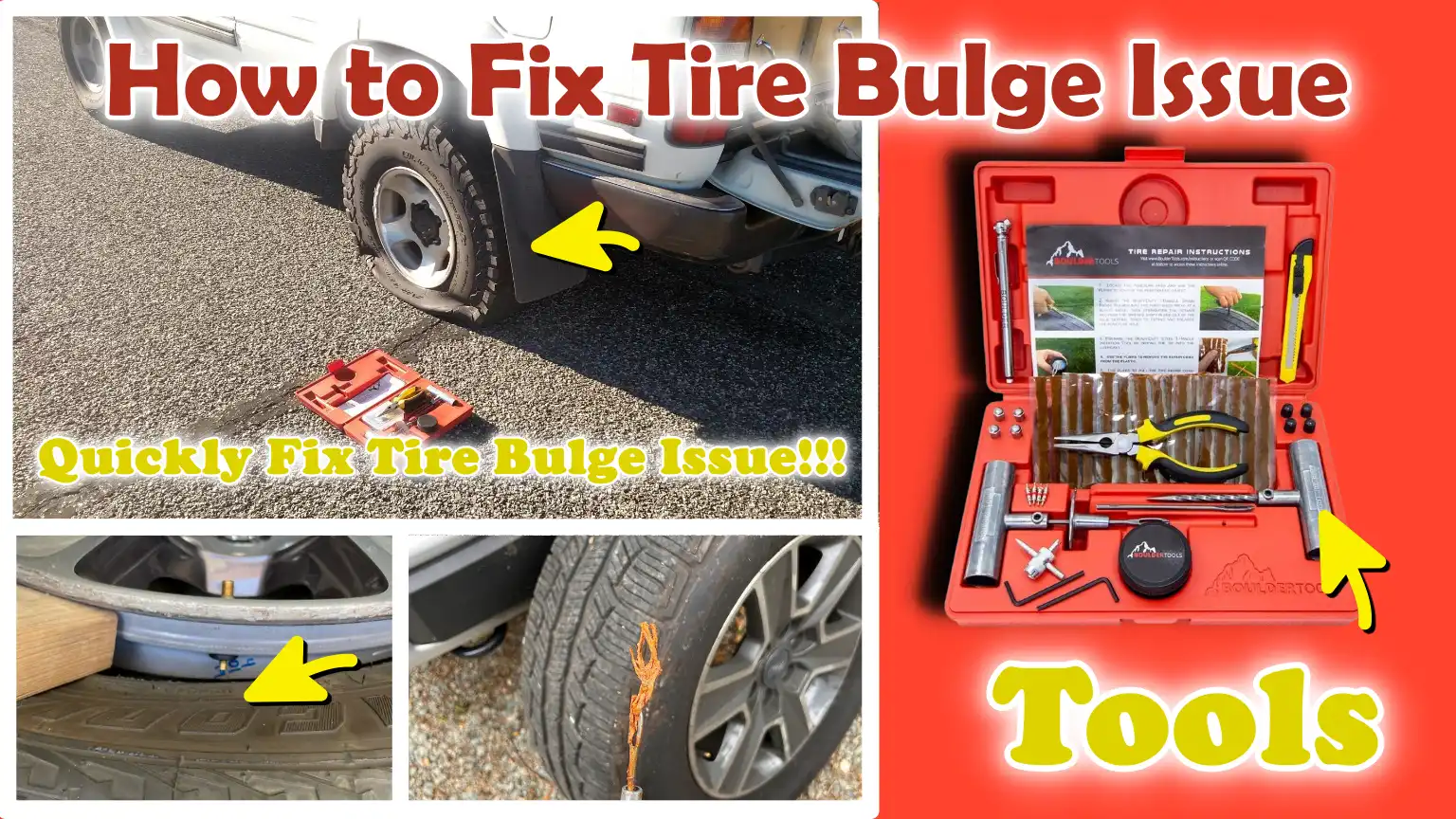
Now, in this guide you’ll learn How to Fix Tire Bulge Issue so that you can actually follow the correct and safe solutions to deal with it.
Understand, Why Do Tires Develop Bulges?
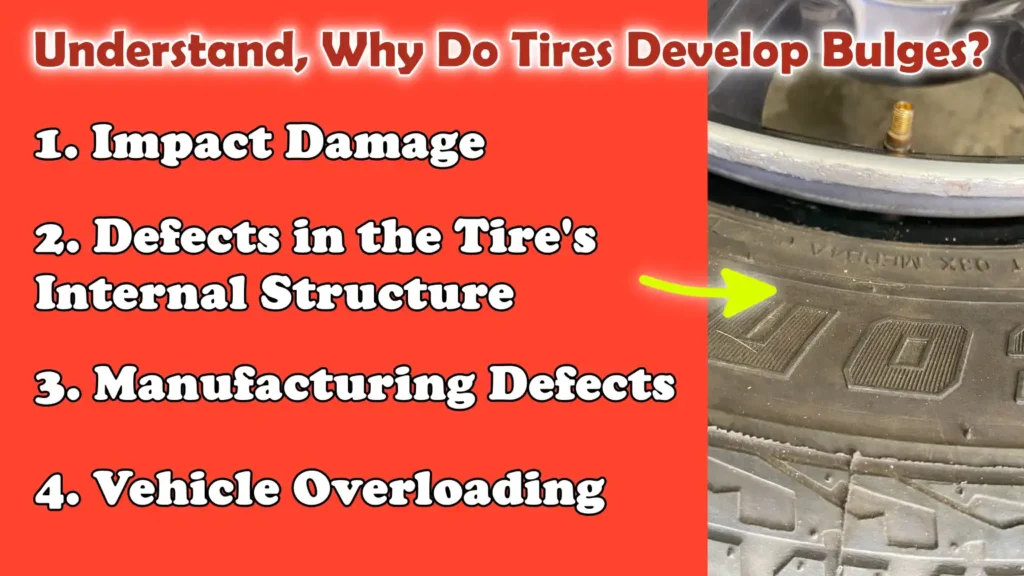
A tire bulge occurs when the internal structure of the tire becomes weakened or damaged, allowing the internal air pressure to exert outward force and create a visible protrusion on the tire’s sidewall or tread area.
Modern tires are constructed from multiple layers of durable rubber, steel belts, polyester cords and reinforcing materials.
They are designed to support the entire weight of the vehicle while simultaneously withstanding the stresses of heat, high speeds, braking and rough road conditions.
When these internal layers become compromised, the outer rubber is unable to properly maintain its original structural integrity.
Instead of receiving uniform and consistent support, the weakened section begins to swell outward due to the pressure of the internal air.
Consequently, a tire bulge is regarded not merely as a cosmetic issue, but as a serious structural defect.
In many instances, the internal damage leading to a bulge begins long before any external signs become visible.
A bulging tire carries a significantly higher risk of sudden failure, as the compromised section is unable to safely withstand the pressures of normal driving.
Understanding the root causes of tire bulges enables drivers to identify hazardous situations in a timely manner, thereby avoiding costly repairs and unsafe driving conditions.
1. Impact Damage
Impact damage is one of the most common causes of tire bulges.
This issue is frequently observed in areas characterized by poor road conditions, deep potholes, broken pavement, speed bumps, or road debris.
When a vehicle strikes a pothole or a curb with significant force, the tire can become severely compressed, pinched between the road obstruction and the wheel rim.
Due to this sudden and intense pressure, the internal cords of the tire may snap or become weakened, even if the outer rubber does not rupture immediately.
Many drivers are taken aback because, initially, the tire appears to be in good condition; however, over time, the internal damage gradually manifests as a visible bulge.
Sharp impacts on the road become even more hazardous when the vehicle is traveling at high speeds, as the pressure exerted on the tire increases significantly.
This risk is also heightened in low-profile tires, as their sidewalls offer less cushioning to absorb the shock of an impact.
Even striking a curb while parking can compromise the structural integrity of a tire, provided the impact is sufficiently forceful.
Road debris such as: sharp metal objects, deep potholes, or large stones, as it can also weaken a tire from the inside.
Once the load-bearing cords (fibers) within the tire are damaged, the internal air pressure begins to exert force on that weakened section, causing the tire to appear swollen, a condition that drivers typically notice only at a later stage.
Such damage cannot self-repair, as the tire’s internal structure has already lost its inherent strength.
2. Defects in the Tire’s Internal Structure
Every tire contains strong load-bearing cords, typically composed of materials such as polyester, nylon, or steel.
These cords serve to maintain the tire’s shape, structural integrity and stability while the vehicle is in motion.
A bulge often develops in a tire when some of these internal cords snap, detach, or become weakened.
When these cords cease to function, the outer rubber in that specific area loses its structural support.
Consequently, the internal air pressure exerts outward force on this weakened area, causing the sidewall or tread (the tire’s surface) to bulge outward like a bubble.
This internal damage can result from repeated impacts, excessive heat accumulation, improper tire maintenance, driving on underinflated tires, or prolonged usage.
Heat is particularly detrimental, as elevated temperatures gradually degrade the rubber compounds and internal bonding materials over time.
Underinflated tires flex more than usual while driving, increasing internal stress and generating additional heat.
Over time, this repetitive stress can lead to separation between the tire’s layers.
In some instances, drivers may perceive vibrations, jolts, or irregularities in handling even before a bulge becomes clearly visible on the tire.
Once the cords rupture, the tire becomes unable to distribute weight evenly, rendering the weakened area highly susceptible to sudden rupture or a tire blowout (rapid air loss) under normal driving conditions.
3. Manufacturing Defects
Although it is a rare occurrence, manufacturing defects can sometimes cause a tire to develop a bulge, even if the tire has not sustained any major impact from the road.
Modern tire production involves highly controlled engineering processes, in which rubber compounds, steel belts, fabric plies and adhesives are carefully bonded together under heat and pressure.
However, in rare instances, minor flaws introduced during manufacturing can weaken specific components of the tire’s structure.
If the internal layers are not bonded correctly, or if the reinforcing cords are not properly aligned, weak points can develop within the tire, eventually manifesting as a bulge.
Sometimes these defects become apparent immediately after the tire is installed, while in other cases, they may not surface until weeks or months of regular driving have passed.
Tire manufacturers conduct extensive quality testing; however, no production process is entirely immune to occasional defects.
This explains why tires sometimes develop bulges, even when the driver has successfully avoided hazards such as potholes, curbs and vehicle overloading.
In many cases, if the issue is detected early, the defective tire may be eligible for coverage under the manufacturer’s warranty.
Drivers should always inspect new tires regularly, particularly during the first few months of use, as early detection can help prevent more serious safety risks from arising later on.
4. Vehicle Overloading
Every tire is designed with a specific load rating, which determines the maximum weight it can safely support.
When a vehicle consistently carries a load exceeding the tires’ specified capacity, it places excessive stress and pressure on their internal structure.
Due to excessive weight, the tire sidewalls flex beyond their normal limits, generating additional heat while driving and increasing internal structural stress.
Over time, this stress weakens the reinforcing cords and bonding materials within the tire.
Hauling heavy cargo, towing overweight trailers, carrying an excessive number of passengers, or exceeding the vehicle’s maximum weight capacity, all these factors can lead to the formation of bulges in the tires.
This issue becomes even more critical during hot weather or long-distance highway travel, as the heat further compromises the tire’s structural integrity.
Many drivers focus solely on the limitations of the engine or suspension, forgetting that it is the tires that bear the entire weight of the vehicle.
Even properly inflated tires can sustain damage if the total load exceeds their rated capacity.
In some instances, tires subjected to excessive weight may exhibit early warning signs after driving such as: sidewall bulging, uneven tread wear, handling difficulties, or excessive heat generation.
If the internal layers of the tire become significantly compromised, the internal air pressure will eventually force the tire outward, creating a bulge; this signals severe structural damage, making the immediate replacement of the tire absolutely essential.
Know, Signs of a Tire Bulge
A tire bulge typically forms when the internal structure of the tire becomes compromised; however, many drivers fail to recognize these warning signs in a timely manner.
In some instances, the symptoms are very subtle and deteriorate gradually over time.
As the damage often originates from within the tire, early warning signs may manifest before the bulge becomes large or clearly visible.
Identifying these warning signs early is crucial, as a bulging tire carries a significantly higher risk of sudden failure, particularly at highway speeds or during hot weather.
A damaged tire is unable to distribute the vehicle’s weight evenly across the road surface, thereby negatively impacting the vehicle’s handling, ride comfort and overall stability.
Some symptoms may resemble issues related to wheel balancing or the suspension system; therefore, a thorough inspection is essential.
Understanding these signs enables drivers to take immediate action before the tire becomes unsafe for driving.
1. Visible Bulge on the Sidewall
The most obvious indication of a tire bulge is the appearance of a protrusion, bubble, or swollen area on the tire’s sidewall.
This occurs when the internal cords of the tire snap or weaken, allowing the internal air pressure to exert outward force against the tire’s outer rubber layer.
Unlike normal tire wear, a bulge typically manifests as a raised area that protrudes from the otherwise smooth surface of the tire.
In some cases, the bulge may initially be small and visible only upon close inspection from a specific angle.
However, over time, as the internal structure continues to deteriorate, the swollen area may enlarge.
Sidewall bulges are particularly hazardous because the sidewall is already one of the most flexible and vulnerable parts of the tire.
Even a small bulge indicates that the tire has lost a portion of its structural integrity.
Drivers should never ignore this warning sign, as a compromised area can fail suddenly under normal driving pressure.
A bulge in a tire can result from striking potholes, curbs, or road debris, or it may be caused by long-term internal damage resulting from overloading or driving on underinflated tires.
Regularly inspecting tires in good lighting can help drivers identify these dangerous issues before they lead to a blowout.
2. Steering Vibration
A damaged tire with a bulge often causes a distinct, palpable vibration in the steering wheel, particularly when driving at medium to high speeds.
This occurs because the outward protrusion of the swollen section prevents the tire from rotating uniformly.
As the wheel spins, the bulge creates an imbalance that disrupts the smooth contact between the tire and the road surface.
Drivers may feel this vibration in the steering wheel, the floorboard, or throughout the vehicle’s cabin.
In many cases, the vibration intensifies as the vehicle’s speed increases, as the damaged section strikes the road with greater force during each revolution.
Some drivers mistakenly attribute this issue solely to wheel balancing, alignment, or suspension problems; however, a tire bulge can present very similar symptoms.
Unlike minor balancing issues, however, the vibration associated with a bulge stems from a serious structural weakness within the tire.
This erratic movement places excessive strain on suspension components, wheel bearings and the steering system over time.
If sudden vibrations begin after striking a pothole or curb, drivers should immediately inspect their tires, as internal damage may have already occurred, even if a bulge is not yet fully visible.
3. Changes in Ride Quality
A bulge in a tire can significantly impact the driving experience, as a compromised tire cannot roll smoothly over the road surface.
While driving, the driver may perceive instability, roughness, bouncing, or a bumpy sensation, particularly on highways or smooth roads, where such irregularities are easily discernible.
The bulging section distorts the tire’s typically round shape, resulting in an uneven distribution of pressure as each wheel rotates.
This irregular motion can create the sensation that the vehicle is wobbling slightly or bouncing repeatedly.
In some instances, the vehicle may feel less stable when turning corners or changing lanes, as the defective tire fails to maintain proper contact with the road surface.
This uneven driving experience becomes even more pronounced at higher speeds; as the rotational velocity increases, the compromised section strikes the road surface with greater force and frequency.
This issue can be further exacerbated when carrying heavy loads, as the additional weight places even greater stress on the tire’s already compromised structure.
Many drivers initially overlook these minor changes, attributing them to road conditions; however, any unusual behavior during driving should never be ignored.
Any sudden alteration in the driving experience is often a clear indication that a tire is no longer functioning safely or uniformly.
4. Thumping Sounds While Driving
One of the most common warning signs of a tire bulge is the occurrence of a rhythmic thumping or a repetitive knocking sound while driving.
This sound occurs because, as the wheel rotates, the bulging section of the tire, relative to the rest of the tire, strikes the road surface with greater force.
Due to the deformed shape of the tire, its contact with the road becomes irregular during rotation, resulting in a distinct thumping sound with every revolution of the wheel.
At low speeds, this sound may initially be faint; however, as the vehicle’s speed increases, it typically becomes louder and more frequent.
Some drivers describe this sound as a soft ‘thud,’ a rhythmic beat, or a repetitive knocking noise emanating from one side of the vehicle.
In certain situations, this sound may temporarily disappear on smooth roads while becoming more pronounced on rough surfaces.
As the sound varies in accordance with the wheel’s rotation, it typically changes in direct proportion to the vehicle’s speed.
A thumping tire should never be ignored, as it often signals that the tire’s internal structure has already sustained significant damage.
Continuing to drive on a defective tire increases the risk of complete tire failure, particularly during long journeys, in hot weather, or while driving on highways, where heat and pressure can build up rapidly within the tire’s compromised sections.
So, Can You Fix a Tire Bulge? – Truly Honest Answer
The most honest and safe answer is that a tire bulge cannot be properly repaired and a damaged tire exhibiting a bulge should be replaced as soon as possible.
Many drivers, hoping to save money, assume that this issue can be patched, sealed, or temporarily fixed; however, a tire bulge is fundamentally different from a minor air leak or a puncture in the tread (the tire’s surface).
A bulge is a clear indication that the tire’s internal structure has already been compromised, specifically, the reinforcing cords that give the tire its strength and shape.
Once these internal layers break or separate, the tire loses its ability to safely withstand pressure, load, heat and road shocks.
Even if the outer rubber appears largely intact, the tire’s interior has already become severely weakened.
Tire manufacturers and professional repair standards generally deem a bulge in the tire’s sidewall to be irreparable, as the structural integrity cannot be restored to its original strength.
Continuing to drive on a bulging tire significantly increases the risk of a sudden blowout, loss of vehicle control and serious accidents.
Understanding why these tires cannot be safely repaired helps drivers avoid making dangerous decisions and enables them to choose the correct, long-term solution.
1. Why a Tire Bulge Cannot Be Fixed
A tire bulge is considered a permanent structural defect because the tire’s internal reinforcing cords have already broken or become severely weakened.
These cords constitute one of the most critical components of a tire, as they maintain the structural integrity of the tire’s construction and enable it to withstand thousands of pounds of pressure while the vehicle is in motion.
When these cords become compromised, the outer rubber at that specific location loses the structural support provided by the internal framework; consequently, the pressurized air trapped inside the tire exerts outward force, resulting in the formation of a visible bulge.
Unlike damage to the outer rubber surface, the internal structural framework cannot self-repair or regenerate.
Tire patches, plugs and sealants are designed solely to seal minor air leaks resulting from punctures in the tire’s tread area; they cannot repair broken steel belts or damaged sidewall cords.
While driving, particularly when cornering, braking, or traveling at high speeds on a highway, the tire’s sidewall is subjected to constant flexing and stress.
Due to this continuous dynamic movement, any attempt to repair a damaged sidewall proves to be highly unreliable and unsafe.
Even if a temporary repair appears to hold air for a short period, the underlying internal damage remains hidden beneath the surface.
Heat, road shocks and the weight of the vehicle exert constant pressure on this weakened area, significantly increasing the risk of a sudden tire blowout.
This is why, whenever a bulge appears in a tire, professional tire shops almost invariably recommend replacing the entire tire.
2. The Difference Between Punctures and Sidewall Damage
Many drivers mistake a tire bulge for a standard puncture; however, from both safety and repair perspectives, these two issues are entirely distinct.
A puncture typically occurs when a nail, screw, or other sharp object penetrates the “tread” section of the tire, the part that comes into direct contact with the road surface.
In many instances, the damage is minor and confined solely to the outer tread layer, leaving the tire’s internal structure unharmed.
If the puncture is located in a repairable area that meets industry safety standards, technicians can often fix it using a ‘patch’ or ‘plug,’ thereby safely sealing the air leak.
Conversely, a bulge in a tire is not caused by a standard puncture, but rather by a defect within the tire’s internal structure.
This type of damage typically affects the tire’s ‘sidewall’ or internal ‘cords’, critical components responsible for supporting the vehicle’s weight.
While driving, the sidewall constantly flexes and compresses; consequently, it becomes impossible to use a patch or plug to provide the necessary structural support to this area.
Even if the tire is not currently leaking air, its internal structure has already been compromised.
This is why a tire bulge poses a far greater danger than a standard puncture.
While a punctured tire may leak air gradually, the weakened structure of a bulging tire renders it unable to safely withstand normal driving pressures; as a result, it may burst suddenly without any prior warning.
3. Safety Risks Associated with Temporary Repairs
While temporary measures adopted to address tire bulges may seem convenient, they pose a serious safety risk, one that many drivers often underestimate.
In an attempt to continue driving on a compromised tire, some individuals resort to using tire sealants, sidewall patches, heat repairs, or other non-standard methods.
However, while these remedies may temporarily mask symptoms or slow down air leakage in certain situations, they fail to repair the underlying structural damage present within the tire.
Weakened cords and damaged layers remain in a compromised state beneath the surface.
This implies that the risk of a sudden tire blowout remains significantly high, particularly when driving on highways, in hot weather, during hard braking, or during long-distance journeys, when heat and internal pressure escalate considerably.
A tire blowout at high speeds can instantly compromise steering control, braking stability and vehicle handling capabilities, thereby heightening the risk of accidents.
Furthermore, temporary repairs can instill a false sense of security in drivers, leading them to continue driving beyond safe limits.
In some instances, under pressure, the internal damage may propagate, causing the tire bulge to expand rapidly.
Professional tire safety organizations generally advise against repairing sidewalls, as the sidewall is subjected to constant flex and stress during normal driving conditions.
Replacing the damaged tire remains the only reliable solution, as it fully restores the vehicle’s safety and prevents future structural failures.
What to Do Immediately If You Spot a Bulge in Your Tire
Any bulge in a tire should always be regarded as a serious safety warning, as it indicates that the tire’s internal structure has already been compromised or damaged.
Even if the vehicle appears drivable, that weakened section could fail suddenly and without significant warning, particularly at high speeds or in hot weather, when tire pressure and heat naturally increase.
Many tire blowout incidents occur because drivers continue to operate their vehicles despite clearly visible tire damage, assuming it is a minor or temporary issue.
The safest course of action is to immediately relieve the stress on the damaged tire and avoid situations that could increase pressure, heat, or external impact on that compromised area.
Taking immediate action can prevent total tire failure, protect the wheel from damage and minimize the risk of losing control of the vehicle.
Knowing exactly what steps to take during those critical first few minutes after discovering a tire bulge can make a profound difference in overall driving safety.
1. Stop Driving at High Speeds
The first and most crucial step is to immediately, and in a calm, controlled manner, reduce your speed.
Driving at high speeds places immense stress on a bulging tire, as every rotation of the wheel generates additional heat and increases the internal air pressure within the tire.
At highway speeds, if the compromised section cannot safely withstand the internal air pressure, the weakened sidewall of the tire can rupture almost instantaneously.
A sudden tire blowout at high speeds is particularly dangerous because it can compromise steering, braking and the vehicle’s overall stability in a matter of seconds.
Drivers should avoid sudden braking, abrupt steering maneuvers, or sudden lane changes, as such sudden movements can further exacerbate the stress on a damaged tire.
Instead, gradually reduce your speed and guide the vehicle to a safe location, away from high-speed traffic.
If possible, activate your hazard lights to alert nearby drivers.
Continuing to drive at high speeds, even for a short distance, significantly increases the likelihood of a complete tire failure.
Many tire blowout incidents are not caused by a sudden, unexpected defect, but rather occur because a compromised tire has been subjected to excessive heat and pressure for too long, despite clear warning signs having already become apparent.
2. Safely Inspect the Tire
Once the vehicle is safely parked, the tire should be carefully inspected to determine the extent of the damage.
Before exiting the vehicle, drivers must ensure that it has come to a complete stop, is resting on stable, level ground and is positioned well away from traffic.
During the inspection, carefully examine the tire’s sidewall and tread area for any visible bulges, blisters, swelling, cuts, cracks, or unusual textures.
In many cases, a bulge may be visible protruding outward from the otherwise smooth surface of the tire.
It is crucial to avoid touching the bulging area or applying firm pressure to it, as that compromised section may already be under immense internal pressure.
Drivers should also check whether the tire’s air pressure has dropped following the drive, whether the tread wear is uneven, or if the tire has become unusually hot.
Occasionally, the damaged section of the tire becomes visible only when the wheel is rotated to a specific position; Therefore, it is essential to inspect the tire along its entire circumference.
If the vehicle has recently struck a pothole, a curb, or road debris, the internal damage may be far more severe than any damage initially visible on the surface.
Even a small bulge in the tire should never be ignored, as the internal cords supporting the tire may already be compromised.
If there is any doubt regarding the condition of the tire, the safest course of action is to immediately stop driving on it.
3. Replace with a Spare Tire
If a spare tire is available in the vehicle, immediately replacing the damaged tire is the safest option.
The spare tire helps alleviate the pressure placed on the damaged tire and significantly reduces the risk of a sudden blowout while driving further.
Before changing the tire, park the vehicle on a level, paved surface and fully engage the parking brake to ensure the vehicle does not move.
Carefully remove the damaged tire, as continuing to drive on it can exacerbate internal cracks and potentially cause damage to the wheel itself.
The driver should inspect the spare tire before installing it to ensure that it has the correct air pressure and shows no visible signs of external damage.
Temporary compact spare tires, often referred to as “donut spares”, are designed for use only in short-distance emergency situations and typically have a lower speed limit compared to standard tires.
After installing a spare tire, the driver should avoid driving aggressively, accelerating suddenly, or traveling at high speeds until a new, full-sized tire has been installed.
Replacing a damaged tire immediately is far safer than attempting a temporary repair of its sidewall; once the tire’s internal reinforcing cords have snapped, the tire’s internal structure cannot regain its original strength.
4. Drive Slowly to the Nearest Service Center
If it is not possible to use a spare tire immediately, drive the vehicle at a very slow speed and travel only the distance necessary to reach a nearby tire shop or service center.
Reducing speed minimizes heat buildup within the tire and reduces the pressure exerted on the tire’s compromised section.
Drivers should, as far as possible, avoid highways, rough roads, sudden braking, sharp turns and heavy traffic, as these conditions place additional stress on a damaged tire.
Even driving at slow speeds carries a certain degree of risk, as the structural weakness within the tire remains present.
If possible, keep the windows slightly open so that any unusual sounds such as: thumping, flapping, or the sound of rapidly escaping air, as it can be detected immediately.
If vibrations intensify or the bulge in the tire appears to worsen, the vehicle should be stopped immediately.
Driving for long distances on a bulging tire is extremely unsafe, as heat naturally builds up inside tires during extended journeys, particularly in hot weather.
Tire experts can conduct a more precise assessment of the damage and recommend the safest course of action for replacing the tire.
In most cases, immediate replacement is advised; for once a tire’s internal structure has been compromised, a bulging tire cannot be restored to a safe condition.
How to Change a Bulging Tire – Quiet Effortlessly
Replacing a bulging tire quickly and correctly is crucial, as a compromised tire can fail at any moment without warning.
A bulge in the tire indicates that its internal structure has already been compromised; this means that continued driving significantly increases the risk of a sudden blowout, wheel damage, loss of steering control and the creation of unsafe driving conditions.
Many drivers feel intimidated by the task of changing a tire themselves; however, if approached slowly, carefully and in the correct sequence, the process becomes quite manageable.
Modern vehicles typically come equipped with the necessary emergency tools for changing a tire, allowing drivers to safely remove a damaged tire and install a spare until they are able to purchase a replacement.
Thoroughly understanding each step also helps in avoiding common mistakes such as: failing to properly lift the vehicle, leaving lug nuts loose, or placing the jack in the wrong position, errors that can pose even greater safety risks.
Replacing a damaged tire as soon as possible is always safer than continuing to drive on a bulging tire, even if the bulge appears to be small.
Tools
| Tools | Why It Is Needed | How to Use It Properly |
|---|---|---|
| Jack | When the weight of the vehicle rests on the tire, the tire cannot be removed. A jack lifts the damaged wheel high enough to allow the tire to be safely removed and replaced. Without a jack, changing a flat or damaged tire during a roadside emergency would be nearly impossible. | Position the jack beneath the vehicle’s designated lifting point; this is typically located under the frame, near the damaged wheel. Slowly crank or pump the jack until the tire lifts slightly off the ground. Raise the vehicle only as high as necessary to safely remove the tire. |
| Lug Wrench | To ensure the wheel remains securely attached while driving, the lug nuts are tightened very firmly. When changing a tire, a lug wrench provides the necessary leverage to safely loosen and tighten these nuts. Without it, removing a damaged wheel would be extremely difficult. | Before lifting the vehicle, use the wrench to loosen the lug nuts by turning them anti-clockwise. After installing the spare tire, tighten the lug nuts clockwise in a criss-cross pattern (opposite one another) to ensure even pressure and proper wheel alignment. |
| Spare Tire | A damaged tire is unsafe because its internal structure has already been compromised. With the aid of a spare tire, the vehicle can be driven safely until a tire specialist can install a new, sturdy replacement. | Remove the damaged tire and carefully align the spare tire with the wheel studs. Tighten it firmly using the lug nuts, ensuring that they are tightened evenly. Drive with caution after installing the tire and adhere to any specific speed or distance limitations prescribed for the spare tire. |
1. Park the Vehicle on Level Ground
Before attempting to change a tire, the first step is to select a safe and stable location.
Whenever possible, the vehicle should be moved away from high-speed traffic and parked on solid, level ground.
Level ground is critical because, on uneven or soft surfaces, the jack may slip or sink into the ground while lifting the vehicle.
Drivers should avoid gravel, mud, wet grass, or sloped roads whenever possible, as such unstable terrain increases the risk of the vehicle slipping or falling off the jack.
Once safely parked, the engine must be completely shut off and the parking brake fully engaged to ensure that the vehicle does not move from its position at all.
If available, hazard lights should be kept on to alert nearby drivers that the vehicle is stationary.
When changing a tire, passengers should carefully exit the vehicle and stand in a safe location, away from traffic.
Before lifting the vehicle, drivers should shift the transmission into ‘Park’ mode for automatic vehicles and into ‘First Gear’ for manual vehicles.
Taking a moment to properly stabilize the vehicle before beginning the tire-changing process significantly reduces the likelihood of accidents or injuries.
2. Loosen the Lug Nuts
Before lifting the vehicle, the lug nuts on the damaged wheel should be slightly loosened while the tire is still resting firmly on the ground.
This is crucial because, when the tire is in contact with the road, it remains stationary; this stability allows the lug nuts to be loosened with relative ease when force is applied to them.
Using a lug wrench, each lug nut should be carefully turned anti-clockwise to break its initial tightness.
In many vehicles, lug nuts are tightened with a significant amount of torque, so applying a little extra force may be necessary to loosen them.
Drivers should not completely remove the lug nuts at this stage, as it is essential for the wheel to remain securely attached until the vehicle has been lifted.
Loosening them in advance makes the subsequent task of removing the wheel, once it is suspended in the air, much easier.
If a lug nut feels excessively tight, it is better to apply slow, steady pressure rather than sudden jerks; sudden jerking motions can destabilize the vehicle or lead to injury.
Some wheels may also feature decorative hubcaps that hide the lug nuts; these should be carefully removed before attempting to loosen the lug nuts.
Taking this step prior to using the jack is the safest and most critical part of the entire tire-changing process.
3. Lift the Vehicle
Once the lug nuts have been slightly loosened, the jack can be positioned under the vehicle at the specific location recommended by the vehicle manufacturer.
In most vehicles, the designated jacking points, reinforced areas designed to support the weight, are located near the wheels, either beneath the frame or under the rocker panels.
Selecting the correct jacking point is crucial, as placing the jack in the wrong location can cause damage to the vehicle’s body, suspension components, or undercarriage.
Once the jack is securely positioned at the correct spot, the vehicle should be raised slowly and steadily until the punctured tire is completely lifted off the ground.
When the vehicle is supported solely by the jack, drivers must avoid placing any part of their body underneath it, as emergency jacks are designed merely to lift the vehicle temporarily, not to provide long-term support.
As the vehicle rises, it is essential to keep a constant watch on the jack to ensure it remains stable and does not shift from its position.
If the jack begins to tilt to one side or sink into the ground, the vehicle must be lowered immediately and the jack should be repositioned correctly on a firm surface.
The vehicle should be raised only high enough to lift the tire clear of the road surface; doing so helps maintain the vehicle’s balance while the wheel is being removed.
4. Remove the Punctured Tire
Once the vehicle has been safely raised, the lug nuts, which were loosened earlier, as it can now be completely removed.
The lug nuts should be placed in a safe, nearby location to ensure they do not get lost during the tire-changing process.
With all the nuts removed, the punctured wheel can be carefully pulled straight outward to detach it from the wheel hub.
In some instances, the wheel may feel stuck due to rust, accumulated dirt, or pressure against the hub surface.
Gently rocking the wheel back and forth will safely loosen it without causing damage to any surrounding components.
While removing the damaged tire, drivers should inspect the wheel for any cracks, warping, dents, or severe damage caused by road hazards.
Bulges in a tire are often the result of a sharp impact, which can sometimes cause damage to both the wheel and the tire.
Completely removing the damaged tire ensures that the new (spare) tire fits correctly and securely onto the wheel hub during the installation process.
To prevent the damaged tire from rolling away during the remainder of the replacement procedure, it should be laid flat on the ground nearby.
5. Install the Spare Tire
Now, carefully align the spare tire with the wheel studs and press it firmly against the hub until it sits evenly against the mounting surface.
Proper alignment is crucial; if the wheel is not seated correctly, it may lead to vibrations, imbalance, or unsafe driving conditions later on.
Once the spare tire is in place, the lug nuts should first be tightened onto the wheel studs by hand to prevent damage caused by cross-threading.
Each nut should be tightened gradually in a criss-cross pattern to ensure that the wheel is perfectly centered on the wheel hub.
Hand-tightening the nuts is sufficient at this stage, as the wheel will be fully tightened once the vehicle has been lowered back to the ground.
Before proceeding, drivers should also ensure that the spare tire is properly inflated and securely mounted.
Small, temporary spare tires may appear smaller or thinner than standard tires; however, they are specifically designed for temporary use in emergency situations until a permanent replacement tire can be installed.
6. Lower the Vehicle and Tighten the Nuts.
Once the spare tire is in place, the vehicle should be lowered slowly and carefully until the tire makes full contact with the ground and the vehicle’s weight rests upon it once again.
When the vehicle has been fully lowered, the jack can be safely removed from underneath it.
Subsequently, to ensure that the pressure on the wheel remains uniform, the lug nuts should be firmly tightened in a cross-cross pattern using a lug wrench.
Proper tightening is crucial, as loose lug nuts can cause the wheel to shift, wobble, or even detach from the vehicle while driving.
Drivers should avoid overtightening the lug nuts by applying excessive force; however, the nuts should feel secure and uniformly tightened.
It is also a good idea to re-check the tightness of the lug nuts after driving a short distance, as a newly installed wheel may settle slightly once the vehicle is in motion.
If a temporary spare tire is being used, speed and distance limitations must always be strictly observed.
Most temporary spare tires are designed for short-term use only and should be replaced with a full-sized tire as soon as possible to restore normal driving safety and handling performance.
Know, What are the Temporary Solutions – And Why They Should Be Avoided
Many drivers resort to temporary methods to fix a tire bulge, as replacing the tire may seem expensive or inconvenient, particularly in emergency situations.
However, a tire bulge is not merely a minor air leak or a superficial surface issue; it is a clear indication that the tire’s internal structure has already been compromised.
The reinforcing cords and inner layers, which provide the tire with its structural integrity and strength, are no longer functioning effectively in that weakened area.
Consequently, most temporary repair methods merely mask the visible symptoms for a short period without addressing the underlying structural defect present within the tire.
Some temporary measures may initially appear successful because the tire holds air for a while; however, the damaged area continues to deteriorate beneath the surface.
Heat, pressure, speed, road impact and vehicle weight, every time the vehicle is driven, these factors exert continuous stress on the already weakened section.
This significantly increases the risk of a sudden tire blowout, specially when driving on highways or in hot weather.
Understanding why these temporary solutions are unsafe helps drivers avoid dangerous mistakes and make safe, long-term decisions to ensure their own safety as well as that of others on the road.
1. Tire Sealants
Tire sealants are liquid compounds primarily designed to seal minor punctures located in the tire’s tread area.
These products are typically sprayed or injected into the interior of the tire, where the liquid spreads out and temporarily prevents air from escaping through small holes caused by objects such as nails or screws.
While sealants can help slow down air leakage in certain specific puncture scenarios, they are not designed to repair structural damage to a tire’s bulge or sidewall.
In a bulging tire, the internal cords have either snapped or become compromised, meaning the tire’s internal support structure has already failed from within.
Tire sealants can neither rejoin steel belts, repair separated plies, nor restore lost structural integrity.
Even if the tire appears to be holding air after the sealant is applied, that compromised area remains highly unstable under normal driving pressures.
In some cases, sealants can also create internal balancing issues within the tire, leading to vibrations and erratic performance.
Tire specialists may subsequently require additional cleaning before they can properly inspect or replace the tire.
Most importantly, sealants can create a false sense of security, causing drivers to continue using a dangerously compromised tire far beyond its safe limits.
A tire bulge constitutes a structural failure, not merely an air leak, and it is precisely for this reason that sealants are not considered a safe solution.
2. Misconceptions Regarding Heat Patches
Some people believe that a tire bulge can be permanently repaired by heating the damaged area, applying a patch to it, or reshaping the tire.
However, this notion is largely based on misconceptions and unsafe repair practices.
Heat-patch methods attempt to soften or bond rubber to the damaged area in the hope of restoring the tire’s strength.
Although heat can temporarily alter the appearance of a tire’s outer rubber surface, it cannot repair broken internal cords or separated structural layers.
It is the tire’s internal reinforcing materials that are responsible for supporting the vehicle’s weight and maintaining the tire’s structural integrity while in motion.
Once these materials have been compromised, no amount of heating applied to the surface can fully restore the tire to its original, safe condition.
In fact, exposure to excessive heat can adversely affect the tire’s chemical composition and internal bonding agents, potentially further weakening the surrounding rubber.
While driving, particularly at high speeds on highways, tires naturally generate a significant amount of heat; under such conditions, any component that has already sustained damage becomes even more hazardous.
Certain unsafe repair methods may temporarily suppress visible bulges on the surface, but the internal damage remains hidden and continues to deteriorate.
For this very reason, the use of heat-patch techniques to repair structural damage to a tire’s sidewall is not considered a safe or professional practice.
3. Sidewall Repair Kits
Sidewall repair kits are sometimes marketed as immediate emergency fixes for damaged tires; however, they are generally not considered safe for repairing tire bulges.
These kits may contain rubber plugs, patches, adhesives, or reinforcing materials designed to seal cuts or leaks in the sidewall area.
However, a tire bulge indicates not merely damage to the outer rubber, but also a separation of the internal structural components.
As a vehicle travels, the tire’s sidewall constantly flexes and deforms as it absorbs road shocks, supports the vehicle’s weight and helps maintain proper contact between the tire and the road surface.
Due to this constant movement, any repair material applied to the sidewall is subjected to immense stress.
Even if the outer surface appears intact for a time, the internal structural cords remain compromised.
Sidewall repair kits cannot restore the tire’s original load-bearing capacity, nor can they safely withstand the heat and pressure generated during driving.
In many instances, the repaired area may fail abruptly under pressure, significantly increasing the risk of rapid air loss or a tire blowout.
Professional tire safety guidelines generally recommend that tires with compromised sidewall integrity be replaced rather than repaired, as the structural integrity of the sidewall is paramount for safe vehicle operation.
4. Clear Warning: Unsafe and Prohibited
Any temporary method employed to repair a bulge in a tire should be viewed strictly as a short-term emergency measure, not as a genuine repair or a long-lasting solution.
The greatest danger lies in the fact that these temporary fixes often mask visible symptoms, while the underlying structural weakness continues to worsen internally.
Drivers may assume that the problem has been resolved and continue driving as usual; however, the compromised section remains at an extremely high risk of sudden and catastrophic failure.
A weakened sidewall can lead to a sudden tire blowout, resulting in a dangerous loss of steering control, reduced braking stability and potentially severe accidents, particularly when the vehicle is traveling at high speeds on a highway.
Hot weather, long-distance driving, carrying heavy loads and poor road conditions further exacerbate this risk, as these factors generate increased internal pressure and heat within the tire.
Professional tire technicians and major tire manufacturers generally agree that tires exhibiting sidewall bulges should be replaced rather than repaired, as the internal damage cannot be safely restored to its original structural integrity.
While the initial cost of replacing a damaged tire may be higher, it is far safer than facing the risk of a sudden blowout while driving.
If a tire develops a bulge, safety must always take precedence over temporary convenience or short-term cost savings.
Estimated, Cost of Repairing a Tire Bulge
The cost of repairing a tire bulge depends on the type of vehicle, tire size, tire brand, condition of the wheel and whether any additional services are required during the replacement process.
As a tire bulge is considered a definitive structural compromise, addressing this issue typically necessitates replacing the entire tire rather than merely repairing it.
Many drivers initially hope for a low-cost patch solution; however, professional tire shops generally recommend immediate replacement of the compromised tire, as a sidewall bulge cannot be safely restored to its original structural integrity.
The total cost may encompass the new tire itself, installation labor, balancing services, disposal fees for the old tire and sometimes a wheel alignment check, particularly if the bulge resulted from hitting a large pothole or striking a curb.
There can be a significant price disparity between economy-grade tires and premium performance tires.
Understanding these various cost-related factors helps drivers prepare financially and avoid unexpected expenses while prioritizing safety.
1. Tire Replacement Costs – Estimated Range in the U.S.
In the United States, the cost of replacing a bulging tire can vary significantly based on tire size, vehicle type, brand quality and performance category.
For standard passenger cars, economy-grade tires, suitable for general daily driving needs, often start in the range of $80 to $150 per tire.
Mid-range tires typically fall within the $150 to $250 price bracket, offering a better balance of durability, ride comfort, improved wet-weather traction and longer tread life.
Premium tires from major manufacturers can cost anywhere from $250 to well over $500 per tire, particularly for luxury vehicles, sports cars, trucks, SUVs, or electric vehicles that require specially designed tires.
Larger wheels and low-profile tires typically command higher prices, as they utilize more advanced construction materials and performance-oriented engineering.
High-performance tires may also employ softer rubber compounds to ensure superior grip, which further increases manufacturing costs.
Some drivers may even need to replace two tires instead of just one if the tread on the remaining tire is significantly worn, specially in all-wheel-drive vehicles, where mismatched tire sizes can negatively impact drivetrain performance.
While budget-friendly tires may seem financially appealing, premium tires often offer superior traction, enhanced braking capabilities, robust sidewall construction, reduced road noise and a longer-lasting tread life.
Choosing the right replacement tire depends on each individual’s driving habits, prevailing weather conditions, safety priorities and long-term maintenance expectations.
2. Labor Costs
When a worn-out tire is replaced, labor costs constitute another significant component of the total expense.
Once a new tire has been purchased, professional installation services are typically required to mount the tire onto the wheel and ensure that it functions safely and correctly.
At many tire shops across the U.S., the cost for tire mounting and balancing services typically ranges from approximately $20 to $50 per tire, depending on the specific vehicle and tire size.
The tire installation process involves removing the old, worn tire from the wheel and securely fitting the new tire onto the rim using specialized equipment.
Balancing is equally important, as it ensures that the tires rotate uniformly at all speeds, thereby preventing vibrations, uneven wear, or steering instability.
During the balancing process, small weights are attached to the wheel to correct minor weight discrepancies within the tire assembly.
Some tire shops may also charge additional fees for mounting the tires, replacing valve stems, servicing the Tire Pressure Monitoring System (TPMS), or checking wheel alignment.
If a bulge has developed in a tire due to a severe impact such as: hitting a pothole or a curb, technicians may recommend checking the wheel alignment, as such forceful impacts can sometimes alter the suspension angles.
Proper installation and balancing help extend the lifespan of the tires, enhance driving comfort and reduce unnecessary strain on suspension and steering components.
3. Warranty Coverage
If a tire is covered under the manufacturer’s warranty or a ‘Road Hazard Protection Plan,’ the cost of replacing the tire can be significantly reduced.
Standard tire warranties typically cover manufacturing defects and issues related to workmanship for a specific period or up to a certain mileage limit.
However, damage resulting from common impacts such as: potholes, curbs, or road debris, is often excluded from the manufacturer’s basic warranty, as it is classified as external damage rather than a manufacturing defect.
This is precisely where a ‘Road Hazard Protection Warranty’ proves invaluable.
‘Road Hazard Protection Coverage’ is an optional protection plan offered by many tire retailers and manufacturers; it helps cover damage caused by sudden adverse road conditions such as: potholes, nails, glass, or debris.
If a tire sustains irreparable damage such as: a bulge, due to a covered ‘road hazard,’ the warranty may provide a partial or full refund toward a replacement tire, depending on the extent of tire wear and the specific terms of the warranty.
Some plans offer free replacement during the initial period of ownership, while others provide a prorated credit based on the remaining tread life of the tire.
Drivers should carefully review their warranty documentation, as coverage terms vary significantly from one company to another.
Retaining purchase receipts, service records and tire inspection history simplifies the warranty claim process should the need arise later on.
Although purchasing a ‘Road Hazard Warranty’ entails a small upfront cost, it can ultimately save drivers a substantial amount of money in the event of sudden and costly tire damage on the road.
How to Prevent Tire Bulges
Preventing tire bulges is far easier and safer than dealing with a damaged tire after the problem has already occurred.
Tire bulges typically form when the internal structure of the tire is compromised due to sudden impacts, improper inflation pressure, overloading, or prolonged stress.
As damage often begins within the tire itself, before it becomes visible from the outside, adopting good tire care habits plays a crucial role in minimizing the likelihood of structural failure.
Modern tires are engineered to withstand heavy loads, high speeds, fluctuating temperatures and poor road conditions; nevertheless, proper maintenance and careful driving are essential to ensure long-term safety.
A few simple habits such as: maintaining correct tire inflation pressure, avoiding harsh impacts on the road and regularly inspecting your tires, as it can significantly reduce the risk of damage to the internal cords.
In most cases, a tire bulge does not appear suddenly; rather, it is often the cumulative result of repetitive stress, neglected maintenance, or sudden impacts that gradually weaken the tire’s structure.
Understanding how to properly protect your tires can help extend their lifespan, enhance driving safety, reduce repair costs and prevent hazardous incidents such as tire blowouts on the road.
There’s tire safety experts from the NHTSA that explains that visible tire bulges are serious signs of structural damage inside the tire, even according to the NHTSA guidance that shows that damaged sidewalls and weakened internal tire layers that actually reduces the risk of sudden blowouts, specially during highway driving, hot weather or underinflated conditions, as these researches highlights that regular tire inspections, proper air pressure maintenance, balancing and tire rotations actually plays a major role in prevention of tire failures and improves overall driving safety as well.[¹]
1. Avoid Potholes and Road Hazards
The most effective way to prevent tire bulges is to avoid potholes, curbs, broken pavement and road debris whenever possible.
Sudden impacts are one of the primary causes of internal tire damage, as the tire can become severely pinched between a road hazard and the wheel rim.
Such sharp impacts can cause the internal cords of a tire to snap or weaken, even if the tire’s outer rubber initially appears undamaged.
Deep potholes are particularly hazardous at high speeds, as the combined force of the vehicle’s velocity and weight significantly amplifies the stress placed on the tires.
Drivers should always remain vigilant regarding poor road conditions, construction zones, road debris and uneven surfaces.
Maintaining a safe distance from other vehicles also provides drivers with additional time to identify potential road hazards and maneuver safely to avoid them.
If it is not possible to avoid an obstruction entirely, slowing down before impact can help mitigate the stress exerted on the tires.
However, braking abruptly directly over a pothole can sometimes shift the majority of the vehicle’s weight onto the front tires, thereby increasing the pressure on the tire sidewalls.
Curbs are another common cause of tire bulges; impacts to the sidewall, whether occurring during parking or while turning, as it can compromise the tire’s internal structure.
Driving cautiously not only safeguards the tires but also protects the wheels, suspension components and steering system from the costly damage that can result from such impacts.
2. Maintain Proper Tire Inflation Pressure
Maintaining proper tire inflation pressure is a critical aspect of preventing tire damage and ensuring overall vehicle safety.
Tire pressure influences how evenly the tire distributes the vehicle’s weight, how effectively it absorbs road shocks and how it manages the heat generated during operation.
Underinflated tires are more vulnerable because their sidewalls flex more than usual while the vehicle is in motion.
This excessive flexing generates internal heat and pressure, which gradually weakens the tire’s internal reinforcing cords and bonding agents.
Underinflated tires are also less capable of safely absorbing the shocks caused by potholes, thereby increasing the risk of sidewall damage and bulges.
Overinflated tires can also pose problems, as they become rigid and are less effective at absorbing sharp road shocks.
Many drivers harbor the misconception that tire pressure should always match the figure printed on the tire’s sidewall; however, the correct pressure for a specific vehicle is typically indicated on a sticker located on the driver’s doorframe or within the ‘Owner’s Manual.’
Tire pressure naturally fluctuates with changes in temperature; therefore, it is crucial to check it regularly, at least once a month, particularly during seasonal transitions.
Maintaining the correct tire pressure improves fuel efficiency, handling, braking performance and tire longevity, while also reducing unnecessary stress on the tire’s structural integrity.
3. Do Not Overload Your Vehicle
Overloading a vehicle places excessive strain on its tires, significantly increasing the risk of damage to their internal structure.
Every tire is designed with a specific load-carrying capacity, which determines the maximum weight it can safely support.
When a vehicle operates beyond this designated limit, the tires are forced to work harder to manage the additional weight during acceleration, braking, cornering and highway driving.
This increased pressure leads to excessive flexing of the tire sidewalls, elevated internal temperatures and increased tension on the internal reinforcing cords.
Over time, persistent overloading weakens the tire’s structural integrity and heightens the likelihood of bulges developing.
Transporting heavy cargo, towing overloaded trailers, carrying luggage on the roof, or accommodating an excessive number of passengers, all of these factors can result in overloading the tires.
This risk is further compounded during long journeys, in hot weather, or when driving on rough roads, as the increased heat inflicts even greater damage upon the tire’s internal components.
Many drivers focus primarily on the engine’s load-bearing capabilities, overlooking the critical fact that the vehicle’s entire weight, along with its cargo, rests directly upon the tires.
If tires are consistently subjected to loads exceeding their rated capacity, even properly inflated tires can sustain structural damage.
Checking the vehicle’s specified load limits and ensuring that the load is distributed evenly across all tires can help mitigate unnecessary stress on each individual tire and enhance overall driving stability.
4. Regular Tire Inspections
Regular tire inspections allow drivers to identify minor issues before they escalate into major, dangerous safety hazards.
Tire bulges are often the result of internal damage, symptoms of which may not be immediately apparent, making regular visual inspection of tires absolutely essential.
Drivers should routinely check all four tires for any signs of bulges, blisters, cracks, cuts, uneven wear, or any changes to the sidewalls.
A close examination under good lighting can reveal issues that might otherwise go unnoticed during normal driving.
Tire inspections should also include checking the tread depth, air pressure and looking for embedded objects such as nails or sharp stones.
Uneven tire wear can be an indication of misalignment, suspension issues, or improper tire inflation, conditions that can place undue stress on the structural integrity of the tire.
Drivers should exercise particular caution after striking potholes, curbs, or road debris; while the exterior surface of the tire may appear perfectly intact, internal damage may have already occurred.
Paying attention to unusual vibrations, loud noises, or changes in the driving experience can also help in the early detection of tire-related problems.
Regular inspections provide drivers with the opportunity to replace worn-out tires before a hazardous situation arises, thereby reducing the risk of a sudden tire blowout during daily driving.
5. Rotate Tires at Scheduled Intervals
Regularly rotating your tires ensures that wear occurs evenly across all four tires and minimizes uneven stress, a primary cause of certain tires wearing out faster than others.
Different parts of a vehicle are subjected to varying types of forces.
Front tires often wear out more quickly because they handle steering, braking and a significant portion of the vehicle’s weight, particularly in front-wheel-drive vehicles.
The type of stress placed on rear tires can vary depending on the vehicle type and driving conditions.
If tires remain in the same position for extended periods, their wear patterns can become uneven, placing excessive stress on specific areas of the tire’s structure.
Rotating tires helps to balance these wear patterns, ensuring that all tires wear evenly over time.
Most manufacturers recommend rotating tires every 5,000 to 8,000 miles, although the precise interval may vary based on the vehicle type, tire design and driving habits.
Regular tire rotation also provides technicians with an opportunity to inspect the tires closely, allowing them to detect hidden damage, alignment issues, or early signs of structural weakness.
Even tire wear enhances driving comfort, handling stability, traction performance and overall tire longevity, while also reducing the likelihood of stress-related issues such as sidewall deterioration or damage to internal cords.
Read More:
- How to Inspect Tire Inner Sidewall Damage
- How to Fix TPMS Sensor Not Detected
- How to Relearn TPMS Without Scan Tool
- How to Reset Tire Pressure Monitoring System Manually
- How to Check Tire Pressure Sensor Battery
- How to Seal Bead Leak in Tire
- How to Use Tire Plug Kit Correctly
- How to Repair Tubeless Tire Puncture
- How to Locate a Nail in a Tire
- How to Fix Slow Tire Air Leak
- How to Detect Tire Sidewall Damage
- How to Check Tire Tread Depth at Home
- How to Bleed ABS System Properly
- How to Replace Rusted Brake Lines
- How to Inspect Brake Lines for Rust
- How to Flush Contaminated Brake Fluid
- How to Check Brake Fluid Contamination Level
- How to Fix Brake Bias Issues
- How to Test Brake Proportioning Valve
- How to Replace a Brake Light Switch
- How to Diagnose Brake Light Switch Failure
- How to Fix Intermittent ABS Activation
- How to Clean ABS Wheel Speed Sensor
- How to Diagnose ABS Sensor Wiring Issues
- How to Test Electronic Brake Module (EBCM)
- How to Fix Parking Brake Dragging
When to Replace More Than One Tire
Many drivers assume that when a single tire develops a bulge, only that specific tire needs to be replaced.
While this may sometimes be acceptable, there are many situations where replacing more than one tire is a safer and mechanically sounder decision.
Tires function as a cohesive system to maintain traction, braking stability, steering control and balanced handling.
When the tread depth, grip level, or overall diameter of one tire differs significantly from the others, it can impact the vehicle’s handling and the operation of various mechanical systems.
Discrepancies in tire size and tread wear can place excessive strain on the drivetrain, suspension, differentials and traction control systems, particularly in vehicles equipped with advanced all-wheel-drive systems.
Replacing multiple tires may entail a higher upfront cost, but it often results in improved safety, prevents compromised handling and helps protect expensive drivetrain components from long-term damage.
Understanding when it is advisable to replace multiple tires empowers drivers to make better decisions regarding both vehicle performance and long-term reliability.
1. Considerations for All-Wheel Drive vs Front-Wheel Drive/Rear-Wheel Drive
The number of tires that should be replaced often depends on whether the vehicle utilizes an all-wheel-drive, front-wheel-drive, or rear-wheel-drive configuration.
All-wheel-drive vehicles are typically the most sensitive to variations in tire size, as power is continuously distributed across all four wheels.
Even a slight difference in tire diameter caused by uneven tread wear can force drivetrain components to work harder than intended.
When a tire is new and larger than the others, the wheels rotate at slightly different speeds; this can place excessive stress on the transfer case, center differential and other components of the drivetrain.
Over time, this increased stress can lead to costly mechanical wear or component failure.
For this reason, many manufacturers of all-wheel-drive vehicles recommend replacing all four tires simultaneously, or at least ensuring that any new tire closely matches the tread depth of the remaining tires.
Some tire shops offer a “tire shaving” service to reduce the tread depth of a new tire, thereby making it more consistent with the other tires on the vehicle.
In front-wheel-drive and rear-wheel-drive vehicles, minor discrepancies in tire size typically matter less, as power is directed primarily to a single axle rather than to all four wheels.
In many instances, it is preferable to replace tires in pairs rather than individually, to ensure that the grip, traction and tread wear remain consistent for both tires on the same axle.
Uneven traction between the left and right wheels can adversely affect braking performance, cornering stability and handling capabilities in wet conditions.
Replacing tires in pairs also helps maintain vehicle balance during emergency situations and when facing changing road conditions.
Although front-wheel-drive and rear-wheel-drive systems are generally more tolerant than all-wheel-drive systems, matching tire performance remains essential for safe and reliable driving.
2. Why Matching Tread Depth Is Important
When you decide to replace your tires, whether it involves replacing a single tire or multiple tires simultaneously, matching the tread depth is one of the most critical considerations.
The tire tread functions by displacing water from the road surface to maintain traction, thereby helping the tire maintain superior grip during acceleration, braking and cornering.
As tires wear down over time, their overall diameter decreases slightly due to the reduction in the amount of rubber on the tread surface.
A new tire possesses a significantly greater tread depth than a moderately worn tire; this implies that the new tire will rotate at a slightly different speed compared to the older tires already installed on the vehicle.
Although this discrepancy may appear minor, even a slight difference can impact the vehicle’s stability and the operational dynamics of its drivetrain.
Matching tread depth becomes even more imperative in wet weather conditions, as tires with deeper treads typically displace water more effectively and offer greater protection against hydroplaning (the loss of tire traction caused by water on the road surface).
If the traction of a single tire is significantly superior to that of the others, it can compromise the vehicle’s balance during braking or sudden maneuvering.
In all-wheel-drive vehicles, disparities in tread depth can subject drivetrain components to constant stress, as the wheels rotate at slightly different speeds during normal driving.
Some manufacturers even specify a maximum permissible tolerance for tread depth differences to safeguard the drivetrain against potential damage.
Tire specialists frequently measure tread depth with meticulous precision before recommending the replacement of all four tires.
Maintaining a nearly uniform tread depth across all the vehicle’s tires enhances driving stability, ensures balanced traction, improves the overall driving experience and extends the tires’ total lifespan.
Furthermore, it also reduces unnecessary mechanical stress on the vehicle.
Is it safe to drive with a bulge in the tire?
Driving with a bulge in the tire is generally considered unsafe, as the tire’s internal structure has already been compromised and weakened.
A tire bulge is not merely a superficial cosmetic issue or a manufacturing defect; it is often an indication that the internal reinforcing cords or belts have snapped, separated, or lost their ability to withstand the pressures of normal driving.
These internal layers help the tire support the vehicle’s weight, absorb road shocks, maintain its proper shape and handle the stresses associated with braking, cornering and high-speed driving.
Once these structural layers are compromised, the weakened area becomes highly susceptible to sudden blowout.
Even if the tire remains inflated and driving initially feels normal, the compromised section can deteriorate rapidly under typical driving conditions.
Heat buildup, potholes, rough roads, heavy loads and high highway speeds, all these factors place increased stress on the weakened area.
Because the tire can no longer distribute pressure evenly, the bulging section becomes the tire’s most vulnerable point.
Tire experts and safety organizations strongly advise that any tire exhibiting a bulge be replaced immediately, as continuing to drive on such a tire poses serious safety risks, endangering both the driver and other road users.
11. Short Answer – No
The short and straightforward answer is, no.
Driving with a bulge in the tire is not safe, except in situations where driving for a very short distance at a very low speed is absolutely unavoidable (such as in an emergency).
A tire that has developed a bulge has already sustained internal structural damage; this means the tire is no longer operating at its full capacity.
Unlike a minor puncture, which may result only in a slow leak, a bulge in a tire indicates that the tire’s internal support structure has been compromised or damaged.
The real danger lies in the fact that, while a tire may appear perfectly fine one moment, it could suddenly burst the very next, often without any specific warning.
Many drivers mistakenly assume that as long as the tire retains air pressure, it remains safe to drive on for a while; however, this assumption can prove extremely dangerous.
The internal air pressure constantly exerts outward force on the weakened section and the greater the distance the vehicle travels, the greater the strain placed upon that compromised area.
Driving on highways is particularly hazardous, as high speeds cause tires to heat up significantly; this heat further degrades the already damaged rubber and internal cords.
Even a small pothole or a sudden jolt from the road can trigger a complete structural failure in an already weakened tire.
The safest course of action is always to replace a damaged tire immediately, rather than continuing to drive on it.
2. A Clear Understanding of the Real Dangers
When driving on a tire that has developed a bulge, the greatest risk is a sudden blowout.
A tire blows out when a weakened section can no longer withstand the internal air pressure, causing it to burst with a loud explosion.
This can happen abruptly while driving, particularly at high speeds, during long-distance journeys, in hot weather, or after striking a pothole or other road hazard.
When a tire blows out, the vehicle may suddenly pull to one side, lose its balance, or become extremely difficult to control.
Steering responsiveness can change instantly and braking performance may become unreliable.
In severe cases, sudden tire failure heightens the risk of a collision, a rollover, or a complete loss of vehicle control, specially on highways where traffic moves at high speeds.
Even before a bulging tire suffers a complete failure, it can cause issues such as vibrations, handling difficulties and reduced road traction.
Because the tire no longer rotates uniformly, the vehicle may shake or feel unstable while cornering, changing lanes, or braking.
A defective tire wears unevenly, placing additional strain on suspension components and negatively impacting the overall driving experience.
Wet roads become even more hazardous, as a compromised tire may struggle to maintain proper contact with the road surface during emergency situations such as: heavy rainfall or while performing evasive maneuvers to avoid a sudden hazard.
Heat buildup is another major concern; as tires naturally heat up during operation, excessive heat further degrades and weakens the already compromised rubber.
Long-distance highway journeys, overloading the vehicle beyond its capacity and scorching summer temperatures, all of these factors significantly heighten this risk.
Another grave danger is that once a bulge appears in a tire, its structural integrity often deteriorates, and continues to degrade, very rapidly.
Due to the constant flexing of the tire while driving, any internal cracks or separations within it can progressively worsen.
A defect that initially manifests as a small bulge (or bubble) can, at times, grow significantly larger in a very short span of time.
As this defect resides within the tire’s internal structure, it is impossible to predict with precision exactly when the tire will suffer a complete failure.
This very uncertainty is one of the primary reasons why a tire bulge must always be treated with the utmost seriousness.
Replacing the tire in a timely manner is far safer, and generally, it is also far more economical than dealing with the consequences of a sudden blowout, wheel damage, suspension repairs, or subsequent roadside emergencies.
Conclusion – How to Fix Tire Bulge Issue
So, a tire bulge is not a small issue, as it represents one of the most serious warning signs a driver has to deal with in immediate manner.
Even if only a small bubble or swollen area is visible on the exterior of the tire, the actual problem lies deep within, where the reinforcing cords and support layers have already been compromised or severed.
This damage diminishes the tire’s ability to safely withstand air pressure, road shocks, vehicle weight, braking forces and high-speed driving conditions.
Many drivers underestimate this danger because the tire may continue to hold air for some time; however, the reality is that a bulging tire can blow out suddenly and without specific warning, particularly while driving on highways, during hot weather, or after striking a pothole.
Understanding the causes of tire bulges helps drivers avoid situations that frequently compromise a tire’s internal integrity.
Potholes, curbside obstructions, road debris, improper tire inflation, overloading the vehicle and prolonged stress on the tires are all primary factors that gradually weaken the tire’s structure over time.
By recognizing early warning signs such as: a bulging sidewall, steering wheel vibrations, thumping noises, or a jarring sensation while driving, drivers can take necessary action before the damage escalates into a more dangerous situation.
One of the most critical points to remember is that a tire bulge is generally not considered safely repairable, as the tire’s internal support system has already been compromised.
Temporary measures such as: sealants, sidewall patches, or heat-curing methods, may mask symptoms for a while, but they cannot restore the structural integrity or reliability of the tire.
The safest and most responsible course of action is always to replace a damaged tire as soon as possible.
Proper tire replacement, maintaining correct tire pressure, regular inspections, cautious driving and periodic tire rotation all play a crucial role in minimizing the risk of future tire damage.
Drivers must also understand the importance of maintaining uniform tread depths and adhering to manufacturer recommendations, particularly for all-wheel-drive vehicles, as using tires of varying sizes in such cases can place undue stress on the vehicle’s drivetrain components.
Ultimately, replacing a damaged tire in a timely manner is far less costly than dealing with the consequences of a sudden blowout, a roadside emergency, wheel damage, or a loss of vehicle control.
Now, that’s all from this guide about How to Fix Tire Bulge Issue, also you can comment for more info.
Frequently Asked Questions
FAQ 1: What is a tire bulge?
Answer: A tire bulge is a swollen or protruding area that appears on the tire’s sidewall (the side) or, occasionally, on the tire’s tread (the part that comes into contact with the road). This typically occurs when the tire’s internal structure becomes compromised. Every tire contains strong cords made of steel, polyester, or other materials that help the tire maintain its shape and support the vehicle’s weight. When these cords snap or weaken, the internal air pressure exerts outward force on the tire’s outer rubber, creating a visible bubble or bulge. A tire bulge is considered a serious safety hazard, as it indicates that the tire has already lost a portion of its structural integrity.
FAQ 2: Why do tire bulges occur?
Answer: The most common cause of a tire bulge is damage resulting from potholes, curbs, speed bumps, or road debris. When a tire strikes a solid object, the internal cords can become crushed or severed, even if the outer rubber does not tear immediately. Other potential causes include improper tire inflation, vehicle overloading, excessive tire wear, extreme heat generation and, occasionally, manufacturing defects. Underinflated tires are at a higher risk, as they flex excessively while the vehicle is in motion; this increases internal stress and gradually weakens the tire’s structure over time.
FAQ 3: Is it safe to drive with a tire bulge?
Answer: No, driving with a tire bulge is not considered safe. A tire with a bulge has already suffered damage to its internal structure; this means that this weakened area could fail suddenly while the vehicle is in motion. This risk increases significantly when driving at high speeds on highways, during hot weather, or upon impact with potholes or other road hazards. A sudden loss of air pressure can lead to a blowout, loss of steering control, vehicle instability during braking and potentially dangerous accidents. Even if the tire maintains its air pressure, a compromised internal structure may eventually be unable to safely withstand the stresses of normal driving over time.
FAQ 4: Can a tire bulge be repaired?
Answer: In most cases, no. A tire bulge cannot be safely repaired because the damage is not limited solely to the tire’s outer rubber surface; it also affects the tire’s internal structure. Tire patches and plugs are designed to repair minor punctures in the tire tread (the part of the tire that contacts the road); they are not intended to repair broken sidewall cords or cracks within the internal structure. Once the tire’s internal reinforcing structure has been compromised, the tire permanently loses its original structural integrity. Tire experts and manufacturers typically recommend replacing the entire tire rather than attempting any temporary repairs on the sidewall.
FAQ 5: How dangerous can a tire bulge be?
Answer: A tire bulge can be extremely dangerous, as it creates a weak point in the tire that may rupture without warning. As the vehicle moves, the tire constantly flexes, generates heat and endures the pressure exerted by the road surface. Due to these stresses, this weakened area may eventually burst, particularly when driving at high speeds or braking forcefully. A sudden tire blowout can make it difficult to maintain control of the vehicle, thereby increasing the risk of a collision or rollover. This risk is further heightened when the vehicle is overloaded beyond its capacity, or when you are driving long distances on worn-out tires.
FAQ 6: What does a tire bulge look like?
Answer: A tire bulge typically resembles a bubble, a lump, or a swollen area that protrudes outward from the tire’s normal shape. It is most frequently observed on the tire’s sidewall, although it can occasionally appear near the tire’s tread (the part of the tire that makes contact with the road). Some bulges are small and may only be detected upon close inspection, while others are quite large and clearly visible. The bulging area may feel softer or more pliable than the rest of the tire’s rubber, as the internal structural integrity beneath it has been compromised.
FAQ 7: Can hitting a pothole cause a tire bulge?
Answer: Yes, potholes are one of the most common causes of tire bulges. When a tire strikes a deep pothole, it can get pinched between the sharp edge of the pothole and the vehicle’s wheel rim. This subjects the tire to a severe impact, which can cause the internal cords (reinforcing wires) within the tire to snap. Sometimes, the tire’s outer rubber remains largely intact, but the hidden internal damage eventually leads to the formation of a bulge. The risk of a tire bulge increases significantly if you are driving at high speeds or if your tires are underinflated.
References:
[1] NHTSA, Tire Safety. Everything rides on it.
https://www.nhtsa.gov/sites/nhtsa.gov/files/one.pdf
Hello Folks, Dean Shali here to help you out to solve the problems with your lovely vehicle, as i have lots of experience and knowledge about automotive industry as i woks directly with the customers and repair vehicles and i love to help the people to keep their cars safe and running smoothly.