Written By: Dean Shali
Fact Checked By: Sabré Cook
Reviewed By: Tamara Warren
If you’re dealing with gradual air loss or vibrating tires even though your tires looks and feels fine, then the issue may be deeper than it looks: right inside the “TIRE SIDEWALL”.
The tire blowouts are the really concerning issues now-a-days and if the issue begins with the inner sidewall of the tire then it becomes really dangerous, as that is the part you almost never look at.
Actually, tires are engineered to carry heavy loads, absorb the shocks and maintain the grip at the high speeds, but the sidewall is also the most vulnerable area as it flexes constantly with every rotation.
So, whenever the pressure drops even slightly or whenever a tire hits that damn pothole, then the inner sidewall can develop tiny cracks, internal separations or weak spots that are literally invisible from the outside.
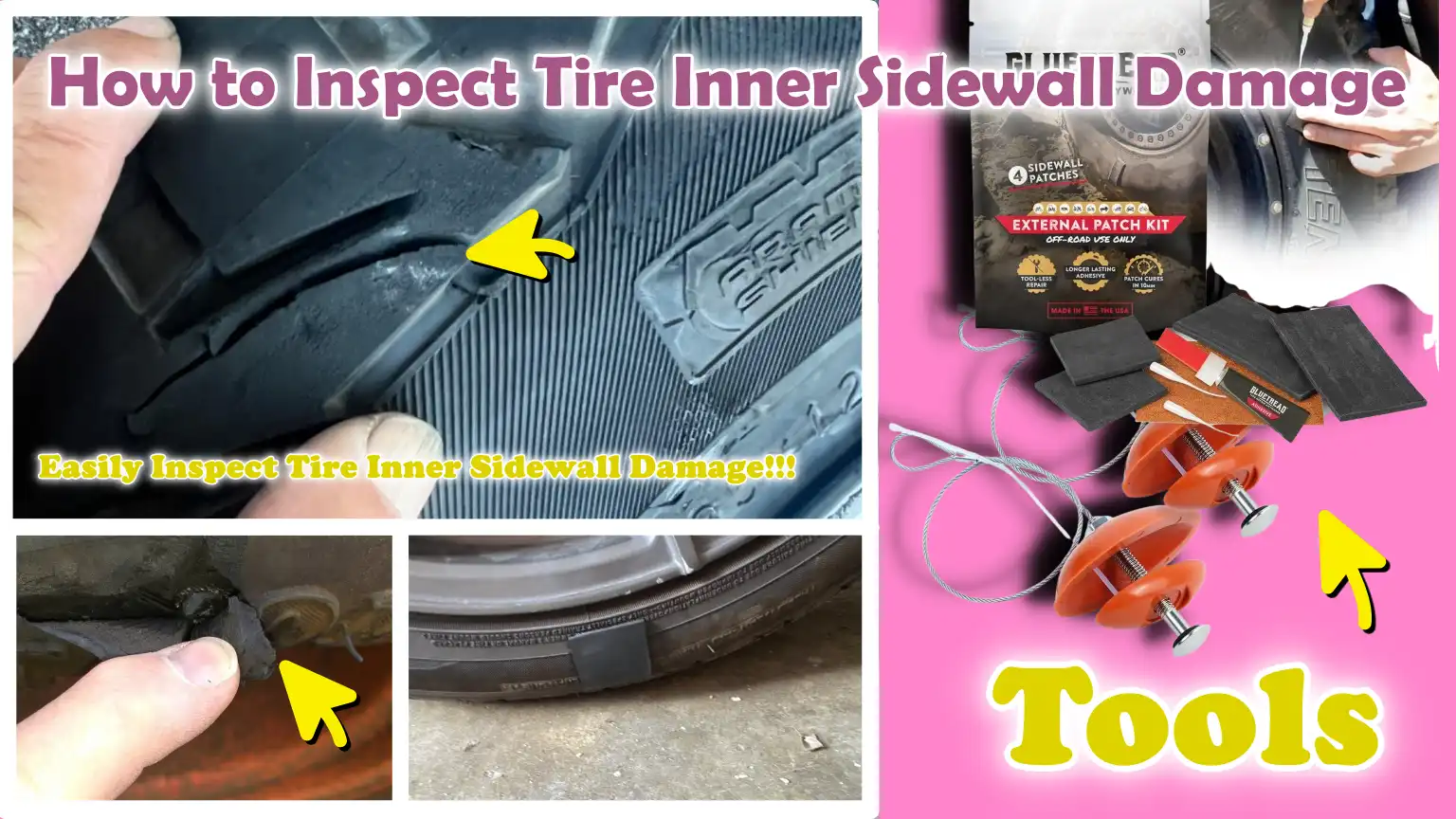
Which is why, in this guide you’ll learn How to Inspect Tire Inner Sidewall Damage so that you can proper inspect that inner sidewall before a minor issue turns out into a dangerous situation.
What is the Inner Sidewall of a Tire?
The inner sidewall is the portion of the tire’s wall that faces inward; it is situated between the tread (the tire’s surface) and the wheel rim.
Unlike the outer sidewall, which is visible when you stand beside your vehicle, the inner sidewall faces toward the car’s suspension and underbody, making it very difficult to observe during a routine inspection.
Although this part of the tire may appear normal when viewed from the outside, it is, in fact, one of the most critical structural components, as it constantly flexes and changes shape while the vehicle is in motion.
Every time the tire rotates, accelerates, brakes, or absorbs road shocks, the inner sidewall helps manage that stress while simultaneously keeping the tire stable and maintaining its proper shape.
Tire manufacturers design this section using robust rubber and multiple layers of internal cords; this is necessary because the sidewall must be flexible enough to support the vehicle’s entire weight while ensuring a comfortable ride and maintaining excellent traction on the road.
1. Know the Defination and Location of the Inner Sidewall
The inner sidewall is located on the inward-facing side of the tire; this means that, rather than facing outward toward the road, it faces toward the chassis, brakes, suspension components and wheel well.
It connects the tire’s thick tread section to the “bead”, the part that forms a seal against the wheel rim.
Although drivers rarely catch a glimpse of it, this section is constantly subjected to movement and fluctuating pressure during everyday driving.
As the tire rotates, the sidewall flexes and extends thousands of times for every mile traveled.
This is why even minor damage to this component can eventually evolve into a serious problem over time.
Potholes, curb strikes, road debris, underinflation and overloading, all these factors can damage the inner sidewall, even if there is no visible damage to the tire’s outer surface.
In many cases, issues such as minor cracks, cord separation, ruptures, or hidden bulges originate within the inner sidewall, as it is exposed to heat accumulation and repetitive stress, conditions that drivers often overlook.
2. Structural Integrity and Its Role in Load-Bearing
The inner sidewall plays a crucial role in maintaining a tire’s structural integrity; this means it helps the tire retain its shape, strength and capacity to safely bear loads.
Tires are not merely air-filled rubber spheres; they are engineered systems composed of steel belts, textile cords, rubber compounds and reinforcing layers (plies), all of which work in unison under pressure.
The sidewall acts as a flexible support system that absorbs road shocks while simultaneously keeping the tire stable during cornering, braking and highway driving.
When a vehicle carries the weight of passengers, cargo, or a towed load, the sidewall directly withstands that pressure.
If the inner sidewall is compromised by an impact or suffers from low air pressure, the tire may flex excessively, generate excessive heat and ultimately fail.
This is why damage to the sidewall is considered far more dangerous than wear and tear on the tire’s outer surface (tread).
Even a minor bulge or crack can signal a structural defect within the tire, as the internal reinforcing cords may have already been compromised.
Once the structural integrity of the sidewall is compromised, the risk of sudden air loss or a tire blowout increases significantly, specially at high speeds.
3. Why Is Inspecting the Inner Sidewall Difficult?
Inspecting the inner sidewall is primarily difficult because it remains hidden behind the wheel assembly and suspension components.
Most drivers, when checking their tires, focus their attention solely on the outer sidewall; this means that damage to the inner section can go unnoticed for weeks or even months.
In many vehicles, the clearance between the tire and the suspension is very limited, making it difficult to fully view the inner surface without turning the steering wheel or completely removing the tire.
Dust, shadows and poor lighting conditions can also obscure small cracks or cuts, which may gradually evolve into major problems.
Unlike damage to the tire tread, which is usually easy to identify, symptoms of damage to the inner sidewall often manifest initially in indirect ways, such as gradual air loss, unusual vibrations, uneven tire wear, or frequent low-tire-pressure warnings.
Because this area is difficult to access, many drivers do not inspect it until a mechanic performs a comprehensive tire inspection.
This hidden nature is one of the primary reasons why damage to the inner sidewall can become so dangerous, often without anyone even realizing that a problem exists.
Know, Common Causes of Inner Sidewall Damage
Damage to the inner sidewall can occur gradually over time or suddenly following a severe impact.
Many drivers remain unaware of this damage until the tire begins to lose air or a serious safety issue arises.
As a vehicle travels, the inner sidewall constantly flexes and bends; this means that with every mile driven, it is subjected to heat, pressure and stress.
Because this section remains hidden behind the wheel and suspension components, minor issues often go unnoticed until they escalate into dangerous hazards.
Understanding the most common causes of inner sidewall damage can help drivers avoid the costly expense of tire replacement, enhance road safety and extend the lifespan of their tires.
In many instances, sidewall damage is not the result of a manufacturing defect, but rather stems from daily driving conditions, poor maintenance habits, or tire misuse.
1. Road Hazards
Road hazards are one of the primary causes of inner sidewall damage, as tires are subjected to severe shocks whenever they face uneven or rough surfaces.
Potholes are particularly dangerous; when a tire slams into a deep pothole, the sidewall can become pinched between the wheel rim and the road surface.
This sudden compressive force can weaken the internal cords within the sidewall, even if no visible damage is apparent from the outside.
Any sharp debris scattered on the road such as: metal shards, broken glass, nails, stones, or construction materials, as it can also cut or puncture the sidewall area.
In some situations, the outer sidewall may appear intact, yet the inner sidewall may have already sustained internal damage due to an impact.
Roadside curbs also present a common hazard; scraping against or striking a curb places stress on the sidewall, creating weak points within the tire’s internal structure.
Over time, repeated exposure to rough roads and impacts can lead to cracks, bulges, or internal separation within the tire, thereby increasing the risk of tire failure.
2. Underinflation
Underinflation is one of the most detrimental conditions for a tire’s sidewall, as low air pressure forces the tire to flex far beyond its designed capacity.
A properly inflated tire maintains its shape and distributes the load evenly across both the tread and the sidewall.
When air pressure drops, the sidewall is subjected to excessive flexing with every rotation of the wheel; this generates heat within the rubber and the reinforcing cords, while also increasing internal stress.
This process of continuous and excessive flexing gradually weakens the tire’s structure over time, eventually leading to issues such as cracks, bulges, or internal separation within the sidewall.
Many drivers do not immediately realize that a tire is underinflated, as modern tires often appear normal even when their air pressure has dropped to dangerously low levels.
Driving long distances on underinflated tires is particularly hazardous, as heat accumulates very rapidly inside the tires when traveling at high speeds on highways.
Excessive heat is the greatest enemy of tire durability, as it degrades the internal bonding materials and compromises the structural integrity of the entire tire.
Therefore, maintaining the correct air pressure in your tires is one of the most critical steps in protecting the inner sidewalls from damage.
3. Overloading the Vehicle
Overloading a vehicle places immense stress on the tires, forcing the sidewalls to bear a weight exceeding their designated capacity.
Every tire has a maximum weight-bearing capacity (load rating) that determines the maximum weight it can safely support.
When the combined weight of passengers, luggage, towed loads, or heavy equipment exceeds this limit, the pressure on the sidewalls increases significantly while driving, subjecting them to excessive strain.
This excessive pressure forces the inner sidewalls to work harder, generating excessive heat and accelerating wear within the tire’s internal structure.
Overloaded tires may exhibit visible bulges or subtle deformations and this persistent stress can cause the sidewalls to weaken over time.
In severe cases, the tire’s internal cords may begin to separate, potentially leading to sidewall bulges or a complete structural failure of the tire.
Driving overloaded vehicles on long highway journeys is particularly hazardous, as the combination of heat, high speeds and heavy loads vastly increases the likelihood of sidewall failure.
Many drivers do not realize that even slight, persistent overloading over time can reduce a tire’s lifespan and heighten the hidden risk of internal damage.
4. Improper Installation or Fitting
Improper installation or fitting of a tire can damage its inner sidewall even before the vehicle hits the road.
When mounting tires, they must be carefully seated onto the wheel using the correct tools and appropriate pressure.
If a tire is forced onto the rim incorrectly, the sidewall or bead area may become pinched, torn, or subjected to excessive stress.
The bead is the sturdy edge of the tire that grips the wheel rim tightly; damage to this component can compromise the structural integrity of the inner sidewall.
The use of incorrect tools, excessive force, or a lack of lubrication during installation can cause minor internal injuries that may not become apparent until much later.
In some instances, the tire may begin to leak air slowly or exhibit unusual vibrations, as its internal structure was compromised during the installation process.
Improper wheel alignment or a lack of proper balancing can also exert uneven pressure on the sidewall over time.
Therefore, it is crucial to have tires installed by a professional and to have them inspected regularly to ensure their safety and to detect any hidden damage.
5. Aging and ‘Dry Rot’
Even if a vehicle is not driven frequently, tires naturally age over time, as exposure to heat, oxygen, moisture and sunlight causes the rubber to gradually deteriorate.
This aging process is commonly referred to as “dry rot,” and it can significantly weaken the structural integrity of the inner sidewall.
As the rubber ages, it loses its elasticity and becomes increasingly hard and brittle.
Small cracks may begin to appear on the sidewall surface and the internal bonding materials can gradually deteriorate.
Fluctuations in temperature, prolonged periods of vehicle inactivity and exposure to ultraviolet (UV) rays accelerate this process.
Even tires with seemingly adequate tread depth can be unsafe if the rubber in their sidewalls has degraded due to aging.
Issues such as hidden internal cracks, air leaks, or sidewall separation are more common in older tires, as their constituent materials are no longer as strong or resilient as they once were.
For this reason, a tire’s age is just as critical a factor as its tread wear.
Many tire manufacturers and safety experts recommend regularly checking the tire’s date of manufacture and replacing older tires whenever structural damage is detected that could compromise safety.
Learn Some Warning Signs of Inner Sidewall Damage
Damage to the inner sidewall is particularly dangerous because it often begins insidiously and remains hidden until a clear issue with the tire’s performance becomes apparent.
Unlike tread damage, which can usually be easily identified at a glance, inner sidewall issues often fester within the tire’s internal structure for days or months before becoming clearly visible.
The function of the sidewall is to support the vehicle’s weight, absorb shocks and help maintain the tire’s shape while driving.
When the inner sidewall weakens or sustains damage, the tire is unable to properly withstand internal pressure and the stresses of the road.
In many cases, the warning signs are very subtle and easily overlooked; however, over time, they typically escalate into more serious problems.
Identifying these symptoms in their early stages can prevent sudden tire failure, costly repairs and hazardous driving situations.
1. Gradual Air Loss Without an Obvious Puncture
The most common sign of inner sidewall damage is a persistent and gradual loss of air from the tire, even if no nail, screw, or puncture is visible in the tread area.
Many drivers repeatedly reinflate their tires, unaware that the root of the problem may actually be hidden within the sidewall itself.
Tiny cracks in the inner sidewall, weakened rubber, or structural deterioration within the tire’s interior, all of these factors can cause air to leak slowly from the tire over time.
In some instances, this leak is so minor that the tire loses only a few pounds of air per week, making it difficult to detect the problem in its early stages.
Modern ‘Tire Pressure Monitoring Systems’ (TPMS) can provide alerts regarding continuously dropping pressure, even if you have recently inflated your tires to the correct level.
Such slow leaks are considered serious, as diminishing air pressure increases stress on the sidewall, potentially causing any pre-existing defects to deteriorate rapidly.
If a tire is consistently losing air without any visible puncture, it should never be ignored; a hidden structural defect within the tire’s internal components could lead to a sudden blowout or sidewall failure while driving.
2. Vibrations While Driving
Unusual vibrations while driving can also signal a defect in the tire’s inner sidewall, particularly if the vibration begins suddenly or intensifies over time.
A healthy tire rotates uniformly and maintains perfectly balanced contact with the road surface.
When a tire’s inner sidewall (or casing) is compromised, the tire may lose its proper shape or suffer from structural weakness in its internal construction, thereby affecting its rotational dynamics.
This can result in vibrations felt through the steering wheel, the vehicle’s floor, or the seats, specially when driving at high speeds on a highway.
Many drivers assume that vibrations are solely caused by wheel balancing issues; however, defects within the tire’s internal structure can also be a significant contributing factor.
If the sidewall is compromised, the distribution of pressure across the tire becomes uneven during rotation, leading to vehicle instability and altered handling characteristics.
In more severe cases, particularly if the inner sidewall begins to separate from the rest of the tire’s structure, the tire may feel bouncy or unstable, specially when cornering or braking.
Ignoring such vibrations can be dangerous, as the intensity of the vibration increases in tandem with the deterioration of the tire’s structural integrity.
If sudden vibrations occur without any apparent cause, the inner sidewall of the tire should be inspected with extreme care.
3. Uneven Tire Wear
Uneven tire wear is another serious warning sign, as a defect in the inner sidewall alters the way the tire makes contact with the road surface.
When the sidewall loses its structural rigidity, or, in some areas, its flexibility, it becomes unable to distribute the vehicle’s weight evenly across the tire’s tread (the rolling surface).
Consequently, certain sections of the tire may wear down much faster than others.
Drivers may observe excessive wear on one edge of the tread, unusual wear patterns, or smooth spots that do not align with the normal aging process of the tire.
In some instances, the inner edge of the tire may wear rapidly because a compromised sidewall disrupts the tire’s alignment and stability while the vehicle is in motion.
Although alignment issues and suspension problems can also cause uneven tire wear, a defect in the inner sidewall is often overlooked as a potential primary culprit.
Uneven tire wear is far more than just a cosmetic issue; it diminishes tire traction, reduces the tire’s lifespan and increases the risk of hydroplaning on wet roads.
Whenever an unusual pattern of tire wear is observed, it is imperative to conduct a thorough inspection of both the tire tread and the inner sidewall.
4. Bulges or Bubbles
Bulges or bubbles on a tire’s sidewall constitute one of the most serious warning signs of internal tire damage, as they often indicate that the internal reinforcing cords have already weakened or snapped.
Even if a bulge is small or barely visible from the outside, it should be treated as a major safety concern.
A tire’s sidewall is typically smooth and uniform, as its internal structure distributes air pressure evenly throughout the tire.
When the internal cords break, the air pressure pushes the weakened rubber outward, creating a bulge or bubble.
This damaged section of the tire becomes significantly weaker than the rest of the tire and can burst suddenly without warning.
Such bulges often form after striking potholes, curbs, or road debris, particularly when the vehicle is traveling at high speeds.
Many drivers mistakenly assume that small bubbles are harmless; however, even a minor bulge on the sidewall signals a compromise in the structural integrity of the tire’s internal framework.
As the sidewall constantly flexes and bends while driving, this weakened area can expand rapidly, thereby increasing the risk of a tire blowout.
5. Sudden Drop in Tire Pressure
A sudden drop in tire pressure is the clearest indication that the sidewall has already sustained severe damage.
Unlike slow leaks, a sudden loss of pressure can occur very rapidly; this often happens after striking a pothole, a curb, or another road hazard.
In some instances, the inner lining of the sidewall cracks, ruptures, or becomes dislodged, causing air to escape at a rate far exceeding that of a typical leak.
Drivers may sense that the vehicle is pulling to one side, experience difficulty turning the steering wheel, or notice a warning light suddenly illuminating on the dashboard.
A rapid loss of tire pressure is extremely dangerous, as it almost immediately compromises the vehicle’s handling, braking capability and overall stability.
When driving at high speeds on a highway, severe damage to the sidewall can cause a tire to fail completely within a matter of seconds, significantly increasing the risk of losing control of the vehicle.
Even if a tire appears to be intact after being reinflated, its internal structure may have already sustained irreparable damage.
Any sudden drop in tire pressure, particularly one without an apparent cause, should be inspected by a specialist as soon as possible; continuing to drive on a tire with a damaged sidewall significantly heightens the risk of total tire failure and a blowout.
Tools
| Tools | How to Use It Properly | Important Tips |
|---|---|---|
| Flashlight or Work Light | Instead of focusing the light directly on a single spot, sweep it across the inner sidewall of the tire. Rotating the light from various angles makes raised areas, bulges, or minor cracks appear more clearly. Rotate the tire slowly while inspecting its entire surface. | LED flashlights generally work best, as they provide a brighter and more intense beam. Avoid inspecting tires in deep shadows or dimly lit garages, as minor defects can easily be overlooked in such environments. |
| Tire Pressure Gauge | Remove the valve cap and press the gauge firmly onto the valve stem until a reading appears. Compare this reading against the recommended tire pressure specified on the sticker located on the driver-side door frame or in the owner’s manual. | Do not attempt to estimate tire pressure merely by visual inspection, as modern tires can appear perfectly normal even when their pressure is significantly low. For the most accurate reading, always check tire pressure when the tires are cold. |
| Jack and Jack Stands | Use the jack only at the specific lifting points designated by the vehicle manufacturer. Once the vehicle has been raised, firmly position a jack stand underneath it before commencing any work near or behind the wheel. Slowly lower the vehicle onto the jack stand. | Never rely solely on a hydraulic jack, as it could fail suddenly at any moment. Using a jack stand for safety is absolutely essential when inspecting or removing a wheel. |
| Lug Wrench | Before lifting the vehicle, slightly loosen the lug nuts (wheel bolts). Once the vehicle has been safely raised, completely remove the nuts and carefully pull the wheel straight outward. | Keep the lug nuts collected in a single, secure location to ensure they do not get lost. When reinstalling the wheel, tighten the lug nuts alternately (in a criss-cross pattern) to ensure that the pressure on the wheel remains uniform. |
| Gloves | Be sure to wear gloves when running your hands over the tire’s sidewall to detect soft spots, bulges, cuts, or rough patches; these defects are not always visible to the naked eye. | Sturdy work gloves provide superior protection against sharp objects and the rough surface of the tire. Avoid wearing loose-fitting gloves, as they can hinder your manual dexterity and finger control during the inspection process. |
| Spray Bottle With Soapy Water – Optional | Mix a small amount of dish soap with water in a spray bottle. Spray this solution onto the sections of the tire’s sidewall where you suspect a problem and observe carefully to see if any bubbles begin to form. | This method is highly effective for detecting slow air leaks in the tire. Afterward, wipe the tire dry with a cloth to prevent dust and dirt from accumulating on its surface; this keeps the tire clean and makes visual inspection easier. |
How to Inspect Tire Inner Sidewall Damage – Working Guide
Inspecting the inner sidewall of a tire is one of the most critical safety checks, one that many drivers frequently overlook.
The inner sidewall faces the vehicle’s suspension and undercarriage; consequently, any damage to this area often remains hidden until the tire begins to lose air, vibrations occur, or a structural defect becomes apparent.
A thorough inspection allows for the early detection of problems, before they escalate into dangerous situations.
Even minor cracks, cuts, or bulges in the sidewall can compromise the tire’s internal structure and significantly increase the risk of a sudden blowout while driving at high speeds on the highway.
Following the correct inspection procedure also helps drivers understand the true condition of their tires, rather than relying solely on their external appearance.
Many serious tire-related issues originate within the sidewall itself, long before they become visible from the outside.
1. Park the Vehicle in a Safe Location and Secure It
Before inspecting any tire, the vehicle must be parked on a level and stable surface to minimize movement and ensure safety.
On uneven ground, the vehicle may become unstable during the inspection or while being jacked up, particularly if a wheel needs to be removed.
After parking, always fully engage the parking brake, as this helps prevent the vehicle from rolling unexpectedly.
If the vehicle has a manual transmission, engaging it in first gear or reverse gear provides additional stability.
For automatic vehicles, shifting the gear selector to “Park” locks the transmission.
Safety is paramount when inspecting tires, as even the slightest movement of the vehicle while working near the wheels can create a hazardous situation.
Inspecting in daylight or in a well-lit area makes it easier to see, allowing you to easily spot minor cracks or defects that might be difficult to detect in the dark.
2. Turn the Steering Wheel – For Front Tires Only
For the front tires, turning the steering wheel is the easiest way to inspect the inner sidewall without removing the wheel.
Turning the steering wheel outward creates more clearance between the tire and the suspension components, providing a better view of the inner surface.
This simple adjustment exposes areas that are typically hidden when the wheels are pointed straight ahead.
The driver should slowly turn the steering wheel either fully to the left or fully to the right, depending on which tire is being inspected.
Once the wheel is turned, a flashlight can be used to get a clearer view of the sidewall.
Although this method does not reveal the entire inner surface, it often provides enough clearance to identify visible damage such as: cuts, bulges, cracks, or embedded debris.
This step is particularly useful for conducting an immediate inspection after hitting potholes, curbs, or road debris.
3. Lift the Vehicle – If Necessary
On some vehicles, there may not be sufficient clearance to properly inspect the inner sidewall, meaning the vehicle may need to be lifted.
Using a hydraulic jack allows the tire to hang freely in the air, providing ample working space for the inspection.
However, the vehicle should always be lifted with caution, as improper jack placement can result in damage to the vehicle or pose a serious safety risk.
Every vehicle features specific jacking points designed to safely support the vehicle’s weight; these locations are typically specified in the owner’s manual.
Once the vehicle has been lifted, always place a jack stand underneath it for support before commencing any work near the wheel.
Hydraulic jacks are designed solely to lift the vehicle, not to support it for extended periods; therefore, relying solely on the jack can be dangerous, particularly if the hydraulic pressure were to suddenly fail.
Lifting the vehicle also allows the wheel to rotate freely, making it easier to inspect every section of the inner sidewall from various angles.
4. Remove the Wheel
When a thorough and detailed inspection is required, removing the wheel becomes essential.
Certain types of damage to the inner sidewall of the tire often remain hidden until the wheel is removed from the vehicle.
This is particularly true in cases involving small cracks, internal bulges, bead damage, or abrasions on the sidewall located near suspension components.
Before lifting the vehicle, the lug nuts should be slightly loosened while the tire remains in contact with the ground.
Once the vehicle has been safely lifted, completely remove the lug nuts and carefully pull the wheel outward.
Removing the wheel provides unobstructed access to the inner sidewall, thereby enabling a more precise inspection.
This step is recommended whenever the tire is losing air without an obvious cause, if recurring TPMS warnings appear, if unusual vibrations are felt, or if signs of damage are visible following an impact with a pothole or curb.
5. Visual Inspection of the Inner Sidewall
One of the most critical aspects of assessing sidewall damage is a careful visual inspection.
The inner sidewall should be examined slowly and under bright lighting, as minor issues often go unnoticed at first glance.
Cracks in the rubber may indicate deterioration due to aging, heat damage, or drying out, while cuts or abrasions may suggest contact with sharp debris or suspension components.
Bulges or blisters are particularly serious, as they typically indicate that the tire’s internal reinforcing cords have been compromised or severed.
Drivers should also carefully check the sidewall area for embedded objects such as: nails, screws, metal shards, or sharp stones.
Exposed wires, peeling rubber layers, or an uneven surface texture serve as additional warning signs indicating that the tire’s structural integrity may already be compromised.
Even minor-seeming imperfections should be taken seriously, as sidewall damage can escalate rapidly due to heat and the stresses of driving.
6. Feel for Irregularities
Some forms of tire damage are not clearly visible but can be detected by touch.
Carefully running your hand along the inner sidewall helps identify soft spots, bulges, depressions, or deformities, which may signal hidden internal damage.
The sidewall surface should generally feel smooth and uniformly firm across the entire tire.
If any section feels softer, rougher, or more swollen than the surrounding areas, the internal structure may be compromised.
Bulges in the tire are often easier to identify by touch than by sight, as subtle changes in the tire’s shape become more apparent when felt by hand.
It is essential to wear gloves during this process to protect yourself from sharp fragments, exposed wires, or rough rubber surfaces.
Inspecting the tire by touch also helps detect “sidewall separation”, a condition in which the tire’s internal layers begin to detach due to impact damage, aging, or excessive heat.
7. Check for Air Leaks
Air leaks are the most obvious indication of sidewall damage.
An easy and effective method for detecting small leaks is to use soapy water.
A solution can be prepared by mixing a small amount of dish soap with water; this mixture reacts visibly when air is escaping from the tire.
Spray or apply this solution to any suspected area on the sidewall and observe for rising bubbles.
If air is escaping, even a minuscule leak will generate foam.
This method is particularly useful when tire pressure is gradually dropping, yet no obvious puncture is visible in the tread (the tire’s upper surface).
A leak in the sidewall is a matter of serious concern, as it often indicates cracks, cuts, or structural weaknesses within the tire’s internal framework, issues that can deteriorate further over time.
Air leakage from a tire’s sidewall is generally considered unsafe because the sidewall undergoes constant flexing while the vehicle is in motion.
8. Inspect from Multiple Angles
To conduct a thorough examination, it is essential to inspect the tire from several different angles, as certain types of damage may only become apparent under specific lighting conditions or perspectives.
Slowly rotating the tire allows for a systematic, section-by-section inspection of the entire sidewall.
By scanning the sidewall’s surface, from top to bottom and around its entire circumference, one can detect subtle bulges, cracks, or irregularities that might not be visible from a single fixed vantage point.
The positioning of a flashlight is also crucial, as casting oblique light across a damaged section of the sidewall often creates small shadows that highlight the defect.
Carefully rotating the tire during the inspection increases the likelihood of detecting hidden issues before they evolve into serious safety hazards.
Many drivers make the mistake of inspecting only the visible portion of the tire; however, damage can occur anywhere along the entire circumference of the sidewall.
A slow and thorough inspection offers the best chance of success.
Know About The Types of Potential Damage to the Inner Sidewall of a Tire
The inner sidewall of a tire can sustain damage in various ways and each type of damage affects the tire’s safety differently.
As the sidewall remains constantly flexible and bears the entire weight of the vehicle, even minor defects can become hazardous if left unaddressed.
Unlike damage to the outer part of the tire (the tread), which is often visible during routine inspections, issues with the inner sidewall typically remain hidden behind the wheel and suspension components.
Many drivers only become aware of this problem when they notice symptoms such as low tire pressure, vibrations, or an unusual sensation while driving.
Understanding the different types of damage that can affect the inner sidewall helps drivers recognize early warning signs, enabling them to make safe decisions before the tire becomes unsafe for use.
Some types of damage may appear minor at first; however, due to the constant pressure, heat and flex exerted on the sidewall with every mile driven, these issues can deteriorate rapidly.
1. Cuts and Cracks
Cuts and cracks are among the most common forms of damage to the inner sidewall, typically caused by sharp road debris or sudden impacts with objects.
Nails, broken metal fragments, sharp stones, shards of glass and rough road surfaces can cut into the sidewall while the vehicle is in motion.
In many instances, damage occurs when the vehicle strikes debris while traveling at high speeds, or when the sidewall gets pinched and compressed between a pothole and a curb.
Unlike minor punctures occurring in the tread area, cuts in the sidewall are far more dangerous because the sidewall is thinner and more flexible than the tread.
The sidewall also contains essential reinforcement cords that help the tire maintain its shape and structural integrity under pressure.
If a cut is deep enough to reach these internal cords, the tire’s structure can suffer severe damage.
Some cuts may appear shallow on the surface, yet they can still damage the internal layers hidden within the tire.
Deep cuts can cause rapid air loss and the flexing and compression of the tire while driving can cause these cuts to widen further.
Even small cuts in the sidewall should be carefully inspected, as the constant stress from road contact can cause them to enlarge over time, thereby increasing the risk of sudden tire failure.
2. Bulges or Bubbles
Bulges or bubbles represent one of the most dangerous forms of sidewall damage, as they typically indicate a major structural defect within the tire’s internal framework.
A healthy tire possesses a smooth and uniform surface because its internal cords distribute air pressure evenly throughout the tire.
When these reinforcement cords snap or become dislodged, the air pressure exerts outward force on the weakened rubber, resulting in the formation of a bulge or bubble on the sidewall.
This type of damage is often caused by potholes, curbs, road debris, or other forceful impacts where the tire gets pinched between the wheel rim and an obstruction.
Even if the outer rubber appears largely intact, the internal support layers may have already been severely compromised.
A bulge in the sidewall is extremely dangerous because this weakened section becomes significantly thinner and less capable of withstanding pressure and heat.
Due to the constant flexing and compression of the tire while driving, this bulge can expand rapidly and eventually burst without any warning.
Such a defect is particularly hazardous when driving at high speeds on a highway, as the sudden loss of air pressure can result in a complete loss of vehicle control.
Even a small bulge should never be ignored, as it almost invariably indicates that the tire requires replacement rather than repair.
3. Cracks – Dry Rot
Cracks in the tire sidewall, commonly referred to as “dry rot”, are a form of deterioration resulting from the aging of the tire and its exposure to environmental elements.
Over time, exposure to heat, oxygen, sunlight, moisture and temperature fluctuations causes the tire’s rubber to naturally degrade.
As the rubber ages, it becomes less flexible and more brittle, leading to the appearance of small cracks on the surface of the sidewall.
These cracks may initially be very minute, but as the rubber continues to deteriorate, they can extend deeper into the tire’s internal structure.
Dry rot is particularly prevalent in older tires, in vehicles that have remained unused for extended periods, or in tires that have been exposed to intense sunlight and extreme temperatures.
Even tires with adequate tread depth can be unsafe if they are affected by dry rot.
Small cracks allow moisture and air to penetrate the inner layers of the tire, potentially weakening the bonding materials and internal cords.
Over time, this diminishes the tire’s ability to safely withstand internal pressure, impacts and heat.
Drivers often underestimate the severity of dry rot because the tire may remain inflated and appear to be in good condition; however, aged rubber loses its structural integrity, significantly increasing the risk of sudden cracks or sidewall failure while driving.
4. Abrasion Marks
Scuff marks form when the tire’s sidewall repeatedly rubs against another surface, causing the rubber to wear away over time.
On the inner sidewall, this type of damage often occurs when the tire comes into contact with suspension components, wheel well liners, brake parts, or other adjacent vehicle components.
Improper wheel alignment, incorrect tire sizing, worn suspension parts, or faulty steering components can cause the tire to rub against areas where it should not make contact.
The friction generated by this constant contact gradually wears away the rubber from the sidewall surface and weakens the tire’s structural integrity.
In some cases, signs of wear manifest as smooth, worn patches, scuffed rubber, or thin grooves on the sidewall.
Severe abrasion can eventually expose the internal cords lying beneath the rubber, significantly increasing the risk of tire failure.
The heat generated by friction also accelerates the sidewall’s deterioration process and can, over time, lead to internal separation.
If the damage caused by abrasion becomes severe, drivers may notice rubbing noises, the smell of burning rubber, or unusual wear patterns.
As a tire’s sidewall is not designed to withstand direct abrasion, any visible signs of wear should be inspected immediately so that the underlying mechanical issue can be identified and rectified before the tire becomes unsafe.
So, When Does The Damage to a Tire’s Inner Sidewall Become Dangerous?
Damage to a tire’s inner sidewall becomes dangerous when the tire is no longer capable of safely withstanding air pressure, vehicle weight and the stresses of normal driving.
The sidewall is one of the most critical structural components of a tire, as it constantly flexes while absorbing road shocks and supporting the entire weight of the vehicle.
Unlike damage to the tread, which can sometimes be safely repaired, damage to the sidewall is far more serious, as it directly compromises the tire’s internal integrity and stability.
Many sidewall issues may appear minor at first, but the internal structure beneath the surface may already be severely compromised.
Heat, speed, pressure and road stresses can cause damaged areas to deteriorate rapidly, particularly when driving on highways.
It is crucial to understand when damage to a tire’s inner sidewall renders it unsafe, as continuing to drive on a compromised tire significantly increases the risk of sudden air loss, a blowout, difficulty handling the vehicle and a complete loss of vehicle control.
1. Any Visible Bulge Requires Immediate Tire Replacement
Any visible bulge or bubble on the inner sidewall is considered the clearest indication that it is no longer safe to drive on that tire.
A tire’s sidewall should typically appear smooth and uniform in shape, as the internal reinforcing cords distribute air pressure evenly throughout the entire structure.
When a bulge forms, it generally signifies that these internal cords have broken or separated, allowing the air pressure to push the weakened rubber outward.
This type of damage is often caused by potholes, curb strikes, road debris, or other forceful impacts where the tire gets pinched between an obstruction and the wheel rim.
Even if the bulge appears minor, the internal structure of that specific area has already been compromised, rendering the tire significantly weaker than normal.
As the tire rotates and flexes during driving, the stress on this weakened section intensifies, which can then lead to a sudden and unannounced blowout.
High speeds, hot weather and heavy loads further exacerbate this risk, as heat and internal pressure build up rapidly within the compromised tire.
For this reason, any bulge on the sidewall should be considered a serious safety hazard, necessitating the immediate replacement, rather than repair, of the tire.
2. Deep Cuts That Expose Internal Cords
Deep cuts in the sidewall become extremely dangerous when they expose the tire’s internal reinforcing cords or fabric plies.
These cords are critical components, as they provide the necessary structural integrity to maintain air pressure and preserve the tire’s shape while the vehicle is in motion.
When a sharp object, a road hazard, or a curb impact cuts through the rubber deeply enough to reach the tire’s inner layers, the tire loses a significant portion of its structural strength.
In the damaged area, the exposed cords may appear as fine threads, fibers, or metal wires.
Once the cords are compromised, moisture, dirt and air can infiltrate the tire’s structure, causing it to gradually deteriorate over time.
Sidewalls are thinner and more flexible than the tread (the tire’s surface); consequently, they cannot safely withstand deep structural damage in the same way that certain types of punctures in the tread might.
A cut that penetrates down to the internal cords can expand rapidly under pressure and may ultimately lead to a complete tire blowout while driving.
As the sidewall is constantly flexing, repairing deep cuts in the sidewall is generally not considered safe, particularly when the structural layers are visible.
3. Multiple Cracks or Excessive Aging
Multiple cracks on the sidewall are often indicators of excessive aging, dry rot, or prolonged rubber degradation.
Tire rubber naturally deteriorates over time due to exposure to oxygen, sunlight, heat, moisture and temperature fluctuations.
As the rubber ages, it becomes harder, less flexible and more brittle, leading to the formation of cracks on the sidewall surface.
Small cracks may not appear dangerous initially, but extensive cracking typically signals that the structural integrity of the entire sidewall is compromising.
Aged tires lose their ability to flex properly and safely withstand road pressures, thereby increasing the risk of sudden cracking or sidewall failure while driving.
This issue is particularly common in vehicles that remain stationary for extended periods, as tires continue to age even when they are not being driven.
Excessive aging can also weaken the internal bonding agents that hold the tire’s layers together.
As these bonds degrade, the risk of internal separation and air leaks increases significantly.
Tires exhibiting extensive cracking on their sidewalls should be carefully inspected, as even adequate tread depth cannot compensate for compromised structural rubber.
4. Persistent Air Leakage
Persistent air leakage is another critical indicator that the tire’s inner sidewall has been compromised, potentially jeopardizing the tire’s structural integrity.
A healthy tire should maintain its pressure consistently over an extended period without requiring frequent inflation.
When a tire repeatedly loses air in the absence of any obvious puncture, the leakage may stem from minute cracks, cuts, or hidden internal damage within the sidewall area.
Sidewall leaks are particularly serious because the sidewall undergoes constant flexing and movement while the vehicle is in motion; this makes repairs less reliable and places increased stress on the weakened areas.
Driving on an underinflated tire generates excessive heat and causes increased sidewall flexing, accelerating internal damage and heightening the risk of sudden tire failure.
Persistent leakage also negatively impacts vehicle handling, braking, fuel efficiency and tire wear, as underinflated tires are unable to distribute the vehicle’s weight evenly across the road surface.
Even gradual leaks should never be ignored, as sidewall damage tends to progressively worsen over time.
If a tire continues to lose pressure despite repeated inflation, it often signals a deeper underlying issue that may necessitate a complete tire replacement to ensure safe driving.
Can the Inner Sidewall Be Repaired?
Damage to a tire’s inner sidewall constitutes one of the most severe types of damage, as the sidewall plays a critical role in supporting the vehicle, absorbing road shocks and maintaining the tire’s structural integrity under pressure.
Unlike the tread area, the portion of the tire that remains in contact with the road, which is significantly thicker and specifically designed for robust contact with the road surface, the sidewall is engineered to maintain constant flexibility while the vehicle is in motion.
With every rotation of the tire, the sidewall flexes and compresses, bearing the entire weight of the vehicle.
Due to this constant flexing, even a minor defect in the sidewall can compromise the tire’s internal structure, thereby significantly increasing the risk of sudden tire failure.
Many drivers assume that cuts, cracks, or leaks in the sidewall can be repaired just as easily as punctures in the tread; however, the tire industry views sidewall repairs from a completely different perspective, as they pose significant safety risks.
In most cases, damage to the inner sidewall cannot be safely repaired; therefore, completely replacing the tire remains the only appropriate solution.
1. Why are Sidewall Repairs Generally Considered Unsafe?
Sidewall repairs are generally considered unsafe because the sidewall is subjected to far greater flexing and stress than the tread area.
While the tread portion of the tire remains relatively stable when in contact with the road, the sidewall undergoes constant flexing as the tire rotates, turns, accelerates and absorbs road shocks.
This constant flexing generates heat and causes fluctuations in internal pressure, which, over time, can compromise the structural integrity of the materials used in the repair.
If the sidewall has sustained a cut, crack, puncture, or structural damage, that specific area may lack the necessary strength to safely maintain air pressure while the vehicle is in motion.
Even if a patch temporarily seals an air leak, it typically cannot restore the original structural strength provided by the internal cords and rubber layers.
The sidewall generates far more heat than many drivers realize, particularly during highway driving or when carrying heavy loads, and this excessive heat can lead to a sudden failure of the repaired section.
A failure in a sidewall repair can result in sudden air loss, tread separation, or a tire blowout without any prior warning.
Because the sidewall constitutes such a critical component of the tire’s structure, most professional tire technicians refrain from repairing it due to the significant safety risks involved.
2. Industry Guidelines Regarding Sidewall Repair
Most tire manufacturers and tire safety organizations explicitly state that punctures in the sidewall, or damage to the internal structure of the sidewall, should not be repaired.
Industry regulations regarding sidewall repairs are far more stringent than those for punctures in the crown (tread area) of the tire, as the sidewall is primarily responsible for maintaining the tire’s stability and structural integrity.
According to repair guidelines, minor punctures located within the central portion of the tread area are permissible for repair, as this section of the tire is thicker, more stable and undergoes less flexing during vehicle operation.
However, the sidewall is subjected to constant pressure, causing it to flex continuously; consequently, patches and plugs applied to this specific area are entirely unreliable.
According to professional tire repair standards, repairs involving cuts, bulges, exposed cords, large punctures, or internal structural damage to the sidewall are generally considered unacceptable.
Even if a repair appears successful initially, if the sidewall has been compromised, it may continue to weaken internally while the vehicle is in motion.
Tire shops often refuse to repair sidewall damage, not merely because they wish to sell a new tire, but because an improperly executed repair poses a severe safety risk to both the driver and the passengers.
Modern tires feature a highly complex internal structure; once the sidewall layers have been compromised, it is generally impossible to restore the tire to its original strength and structural integrity.
3. When Replacing the Tire Is the Only Safe Option
Whenever signs of structural weakness such as: exposed cords, deep cracks, bulges, deep cuts, or persistent air loss, appear on the inner sidewall of a tire, replacement is the only safe option.
Any visible bubble or bulge is almost invariably an indication that the internal reinforcing cords have already snapped, significantly increasing the risk of a tire blowout.
Deep cuts that expose the underlying fabric or steel cords indicate that the tire’s structural integrity has deteriorated to a point where it cannot be safely repaired.
Tires exhibiting multiple cracks or severe rubber degradation also become unsafe, as aging rubber gradually loses its elasticity and strength over time.
Persistent air loss from the sidewall is another major warning sign, as it often points to hidden internal damage that continues to worsen while the vehicle is in motion.
Even if the tire holds air for a time, a compromised sidewall can fail suddenly under the stress of heat, high speeds, or road conditions.
Driving on highways significantly heightens this risk, as high speeds cause tires to overheat, placing excessive strain on already weakened areas.
In such situations, replacing the tire is the safest decision, as it restores the tire’s structural integrity and mitigates the risk of a blowout or loss of vehicle control.
Although replacing a tire may seem costly, driving on a tire with a damaged sidewall can lead to far more severe consequences, including vehicle damage, accidents, or serious safety hazards.
Know, Estimated Repair vs Replacement Costs
When drivers notice damage to the inner sidewall of a tire, their first question is often whether the tire can be repaired or if it must be replaced entirely.
In many cases, damage to the inner sidewall is so severe that a safe repair is not possible, as the sidewall constitutes a critical structural component of the tire.
While a simple tread puncture can sometimes be repaired at a low cost, sidewall issues often necessitate replacing the entire tire to ensure safe driving.
Understanding the cost difference between repairing and replacing a tire helps drivers make sound financial decisions while simultaneously maintaining the safety of their vehicle.
Although replacing a tire may seem expensive at first glance, delaying the process or attempting an unsafe repair can result in significantly higher costs over time, including damage to the suspension, reduced fuel efficiency, accidents, or total tire failure.
1. General Cost Ranges for Tire Replacement
The cost of replacing tires depends on the type of vehicle, the quality of the tires and their size.
In the United States, tires for standard passenger cars typically range in price from $100 to $250 per tire (for standard “all-season” models).
Premium brands and high-performance tires can be significantly more expensive; a single tire may sometimes cost between $300 and $500, or even more.
Trucks, SUVs, sports cars and larger vehicles typically require larger and more robust tires, which further increases the total replacement cost.
In addition to the price of the tires themselves, drivers may also incur costs for installation, balancing, valve stems, disposal fees for old tires and alignment checks.
These additional services may incur an extra cost ranging from $20 to $100, depending on the shop you visit and the type of vehicle you drive.
Although some drivers might consider opting for a temporary sidewall repair to save money, professional tire shops typically recommend replacing the entire tire, as the structural integrity of the sidewall is directly linked to driving safety and the tire’s lifespan.
2. Factors Influencing Tire Replacement Costs
The cost of replacing tires depends on several key factors.
One of the most prominent of these is brand reputation; well-known tire manufacturers often command higher prices for features such as superior rubber compounds, greater durability, a quieter driving experience and enhanced traction on wet or icy roads.
Tire size also plays a significant role, as larger wheels require larger tires, which consume more raw materials during production and feature a more robust construction.
“High-performance” tires, designed for sports cars or luxury vehicles, are generally more expensive because they are specifically engineered to deliver superior speed ratings, handling and grip.
The type of tire also matters; all-terrain, mud-terrain, run-flat, winter and off-road tires are typically more expensive than standard all-season tires.
Load and speed ratings can also drive up the cost, as heavy-duty tires, capable of supporting heavier loads or withstanding higher speeds, require more advanced structural engineering.
Some vehicles utilize specialized tire designs or staggered tire sizes (different sizes on the front and rear axles), which can limit available options and increase the overall cost of tire replacement.
Finally, geographic location, labor rates and current market demand can also influence pricing at local tire shops.
3. Why Delaying Tire Replacement Can Prove More Costly
Many drivers postpone replacing worn-out tires to avoid immediate expenses; however, deferring tire replacement often proves to be far more expensive in the long run.
Deterioration of the inner sidewall compromises the structural integrity of the tire, thereby increasing the risk of sudden air loss, blowouts and uneven tire wear.
Driving on worn-out tires can damage suspension components, wheel rims, steering linkages and alignment systems, as the tires are no longer capable of adequately supporting the vehicle.
Underinflated or structurally compromised tires also generate increased rolling resistance, which reduces fuel efficiency and drives up fuel costs over time.
In some instances, a single defective tire can exert uneven pressure on the remaining tires, thereby accelerating the wear-and-tear process for the entire set.
Delaying tire replacement also poses a serious safety hazard, as sidewall failure often occurs suddenly and without significant warning, particularly when driving at high speeds or in hot weather.
A blowout at high speeds can result in a loss of vehicle control, an accident, towing fees, the need for emergency roadside assistance and substantial repair costs for the vehicle itself.
Replacing a worn-out tire in a timely manner is far more economical than dealing with the financial and safety-related consequences that may arise from neglecting it.
How to Protect the Inner Sidewall from Damage
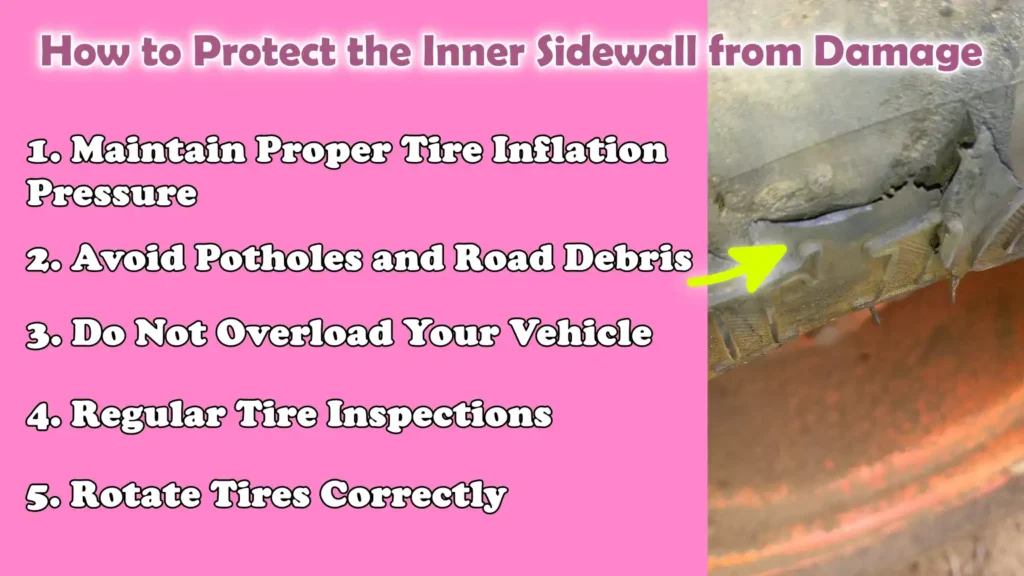
Protecting the inner sidewall from damage is far easier, and significantly less expensive, than dealing with the consequences of a compromised tire after the damage has already occurred.
The inner sidewall is the part of the tire subjected to the greatest stress, as it constantly flexes while supporting the vehicle’s weight, absorbing road shocks and withstanding pressure fluctuations during driving.
Many sidewall-related issues develop gradually over time, often stemming from improper tire maintenance, poor road conditions, or excessive stress placed on the tire.
The challenge lies in the fact that damage to the inner sidewall often remains hidden until the tire begins to lose air, starts to vibrate, or reveals a serious structural weakness.
Proper tire maintenance not only enhances safety but also extends the tire’s lifespan, improves fuel efficiency and reduces long-term repair costs.
By adopting a few simple precautions, you can significantly minimize the risks of sidewall cracks, bulges, internal separation and sudden tire blowouts.
Plus, there’s tire safety experts from the NHTSA that shows that thousands of crashes each year are just because of the poor tire maintenance and hidden structural damage as well, so this one particular reason of inner sidewall inspection becomes so important, as those small cracks, bulges or pressure loss inside the sidewall can weaken the tire over the time and literally increases the risk of dangerous blowouts at the highway speeds.[¹]
1. Maintain Proper Tire Inflation Pressure
Maintaining proper tire inflation pressure is one of the most critical measures for protecting the inner sidewall from damage.
Tires are designed to operate within a specific pressure range, allowing the sidewalls to flex naturally without being subjected to excessive stress.
When a tire is underinflated, the sidewall flexes beyond its normal limits with every rotation of the wheel.
This excessive flexing generates heat within the tire, and this heat is the primary cause of inner sidewall degradation.
Over time, low air pressure can damage the reinforcing cords embedded within the tire, potentially leading to cracks, bulges, or even the separation of the sidewall from the main body of the tire.
Excessive air pressure can also cause problems; when tires become overly rigid, they are less capable of safely absorbing road shocks.
Tire pressure should always be checked using a reliable gauge rather than merely by visual estimation, as modern tires, even when dangerously underinflated, often appear fully inflated to the naked eye.
The most accurate pressure readings are obtained when the tires are cold, that is, when the vehicle has not been driven for several hours.
Maintaining the correct air pressure, as indicated on the sticker located on the driver’s-side door, ensures that the tires retain their proper shape, stability and load-carrying capacity.
2. Avoid Potholes and Road Debris
Road hazards, such as potholes and debris, are among the leading causes of damage to a tire’s inner sidewall, as sudden impacts with these objects place immense stress on the tire’s structure.
Potholes are particularly dangerous; when a tire strikes a deep pothole, the sidewall can become pinched and compressed between the road surface and the wheel rim.
This impact can damage the tire’s internal cords, even if the tire appears completely intact from the outside.
Sharp objects such as: nails, broken metal fragments, stones, or construction debris, as it can also cut or puncture the tire’s sidewall.
Drivers should attempt to avoid potholes whenever it is safe to do so and should maintain a safe following distance from other vehicles to anticipate and identify road hazards in advance.
It is also crucial to maintain a reduced speed when driving on poor roads, as high speeds significantly amplify the force of any impact.
Over time, repeated minor impacts can compromise the structural integrity of the sidewalls and reduce the overall lifespan of the tires.
Particular caution should be exercised when driving near curbs, as a forceful collision with a curb can simultaneously damage both the sidewall and the wheel.
Adopting a habit of cautious driving minimizes unnecessary stress on the tires and reduces the risk of hidden damage to their internal structure.
3. Do Not Overload Your Vehicle
Overloading a vehicle places excessive stress on the tire sidewalls and increases the risk of internal damage.
Every tire has a maximum load rating, which determines the maximum weight it can safely support.
When the combined weight of passengers, luggage, towed equipment, or heavy cargo exceeds this limit, the sidewalls are forced to flex excessively to bear the additional weight.
This excessive pressure generates significant heat and places undue strain on the internal cords that provide structural support to the tire.
Overloaded tires often experience premature wear and face an increased risk of sidewall cracks, bulges and structural separation.
Driving long distances on highways with a heavy load is particularly hazardous, as heat accumulates much more rapidly at high speeds.
Many drivers are unaware that consistently exceeding the load limit, even slightly, as it can weaken the tires over time and significantly reduce their lifespan.
Vehicle load limits are typically listed on a label located inside the driver-side door frame or detailed in the owner’s manual.
Adhering to the recommended weight capacity helps the sidewalls maintain their proper shape and reduces the likelihood of structural failure while driving.
4. Regular Tire Inspections
Regular tire inspections are the most effective method for detecting early signs of sidewall damage before they evolve into serious safety hazards.
Many internal sidewall issues begin as minor cracks, cuts, or weak spots that are difficult to identify without a thorough examination.
Regular inspections help detect slow air leaks, uneven wear patterns, trapped debris, or minor bulges before the damage escalates.
Drivers should inspect both the outer and inner surfaces of the sidewalls, as hidden damage often begins on the inner surface first.
Turning the steering wheel outward facilitates the inspection of the inner sidewalls of the front tires, while lifting the vehicle provides better visibility for a comprehensive examination.
Running a hand over the sidewall can also help identify soft spots or deformities that may not be visible to the naked eye.
It is particularly important to inspect tires after striking potholes, curbs, or road debris, as collision-related damage is not always immediately apparent.
Conducting proper air pressure checks in conjunction with monthly inspections can significantly reduce the risk of sudden tire failure.
5. Rotate Tires Correctly
Proper tire rotation ensures that wear is distributed evenly across all four tires and minimizes uneven pressure on the sidewalls.
Different sections of a vehicle are subjected to varying amounts of weight, steering forces, braking pressure and road impact.
Front tires often wear differently than rear tires, as they bear the brunt of steering and braking forces.
Leaving tires in the same position for extended periods can lead to uneven wear and place excessive stress on specific sections of the sidewall.
Regular tire rotation promotes uniform wear and reduces the likelihood of sidewall weakening caused by repetitive stress on a single area.
Most tire manufacturers recommend rotating tires every 5,000 to 8,000 miles, although this timeframe may vary depending on the type of vehicle and tires.
Properly rotating tires also provides drivers and technicians with an opportunity to closely inspect the tires, allowing them to detect hidden damage in the sidewalls, uneven wear patterns, or other emerging issues.
Regularly rotating tires extends their lifespan, enhances the driving experience and handling performance and improves overall driving safety.
Read More:
- How to Fix TPMS Sensor Not Detected
- How to Relearn TPMS Without Scan Tool
- How to Reset Tire Pressure Monitoring System Manually
- How to Check Tire Pressure Sensor Battery
- How to Seal Bead Leak in Tire
- How to Use Tire Plug Kit Correctly
- How to Repair Tubeless Tire Puncture
- How to Locate a Nail in a Tire
- How to Fix Slow Tire Air Leak
- How to Detect Tire Sidewall Damage
- How to Check Tire Tread Depth at Home
- How to Bleed ABS System Properly
- How to Replace Rusted Brake Lines
- How to Inspect Brake Lines for Rust
- How to Flush Contaminated Brake Fluid
- How to Check Brake Fluid Contamination Level
- How to Fix Brake Bias Issues
- How to Test Brake Proportioning Valve
- How to Replace a Brake Light Switch
- How to Diagnose Brake Light Switch Failure
- How to Fix Intermittent ABS Activation
- How to Clean ABS Wheel Speed Sensor
- How to Diagnose ABS Sensor Wiring Issues
- How to Test Electronic Brake Module (EBCM)
- How to Fix Parking Brake Dragging
How Often Should You Inspect Your Tire Sidewalls?
Regularly inspecting tire sidewalls is the simplest and most effective way to prevent tires from deteriorating to a dangerous level.
Many drivers focus solely on tread depth, forgetting that the sidewall is a critical structural component of the tire, a part that constantly flexes and absorbs road shocks while the vehicle is in motion.
The sidewall supports the vehicle’s weight, manages internal pressure fluctuations and helps maintain tire stability across various speeds and road conditions.
As the inner sidewall is often difficult to view, minor cracks, cuts, bulges, or leaks can develop insidiously and without obvious warning.
Regular inspections allow for early detection of issues, before they escalate into serious problems such as sudden deflation, tire blowouts, or the need for costly repairs.
Tire sidewall inspections should not be limited to instances where a problem is already visible, as many dangerous issues begin gradually and worsen over time.
Cultivating a habit of consistent inspection enhances safety, extends tire lifespan, ensures even tread wear and helps drivers avoid sudden roadside emergencies.
1. A Brief Monthly Inspection
A brief inspection of the tire sidewalls should be performed at least once a month, as daily driving subjects the tires to the cumulative effects of heat, road shocks, pressure fluctuations and weather conditions.
These monthly checks provide drivers with early warning signs such as: minor cracks, cuts, signs of drying or cracking, embedded debris, uneven wear, or slow air leaks, enabling them to identify potential damage before it becomes severe.
Even tires that appear normal at first glance can develop hidden issues involving the sidewalls over time, particularly if the vehicle is frequently driven on rough roads or highways.
During monthly inspections, drivers should use adequate lighting to carefully examine both the outer and inner sidewalls of every tire.
Tire air pressure should also be checked, as underinflation is one of the primary causes of excessive stress on the sidewalls and internal damage.
Running a hand over the sidewall can help detect soft spots, bulges, or any irregularities in shape that might not be easily visible to the naked eye.
A monthly inspection typically takes only a few minutes, yet it significantly reduces the risk of unknowingly driving on defective tires.
2. Before Long Journeys
Checking tire sidewalls before embarking on long journeys is crucial, as highway driving subjects tires to far greater stress than short, local trips.
During long-distance travel, continuous high-speed rotation generates significant heat within the tires, and heat is one of the leading causes of tire failure.
Any hidden damage to a tire’s sidewall might go unnoticed during short, urban commutes; however, the increased stress experienced during a long highway journey could cause the tire to blow out.
Before setting off on a road trip, drivers should carefully inspect the sidewalls for any cracks, bulges, cuts, uneven wear, or signs of aging.
Tire pressure should always be maintained at the recommended level, as both underinflation and overinflation can increase stress on the sidewalls during long journeys.
Checking the spare tire is also essential, as people often neglect their spare, which can deteriorate or lose pressure over time.
Vehicles carrying heavy cargo, passengers, or substantial weight place additional stress on their tire sidewalls; therefore, inspecting your tires before setting out on a journey becomes even more critical.
Spending a few minutes checking your tires before embarking on a long trip can help protect you from dangerous accidents, roadside emergencies and costly travel delays.
3. After Striking Potholes or Curbs
The tire sidewall should always be inspected after striking potholes, curbs, or large debris on the road, as damage resulting from such impacts is the primary cause of internal sidewall deterioration.
When a tire forcefully hits a pothole, the sidewall can become pinched between the wheel rim and the road surface; this can damage the tire’s internal cords, even if the tire appears perfectly intact from the outside.
A forceful impact against a curb can also compromise the structural integrity of the sidewall, potentially causing cuts, bulges, or internal cracks that gradually worsen over time.
Many drivers continue driving after an impact simply because the tire remains inflated; however, internal damage to the sidewall may have already occurred.
Following any significant impact, drivers should carefully inspect their tires for any bulges, cracks, scrapes, or unusual changes in shape.
Furthermore, it is crucial to watch out for specific symptoms such as: vibrations, changes in steering response, the vehicle pulling to one side, or a sudden loss of air pressure, as these may all indicate internal tire damage.
Some issues resulting from sidewall impacts do not manifest immediately but may evolve into more serious problems days or weeks later; therefore, to ensure long-term safety, it is absolutely essential to continuously monitor your tires following any impact.
Conclusion – How to Inspect Tire Inner Sidewall Damage
So, now you have understood that the tire may look perfectly normal on the outside but there could be inner hidden sidewall damage available that literally weakens it from within, yes this process is slow but actually weakens the tire that could even lead to sudden blowouts as well.
While wear on the tire tread (surface) can often be easily identified with a cursory glance, damage to the inner sidewall frequently develops insidiously while driving, a specific area that most drivers rarely think to inspect.
Small cracks, hidden cuts, slow air leaks, or slight bulges may not appear serious at first glance, but they can rapidly compromise the tire’s internal structure and significantly heighten the risk of a sudden blowout.
The sidewall is responsible for supporting the vehicle’s weight, absorbing road shocks and maintaining the tire’s stability at highway speeds; therefore, even minor defects in this area require careful and immediate attention.
Drivers must understand that tires rarely fail without warning.
In many instances, a tire begins to exhibit subtle warning signs long before a sudden, catastrophic blowout occurs such as: recurring low tire pressure, unusual vibrations, uneven wear patterns, or visible changes to the tire’s surface.
Learning how to properly inspect the inner sidewall enables drivers to identify these warning signs in a timely manner and take corrective measures before the issue becomes dangerous or costly.
So, that’s all from this guide and if you still have queries in mind, then just comment down below for more related information.
Frequently Asked Questions
FAQ 1: What constitutes damage to the inner sidewall of a tire?
Answer: Damage to the inner sidewall refers to the presence of cracks, cuts, bulges, scrapes, or structural defects on the interior surface of the tire. Because this section of the tire faces the vehicle’s suspension and underbody components, inspecting it is significantly more difficult than inspecting the outer sidewall. The sidewall is one of the most critical parts of a tire, as it supports the vehicle’s weight, absorbs road shocks and constantly flexes and deforms as the vehicle moves. Even minor damage to this area can compromise the tire’s structural integrity and increase the risk of air leaks or a tire blowout.
FAQ 2: Why is damage to the inner sidewall dangerous?
Answer: Damage to the inner sidewall is dangerous because the sidewall is subjected to immense stress every time the tire rotates. When the sidewall becomes compromised, whether due to cuts, cracks, impact damage, or aging, it may no longer be capable of safely withstanding the internal air pressure in conjunction with the external forces exerted by the road. Damage to the inner sidewall can ultimately lead to sudden tire failure, rapid air loss, handling issues, or a complete tire blowout, particularly when driving at high speeds on highways. As this damage is often hidden on the inner side, many drivers remain unaware of the problem until it reaches a critical stage.
FAQ 3: How can I inspect the inner sidewall without removing the tire?
Answer: For the front tires, turning the steering wheel fully to the left or right exposes a section of the inner sidewall, making it easier to inspect. Using a flashlight helps in spotting cracks, cuts, bulges, or lodged objects on the interior of the tire; however, performing a thorough inspection is often much easier after removing the wheel.
FAQ 4: Do I need to remove the wheel for a thorough inspection?
Answer: In most cases, yes. Removing the wheel provides the clearest and most complete access to the inner sidewall. This allows you to closely examine the entire surface of the tire, checking for hidden cracks, bulges, wear, exposed cords, or structural defects that might not be visible while the wheel is mounted on the vehicle. Removing the wheel becomes even more critical if the tire is losing air without an apparent cause, if vibrations are occurring, or if there are signs of impact damage following a collision with a pothole or curb.
FAQ 5: What are the most common signs of damage to the tire’s inner sidewall?
Answer: Some of the most common warning signs include: gradual air loss, frequent low tire pressure warnings, vibrations while driving, uneven tire tread wear and clearly visible bulges, cracks, or cuts on the sidewall. If the tire’s structural integrity has been compromised, drivers may also notice the vehicle pulling to one side while driving, or they may experience a reduction in ride comfort. Small blisters or soft spots on the sidewall can also indicate serious damage to the internal cords.
FAQ 6: Can potholes damage the tire’s inner sidewall?
Answer: Yes, potholes are one of the leading causes of damage to a tire’s inner sidewall. When a tire strikes a deep pothole, the sidewall can get pinched between the wheel rim and the road surface. This impact can weaken the tire’s internal cords, even if no obvious damage is immediately visible. Some time after the impact, issues such as sidewall bulges, internal separation, or gradual air leaks may develop.
FAQ 7: How do I check for air leaks in the sidewall?
Answer: A common method is to use soapy water. Mix a small amount of dish soap with a little water and spray or apply it to the section of the sidewall where you suspect a leak. If air is escaping, bubbles will begin to form at the site of the leak. This technique is highly effective for detecting small leaks that are difficult to spot with the naked eye. Any potential leaks in the sidewall should be examined with extreme caution, as repairing a sidewall is generally not considered safe.
FAQ 8: Can damage to the inner sidewall of a tire be repaired?
Answer: Most damage to a tire’s inner sidewall cannot be safely repaired. While driving, the tire’s sidewall constantly flexes and changes shape; therefore, repairing a sidewall is far less reliable than repairing the tire’s tread (surface). Industry safety standards generally advise against patching or plugging sidewall damage, specially if the damage involves cuts, exposed cords, bulges, or structural weakness. In most cases, replacing the tire is the safest option.
References:
[1] Safety and Savings Ride on Your Tires
https://www.nhtsa.gov/tires/safety-and-savings-ride-your-tires
Hello Folks, Dean Shali here to help you out to solve the problems with your lovely vehicle, as i have lots of experience and knowledge about automotive industry as i woks directly with the customers and repair vehicles and i love to help the people to keep their cars safe and running smoothly.