
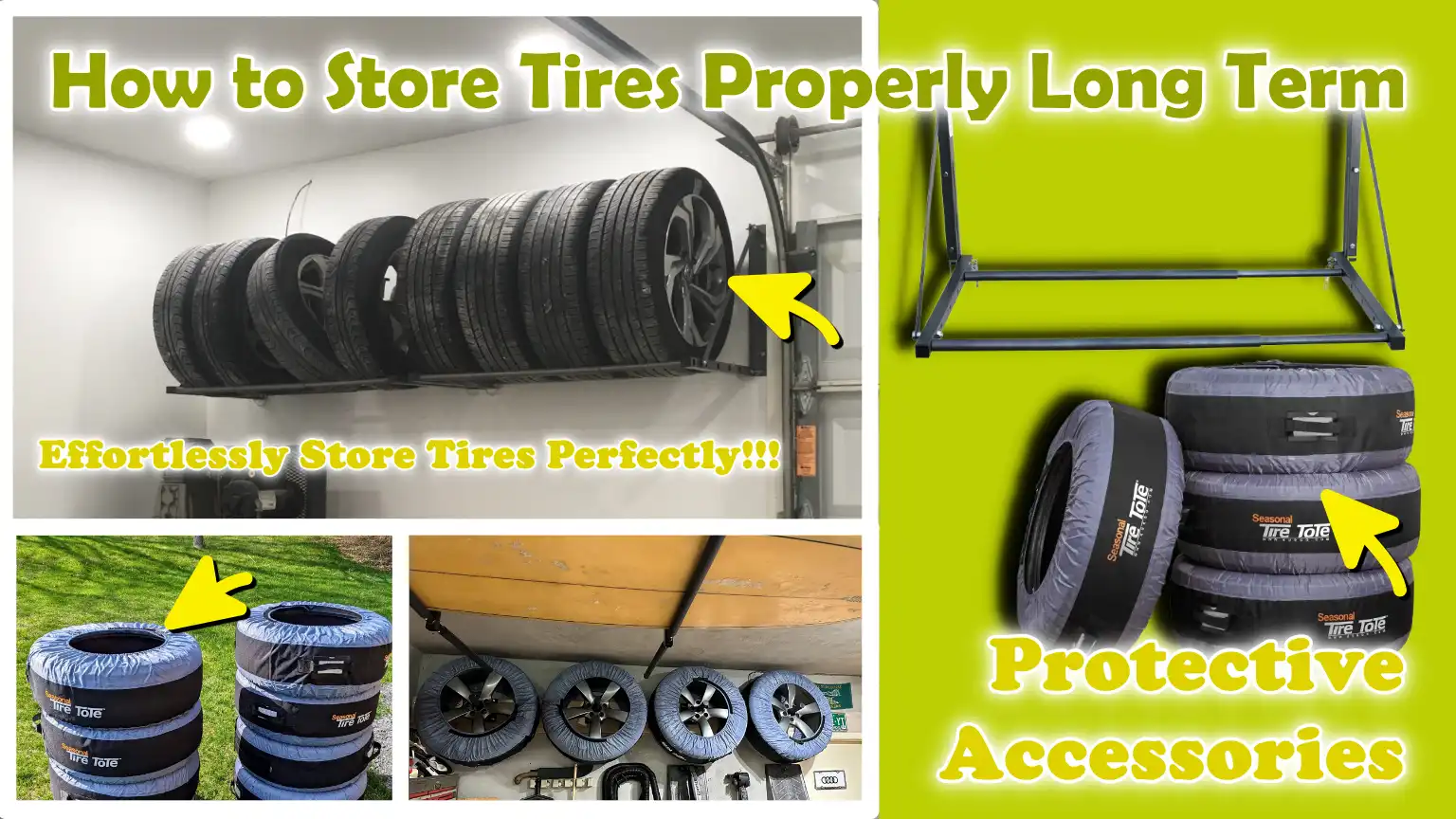
Written By: Dean Shali
Fact Checked By: Sabré Cook
Reviewed By: Tamara Warren
Even if tire doesn’t works on the road still they can degrade way faster than one being driven under the right conditions.
Because, tires are made from the carefully engineered rubber compounds which are designed to handle the heat, pressure and constant road friction.
Plus, even when tires still still in the storage, but oxygen slowly reacts with the rubber that’s how it breaks down its structure and also heat accelerates this process and ultraviolet light further weakens the outer layers.
Not only this, there’s studies from the tire manufacturers and safety organizations that shows that the improper storage of tire can cause them to crack, hard and internal damage long before any visible signs appears, as it directly affects the grip, braking performance and overall safety as well.
Whereas, there are many drivers they just assume that unused tires always remains in the perfect conditions, but in reality: the poor storage conditions such as: exposure to the sunlight, fluctuating temperatures, moisture and ozone from the electric motors literally have the ability to shorten a tire’s lifespan shockingly by years.
But the good thing is that: that evil tire degradation is largely preventable with the right approach, that’s why in this guide you’ll learn How to Store Tires Properly Long Term so that you can have them in working conditions for long term.
Understand, Why Proper Tire Storage Is Actually Important?
Many people believe that tires deteriorate only when driven on the road; however, tires can degrade even while simply sitting in storage.
Rubber is a flexible material composed of natural and synthetic compounds; when exposed to air, heat, moisture and sunlight, it undergoes gradual changes over time.
Even if a tire has never touched the road, improper storage can compromise its structural integrity and diminish its performance.
Therefore, storing tires correctly is crucial, as it helps preserve their strength, flexibility and safety for future use.
A properly stored tire can remain in good condition for years, whereas an improperly stored tire may deteriorate much sooner than expected.
This is particularly important for seasonal tires, spare tires, tires for vintage vehicles and any extra sets of tires that remain unused for extended periods.
Proper tire storage protects your investment in your tires and ensures that they remain safe for use when they are eventually remounted on a vehicle.
1. The Impact of Improper Storage on Tire Lifespan
Improper storage can significantly reduce a tire’s lifespan, even if its tread (the outer surface of the tire) appears brand new.
Tires exposed to direct sunlight, extreme temperatures, or fluctuating weather conditions often age rapidly, as heat accelerates the breakdown of the rubber compounds.
Moisture can also cause problems, increasing the risk of surface cracking and material degradation over time.
When tires are stored incorrectly, they may develop flat spots, lose their flexibility, or sustain internal damage that is not always visible from the outside.
Storing tires near electric motors, generators, or furnaces can expose them to elevated levels of ozone gas, a substance that gradually attacks the rubber and causes it to crack.
Such conditions can reduce a tire’s usable lifespan by several years.
In many instances, a tire that appears to be in good condition on the outside may be compromised internally due to improper storage; consequently, such a tire can no longer provide safe traction, precise handling, or reliable braking performance.
2. How Rubber Deteriorates Over Time
As rubber ages, it undergoes natural changes; this process is known as ‘oxidation.’
Oxygen present in the air gradually reacts with the rubber compounds within the tire, causing the rubber to harden and lose its flexibility.
Heat significantly accelerates this process, which is why tires stored in hot garages or outdoors often deteriorate much more rapidly.
Ultraviolet (UV) rays from sunlight also break down the outer layers of the rubber, causing the tire to fade, dry out and develop tiny cracks that gradually expand over time.
Over time, the oils and protective chemicals contained within the tire begin to dry up or evaporate, rendering the rubber less flexible and more brittle.
This loss of flexibility directly impacts the tire’s ability to maintain road grip and absorb shocks.
Even when a tire is not in use, these chemical and environmental reactions continue to occur gradually, day after day.
Proper storage protects tires from the conditions that accelerate the rubber deterioration process, thereby extending the tires’ lifespan.
3. Safety Risks Associated with Improperly Stored Tires
Improperly stored tires can pose a serious safety hazard, as internal damage is not always readily apparent.
A tire may appear normal on the outside, yet its internal structure may have already deteriorated due to age, exposure to heat, or improper placement during storage.
Cracks in the rubber, surface hardening and weakened sidewalls compromise the tire’s ability to maintain proper road grip, particularly during braking, cornering, or driving on wet surfaces.
Prolonged pressure on a single spot can cause “flat spots” to form on the tire; upon reuse, these flat spots can generate vibrations and degrade the tire’s performance.
In more severe cases, internal structural damage increases the risk of sudden tire failure or a blowout at high speeds.
Tires are among the most critical safety components of any vehicle, as they are the only parts that make direct contact with the road surface.
Proper storage preserves their structural integrity, shape and reliability, ensuring that they continue to perform their safety functions effectively when needed.
4. Cost Savings Through Proper Storage
Properly storing tires can result in significant cost savings over time, as it extends their lifespan and ensures they remain serviceable for many years.
Replacing tires prematurely can be an expensive undertaking, particularly for drivers who utilize seasonal tire sets, high-performance tires, or tires designed for larger vehicles.
Proper storage minimizes the risk of tires drying out, cracking, or losing their structural integrity; this means there is no need to replace them ahead of schedule.
Furthermore, it helps maintain both tire performance and fuel efficiency, as well-preserved tires retain their original shape and flexibility.
Drivers who store their tires correctly often avoid the additional expenses associated with issues such as poor grip, uneven wear, or rubber degradation.
Simply put, investing a little extra time in properly preparing and storing your tires safeguards your investment and helps you avoid costly problems in the future.
So, How Long Can Tires Be Stored?
If kept in the right environment, tires can generally be stored for several years; however, their lifespan depends heavily on how they are stored and the surrounding environmental conditions.
Tires are composed of rubber compounds, steel belts, fabric plies, oils and protective chemicals, components that undergo gradual changes over time, even when the tires are not in use.
Tire aging begins from the date of manufacture, not from the date they are installed on a vehicle.
This means that even if a tire remains unused in storage, it continues to undergo daily chemical changes.
Tires that are stored correctly, specifically in a cool, dry, dark and stable environment, typically last longer than those exposed to heat, sunlight, or fluctuating weather conditions.
Proper storage methods slow down the processes of oxidation and rubber degradation, thereby helping the tires retain their flexibility, structural integrity and overall safety for future use.
1. The Typical Lifespan of Unused Tires
If stored correctly, unused tires can often remain in good condition for approximately five to ten years; however, there is no guarantee that every tire will remain safe throughout this entire period.
A tire’s longevity depends on both its age (the time elapsed as manufacture) and the specific methods used for its storage.
A tire stored indoors, in a temperature-controlled environment, generally ages much more slowly than one stored outdoors or in a hot garage.
Over time, the rubber compounds within the tire gradually begin to lose their flexibility as oxygen reacts with the material.
The protective oils present within the rubber also gradually begin to dry out or evaporate, which can cause the tire to harden and develop cracks.
Even if the tire’s tread remains deep and the tire appears new on the outside, its performance and safety may still be compromised due to internal aging.
This is why experts recommend carefully inspecting old tires before using them, specially if they have been stored for several years.
If a tire has been properly preserved, it can function safely even after being stored for a long period; conversely, if a tire has not been stored correctly, it can become unsafe very quickly.
2. Industry Recommendations – Information Regarding the 5 to 10 Year Timeframe
Many tire manufacturers and automotive safety organizations advise that special attention be paid to tires once they reach five years of age and that they be replaced once they are approximately ten years old, regardless of how much tread depth remains.
These recommendations are issued because, over time, rubber naturally begins to deteriorate, even if the tire has not been used for driving.
When a tire reaches approximately five years of age, experts often recommend regular inspections to check for cracks, hardening, sidewall damage, or signs of internal aging.
After ten years, most companies consider a tire too old for safe road use, as the materials within its internal structure may no longer perform as expected.
However, these suggestions serve as general guidelines; The actual condition of a tire can depend on how it was stored, the prevailing weather conditions and the damaging elements to which it was exposed.
Tires stored in a proper environment tend to remain in far better condition than those exposed to heat, sunlight, or ozone.
Understanding these tips helps drivers avoid relying on aging tires; although such tires may appear sound visually, they may no longer be capable of providing safe traction, braking performance, or durability.
3. Factors Affecting Tire Shelf Life – Service Life
Several environmental and storage-related factors play a crucial role in determining how long a tire remains safe and serviceable.
The rate at which rubber compounds degrade, due to exposure to temperature, humidity, sunlight and ozone, is influenced by all of these elements.
Physical stress placed on tires due to improper storage methods can also lead to their deformation over time.
Tires stored indoors, in a stable environment, generally age very slowly, as they remain shielded from sudden weather fluctuations.
Even minor variations in storage quality can significantly impact a tire’s long-term condition.
Understanding these factors helps drivers create the optimal storage environment for their tires and minimize the risk of premature aging.
Temperature
Temperature is one of the most critical factors influencing a tire’s storage life, as heat accelerates the chemical reactions occurring within the rubber.
Elevated temperatures cause the protective compounds present inside the tire to break down more rapidly; over time, this renders the tire hard and brittle (prone to cracking), leading to the formation of fissures on its surface.
Tires stored in excessively hot garages, sheds, or open areas often age much faster than those kept in cool, enclosed spaces.
Constant temperature fluctuations can also place stress on the rubber and internal components, causing the tire to repeatedly expand and contract.
Extreme cold is generally less detrimental than extreme heat; however, the combination of freezing temperatures and moisture can, over the long term, diminish the rubber’s elasticity.
A stable and cool environment helps slow down the tire aging process and more effectively preserves its structural integrity.
Moisture
Moisture and humidity can also impact the long-term storage of tires, particularly when they are kept in damp environments.
High humidity increases the risk of surface degradation and heightens the likelihood of mold growth or rust formation on metal components, such as tire beads and wheel rims.
A humid environment can also lead to the development of microscopic cracks on the tire’s surface over time, as the rubber is repeatedly exposed to moisture.
If tires are not thoroughly dried prior to storage, trapped water, whether inside a storage bag or on the tire’s surface, as it can accelerate the deterioration process.
Storing tires in a well-ventilated and dry environment helps mitigate moisture-related damage and preserves the condition of both the rubber and the internal components.
Exposure to UV Rays
Ultraviolet (UV) rays emitted by the sun are highly detrimental to tire rubber, as they degrade the material’s outer layers.
Tires exposed to direct sunlight for prolonged periods often fade in color, dry out and develop tiny cracks on their surface, damage that worsens over time.
UV rays weaken the chemical bonds within the rubber, thereby reducing its elasticity and increasing its susceptibility to cracking or becoming brittle.
Storing tires in open, uncovered areas is particularly harmful, as they are subjected daily to both sunlight and fluctuating weather conditions.
Even indirect sunlight filtering through windows can gradually contribute to the aging process of tires during long-term storage.
Storing tires in a dark or shaded location helps protect the rubber from UV-induced damage and significantly slows down the aging process.
Exposure to Ozone
Ozone is a gas present in the air that can cause severe damage to tire rubber over time.
It reacts with the rubber compounds, leading to the formation of tiny cracks on the tire, particularly on the sidewalls and outer surfaces.
Common sources of ozone include electric motors, generators, battery chargers, furnaces, welders and other electrical devices often found in garages or workshops.
Tires stored in close proximity to such equipment can age rapidly, as the ozone continuously attacks the rubber, even when the tires are not in use.
Ozone-induced damage typically manifests as fine cracks on the surface, which gradually deepen and become more severe.
Keeping tires away from ozone-generating equipment is a crucial step toward maintaining their good condition and safety over the long term.
Know, Key Factors That Causes Tire Damage During Storage
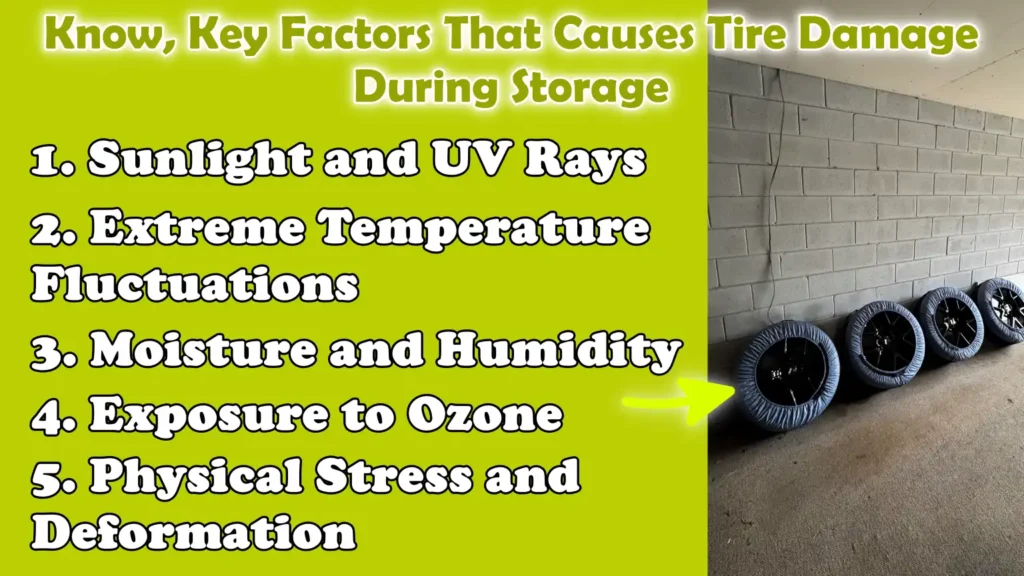
Tires may appear robust on the outside, but their internal materials are constantly affected by the surrounding environment.
Rubber compounds naturally age over time and poor storage conditions can significantly accelerate this process.
Even when a tire is not in use, heat, sunlight, moisture, ozone and external pressure continue to impact its structural integrity on a daily basis.
Many forms of tire damage begin gradually and are initially invisible; this is why people often remain unaware that a stored tire has deteriorated until cracks, flat spots, or performance-related issues eventually manifest.
Understanding the key factors that damage tires during storage is crucial, as adopting proper storage practices can significantly slow down the aging process and preserve the tire’s safety, flexibility and durability for years to come.
1. Sunlight and UV Rays
Sunlight is one of the most damaging environmental factors for stored tires, as ultraviolet (UV) rays gradually break down the rubber compounds responsible for maintaining the tire’s flexibility and strength.
UV radiation attacks the chemical bonds within the outer layers of the rubber, causing the tire’s surface to dry out and weaken over time.
Initially, this damage may manifest as fading or slight discoloration; however, prolonged exposure often leads to the formation of tiny cracks that gradually deepen and evolve into more severe structural issues.
As rubber gradually loses its natural oils and protective compounds, the tire becomes increasingly hard and less flexible, resulting in diminished grip on the road.
Tires stored outdoors or near windows exposed to sunlight are particularly vulnerable, as they are subjected to the daily impact of UV rays, even during the colder months.
Direct sunlight also raises the surface temperature, thereby accelerating the rubber’s aging process.
Storing tires in a dark room or indoors, or keeping them properly covered, helps mitigate damage caused by UV rays and significantly extends their useful lifespan.
2. Extreme Temperature Fluctuations
Temperature has a profound impact on the condition of tires, as rubber constantly reacts to both heat and cold.
High temperatures are particularly detrimental, as heat accelerates the chemical aging processes occurring within the tire.
When tires are stored in hot garages, sheds, attics, or exposed outdoor areas, the rubber compounds begin to break down rapidly; this causes them to become hard and brittle, resulting in a loss of flexibility.
Heat also causes the oils and protective chemicals present within the tire to evaporate more quickly, thereby increasing the risk of the rubber drying out, deteriorating and developing cracks.
Cold temperatures affect tires differently.
Extreme cold can cause the rubber to harden and lose its flexibility, particularly if the tire has frozen and is subsequently moved or flexed.
Frequent temperature fluctuations are also damaging, as the tire material constantly expands and contracts, placing stress on its internal structure.
Over time, these changes can weaken the bond between the rubber and the internal reinforcement layers.
A stable and cool environment is considered ideal for storage, as it slows down the tire’s degradation process and protects it from unnecessary stress.
3. Moisture and Humidity
Moisture and humidity can gradually damage stored tires, as these conditions cause the rubber to deteriorate and cracks to begin forming on its surface.
Tires stored in damp basements, wet garages, or exposed outdoor areas are constantly exposed to moisture, which can affect both the tire’s outer rubber and its internal metal components.
Prolonged exposure to damp conditions also increases the risk of mold growth, rust and material degradation.
Water trapped around the tire’s surface or inside the bags used for storage can further accelerate the degradation process, as the moisture remains in contact with the rubber for extended periods.
Over time, exposure to moisture can lead to “dry rot,” a condition in which the rubber loses its elasticity and develops visible cracks.
These cracks may initially be very small, but they can eventually penetrate deep into the tire’s structural integrity.
When combined with humidity, heat becomes even more damaging, as hot and humid conditions accelerate the chemical reactions occurring within the rubber.
Thoroughly cleaning and drying tires before storage and keeping them in a dry environment, proves highly effective in minimizing damage caused by moisture.
4. Exposure to Ozone
Ozone is an invisible gas that can stealthily damage tires during storage, damage of which most people remain completely unaware.
It reacts with the rubber compound and gradually degrades the tire’s surface, particularly around the sidewalls, where stress levels are highest.
Ozone-induced damage often manifests as fine, spiderweb-like cracks that deepen and become more severe over time.
Many common pieces of equipment found in garages and workshops generate ozone, including electric motors, battery chargers, generators, furnaces, welders, compressors and other electrical devices.
Tires stored in close proximity to these machines are constantly exposed to ozone, which accelerates the rubber’s aging process, even if those tires have never been used.
Unlike damage caused by sunlight, ozone-induced cracking can occur even in dark environments if the concentration of ozone in the air is sufficiently high.
Because this damage progresses gradually, people often fail to notice it until the cracks become clearly visible.
Keeping tires away from ozone-generating equipment is a crucial step in extending their lifespan, as it helps preserve the structural integrity and flexibility of the rubber.
5. Physical Stress and Deformation
Physical stress incurred during storage can alter a tire’s shape and, over time, compromise its structural integrity.
Tires are designed to distribute weight evenly while in motion; however, when they remain stationary in one position for months or years, pressure can accumulate in specific areas.
This often leads to the formation of “flat spots”, depressions in specific sections of the tire where the rubber becomes compressed and loses its original shape.
When tires are reused, these flat spots can generate vibrations, resulting in an uneven driving experience and compromising the tire’s overall performance.
Improperly stacking tires can also exert excessive pressure on the tires at the bottom, particularly if heavy tires are stacked to a great height for extended periods.
Tires stored without proper support may suffer from sidewall deformation or develop internal stress, thereby weakening the structural integrity of the tire.
Furthermore, tires hung improperly without rims may also lose their shape over time.
Although physical deformation may not always appear severe to the naked eye, it can nonetheless adversely affect the tire’s balance, handling and safety.
Storing tires in the correct position and minimizing unnecessary pressure on them helps preserve their original shape and overall structural integrity.
How to Store Tires Properly Long Term – Highly Effective
Proper preparation prior to storage is a crucial component of keeping tires safe and secure over the long term.
Many of the issues that arise in tires after months or years of storage actually originate before the tires are even put away.
Exposure to dust, moisture, sunlight, air and external pressure can gradually weaken the rubber compounds, potentially diminishing the tires’ performance over time.
Properly preparing tires slows down the oxidation process, protects their surfaces from damage and helps maintain their structural integrity even when they are not in use.
A few simple preparatory steps can make a significant difference in preserving the tires’ flexibility, shape, safety and longevity.
Whether the tires are seasonal, spares, high-performance, or intended for a specific vehicle, careful preparation ensures they remain in good condition and are ready for safe use in the future.
1. Thoroughly Clean the Tires
Before storing tires, it is essential to clean them properly, as dust and road grime continue to damage the rubber even when the tires are not in use.
During daily driving, tires accumulate brake dust, oil residue, road salt, mud, grease and various chemicals from the road surface.
If this debris remains on the tires during storage, it can gradually react with the rubber, degrading its surface over time.
Brake dust is particularly harmful, as it often contains microscopic metal particles and corrosive substances that can damage the surfaces of both the tires and the wheels.
Washing tires with mild soap and clean water effectively removes dirt and grime without causing any damage to the rubber compound.
It is advisable to use mild cleaning products, as harsh chemical-based cleaners can strip away the protective oils present on the tire surface.
Petroleum-based cleaners, tire shines and solvent-containing products should be avoided, as they can accelerate the drying out of the tires and lead to cracking during prolonged storage.
Thoroughly cleaning tires before storage creates a safe and stable environment, ensuring their preservation over the long term.
2. Dry Thoroughly
After cleaning, tires must always be dried completely before storage, as trapped moisture can gradually damage both the rubber and the surrounding environment.
Any water remaining on the surface or within the tire grooves can elevate humidity levels around the tire; this creates conditions that promote cracking, mold growth and the deterioration of tire components over time.
Moisture can also damage metal parts such as: wheel rims and tire beads, thereby increasing the risk of rust formation on tires that are stored while still mounted on their wheels.
Even a small amount of moisture trapped inside a storage bag can prove detrimental during long-term storage, as the moisture remains in constant contact with the tire surface.
Allowing the tires to air-dry completely in a shaded area helps mitigate this risk.
Proper drying is particularly crucial in humid climates, as atmospheric moisture tends to linger for extended periods.
Keeping tires dry prior to storage helps maintain the rubber’s elasticity and protects them from unnecessary wear and tear while they are not in use.
3. Remove the Tires from the Vehicle – If Possible
Removing the tires from the vehicle prior to long-term storage is often the best option, as it eliminates the constant pressure exerted on the tire’s structure.
When a vehicle remains stationary in one spot for months without being driven, the entire weight of the vehicle rests on a single section of each tire; this can lead to the formation of “flat spots” and cause the tires to wear unevenly.
Over time, this constant pressure can compromise the structural integrity of the tires, potentially affecting ride quality when the tires are eventually put back into use.
Storing tires separately from the vehicle also makes it easier to control their storage environment, as they can be kept in a cool, dark and dry location, away from the damaging effects of sunlight and adverse weather conditions.
Removing the tires from the vehicle also provides drivers with the opportunity to carefully inspect them for any signs of damage, wear and tear, or embedded debris before placing them in storage.
For seasonal tires, or for specialized vehicles that remain idle for extended periods, storing the tires separately from the vehicle is considered the most reliable method for preserving their condition and extending their lifespan.
4. Reduce Air Pressure – Optional
Slightly reducing the air pressure in tires before storing them for an extended period minimizes the stress placed on their internal structure, particularly when the tires are removed from the vehicle.
Over time, tires naturally lose a small amount of air; this occurs because tiny air molecules gradually permeate the rubber material.
Maintaining a slightly lower pressure helps the tires withstand the normal fluctuations in pressure caused by temperature changes during storage.
However, tires should never be completely deflated, as doing so can place excessive strain on their sidewalls and increase the risk of deformation.
If the tires remain mounted on the vehicle, maintaining the air pressure recommended by the manufacturer is generally the best approach to ensure the tires can properly support the vehicle’s weight.
Any adjustments to air pressure should always be made thoughtfully and under proper supervision.
Proper air pressure management minimizes structural stress on the tires, enabling them to retain their original shape throughout the entire storage period.
5. Seal in Airtight Bags
Sealing tires in airtight bags is an effective method for slowing down the rubber degradation process, as it minimizes the tires’ exposure to oxygen and environmental pollutants.
The oxygen present in the air gradually reacts with the chemical components of the rubber, a process known as “oxidation.”
Over time, this process causes the rubber to harden, become brittle and develop cracks on its surface.
Storing tires in an airtight environment limits the amount of oxygen reaching the tire surface, thereby slowing down this rubber degradation process.
For this task, sturdy plastic bags or vacuum storage bags are typically used, as they help create a more controlled environment around the tires.
By removing as much air as possible from inside the bags, the tires receive enhanced protection against oxidation and moisture.
This method is particularly beneficial for seasonal tires that remain completely unused for several months.
To prevent damage caused by moisture trapped inside the bags, it is essential to ensure that the tires are thoroughly dry before sealing them.
Properly sealing the tires significantly slows down the aging process, thereby preserving their flexibility and good condition over the long term.
6. Label the Tires
Labeling the tires before storing them is a simple yet highly practical step; doing so makes it much easier to rotate and remount the tires on the vehicle in the future.
The wear pattern of tires varies depending on their position on the vehicle; this is because front and rear tires are often subjected to differing stresses related to steering, braking and the vehicle’s weight distribution.
Marking each tire with its original position such as: Front Left, Front Right, Rear Left, or Rear Right, helps drivers correctly remount the tires later, specially if they wish to maintain a specific rotation pattern.
Common abbreviations such as FL, FR, RL and RR can be easily written on the tires using chalk or a tire-safe marker.
Proper labeling also aids in tracking tire wear patterns and identifying any abnormal wear-related issues during future inspections.
Spending a few moments labeling tires before storing them saves time later on and helps ensure even tire wear and balanced vehicle handling.
Know About The Best Places to Store Tires
The manner in which tires are stored plays a crucial role in preserving their shape, internal structure and overall condition over the long term.
Tires are engineered to withstand weight and flex while a vehicle is in motion; however, when they remain stationary and undisturbed for months or years, the pressure exerted on the rubber and internal components becomes uneven.
Improper storage can lead to flat spots on the tires, excessive stress on the sidewalls, deformation of their shape, or a gradual weakening of the tire’s internal integrity over time.
The correct method for storing tires depends primarily on whether they are mounted on rims or being stored without them.
Tires mounted on rims require a different approach to support, as the wheel itself helps maintain the tire’s shape, whereas unmounted tires rely entirely on their sidewalls for structural support.
Storing tires in the proper environment minimizes unnecessary stress on the rubber, prevents deformation and ensures that the tires retain their original shape and functional condition for the longest possible duration.
1. Storing Tires with Rims – Mounted Tires
Tires mounted on rims, that is, tires that are already attached to wheels or rims, as it can be safely stored in a horizontal position, as the structure of the wheel helps provide uniform support to the tire.
Stacking mounted tires flat, one on top of another, is the most common and recommended method for preserving them over extended periods.
The rim helps distribute pressure evenly across the tire, thereby reducing the risk of excessive stress on the sidewalls or severe deformation of the tire’s shape.
However, a stack of tires must remain stable and should not be piled too high, as prolonged exposure to excessive weight can exert undue pressure on the tires at the bottom of the stack.
Placing cardboard, wood, or a protective barrier between the tires minimizes the risk of surface scratches and helps preserve the finish of the wheels.
Hanging tires mounted on rims from hooks is often considered the optimal storage method, as it reduces pressure on the tire tread and allows the tire to retain its original shape.
Properly installed wall-mounted hooks or tire racks securely support the tires by the wheels, preventing direct contact with the ground and significantly reducing the risk of flat spots developing on the tires.
This method also facilitates better airflow around the tires and protects them from ground-level moisture.
It is crucial that the hooks provide adequate support to the wheel and do not exert direct pressure on the rubber sidewalls.
When stored on racks or hooks in a cool, dry and dark environment, tires mounted on rims typically experience fewer issues with deformation and remain in good condition even after prolonged storage.
2. Storing Tires Without Rims
Tires without rims should generally be stored in an upright position, as they lack the internal structural support provided by a wheel to help them maintain their shape.
Standing the tires upright allows their weight to be distributed more naturally across the tread area, rather than subjecting the sidewalls to constant pressure.
Stacking rimless tires flat on top of one another for extended periods can distort the shape of the tires at the bottom, as their sidewalls are forced to bear the full weight of the tires stacked above them.
Over time, this pressure can alter the tire’s structural integrity, potentially having a negative impact on its future performance and balance.
Even if tires are stored in an upright position, they should not be left undisturbed in the same stance for many months.
Rotating the tires slightly every few weeks, or at least once a month, helps prevent the formation of flat spots and guards against uneven pressure distribution on any single section.
This minor adjustment shifts the points of pressure, thereby helping the tire maintain its uniform shape even while in storage.
Upright tires should also be carefully supported to ensure they do not lean excessively to one side, as prolonged leaning can gradually weaken the structural integrity of the sidewall.
Storing rimless tires in an upright position within a cool, dry and stable environment significantly reduces the risk of deformation, ensuring they remain in their original condition for future use.
Optimal Conditions for Tire Storage
Creating the right environment is one of the most critical steps in preserving tires for the long term.
Although tires may appear robust on the outside, their internal rubber compounds are highly sensitive to their surrounding environment.
Daily exposure to heat, humidity, sunlight, chemicals and air gradually impacts the structural integrity of a tire, even when it is not in use.
Proper storage conditions help slow down the oxidation process, reduce the rate of rubber aging and maintain the tire’s flexibility, strength and overall safety.
A well-controlled storage environment can significantly extend a tire’s usable lifespan, whereas poor conditions can lead to premature cracking, hardening, flat-spotting, or internal structural weakening, issues that often manifest much sooner than expected.
The primary objective of tire storage is to keep the environment as stable, clean, cool and dry as possible, thereby minimizing the stress placed on the tires during prolonged periods of inactivity.
1. Cool, Dry and Dark Location
Tires should always be stored in a cool, dry and dark location, as these conditions help protect the rubber from the primary factors that cause it to age.
Heat accelerates the breakdown of rubber compounds; humidity increases the risk of tire deterioration and cracking; and exposure to sunlight subjects the tires to damaging ultraviolet (UV) rays, which gradually weaken their outer surfaces over time.
For tire storage, an indoor, dark space such as: a temperature-controlled room, a dry basement, or a dedicated storage area, is generally far safer than storing them outdoors or in a poorly insulated garage.
Dry conditions are particularly important, as excessive humidity can gradually degrade both the rubber and metal components of the tires.
Darkness also helps prevent damage caused by UV rays, damage that can occur even when sunlight passes through standard windows and shines directly onto the tires.
Shielding tires from environmental stresses helps preserve the oils and protective chemicals embedded within the rubber, ensuring that the tires remain flexible and durable over the long term.
2. Recommended Temperature Range
Maintaining a consistent temperature is crucial for the long-term preservation of tires, as rubber constantly reacts to heat and temperature fluctuations.
Most experts recommend storing tires in a cool environment where the temperature typically remains between approximately 50°F and 77°F which is about 10°C to 25°C.
Temperatures within this range help slow down the chemical aging process within the rubber and reduce the physical stress placed on the tire’s structure.
Excessive heat can cause the rubber to harden, dry out and rapidly lose its elasticity, while extremely cold conditions can render the rubber stiff and less pliable.
Sudden or frequent temperature changes are also detrimental, as they cause the tire material to repeatedly expand and contract, placing stress on both the rubber and the internal reinforcing layers.
Maintaining a consistent temperature is often even more important than simply keeping the environment cool.
Stable indoor conditions help prevent premature aging of the tires and enable them to retain their original performance qualities more effectively.
3. Avoid Garages with Fluctuating Temperatures
Although many garages may seem like convenient places to store items, they are not always ideal, as the internal temperature often fluctuates significantly throughout the day and across different seasons.
During hot weather, garages can trap heat, causing them to become significantly hotter than the outside temperature, specially if they lack proper insulation or climate control systems.
In winter, garages can become extremely cold overnight and then heat up rapidly during the day.
These frequent temperature fluctuations place constant stress on the tire material, as the rubber and internal components repeatedly expand and contract.
Over time, this repetitive movement can cause the rubber to harden, develop cracks and become structurally weakened.
Attached garages may also contain ozone-generating equipment, chemicals, or moisture, further increasing the risk of damage to the tires.
If a garage must be used for storage, choosing the coolest, driest and darkest spot available helps minimize the environmental stress placed on the tires.
4. Keep Away from Chemicals and Fuels
Tires should always be kept away from chemicals, fuels, solvents, oils and other petroleum-based products, as these substances can damage the rubber compound over time.
Gasoline fumes, cleaning agents, paint thinners, lubricants and industrial solvents can gradually react with the tire’s surface, thereby compromising the structural integrity of the rubber.
Even in the absence of direct contact, chemical vapors present in enclosed spaces can adversely affect the tire material during prolonged storage.
Certain chemicals can deplete the protective oils embedded within the rubber, increasing the risk of the tire drying out, hardening and developing surface cracks.
Tires should also be kept at a safe distance from electric motors, battery chargers, welders, furnaces and generators, as these devices can generate ozone, which accelerates the aging and cracking of rubber.
A clean and controlled storage environment, where the risk of exposure to chemicals is minimized, proves far more effective in preserving the tire’s flexibility, strength and longevity.
So, Where to Store Tires – Ranking of the Best Locations
Choosing the right location is one of the most critical factors in protecting tires from premature deterioration and damage.
Tires are highly sensitive to their surrounding environment and their storage location directly influences the rate at which their rubber degrades over time.
Heat, humidity, sunlight, ozone and temperature fluctuations, all these elements impact a tire’s flexibility, structural integrity and longevity.
Even high-quality tires, if exposed to adverse conditions for extended periods, can develop cracks, become brittle, form flat spots, or suffer from weakened internal structures.
The best places to store tires are those that remain cool, dry, dark, clean and stable throughout the year.
In a controlled environment, the oxidation process slows down, thereby preserving the protective oils and chemical compounds present within the rubber.
Understanding the benefits and risks associated with storing tires in various locations enables drivers to make more informed decisions, significantly increasing the likelihood that their tires will remain safe and roadworthy for years to come.
1. Temperature-Controlled Indoor Storage
Temperature-controlled indoor storage is considered the optimal choice for preserving tires over the long term, as it provides the most stable environment.
In such settings, temperature and humidity levels remain consistent throughout the year, thereby minimizing the stress placed on the rubber and the tire’s internal structure.
A stable indoor environment slows down the oxidation process, minimizes exposure to moisture and shields the tires from damaging ultraviolet (UV) rays.
Temperature-controlled rooms also mitigate the risk of sudden or extreme temperature fluctuations; such fluctuations cause the rubber to repeatedly expand and contract over time.
As tires stored in such conditions are shielded from rain, snow, direct sunlight and outdoor pollutants, they deteriorate at a significantly slower rate compared to tires stored in open or uncontrolled environments.
Professional tire storage facilities and well-maintained indoor storage rooms are particularly beneficial for seasonal tires, high-performance tires and tires for vintage vehicles that may remain unused for months or even years.
A clean, dark and temperature-controlled environment remains the most effective method for preserving the structural integrity of the rubber and the overall condition of tires over the long term.
2. Basements – If Dry
A dry basement can be an excellent location for storing tires, as basements typically remain cooler and darker than garages or outdoor spaces.
Underground areas are generally less susceptible to the effects of direct sunlight and extreme outdoor temperatures, thereby slowing down the process of rubber degradation caused by heat.
However, the specific conditions within the basement are critical, as excessive humidity and dampness can prove detrimental to tires over time.
Tires stored in damp basements may develop mold or mildew, suffer surface deterioration and face an increased risk of structural damage if moisture becomes trapped within the rubber.
Before utilizing a basement for tire storage, it is essential to ensure that the space remains dry throughout the year and is adequately ventilated.
Tires should also be kept away from furnaces, water heaters, electrical equipment and chemical storage areas, as these items can emit heat, ozone, or harmful fumes.
With proper care and by maintaining a dry environment, a basement can prove to be an excellent location for keeping tires safe and sound for an extended period.
3. Dedicated Tire Storage Units
A dedicated storage unit can be an excellent option for storing tires, provided the space is clean, dry and, ideally, climate-controlled.
Storage units offer ample space for housing tires, thereby shielding them from the hustle and bustle of daily household activities, direct sunlight and fluctuating outdoor weather conditions.
Climate-controlled storage units are particularly beneficial, as they maintain more stable temperatures and humidity levels compared to standard storage units.
In such a controlled environment, the rubber degradation process is slowed down and the risk of moisture-related damage is significantly reduced.
In regions with moderate climates, standard storage units without climate control may suffice; however, they can become excessively hot in the summer and extremely cold in the winter, which may accelerate the deterioration of the tires over time.
Tires kept in a storage unit should always be kept away from chemicals, fuel containers and electrical equipment that emits ozone or heat.
A thoughtfully selected storage unit serves as a practical solution for individuals whose homes lack sufficient space to store tires.
4. Garages – With Precautions
A garage is one of the most common places to store tires; however, it is crucial to exercise certain precautions here, as garages often experience significant temperature fluctuations and contain items that can damage tires.
During hot weather, the temperature inside a garage can be considerably higher than the outside temperature, particularly in areas with poor ventilation or a lack of insulation.
Heat accelerates the rubber aging process and can rapidly diminish a tire’s flexibility.
Garages may also house ozone-generating equipment such as: air compressors, battery chargers, electric motors and furnaces, which can cause cracks to develop in the tire sidewalls over time.
Furthermore, chemicals commonly stored in garages such as: gasoline fumes, paint products and solvents, as it can damage the tire rubber if the tires remain in prolonged contact with them.
If tires must be stored in a garage, they should be kept in the coolest, driest and darkest area available, away from windows, heaters and electrical equipment.
Using airtight bags or tire covers can provide an extra layer of protection against airborne contaminants and environmental pollutants.
5. Avoid Storing Tires In These Places – Outdoors, In a Shed or Near a Heater
Storing tires outdoors is generally considered one of the worst options, as it exposes them to almost all of the primary factors that cause rubber degradation.
Exposure to sunlight, rain, snow, humidity, dust, temperature fluctuations and ozone accelerates the tire aging process, thereby increasing the risk of cracking, hardening and structural deterioration.
Even if tires stored outdoors are kept covered, continuous fluctuations in temperature and humidity still have a detrimental effect on the rubber.
Sheds may appear safer than leaving items in open spaces; however, during the summer, many sheds become excessively hot and experience very high humidity levels, rendering them unsuitable for long-term tire storage, unless they are equipped with insulation and temperature control systems.
Tires should never be stored near heaters, boilers, furnaces, radiators, or hot water systems, as intense heat accelerates the process of chemical degradation within the rubber.
Elevated temperatures cause the protective chemicals present inside the tires to dry out, thereby increasing the likelihood of tire deterioration or cracking.
Avoiding these damaging environments is the most effective way to extend the lifespan of tires and ensure their long-term preservation.
Read More:
- How to Prevent Tire Dry Rot
- How to Fix Tire Bulge Issue
- How to Inspect Tire Inner Sidewall Damage
- How to Fix TPMS Sensor Not Detected
- How to Relearn TPMS Without Scan Tool
- How to Reset Tire Pressure Monitoring System Manually
- How to Check Tire Pressure Sensor Battery
- How to Seal Bead Leak in Tire
- How to Use Tire Plug Kit Correctly
- How to Repair Tubeless Tire Puncture
- How to Locate a Nail in a Tire
- How to Fix Slow Tire Air Leak
- How to Detect Tire Sidewall Damage
- How to Check Tire Tread Depth at Home
- How to Bleed ABS System Properly
- How to Replace Rusted Brake Lines
- How to Inspect Brake Lines for Rust
- How to Flush Contaminated Brake Fluid
Know, Common Mistakes to Avoid When Storing Tires
For many tires, their useful lifespan is shortened not by driving, but by minor storage errors that gradually damage the rubber over time.
Tires are designed to withstand heavy loads, road friction and changing weather conditions; however, they remain susceptible to environmental pressures even when not in use for extended periods.
Heat, sunlight, humidity, ozone and improper storage conditions can gradually compromise a tire’s structural integrity, even if it appears normal on the outside.
Some damage occurs gradually and remains hidden until symptoms such as cracks, flat spots, vibrations, or a loss of traction begin to manifest.
Understanding the most common mistakes associated with tire storage helps prevent premature damage and ensures the preservation of the tire’s flexibility, durability and safety.
Avoiding a few basic errors can make a significant difference in the reliability and roadworthiness of stored tires.
1. Leaving Tires Exposed to Sunlight
One of the most damaging mistakes is leaving tires exposed to direct sunlight for prolonged periods.
Sunlight contains ultraviolet (UV) rays that gradually degrade the rubber compounds present on the tire’s surface.
UV radiation attacks the chemical structure of the rubber, depleting the essential oils and protective elements that keep the tire flexible.
Over time, the surface begins to dry out, discolor and develop tiny cracks, fissures that can gradually spread deeper into the tire’s interior.
The heat generated by sunlight also raises the internal temperature of the tire, accelerating the oxidation process and causing the tire to deteriorate more rapidly.
Even used tires, which are not stored outdoors or near windows, are still exposed to UV radiation on a daily basis.
Many people assume that covering the tread surface of the tire is sufficient; however, the tire sidewalls are just as, if not more, susceptible to damage caused by sunlight.
Tires stored in dark, enclosed spaces deteriorate very slowly because they remain shielded from constant exposure to ultraviolet radiation and the temperature fluctuations caused by direct sunlight.
2. Storing Near Ozone-Generating Equipment
Another common mistake is storing tires near machinery or devices that generate ozone gas.
Ozone is highly reactive and gradually attacks rubber compounds, particularly around the tire sidewalls, where the rubber is already under tension.
Ozone-induced damage often manifests as fine cracks, creating a spiderweb-like pattern across the tire’s surface.
Many garages and workshops harbor hidden sources of ozone, such as electric motors, generators, battery chargers, furnaces, welders, compressors and other electrical appliances.
Tires stored near such equipment, even if kept indoors and away from sunlight, as it can deteriorate very rapidly.
As ozone-related damage occurs slowly and silently, people often fail to notice the problem until the cracks have become quite deep.
Keeping tires away from ozone-generating equipment is the simplest way to slow down the rate of rubber degradation and ensure that the tires remain in good condition for a longer period.
3. Improperly Hanging Rimless Tires
Rimless tires should never be hung improperly, as this can exert uneven pressure on the sidewall and gradually distort the tire’s shape.
Unlike tires mounted on rims, rimless tires lack an internal wheel to provide uniform structural support.
When suspended from hooks or slender supports, the weight of the tire can remain concentrated at a single specific point for months on end.
This sustained pressure can weaken the sidewall, deform the tire’s profile and permanently alter its shape, factors that will negatively impact its performance in the future.
Over time, the tire may lose its circular form; subsequently, when mounted on a vehicle, this can lead to issues related to balancing or vibration.
Rimless tires are generally considered safest when stored upright with proper support and rotated periodically to ensure that the pressure is distributed evenly.
Tires mounted on rims are better suited for hanging storage, as the rim helps maintain the tire’s structural integrity during prolonged periods of storage.
4. Failing to Clean Before Storage
Many people store tires without cleaning them first; however, due to this oversight, harmful road grime can remain trapped within the rubber for months or even years.
Typically, driving causes dust, brake dust, road salt, oil residue, grease and various chemicals to accumulate on tires.
These substances continue to react with the rubber surface even while the tires are in storage, causing the rubber to gradually dry out, crack, or deteriorate over time.
Brake dust can be particularly damaging, as it often contains tiny metal particles and corrosive chemicals that can harm the surfaces of both the tires and the wheels.
Storing dirty tires also increases the likelihood of moisture becoming trapped around the rubber, particularly within the tire’s grooves and crevices.
A thorough cleaning with mild soap and water removes this grime, thereby creating a more favorable environment for preserving the tires over the long term.
It is also crucial to avoid using harsh chemical cleaners, as petroleum-based chemicals can strip away the protective oils present in the rubber, leading to premature tire deterioration.
5. Storing Directly on Concrete Without a Barrier
Storing tires directly on a concrete floor for extended periods is another common mistake that can lead to premature tire deterioration.
Concrete floors frequently absorb and release moisture in response to ambient humidity levels and temperature fluctuations.
This moisture can become trapped around the tire surfaces, particularly in damp garages or basements, increasing the risk of cracking and rubber degradation.
Furthermore, certain chemicals or oil residues present in older concrete floors can react with the tire surfaces upon prolonged contact.
Direct contact with cold concrete can subject tires to severe temperature fluctuations.
Placing a barrier such as: wood, cardboard, a rubber mat, or a plastic sheet, between the tires and the floor mitigates the effects of moisture and provides a more stable surface for storage.
Elevating the tires slightly off the ground also improves air circulation around them, thereby reducing the likelihood of long-term damage caused by moisture.
How to Protect Car Tires During Long-Term Storage
When a vehicle remains stationary for weeks or months, its tires bear the entire weight of the vehicle throughout that entire period.
Unlike tires that are removed and stored separately, tires mounted on a parked vehicle are subjected to constant pressure at the specific points where they make contact with the ground.
Over extended periods, this sustained pressure can lead to the formation of “flat spots” on the tires, excessive stress on the sidewalls, a loss of air pressure and a gradual deterioration of the tire’s structural integrity.
Even when the vehicle is not in use, environmental factors such as: sunlight, temperature fluctuations, humidity and ozone, continue to impact the rubber composition of the tires.
Properly preparing the vehicle and its tires prior to long-term storage can significantly mitigate these issues, thereby preserving the condition of the tires, the driving experience and overall safety.
A few simple preventive measures can slow down the tire aging process and minimize the risk of damage when the vehicle is eventually returned to service.
1. Inflate Tires to the Recommended PSI
When storing a vehicle for an extended period, maintaining the correct tire pressure is one of the most critical tasks, as tires naturally and gradually lose air over time.
This gradual loss of air is known as “permeation”, a process in which tiny air molecules slowly escape through the rubber structure of the tire.
If the tire pressure drops too low while the vehicle is parked, the majority of the vehicle’s weight becomes concentrated on a very small section of the tire, thereby increasing the risk of developing flat spots and subjecting the sidewalls to excessive stress.
Under-inflated tires can easily lose their structural integrity and may lose their original shape after remaining stationary in one spot for months.
Inflating tires to the PSI level recommended by the manufacturer ensures they can adequately support the vehicle’s weight, thereby reducing unnecessary stress on the internal structure of the tires.
It is crucial to regularly monitor tire pressure while the vehicle is parked, as fluctuations in temperature can also impact air pressure levels.
Maintaining the correct air pressure preserves the tires’ shape, extends their lifespan and minimizes the risk of vibrations or uneven wear when the vehicle is driven again.
2. Use Jack Stands to Relieve the Vehicle’s Weight
When storing a vehicle for an extended period, the most effective method for protecting the tires is to use jack stands, as this transfers most, or all, of the vehicle’s weight away from the tires.
The constant downward pressure exerted by a stationary vehicle gradually compresses the same sections of the tires over months, increasing the risk of developing “flat spots” and sustaining long-term structural damage.
Flat spots occur when a specific section of the tire remains in contact with the ground without moving for a prolonged period, causing the rubber and internal components to temporarily or permanently lose their original shape.
Lifting the vehicle using properly positioned jack stands alleviates this pressure, allowing the tires to retain their original shape more effectively.
This technique is particularly beneficial for sports cars, collector vehicles, seasonal vehicles, or cars that remain parked throughout the winter months.
Jack stands should always be placed at the specific lift points designated by the vehicle manufacturer to ensure the safety and stability of the vehicle.
Even when using jack stands, it remains essential to maintain the correct air pressure in the tires.
If tires are underinflated and remain unloaded for an extended period, they too can lose their shape.
3. Periodically Reposition the Vehicle
When parking a vehicle for storage, occasionally shifting its position slightly helps mitigate the risk of flat spots forming due to uneven pressure distribution on the tires; this is because doing so alters the specific section of the tire that is bearing the vehicle’s weight.
When a vehicle remains stationary in the same spot for a prolonged duration, the exact same section of each tire remains in constant contact with the ground.
Over time, this sustained pressure can degrade the rubber, potentially leading to vibrations or a rough ride when the vehicle is driven in the future.
Moving the vehicle slightly forward or backward every few weeks ensures that the pressure is distributed evenly across the entire surface of the tire.
Even a minor shift in the vehicle’s position reduces the continuous pressure on any single point, thereby helping the tires retain their original round shape.
This technique is particularly useful when jack stands are not available.
Periodically moving the vehicle also provides the driver with an opportunity to inspect the tires for low air pressure, cracks, signs of moisture damage, or any other issues.
4. Cover Tires to Protect Them from Ultraviolet Rays
Covering tires is crucial, as the sun’s ultraviolet (UV) rays are a primary cause of rubber degradation and surface cracking.
Even when a vehicle is parked and not in use, daily exposure to sunlight continues to damage the rubber compound.
Exposure to UV rays causes the tire surface to dry out, fade, harden and eventually crack; this occurs because the protective oils embedded within the rubber gradually deplete over time.
Tires parked outdoors or near windows are particularly vulnerable, as they are subjected to continuous sunlight throughout the day.
Tire covers help block UV rays and prevent direct heat buildup on the tire surface.
These covers also offer a degree of protection against dust, moisture and environmental pollutants that tend to accumulate on the rubber over time.
Breathable tire covers are often preferred, as they not only provide protection against sunlight but also prevent moisture from becoming trapped inside the tires.
Keeping tires in the shade and shielding them from UV rays significantly slows down the degradation process, thereby preserving their elasticity and ensuring they remain in good condition for a longer period.
Know, Signs of Deterioration in Stored Tires
Stored tires may appear to be in good condition at first glance; however, over time, significant signs of aging and deterioration gradually begin to manifest.
Tires continue to degrade even when they are not in use, as oxygen, heat, moisture, ozone and sunlight constantly impact the rubber compounds within them.
In many instances, internal damage begins to occur even before any major visible signs appear on the surface.
This is why a thorough inspection of stored tires prior to reuse is crucial for both safety and performance.
Tires that have deteriorated during storage may suffer from reduced grip, develop structural weaknesses, or face an increased risk of failure due to the pressures and heat generated during driving.
Understanding the warning signs of tire deterioration helps drivers identify compromised tires before putting them back on the road.
Minor surface imperfections can sometimes be indicators of significant underlying issues that compromise the tire’s ability to function safely.
1. Cracks or Dry Rot
Cracks and dry rot are among the most common signs of deterioration in stored tires.
Dry rot occurs when the rubber, exposed over time to oxidation, heat, sunlight, ozone, or improper storage conditions, loses its natural oils and protective chemical additives.
As the rubber dries out, small cracks begin to form within the sidewalls, tread blocks, or tread grooves.
Initially, these cracks may appear thin and shallow; however, as the tire continues to age, they often grow larger and deeper.
Cracked rubber loses its elasticity and becomes brittle under pressure, thereby increasing the risk of air leaks, reduced traction, or tire failure while driving.
Dry rot is particularly common in tires that are stored outdoors, near ozone-generating equipment, or in hot environments.
Even tires with deep tread can become unsafe if the cracks become severe, as the structural integrity of the rubber will have already been compromised.
2. Persistent Flat Spots
Flat spots form when a tire remains stationary under pressure in the same position for an extended period.
The weight of the vehicle, or prolonged pressure exerted against the ground, continuously compresses a specific section of the tire, causing its shape to become slightly distorted.
It is normal for temporary flat spots to develop in a tire after it has remained idle for some time; these spots may disappear once the tire warms up and regains its elasticity after driving.
However, if flat spots persist even after driving, it signals a more serious structural defect within the tire.
Permanent flat spots can cause vibrations, jolting while driving, steering difficulties and uneven contact between the tire and the road surface.
This can also place excessive strain on suspension components and reduce overall driving comfort.
Tires that develop severe or permanent flat spots during prolonged storage often fail to fully revert to their original shape and may no longer be safe for use at high speeds.
3. Hardening of the Rubber
Hardening of the rubber is another major indicator that a stored tire has reached the end of its safe service life.
The rubber of a proper tire should be somewhat flexible and slightly soft, as this very flexibility helps the tire maintain good grip on the road and absorb shocks while driving.
Over time, exposure to oxygen and heat causes the rubber compounds to gradually break down, resulting in the rubber becoming hard.
As a tire hardens, it loses its flexibility and becomes less capable of maintaining adequate grip on the road, particularly during braking, cornering, or driving on wet surfaces.
When pressed by hand, hardened tires can feel quite rigid; furthermore, they often transmit more shocks and generate increased noise while driving.
A loss of flexibility also heightens the risk of the tire cracking, as the rubber is no longer able to naturally stretch and flex under pressure.
Even if a hardened tire is properly inflated and retains sufficient tread depth, its overall performance and safety can still be significantly compromised.
4. Bulges or Changes in Texture
The presence of bulges, swelling, or severe structural deformities in a tire serves as a critical warning sign indicating that the tire’s internal structure may have sustained damage during storage.
Tires consist of multiple internal layers, including steel belts, fabric plies and reinforced rubber, that work in unison to maintain the tire’s shape and structural integrity.
If these internal layers become weakened, separate, or shift out of place due to aging, internal pressure, or improper storage, visible bulges or uneven areas may emerge on the tire’s sidewall or tread surface.
Bulges are often indicative of an internal structural defect within the tire and should never be ignored, as the compromised area is no longer capable of safely withstanding internal air pressure or the stresses faced during driving.
If tires are stored improperly for extended periods, their shape may also become distorted, for instance, by stacking them incorrectly, hanging rimless tires, or subjecting them to excessive weight.
Tires exhibiting visible bulges or severe structural defects are generally considered unsafe and should be inspected by a specialist or replaced immediately.
5. Faded or Brittle Surface
A faded or brittle tire surface is another clear indication of prolonged environmental damage and rubber aging.
Tires exposed to sunlight, heat, ozone, or adverse weather conditions often lose their deep black color, eventually appearing brown, dull, or chalky over time.
This discoloration typically occurs because ultraviolet (UV) rays and oxidation degrade the outer layer of the rubber, stripping away essential protective elements from the surface.
As rubber ages, it loses its natural flexibility and elasticity, becoming increasingly brittle and fragile instead.
When such brittle tires are subjected to pressure, they are more prone to cracking, sustaining surface damage, or losing traction while driving.
In many instances, a faded appearance serves as the earliest indication that the tire has been exposed to damaging storage conditions for an extended period.
However, while a mere faded appearance does not necessarily imply that the tire will fail immediately, it often signals that the tire has already endured significant environmental stress and should be carefully inspected before being put into further use.
Should You Use Tire Covers or Bags?
When storing tires for extended periods, using tire covers or storage bags can provide crucial protection, as they help guard against some of the primary causes of rubber degradation.
Over time, tires naturally deteriorate due to exposure to oxygen, sunlight, ozone, dust, moisture and temperature fluctuations.
Covers and bags create an additional layer of defense that helps mitigate these damaging environmental effects.
However, the best choice depends on where the tires are being stored, how long they will remain out of use and the prevailing environmental conditions in that location.
Both tire covers and airtight storage bags have their own distinct advantages and disadvantages; selecting the wrong option for a specific storage environment can sometimes lead to new issues, such as trapped moisture or inadequate airflow.
Understanding how each option functions helps drivers protect the tire rubber more effectively, thereby ensuring the long-term preservation and safety of their tires.
1. Pros and Cons of Each Option
Tire covers are typically chosen because they are convenient, reusable and effective at preventing sunlight, dust and dirt from reaching the tire’s surface.
High-quality covers help minimize exposure to ultraviolet (UV) rays, one of the leading causes of rubber cracking and discoloration.
Covers also offer a degree of protection against moisture and fluctuating environmental conditions, while simultaneously allowing for some airflow around the tires.
This airflow helps prevent moisture from becoming trapped on the rubber surface.
Tire covers are particularly useful for vehicles that remain parked outdoors for extended periods, or for tires stored in garages where sunlight may enter through windows or open doors.
However, standard covers cannot completely prevent exposure to oxygen or ozone, meaning that the natural aging process of the rubber continues to progress gradually over time.
Airtight bags offer more robust protection against oxygen exposure, as they completely isolate and seal the tires off from the surrounding air.
This slows down the oxidation process, a chemical reaction that causes the tire rubber to gradually harden and weaken over time.
Durable plastic bags or vacuum storage bags also protect tires from dust, dirt and other environmental contaminants.
However, if airtight storage is not utilized correctly, it can have certain drawbacks.
If tires are not thoroughly dried before storage, resulting in moisture becoming trapped inside the bag, humidity levels within that sealed environment can rise around the tire’s surface, thereby increasing the risk of tire degradation over time.
Airtight bags also completely block airflow; therefore, it is absolutely crucial to properly prepare the tires before sealing them.
2. When Are Airtight Bags Preferable?
Airtight bags are often the best option when tires need to be stored for several months or years and when maximum protection against oxidation (the reaction caused by exposure to air) is required.
The oxygen present in the air constantly reacts with the rubber compounds, causing the tires to gradually harden, dry out and lose their elasticity.
Sealing tires in airtight bags helps mitigate this effect and significantly slows down the aging process.
Vacuum-style storage bags are particularly effective, as they extract most of the surrounding air before sealing.
Airtight storage is highly beneficial for seasonal tires, vintage vehicle tires, high-performance tires and sets of spare tires that are not in regular use.
This method also helps protect tires stored in garages or storage areas, where they might otherwise be exposed to ozone, dust, or chemical fumes.
However, tires should always be thoroughly cleaned and dried before sealing, as trapped moisture can eventually create damaging humidity inside the bag.
Airtight storage works best when kept in a cool, dry, indoor location where temperatures remain relatively stable.
3. When Are Ventilated Tire Covers a Better Option?
When tires need to be stored for several months or years and maximum protection against oxidation is required, airtight bags are often the best option.
The oxygen present in the air constantly reacts with the rubber compounds, causing the tires to gradually harden, dry out and lose their elasticity.
Sealing tires inside airtight bags minimizes this contact and significantly slows down the aging process of the tires.
Vacuum-style storage bags are particularly effective because they extract most of the surrounding air before sealing.
Airtight storage is highly beneficial for seasonal tires, collector vehicle tires, performance tires and spare tire sets that are not used on a regular basis.
This method also helps protect tires stored in garages or storage areas where ozone, dust, or chemical fumes may be present.
However, tires should always be thoroughly cleaned and completely dried before being sealed, as moisture trapped inside the bag can generate damaging humidity over time.
Airtight storage works best in cool, dry indoor environments where temperatures remain relatively stable.
4. When Ventilated Covers Are Preferred
Ventilated tire covers are often preferred when some airflow is beneficial, particularly in locations where humidity levels tend to fluctuate, or where creating a completely airtight seal is not feasible.
These covers shield the tires from direct exposure to sunlight, dust, dirt and the elements, while simultaneously allowing moisture to gradually escape.
Ventilated covers are ideal for short-to-medium-term storage and are typically used for vehicles parked in garages, carports, or covered outdoor areas.
They help mitigate the risk of moisture accumulation, a common issue with sealed bags, in humid conditions.
Ventilated covers are also more convenient for tires that may require periodic inspection or repositioning, as they are easier to remove and reinstall compared to airtight storage bags.
High-quality ventilated covers made from UV-resistant materials offer excellent protection against sunlight while simultaneously preventing moisture from building up around the rubber.
In environments where humidity is a concern, ventilated protection can help maintain superior storage conditions for tires over time.
Differnce Between Professional Tire Storage vs DIY
The choice between professional tire storage and storing tires at home depends on several factors, such as budget, available space, weather conditions and the duration for which the tires will remain unused.
If executed correctly, both methods can be effective; however, the quality of the storage environment plays a crucial role in how well the tires are preserved over time.
Tires are highly sensitive to heat, sunlight, humidity, ozone and temperature fluctuations; this means that poor storage conditions can significantly shorten their lifespan, even if the tires are not actively being driven on.
Professional storage services are specifically designed to mitigate these risks, providing a controlled environment and proper handling protocols for the tires.
Conversely, DIY storage (storing them yourself) can save money and offer greater convenience, provided the owner already possesses a secure and stable storage space within their home.
Understanding the distinctions between these two approaches helps drivers make a more informed decision based on their specific needs and the value of their tires.
1. Cost vs Convenience
DIY tire storage is generally the less expensive option, as it eliminates the need for recurring monthly or seasonal storage fees.
Many drivers prefer to keep their tires in a garage, basement, or dedicated storage room, utilizing simple accessories such as tire covers, storage bags, racks, or wall-mounted brackets.
For those who already have ample indoor space, and where the environmental conditions remain stable, storing tires at home can be a practical and economical solution.
Furthermore, DIY storage ensures immediate access to the tires whenever needed, without the necessity of scheduling appointments or transporting the tires to a separate storage facility.
However, if the home environment is not suitable for preserving tires, this convenience can quickly turn into a challenge.
Tires can take up a significant amount of space, specially those for large trucks or SUVs, and improper storage conditions can increase the risk of premature tire deterioration.
Professional tire storage services relieve owners of this burden by assuming full responsibility for transporting, organizing and housing the tires, while also maintaining controlled temperature and humidity levels.
This saves both time and effort, particularly for those living in apartments, residing in regions with extreme weather fluctuations, or whose homes lack adequate storage space.
Although professional storage entails a higher cost, many drivers view this added convenience as a worthwhile investment, as it eliminates the need for them to personally handle the complexities of tire maintenance.
2. The Benefits of Temperature-Controlled Storage
The primary advantage of professional tire storage is that it houses tires in a temperature-controlled environment, one specifically designed to protect rubber-based products from deteriorating over time.
Stable temperature and humidity levels help slow down the process of oxidation, a natural chemical reaction that causes rubber to harden and develop cracks as it ages.
Climate-controlled storage shields tires from excessive heat, freezing cold, direct sunlight and sudden temperature fluctuations, conditions that are commonly faced in home garages or outdoor settings.
These stable conditions play a crucial role in preserving the tires’ flexibility, structural integrity and overall performance over the long term.
Professional storage facilities also typically protect tires from ozone, moisture accumulation, dust, fuel fumes and harmful chemicals often found in home garages or sheds.
Many facilities store tires on specialized racks, which reduces physical pressure on the tires and ensures that they maintain their proper shape throughout the storage period.
In some cases, professional storage services also include tire inspections, air pressure checks and continuous monitoring of the tires’ condition while in storage.
These additional safeguards can be particularly beneficial for expensive high-performance tires, seasonal tires, tires for collector vehicles, or sets of tires intended for long-term use over many years.
3. When Is It Worth Paying for Storage Services?
When the home environment is not conducive to keeping tires safe and in good condition for extended periods, investing in professional tire storage is often a wise decision.
Drivers residing in regions characterized by extreme heat, bitter cold, high humidity, or significant seasonal temperature fluctuations can benefit greatly from climate-controlled storage, as these environmental conditions accelerate the process of tire degradation.
Professional storage can also prove advantageous for those who lack sufficient indoor space to store tires, or who wish to avoid the physical exertion involved in lifting, transporting and organizing heavy sets of tires themselves.
Storage services are particularly valuable for expensive tires that owners wish to preserve for as long as possible.
High-performance tires, winter tires, tires for collectible vehicles and specialized low-production tires can be costly to replace; consequently, ensuring their proper preservation becomes an even greater financial imperative.
Professional storage can also be beneficial for vehicles that remain unused for extended periods such as: sports cars, classic cars, or seasonal vehicles.
In many instances, the cost of proper storage is significantly lower than the expense of replacing tires that have deteriorated prematurely due to poor storage conditions.
Learn, Expert Tips to Extend the Tire Lifespan In Significant Way
Tires are among the most expensive, and, from a safety perspective, the most critical, components of any vehicle; yet, due to improper storage and maintenance errors, many tires lose years of their useful life.
Rubber naturally ages over time, even if the tire is not being driven, because oxygen, heat, ozone, moisture and environmental stresses gradually degrade the tire’s compound.
Proper storage and regular care can significantly slow down this aging process, helping to preserve the tire’s flexibility, structural integrity and roadworthiness for an extended period.
Small details such as: storage location, ventilation, stacking pressure and periodic inspections, often make a significant difference in how well a tire remains intact during prolonged storage.
The goal of expert tire care is to minimize environmental stresses as much as possible, while simultaneously helping the tire retain its original shape and structural integrity.
By adopting a few proven methods for long-term tire storage, drivers can avoid issues such as cracking, flat-spotting, hardening and premature tire replacement.
Plus, there’s industry safety organizations such as: U.S. Tire Manufacturers Association that shows that tires naturally age over the period of time as oxygen and environmental exposure slowly break down that rubber compounds, that’s why you need a proper storage conditions like: maintain the stable temperatures and protect them from sunlight and ozone as well, so these are really important to extend the tire lifespan and that’s how you can reduce long-term safety risks as well.[¹]
1. Keep Away from Ozone-Generating Sources
One of the most commonly overlooked pieces of advice for preserving tires is to keep them away from ozone-generating equipment.
Ozone is a highly reactive gas that attacks rubber compounds, gradually causing cracks to form in the tire’s sidewalls and leading to surface degradation.
Many people do not realize that common tools and appliances used in garages continuously generate ozone while they are in operation.
Electric motors, air compressors, battery chargers, furnaces, generators, welders and other electrical equipment can release ozone into the surrounding air.
Tires stored in the vicinity of these machines may develop minute cracks much faster than those kept in a clean, ozone-free environment.
Ozone-induced damage often begins as fine surface cracks, which gradually penetrate deeper into the rubber over time.
Because this process occurs slowly, the damage is often not clearly visible until the tire has already become significantly compromised.
Storing tires in a separate area, away from electrical equipment, significantly reduces the risk of ozone exposure and helps preserve the rubber’s flexibility and strength for a longer duration.
2. Maintain a Consistent Temperature
Maintaining a consistent temperature is crucial for maximizing a tire’s lifespan, as rubber constantly reacts to heat and temperature fluctuations.
Elevated temperatures accelerate the oxidation process within the tire, causing the rubber compounds to harden and rapidly lose their elasticity.
Repeated cycles of heating and cooling also place stress on the tire’s internal components, as the tire continuously expands and contracts.
Over time, this constant movement can weaken the bonds between the rubber, steel belts and fabric plies within the tire structure.
Sudden temperature shifts are often more detrimental than a stable, moderate temperature, as the continuous expansion and contraction gradually strain the tire’s structural integrity.
A cool, stable indoor environment helps slow down chemical degradation and keeps the tire materials in a more stable condition.
Temperature-controlled rooms or dry indoor storage areas, where temperature fluctuations due to seasonal changes are minimal, are ideal for preserving tire quality over extended periods.
3. Keep Away from Direct Airflow
Direct airflow may not seem harmful, but a strong, continuous stream of air can contribute to drying out the rubber and degrading its surface over time.
Tires placed directly in front of fans, heating vents, air conditioners, furnaces, or in areas with constant drafts can rapidly lose their moisture and the protective oils present on their surface.
Warm air is particularly damaging, as heat accelerates oxidation and dries out the rubber much faster.
Even cool air, if directed at the tires for several months, can gradually compromise their flexibility.
Excessive airflow also increases the risk of dust accumulation on the tire surface and heightens exposure to environmental contaminants.
Storing tires in a cool, stable environment with moderate airflow helps maintain balanced moisture levels within the rubber and minimizes unnecessary environmental stress.
While good air circulation within a room is beneficial, tires intended for long-term storage should not be placed directly in the path of strong, direct drafts.
4. Do Not Stack Tires Too High
Stacking tires vertically to excessive heights for prolonged periods places immense pressure on the tires at the bottom of the stack, gradually compromising their structural integrity.
While stacking mounted tires horizontally (flat) is generally considered safe, the concentrated weight bearing down on the lower tires can, over time, cause their treads and sidewalls to compress.
This issue is particularly acute with heavy-duty truck, SUV, or performance tires, as they exert greater pressure on the tires situated at the base of a tall stack.
Constant pressure can lead to the formation of flat spots on the tires, structural deformation and an uneven distribution of stress within the tire’s internal framework.
Storing tires in smaller stacks helps alleviate this pressure and aids in more effectively preserving the tires’ natural shape.
Utilizing tire racks or maintaining adequate spacing between tires can also help distribute the weight more evenly.
Unmounted tires are particularly vulnerable, as they lack the internal support provided by a wheel, making it even more critical to store them in the correct orientation to prevent deterioration.
5. Conduct Periodic Inspections
Periodic inspection is the most effective method for identifying early signs of tire aging before they escalate into serious damage.
Tires stored for extended periods should be examined regularly to check for cracks, hardening, flat spots, air leaks, discoloration, signs of moisture exposure, or any structural defects.
Minor surface cracks or changes in the rubber’s texture can be indicators that the surrounding environment has begun to adversely affect the tires.
It is also essential to monitor the storage area, as temperature, humidity and ambient conditions fluctuate throughout the year.
Inspecting the tires every few weeks, or at least once a month, helps drivers relocate them if necessary and address any storage-related issues before permanent damage occurs.
Regular inspections also aid in identifying problems such as damage caused by rodents, trapped moisture, or accidental exposure to chemicals.
Tires that are consistently monitored during storage generally remain in far better condition than those that go uninspected for years.
Conclusion – How to Store Tires Properly Long Term
So, when you handle the tires in proper way with the highly compatible storage option then you actually protects the vehicle’s safety, improves long-term performance and avoid any expensive tire replacement as well.
Heat, oxygen, moisture, sunlight, ozone and external pressure gradually degrade the rubber compound and internal structure over time.
Many tires that appear nearly new on the outside may have already sustained internal damage due to improper storage.
Issues such as cracking, hardening, flat-spotting and sidewall deterioration often develop gradually and go unnoticed until the tires are put back into service on the road.
This is why long-term tire storage should not be treated as a trivial task, simply tossing them into a corner and forgetting about them is not sufficient.
Fortunately, most storage-related tire damage can be effectively prevented by taking the proper precautions.
Keeping tires clean, dry, properly positioned and shielded from environmental elements significantly slows down the rubber’s aging process, allowing the tires to retain their flexibility and structural integrity for years.
Cool, consistent temperatures help minimize chemical changes within the rubber, while protection from sunlight and ozone prevents cracking and surface degradation.
Proper positioning ensures that the tires maintain their original shape, thereby avoiding unnecessary stress on the sidewalls and treads.
Whether you are storing seasonal tires, spares, vintage vehicle tires, or an extra set of wheels, paying attention to these small details can make a significant difference in preserving the longevity and performance of your tires.
Storing tires correctly not only extends their lifespan but also safeguards the investment you have made in them.
Replacing tires that have deteriorated prematurely can be a costly affair, specially when the primary cause of their deterioration is improper storage.
Now, that’s all from this one about How to Store Tires Properly Long Term, still got questions?: comment below.
Frequently Asked Questions
FAQ 1: How can tires be preserved for the long term?
Answer: Tires should be stored in a cool, dry, dark and stable environment, free from direct sunlight, moisture and extreme temperatures. Before storage, tires should be thoroughly cleaned to remove accumulated dust, brake dust, oil, road salt and other chemicals that could damage the rubber over time. After cleaning, it is essential to dry the tires completely, as moisture increases the risk of cracking and deterioration. Tires intended for long-term storage should be sealed in airtight bags or covered with high-quality tire covers to prevent exposure to oxygen and ozone. Tires mounted on rims can typically be stored by stacking them or hanging them properly, whereas unmounted tires should be stored upright and rotated periodically to prevent deformation.
FAQ 2: Can tires deteriorate while in storage?
Answer: Yes, tires can deteriorate even when not in use, as the rubber naturally ages over time. Oxygen present in the air gradually reacts with the rubber compounds within the tire, causing the rubber to harden and lose its elasticity. Exposure to heat, sunlight, moisture and ozone can significantly accelerate this process. A tire may have deep tread depth and appear brand new visually, yet internal deterioration can compromise its safety and performance. Poor storage conditions can lead to dry rot, cracks, flat spots, weakened sidewalls and other defects, rendering the tire unsafe for driving.
FAQ 3: How long can tires remain viable in storage?
Answer: Properly stored tires can remain in good condition for approximately five to ten years, depending on the environment in which they are stored and the quality of the tires themselves. Tires stored indoors in a cool, temperature-controlled environment generally last longer than those kept outdoors or in a hot garage. However, the process of tire degradation begins from the date of manufacture, not from the date of first use. Even unused tires gradually deteriorate over time due to oxidation and environmental factors. Many tire manufacturers recommend having tires thoroughly inspected after five years, regardless of tread depth, and suggest replacing them after approximately ten years.
FAQ 4: Is it better to store tires vertically or horizontally?
Answer: The correct method for storing tires depends on whether or not they are mounted on rims. Tires mounted on rims can generally be stored horizontally, as the rim provides uniform support to the tire on all sides. Mounted tires can also be safely hung using appropriate hooks or tire racks. Tires without rims should generally be stored vertically; laying them flat on the ground places excessive pressure on the sidewalls and increases the risk of deformation. When storing tires vertically, they should be rotated periodically to help maintain their shape.
FAQ 5: Should tires be stored inflated or deflated?
Answer: Tires should generally be stored with the correct amount of air pressure, specially if they are mounted on a vehicle. Maintaining the correct air pressure ensures that the tire’s weight is distributed evenly, thereby reducing the risk of flat spots forming on the tread or excessive stress being placed on the sidewalls. If tires are removed from a vehicle and stored separately, some people choose to slightly lower the air pressure to alleviate internal tension; however, tires should never be completely deflated. Fully deflated tires can easily lose their shape and if left in this condition for an extended period, their sidewalls may be subjected to excessive strain.
FAQ 6: Can tires be stored outdoors?
Answer: Storing tires outdoors for long periods is not advisable, as the external environment exposes them to the damaging effects of sunlight, rain, snow, humidity, temperature fluctuations, dust and ozone. The ultraviolet (UV) rays emitted by sunlight break down the rubber compounds within the tires, leading to cracking and discoloration. Humidity and heat further accelerate this process of rubber degradation. Even if the tires are kept covered while stored outdoors, they remain continuously susceptible to the effects of the external environment. Storing tires indoors, in a cool, dry and dark place, is a far safer option that significantly extends their lifespan.
References:
[1] Tire Care And Safety Guide
https://www.ustires.org/resources/tire-care-and-safety-guide
Hello Folks, Dean Shali here to help you out to solve the problems with your lovely vehicle, as i have lots of experience and knowledge about automotive industry as i woks directly with the customers and repair vehicles and i love to help the people to keep their cars safe and running smoothly.