Written By: Dean Shali
Fact Checked By: Sabré Cook
Reviewed By: Tamara Warren
Most of the time drivers only thinks that braking problems only starts with worn out pads or old brake fluid, but in reality there’s more that can be really dangerous with least noticed issues and that can leads to the much deeper in the system, literally inside the brake lines themselves.
So, brake lines are the thin metallic tubes that actually carries hydraulic pressure from your brake pedal to the wheels and they must stay completely sealed and strong enough for the system to work in safe way.
But just like other things, over the period of time specially in the vehicles which are often exposed to the moisture, rain or road salt: these metallic lines can begin to corrode from the outside and sometimes even weakens from the within as well.
And, there’s even research in automotive safety studies and inspection reports that shows that the corrosion related brake line failure is actually major contributor to unexpected brake system leaks in older vehicles, which is often develops silently over the years without giving clear cut symptoms until the performance suddenly drops at all.
As well as, wheat makes this issues even more riskier as early rust is not always visible from above the vehicle and drivers may only notice subtle changes such as: slightly softer brake pedal, longer stopping distance or small fluid spots under the car.
But, by that time these signs appear: the damage is often already progressing real quick fashion.
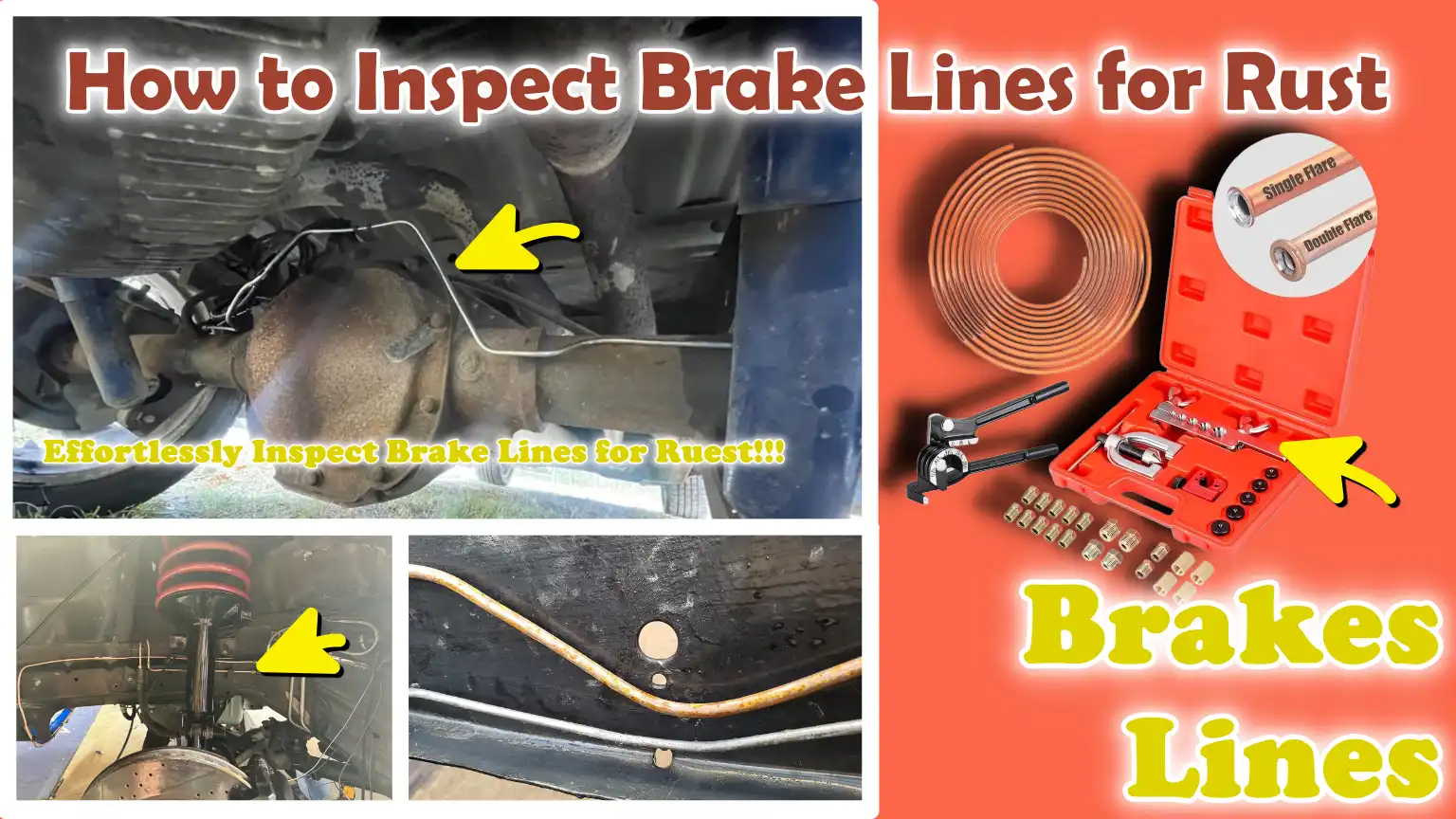
That’s why, you need to learn How to Inspect Brake Lines for Rust so that you can clearly check and identify early warnings signs so that you can prevent from severe damage.
Now, Let’s Understand Brake Lines and the Risk of Corrosion
1. What are Brake Lines and What Is Their Role in the Braking System?
Brake lines are thin tubes and hoses that transport brake fluid from the master cylinder to each wheel, enabling your braking system to function through hydraulic pressure.
When you depress the brake pedal, this pressure travels through the fluid contained within the lines, which then activates the brake calipers or wheel cylinders, thereby slowing the vehicle down.
For this system to function correctly, it is essential that the brake lines remain completely sealed and intact at all times; even the slightest weakness or leak can result in a loss of pressure, directly impacting how quickly and safely the vehicle is able to come to a stop.
This is why brake lines are considered one of the most critical safety components of any vehicle, even though they are often hidden beneath the car and are rarely inspected regularly by most drivers.
2. Materials Used in Brake Lines
Brake lines are typically constructed from steel because it is strong and capable of withstanding high pressure; however, standard steel remains susceptible to corrosion over time.
To mitigate this risk, many manufacturers utilize coated steel lines; these feature a protective layer that slows down the corrosion process, although it cannot prevent it entirely.
Some modern or upgraded vehicles employ stainless steel brake lines; while these carry a significantly lower risk of corrosion, they are more expensive and are less commonly found in standard factory configurations.
In addition to metal lines, certain parts of the system, particularly near the wheels, utilize rubber brake hoses to maintain flexibility and accommodate movement in tandem with the vehicle’s suspension.
Although these rubber components do not rust, over time they can develop cracks, weaken, or swell, conditions that can adversely affect braking performance.
Every material possesses its own unique strengths and weaknesses; however, overall, metal brake lines face the highest risk of damage due to rust.
3. Why Do Brake Lines Rust?
Rust forms when metal is exposed to moisture and oxygen for extended periods.
Brake lines are particularly susceptible to rusting because they are mounted beneath the vehicle, where they are constantly exposed to water, dust and grime.
In many regions, the road salt used during winter significantly accelerates the rusting process; this occurs because salt initiates a chemical reaction that degrades protective coatings, thereby exposing the underlying metal directly to the air.
Even in regions that do not experience snowfall, ambient humidity, rainfall and standing water can gradually lead to the formation of rust.
As vehicles age, the protective coatings applied to their brake lines begin to wear down, making it even easier for rust to form and spread.
What makes this situation particularly dangerous is that rust often begins as a minor surface issue but can gradually hollow out the metal from the inside, compromising the metal’s thickness and structural integrity without any obvious warning signs.
4. Common Vehicles at Highest Risk
Older vehicles face the highest risk of brake line corrosion, as they have been exposed to the elements for extended periods, allowing rust to accumulate gradually over time.
Vehicles frequently driven in wet environments, coastal regions, or areas where road salt is applied during the winter months are also highly susceptible to accelerated corrosion.
Cars that are rarely washed underneath, or those left parked outdoors for prolonged periods, tend to accumulate excessive moisture and grime, significantly increasing the risk of rust formation.
In many instances, drivers of these vehicles remain unaware of the condition of their brake lines until a serious issue actually manifests; this is precisely why regular inspections are absolutely essential for vehicles falling into these “high-risk categories.”
How to Ensure Safety Before Inspecting Brake Lines
1. Parking on Level Ground and Securing the Vehicle
Before inspecting the brake lines, it is essential to park the vehicle on a level and stable surface to ensure that it does not roll or shift while you are working underneath it.
Even a slight incline in the ground can cause the vehicle to move unexpectedly, particularly when it has been raised.
Engaging the parking brake keeps the rear wheels stationary; however, one should not rely solely on this method to secure the vehicle.
Placing ‘wheel chocks’ (wedge-shaped blocks) in front of and behind the tires provides an additional layer of safety, as they physically prevent the vehicle from moving.
This step is crucial because inspecting brake lines often requires you to work underneath the vehicle, where even a minor shift in its position can prove hazardous.
A stable setup minimizes the risk of accidents and allows you to focus on thoroughly inspecting the condition of the brake lines.
2. Using ‘Jack Stands’ Instead of Relying Solely on a Jack
A hydraulic jack is useful for lifting a vehicle, but it is not designed to safely support the vehicle’s weight for extended periods.
The jack’s pressure may drop, it could slip, or it might fail without warning, causing the vehicle to suddenly collapse.
For this reason, you should always use jack stands after lifting the vehicle.
Jack stands are engineered to safely bear the weight and keep the vehicle stable while you are working underneath it.
They should be placed at strong structural points on the vehicle such as: on the frame or at specific ‘lift points’ designated by the manufacturer.
Using jack stands significantly reduces the risk of injury and is considered a fundamental safety practice during any vehicle inspection or repair process.
3. Wearing Gloves and Eye Protection
When inspecting brake lines, you may face dust, rust particles and potentially brake fluid; if these substances come into contact with your skin or eyes, they can be harmful.
Gloves help protect your hands from the sharp edges of rusted metal, thereby minimizing the risk of cuts or scrapes.
Eye protection is equally important, as pieces of rust, dust, or debris may fall down while you are touching or inspecting the underside of the vehicle.
Brake fluid is also a chemical that can cause skin irritation and damage painted surfaces; therefore, it is crucial to avoid direct contact with it.
Wearing basic safety gear makes the inspection process safer and more comfortable, specially when working in tight or dirty spaces.
4. Allowing the Vehicle to Cool Down Before Inspection
After driving, various parts of the vehicle, including the engine, exhaust system and surrounding components, as it can become extremely hot.
Brake lines often run in close proximity to these areas, particularly within the engine bay and along the underside of the vehicle.
Touching hot components or working near them poses a risk of burns, or it may cause the inspection process to become difficult and rushed.
Allowing the vehicle to cool down for a while before beginning the inspection ensures that you can safely access all parts of the vehicle without the risk of injury.
When the vehicle is cool, it also becomes easier to carefully inspect the brake lines, as there is less likelihood of distraction, resulting in a more thorough and accurate inspection.
Tools
| Tools | Why It Is Needed | How to Use It Properly |
|---|---|---|
| Flashlight or Inspection Light | Brake lines are located underneath the vehicle, an area often characterized by poor lighting, making it difficult to identify rust, cracks, or leaks with the naked eye. With adequate illumination, you can clearly spot early signs of rust, fluid stains and weakened sections, subtle details that can easily go unnoticed in dim light. | When inspecting the entire length of the brake lines, position a flashlight at various angles. Slowly rotate the flashlight so that the light reflects off the metal surfaces; this technique helps reveal rust spots and signs of damage. Pay particular attention to bends, joints and areas near brackets, as these are the locations where corrosion often begins first. |
| Jack and Jack Stands | These tools are essential for safely lifting the vehicle, thereby granting you access to the brake lines located underneath. The jack lifts the vehicle, while the jack stands provide sturdy support to hold it in place and prevent it from suddenly collapsing, a critical safety precaution. | Use the jack to lift the vehicle at its designated lifting points. Once the vehicle is raised, position the jack stands beneath sturdy sections of the vehicle’s frame and slowly lower the vehicle onto them. Always ensure that the vehicle is completely stable before crawling underneath it and never rely solely on the jack for support. |
| Inspection Mirror | Certain sections of the brake lines may be hidden behind other components or tucked away in tight spaces where direct visual inspection is impossible. By using a mirror, you can inspect these hard-to-see areas without having to remove any surrounding parts. | Position a mirror beneath or behind the components such that you can view the reflection of the brake line. Use a flashlight to ensure adequate illumination. Slowly maneuver the mirror to inspect hidden bends, rear sections and joints. |
| Wire Brush or Pick Tool | Occasionally, rust may appear minor when viewed from above, yet it may have penetrated deep into the metal structure. Use a wire brush or a pick tool to assess the metal’s structural integrity and to scrape away any loose surface rust; this helps in determining the true extent of the damage. | Gently scrub the surface with a wire brush to remove loose rust. Using a pick tool, carefully apply light pressure to the metal. If the surface flakes off easily, feels soft, or begins to crumble, it indicates severe corrosion, signaling that the brake line is compromised. Avoid applying excessive force. |
| Safety Gloves | While inspecting brake lines, you may come into contact with rough metal surfaces, dirt, rust and potentially brake fluid. Gloves protect your hands from cuts, abrasions and exposure to chemicals. | Put on gloves before beginning the inspection and keep them on throughout the entire process. Select gloves that offer a good grip, enabling you to securely handle tools and manipulate components without the gloves slipping on your hands. If the gloves become excessively soiled or damaged, replace them. |
How to Locate the Brake Lines
1. The Path from the Master Cylinder to the ABS Module
The brake lines originate at the master cylinder, which is typically located in the engine bay near the firewall, on the driver’s side.
This is the point where hydraulic pressure is generated within the brake fluid when the brake pedal is depressed.
From here, these lines transmit this pressure to the ABS module, which regulates braking force and prevents the wheels from locking up during sudden stops.
These lines are often more readily visible than other components because they are situated in the upper section of the engine bay; however, they remain susceptible to corrosion, particularly near fittings and bends.
Inspecting this specific route helps you identify early signs of rust, a common starting point for system failure, as any damage in this section can compromise the structural integrity of the entire braking system.
2. The Brake Line Route Along the Frame Rails
Upon exiting the engine bay, the brake lines typically run underneath the vehicle, following along the vehicle’s frame rails.
While this routing keeps them secure and organized, it also exposes them to road debris, water and dust.
These lines are often secured to the frame using metal or plastic brackets; these attachment points are particularly susceptible to corrosion, as moisture can easily become trapped there.
Over time, this can weaken the metal, even if the damage is not immediately apparent during a cursory visual inspection.
A careful examination of the frame rail route allows you to inspect the long, continuous sections of the brake lines, where corrosion often develops gradually over time.
3. The Rear Brake Line Route Underneath the Vehicle
As the brake lines continue toward the rear of the vehicle, they run along the underbody floor pan and eventually split into two separate lines to reach the rear wheels.
This section is one of the most exposed parts of the vehicle, as it is regularly subjected to water, mud and road salt.
Due to this constant exposure, corrosion often develops in these areas much more rapidly than in other parts of the system.
In many instances, rust initially manifests as small surface spots; however, if left unaddressed, it can spread and cause severe structural damage.
Therefore, it is crucial to inspect this specific route, as any defect in the rear brake line can significantly compromise the vehicle’s overall braking performance and stability.
4. Wheel Wells and the Area Surrounding the Axles
It is essential to inspect the brake lines located within the wheel wells and around the axles, as these components are directly affected by constant movement, vibration and debris or mud kicked up from the road.
In these areas, flexible rubber hoses are often installed alongside rigid metal lines to accommodate the movement of the suspension system.
Although the rubber components themselves do not rust, the metal fittings and the surrounding areas can deteriorate over time.
Dust and moisture kicked up by the tires often accumulate in these spots, thereby increasing the risk of corrosion.
A close inspection of these areas helps you identify early signs of wear, rust, or any other damage that could adversely affect the braking performance of individual wheels.
5. Junctions and Connection Points – High-Risk Areas for Corrosion
Junctions and connection points are specific locations where various brake lines converge, or where they connect to components such as the ABS module, brake calipers, or wheel cylinders.
These areas are considered high-risk zones because they involve fittings, bends and confined spaces where moisture can easily accumulate and become trapped.
These locations are highly susceptible to rapid corrosion, which can weaken joints and lead to brake fluid leaks or a loss of hydraulic pressure.
Even a trace of rust on the fittings can compromise the seals, directly impacting brake performance.
It is crucial to pay special attention to these connection points, as any failure in these areas can trigger sudden and severe brake-related malfunctions.
How to Visually Inspect for Rust
1. Identifying Surface Rust vs Deep Rust
When inspecting brake lines, it is crucial to distinguish between surface rust and deep rust, as they do not pose the same level of threat.
Surface rust typically appears as a thin, light brown or orange layer on the metal; it often forms when the protective coating begins to wear away.
At this stage, the underlying metal remains structurally sound and the damage is largely confined to the outer layer.
Deep rust, however, is far more serious; it occurs when corrosion begins to eat into the metal itself, compromising its thickness and structural integrity.
This type of damage may appear deep, rough and pitted; in some cases, distinct pits or weak spots may be visible on the brake line.
Deep rust can lead to sudden brake failure, as the line becomes unable to withstand hydraulic pressure.
Recognizing this distinction helps you determine whether the brake line merely requires monitoring or if it necessitates immediate repair.
2. Signs of Peeling, Blistering, or Flaking Metal
As rust progresses, it alters the metal surface in ways that are easily identifiable upon close inspection.
Peeling occurs when layers of rust begin to separate, exposing the vulnerable metal underneath.
Blistering happens when corrosion forms beneath the protective coating, causing the surface to swell or bubble up.
Flaking indicates a rough, crusty texture where rust has accumulated in thick, scaly layers.
These signs indicate that the corrosion is no longer merely superficial but has begun to compromise the structural integrity of the brake line.
In many cases, peeling and flaking indicate that the metal has already lost a portion of its original structural integrity.
If you observe these conditions, it is a definitive sign that the brake line may no longer be safe and requires a more thorough inspection, or should be replaced entirely.
3. Inspecting Bends, Clamps and Mounting Points
Brake lines are not always straight; they often feature bends, curves and mounting points where they are attached to the vehicle’s frame.
These areas are particularly susceptible to corrosion, as moisture and dirt can accumulate there over time.
At bends, the protective coating on the metal may wear down more rapidly due to mechanical stress, making it even easier for rust to set in.
Clamps and brackets can trap water against the brake line, creating an ideal environment for corrosion to develop.
When inspecting these areas, pay close attention to where the line makes contact with or rests against other surfaces, as rust often begins and spreads from these hidden spots.
By paying attention to these small details, you can identify potential problems before they escalate into serious issues.
4. Checking for Corrosion at Connections and Fittings
Connections and fittings are critical components of the braking system, as they join different sections of the brake lines and ensure a tight seal to maintain fluid pressure.
These joints often involve threaded fittings, unions, or junctions where dirt and moisture can accumulate.
Corrosion at these points can compromise the integrity of the seal, leading to minor leaks that may not be immediately visible.
Over time, even a minor leak can degrade braking performance and pose a safety risk.
When inspecting fittings, check for any signs of rust, discoloration, or fluid leakage around the connection points.
A clean and dry fitting typically indicates a proper connection, whereas the presence of rust or moisture suggests that the area may require closer attention or repair.
How to Inspect for Weak Spots and Damage
1. The Press Test – Applying Light Pressure with a Tool
The press test is a simple method to verify whether a brake line retains sufficient structural integrity to safely withstand hydraulic pressure.
It involves using a small pick tool or a flat-head screwdriver to apply light pressure to areas exhibiting signs of rust or discoloration.
The objective is not to damage the line, but rather to gauge the underlying strength of the metal.
A sound brake line will feel firm and resist the pressure when pressed, whereas a compromised section may feel soft to the touch or begin to crumble.
This inspection is particularly crucial because rust often hides the true condition of the metal; what appears sound on the surface may, in reality, be severely deteriorated internally.
It is vital to apply only light pressure, as excessive force could inflict further damage upon sections that are already weakened.
2. Identifying Soft or Thinning Metal Sections
As rust progresses, it gradually eats away at the metal, causing the brake line to thin out and become less capable of withstanding pressure.
This thinning is not always visible from the exterior; therefore, a thorough and meticulous inspection is essential.
Soft sections may feel slightly pliable when pressed, whereas solid metal will feel rigid.
In some instances, the line may appear uneven or slightly flattened in areas where the metal has eroded.
Thinning metal poses a significant hazard because brake lines operate under immense pressure during braking; even a minor weak spot can lead to a sudden and catastrophic rupture of the line.
Timely identification of these weak spots helps prevent sudden brake failure and ensures that necessary repairs or replacements can be carried out immediately.
3. Checking for Wet Spots Indicating Fluid Leaks
Brake lines should always remain completely dry on the exterior, as brake fluid is designed to be sealed entirely within the system.
If you observe any wet or damp spots on a brake line, particularly in rusted areas or near fittings, it may be an indication of a leak.
Brake fluid typically ranges in color from clear to a light amber (yellow-brown) hue, although it may darken over time.
Even a minor leak can compromise the internal pressure of the braking system, potentially causing the brake pedal to feel soft (spongy) when depressed or reducing the vehicle’s stopping capability.
Wet spots are often among the first visible signs indicating that corrosion has damaged the line to the point where fluid has begun to seep out.
Timely identification of these areas can prevent further deterioration in braking performance.
4. Detecting Swollen or Bulging Brake Lines
The shape and diameter of brake lines should remain uniform throughout their entire length.
Any form of swelling or bulging signals a structural defect within the line.
In metal brake lines, bulging can occur when the line’s walls become thin due to internal or external corrosion, causing them to expand slightly under pressure.
In rubber components, swelling may occur as the material degrades over time or is exposed to chemicals.
These changes may appear minor initially, but if left unaddressed, they can quickly lead to line failure.
A bulge in any section of the line serves as a clear warning that the line is no longer safe and could rupture even during normal braking; therefore, immediate attention to this issue is absolutely critical.
Know, High-Risk Areas That Requires Proper Attention
1. Areas Surrounding the Wheel Wells – Risk of Exposure to Road Debris
Brake lines that run inside or near the wheel wells are constantly exposed to road grime and water splashed up by the tires.
As the wheels rotate, they fling water, mud, sand and small pebbles directly onto the surrounding components.
Due to this constant exposure, the outer surfaces of the brake lines remain wet for extended periods, significantly increasing the likelihood of corrosion.
In regions where road salt is used, this effect becomes even more severe, as salt damages the metal’s protective layer and accelerates the rusting process.
Over time, this combination of moisture and debris can erode the outer coating of the brake lines, allowing rust to penetrate deep into the metal.
It is crucial to inspect this area carefully, as corrosion can develop here far more rapidly than in other, more sheltered parts of the vehicle.
2. The Lower Sections of Doors and Rocker Panels
Brake lines often run along the sides of the vehicle, specifically beneath the doors and near the rocker panels.
Although these areas may appear protected at first glance, they can actually trap dirt, water and road salt, particularly if the vehicle’s underbody is not cleaned regularly.
The vehicle’s structural design can allow moisture to accumulate in these areas for longer than expected, creating a persistently favorable environment for corrosion to develop.
Over time, this trapped moisture can gradually weaken the metal surfaces of the brake lines.
As these areas are not always easily visible without lifting the vehicle, corrosion may go undetected for extended periods.
Inspecting the areas surrounding the rocker panels helps uncover hidden rust that might otherwise be overlooked during a cursory examination.
3. Clips and Brackets That Trap Moisture
Clips and brackets are commonly used to securely attach brake lines to the vehicle, holding them firmly against the frame.
While these mounts are essential for the vehicle’s structural integrity, they can also become a source of trouble, as they tend to trap moisture and debris between the brake line and its mounting surface.
Due to constant contact with the metal, this trapped dirt and moisture create a small yet persistent source of dampness, significantly increasing the likelihood of rust formation.
In many cases, rust begins to form directly beneath these clips, where it remains invisible to the naked eye.
By the time the rust becomes visible from the outside, the underlying metal has often already sustained significant damage.
To detect early signs of any potential damage, it is crucial to thoroughly inspect the areas surrounding these mounting points, and, wherever possible, the areas directly behind them as well.
4. Rear Axle and Suspension Routing Points
Brake lines routed alongside the rear axle and suspension components are constantly exposed to movement, vibration and external stress.
These areas experience greater strain and motion compared to other parts of the vehicle, which can cause the protective coating on the brake lines to wear down over time.
Once this protective layer degrades, the risk of rust forming on the underlying metal increases significantly.
Furthermore, these components are frequently exposed to water and debris kicked up by the rear tires, further heightening the risk of corrosion.
As these lines are responsible for transmitting braking force to the rear wheels, any malfunction in this section can directly impact the vehicle’s stability during braking.
Carefully inspecting these routing points helps ensure that both the integrity and reliability of the brake lines are maintained.
Read More:
- How to Flush Contaminated Brake Fluid
- How to Check Brake Fluid Contamination Level
- How to Fix Brake Bias Issues
- How to Test Brake Proportioning Valve
- How to Replace a Brake Light Switch
- How to Diagnose Brake Light Switch Failure
- How to Fix Intermittent ABS Activation
- How to Clean ABS Wheel Speed Sensor
- How to Diagnose ABS Sensor Wiring Issues
- How to Test Electronic Brake Module (EBCM)
- How to Fix Parking Brake Dragging
- How to Adjust Parking Brake Cable
- How to Check Parking Brake Cable Tension
- How to Fix Brakes Dragging While Driving
- How to Diagnose Brake Dragging Issue
- How to Fix Internal Master Cylinder Leak
Common Signs Shows That Brake Lines Are Deteriorating
1. Brake Fluid Leaking Under the Vehicle
The clearest indication of deteriorating brake lines is the leakage of brake fluid underneath the vehicle.
Brake fluid typically ranges in color from clear to light brown and feels slightly oily to the touch.
If you notice small puddles or wet spots beneath your vehicle, particularly near the middle or rear sections, it may signify that corrosion has caused a crack or puncture in the brake lines.
The braking system relies on sealed hydraulic pressure to function; therefore, even a minor leak can compromise that pressure and impair braking effectiveness.
Over time, a persistent loss of fluid can lead to a severe decline in braking performance or even total brake failure.
Conducting regular checks for leaks allows for the early detection of problems before they escalate into hazardous situations.
2. Brake Pedal Feeling Loose or Spongy
If the brake pedal feels soft, loose, or spongy when depressed, it often signals a loss of pressure within the braking system.
This can occur when brake lines deteriorate due to corrosion, allowing fluid to escape or air to enter the system.
When pressure cannot be maintained, the force applied to the pedal is not effectively transmitted to the brakes at the wheels.
Drivers may perceive that the pedal travels lower than usual or feels inconsistent when the brakes are applied repeatedly.
This change in pedal feel serves as a critical warning sign, as it often manifests before a complete brake failure occurs.
Paying close attention to the responsiveness of the brake pedal can help identify underlying issues within the brake lines.
3. Reduced Braking Efficiency
If it takes longer than usual to bring the vehicle to a stop, or if the brakes do not respond as promptly when applied, the underlying cause may lie in internal issues within the brake lines.
A decline in braking efficiency is often attributed to a loss of hydraulic pressure caused by leaks or weakened lines.
This can make the vehicle feel less responsive and increase stopping distances, particularly during sudden or emergency braking situations.
In some instances, the braking force may feel unevenly distributed between the front and rear wheels, which can adversely affect the vehicle’s stability.
Any noticeable change in braking performance should be taken with the utmost seriousness, as it has a direct impact on overall safety.
4. Appearance of “Wet Rust” or Fluid Leaks
While the formation of rust on brake lines over time is a common occurrence, the presence of “wet rust”, or the appearance of fluid droplets alongside the rust, signals a potentially more serious internal issue.
Wet rust typically indicates that brake fluid is seeping out through a compromised section of the line and mixing with the surface rust.
This serves as a clear warning that the metal has become weakened and is at risk of imminent, catastrophic failure.
In some cases, you may even observe small droplets of fluid forming on the line or dripping from it.
It is absolutely critical to address this situation immediately, as it demonstrates that the brake line is no longer capable of maintaining the necessary hydraulic pressure.
Timely detection of wet rust can prevent a sudden and catastrophic failure of the entire braking system.
When to Repair or Replace Brake Lines for Rust
1. Minor Surface Rust vs Structural Rust
Not all forms of rust on brake lines necessitate immediate replacement; however, for safety reasons, it is crucial to understand the distinction between the two.
Minor surface rust typically appears as a light, uniform coating on the exterior surface of the metal and does not immediately compromise the line’s structural integrity.
At this stage, the metal remains solid internally and, if monitored regularly, the brake line can often continue to function safely.
Structural rust, however, is far more serious; it occurs when corrosion begins to eat away at the metal from the inside out, thereby reducing its thickness and strength.
This type of damage may appear rough, flaky, or deeply pitted and it severely diminishes the brake line’s ability to withstand hydraulic pressure.
Once rust reaches this critical stage, the risk of sudden brake failure increases significantly, making replacement of the line the safest course of action.
2. When Patching Is Unsafe
Patching a brake line may seem like a quick and inexpensive solution, but it is often unsafe, particularly in cases involving rust.
Brake systems operate under immense pressure and no temporary fix such as: plugging a leak or covering a damaged section, as it can restore the metal to its original structural integrity.
In many instances, the corrosion extends beyond the visible area, meaning that adjacent sections of the line may also be compromised.
Although a patch may hold for a time, the risk remains that it could fail without warning, leading to a sudden and complete loss of braking power.
For this reason, patching rusted brake lines is generally not recommended.
Instead, replacing the damaged section, or the entire line, is considered the more reliable and safer approach.
3. Signs Suggesting a Complete Brake Line Replacement
There are several clear indicators suggesting that a brake line should be replaced entirely rather than merely repaired.
Deep corrosion, flaking metal, a visibly thinned line, or any signs of fluid leakage serve as definitive proof that the line is no longer safe.
If corrosion is visible in multiple sections of the brake line, it typically implies that the entire system has been exposed to the same conditions and other components may soon fail as well.
In such cases, replacing the entire length of the affected line helps ensure the long-term reliability of the braking system.
Vehicles that have aged or have been operated under harsh conditions often reach a point where replacing the brake lines becomes essential to maintain proper braking performance.
Taking immediate action when these signs appear can prevent more serious problems from arising later on.
4. The Importance of Professional Repair for Safety
Repairing and replacing brake lines requires a high degree of precision and the use of specialized tools to ensure that the system remains completely sealed and functions correctly under pressure.
If not installed properly, a brake line may leak, air may enter the system, or the brakes may fail to function correctly, all of which pose a significant safety hazard.
Professional technicians are specifically trained to handle brake systems, utilize the correct components and follow proper procedures (such as “bleeding” the brakes after replacement).
They can also conduct a thorough inspection of the entire system to identify any related issues that might not be apparent during a casual visual check.
Although some basic checks can be performed at home, professional repairs should always be sought whenever a brake line fails; this ensures that your vehicle remains safe and reliable on the road.
How to Prevent and Maintain Future Rust Formation
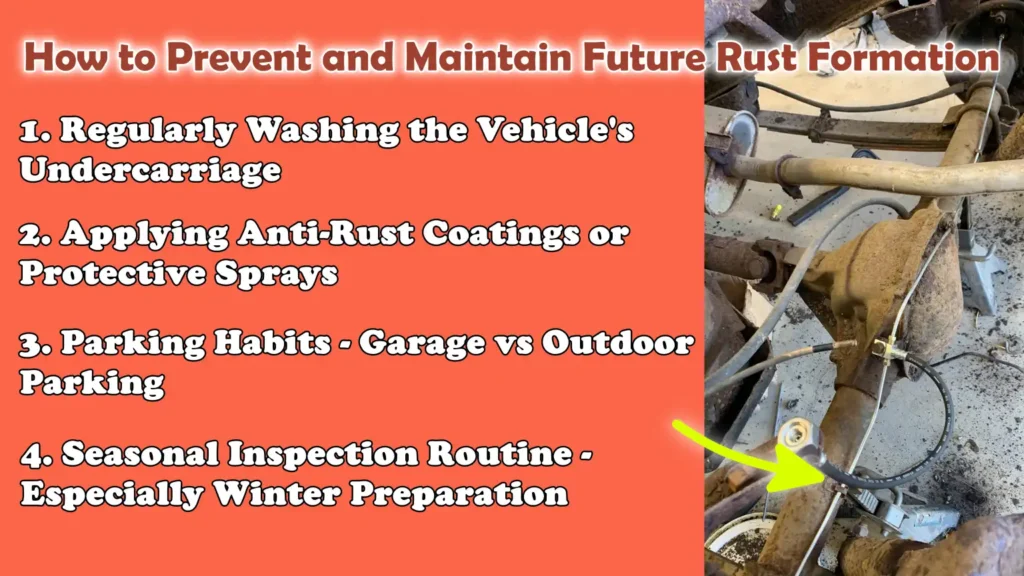
Also, NHTSA found out that brake pipe corrosion, specially caused by the road salt exposure that can lead tot he complete brake failure and even increases the risk of vehicle crashes as well, also report shows that older vehicles and those exposed to the winter conditions are at the higher risk, that’s why it is highly recommended to have regular undercarriage washing, inspect them regularly and replace if there’s severely corroded lines as well.[¹]
1. Regularly Washing the Vehicle’s Undercarriage
The most effective way to slow down the process of rust formation on brake lines is to keep the vehicle’s undercarriage clean.
Dust, mud and road salt trap moisture against metal surfaces, thereby accelerating the rusting process over time.
Washing the undercarriage removes these dirt particles before they can cause damage.
This becomes even more critical when driving in rainy weather, on muddy roads, or in regions where road salt is used during the winter months.
While a simple rinse with water can help reduce accumulated grime, using a pressure washer yields superior results, as it effectively reaches into the tight spaces surrounding the brake lines and brackets.
Regular cleaning ensures that the metal remains dry, thereby minimizing the likelihood of rust forming or spreading.
2. Applying Anti-Rust Coatings or Protective Sprays
Protective coatings and sprays are formulated to act as a barrier between metal surfaces and moisture, thereby preventing rust formation.
These products can be applied to brake lines and surrounding components to slow down the rusting process, a measure that is particularly essential for vehicles frequently operated in harsh weather conditions or challenging environments.
Some coatings are oil-based and remain slightly tacky to repel water, while others dry to form a protective film over the metal surface.
These products deliver the best results when applied after the undercarriage has been thoroughly cleaned, as this allows them to adhere directly to the surface without any interference from dust or grime.
While these measures may not render brake lines completely rust-proof, their regular application can significantly extend their lifespan.
3. Parking Habits – Garage vs Outdoor Parking
Where a vehicle is parked has a direct impact on how quickly it develops rust.
Vehicles parked in a garage are generally less exposed to rain, humidity and temperature fluctuations, which helps keep brake lines and other metal components dry.
Conversely, vehicles parked outdoors are constantly exposed to moisture, particularly during the rainy season or in humid climates.
Over time, repeated exposure to moisture increases the risk of rust formation.
Simple measures such as: parking on dry ground rather than wet surfaces, or avoiding areas where water tends to pool, as it can help minimize moisture exposure.
Adopting better parking habits can slow down the rusting process and help safeguard critical components like brake lines.
4. Seasonal Inspection Routine – Specially Winter Preparation
Regular inspection of brake lines is a crucial part of preventing severe rust-related damage; this becomes even more critical before and after the winter season.
During the winter months, road salts and damp weather create an environment where rust can develop very rapidly.
Inspecting brake lines before winter allows you to identify and address early signs of rust, while a post-winter inspection helps you detect any new damage caused by harsh weather conditions.
Establishing a seasonal routine ensures that rust-related issues do not go unnoticed for extended periods.
By combining inspections with proper cleaning and protective measures, you can maintain the structural integrity of your brake lines and minimize the risk of sudden brake system failure.
Conclusion – How to Inspect Brake Lines for Rust
Mostly all the drivers blindly trust their brakes everyday and everytime, but they rarely take some time to check their reliability or they wanted to maintain something.
Unlike visible components such as brake pads or tires, brake lines operate silently, transmitting hydraulic pressure that must remain completely sealed and structurally sound at all times.
The insidious nature of rust is such that it develops gradually, and often out of sight, slowly eroding the metal over time without offering any clear warning signs until a major issue suddenly manifests.
By the time symptoms such as fluid leaks, a spongy brake pedal, or diminished stopping power become apparent, significant damage has often already occurred.
Understanding how to inspect brake lines for rust can go a long way in helping you avoid serious complications.
A few simple checks such as: looking for signs of corrosion, probing for weak spots and keeping an eye out for early warning signals, as it can help you catch problems before they escalate into dangerous situations.
Regular cleaning of the vehicle’s undercarriage, adopting proper parking habits and scheduling seasonal inspections also play a crucial role in slowing down the rusting process and extending the lifespan of your brake lines.
While these may seem like minor efforts, they have a profound impact on the overall safety of the vehicle.
It is also vital to recognize when a brake line has deteriorated to the point where it requires professional repair.
If rust has penetrated beyond the surface layer, if there are any signs of leakage, or if any structural weakness is visible in the line, these issues must never be ignored.
Brake systems rely entirely on precision and structural integrity; Even a minor fault can jeopardize the security of the entire system.
Now, that’s it from this guide about How to Inspect Brake Lines for Rust also you can ask all the related queries below.
Frequently Asked Questions
FAQ 1: How do I check for rust on brake lines at home?
Answer: To check for rust on brake lines at home, you must safely lift your vehicle using a jack and support it with jack stands so that you can clearly view the underside of the vehicle. Use a flashlight to trace the brake lines from the engine bay all the way to the rear wheels. Carefully look for any signs of rust, particularly in areas that appear rough, flaky, or uneven. Light surface rust may resemble a thin orange film, while deeper rust often looks darker and more severely deteriorated. You can gently tap the metal surface with a tool to determine whether the metal remains structurally sound. Additionally, keep an eye out for any wet spots, which could indicate a leak. It is crucial to take your time and inspect all components thoroughly, as brake lines are often hidden and can be easily overlooked.
FAQ 2: Is rust on brake lines dangerous?
Answer: Yes, if rust on brake lines is not addressed in a timely manner, it can be extremely dangerous. Brake lines transmit the hydraulic pressure necessary to bring the vehicle to a stop; if rust compromises the integrity of the metal, it can lead to cracks or a complete brake failure. In its early stages, rust may not affect the vehicle’s performance; however, as it spreads, it diminishes the structural strength of the line. This can eventually result in a brake fluid leak, causing a loss of pressure within the system and rendering the brakes less effective. In severe cases, a brake line may rupture suddenly, leading to a drastic loss of braking power. For this reason, even minor signs of rust should be taken seriously and inspected regularly.
FAQ 3: What does a faulty brake line feel like while driving?
Answer: A faulty brake line often causes noticeable changes in how the brake pedal feels and how the vehicle responds when coming to a stop. You may notice that the brake pedal feels softer than usual or travels further down before the brakes engage. In some cases, the pedal feel may be inconsistent, working normally one moment, yet feeling weak the next. It may also take longer for the vehicle to come to a complete stop, or the braking experience may feel uneven. These changes occur because the brake system is losing pressure, often due to a leak or weakened lines. Any unusual changes in the braking experience should be inspected immediately, as they could signal a serious safety issue.
FAQ 4: Can I drive with rusted brake lines?
Answer: Driving with rusted brake lines is not advisable, specially if the rust has penetrated beyond the surface layer. While minor surface rust may not pose an immediate problem, it can worsen over time and lead to sudden brake failure. Brake lines operate under immense pressure and weakened metal cannot withstand this force during normal or emergency braking situations. The risk increases significantly if the rust begins to flake off, penetrates deep into the metal, or causes a leak. It is always safer to inspect the condition of your brake lines before continuing to drive and to have them repaired or replaced if necessary.
FAQ 5: How long do brake lines typically last before rusting?
Answer: The lifespan of brake lines depends on the materials used, driving conditions and vehicle maintenance. In many cases, brake lines can last anywhere from 8 to 15 years or even longer; However, vehicles exposed to moisture, road salt, or humid environments can develop rust very rapidly. Vehicles driven in harsh conditions or parked outdoors are particularly susceptible to rust formation. Regular cleaning and inspection can help extend the lifespan of brake lines; nevertheless, over time, all metal lines remain at risk of rusting. Periodic inspection helps identify potential issues before they escalate into serious problems.
FAQ 6: Can rusted brake lines be repaired, or must they be replaced?
Answer: Whether or not brake lines can be repaired depends on the severity of the rust. Superficial surface rust can sometimes be remedied by cleaning and applying a protective coating; however, if the rust has penetrated deep into the metal, replacement is generally required. Repairing or patching a brake line is generally not considered safe, as it does not restore the metal’s original structural integrity. As brake lines operate under extremely high pressure, even a minor structural weakness in the metal can lead to brake failure. In most cases, replacing the damaged section or the entire line, is the safest and most reliable solution.
References:
[1] NHTSA links road salt to brake pipe corrosion, failure
https://www.safetyandhealthmagazine.com/12154-nhtsa-links-road-salt-to-brake-pipe-corrosion-failure/
Hello Folks, Dean Shali here to help you out to solve the problems with your lovely vehicle, as i have lots of experience and knowledge about automotive industry as i woks directly with the customers and repair vehicles and i love to help the people to keep their cars safe and running smoothly.