
Written By: Dean Shali
Fact Checked By: Sabré Cook
Reviewed By: Tamara Warren
Your car’s wheels are supposed to spin in smooth way, so whenever they starts wobble then the vehicle itself giving you warning about erupting problems inside your tires, suspension, bearings or related to steering system itself.
A car is literally designed with the mechanisms that spins every wheel in a perfectly balanced motion at the high speeds, as it can even rotates more than 800 times every single minute on the highway.
That’s why, with just one small damaged component gets damaged, loose, bent, worn out or improperly balanced, then the entire system begins to shake.
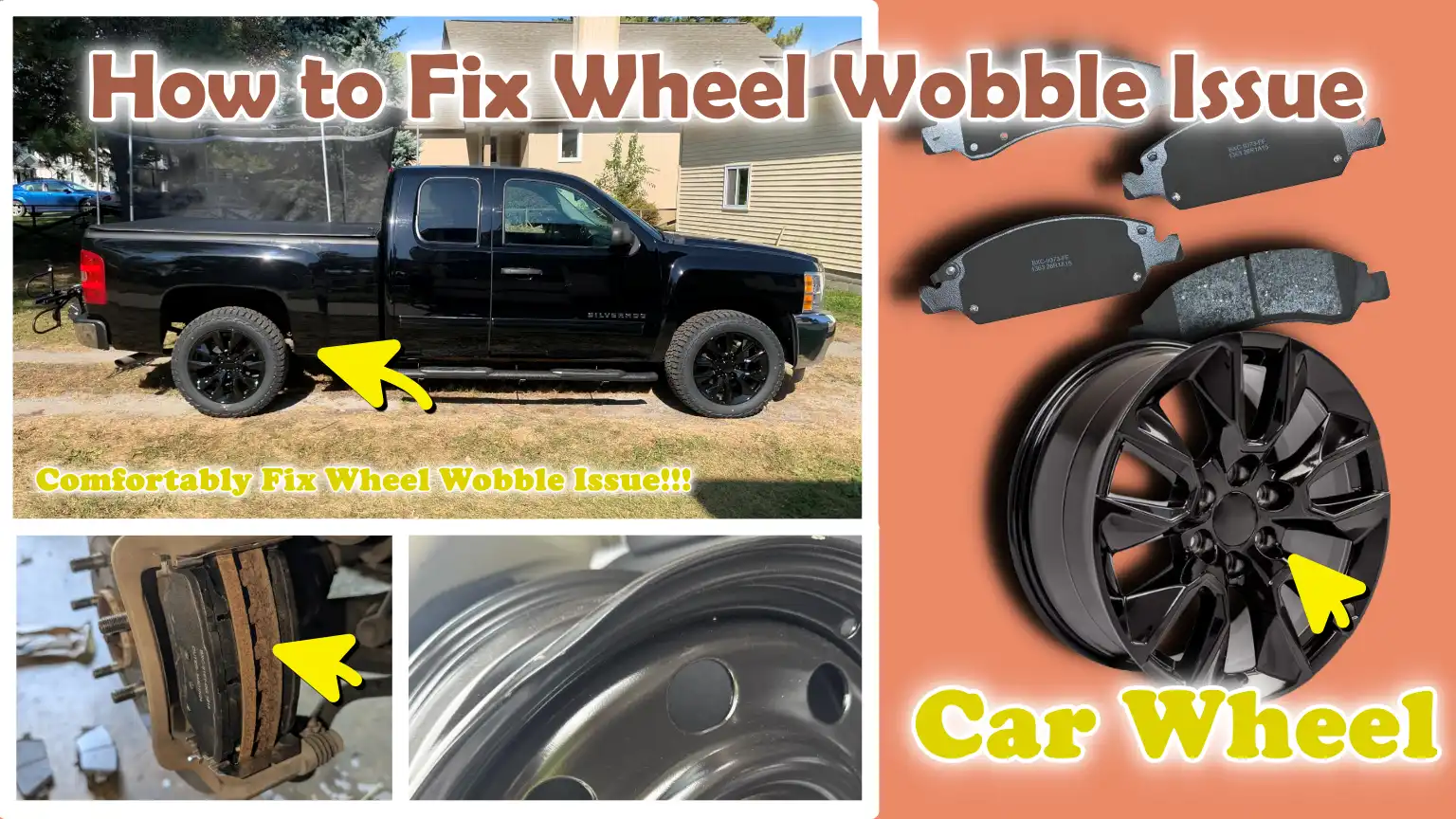
But, in this guide you’ll learn How to Fix Wheel Wobble Issue so that you can learn how wheel wobble actually happens, the symptoms to identify the cause and then there’s methods for inspecting tires, wheels, bearings, suspension components, alignment angles and brake parts in correct way.
So that you can understand: whether the wobble only happens at the highway speeds, during the braking, while turning the vehicle or after hitting bumps.
Know, What is Wheel Wobble?
Wheel wobble is a condition in which one or more of a vehicle’s wheels fail to rotate in a completely smooth and balanced manner, generating an unwanted vibration that propagates through the tires, suspension and steering system.
In a properly functioning car, every wheel is designed to rotate uniformly, at high speeds, sometimes thousands of times per minute on the highway, without any lateral movement or deviation.
When something goes wrong within this system such as: unbalanced tires, a bent rim, worn wheel bearings, loose lug nuts, or defective suspension components, the wheel begins to shake or wobble slightly instead of maintaining a clean, circular rotation.
This subtle, irregular movement creates a vibration that the driver can feel through the steering wheel, the seat, or the vehicle’s floor; furthermore, as speed increases, the intensity of this vibration often escalates.
Over time, wheel wobble does not remain static, as the constant vibration places additional stress on the tires, steering components and suspension joints; if left unaddressed, this can lead to accelerated tire wear, a loss of vehicle control and compromised driving safety.
1. Definition of Wheel Wobble
Wheel wobble is best described as an abnormal vibration or lateral movement that occurs while a wheel is rotating; it is typically caused by imbalances, structural damage, or worn mechanical components within the wheel assembly or suspension system.
It is not a standalone issue, but rather a symptom indicating that something within the wheel system is no longer properly aligned or functioning correctly.
In most cases, this issue is most acutely felt at specific speeds, particularly between 40 and 70 miles per hour, because the rotational velocity is high enough that even minor imperfections become amplified.
Unlike normal engine vibration, wheel wobble is directly linked to the tire and wheel assembly; this means its source is almost always mechanical and related to physical wear or damage.
2. How Does Wheel Wobble Affect Vehicle Stability?
Wheel wobble directly compromises vehicle stability by disrupting smooth contact between the tires and the road surface.
When a wheel does not rotate uniformly, it exerts uneven pressure on the road, thereby impacting steering precision, braking efficiency and overall traction.
This can cause the vehicle to feel unstable, particularly when driving on highways or executing sudden turns.
Over time, these vibrations propagate to other parts of the vehicle, placing excessive strain on wheel bearings, suspension joints and steering components.
This increased stress can shorten the lifespan of critical parts and if the issue is left unaddressed, repair costs can escalate significantly.
In severe cases, persistent wobble can also compromise braking distances and vehicle control during turns, rendering the vehicle’s behavior unpredictable and making it even more difficult to handle safely.
3. Signs of Wheel Wobble in Your Car
Wheel wobble typically manifests through clear warning signs, which become increasingly pronounced as the underlying problem worsens.
These signs often appear when driving at moderate to high speeds and their specific nature depends on which wheel or component is affected.
Steering Wheel Vibration
The most common indication of wheel wobble is vibration in the steering wheel, particularly when driving at high speeds.
This occurs because vibrations originating from the front wheels are transmitted directly into the steering system.
Drivers may initially perceive subtle tremors, which can escalate into intense vibrations as speed increases or as the wheel imbalance becomes more severe.
Vehicle Pulling to the Left or Right
Another significant sign is observed when the vehicle begins to pull to one side, either left or right, even when the steering wheel is held straight.
This can happen when wheel wobble is caused by uneven tire wear, suspension misalignment, or damage sustained on one side of the vehicle.
This pulling effect is more pronounced on level roads and can make it difficult to maintain easy control over the car.
Uneven Tire Rotation
Uneven tire rotation is a visible and physical symptom wherein the tire does not spin along a perfectly straight axis.
Instead, as it rotates, it may appear to bounce, tilt slightly, or wobble from side to side.
This is often caused by a bent rim, internal tire damage, or improper balancing and can typically be observed when the vehicle is lifted and the wheels are allowed to spin freely.
Vibration at Specific Speeds
Wheel wobble is often speed-dependent; that is, it is felt only at specific speeds such as: 40 mph, 60 mph, or 70 mph.
This occurs because, as rotational speed increases, the force of the imbalance also intensifies, making even minor imperfections more pronounced.
At lower speeds, the driver may experience no issues with handling; however, upon reaching highway speeds, a severe vibration may be felt throughout the vehicle.
Rattling or Humming Sounds
In some instances, wheel wobble is accompanied by unusual noises such as: rattling, humming, or a low-pitched rumbling.
These sounds are often caused by worn wheel bearings, loose suspension components, or uneven contact between the tires and the road surface.
The intensity of the noise may increase with speed and, at times, may even change while turning, thereby aiding in the identification of the faulty vehicle component.
Is It Safe to Drive with a Wobbling Wheel?
A wobbling wheel should not be dismissed as a minor inconvenience, as it typically serves as a warning sign that a critical component within the wheels, tires, steering, or suspension system is not functioning correctly.
Even if the vehicle feels fine to drive, continued use, particularly at high speeds, as it can rapidly exacerbate this underlying issue, as the stress placed on the wheels increases significantly under such conditions.
Simply put, a wheel is designed to rotate as a perfectly stable sphere; when this rotation becomes irregular, it indicates that the vehicle is failing to maintain proper contact with the road surface.
This directly impacts the vehicle’s safety, handling and braking distance.
1. Short Answer
Driving with a wobbling wheel is generally considered unsafe, as it signals a mechanical imbalance or malfunction.
This defect can suddenly escalate into a serious problem, potentially compromising steering control, braking capability and the vehicle’s overall stability.
Although the vehicle may operate normally for short distances, the risks increase significantly at high speeds, on poor road surfaces, or with continued driving without repairs.
In most cases, rather than continuing to drive over long distances, it is strongly advised to have the issue inspected and repaired as soon as possible.
2. The Risks of Ignoring a Wobbling Wheel
Ignoring a wobbling wheel can lead to severe mechanical failure over time, as the constant vibration places continuous stress on the vehicle’s interconnected components.
What begins as a minor vibration can gradually evolve into a major malfunction, potentially affecting multiple systems such as the tires, suspension joints, wheel bearings and steering components.
The longer this problem is ignored, the more expensive and dangerous its repair becomes; this is because vibration accelerates the wear and tear of components, thereby weakening the very parts designed to maintain smooth and balanced motion.
Tire Blowout
The most dangerous risk associated with a wobbling wheel is a tire blowout.
This can occur when the structural integrity of the tire is compromised due to uneven pressure distribution and constant vibration.
As the wheel wobbles, certain sections of the tire are subjected to greater stress than others, generating heat and causing internal damage to the tire.
Over time, the tire may suddenly burst while driving, particularly at high speeds on highways, where the consequences are far more severe and maintaining control of the vehicle becomes extremely difficult.
Suspension Damage
A wobbling wheel places excessive strain on suspension components such as: control arms, bushings and shock absorbers.
This is because these parts are designed to absorb the normal movements associated with driving on the road, not to withstand constant, repetitive vibrations.
When a wheel continues to wobble over an extended period, these components wear out much faster than intended, resulting in a degraded driving experience, reduced stability and increased repair costs.
In some instances, worn-out suspension components can even exacerbate the wobbling problem.
Reduced Braking Control
When a wheel wobbles, it fails to maintain consistent contact with the road surface, which can adversely affect the uniform application of braking force.
Consequently, the vehicle may require a longer distance to come to a stop, braking may become uneven, or a distinct vibration may be felt in the brake pedal when applying the brakes.
In severe cases, braking stability is compromised, particularly during sudden braking or while driving on wet roads.
Bearing Failure
Wheel bearings are responsible for the smooth rotation of the wheels and are highly sensitive to vibrations.
Constant wheel wobbling can generate excessive heat and friction within the bearings, leading to premature wear or complete failure.
Faulty bearings often produce humming or grinding noises; eventually, the wheel may loosen or seize up, posing a serious safety hazard.
Reduced Steering Stability
One of the most serious risks associated with wheel wobbling is a reduction in steering stability, specially when the front wheels are affected.
Vibrations interfere with steering precision, making it difficult to drive the vehicle in a straight line.
This can result in sluggish steering response, cause the vehicle to drift uncontrollably from side to side, or make it difficult to maintain control at high speeds.
In severe instances, the steering may feel loose or unstable, significantly increasing the risk of accidents.
Why Does Wheel Wobble Occur?
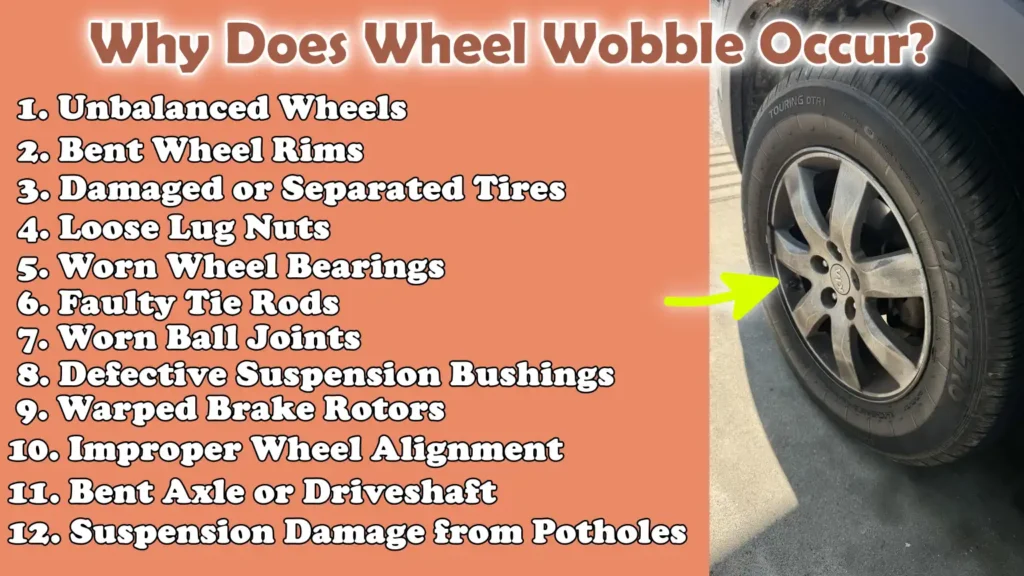
Wheel vibration occurs when one or more components of the wheel and suspension system fail to function correctly or become unbalanced.
This prevents the wheel from rotating smoothly, resulting in vibrations that resonate throughout the entire vehicle.
In a properly maintained car, every wheel is designed to rotate without obstruction, a capability achieved through an even distribution of weight, precise alignment and robust mechanical connections.
When even a minor component fails, loosens, or wears out, it can disrupt this delicate balance and induce vibration, a problem that becomes more pronounced when driving at higher speeds.
Most instances of wheel vibration are mechanical in nature; that is, they stem from wear and tear, physical impact (such as striking an object), or a lack of proper maintenance, rather than from engine-related issues.
1. Unbalanced Wheels
Unbalanced wheels are one of the most common causes of wheel vibration, as even a slight irregularity in the weight distribution around the tire can compromise the wheel’s ability to rotate smoothly.
When a wheel is not properly balanced, its rotation generates uneven centrifugal forces, creating vibrations that intensify as the vehicle’s speed increases.
This vibration is often felt as a shaking sensation in the steering wheel or seats, particularly when driving at highway speeds.
2. Bent Wheel Rims
Wheel rims typically become bent as a result of striking potholes, curbs, or rough road surfaces, thereby distorting the wheel’s perfectly circular shape.
Even a slight bend can prevent the tire from rotating properly, specifically, from rotating along a perfectly straight and uniform path, thereby causing distinct vibration and instability in the wheel.
This type of damage often worsens over time and can lead to issues such as air leaks or uneven tire wear.
3. Damaged or Separated Tires
Tires that have sustained internal damage or whose tread (outer layer) has separated can generate excessive vibration in the wheel, as the outer portion of the tire fails to remain stable during rotation.
In some instances, due to heat, aging, or impact, the internal rubber layers of the tire begin to delaminate, resulting in bulges or an uneven surface on the tire.
This causes the tire to bounce and generates intense vibration, which becomes even more pronounced at higher speeds.
4. Loose Lug Nuts
Loose lug nuts pose a serious safety hazard, as they directly impact how securely the wheel is attached to the vehicle.
If the lug nuts are not properly tightened, the wheel may shift slightly while driving, immediately causing vibration and instability.
If left unaddressed, this situation can become extremely dangerous, as the wheel could eventually come completely loose and detach from the vehicle.
5. Worn Wheel Bearings
Wheel bearings facilitate the smooth, low-friction rotation of the wheels; however, when they become worn, they impede the wheel’s movement and generate vibration.
Faulty bearings can cause the wheel to tilt slightly during rotation, leading to wobbling and often producing a humming or grinding noise.
As this condition deteriorates, it can compromise steering control and the vehicle’s overall stability.
6. Faulty Tie Rods
Tie rods are essential components of the steering system that help control the direction of the wheels.
When tie rods become worn or loose, they allow for excessive movement in the wheels, causing them to wobble and reducing steering responsiveness.
This issue is often most noticeable when making turns or driving at high speeds.
7. Worn Ball Joints
Ball joints connect the suspension to the wheels and facilitate smooth wheel movement while driving.
When these components deteriorate, excessive looseness develops within the suspension system, compromising the vehicle’s stability and causing the wheels to wobble.
This problem often becomes more pronounced when driving over rough terrain or potholes.
8. Defective Suspension Bushings
Suspension bushings absorb shocks and dampen vibrations between the metal components of the suspension system.
Over time, these parts, typically made of rubber or polyurethane, as it can crack or wear out, leading to excessive play within the suspension.
This excessive movement can cause erratic wheel behavior and generate vibrations.
9. Warped Brake Rotors
Warped brake rotors can cause the wheels to wobble, a sensation that is often most acutely felt when applying the brakes.
When the surface of the rotor becomes uneven, the brake pads cannot make proper contact with it, resulting in a pulsating or vibrating sensation.
This vibration can be felt through the steering wheel or the brake pedal.
This issue often intensifies when braking repeatedly from high speeds.
10. Improper Wheel Alignment
Wheel alignment becomes compromised when the angles of the wheels are not set correctly according to the manufacturer’s specified standards.
This results in inconsistent contact between the tires and the road surface, leading to vibrations, the vehicle pulling to one side and uneven tire wear.
While poor alignment does not always cause immediate wheel shaking, it can lead to vehicle instability over the long term.
11. Bent Axle or Driveshaft
A bent axle or driveshaft is a more serious mechanical issue that directly affects the rotation of the wheels.
When these components are damaged, they disrupt the rotational equilibrium, causing severe vibrations throughout the entire vehicle.
This type of problem is typically the result of damage sustained during a forceful impact or an accident.
12. Suspension Damage from Potholes
The impact of potholes is one of the most common underlying causes of wheel shaking, as it can simultaneously damage multiple components.
A forceful impact can bend a rim, damage a tire, loosen suspension components, or throw off the wheel alignment.
Even if the damage is not immediately visible, the resulting imbalance can generate distinct vibrations and instability that are clearly perceptible while driving.
Symptoms That Help Identify the Root Cause of the Problem
Wheel vibration (or wobbling) does not feel the same in every situation; the manner in which it manifests often provides crucial clues regarding which specific vehicle component is actually causing the issue.
As various components such as: tires, wheels, suspension, brakes and the steering system, behave differently under stress, carefully observing when and under what conditions the vibration occurs can help pinpoint the true root of the problem.
Paying close attention to when the vibration begins, how intense it feels and which driving maneuvers trigger it is the most reliable method for accurately diagnosing wheel vibration before attempting any repairs.
1. Vibration Only at High Speeds
When wheel vibration occurs exclusively at high speeds, typically between 40 and 70 miles per hour or higher, it is often linked to wheel imbalance, a defective tire, or a slightly bent rim.
At lower speeds, the rotational force is not strong enough to make the imbalance perceptible; however, as speed increases, even a slight irregularity in weight distribution or an uneven tire surface can generate intense vibration.
This symptom is very common in wheels that are unbalanced or have unevenly worn tires; it is typically felt most distinctly on smooth roads, where road noise is minimal.
2. Vibration While Braking
If the vibration occurs primarily when depressing the brake pedal, the cause is often a warped brake rotor or improper contact between the brake pads and the rotor.
When the rotor surface is not perfectly flat, the brake pads cannot maintain uniform contact with it as the wheel rotates; this generates a pulsating vibration that can be felt through the steering wheel or the brake pedal.
This symptom is typically felt more distinctly during prolonged braking or when driving on a downhill incline, situations where the braking system is under sustained pressure.
3. Vibration After Driving on Rough Roads
Wheel vibration that begins, or intensifies, after driving over potholes, speed bumps, or rough terrain usually indicates some form of physical damage, such as a bent rim, suspension misalignment, or loose steering components.
Sudden impacts can disrupt wheel balance or damage components such as tie rods, ball joints, or control arms.
This type of vibration is often felt immediately following the impact; furthermore, because the damaged component compromises the wheel’s balance, the vibration may gradually worsen over the course of subsequent drives.
4. Steering Wheel Vibration While Turning
When vibration is felt primarily while turning the steering wheel, it often points to wear and tear within the suspension or steering components such as: tie rods, ball joints, or wheel bearings.
These components are subjected to increased stress during turns; consequently, any looseness or wear becomes more acutely perceptible when changing direction.
This symptom may also signal an uneven load transfer between the wheels, which affects how smoothly the vehicle responds to steering inputs.
5. Symptoms of Rear Wheel Wobble
Rear wheel wobble is typically felt more distinctly through the seat or the rear section of the vehicle rather than through the steering wheel.
It often manifests as vibrations or a bouncing sensation originating from the rear, particularly at higher speeds.
Common causes include unbalanced rear tires, worn-out rear suspension components, or issues with the wheel bearings.
As the rear wheels do not directly influence the steering mechanism, drivers may sometimes find it difficult to detect this type of wobble immediately.
6. Symptoms of Front Wheel Wobble
Front wheel wobble is generally felt more distinctly because it directly impacts steering control.
Drivers often experience vibrations in the steering wheel, difficulty maintaining a straight path while driving, or a sensation of looseness in the steering response.
This type of wobble is typically caused by unbalanced front tires, worn steering components, or front wheel misalignment.
As the front wheels determine the vehicle’s direction, any instability in this area has a more profound and immediate impact on driving comfort and safety.
Tools
| Tools | Why It Is Needed | How to Use It Properly |
|---|---|---|
| Jack and Jack Stands | It is essential to inspect the wheels, tires and suspension when they are under no load (i.e., when they are not supporting the vehicle’s weight). | Position the jack beneath the lifting points specified by the manufacturer; slowly raise the vehicle and then secure it with jack stands before performing any work underneath. |
| Torque Wrench | Do not leave the wheels too loose, nor overtighten them, as either condition can cause the vehicle to wobble. | Set the correct torque value and tighten the nuts in a star pattern to ensure that the pressure is distributed evenly. |
| Lug Wrench | Removing the wheels is necessary to inspect the tires, brakes and wheel components. | Loosen the nuts slightly before lifting the vehicle; then, remove or tighten them completely as required. |
| Tire Pressure Gauge | Incorrect tire air pressure is a common cause of imbalance and vibration. | Press the gauge firmly against the valve stem and compare the reading with the recommended PSI listed on the vehicle’s label. |
| Flashlight | This helps in detecting hidden damage underneath the vehicle, such as cracks, leaks, or worn-out components. | During the inspection, shine a light on the tire sidewalls, suspension joints and the areas surrounding the wheels. |
| Pry Bar | This helps in identifying loose or worn components, such as ball joints or bushings. | Apply pressure to the suspension components to check for any unwanted looseness or movement. |
| Dial Indicator | This reveals minor defects in the wheels or brake rotors that cause vibration while the vehicle is in motion. | Position this tool near the rotating wheel and monitor for any changes in its speed while it spins. |
| Wheel Balancing Equipment | It corrects vibrations caused by an uneven distribution of weight in the tires or rims. | In a workshop setting, it is used to spin the wheel and attach small weights at the precise locations. |
| Safety Gloves and Glasses | It protects your hands from sharp edges and your eyes from dust or debris. | Always wear this while inspecting or repairing wheels. |
How to Diagnose Wheel Wobble – Most Accurate Way
Accurately diagnosing wheel wobble is crucial, as this issue can originate from various different parts of the vehicle; relying solely on guesswork can lead to unnecessary repairs and wasted money.
A systematic approach is employed for proper diagnosis, beginning with basic checks such as: tire pressure, and gradually progressing to the examination of more complex components like the suspension, bearings and alignment.
Each step helps pinpoint the true source of the vibration, ensuring that the root cause of the problem is fixed rather than merely treating the symptoms.
By conducting a thorough inspection, even minor or hidden issues can be detected before they escalate into major safety hazards.
1. Check Tire Pressure
Tire pressure is one of the simplest, yet most critical factors regarding wheel stability.
When tire pressure is too low, the tire becomes underinflated, meaning it becomes softer than its intended state.
Consequently, the tire fails to make proper contact with the road surface, resulting in vibrations, particularly when the vehicle is traveling at high speeds.
Conversely, when the pressure is too high, the tire becomes excessively rigid, compromising its grip on the road and potentially destabilizing the vehicle.
By checking the air pressure with a tire gauge and adjusting it to the PSI (pounds per square inch) specifications recommended by the vehicle manufacturer, you can ensure that the tire maintains its correct shape and rotates uniformly.
This minimizes the likelihood of vibrations caused by improper contact between the tire and the road.
2. Check the Tires for Any Defects
The tires must be inspected with great care, whether the defects are externally visible or internal, as even minor flaws can cause severe vibrations while driving.
Bulges on the tire surface are often indicators of internal damage or weak spots, which can lead to a sudden tire blowout.
Flat spots often develop on tires when a vehicle remains stationary for extended periods or when the brakes are not functioning correctly.
This causes the tire’s rotation to become uneven and irregular.
Uneven tire wear is a sign that the tire is not making proper contact with the road surface.
This is frequently caused by issues with the wheel alignment or the suspension system.
Cracks in the tire sidewalls are typically the result of aging and exposure to heat, which compromises the structural integrity of the tire.
Tire separation is one of the most dangerous scenarios; it occurs when the internal layers of the tire begin to delaminate, resulting in violent vibrations and vehicle instability.
3. Tighten the Lug Nuts
Lug nuts securely fasten the wheel to the vehicle; if they are not tightened properly, the wheel may wobble and in severe cases, it could detach completely from the vehicle.
Loose lug nuts allow the wheel to shift slightly while rotating, which immediately triggers vibrations.
When tightening lug nuts, one should follow a cross or star pattern to ensure that the pressure is distributed evenly across the wheel surface.
Symptoms of loose lug nuts include sudden vibrations, clicking sounds and irregular wheel movement, conditions that tend to worsen as the vehicle’s speed increases.
To ensure that every nut is tightened according to precise specifications, use a torque wrench rather than relying on guesswork.
4. Inspect the Wheel Rim
To rotate smoothly, it is essential that the wheel rim be perfectly round; any bends or deformities can generate distinct vibrations.
Rims are often damaged by impacts with potholes, curbs, or rough road edges.
A bent rim can cause the wheel to wobble up and down or side to side as it rotates, creating a vibration that intensifies as the vehicle’s speed increases.
Signs of impact damage include visible dents, air leaks and the tire seating unevenly on the rim.
Even minor bends, which may be difficult to detect with the naked eye, as it can produce noticeable vibrations while driving.
5. Check Wheel Balance
Wheel balancing ensures that the weight is distributed evenly across the tire and rim, allowing the wheel to rotate smoothly.
When a wheel is unbalanced, it generates a rhythmic vibration that intensifies as speed increases.
This often manifests as vibrations felt through the steering wheel or the seat, particularly at highway speeds.
Balancing is required when installing new tires, after hitting potholes, or if uneven tire wear is observed.
A properly balanced wheel reduces stress on suspension components and enhances overall driving comfort.
6. Inspect the Wheel Bearings
Wheel bearings facilitate the smooth rotation of wheels with minimal friction; when they become worn, they cause instability and wobbling.
Faulty bearings can cause a wheel to tilt slightly or track unevenly while rotating.
Common symptoms include humming or grinding noises that intensify with speed, as well as vibrations felt in the affected wheel.
Bearing looseness can sometimes be detected by lifting the wheel off the ground and gently shaking it to check for any unwanted movement.
7. Inspect Suspension Components
The suspension system connects the wheels to the vehicle’s main chassis and absorbs road shocks; therefore, any wear and tear within this system can cause a wheel to wobble.
Ball joints facilitate smooth movement between suspension components; when worn, they create looseness and instability.
Tie rods control the steering direction; if they fail, they can cause steering vibrations and alignment issues.
Control arms help maintain the wheel’s position; worn bushings within them can lead to unwanted movement.
Bushings absorb vibrations; when they crack or wear out, noise and vibration levels increase.
Struts and shocks control vertical movement; weakened units can cause bouncing and instability while the vehicle is in motion.
8. Check Wheel Alignment
Wheel alignment ensures that all wheels are set at the correct angles so that they track straight and evenly.
Camber refers to the inward or outward tilt of the wheel; Toe indicates whether the wheels are angled inward or outward, while caster influences steering stability and the vehicle’s ability to self-center.
When these angles are incorrect, the tires do not make uniform contact with the road; this can cause the vehicle to pull to one side, lead to uneven tire wear and result in vibrations.
Proper alignment improves stability and ensures that all wheels work together smoothly.
9. Inspect Brake Components
Brake-related issues can sometimes manifest as a sensation resembling wheel wobble, particularly if the rotors are warped.
A warped rotor presents an uneven surface, resulting in irregular contact with the brake pads as the wheel rotates.
This generates a pulsating vibration that can be felt through the steering wheel or the brake pedal.
Brake-related vibrations are typically most pronounced when decelerating from high speeds or when sustained pressure is applied to the brakes.
10. Safely Test Drive the Vehicle
A controlled test drive helps pinpoint when and how the vibration occurs.
It is crucial to observe whether the vibration is felt at a specific speed, while braking, while turning, or after driving over potholes.
High-speed roads are often utilized to diagnose issues related to wheel balancing, whereas tests conducted at lower speeds help identify problems within the suspension or steering systems.
Carefully noting these patterns aids in isolating the true root cause of the problem, ensuring that repairs are performed with precision rather than based on guesswork.
How to Fix Wheel Wobble Issue – Effective & Simple Method
To fix a shaking wheel, it is essential to first identify the precise cause of the vibration and then apply the appropriate repair method.
This is because wheel shaking is rarely caused by a single isolated issue; rather, it is often the result of the interplay between various components of the wheel, tire, brake, steering and suspension systems.
Proper repair restores smooth wheel rotation, ensures correct weight distribution and corrects alignment, thereby allowing the tire to maintain stable contact with the road.
Each specific repair is designed to address a particular mechanical issue; performing the correct repair is crucial, as ignoring the root cause can lead to the shaking recurring quickly or worsening over time.
1. Fixing Unbalanced Wheels
An unbalanced wheel is corrected through a process known as “wheel balancing,” which involves attaching small weights to the wheel rim to ensure that the wheel rotates uniformly.
During this process, the wheel is spun on a balancing machine that detects heavy spots; small metal weights are then attached to the rim to counteract the imbalance.
This procedure typically eliminates vibrations experienced at high speeds.
Wheel balancing is often required after installing new tires, after driving through potholes, or whenever vibrations are felt while driving at high speeds on the highway.
Compared to other repairs, the average cost of balancing is generally lower, making it one of the simplest and most effective solutions for a shaking wheel problem.
2. Repairing Bent Rims
If a rim has sustained only minor damage, it is sometimes possible to repair it; However, in many cases, replacing the rim is the safer option, as structural defects can adversely affect the wheel’s strength and stability.
Repair is generally feasible only when the rim has sustained a minor bend that does not compromise the tire’s sealing surface.
However, if the rim exhibits deep cracks, is severely warped, or is leaking air, replacing it becomes essential for safe driving.
Symptoms of an unsafe wheel include visible cracks, persistent air leaks, excessive vibration even after balancing, or the tire failing to seat properly on the rim.
3. Replacing Defective Tires
Tires require replacement when they have sustained internal damage, their treads (outer surfaces) are separating, deep cracks have appeared in the sidewalls, or they are worn to an extent that cannot be corrected through alignment or balancing.
If vibration persists even after other repairs have been performed, replacing the tires becomes necessary, as this often indicates a structural weakness within the tire itself.
It is crucial to properly match the tires mounted on the same axle, as differences in size, tread pattern, or wear levels can create an imbalance and compromise the vehicle’s stability.
Proper matching ensures that equal traction is maintained on both sides of the vehicle and that the wheels rotate smoothly.
4. Tightening or Replacing Lug Nuts
Lug nuts should always be tightened in accordance with the specific torque specifications recommended by the vehicle manufacturer, as under-tightening or over-tightening can lead to complications.
Applying the correct torque ensures that the wheel remains securely fastened without placing excessive stress on the studs or damaging the wheel’s mounting surface.
A common mistake is failing to tighten lug nuts uniformly or neglecting to follow a “star pattern”; this results in uneven pressure distribution, causing the wheel to wobble.
Another error involves reusing worn or stretched lug nuts; these can loosen over time, rendering the wheel dangerously unstable.
5. Replacing Wheel Bearings
Wheel bearings require replacement when they become worn, noisy, or loose, as these conditions generate vibration and instability while driving.
Following their replacement, the wheel should rotate smoothly, noise levels should decrease and high-speed vibrations should be eliminated.
However, if the vibration persists, it may indicate an underlying issue within the suspension or alignment system.
While some experienced mechanics may attempt to replace these components themselves, this task is generally considered a professional repair job, as improper installation can lead to premature component failure or render the vehicle unsafe to drive.
6. Replacing Tie Rods and Ball Joints
Worn tie rods and ball joints directly impact steering stability and are a common cause of wheel wobble, particularly at high speeds or when cornering.
When these components wear out, play develops within the steering system, causing the wheel to shift slightly out of position while the vehicle is in motion.
This results in vibration, reduced steering responsiveness and uneven tire wear.
It is always essential to perform a wheel alignment after replacing these components; as the new parts alter the steering geometry, the system must be recalibrated to ensure proper functionality.
7. Resolving Suspension-Related Issues
Suspension repair often involves replacing shock absorbers and bushings, which play a crucial role in controlling vibrations and maintaining wheel stability.
Shock absorbers help regulate vertical movement; when they wear out, the vehicle may bounce excessively, causing the wheels to wobble.
Bushings absorb minor vibrations and prevent metal-to-metal contact; if they break or deteriorate, unwanted movement is introduced into the suspension system.
Replacing these components ensures a smoother ride and provides better control over the wheels.
8. Correcting Wheel Alignment
Wheel alignment adjusts the angles of the wheels so that they roll straight and evenly on the road, thereby enhancing stability and minimizing uneven tire wear.
Proper alignment ensures that the camber, toe and caster angles are set according to the manufacturer’s specifications, allowing the vehicle to track straight without drifting or vibrating.
Correct alignment improves steering precision, extends tire lifespan and enhances overall driving comfort.
It is generally recommended to have the wheel alignment checked when replacing suspension or steering components, or if symptoms of uneven tire wear or vibration become apparent.
9. Replacing Warped Brake Rotors
Repairing warped brake rotors can be accomplished, depending on the severity of the damage, either by resurfacing the surface or by completely replacing the rotors.
Resurfacing is appropriate for minor irregularities on the rotor’s surface, as this process smooths the surface and enables the brake pads to establish uniform contact.
However, if the rotor is excessively thin, severely warped, or cracked, replacement is the safer option.
Replacing warped rotors eliminates braking vibrations, improves stopping power and restores a smooth braking experience, specially when braking at high speeds.
Difference Between Front Wheel Wobble vs Rear Wheel Wobble
The sensation of wheel wobble is not always the same; it depends on whether it originates from the front or the rear of the vehicle, as each section of the car performs a distinct function while in motion.
The front wheels are primarily responsible for steering control and determining direction, whereas the rear wheels serve to maintain the vehicle’s stability and balance.
Due to this distinction, vibrations originating from the front end are typically felt directly through the steering wheel, whereas vibrations coming from the rear end are often perceived through the seat or the vehicle’s body.
Understanding this difference is crucial, as it aids in quickly identifying the root cause of the problem, thereby saving time and preventing unnecessary repairs.
1. Causes of Front Wheel Wobble
Front wheel wobble is typically more pronounced and is a cause for concern, as it directly impacts steering control and the vehicle’s directional stability.
Common causes include unbalanced front tires, worn steering components (such as tie rods or ball joints), or improper wheel alignment, which prevents the wheels from tracking straight.
Faulty wheel bearings can also generate vibrations in the front end, as they hinder the smooth rotation of the wheel and introduce slight looseness within the hub assembly.
In some instances, bent front wheel rims or uneven tire wear can also induce vibrations, a sensation that becomes even more distinct at higher speeds.
As the front wheels handle both steering inputs and a portion of the braking force, any imbalance or wear in this area immediately manifests as distinct vibrations felt through the steering wheel, accompanied by a significant reduction in vehicle control.
2. Causes of Rear Wheel Vibration
Vibrations originating from the rear wheels are typically not felt as intensely through the steering wheel; nevertheless, they can have a profound impact on the vehicle’s stability and ride comfort.
The most common causes include unbalanced rear tires, worn-out rear suspension components, or a defective wheel bearing in the rear section of the vehicle.
Bent rear wheel rims or defective tires can also induce a sensation of bouncing or shuddering, vibrations that are felt through the seat or the vehicle’s floor rather than through the steering wheel.
As the rear wheels do not control the vehicle’s direction, drivers sometimes overlook the initial symptoms; however, rear-wheel vibrations can still compromise the vehicle’s traction (road grip), braking stability and overall ride smoothness, particularly at high speeds.
3. How the Diagnostic Process Differs
The primary distinction in diagnosing vibrations in the front versus the rear wheels lies in where the vibration is felt and how the vehicle responds while being driven.
Front-wheel vibrations are typically identified by a shaking steering wheel, the vehicle pulling to one side, or unstable steering; this makes them relatively easy to detect during a test drive.
Conversely, issues with the rear wheels (such as wheel wobble) manifest as vibrations felt in the seats, floor, or the rear section of the vehicle; frequently, the steering wheel exhibits no significant movement during these occurrences.
During the diagnostic process, mechanics typically begin by identifying the specific area where the vibration is most pronounced and subsequently inspect the associated wheels, suspension components and alignment settings.
Issues related to the front section often necessitate an examination of the steering and alignment systems, whereas problems involving the rear section place greater emphasis on tire balancing, the condition of the rear suspension and the state of the wheel bearings.
This distinction aids in rapidly pinpointing the root cause of the problem, thereby ensuring that the appropriate repairs are performed to restore the vehicle to smooth and stable operation.
Know, Common Mistakes People Make When Fixing Wheel Wobble
At first glance, fixing wheel wobble might seem simple; however, many drivers make mistakes that fail to resolve the underlying issue, and sometimes even exacerbate the situation.
Wheel wobble is typically caused by a combination of factors such as: tire condition, wheel balance, suspension wear, alignment angles and steering components.
Therefore, attempting to fix a single component without understanding the entire system often results in recurring vibrations.
The correct approach to repair always begins with a thorough inspection, as each symptom may point to a distinct mechanical issue; bypassing this process wastes both time and money, while leaving safety-related risks unaddressed.
1. Overlooking Tire Damage
One of the most common mistakes is overlooking visible or hidden damage to the tires such as: bulges, cracks, uneven wear, or internal separations.
Tires are the only components of the vehicle that make direct contact with the road; consequently, even minor tire damage can generate severe vibrations at high speeds.
Some drivers focus solely on balancing or alignment while neglecting the condition of their tires; however, if a tire is defective, no amount of other repairs will prevent it from causing wheel wobble.
For this very reason, inspecting the tires is considered one of the most critical initial steps in any repair process.
2. Replacing Parts Without Proper Diagnosis
Another major mistake is replacing components based merely on guesswork, without first identifying the actual root cause of the wheel wobble.
Many drivers assume that simply replacing suspension components, bearings, or tires will automatically resolve the issue; however, wheel vibration problems often stem from a combination of various underlying causes.
Replacing parts without proper diagnosis frequently results in unnecessary expense, while the actual source of the vibration remains undetected.
To pinpoint whether the problem lies within the tires, wheels, brakes, steering, or suspension system, a systematic inspection is always required.
3. Overtightening Lug Nuts
Overtightening lug nuts is a serious error, as it exerts uneven pressure on the wheel, potentially damaging the wheel studs or warping the surface of the brake rotors.
While it may seem logical to assume that “the tighter, the safer,” excessive torque can actually induce vibration and lead to mechanical issues over time.
To ensure proper fastening, it is essential to apply the specific torque levels recommended by the manufacturer, thereby guaranteeing that the pressure is distributed evenly across the entire wheel.
Uneven or excessive tightening of lug nuts can become a hidden cause of future wheel vibration and instability.
4. Neglecting Wheel Alignment After Repairs
Failing to perform a wheel alignment after replacing suspension or steering components is another common mistake that often leads to the rapid recurrence of wheel vibration issues.
When parts such as tie rods, ball joints, or control arms are replaced, the angles of the wheels shift slightly, thereby altering the way the tires make contact with the road surface.
Without correcting the alignment, the vehicle may pull to one side, tires may wear unevenly and vibrations can resurface.
Proper alignment ensures that all wheels are correctly positioned, allowing the vehicle to track straight and remain stable.
5. Using Cheap Suspension Components
Using low-quality or inexpensive suspension components is a mistake that can lead to recurring issues with wheel wobbling, even after repairs have been performed.
Suspension components such as: bushings, ball joints and shocks, are designed to absorb motion and keep the wheels stable; however, poor-quality materials wear out quickly, creating looseness within the system.
This looseness results in vibrations, unstable handling and uneven tire wear.
Investing in high-quality components ensures long-term stability and minimizes the likelihood of wheel wobbling problems recurring.
Read More:
- How to Diagnose Wheel Wobble at Speed
- How to Inspect Wheel Hub Damage
- How to Replace Broken Wheel Stud
- How to Remove Stuck Lug Nuts
- How to Torque Lug Nuts Correctly
- How to Check Wheel Lug Torque
- How to Install Directional Tires Properly
- How to Identify Directional Tires Correctly
- How to Choose Tires for Snow Driving
- How to Choose Tires for Wet Roads
- How to Check Tire Load Rating
- How to Store Tires Properly Long Term
- How to Prevent Tire Dry Rot
- How to Fix Tire Bulge Issue
- How to Inspect Tire Inner Sidewall Damage
- How to Fix TPMS Sensor Not Detected
- How to Relearn TPMS Without Scan Tool
- How to Reset Tire Pressure Monitoring System Manually
- How to Check Tire Pressure Sensor Battery
- How to Seal Bead Leak in Tire
- How to Use Tire Plug Kit Correctly
So, How to Prevent Wheel Wobble in the Future
Preventing wheel wobble is far easier and less expensive than fixing it after it has become a serious problem, as most of its causes are linked to gradual wear and tear, minor impacts, or a lack of regular maintenance.
A vehicle’s wheel system is designed to operate in perfect balance; however, over time, factors such as road conditions, tire wear and the stress placed on the suspension gradually disrupt this equilibrium.
Simple habits such as: regular inspections, proper tire care and ensuring that all components are securely tightened, as it can significantly reduce the risk of vibration and help keep the vehicle running stably, safely and smoothly for the long term.
Not only this, there’s research from the ASME that shows that wheel imbalance that creates really predictable vibration patterns that becomes really stronger as vehicle speed increases, so this literally means that even a small weight difference in a tire or rim that can lead to noticeable steering shake on the highways, also study also confirms that modern vibration detection systems that can identify these issues early, that helps the drivers to fix the wheel wobble before it leads to the really unsafe driving conditions or suspension damage as well.[¹]
1. Regularly Rotate Your Tires
Tire rotation is crucial because front and rear tires wear differently due to the varying stresses placed upon them by steering, braking and weight distribution.
When tires are not rotated, they wear unevenly, which can lead to imbalance and vibration at high speeds.
Rotating tires at regular intervals ensures that all four tires wear evenly, improves traction and reduces the strain on suspension components, thereby lowering the likelihood of wheel wobble over time.
2. Maintain Proper Tire Air Pressure
Maintaining proper tire air pressure is one of the simplest yet most critical factors in preventing wheel wobble.
Underinflated tires flex excessively and make uneven contact with the road, whereas overinflated tires become overly rigid and lose proper traction.
Both of these conditions can lead to vibrations and instability.
Maintaining the tire pressure recommended by the manufacturer ensures smooth tire rotation, maintains uniform contact with the road and contributes to overall driving stability.
3. Avoid Potholes and Curbs
Severe impacts with potholes and curbs are among the most common causes of bent wheels or damaged suspension components.
Even a single hard jolt can distort the shape of the rim, compromise the structural integrity of the tire, or alter the wheel alignment angles, issues that may subsequently cause the wheels to wobble at high speeds.
Driving cautiously on rough roads and slowing down when road imperfections are spotted helps protect the wheels from sudden mechanical stress and prevents long-term vibration issues.
4. Have Your Tires Balanced Periodically
Wheel balancing helps ensure that the weight is distributed evenly across each tire and rim, allowing the wheels to rotate smoothly and stably.
Over time, due to normal driving conditions, particularly after hitting potholes or replacing tires, this balance can become slightly disrupted.
Regular balancing minimizes vibrations at high speeds, extends tire life and reduces the strain on steering and suspension components; in doing so, it prevents the problem of wheel wobbling before it even begins.
5. Regularly Inspect the Suspension
Regular inspection of the suspension system is crucial, as components such as shocks, bushings, ball joints and tie rods gradually wear out, leading to looseness within the wheel assembly.
This looseness causes excessive movement in the wheels, which can eventually manifest as vibrations or wobbling.
Regular inspections allow for the detection of worn components before they deteriorate excessively, thereby ensuring that the wheels remain stable and fully under control under all driving conditions.
6. Tighten Lug Nuts to the Correct Torque
Tightening lug nuts to the correct torque is essential to ensure that the wheel remains securely fastened without any uneven pressure.
If the lug nuts are too loose, the wheel may shift slightly while driving, immediately resulting in wheel wobbling.
Conversely, if they are overtightened, they can damage the studs or distort the wheel surface, which can also lead to vibrations.
Adhering to the correct torque specifications maintains uniform pressure on the wheel, ensuring safe and stable rotation and helps prevent one of the most common causes of wheel instability.
Conclusion – How to Fix Wheel Wobble Issue
It is true that a smooth ride actually depends on the perfect wheel balance and with even the smallest defect can slowly turn up into the comfort into the unstable ride.
In most vehicles, every wheel is designed to rotate with perfect smoothness and balance; however, minor issues such as: uneven tire wear, loose lug nuts, a slightly bent rim, or worn suspension components, as it can disrupt this equilibrium and generate significant vibration.
It is crucial to understand that wheel wobble rarely resolves itself; in fact, in many cases, it gradually worsens as the persistent vibration places excessive strain on the vehicle’s interconnected components.
This is precisely why early detection of this issue is so vital; identifying the problem in a timely manner can prevent costly repairs and mitigate safety-related risks such as: reduced steering control, increased braking distances, or, in severe instances, tire failure.
The proper solution to any such issue always lies in a thorough inspection, rather than mere guesswork; this process begins with routine checks such as: tire pressure, and progresses to a more in-depth examination of wheel balancing, alignment, bearings and suspension components.
When each system is systematically inspected and properly repaired, the vehicle is restored to a smooth, stable and reliable operating condition.
Simply put, wheel wobble is an indication that the vehicle’s balance has been compromised somewhere within its systems.
So, that’s it from this guide and you can comment for more information.
Frequently Asked Questions
FAQ 1: Why do my car’s wheels shake at high speeds?
Answer: Wheels typically shake at high speeds because minor issues become amplified as the wheels rotate faster. The most common causes for this include wheel imbalance, slightly bent rims, uneven tire wear, or worn-out suspension components. These issues may not be noticeable at low speeds, but as speed increases, even a slight imbalance can generate significant vibration. This is why many drivers first notice wheel shaking on the highway, typically at speeds between 50 and 70 miles per hour. Balancing the wheels, inspecting the tires and checking the suspension components usually resolves this issue.
FAQ 2: Can defective tires cause wheel shaking?
Answer: Yes, defective tires are one of the most common causes of wheel shaking. A tire with internal damage, uneven wear, bulges, or tread separation will not rotate uniformly, resulting in vibrations while driving. Even tires that appear fine on the outside may harbor internal structural damage that causes vibrations at high speeds. In many cases, replacing the defective tire is the only proper solution, as repairs cannot restore the tire’s internal structural integrity.
FAQ 3: Is wheel shaking dangerous to drive with?
Answer: Wheel shaking is considered unsafe because it compromises the vehicle’s stability and control on the road. Although the vehicle may remain drivable for a short period, the vibrations can intensify and cause damage to critical components such as the suspension, wheel bearings and tires. In severe cases, this can reduce steering control or increase braking distances. It is always safer to promptly identify and repair the problem rather than continuing to drive the vehicle over long distances.
FAQ 4: What is the most common cause of wheel shaking?
Answer: The most common cause of wheel shaking is wheel imbalance. This occurs when the weight is not distributed evenly around the tire and rim assembly. Even a slight imbalance can generate noticeable vibrations at high speeds. Other common causes include bent rims, tire damage, loose lug nuts and worn suspension components. In many cases, multiple issues coexist, making an accurate diagnosis essential.
FAQ 5: Can a wheel alignment fix the problem of shaking wheels?
Answer: A wheel alignment can resolve wheel shaking only if the issue stems from incorrect wheel angles. If the wheels are not pointing in the correct direction, it can prevent the tires from making proper contact with the road, cause the vehicle to pull to one side and result in vibrations. However, alignment alone will not fix shaking issues caused by unbalanced wheels, bent rims, or damaged tires. For this reason, an alignment is typically performed after other necessary repairs have been completed.
FAQ 6: Why does my steering wheel shake while driving?
Answer: A shaking steering wheel typically indicates a problem with the front wheels or the steering system. The most common causes include unbalanced front tires, worn tie rods, faulty wheel bearings, or improper alignment. As the front wheels control the steering, any vibrations originating from them are transmitted directly to the steering wheel. This symptom should be investigated immediately, as it affects vehicle control and safety.
FAQ 7: Can wheel shaking be fixed permanently?
Answer: Yes, if the root cause of the problem is accurately identified and rectified, wheel wobbling can be permanently resolved. It is crucial to address the underlying issue rather than merely treating the symptoms. For instance, wheel balancing corrects vibrations caused by an uneven weight distribution, whereas replacing worn-out tires or bent rims resolves structural issues. Regular maintenance such as: tire rotation, alignment checks and proper torque tightening, also helps prevent this problem from recurring.
FAQ 8: Why do wheels wobble after hitting a pothole?
Answer: Driving into a pothole can instantly damage various components of the wheel system such as: bending a rim, compromising the structural integrity of a tire, or throwing off the suspension alignment. Even if the damage is not visually apparent, it can still disrupt the wheels’ balance and rotational dynamics. This is why wheel wobbling is often felt immediately following a sharp jolt or impact. In such cases, it is essential to inspect both the wheels and the suspension components.
FAQ 9: Does wheel wobbling affect fuel consumption?
Answer: Yes, wheel wobbling can increase fuel consumption because it heightens rolling resistance, forcing the engine to work harder to maintain speed. When tires do not rotate smoothly, the vehicle loses energy due to vibrations and uneven contact with the road surface. Over time, this can lead to a slight increase in fuel consumption, as well as accelerated tire wear.
References:
[1] Smartphone-Based Wheel Imbalance Detection
https://www.researchgate.net/publication/314601453_Smartphone-Based_Wheel_Imbalance_Detection
Hello Folks, Dean Shali here to help you out to solve the problems with your lovely vehicle, as i have lots of experience and knowledge about automotive industry as i woks directly with the customers and repair vehicles and i love to help the people to keep their cars safe and running smoothly.