
Written By: Dean Shali
Fact Checked By: Sabré Cook
Reviewed By: Tamara Warren
So, if your vehicle’s tires are designed for summer or mild weather then they will struggle to perform well once they interact with cold snowy roads.
As well as, there’s millions of drivers that faces the same hidden danger that is not always visible on the road but it is deeply connected to your TIRES.
Even, there’s studies from the NHTSA that shows that the large number of crashes happen in snowy and icy conditions and understand one of the biggest reasons is literally reduces tire traction, not just the driver error.
But, even the standard tires begin to lose their flexibility whenever temperatures drops below about 45°F/7°C: which is why they just cannot grip the road in proper way even before snow starts to fall.
Along with this, this leads to the longer stopping distances, poor steering control and sudden slipping specially during the braking or turning the vehicle.
Also, winter tires are actually designed differently, as they uses softer rubber compounds and special kind of tread patterns that stays really flexible in cold weather and bite into the snow and ice as well.
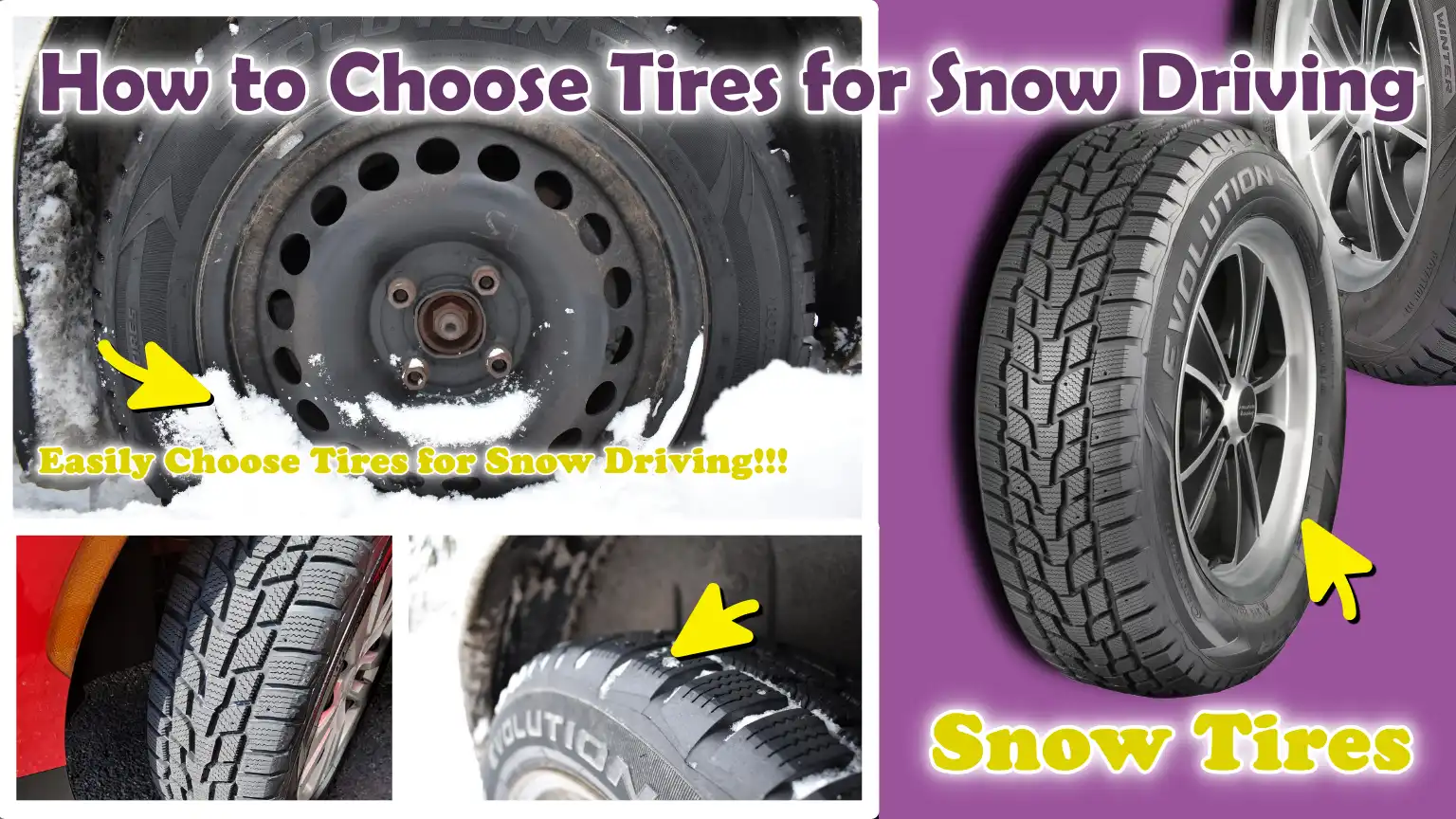
Which is why, you need to learn How to Choose Tires for Snow Driving so that you can equip your vehicle with proper winter tires that can stop significantly faster and maintain the better control compared to those with all-seasons tires.
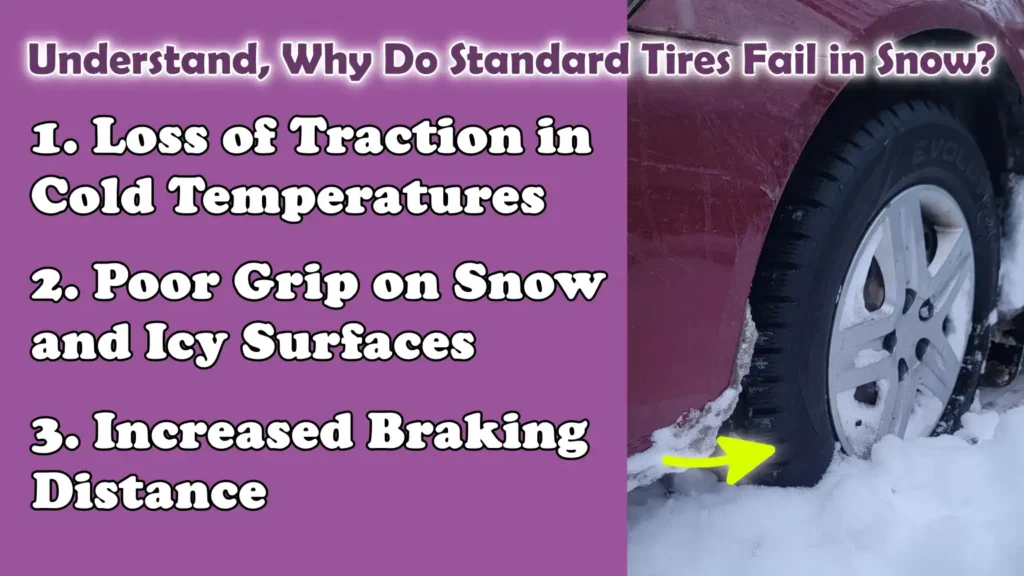
Understand, Why Do Standard Tires Fail in Snow?
Standard tires are not designed to safely handle freezing temperatures, snow, or ice.
While many all-season and summer tires perform well in warm weather, tire behavior on the road changes significantly in winter conditions.
As temperatures drop, standard tires lose their flexibility and fail to establish a proper grip on the surface.
This can lead to skidding, poor braking performance, reduced steering control and difficulty driving on snowy or icy roads.
Even vehicles equipped with all-wheel drive may face difficulties if their tires are not suitable for winter conditions.
1. Loss of Traction in Cold Temperatures
One of the primary reasons standard tires fail in snow is that the rubber hardens in cold weather.
Most standard tires begin to lose their flexibility at temperatures below 45°F (7°C).
Hardened rubber cannot effectively grip the road surface, particularly during braking or cornering.
Drivers may find their vehicle sliding easily on cold roads or struggle to accelerate.
Winter tires utilize softer rubber compounds that remain flexible even in freezing conditions, thereby helping to maintain superior traction and control.
2. Poor Grip on Snow and Icy Surfaces
Standard tires often lack the specialized tread designs necessary for snow and icy surfaces.
They typically possess fewer “gripping edges”, small features within the tread pattern that help tires establish traction on slippery surfaces.
Snow and slush can also pack into the tread grooves, thereby reducing the contact area between the tire and the road.
This makes it difficult for tires to maintain traction while cornering, braking, or driving up inclines.
Winter tires are specifically designed with deeper grooves and additional ‘sipes’ to ensure superior grip on snowy and icy surfaces.
3. Increased Braking Distance
Using standard tires during the winter season can significantly increase stopping distances.
Due to reduced traction, the tires are unable to establish sufficient grip on the road to bring the vehicle to a rapid halt.
This can lead to skidding during emergency braking situations or at intersections.
Tests have demonstrated that winter tires can stop much faster on snow and ice-covered surfaces compared to all-season tires.
Enhanced traction and flexible rubber help winter tires improve braking performance and overall driving safety in cold weather conditions.
Know, About the Types of Tires for Driving in Snow
Choosing the right tires for driving in snow is the most critical aspect of winter safety.
Different tires are designed for different weather conditions and not all tires can effectively handle snow, ice, or freezing temperatures.
Some tires are specifically engineered for challenging winter roads, while others are suitable only for light snow or occasional cold snaps.
Understanding how each type of tire performs helps drivers select the best option for superior traction, shorter braking distances and greater control when driving in winter conditions.
1. Winter Tires – The Best Option
Winter tires are considered the best choice for driving in snow, as they are specifically designed for cold temperatures, snow, ice and slush.
These tires utilize a softer rubber compound that remains flexible even when temperatures drop below freezing.
This flexibility allows the tire to maintain a more effective grip on the road during braking, cornering and acceleration.
Winter tires also feature deeper tread patterns and additional “sipes”, small cuts within the tread, that enhance traction on slippery surfaces.
These deep grooves help displace snow and slush, thereby maintaining better contact with the road.
Drivers who frequently face snowy winters generally find that winter tires offer the safest and most reliable performance.
2. Studded Winter Tires
Studded winter tires are designed for extremely icy conditions.
The treads of these tires are embedded with small metal studs (spikes) that dig into the ice to provide additional traction.
These can significantly improve traction on icy roads, particularly in regions where snow accumulates heavily or where the ice is particularly hard.
Studded tires can help reduce the likelihood of skidding on icy surfaces and enhance braking capabilities; however, they do have certain drawbacks.
They often generate more noise on dry roads and can accelerate road wear.
In some regions, studded tires are prohibited or permitted only during specific winter months, as they can cause damage to the road surface.
Drivers should always consult local regulations before using them.
3. Studless Snow and Winter Tires
Studless snow and winter tires are a popular choice for drivers seeking strong winter traction without the use of metal studs.
These tires utilize advanced rubber technology and specialized tread designs to enhance grip on snow and ice.
Many modern studless winter tires feature rubber compounds that remain flexible even in extreme cold, while simultaneously generating increased friction on slippery surfaces.
They are often quieter than studded tires and provide a more comfortable ride; furthermore, they perform exceptionally well in mixed winter conditions such as: snow, slush, wet roads and cold pavement.
For many drivers, studless winter tires strike an excellent balance between safety, comfort and winter performance.
4. All-Season Tires – Limited Use
All-season tires are designed to handle a variety of road conditions, including dry pavement, rain and mild winter weather.
They may be suitable for regions where winters are mild and snowfall is infrequent; however, they are not ideal for extreme cold-weather conditions.
The rubber compound used in many all-season tires hardens at freezing temperatures, resulting in reduced traction and braking performance.
Furthermore, their tread patterns lack the specific winter features necessary for navigating deep snow and icy roads.
Drivers using all-season tires in extremely cold weather may experience longer stopping distances, reduced steering control and an increased risk of skidding on icy surfaces.
5. All-Weather Tires
All-weather tires are a hybrid option that combines the best features of both all-season and winter tires.
Unlike standard all-season tires, many all-weather tires bear the “Three-Peak Mountain Snowflake” certification, indicating that they meet specific traction standards for winter conditions.
They are designed to perform optimally in cold weather and light to moderate snowfall, while also delivering reliable performance during the rest of the year.
All-weather tires can serve as an excellent middle ground for drivers who experience moderate winters but wish to avoid the hassle of swapping between summer and winter tires each season.
However, in regions experiencing heavy snowfall or extremely icy road conditions, dedicated winter tires generally offer superior traction and safety.
Know, The Key Features to Look for in Snow Tires
Snow tires are engineered with specific characteristics that help vehicles maintain traction, control and braking performance in cold winter conditions.
Unlike standard tires, snow tires are designed to handle snow, slush, ice and freezing temperatures far more effectively.
Choosing the right winter tire isn’t just about the brand or the price; rather, the tire’s fundamental internal design and technology play a crucial role in ensuring safety during the winter season.
Understanding the most critical features can help drivers select tires that enhance grip, minimize slipping and instill greater confidence on hazardous winter roads.
1. The 3PMSF Symbol – Three-Peak Mountain and Snowflake
The Three-Peak Mountain and Snowflake symbol, often referred to as the 3PMSF symbol, is one of the most important indicators to look for when purchasing snow tires.
This symbol signifies that the tire has successfully passed specific winter traction tests conducted in snowy conditions.
Tires bearing this mark are engineered to deliver superior performance in snow compared to standard all-season tires.
This symbol typically appears on the tire’s sidewall as a snowflake enclosed within the outline of a mountain.
This certification is essential because not every tire marketed as a “winter tire” actually possesses the necessary performance standards required for snowy conditions.
Tires featuring the 3PMSF symbol undergo rigorous testing for acceleration traction on snow, thereby helping drivers identify tires that are genuinely designed for real-world winter conditions.
Choosing tires bearing this symbol can lead to improvements in braking, cornering and overall vehicle control when road surfaces are slippery.
2. Tread Design
Tread design is one of the primary reasons why snow tires deliver superior performance during the winter season.
Snow tires utilize deep grooves and aggressive tread patterns to effectively channel away snow, slush and water from the tire’s surface.
This helps the tire maintain better contact with the road rather than sliding over packed snow or icy surfaces.
Another crucial feature is the presence of “sipes”, tiny cuts embedded within the tread blocks.
These small cuts create additional gripping edges, enabling the tire to grip snow and ice more effectively.
As the tire rotates, the sipes flex open slightly, thereby enhancing traction on slippery roads.
Tires featuring a robust tread design can boost stability, reduce the likelihood of skidding while cornering and provide superior control during braking in winter conditions.
3. Rubber Compound
The rubber compound used in snow tires is specifically formulated to remain flexible even at freezing temperatures.
This is critical because standard tires often become stiff and rigid as the weather turns cold.
Rigid rubber fails to grip the road surface properly, increasing the risk of skidding and requiring a greater distance to bring the vehicle to a halt.
Winter tires employ a softer rubber compound that retains its flexibility even in cold weather.
This allows the tire to maintain firm contact with the road surface.
This flexibility enhances traction on snow and ice, while also ensuring better responsiveness from the tires during steering and braking.
Even if the roads appear dry, freezing temperatures alone can compromise the performance of standard tires.
This is precisely why the rubber technology utilized in snow tires plays such a crucial role in ensuring safety during the winter months.
4. Tire Width
Tire width can significantly influence how well a vehicle performs in snowy conditions.
For deep snow, narrower tires are often considered superior because they exert greater pressure over a smaller surface area.
This allows the tire to cut through the snow and reach the road surface beneath.
Consequently, traction improves in snowy conditions and the risk of skidding is reduced.
While wider tires may offer superior handling on dry roads, in deep snow, they sometimes tend to “float” on top of the snow rather than cutting through it to reach the road surface.
This can result in reduced traction and less stable steering.
Many winter driving experts recommend slightly narrower tires for better grip during the winter season, particularly in regions that experience heavy snowfall.
Selecting the appropriate tire width depends on the type of vehicle, specific driving conditions and the local winter climate.
5. Tread Depth
Tread depth is crucial for the performance of winter tires, as a deeper tread facilitates superior grip on snow and aids in the effective displacement of slush.
New winter tires typically feature a deeper tread pattern compared to standard tires, thereby enhancing traction and preventing slippage on slippery road surfaces.
As the tread wears down, the tire’s ability to grip snow, clear slush and maintain adequate traction diminishes.
Even if the tires still appear serviceable, reduced tread depth can significantly compromise their performance during winter conditions.
Many experts recommend replacing winter tires once their tread has worn down significantly, as diminished tread depth leads to substantially longer braking distances and reduced traction.
When driving in snowy environments, maintaining adequate tread depth ensures superior braking, enhanced steering control and overall safety.
How to Choose Tires for Snow Driving – Choose That Works for Your Vehicle
Choosing the right snow tires involves more than simply purchasing a tire labeled for winter use.
Different vehicles, road conditions and weather patterns require varying levels of traction, tread designs and winter performance capabilities.
A tire that performs well for a small sedan in light snow may not be suitable for a heavy-duty truck navigating deep snow or icy mountain roads.
The best snow tire is one that is tailored to your specific vehicle type, the conditions in which you primarily drive and the severity of winter weather in your region.
Understanding these factors can help enhance safety, braking performance, steering control and your overall confidence when driving in winter conditions.
1. Based on Vehicle Type
The size and weight of a vehicle play a crucial role in selecting the appropriate snow tires.
Sedans generally perform best with winter tires that prioritize stability, braking and precise handling, as lighter vehicles can easily lose traction on snow and ice.
For sedans, narrower winter tires are often preferred, as they can cut through snow more effectively and maintain better contact with the road surface.
SUVs are heavier vehicles and are often driven in regions characterized by deep snow or poor winter road conditions.
Many SUV winter tires are designed with reinforced sidewalls and deep tread patterns to maximize traction and support the vehicle’s additional weight.
Although many SUVs are equipped with all-wheel drive, the need for proper winter tires remains essential, as the drivetrain alone cannot provide sufficient grip on icy surfaces.
Trucks often require winter tires that have been specifically engineered to handle heavy loads and the challenging conditions of winter.
Pickup trucks can sometimes lose rear-end traction due to uneven weight distribution, particularly when driven without any cargo.
Winter tires for trucks are specifically designed to enhance stability, braking and traction while carrying heavy loads or towing in cold-weather conditions.
It is specially crucial for larger vehicles to select tires with robust snow ratings, as heavier vehicles require a greater stopping distance on slippery roads.
2. Based on Driving Conditions
The roads you travel on during the winter season should significantly influence your decision regarding tire selection.
Drivers in regions that experience only light snowfall, and where roads remain mostly clear, may require nothing more than high-quality winter or all-weather tires designed for general winter conditions.
However, drivers who frequently face deep snow, ice, or icy roads typically benefit from specialized winter tires featuring aggressive tread patterns and superior traction performance.
Ice and slush present distinct challenges for tires.
Ice is extremely slippery and necessitates tires with flexible rubber compounds and a strong grip to ensure optimal traction.
Slush creates a layer of water between the tire and the road surface, thereby increasing the risk of hydroplaning and diminishing tire grip.
Tires equipped with wide grooves and effective water-evacuation channels provide superior control in slushy conditions.
Driving in hilly terrain places a greater demand on winter tires compared to driving in urban areas.
Steep inclines, sharp turns and unplowed roads necessitate superior grip and braking capabilities.
In mountainous regions, drivers often opt for robust winter tires or studded tires to ensure maximum traction on snow and ice.
Conversely, drivers in urban environments frequently face cleared roads and lighter snowfall, allowing them to utilize less aggressive winter tire designs while still maintaining a secure grip throughout the winter season.
3. Based on Weather Conditions
Weather is one of the most critical factors to consider when selecting snow tires, as winter conditions vary significantly across different regions.
In areas experiencing mild winters, characterized by infrequent snowfall and temperatures that dip only slightly below freezing, all-weather tires or light-duty winter tires are sufficient for daily driving.
These tires handle light snow with ease and deliver comfortable, excellent road performance throughout the year.
Conversely, regions with severe winters require more specialized snow tires, as roads may remain covered in snow or ice for extended periods.
In areas where snowfall is frequent, temperatures consistently drop below freezing and roads become icy, specialized winter tires, featuring unique rubber compounds and deep tread patterns, are typically essential.
These tires remain flexible even in extreme cold and provide exceptional grip during braking, acceleration and cornering.
Drivers should also take into account the frequency with which winter conditions occur.
If snow and snowfall are a common occurrence for several months each year, investing in high-quality winter tires can significantly enhance safety and reduce the risk of losing vehicle control on slippery roads.
Choosing tires tailored to your local climate ensures optimal performance, superior traction and an overall safer driving experience during the winter season.
Understand Everything About Tire Size and Fitment
Choosing the correct tire size is crucial for safe driving in snowy conditions, as an incorrect size can compromise traction, impact braking performance and alter vehicle handling during the winter season.
Snow tires must fit the vehicle precisely to maintain consistent road contact and ensure that critical systems such as: anti-lock brakes, traction control and all-wheel drive, function correctly.
Many drivers focus solely on the tire’s tread design; however, tire size and wheel fitment also play a pivotal role in a vehicle’s winter performance.
Understanding the principles of tire sizing helps drivers select tires that enhance stability, control and overall safety when driving in cold weather.
1. Reading Tire Sizes – With Examples
Tire size information is printed on the sidewall of every tire and consists of a series of numbers and letters that indicate the tire’s dimensions.
A common example is 225/65R17.
The first number, 225, denotes the tire’s width in millimeters, measured from one sidewall to the other.
Wider tires provide greater road contact on dry surfaces, whereas narrower tires often perform better in deep snow because they are able to cut through the snow more effectively.
The second number, 65, is known as the aspect ratio.
It indicates the height of the tire’s sidewall, expressed as a percentage of the tire’s width.
In this example, the sidewall height is 65 percent of the tire’s width.
Taller sidewalls can offer a more comfortable ride and provide better protection against potholes when driving in winter conditions.
The final number, 17, indicates the wheel diameter in inches.
This indicates to drivers the specific wheel size for which the tire has been designed.
Selecting the correct diameter is crucial because, for safe installation and optimal vehicle performance, the tire size must precisely match the wheel size.
2. Downsizing for Winter
Many drivers choose to downsize their wheels and tires for winter driving, as smaller wheels fitted with slightly narrower tires can enhance traction in snowy conditions.
Downsizing typically involves using a smaller wheel diameter paired with a tire featuring a taller sidewall.
This configuration helps the tire cut through the snow more effectively, rather than merely riding on top of it.
Smaller wheels for winter use are often less expensive as well; furthermore, taller sidewalls can offer greater comfort and protection against poor winter road conditions, including potholes and hidden road damage caused by snow or ice.
Narrower winter tires can boost grip by concentrating the vehicle’s weight over a smaller contact patch, thereby helping the tires maintain superior traction on icy surfaces.
However, the process of downsizing tires must be undertaken with care to ensure that the overall tire diameter remains close to the manufacturer’s original specifications.
An incorrectly sized tire can adversely affect speedometer accuracy, the braking system and vehicle handling.
3. Checking Manufacturer Recommendations
Before selecting snow tires, drivers should always consult the vehicle manufacturer’s recommendations; these recommendations can typically be found in the owner’s manual or on a sticker located on the driver-side door frame.
These recommendations specify the correct tire size, load capacity and speed rating designed for that particular vehicle.
Adhering to these guidelines helps ensure safe operation, proper braking performance and compatibility with the vehicle’s electronic safety systems.
Manufacturers test their vehicles using specific tire sizes to ensure balanced performance across various driving conditions.
Using tires that are too large, too small, or unsuitable for the vehicle’s weight can compromise vehicle stability and accelerate tire wear.
In some vehicles, the clearance around the wheels may also be limited; this means that incorrectly sized tires could rub against suspension components or body panels while turning.
Checking the manufacturer’s guidelines also helps drivers determine whether any alternative tire sizes are available for use during the winter season.
Choosing the right snow tires enhances safety, extends tire longevity and improves vehicle performance during the winter months.
Difference Betwen Studded vs Studless Tires – Which Should You Choose?
Choosing between studded and studless winter tires depends on the specific winter conditions in which you typically drive.
Both types of tires are designed for snow and cold temperatures, but they perform differently on icy and snow-covered roads.
Studded tires utilize small metal studs to grip the ice, whereas studless winter tires rely on advanced rubber compounds and specialized tread patterns for traction.
Understanding how each type of tire performs can help drivers select the safest and most practical option for their specific driving needs, weather conditions and local road environments.
1. Performance Comparison
Studded winter tires are renowned for their strong grip on ice, as the metal studs dig into frozen surfaces to enhance traction.
They are particularly useful in regions where roads remain snow-covered for extended periods or where “black ice” which is a thin, transparent layer of ice and it is a common occurrence.
Studded tires can significantly improve acceleration, braking and steering control on extremely slippery roads.
Studless winter tires employ advanced rubber compounds that remain flexible even in freezing temperatures.
They also feature deep tread grooves and thousands of tiny “biting edges”, known as “sipes”, that help generate traction on snow and ice.
Modern studless tires perform exceptionally well in most winter conditions and often offer superior handling on wet roads, slush and dry, cold pavement.
In many situations, high-quality studless tires can provide excellent winter traction even without the use of metal studs.
2. Road Noise and Comfort
A major difference between studded and studless tires lies in road noise and driving comfort.
Studded tires typically generate more noise because the metal studs strike the road surface while driving.
Drivers may hear constant “clicking” or “humming” sounds, particularly on dry roads.
Studded tires can also make the ride feel rougher and may compromise driving comfort during daily use.
Studless winter tires are generally quieter and provide a more comfortable ride because they lack metal studs.
They often offer a more pleasant driving experience for highway travel and city commuting.
Many drivers prefer studless tires because they provide strong traction in winter conditions while also offering reduced noise and enhanced comfort for everyday driving.
3. Legal Considerations
Laws regarding studded tires vary by state, province, or country.
In some regions, the use of studded tires is permitted only during specific winter months, while in others, they face restrictions or are completely prohibited because the metal studs can damage the road surface.
Drivers should always check local regulations before purchasing or installing studded tires.
These restrictions typically do not apply to studless winter tires, making their use more straightforward during the winter season.
As laws can differ across various regions, particularly in mountainous areas or states with severe winters, understanding local tire regulations helps drivers avoid fines and ensures they drive legally during the winter months.
4. Best Use Cases
Studded tires are generally best suited for drivers who regularly face heavy snowfall, steep inclines, icy rural roads, or prolonged periods of frozen ice.
These are typically used in regions with harsh winters, where roads remain icy for extended periods and where maximum snow traction is essential for safety.
Studless winter tires are often the preferred choice for drivers who face mixed winter conditions such as: snow, slush, wet roads and occasional ice.
These tires are suitable for driving in urban areas, highway travel and regions where roads are regularly cleared.
Many drivers opt for studless tires because they offer superior performance in winter while also providing reduced noise and greater comfort during everyday driving.
So, When Should You Install Snow Tires?
Installing snow tires at the right time is crucial for safety when driving during the winter season.
Many drivers wait for the first snowfall, but the performance of winter tires is influenced by temperature, even if there is no snow or ice accumulated on the road.
Snow tires are designed to remain flexible even in cold weather, which helps maintain superior traction, braking and steering control.
Delaying their installation for too long can increase the risk of the vehicle skidding or becoming difficult to control if temperatures drop suddenly.
Conversely, installing them too early can lead to unnecessary wear and tear on the tires during warmer weather.
Understanding the optimal timing helps drivers enhance their safety while also preserving the lifespan and performance of their tires.
1. The Temperature Rule – Below 45°F/7°C
Regarding the installation of snow tires, it is generally recommended to do so when the average daily temperature consistently begins to drop below 45°F (7°C).
At this temperature, many standard all-season and summer tires begin to stiffen, thereby reducing their ability to maintain proper grip on the road surface.
Even if the roads are dry, a cold road surface can compromise traction and increase stopping distances.
Winter tires utilize a softer rubber compound that remains flexible even in freezing temperatures.
This flexibility allows the tire to maintain better contact with the road surface, resulting in improved performance during braking, acceleration and cornering.
Many drivers assume that snow tires are necessary only after a snowfall; however, temperature alone can have a significant impact on tire performance.
Installing winter tires before the onset of severe cold helps ensure a safe driving environment during the transitional weather conditions that mark the beginning of the winter season.
2. Seasonal Timing
The optimal time to install snow tires generally depends on local weather conditions and seasonal patterns.
In many cold regions, drivers have their winter tires installed in late autumn, specifically, before temperatures consistently drop below a certain threshold.
Waiting until snowstorms begin can lead to complications, as tire shops often become extremely crowded during the first major winter weather event of the season.
Installing tires early also gives drivers the opportunity to acclimate to the distinct feel of winter tires before the onset of freezing temperatures.
Driving on winter tires often feels different compared to summer or all-season tires, as they feature softer rubber compounds and deeper tread patterns.
Planning ahead for seasonal tire changes helps drivers avoid last-minute hassles and enhances their overall preparedness for the winter season.
3. Risks of Installing Tires Too Early or Too Late
Installing snow tires either too early or too late can lead to various issues.
If winter tires are installed too early, while temperatures remain warm, their soft rubber compound can wear down rapidly on hot pavement.
This can reduce the tires’ lifespan and negatively impact their long-term performance.
As winter tires are specifically engineered for cold weather, excessive use in warm conditions can accelerate wear and may also result in reduced fuel efficiency.
Conversely, delaying the installation of winter tires significantly heightens safety-related risks.
When temperatures drop suddenly, drivers who are still using standard tires may face issues such as reduced grip, poor braking and vehicle skidding before they even have the opportunity to switch to winter tires.
If vehicles are not properly prepared for the winter season, sudden snowfall or icy mornings can quickly become hazardous.
Installing snow tires at the appropriate time strikes the right balance between tire durability, safety and winter driving performance.
How Many Snow Tires Do You Need?
Many drivers attempt to save money by installing only two snow tires; however, when driving in winter conditions, safety depends on balanced traction across the entire vehicle.
Snow tires enhance grip, braking and steering control, but the full benefits of these features are realized only when all four tires are designed for identical winter conditions.
Using a complete set of four winter tires ensures that the vehicle responds more predictably on snow, sleet and slush.
This also improves stability when cornering, accelerating and braking suddenly.
Even vehicles equipped with front-wheel drive, rear-wheel drive, or all-wheel drive systems require proper traction at all four corners to maintain safe handling during the winter season.
1. Why Four Tires Are Really Important
Installing snow tires on all four wheels helps establish balanced traction and provides superior control over the vehicle.
When all four tires provide consistent grip, the vehicle remains more stable during braking, cornering and sudden steering maneuvers.
Winter roads can quickly become slippery and uneven traction between the front and rear tires can make the vehicle difficult to control.
For front-wheel-drive vehicles, some drivers install winter tires only on the front wheels, as these tires handle the tasks of steering and acceleration.
However, this can create a dangerous imbalance, as the rear tires may lose traction more easily, thereby increasing the risk of the vehicle sliding or spinning out while cornering.
Rear-wheel-drive vehicles may face similar issues if winter tires are installed only on the rear axle.
Even all-wheel-drive systems cannot serve as a substitute for the necessity of four winter tires.
While all-wheel drive can assist a vehicle in moving forward through snow, it does not improve braking performance if the tires fail to establish adequate grip on the road surface.
A matching set of four winter tires helps enhance the effectiveness of the vehicle’s safety systems and provides more predictable handling in winter conditions.
2. The Risks of Mixing Different Types of Tires
Mixing different types of tires can compromise driving safety in winter, as each tire may react differently to snow, ice and cold temperatures.
For instance, combining winter tires with all-season or summer tires can result in uneven traction between the front and rear wheels.
This imbalance may cause the vehicle to skid unexpectedly during braking or while cornering.
Varying tire compounds and tread patterns also influence how quickly a tire establishes or loses its grip on the road.
Winter tires remain flexible even in cold weather, whereas standard tires often stiffen and become less effective.
When different types of tires are used simultaneously, the vehicle’s behavior can become unpredictable, as some tires may maintain better road grip than others.
Mixing different tire types can also interfere with the operation of electronic safety systems such as: traction control, anti-lock brakes and stability control.
These systems function most effectively when all four tires deliver consistent performance and grip.
Using a matching set of four winter tires facilitates balanced vehicle handling, reduces braking distances and ultimately makes driving safer during the winter season.
Estimated, Cost of Snow Tires
The cost of snow tires depends on several factors, such as tire size, brand, vehicle type and their performance level in winter conditions.
Although winter tires may appear expensive at first glance, they are specifically engineered to enhance traction, braking and safety when driving in cold weather.
Many drivers focus solely on the initial purchase price; however, the overall benefits of snow tires include a reduced risk of accidents, improved vehicle control and greater confidence while driving in winter.
Understanding both the upfront and long-term costs can help drivers make more informed decisions when selecting winter tires.
1. Average Price Range
Snow tire prices can range from budget-friendly options to premium, high-performance models.
Smaller tires designed for compact cars and sedans are generally less expensive, whereas larger tires for SUVs and trucks often command a higher price due to the need for a more robust construction and larger dimensions.
Budget-friendly winter tires can provide adequate traction in mild to moderate winter conditions and serve as a suitable choice for drivers who face snow only occasionally.
Premium winter tires typically carry a higher price tag, as they incorporate superior rubber compounds and advanced tread technologies to deliver enhanced performance on snow and ice.
Higher-priced tires often offer shorter braking distances, a firmer grip on icy roads, a quieter ride and greater durability over time.
Price variations also depend on specific features, such as studded designs, ratings for severe winter conditions and advanced tread patterns.
Opting for the cheapest tires may save money initially, but low-quality winter tires can wear out quickly or fail to provide adequate traction in challenging winter conditions.
2. Long-Term Benefits
Many drivers view snow tires as an additional winter expense, yet they can prove to be highly beneficial in the long run.
Winter tires enhance braking performance, steering control and overall traction in cold weather, thereby helping to reduce the risk of winter-related accidents.
In emergency situations such as: sudden braking or taking sharp turns on icy roads, superior traction can make a significant difference.
Snow tires can also help extend the lifespan of standard all-season or summer tires, as each set is utilized for only a portion of the year.
By alternating between sets of winter and summer tires, drivers distribute the wear and tear evenly across both sets, thereby increasing the overall longevity of their tires.
Although premium winter tires may carry a higher upfront cost, they often offer superior durability and more reliable performance over several winter seasons.
For drivers residing in regions that experience regular snowfall and where temperatures consistently remain below freezing, this added safety and control prove to be well worth the extra expense.
3. Additional Costs
Beyond the cost of the tires themselves, drivers must also consider several additional expenses when switching to winter tires.
Installation costs typically encompass mounting, balancing and the seasonal swapping of tires.
Many drivers have their winter tires installed in late autumn and switch back to their standard tires in the spring, resulting in recurring annual costs for seasonal servicing.
For drivers who lack sufficient space at home to store an extra set of tires, storage can become an additional expense.
Some tire shops offer seasonal storage services to protect tires from damage during the off-season.
Many drivers also purchase a separate set of wheels specifically for their winter tires.
Using dedicated wheels for the winter season can expedite the seasonal tire-changing process and help protect expensive wheels from damage caused by road salt and potholes during the winter months.
Smaller wheel sets intended for winter use are often less expensive and can provide better traction in icy conditions.
Although purchasing a separate set of wheels increases the initial cost, it can minimize the wear and tear associated with repeated mounting and, over time, simplify the seasonal tire-changing process.
How to Maintain Snow Tires
Snow tires are designed to provide superior traction, braking and control when driving in winter conditions; however, proper maintenance is essential to ensure they continue to function safely and effectively.
Cold weather, rough winter roads and constant exposure to snow, ice and road salt can degrade the condition of tires over time.
Even high-quality winter tires can suffer a decline in performance if their air pressure is incorrect, they are not rotated regularly, or they are not stored properly during the off-season.
Good maintenance not only enhances safety during the winter months but also helps extend the lifespan of the tires and protect the investment made in them.
1. Proper Air Pressure
Maintaining proper tire air pressure is crucial for winter driving, as air pressure naturally decreases in cold weather.
In freezing temperatures, the air inside the tires contracts, which can lead to a drop in pressure even in the absence of any leaks.
Underinflated snow tires can reduce traction, accelerate tire wear and negatively impact braking and steering performance.
Low tire pressure can also increase rolling resistance, leading to reduced fuel efficiency and uneven wear on the tire surface.
Conversely, overinflating tires reduces their contact patch with the road, thereby weakening their grip on snow and ice.
Regularly checking tire pressure throughout the winter ensures proper contact with the road surface and leads to overall improvements in driving performance and safety.
Drivers should always adhere to the tire pressure specifications outlined in the vehicle owner’s manual or on the sticker located on the driver-side door frame.
2. Tire Rotation
Regularly rotating tires ensures uniform wear on snow tires and maintains balanced performance throughout the entire winter season.
Tires positioned on different parts of the vehicle wear at varying rates due to the forces exerted by the steering, braking and drivetrain systems.
In front-wheel-drive vehicles, the front tires typically wear out faster because they handle both steering and power delivery functions.
Uneven tire wear can compromise traction and reduce the overall lifespan of the tires.
Rotating snow tires at recommended intervals distributes wear evenly across all four tires, thereby improving stability and maintaining superior grip while driving in winter conditions.
Uniform tire wear is particularly critical for vehicles equipped with all-wheel-drive systems, as significant disparities in tread depth can negatively impact the performance and operation of the drivetrain.
Proper rotation helps maximize the value and effectiveness of winter tires over multiple seasons.
3. Off-Season Storage
Once the winter season concludes, it is essential to store snow tires correctly to ensure their preservation.
Winter tires are manufactured using a soft rubber compound, which, if stored improperly, as it can be damaged by excessive heat, direct sunlight and moisture.
Poor storage conditions can cause the rubber to dry out, crack, or lose its elasticity over time.
Snow tires should be stored in a cool, dry location, away from direct sunlight, heat sources and chemicals.
Cleaning tires prior to storage removes accumulated road grime, dust and debris, thereby preventing damage to the rubber.
Many drivers store their tires in sealed bags to minimize their exposure to air and moisture.
If the tires remain mounted on their wheels, they can be carefully stacked one atop another; conversely, unmounted tires are typically stored upright to help them retain their shape.
Proper storage preserves tire performance, extends their lifespan and ensures they remain ready for the upcoming winter season.
Read More:
- How to Choose Tires for Wet Roads
- How to Check Tire Load Rating
- How to Store Tires Properly Long Term
- How to Prevent Tire Dry Rot
- How to Fix Tire Bulge Issue
- How to Inspect Tire Inner Sidewall Damage
- How to Fix TPMS Sensor Not Detected
- How to Relearn TPMS Without Scan Tool
- How to Reset Tire Pressure Monitoring System Manually
- How to Check Tire Pressure Sensor Battery
- How to Seal Bead Leak in Tire
- How to Use Tire Plug Kit Correctly
- How to Repair Tubeless Tire Puncture
- How to Locate a Nail in a Tire
- How to Fix Slow Tire Air Leak
- How to Detect Tire Sidewall Damage
- How to Check Tire Tread Depth at Home
- How to Bleed ABS System Properly
- How to Replace Rusted Brake Lines
- How to Inspect Brake Lines for Rust
- How to Flush Contaminated Brake Fluid
Know, Common Mistakes to Avoid Easily
Many of the problems faced while driving in winter do not arise simply because drivers lack snow tires, but rather because the tires are used incorrectly or are not properly maintained.
Snow tires are designed to provide superior grip, braking and control in snowy conditions; however, certain mistakes can significantly diminish their effectiveness and heighten safety risks.
Understanding the most common errors associated with winter tires helps drivers maintain better traction, extend tire longevity and avoid hazardous situations on snowy or icy roads.
As well as, there’s scientific winter driving studies that shows that winter tires can significantly improves the braking performance on the snowy roads, as research examines braking distance in winter conditions that found out that tire type is actually one of the most important factors that affects stopping ability on compacted snow and ice, so winter tires literally provides better traction as their tread design and rubber compounds are specifically engineered for freezing temperatures and slippery road surfaces as well.[¹]
1. Using Worn-Out Winter Tires
One of the biggest mistakes drivers make is continuing to use their tires even after they have become worn.
Snow tires rely on deep treads and small edges (known as “sipes”) to provide effective traction on snow and icy surfaces.
As the treads wear down, the tire’s ability to displace slush, grip the snow and maintain traction on slippery roads diminishes.
Even if worn winter tires still appear usable, their performance in winter conditions can be severely compromised.
Shallow treads can lead to increased stopping distances, reduced steering control and a heightened risk of skidding while braking or cornering.
Many experts recommend replacing winter tires before they become excessively worn, as their grip on snow deteriorates very rapidly once they have worn past a certain point.
Regular tire inspections help drivers ensure safe driving throughout the winter season.
2. Using Winter Tires Year-Round
Winter tires are specifically designed for cold-weather conditions; however, using them throughout the year can lead to several problems.
The soft rubber compounds, which provide superior grip in winter, wear down very rapidly in warm temperatures.
Using winter tires during the summer or in hot weather can significantly reduce their lifespan and compromise their overall performance.
On warm and dry roads, winter tires may feel less stable, as the soft rubber creates greater flex during steering and cornering.
This can negatively impact handling precision and increase rolling resistance, thereby reducing fuel efficiency.
Switching back to all-season or summer tires once the winter season ends prevents unnecessary wear on the winter tires and ensures that each type of tire performs optimally in the specific conditions for which it was designed.
3. Mixing Different Types of Tires
Mixing different types of tires is another serious mistake that can adversely affect a vehicle’s stability and safety when driving in winter.
Installing winter tires on only two wheels while the remaining wheels are fitted with all-season or summer tires creates uneven traction across the vehicle.
This imbalance can cause the vehicle to behave unpredictably during braking, acceleration, or cornering.
Different tire compounds and tread designs react differently to snow, ice and cold temperatures.
If one set of tires maintains a stronger grip on the road than the other, the vehicle may skid, spin out, or easily lose its balance.
Using mixed tire types can also interfere with the proper functioning of traction control, anti-lock braking and stability systems.
Using a complete set of identical winter tires on all four wheels helps maintain balance in vehicle handling during the winter season and ensures safe driving.
4. Neglecting Tire Pressure
Neglecting tire pressure is a common issue during winter, which can lead to reduced traction and negatively impact tire performance.
In cold weather, as temperatures drop, air contracts, causing tire pressure to decrease automatically.
Even a slight reduction in pressure can affect the tire’s contact with the road surface.
Underinflated tires can wear unevenly, reduce fuel efficiency and adversely affect braking and steering responsiveness.
Overinflated tires can reduce the “contact patch”, the area of contact with the road, thereby limiting traction on snow and ice.
Many drivers do not realize how rapidly tire pressure can fluctuate amidst the temperature variations typical of winter.
Regularly checking tire pressure during cold weather ensures proper traction, improved handling and overall safe driving.
Conclusion – How to Choose Tires for Snow Driving
Most of the drivers only focuses on engines and drivetrains during the winter or snow seasons, but tires are the actual game changer that determines how much control your vehicle will have in those conditions.
Snow, slush, ice and freezing temperatures fundamentally alter how vehicles handle on the road; even the most advanced braking systems or all-wheel-drive setups cannot function effectively without adequate tire grip.
Many accidents that occur while driving in winter happen because tires lose their traction in cold weather, stopping distances increase, or drivers lose control of their vehicles while making sudden turns or applying the brakes.
This is precisely why, for safe driving, it is essential to understand the various types of tires, including their design, rubber composition, size and winter performance ratings.
Winter tires are specifically engineered to remain flexible even in freezing temperatures and to maintain superior traction on slippery road surfaces.
Features such as deep grooves, biting edges and advanced rubber technology help enhance braking, steering and overall vehicle control in challenging winter conditions.
Selecting the appropriate tires, based on the type of vehicle, local weather patterns and specific driving conditions, as it can make a significant difference in ensuring safe vehicle performance during winter travel.
It is also crucial to remember that the safety provided by winter tires depends on their proper maintenance.
Maintaining correct tire pressure, performing periodic tire rotations, ensuring adequate tread depth and storing the tires properly when they are not in use, all of these practices are vital for sustaining the long-term performance and effectiveness of winter tires.
Now, that’s all from this guide about How to Choose Tires for Snow Driving, if you still have confusion then just comment down below.
Frequently Asked Questions
FAQ 1: What types of tires are best for driving in snow?
Answer: Winter tires are considered the best choice for driving in snow, as they are specifically designed for cold temperatures, snow, slush and icy surfaces. These tires utilize a softer rubber compound that remains flexible even in freezing temperatures, thereby improving traction and braking performance. They also feature deeper tread patterns and additional gripping edges, which provide superior grip on slippery roads compared to standard all-season tires. Drivers who frequently face snow or icy roads typically experience the safest and most reliable winter performance when using specially designed snow tires.
FAQ 2: Are all-season tires sufficient for snow?
Answer: In regions with mild winters and minimal snowfall, all-season tires may suffice; however, they are not ideal for severe winter conditions. In freezing temperatures, many all-season tires stiffen, resulting in reduced grip on the road. They also lack the robust tread design necessary for deep snow and icy surfaces. Drivers using all-season tires during severe winters may face issues such as increased stopping distances, reduced steering control and a higher risk of skidding on icy roads.
FAQ 3: What does the Three-Peak Mountain Snowflake symbol mean?
Answer: The Three-Peak Mountain Snowflake symbol indicates that the tire has successfully passed official tests for winter traction in snowy conditions. Tires bearing this symbol are designed to perform better in snow compared to standard all-season tires. This symbol helps drivers identify tires that meet established standards for winter performance. Choosing tires with this certification can enhance traction, braking and overall driving safety during the winter season.
FAQ 4: Do All-Wheel Drive vehicles also need snow tires?
Answer: Yes, All-Wheel Drive vehicles also require appropriate snow tires to ensure safe driving during the winter. All-Wheel Drive helps distribute power across multiple wheels, which can improve acceleration in snow; however, if the tires fail to maintain their grip on the road, this does not translate into improved braking or steering traction. Snow tires provide the necessary traction for braking, cornering and maintaining vehicle control on snowy or slippery roads. Even the most advanced All-Wheel Drive systems cannot fully compensate for poor tire grip in winter conditions.
FAQ 5: When should snow tires be installed?
Answer: Snow tires should typically be installed when temperatures consistently drop below 45°F (7°C). At this temperature, many standard tires begin to lose their flexibility, resulting in reduced grip, even on dry roads. Installing winter tires before the first major snowfall helps drivers stay prepared for sudden weather changes and makes driving safer during the onset of winter.
FAQ 6: How many snow tires do you need?
Answer: Drivers should install snow tires on all four wheels to ensure balanced traction and safe vehicle handling. Using only two snow tires can create an imbalance in grip between the front and rear tires, thereby increasing the risk of skidding or losing control of the vehicle while cornering or braking. Four matching winter tires help improve a vehicle’s stability, braking performance and overall safety during the winter season.
FAQ 7: Are studded tires better than standard winter tires?
Answer: Studded tires can provide excellent traction on thick snow, as the metal studs embedded in them dig into the frozen surface to generate additional grip. However, they often generate more noise on dry roads and their use may not be legally permitted in all regions. Modern studless winter tires also perform exceptionally well on snow and ice by utilizing specialized rubber compounds and unique tread designs. The best choice depends on local road conditions, prevailing weather patterns and your specific driving requirements.
FAQ 8: How long do snow tires last?
Answer: Most snow tires, if properly maintained and used exclusively during the winter months, can last for several seasons. Tire longevity depends on your driving habits, road conditions, the quality of the tires and how they are cared for. Regular tire rotation, maintaining proper air pressure and storing them correctly once the winter season ends, all these practices can significantly extend the lifespan of winter tires.
References:
[1] Driver’s Strategy and Braking Distance in Winter
https://www.researchgate.net/publication/320283148_Driver%27s_Strategy_and_Braking_Distance_in_Winter
Hello Folks, Dean Shali here to help you out to solve the problems with your lovely vehicle, as i have lots of experience and knowledge about automotive industry as i woks directly with the customers and repair vehicles and i love to help the people to keep their cars safe and running smoothly.