Written By: Dean Shali
Fact Checked By: Sabré Cook
Reviewed By: Tamara Warren
The road salt and trapped moisture are the biggest enemies of the modern wheels, as it quietly spreads beneath the surface and literally starts to affect the wheel itself.
Normally, it begins as a small white oxidation spots, bubbling clear coat, faded paint or stubborn brake dust that can slowly turn into the deep corrosion that actually weakens the finish, traps the moisture and even it causes slow tire air leaks around the bead area.
Now-a-days, wheels faces constant exposure to the road salt, rainwater, heat, metallic brake dust, harsh chemicals and tiny stone chips in every day and many people does not realizes that the brake dust itself that contains hot iron particles that can stick to the wheel surface and accelerate the corrosion over the period of time.
As well as, in colder regions, the winter road salt can speed up corrosion in really dramatic way as it breaks down the protective finishes and allows the oxidation to spread into exposed areas.
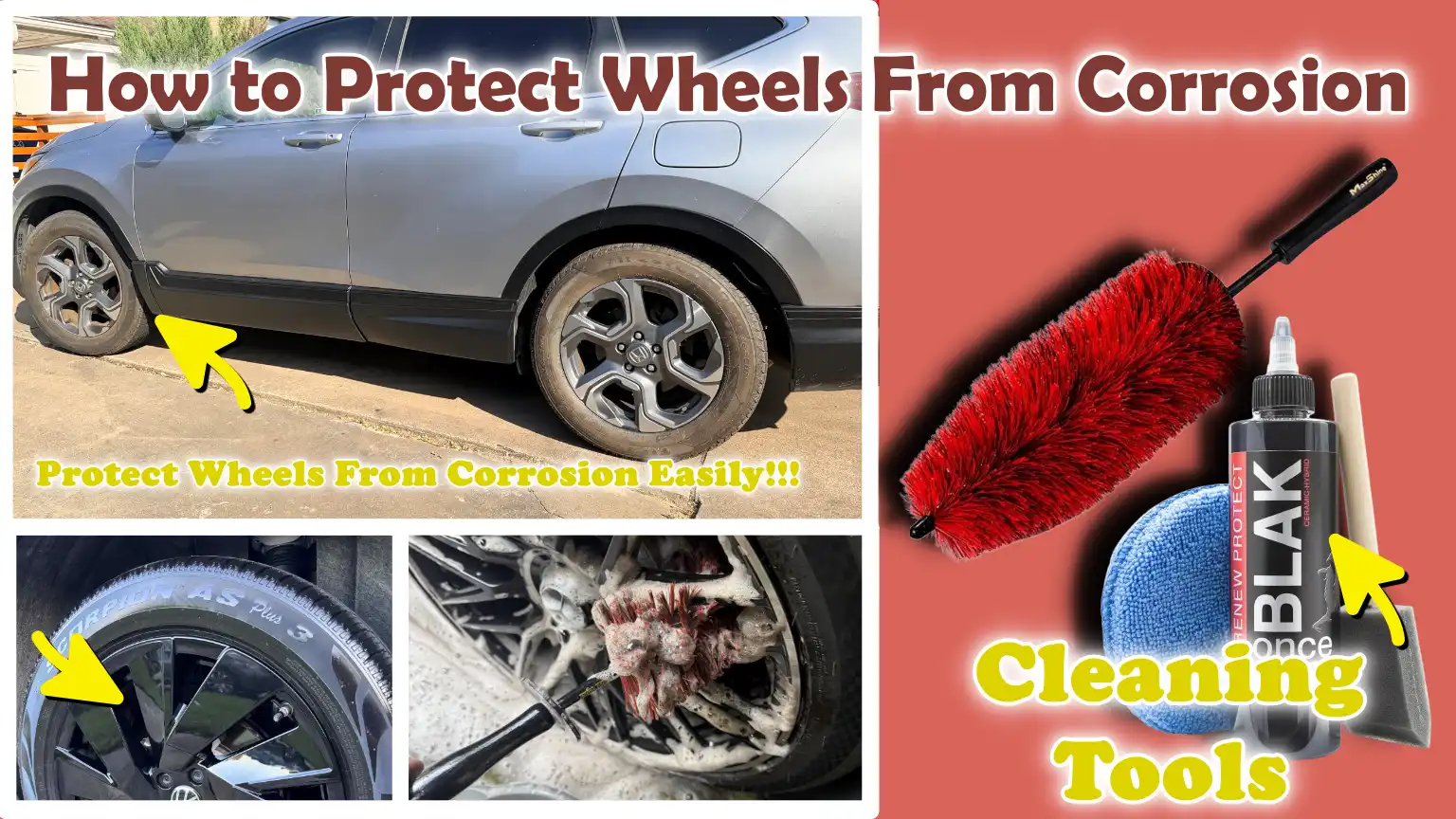
That’s why, in this guide you’ll learn everything about How to Protect Wheels From Corrosion, so that you can maintain the wheel strength, shine and appearance for years to come.
So, Understand Why Do Wheels Rust, At First
Rusting in wheels does not occur suddenly; rather, it is a gradual process resulting from chemical reactions that take place over time between the metal, its protective layers and environmental elements.
Nowadays, most wheels are constructed from alloys, steel, or chrome-plated materials, all of which rely on a protective outer coating to prevent oxidation.
When this layer becomes compromised or damaged, the underlying metal is exposed to air, water and chemicals, triggering a reaction that leads to rust formation.
Under daily driving conditions, wheels are subjected to heat, friction, dust and moisture, factors that accelerate this process.
Understanding the root causes of rust helps prevent long-term damage, costly repairs and the deterioration of both the structural integrity and aesthetic appeal of the wheels.
1. Road Salt and Winter Chemicals
Road salt is a primary culprit behind wheel rust, particularly in colder regions where it is applied to melt snow and enhance tire traction.
While salt effectively lowers the freezing point of water, it creates a highly corrosive environment when it comes into contact with moisture and metal surfaces.
When saltwater adheres to the wheels, it accelerates the oxidation process and gradually erodes the protective outer coatings.
Over time, this leads to pitting on the wheel surface, rust formation and the peeling of the exterior finish.
Even after the snow has melted, salt particles can remain embedded on the wheel surfaces; if not properly cleaned off, they continue to inflict damage.
This is precisely why the wheels of vehicles driven during the winter deteriorate much faster than those of vehicles driven in dry weather.
2. Accumulation of Brake Dust
Brake dust is a mixture of tiny metal particles, carbon fibers and binding agents, generated by the friction and wear of brake pads during braking.
When these particles are released, they are extremely hot and readily adhere to the surface of the wheels.
Once settled, they combine with moisture and oxygen to form a corrosive layer that gradually degrades the wheel’s surface.
If brake dust is not cleaned regularly, it becomes difficult to remove and begins to damage the protective coating.
This is particularly harmful to alloy wheels, as it can compromise the ‘clear coat’ finish, allowing oxidation to penetrate deep into the metal.
Over time, the accumulation of brake dust not only detracts from the aesthetic appeal of the wheels but also plays a significant role in causing long-term surface damage.
3. Moisture and Humidity
Moisture is a primary cause of wheel corrosion, as water acts as a medium for oxygen and other corrosive elements.
When wheels remain wet for extended periods, whether due to rain, washing, or driving through puddles, moisture can become trapped in tiny crevices, behind spokes and along the edges of the rims.
In humid environments, even without direct contact with liquid water, airborne moisture can condense on the wheel’s surface and gradually initiate the oxidation process.
When moisture combines with dust, salt, or brake dust, the rate of corrosion accelerates significantly.
This is why thoroughly drying your wheels after washing, and preventing them from prolonged exposure to water, is crucial for maintaining their structural integrity and overall condition.
4. Acid-Based Wheel Cleaners
Many wheel cleaners contain harsh acidic or alkaline chemicals designed to quickly remove stubborn dust and grime; however, the repeated use of such products can damage the protective coating.
When the clear coat or protective layer is compromised, the underlying metal becomes more exposed to oxygen and moisture, thereby increasing the risk of corrosion.
Acid-based cleaners can also create microscopic scratches on the wheel’s surface, making it easier for brake dust and dirt to adhere to it.
Over time, repeated exposure to these chemicals causes the wheels to lose their luster, undergo discoloration and accelerates the degradation of their protective coating.
To ensure the long-term preservation of your wheels, using a pH-balanced cleaner is generally a safer approach.
5. Stone Chips and Scratches
While the nicks and scratches caused by small stone chips may appear minor, they play a significant role in initiating the rusting process.
When a wheel’s surface sustains scratches or becomes worn down, its protective layer is compromised, thereby exposing the underlying metal.
Once exposed, that small area becomes vulnerable to moisture, oxygen and road grime.
Rust often begins in these very damaged spots and if left unaddressed, it will continue to spread.
Regularly driving on rough roads can also gradually inflict such microscopic scratches, which, over time, weaken the surface.
This is why it is crucial to promptly repair any damage to the wheels, in order to prevent long-term corrosion in these small yet critical areas.
Signs That Shows That Your Wheels Have Started to Rust
Rusting in wheels typically begins quietly, often in small, hidden areas that most drivers overlook during their daily cleaning routines.
The trouble is that once rust sets in, it rarely remains confined to a single spot.
It gradually spreads beneath protective coatings, corroding the wheel’s surface from the inside out.
Modern wheels are designed with clear coats, paint and protective finishes intended to keep moisture and oxygen at bay; however, once these layers begin to deteriorate, visible warning signs start to emerge.
Recognizing these early symptoms is crucial, as catching rust in its initial stages can save you from the need for costly repairs, wheel refinishing, or, in severe cases, complete wheel replacement.
1. White Oxidation Spots on Alloy Wheels
White oxidation spots are one of the earliest and most common signs of corrosion on alloy wheels.
These spots form when the aluminum reacts with oxygen and moisture after the protective clear coat has deteriorated or been scratched.
They often appear as faded, chalk-like patches that feel slightly rough to the touch compared to the rest of the wheel’s surface.
Initially, they may resemble ordinary dirt or brake dust; however, unlike dirt, they do not come off easily with standard cleaning methods.
Over time, these spots can grow larger and spread across the wheel’s surface, signaling that the underlying metal has begun to corrode.
2. Blistering or Peeling of the Clear Coat
When the protective clear layer applied to a wheel begins to deteriorate, one of the most obvious warning signs is the formation of blisters or the peeling of the finish.
This occurs when moisture, air, or dirt gets trapped beneath the coating and begins to lift it away from the metal surface.
As the clear coat separates, it forms small bubbles that gradually evolve into peeling patches.
Once this protective layer is compromised, the exposed metal becomes highly susceptible to oxidation and corrosion.
Such damage is often observed around areas frequently exposed to heat generated by the brakes or to road debris.
3. Rusting Around Lug Nuts or Valve Stems
The presence of rust around lug nuts or valve stems is a strong indication that corrosion has begun to take hold in specific areas.
These components are particularly vulnerable because moisture, dirt and salt often get trapped within them, substances that are difficult to clean out completely.
Over time, oxidation can begin on the metal parts themselves or on the surrounding surface of the wheel, causing visible rust stains to appear.
If left unaddressed, this corrosion can spread outward and damage the structural integrity of the wheel’s mounting surface.
In some instances, the accumulation of rust can even make it difficult to remove the lug nuts when changing a tire.
4. Peeling of the Finish Along the Rim Edge
Peeling or chipping of the finish along the rim’s edge typically signals a more advanced stage of surface deterioration.
This section of the wheel is constantly exposed to road impacts, curb strikes and the accumulation of brake dust, all of which increase its susceptibility to damage.
Once the protective layer along the edges begins to break down, moisture can easily penetrate beneath it and start to degrade the underlying material.
As rust spreads beneath the surface, the finish begins to lift and flake off in small pieces.
If left unaddressed, this type of damage often accelerates rapidly, particularly when the vehicle is driven on wet or salted roads.
5. Slow Air Leaks at the Rusted Bead Area
A gradual loss of tire pressure can sometimes be a hidden indicator of rust forming within the wheel’s bead seating area, the specific zone where the tire meets the rim.
When rust develops in this section, the surface becomes uneven or rough, preventing the tire from sealing properly against the wheel.
Consequently, air begins to leak out slowly over time, even if the tire itself has no punctures.
Drivers may notice that their tire pressure repeatedly drops despite the absence of any visible external damage.
This is often caused by a compromised airtight seal resulting from rust accumulation; resolving this issue may require cleaning the bead area or refinishing the wheel’s contact surface.
Why Rust on Wheels Should Never Be Ignored
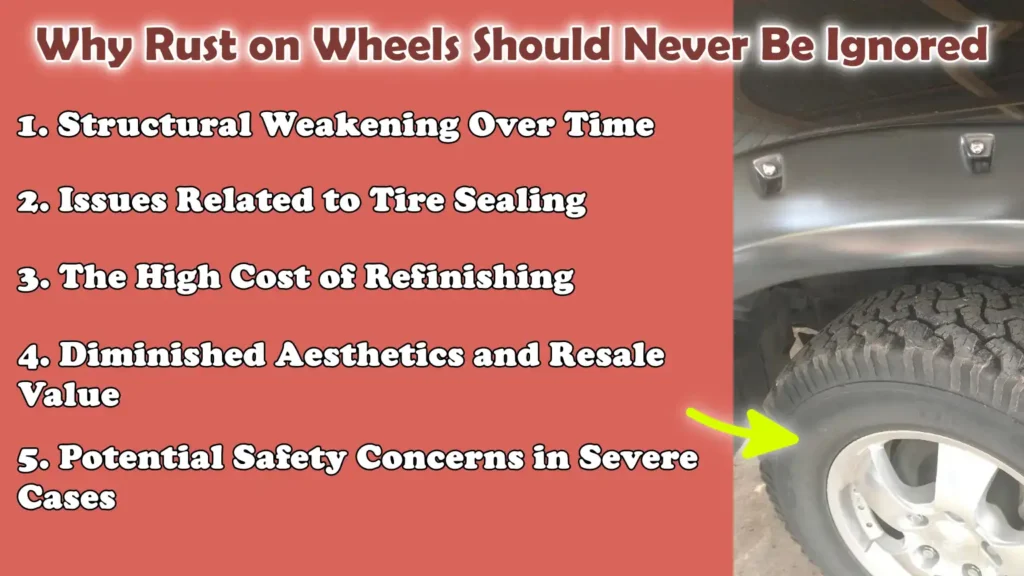
Rust on wheels is often initially perceived as a minor cosmetic issue; however, in reality, it represents a slow, progressive form of damage that deteriorates significantly over time.
It typically begins at the surface, often beneath a compromised clear coat or around minor scratches, and, if left unchecked, gradually penetrates deep into the metal’s structure.
Modern wheels are engineered to withstand heavy loads, extreme heat and the rigors of the road; yet, their durability relies heavily on the integrity of their protective coating.
Once rust takes hold, it compromises both the aesthetic appeal and the functional performance of the wheel.
Ignoring early warning signs can lead to increased repair costs, a shortened wheel lifespan and, in severe cases, even pose a safety hazard while driving.
1. Structural Weakening Over Time
When rust is allowed to spread unchecked, it gradually degrades the internal metal structure of the wheel.
Alloy wheels, in particular, are highly susceptible to losing their structural integrity due to oxidation, a process that systematically weakens the underlying material layer by layer.
This deterioration does not occur instantaneously; rather, through repeated exposure to moisture, road salts and environmental contaminants, the wheel’s capacity to withstand the stresses generated by driving, braking and road impacts is gradually diminished.
Over time, sections that were once solid and smooth may become pitted or uneven, thereby increasing the risk of cracking or structural failure under load.
This is precisely why rust, even in its nascent stages, should always be treated with the utmost seriousness, regardless of how insignificant it may appear on the surface.
2. Issues Related to Tire Sealing
The presence of rust on the inner rim or the bead seat area can severely compromise the wheel’s ability to maintain a proper, airtight seal with the tire.
The bead seat area must remain smooth and free of contaminants to ensure that the tire seats securely and fits perfectly against the wheel’s surface.
When rust forms, it creates rough patches or tiny pores through which air gradually leaks out.
This can lead to recurring drops in tire pressure, uneven tire wear and reduced fuel efficiency.
In many instances, drivers fail to realize that the root cause is rust rather than a puncture in the tire; this makes the problem particularly deceptive and, consequently, it often goes unnoticed.
3. The High Cost of Refinishing
As rust spreads, simple cleaning is no longer sufficient to restore the condition of the wheels.
At this stage, professional refinishing or repair becomes necessary, a process that involves stripping away the damaged layer, repairing the surface and applying a new protective coating.
These procedures can be both time-consuming and expensive, particularly for high-quality alloy or custom wheels.
If the rust is allowed to progress further, replacing the entire wheel may become the only viable option.
Addressing rust in its early stages is far more cost-effective than dealing with the severe damage that necessitates specialized repairs.
4. Diminished Aesthetics and Resale Value
Wheels play a pivotal role in a vehicle’s overall appearance and the presence of rust immediately undermines the vehicle’s image of cleanliness and meticulous maintenance.
Dull spots, peeling finishes and traces of rust can make even a brand-new vehicle appear old and poorly maintained.
Such a decline in aesthetic appeal can also diminish the vehicle’s resale value, as potential buyers often view the condition of the wheels as an indicator of the vehicle’s overall maintenance history.
Even minor signs of rust can cast a negative impression, particularly in the used car market, where appearance significantly influences both pricing and buyer confidence.
5. Potential Safety Concerns in Severe Cases
In severe instances, rust on the wheels can transcend mere aesthetic and financial concerns to pose a potential safety hazard.
Excessive rust accumulation can compromise the structural integrity of the wheel, particularly in high-stress areas such as the spokes or rim edges.
This increases the risk of structural failure under pressure, specially during high-speed driving, hard braking, or impact with potholes.
In cases of extreme deterioration, a weakened wheel could even fracture, potentially leading to a sudden loss of tire pressure or a complete loss of vehicle control.
While such catastrophic failures are rare during the early stages of rust formation, this underscores the fact that the consequences of prolonged neglect should never be overlooked.
How to Protect Wheels From Corrosion – The Best Ways
Protecting wheels from rust is not a one-time task; rather, it is the result of consistent good habits that minimize exposure to moisture, chemicals and dirt.
As rust develops gradually, typically as protective layers begin to deteriorate, our objective is to preserve that protective shield for as long as possible.
Wheels are subjected to constant stress during daily driving, stemming from the heat generated by braking, road debris and exposure to water and chemicals.
When proper care is administered regularly, the lifespan of the wheels’ finish is significantly extended and the likelihood of oxidation, rust and surface damage is greatly reduced.
1. Wash Your Wheels Regularly
Regular washing is the most effective method for protecting wheels against rust, as it removes harmful contaminants before they have a chance to accumulate on the surface.
Dust, dirt, salt and road grime can trap moisture against the wheel, thereby accelerating the oxidation process over time.
When wheels are cleaned frequently, these rust-inducing elements do not have sufficient time to penetrate the protective layer or reach the underlying metal.
Using clean water and gentle cleaning methods helps preserve the integrity of the finish and prevents the long-term accumulation of grime that could otherwise lead to damage.
2. Remove Brake Dust Immediately
Brake dust is highly reactive, as it consists of tiny metal particles generated during the braking process.
These particles are hot when expelled and can adhere firmly to the wheel’s surface.
If not removed promptly, brake dust can combine with moisture and begin to chemically bond with the “clear coat” (the outer protective layer), causing the finish to deteriorate gradually.
Over time, this can result in permanent staining and the formation of rust spots.
Regularly removing brake dust prevents it from penetrating deep into the wheel’s surface, thereby preserving the protective layer.
3. Apply Sealant or Wax to the Wheels
Wheel sealants and waxes create a protective shield between the wheel’s surface and external contaminants.
This shield minimizes direct exposure to moisture, brake dust and road chemicals, making it difficult for rust to form.
Sealants are particularly beneficial as they are designed to bond with the wheel’s surface, offering longer-lasting protection compared to simple cleaning alone.
Wax also helps by creating a smooth layer, making it easier to rinse away dust and grime during cleaning.
4. Apply a Ceramic Coating to the Wheels
Ceramic coating offers a more advanced level of protection, as it forms a semi-permanent layer that bonds with the wheel’s surface at a molecular level.
This layer is highly resistant to exposure from heat, water and chemicals and proves highly effective in preventing rust.
It also prevents brake dust from easily adhering to the wheels, significantly simplifying maintenance tasks.
As ceramic coatings last longer than waxes or sealants, they are often utilized as a long-term protective solution for drivers seeking maximum durability.
5. Thoroughly Dry the Wheels After Washing
Proper drying is a crucial step that is often overlooked, yet it plays a significant role in preventing rust formation.
When water remains pooled on the wheel’s surface, particularly in tight crevices, such as between the spokes or along the rim edges, it creates conditions conducive to oxidation.
Minerals present in the water can also leave behind deposits that, over time, can damage the finish.
Thoroughly drying the wheels after washing ensures that no moisture remains trapped, thereby allowing the protective coating to remain intact without any compromise.
6. Avoid Damage from Automatic Car Washes
Many automatic car washes utilize stiff brushes and harsh chemical cleaners, which can gradually damage the wheels’ finish.
These brushes can create microscopic scratches on the protective coating, making it easier for moisture and dirt to penetrate and reach the underlying metal.
The harsh chemicals used in some systems can also weaken sealants and clear coats over time.
While automatic washes offer convenience, frequent use can accelerate wear and tear on wheel surfaces and increase the risk of corrosion.
7. Protect Wheels During Winter
Winter conditions are particularly harsh on wheels, as road salt and slush create a highly corrosive environment.
Salt mixed with moisture can linger on wheel surfaces for extended periods, continuing to degrade protective coatings even after the vehicle has been parked.
During the winter season, regular rinsing with water helps remove salt buildup before it can cause damage.
Additional layers of protection such as: sealants or ceramic coatings, are specially beneficial during this season, as they act as a robust barrier against chemical exposure.
8. Repair Chips and Scratches Immediately
Small chips and scratches may seem minor, but they are often the starting point for rust formation.
When the protective coating is damaged, the underlying metal becomes vulnerable as it is exposed to oxygen and moisture.
Typically, rust begins to form in these small areas; if left untreated, it gradually spreads outward over time.
Promptly repairing scratches restores the protective barrier and prevents rust from penetrating deeper into the wheel’s surface.
How to Clean Wheels Without Causing Rust
Cleaning wheels correctly is one of the most crucial steps in preventing rust over the long term, as the cleaning process itself can either preserve or damage the wheel’s surface.
Wheels are exposed daily to brake dust, road salt, heat and moisture; if these contaminants are not properly removed, they can accumulate rapidly.
However, many people inadvertently increase the risk of rust by using the wrong products or methods.
Safe wheel cleaning involves removing harmful contaminants while simultaneously preserving the protective “clear coat” that prevents the metal from being exposed to air and water.
1. Choose a pH-Balanced Wheel Cleaner
pH-balanced wheel cleaners are formulated to remove dirt and brake dust without being excessively acidic or alkaline.
This is essential because harsh chemicals can gradually degrade the protective “clear coat” present on the wheels.
Once this layer is compromised, moisture and oxygen can reach the underlying metal, initiating the rusting process.
pH-balanced formulas are gentle enough for regular use yet effective at removing grime; for this reason, they offer wheels safer and longer-lasting protection compared to harsh chemical cleaners.
2. Use Soft Brushes and Microfiber Towels
Using soft brushes and microfiber towels helps prevent scratching, which can damage the wheel’s protective surface.
Hard or abrasive cleaning tools can create tiny scratches that may not be immediately visible but can later serve as entry points for moisture and dirt.
Once the protective layer is compromised, rust can begin to form in these vulnerable areas.
Soft materials remove brake dust and grime without scratching the surface, leaving behind a smooth, sealed finish that resists oxidation (rust).
3. Never Clean Wheels When They Are Hot
Cleaning wheels while they are hot is a common mistake that can lead to surface damage.
After driving, the friction generated by braking can cause the wheels to become extremely hot.
If cold water or cleaning chemicals are applied to a hot wheel, the sudden thermal shock can stress the clear coat, potentially causing hairline cracks or staining.
This also causes cleaning products to dry out too quickly, leaving behind residues on the surface that can cause damage.
Allowing the wheels to cool down before cleaning makes the cleaning process safer and more effective.
4. Rinse Thoroughly After Cleaning
Thorough rinsing is crucial, as residual cleaning products can continue to react with the wheel’s surface even after the washing process is complete.
If soap, brake dust particles, or chemical cleaners remain on the wheel, they can trap moisture and gradually degrade the protective coating.
This trapped residue creates ideal conditions for oxidation to begin.
Proper rinsing removes all loose contaminants and ensures that no active chemicals, substances that can cause corrosion over time, are left behind.
5. Avoid Household Cleaners and Degreasers
Household cleaners and general-purpose degreasers are not designed for automotive wheel surfaces; they often contain harsh chemicals that can strip away the protective coating.
While they may remove dirt quickly, they can also strip away layers of wax and sealants, or even damage the clear coat.
Once this protective layer becomes compromised, the wheels become highly susceptible to moisture, brake dust and road salt.
Using products specifically formulated for wheels ensures effective cleaning without increasing the risk of corrosion or causing long-term damage to the surface.
The Best Protective Products for Wheels
Protecting wheels from corrosion involves more than just cleaning them; it also entails creating a robust barrier that prevents moisture, salt, brake dust and other damaging elements from reaching the wheel’s surface.
Modern wheel protection products work by sealing or coating the surface, ensuring that external elements cannot easily bond with the metal or damage the clear coat.
Each type of product offers varying levels of protection, durability and ease of application; the choice of the right product depends on driving conditions, weather and the frequency with which the vehicle is exposed to harsh environments.
1. Wheel Wax
Wheel wax is one of the simplest protective options available, functioning by creating a thin, smooth layer on the wheel’s surface.
This layer helps prevent brake dust and grime from easily adhering to the wheel, thereby simplifying the cleaning process and reducing the issue of long-term dirt accumulation.
Wax also provides basic protection against moisture, thereby slowing down the initial stages of corrosion.
However, compared to other protective methods, wheel wax wears off relatively quickly; therefore, regular reapplication is necessary to maintain its effectiveness, particularly in wet or dusty driving conditions.
2. Synthetic Sealants
Synthetic sealants offer greater durability than traditional waxes, as they are formulated using engineered polymers that bond more strongly to the wheel’s surface.
This creates a longer-lasting protective layer capable of withstanding heat, water and the chemical contaminants found in road grime.
Sealants help prevent corrosion by repelling moisture and minimizing direct contact between the wheel and damaging particles such as: brake dust and road salt.
These are particularly beneficial for vehicles driven daily, as they maintain protection over extended periods without the need for frequent reapplication.
3. Ceramic Wheel Coating
Ceramic wheel coatings offer the highest level of long-lasting protection available for wheels.
These coatings chemically bond with the wheel’s surface, creating a hard, transparent layer that is highly resistant to heat, chemicals and corrosion.
Once applied, they create a hydrophobic surface that repels water and prevents brake dust from adhering.
This significantly reduces the likelihood of rust forming on the wheels.
Ceramic coatings last far longer than waxes or sealants, making them a preferred choice for keeping wheels protected over the long term.
4. Anti-Rust Sprays
Anti-rust sprays are specifically designed to slow down or prevent the process of rust and oxidation by forming a protective layer on metal surfaces.
These sprays are particularly useful for steel wheels or for areas frequently exposed to moisture and salt.
They work by displacing water and preventing oxygen from reaching the metal, two elements essential for rust formation.
Although they may not provide the aesthetic finish of waxes or coatings, they are highly effective in terms of protection within harsh environments.
5. Wheel Covers for Long-Term Storage
Wheel covers are an excellent solution for vehicles stored for extended periods, such as seasonal cars or unused spare wheels.
They protect the wheels from dust, moisture and environmental elements that can gradually lead to rust over time.
By completely enclosing the wheel, they minimize direct exposure to air and moisture, thereby preserving both the wheel’s finish and its structural integrity.
Wheel covers are particularly beneficial in garages or storage areas, where temperature and humidity levels frequently fluctuate.
How to Protect Different Types of Wheels
Different wheel materials react differently to moisture, heat, chemicals and road grime, meaning they require distinct protection strategies to guard against corrosion.
Although all wheels face similar environmental stressors such as: exposure to brake dust, road salt and water, the specific manner in which corrosion occurs depends on the wheel’s surface finish and material composition.
Understanding how each type of wheel behaves helps in selecting the appropriate cleaning techniques, protective coatings and maintenance methods necessary to extend the wheel’s lifespan and preserve its aesthetic appeal and structural integrity over time.
1. Aluminum Alloy Wheels
Aluminum alloy wheels are lightweight and widely used; however, once their protective clear coat becomes compromised, they become naturally susceptible to oxidation (corrosion).
Once the coating degrades, the aluminum reacts with oxygen to form a white, powdery layer that gradually spreads across the entire surface.
These wheels require regular cleaning to remove brake dust and road grime before they have a chance to accumulate on the surface.
Protective layers such as: waxes, sealants, or ceramic coatings, are particularly essential, as they create a barrier that slows down the rate of oxidation and prevents moisture from reaching the underlying metal.
2. Chrome Wheels
Chrome wheels feature a shiny, polished surface; however, if corrosion begins to form beneath the chrome plating, they are at risk of pitting.
When moisture or salt seeps into small cracks or surface imperfections, it can trigger the formation of tiny rust spots that expand over time, eventually damaging the finish.
These wheels require gentle cleaning, as harsh chemicals or abrasive tools can scratch or damage the chrome plating.
Regular washing and the application of protective coatings help maintain their luster and minimize the risk of moisture becoming trapped on the surface.
3. Painted Wheels
Painted wheels rely on a layer of paint and a clear coat to protect the underlying metal.
If the paint or clear coat gets scratched or begins to chip, rust can start to form in those exposed areas.
Although these wheels are generally easy to maintain, they still require regular cleaning to remove brake dust and road grime, which can gradually wear down the protective finish.
It is crucial to repair scratches immediately; once moisture reaches the exposed metal, rust can spread beneath the paint, leading to blistering or peeling.
4. Steel Wheels
Steel wheels are robust and durable; however, if exposed to moisture without proper protection, they are highly susceptible to rusting.
Unlike aluminum, steel reacts rapidly with water and oxygen, resulting in visible rust formation on the surface.
These wheels often require a protective layer such as: an anti-rust agent or paint, to shield them from corrosion.
Regular cleaning is essential, particularly during wet or winter weather, as failing to remove trapped moisture can significantly accelerate the rusting process.
5. Wheels with Matte and Satin Finishes
Wheels with matte and satin finishes feature a textured surface that lacks a glossy sheen; however, this finish can be easily damaged by improper cleaning methods and exposure to harsh chemicals.
Aggressive cleaners can permanently alter this finish, potentially causing it to become uneven or resulting in shiny spots in certain areas, while also compromising the integrity of the protective layer.
To safeguard their surfaces against damage, these wheels require pH-balanced cleaners and gentle cleaning tools.
Although they are not as susceptible to rust as other types of wheels, damage to the finish can expose the underlying layers; and without proper maintenance, oxidation may occur over time.
Read More:
- How to Remove Brake Dust From Wheels
- How to Clean Alloy Wheels Properly
- How to Upgrade Wheels Safely
- How to Check Wheel Offset Compatibility
- How to Fix Wheel Wobble Issue
- How to Diagnose Wheel Wobble at Speed
- How to Inspect Wheel Hub Damage
- How to Replace Broken Wheel Stud
- How to Remove Stuck Lug Nuts
- How to Torque Lug Nuts Correctly
- How to Check Wheel Lug Torque
- How to Install Directional Tires Properly
- How to Identify Directional Tires Correctly
- How to Choose Tires for Snow Driving
- How to Choose Tires for Wet Roads
- How to Check Tire Load Rating
- How to Store Tires Properly Long Term
- How to Prevent Tire Dry Rot
- How to Fix Tire Bulge Issue
- How to Inspect Tire Inner Sidewall Damage
Know, Common Causes of Wheel Rust
Wheel rust is often not solely the result of severe weather conditions, but is also frequently caused by recurring minor maintenance errors that gradually compromise the protective outer layer of the wheel.
Most modern wheels rely on a ‘clear coat’ (a transparent layer), a layer of paint, or a protective finish to shield them from moisture, oxygen and chemicals.
When this protective barrier is compromised or neglected, corrosion begins on a microscopic level and spreads over time.
Many drivers inadvertently accelerate this process by delaying cleaning, using harsh chemicals, or ignoring minor surface damage, issues that eventually escalate into severe rust problems.
Even, there’s study that shows that chloride ions from the road salt significantly accelerates that corrosion problem in wheel steels by increasing electrochemical reactions on the surface, as it literally shows that corrosion rates increases as salt concentration rises, specially in the wet and freezing conditions where salt stays way more longer on the metallic surfaces, that’s exactly the research also confirms that protective coatings actually gets weakens over the period of time when it gets exposed to the saltwater environments that makes the wheel more vulnerable in winter driving conditions that’s why corrosion products does not always protects the surface and can actually speed up further degradation as well.[¹]
1. Leaving Brake Dust Uncleaned for Weeks
Leaving brake dust on wheels for extended periods is one of the most common causes of rust.
Brake dust consists of tiny metal particles that heat up and become chemically active during the braking process.
Once they settle on the wheel’s surface, they combine with moisture and begin to bond with the clear coat.
If left uncleaned for weeks, this accumulated grime becomes difficult to remove and can begin to scratch the protective layer.
Over time, this leads to surface hazing, staining and premature oxidation (rusting).
Regular cleaning prevents the buildup of a brake dust layer that damages the wheel’s surface.
2. Frequent Use of Acid-Based Cleaners
Acid-based wheel cleaners can remove dirt quickly; However, repeated use of these products can weaken the protective layer applied to the wheel, or even strip it away entirely.
When the ‘clear coat’ is compromised, the underlying metal becomes exposed to air and moisture, significantly increasing the risk of corrosion.
These harsh chemicals can also inflict microscopic damage to the surface, damage that may not be immediately visible, but which allows dirt and grime to adhere to the surface much more easily.
Over time, the repeated use of aggressive cleaners diminishes the wheel’s resistance to oxidation (rusting) and accelerates surface degradation.
3. Washing Wheels in Direct Sunlight
Washing wheels in direct sunlight may not seem harmful, but the intense heat causes cleaning products to dry on the surface very rapidly.
When this occurs, soap, brake dust particles and chemical residues remain on the surface rather than being completely rinsed away.
These residues can trap moisture and trigger uneven chemical reactions beneath the protective layer.
In some instances, rapid drying can also result in stains or spots, which gradually weaken the surface over time.
Washing wheels in a cool, shaded area makes the cleaning process both more effective and safer.
4. Ignoring Small Paint Chips
Small paint chips may appear insignificant at first glance, but they are often the very spots where corrosion begins.
Once the protective paint or clear coat is breached, the underlying metal is exposed directly to moisture and oxygen.
Typically, rust begins to form within these small, exposed areas and spreads underneath the surrounding coating.
Because this damage originates beneath the surface, it often goes unnoticed until it becomes more visibly apparent and begins to spread.
Promptly repairing these chips prevents moisture ingress and allows rust formation to be halted right at the outset.
5. Neglecting Protective Coatings
Neglecting protective coatings such as: waxes, sealants, or ceramic layers, leaves the wheels completely vulnerable to environmental damage.
Without this protective shield, brake dust, road salt, water and grime come into direct contact with the wheel’s surface, leading to the gradual deterioration of its finish.
Protective coatings act as a barrier, minimizing the adhesion between contaminants and the wheel, thereby making cleaning easier and slowing down the oxidation process.
When these coatings are not applied regularly, the wheels lose their resistance to rust and become increasingly susceptible to long-term surface damage.
So, Can Rusted Wheels Be Repaired?
Rusted wheels can often be repaired, but the success of the repair depends on the depth and extent of the rust’s spread.
In the early stages, rust typically affects only the outermost layer such as: the clear coat or paint; this means it can often be cleaned, treated and refinished.
However, when rust penetrates deep into the metal structure, particularly on alloy or steel wheels, the repair becomes more complex and, in some cases, may even be unsafe.
Understanding the level of damage is crucial, as it determines whether a simple repair will suffice or if professional work, or a complete wheel replacement, is required.
1. When is DIY Repair Possible?
DIY (Do-It-Yourself) repair is generally possible when the rust remains at the surface level and has not penetrated deep into the metal.
This includes mild oxidation, small white spots on alloy wheels, or an initial loss of surface luster caused by brake dust and moisture.
In such cases, careful cleaning, polishing and the application of a protective coating can restore the wheel’s appearance and slow down further deterioration.
DIY methods work best when the wheel’s structural integrity remains intact, meaning there is no flaking, cracking, or deep pitting.
However, it is essential to avoid excessive sanding or the use of harsh chemicals, as misguided repair attempts can sometimes exacerbate the damage.
2. Professional Wheel Refinishing Options
Professional wheel refinishing becomes necessary when the rust extends beyond the surface layer to affect the underlying coating layers or the metal itself.
This process typically involves removing the damaged finish, treating rusted areas, smoothing the surface and applying a new protective coating such as: paint, a clear coat, or powder coating.
In more severe cases, specialized tools are used to repair pitted or uneven surfaces prior to refinishing.
Professional repair is particularly effective for alloy wheels, where both aesthetics and surface protection are paramount; it restores both the functionality and beauty of the wheel while simultaneously creating a protective barrier to guard against future corrosion.
3. When Should Wheels Be Replaced?
Wheel replacement becomes necessary when corrosion has caused significant damage to the wheel’s structural integrity.
This includes deep cracks, severe pitting that compromises the wheel’s strength, or corrosion that has spread extensively across the wheel’s primary load-bearing components.
If the wheel can no longer maintain a proper airtight seal at the bead area (the rim’s edge), or if it exhibits signs of structural instability, repairing it may no longer be safe.
In such instances, replacing the wheels is the only reliable option to ensure vehicle safety.
Continuing to use severely corroded wheels increases the risk of wheel failure while driving, particularly at high speeds or in poor road conditions.
4. Cost of Repair vs Replacement
The cost difference between repairing and replacing corroded wheels depends on the severity of the damage and the type of wheel.
Minor surface repairs and polishing are typically more economical and can effectively restore both the appearance and protective qualities of the wheel.
However, as the corrosion becomes more severe, the cost of repairs increases, as it necessitates additional labor, materials and specialized treatments.
In some instances, particularly with severely damaged or low-cost wheels, replacing them entirely may actually prove to be more economical than undertaking a full repair.
When deciding between repair and replacement, it is essential to evaluate both safety and long-term value, as the cheapest option is not always the most reliable in the long run.
Conclusion – How to Protect Wheels From Corrosion
Yes, wheel corrosion is actually a slow process but it can deeply spreads when you ignore it for the longer period of time or doesn’t give all the necessary treatment.
This is significant because the process often initiates in ways that are easy to overlook such as: tiny white spots, hazy patches, or minor scratches, yet these early indicators actually represent the initial stages of deeper damage to the metal.
Once rust spreads beneath the “clear coat” or penetrates to the underlying metal layer, halting it becomes far more difficult and costly; in severe cases, it can even compromise the wheel’s structural integrity and its ability to maintain a proper seal with the tire.
The key takeaway is that, during daily driving, wheels are constantly exposed to harsh conditions; without regular maintenance, even the highest-quality alloy or steel wheels will eventually begin to deteriorate.
However, the good news is that most instances of rust can be prevented through a few simple yet consistent habits such as: regular cleaning, using safe washing techniques, proper drying, timely repair of scratches and applying protective layers like waxes, sealants, or ceramic coatings.
When these measures are followed, wheels remain pristine for longer periods, resist oxidation more effectively and retain both their aesthetic appeal and structural integrity over time.
Now, that’s it from this guide and you can ask all the related questions below on the comment section.
Frequently Asked Questions
FAQ 1: What is wheel corrosion and how does it begin?
Answer: Wheel corrosion is a gradual process in which the metal of a wheel, or its protective coating, begins to deteriorate due to exposure to moisture, oxygen, road salts and brake dust. It typically begins when the protective layer applied to the wheel becomes compromised or sustains scratches. Once this layer is damaged, the underlying metal reacts with air and water, initiating the process of oxidation (rusting). Initially, this may manifest as small white spots, discolored patches, or minor traces of rust; however, if left untreated, it will spread over time and evolve into a serious problem.
FAQ 2: What are the early signs of wheel corrosion?
Answer: The earliest signs of wheel corrosion typically include small white or discolored spots on alloy wheels, slight rust around the bolts or valve stems, or a rough texture on certain parts of the rim. You may also notice that removing brake dust is becoming increasingly difficult, or that the wheel’s shine appears dull even after washing. In some cases, you may observe blistering or peeling of the wheel’s top layer (the clear coat); this is a definitive sign that moisture has begun to penetrate beneath the wheel’s surface.
FAQ 3: Can the corrosion process be stopped once it has started?
Answer: Yes, if wheel corrosion is identified in its early stages, the process can often be slowed down or halted entirely. Light surface corrosion can be cleaned, polished and protected using sealants or protective coatings. However, if the corrosion has penetrated into the deeper layers of the metal, it may not be possible to fully restore the wheel to its original condition. Nevertheless, it can be treated to prevent it from spreading further. The most important thing is to take timely action; for the longer the rust problem is ignored, the more difficult it becomes to control.
FAQ 4: Does rust on wheels pose a safety risk while driving?
Answer: In mild cases, rust on wheels is primarily a cosmetic issue; however, in severe cases, it can become a safety hazard. Excessive rust can compromise the structural integrity of the wheel, particularly in the case of alloy wheels, and can also impair the proper seal between the tire and the rim. This can lead to slow air leaks or, under extreme stress, even cause the wheel to fracture. While this is rare in the initial stages, ignoring the rust problem for an extended period significantly increases this risk.
FAQ 5: What is the best way to prevent rust on wheels?
Answer: The best way to prevent rust on wheels is to practice regular cleaning and adopt appropriate protective measures. Frequent washing helps remove brake dust, salt and dirt before they can accumulate or adhere to the wheel’s surface. Using pH-balanced cleaners and soft tools helps protect the protective coating from damage. Applying waxes, sealants, or ceramic coatings creates an additional protective layer that repels moisture and dirt. Thoroughly drying the wheels after washing also helps prevent water from pooling on the surface.
FAQ 6: Does brake dust really cause rust?
Answer: Yes, brake dust is one of the primary causes of rust on wheels. It consists of tiny, hot metal particles that adhere to the wheel’s surface during braking. When these particles come into contact with moisture and oxygen, they can gradually scratch the clear coat and damage the finish. If brake dust is not cleaned regularly, it becomes even more difficult to remove, thereby increasing the likelihood of rust formation over time.
FAQ 7: Which types of wheels are most susceptible to rust?
Answer: Steel wheels are the most susceptible to rust, as they react very quickly when exposed to moisture. Alloy wheels do not rust in the same manner; however, if their protective coating is damaged, oxidation can occur. If moisture penetrates beneath the surface layer, chrome wheels may develop pitting or their plating may begin to peel. Painted wheels generally remain protected; however, if the paint or clear coat is compromised in any area, rust can begin to form underneath.
References:
[1] Study on the Corrosion Behavior and Mechanism of ER8 Wheel Steel in Neutral NaCl Solution
https://www.mdpi.com/2079-6412/12/5/713
Hello Folks, Dean Shali here to help you out to solve the problems with your lovely vehicle, as i have lots of experience and knowledge about automotive industry as i woks directly with the customers and repair vehicles and i love to help the people to keep their cars safe and running smoothly.