Written By: Dean Shali
Fact Checked By: Sabré Cook
Reviewed By: Tamara Warren
Basically, your vehicle’s wheels are the first surface to fight against heat, friction, road salt, brake dust, mud, oil and tiny metallic particles that flies from the braking system during braking.
Most of the time, drivers notices that their alloy wheels only when they lose their shine completely, but in that phase there’s hell lot of brake dust stuck into it.
And, brake dust is not just the ordinary dirt, as it literally contains hot iron particles which is creates from the brake pads and rotors and these particles slowly bond to the wheel surface after the repeated heating and cooling cycles.
Along with this, over the time this buildup causes staining, corrosion, oxidation, pitting and even damages the protective clear coat that keeps those alloy wheels looking smooth and glossy.
Now-a-days, alloy wheels are made from the lightweight aluminum blends which are designed to improve the vehicle performance fuel efficiency, handling and heat dissipation, but that same material also requires safer and more precise cleaning methods than the traditional steel wheels.
So, in this guide you’ll learn How to Clean Alloy Wheels Properly so that you can preserve wheel strength and even you can spot if there’s any cracks, bends or tire issues before they becomes serious safety hazards.
Now, Let’s Understand About Alloy Wheels Before Cleaning
Before cleaning alloy wheels, it is helpful to understand why they require more care compared to standard steel wheels.
Alloy wheels are designed to enhance a vehicle’s performance and aesthetics; however, their surfaces can be damaged by harsh chemicals, abrasive brushes and the accumulation of brake dust.
As many alloy wheels feature a protective coating, using improper cleaning methods can strip away this layer and reduce the lifespan of the wheel.
Understanding how alloy wheels are constructed, and the factors that affect them, makes the cleaning process safer and more effective.
1. What Are Alloy Wheels Made Of?
Alloy wheels are primarily composed of aluminum, blended with small amounts of other metals such as: magnesium, to increase their strength and reduce their weight.
Due to this composition, they are significantly lighter than steel wheels, which aids in vehicle handling, braking and fuel efficiency.
Aluminum also helps dissipate heat rapidly, a beneficial characteristic, as wheels are constantly exposed to the heat generated by continuous braking.
However, aluminum is softer than steel; consequently, it is more susceptible to scratches and reacts adversely to strong acids or harsh cleaning chemicals.
This is why it is essential to use mild cleaning products for alloy wheels, products capable of effectively cleaning the surface without causing any damage.
2. Different Finishes of Alloy Wheels
Not all alloy wheels feature the same surface finish and each specific type of wheel requires slightly different care.
Painted alloy wheels feature a colored layer on their surface, similar to the vehicle’s body paint, whereas clear-coated wheels possess an additional transparent protective layer designed to safeguard the underlying finish.
Polished aluminum wheels showcase the metal’s natural surface and require regular maintenance to protect them from oxidation.
Chrome-plated wheels feature a glossy chrome layer, which may peel or flake off if it becomes damaged.
Powder-coated wheels are more durable, as they feature a robust protective coating; however, wheels with matte and satin finishes require specialized cleaners, as polishing them can compromise their non-glossy appearance.
Identifying the specific finish helps prevent accidental damage during the cleaning process.
3. Why is Brake Dust Harmful?
Brake dust is one of the primary culprits behind damage to alloy wheels, as it consists of tiny metal particles generated during braking.
These particles become hot, adhere to the wheel’s surface and, over time, gradually embed themselves into the finish.
Once embedded, and if not removed regularly, they can lead to staining, rough spots and corrosion.
When brake dust is exposed to moisture, road salt and heat, it can damage protective coatings and cause pitting in the metal.
Regular cleaning removes these contaminants in a timely manner, thereby helping to preserve the wheels’ appearance and maintain their condition over the long term.
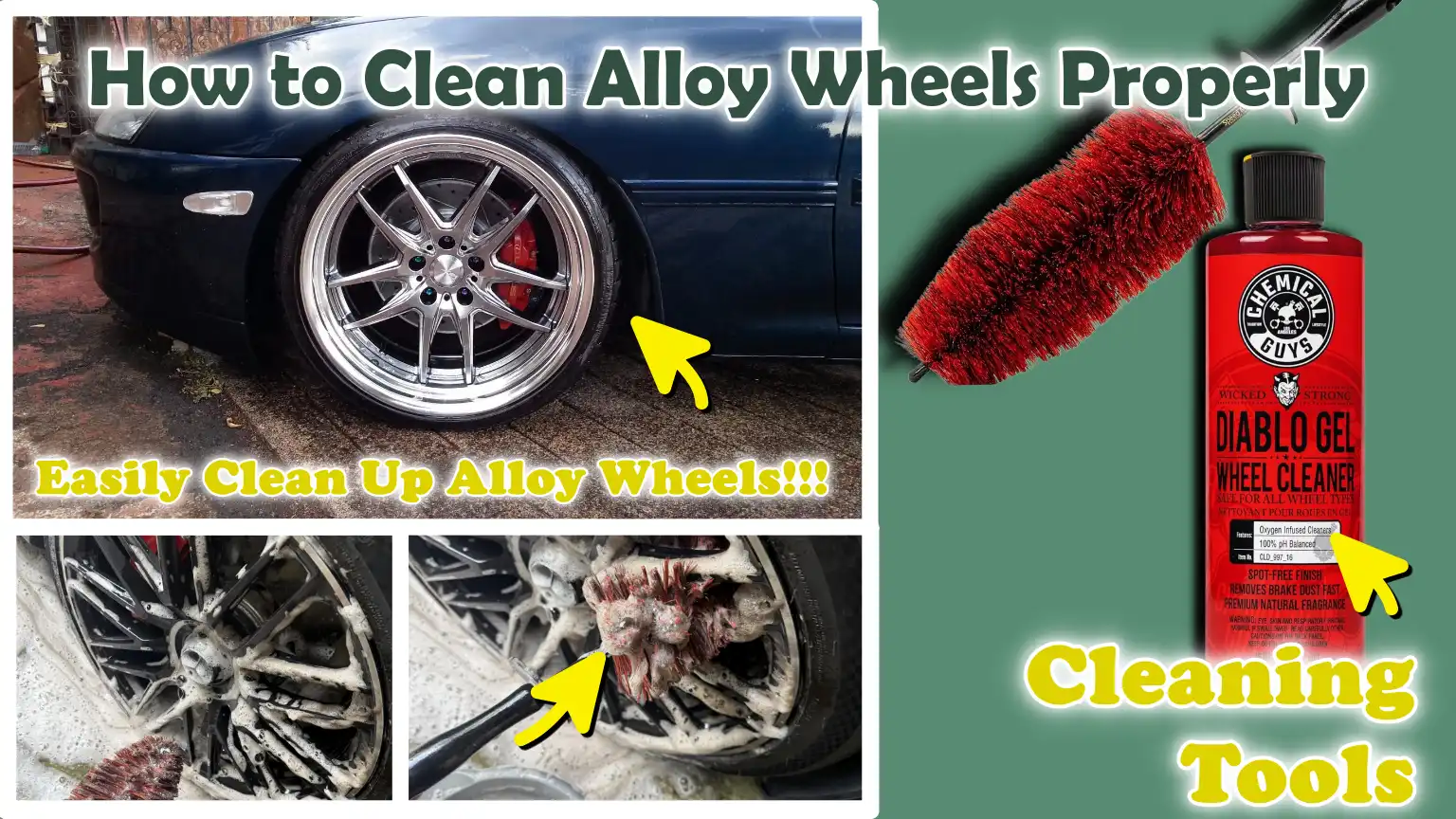
Tools
| Tools | Why It Is Needed | How to Use It |
|---|---|---|
| pH-Balanced Wheel Cleaner | This serves as the safest primary cleaner for alloy wheels, as it effectively removes brake dust, grime and road dust without damaging the clear coat, paint, or metal surfaces. It is designed to clean wheel surfaces without causing discoloration or corrosion. | Spray it evenly onto a cool wheel and allow it to dwell for approximately 1 to 2 minutes. Do not let it dry on the surface. Gently scrub with a soft brush, then rinse thoroughly with clean water. |
| Car Shampoo | Car shampoo helps remove residual loose dirt and surface dust remaining after the initial rinse. It is mild in nature and helps lubricate the wheel surface, allowing a brush to glide safely over it without causing scratches. | Dilute it in water according to the instructions provided on the bottle. Use a wash mitt or a soft brush to gently clean the wheel face and spokes. |
| Iron Remover | The iron remover dissolves tiny particles of brake dust that become deeply embedded in the wheel’s finish. It is essential for deep cleaning, as standard soaps often fail to remove these stubborn metallic impurities. | Spray it directly onto the wheel after completing the basic cleaning step. Allow it to react (it will typically turn purple), then rinse thoroughly. Use this product only on cool wheels. |
| Degreaser | The degreaser helps remove oily grime, grease and road tar, impurities that standard wheel cleaners may not be able to tackle. It is particularly useful for wheels that are exposed to heavy road contamination. | Spray it only onto greasy areas, scrub lightly and rinse immediately. Avoid excessive use, as strong degreasers can damage certain types of finishes. |
| Tire Cleaner | Tire Cleaner removes old dressing, road grime and accumulated brown oxidation from the tire sidewalls. Clean tires prevent dirt from redepositing on wheels that have just been cleaned. | Apply it to wet tire sidewalls and scrub with a tire brush until the foam lifts the dirt; then, rinse thoroughly. |
How to Prepare Alloy Wheels Before Cleaning
Preparing alloy wheels before cleaning is crucial, as many issues related to the wheels actually become apparent before you even begin the cleaning process.
Dirt, brake dust and heat can make the wheel’s surface more sensitive; if you apply a cleaner too hastily, the surface may become stained or its finish could be damaged.
Performing a few simple checks before washing helps prevent scratches, chemical marks and hidden damage.
Proper preparation also streamlines the cleaning process, as cleaning products work more effectively on a cool and pre-inspected surface.
1. Park the Vehicle in a Shady Spot
Always park your vehicle in a shady spot before cleaning the alloy wheels.
Direct sunlight causes metal to heat up quickly and cleaning chemicals tend to dry out very rapidly on hot wheels.
When wheel cleaner dries on the surface, it can leave behind white spots, streaks, or chemical stains that are difficult to remove.
Sunlight also causes water to evaporate quickly, which can result in water spots caused by minerals present in the water.
Cleaning in the shade gives you more working time and allows the cleaner to effectively remove brake dust without leaving any residue.
2. Allow the Wheels to Cool Down
It is essential that the wheels are cool before applying any cleaner.
After driving, the brake rotors can become extremely hot and that heat transfers directly to the wheels.
Spraying chemicals onto hot wheels can cause them to evaporate rapidly, result in uneven staining and, in some cases, damage the clear-coat finish.
Some cleaners may react more aggressively on hot metal, increasing the risk of discoloration.
An easy way to check this is to carefully touch the wheel to gauge its temperature.
If they feel hot to the touch, allow them to cool down naturally before you begin cleaning.
3. Inspect the Wheels for Any Damage
Before cleaning, closely inspect the wheels for any visible damage, as washing often reveals issues that people tend to overlook.
Small cracks around the spokes or lug nuts can worsen over time and pose a safety risk.
“Curb rash”, which appears as scratches on the outer edge of the rim, as it can expose the underlying metal and initiate the onset of rust.
Peeling clear coat typically manifests as cloudy or flaky patches, indicating that the protective layer is already deteriorating.
A bent rim can create an uneven edge or cause vibrations while driving.
Checking for these issues prior to cleaning helps determine whether the wheel simply requires a wash or if it needs to be repaired.
4. Gather Separate Tools for Cleaning the Wheels
The tools used for cleaning wheels should always be kept separate from those used on the vehicle’s painted surfaces.
Wheels accumulate a significant amount of dirt, metal particles, road tar and brake dust, which can become embedded in brushes or towels.
If these same towels are subsequently used on the vehicle’s painted surfaces, the trapped debris can scratch the paint finish.
Microfiber towels used on wheels should be washed separately and clearly marked to ensure they are designated exclusively for wheel cleaning.
Maintaining a separate set of tools helps protect both your alloy wheels and the rest of your vehicle from unnecessary damage.
How to Clean Alloy Wheels Properly – Easy & Really Working Guide
Cleaning alloy wheels correctly involves more than just making them shine.
Proper cleaning removes brake dust, road grime and harmful metallic particles, while also protecting the wheel’s finish from scratches and corrosion.
Every step is crucial; if you skip even one, dirt can become trapped on the surface.
Following the correct sequence also minimizes the risk of damaging the clear coat, polished metal, or painted finish.
1. Thoroughly Rinse the Wheels
To begin, rinse the wheels thoroughly with water to remove loose dirt, sand and road debris.
This step is vital because if dry particles rub against the surface during cleaning, they can cause scratches on the wheel.
A strong stream of water works best, as it flushes dirt out from the corners of the spokes, around the lug nuts and from the inner barrel, areas where grime frequently accumulates.
A thorough rinse also helps loosen brake dust, allowing the cleaner to work more effectively and evenly.
Always rinse the entire wheel before applying a brush.
2. Spray Wheel Cleaner Evenly
Spray the wheel cleaner over the entire surface of the wheel, including the face, the area around the lug nuts and the inner barrel.
Apply enough cleaner to completely coat the surface, but avoid using an excessive amount.
The cleaner requires a little time to dissolve brake dust and road grime, so allow it to dwell for approximately one to two minutes, as per the product’s instructions.
Do not let it dry on the surface, as dried cleaner can leave behind stains.
Spraying evenly ensures that the cleaner reaches all soiled areas before you begin scrubbing.
3. Clean the Face of the Wheel
Use a soft wheel brush to clean the visible face of the wheel.
Gently brush around the spokes, the outer rim and the central hub, as these areas tend to accumulate the most grime.
Using a soft brush minimizes the risk of scratching the clear coat or paint finish.
Pay special attention to the areas surrounding the lug nuts, as brake dust frequently accumulates there and is often overlooked during cleaning.
Clean gently rather than scrubbing vigorously, as the right cleaner will loosen most of the dirt without requiring excessive force.
4. Clean the Interior – Barrel
Compared to the face of the wheel, the interior (barrel) often accumulates a greater amount of brake dust, as it is situated closest to the braking components.
If left unattended, this hidden section can develop a thick layer of black grime.
Use a long-handled barrel brush to reach behind the spokes and clean the inner surface.
Rotate the brush while moving it in and out to ensure that the accumulated dirt is removed uniformly.
Cleaning the barrel is crucial; if grime remains on the interior, the wheel may still appear dull or lackluster even after the face has been washed.
5. Scrub the Tires Separately
The tires should be cleaned separately, as old tire dressings, road oils and oxidation often become embedded within the rubber itself.
This often manifests as a brownish discoloration, which many people mistakenly assume is merely ordinary dirt.
This discoloration typically occurs when anti-ozonant compounds present in the rubber come into contact with air and sunlight.
Apply a specialized tire cleaner and scrub the tire sidewalls until a lather forms and the grime is dislodged.
Cleaning the tires separately ensures that old dirt does not redeposit onto the freshly cleaned wheels, thereby enhancing the overall appearance of the wheels.
6. Remove Stubborn Brake Dust
If brake dust persists even after a standard wash, use an iron remover to dissolve the embedded metallic particles.
These particles are generated by the wear and tear of brake pads and can adhere firmly to the wheel surface when subjected to repeated heat cycles.
Iron removers chemically react with the contaminants to break them down, a process often signaled by the solution turning purple.
Use these products only on cool wheels and rinse thoroughly after application.
If the surface still feels rough to the touch, a clay bar can assist in removing stubborn contaminants; however, it should be used with caution to avoid damaging delicate finishes.
7. Rinse Everything Thoroughly
After scrubbing, rinse the entire wheel thoroughly to remove all cleaning chemicals and loosened dirt.
This step is crucial, as residual cleaner can dry and accumulate in crevices, around lug nuts and along the inner edges of the spokes.
Chemical residues can cause staining, particularly on polished or clear-coated wheels.
Rinse from multiple angles to ensure that even hidden areas are completely cleaned.
A thorough rinse also prevents dirt from drying back onto the wheel surface.
8. Thoroughly Dry the Wheels
Drying is the final step that many people skip, yet it makes a significant difference.
Residual water on alloy wheels can leave behind mineral spots, particularly when exposed to sunlight.
Use clean microfiber towels, as they absorb water without scratching the finish.
Rather than scrubbing vigorously, gently pat or wipe the surface.
Carefully dry the spokes, outer rims, lug nut areas and barrel openings, as trapped water often drips out later, leaving unsightly marks.
Proper drying ensures that the finish remains clean, shiny and free of spots.
How to Deep Clean Heavily Soiled Alloy Wheels
While regular washing removes surface grime, some alloy wheels accumulate deep-seated dirt that cannot be dislodged using ordinary soap and a brush.
This typically occurs when brake dust remains caked onto the wheels for extended periods, particularly in hot weather or after frequent driving.
Deep cleaning eliminates embedded metal particles, stubborn stains and oxidation, all of which gradually degrade the wheel’s finish.
Performing this process safely restores the wheel’s aesthetic appeal and provides long-term protection against surface corrosion.
1. Signs That Your Wheels Need Deep Cleaning
Some contaminants accumulate beneath the visible surface of the wheel, becoming increasingly difficult to remove as time passes.
Due to embedded brake dust, the wheel often feels rough to the touch even after washing, as microscopic metal particles become trapped within the clear coat or finish.
Prolonged exposure to heat and accumulated grime can cause clear-coated wheels to develop a yellowish discoloration.
Black spots typically form when old brake dust settles on the surface and hardens.
If a wheel appears dull, feels rough to the touch, or still looks dirty even after a standard wash, it typically requires a deep cleaning rather than just another routine wash.
2. How to Properly Use Iron Removers
Iron removers are formulated to break down microscopic metal particles left behind by brake pads.
These cleaners chemically react with iron-based contaminants, dissolving them so they can be safely rinsed away.
Many such products undergo a color change, often turning purple, to indicate that a chemical reaction is taking place on the wheel’s surface.
This reaction helps remove particles that standard car shampoos are unable to dislodge.
Always use an iron remover on cool wheels and in a shaded area, as heat can cause the product to dry out too quickly.
It is also crucial to rinse the wheels thoroughly after use, as residual chemical traces can damage the wheel’s delicate finish over time.
3. When to Use Wheel Clay Bars
Wheel clay bars come in handy when wheels still feel rough to the touch, even after a deep wash and iron removal treatment.
This typically indicates that contaminants have adhered firmly to the surface and require physical removal.
The clay extracts microscopic metal particles, which may be embedded within the clear coat, paint, or polished metal, without scratching (or abrading) the surface.
It should always be used in conjunction with a suitable lubricant, as using dry clay can result in scratches on the finish.
Clay bars are particularly beneficial for wheels that have accumulated a thick layer of brake dust, road tar and industrial fallout that cannot be removed through standard washing.
4. Polishing Oxidized Alloy Wheels
Oxidized alloy wheels often appear unsightly, lifeless, or hazy as the underlying metal or protective coating begins to deteriorate.
Mild oxidation can often be remedied using a safe metal polish or wheel polishing compound specifically formulated for that particular type of finish.
Polishing by hand offers greater control and is generally safer for smaller areas or delicate wheels.
Machine polishing is faster, but it generates more friction; Therefore, it should be used with caution, specially on thin clear coatings or polished aluminum.
Choosing the right polish is crucial, as some aggressive compounds may strip away protective layers rather than restoring the shine.
Now, How to Protect Alloy Wheels After Cleaning
Cleaning removes dirt and brake dust, but protection is the key factor that helps keep alloy wheels in good condition for the long term.
Protecting newly cleaned wheels is easier because the dirt has already been removed, allowing protective products to bond properly with the surface.
Protection helps prevent brake dust from adhering, slows down the rate of oxidation and makes future cleaning significantly easier.
Without a protective layer, brake dust and moisture can come into direct contact with the finish, potentially causing the wheel’s surface to deteriorate gradually.
1. Applying a Wheel Sealant
A wheel sealant creates a protective layer over the alloy finish, acting as a barrier between the wheel and dirt.
This helps prevent brake dust from sticking to the surface and makes it easier to rinse away dirt with water during future washes.
This protective layer can also minimize water spots and slow down surface oxidation.
Sealants are beneficial because alloy wheels are constantly exposed to heat, road salt and moisture, all of which can degrade the finish.
Applying a sealant after cleaning helps maintain the shine and reduces the need for vigorous scrubbing during subsequent cleaning sessions.
2. Using Ceramic Coatings on Wheels
Ceramic coatings offer stronger protection than standard sealants because they are designed to withstand the intense heat generated by braking.
Wheels are subjected to much higher temperatures than most painted surfaces on a vehicle, specially during heavy braking, and ceramic coatings are better equipped to endure such heat.
They form a more robust protective layer that repels dirt, brake dust, water and road grime.
As this coating is long-lasting, the wheels remain clean for extended periods, making their maintenance significantly easier.
This type of protection is particularly beneficial for vehicles that are driven frequently, for high-performance cars, or for vehicles operated in areas where there is excessive dust and road grime.
3. Best Practices for Ongoing Maintenance
Wheel protection systems perform optimally only when accompanied by regular maintenance.
A weekly rinse with water removes fresh brake dust before it has a chance to harden and adhere to the surface.
Monthly deep cleaning helps eliminate hidden grime that often accumulates inside the wheel barrels and within small crevices.
Providing seasonal protection is also crucial, as changing weather conditions can significantly impact the condition of the wheels.
Road salt used in winter, the intense heat of summer and rainy weather, all these factors increase the risk of dirt accumulation and corrosion.
Maintaining a regular cleaning schedule ensures that the protective layer remains effective, thereby keeping alloy wheels clean, shiny and easy to maintain over time.
Common Mistakes That Damage Alloy Wheels During Cleaning It
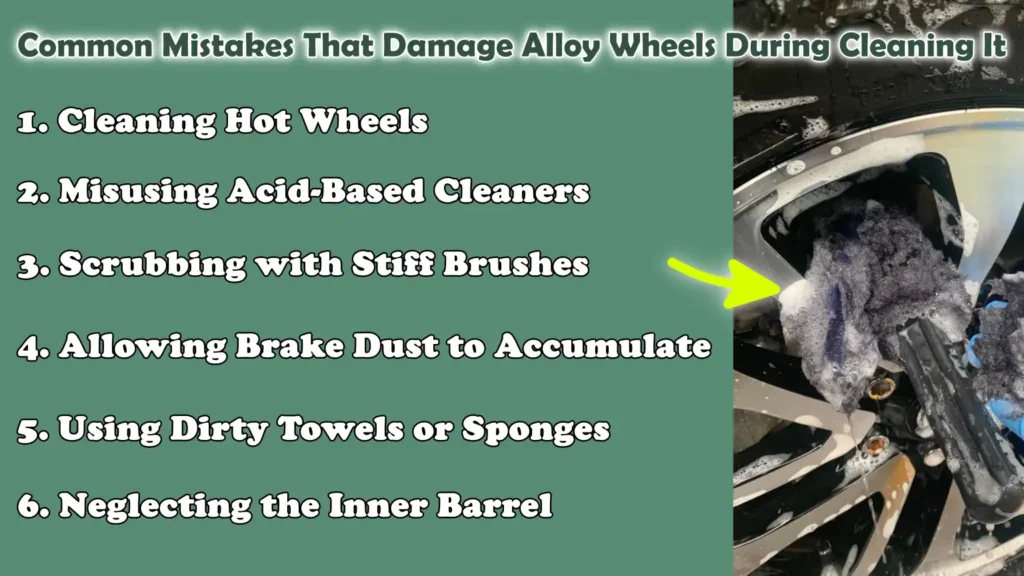
Many problems associated with alloy wheels arise not from driving conditions, but from improper cleaning habits.
Alloy wheels are exposed daily to brake heat, metallic dust, road grime and the elements; consequently, incorrect cleaning methods can accelerate their wear and degrade their finish.
Small errors such as: using harsh products or overlooking hidden dirt, as it can lead to discoloration, staining and corrosion over time.
Understanding these common mistakes helps protect your wheels and saves you from the expense of costly repairs or refinishing.
1. Cleaning Hot Wheels
Cleaning wheels while they are still hot is one of the most common mistakes.
After driving, heat generated by the brakes transfers to the wheels, significantly raising their surface temperature.
Spraying a cleaner onto a hot wheel causes the chemicals within it to evaporate rapidly, increasing the likelihood of leaving behind stains, streaks, or spots on the finish.
Hot metal can also intensify the potency of certain cleaners, potentially weakening the paint or clear coat.
Waiting for the wheels to cool down yields better results and allows the cleaner to work evenly and effectively.
2. Misusing Acid-Based Cleaners
Acid-based cleaners can quickly remove heavy brake dust, but their improper use can cause significant damage to alloy wheels.
Strong acids can strip away protective coatings, dull the shine of polished surfaces and stain unprotected aluminum surfaces.
If the wheel’s clear coat is already peeling or scratched, acid can penetrate deep into the metal, accelerating the oxidation (corrosion) process.
Some wheel cleaners are safe when diluted with water and used correctly; however, leaving them on for too long or using them too frequently can shorten the lifespan of the wheel’s finish.
Always use products specifically formulated for alloy wheels and adhere to the recommended contact time (the duration for which the product should be allowed to remain on the surface).
3. Scrubbing with Stiff Brushes
Stiff brushes may seem effective, but they can scratch alloy wheels, particularly painted, polished, or clear-coated surfaces.
Coarse bristles can create fine scratches that, over time, specially on dark or glossy finishes, become increasingly visible.
Once the protective surface is scratched, brake dust and moisture can easily accumulate within these abrasions.
Wheel brushes with soft bristles are a safer alternative, as they clean effectively without damaging the finish.
When the appropriate cleaner is used, cleaning with light pressure typically yields better results than vigorous scrubbing.
4. Allowing Brake Dust to Accumulate
Brake dust should not be allowed to remain on alloy wheels for extended periods, as it contains hot metal particles shed from the brake pads.
These particles adhere to the wheel’s surface and, through repeated cycles of heating and cooling, gradually bond with the surface finish.
If left uncleaned for too long, this can lead to black spots, surface roughness and corrosion.
In severe cases, these particles can compromise the protective coating and cause pitting in the underlying metal.
Regular cleaning ensures that brake dust is removed before it accumulates and becomes difficult to dislodge.
5. Using Dirty Towels or Sponges
Dirty towels and sponges often trap residual grit, metal shards and road dust left over from previous cleaning sessions.
Reusing these items can cause these particles to abrade the surface of the alloy wheels, significantly increasing the risk of scratches.
Even soft microfiber cloths can cause damage if they harbor embedded hard particles.
Wheel-cleaning towels should always be washed after use and kept strictly separate from the towels used to clean the vehicle’s painted bodywork.
Using clean tools minimizes the risk of scratching and helps preserve the wheel’s smooth finish.
6. Neglecting the Inner Barrel
The inner barrel is the hidden rear section of the wheel and it is typically where the heaviest accumulation of brake dust occurs, as it sits closest to the braking system.
Many people clean only the front face, leaving a significant amount of grime behind.
This trapped dirt can retain moisture, generate foul odors and increase the risk of corrosion over time.
Neglecting the inner barrel can also make the entire wheel appear dirty, as deep-seated grime may remain visible through the spokes.
Regular cleaning of this area removes hidden contaminants and keeps the wheels in pristine condition.
How Often Should Alloy Wheels Be Cleaned?
The optimal schedule for cleaning alloy wheels depends on how the vehicle is used and the conditions it faces.
Brake dust, mud, road salt and heat, all these factors influence how quickly the wheels become dirty.
If wheels are cleaned infrequently, dust and metallic particles accumulate on their finish; conversely, regular cleaning preserves the surface and makes future washing easier.
The appropriate cleaning frequency depends on your driving habits, the weather and road conditions.
1. Daily-Use Vehicles
For vehicles used on a daily basis, alloy wheels require a light cleaning once a week and a deep cleaning once a month.
Daily driving causes brake dust, rainwater, road grime and environmental pollutants to accumulate on the wheels.
Even short trips result in dirt accumulation, as fine particles are released from the brake pads every time the brakes are applied.
Washing the wheels once a week removes fresh dust before it has a chance to bond with the wheel’s finish.
A monthly deep cleaning removes caked-on grime from the inner surfaces of the wheels and from small crevices that are inaccessible during a standard wash.
2. Performance Cars
The wheels on performance cars often require more frequent cleaning, as their robust braking systems generate a greater amount of brake dust.
High-performance brake pads are designed to withstand higher temperatures, but they tend to shed more metallic particles compared to standard pads.
This dust can accumulate rapidly and adhere firmly to the wheels, particularly because the wheels are subjected to high temperatures.
Cleaning the wheels every few days, or at least once a week, helps prevent them from becoming excessively soiled.
If the vehicle is driven aggressively, the wheels may require even more frequent cleaning to preserve their finish.
3. Winter Driving Conditions
Winter conditions pose significant challenges for alloy wheels, as road salt, moisture and low temperatures increase the risk of corrosion.
Salt adheres to the wheel’s surface and can penetrate scratches or damaged areas, where it accelerates the oxidation process (rusting).
Although alloy wheels do not rust in the same manner as steel wheels, salt can still damage their “clear coat” (protective outer layer) and cause pitting (small surface cavities) in the aluminum components.
During the winter season, it is beneficial to wash the wheels every few days, specially after driving on roads where salt has been applied.
Frequent cleaning removes corrosive particles before they can inflict permanent damage upon the wheels.
4. Off-Road Vehicles
The wheels of off-road vehicles typically require cleaning after every trip involving driving on dusty, gravel, or muddy terrain.
Mud can dry into a hard crust, thereby trapping moisture against the wheel’s surface.
Gravel dust may contain small stones which, if not rinsed off beforehand, can scratch the wheel’s surface during the subsequent cleaning process.
Off-road driving also increases the likelihood of dirt accumulating inside the wheels and around the valve stems.
Cleaning immediately after off-road use helps remove the dirt before it hardens and it also makes it easier to inspect the wheels for any hidden damage.
Know, Best Cleaning Methods for Different Types of Wheels
Not all alloy wheels should be cleaned using the same method, as their reaction to water, cleaners and brushes varies depending on their surface finish.
A method that works safely on one type of wheel could potentially damage another.
Some finishes feature a protective coating, while others leave the bare metal exposed, a condition that requires extra caution.
Knowing the correct cleaning method for each specific type of wheel helps prevent discoloration, scratching and long-term surface damage.
1. Painted Alloy Wheels
Painted alloy wheels feature an outer layer of paint, similar to the vehicle’s body paint, which is often protected by a clear coat.
To avoid scratching the paint, these wheels should be cleaned using a pH-balanced wheel cleaner and a soft-bristled brush.
Harsh chemicals can weaken the paint layer and cause the color to fade over time.
Regular washing ensures that brake dust is removed before it has a chance to accumulate.
Drying the wheels with a clean microfiber towel also helps prevent water spots from forming on the painted surface.
2. Polished Aluminum Wheels
Polished aluminum wheels possess a glossy metallic finish that typically features little to no protective coating.
Because the aluminum is directly exposed to external elements, these wheels are highly susceptible to oxidation and damage caused by harsh chemicals.
It is essential to use mild soaps and soft brushes and to dry the wheels immediately, as standing water can dull the metal’s luster.
Polished aluminum may also require periodic application of metal polish to restore its luster.
Acidic cleaners should be avoided, as they can cause permanent staining or discoloration of the surface.
3. Chrome Alloy Wheels
Chrome alloy wheels feature a thin outer layer of chrome that gives them a mirror-like shine.
Although this surface may appear durable, the chrome layer can peel if it sustains damage or is repeatedly exposed to harsh chemicals.
Mild cleaners are the safest option, as aggressive products can compromise the integrity of the coating.
Using soft cloths and non-abrasive brushes helps prevent fine scratches, thereby preserving the chrome’s shine.
If the chrome begins to peel, moisture can penetrate underneath, leading to rust formation that spreads over time.
4. Matte Finish Wheels
Matte finish wheels require extra care, as they are designed to have a flat, non-glossy appearance.
Standard polishing products should be avoided, as they can create shiny patches that permanently alter the surface finish.
pH-balanced cleaners and soft microfiber cloths are the best choices.
Scrubbing too vigorously can result in uneven spots on the surface that are difficult to correct.
Regular washing is essential, as brake dust is more visible on matte surfaces and can become difficult to remove if left uncleaned for extended periods.
5. Black Alloy Wheels
Black alloy wheels are popular for their sleek, modern aesthetic; however, brake dust, scratches and water spots are easily visible on them.
Glossy black wheels often feature a clear coat and should be treated with the same caution and care typically reserved for painted surfaces.
Matte black wheels require just as much care as other items with a matte finish.
Frequent cleaning is beneficial, as brake dust is highly visible on black surfaces.
It is crucial to use soft materials, as scratches are easily noticeable on dark-colored surfaces, specially in sunlight.
Know, Signs Your Alloy Wheels May Need Repair, Not Just Cleaning
Some issues with alloy wheels may visually resemble ordinary dirt, but in reality, they are signs of damage that cannot be resolved through cleaning alone.
While washing may improve their appearance, it cannot fix structural wear and tear, corrosion, or defects in the protective coating.
If certain issues persist even after a thorough deep cleaning, the wheel may require professional repair or replacement.
Recognizing these signs early can save you from wasting time on repetitive cleaning and help you identify potential safety hazards before they become critical.
1. Stubborn Stains
Even after proper washing and deep cleaning, stubborn stains often indicate that dirt has already compromised the wheel’s finish.
Brake dust, after prolonged exposure to heat, as it can embed itself beneath the clear coat, leaving deep marks that standard cleaners cannot remove.
Some stains may result from road chemicals, minerals found in saltwater, or the use of harsh acidic cleaners in the past, which may have roughened the surface.
If stains persist even after using an iron remover or a clay treatment, the finish may require polishing or refinishing rather than further cleaning.
2. Pitting – Corrosion
Pitting manifests on the wheel’s surface as tiny pinholes, rough patches, or small depressions.
This typically occurs when brake dust, road salt and moisture remain on the wheel for extended periods, causing the protective layer to erode.
Once the underlying aluminum surface is exposed, oxidation can begin, leading to the gradual deterioration of the metal.
Pitting is not merely a cosmetic issue; deep corrosion can compromise the structural integrity of the wheel over time.
If the surface still feels rough even after cleaning and polishing, the damage is likely permanent.
3. Cracks Around Lug Nuts
Cracks forming around the lug nut holes constitute a serious problem that should never be ignored.
These areas are subjected to constant stress due to the pressure exerted during wheel installation and while driving.
Cracks can result from overtightening lug nuts, impact with an object, or repeated stress placed on wheels that are already weakened.
These cracks are often minute and can be difficult to detect beneath accumulated dirt and grime.
Although cleaning may reveal these cracks, no cleaning agent can repair structural fissures.
If any cracks are observed around the lug area, the wheel should be inspected immediately, as this poses a potential safety hazard.
4. Peeling Clear Coat
Clear coat peeling occurs when the protective outer layer (the clear coat) begins to separate from the wheel’s surface.
This often manifests as cloudy patches, raised edges, or flaking layers.
Once the clear coat separates, dirt and moisture can penetrate to the underlying metal, leading to corrosion.
This damage typically results from prolonged exposure to harsh chemicals, heat generated by the brakes, or impact with road debris (such as stone chips).
While cleaning removes surface grime, it does not repair the damaged coating.
To prevent the damage from spreading further, the wheel typically requires refinishing.
5. Air Leaks Due to Rim Damage
If the rim’s edge becomes bent, cracked, or damaged at the point where the tire meets the wheel, air leakage can occur.
This often happens after driving over potholes, striking a curb, or traveling on rough roads.
A slow air leak may appear to be a tire-related issue; however, the wheel itself may actually be the culprit.
Cleaning the wheel makes it easier to identify such damage, particularly around the outer rim, though this does not resolve the underlying sealing issue.
If tire pressure repeatedly drops without any visible puncture, the rim should be inspected for any structural defects.
Read More:
- How to Upgrade Wheels Safely
- How to Check Wheel Offset Compatibility
- How to Fix Wheel Wobble Issue
- How to Diagnose Wheel Wobble at Speed
- How to Inspect Wheel Hub Damage
- How to Replace Broken Wheel Stud
- How to Remove Stuck Lug Nuts
- How to Torque Lug Nuts Correctly
- How to Check Wheel Lug Torque
- How to Install Directional Tires Properly
- How to Identify Directional Tires Correctly
- How to Choose Tires for Snow Driving
- How to Choose Tires for Wet Roads
- How to Check Tire Load Rating
- How to Store Tires Properly Long Term
- How to Prevent Tire Dry Rot
- How to Fix Tire Bulge Issue
- How to Inspect Tire Inner Sidewall Damage
Expert Tips to Keep Alloy Wheels Clean for the Long Term
Simply washing alloy wheels frequently is not enough to keep them clean over the long haul.
Adopting the right habits prevents brake dust from accumulating quickly, protects the surface from damage and makes daily cleaning much easier.
As alloy wheels are constantly exposed to heat, road grime, moisture and metallic particles, small, proactive maintenance steps can make a huge difference.
Good preventive care reduces the need for vigorous scrubbing, preserves the finish and ensures that the wheels remain in excellent condition for years to come.
Furthermore, there’s studies that shows that the brake wear actually contributes significantly to the urban road dust pollution and it literally contains iron-rich particles that easily sticks to the alloy wheels due to the heat and friction that’s why they chemically bond to the hot wheel surfaces and becomes harder to remove over the period of time, that’s why regular cleaning actually prevents this bonding process and literally reduces long-term surface damage such as: staining and oxidation as well.[¹]
1. Use Ceramic Brake Pads
Ceramic brake pads can help minimize dirt accumulation on wheels, as they typically generate less visible brake dust compared to many standard semi-metallic pads.
Traditional brake pads often shed dark-colored metallic particles that adhere to alloy wheels, leading to the buildup of a thick layer of grime.
Ceramic pads produce a finer dust that is generally lighter in color and less conspicuous.
This keeps the wheels looking clean even between washes, specially on vehicles used for daily commuting.
While the choice of brake pads ultimately depends on specific driving requirements, the reduction in dust generation can significantly decrease long-term dirt accumulation on the wheels.
2. Wash Your Wheels Weekly
Washing your alloy wheels once a week is the simplest way to prevent stubborn dirt from accumulating.
Removing freshly deposited brake dust is much easier, as it has not yet firmly bonded to the wheel’s surface.
Washing your vehicle every week ensures that dirt, moisture and road grime are removed before they can damage the surface finish.
This also reduces the need to use harsh chemicals for cleaning later on.
A simple weekly wash often provides better surface protection than occasional deep cleaning, as it prevents dirt from lingering long enough to cause stains or pitting.
3. Apply a Protective Coating
Applying a protective coating after cleaning creates a barrier between the wheels and contaminants.
Sealants and ceramic coatings prevent brake dust, water and dirt from adhering to the surface.
This makes future cleaning easier and reduces the need for vigorous scrubbing.
Protective layers can also help minimize oxidation and enhance the surface’s long-term durability.
Regularly applying a protective coating helps maintain the shine and simplifies wheel maintenance.
4. Avoid Using Automatic Car Wash Brushes
Automatic car wash brushes can damage alloy wheels, as they often accumulate dust and abrasive particles from numerous vehicles.
These brushes can grind dirt particles against the wheel’s surface, leading to scratches, particularly on glossy or dark-colored finishes.
Furthermore, these brushes often fail to clean hidden areas, such as the wheel barrels and lug openings, leaving trapped dirt behind.
Hand washing is generally safer, as it offers you greater control; you can carefully clean delicate surfaces without subjecting them to harsh abrasion.
5. Rinse Off Salt Immediately in Winter
During the winter season, road salt should be removed as quickly as possible, as it accelerates the rusting process.
Salt adheres to the surface of wheels, particularly on the inner barrels and rim edges, where moisture tends to linger for extended periods.
If left untreated for several days, this can damage the clear coat and cause pitting on exposed metal surfaces.
Washing the wheels immediately after driving on salted roads removes salt particles before they can inflict any damage.
This simple measure can significantly extend the lifespan of alloy wheels during cold weather and help preserve their aesthetic appeal.
Conclusion – How to Clean Alloy Wheels Properly
Basically, the condition of the alloy wheel literally tells you everything about how well your vehicle has been maintained throughout those years, as rest of the vehicle looks cleaner than this or well matched.
They are constantly exposed to heat generated by continuous braking, fine metal particles, road salt, water, mud, oil and various road debris, factors that gradually degrade both their aesthetic appeal and their structural integrity.
As alloy wheels are typically manufactured from aluminum-based alloys, they are lighter than steel wheels and dissipate heat more efficiently; however, they are also more susceptible to damage from brake dust, harsh chemicals and improper cleaning techniques.
Therefore, properly cleaning your wheels is not merely about enhancing the vehicle’s aesthetics; it is a crucial maintenance step that helps preserve the wheel’s finish, prevent corrosion and extend the overall lifespan of the wheels.
One of the most important things to understand is that brake dust is far more than just ordinary dirt.
It consists of fine metal particles generated every time the brake pads make contact with the rotors.
These hot particles accumulate on the wheels and if not removed regularly, they can gradually bond with the wheel’s finish.
Over time, this can lead to issues such as staining, surface roughness, pitting and damage to the protective top layer (clear coat).
For this reason, simply rinsing with water is often insufficient, particularly for wheels that have not been cleaned for an extended period.
So, that’s all from this guide about How to Clean Alloy Wheels Properly and you can ask related questions below.
Frequently Asked Questions
FAQ 1: How do I properly clean alloy wheels at home?
Answer: Properly cleaning alloy wheels at home begins with thoroughly rinsing the wheel to remove loose dirt and brake dust, ensuring that no abrasive particles remain on the surface. After rinsing, evenly spray a pH-balanced wheel cleaner and allow it to dwell for a short period so that it can safely loosen dirt and brake dust. Next, gently scrub the wheel. Use a soft brush for the wheel’s face, a detailing brush for intricate areas and a barrel brush for the inner barrel. After scrubbing, rinse everything thoroughly with clean water and dry with a microfiber towel to prevent water spots. This method removes both visible and hidden dirt while simultaneously preserving the wheel’s finish.
FAQ 2: What is the safest way to remove brake dust from alloy wheels?
Answer: The safest way to remove brake dust is to use a pH-balanced cleaner and a soft brush, rather than harsh chemicals or abrasive scrubbing tools. Brake dust contains fine metal particles that can bond to the wheel’s surface when exposed to heat; therefore, allowing a suitable wheel cleaner to dwell for a few moments helps to safely loosen these particles. For heavy contamination, an iron remover can be used, as it chemically breaks down embedded metal particles without scratching the wheel. This process is safer than aggressive scrubbing and helps protect the wheel’s clear coat or paint finish.
FAQ 3: Can I use household cleaners to clean alloy wheels?
Answer: Household cleaners are not recommended for alloy wheels, as many of them are too harsh or are not formulated for use on automotive finishes. Some products contain acids, ammonia, or strong degreasers that can damage the clear coat, fade the paint color, or strip away the protective layer from the wheel’s surface. Alloy wheels require cleaners specifically designed for automotive use, as they are balanced to remove brake dust and grime without damaging the metal or its finish. Using the correct wheel cleaner helps maintain the wheel’s luster and protects the surface from long-term damage.
FAQ 4: How often should alloy wheels be cleaned?
Answer: For vehicles in daily use, alloy wheels should generally be cleaned once a week; brake dust accumulates quickly and if left uncleaned for an extended period, it becomes difficult to remove. If the vehicle is driven in heavy traffic, near construction sites, or in dusty environments, it may require more frequent cleaning. In winter, when road salt is used, washing the wheels every few days is crucial to prevent corrosion. Regular cleaning prevents brake dust from caking onto the surface and helps preserve the wheel’s protective coating.
FAQ 5: Why do alloy wheels get dirty so quickly?
Answer: The primary reason alloy wheels get dirty so quickly is brake dust. This dust consists of tiny metal particles generated during braking. These particles are hot when released and adhere easily to the wheel’s surface. The heat generated during braking helps these particles bond even more firmly to the surface over time. Furthermore, because the wheels are situated close to the road, they are highly susceptible to the accumulation of dust, oil, water splashes and debris. The combination of all these elements leads to a very rapid buildup of grime, particularly on the front wheels, where the braking force is typically more intense.
FAQ 6: Do I need special tools to properly clean alloy wheels?
Answer: Yes, using the right tools makes a significant difference in cleaning alloy wheels safely and effectively. A soft-bristled wheel brush is essential for protecting the exterior surface of the wheel from scratches, while barrel brushes help reach the inner sections of the wheel, where most of the brake dust tends to accumulate. Microfiber wash mitts and towels are indispensable, as they trap dirt within their fibers rather than dragging it across the surface. Using the correct tools minimizes the risk of scratching and ensures that every part of the wheel, even those hard-to-reach areas, is thoroughly cleaned.
References:
[1] Heavy metals from non-exhaust vehicle emissions in urban and motorway road dusts
https://link.springer.com/article/10.1007/s10661-016-5377-1
Hello Folks, Dean Shali here to help you out to solve the problems with your lovely vehicle, as i have lots of experience and knowledge about automotive industry as i woks directly with the customers and repair vehicles and i love to help the people to keep their cars safe and running smoothly.