Written By: Dean Shali
Fact Checked By: Sabré Cook
Reviewed By: Tamara Warren
It is true that rain literally reduces your tire’s ability to grip and won’t even stop safely if those tires are not specially made for slip ready.
Plus, water creates a thin layer which is really slippery between your tires and the pavement, that reduces the grip and increases the stopping distance by as much as 20% to 30% compared to dry conditions.
And, at the higher speeds, this risk actually becomes even more serious, as tires can literally lose the contact with the road entirely, so a phenomenon known as hydroplaning.
But, the really surprising thing is that: many drivers only blames weather alone, but in reality they doesn’t understand their vehicle’s TIRE DESIGN actually plays one of the biggest roles in how safely a vehicle performs in wet conditions.
Because, there’s many factors such as: tread pattern, rubber compound and tread depth directly controls how effectively a tire can push that evil water away and maintain the proper traction.
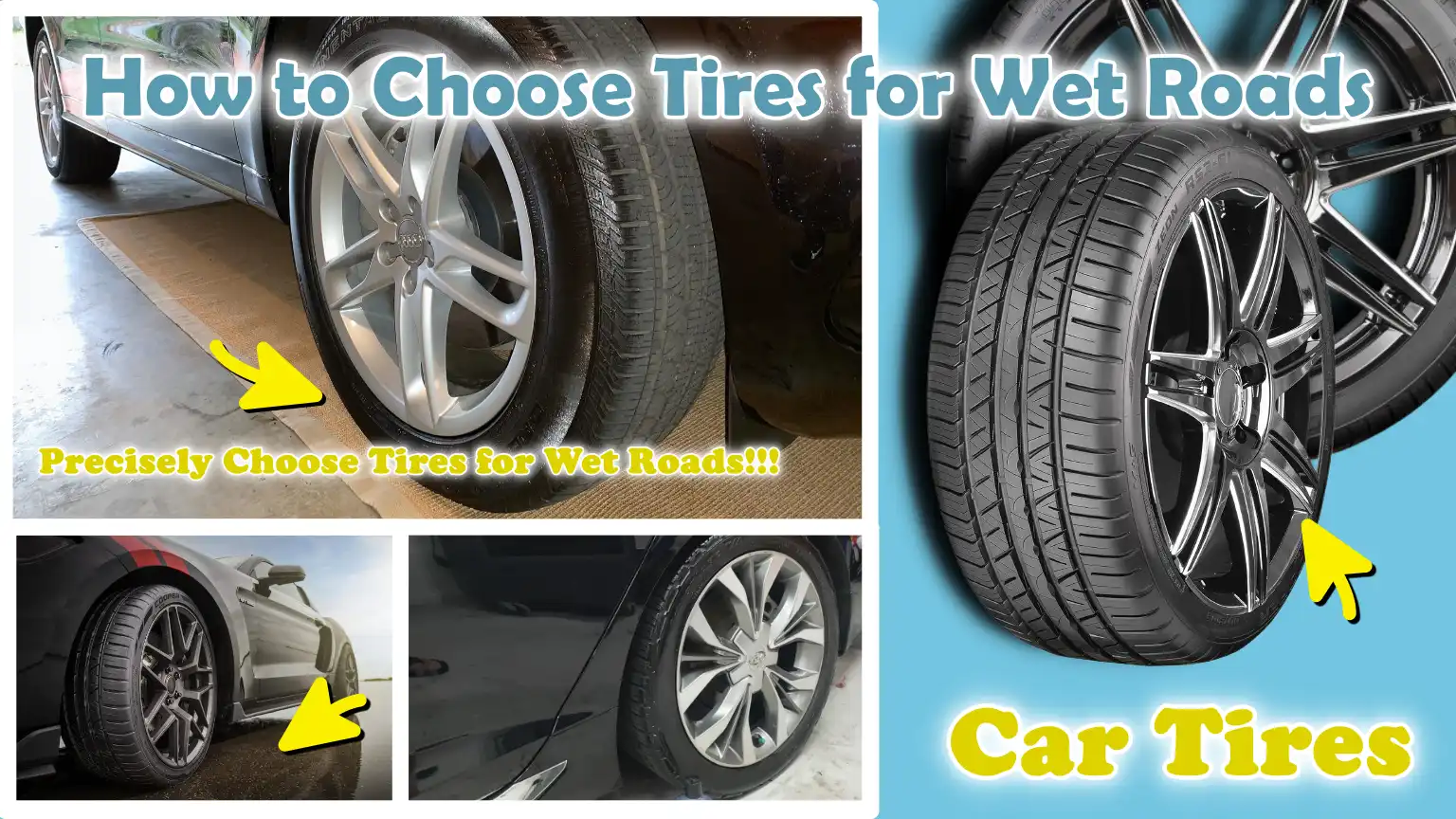
So, in this guide you’ll learn How to Choose Tires for Wet Roads so that you can understand exactly what to look and how to have them correctly.
So, Why Performance on Wet Roads Matters?
Performance on wet roads is one of the most critical factors in safety, a factor that many drivers tend to overlook until they themselves face a hazardous situation.
When rainwater covers the road surface, tires lose a degree of their direct contact with the road; this reduces traction, making braking, cornering and accelerating significantly more difficult.
Even a small amount of water can create a slippery film, affecting how the vehicle responds to steering inputs.
This is why vehicles often feel less stable or less predictable in rainy weather compared to driving on dry roads.
Modern tires are specifically designed to displace water away from the contact patch, thereby helping the rubber maintain its grip on the road surface.
Without adequate performance on wet roads, the likelihood of skidding, increased braking distances, or losing control of the vehicle during sudden maneuvers increases dramatically.
Understanding how tires behave in wet conditions empowers drivers to make more informed and safer decisions regarding their tires, ultimately enhancing overall control, confidence and safety during daily driving.
1. Increased Stopping Distances on Wet Surfaces
One of the most significant hazards associated with wet roads is the substantial increase in stopping distances.
On dry roads, tires are able to grip the surface more effectively due to the direct friction generated between the rubber and the road.
During rain, water acts as a barrier that diminishes this friction, making it difficult for the tires to maintain firm contact with the road.
Consequently, vehicles require both a greater distance and a longer duration to come to a complete stop.
This effect is further exacerbated when driving at high speeds or when the tires are worn out.
Tires with shallow tread depths (the patterns on the tire’s surface) are unable to displace water effectively, which further compromises braking performance.
Many drivers do not realize how rapidly stopping distances can increase in the rain, particularly when braking in emergency situations.
High-quality, rain-specific tires are designed with deep grooves and advanced rubber compounds that enhance water-displacement capabilities and maintain traction even in wet conditions.
Choosing the right tires can significantly improve braking stability and reduce the risk of rear-end collisions or sudden loss of vehicle control during rainstorms.
2. Risk of Loss of Control and Hydroplaning
Hydroplaning is one of the most dangerous hazards drivers may face on wet roads.
It occurs when a layer of water accumulates between the tire and the road surface, causing the tires to lose direct contact with the road.
When this happens, the vehicle may suddenly skid, drift, or cease to respond properly to steering and braking inputs.
Many drivers describe the sensation of hydroplaning as feeling as though the car is floating on the road.
This can happen very rapidly, specially at high speeds, on roads where water has pooled, or when the tires are worn out.
Tires with poor tread patterns struggle to displace water quickly, thereby increasing the likelihood of hydroplaning.
Even modern safety systems, such as ABS and traction control, cannot provide full assistance if the tires completely lose contact with the road surface.
High-quality wet-weather tires utilize specially designed tread channels and grooves to efficiently displace water and maintain traction.
Maintaining correct tire inflation pressure and adequate tread depth also plays a crucial role in minimizing the risk of hydroplaning and enhancing overall stability during heavy rainfall.
3. How Tire Selection Directly Impacts Safety
The tires fitted to a vehicle directly influence how safely it performs in wet weather, as they are the only components of the vehicle that make contact with the road.
Every action a driver takes such as: braking, turning, accelerating and steering, relies entirely on the tires’ ability to maintain traction.
Tires designed for superior performance on wet roads feature specialized tread patterns, silica-rich rubber compounds and deep grooves; all of these elements enhance grip and effectively displace water.
Conversely, low-quality or excessively worn tires often fail to maintain vehicle stability in the rain, thereby increasing the risk of hydroplaning, skidding and delayed braking response.
Selecting the right type of tires for your specific driving conditions can make a profound difference in how the vehicle responds during sudden turns or emergency braking situations.
Factors such as tire width, air pressure and tread wear also impact safety on wet roads to a far greater extent than many drivers realize.
Investing in reliable tires is not merely a matter of comfort or performance; rather, it is one of the most critical decisions a driver can make to ensure the safety of themselves, their passengers and other road users during rainy weather.
Now, Understand the Hydroplaning – Aquaplaning
Hydroplaning, also known as aquaplaning, is one of the most dangerous situations a driver can face on wet roads, as it severs the direct contact between the tires and the road surface.
This occurs when a layer of water overwhelms the tires’ ability to displace it, creating a thin film between the road and the tire rubber.
Instead of gripping the surface, the tires begin to float on the water, making the vehicle feel as though it is sliding uncontrollably.
During hydroplaning, the steering may suddenly feel light or unresponsive, braking becomes less effective and the vehicle may continue to slide even if the driver turns the steering wheel correctly.
In such moments, many drivers panic because the vehicle no longer responds in a normal manner.
Hydroplaning can occur in almost any vehicle, even those equipped with advanced safety systems, because electronic features cannot generate traction if the tires are not making contact with the road.
Understanding how hydroplaning works is crucial, as it helps drivers identify risks in advance and select tires designed to maintain better traction in wet weather conditions.
1. What is Hydroplaning and How Does It Occur?
Hydroplaning begins when the water present on the road exceeds the tires’ capacity to channel it away through their tread grooves.
Tires are designed with specific patterns and channels intended to push water outward, thereby allowing the tire rubber to remain in contact with the road surface.
However, when there is an excessive amount of water, or when the vehicle is traveling at high speeds, the tire tread is unable to displace the water quickly enough.
As pressure builds beneath the tire, the water lifts the tire off the road surface.
When this happens, the tire loses its traction and the vehicle may begin to skid without any warning.
The likelihood of hydroplaning increases significantly when water accumulates on roads, drainage systems are poor, or the road surface is smooth, allowing water to pool easily.
Worn-out tires and those with shallow tread depths are particularly hazardous, as they are unable to displace water effectively.
Even a slight loss of traction can increase the braking distance required to bring the vehicle to a halt and compromise steering control.
Drivers often detect hydroplaning when the engine RPM suddenly surges, the steering feels loose, or the vehicle begins to drift from one lane to another during heavy rain.
2. The Relationship Between Speed and Water Depth
Vehicle speed and water depth are the two primary factors that influence the risk of hydroplaning.
The faster a vehicle travels, the less time the tires have to displace the water beneath them.
At lower speeds, most tires typically maintain sufficient contact with the road surface to ensure good traction, even during light rain.
However, as speed increases, the volume of water entering the tire treads rises substantially.
This makes it difficult for the tread grooves to displace the water effectively, thereby increasing the risk that the tires will begin to float atop the water rather than cutting through it.
At highway speeds, even a thin layer of standing water can prove dangerous.
Deep puddles or water-filled depressions on the road pose an even greater threat, as they place an immense strain on the tires’ water-displacement capabilities.
This is why many highway accidents occurring during heavy rain or on wet roads happen when drivers continue to operate their vehicles at speeds exceeding the tires’ capacity to maintain traction with the road surface.
Reducing vehicle speed during rainfall is the simplest and most effective method for mitigating the risk of hydroplaning, as lower speeds provide the tires with ample time to displace the water properly.
3. Why Some Tires Resist Hydroplaning Better Than Others
Not all tires perform equally on wet roads, as tire design plays a crucial role in effectively displacing water from the road surface.
Tires with a lower risk of hydroplaning (skidding on water) typically feature deep grooves, wide channels and specially designed tread patterns that rapidly channel water away from the contact patch.
Directional grooves are particularly effective, as they push water outward in a specific direction, thereby helping to maintain better contact with the road during heavy rainfall.
The rubber compound also plays a significant role; many high-quality tires designed for wet weather utilize silica-rich compounds that remain flexible even in cold and wet conditions, enabling the tire to maintain superior grip on the road.
Tire width can also influence the risk of hydroplaning, as narrower tires often cut through standing water more efficiently than wider ones.
Tread depth is another critical factor, as even the most advanced tire designs lose their effectiveness once their grooves become too shallow.
This is why older or heavily worn tires carry a higher risk of hydroplaning.
Choosing tires specifically designed for superior performance on wet roads can significantly improve braking, steering response and overall stability in rainy conditions, helping drivers maintain better control and reduce the risk of accidents.
Know, The Key Features to Look for in Wet-Weather Tires
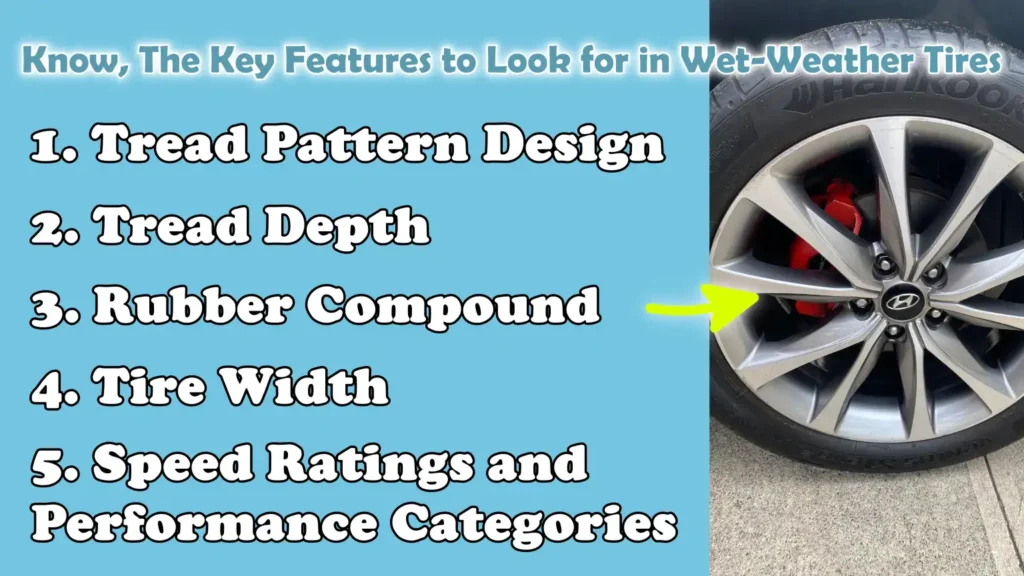
Choosing the right tires for wet roads involves much more than simply purchasing a well-known brand or opting for the cheapest available option.
In wet weather, tire performance relies on several essential characteristics that work in tandem to enhance grip, stability, braking and water-displacement capabilities.
Tires designed for rainy conditions are engineered to rapidly channel water away from the tire’s contact patch, thereby maintaining superior contact with the road surface.
Even subtle differences in tread design, rubber composition, groove depth and tire profile can significantly influence how safely a vehicle handles during rainfall.
Understanding these characteristics helps drivers select tires that minimize the risk of hydroplaning, improve steering control and reduce braking distances on wet pavement.
Although modern tire technology has advanced significantly in recent years, even the most sophisticated safety systems remain heavily dependent on the tire’s ability to maintain traction.
This is why selecting the right tire characteristics remains one of the most critical decisions a driver can make regarding safety on wet roads.
1. Tread Pattern Design
Tread pattern design is one of the most critical factors determining how well a tire performs on wet roads, as the tread governs how water is displaced from the tire’s surface.
Without an effective tread pattern, water can accumulate beneath the tire, leading to a rapid and severe loss of traction.
Tire manufacturers meticulously design tread patterns to strike a balance between grip, water displacement, noise levels and stability across a variety of driving conditions.
Some tread designs are specifically engineered to deliver exceptional performance in wet weather, helping drivers maintain control of their vehicles even during heavy rainfall.
The arrangement of grooves, channels and small tread cuts, collectively known as the tread pattern, all influence how effectively a tire maintains contact with the road.
A well-designed tread pattern helps improve braking performance, cornering stability and steering response in wet conditions, making driving safer and more predictable.
Directional vs Asymmetrical Tread Patterns
Directional tread patterns are designed to rotate in a specific direction and typically feature V-shaped grooves that efficiently channel water outward as the tire moves forward.
These tires are highly effective at reducing the risk of hydroplaning because they rapidly evacuate water from beneath the tire.
Directional patterns are often utilized in high-performance tires designed for wet weather, as they enhance straight-line stability and traction on wet surfaces at high speeds.
However, directional tires must be installed correctly, as their effectiveness may be compromised if the direction of rotation is reversed.
Asymmetrical tread patterns employ distinct tread designs on the inner and outer sections of the tire.
The inner section is often designed to evacuate water and provide traction on wet surfaces, while the outer section focuses more on handling and cornering stability on dry surfaces.
This design enables the tire to perform well in both wet and dry conditions, making asymmetrical tires a popular choice for all-season use and for performance vehicles.
These tires often offer a balanced blend of comfort, handling and safety on wet roads for everyday driving.
Wide Grooves and Channels for Water Evacuation
Wide grooves and channels are essential for superior performance on wet roads, as they serve as conduits for water evacuation, channeling water away from the tire’s contact patch.
When a tire travels through water, these grooves collect the water and expel it outward, ensuring that the tire’s rubber remains in contact with the road surface.
Tires featuring large and deep grooves are generally more effective at handling heavy rainfall, as they can displace a greater volume of water in a shorter amount of time.
If the grooves are too shallow or too narrow, water can accumulate beneath the tire, thereby increasing the risk of hydroplaning.
Modern wet-weather tires often utilize multiple circumferential grooves, along with lateral channels, to enhance water evacuation.
These designs help maintain road grip during braking and cornering, particularly when traveling at high speeds on highways.
Drivers may find that tires with robust water-evacuation designs feel more stable and reliable during rainstorms, as they maintain excellent contact with the road surface even when passing through standing water.
The Role of Sipes in Grip
Sipes are small, thin cuts formed within a tire’s tread blocks, designed to enhance traction on wet and slippery surfaces.
Although they may appear insignificant, they play a crucial role in safety on wet roads; they create additional gripping edges, thereby increasing the tire’s ability to maintain contact with the road surface.
As the tire rotates during driving, these sipes flex open slightly, helping to displace the thin layer of water present on the road surface.
Sipes also increase the flexibility within the tread blocks, allowing the tire to adapt more effectively to uneven or slippery surfaces.
Consequently, this results in improved braking performance and steering response in wet weather conditions.
Tires featuring a well-designed siping system often perform better in the rain, as they maintain consistent traction even when the road surface becomes slick.
However, the effectiveness of sipes depends on their specific design, depth and placement within the overall tread pattern.
2. Tread Depth
Tread depth is one of the most critical factors influencing safety on wet roads, as it directly determines the volume of water a tire can displace from its contact patch.
Greater tread depth provides more space for water to channel away, thereby helping the tire maintain firm contact with the road surface.
As tires wear down, their water-displacement capacity diminishes significantly, increasing the risk of skidding and hydroplaning.
Many drivers underestimate the extent to which traction on wet roads is compromised when tread depth is reduced.
Even if a tire still appears serviceable, insufficient tread depth can have a profound impact on braking distances and steering stability during rainy weather.
Deeper Tread Means Better Water Drainage
Deep tread grooves can channel large volumes of water away from the tire’s surface, helping to prevent water from accumulating beneath the tire.
This allows the rubber to maintain better contact with the road, resulting in improved grip during rainy weather.
New tires typically perform best in wet conditions because their grooves are at their deepest, enabling them to displace water most effectively.
As tread depth diminishes, the grooves lose their capacity to rapidly handle large volumes of water.
This means that instead of cutting through the water, the tire begins to float on top of it.
When tread depth becomes low, drivers often experience reduced grip, increased stopping distances and a loss of control over steering.
Maintaining adequate tire tread depth is crucial to ensuring safe performance in wet weather.
Minimum Safe Tread Depth and Legal Limits
Many countries establish legal requirements for minimum tread depth to enhance road safety; however, these legal limits do not always represent the safest thresholds for driving in wet weather.
In many regions, the legal minimum tread depth for passenger vehicles is set at approximately 1.
6 millimeters; yet, tire traction on wet roads begins to deteriorate significantly long before reaching this level.
Many tire experts recommend that if a vehicle is frequently driven in rainy conditions, the tires should be replaced once the tread depth falls below approximately 3 to 4 millimeters.
When tread depth is low, the tire is unable to displace water effectively, thereby increasing the risk of hydroplaning and compromising braking performance.
Drivers can monitor the condition of their tires by using a simple tread depth gauge or by checking the wear indicators embedded within the tires.
Regularly checking tread depth is the simplest, and most essential, way to ensure safety on wet roads.
How Worn Tires Increase the Risk of Hydroplaning
Worn tires pose a significantly higher risk of hydroplaning because their shallow tread grooves are unable to displace water rapidly.
As the tire’s tread depth diminishes, there is less space available to channel water away, leading to increased water pressure beneath the tire during rainfall.
Consequently, it becomes easier for the tire to lose contact with the road surface, particularly when driving at high speeds on highways or passing through standing water.
The risk of hydroplaning escalates considerably with worn tires, as even a small amount of water can overwhelm the remaining tread.
Drivers using worn tires may face issues such as reduced steering responsiveness, braking instability, or sudden skidding during rainstorms.
Replacing worn tires before they become completely smooth is crucial for maintaining a secure grip and vehicle control on wet roads.
3. Rubber Compound
The rubber compound used in a tire significantly influences its grip on wet roads, as different compounds react differently to temperature, moisture and the road surface.
Tires designed for wet weather often utilize softer and more flexible rubber compounds, enabling the tire to adapt more effectively to the texture and irregularities of the road surface.
This flexibility enhances traction and helps the tire maintain excellent grip during rainfall.
Softer Compounds for Enhanced Grip on Wet Roads
Softer rubber compounds provide superior traction on wet roads because they generate greater friction against the road surface.
The flexible rubber readily conforms to minor surface irregularities, ensuring that the tire maintains a strong grip even on wet pavement.
Consequently, this improves braking performance, cornering grip and steering control.
However, softer compounds may wear out more rapidly than harder compounds, particularly in hot weather or during high-speed driving.
Tire manufacturers carefully balance softness with durability to ensure that the tire delivers both safety and performance while maintaining a reasonable service life.
Silica-Enhanced Compounds and Their Significance
Many modern tires designed for wet weather incorporate silica-enhanced rubber compounds, as silica improves traction on wet roads without accelerating tire wear.
Silica helps maintain the rubber’s flexibility even at lower temperatures and enhances the tire’s ability to establish grip on wet surfaces.
This technology has become quite common in premium all-season and performance tires, as it strikes a strong balance between wet-road grip, fuel efficiency and durability.
Silica compounds also reduce rolling resistance, which can lead to fuel savings while simultaneously maintaining excellent traction on wet surfaces.
Compared to tires utilizing older or lower-quality rubber compounds, tires featuring advanced silica technology deliver significantly superior performance in terms of braking and handling during rainy weather.
4. Tire Width
Tire width influences how the tire interacts with water present on the road surface.
Wider tires create a larger contact patch with the road, which can enhance grip and handling on dry roads, but they also distribute the vehicle’s weight across a larger area.
Consequently, it can sometimes be difficult for the tire to effectively cut through and displace standing water on the road.
Wide vs Narrow Tires in the Rain
Sports cars and high-performance vehicles often utilize wide tires, as these increase traction on dry roads and improve grip during cornering.
However, in heavy rain, very wide tires may carry a higher risk of hydroplaning (skidding on water) if their tread pattern is not specifically designed to effectively channel water away.
Narrow tires concentrate the vehicle’s weight onto a smaller contact patch, enabling them to cut through water more effectively.
This is one reason why many winter tires are narrower than the performance tires used during the summer.
Narrower tires often provide more consistent traction during heavy rain, mud, or snow, as they maintain better contact with the road surface in slippery conditions.
Why Are Narrow Tires More Effective At Cutting Through Water?
Narrow tires exert greater pressure over a smaller contact area on the road surface, enabling them to displace accumulated water more effectively.
This reduces the likelihood of water building up beneath the tire and lifting it off the road surface.
In heavy rain, narrow tires can offer better protection against hydroplaning and provide more predictable handling.
However, safety on wet roads is not determined solely by tire width.
Tread design, compound quality and tread depth are equally important.
A well-designed wide tire can also perform exceptionally well in the rain, provided it possesses robust water-displacement capabilities and sufficient tread depth.
5. Speed Ratings and Performance Categories
Speed ratings and tire categories also influence performance on wet roads, as different types of tires are designed to suit varying driving requirements.
Touring tires, performance tires and all-season tires, each category utilizes specific tread patterns and rubber compounds to strike a balance between comfort, durability, handling and traction.
Touring vs Performance vs All-Season Tires
Touring tires are designed for comfortable daily driving and often deliver balanced performance on both wet and dry roads, while also offering a longer tread life.
They typically provide a comfortable ride, minimal road noise and reliable traction on wet surfaces under normal driving conditions.
Performance tires prioritize handling, cornering stability and grip at high speeds.
Many summer performance tires offer excellent traction on wet roads when new, a credit to the advanced compounds and aggressive tread patterns used in their construction.
However, some of these tires may lose their effectiveness in colder temperatures.
All-season tires are designed to handle a wide range of weather conditions, including rain and mild winter weather.
They offer balanced performance for drivers who wish to use a single set of tires year-round without the need to swap them out seasonally.
Differences in Wet-Road Grip Across Categories
Wet-road grip performance can vary significantly across different tire categories, as each type is engineered to perform optimally under specific conditions.
High-performance tires designed for wet weather often deliver the shortest braking distances and strongest grip during cornering in the rain, whereas touring tires prioritize comfort and longevity.
All-season tires strive to strike a balance between wet-road traction and year-round usability.
Drivers should select a tire category based on their local weather conditions, driving style and road conditions.
For those who frequently drive in heavy rain or at high speeds on highways, tires specifically designed for strong wet-road grip can prove beneficial; conversely, drivers in regions with milder weather may prefer to opt for balanced all-season tires for daily use.
Know, Tire Types – Which Is Best for Wet Roads?
Choosing the right type of tire for wet roads is crucial, as different tires are designed for varying weather conditions, temperatures and driving styles.
Many drivers assume that all tires perform identically in the rain; however, the truth is that the tire category can significantly impact braking distance, steering response, hydroplaning resistance and overall vehicle stability.
Tire manufacturers utilize distinct tread patterns, groove layouts and rubber compounds when producing all-season, summer and winter tires to ensure they can handle specific road conditions more effectively.
Some tires prioritize year-round utility, while others prioritize maximum grip in warm weather or superior traction in snow and ice.
Understanding how each type of tire behaves in wet conditions helps drivers select the safest option for their region’s climate and driving requirements.
The best tire for wet roads is not necessarily the most expensive or the most aggressive-looking one; rather, it is the tire specifically designed to perform optimally in the temperatures and road conditions most frequently faced in your area.
1. All-Season Tires
All-season tires are the most common choice for daily drivers, as they are engineered to deliver balanced performance throughout the year, in dry, wet and mild winter conditions.
These tires are built to handle shifting weather patterns, eliminating the need to swap tires when the seasons change; this makes them a practical and convenient option for many drivers.
All-season tires typically feature moderate tread depth, multiple grooves designed to evacuate water and rubber compounds that remain flexible across a wide range of temperatures.
Their design aims to strike a balance between comfort, durability, fuel efficiency and traction, rather than focusing exclusively on any single specific condition.
For many people, all-season tires offer a safe and reliable choice for daily commuting, highway driving and regular use in wet weather.
Advantages and Disadvantages in Wet Conditions
All-season tires generally perform well in the rain, as they incorporate tread grooves and siping patterns designed to channel water away from the tire’s surface.
Many modern all-season tires utilize silica-enhanced rubber compounds, which improve traction on wet roads and help maintain the tire’s flexibility in colder temperatures.
These characteristics enable the tires to deliver stable braking and steering performance in typical wet driving conditions.
Drivers often find all-season tires to be comfortable and dependable during rainfall, as they provide balanced handling without being overly aggressive.
However, because all-season tires are designed to strike a balance across various weather conditions, they may not offer the absolute maximum grip on wet surfaces compared to specialized summer tires.
In situations involving very heavy rain or high-speed driving, some all-season tires may require a longer stopping distance and may exhibit reduced grip while cornering.
Furthermore, their tread design prioritizes longevity and year-round usability, which can result in slightly less grip on wet surfaces compared to specialized tire categories.
Best for Daily Driving
All-season tires are considered one of the best options for daily driving, as they offer a reliable combination of wet-surface grip, comfort, tread longevity and practical utility.
Drivers who frequently face rain, but who do not face extreme cold or challenging conditions such as high-speed driving, often benefit most from all-season tires.
These are particularly useful for daily commuters, or for families owning vehicles such as sedans, crossovers and SUVs that are primarily used for everyday travel.
These tires last longer than softer summer or winter tires, as their rubber compounds are designed for durability.
Many drivers appreciate the convenience of using a single set of tires year-round, eliminating the need to worry about changing tires whenever the seasons change.
For those living in regions with moderate climates and frequent rainfall, high-quality all-season tires often strike an excellent balance between safety, cost-effectiveness and long-lasting performance.
2. Summer Tires
Summer tires are specifically designed to deliver exceptional performance in warm weather; they are renowned for providing superior grip on both dry and wet roads at temperatures above freezing.
These tires utilize specialized rubber compounds that remain soft and flexible even in hot conditions, thereby maintaining strong contact with the road surface.
Summer tires often feature unique tread patterns with wide grooves that rapidly evacuate water, thereby minimizing the risk of hydroplaning.
Due to their specific focus on traction and handling, summer tires are typically found on sports cars, performance sedans and high-speed vehicles.
Excellent Wet Grip When New
Many people are surprised to learn that when summer tires are new, and possess substantial tread depth, they perform exceptionally well on wet roads.
Their specialized tread patterns and softer rubber compounds provide excellent grip on wet surfaces, resulting in shorter braking distances and greater stability during cornering compared to standard all-season tires.
Summer tires are engineered to deliver maximum traction in warm temperatures, which translates to improved steering response and braking precision during rainy weather.
The wide circumferential grooves found in many summer tires facilitate the rapid evacuation of water, thereby reducing the risk of hydroplaning at high speeds.
Drivers often perceive summer tires as being more responsive and stable when driving on wet highways, as these tires maintain superior contact with the road surface.
However, this excellent performance depends largely on the condition of the tire tread, as the water-evacuation capacity of worn summer tires diminishes rapidly as the tread depth decreases.
Limitations in Cold Weather
While summer tires perform exceptionally well in warm and wet conditions, their effectiveness drops significantly in cold weather.
Their soft rubber compounds are specifically designed for higher temperatures; consequently, when temperatures drop substantially, the rubber begins to harden.
Once the compound hardens, the tire loses its flexibility and fails to maintain adequate grip on the road.
As a result, braking performance, cornering stability and traction are compromised on wet roads during cold weather.
Summer tires are also not designed for snow, slush, or icy road conditions.
They can be unsafe even during mild winters, as their tread patterns and compounds are optimized for warm roads rather than slippery winter surfaces.
Drivers residing in regions that experience severe cold or rapid temperature fluctuations may need to switch their tires seasonally if they choose to equip their vehicles with summer tires.
3. Winter Tires
Winter tires are specifically designed for cold temperatures, snow, slush and icy conditions.
These tires utilize a highly flexible rubber compound that remains pliable even in freezing weather, allowing them to maintain traction when other tires become stiff and slippery.
Winter tires also feature deep tread patterns and thousands of tiny grooves that enhance grip on snow-covered and icy roads.
Their primary objective is to provide maximum control during harsh winter weather, rather than delivering high-speed performance in warm conditions.
Not Suitable for Heavy Rain in Warm Temperatures
Although winter tires can perform reasonably well on wet roads in cold weather, they are not suitable for heavy rain in warm temperatures.
Their soft rubber compound and deep tread patterns are designed primarily for snow and slush, not for warm, wet roads.
In warm conditions, winter tires may feel less stable and due to the increased flexibility of the soft rubber, they can wear out much more rapidly.
The deep tread blocks and numerous grooves, which aid in gripping snow, as it can also compromise steering precision and handling stability on warm, wet roads.
In heavy rain, some winter tires may require a longer braking distance to come to a stop compared to high-quality summer or all-season tires.
This is why tire experts typically recommend switching to a more appropriate tire category once the winter season has ended.
When They Are Useful
Winter tires remain an invaluable asset for drivers who frequently face cold temperatures, freezing rain, blizzards, or icy roads during the winter season.
Even in wet conditions, when temperatures hover around or drop below the freezing point, winter tires perform far better than summer tires, as their rubber compounds remain flexible and maintain their grip.
In regions where winter weather conditions fluctuate rapidly between rain, melting snow and ice, winter tires provide a significantly safer and more stable driving experience.
Drivers living in cold climates often utilize winter tires during the winter season, switching back to all-season or summer tires once temperatures begin to rise consistently.
This approach helps them maintain optimal grip and safety throughout the year.
Choosing the appropriate seasonal tires can significantly enhance braking performance, steering control and overall driving confidence in both wet and snowy conditions.
How to Read Tire Labels for Wet Road Performance
Understanding tire labels is crucial when selecting tires for wet road conditions, as these labels provide essential information regarding traction, braking capability, durability and overall performance across various driving scenarios.
Many drivers focus solely on tire size or price, overlooking the technical ratings printed on the tire sidewall or product label; however, these ratings can indicate how safely a tire will perform during rainy weather.
Tire manufacturers and regulatory agencies utilize testing systems to measure traction, temperature resistance, treadwear and wet-road braking performance, thereby enabling drivers to make more informed decisions.
Learning to interpret these labels allows drivers to make more accurate comparisons between different tire models, rather than relying solely on advertisements or marketing claims.
While no single label tells the complete story of a tire’s performance, understanding these ratings provides a clearer picture of how well a tire will perform on wet surfaces, how effectively it will resist hydroplaning and how reliably it will maintain safe braking distances during rainfall.
1. Understanding UTQG Ratings and Traction Grades
UTQG stands for Uniform Tire Quality Grading; it is a rating system primarily used in the United States to assist consumers in comparing tire performance.
In the context of safety on wet roads, the most critical component of the UTQG system is the Traction Grade.
This grade measures a tire’s ability to stop on a wet surface under controlled testing conditions.
Traction grades are typically designated as AA, A, B, or C, with AA representing the highest level of traction demonstrated on wet roads during testing.
Tires with higher traction grades generally deliver stronger braking performance on wet roads and offer superior grip on slippery surfaces compared to lower-rated tires.
It is important to understand that the UTQG traction grade focuses primarily on straight-line braking on wet roads, rather than on overall handling, cornering, or hydroplaning resistance.
A tire with an AA rating may be able to stop more effectively on wet roads than a lower-graded tire; however, other factors such as: tread design, tread depth and rubber compound, still influence real-world performance.
The UTQG system also includes treadwear and temperature ratings.
The treadwear rating estimates how long a tire is likely to last under testing conditions, while the temperature rating indicates how well the tire manages heat at high speeds.
Drivers who prioritize strong performance on wet roads should generally prioritize higher traction grades, while also considering the tire’s overall design and their own specific driving needs.
2. EU Wet Grip Label
In many European countries, tire labels include a wet grip rating, which helps drivers understand how effectively a tire can brake on wet roads.
The European tire labeling system typically grades wet grip performance using letters ranging from A to E, with A representing the shortest wet braking distance and the strongest wet traction.
These tests are designed to compare how quickly different tires can come to a stop on a wet road under standardized conditions.
A tire with an A rating can stop several car lengths sooner than a lower-rated tire during emergency braking in the rain, a difference that can play a crucial role in preventing accidents.
EU wet grip labels provide drivers with a quick and easy way to compare tires, particularly when shopping online or examining different models at a tire store.
In addition to wet grip, European labels often include ratings for fuel efficiency and external noise as well.
While these labels are helpful, drivers should keep in mind that they focus primarily on braking performance and do not fully measure every aspect of wet handling, cornering, or hydroplaning resistance.
Nevertheless, tires with strong EU wet grip ratings are generally safer and more capable in rainy driving conditions.
3. Manufacturer Claims vs Real-World Performance
Many tire manufacturers use terms such as “superior wet grip,” “enhanced traction,” or “hydroplaning resistance” when advertising their products; however, in the real world, a tire’s actual performance can often differ from the claims made in these advertisements.
Tire companies frequently test their products under controlled conditions, utilizing professional drivers, pristine test tracks and precisely calibrated tire pressures.
While these tests serve a useful purpose, everyday driving conditions are far more unpredictable.
Real-world roads can present challenges such as uneven surfaces, standing water, potholes, worn pavement, oil slicks, or sudden weather shifts, all of which influence how a tire actually performs.
For this reason, drivers should not rely solely on tire manufacturers’ advertisements when selecting tires for wet weather conditions.
Independent tire tests, customer reviews and expert comparisons often provide a more accurate insight into how tires perform during rainfall.
Real-world testing can reveal significant variations in braking distances, cornering stability, hydroplaning resistance, road noise levels and tread wear rates, nuances that are not evident from advertisements alone.
Drivers should also bear in mind that a tire’s performance evolves over time as its tread depth diminishes.
A tire that performs exceptionally well when new may lose a significant portion of its traction on wet roads once it has worn down.
Consulting multiple sources of information, including official ratings, expert evaluations and long-term customer experiences, is the most effective strategy for selecting tires that deliver safe and reliable performance on wet roads.
Know About the Signs Shows That Your Tires Are Unsafe for Wet Roads
Tires that are unsafe for wet roads often begin to exhibit warning signs long before any serious issues arise; however, many drivers fail to recognize these early indicators.
Driving on wet roads places immense strain on tires, as they must simultaneously displace water from the road surface while maintaining their grip.
If a tire fails to perform this task effectively, braking distances increase, steering control is compromised and the risk of hydroplaning (skidding on water) rises significantly.
At first glance, unsafe tires may still appear to be in good condition; however, hidden issues such as: worn tread, aged rubber, uneven wear, or reduced grip, as it can seriously jeopardize vehicle safety during rainy weather.
As tires are the only part of the vehicle that makes direct contact with the road, even minor issues on wet surfaces can quickly escalate into dangerous situations.
Learning to identify these warning signs allows drivers to replace unsafe tires in a timely manner, thereby preventing loss of control, skidding, or accidents during rainy conditions.
1. Reduced Tread Depth
Reduced tread depth is one of the clearest and most critical indicators that a tire is becoming unsafe for wet roads.
The grooves within a tire’s tread are specifically designed to channel water away from the contact patch, ensuring that the rubber remains in direct contact with the road surface.
As the tread wears down, these grooves become shallower and lose their ability to displace water effectively.
This increases the risk of hydroplaning, as water can accumulate more easily beneath the tire.
Even if a tire feels adequate on a dry road, its traction on wet surfaces may have already diminished significantly.
Many drivers are unaware of how rapidly tire performance deteriorates on wet roads as tread depth diminishes.
A tire may legally meet the minimum required tread depth limit; yet, in rainy conditions, it may require a significantly greater distance to come to a complete stop.
Reduced tread depth compromises braking traction and vehicle stability during cornering, while increasing the likelihood of skidding during sudden turns or changes in direction.
Tires with deeper treads can displace larger volumes of water more effectively, thereby helping to maintain superior traction and stability.
For this reason, regularly checking tread depth is crucial for ensuring safety on wet roads.
Drivers who frequently drive in rainy weather or on highways should pay particular attention to tire wear, as the combination of high speeds and reduced tread depth significantly heightens the risk of hydroplaning.
2. Cracks, Aging, or Dry Rot
Over time, tires naturally age, even if the vehicle has not been driven extensively.
Exposure to sunlight, heat, oxygen, moisture and fluctuating weather conditions causes the rubber to degrade gradually, diminishing its elasticity and structural integrity.
The most common indication of tire aging is the appearance of small cracks on the sidewalls or within the tread grooves.
This condition is often referred to as “dry rot” and signals that the rubber is becoming brittle and weak.
Aged tires are particularly hazardous on wet roads because hardened rubber cannot establish as firm a grip on the road surface as new, pliable rubber can.
On wet surfaces, tire traction depends heavily on the tire’s ability to conform to the road’s texture and irregularities, a capability that has largely been lost in aged tires.
Tires exhibiting cracks or signs of dry rot face an increased risk of sudden failure such as: tread separation or a blowout, particularly when driving at high speeds.
Many tire experts recommend replacing tires after a few years, even if the tread still appears usable, because rubber degrades over time.
Drivers should regularly inspect their tires for cracks, discoloration, hardening of the rubber, or any signs of weather-related damage, specially if the vehicle is frequently parked outdoors for extended periods.
3. Uneven Wear Patterns
Uneven tire wear is another major warning sign that can jeopardize safety and the vehicle’s overall stability on wet roads.
Ideally, the tire tread (the pattern formed on the surface) should wear down uniformly across its entire surface to maintain balanced contact between the tire and the road.
However, issues such as incorrect tire pressure, wheel misalignment, suspension problems, or improper tire rotation can cause certain sections of the tread to wear out faster than others.
Uneven wear patterns may manifest as excessive wear on the inner edge, outer edge, or the center section of the tire.
When the tread wears unevenly, the tire loses its ability to distribute pressure uniformly and effectively displace water.
This creates weak points where traction is compromised, rendering the vehicle less stable in rainy conditions.
Uneven wear can also lead to vibrations, pulling to one side, reduced steering precision and irregularities in braking performance.
In wet conditions, these issues are further exacerbated as the tire struggles to maintain consistent contact with the road surface.
Drivers should regularly inspect their tires to detect any abnormal wear patterns; this allows them to address alignment or suspension issues before they negatively impact safety and tire longevity.
4. Increased Slipping or Extended Braking Distances
The most obvious indication that tires are becoming unsafe for wet roads is an increase in slipping or skidding during rain, or a noticeable increase in the distance required to bring the vehicle to a halt.
If your vehicle suddenly feels less stable in wet conditions than it did previously, it is likely that your tires are no longer providing adequate traction.
Drivers may notice that it takes longer to bring the car to a stop, that the tires lose their grip while cornering, or that the traction control system activates more frequently on wet roads.
These symptoms often indicate that the tire tread or rubber compound is no longer functioning effectively.
Increased braking distances are particularly dangerous, as wet roads inherently reduce grip to begin with.
Worn or aged tires exacerbate this problem, as they limit the tire’s ability to grip the road surface under braking pressure.
Excessive slipping can also serve as an early warning sign of the risk of “hydroplaning”, skidding across the water’s surface, specially at highway speeds or when driving through standing water.
Some drivers mistakenly attribute these changes solely to road conditions, whereas, in reality, the root of the problem may lie with the tires themselves.
Paying close attention to changes in vehicle handling, braking performance and stability during rainy weather can help drivers identify worn-out tires before they lead to a major accident on the road.
Useful Tips for Choosing the Right Tires
Choosing the right tires is one of the most critical decisions for drivers in terms of safety, comfort, fuel efficiency and overall vehicle performance, specially when driving on wet roads.
Many people focus primarily on the tire’s price or brand name; however, selecting the right tire requires understanding how it will actually perform in real-world driving conditions.
Every driver’s needs vary based on weather, road quality, driving habits, vehicle type and travel distance.
A tire that performs well for one individual may not be the best option for another.
On wet roads, safety depends largely on selecting tires whose tread design, rubber compound, traction characteristics and durability are appropriate for your specific driving conditions.
Taking the time to compare tire types, review independent test results and understand performance ratings can help drivers avoid poor traction, the risk of hydroplaning and premature tire wear.
Choosing tires wisely is not merely about enhancing driving comfort; it is also about ensuring passenger safety and maintaining optimal vehicle control during hazardous weather conditions.
1. Choose Tires Based on Your Driving Habits and Local Weather Conditions
One of the most important factors when selecting tires is matching the tire type to your typical driving habits and the prevailing weather conditions in your region.
Drivers who regularly cover long distances on highways during rainy weather require tires that provide strong grip (traction) on wet surfaces at high speeds, offer stable handling and possess the ability to effectively channel water away.
Conversely, drivers who primarily cover short distances in urban areas may prioritize comfort, low road noise and a long-lasting tread life.
Weather also plays a crucial role, as tires react differently depending on whether temperatures are hot, cold, dry, or wet.
In regions where rainfall is frequent and temperatures remain mild, high-quality ‘all-season’ tires, or those specifically designed for wet roads, often offer the best balance of safety and practicality.
Drivers in warmer climates can benefit from using ‘summer tires,’ as these typically provide superior grip and shorter braking distances on wet roads during hot and rainy conditions.
Conversely, residents of colder regions, where snow and freezing temperatures are common, often require ‘winter tires’ during the colder months, as standard tires tend to lose their flexibility and grip in freezing weather.
Rather than relying solely on marketing claims, choosing tires based on actual driving conditions helps drivers maintain better traction year-round, minimize the risk of hydroplaning and maintain overall superior control over their vehicle.
2. Consult Independent Tire Tests and Reviews
Independent tire tests and reviews from actual users are invaluable resources, as they provide a far more realistic assessment of a tire’s performance compared to advertisements alone.
Tire manufacturers often cite results obtained under ideal testing conditions when promoting their products; however, real-world roads present numerous challenges, such as uneven surfaces, standing water, potholes, fluctuating temperatures and unpredictable weather.
Independent testing organizations evaluate tires through controlled wet braking tests, measurements of hydroplaning resistance, cornering assessments and tread wear analysis to determine how they truly perform under actual driving conditions.
Reading reviews from long-term users can provide essential insights into a tire’s durability, ride comfort, road noise levels, wet-surface grip and how its performance changes as the tread wears down.
Some tires perform exceptionally well when new, but as the tread depth diminishes, their grip on wet surfaces deteriorates rapidly; conversely, other tires maintain consistently strong performance on wet roads even after prolonged use.
Gathering information from multiple sources helps drivers select tires that deliver consistently strong braking, stable handling and reliable traction in rainy weather.
Carefully comparing test results can help avoid costly mistakes and enable drivers to choose tires that offer the dual benefits of safety and longevity.
3. Do Not Mix Different Types of Tires
Installing different types of tires on the same vehicle can lead to serious issues regarding handling and safety, particularly on wet roads.
Tires are designed with specific tread patterns, rubber compounds, sidewall strengths and traction characteristics; all of these factors influence how the vehicle behaves during braking, cornering and acceleration.
When different categories of tires are mixed such as: installing summer tires on one axle and all-season tires on the other, the vehicle’s behavior can become unpredictable during rainy weather or in emergency situations.
For instance, when braking on wet roads, one set of tires may maintain better grip on the road surface than the other, potentially leading to vehicle instability or inconsistent handling.
Differences in tread depth and resistance to hydroplaning (skidding on water) can also cause one part of the vehicle to lose traction sooner than another, thereby increasing the risk of skidding or spinning out.
Even mixing tires with different tread designs or from different brands can compromise vehicle stability on wet roads if they react differently under stress.
Most tire experts recommend that, whenever possible, the vehicle be equipped with four tires of the same type, size and tread pattern.
Maintaining uniform tire performance across the entire vehicle enhances balance, steering responsiveness, braking stability and overall safety when driving on wet surfaces.
4. Prioritize Safety Over Price
Many drivers attempt to save money by purchasing the cheapest tires available; however, inexpensive tires often fail to provide the level of wet-surface grip, braking capability, or durability essential for safe driving.
Tires are among the most critical safety components of any vehicle, as they directly determine how the vehicle accelerates, brakes and responds in emergency situations.
An inexpensive tire with poor grip on wet surfaces can significantly increase stopping distances and heighten the risk of hydroplaning, particularly during heavy rainfall or while driving on highways.
High-quality tires often incorporate advanced rubber compounds, robust construction materials and more effective tread designs, all of which enhance grip and water-displacement capabilities.
These features can make a substantial difference in terms of safety and overall vehicle control on wet roads.
Although premium tires may carry a higher upfront cost, they often yield greater long-term value through superior durability, more consistent performance, extended tread life and a reduced risk of accidents.
Choosing safe and reliable tires should always be viewed as an investment in vehicle control and passenger safety, rather than merely as another routine maintenance expense.
Know, Common Mistakes During Choosing the Tires for Wet Roads
Understanding what not to do is just as crucial as knowing how to select the right tires, specially when driving on wet roads, where even a minor error can instantly compromise safety.
Many drivers inadvertently jeopardize their vehicle’s safety by making small, tire-related mistakes; these errors adversely affect grip, braking distance and stability during rainy weather.
As traction naturally diminishes on wet surfaces, any negligence in tire selection or maintenance can make driving even more hazardous.
Tires serve as the sole point of contact between the vehicle and the road; when they are not properly selected or maintained, the risk of hydroplaning, skidding and losing control of the vehicle increases significantly.
Avoiding these common mistakes ensures that tires perform exactly as expected, providing consistent safety in all weather conditions, particularly during heavy rainfall.
1. Choosing Tires Based Solely on Price
One of the most common mistakes drivers make is prioritizing the lowest price over performance and safety when selecting tires.
While budget-friendly tires may initially seem appealing, they often utilize inferior rubber compounds and generic tread designs that fail to perform effectively on wet roads.
Cheaper tires may also feature less efficient water-evacuation systems, thereby increasing the risk of hydroplaning on wet surfaces.
Furthermore, many inexpensive tires wear out quickly, meaning their grip on wet roads can deteriorate rapidly over time.
Price alone is not a reliable indicator of how safely a tire will perform in rainy conditions or during sudden braking maneuvers.
Higher-quality tires are often engineered with superior grip technology, robust materials and advanced tread patterns, all of which contribute to maintaining vehicle stability on slippery roads.
While investing in premium tires may entail a higher upfront cost, it significantly enhances braking performance, steering control and overall safety, particularly when driving in the unpredictable conditions of wet roads.
2. Neglecting Tread Wear
Neglecting tread wear is another major error that can seriously jeopardize safety on wet roads.
Tire treads are specifically designed to displace water from the contact patch, thereby allowing the rubber to maintain a firm grip on the road surface.
As the tread wears down, this water-displacement capability diminishes, increasing the risk of the tire losing contact with the road during rainfall.
Even if tires appear to be in good condition from a distance, reduced tread depth (the depth of the tire’s surface grooves) can already have a detrimental effect on braking distances and vehicle handling capabilities.
Many drivers continue to use their tires until they are completely worn out, failing to realize that tire performance on wet surfaces begins to deteriorate long before the tread reaches the legally mandated minimum depth.
Worn tires heighten the risk of hydroplaning (skidding on water) because they are unable to effectively channel water away.
They also compromise steering precision and can make the vehicle feel unstable on wet roads.
For safe driving during the rainy season, it is essential to regularly inspect the tire tread depth and replace tires before they become excessively worn.
3. Using Performance Tires in Inappropriate Conditions
Performance tires are designed to provide strong grip and excellent handling, but only under specific circumstances, typically on warm, dry roads or warm, slightly damp surfaces.
A common mistake is using these tires in environments where they are ill-suited, such as during cold weather or in mixed weather conditions.
In low temperatures, the rubber compound of performance tires can become less pliable, resulting in reduced grip and increased braking distances.
Even on wet roads, if the ambient temperature falls outside their ideal operating range, performance tires may not always be the safest option.
Their design prioritizes speed and handling responsiveness, which does not always translate to consistent safety on wet surfaces across varying weather conditions.
Using the wrong type of tire for a specific season or weather condition can compromise traction and increase the risk of skidding or hydroplaning.
To maintain consistent performance throughout the year, it is essential to choose tires that are suitable for both the prevailing weather and your specific driving conditions.
4. Neglecting Tire Pressure Maintenance
Incorrect tire pressure is a problem that is often overlooked, yet it can significantly impact a vehicle’s performance and overall safety on wet roads.
Tires that are underinflated or overinflated fail to establish proper contact with the road surface, resulting in reduced traction and uneven tire wear.
Underinflated tires flex excessively, which can lead to overheating and sluggish steering response.
Conversely, overinflated tires reduce the size of the tire’s contact area, known as the ‘contact patch’, thereby diminishing traction and increasing the risk of skidding on wet surfaces.
Maintaining correct tire pressure is crucial for striking the right balance between traction, stability and water displacement.
Even a slight deviation in air pressure can influence how a tire behaves during rainfall, particularly at high speeds.
Many drivers neglect to check their tire pressure regularly; however, maintaining proper pressure improves braking performance, fuel efficiency and overall safety.
Regularly checking tire pressure and adjusting it according to the manufacturer’s recommendations is a simple yet vital step in preventing accidents on wet roads and ensuring consistent tire performance.
Read More:
- How to Check Tire Load Rating
- How to Store Tires Properly Long Term
- How to Prevent Tire Dry Rot
- How to Fix Tire Bulge Issue
- How to Inspect Tire Inner Sidewall Damage
- How to Fix TPMS Sensor Not Detected
- How to Relearn TPMS Without Scan Tool
- How to Reset Tire Pressure Monitoring System Manually
- How to Check Tire Pressure Sensor Battery
- How to Seal Bead Leak in Tire
- How to Use Tire Plug Kit Correctly
- How to Repair Tubeless Tire Puncture
- How to Locate a Nail in a Tire
- How to Fix Slow Tire Air Leak
- How to Detect Tire Sidewall Damage
- How to Check Tire Tread Depth at Home
- How to Bleed ABS System Properly
- How to Replace Rusted Brake Lines
- How to Inspect Brake Lines for Rust
- How to Flush Contaminated Brake Fluid
How to Maintain Tires for Better Wet Traction
Proper tire maintenance is just as crucial as selecting the right type of tires, particularly for safety on wet roads, where even a slight change in tire condition can profoundly impact grip, braking distance and vehicle stability.
Even high-quality tires will see their performance diminish over time if they are not properly maintained.
Wet traction relies on uniform tread depth, correct air pressure, even tire wear and the overall good condition of the tires.
When tires are neglected, they become less effective at displacing water, thereby increasing the risk of hydroplaning and reducing vehicle control in rainy conditions.
Regular maintenance ensures that tires perform to their full potential, as designed, helping drivers stay safe in wet conditions and avoid sudden hazards while driving in heavy rain.
Plus, there’s scientific research that confirms that we-road driving is primarily limited by how effectively a tire that can actually remove the water from the contact surface, so whenever water builds up between the tire and road, then the friction drops sharply and even it reduces braking power and steering control as well, that’s why the tread pattern design is not just cosmetic but it is really important for safety factor that directly affects how well a tire performs in rain as well.[¹]
1. Regular Tire Rotation
Regular tire rotation is essential because the rate at which tires wear varies depending on their position on the vehicle.
For instance, in many vehicles, the front tires often wear out faster because they handle the majority of the steering, braking and vehicle weight.
If tires are not rotated, they will wear unevenly, resulting in reduced wet traction and diminished vehicle stability on wet roads.
When tire tread depth becomes uneven, the rate at which water is displaced by each of the four tires also becomes inconsistent, thereby increasing the risk of skidding or hydroplaning.
Rotating tires at scheduled intervals helps ensure that wear is distributed more evenly across all four tires.
This helps maintain balanced traction and ensures that no single tire wears down significantly faster than the others.
Uniform tire wear improves braking stability in wet conditions, cornering control and overall driving safety.
Regular tire rotation also extends their lifespan, allowing drivers to enjoy consistent and optimal performance from their tires before replacement becomes necessary.
2. Maintaining Correct Tire Air Pressure
Maintaining the correct tire air pressure is one of the simplest yet most critical factors for safety on wet roads.
When tire pressure is correct, the tires retain their proper shape and maintain an optimal contact patch with the road, which helps ensure stable grip and predictable vehicle control in rainy conditions.
When tire pressure is too low, the tires become excessively flexible, generate excessive heat and wear unevenly; this diminishes their ability to effectively displace water.
This can increase the risk of hydroplaning and cause the steering to feel sluggish or unstable.
Conversely, when tire pressure is too high, the tire’s contact patch with the road shrinks, reducing grip and making it difficult for the tires to maintain traction on wet surfaces.
Even minor variations in air pressure can significantly impact vehicle handling during braking and cornering.
Maintaining the tire pressure recommended by the manufacturer ensures that the tires perform exactly as designed, providing the best balance of grip, stability and water displacement on wet roads.
Regular pressure checks are particularly important, as tire pressure naturally fluctuates over time and in response to changes in temperature.
3. The Importance of Alignment and Balancing
Wheel alignment and tire balancing play a crucial role in ensuring uniform tire wear and maintaining stable performance on wet roads.
Proper alignment ensures that all tires are oriented in the correct direction and maintain consistent contact with the road surface.
When alignment is compromised, tires may wear unevenly on one side, leading to reduced traction and an increased risk of skidding in rainy weather.
Misalignment can also cause the vehicle to pull to one side, making steering less precise and driving more fatiguing for the driver.
Tire balancing ensures that the weight of the wheel and tire assembly is distributed evenly.
When a tire is unbalanced, it can lead to vibrations, uneven wear and reduced contact with the road surface.
These issues become more pronounced at higher speeds and on wet roads, where stability is already compromised.
Proper alignment and balancing ensure a smooth driving experience, extend the lifespan of the tires and maintain consistent grip during braking and cornering on wet surfaces.
4. When to Replace Tires
When driving on wet roads, knowing when to replace your tires is one of the most critical decisions regarding safety.
Tires should be replaced when their tread depth becomes so shallow that they can no longer effectively displace water from the contact surface.
Worn tread significantly reduces traction on wet roads, thereby increasing stopping distances and heightening the risk of hydroplaning.
Even if a tire still appears to be in decent condition, insufficient tread depth can compromise safety during rainy weather.
Tires should also be replaced if they exhibit clear signs of damage such as: cracks, bulges, or drying out, which indicate that the rubber has aged and deteriorated.
Slipping on wet surfaces, increased braking distances, or diminished steering responsiveness are further indications that the tires are in need of replacement.
Generally, replacing tires before they are completely worn out ensures a greater margin of safety and more reliable performance in unpredictable weather conditions.
Timely tire replacement helps maintain strong traction, superior control and confidence while driving in the rain.
Conclusion – How to Choose Tires for Wet Roads
So, rain does not only creates danger on its own, but you need to choose the correct rubber type so that it can handle that thing with responsibility.
When driving on wet surfaces, traction diminishes, stopping distances increase and, even for experienced drivers, the risk of hydroplaning rises significantly.
It is precisely for this reason that tire design, tread depth, rubber quality and proper maintenance hold such immense importance.
A well-chosen tire effectively displaces water to maintain continuous contact with the road surface, thereby reducing stopping distances and ensuring more reliable steering.
Conversely, worn-out, mismatched, or substandard tires can transform even light rain into a hazardous driving situation.
Many drivers overlook the fact that tire safety is not a one-time decision, but rather an ongoing responsibility.
Over time, as tire treads wear down and the rubber ages, the performance of even the finest tires inevitably begins to deteriorate.
To consistently maintain optimal performance on wet roads, it is absolutely essential to regularly inspect tread depth, tire pressure, wheel alignment and check for any signs of external damage.
So, that’s it from this guide and you can comment for more information.
Frequently Asked Questions
FAQ 1: Which tires are best for wet roads?
Answer: A tire performs well on wet roads when it can rapidly displace water from the surface and maintain contact between the rubber and the road. This depends primarily on the tread design, tread depth and the quality of the rubber compound. Tires featuring deep grooves and effective channels help channel water away from beneath the tire, thereby reducing the risk of skidding and improving grip. Softer, modern rubber compounds also help keep the tire flexible, allowing it to adhere more effectively to wet road surfaces. When all these factors work in tandem, the tire delivers superior braking, steering control and stability in rainy conditions.
FAQ 2: Why do tires slip more on wet roads?
Answer: Tires slip more on wet roads because water creates a thin layer between the tire and the road surface. This reduces friction, the very force that typically helps a tire maintain its grip on the road. If a tire cannot rapidly displace water through its tread pattern, its contact with the road begins to diminish. This can lead to tires slipping, increased braking distances, or even hydroplaning (sliding uncontrollably over the water). Worn-out tires exacerbate this situation, as their reduced tread depth prevents them from effectively channeling water away.
FAQ 3: How does tread depth affect safety on wet roads?
Answer: Tread depth is crucial because it determines the volume of water a tire can displace. Deep tread grooves allow water to drain away quickly, ensuring that the tire maintains continuous contact with the road surface. When the tread becomes shallow, water accumulates more easily beneath the tire, significantly increasing the likelihood of hydroplaning. Even if tires appear to be in decent visual condition, shallow tread depth can significantly compromise braking performance and stability in rainy weather. Therefore, for safety reasons, it is crucial to regularly check your tire’s tread depth.
FAQ 4: Can ‘all-season tires’ handle heavy rain?
Answer: All-season tires are designed to handle light to moderate rain very effectively and many modern versions perform well even in heavy downpours. They utilize balanced tread patterns and rubber compounds that function across a range of temperatures. However, in extremely heavy rain or when driving at high speeds, they may not perform as robustly as tires specifically designed for wet or summer conditions. Nevertheless, for most daily drivers, high-quality all-season tires provide safe and reliable performance on wet roads.
FAQ 5: Are summer tires safe in the rain?
Answer: Yes, summer tires can be very safe in the rain, provided they are used under the appropriate conditions. They are designed with robust rubber compounds and tread patterns that offer excellent grip on both wet and dry roads during warm weather. Many summer tires allow a vehicle to stop in a shorter distance when braking in the rain compared to standard tires. However, their performance diminishes in cold weather, as the rubber hardens, resulting in reduced grip. Therefore, they are best utilized during warm weather or seasons.
FAQ 6: What is hydroplaning and why does it occur?
Answer: Hydroplaning occurs when a tire loses contact with the road surface and begins to slide across a layer of water. This happens when there is excessive water on the road or when the vehicle is traveling at a speed too high for the tires to effectively displace the water. When hydroplaning occurs, steering and braking become compromised or ineffective because the tires are no longer in contact with the road surface. Worn-out tires and excessive speed significantly increase the risk of hydroplaning.
FAQ 7: How can I reduce the risk of hydroplaning?
Answer: You can reduce the risk of hydroplaning by keeping your tires in good condition and driving cautiously in wet weather. Tires must have sufficient tread depth to effectively displace water. Maintaining proper tire pressure is also essential, as it helps the tires maintain adequate contact with the road. Driving at moderate speeds during rain gives the tires more time to displace water. Avoiding sudden steering maneuvers or abrupt braking also helps maintain vehicle control on wet surfaces.
FAQ 8: How often should I have my tires inspected to ensure safety on wet roads?
Answer: It is advisable to inspect your tires at least once a month and definitely before embarking on a long journey. You should check the tread depth and tire pressure and look for any visible damage, such as cracks or uneven wear. Safety on wet roads depends on the consistent good condition of your tires; even minor wear or pressure fluctuations can impact performance. Regular inspections allow you to detect problems early, before they become dangerous in rainy conditions.
References:
[1] Physical Model of Tire-Road Contact Under Wet Conditions
https://link.springer.com/article/10.1007/s11249-019-1264-6
Hello Folks, Dean Shali here to help you out to solve the problems with your lovely vehicle, as i have lots of experience and knowledge about automotive industry as i woks directly with the customers and repair vehicles and i love to help the people to keep their cars safe and running smoothly.