Written By: Dean Shali
Fact Checked By: Sabré Cook
Reviewed By: Tamara Warren
The harsh fact about tire damage is: tires don’t just wear out from the driving itself, as they also age and crack even when your car is parked for long periods.
There are thousands of tire failures are caused by the punctures, as well as with the slow breakdown of the rubber which is known as “TIRE DRY ROT”.
Basically, tires are made from the complex rubber compounds that actually contains protective oils and chemicals that are designed to keep them really flexible and strong, but over the period of time, the exposure to the sunlight, oxygen, heat and even long periods of inactivity literally causes these compounds to degrade.
And, this process literally leads to the visible symptoms such as: small sidewall cracks, fading color and a dry, brittle surface: all of them just do one job, reduce a tire’s strength and reliability.
Plus, many tire manufacturers also recommends to replace the tires after about 6 years regardless of mileage, because the rubber naturally weakens with the time.
That’s why, with this guide you’ll learn How to Prevent Tire Dry Rot so that you can take some simple practical steps to protect your tires, extend their lifespan and keep yourself completely safe on the road.
Understand, What is Tire Dry Rot?
Tire dry rot is a condition in which, over time, the rubber of a tire gradually loses its natural elasticity, strength and protective oils, causing its surface to dry out and develop cracks.
Unlike sudden tire failure caused by sharp objects or accidents, dry rot results from gradual aging and exposure to environmental elements.
Tires are composed of complex rubber compounds containing various chemicals, oils and protective agents; these materials help maintain the tire’s flexibility across varying temperatures and road conditions.
As the years pass, continuous exposure to sunlight, oxygen, heat, moisture and air pollution causes these compounds to begin breaking down.
This process weakens the rubber’s structural integrity, rendering the tire less capable of withstanding the stresses of tire pressure, heavy loads and daily driving.
If dry rot has compromised a tire’s sidewall or internal structure, even a tire with deep tread can become unsafe.
Consequently, when assessing tire safety, the age of the tire is considered just as critical as its tread depth.
1. How Rubber Compounds Degrade Over Time
Modern tires are manufactured using a blend of natural rubber, synthetic rubber, carbon black, oils, antioxidants and other protective chemicals; these components are designed to slow down the tire’s aging process.
However, no tire rubber lasts forever.
Over time, oxygen present in the air reacts with the rubber through a process known as oxidation, which gradually depletes the material’s elasticity.
Furthermore, ultraviolet (UV) rays emitted by sunlight break down the outer layers of the rubber, thereby accelerating the surface degradation process.
Heat also plays a significant role in this process, as elevated temperatures accelerate the evaporation of the protective oils present within the tire, causing the rubber to become dry and brittle.
Prolonged periods of inactivity can exacerbate this issue, as tires are designed to remain flexible during driving; this movement helps ensure that the protective oils remain evenly distributed throughout the rubber.
When a vehicle remains stationary for weeks or months, particularly when parked outdoors, the rubber dries out unevenly, thereby increasing the likelihood of cracking.
Exposure to road salts, harsh tire cleaners, various chemicals and ozone pollution can also accelerate the tire aging process.
As these protective compounds degrade, the tire gradually loses its ability to remain flexible and durable under normal driving conditions.
2. The Difference Between Normal Tire Wear and Tire Dry Rot
Normal tire wear occurs when the tire’s tread (surface) gradually thins out due to regular contact with the road.
This type of wear is a common occurrence and, provided the tires are properly maintained, it typically occurs uniformly over time.
A normally worn tire, even if its tread depth has diminished, may still possess healthy and flexible rubber.
However, “tire dry rot” is a distinctly different phenomenon, as it affects not only the tread surface but also the intrinsic condition and structural integrity of the rubber itself.
Dry rot damages the tire’s sidewalls, outer layers and, in some instances, even its internal structure.
A tire suffering from dry rot may appear to have adequate tread depth, yet its rubber has already become compromised and unsafe.
In many instances, drivers mistakenly assume that a tire is roadworthy simply because its tread appears to be in good condition; meanwhile, cracks and rubber degradation hidden beneath the surface continue to spread.
Normal tire wear is primarily associated with mileage and road friction, whereas dry rot is chiefly linked to tire aging, environmental factors, poor storage conditions and infrequent use.
Understanding this distinction is crucial, as dry rot can compromise a tire’s integrity even if it has not been driven extensively.
3. Visible Signs of Dry Rot in Tires
The most common indication of dry rot in a tire is the formation of small cracks on its sidewall or between the tread blocks.
Initially, these cracks may appear as fine lines on the surface; however, as the rubber ages, they can become deeper and more extensive.
In the early stages, the tire may also lose its deep black color, appearing faded, brownish, or dull.
As the damage progresses, the rubber often begins to feel dry, rough, or brittle, rather than smooth and pliable.
In some tires, larger cracks may develop near the ‘bead’ area, where the tire meets the wheel, while in others, cracks may be visible along the edges of the tread.
In severe cases, chunks of rubber may begin to detach from the tire’s surface, significantly increasing the risk of a blowout and sudden tire failure.
Drivers may also experience a less comfortable ride, increased vibrations, or reduced road grip, as hardened rubber cannot adhere to the road surface as effectively as healthy rubber.
These warning signs should never be ignored, as even small cracks visible on the surface can indicate underlying damage.
Know, Why Do Tires Dry Out?
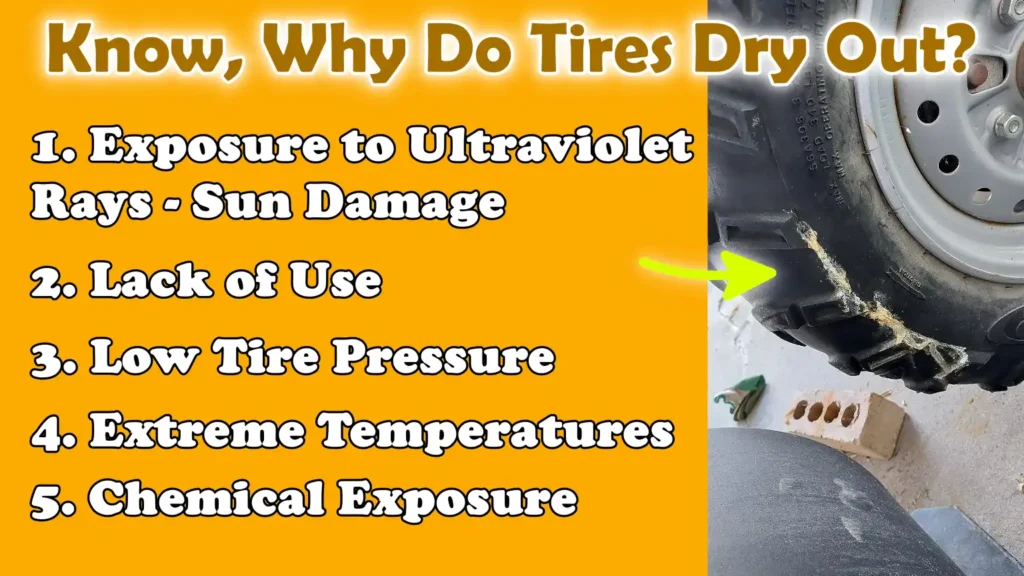
Tire drying occurs when the rubber within the tire gradually loses the protective oils, flexibility and structural integrity necessary to maintain its durability during operation.
Tires are constantly exposed to external weather conditions, causing the rubber compounds to deteriorate slowly over time, even if the vehicle has seen very little use.
Unlike normal wear and tear, which results primarily from contact with the road surface, tire drying is largely caused by aging, heat, sunlight, exposure to air and poor maintenance.
Modern tires contain specific chemical additives known as antioxidants and antiozonants, which help protect the rubber from cracking; however, as a tire ages, these protective substances gradually deplete.
Once the rubber begins to lose its natural elasticity, tiny cracks start to appear on its surface and sidewalls, increasing the risk of tire degradation and structural failure.
Understanding the precise causes of tire drying is crucial, as proper care and regular maintenance can mitigate or slow down many of these issues.
1. Exposure to Ultraviolet Rays – Sun Damage
One of the primary causes of tire drying is prolonged exposure to the sun’s ultraviolet (UV) rays.
Vehicles that are parked outdoors in the open on a daily basis are constantly exposed to UV radiation, which causes the outer layers of the rubber to deteriorate gradually.
Sunlight breaks down the chemical bonds within the tire’s compound and accelerates the evaporation of the protective oils present in the rubber.
These oils are vital, as they help keep the tire soft, flexible and resistant to cracking.
As these oils deplete, the rubber dries out, becoming hard and brittle.
This is why the sidewalls of tires exposed to direct sunlight for years fade rapidly and begin to crack, whereas tires kept in shaded or covered areas do not suffer this fate.
In regions characterized by hot climates and intense sunlight, this process can accelerate even further.
Over time, the damage caused by ultraviolet rays compromises the tire’s ability to flex properly while the vehicle is in motion, thereby increasing the risk of sidewall blowouts and sudden tire failure.
2. Lack of Use
Many drivers assume that tires only wear out through actual driving; however, allowing a vehicle to remain idle for extended periods can actually heighten the risk of “dry rot.”
Tires are engineered to undergo regular flexing, bending and movement, as driving helps distribute the internal oils and protective compounds evenly throughout the rubber.
When a vehicle remains stationary in one spot for weeks or months, particularly when parked outdoors, these oils fail to circulate properly, causing the rubber to dry out unevenly.
Consequently, tires on infrequently used vehicles such as: RVs, trailers, vintage classic cars, or seasonal vehicles, deteriorate much faster than those on cars driven on a daily basis.
Furthermore, stationary tires are subjected to constant, localized pressure, placing continuous stress on specific sections of the sidewall over time.
The accumulation of moisture and debris, combined with direct exposure to the elements while the vehicle is parked, further accelerates the tire’s aging process.
Even low-mileage vehicles can become unsafe if left unused for extended periods, as rubber naturally degrades over time, regardless of how much tread depth remains.
3. Low Tire Pressure
Driving with low tire pressure places excessive stress on the tire’s structure and significantly increases the risk of tire failure.
When tire pressure is low, the tires flex more than usual while in motion; this excessive flexing causes the sidewalls to deform and overheat.
This increased flexing exerts strain on the internal layers of the rubber, accelerating the breakdown of the tire’s compound.
The heat generated by low tire pressure can weaken the rubber and lead to the premature formation of microscopic cracks.
Furthermore, low tire pressure compromises the tire’s ability to distribute the vehicle’s weight evenly, placing even greater stress on the sidewalls, which is typically where the first signs of “dry rot” appear.
Over time, repeated instances of underinflation increase the risk of the rubber cracking, hardening and deteriorating structurally.
Maintaining proper tire pressure is the simplest and most effective way to slow down the tire aging process, as properly inflated tires experience less stress, operate at lower temperatures and exhibit more uniform wear.
4. Extreme Temperatures
Excessive temperatures, particularly extreme heat, are a primary cause of tire dry rot, as heat accelerates the chemical degradation processes occurring within the rubber.
High temperatures cause the protective oils and plasticizers present in tires to evaporate rapidly, causing the rubber to become hard and less flexible over time.
Tires on vehicles that frequently travel on scorching road surfaces, or those parked in locations subject to high ambient temperatures, tend to deteriorate at an accelerated rate.
During the summer months, road surfaces can become significantly hotter than the surrounding air, subjecting the tires to even greater thermal stress.
Constant exposure to heat accelerates the process of oxidation, a natural chemical reaction between oxygen and the rubber’s components, which gradually weakens the tire structure.
Cold temperatures can also pose a problem; in freezing conditions, rubber loses its flexibility, increasing the likelihood of cracking, specially if the tire is already aged.
Sudden temperature fluctuations between hot and cold environments can place additional stress on the structural integrity of the tires.
This is why weather conditions play a crucial role in determining the rate at which tires age and how quickly signs of dry rot begin to manifest.
5. Chemical Exposure
Exposure to chemicals is another common cause of tire dry rot, as certain substances can break down the rubber’s components and strip away protective elements from the tire’s surface.
Road salts used during the winter season can dry out the rubber and exacerbate cracking issues, particularly if salt particles remain lodged on the tires for extended periods.
Harsh chemical-based cleaning products used to wash tires, as well as petroleum-based tire shine sprays, can also cause damage by stripping away the rubber’s natural oils and protective layers.
However, while some low-quality tire dressing products may make tires appear shiny on the surface, they actually accelerate the underlying processes of drying and deterioration within the tire structure.
Atmospheric ozone pollution is also a major contributing factor, as ozone reacts directly with rubber molecules, causing the formation of tiny cracks, particularly on the tire sidewalls.
Tires exposed to electric motors, industrial machinery, or polluted urban environments may sometimes experience a heightened impact from ozone.
Fuel spills, oil leaks, solvents and chemicals leaching from contaminated surfaces can also weaken the rubber over time.
Properly cleaning tires with mild soap and water, and avoiding the use of harsh chemical-based products, as it can help prevent premature aging and cracking.
The Importance of Preventing ‘Dry Rot’ in Tires
Preventing dry rot in tires is crucial, as tires constitute one of the most critical safety components of any vehicle.
Whenever a vehicle is in motion, it is the tires that bear the vehicle’s weight, maintain traction with the road, absorb shocks and enable the driver to steer, brake and control the vehicle safely.
When dry rot begins to compromise the rubber, the tire gradually loses its structural integrity, elasticity and durability, thereby significantly increasing the likelihood of failure under stress or heat.
Many drivers focus solely on the depth of the tire’s ‘tread’ (the surface pattern), assuming that if the tread still looks good, the tire is safe; however, dry rot can weaken a tire from the inside even when there are no visible signs of wear on the tread.
This means that a tire may appear roadworthy from the outside, while its internal rubber structure is already becoming brittle and unsafe.
Preventing dry rot not only enhances safety but also saves drivers money, maintains optimal vehicle performance and helps them avoid the need for sudden tire replacements or facing dangerous roadside emergencies.
1. Safety Risks – Tire Blowouts and Sudden Failure
The most significant hazard associated with dry rot is the increased risk of sudden tire failure while driving.
As the rubber dries out and cracks begin to propagate through the tire’s sidewalls or tread areas, the tire gradually weakens and becomes less capable of withstanding the normal stresses of the road.
When driving at high speeds on a highway, considerable heat and internal pressure build up within the tires; A tire that has already been compromised by dry rot may lack the structural integrity required to withstand challenging driving conditions.
This can lead to rapid air loss, tread separation, or a complete blowout, all of which can occur without any warning.
A tire blowout can result in a sudden loss of vehicle control, particularly when driving at high speeds, braking abruptly, or taking sharp turns.
Vehicles such as SUVs, trucks, trailers and RVs face an even higher risk of rollovers in the event of tire failure, due to their heavier weight and higher center of gravity.
Dried-out tires also become less flexible; this means they are unable to effectively absorb road irregularities and shocks, thereby placing even greater stress on the tire’s already weakened areas.
Even minor cracks, which may appear harmless at first glance, as it can enlarge over time, eventually exposing the tire’s internal structural layers.
For this reason, regular inspections and timely preventive measures are absolutely crucial to ensure complete safety while driving.
2. Cost Savings – Premature Tire Replacement vs Maintenance
By preventing tire dry rot, drivers can also save a significant amount of money over time, as proper maintenance is far more cost-effective than prematurely replacing damaged tires.
Tire expenses constitute a substantial portion of the total cost of vehicle ownership, particularly for large vehicles, performance cars, or trucks that require specialized tire sizes.
When tires begin to deteriorate prematurely, a condition known as “dry rot”, due to poor maintenance, prolonged exposure to sunlight, improper storage, or low air pressure, drivers may be forced to replace them years before their treads (the upper surface of the tire) have completely worn out.
In many instances, tires with excellent tread depth must be discarded simply because their aging rubber has degraded and developed cracks, rendering them unsafe for continued use.
A few simple maintenance habits such as: regularly checking tire pressure, parking the vehicle in the shade, avoiding leaving the vehicle idle for extended periods and properly cleaning the tires, as it can significantly slow down the deterioration process and extend their lifespan.
Preventing tire degradation also reduces the likelihood of sudden roadside breakdowns, towing expenses, wheel damage, alignment issues and accidents caused by tire failure.
By ensuring proper tire care from the very beginning, drivers can avoid incurring major repair and replacement costs down the road.
3. Impact on Performance – Grip and Braking
Dry rot in tires can severely impact a vehicle’s overall performance, as healthy rubber is essential for proper traction, control and braking capabilities.
Tires are designed to remain flexible so that they can maintain firm contact with the road surface across various driving conditions.
When dry rot develops, the rubber hardens and loses its elasticity, thereby diminishing the tire’s ability to establish an effective grip on the road.
This loss of flexibility becomes particularly hazardous in wet weather, during sudden braking, while taking sharp turns, or in emergency situations where maximum traction is required.
Hardened tires are more prone to slipping compared to healthy tires, resulting in increased stopping distances and reduced steering responsiveness.
Tires affected by dry rot may also generate increased vibrations and jolts, as the hardened rubber is unable to properly absorb road shocks.
In severe cases, cracks can lead to uneven tire wear, further compromising stability and driving comfort.
Drivers may experience a lack of confidence while cornering, a decline in braking performance and reduced control when driving at high speeds.
Preventing dry rot in tires helps preserve their original performance characteristics, ensuring that the vehicle operates more safely, brakes more effectively and delivers a smoother, more stable driving experience.
How to Prevent Tire Dry Rot – Working Easy Method
The primary method for preventing tires from drying out involves safeguarding the rubber against premature deterioration and maintaining conditions that ensure the tires remain flexible, strong and safe for the long term.
Over time, tires naturally age as the rubber is constantly exposed to heat, oxygen, sunlight and the stresses of the road; however, proper care can significantly slow down this process.
Many drivers replace their tires prematurely, not because the tread has worn out, but because poor maintenance or environmental damage has caused the rubber to crack and weaken.
The good news is that most issues related to drying out can be mitigated through a few simple habits that require neither expensive equipment nor specialized mechanical knowledge.
Maintaining proper tire inflation pressure, driving the vehicle regularly, storing tires in appropriate locations and shielding them from sunlight are some of the most effective ways to extend tire lifespan and prevent dangerous cracking.
By consistently adopting these preventive measures, you can enhance safety, enjoy better traction and a more comfortable ride and minimize the risk of sudden tire failure.
1. Maintain Proper Tire Inflation Pressure
Maintaining proper tire inflation pressure is one of the most critical steps in preventing tires from drying out, as properly inflated tires experience less stress, generate less heat and distribute the vehicle’s weight more evenly while driving.
Every vehicle manufacturer recommends a specific PSI (pounds per square inch) to ensure safe and optimal tire performance.
When tire pressure is low, the sidewalls flex more than usual during driving, generating excessive heat within the tire’s internal structure.
This heat accelerates the degradation of the rubber and rapidly depletes the protective oils present in the tire material.
Over time, underinflation weakens the sidewalls, increasing the risk of cracks, structural fatigue and internal damage.
Excessive tire pressure can also lead to problems, as high pressure prevents the center of the tread from making uniform contact with the road surface and diminishes the tire’s ability to effectively absorb shocks.
It is crucial to check tire pressure at least once a month, and before embarking on any long road trip, because tires naturally lose air gradually over time, even in the absence of any visible leaks.
Temperature fluctuations can also affect PSI levels, as air expands in hot weather and contracts in cold weather.
Using a reliable tire pressure gauge and adhering to the PSI (pressure) levels recommended by the vehicle manufacturer helps minimize the stress placed on the rubber.
This ensures that the tires remain in good condition for an extended period.
2. Drive Your Vehicle Regularly
Driving your vehicle regularly helps prevent “dry rot” in the tires.
Driving keeps the rubber pliable, allowing the protective oils contained within the rubber compound to distribute evenly throughout the entire tire.
Tires are designed to flex during normal driving and this flexing process helps maintain the condition of the rubber.
This ensures that certain parts of the tire do not dry out faster than others.
Vehicles that remain stationary in one spot for extended periods face a significantly higher risk of developing “dry rot.”
This occurs because the tires remain fixed in a single position, constantly exposed to air, temperature fluctuations, moisture and sunlight.
This issue is particularly common among RVs, trailers, sports cars, classic vehicles and seasonal cars, which may sit unused for weeks or months at a time.
When tires remain stationary for prolonged periods, the rubber rapidly loses its elasticity and tiny cracks begin to appear along the tire’s sidewalls.
Driving the vehicle regularly also helps prevent the formation of “flat spots” and uneven pressure points on the tires, issues that can compromise the tire’s structural integrity over time.
Even a short drive every few weeks can be beneficial in maintaining the condition of the rubber and reducing the likelihood of premature tire degradation.
3. Park in a Garage or in the Shade
Parking your vehicle in a garage or a shaded area significantly reduces the amount of ultraviolet (UV) radiation and heat reaching the tires.
Sunlight is a primary cause of tire degradation, as UV rays gradually break down the chemical bonds within the rubber and accelerate the depletion of protective oils.
Tires exposed to direct sunlight for years often become faded and brittle and they deteriorate much faster than those kept in shaded or enclosed spaces.
The sun’s heat also raises the surface temperature of the tires, accelerating the oxidation process and causing the rubber compounds to degrade even more rapidly.
A cool garage provides a more stable environment for tires, shielding them from constant weather exposure, humidity fluctuations and extreme temperatures.
Even parking under a carport, in the shade of a tree, or in a covered parking area makes a substantial difference in slowing down the rubber degradation process.
Minimizing daily exposure to sunlight is the simplest and most effective long-term strategy for protecting your tires from deterioration.
4. Use Tire Covers
Tire covers serve as an additional protective shield against sunlight, moisture, dust and environmental damage, particularly for vehicles that remain parked outdoors for extended periods.
They are specially beneficial for RVs, trailers, campers, classic cars and other seasonal vehicles that are not driven on a daily basis.
High-quality tire covers block harmful UV rays from reaching the rubber surface and help prevent heat buildup around the tires during hot weather.
This protection prevents the essential oils present within the rubber compound from evaporating, thereby helping to maintain the tires’ flexibility.
Tire covers also shield tires from rain, snow, road salt, dust and airborne pollutants, all of which can cause cracks on the tire’s surface and degrade the rubber.
It is crucial to choose breathable covers, as they allow moisture to escape and minimize the risk of moisture becoming trapped around the tires.
When combined with regular maintenance and proper storage practices, the use of correctly sized tire covers can significantly extend the lifespan of your tires.
5. Clean Tires Properly
Keeping tires clean helps prevent dry rot, as dust, road salt, brake dust and chemical pollutants can gradually damage the rubber surface over time.
To clean tires, one should use mild soap, water and a soft brush rather than harsh chemical cleaners, as aggressive chemicals can strip away the protective oils and coatings present on the tires.
Many effective cleaning products contain petroleum-based ingredients or solvents, which can dry out the rubber and accelerate the cracking process.
While some tire-shine products may make tires look attractive for a short period, certain low-quality formulas can actually cause further damage to the rubber beneath the surface.
Regular cleaning removes harmful grime and ensures that contaminants do not remain embedded in the rubber for extended periods.
This also provides drivers with an opportunity to closely inspect their tires, allowing them to identify minor cracks, uneven wear, embedded objects, or early signs of aging.
After washing, the tires should be allowed to air-dry naturally before applying any protective products.
Gentle cleaning methods help preserve the condition of the rubber and extend the lifespan of the tires.
6. Apply a Tire Protectant – UV Blocker
Applying a high-quality tire protectant can help slow down the process of “dry rot,” as it creates a protective shield against ultraviolet (UV) rays, oxidation and environmental elements.
Tire protectants, specifically formulated to safeguard rubber, contain UV blockers and conditioning agents that help maintain the rubber’s flexibility and prevent it from cracking.
These products work by mitigating the harmful effects of sunlight and helping to retain moisture and pliability within the tire’s surface.
An effective protectant should be water-based rather than petroleum-based, as petroleum-derived ingredients can weaken the rubber over time.
High-quality UV protectants typically provide a natural “satin finish” rather than an overly glossy appearance.
Regular application can help guard against fading, discoloration and surface drying, particularly in hot or sunny weather.
However, protectants are not a permanent solution and it is essential to reapply them periodically in accordance with the product instructions.
When used in conjunction with proper tire inflation, correct storage and regular driving, tire conditioners can become an effective component of a comprehensive strategy to prevent “dry rot.”
7. Avoid Overloading Your Vehicle
It is crucial to avoid placing excessive weight on your vehicle, as overloading subjects the tires to pressure and heat far beyond their rated capacity.
Every tire has a maximum load limit, which determines the maximum weight it can safely support.
When a vehicle carries a load exceeding this limit, the tire sidewalls flex excessively during operation, generating increased heat within the tire’s internal structure.
This constant stress accelerates the aging process of the rubber, increasing the likelihood of sidewall cracks, blowouts and dry rot.
Overloaded tires do not wear evenly and lose their structural integrity much faster than tires operating within their proper load limits.
Hauling heavy cargo, towing excessive loads, or consistently driving an overloaded vehicle places continuous strain on the rubber compound and internal belts.
Adhering to the load limits specified by the vehicle manufacturer reduces unnecessary stress on the tires and helps preserve their flexibility and durability over time.
8. Store Tires Properly
Proper tire storage plays a vital role in preventing dry rot, as the surrounding environment significantly influences the rate at which the rubber ages.
Tires should always be stored in a cool, dry and dark location, away from direct sunlight, moisture, heat sources and ozone-generating equipment such as electric motors or generators.
Exposure to high temperatures and ultraviolet (UV) rays accelerates oxidation and rubber degradation, while excessive humidity can damage the tire surfaces and lead to rust formation on the wheels.
It is generally best to store tires mounted on wheels horizontally or carefully stacked one atop another, whereas tires removed from wheels are often best stored standing upright to help them maintain their shape.
Periodically rotating the stored tires can also help alleviate pressure on specific contact points.
The storage area should be clean and free of any chemicals, fuels, oils, or solvents that could damage the rubber.
Specialized tire storage bags or covers can provide additional protection against exposure to dust and air.
Proper tire storage is particularly crucial for seasonal tires, spare tires, tires for vintage vehicles and any other tires that are not used regularly; this is because, if not stored correctly, tires can deteriorate over time even when they are not in use.
The Best Products to Prevent Tires from Drying Out
Using the right products for tire care can play a crucial role in slowing down the rubber aging process and preventing tires from drying out.
Tires are constantly exposed to sunlight, heat, oxygen, moisture, dust and road chemicals, all factors that gradually degrade the rubber compound over time.
While no product can completely halt the aging process, specific maintenance tools and protective products can significantly slow down the rate of deterioration, ensuring that tires remain flexible, safe and durable for many years.
Products that offer UV protection, aid in proper storage and help maintain tire pressure are particularly important, as sunlight, low tire pressure and environmental exposure are among the primary causes of tire drying.
Choosing high-quality products also helps drivers avoid common mistakes such as: using harsh cleaners or inferior-quality tire shines, which can actually damage the rubber rather than protect it.
Effective tire care products should help maintain the long-term health of the rubber, preserve its flexibility, minimize cracking and sustain overall tire performance.
1. Tire Protectants with UV Blockers
Tire protectants containing UV blockers are among the most effective products for slowing down the process of tire drying and degradation, as they shield the rubber from damaging ultraviolet rays and oxidation.
Tires naturally contain certain protective oils and chemicals that keep the rubber soft and flexible; however, continuous exposure to sunlight causes these compounds to gradually break down, resulting in the rubber surface drying out and developing cracks.
A high-quality tire protectant creates a protective shield that minimizes the penetration of UV rays and helps retain moisture within the rubber.
Many high-quality products also contain conditioning agents that prevent the tire sidewalls from becoming brittle over time.
Water-based tire protectants are generally considered safer for the long-term health of tires, as they preserve the rubber without utilizing harsh petroleum solvents, solvents which can otherwise accelerate the drying and deterioration process.
High-quality protectants typically leave behind a natural, satin-like finish rather than an overly glossy surface, a look that often signals the presence of excessive amounts of silicone or petroleum.
The regular use of UV protectants is particularly beneficial for vehicles parked outdoors in hot or sunny climates, where tires are constantly exposed to sunlight and heat.
Applying a protective agent every few weeks, ideally after cleaning the tires, helps prevent discoloration, maintains the rubber’s elasticity and delays the formation of surface cracks.
2. Tire Covers for Outdoor Storage
Tire covers are highly effective tools for shielding tires from environmental damage during prolonged periods of outdoor parking or storage.
Sunlight is one of the primary causes of “dry rot” (damage resulting from the drying out of tires) and tire covers serve as a physical barrier that prevents UV rays from reaching the rubber surface.
This protective layer helps prevent heat buildup and slows down the evaporation of the protective oils contained within the tire rubber.
Tire covers are specially essential for RVs, trailers, campers, classic cars and seasonal vehicles that may remain parked outdoors for weeks or months at a time.
In addition to blocking sunlight, tire covers also provide protection against rain, snow, road salt, dust, dirt and airborne pollutants that can degrade the rubber.
Ventilated covers are generally recommended, as they help prevent moisture from accumulating around the tires, a condition that can lead to mold, rust, or further damage.
Durable covers made from weather-resistant materials last longer and offer superior protection against extreme temperatures.
When installed correctly, tire covers can significantly extend the lifespan of tires by shielding them from constant exposure to damaging environmental conditions.
3. Air Compressor or Pressure Gauge
Maintaining proper air pressure in tires is a crucial aspect of preventing them from drying out; for this reason, an air compressor and a pressure gauge are essential tools for tire maintenance.
Over time, tires naturally lose a small amount of air; driving on underinflated tires places excessive stress on them, causing their sidewalls to flex excessively and internal heat to build up.
This excessive flexing weakens the rubber’s structural integrity and accelerates the aging process, potentially leading to cracking and drying issues.
A reliable tire pressure gauge helps drivers accurately monitor PSI levels, ensuring that tire pressure remains within the range recommended by the manufacturer.
Compared to older analog designs, digital pressure gauges are often easier to read and provide more precise measurements.
Portable air compressors are also highly useful, as they allow drivers the convenience of inflating their tires whenever necessary, without having to rely on gas station equipment, which can sometimes provide inaccurate readings.
Regularly checking tire pressure, at least once a month and prior to long trips, reduces stress on the sidewalls, improves fuel efficiency, maintains proper traction and slows down the rubber’s degradation process.
Maintaining proper air pressure is the simplest, yet most effective, method for preventing tires from suffering premature wear and drying out.
How to Check for Early Signs of ‘Dry Rot’ in Tires
Regularly checking for early signs of dry rot in tires is one of the most essential safety habits for every driver, as tire damage often occurs gradually and silently, eventually escalating into a dangerous situation.
Many tires begin to exhibit minor warning signs months or even years before a major failure occurs; however, these symptoms are often overlooked because the vehicle still appears to be operating normally.
Over time, dry rot compromises the structural integrity of the rubber, diminishing its flexibility, grip and overall durability.
Early inspections help drivers identify problems before cracks in the tires deepen, otherwise, this could lead to the risk of a tire blowout, air leaks, or tread separation.
Properly inspecting a tire requires no specialized mechanical skills and can typically be accomplished with just a few minutes of visual examination.
The key is knowing where to look, how often to check and which warning signs indicate a serious underlying issue.
Regular inspections are particularly crucial for older tires, vehicles parked outdoors, seasonal cars, RVs, trailers and any vehicle that has remained unused for extended periods, as these conditions significantly increase the likelihood of dry rot.
1. Where to Check – Sidewalls and Tread Grooves
Inspecting the tire’s sidewalls and tread grooves is paramount, as the early signs of rubber degradation typically manifest in these specific areas.
Carefully examine the sidewalls for small cracks, fine lines, fissures, discoloration, or rough patches in the rubber.
Dry rot often begins as tiny cracks on the surface, resembling thin ridges formed on the sidewalls.
Over time, as the rubber loses its elasticity, these cracks can deepen and widen.
Drivers should inspect both the outer and inner sidewalls, as damage can sometimes occur on the inner surface, where it is more difficult to detect.
The tread grooves should also be examined closely; as the rubber ages, cracks may develop between the tread blocks.
Looking inside the grooves can reveal hidden flaws that are not yet visible on the main tread surface.
It is also crucial to inspect the area around the ‘bead’, where the tire meets the wheel, as cracks in this region can lead to slow air leaks.
Faded or brownish rubber can also be an indication that the tire is drying out and losing its protective oils.
During the inspection, drivers should look out for any signs of uneven wear, bulges, cuts, or chunks of missing rubber, as these issues may point to structural problems far more serious than mere dry rot.
2. How Often Should You Inspect?
Ideally, tires should be inspected at least once a month; if left unchecked, dry rot can gradually develop and deteriorate rapidly.
Monthly inspections are particularly important for vehicles exposed to direct sunlight, extreme temperatures, or periods of prolonged inactivity.
Drivers should also inspect their tires before embarking on long road trips, as highway driving generates significant heat and pressure, which can increase the risk of failure in tires that are already compromised.
Seasonal transitions also mark a crucial time for inspections, as both the scorching heat of summer and the biting cold of winter place additional stress on aging rubber.
Older tires require even more meticulous examination, as rubber naturally deteriorates over time, regardless of tread depth or mileage.
Many tire manufacturers recommend paying special attention to tires that are five to six years old, as aging becomes a significant safety concern once this timeframe has elapsed.
Spare tires should not be overlooked either, as they are often forgotten for years, and continue to age due to exposure to the elements.
Regular inspections allow drivers to detect issues at an early stage, while the damage is still repairable, and before the tire becomes unsafe for use.
3. Warning Signs You Should Never Ignore
Certain warning signs should never be ignored, as they may indicate that a tire is becoming structurally unsafe and is at risk of failure.
Deep or extensive cracks on the sidewall are the clearest indication that dry rot has progressed beyond a minor surface imperfection.
Large cracks that expose the deeper layers of rubber or the internal cords are particularly dangerous, as they signal a serious structural weakness within the tire.
Bulges or blisters in the sidewall constitute another critical warning sign, as they typically indicate internal separation or air leakage through weakened layers of rubber.
Drivers should also pay attention to rubber that feels unusually hard, brittle, or rough, as healthy tire rubber should possess a certain degree of flexibility.
Chipping rubber from the tread area, or the absence of large sections, may signal advanced deterioration that could compromise traction and stability.
Repeated air loss without any visible puncture may also be attributed to dry rot cracks around the bead or sidewall areas.
Vibrations while driving, reduced grip on wet roads, poor handling, or unusual noises emanating from the tires are all indications that aging rubber is negatively impacting the vehicle’s performance and safety.
Any tire exhibiting severe signs of dry rot should be inspected immediately by a professional, as continuing to drive on deteriorated tires significantly increases the risk of sudden blowouts, loss of control and dangerous accidents.
Read More:
- How to Fix Tire Bulge Issue
- How to Inspect Tire Inner Sidewall Damage
- How to Fix TPMS Sensor Not Detected
- How to Relearn TPMS Without Scan Tool
- How to Reset Tire Pressure Monitoring System Manually
- How to Check Tire Pressure Sensor Battery
- How to Seal Bead Leak in Tire
- How to Use Tire Plug Kit Correctly
- How to Repair Tubeless Tire Puncture
- How to Locate a Nail in a Tire
- How to Fix Slow Tire Air Leak
- How to Detect Tire Sidewall Damage
- How to Check Tire Tread Depth at Home
- How to Bleed ABS System Properly
- How to Replace Rusted Brake Lines
- How to Inspect Brake Lines for Rust
- How to Flush Contaminated Brake Fluid
When to Replace Dried-Out and Deteriorated Tires
Replacing dried-out and deteriorated tires at the appropriate time is crucial for vehicle safety; once rubber degradation reaches a certain threshold, the tire can no longer provide reliable structural integrity, grip, or stability.
Many drivers mistakenly assess a tire’s condition solely based on tread depth (the grooves on the tire’s surface); however, drying out can render a tire dangerous, even if the tread still appears deep and serviceable.
Tires are composed of rubber compounds that naturally age over time due to exposure to oxygen, sunlight, heat, moisture and the stresses of road use.
As these compounds break down, the tire loses its elasticity, thereby increasing the likelihood of cracking, separation, or sudden failure while driving.
Excessive drying weakens the tire’s sidewalls and internal structure, heightening the risk of blowouts, air leaks, tread separation and loss of vehicle control.
Knowing when to replace dried-out and deteriorated tires helps prevent hazardous driving situations and minimizes the potential for sudden tire failure on the road.
1. Guidelines Regarding Crack Depth
The depth and severity of cracks are among the most critical factors in determining whether a dried-out and deteriorated tire requires replacement.
Very minor surface cracks, those that are shallow and confined solely to the outer layer of the rubber, as it can sometimes be closely monitored, provided the tire is relatively new and otherwise in good condition.
However, cracks should never be ignored, as they generally tend to worsen over time as the rubber continues to age.
If cracks appear deep, extensive, or large enough to expose the inner rubber layers or internal cords, the tire should be replaced immediately, as this indicates a serious structural weakness within the tire.
Cracks near the sidewall are particularly hazardous, as sidewalls undergo constant flexing while driving and are critical for supporting the vehicle’s weight and absorbing road shocks.
Deep cracks surrounding the tread grooves, bead area, or shoulder sections can also lead to air leaks and tread separation.
In many instances, cracks extending across various parts of the tire signal that the rubber compound has degraded to a point where it is no longer safe for use.
In addition to cracks, the presence of bulges, blisters, missing chunks of rubber, or splits are further warning signs indicating that the tire requires immediate replacement.
Even if the tire currently holds air, the presence of deep cracks significantly increases the risk of a sudden blowout while driving; this is because heat and pressure build up within the tire during vehicle operation.
2. The Age Rule – Typically 6 to 10 Years
A tire’s age plays a crucial role in determining when it needs to be replaced, as rubber naturally degrades over time, regardless of how much the tire has been driven.
Most tire manufacturers and safety organizations recommend paying close attention to a tire once it reaches approximately six years of age, particularly if it exhibits any signs of deterioration.
Many experts suggest that tires should be replaced within ten years of their date of manufacture, even if the tread (the tire’s outer surface) still appears to be in usable condition.
This is because oxidation and environmental factors gradually weaken the tire’s internal rubber compounds, steel belts and bonding agents.
In some instances, the tires on vehicles that are driven infrequently may actually deteriorate more rapidly, as regular driving helps distribute the protective oils present in the rubber compound throughout the tire.
Hot weather, exposure to direct sunlight, prolonged outdoor parking and improper storage can all accelerate the tire aging process.
A tire’s date of manufacture can be identified via the DOT code located on its sidewall; the last four digits of this code indicate the week and year of the tire’s production.
For example, if a code ends with “2523,” it signifies that the tire was manufactured during the 25th week of 2023.
Understanding a tire’s age is crucial, as even tires with low mileage can become unsafe over time as the rubber compound loses much of its elasticity and structural integrity.
3. Manufacturer’s Recommendation
Tire manufacturers provide specific recommendations regarding tire lifespan, inspection and replacement, as they possess a deep understanding of how rubber ages under various conditions.
Most companies advise drivers to regularly inspect their tires after five years of use and to replace them immediately if any significant cracks, sidewall damage, or signs of aging become apparent.
These recommendations are issued because a tire’s performance depends not solely on its tread depth, but also on the condition of the rubber and the structural integrity of its internal components.
Manufacturers also emphasize that external factors such as: heat, UV radiation, humidity, excessive load-bearing, improper inflation pressure and improper storage, as it can significantly accelerate the rate of tire degradation.
Although some premium tire brands utilize specialized rubber compounds designed to resist cracking over extended periods, even the highest-quality tires will eventually age and lose their protective properties.
Vehicle manufacturers may also include tire replacement guidelines in the owner’s manual, as the condition of the tires has a direct impact on the vehicle’s braking, steering, handling and overall safety.
Adhering to these recommendations is crucial, as neglecting aging tires can heighten the risk of accidents, particularly when driving at high speeds or in adverse weather conditions.
Regular inspections, proper maintenance and timely tire replacement ensure that tires remain safe, reliable and fully functional throughout their entire service life.
Know, Some Common Causes of Tire Deterioration
Many instances of tire failure are not due to manufacturing defects, but rather stem from everyday habits and maintenance errors that gradually damage the rubber over time.
Tires are designed to withstand heavy loads, road friction, temperature fluctuations and constant use; nevertheless, they require proper care to remain resilient and safe.
Exposure to oxygen, sunlight, heat and environmental pollutants causes the rubber to age naturally and certain mistakes can significantly accelerate this process.
Some drivers inadvertently shorten the lifespan of their tires by leaving their vehicles parked for extended periods, using harmful cleaning products, neglecting tire pressure, or storing tires improperly.
These habits may not cause immediate problems, but over time, they weaken the rubber compounds, leading to cracks, brittleness and structural degradation.
Understanding these common mistakes can help drivers avoid unnecessary tire damage and significantly extend the life of their tires, while also improving safety and performance.
As well as, there’s scientific research that clearly shows that heat and ultraviolet radiation can gradually break down the tire rubber as it literally removes that protective compounds and accelerate the oxidation process, basically the rubber loses their flexibility and protective oils, that’s why it cracks up and begins to be brittle that tends to develop on the tire surface, so this is the reason that you should part the vehicle in shaded areas and use UV_protective tire products that actually helps them to prevent dry rot and extends the tire lifespan as well.[¹]
1. Leaving a Car Parked for Too Long
One of the most common causes of tire deterioration is leaving a vehicle parked and unused for an extended period.
Many people assume that tires only wear out through driving, but inactivity can actually accelerate the rubber’s degradation process.
Tires are designed to remain flexible while in motion; this flexibility helps distribute the protective oils and chemicals present within the rubber evenly throughout the tire’s entire structure.
When a car remains stationary in the same spot for weeks or months, specially when parked outdoors, these oils fail to circulate properly, causing the rubber to begin drying out unevenly.
The tire sidewalls are particularly vulnerable, as they are under constant pressure from the vehicle’s weight while simultaneously being exposed to wind, moisture and temperature fluctuations.
Vehicles such as RVs, trailers, seasonal cars, sports cars and classic automobiles often fall victim to “dry rot” more rapidly, as they are not driven regularly and remain parked for extended periods.
Prolonged parking can also lead to the formation of flat spots and concentrated pressure points on the tires, further weakening the rubber.
Driving the vehicle occasionally, even for short distances, as it can help maintain the rubber’s elasticity and reduce the risk of premature cracking.
2. The Use of Petroleum-Based Tire Shine Products
Many drivers use “tire shine” products to enhance the appearance of their tires; however, certain petroleum-based formulas can actually damage the rubber and accelerate the process of “dry rot” over time.
Some low-quality tire dressings contain harsh solvents and petroleum distillates that strip away the tire’s natural protective oils.
While these products may provide a very glossy and shiny finish for a while, repeated use can cause the underlying rubber to dry out and become increasingly brittle.
Tires rely on their internal oils and protective elements to remain flexible and resist cracking and harsh chemicals interfere with this vital protection.
Over time, repeated exposure to petroleum-based cleaners or tire shine products can weaken the outer layers of the rubber and increase the likelihood of sidewall cracks.
Water-based tire protectants containing UV inhibitors are generally considered safer, as they help shield the rubber from sunlight without stripping away essential oils.
Drivers should always read product labels carefully and avoid harsh cleaners or dressings that are not specifically designed for the long-term protection of tires.
3. Neglecting Tire Pressure
Failing to maintain proper air pressure in tires is another major mistake that leads to premature wear and rapid deterioration.
While it is natural for tires to gradually lose air over time, many drivers neglect to check their tire pressure regularly; this means that low pressure often goes undetected until the situation becomes critical.
When tire pressure is low, the tire sidewalls flex excessively while driving, leading to increased internal heat buildup and placing significant mechanical stress on the tires.
This excess heat accelerates the breakdown of the rubber compounds and causes the tire to lose its elasticity much faster than usual.
Low air pressure also exerts uneven stress on the sidewalls, the very area where cracks typically begin to form due to rubber degradation.
Over time, repeated instances of underinflation compromise the tire’s structural integrity, increasing the likelihood of cracks, tread separation and blowouts.
Temperature fluctuations can also affect tire pressure; cold weather causes the PSI (pressure) to drop, while hot weather causes it to rise.
Checking tire pressure regularly, at least once a month and before long journeys, reduces the strain on the rubber, improves fuel efficiency, ensures proper grip and slows down the process of premature tire deterioration.
Maintaining proper air pressure is one of the simplest and most effective ways to prevent tire damage.
4. Storing Tires in Direct Sunlight
Improper tire storage, specifically leaving them exposed to direct sunlight, is a primary cause of rapid dry rot.
The sun’s ultraviolet (UV) rays break down the chemical bonds within the rubber and rapidly evaporate the protective oils present in the tire.
Tires left exposed outdoors for extended periods deteriorate, fading, drying out and becoming brittle, at a much faster rate than those stored in shaded or enclosed spaces.
The sun’s heat raises the temperature of the rubber surface, thereby accelerating the processes of oxidation and chemical degradation.
This combination of UV rays and heat gradually weakens the tire’s sidewalls and increases the risk of cracking.
Tires stored near heat sources such as: electric motors, generators, or ozone-generating equipment, as it can also deteriorate rapidly, as ozone reacts with rubber compounds to cause cracking on the tire’s surface.
Proper storage of tires in a cool, dry and dark environment significantly slows down the deterioration process and helps maintain the rubber’s flexibility.
Tire covers can also provide additional protection for tires on vehicles parked outdoors; they block UV rays and minimize direct exposure to harsh environmental conditions.
Conclusion – How to Prevent Tire Dry Rot
Now, you have understood that: a tire may look really strong and sturdy from outside view, but once that dry rot begins then it literally weakens the rubber, that’s how it affects its safety and performance as well.
Many drivers focus solely on a tire’s “tread depth,” assuming that as long as the grip remains good, the tire is safe; yet, the condition of the rubber itself, the material from which the tire is constructed, is equally critical.
Over time, exposure to sunlight, heat, oxygen, improper storage conditions, low tire pressure and prolonged periods of vehicle inactivity cause the chemical compounds responsible for keeping the rubber flexible and durable to gradually degrade.
This “aging process” significantly increases the risk of the tire cracking, becoming hard and brittle, losing traction and ultimately, suffering a sudden and catastrophic failure.
What makes dry rot so dangerous is that it often progresses silently over months or even years, exhibiting no serious symptoms until it is too late.
The good news is that the problem of dry rot in tires can be largely prevented through regular maintenance and proper care practices.
Simple measures such as: regularly checking tire pressure, driving the vehicle frequently, parking in shaded areas, cleaning the tires properly and using UV-protective products, as it can be highly effective in preserving the structural integrity of the tire rubber.
Regular tire inspections are also essential, as identifying minor cracks in their early stages allows drivers to avoid the costly expense of premature tire replacement, while simultaneously mitigating the risk of dangerous road accidents in the future.
Even tires with excellent tread depth can be unsafe if the structural integrity of their rubber begins to deteriorate.
So, that’s it from this guide about How to Prevent Tire Dry Rot, also you can ask remaining questions below.
Frequently Asked Questions
FAQ 1: What is ‘Dry Rot’ in tires and why does it occur?
Answer: Tire dry rot is a condition in which the rubber of a tire dries out, becomes brittle and begins to develop cracks over time. This occurs due to the aging of the tires and various environmental factors. Tires are composed of specific rubber compounds and protective oils that help maintain their flexibility and strength; however, over time, these substances begin to break down. Sunlight, heat, oxygen, atmospheric ozone, low tire pressure and prolonged periods of vehicle inactivity, all of these factors accelerate this process. As the rubber loses its moisture and elasticity, small cracks begin to appear on the tire’s sidewalls and tread. When dry rot compromises the structural integrity of the rubber, even tires with adequate tread depth can become unsafe. This is why, when assessing tire safety, the age of the tire and its overall condition are just as important as the wear on its tread.
FAQ 2: How can I prevent tire dry rot?
Answer: The best way to prevent tire dry rot is to protect your tires from heat, sunlight and poor maintenance. Maintaining proper air pressure in your tires reduces the stress placed on the sidewalls and helps prevent excessive heat buildup inside the tire while driving. Parking your vehicle in a garage or a shaded area shields the rubber from harmful ultraviolet (UV) rays, which accelerate the process of cracking and fading in the rubber. Driving the vehicle regularly is also important, as the motion of driving helps distribute the protective oils evenly throughout the rubber, thereby keeping the tires flexible. Cleaning your tires with mild soap and water removes harmful dirt and road chemicals without causing any damage to the rubber surface. Many drivers also use water-based tire protectants, which contain UV-blocking agents, to provide additional protection against sunlight and oxidation. Proper storage and regular inspection of tires can significantly slow down their aging process, thereby extending their overall lifespan.
FAQ 3: Does sunlight actually damage tires?
Answer: Yes, direct sunlight is a major cause of tire degradation. The sun’s ultraviolet (UV) rays gradually break down the chemical bonds within the rubber and accelerate the evaporation of protective oils. Over time, this causes the rubber to dry out, harden and become brittle. Tires that remain exposed to direct sunlight outdoors for years tend to develop cracks much faster than those kept in a shaded area or indoors. The heat generated by sunlight also raises the temperature of the tire surface, further accelerating the processes of oxidation and rubber aging. This is why parking your vehicle in a garage, using tire covers, or parking in a shaded spot can be highly effective in slowing down the tire degradation process.
FAQ 4: Can tires deteriorate even with very little use?
Answer: Yes, even if a vehicle is driven very infrequently, its tires can still dry out and deteriorate. In fact, leaving a vehicle parked in one spot for extended periods often increases the risk of tire degradation, as tires are designed to undergo regular flexing and rotation. Driving the vehicle keeps the protective oils present within the rubber circulating, thereby maintaining the tire’s flexibility and structural integrity. When a car remains parked in the same spot for weeks or months, specially when exposed to direct sunlight outdoors, the rubber begins to dry out unevenly, significantly increasing the risk of cracking. This issue is frequently observed in vehicles such as RVs, trailers, vintage classic cars and seasonal vehicles, as these vehicles often sit idle for extended periods. Tires on low-mileage vehicles can also become unsafe if the rubber deteriorates due to aging over time.
FAQ 5: How often should I check my tires for signs of deterioration?
Answer: It is recommended that you inspect your tires at least once a month, as well as prior to embarking on any long-distance journey. Regular inspections allow for the timely detection of cracks, discoloration, or other signs of rubber deterioration before the damage becomes severe. Drivers should carefully examine the tire sidewalls, tread grooves and edges to identify symptoms such as minor cracks, roughness, color changes, or hardening of the rubber. It is particularly important to inspect older tires more frequently, as the risk of “dry rot” (deterioration caused by drying) increases as tires age. Regular inspections can help prevent dangerous accidents such as: tire blowouts, and enable drivers to replace their tires before they become unsafe.
References:
[1] UV and thermal degradation of tire derivatives: A comparative study of unused tires, recycled tire chips and tire and road wear particles
https://www.sciencedirect.com/science/article/pii/S3051060025000162
Hello Folks, Dean Shali here to help you out to solve the problems with your lovely vehicle, as i have lots of experience and knowledge about automotive industry as i woks directly with the customers and repair vehicles and i love to help the people to keep their cars safe and running smoothly.