
Written By: Dean Shali
Fact Checked By: Sabré Cook
Reviewed By: Tamara Warren
It is possibility that a tire can lose the pressure gradually without looking completely flat and that’s the exact reason TPMS is designed to catch without your effort.
Because, this TPMS system quietly checks one of the most important safety factors you relies on without thinking: is your tire pressure.
Yes, it is mandatory in the United States after the safety regulations recognized that underinflated tires significantly increases the risk of crashes, tire blowouts and reduced fuel efficiency as well.
As well as, studies also shows that even a small drop in tire pressure can affect the braking distance, handling and tire lifespan as well.
Sometimes it signals low pressure, sometimes it is because of sensor issue and other times it simply needs re-calibration after some maintenance such as: tire rotation or seasonal changes as well.
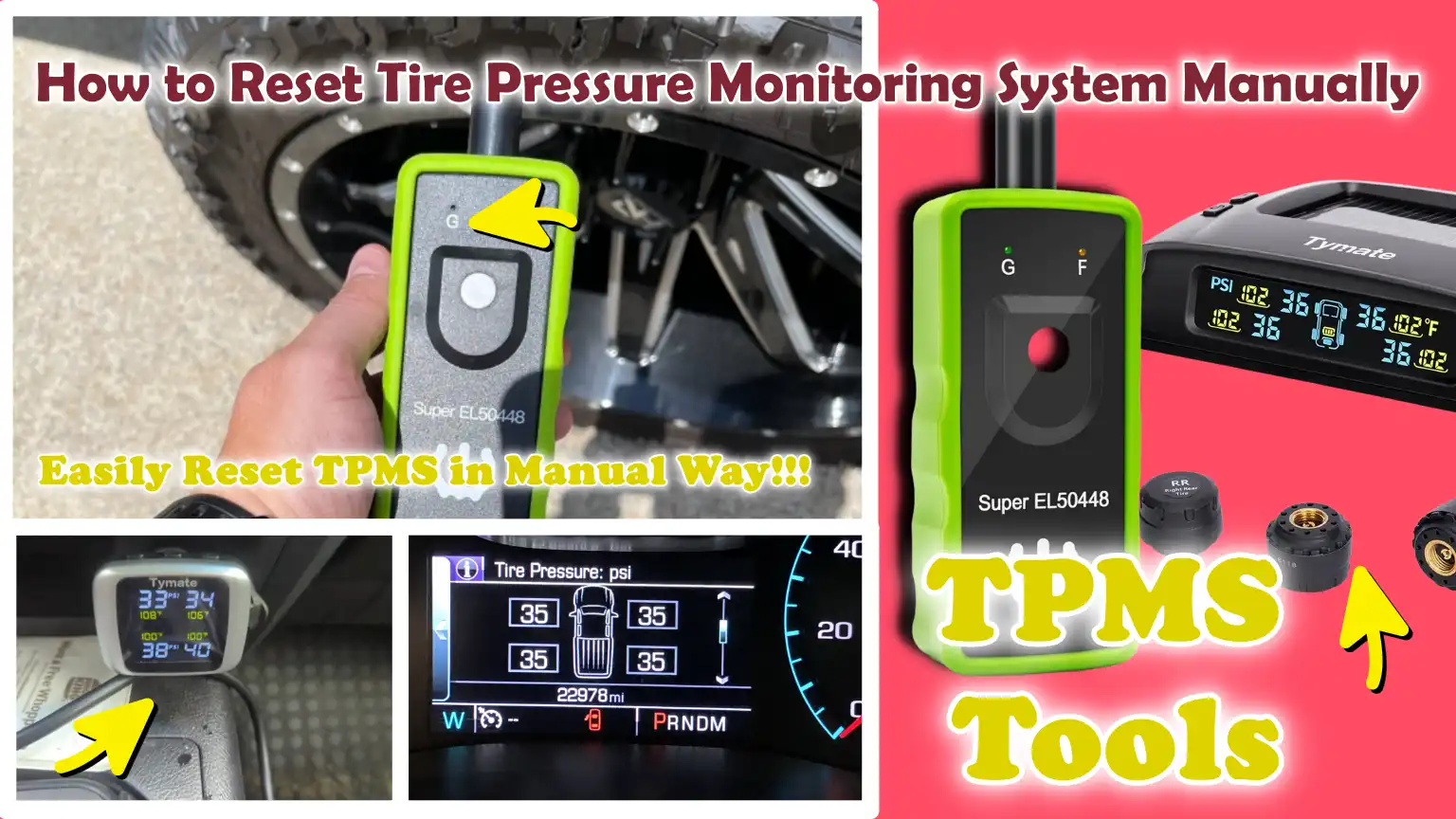
Now, in this guide you’ll learn How to Reset Tire Pressure Monitoring System Manually so that you can bring back those accuracy, confidence and safety feature every day.
Know, The Types of TPMS Systems
The Tire Pressure Monitoring System (TPMS) installed in your vehicle is not identical in every car; understanding which type of system you have is the key to resetting it correctly.
There are two main types of TPMS and although both are designed to alert you when your tire pressure reaches an unsafe level, they operate in very different ways.
This distinction is crucial because the method by which the system detects issues directly influences how you should go about resetting or recalibrating it.
Many drivers fail to resolve TPMS issues because they apply the wrong reset procedure for their specific system, leading to recurring warning lights and confusion.
1. Direct TPMS
Direct TPMS utilizes small electronic sensors installed inside each tire, typically attached to the valve stem.
These sensors measure the actual air pressure in real-time and wirelessly transmit that data to your car’s onboard computer.
This means the system can display precise pressure readings for each individual tire and provide highly accurate warnings when the pressure drops below the recommended level.
Because it measures actual data, it can detect even minute fluctuations in pressure that might not be visible to the naked eye.
However, these sensors rely on batteries, which typically last for several years, and when these batteries run low or fail, the system may display error messages or flashing warning lights.
When resetting a Direct TPMS, the system often needs to “relearn” the location of each sensor, particularly after a tire replacement or rotation, which is why simply pressing the reset button does not always resolve the issue.
2. Indirect TPMS
Indirect TPMS operates differently, as it does not utilize physical pressure sensors installed inside the tires.
Instead, it relies on the vehicle’s Anti-lock Braking System (ABS) to monitor the rotational speed of each wheel.
When a tire’s pressure drops, its diameter decreases slightly, causing it to rotate faster than tires with proper pressure.
The system detects this discrepancy in rotational speed and uses it to identify a potential pressure-related issue.
Although this method is simple and requires no sensor maintenance, it is less precise because it does not measure actual pressure values.
It may sometimes trigger a warning even when there is no actual pressure issue such as: after uneven tire wear or changes in driving conditions.
Resetting an Indirect TPMS typically involves recalibrating the system after adjusting the tire pressure, allowing the vehicle to relearn what constitutes normal wheel speed.
3. Why the System Type Matters for Resetting
It is crucial to know whether your vehicle is equipped with a Direct TPMS or an Indirect TPMS, as the procedure for resetting each differs.
Direct systems often require a “re-learn” process, during which the vehicle re-identifies each individual sensor; in some cases, this may require a specific sequence of steps or a specialized tool.
Conversely, Indirect systems typically require “re-calibration”, a process in which you ensure that the current tire pressure is correct and then allow the system to reset its baseline data.
If you attempt to reset a Direct system using the method for an Indirect system (or vice versa), the warning light may remain illuminated or may turn back on shortly thereafter.
That is precisely why understanding the specific type of system you have saves you time, prevents unnecessary trouble and ensures that your TPMS functions correctly, thereby keeping you safe on the road.
Understand, Common Signs Shows That Your TPMS Needs a Immediate Reset
The Tire Pressure Monitoring System (TPMS) is designed to alert you when something is amiss; however, sometimes the system itself requires a reset to function correctly.
Many drivers assume that the warning light should turn off immediately after inflating the tires, but the system does not always operate in this manner.
The TPMS stores previous pressure data and requires a “re-learning” or recalibration process following any changes; therefore, specific signs clearly indicate when a reset is necessary.
Recognizing these signs in a timely manner helps you avoid confusion, prevents false warnings and ensures that your system provides accurate information regarding the safety of your tires.
1. The TPMS Warning Light Remains Illuminated Even After Inflating the Tires
If you have checked your tires and set them to the recommended pressure, yet the TPMS light remains illuminated, it generally means that the system has not yet updated its data.
This occurs because the system may still be comparing current pressure levels against older readings stored in its memory.
Simply put, the car has not yet “realized” that the pressure issue has been resolved.
This is one of the most common signs that a manual reset or “re-learning” process is required.
However, before performing a reset, it is crucial to ensure that all tires, including the spare tire, if the system monitors it, are set to the correct pressure, as resetting the system with incorrect pressure levels may cause the warning light to illuminate again.
2. The Light Flashes Before Remaining Steadily Illuminated
A TPMS light that flashes for approximately one minute before remaining steadily illuminated is a critical indicator that is often misunderstood by many drivers.
Generally, this indicates a system malfunction rather than merely low tire pressure.
It often points to issues such as a weak or depleted sensor battery, a faulty sensor, or an interruption in communication between the sensor and the vehicle’s onboard computer.
In some instances, resetting the system may temporarily clear the warning; however, if the light continues to blink, it signifies that the underlying problem requires repair.
This specific behavior is a strong indication that your TPMS may require both a system reset and further diagnostic investigation.
3. Displaying Inaccurate Pressure Readings on the Dashboard
If your dashboard displays tire pressure figures that do not align with measurements taken using a reliable pressure gauge, it is a clear indication that the system is not properly calibrated.
For instance, the system might indicate that a specific tire is under-inflated, even if it contains the correct amount of air, or it may display inconsistent or erratic readings.
Such discrepancies can arise from tire servicing, sensor replacements, or temperature fluctuations that influence tire pressure readings.
Resetting the system updates it and synchronizes its readings with the actual tire pressures, thereby ensuring that the information displayed to you is accurate and reliable.
4. After Seasonal Tire Changes or Rotations
Whenever tires are rotated, replaced, or swapped out seasonally, the position of each tire changes; consequently, in certain vehicles, the TPMS must “relearn” these new locations.
In cold weather, low ambient temperatures naturally cause a drop in tire pressure; this, too, can trigger the TPMS warning light, even if there are no leaks in the tires.
Following such changes, the system may continue to display warnings until it is properly reset or recalibrated.
This is why, after performing a tire rotation or making seasonal adjustments, resetting the system is not merely a recommendation; it is often essential to ensure accurate monitoring and avoid recurring warnings.
How to Ensure Safety Before Resetting that TPMS
Before resetting the Tire Pressure Monitoring System (TPMS), it is crucial to ensure that every component related to your tires is functioning correctly; resetting the system does not resolve underlying mechanical issues, it merely clears the warning indicator.
If you reset the system without verifying the actual condition of your tires, the warning light may illuminate again, or, worse yet, a serious problem could go undetected.
Many drivers rush to reset the system, assuming that doing so will resolve the issue; however, the proper procedure involves first checking the pressure, tire condition and sensor health.
This simple checklist helps ensure that when you do reset the system, it accurately reflects safe and correct operating conditions.
1. Check Tire Pressure and Set It According to Manufacturer Instructions
The first and most critical step is to check the air pressure in all your tires and set it to the exact level recommended by the vehicle manufacturer.
This information is typically found on a sticker located inside the driver-side door frame or within the owner’s manual.
Tire pressure is measured in PSI and even a slight deviation from the recommended value can impact the vehicle’s handling, braking and fuel efficiency.
Underinflated tires can overheat and wear out prematurely, while overinflated tires can reduce traction and compromise stability while driving.
It is also essential to check the pressure when the tires are cold, as driving causes them to heat up, which subsequently inflates the pressure readings.
Resetting the TPMS without setting the correct pressure will result in the system storing inaccurate data, potentially leading to false warnings in the future.
2. Check Tires for Punctures or Leaks
After confirming the pressure, you should carefully inspect each tire for any visible damage such as: nails, cuts, cracks, or signs of a slow leak.
Sometimes a tire may appear fine visually, yet still be losing air slowly due to a small puncture or an issue around the valve stem.
You may be able to hear a hissing sound indicating escaping air, or you can use soapy water to look for bubbles, which signal a leak.
If a leak exists and you reset the TPMS without fixing it, the pressure will drop again and the warning light will illuminate once more.
This step ensures that the underlying issue has truly been resolved, rather than merely being temporarily masked by the reset process.
3. Ensure All Sensors Are Functioning
The TPMS relies on sensors to detect and report tire pressure; if even a single sensor is not functioning correctly, the system may issue false warnings or fail to reset properly.
A sensor malfunction is often indicated by a flashing TPMS light or by the absence of a pressure reading on the dashboard.
These sensors utilize small batteries that typically last for several years, but they can eventually fail or sustain damage during tire servicing.
Before resetting the system, it is crucial to verify that all sensors are active and operating correctly; otherwise, the reset process will fail, or the warning may reappear.
4. Use a Reliable Tire Pressure Gauge
Using a high-quality tire pressure gauge is essential, as the accuracy of your pressure readings directly impacts how effectively the TPMS functions after being reset.
The gauges found at gas stations, or very inexpensive tools, as it can sometimes provide inaccurate readings, preventing you from filling your tires with the correct amount of air.
A reliable digital gauge or a well-calibrated manual gauge helps you obtain precise measurements, allowing you to set the correct pressure in every tire.
When your readings are accurate, the TPMS is able to save the correct baseline after being reset; this enhances its ability to detect genuine issues in the future and reduces the likelihood of receiving false warnings.
How to Reset Tire Pressure Monitoring System Manually – Working 5 Method
1. How to Reset TPMS By Using the TPMS Reset Button
This is the most common and straightforward method for resetting the Tire Pressure Monitoring System (TPMS), particularly in vehicles equipped with a dedicated reset button for this purpose.
This method works by instructing the vehicle’s computer to clear the old pressure data and save the current tire pressure as the new baseline.
It is crucial to understand that this method will only function correctly if your tire pressure is already set to the recommended levels, as the system will treat whatever pressure is present at the time of the reset as the correct standard.
When performed correctly, this process helps clear warning lights, improves accuracy and ensures that the system can accurately detect future changes in tire pressure.
Locate the Reset Button – Under the Dashboard or in the Glove Box
The first step is to locate the TPMS reset button, which is typically situated in a hidden yet easily accessible spot within the vehicle’s interior.
In many cars, it is positioned beneath the steering wheel, under the dashboard, near the fuse box, or sometimes inside the glove compartment.
The button may be labeled “TPMS,” “SET,” or “RESET”; in some instances, it may be quite small and require close inspection to identify.
If you are unable to find it, consulting the vehicle’s owner’s manual is the most effective way to locate it quickly.
Knowing the exact location is essential, as pressing the wrong button or skipping this step will prevent the reset process from initiating.
Turn On the Ignition – Keep the Engine Off
Once the button has been located, the next step is to turn the ignition to the “ON” position, but without starting the engine.
This means that the indicator lights on the dashboard will illuminate, but the engine itself will remain off.
This step activates the vehicle’s electronic systems, including the TPMS, and prepares them to receive the reset command.
It is crucial not to start the engine at this stage, as some systems require the reset signal while the engine is off but the electronic systems are active.
This ensures that the system is ready to accurately record the new pressure data.
Press and Hold the Button Until the Light Begins to Flash
After turning on the ignition, press and hold the TPMS reset button for a few seconds until the TPMS warning light starts flashing.
The flashing light confirms that the system has entered reset mode and is clearing the old data.
In most vehicles, this takes just a few seconds, although the exact duration may vary.
Releasing the button too soon can interrupt the process; therefore, it is essential that you keep holding the button until you clearly observe the flashing signal.
This step is vital because it instructs the system to begin recalibrating, treating the current tire pressure as the new baseline.
Start the Vehicle and Allow the System to Recalibrate
Once the light begins to flash and the reset process has initiated, you may start the vehicle and allow the system to complete its recalibration.
In many cases, the TPMS automatically completes this process while the vehicle is in motion, as it gathers new data from the tires and verifies that the pressure remains stable.
It may take a few minutes of driving at a steady speed for the system to fully update and for the warning light to turn off.
During this time, it is important to drive normally and avoid any sudden maneuvers so that the system can accurately establish the new baseline.
Once this is complete, the TPMS should function correctly and provide a reliable warning if the tire pressure changes again.
2. How to Reset TPMS By The Driving Re-learn Process
The Driving Re-learn Process is a simple and widely utilized method for resetting the Tire Pressure Monitoring System (TPMS) that requires no button presses.
Many vehicles are designed to automatically re-learn tire pressure and sensor data while you drive, making this method highly convenient.
Rather than manually instructing the system to reset, you allow the vehicle’s computer to observe actual driving conditions and update its internal data.
This method is particularly beneficial for both Direct and Indirect TPMS systems, as it helps the system validate stable pressure readings and proper wheel functionality over time.
It is important to understand that this process relies on sustained driving conditions; therefore, following the correct steps ensures that the system resets properly and the warning light turns off.
Inflate Tires to the Correct PSI
Before initiating the driving process, it is crucial to ensure that all tires are inflated to the pressure specified by the manufacturer.
This information can typically be found on a label located inside the driver’s door or within the owner’s manual.
Setting the correct PSI is essential, as the system will use this specific pressure as its baseline during the recalibration process.
Even a slight discrepancy in pressure can affect how the system reads and learns data, potentially causing the warning light to remain illuminated or to turn back on later.
It is best to check tire pressure when the tires are cold, as heat generated by driving can cause the pressure to rise, resulting in inaccurate readings.
Drive at a Consistent Speed - Typically 30 to 65 Mph For 10 to 30 Minutes
Once the tire pressure has been correctly set, the next step is to drive the vehicle at a consistent speed, typically between 30 and 65 miles per hour, for approximately 10 to 30 minutes.
Maintaining a steady speed is crucial, as the system requires stable data to analyze the tires’ performance and pressure conditions.
During this time, the vehicle’s sensors and computer continuously monitor how each tire is performing, including rotational speed and pressure readings.
Sudden acceleration, frequent stops, or erratic driving conditions can disrupt this learning process; therefore, driving smoothly and at a steady pace helps the system complete its reset more effectively.
The System Automatically Recalibrates
As you continue to drive under consistent conditions, the TPMS begins to recalibrate itself by comparing current data against expected values.
In direct systems, this involves verifying the precise pressure readings received from each sensor; whereas in indirect systems, it involves learning the normal wheel rotation patterns based on properly inflated tires.
This automated process allows the system to update its baseline without requiring any manual input.
Once the recalibration is complete, the TPMS warning light should turn off; this indicates that the system now recognizes the current tire pressure as correct.
If the light remains illuminated after driving for a sufficient period, it may signal another underlying issue such as: incorrect tire pressure, a faulty sensor, or the need for a different reset procedure.
3. How to Reset TPMS By Ignition Cycle Reset
The Ignition Cycle Reset is a lesser-known, yet useful method used in certain vehicles to reset the Tire Pressure Monitoring System (TPMS).
This applies to vehicles that lack a dedicated reset button or that do not respond to ‘driving re-learn’ procedures.
This method works by following a specific sequence involving the ignition key and the vehicle’s pedals.
It signals the vehicle’s computer to clear the stored TPMS data and initiate a new calibration process.
It is important to understand that not all vehicles support this method; however, when applicable, it can effectively reset the system without the need for any specialized tools.
The key to success with this method lies in carefully following the specific sequence and ensuring that the tire pressure is already correctly set before beginning, as the system will use these existing pressure values as its new baseline reference.
Cycle the Ignition ON and OFF Multiple Times
The first step of this method involves turning the ignition key to the ON position and then cycling it back to the OFF position multiple times in a specific sequence.
This action activates the vehicle’s electronic control system and signals that a reset command may be imminent.
Simply put, it prepares the system to enter a programming or reset mode.
The exact number of cycles required may vary depending on the specific vehicle model; however, the fundamental principle is to repeat the ON-and-OFF process in a steady and controlled manner, without actually starting the engine.
This step is crucial because it activates the internal systems responsible for managing TPMS data, enabling them to recognize the incoming reset signal.
Press the Brake Pedal During the Sequence
While completing the ignition cycles, pressing the brake pedal at the precise moment is often necessary to finalize the reset signal.
The brake pedal acts as an additional input, confirming the reset command to the vehicle’s onboard computer.
This combination of ignition cycling and brake input is utilized in many vehicles to initiate system functions, thereby eliminating the need for any additional buttons or tools.
It is crucial to press the pedal firmly and at the correct time during the sequence; skipping this step or performing it incorrectly may prevent the system from entering reset mode.
Wait for Confirmation of the System Reset
After completing the ignition and brake sequence, the final step is to wait for clear confirmation that the TPMS has been reset.
Depending on the vehicle, this confirmation may manifest in various ways such as: the TPMS light flashing, a message appearing on the dashboard, or the warning light automatically turning off after a brief delay.
This indicates that the system has cleared its previous data and has begun to recalibrate itself using the current tire pressure readings.
In some instances, you may need to drive the vehicle for a short distance to allow the system to fully update and verify the readings.
If no confirmation appears, it may indicate that the process was not completed correctly, or that this specific reset method does not apply to your vehicle; in such cases, you may need to attempt a different method.
4. How to Reset TPMS By Disconnecting the Car Battery
Disconnecting the car battery is a more drastic method for resetting the Tire Pressure Monitoring System (TPMS).
It works by cutting power to the vehicle’s electronic control units, thereby erasing their stored memory and forcing them to reboot from scratch.
This method can sometimes clear TPMS warnings that persist even after attempting other reset procedures.
However, it is crucial to understand that this action resets several of the vehicle’s systems, not just the TPMS.
This means that settings such as the clock time, radio presets and in some cases, driving or transmission memory, may also be erased.
For this reason, it is generally considered a last resort and should only be employed when simpler methods have failed.
It is also essential to ensure that your tire pressure is already correctly set before taking this step, as the system will relearn its parameters based on the current conditions once power is restored.
Disconnect the Negative Terminal
The first step is to safely disconnect the negative terminal of the car battery.
This terminal is typically marked with a minus sign (-) and is connected to a black cable.
Disconnecting the negative terminal is critical because it breaks the electrical circuit and prevents power from reaching the vehicle’s systems.
This step should be performed carefully using the appropriate tools; ideally, you should ensure that the vehicle is completely shut off before you begin.
Disconnecting the wrong terminal or performing this procedure incorrectly can lead to electrical issues, so it is vital to exercise full attention and caution throughout this entire process.
Wait for 10–15 Minutes
After disconnecting the battery, you must wait for approximately 10 to 15 minutes to allow any residual power remaining in the system to fully dissipate.
Vehicle capacitors often retain a small amount of residual power; waiting ensures that this stored energy dissipates, allowing the system to undergo a complete reset.
If you reconnect the battery too soon, some residual memory may persist and the reset might not function as intended.
This waiting period is a crucial part of the process, as it gives the vehicle’s electronic modules, including the TPMS control unit, an opportunity to power down completely and clear any temporary data.
Reconnect and Start the Vehicle
Once sufficient time has elapsed, the negative terminal can be safely reconnected to restore power to the vehicle.
After reconnecting, you can start the vehicle and allow its systems to boot up.
At this stage, particularly after driving the vehicle for a short while, the TPMS may initiate a new calibration process as it gathers fresh data from the tires.
It is normal for some dashboard indicators to take a few moments to stabilize after the battery has been reconnected.
If the tire pressure is correct and there are no sensor malfunctions, the TPMS warning light should turn off once the system has re-established its new baseline.
Important Note – This Resets the Vehicle’s Electronics and Is Not Always Recommended
It is important to remember that this method resets not only the TPMS but also various other systems; for this reason, it is not always recommended as a first step in troubleshooting.
While it may help resolve certain electronic glitches, it does not fix underlying issues such as sensor malfunctions, low tire pressure, or worn-out components.
In some modern vehicles, disconnecting the battery can affect advanced systems that require specific procedures to be reactivated.
Therefore, this method should be used only when it is absolutely necessary and with a complete understanding of its potential consequences.
Using the specific reset procedures designed for your vehicle is always a safer and more reliable approach.
5. How to Reset TPMS By Using the Infotainment System
In many modern vehicles, you can reset the Tire Pressure Monitoring System directly through the infotainment screen.
This is the display used to access settings, navigation and vehicle controls.
This method is designed to be simple and user-friendly and it works by guiding you through a built-in reset or calibration process.
Rather than relying on physical buttons or specific driving maneuvers, this system allows you to verify that your tire pressure is correct and then updates its internal data accordingly.
This is often the safest and most accurate method, as it follows the precise procedure programmed by the manufacturer.
It is important to note that this option may not be available in all vehicles and menu names may vary; however, the basic concept remains the same.
Before you begin, always ensure that your tires are inflated to the recommended pressure, as the system will treat the current values as the correct baseline after the reset.
Access Vehicle Settings
The first step is to access the vehicle settings menu on the infotainment screen.
This is typically done by turning on the ignition or starting the vehicle and then using the touchscreen or control buttons to open the settings section.
Within this menu, you may find options related to vehicle information, maintenance, or driver assistance systems.
The TPMS reset option is often located within these sections, depending on the vehicle’s design.
Taking the time to carefully browse the menu ensures that you select the correct function and do not accidentally alter another setting.
Select TPMS Reset or Calibration
Once you have accessed the correct menu, locate the option labeled “TPMS Reset,” “Tire Pressure Reset,” or “Calibration.”
Selecting this option signals to the vehicle’s computer that you are ready to update the system with the current tire pressure values.
This step is crucial, as it initiates the reset process in a controlled and precise manner.
In some vehicles, the system may display the current tire pressure readings before allowing you to proceed, helping you confirm that everything is set correctly before moving forward.
Confirm the Reset and Follow On-Screen Instructions
After selecting the reset option, the system will typically ask you to confirm your action and may also provide some simple on-screen instructions.
These instructions may involve keeping the vehicle stationary for a short period or driving it for a brief distance to allow the system to complete its calibration.
It is essential to follow these instructions carefully, as the system relies on this process to verify stable pressure readings and update its memory.
Once the reset is complete, the TPMS warning light should turn off and the system will begin monitoring your tires based on the new baseline.
If the light remains illuminated, it may indicate that the pressure is still incorrect or that there is another underlying issue that requires attention.
Know, Variations in TPMS Reset Procedures Based on Vehicle Model
Not all Tire Pressure Monitoring Systems (TPMS) operate in the same manner and the most common reason for a failed reset is that drivers attempt a procedure that is not appropriate for their specific vehicle model.
Car manufacturers design TPMS systems differently based on their unique technologies, software and safety protocols; this means that the reset procedure can vary significantly, even though the fundamental objective remains the same.
In some vehicles, a reset can be performed instantly via a dedicated button or an on-screen interface, while in others, it may require a multi-step process or the use of specialized diagnostic tools.
Understanding these differences is crucial, as employing the wrong method can result in the warning light remaining illuminated, inaccurate readings, or a malfunctioning system that cannot be relied upon.
Taking a few minutes to identify and follow the correct procedure for your specific vehicle will save you time, prevent unnecessary frustration and ensure that your TPMS is functioning properly.
1. Differences Across Different Brands
Different vehicle brands employ distinct TPMS designs and reset methods, even though their shared objective is to monitor tire pressure.
Some brands are known for their user-friendly reset methods, which can typically be executed via dashboard controls or the infotainment system; others may require a more elaborate “re-learn” procedure following a tire rotation or sensor replacement.
For instance, some vehicles automatically detect and register the location of the sensors while the vehicle is in motion, whereas others require a specific sequence of actions to correctly associate each sensor with its corresponding tire position.
These variations stem from the specific manner in which each manufacturer programs its system to communicate with the sensors and process the data.
Consequently, a procedure that works perfectly on one vehicle may prove completely ineffective on another, even if both vehicles appear identical.
2. Some Vehicles Require a Specific ‘Re-learn’ Tool
In many modern vehicles, particularly those equipped with ‘Direct TPMS’, resetting the system may require a specialized ‘re-learn’ tool that communicates directly with the sensors.
These tools are used to activate each sensor and help the vehicle correctly identify their specific locations, specially after changing tires, replacing sensors, or installing new ones.
Without this tool, the system will be unable to properly recognize the sensors, which may result in the warning light remaining illuminated or the display of incorrect pressure readings.
Although these tools are typically utilized in professional repair shops, certain models are also available for personal use.
This step is crucial because it ensures that the system accurately identifies which specific sensor corresponds to which specific tire, thereby enhancing both accuracy and safety.
3. The Importance of Consulting the Owner’s Manual
The most reliable source of information for resetting your TPMS is your vehicle’s owner’s manual, as it provides instructions tailored specifically to your car model.
This manual outlines the correct reset procedure, the necessary steps involved and any specific conditions that must be met for the system to function properly.
It can also help you determine whether your vehicle is equipped with Direct TPMS or Indirect TPMS and whether a ‘re-learn tool’ is required.
Following the manual eliminates the need for guesswork and minimizes the potential for errors, errors that could otherwise cause the warning light to persist or result in inaccurate readings.
Simply put, consulting the manual ensures that you follow the correct procedure right from the start, making the reset process faster, safer and more effective.
Learn About Common Mistakes While Resetting TPMS Manually
Many TPMS issues do not stem from major mechanical failures, but rather from minor errors made during maintenance or the reset process.
This system is designed to alert you to genuine safety concerns; however, if not utilized correctly, it can provide a false sense of security or continue to display warnings even after the tires have been properly fixed.
Understanding the most common mistakes allows you to avoid repetitive resets, inaccurate readings and hidden hazards.
When you follow the correct procedures and steer clear of these errors, your TPMS transforms from a source of confusing dashboard lights into a reliable tool for ensuring your safety.
1. Resetting Without Correcting Tire Pressure
One of the most common mistakes is resetting the TPMS without first correcting the tire pressure.
The system does not automatically know what the correct pressure should be at the time of the reset; it simply adopts the current pressure present at that moment as the “new normal.”
If your tires are under-inflated or over-inflated when you perform the reset, the system will calibrate itself using that incorrect pressure as the baseline.
This means that if the pressure subsequently drops even further, the system will fail to issue a warning.
This can lead to unsafe driving conditions, reduced fuel efficiency and accelerated tire wear.
Before performing any reset, always check the pressure in all your tires and adjust them to the correct (recommended) levels to ensure the system begins operating with accurate baseline data.
2. Ignoring a Flashing TPMS Light
A flashing TPMS light is distinct from a light that remains continuously illuminated and overlooking this distinction constitutes a serious error.
A flashing light typically indicates a malfunction within the system itself such as: a faulty sensor, a low sensor battery, or a loss of communication between the sensor and the vehicle.
Many drivers assume this is merely a pressure-related issue and repeatedly attempt to reset the system; however, this does not resolve the underlying problem.
Ignoring this warning could result in the system ceasing to function entirely.
This means that if tire pressure drops to an unsafe level, you will receive no warning.
Before attempting to reset the system, it is crucial to address the actual cause of the flashing indicator light.
3. Using Incorrect PSI Values
Another common mistake is inflating tires to the wrong pressure.
People often do this by guesswork, or by relying on the “maximum pressure” limit printed on the tire’s sidewall.
The correct PSI value is determined by the vehicle manufacturer and is carefully selected to strike the optimal balance between safety, comfort and performance.
Using incorrect pressure can adversely affect the vehicle’s braking distance, handling capabilities and tire longevity.
For instance, underinflated tires can overheat and wear out prematurely; conversely, overinflated tires may have reduced road traction, causing the vehicle to feel unstable while driving.
If you reset the TPMS using incorrect PSI values, the system will provide inaccurate information, thereby defeating its very purpose.
Always adhere to the recommended PSI values specified on the label located on the driver’s-side doorframe or in the owner’s manual.
4. Skipping the Sensor Re-learn Procedure After Tire Rotation
After rotating the tires, particularly on vehicles equipped with Direct TPMS, the position of each sensor changes; however, the system may still display each sensor as being in its original location.
Skipping the sensor re-learn procedure means that, should a low-pressure warning occur, the system may incorrectly identify the specific tire requiring attention.
For instance, it might indicate that the front left tire is low on air, whereas the actual issue may lie with a different tire.
This can lead to confusion and result in incorrect maintenance actions.
Performing the proper sensor re-learn procedure ensures that the system correctly associates each sensor with its new position, thereby maintaining accurate readings that are easy to interpret.
Understand, When a Manual Reset Fails?
Occasionally, the warning light issue persists even after performing a manual TPMS reset.
This usually indicates that the problem lies not merely within the stored data, but rather stems from a malfunction within the system itself.
The Tire Pressure Monitoring System (TPMS) relies on sensors, wiring and an Electronic Control Unit (ECU) to function correctly; if any of these components fail, a simple reset will not resolve the issue.
Many drivers repeatedly attempt various reset methods without success, a process that can be both frustrating and time-consuming.
Understanding the underlying reasons why a reset fails allows you to take the appropriate next step, rather than simply guessing.
When the system suffers from a hardware or communication fault, it requires proper diagnosis and repair, not just a reset.
1. Depleted TPMS Sensor Battery
Each TPMS sensor contains a small, internal battery designed to power it for several years; however, this battery does not last forever.
In most cases, it lasts between five and ten years, depending on usage patterns and driving conditions.
When the battery becomes weak or completely depleted, the sensor is unable to transmit pressure data to the vehicle’s onboard computer.
This often causes the TPMS warning light to initially flash before remaining continuously illuminated; this signals a system malfunction, rather than merely low tire pressure.
Performing a manual reset will not resolve this issue, as the sensor itself is no longer operational.
The only solution is to replace the faulty sensor so that the system can once again receive accurate data.
2. Faulty Sensor or Module
Aside from battery failure, a sensor can also malfunction due to physical damage sustained during tire replacement, corrosion, or general wear and tear.
If a sensor is broken or malfunctioning, the system cannot accurately read the tire pressure, causing the warning light to remain illuminated, even after attempts to reset it.
In some instances, the issue may lie within the TPMS control module, the vehicle component responsible for receiving and processing signals from all the sensors.
If this module is defective, it may fail to recognize the sensor data altogether.
Resolving such issues typically requires a comprehensive diagnostic examination and in many cases, the faulty component must be replaced.
3. The System Requires a Professional ‘Re-learn Tool’
Certain vehicles, particularly those equipped with advanced ‘Direct TPMS’ systems, require a specialized ‘re-learn tool’ to properly reset and reprogram the system.
This tool establishes direct communication with each individual sensor, enabling the vehicle to identify their specific locations and signals.
Without this tool, the system cannot complete the reset process, even if all other components are functioning correctly.
This situation frequently arises in certain vehicles after replacing sensors, installing new tires, or rotating the wheels.
In such cases, it is essential to visit a professional technician or a tire shop to properly complete the re-learn procedure.
4. Wiring or ECU-Related Issues
In more complex scenarios, the problem may stem from the wiring or the Electronic Control Unit (ECU), the component responsible for managing the TPMS.
Damaged wires, loose connections, or electrical faults can disrupt communication between the sensors and the vehicle’s onboard computer.
If the ECU itself is defective, it will be unable to properly process the signals; consequently, the warning light will often remain illuminated despite multiple attempts to reset the system.
Although these issues occur quite infrequently, they are of a more serious nature and require specialized diagnostic tools to be properly identified and resolved.
A manual reset cannot rectify electrical faults; therefore, if such problems are suspected, the most appropriate course of action is to have the system examined by a professional.
How to Solve TPMS Issues Easily
When a warning persists in the Tire Pressure Monitoring System (TPMS), even after properly inflating the tires and resetting the system, it is crucial to address the issue in a clear and logical manner.
This system relies on accurate data from sensors, stable pressure levels and proper synchronization with the vehicle’s onboard computer; therefore, any malfunction in these components can result in erroneous or persistent alerts.
If you know what to look for, many issues can be identified through simple inspections, while others may require professional diagnostic tools.
Taking the time to accurately diagnose the problem helps you avoid unnecessary resets, prevent hidden safety hazards and ensure that your TPMS functions effectively as a reliable warning system.
Not only this, there’s research from the NHTSA that clearly shows that TPMS is not just a convenience feature as it is literally proven safety system, so vehicles that are equipped with TPMS are significantly less likely to operate with dangerously underinflated tires: which then directly reduces the risk of accidents and actually improves the fuel efficiency and enhances the overall driving safety as well.[¹]
1. How to Identify a Faulty Sensor
A faulty TPMS sensor is one of the most common causes of recurring issues and there are distinct signs that can help you identify it.
If the pressure reading for a specific tire fails to appear on the dashboard, or if its displayed value consistently appears inaccurate when compared to a manual gauge, that sensor may not be functioning correctly.
A flashing TPMS light, followed by it remaining continuously illuminated, is another definitive indication that there is a malfunction within the sensor or the system itself, rather than simply a low tire pressure issue.
In some cases, the problem may stem from a weak or depleted internal battery within the sensor, preventing it from transmitting a signal.
By comparing the pressure readings of all tires and checking for any missing or inconsistent data, you can pinpoint exactly which specific sensor is the source of the problem.
2. Investigating Persistent Warning Lights
If the TPMS light remains illuminated even after correcting the tire pressure and resetting the system, it generally indicates that the system is detecting a persistent underlying issue.
This could be due to incorrect pressure levels, a slow air leak, a communication error between sensors, or system calibration errors.
Temperature fluctuations can also affect tire pressure, particularly in cold weather, causing the warning light to reactivate, even if everything else appears to be in order.
It is crucial to re-verify the tire pressure using a reliable gauge, ensure that all tires are inflated to the recommended values and confirm that the system reset procedure was executed correctly.
If the warning light continues to glow, it often signifies an internal issue that requires further investigation.
3. When to Visit a Mechanic or Tire Shop
If basic troubleshooting steps fail to resolve the issue, consulting a professional mechanic or tire shop is the best next step.
Professionals possess specialized diagnostic tools capable of reading sensor signals, pinpointing faults precisely and performing advanced “re-learn” procedures that are not possible using standard methods.
They can quickly determine whether the problem stems from a faulty sensor, a system malfunction, or an electrical issue.
Seeking professional assistance is particularly important if the TPMS light blinks continuously, multiple sensors are malfunctioning, or if you are unsure of the root cause of the problem.
Properly diagnosing the problem ensures that your system is functioning correctly, thereby maintaining your safety, enhancing tire performance and sustaining your confidence while driving.
How to Maintain TPMS Effortlessly
Keeping your Tire Pressure Monitoring System (TPMS) in good condition is not a difficult task, but it requires regular attention and a few simple habits.
The TPMS is designed to warn you about unsafe tire pressure levels, but it cannot replace basic maintenance.
When you properly care for your tires and sensors, the system becomes more accurate, lasts longer and helps you avoid sudden issues on the road.
Good maintenance also improves fuel efficiency, tire longevity and overall safety, as properly inflated and monitored tires perform better in terms of braking, handling and stability.
1. Check Tire Pressure Regularly – Every Month
Even though the TPMS provides alerts, it is still essential to manually check your tire pressure at least once a month.
Over time, tires naturally lose a small amount of air and changes in temperature can also affect pressure levels.
For example, cold weather can lower tire pressure, while hot weather can increase it.
By checking regularly with a reliable gauge, you can catch minor discrepancies before they turn into major problems.
This also ensures that your TPMS readings remain accurate, as the system functions optimally only when it starts with correct pressure values.
2. Replace TPMS Sensors Every 5 to 10 Years
TPMS sensors are not designed to last forever, as they rely on small internal batteries.
In most vehicles, these batteries last between five and ten years, depending on driving conditions and usage.
As the battery weakens, the sensor may transmit inaccurate data or stop functioning entirely, potentially causing warning lights to illuminate or resulting in a loss of readings.
Replacing sensors at the appropriate time maintains system reliability and helps prevent sudden malfunctions.
It is often recommended that whenever you have your tires replaced, you also have the sensors inspected or replaced specially if they are already several years old.
3. Avoid Damaging Sensors During Tire Replacement
TPMS sensors are mounted inside the tire, typically attached to the valve stem, making them vulnerable to damage during the installation or removal of tires.
If proper precautions are not taken, the sensors can be damaged by tools or through improper handling.
This can lead to increased repair costs and system malfunctions.
It is crucial to ensure that tire servicing is performed with care, whether by a professional or yourself, and that the individual performing the tire work is aware of the sensor’s location.
Protecting the sensors during tire replacement prevents unnecessary complications and ensures that the system continues to function correctly.
4. Keep Valve Stems Clean and Capped
Valve stems play a vital role in maintaining tire pressure and protecting the TPMS sensors.
If the valve is not properly capped, dust, moisture and debris can enter it, potentially leading to slow air leaks or corrosion over time.
Keeping the valve stem clean and fitted with the correct cap preserves the integrity of the valve seal and protects it from damage.
This simple step not only safeguards the sensors but also ensures that your tires maintain the correct air pressure, resulting in accurate TPMS readings and reducing the likelihood of unnecessary warning lights illuminating.
Know, Benefits of a Properly Functioning TPMS
A properly functioning Tire Pressure Monitoring System (TPMS) does far more than simply turn off a warning light; it actively contributes to safer driving, improved vehicle performance and reduced costs in the long run.
When this system is accurate and correctly reset, it continuously monitors tire pressure and alerts you proactively whenever something is amiss.
This early warning gives you the time to address minor issues before they escalate into serious problems.
A proper TPMS also ensures that your tires remain within the correct pressure range, a critical factor for stability, control and efficiency.
When utilized and maintained correctly, this system serves as a reliable safety feature that protects both the vehicle and everyone inside it.
1. Improves Fuel Efficiency
Correct tire pressure plays a direct role in how efficiently your vehicle consumes fuel.
When tires are underinflated, they generate greater rolling resistance against the road surface, meaning the engine has to work harder to propel the vehicle forward.
This increased effort leads to higher fuel consumption over time.
A properly functioning TPMS helps you maintain the correct pressure by alerting you whenever pressure levels drop, allowing you to rectify the issue immediately.
Even minor fluctuations in tire pressure can make a significant difference in fuel savings over long distances, making this system beneficial for both your budget and your vehicle’s overall performance.
2. Enhances Road Safety
Safety is one of the most critical benefits of a properly functioning TPMS.
Underinflated tires can compromise your vehicle’s handling and control, particularly during braking, cornering and high-speed driving.
Under-inflated tires can overheat and become more prone to failure, while over-inflated tires can reduce road traction and compromise vehicle stability.
TPMS helps prevent these situations by providing early warnings, enabling you to take necessary corrective measures before conditions become dangerous.
This results in improved handling, reduced braking distances in many instances and enhanced vehicle stability across various driving conditions.
3. Extends Tire Lifespan
Maintaining proper tire pressure is the simplest way to extend a tire’s lifespan and TPMS plays a crucial role in this process.
When tires are under-inflated, their edges wear out prematurely; conversely, over-inflated tires experience excessive wear in the center section.
Uneven tire wear reduces the overall lifespan of the tires, necessitating their replacement sooner than necessary.
A properly functioning TPMS helps you maintain balanced pressure, ensuring uniform wear across the entire tire surface.
This not only extends the tires’ lifespan but also contributes to better performance and greater driving comfort.
4. Reduces Risk of Tire Blowouts
The most serious hazard associated with incorrect tire pressure is a tire blowout, a sudden event that can result in a loss of vehicle control.
This risk is particularly high with under-inflated tires, as they flex excessively while driving, generating significant heat.
Over time, this heat can weaken the tire’s structural integrity and lead to failure.
TPMS mitigates this risk by alerting you when tire pressure drops below a safe threshold, giving you the opportunity to address the issue before it escalates into a dangerous situation.
By maintaining proper pressure and responding promptly to warnings, you can significantly reduce the likelihood of a tire blowout on the road.
Read More:
- How to Check Tire Pressure Sensor Battery
- How to Seal Bead Leak in Tire
- How to Use Tire Plug Kit Correctly
- How to Repair Tubeless Tire Puncture
- How to Locate a Nail in a Tire
- How to Fix Slow Tire Air Leak
- How to Detect Tire Sidewall Damage
- How to Check Tire Tread Depth at Home
- How to Bleed ABS System Properly
- How to Replace Rusted Brake Lines
- How to Inspect Brake Lines for Rust
- How to Flush Contaminated Brake Fluid
- How to Check Brake Fluid Contamination Level
- How to Fix Brake Bias Issues
- How to Test Brake Proportioning Valve
- How to Replace a Brake Light Switch
- How to Diagnose Brake Light Switch Failure
- How to Fix Intermittent ABS Activation
- How to Clean ABS Wheel Speed Sensor
- How to Diagnose ABS Sensor Wiring Issues
- How to Test Electronic Brake Module (EBCM)
- How to Fix Parking Brake Dragging
Conclusion – How to Reset Tire Pressure Monitoring System Manually
So, when you understand TPMS properly, then you just stop panicking to the warnings and start preventing the problems even way before they happens.
One key takeaway clearly emerges from this comprehensive guide: a TPMS functions correctly only when the fundamentals are addressed first.
Proper tire pressure, fully functional sensors and the correct resetting procedure, specifically tailored to your vehicle, form the foundation of an accurate system.
Many issues arise not from a system malfunction, but from a misunderstanding of how the system operates, or because the system was reset without first resolving the underlying problem.
When you invest a few extra minutes in checking tire pressure, understanding your specific system type and following the correct resetting procedure, you transform the TPMS from a confusing dashboard indicator into a powerful safety tool.
The result is improved driving performance, greater fuel efficiency, extended tire longevity and a reduced risk of sudden tire failure.
Now, you can comment down below for more information regarding this guide on How to Reset Tire Pressure Monitoring System Manually.
Frequently Asked Questions
FAQ 1: How long does it take to reset the TPMS?
Answer: The time required to reset the Tire Pressure Monitoring System (TPMS) depends on the method used and the type of system installed in your vehicle. In many cases, a simple reset, performed via a button or through the infotainment system, takes just a few minutes. However, allowing the system to fully recalibrate while driving may take a bit longer; driving at a steady speed can take anywhere from 10 to 30 minutes. For indirect systems, the reset may complete during normal driving, whereas direct systems may take slightly longer if they need to “re-learn” the sensor positions. If everything has been done correctly and the tire pressure is set properly, the warning light should turn off shortly after the reset process is complete.
FAQ 2: Can I reset the TPMS without any tools?
Answer: Yes, in many vehicles, you can reset the TPMS without using any specialized tools. Common methods include using a dedicated reset button, driving the vehicle to allow it to recalibrate automatically, or selecting the reset option through the infotainment system. These methods are designed to be user-friendly and most drivers can perform them themselves. However, some vehicles, particularly those equipped with advanced direct TPMS, may require a specialized “re-learn tool” to properly identify and program the sensors. If your vehicle falls into this category, a manual reset alone will not suffice and you may need to seek professional assistance to complete the process correctly.
FAQ 3: Why is the TPMS light still on after resetting it?
Answer: If your TPMS light remains illuminated even after a reset, it generally indicates that there is still an underlying issue that has not been resolved. The most common cause for this is incorrect tire pressure, specifically, that the pressure in one or more tires has not yet reached the recommended level. Other potential causes may include a slow air leak, a faulty sensor, a weak sensor battery, or a calibration issue within the system. In some cases, the reset procedure may not have been performed correctly, or the vehicle may need to be driven for a while longer to allow the system to fully recalibrate. Re-checking the tire pressure with a reliable gauge and ensuring that all steps of the procedure were followed correctly can help resolve this issue. If the light persists, further investigation may be required.
FAQ 4: Do I need to reset the TPMS every time I rotate my tires?
Answer: In many vehicles, particularly those equipped with Direct TPMS, it is recommended to perform a reset or “re-learn” procedure after rotating the tires. This is because the physical location of each tire changes, yet the system may still assume that each sensor remains in its original position. Without a reset, if the system issues a low-pressure warning, it may incorrectly identify the location of the faulty tire, leading to confusion. Some vehicles automatically “re-learn” sensor locations while being driven, while others require a manual reset or a specific re-learn procedure. Consulting your vehicle’s owner’s manual will help you determine whether a TPMS reset is necessary after a tire rotation.
FAQ 5: Can cold weather trigger the TPMS light?
Answer: Yes, cold weather can often trigger the TPMS warning light, even if there is no actual fault with the tires. As the temperature drops, tire pressure naturally decreases because cold air contracts. Even a slight drop in temperature can lower tire pressure enough to trigger a system warning. This is why TPMS warning lights are more common during the colder months. In most cases, simply inflating the tires to the correct pressure resolves the issue. Once the pressure is corrected, and if necessary, the system is reset or recalibrated, the warning light should turn off.
References:
[1] Technical Report Evaluating the Effectiveness of Tire Pressure Monitoring Systems (TPMS) in Proper Tire Pressure Maintenance, 69541-69542 [2012-27994]
https://regulations.justia.com/regulations/fedreg/2012/11/19/2012-27994.html
Hello Folks, Dean Shali here to help you out to solve the problems with your lovely vehicle, as i have lots of experience and knowledge about automotive industry as i woks directly with the customers and repair vehicles and i love to help the people to keep their cars safe and running smoothly.