
Written By: Dean Shali
Fact Checked By: Sabré Cook
Reviewed By: Tamara Warren
Whenever a TPMS sensor battery starts to fail, then it does not stops immediately rather than that it actually gives small signs that are easy to miss if you don’t know what to look for.
Without a doubt, TPMS system is small but really powerful safety system that quietly works in the background.
Even, it is as important that it was made mandatory in the United States after the TREAD Act, as underinflated tires literally causing real-world accidents.
Plus, there’s studies from NHTSA that shows that properly inflated tires actually improves the fuel efficiency, reduces the unnecessary tire wear and also it lowers the risk of sudden blowouts as well.
But, the thing is this entire system literally depends on that tiny sensor inside each wheel; and each of those sensors actually runs on a small sealed battery.
Along with this, over the period of time and usage that battery begins to weaken, which is usually shows weakness after 5 to 10 years of time period.
So, when it does, then your car may still show some warnings, but the information can become really delayed, incorrect or disappears completely as well.
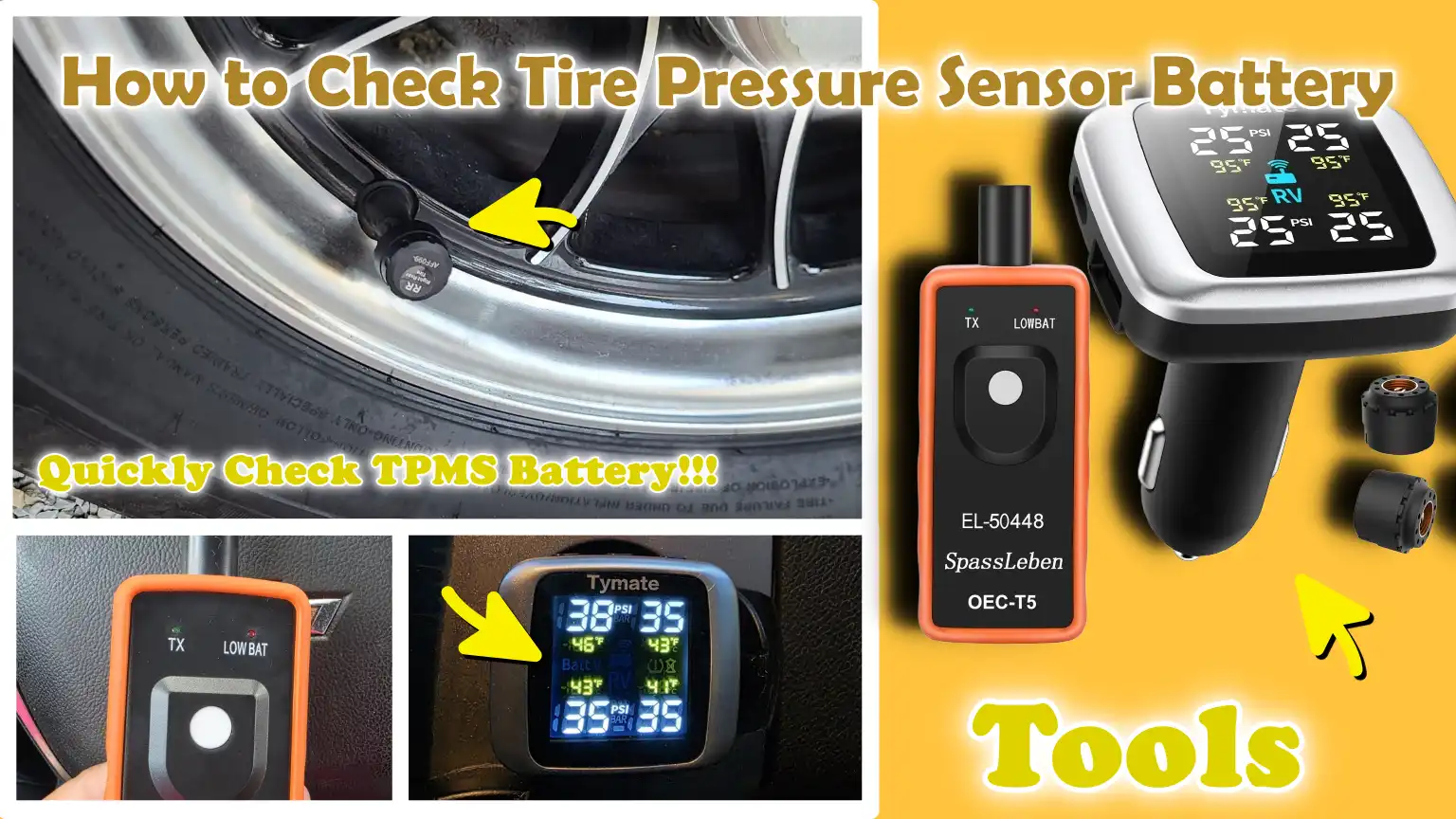
That’s the reason that, in this guide we have shown you How to Check Tire Pressure Sensor Battery so that you can spot early warning signs and diagnose the actual issue before it starts to affect your safety, your tires and your wallet as well.
So, What is a Tire Pressure Sensor Battery?
1. Explanation of the TPMS Sensor Battery – Lithium Coin Cell, Sealed Unit
A tire pressure sensor battery is a small, internal power source embedded within every Tire Pressure Monitoring System (TPMS) sensor.
Most modern systems utilize lithium coin cell batteries, which are permanently sealed inside the sensor’s housing.
This battery is designed to operate silently and maintenance-free for years.
It powers the sensor responsible for measuring tire pressure and temperature and for wirelessly transmitting that data to your car’s dashboard display.
Because it is sealed within a compact unit, it remains protected from moisture, vibration and heat; however, it typically cannot be recharged or replaced independently.
As the battery begins to weaken, the sensor’s accuracy may diminish, or it may cease transmitting data entirely.
2. The Difference Between Direct TPMS and Indirect TPMS
Tire Pressure Monitoring Systems generally fall into two categories: Direct TPMS and Indirect TPMS; the role of the battery depends on which system your vehicle employs.
Direct TPMS utilizes actual pressure sensors installed inside each tire.
These sensors measure air pressure in real-time and transmit precise readings to the vehicle using radio signals; each of these sensors is powered by its own internal battery.
Indirect TPMS does not utilize any actual pressure sensors inside the tires.
Instead, it estimates tire pressure by tracking the rotational speed of the wheels via the vehicle’s ABS system.
If a tire’s air pressure drops, it rotates slightly faster than the other tires and the system detects this discrepancy.
Consequently, only Direct TPMS systems rely on the sensor batteries located inside the wheels.
3. Why Most TPMS Batteries Cannot Be Replaced
Most TPMS sensor batteries are not designed to be replaced separately, as they are permanently sealed inside the sensor unit.
This design choice is deliberate, prioritizing safety and durability.
The sensor operates inside the tire, where it must withstand high pressure, constant motion, temperature fluctuations and moisture.
A sealed enclosure protects the battery and electronics from damage, thereby ensuring long-term reliability.
If the battery were replaceable, the seal could weaken over time, increasing the risk of failure or air leaks.
For this reason, when the battery reaches the end of its life, manufacturers typically recommend replacing the entire sensor unit rather than attempting to open it to access the battery.
4. Average Battery Lifespan – 5 to 10 Years
The average lifespan of a TPMS sensor battery is typically between five and ten years.
However, this can vary depending on driving habits, weather conditions and vehicle usage.
Sensor batteries tend to deplete faster in extremely hot climates or in vehicles driven over long distances, as the heat generated inside the tire places greater internal stress on the electronic components.
Over time, the battery’s power gradually diminishes, which can result in weak signals, delayed readings, or a complete loss of communication with the vehicle’s system.
This is why, in older vehicles, TPMS warning lights often illuminate even when the tire pressure is perfectly normal.
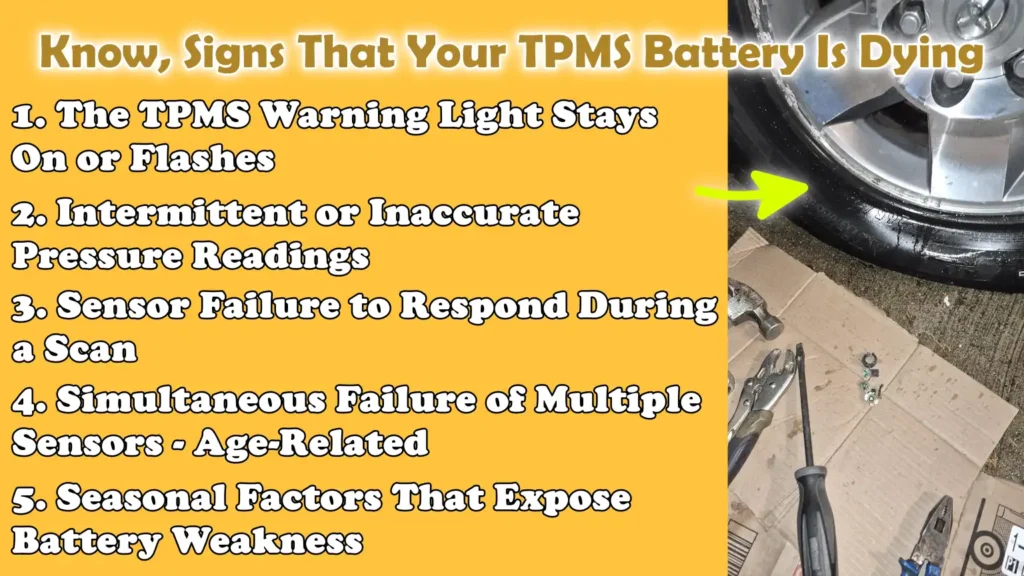
Know, Signs That Your TPMS Battery Is Dying
1. The TPMS Warning Light Stays On or Flashes
One of the earliest and most common signs of a dying TPMS sensor battery is a warning light on the dashboard that either remains constantly illuminated or flashes.
In many vehicles, a flashing TPMS light initially indicates a malfunction within the system itself, rather than simply low tire pressure.
As the sensor’s battery begins to weaken, it may be unable to transmit a continuous signal to the vehicle’s receiver; this leads the system to interpret the issue as a tire-related problem, even if all tires are properly inflated.
Over time, this warning may appear more frequently or remain constantly lit, as the sensor is no longer capable of maintaining a consistent connection.
2. Intermittent or Inaccurate Pressure Readings
A failing TPMS battery often results in unstable or inaccurate tire pressure readings.
Instead of displaying consistent and reliable values, the readings may fluctuate randomly or appear different each time you start the vehicle.
This occurs because the weakening battery struggles to provide a steady power supply to the sensor, leading to delays in data transmission or the receipt of incomplete data.
In some instances, one tire may display normal pressure, while another suddenly shows an unusually low or high reading, even if no adjustments have been made.
This discrepancy is a clear indication that the problem lies not with the tire itself, but with the sensor’s internal power source.
3. Sensor Failure to Respond During a Scan
When a TPMS sensor’s battery is severely depleted, it may cease to respond entirely when a diagnostic scan is performed using a TPMS tool.
Typically, a functioning sensor will activate when scanned, transmitting its unique ID along with data regarding pressure and temperature.
However, a sensor with a dying battery will fail to activate and will not transmit any signal.
A lack of response is often the clearest indication that the internal battery within the sensor is no longer capable of powering the communication system.
In such instances, the sensor effectively becomes inactive, even if the tire itself remains in perfect condition.
4. Simultaneous Failure of Multiple Sensors – Age-Related
Another key indicator of aging TPMS batteries is when more than one sensor begins to fail at approximately the same time.
As all sensors in a vehicle are typically installed concurrently, their batteries tend to age at roughly the same rate.
This implies that when one sensor begins to fail, others often follow suit shortly thereafter.
In older vehicles, it is frequently observed that multiple TPMS warnings appear within a very short timeframe.
This pattern clearly signifies that the issue stems from the natural wear and tear or degradation of the batteries, rather than a specific sensor malfunction or a tire-related problem.
5. Seasonal Factors That Expose Battery Weakness
TPMS battery weakness often becomes apparent during fluctuations in ambient temperature, particularly when the weather transitions from hot to cold, or vice versa.
Cold temperatures can diminish battery efficiency, making it difficult for the sensor to transmit signals.
Conversely, excessive heat can accelerate battery degradation over time.
Many drivers notice TPMS warnings more frequently during the winter months or during sudden weather shifts, as these conditions tend to expose pre-existing battery weaknesses.
In such cases, a sensor may function correctly under normal conditions but fail intermittently when there is a sudden drop or rise in temperature; this serves as an indication that the battery is nearing the end of its operational lifespan.
Tools
| Tools | Why It Is Needed | How To Use It |
|---|---|---|
| TPMS Scan Tool | This is the most direct method to determine whether a TPMS sensor’s battery is running low or has completely died. | Turn on the scan tool, select TPMS mode, position it near the valve of each tire and trigger the sensor. The tool will indicate whether the sensor is functioning correctly and whether the battery signal is strong or weak. |
| OBD2 Scanner – Optional | This helps confirm whether the TPMS warning is caused by a faulty sensor battery or by a communication issue within the system. | Connect the scanner to the OBD2 port located under the dashboard, turn on the ignition and read the fault codes. Look specifically for error codes related to the TPMS or sensors to pinpoint the problem. |
| Tire Pressure Gauge | This helps compare the actual tire pressure against the sensor’s reading to identify a faulty sensor or a weak battery. | Remove the valve cap, press a pressure gauge onto the valve stem and take a pressure reading. Compare this reading against the recommended tire pressure for your vehicle to verify its accuracy. |
| Vehicle Manual | This step is crucial because TPMS systems vary across different vehicles; an accurate diagnosis depends on following the specific instructions provided for your particular vehicle model. | Consult the TPMS section of your vehicle’s owner’s manual for information regarding the warning light’s operation, the reset procedure and the recommended tire pressure for your vehicle. |
| Professional Diagnostic Tool – Advanced Checks | This becomes necessary when standard tools fail to accurately identify a faulty sensor and a more in-depth investigation is required. | At a workshop, connect a diagnostic device, perform a full system scan of the TPMS and review the comprehensive report on the sensors’ condition, including battery status and signal quality. |
How to Check Tire Pressure Sensor Battery – Easy Steps
1. Observe the Behavior of the TPMS Warning Light
The first and easiest way to detect a potential issue with a TPMS sensor’s battery is to carefully observe the warning light located on your dashboard.
In most vehicles, if the TPMS light remains continuously illuminated, it generally indicates that the air pressure in one or more tires is low; conversely, if the TPMS light is blinking (flashing), it often points to a malfunction within the system itself.
When a sensor’s internal battery begins to weaken, the system fails to receive proper signals, causing the light to blink or behave erratically.
This occurs because the vehicle cannot receive stable data from the sensor, making it unable to determine whether the issue lies with the tire pressure or with a communication interruption.
If the light remains illuminated even after checking and correcting the tire pressure, it is a strong indication that the problem is likely not related to the tire itself, but rather to the sensor’s battery.
2. Scan Each Tire Sensor Individually
In the next step, each sensor is tested individually using a TPMS scan tool.
This tool establishes direct communication with the sensor installed inside each wheel, helping to determine whether they are functioning correctly.
When you use this tool to activate a sensor, if the sensor is working properly, it will immediately transmit data such as: tire pressure, temperature and sensor ID, back to the device.
If the sensor’s internal battery is weak, you may experience a delay in receiving the signal, receive incomplete data, or perhaps receive no signal at all.
In some cases, the scan tool may even specifically indicate that the battery power is low or that no response is being received from the sensor.
This step is crucial because it allows you to pinpoint exactly which specific sensor is malfunctioning.
Rather than merely making assumptions based on the warnings displayed on your dashboard.
3. Compare Tire Pressure Readings
After scanning the sensors, it is essential to compare the digital readings with those obtained using a manual tire pressure gauge.
A manual gauge indicates the actual physical pressure inside the tire, a measurement that remains unaffected by any potential electronic glitches.
If the value displayed by the TPMS system differs from the reading on the manual gauge, particularly if this discrepancy fluctuates, it may be an indication that the sensor’s battery is running low.
A properly functioning TPMS sensor should provide a reading that closely matches the actual tire pressure.
When a sensor’s battery begins to fail, it may transmit inaccurate or outdated information, creating a discrepancy between the actual tire pressure and the value displayed on the screen.
This comparison helps determine whether the underlying issue or malfunction is mechanical or electronic.
4. Use an OBD2 Scanner to Check for Fault Codes
An OBD2 scanner can provide deeper insights into TPMS system malfunctions by retrieving diagnostic trouble codes from the vehicle’s onboard computer.
Common codes associated with the TPMS often indicate communication interruptions, low battery voltage, or a failure to receive sensor data.
When a sensor’s battery is weak, the system may intermittently generate codes signaling communication errors, as the sensor struggles to maintain a consistent connection with the vehicle.
These codes are invaluable because they help confirm that the problem stems from a failing sensor battery, rather than a mechanical fault within the tire or a system calibration issue.
If multiple codes point toward communication-related issues, there is a strong likelihood that the batteries in one or more sensors are failing.
5. Complete the Sensor Re-learn Process
The final step is to complete the TPMS re-learn process, which allows the vehicle to re-synchronize with all of its tire sensors.
This procedure is often required following a tire rotation, sensor replacement, or system reset.
If the sensors are functioning correctly, the re-learn process completes successfully and the system resumes displaying accurate readings.
However, if a sensor’s battery is low or completely depleted, the re-learn process may fail because the sensor is unable to respond properly during reprogramming.
In many instances, the repeated failure of the re-learn process serves as a definitive indication that the sensor itself, due to a dead battery, is no longer functioning correctly.
This step is crucial as it helps distinguish between minor system glitches and actual hardware malfunctions.
How to Determine Whether the Battery Is Dead or the Sensor Is Faulty?
1. Battery Failure vs Physical Sensor Damage
Distinguishing between a dead battery and a faulty sensor is crucial, as both may exhibit similar warning signs, yet their root causes and solutions differ significantly.
Battery degradation is a gradual process; after years of use, the internal power source begins to weaken.
In such cases, the sensor itself is typically still functional, but it fails to operate because it lacks the necessary power to transmit data.
Conversely, physical damage to a sensor can result from impacts, corrosion, moisture intrusion, or hazards faced during tire installation or while driving on the road.
A physically damaged sensor may cease functioning abruptly or behave erratically, even if its battery remains in good condition.
If the issue is battery-related, symptoms typically manifest gradually; whereas, in cases of physical damage, the sensor often stops working immediately and completely.
2. Signal Strength vs No Signal
The most reliable method for differentiating between a weak battery and a faulty sensor is to analyze the signal’s behavior.
A dying battery typically transmits weak, intermittent, or delayed signals.
The sensor may respond occasionally, but its data may lack consistency, or it may take longer than usual to update.
In contrast, a completely faulty sensor often transmits no signal whatsoever.
When a sensor fails to respond during a scan or diagnostic check, it may indicate that either the battery is completely depleted or an internal electronic failure has occurred within the sensor.
If the sensor responds intermittently rather than consistently, there is a high probability that the issue lies with the battery.
However, if the sensor remains unresponsive under any circumstances, there is a very high probability that a hardware malfunction has occurred within the sensor itself.
3. Checking a Single Sensor vs Checking Multiple Sensors
The number of sensors exhibiting faults can also help determine whether the issue is related to the battery or to a more significant sensor malfunction.
If only a single sensor is malfunctioning while all others are operating correctly, the cause is often physical damage to that specific sensor or a localized internal defect within it.
However, if multiple sensors begin to fail around the same time, it typically indicates that the battery has aged, rather than representing a sudden, isolated failure of a single sensor.
This occurs because TPMS sensors are often installed simultaneously; consequently, their batteries age in tandem and begin to weaken at approximately the same time.
When multiple sensors exhibit identical symptoms such as: weak signals, delayed readings, or the illumination of a warning light, it serves as a definitive indication that the batteries throughout the entire system are reaching the end of their service life, rather than a single sensor having sustained damage.
So, Can You Replace a TPMS Sensor Battery?
1. Why Most Sensors Are Sealed
In most modern vehicles, the internal battery within a TPMS sensor cannot be replaced because the entire sensor is manufactured as a sealed unit.
This sealed design is employed to protect the internal electronics from the harsh conditions found inside a tire, including heat, moisture, pressure fluctuations and the constant vibration experienced during driving.
As the sensor is mounted inside the wheel, even a tiny opening could allow air to leak or water to ingress, potentially causing the electronics to fail prematurely.
For this reason, manufacturers permanently seal the lithium battery inside the sensor during production.
This ensures that the unit remains highly reliable throughout its entire lifespan; however, it also means that once the battery is depleted, the unit is not designed to be opened or repaired individually.
2. Aftermarket Options with Replaceable Batteries – In Rare Cases
There are very few aftermarket TPMS sensors available in which the battery can technically be replaced, though these are generally not found in factory-installed systems.
These specialized designs typically originate from third-party manufacturers and are engineered for specific vehicles or custom applications.
Even in these instances, replacing the battery is not a simple task; it often requires specialized tools and careful resealing to ensure that the sensor remains airtight and accurate.
In real-world practice, most drivers and repair shops opt to replace the entire sensor rather than just the battery, as attempting to replace the battery can compromise the sensor’s reliability.
Consequently, these aftermarket options serve more as exceptions than as standard solutions within the automotive industry.
3. When Replacing the Entire Sensor Becomes Necessary
In most situations, when a TPMS sensor’s battery runs out, it becomes necessary to replace the entire sensor.
This is a standard solution recommended by vehicle manufacturers, as it ensures that the system continues to function safely and accurately.
Replacing the entire sensor becomes imperative when the sensor stops transmitting signals, repeatedly indicates communication errors, or fails during a diagnostic scan.
This measure is also required if the sensor’s outer casing becomes damaged or if the internal battery weakens due to aging, a common occurrence after five to ten years of use.
Replacing the complete sensor restores proper communication with the vehicle’s system and ensures accurate monitoring of tire pressure, factors that are crucial for safety, fuel efficiency and tire longevity.
Read More:
- How to Seal Bead Leak in Tire
- How to Use Tire Plug Kit Correctly
- How to Repair Tubeless Tire Puncture
- How to Locate a Nail in a Tire
- How to Fix Slow Tire Air Leak
- How to Detect Tire Sidewall Damage
- How to Check Tire Tread Depth at Home
- How to Bleed ABS System Properly
- How to Replace Rusted Brake Lines
- How to Inspect Brake Lines for Rust
- How to Flush Contaminated Brake Fluid
- How to Check Brake Fluid Contamination Level
- How to Fix Brake Bias Issues
- How to Test Brake Proportioning Valve
- How to Replace a Brake Light Switch
- How to Diagnose Brake Light Switch Failure
- How to Fix Intermittent ABS Activation
- How to Clean ABS Wheel Speed Sensor
- How to Diagnose ABS Sensor Wiring Issues
- How to Test Electronic Brake Module (EBCM)
- How to Fix Parking Brake Dragging
Estimated, Cost of Replacing TPMS Sensor Batteries
1. Average Cost Per Sensor
Replacing a TPMS sensor battery is generally not considered a simple task, it is not merely like changing a standard battery, because the battery is housed inside a sealed sensor unit.
In most cases, rather than simply replacing the battery, the entire sensor unit is replaced instead.
The average cost of a single TPMS sensor can range from that of an inexpensive aftermarket unit to that of a more expensive Original Equipment Manufacturer (OEM) part.
Pricing varies depending on the vehicle brand, the quality of the sensor and specific compatibility requirements.
Luxury vehicles often incur higher sensor costs due to their use of more advanced or specialized TPMS systems, whereas standard vehicles typically utilize more affordable sensors.
As the battery is not sold separately in most instances, the replacement cost effectively becomes the cost of purchasing an entirely new sensor unit.
2. Labor Costs – Tire Mounting and Balancing
In addition to the cost of the sensor, labor constitutes a significant portion of the total expense, as the sensor is located inside the tire.
To access and remove it, the tire must be dismounted from the wheel, a procedure that requires specialized tools.
Once the sensor has been replaced, it is essential to remount the tire onto the rim and ensure that it is properly balanced to prevent issues while driving.
This process helps mitigate problems such as vibrations and uneven tire wear.
Labor charges can vary depending on the specific workshop, geographic location and vehicle type; however, they typically cover the dismounting of the tire, installation of the new sensor, remounting of the tire and the subsequent resetting or “re-learning” of the TPMS system.
In many instances, labor costs can account for a substantial portion of the total expense, as this procedure involves more steps than standard external vehicle repairs.
3. DIY vs Professional Replacement – A Comparison
Replacing TPMS sensors at home is technically feasible, provided you possess the necessary experience, but it requires the right tools and meticulous attention to detail.
While the DIY approach can save on labor costs, it still necessitates specific equipment, such as a jack, tire bead breaker, valve tools and, occasionally, a TPMS scan tool for sensor programming.
Without the proper tools or expertise, there is a risk of damaging the tire, the rim, or the sensor itself during installation.
Conversely, having a professional replace the sensors ensures that the installation is performed correctly, the tire is properly balanced and the system is accurately reset.
Although this option entails slightly higher costs due to labor fees, it offers greater reliability and minimizes the likelihood of installation errors or future TPMS-related issues.
How Long Do TPMS Batteries Last?
1. Typical Lifespan – 5 to 10 Years or 100,000+ Miles
TPMS sensor batteries are designed for longevity, as they are sealed inside the tire and engineered to operate continuously at low energy levels.
In most vehicles, the typical lifespan of a TPMS battery is approximately five to ten years, or roughly 100,000 miles (or more) of driving.
This significant variation depends on the frequency of vehicle usage and the conditions to which it is exposed.
Over time, the battery’s power gradually diminishes as it continuously powers the sensor responsible for measuring tire pressure and transmitting signals to the vehicle’s computer system.
When the battery reaches the end of its lifespan, the sensor typically ceases to function entirely, as the power source cannot be replaced in most designs.
2. Factors Affecting Battery Lifespan
Although TPMS batteries are built to last for many years, their actual lifespan can vary significantly depending on various real-world conditions.
In some vehicles, sensors may fail prematurely, while in others, they may last longer than expected.
This discrepancy arises because several external and usage-related factors directly influence the rate at which the internal battery depletes.
These factors do not cause immediate damage to the battery; rather, they gradually degrade its performance over time.
3. Driving Conditions
Driving conditions play a crucial role in determining how long a TPMS battery will last.
In vehicles frequently driven on rough roads, highways, or uneven surfaces, the sensors are subjected to constant vibration and stress.
This constant agitation increases the workload on the sensor, necessitating more frequent signal transmissions and, consequently, resulting in higher energy consumption.
Conversely, driving on smooth roads with minimal vibration allows the battery to reach its maximum potential lifespan.
Therefore, poor road conditions can reduce the overall lifespan of a TPMS system, even if the battery itself is of high quality.
4. Temperature
Temperature is another major factor influencing the lifespan of a TPMS battery.
Excessive heat inside the tire can gradually degrade battery performance over time, as the sensors are continuously exposed to elevated internal temperatures while the vehicle is in motion.
Similarly, extremely cold conditions can temporarily diminish battery performance and render the sensors less responsive.
Vehicles operated in regions characterized by frequent temperature fluctuations often trigger premature TPMS warnings; this occurs because the battery is forced to work harder to maintain constant communication with the vehicle’s onboard systems.
Over time, repeated exposure to cycles of heat and cold gradually reduces the battery’s actual lifespan.
5. Frequency of Use
How often a vehicle is driven also impacts the lifespan of the TPMS battery.
In vehicles used daily, the sensors remain active for longer periods; this means the battery is continuously transmitting data and gradually depleting.
On the other hand, batteries in vehicles used only occasionally can also degrade over time, as the sensors, even when not actively transmitting data, continue to discharge slowly.
However, frequent driving accelerates battery depletion, as the system constantly monitors tire pressure and transmits updates to the vehicle.
Although continuous operation is essential for safety, years of such usage naturally result in gradual wear and tear of the battery.
Great Tips for Extending TPMS Sensor Battery Life
Plus, there’s study that shows that there’s technical reasons behind TPMS battery lifespan limits, even though the system is actually designed for low power use, but with the constant communication and dealing with harsh tire conditions it slowly drains the battery; that’s why you need to check the sensor health as it is really important in older vehicles.[¹]
1. Avoid Unnecessary Re-learn Cycles
A practical way to extend the battery life of TPMS sensors is to avoid unnecessary re-learn or reset procedures.
A re-learn cycle compels the vehicle to re-identify and communicate with each sensor, potentially causing the sensors to activate and transmit data more frequently than usual.
While this process is safe when necessary, repeating it without cause increases sensor activity without providing any tangible benefit.
As transmitting data consumes a small amount of battery power each time, minimizing unnecessary resets helps the sensors conserve energy and maintain consistent performance over a longer period.
2. Maintain Proper Tire Pressure
Maintaining the correct air pressure in your tires is essential not only for safety and fuel efficiency but also for reducing the strain placed on TPMS sensors.
When tire pressure is either too low or too high, the sensors are forced to monitor continuously and report abnormal conditions, which can increase their communication activity.
Over time, this increased workload can slightly reduce the sensors’ battery life.
Properly inflated tires stabilize the system and minimize unnecessary alerts, allowing the sensors to operate under normal conditions without excessive strain or the need to transmit frequent warnings.
3. Protect Sensors During Tire Changes
TPMS sensors are mounted inside the tire, near the valve stem, making them vulnerable to damage during tire installation, repair, or replacement.
Careless handling during a tire change can cause physical damage to the sensor or loosen its internal components; this can lead to premature sensor failure, a problem that is often mistakenly attributed to a depleted battery.
Using the correct tools and adhering to proper installation procedures helps protect the sensor from physical damage and excessive pressure.
Professional tire service centers typically follow established protocols to safeguard sensors from harm, thereby helping to preserve both the health of the battery and the overall performance of the sensor.
4. Use High-Quality Replacement Sensors
When a TPMS sensor reaches the end of its lifespan and requires replacement, selecting a high-quality replacement sensor is crucial for ensuring reliable and long-lasting performance.
Low-quality sensors, or those incompatible with the vehicle’s system, may fail to communicate effectively with the vehicle’s onboard systems, potentially leading to recurring malfunctions or premature sensor failure.
High-quality sensors are designed to meet Original Equipment (OE) standards, ensuring accurate signal transmission and efficient battery usage.
A reliable sensor minimizes the need for frequent replacements and facilitates accurate, long-term monitoring of tire pressure, thereby indirectly enhancing the overall robustness of the entire system.
When Should All TPMS Sensors Be Replaced Simultaneously?
1. Replacement Strategy Based on Age
Replacing all TPMS sensors at the same time is often recommended once a vehicle reaches a certain age, typically around five to ten years, because most factory-installed sensors tend to age concurrently.
As each sensor contains a sealed battery whose power gradually diminishes over time, their failure points also tend to occur around the same time.
When one or two sensors begin to fail due to low battery power, it serves as a strong indication that the remaining sensors are also nearing the end of their useful life.
In such cases, replacing all sensors simultaneously is a prudent approach, as it helps avoid the inconvenience of recurring failures within a short timeframe.
2. Cost Savings Through Simultaneous Replacement
Although replacing all TPMS sensors at the same time may initially seem more expensive, it actually results in long-term cost savings.
This is because replacing a single sensor requires removing, remounting and balancing the tire, as well as resetting the system; consequently, labor charges are incurred every time a sensor is replaced individually.
If sensors are replaced one by one as they fail, this labor-intensive process must be repeated multiple times.
By replacing all sensors simultaneously, you incur labor charges only once and the entire system is fully updated during a single service visit.
This approach often proves to be more cost-effective, particularly for older vehicles where the likelihood of multiple sensors failing within a short period is higher.
3. Benefits of Preventive Maintenance
Replacing all TPMS sensors simultaneously also offers several benefits in terms of preventive maintenance.
When all sensors are new, the system operates more reliably and consistently, thereby reducing the likelihood of sudden warning lights illuminating or inaccurate tire pressure readings occurring.
This enhances driving safety, as the vehicle can continuously monitor tire pressure without any interruptions or false alerts.
It also helps prevent sudden vehicle breakdowns or tire-related emergencies, which often go unnoticed, that are caused by low tire pressure.
Furthermore, having a complete set of new sensors ensures that all components function cohesively, thereby maintaining the long-term stability and accuracy of the TPMS system.
Know, Common Mistakes During Checkup of TPMS Battery
1. Ignoring a Flashing TPMS Light
One of the most common, and dangerous, mistakes drivers make is ignoring a flashing TPMS light on the dashboard.
A flashing light is usually not merely a warning about tire pressure; it often signals a hidden issue within the system itself such as: a malfunctioning sensor or a weak internal battery.
When this signal is ignored, the vehicle may completely stop receiving accurate tire pressure data.
This means the driver remains unaware of whether a tire is underinflated, thereby increasing the risk of uneven tire wear, reduced fuel efficiency and even sudden tire failure.
Dismissing a flashing light as a minor inconvenience can delay proper diagnosis and allow the underlying problem to worsen over time.
2. Assuming the Issue is the Battery When Tire Pressure is Low
Another common mistake is automatically assuming that every TPMS warning indicates low tire pressure.
While low pressure is a frequent trigger for a warning, it is not the only cause.
In many instances, the actual problem lies with a weak or defective sensor battery, which prevents accurate data from reaching the vehicle.
When drivers inflate their tires without first diagnosing the sensor system, they fail to identify the true root of the problem.
Consequently, the warning light may persist even after the tires have been properly inflated.
Therefore, proper diagnosis is crucial; attempting to fix a battery-related fault by treating it as a tire pressure issue will not resolve the actual problem and may lead to confusion or unnecessary repairs.
3. Using the Wrong Tools
Using incorrect tools during TPMS inspection or repair is another mistake that can lead to inaccurate results or even cause damage to the system.
TPMS sensors require specialized scanning tools capable of communicating with the sensors to accurately read their data.
Standard tire pressure measurement tools (such as ordinary tire gauges) can only measure air pressure; they cannot detect the condition of the sensor’s battery or the strength of its signal.
Similarly, using improper tools when removing or installing tires can damage the sensor located inside the wheel.
Accurate diagnostics are only possible when tools specifically designed for TPMS systems are utilized; otherwise, the results may be misleading or incomplete.
4. Skipping the ‘Re-learn’ Process
Neglecting the TPMS ‘re-learn’ process following a tire rotation, sensor replacement, or system reset is a common mistake.
This oversight can result in the warning light remaining illuminated or lead to inaccurate readings.
The ‘re-learn’ process enables the vehicle’s system to recognize each individual sensor and associate it with its correct position on the wheel.
Without this procedure, the system may display incorrect tire locations or fail to provide accurate tire pressure data.
In some instances, it may even trigger false warnings, making it difficult to identify genuine issues.
Completing the ‘re-learn’ process ensures that all sensors are communicating properly with the vehicle and that the TPMS system is functioning exactly as it was designed to.
Conclusion – How to Check Tire Pressure Sensor Battery
It is extremely crucial that you need to ensure proper working of the TPMS sensors, as these are literally tells you about the condition of 4-small contact points with the road, so proper working is needed to reach destination safely.
These sensors are powered by long-lasting batteries.
Over time, typically after five to ten years, these batteries gradually begin to lose their charge.
As they deteriorate, the system may provide inaccurate or misleading information, even if your tires are in perfect condition.
This is why recognizing the signs of a dying TPMS sensor battery is crucial, not only for routine maintenance but also for driving safety.
A flashing warning light, erratic readings, or a sensor failing to respond during a diagnostic scan are not sudden, isolated incidents; rather, they are early indicators that the system is losing its ability to provide accurate data.
Many drivers fail to realize that TPMS malfunctions are often mistaken for tire-related issues, whereas the root cause actually lies within the sensors themselves.
A weakening battery can gradually diminish signal strength until the system ceases to function entirely, leaving the driver without accurate tire pressure data.
This is a particularly serious concern, as proper tire pressure directly impacts braking distance, fuel efficiency, tire longevity and overall road safety.
Therefore, accurately diagnosing the problem using the right tools, recognizing warning signs and knowing when to replace the sensors can ultimately save you both time and money.
Ultimately, maintaining a properly functioning TPMS involves more than simply reacting when a warning light illuminates; it requires a clear understanding of what that warning is actually indicating.
A properly functioning system helps ensure that every journey you take is based on accurate information, thereby minimizing risks and enhancing vehicle performance.
So, that’s all from this guide and you can still ask all the related queries below this guide.
Frequently Asked Questions
FAQ 1: How can I tell if my TPMS sensor battery is failing?
Answer: Before a TPMS sensor battery fails completely, it typically provides several early warning signs. You may notice that the TPMS light remains illuminated or flashes, even when the tire pressure is correct. Another common indicator is erratic or inaccurate pressure readings that fluctuate up and down without any actual change in the tires. In some instances, the sensor may fail to respond during a diagnostic scan tool test. These symptoms occur because the internal battery within the sensor is no longer strong enough to transmit a stable signal to the vehicle.
FAQ 2: Can a TPMS sensor function with a weak battery?
Answer: A TPMS sensor may continue to operate for a while with a weak battery, but its performance becomes unreliable. It may transmit delayed signals, provide inaccurate readings, or function intermittently. This creates confusion, as the system is no longer fully accurate. Eventually, when the battery can no longer power the communication system, the sensor ceases to function entirely. At that stage, the sensor typically requires replacement, as the battery is sealed inside the sensor unit.
FAQ 3: Why is my TPMS light on even though my tires are fine?
Answer: The TPMS light may remain illuminated even when tire pressure is correct, because the issue does not always lie with the tires themselves. In many cases, the problem is linked to a weak or depleted sensor battery, which prevents proper communication between the wheel-mounted sensor and the vehicle’s onboard computer. This can also occur if a sensor fails to transmit data or if the system receives an erratic signal. Therefore, when a warning light appears, it is essential to inspect the sensors rather than simply inflating the tires.
FAQ 4: Do TPMS sensors fail suddenly or gradually?
Answer: TPMS sensors typically do not fail suddenly; instead, they degrade gradually over time. The internal battery weakens over time, often over the course of several years, leading to a gradual decline in performance. Initially, you may notice minor issues, such as a warning light flickering occasionally or slight inaccuracies in the readings. As the battery deteriorates further, these problems become more frequent and severe, until the sensor eventually ceases to function altogether. In some instances, a sensor may fail suddenly due to external damage; however, battery-related issues typically manifest gradually.
FAQ 5: Is it safe to drive with a dead TPMS sensor battery?
Answer: Driving with a dead TPMS sensor battery does not pose an immediate safety hazard, but it removes a crucial layer of safety protection. When the sensor is non-functional, your vehicle is unable to accurately monitor tire pressure. This means that if a tire loses pressure, you will not receive a warning. Consequently, this increases the risk of compromised vehicle handling, reduced fuel efficiency and accelerated tire wear over time. To restore proper monitoring, it is always safer to replace a faulty sensor as soon as possible.
FAQ 6: How long do TPMS sensor batteries typically last?
Answer: TPMS sensor batteries typically last between five and ten years, depending on driving conditions, temperature and usage patterns. Vehicles frequently driven in extreme heat or cold may experience shorter battery life, as temperature fluctuations can impact electronic performance. Frequent driving can also reduce battery longevity, as the sensor remains continuously active. When the battery reaches the end of its lifespan, the sensor typically stops functioning entirely; this is because it is a sealed unit and the battery cannot be recharged or replaced independently.
FAQ 7: Can you replace just the TPMS battery?
Answer: In most modern vehicles, you cannot simply replace the TPMS battery, as it is sealed inside the sensor unit. The design is engineered to protect the internal electronics from air, moisture and potential damage within the harsh environment inside the tire. When the battery runs out, the entire sensor unit typically needs to be replaced. However, there are some sensors available on the market with replaceable batteries; yet, due to concerns regarding their reliability, they are not widely used in standard vehicles.
References:
[1] Energy-Efficient Wireless Transmissions for Battery-Less Vehicle Tire Pressure Monitoring System
https://ieeexplore.ieee.org/document/8121968

Hello Folks, Dean Shali here to help you out to solve the problems with your lovely vehicle, as i have lots of experience and knowledge about automotive industry as i woks directly with the customers and repair vehicles and i love to help the people to keep their cars safe and running smoothly.