Written By: Dean Shali
Fact Checked By: Sabré Cook
Reviewed By: Tamara Warren
Just listen to this: a properly functioning car always have to move straight way without any effort by yourself, so basically if there’s any constant pulling then it means something is wrong underneath as well.
As well as, in the most of the cases, this issue is actually linked to the common factors such as: improper wheel alignment, having uneven tire pressure, faults in the braking and suspension systems or there could be worn out tires as well.
Plus, according to the automotive service data: the wheel alignment problems alone are responsible for a large percentage of handling complaints, as even if there’s a small misalignment of a few millimetres then it can affect how your car tracks on the road.
Yes, there are symptoms such as: steering wheel is not staying in center, your car drifting on a straight road or if you find out any uneven tire wear as well.
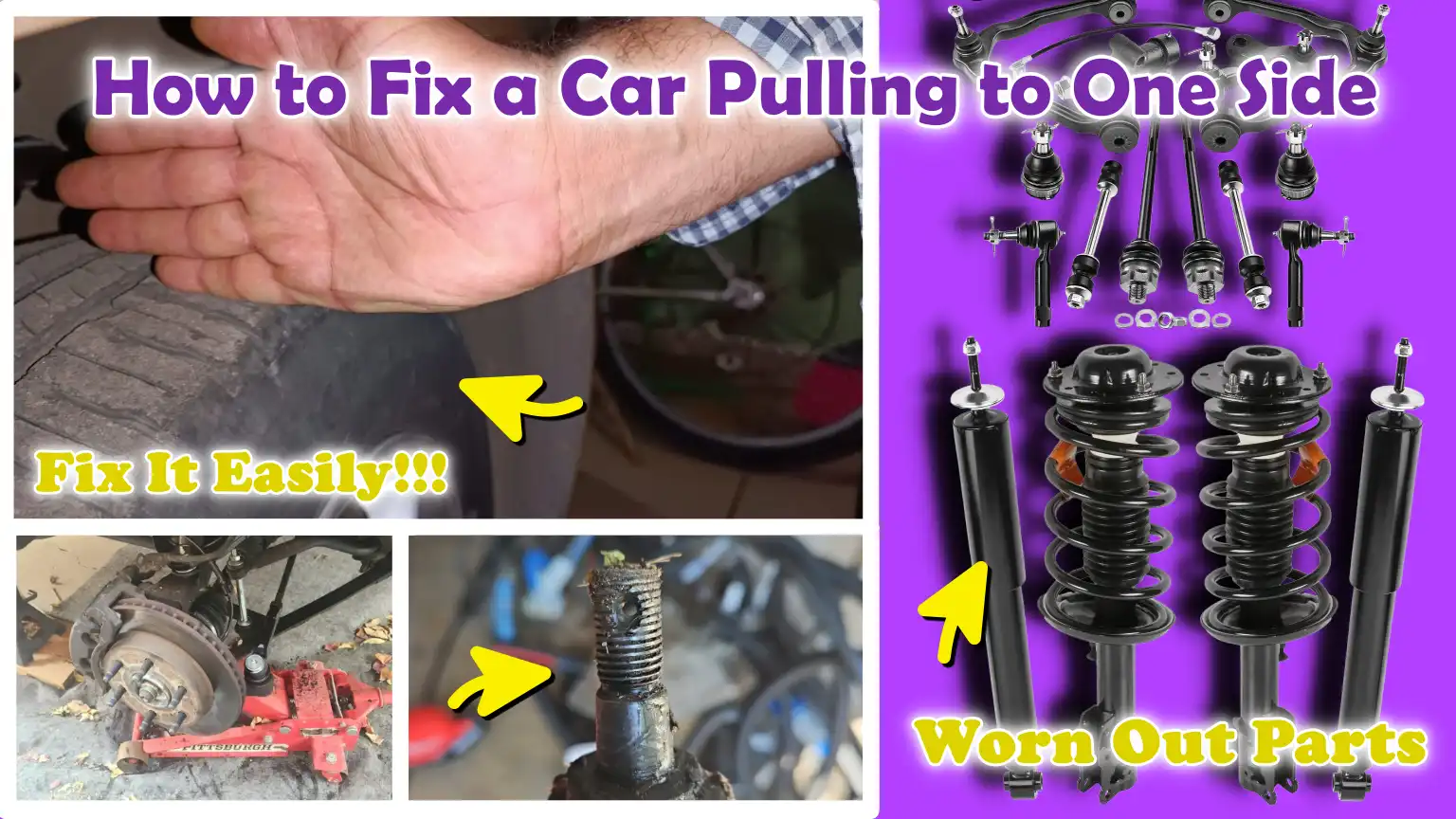
So, that’s the exact reason we have come up with this guide on How to Fix a Car Pulling to One Side, so that you can easily diagnose and fix it quiet effortlessly.
What Does It Mean When Your Car Pulls to One Side?
1. Definition in Simple Terms
When a car pulls to one side, it means that while driving on a level road, the vehicle does not travel in a straight line.
Instead, it gradually drifts or veers to the left or right, even if you are holding the steering wheel perfectly straight.
This is an indication that a component within the car’s alignment, tires, brakes, or suspension system is not functioning correctly.
Generally, a car should travel straight without requiring constant adjustments to the steering wheel; therefore, any form of pulling suggests that the balance of the driving system has been compromised.
2. The Difference Between Mild and Severe Pulling
Mild pulling occurs when the car drifts slowly to one side, but you can easily correct it by holding the steering wheel with a light touch.
It may feel as though the car is merely drifting slightly and this is often caused by minor differences in tire pressure or slight alignment issues.
Severe pulling occurs when the car veers abruptly to one side, making it difficult to drive straight even when gripping the steering wheel tightly.
Severe pulling is typically caused by more serious underlying issues, such as major alignment problems, stuck brake calipers, or significant malfunctions within the suspension system.
Identifying whether the pulling is mild or severe helps determine the urgency of the repair and the specific type of repair required.
3. When Does This Occur?
(While braking, accelerating, or driving at a normal speed)
A car pulling to one side can occur under various driving conditions.
Sometimes, this sensation of pulling occurs while braking, which may indicate that one of the brakes is sticking or applying more pressure than the others.
At other times, it happens during acceleration, which could point to uneven tire wear or worn suspension components.
The pulling may also be constant meaning it persists even while driving at a steady speed on level roads; this is often caused by wheel alignment issues, uneven tire wear, or discrepancies in tire pressure.
It is crucial to identify exactly when this pulling occurs, as it provides clues regarding the root cause of the problem and helps in resolving the issue safely and effectively.
Know, Common Causes of a Car Pulling to One Side
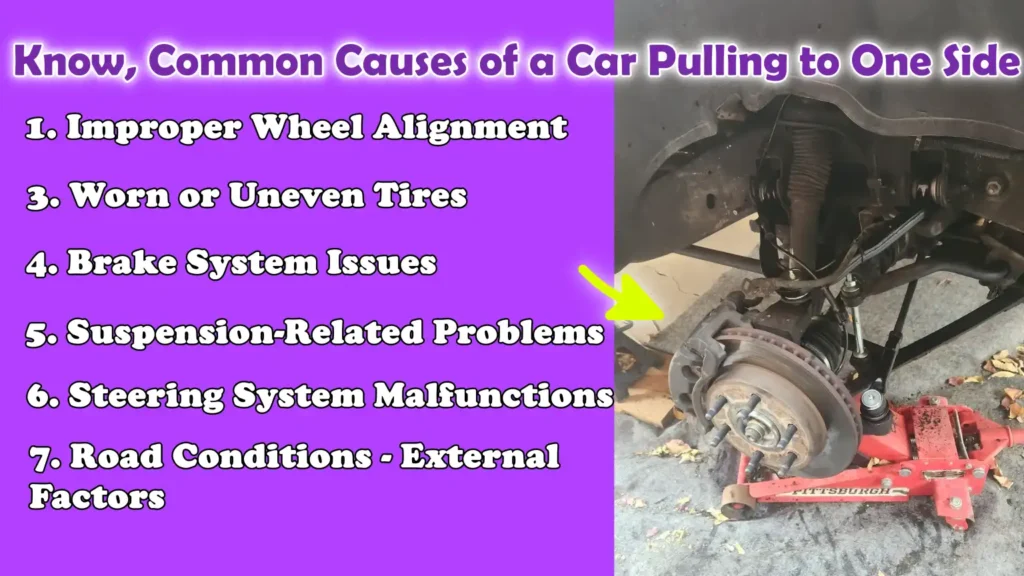
1. Improper Wheel Alignment
Wheel alignment refers to adjusting a car’s suspension system so that the wheels remain oriented in the correct direction and sit at the proper angles relative to the road.
Proper alignment ensures that the tires maintain uniform contact with the road surface and that the car tracks straight.
When alignment is off, the wheels may tilt slightly or deviate from their intended path.
This misalignment causes the vehicle to pull to one side, as the differing angles of one or more wheels generate uneven forces that push the car in a specific direction.
Alignment issues often develop over time due to normal wear and tear, hitting potholes, or minor collisions.
2. Uneven Tire Air Pressure
Tire air pressure plays a crucial role in maintaining balance and stability while driving.
Underinflated tires have a larger contact patch with the road surface, which increases rolling resistance and causes the car to pull toward the side with the lower air pressure.
Conversely, overinflated tires have a smaller contact area and fail to maintain consistent grip on the road, leading to instability in the vehicle’s direction.
Even a slight difference in air pressure between tires can cause the vehicle to pull to one side, particularly at high speeds or during braking.
Regularly checking and maintaining the correct tire air pressure is the simplest way to prevent this issue.
3. Worn or Uneven Tires
The tire tread (the pattern on the surface) is designed to provide grip, absorb shocks and maintain directional stability.
When tires wear unevenly, the surface area in contact with the road becomes irregular.
If the tire tread patterns wear down excessively on one side or in a specific area, it creates uneven friction, causing the vehicle to pull toward the side where the tire is most worn.
Tires exhibiting bulges, cuts, or smooth spots also negatively impact the vehicle’s handling capabilities.
Replacing worn tires and regularly monitoring tread wear ensures that the car tracks straight and operates safely.
4. Brake System Issues
Malfunctions within the brake system can also cause a car to pull to one side.
If a brake caliper becomes seized, it can partially impede the rotation of the wheel even when the brake pedal is not depressed; consequently, the vehicle will continuously pull in that specific direction.
An imbalance in braking force occurs when the brakes apply greater pressure to one side of the vehicle compared to the other; this can be attributed to worn brake pads, faulty calipers, or issues related to the brake fluid.
A vehicle pulling to one side while braking is typically an indication of underlying brake-related issues that require immediate attention to ensure safety.
5. Suspension-Related Problems
The suspension system comprising shock absorbers, struts and bushings, as it supports the vehicle’s weight and absorbs irregularities in the road surface.
Worn or defective suspension components can lead to an uneven distribution of weight and negatively affect the vehicle’s stability.
This imbalance often causes the vehicle to lean to one side, particularly when negotiating turns or driving over uneven terrain.
Suspension issues can also result in vibrations and poor handling, making the driving experience both uncomfortable and unsafe.
Replacing worn-out suspension components restores balance and ensures a comfortable ride.
6. Steering System Malfunctions
Steering components such as: tie rods and the steering rack, just connect the steering wheel to the wheels and control the vehicle’s direction.
Loose or worn steering parts can cause delayed or inconsistent response when turning the steering wheel, resulting in the vehicle drifting to one side.
Specifically, issues involving the tie rods can disrupt wheel alignment, causing the vehicle to constantly pull in one direction.
Proper inspection and maintenance of the steering system ensure precise control and prevent issues related to the vehicle drifting to one side.
7. Road Conditions – External Factors
Occasionally, a vehicle pulling to one side is not caused by an internal mechanical issue, but rather by external road conditions.
Roads are often constructed with a slight camber (slope); meaning the center is slightly higher than the edges to facilitate proper water drainage.
Due to this slope, the vehicle naturally drifts slightly toward the lower side.
Driving on sloped or uneven surfaces can exacerbate this issue and it is crucial to distinguish this from mechanical problems.
Understanding the impact of road conditions helps avoid unnecessary repairs and ensures an accurate diagnosis of any genuine issues with the vehicle.
How to Determine Why Your Car Is Pulling to One Side?
1. Check Tire Pressure
The easiest way to determine why your car is pulling to one side is to check the tire pressure.
You will need a reliable tire pressure gauge to measure the air inside each tire.
The correct pressure for your vehicle can typically be found in the owner’s manual or on a sticker located on the driver’s-side door frame.
Maintaining the correct PSI ensures that all tires are balanced and maintain uniform contact with the road.
Even a slight discrepancy in tire pressure can cause the car to pull to one side, particularly at higher speeds or when braking.
Regularly checking and adjusting tire pressure is a simple first step in identifying the root cause of this issue.
2. Inspect Tire Condition
The condition of your tires is another crucial factor that requires attention.
Carefully inspect each tire to see if it is wearing unevenly on one side, or if there are any bulges, cracks, or other visible signs of damage.
If a tire’s tread (outer surface) is significantly more worn on one side, or if there are inconsistencies in the wear patterns across different tires, this can create an imbalance; consequently, the car will pull toward the side with the more heavily worn tires.
Bulges or weak spots in the tires prevent them from making proper contact with the road, thereby exacerbating the pulling issue.
Ensuring that your tires are in good condition can often resolve the problem of the car pulling to one side without the need for complex repairs.
3. The Test Drive Method
A practical method for diagnosing why your car is pulling to one side is to conduct a controlled test drive.
Choose a straight and level road, drive at a moderate speed and rest your hands lightly on the steering wheel.
If the car pulls to one side even without turning the steering wheel, it indicates an imbalance in the tires, alignment, or suspension system.
Briefly removing your hands from the steering wheel can help confirm whether the car is indeed drifting to one side; however, this should always be done safely and in a controlled environment.
Paying close attention to how the car behaves on the road can be extremely helpful in identifying the root cause of the problem.
4. Watch for Symptoms of Wheel Alignment Issues
Improper wheel alignment is one of the most common reasons why a car pulls to one side.
Symptoms of alignment issues include: the steering wheel appearing crooked while driving straight, or the car drifting to one side even on level roads.
If you feel that your steering wheel is off-center, or if the car consistently pulls in the same direction, you may need to have your alignment checked by a professional.
Proper alignment ensures that all wheels are set at the correct angles and that the car tracks straight, thereby preventing long-term damage to the tires and suspension components.
5. Check the Brakes
Brake-related issues can also cause a car to pull to one side, particularly if the vehicle veers off course while braking.
Symptoms to watch out for include: a stuck brake caliper which causes one wheel to remain partially engaged or uneven braking, where one side applies significantly more force than the other.
A burning smell, strange noises, or vibrations while braking can also be signs of brake-related problems.
Immediate inspection and repair of brake issues are crucial for safety and for eliminating the problem of the car pulling to one side while driving.
6. Suspension and Steering Inspection
Finally, the suspension and steering systems should be inspected for any issues that could cause the car to pull to one side.
Pay attention to any unusual noises, vibrations, or sensations of looseness while driving.
Worn-out shocks, struts, bushings, or tie rods can all create imbalances and cause the vehicle to drift to one side.
Ensuring that all these components are in good condition keeps the car stable, responsive and safe.
Regular inspection of suspension and steering components can prevent the issue of the car pulling to one side and improve the vehicle’s overall performance.
How to Fix a Car Leaning to One Side – Easy & Beginner’s Friendly Guide
1. Adjust Tire Pressure
Adjusting tire pressure is the easiest and most effective method for resolving the issue of a car leaning to one side.
First, use a reliable tire pressure gauge to check the air pressure in all four tires.
Compare the measured pressure against the recommended PSI specified in the owner’s manual or on the sticker located on the driver’s-side door jamb.
If a tire is underinflated, gradually add air until it reaches the correct level.
If a tire is overinflated, carefully release air until it matches the recommended PSI.
Properly balanced tire pressure ensures that all tires maintain equal contact with the road surface, significantly reducing the likelihood of the car leaning to one side and improving overall vehicle stability.
Regularly checking tire pressure can also help prevent future issues, such as the car drifting off course.
2. Rotate or Replace Tires
Tire rotation involves moving tires from one position to another to ensure even wear across all four tires.
Tire rotation is particularly helpful when a car leans to one side due to uneven tire wear, as it helps to balance the tires’ traction and their contact with the road surface.
Generally, tires should be rotated every 5,000 to 8,000 miles, or as recommended by the vehicle manufacturer.
Replacing tires becomes necessary when their wear exceeds safe limits, they show clear signs of damage such as: bulges or cracks or they exhibit a wear pattern that cannot be corrected through rotation.
Installing new tires or properly rotating existing ones ensures that all tires maintain equal traction on the road, thereby restoring the vehicle’s straight-line stability.
3. Get a Wheel Alignment
Wheel alignment is a professional adjustment of a vehicle’s suspension and steering angles, designed to ensure that the wheels are pointing in the correct direction.
During an alignment, a technician uses specialized equipment to measure and correct the angles of the wheels including camber, caster and toe.
Proper alignment ensures that the car travels straight without drifting to one side, minimizes tire wear and improves fuel efficiency.
Alignment services typically take between 45 and 90 minutes to complete and cost between $75 and $200, depending on the vehicle and the specific type of alignment required.
When a vehicle continues to pull to one side despite having correct tire pressure and condition, a professional alignment serves as a reliable solution.
4. Repair or Replace Brake Components
Brake-related issues can also cause a vehicle to pull to one side, particularly if a caliper is sticking or if the brake pads have worn unevenly.
Repairs may involve cleaning, lubricating, or replacing a brake caliper to ensure that it applies pressure uniformly.
Replacing worn brake pads ensures equal braking pressure on both sides of the vehicle.
Certain brake-related issues require the expertise of a professional mechanic, specially when the calipers, rotors, or brake lines need to be inspected or replaced.
Timely repair of brake components not only resolves the issue of the vehicle pulling to one side but also maintains reliable stopping power a critical factor for overall driving safety.
5. Resolving Suspension-Related Issues
Suspension components such as: shock absorbers, struts and bushings, as these are responsible for keeping the vehicle stable and maintaining proper tire contact with the road.
Worn or defective components can cause the vehicle to pull to one side and negatively impact its handling capabilities.
Repairing suspension-related issues involves inspecting these components and replacing any that are worn or damaged.
Replacing shock absorbers and struts restores proper damping, while installing new bushings corrects issues related to uneven weight distribution and steering response.
Maintaining a healthy suspension system enhances the driving experience, eliminates the problem of the vehicle pulling to one side and promotes overall vehicle safety.
6. Repairing Steering Components
Malfunctions in steering components can also cause the vehicle to pull to one side.
Tie rods, which connect the steering rack to the wheels, can wear out over time and disrupt wheel alignment, causing the vehicle to drift to one side.
Repairs involve inspecting the tie rods and, if necessary, replacing them.
It may also be necessary to check the steering rack for wear or defects, which may require professional adjustment.
Ensuring that all steering components are in good condition helps the driver maintain precise control over the vehicle, prevents unnecessary pulling and ensures smooth and safe operation on all types of roads.
Know, The Actually Cost of Fixing a Car That Pulls to One Side
1. Adjusting Tire Pressure
The easiest and most affordable way to fix a car that pulls to one side is to adjust the tire pressure.
Checking and correcting tire pressure requires only a pressure gauge and an air source items often available for free at home, at gas stations, or at certain service centers.
If you perform this task yourself, correcting underinflated or overinflated tires typically incurs no cost and it can instantly improve your car’s balance and stability.
This inexpensive remedy is often the first and simplest step in resolving the issue of a car pulling to one side.
2. Alignment Costs
If the car continues to pull to one side even after adjusting the tire pressure, a professional wheel alignment is usually required.
The cost of a wheel alignment varies depending on the type of alignment performed and the specific vehicle.
A standard two-wheel alignment typically costs between $50 and $100, while a full four-wheel alignment can range from $75 to $200.
For luxury or specialized vehicles, the cost may be higher due to the complexity of their suspension systems.
Although it involves some expense, proper alignment not only resolves the issue of the car pulling to one side but also extends tire life and improves fuel efficiency, proving to be a cost-effective solution in the long run.
3. Brake Repair Costs
Brake-related issues can also cause a vehicle to pull to one side and the cost of repairing them varies depending on the specific problem.
Replacing brake pads typically costs between $100 and $300 per axle, whereas replacing calipers or rotors can cost anywhere from $200 to $500 or more, depending on the vehicle’s make and model.
To determine why the brakes are not functioning correctly, it is often necessary to have the vehicle inspected by a professional.
Resolving brake-related issues that cause the car to pull to one side is crucial for both safety and vehicle performance; furthermore, timely repairs can help prevent more extensive damage in the future.
4. Estimated Cost of Suspension Repairs
Suspension-related issues such as: worn-out shocks, struts, or bushings, are another common cause of a car pulling to one side.
The cost of repairing or replacing suspension components can vary significantly depending on the specific parts used, as well as the vehicle’s make and model.
Replacing individual bushings may cost between $50 and $150, while installing new shocks or struts can cost anywhere from $200 to $600, including both parts and labor.
Although suspension repairs are generally more expensive than simply correcting tire pressure, they are essential for maintaining proper vehicle stability, handling and safety.
Investing in suspension maintenance helps prevent recurring issues such as: the car pulling to one side and ensures that the vehicle remains easy to drive and control.
Can You Drive a Car That Pulls to One Side?
1. Safety Risks
Driving a car that pulls to one side can be dangerous and should never be ignored.
This pulling affects the vehicle’s stability particularly at high speeds or during sudden braking, that makes it difficult to maintain control of the car.
It also increases the risk of uneven tire wear and uneven brake application, which can compromise the vehicle’s traction and stopping capability.
Furthermore, when turning corners or changing lanes, the car may veer suddenly to one side, potentially endangering the lives of the driver, passengers and other road users.
Even a mild or intermittent pull could signal underlying mechanical issues that, if left unaddressed, may worsen over time.
2. When Is It Safe to Drive Short Distances?
In some instances, it may be safe to drive a car that pulls slightly to one side for a short distance (such as to a repair shop or your home garage).
A mild pull caused by minor differences in tire pressure or slight wheel misalignment is generally not immediately dangerous, provided you drive slowly and cautiously on flat, straight roads.
However, this should be considered only a temporary measure; the vehicle should be inspected and repaired as soon as possible to prevent the problem from escalating and to ensure safety.
3. When Should You Stop Driving Immediately?
You should stop driving a car that pulls to one side immediately if the pull is severe, if it occurs while braking or accelerating, or if it is accompanied by strange noises, vibrations, or difficulties with the steering.
A sharp pull may indicate a serious issue with the brakes, suspension, or steering components problems that could lead to a sudden mechanical failure.
Continuing to drive in such situations carries the risk of losing control of the vehicle, causing an accident, or inflicting further, costly damage to the car.
In such instances, rather than taking the risk of driving on the road, it is safest to have the car towed to a professional mechanic for inspection and repairs.
How to Prevent Your Car from Pulling to One Side?
Also, there’s USTires.org Tire Care and Safety Guide that shows that the regular tire rotation actually helps them to have proper balance wear patterns across all 4-tires, as this significantly extends the tire life and maintains the even traction as well, as well as because front and rear tires wears in different way due to the steering, braking and vehicle dynamics, the rotating them approximately every 5,000 to 8,000 miles literally ensures them to be more unform wear, which is how it improves the vehicle’s handling and safety as well. Basically, this guide recommends to match the rotation with the manufacturer-specified intervals and check them at the regular time interval something like: their tire pressure and balance to get the most of the benefit from them.[¹]
1. Regular Tire Pressure Checks
The most effective way to prevent your car from pulling to one side is to maintain proper tire pressure.
Over time, and due to temperature fluctuations tire pressure naturally decreases; this can create an imbalance between the tires, causing the car to start pulling to one side.
Checking your tire pressure at least once a month using a reliable pressure gauge ensures that all tires are inflated to the correct PSI recommended by the manufacturer.
Proper pressure maintains uniform contact between the tires and the road, improves fuel efficiency, extends tire lifespan and significantly reduces the risk of the car pulling to one side specially during long journeys or while driving at high speeds.
2. Regular Wheel Alignment
Regular wheel alignment is crucial for keeping your car driving straight and ensuring even tire wear.
Even a slight misalignment can cause the car to drift slightly to one side; over time, this issue can worsen, placing excessive strain on the tires and suspension components.
Most vehicle manufacturers recommend having the alignment checked every 12,000 to 15,000 miles, or at least once a year.
Regular alignment checks and adjustments ensure that all wheels are set at the correct angles and are working in unison; this not only prevents the car from pulling to one side but also improves handling, safety and the overall driving experience.
3. Tire Rotation Schedule
Regularly rotating your tires is another essential step in preventing your car from pulling to one side.
Tire rotation ensures that wear is distributed evenly across all four tires, thereby reducing the likelihood that any single tire will wear out significantly faster than the others.
Uneven tire wear is a common cause of a car pulling to one side.
Adhering to the manufacturer’s recommended tire rotation schedule typically performed every 5,000 to 8,000 miles, as it helps maintain balanced traction, extend tire life and ensure consistent smoothness and stability while driving.
4. Suspension Maintenance
Keeping the suspension system in good condition is crucial for preventing the car from pulling to one side and for maintaining its stability.
Worn-out shock absorbers, struts, bushings and other suspension components can lead to uneven weight distribution and reduced tire contact with the road surface, causing the car to drift to one side.
Regular inspections and the timely replacement of worn parts ensure that the suspension functions exactly as designed, thereby preserving driving comfort and control.
Proper suspension maintenance enhances ride comfort, minimizes tire wear and ensures that your car tracks straight and responds precisely to steering inputs; in doing so, it prevents future issues, such as the vehicle pulling to one side.
Read More:
- How to Replace Shocks and Struts
- How to Diagnose Wheel Bearing Noise
- How to Rotate Car Tires
- How to Fix Suspension Noise
- How to Replace Wheel Bearings
Common Signs You Should See a Mechanic Immediately
1. Vehicle Pulling Sharply to One Side While Braking
If your vehicle suddenly pulls sharply to one side while you are applying the brakes, it is a clear indication of a serious issue within the braking system.
This can be caused by a stuck brake caliper, unevenly worn brake pads, or a fault in the brake lines.
A strong pull to one side during braking compromises your control over the vehicle and significantly increases the risk of an accident.
Unlike minor drifting caused by differences in tire pressure, a sudden pull while braking requires the immediate attention of a professional mechanic to ensure you can stop safely and prevent further damage.
2. Steering Wheel Vibration
Vibration in the steering wheel while driving is another warning sign that something is amiss.
This vibration may indicate wheel misalignment, unbalanced tires, worn suspension components, or a fault in the steering system parts.
Even minor vibrations can worsen over time, potentially causing the vehicle to pull more severely to one side or become unstable.
Having your vehicle inspected by a mechanic and addressing this issue promptly helps prevent safety hazards and saves you from costly repairs in the future.
3. Uneven and Rapid Tire Wear
Rapid or uneven tire wear is a clear indication that your vehicle is pulling to one side due to an underlying mechanical issue.
If one section of a tire is wearing down faster than the rest, it may signal an alignment problem, a fault in the suspension system, or improper tire rotation.
Ignoring this symptom not only increases the risk of the vehicle pulling to one side, but also reduces tire lifespan and can lead to issues such as tire blowouts or a loss of road traction.
Having the vehicle inspected immediately by a qualified mechanic ensures that the problem is resolved before it becomes severe.
4. Strange Noises
Unusual noises emanating from the wheels, brakes, or suspension may signal a mechanical fault that is causing the vehicle to pull to one side.
Sounds such as knocking, squeaking, or grinding could indicate worn bushings, defective shock absorbers, loose tie rods, or brake-related issues.
Paying attention to these noises and having them examined by a professional mechanic can help prevent accidents and ensures that your vehicle operates safely and smoothly.
Timely detection and repair of such issues are crucial for maintaining vehicle control and avoiding costly repairs.
Conclusion – How to Fix a Car Pulling to One Side
If car is pulling one side, then it is not just about the annoyance, as it clearly means that your vehicle needs proper attention to ensure the safety during journey.
To maintain safety, comfort and vehicle performance, it is crucial to understand why a vehicle might pull to one side.
This issue often stems from common causes, such as improper wheel alignment, uneven tire pressure, worn-out tires, brake issues, or malfunctions within the suspension and steering systems.
Recognizing early symptoms such as: the vehicle drifting to one side while driving straight, steering wheel vibrations, or uneven tire wear, as it can help prevent major mechanical failures and costly repairs.
Regular maintenance including checking tire pressure, rotating tires, performing wheel alignments and inspecting brake and suspension components, which is the most effective method for preventing the problem of a vehicle pulling to one side.
By implementing the step-by-step solutions outlined in this guide, drivers can restore their vehicle’s balance, enhance its handling, extend tire longevity and ensure a safe driving experience.
That’s all from this guide on How to Fix a Car Pulling to One Side, also you can ask remaining questions in the comment box below.
Frequently Asked Questions
FAQ 1: Why does my car pull to one side while driving?
A car can pull to one side for several reasons, such as improper wheel alignment, uneven tire pressure, worn-out or mismatched tires, braking issues, or faults in the suspension and steering components. Even a slight difference in tire pressure or a minor misalignment can cause the car to drift to one side. This pulling sensation may be felt while driving in a straight line, braking, or accelerating; if left unaddressed, the problem tends to worsen over time.
FAQ 2: Can bad tires cause a car to pull to one side?
Yes, defective or mismatched tires are a common cause of pulling. Issues such as improper tread wear, bulges or cracks, or irregular wear patterns reduce traction and create an imbalance. This causes the car to drift toward the side with the more worn or defective tire. Regularly rotating your tires, maintaining proper air pressure and replacing worn-out tires can resolve this issue.
FAQ 3: Why does my car pull to one side when braking?
Pulling while braking typically indicates a fault within the braking system. A seized brake caliper, worn brake pads, or an imbalance in braking force between the right and left wheels can cause the car to pull to one side. When one wheel applies greater braking force than the other, the vehicle naturally pulls in that direction. This is a serious safety concern and should be inspected by a mechanic immediately.
FAQ 4: Why is my car pulling to one side?
The first step is to check your tire pressure and adjust it to the levels recommended by the manufacturer. Next, inspect the tires to ensure they are not unevenly worn or damaged; if necessary, rotate or replace them. If the car still pulls to one side, a professional wheel alignment may be required. Other remedies may involve repairing or replacing worn components, such as brake parts, suspension parts, or steering components (such as tie rods or the steering rack). Following these steps ensures that the car tracks straight and operates safely.
FAQ 5: Can I drive a car that is pulling to one side?
Driving a car that pulls slightly to one side may be acceptable for short distances at low speeds for instance, to get it to a repair shop. However, if the pulling is severe, occurs during braking or acceleration, or is accompanied by steering vibrations or strange noises, it is unsafe to drive the vehicle. Driving under such conditions could lead to a loss of control or cause further damage; therefore, it is best to have the vehicle inspected by a mechanic immediately.
FAQ 6: How often should I get a wheel alignment to prevent my car from pulling to one side?
Wheel alignment should be checked at least once a year or every 12,000 to 15,000 miles whichever comes first. It is also advisable to check the alignment after hitting potholes, bumping into curbs, or being involved in a minor accident. Regular alignment checks prevent uneven tire wear and stop the car from pulling to one side, thereby ensuring smooth operation and safe driving.
FAQ 7: Can I fix the problem of my car pulling to one side at home?
Some causes for a car pulling to one side such as: improper tire pressure, as it can be easily remedied at home using a pressure gauge and an air pump. With the right tools, many drivers can even rotate their own tires. However, most repairs involving alignment, brakes, suspension, or steering require professional inspection and servicing. Attempting these complex repairs without the proper tools or expertise can be dangerous.
FAQ 8: What happens if I ignore my car pulling to one side?
Ignoring a car that pulls to one side can lead to uneven tire wear, which reduces the lifespan of the tires and increases the risk of a blowout. Over time, this can also cause damage to suspension and steering components. A car that pulls to one side compromises vehicle stability particularly during braking or at high speeds, thereby increasing the risk of an accident. Addressing this issue promptly not only helps avoid costly repairs but also ensures safety and improved handling.
FAQ 9: Does tire rotation prevent a car from pulling to one side?
Yes, tire rotation helps ensure that all tires wear evenly, thereby preventing the car from pulling to one side. Uneven tire wear is one of the most common causes of a vehicle drifting to one side. Rotating your tires according to the manufacturer’s recommended schedule typically every 5,000 to 8,000 miles, as it helps maintain balanced traction and prevents drifting caused by worn tires.
References:
[1] USTires.org. Tire Care and Safety Guide
https://www.ustires.org/system/files/files/2024-05/Tire%20Care%20and%20Safety%20Guide%2002%2022%2019%20HR.pdf
Hello Folks, Dean Shali here to help you out to solve the problems with your lovely vehicle, as i have lots of experience and knowledge about automotive industry as i woks directly with the customers and repair vehicles and i love to help the people to keep their cars safe and running smoothly.