Written By: Dean Shali
Fact Checked By: Sabré Cook
Reviewed By: Tamara Warren
In literal way, if the noise is changing relative to the speed and turns then it can clearly reveal something is fishy about your wheel bearing.
The wheel bearing is a small but really important component that allows your wheels to rotate smoothly with minimal friction and it again supports the full weight of your vehicle as well.
But just like the other hard-working component, it can fail as well due to the normal wear, poor lubrication, water contamination or rough driving conditions affects its condition as well: but you should be aware about the humming, grinding or growling sound as you need to check them if they does.
Usually, these noises increases with the speed and may change when you turn the vehicle, which actually makes them an important diagnostic clue.
And, according to the automotive experts: if you ignore those early bearing noise then it can cause your vehicle a wheel instability, uneven tire wear, reduces in fuel efficiency and in some of the extreme cases: the complete wheel failure can be the possibility as well.
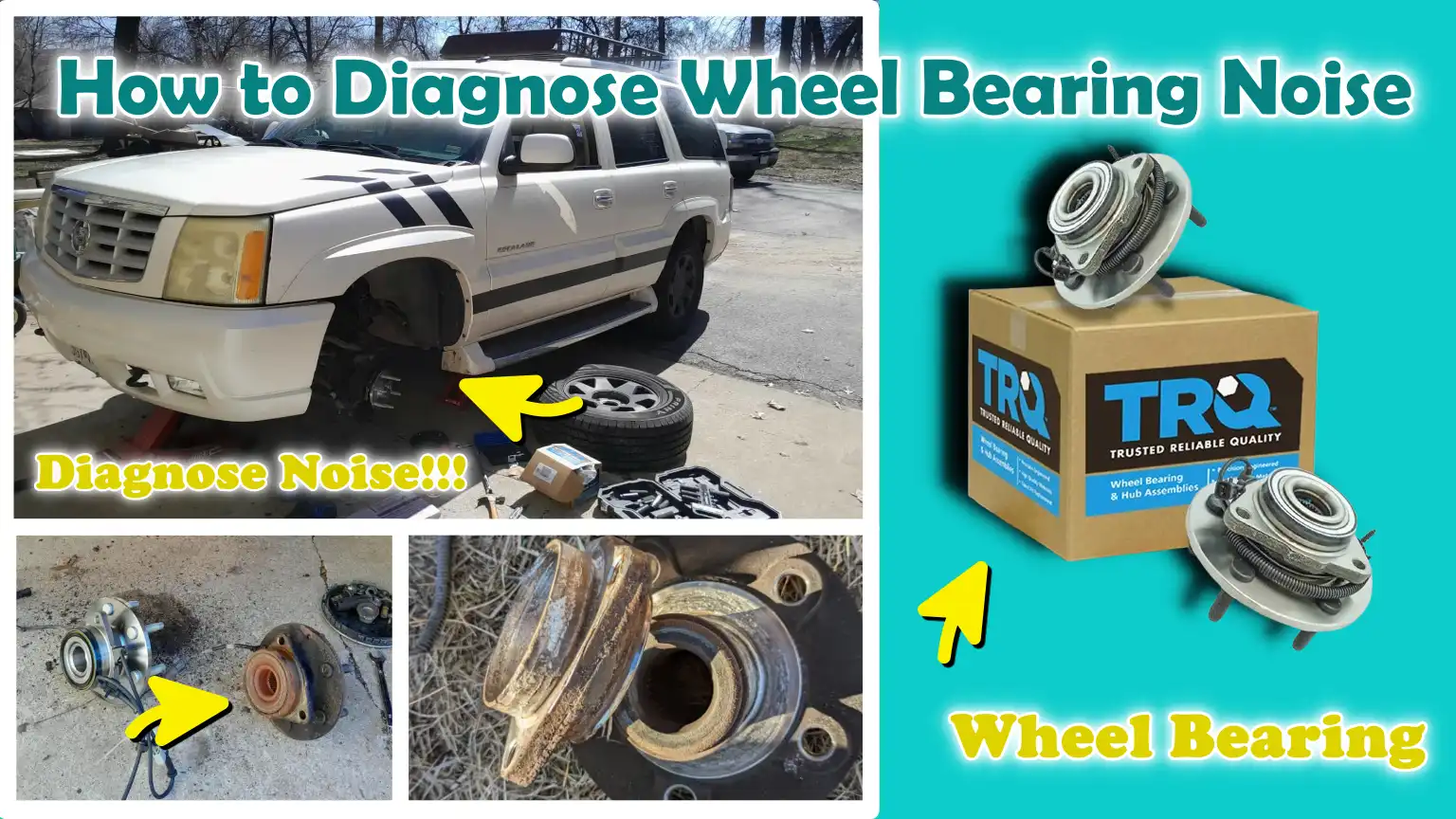
But, you just need to know How to Diagnose Wheel Bearing Noise, as in this guide you’ll learn to understand the symptoms and testing methods in correct way.
What is a Wheel Bearing and How Does It Work?
A wheel bearing is a small yet critical mechanical component situated inside the wheel hub.
It facilitates the free rotation of the wheel while simultaneously supporting the vehicle’s weight.
Despite its compact size, it is subjected to immense stress whenever the vehicle is in motion including the weight of the vehicle itself, the weight of passengers and the shocks and lateral forces faced on the road.
Modern vehicles typically utilize sealed wheel bearing units designed for a service life of many years; however, exposure to heat, friction, water and dust can cause them to deteriorate over time.
Understanding the function of this component is crucial, as it directly impacts driving safety, ride comfort and the vehicle’s overall performance.
1. Definition of a Wheel Bearing
A wheel bearing consists of a set of small metal balls or rollers held together within a circular metal ring.
This ring is referred to as a “race.”
These rotating elements are positioned between two smooth surfaces, allowing the wheel to rotate with minimal resistance.
The bearing is typically packed with grease and sealed to prevent the ingress of dust, water and dirt.
This design ensures that the wheel remains securely attached to the vehicle while simultaneously allowing it to rotate freely.
If a wheel bearing fails, the wheel will not rotate smoothly and may quickly become unstable.
2. Its Primary Function in Vehicle Operation
The primary function of a wheel bearing is to facilitate the smooth rotation of the wheels as the vehicle moves forward or backward.
Whenever a vehicle is in motion, the wheel bearing reduces friction, allowing the wheels to rotate without placing excessive strain on the engine.
It also assists in maintaining proper wheel alignment, as it is a critical factor for ensuring stable steering and easy vehicle handling.
Whether you are driving on a straight road, taking a turn, or applying the brakes, the wheel bearing works continuously to ensure that the vehicle’s movement remains stable and under control.
3. How Does it Reduce Friction and Support the Load?
Instead of allowing metal components to rub directly against one another, the wheel bearing minimizes friction by utilizing rolling elements.
Rolling motion generates significantly less resistance compared to sliding motion, resulting in improved fuel efficiency and reduced heat generation.
Furthermore, the bearing manages both the downward pressure (vertical load) exerted by the vehicle’s weight and the sideways forces (lateral forces) faced while cornering or driving on uneven terrain.
This dual function is essential, as it ensures that the wheel remains stable, while simultaneously rotating freely across a wide range of driving conditions.
4. Types of Wheel Bearings – Ball, Roller, Tapered
Vehicles utilize various types of wheel bearings, each designed to suit specific driving conditions.
Ball bearings feature small spherical balls and are commonly found in many passenger cars, as they effectively handle both straight-line driving and moderate cornering.
Roller bearings, in contrast, employ cylindrical rollers instead of balls; they are superior at supporting heavier loads and are therefore frequently chosen for larger vehicles.
Tapered roller bearings are specifically engineered to withstand both heavy loads and intense lateral forces simultaneously.
Consequently, they constitute the ideal choice for vehicles that experience significant stress while cornering.
While every type of bearing performs the same fundamental function, the specific selection is determined by the vehicle’s weight, design and operational requirements.
Know, Common Symptoms of a Bad Wheel Bearing
Wheel bearings are crucial for smooth and safe driving and when they begin to fail, your vehicle often starts to provide warning signs in advance.
Recognizing these signs promptly can help you prevent major damage, enhance safety and avoid costly repair expenses.
Failing wheel bearings typically manifest as noises, vibrations, or changes in vehicle handling symptoms that you can often identify during your daily commute.
Understanding these symptoms allows you to accurately diagnose the problem and take the necessary steps to rectify the situation before it deteriorates further.
1. Grinding Noise
A grinding noise emanating from the wheel is one of the clearest indicators of a bad wheel bearing.
It typically sounds like metal scraping against metal, or a deep, coarse rumbling sound that intensifies as the vehicle’s speed increases.
This noise is often most audible when you are driving at higher speeds or when there is increased load on the wheel such as: when taking a turn or carrying heavy cargo.
A grinding noise signals that the bearing surfaces have worn down; if left unaddressed, this can cause the bearing to overheat and sustain even more severe damage.
2. Humming or Growling Noise
A humming or growling sound is another common symptom of a failing wheel bearing.
The pitch and intensity of this sound often vary in relation to the vehicle’s speed and it typically becomes louder when you press the accelerator.
This sound may resemble the faint hum of tires on a rough road, but it is typically constant and persistent; at times, it may even seem or sound, as though it is originating from a specific section of the vehicle.
Variations in the sound’s intensity relative to speed indicate that the bearing is not rotating smoothly; as the rotating components wear down, they rub against one another and generate vibrations, resulting in this distinct humming noise.
3. Clicking or Popping Sounds
Clicking or popping sounds are frequently heard while turning corners or maneuvering the vehicle and these noises serve as a definitive indication that a wheel bearing has worn out.
These sounds occur because the bearing fails to maintain proper alignment between the rotating components and their races; consequently, when the vehicle changes direction, the metal parts intermittently strike against one another.
Drivers often observe that this clicking sound becomes even more pronounced when executing sharp turns or when the vehicle’s weight shifts from one side to the other.
Recognizing this pattern allows you to pinpoint exactly which wheel bearing on the vehicle is failing.
4. Steering Wheel Vibration
Vibration felt in the steering wheel can be a subtle, yet highly significant, indicator of a faulty wheel bearing.
This vibration is often perceptible while driving at higher speeds and may intensify when turning corners or applying the brakes.
This occurs because a worn bearing allows the wheel to wobble slightly; this movement and instability are then transmitted upward through the steering column.
This sensation may manifest as a jolt or vibration felt in the hands, serving as an early warning that the bearing is no longer properly supporting the wheel.
5. Uneven Tire Wear
Uneven tire wear is a less obvious, yet highly significant, indicator of wheel bearing issues.
When a bearing becomes worn, it allows the wheel to deviate slightly from its proper alignment, thereby subjecting specific sections of the tire to excessive pressure.
Over time, this results in one part of the tire wearing down faster than the rest, or causes the tire’s tread pattern to become irregular.
Persistent uneven wear particularly when accompanied by noise or vibration, as it is a definitive sign that the wheel bearings require inspection and replacement to prevent further damage and ensure the safe operation of the vehicle.
Why Do Wheel Bearings Make Noise?
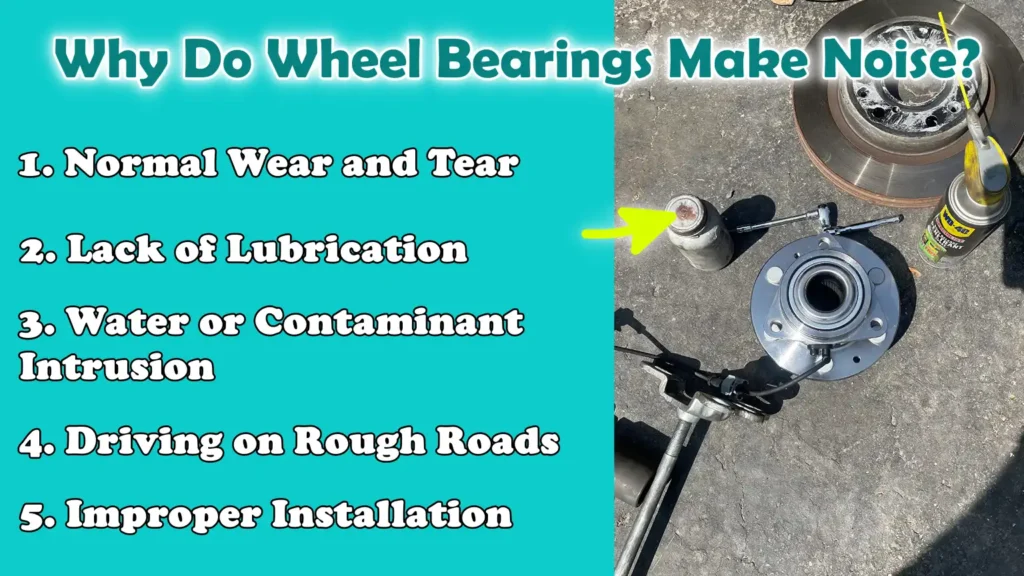
Noise emanating from wheel bearings is a common issue in vehicles.
Understanding the underlying causes allows drivers to prevent vehicle damage and ensure safe driving.
Wheel bearings are designed to last for many years; however, due to various factors, they may fail prematurely or begin to produce noise.
Identifying the root cause of the noise enables you to take appropriate corrective measures, avoid costly repairs and ensure the smooth and safe operation of the vehicle.
1. Normal Wear and Tear
The most common cause of noise in wheel bearings is normal wear and tear.
Over time, due to the constant rotation of the wheels, the weight of the vehicle and the stresses faced during driving, the internal rotating components and races within the bearings gradually wear down.
Even with proper maintenance, the bearing’s rotational efficiency gradually diminishes, leading to noises such as humming, grinding, or growling.
High-mileage vehicles, or those that are driven frequently, are more susceptible to this type of natural wear.
2. Lack of Lubrication
Wheel bearings rely on grease to minimize friction and prevent excessive heat buildup and wear.
A lack of lubrication, whether due to aged grease or insufficient quantity, as it can cause the bearings to run dry, generating excessive friction and heat.
This manifests as a loud, persistent noise and can accelerate the process of bearing failure.
Regular maintenance, which includes proper lubrication, is crucial for preventing such damage and ensuring the longevity of the bearings.
3. Water or Contaminant Intrusion
The intrusion of water or contaminants into the bearings is another major cause of noise and damage.
Bearings are typically sealed to prevent dirt from entering; however, due to faulty seals, cracks, or misuse, water, mud, or debris can infiltrate the bearing assembly.
These external contaminants increase friction, wash away the lubricating grease and can lead to corrosion, conditions that soon manifest as signs of premature wear or a distinct humming noise.
This issue is particularly common after driving in heavy rain, passing through water-filled potholes, or driving on rough terrain.
4. Driving on Rough Roads
Constantly driving on rough or uneven roads places excessive stress on the wheel bearings.
Potholes, uneven surfaces and unpaved roads generate repetitive shocks and vibrations that the bearings must withstand while facilitating the smooth rotation of the vehicle.
Over time, this excessive stress can cause the bearings to wear out prematurely, become loose, or even damage the bearing housing, resulting in a distinct noise while driving.
Vehicles that are frequently driven on rough terrain are more prone to developing bearing-related issues sooner.
5. Improper Installation
Improper installation of wheel bearings is a less common, yet serious, cause of noise.
If a bearing is installed incorrectly, it may not fit properly within its housing, or it may be overtightened or undertightened.
This misalignment creates uneven pressure on the rolling elements and races, leading to increased friction, heat generation and premature bearing wear.
Noise resulting from an improperly installed bearing may become audible immediately after its replacement or repair; therefore, it is crucial to install bearings correctly by utilizing the appropriate tools and methods.
How to Diagnose Wheel Bearing Noise – Easy Steps & Beginner’s Friendly Guide
Identifying wheel bearing noises may seem daunting, but with careful observation and the aid of a few simple tests, most drivers can detect the issue before it becomes critical.
Understanding the symptoms, conducting proper inspections and paying close attention to subtle changes in sound or feel can help pinpoint exactly which wheel bearing is failing.
Adopting a systematic, step-by-step approach ensures accurate diagnosis, minimizes the risk of misidentifying other issues and helps maintain the vehicle’s safety and performance.
1. Conduct a Road Test of Your Vehicle
The first step in identifying a wheel bearing issue is to conduct a road test.
While driving at various speeds, listen carefully for any changes in sound.
A failing bearing often produces a humming, grinding, or growling noise that intensifies as your speed increases.
Observe how the vehicle behaves when turning left or right.
Often, the noise may become louder or quieter depending on the weight shifted to a specific side of the vehicle, which can indicate which bearing is likely failing.
Maintaining consistent conditions during the test helps ensure a clear identification of the problem.
2. Check for Noise While Turning
Turning the vehicle can help pinpoint the location of a failing wheel bearing more precisely.
When you turn in one direction, the vehicle’s weight shifts to the opposite side, which can cause a failing bearing to produce a louder noise.
If the noise intensifies while turning left, the wheel bearing on the right side may be failing and vice versa.
By carefully observing these changes while driving or while making slow turns in a safe location, as you can accurately identify a faulty wheel without immediately removing any components.
3. Perform a Manual Inspection of the Wheels
After conducting a road test, the next step is to perform a manual inspection.
Safely lift the vehicle using a jack and jack stands to ensure it is securely supported.
Once lifted, manually spin each wheel by hand and listen carefully for any grinding, clicking, or unusual noises.
Spinning the wheel manually helps confirm the sounds heard during the road test and allows you to pinpoint the specific wheel with a failing bearing.
Verifying that the wheel spins freely without any unusual resistance further corroborates the issue.
4. Check for Wheel Looseness
Another effective method is to check for looseness in the wheel.
Grasp the wheel at the 12 and 6 o’clock positions and gently rock it back and forth.
Any visible movement or looseness indicates that the bearing is worn out or damaged.
This simple test helps determine if the bearing is no longer properly supporting the wheel, a clear indication that it needs to be replaced.
The degree of looseness observed in the bearing can also provide insight into the extent of its wear.
5. Feel for Vibrations
Feeling for vibrations is another way to assess the condition of a wheel bearing.
While spinning the wheel manually, place your hand on the hub or the wheel’s surface to detect any unusual vibrations or wobbling.
Vibrations indicate that the bearing is not rotating smoothly; This may indicate an internal defect or uneven wear within the bearing assembly.
This tactile feedback corroborates the findings obtained through auditory and visual inspections, thereby aiding in the precise diagnosis of the problem.
6. Use a Mechanic’s Stethoscope – Optional
For a more precise diagnosis, a mechanic’s stethoscope can be used to pinpoint the exact source of the noise.
While the wheel is rotating, place the tip of the stethoscope against the hub or bearing assembly to listen directly for specific sounds emanating from the bearing itself such as: grinding, rumbling, or clicking noises.
This tool is particularly useful when the noise is very faint or difficult to detect, enabling you to identify the problem with absolute certainty and ensure that the correct component is replaced.
How to Distinguish Wheel Bearing Noises from Other Issues
Wheel bearing noises can sometimes sound similar to other vehicle sounds; therefore, accurate diagnosis is crucial to avoid unnecessary repairs.
Various vehicle components such as: tires, brakes, CV joints and the suspension system, as it can produce noises that mimic those of a failing bearing.
By understanding the specific characteristics of each type of noise and observing when and how it occurs, as drivers can distinguish wheel bearing issues from other mechanical problems.
Accurate diagnosis saves time, reduces repair costs and ensures that the vehicle remains safe and reliable.
1. Tire Noise vs Bearing Noise
Tire noise typically originates from the tire tread pattern, the road surface, or tire wear and it may manifest as a humming or droning sound.
However, unlike wheel bearing noise, tire noise generally remains consistent and does not change significantly when the vehicle turns.
Conversely, wheel bearing noise is often heard more distinctly from a specific side of the vehicle, particularly while turning and its pitch (frequency) may vary in relation to the vehicle’s speed.
Paying attention to these patterns helps determine whether the noise is coming from the tires themselves or from a failing bearing located beneath them.
2. Brake Issues vs Bearing Issues
Brake-related noises typically occur only when the brakes are applied and they may include sounds such as squealing, grinding, or scraping.
However, a faulty wheel bearing will continue to make noise even when the brakes are not engaged; Furthermore, this sound may intensify or change in character depending on the vehicle’s speed or driving style.
Paying close attention to these sounds both during braking and during normal driving, as it helps distinguish between worn brake pads or rotors and failing wheel bearings, thereby ensuring that the correct component is inspected and repaired.
3. CV Joint Sounds vs Wheel Bearings
CV joint noises often manifest as a “ticking” or “popping” sound, typically heard when making sharp turns specially at low speeds.
In contrast, a failing wheel bearing usually produces a humming, growling, or grinding noise that is continuous and varies with the vehicle’s speed, rather than with the turning of the steering wheel.
Recognizing the distinction between the rhythmic “ticking” of a CV joint and the persistent “humming” of a wheel bearing helps drivers pinpoint the true source of the problem and avoid unnecessary parts replacement.
4. Suspension Issues vs Bearing Noise
Suspension problems can generate sounds such as “thumping,” “clunking,” or “rattling,” particularly when the vehicle is traveling over rough terrain or potholes.
These sounds differ from those originating from wheel bearings; wheel bearing noise is generally smoother, more continuous and characterized by a distinct “humming” or “grinding” quality.
While suspension-related issues often manifest as a sensation of looseness or instability in the vehicle, wheel bearing problems typically result in vibrations felt through the steering wheel or impaired wheel rotation.
Understanding these differences helps in accurately identifying the problem and resolving it effectively.
Which Wheel Bearing Is Bad? – Front or Rear
Identifying which wheel bearing is failing is a crucial step in vehicle maintenance, as replacing the wrong bearing can result in a waste of both time and money.
Wheel bearings can fail in any wheel, whether front or rear and the symptoms of their failure often provide clues regarding their location.
By paying close attention to the nature of the noise, specifically when it occurs and how it changes in response to vehicle speed or steering inputs, drivers can typically determine whether the issue lies with a front bearing or a rear one.
Accurate identification ensures that the problem is resolved correctly and prevents any further damage to the vehicle.
1. Identifying Front vs Rear Noises
Noise originating from a front wheel bearing is often felt most distinctly through the steering wheel or the front suspension, particularly when the vehicle is turning.
The pitch or intensity of the noise may vary depending on the direction of the turn, which helps to pinpoint exactly which wheel is at fault.
Rear wheel bearings often produce a humming or grinding sound that is felt less through the steering system but can be perceived through the vehicle’s chassis or rear section.
Observing how the noise behaves while driving, accelerating and braking can provide a definitive answer as to whether the problem lies with a front bearing or a rear one.
2. The Difference Between FWD and RWD
The type of drivetrain, whether Front-Wheel Drive (FWD) or Rear-Wheel Drive (RWD), as it also influences how bearing noise is perceived.
In FWD vehicles, the front wheel bearings are subjected to greater stress, as they must fulfill the dual responsibilities of both steering and power delivery; consequently, these bearings are more prone to failure.
In RWD vehicles, the rear wheel bearings often bear a heavier load and may wear out more rapidly, particularly when the vehicle is towing a trailer or carrying heavy cargo.
Understanding these distinctions helps drivers anticipate which bearings are most likely to fail, based on their vehicle type and specific driving conditions.
3. Common Mistakes in Diagnosing the Problem
One of the most common mistakes made when diagnosing wheel bearing issues is assuming that the faulty bearing is located precisely where the noise appears to be loudest.
In reality, the noise can resonate throughout the vehicle’s cabin, sometimes creating the illusion that it is originating more intensely from the opposite side.
Another common error is mistaking wheel bearing noise for symptoms of issues related to the tires, brakes, or suspension; however, the noise patterns and vibrations generated by these components typically differ.
To avoid these pitfalls and ensure that the correct wheel bearing is identified and replaced, careful observation, road testing and a thorough physical inspection of the vehicle are essential.
Tools
| Tool | Why It Is Needed | How to Use It |
|---|---|---|
| Jack and Jack Stands | To safely lift and support the vehicle off the ground, thereby enabling the inspection and testing of the wheels. The use of these tools prevents accidents and ensures stability while examining the bearings. | Position the jack beneath the vehicle’s designated lift points and slowly raise the vehicle. Once lifted, securely place jack stands beneath the frame or designated support points and lower the vehicle onto them. Always re-verify the vehicle’s stability before working underneath it. |
| Lug Wrench | To remove the wheel lug nuts, allowing the wheel to be detached so that the bearings can be closely inspected. Without this step, it is not possible to safely access the wheel components. | Place the lug wrench over each lug nut and turn it anti-clockwise to loosen it. After lifting the vehicle with the jack, completely remove all the lug nuts and detach the wheel. When re-installing, tighten the nuts in a criss-cross pattern to ensure even pressure distribution. |
| Gloves and Flashlight | Gloves protect your hands from grease, sharp edges and dirt, while a flashlight helps you clearly visualize the wheel hub, bearings and any signs of damage. | Put on gloves before touching the wheel hub or any exposed components. Use the flashlight to check the bearing area for any signs of noise, wear, rust, or looseness. As you rotate the wheel, sweep the beam of light around the area to ensure a thorough inspection from every angle. |
| Mechanic’s Stethoscope – Optional | To precisely pinpoint the actual source of bearing noise particularly when the sound is faint or difficult to isolate. This enhances the accuracy of the inspection process. | Place the tip of the stethoscope against the wheel hub or bearing while slowly rotating the wheel by hand. Listen for sounds such as humming, grinding, or knocking. To identify which bearing is failing, compare each wheel with the others. |
Is it Safe to Drive with Noisy Wheel Bearings?
Driving with noisy wheel bearings is generally unsafe and understanding the associated risks is crucial for both your safety and the longevity of your vehicle.
Wheel bearings are designed to facilitate the smooth rotation of the wheels; they also support the vehicle’s weight and withstand the stresses generated during turning, braking and acceleration.
When a bearing begins to fail, the noise it emits serves as an early warning sign that the component is compromised and may no longer be functioning correctly.
Ignoring this warning can lead to serious mechanical failures or accidents.
1. The Direct Answer: No – But It Depends on the Severity of the Problem
In most cases, it is not safe to continue driving with noisy wheel bearings.
The level of danger depends on the extent of the bearing’s wear.
A faint noise may indicate early-stage wear; however, continuing to drive will only accelerate the damage.
Excessive noise typically signals that the bearing is on the verge of complete failure, which could result in a sudden loss of wheel support.
Driving in such conditions significantly increases the risk of accidents and further damage to the vehicle.
2. Risks of Failure
A failing wheel bearing can lead to dangerous consequences, such as wheel lock-up (where the wheel suddenly stops rotating) or, in extreme cases, the complete detachment of the wheel from the vehicle.
Both scenarios can result in a loss of vehicle control, potentially leading to an accident.
Furthermore, a faulty bearing can negatively impact the suspension system and tire alignment, compromise braking performance and accelerate tire wear.
These risks underscore the importance of timely inspections and bearing replacements to maintain safe driving conditions.
3. Warning Signs of Immediate Danger
Certain specific symptoms indicate that a wheel bearing has reached a critical state.
Loud grinding noises while driving, a persistent humming sound, severe vibrations in the steering wheel, or wheel wobbling, all of these are signs that immediate action is required.
If you observe any of these symptoms, you are strongly advised to stop driving immediately and have the vehicle inspected by a professional mechanic.
Timely attention can prevent major accidents and ensure the safety of both the driver and the passengers.
When to Replace Wheel Bearings
Knowing when to replace wheel bearings is crucial for vehicle safety, driving comfort and avoiding costly repairs.
Wheel bearings are designed for longevity; however, due to constant rotation, road stress and the weight of the vehicle, they gradually wear down over time.
Replacing bearings at the appropriate moment ensures that your wheels remain stable, steering remains precise and other components such as: tires and the suspension system are not damaged by uneven pressure.
Understanding the factors that determine the right time to replace bearings empowers drivers to address minor issues before they escalate into major problems.
Also, there’s advanced studies that shows that by using both vibration and sound data together it can actually detect the wheel bearing faults with very high precision, that validates that why paying attention to the noise pattern and that’s why you need to diagnose the wheel bearing issues as it is the reliable and scientifically supported method as well.[¹]
1. Mileage Expectations
Most new wheel bearings are designed to last between 85,000 and 100,000 miles, although this can vary depending on driving conditions, vehicle type and maintenance practices.
Vehicles frequently driven on rough roads, those that carry heavy loads, or those exposed to water and dust may experience accelerated bearing wear.
Periodic inspections during routine maintenance help determine whether the bearings are still functioning correctly or if they are nearing the end of their service life.
By paying attention to signs of wear, as in conjunction with mileage-based guidelines, as bearings can be replaced at the most opportune time.
2. Key Indicators for Bearing Replacement
There are specific signs that indicate an immediate need to replace wheel bearings.
Loud grinding or humming noises that intensify as vehicle speed increases, vibrations felt through the steering wheel, uneven tire wear and wheel wobbling or looseness all serve as clear warning signals.
If the sound changes or the wheel feels unstable while turning the vehicle, it is a definitive sign that the wheel bearing is failing.
Taking immediate action when these signs appear can prevent more serious issues such as: a wheel detaching or damage to the suspension system, which could compromise the vehicle’s safety.
3. Cost Considerations
The cost of replacing a wheel bearing depends on the vehicle’s make and model, as well as whether you are replacing just the bearing or the entire hub assembly.
On average, the total cost for parts and labor can range from $150 to $400 per wheel.
Replacing the bearing immediately upon detecting signs of failure can prevent further damage to tires, suspension components, or brakes, thereby saving you money in the long run.
Understanding these cost-related factors helps vehicle owners plan their maintenance effectively, ensuring that necessary repairs are carried out correctly and safely.
Read More:
- How to Replace Shocks and Struts
- How to Rotate Car Tires
- How to Fix Suspension Noise
- How to Replace Wheel Bearings
How to Maintain Wheel Bearing Failure & Noise
Preventing wheel bearing failure is the most effective way to maintain vehicle safety, minimize repair costs and ensure a comfortable driving experience.
Wheel bearings work continuously to support the vehicle’s weight and allow the wheels to rotate freely; therefore, taking steps to protect them from damage and wear significantly extends their lifespan.
Understanding proper maintenance, avoiding contamination, conducting regular inspections and adopting good driving habits all these factors help keep bearings in optimal condition and prevent sudden failure.
1. Proper Maintenance Tips
Proper maintenance is crucial for preventing bearings from failing prematurely.
Bearings rely on lubrication to minimize friction and dissipate heat; therefore, it is essential to ensure that they are properly greased or replaced in accordance with the manufacturer’s recommendations.
Seals should be inspected to verify that they are intact and effectively preventing grease from leaking out, while simultaneously keeping contaminants from entering.
Timely maintenance not only reduces noise and vibration but also eliminates the need for costly repairs that often result from neglecting the bearings.
2. Avoiding Water Contamination
Water contamination is a leading cause of wheel bearing failure.
Driving through deep potholes or flooded roads, or washing the vehicle with high-pressure water, can allow moisture to penetrate the bearing seals.
Water washes away the lubricant and promotes rust formation, thereby accelerating wear and leading to grinding or humming noises.
To prevent this, avoid driving through standing water whenever possible and regularly inspect the seals to ensure they remain fully intact and functional.
3. Regular Inspections
Regular inspection of wheel bearings allows for the detection of early signs of wear before they escalate into serious problems.
By checking for looseness, unusual noises, vibrations, or uneven tire wear during routine maintenance, drivers can take timely corrective action.
A quick visual check while changing tires or performing an oil change can also help identify potential issues, making the task of replacing bearings easier before they compromise vehicle safety or affect other components.
4. Driving Habits That Extend Bearing Lifespan
Certain driving habits can significantly extend the lifespan of wheel bearings.
Avoiding sudden braking, sharp turns at high speeds and frequent driving over potholes or rough terrain reduces the stress placed on the bearings.
Maintaining moderate speeds, distributing the vehicle’s weight evenly and driving cautiously over uneven surfaces all help prevent premature wear.
Coupled with careful driving, regular maintenance and inspections ensure that wheel bearings remain reliable and last for their maximum potential duration.
Conclusion – How to Diagnose Wheel Bearing Noise
Without a doubt, if there’s even subtle hum or vibration then the wheel bearing can be the spot to check, as safety of your vehicle’s not only decided because of just having a good brake and tires, but the wheel bearings are there to ensure that safety as well.
Ignoring early warning signs such as: humming or grinding noises, vibrations, or uneven tire wear, as it can lead to serious consequences, including wheel instability, suspension damage and even accidents.
By understanding the causes of bearing-related noises, conducting proper inspections using the right tools and adopting proactive maintenance practices, drivers can identify issues in their early stages and extend the lifespan of their bearings.
Conducting regular road tests, paying attention to unusual sounds and adopting cautious driving habits all contribute to avoiding costly repairs and ensuring reliable vehicle performance.
So, that’s all from this guide about How to Diagnose Wheel Bearing Noise, if you still have questions then you can ask them on the comment box below this guide.
Frequently Asked Questions
FAQ 1: What is a wheel bearing and why is it important?
A wheel bearing is a small yet critical component located inside the wheel hub. It facilitates the smooth rotation of the wheel while simultaneously supporting the vehicle’s weight. It minimizes friction and allows the wheel to spin freely, making driving easier and safer. If a wheel bearing fails, the wheel may wobble, tires may wear unevenly, strange noises may occur and in extreme cases serious accidents could result. Proper maintenance of wheel bearings ensures the vehicle’s smooth operation, stability and longevity.
FAQ 2: How can I tell if a wheel bearing has gone bad?
There are several signs indicating that a wheel bearing is failing. Common symptoms include a humming, grinding, or growling noise, as the pitch of which changes as the vehicle’s speed varies, as well as vibrations in the steering wheel, a “clicking” sound when turning and uneven tire wear. Sometimes, the noise intensifies when turning in a specific direction, which helps in identifying exactly which wheel bearing is defective. If you notice these signs, it is crucial to have the wheel bearings inspected immediately to prevent further damage or safety hazards.
FAQ 3: Is it safe to drive with a bad wheel bearing?
Driving with a defective wheel bearing is generally unsafe. The severity of the risk depends on the extent of the bearing’s wear. A faint noise may indicate that the bearing has just begun to wear out, whereas a loud noise often signals that the bearing is on the verge of complete failure. A failing wheel bearing can cause the wheel to seize, detach, or damage the suspension and tires, potentially leading to accidents. If you hear grinding, humming, or loud vibrating noises, it is best to stop driving immediately and have the vehicle inspected.
FAQ 4: How do I identify which wheel bearing is faulty?
To identify a faulty wheel bearing, you can utilize methods involving road testing and physical inspection. Pay attention to the noises produced while driving at various speeds and observe how the sound changes when turning corners. Safely lift the vehicle using a jack and jack stands, manually spin the wheel and check for any grinding noises or resistance in the wheel’s rotation. You can also check for looseness by gently rocking the wheel at the 12 o’clock and 6 o’clock positions. If necessary, you can use a mechanic’s stethoscope to pinpoint the exact source of the noise.
FAQ 5: Can wheel bearing noises be mistaken for other issues?
Yes, wheel bearing noises are sometimes mistaken for other issues, such as tire noise, brake problems, CV joint clicking, or suspension rattles. Tire noise typically remains consistent and does not change when the vehicle turns. Brake noises generally occur only when the brakes are applied. Clicking from a CV joint typically occurs when making sharp turns. A rattling sound from the suspension is often heard when driving on rough or poor-quality roads. Observing when the noise occurs and how it changes based on speed or steering input, as it helps distinguish a wheel bearing issue from other vehicle noises.
FAQ 6: How long do wheel bearings last?
Wheel bearings typically last between 85,000 and 100,000 miles, although this depends on the vehicle type, driving conditions and maintenance. Bearings exposed to rough roads, water, or heavy loads may fail prematurely. Regular inspections and proper care can extend their lifespan and prevent sudden failures. Timely replacement of bearings ensures safety and protects other components from potential damage.
FAQ 7: How can I prevent wheel bearing failure?
Wheel bearing failure can be prevented through proper maintenance, careful driving and regular inspections. Ensure that the bearings are properly greased and that the seals are intact to prevent dust and water from entering. Avoid driving at high speeds through deep water or over rough roads. Regularly inspect the wheels for any signs of looseness, vibration, or unusual noises. Adopting good driving habits such as: avoiding sudden braking or sharp turns, also reduces the stress placed on the bearings and extends their lifespan.
References:
[1] Fault Detection of Wheelset Bearings through Vibration-Sound Fusion Data Based on Grey Wolf Optimizer and Support Vector Machine
https://www.mdpi.com/2227-7080/12/9/144
Hello Folks, Dean Shali here to help you out to solve the problems with your lovely vehicle, as i have lots of experience and knowledge about automotive industry as i woks directly with the customers and repair vehicles and i love to help the people to keep their cars safe and running smoothly.