Written By: Dean Shali
Fact Checked By: Sabré Cook
Reviewed By: Tamara Warren
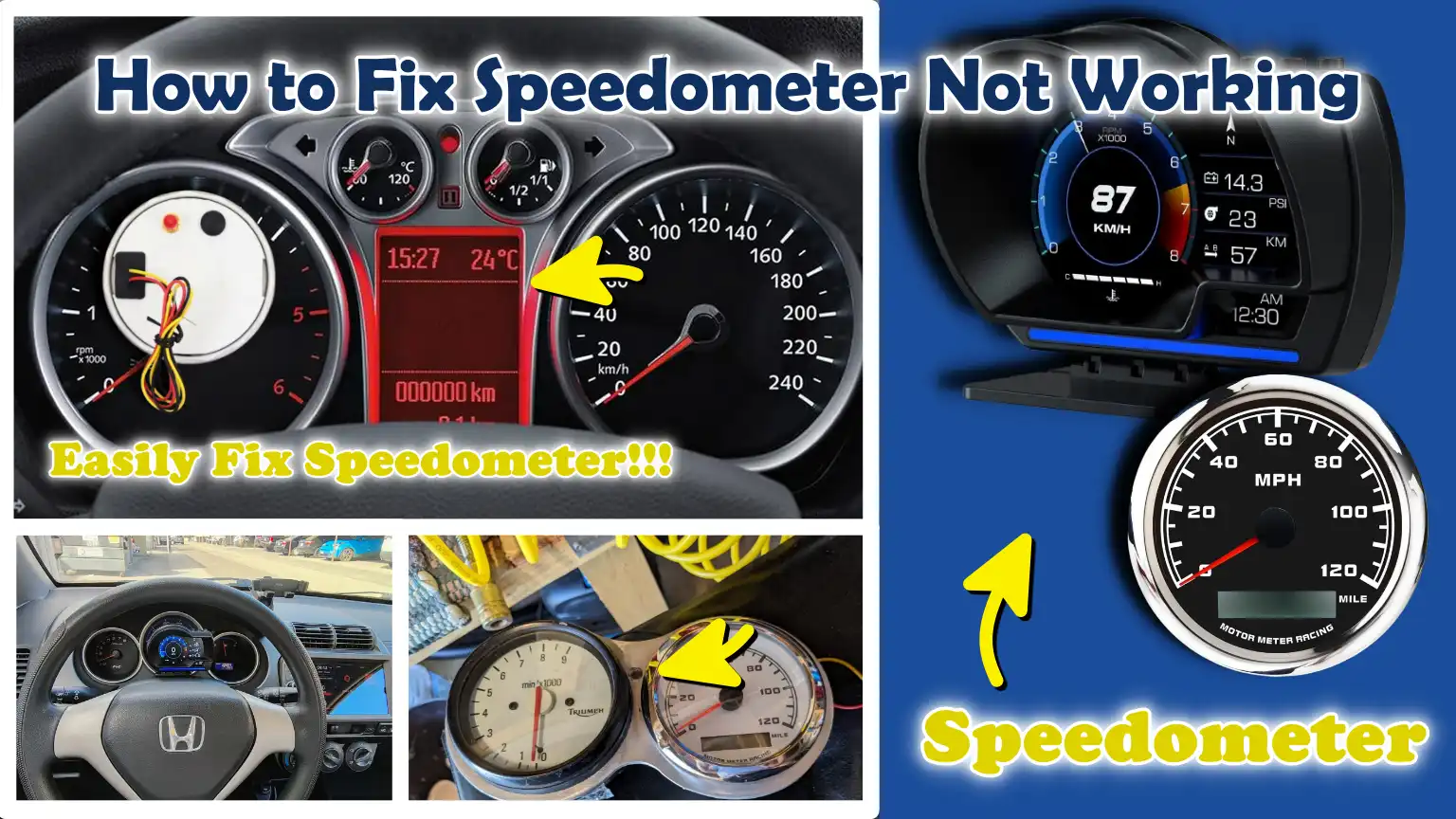
Don’t Take Broken Speedometer Lightly: as it literally keeps you guessing about the actual speed and that could lead to the dangerous situations as well.
Basically, we knows that speedometer has the working of showing exactly how fast your are driving and that literally helps you to stay safe on the road, as you can manage the speed if you think it is not appropriate for that particular moment and place.
So, it is not just about having inconvenience of guessing about the actual speed all the time of the journey, but it is necessary to follow speed limits and avoid any possible accidents as well.
As well as, there are several common reasons about the failing of speedometer such as: having faulty vehicle speed sensor: VSS, broken or stretched speedometer cables in older cars, having some electrical issues, blown out fuses or it could possibly be because of there’s problem with dashboard instrument cluster as well.
And, if speedometer is malfunction then it shows such kinds of signs: needles jumping or freezing at all, doesn’t showing reading at all or we can say zero readings and something like flickering displays as well.
Because of this, we have come up with this guide specially about How to Fix Speedometer Not Working, so that you can learn about the causes, symptoms and quick but working solutions.
Know, Common Causes of a Malfunctioning Speedometer
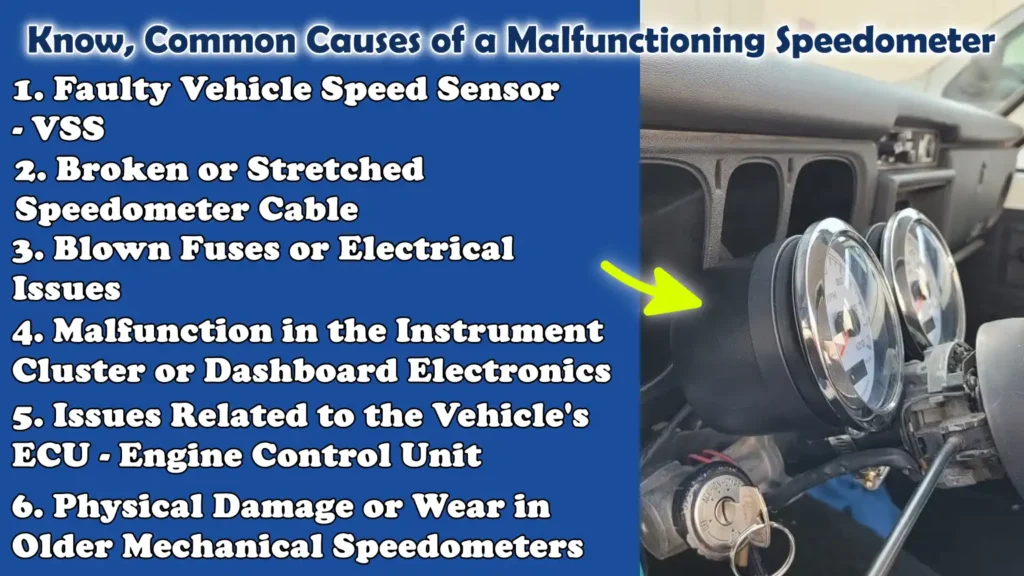
1. Faulty Vehicle Speed Sensor – VSS
The Vehicle Speed Sensor is a small electronic device that transmits information regarding your car’s speed to the speedometer.
If this sensor malfunctions or becomes dirty, the speedometer will not function correctly, the speed reading may fluctuate erratically, the needle may get stuck, or the speedometer may stop working entirely.
In modern vehicles, a faulty VSS is the most common cause of speedometer issues and it can also impact other systems such as cruise control and ABS.
Cleaning, testing, or replacing the sensor typically restores accurate speed readings.
2. Broken or Stretched Speedometer Cable
In older vehicles, a mechanical cable connects the transmission to the speedometer to transmit speed data.
Over time, this cable can stretch, kink, or even break; as a result, the speedometer needle may fail to move smoothly, or in some cases, may not move at all.
Applying lubricant to the cable can sometimes resolve minor issues; however, in most instances where the cable is damaged, it must be replaced to ensure proper functionality.
3. Blown Fuses or Electrical Issues
A blown fuse or loose electrical connections can interrupt the flow of power to the speedometer.
This issue is more frequently observed in vehicles equipped with electronic dashboards.
Symptoms include the gauges shutting down completely or the speed display flickering intermittently.
Checking and replacing the relevant fuse, or repairing faulty wiring, can often resolve this issue without the need for major repairs.
4. Malfunction in the Instrument Cluster or Dashboard Electronics
The instrument cluster houses the speedometer as well as other gauges mounted on the dashboard.
If the internal circuit board within the instrument cluster fails, or if a specific gauge stops functioning, the speedometer may also cease to work.
Electrical issues, water damage, or aging components can lead to inaccurate speed readings.
To restore accurate speed information, the instrument cluster typically requires repair or replacement.
5. Issues Related to the Vehicle’s ECU – Engine Control Unit
The ECU controls various components of your vehicle, including the transmission of speed data to the dashboard.
If the ECU malfunctions, it may fail to communicate properly with the speedometer; this can result in inaccurate speed readings or, in some instances, a complete absence of any display on the speedometer.
Diagnosing ECU-related issues requires specialized diagnostic tools; in certain cases, the ECU may need to be reprogrammed or replaced.
6. Physical Damage or Wear in Older Mechanical Speedometers
In older vehicles equipped with purely mechanical speedometers, the internal gears and components can wear out or deteriorate over time.
This can cause the needle to stick, lag behind, or stop moving entirely.
Repairing a mechanical speedometer involves disassembling the unit, replacing worn-out gears and, in some instances, recalibrating the system to ensure accurate readings.
How to Ensure Safety By Taking Precautions Before Solving Issues With Speedometer
1. Park Your Car in a Safe Location
Before attempting to fix or repair any issues with your speedometer, it is essential that you park your vehicle in a safe and stable location.
Avoid busy roads or uneven surfaces and choose a level area, such as a driveway or a garage.
Engaging the parking brake ensures that your car does not suddenly roll forward or backward, thereby minimizing the risk of accidents.
A safe working environment also allows you to focus fully on troubleshooting the problem without any interruptions or traffic hazards.
2. Turn Off the Engine and Disconnect the Battery
Working on a speedometer may involve handling electrical components such as sensors, fuses, or the instrument cluster.
To avoid electric shocks or short circuits, always turn off the engine before beginning any work.
In cases where you need to access sensitive electrical parts, it is strongly advised that you disconnect the battery.
This step ensures that no current flows through the circuit, thereby protecting both you and your vehicle’s electronics from accidental damage.
3. Use the Right Tools and Gloves to Prevent Injury
Using the correct tools is crucial for safely repairing or inspecting your speedometer.
Incorrect tools can slip or damage components, potentially leading to personal injury or increased repair costs.
Wearing protective gloves keeps your hands safe from sharp edges, hot surfaces, or electrical contacts.
Keeping your workspace organized and having all necessary tools close at hand also helps minimize errors and makes the repair process smoother and safer.
Adhering to these basic precautions helps prevent accidents and ensures that you can effectively identify the problem.
How to Fix Speedometer Not Working – Everything Fixed Within Minutes
1. Check the Vehicle Speed Sensor – VSS
Locate the Vehicle Speed Sensor – VSS
The Vehicle Speed Sensor is a small device typically mounted on your car’s transmission.
Its primary function is to measure how fast your wheels are rotating and to transmit this information to the speedometer, as well as to other systems such as the ABS and cruise control.
The first step in resolving a faulty speedometer issue is to locate the VSS.
In most vehicles, it is situated near the transmission’s output shaft; however, its exact location may vary depending on the vehicle’s make and model.
Consulting your car’s owner’s manual or a repair guide can help you pinpoint its precise location.
Check for Loose Connections or Damaged Wiring
Once the VSS has been located, it is crucial to carefully inspect the electrical connections.
Loose, corroded, or damaged wires can prevent the sensor from sending the correct signal to the speedometer, potentially resulting in inaccurate readings, a stuck needle, or the gauge ceasing to function entirely.
Carefully examine the sensor plug and wiring harness for signs of wear, cracks, or burn marks and ensure that the connector is securely seated.
Tightening or repairing loose connections often resolves the issue without the need to replace the sensor itself.
Test the Sensor Using a Multimeter
Testing the VSS with a multimeter is a reliable method for determining whether it is functioning correctly.
Depending on the specific type of sensor, a multimeter can be used to measure either voltage or resistance.
With the ignition turned on and the vehicle safely secured in ‘Park’ mode, follow the manufacturer’s instructions to verify the correct output signal.
If the readings fall outside the specified range, it indicates that the sensor is defective and is failing to provide accurate vehicle speed data.
If the Sensor is Faulty, Replace It
If inspection and testing confirm that the VSS is defective, replacing it is typically the only solution.
Most sensors can be easily removed and replaced using standard tools.
After replacing the sensor, it is essential to verify that the speedometer is functioning correctly and that related systems such as: the ABS and cruise control, are also responding properly.
Replacing a faulty VSS not only restores accurate speed readings but also ensures the safe operation of other critical vehicle systems.
2. Check the Speedometer Cable – For Mechanical Models
Disconnect the Cable From the Transmission and the Dashboard
In older vehicles equipped with mechanical speedometers, the speedometer cable connects the transmission to the dashboard gauge to transmit information regarding wheel speed.
To inspect it, you must first carefully disconnect the cable from both the transmission and the back of the speedometer unit.
This step allows you to thoroughly examine the cable for any signs of damage.
It is crucial to handle the cable with care to prevent further kinking or knotting; you may require basic tools, such as a wrench or pliers, to safely loosen the fittings.
Check for Signs of Breakage, Kinking or Fraying
Once removed, inspect the entire length of the speedometer cable.
Look for any signs of external damage, such as cracks in the outer casing, kinks that could obstruct internal movement, fraying of the inner cable, or general wear and tear resulting from prolonged use.
A damaged cable can prevent the speedometer from functioning correctly or cause it to stop working entirely.
Even minor wear can lead to inaccurate readings; therefore, this inspection is a critical step in diagnosing speedometer issues in older vehicles.
Lubricate or Replace If Damaged
If the cable shows signs of wear but is not completely broken, lubricating it with the appropriate grease can restore its functionality.
Proper lubrication reduces friction and ensures that the inner cable rotates without obstruction, thereby allowing the speedometer needle to accurately display the vehicle’s speed.
However, if the cable is broken, severely kinked, or excessively worn, the best solution is to replace it.
Installing a new cable ensures the accurate transmission of speed data from the transmission to the speedometer, thereby restoring accurate readings on the dashboard.
3. Check Fuses and Electrical Connections
Check the Car’s Fuse Box for Blown Fuses
The speedometer relies on electrical power to function correctly; a blown fuse can interrupt this power supply, causing the gauge to stop working or display inaccurate readings.
First, locate your car’s fuse box, which is typically situated under the dashboard or inside the engine compartment.
Using the fuse box diagram provided in your owner’s manual, identify the specific fuse associated with the dashboard or instrument cluster.
Carefully remove the fuse and inspect it for signs of a broken filament or discoloration; these indications suggest that the fuse has blown and requires replacement.
Check the Wiring for Corrosion or Loose Connections
Even if the fuses are intact, faulty or loose wiring can prevent the correct signal from reaching the speedometer.
Inspect the wiring connected to the instrument cluster, sensors and fuse box for signs of corrosion, broken wires, or loose connectors.
Corrosion often manifests as a green or white powdery buildup on metal contacts, while loose wires may move easily when touched.
Cleaning corroded connections and tightening loose wires ensures proper electrical flow to the speedometer and minimizes the risk of intermittent malfunctions.
Replace Fuses or Repair Wiring as Necessary
If a fuse has blown, replace it with a new fuse of the exact same rating to restore power to the dashboard.
For faulty or corroded wiring, repairs may involve cleaning contacts, tightening connectors, or completely replacing specific sections of the wire.
Properly restoring electrical connections ensures that the speedometer receives a consistent supply of power and signals, enabling it to function accurately and reliably.
Maintaining the fuses and wiring in good condition also helps prevent future dashboard-related issues and contributes to the overall safety of your vehicle.
4. Check the Instrument Cluster
Perform a Self-Test – If Your Car Has This Feature
Many modern vehicles feature a built-in self-test function for the instrument cluster, which can help identify issues affecting the speedometer or other gauges.
This self-test typically involves turning on the ignition and following a specific sequence such as: holding down the trip button or toggling certain switches, to allow all needles to sweep or to display test patterns.
By performing this test, you can verify whether the cluster is functioning correctly and determine if the fault lies within the speedometer itself or elsewhere in the vehicle’s electrical system.
Check for Faulty Gauge Needles or Burnt Circuit Traces
Even if the cluster powers on, internal defects may prevent the speedometer from functioning properly.
Check the gauge needles for signs of sticking, sluggish movement, or erratic behavior.
Carefully open the back of the instrument cluster and inspect the circuit board for burnt traces, poor solder joints, or loose connectors.
These defects can interrupt signals coming from the vehicle’s speed sensor or other inputs, causing the speedometer to malfunction intermittently or stop working entirely.
If the Cluster is Faulty, Replace or Repair It
If the instrument cluster is found to be defective, it may require repair or replacement.
Minor issues such as: burnt traces or loose connections, as it can sometimes be repaired by a professional technician, restoring the cluster to full working order.
In cases where the damage is extensive or the components are irreparable, replacing the cluster with a new or refurbished unit is the most reliable solution.
Ensuring that the instrument cluster is functioning correctly not only provides accurate speed readings but also maintains the functionality of other essential dashboard gauges and warning lights, thereby keeping the vehicle safe and reliable.
5. Troubleshoot ECU or Software-Related Issues
Check for Error Codes Using an OBD-II Scanner
The Engine Control Unit (ECU) is a critical component that manages your car’s engine and maintains communication with systems such as the speedometer.
If the ECU is not functioning correctly, it may fail to transmit accurate speed data, causing the speedometer to behave erratically or stop working entirely.
By using an OBD-II scanner, you can retrieve error codes stored within the ECU; these codes indicate potential issues with sensors, wiring, or software.
This helps determine whether the problem originates within the ECU itself or stems from another connected component, thereby facilitating a precise and accurate approach to repairs.
Reset or Update ECU Software, If Necessary
Occasionally, a speedometer issue may be caused by a minor software glitch rather than a hardware malfunction.
Resetting the ECU can resolve temporary glitches and re-establish proper communication with the speedometer.
In other instances, the ECU software may be outdated or contain known bugs; in such cases, updating it to the latest version provided by the manufacturer can resolve the issue.
For both resetting and updating procedures, it is crucial to strictly follow the specific instructions provided by the vehicle manufacturer to avoid creating any new malfunctions.
Seek Professional Assistance If ECU Replacement Is Required
If error codes persist even after conducting diagnostics and updating the software, it may indicate a major internal fault within the ECU that cannot be resolved simply by resetting the unit.
Replacing an ECU is a complex task, as the new unit must be compatible with the vehicle’s existing sensors, wiring and software.
Attempting to replace it without the proper knowledge can lead to further electrical issues or result in inaccurate speedometer readings.
Consulting a certified technician ensures that the ECU is installed and programmed correctly, thereby restoring speedometer accuracy and maintaining the safe operation of your vehicle.
Know, When You Should Go for Professional Help
1. Persistent Speedometer Issues Despite Self-Repair Attempts
If you have exhausted all suggested troubleshooting steps such as: checking the vehicle’s speed sensor, inspecting cables, verifying fuses and testing the instrument cluster, yet the speedometer still fails to function correctly, it is time to seek professional assistance.
Persistent issues may indicate an underlying internal problem that is not readily visible or easily accessible; attempting further repairs yourself risks causing damage to other components.
A trained technician can accurately diagnose the root cause of the problem and provide the appropriate solution, ensuring that your speedometer operates reliably.
2. Complex Electrical or ECU-Related Issues
Electrical malfunctions and ECU (Engine Control Unit) failures can be complex issues requiring specialized tools and expertise to diagnose and repair.
Faults within the wiring, circuit boards, or interconnections with the ECU can cause the speedometer to function intermittently or cease working entirely, problems that are difficult to resolve without professional diagnostic equipment.
A certified mechanic or automotive electrician possesses the expertise to safely test, reset, or reprogram the ECU and resolve complex electrical faults, thereby preventing further damage and restoring accurate speed readings.
3. The Need to Replace the Instrument Cluster
In some instances, the instrument cluster may be damaged beyond repair.
Faulty internal circuitry within the cluster, burnt wires, or worn-out mechanical components can cause the speedometer to stop functioning.
Replacing a cluster is a complex task that often requires recalibrating and synchronizing it with the vehicle’s sensors and ECU.
Seeking professional assistance ensures that the new (or repaired) cluster is installed correctly, thereby restoring full dashboard functionality and maintaining the vehicle’s safety and reliability.
Read More:
- How to Replace a TPMS Sensor
- How to Reset TPMS Light
- How to Fix Traction Control Light
- How to Reset ABS Warning Light
- How to Fix Central Locking Not Working
- How to Fix Power Windows Not Working
- How to Fix a Blown Fuse in a Car
- How to Fix Car Electrical Problems
How to Prevent and Maintain Speedometer
Also, there’s study in European Transport Research Review that shows that drivers who actually pay attention to the speed warnings and regularly monitors their speedometer are literally less likely to speed and more likely to adjust their behavior to stay within the safe limits, that’s why it is really important to maintain an accurate speedometer that enhances safety and compliance with the traffic rules as well.[¹]
1. Regular Maintenance of the VSS and Wiring
Keeping the vehicle’s speed sensor (VSS) and its associated wiring in good condition is crucial for a reliable speedometer.
Over time, dirt, corrosion, or loose connections can affect the sensor’s performance, leading to inaccurate or erratic speed readings.
Periodically inspecting the VSS, cleaning connections and ensuring that the wiring harness is secure can prevent many common speedometer issues.
Regular maintenance also helps ensure the proper functioning of other systems that rely on speed data, such as the ABS, cruise control and transmission.
2. Avoid Driving in Deep Water to Protect Sensors
Driving through deep water or flooded areas can damage the vehicle’s speed sensors, as well as the transmission and other electronic components located within the dashboard.
Water intrusion can cause short circuits inside the sensors or lead to corrosion in electrical connections, resulting in speedometer failure.
Avoiding deep water and inspecting the vehicle immediately after exposure to water can prevent long-term damage.
Taking this precaution not only safeguards the speedometer but also maintains the overall health of the vehicle’s electrical and mechanical systems.
3. Periodically Check Dashboard Gauges for Accurate Speedometer Readings
Regularly monitoring your dashboard gauges, including the speedometer, allows you to detect minor issues before they escalate into major problems.
Pay attention to signs such as fluctuating readings, a sluggish needle, or other instruments behaving erratically.
Timely detection enables you to address minor glitches such as: loose wires or sensor malfunctions, before they develop into issues requiring extensive repairs.
Periodic checks ensure that your speedometer and other gauges continue to provide accurate readings, making driving safer and helping to prevent sudden vehicle breakdowns.
Conclusion – How to Fix Speedometer Not Working
Even if there’s small “IRREGULARITIES”in your speedometer readings then it should be fixed to ensure smooth and stress-free driving.
Neglecting a faulty speedometer can lead to speeding violations, heighten the risk of accidents and give rise to hidden mechanical issues that impact other systems such as the ABS, cruise control and transmission.
By understanding the common causes, ranging from defective vehicle speed sensors and broken cables to electrical faults, ECU malfunctions and worn-out instrument clusters, you can accurately diagnose the problem and resolve it effectively.
Simple steps such as: inspecting sensors, checking fuses, testing the instrument cluster and addressing ECU issues, as it can restore the accuracy of your speedometer readings; meanwhile, preventive measures like regular maintenance and cautious driving help avert future complications.
Now, if you still have questions regarding this guide on How to Fix Speedometer Not Working, just comment down.
Frequently Asked Questions
FAQ 1: What are the common signs that my speedometer is not working?
A malfunctioning speedometer can exhibit several signs that require immediate attention. Its needle may fluctuate erratically, get stuck at a specific position, or remain at zero even while the car is in motion. Some digital speedometers may flicker, go completely blank, or display incorrect readings. Other warning signs include the cruise control failing to function properly or the ABS warning light remaining continuously illuminated. Recognizing these signs in a timely manner helps prevent accidents and avoid speeding tickets.
FAQ 2: Why does my speedometer suddenly stop working?
There can be several reasons why a speedometer suddenly stops working. In modern cars, a fault in the Vehicle Speed Sensor (VSS) can prevent the correct speed from being displayed on the dashboard. In older mechanical vehicles, a broken or stretched speedometer cable can cause the needle to stop moving. Electrical issues such as: a blown fuse or loose wiring, as it can also interrupt the signal reaching the dashboard. Even internal faults within the instrument cluster or the ECU (Engine Control Unit) can lead to a sudden failure. To resolve the issue effectively, it is crucial to accurately identify the root cause of the problem.
FAQ 3: Can I fix my speedometer myself?
Yes, many speedometer-related issues can be fixed by the car owner themselves, provided they possess some basic tools and a little technical know-how. Minor issues such as: a blown fuse, loose wiring, or a stuck speedometer cable, as it can often be resolved right at home. However, resolving more complex issues such as: an ECU malfunction, damage to the instrument cluster, or internal sensor failure, as it may require the assistance of a professional. Following the provided instructions and safety precautions step-by-step ensures that any repairs you attempt yourself are performed safely and correctly.
FAQ 4: How do I know if the Vehicle Speed Sensor (VSS) is faulty?
If the Vehicle Speed Sensor is faulty, the speedometer may behave erratically or stop working entirely. Common symptoms include the speedometer needle fluctuating, getting stuck at a specific position, or failing to respond at all. Other indications may include issues such as irregularities in the ABS, cruise control, or transmission gear shifting. You can use a multimeter to verify whether the VSS is functioning correctly. If testing reveals that the sensor is defective, replacing it will typically restore the speedometer’s ability to display the correct speed.
FAQ 5: What should I do if my speedometer cable breaks?
If your car’s speedometer cable is broken, kinked, or stretched, the speedometer needle will be unable to move properly. To address this, you should disconnect the cable from both the transmission and the dashboard to inspect it for any signs of damage. If it shows only minor signs of wear, it should be lubricated; however, if it is significantly damaged, it will need to be replaced. Installing a new cable restores the speedometer’s ability to display the correct speed, ensuring accurate readings and smooth needle movement.
FAQ 6: Can electrical issues cause my speedometer to malfunction?
Yes, electrical issues are a common cause of speedometer malfunctions. Blown fuses, corroded or loose wiring and faulty connectors, as all these factors can disrupt the signal traveling from the vehicle’s speed sensor to the dashboard. Checking the fuse box, inspecting for signs of corrosion and repairing or replacing wiring are some common methods used to resolve these issues. Properly maintaining electrical connections helps prevent intermittent disruptions and ensures that the speedometer operates consistently and reliably.
FAQ 7: When should I seek professional help for speedometer-related issues?
If you are unable to resolve the problem using DIY fixes, you should seek professional assistance specially when dealing with complex electrical issues, ECU malfunctions, or internal faults within the instrument cluster. Persistent speedometer problems, recurring error codes, or malfunctions in other electronic components of the dashboard are all indications that your vehicle requires an inspection by a certified technician. Professionals possess the necessary tools and expertise to accurately diagnose these issues and repair them safely and effectively.
FAQ 8: How can I prevent my speedometer from failing in the future?
By adopting certain preventive measures, you can extend the lifespan of your speedometer. Regular maintenance of the vehicle’s speed sensor and electrical wiring ensures that readings remain consistently accurate. Avoiding driving through deep water protects the sensors from corrosion or short circuits. Periodically checking the dashboard gauges allows you to identify minor issues before they escalate into major problems. Adhering to these measures ensures that your speedometer continues to function reliably.
References:
[1] Speedometer monitoring when driving with a speed warning system
https://link.springer.com/article/10.1186/s12544-020-00408-8
Hello Folks, Dean Shali here to help you out to solve the problems with your lovely vehicle, as i have lots of experience and knowledge about automotive industry as i woks directly with the customers and repair vehicles and i love to help the people to keep their cars safe and running smoothly.