
Written By: Dean Shali
Fact Checked By: Sabré Cook
Reviewed By: Tamara Warren
The nice and peaceful journey always starts with the first rolloff of your car’s tire, as you need to detach yourself from the outside noisy and busy roads, as it literally responsible for increasing fatigue and reduces focus as well.
Without a second doubt, the driving should feel like relaxing, no matter the messy and noisy the crowd is, as you need to be restrict the that annoying noise that often comes from the tire friction, engine vibrations, wind passing through the gaps and even suspension movement can be the culprit here.
Otherwise, you will be stucked in between fatigue, reduced focus and even noise masks important sounds like horns or emergency signals as well.
Additionally, there’s studies about noise levels and that shows that the noise levels inside the cars can reach up to 70 to 80 decibels at the highway speeds, which is just like roaming from the busy street or a vacuum cleaner is on near your ear.
Now, time to know common factors that are causing this headache: worn tires, loose panels, poor insulation and aging seals actually responsible for making your journey and noise problem worse.
But, the good part is that you can easily eliminate those noise by learning How to Reduce Road Noise in a Car, as in this guide you’ll learn about the causes of road noise, how to identify the signs and baby steps to solve those issues completely.
Now, Let’s Understand About the Road Noise
Road noise is the cumulative sum of all the sounds and vibrations that enter your car’s cabin while driving; generally, as your speed increases, this noise intensifies.
It does not originate from a single source, but rather results from a combination of factors: the contact between the tires and the road surface, airflow around the vehicle, engine activity and subtle vibrations traveling through the car’s chassis.
In most cars, cabin noise can increase significantly at highway speeds, making conversation difficult and, over time, leading to driver fatigue.
Understanding the sources of this noise is the first step toward mitigating it, as each type of noise has a distinct cause and requires a specific solution.
Once you identify whether the noise is stemming from the tires, wind, engine, or structural vibrations within the vehicle, resolving the issue and enhancing overall driving comfort becomes much easier.
1. Tire Noise
Tire noise is one of the most common sources of road noise; it occurs when the tire tread (surface) makes contact with the road.
As the tires rotate, they generate vibrations and displace air, creating a humming or rumbling sound, particularly on rough or uneven road surfaces.
The type of tire also plays a significant role, as tires with deeper tread patterns, worn-out tires, or those made from lower-quality rubber compounds can further amplify the noise.
Road conditions matter as well, as concrete surfaces typically generate more noise than smooth asphalt roads.
Maintaining proper tire pressure, performing periodic tire rotations and utilizing low-noise touring tires can significantly reduce this type of noise and help maintain a quiet cabin environment.
2. Wind Noise
Wind noise occurs when air flows around the vehicle and infiltrates the cabin through windows, doors, side mirrors and small gaps within the seals.
At low speeds, this noise is typically minimal; however, as speed increases, it can evolve into a sharp whistling or rushing sound.
Improperly seated window seals, worn-out rubber weatherstrips, or slightly misaligned doors can exacerbate this issue.
Cars featuring superior aerodynamic designs and robust sealing systems generally experience lower levels of wind noise.
Resolving this problem often requires replacing worn seals, ensuring that windows are securely closed and sealing any gaps through which air may be entering the cabin.
3. Engine and Exhaust Noise
Engine and exhaust noise is generated by the mechanical operation of the engine and the flow of gases passing through the exhaust system.
Although modern cars are designed to minimize noise levels, issues such as worn engine mounts, defective exhaust components, or inadequate insulation can still lead to increased noise within the cabin.
This sound is often perceived as a low rumble, a vibration, or, during acceleration, as a loud roar.
Regular maintenance, proper insulation and a properly functioning exhaust system help keep engine noise under control and prevent it from becoming a nuisance.
4. Suspension and Chassis Vibrations
Vibrations originating from the suspension and chassis are another major source of road noise, particularly when the vehicle is driven over rough or uneven surfaces.
When components such as shocks, struts, or bushings become worn, they are unable to effectively absorb impacts; consequently, these vibrations travel through the vehicle’s structure and resonate within the cabin.
While driving, this can manifest as rattling sounds or a persistent vibrational sensation.
Keeping suspension components in good condition, and ensuring that all parts are securely tightened, can significantly mitigate these vibrations, thereby enhancing both driving comfort and stability.
5. How Car Design Affects Noise Levels
The design and shape of a car have a profound impact on the amount of noise that enters the cabin.
Sedans typically offer superior noise control, as their enclosed structure and superior aerodynamics help minimize both wind and road noise.
SUVs and larger vehicles often sit higher off the ground, which can lead to increased tire and wind noise; however, many modern models feature additional insulation to mitigate this effect.
Hatchbacks may experience higher noise levels within the cabin because the rear cargo area is directly connected to the passenger compartment, allowing external noise to enter more easily.
Overall, factors such as the vehicle’s body style, the quality of its insulation and its structural design play a crucial role in determining how quiet or noisy a car feels during daily driving.
Simple & Quick Ways to Reduce Road Noise
Road noise can often be significantly reduced, even without undertaking expensive upgrades, if you focus on a few simple checks and minor adjustments that directly address the most common causes of noise.
Many noises inside a car stem from loose components, small cracks, or misaligned parts, which allow sound and vibrations to penetrate the cabin.
These issues may seem minor, but they can significantly amplify noise levels, particularly when the vehicle is traveling at high speeds.
The good news is that, with a little diligence and regular maintenance, identifying and resolving these problems is usually quite simple.
By tightening loose parts, sealing cracks and ensuring that everything is properly seated and securely fastened, you can make your car considerably quieter and more comfortable without spending a fortune.
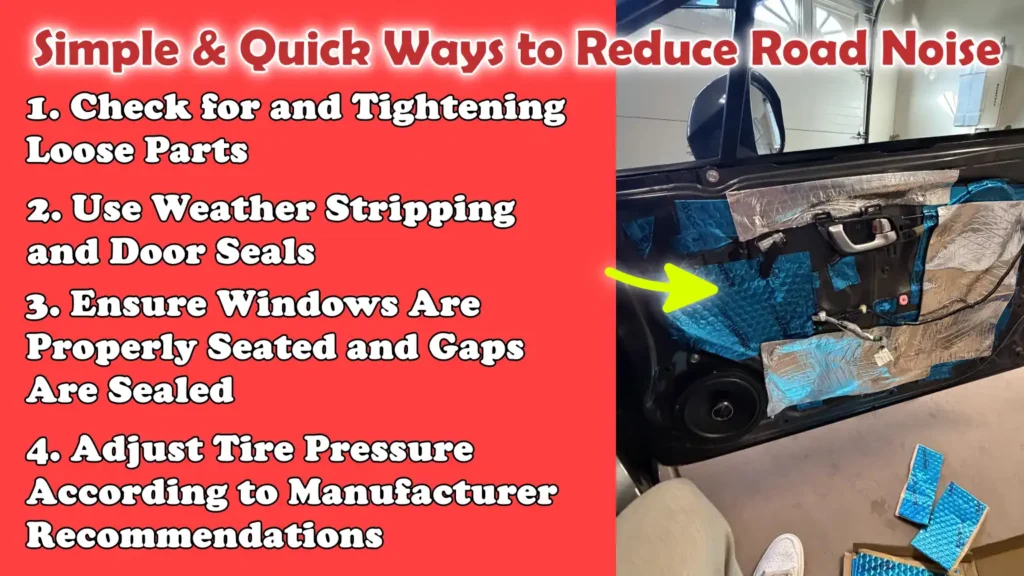
1. Check for and Tightening Loose Parts
Loose components are one of the simplest, yet often overlooked, causes of road noise.
Parts such as side mirrors, interior trim, dashboard panels and underbody covers can gradually loosen over time due to the vibrations generated during normal driving.
Even a small gap or slight movement can produce rattling or buzzing sounds, specially when driving on rough or uneven roads.
By carefully inspecting these components and tightening any loose screws, clips, or fasteners, you can instantly eliminate this unwanted noise.
In many cases, simply snapping a loose panel or piece of trim back into its proper position is sufficient to make the cabin feel much more solid and quiet.
2. Use Weather Stripping and Door Seals
Weather stripping and door seals play a crucial role in blocking out external noise.
These rubber seals are designed to fill the gaps surrounding doors and windows, thereby preventing air, dust and noise from entering the cabin.
Over time, these seals can wear out, crack, or lose their shape, allowing increased amounts of wind and road noise to penetrate the car’s interior.
Replacing worn-out seals or installing additional weather stripping creates a tighter seal and significantly reduces noise levels.
This simple measure not only helps maintain a quiet environment inside the car but also assists in regulating the cabin’s internal temperature.
3. Ensure Windows Are Properly Seated and Gaps Are Sealed
Windows that are not properly seated or fully closed can allow wind noise to enter the cabin, particularly when the vehicle is traveling at high speeds.
Even a very small gap or a window that is not completely shut can generate a loud whistling sound as air rushes past it.
Ensuring that all windows are fully closed and fit snugly within their frames is essential for minimizing this type of noise.
If a gap persists, the issue can often be resolved by repairing the window mechanism or replacing worn-out seals.
Verifying that the windows are securely seated guarantees that the cabin remains completely sealed and quiet while driving.
4. Adjust Tire Pressure According to Manufacturer Recommendations
Tire pressure has a direct impact on the amount of noise your tires generate while traveling on the road.
When tires are overinflated, they become rigid, leading to increased vibration and noise while driving.
Conversely, when tires are underinflated, they may wear unevenly and also generate excessive noise.
Maintaining the correct tire pressure, as recommended by the manufacturer, helps the tires establish better contact with the road surface.
This not only reduces noise but also improves fuel efficiency, extends tire lifespan and enhances overall driving safety; thus, it is one of the simplest and most effective ways to improve the driving experience.
How to Reduce Road Noise of Tires and Wheels
Tires and wheels are one of the primary sources of road noise, as they remain in constant contact with the road surface; consequently, every jolt, vibration and impact is transmitted directly into the car’s interior.
The sound you hear inside the cabin is often generated by the way air flows through the tire treads (the patterns on the surface), how the rubber interacts with the road and how vibrations travel through the suspension system to reach the vehicle’s body.
At higher speeds, this noise intensifies as the tires rotate faster, increasing both friction and air turbulence.
The condition of your tires, their specific tread patterns and the quality of their maintenance, all play a crucial role in determining how quiet or noisy your car feels.
By selecting the right tires and keeping them in good condition, you can significantly reduce road noise while simultaneously enhancing both driving comfort and performance.
1. Choosing Low-Noise Tires
Low-noise tires are specifically designed to minimize the noise generated while driving on the road.
Often referred to as “touring tires,” they utilize softer rubber compounds and specialized tread patterns engineered to keep vibrations and wind-induced noise to a minimum.
Some modern tires also incorporate noise-reduction technologies such as: internal foam liners, that absorb sound before it even reaches the cabin.
Unlike performance or off-road tires, which typically feature larger and deeper tread blocks, low-noise tires help create a more comfortable and quiet driving experience.
Choosing the right type of tire based on your specific driving needs can make a substantial difference in reducing cabin noise.
2. Tire Maintenance
Proper tire maintenance is crucial for minimizing road noise.
When tires are not “rotated” (swapped with one another) regularly, they can wear unevenly; this generates excessive vibration and noise while driving.
“Wheel balancing” ensures that the weight of the tire and wheel is distributed evenly, thereby preventing the vibrations or “humming” sounds that can occur in the vehicle at specific speeds.
“Alignment” is equally important, as misaligned wheels tend to drag slightly against the road rather than rolling freely; this increases both noise levels and tire wear.
Regular maintenance not only reduces noise but also enhances safety, improves fuel efficiency and extends the overall lifespan of the tires.
3. The Impact of Tire Tread Patterns on Road Noise
The tire’s tread pattern has a direct impact on the amount of noise it generates.
Tires featuring large, widely spaced tread blocks tend to trap and release air as they rotate; this creates a distinct “humming” or “resonating” sound.
Conversely, tires with smaller, closely spaced and uniform tread patterns produce less noise, as they facilitate smoother airflow and maintain a more consistent contact with the road surface.
As tires wear down over time, their tread patterns change, which can sometimes lead to increased noise levels.
Choosing a tire with a well-designed tread pattern, and replacing it before it becomes excessively worn, can help ensure a quieter driving experience.
4. Using Wheel Well Liners for Sound Dampening
Wheel well liners act as a barrier between the tires and the vehicle’s interior, helping to block noise and vibrations before they reach the cabin.
These liners are typically constructed from materials such as: plastic or felt, that absorb and dampen sound.
In many cars, particularly older or budget models, the insulation in this area may not be sufficiently robust, allowing excessive tire noise to penetrate the cabin.
Installing or upgrading wheel well liners can significantly reduce the amount of road noise entering the vehicle.
This simple modification works by absorbing sound waves and preventing them from traveling through the car’s metal body, thereby making the vehicle’s interior considerably quieter.
How to Reduce Road Noise By Soundproofing and Insulation
Soundproofing and insulation are among the most effective methods for reducing road noise, as they directly block and absorb noise before it can penetrate the cabin.
Every car comes with some degree of factory insulation; however, in many cases, this is kept to a minimum to keep costs and weight down.
This means that noise generated by tires, wind and vibrations can still find its way inside through the floor, doors, roof and trunk.
Sound travels through metal very easily; therefore, without proper insulation, even minor vibrations can generate significant noise within the cabin.
By applying high-quality sound-deadening materials to specific areas, you can significantly reduce noise levels and make the driving experience much more comfortable and quiet.
These enhancements not only reduce noise but also make the car feel more solid and refined while driving.
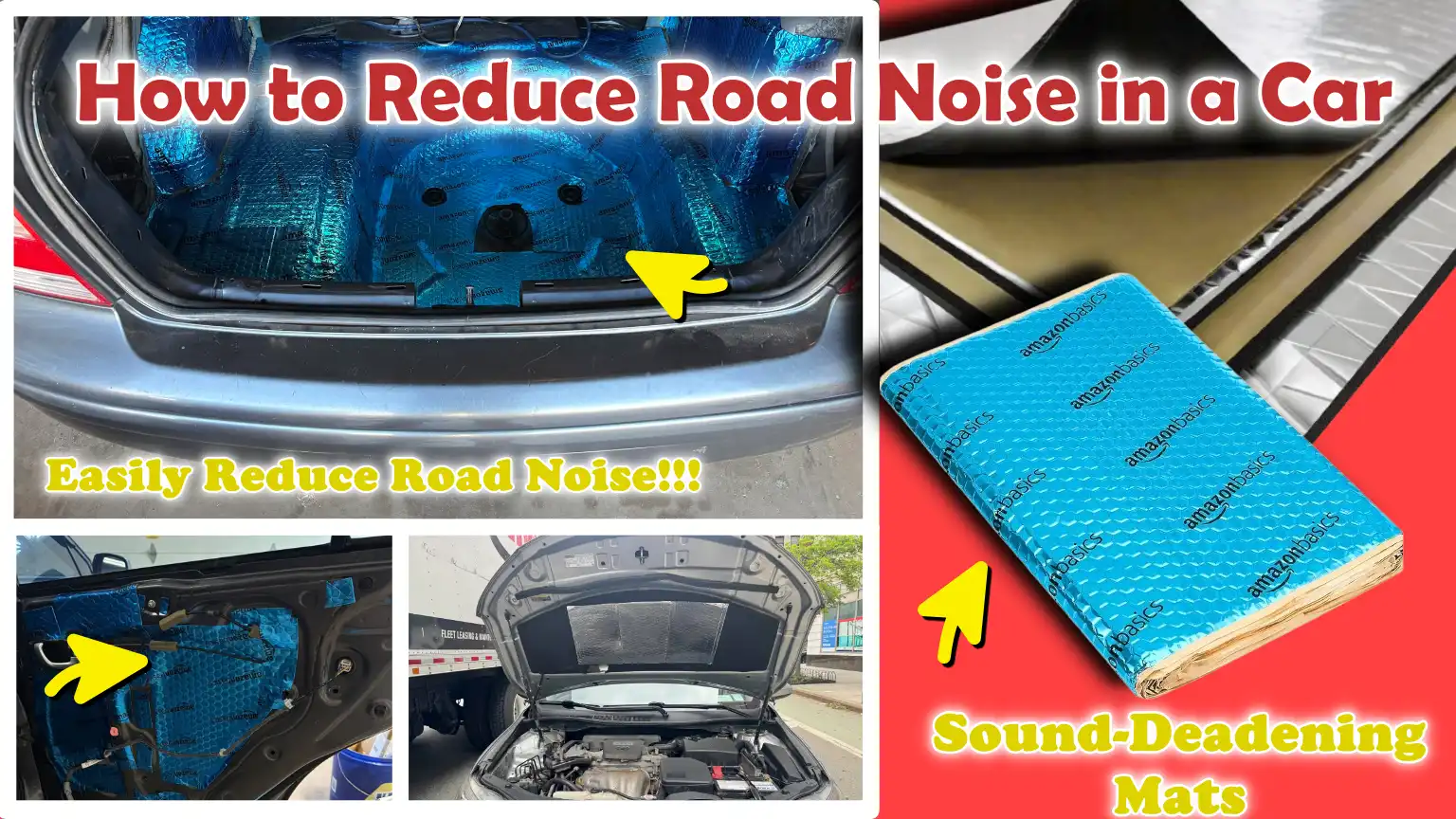
1. Applying Sound-Deadening Materials
Sound-deadening materials work by dampening vibrations and absorbing sound waves before they can enter the cabin.
When applied to metal surfaces, these materials limit surface vibration, which is one of the primary causes of noise.
They also help to block external noise, such as tire resonance and wind noise.
Applying these materials to areas such as the floor, doors and trunk results in a substantial reduction in cabin noise.
Even applying a small amount of insulation to the most critical areas can make a noticeable difference in how quiet the car feels during daily driving.
2. Floor Mats, Carpets and Underlayment
The car’s floor is one of the largest surfaces through which road noise enters the cabin, particularly noise originating from the tires and the road surface beneath the vehicle.
Thick floor mats, high-quality carpets and appropriate underlayments act as barriers that absorb noise and dampen vibrations.
Many standard cars come equipped with basic carpeting that is not particularly effective at blocking noise.
Utilizing thicker materials or installing an additional underlayer can help block noise more effectively.
This not only reduces noise levels but also enhances comfort by making the cabin feel more secure and stable.
3. Insulation for Door Panels, Headliners and Trunks
Doors, roofs and trunks are common entry points for noise into the cabin, as they feature large, flat surfaces that are highly susceptible to vibration.
Inside the doors, sound-dampening materials can reduce both road and wind noise, sounds that typically infiltrate through door gaps and seals.
Headliners help block noise generated by rain, wind and external traffic, while trunk insulation prevents sounds originating from the rear of the vehicle from entering the cabin, a particularly important feature in hatchbacks, where the cabin and trunk are interconnected.
Installing proper insulation in these areas effectively seals the car’s interior environment, resulting in a significantly quieter cabin.
4. Materials Used for Soundproofing
A variety of materials are employed for soundproofing, with each material playing a specific role in noise reduction.
Butyl sheets are commonly used due to their high density and their effectiveness in dampening vibrations within metal panels.
Foam-based materials function as sound absorbers, preventing echoes from reverberating within the cabin.
Mass-Loaded Vinyl (MLV) is a dense material that prevents sound from passing through surfaces; it proves highly effective in significantly reducing excessive noise levels.
Using all these materials in combination yields the best results, as this approach allows for the simultaneous absorption and blocking of various types of sound.
5. DIY vs Professional Installation
You can undertake soundproofing work yourself (as a DIY project) or have it done by a professional, this decision depends on the extent of the improvements you desire for your car.
The DIY approach is more cost-effective and allows you to focus on specific areas, such as the doors or floorboards; however, it requires time, patience and some basic knowledge regarding the safe removal of interior panels.
On the other hand, hiring a professional ensures more comprehensive coverage and they often employ advanced techniques to achieve superior results; however, this option can be somewhat more expensive.
Both methods are effective in significantly reducing road noise; ultimately, the approach you choose depends on your budget, your skill set and the degree of noise reduction you wish to achieve.
How to Reduce Road Noise By Suspension and Chassis Improvements
A car’s suspension and chassis play a crucial role in determining the level of noise and vibration experienced inside the cabin, as they are responsible for absorbing road shocks and maintaining vehicle stability.
When the suspension system functions correctly, it dampens the impact of rough roads, potholes and uneven surfaces, ensuring a comfortable and quiet ride.
However, as components wear out over time, they lose their ability to absorb these shocks, allowing vibrations to travel through the car’s metal frame and into the cabin.
This can result in knocking sounds, rattling, or persistent vibrations, issues that become particularly noticeable when driving at high speeds or navigating poor road conditions.
Upgrading suspension and chassis components not only reduces noise but also enhances ride comfort, handling and overall driving safety.
1. How Worn Suspension Components Increase Noise and Vibration
Suspension components such as: shocks, struts, bushings and control arms, are designed to absorb energy generated by the road; however, through constant use, they gradually wear down.
When shocks and struts lose their effectiveness, they fail to properly control vehicle movement, causing the car to bounce excessively and allowing vibrations to transmit directly into the cabin.
Worn bushings, small rubber components that act as cushions between joints, can harden or crack, leading to squeaking or knocking sounds.
Furthermore, the clashing of loose or worn-out parts can lead to metal-to-metal contact, thereby further escalating noise levels.
These issues not only make the ride uncomfortable but can also adversely affect the vehicle’s handling and tire wear; therefore, the timely inspection and replacement of worn components are absolutely essential.
2. Installing Bushings or Dampers to Reduce Vibration
Bushings and dampers are key components that help isolate vibrations and mitigate noise.
Bushings act as cushions between metal parts, preventing direct contact and absorbing minor movements that would otherwise generate noise.
Dampers such as: shocks and struts, regulate suspension movement and prevent the vehicle from bouncing excessively.
Installing high-quality bushings and utilizing properly functioning dampers can significantly reduce the amount of vibration transmitted into the cabin.
In many instances, upgrading to higher-quality components can reduce noise even more effectively, making the car feel more comfortable and quiet during daily driving.
3. Benefits of Chassis Bracing and Underbody Coating
Chassis bracing and underbody coating help reinforce the vehicle’s structure and reduce vibrations experienced while driving.
Chassis braces provide additional support to the frame, enhancing its rigidity and minimizing structural flex when traversing rough roads or potholes.
Consequently, the vibration felt inside the cabin is reduced.
Applied to the underside of the vehicle, underbody coating serves a dual purpose, acting as both a protective barrier and a sound-absorbing layer, thereby reducing noise originating from the road and tires.
These coatings also provide protection against rust and wear and tear, proving highly beneficial for the vehicle’s long-term maintenance.
Overall, all these enhancements collectively contribute to making the driving experience quieter, more stable and more comfortable.
Read More:
- How to Replace Shocks and Struts
- How to Diagnose Wheel Bearing Noise
- How to Rotate Car Tires
- How to Replace a CV Axle
- How to Fix Suspension Noise
How to Reduce Road Noise From Window and Wind Noise
At high speeds, one of the most audible sounds inside a car is wind noise.
This is primarily caused by air flowing around the vehicle, which enters the cabin through tiny gaps located near the windows, doors and sunroof.
As speed increases, the airflow intensifies and creates pressure differentials, resulting in whistling or rushing sounds inside the cabin.
Even a small gap or a worn-out seal can allow a significant amount of noise to enter.
Modern cars are designed with superior aerodynamics and sealing systems; however, over time, their effectiveness may diminish due to wear and tear.
By improving window quality, properly installing seals and sealing existing gaps, you can significantly reduce wind noise and make the cabin quieter and more comfortable while driving.
1. Installing Laminated or Soundproof Glass
Laminated, or soundproof, glass is specifically designed to reduce noise.
It consists of multiple layers of glass bonded together by a special sound-absorbing interlayer.
This layer absorbs sound waves, preventing them from entering the cabin.
Compared to standard glass, laminated glass is far more effective at attenuating loud external noises, such as wind and traffic sounds.
Many premium vehicles come equipped with this type of glass from the factory to ensure a quiet interior environment, although it can also be installed in other vehicles as an aftermarket upgrade.
This enhancement proves particularly beneficial when driving on highways, where wind noise is typically at its peak, and it also makes carrying on conversations inside the car significantly easier.
2. Proper Use of Window Seals and Deflectors
Window seals are crucial for shielding the cabin from outside air and noise.
These rubber seals fit snugly along the edges of windows and doors, effectively preventing air intrusion.
Over time, these seals may harden, crack, or loosen, allowing air to enter and generate noise.
Replacing worn-out seals or ensuring they are properly seated can significantly mitigate this issue.
Wind deflectors also serve as useful accessories, as they alter the airflow patterns around the windows, thereby reducing wind resistance and noise.
Together, these two elements, effective seals and deflectors, help maintain a quiet and secure cabin environment.
3. Minimizing Gaps Around Sunroofs or Convertible Roofs
Sunroofs and convertible roofs can be common sources of wind noise, as they introduce additional seams and openings into the vehicle’s structure.
If these areas are not properly sealed or aligned, gaps may remain, allowing air to infiltrate the cabin.
When the vehicle is traveling at high speeds, this incoming airflow can generate a considerable amount of noise.
Even a slight misalignment can cause whistling sounds due to changes in air pressure around the affected area.
Regularly inspecting and cleaning the seals, and ensuring that the sunroof or roof is completely closed, can help alleviate this problem.
In some instances, replacing worn seals or adjusting their fit can make a significant difference in keeping the cabin quiet.
How to Reduce Road Noise By Controlling Engine and Exhaust Noise
Engine and exhaust noise constitutes a significant portion of the sound audible inside a car, particularly when driving at high speeds, while idling, or during acceleration.
This type of noise is generated by the combustion process occurring within the engine and the flow of exhaust gases passing through the exhaust system.
While a certain level of noise is normal, excessive noise often signals a malfunction such as: worn-out components, degraded insulation, or a leak within the exhaust system.
Modern cars are engineered to minimize engine and exhaust noise through the use of insulation and specially designed components; however, over time, wear and tear can lead to increased noise levels.
By upgrading key components such as: the exhaust system and engine insulation, and adhering to a regular maintenance schedule, you can significantly reduce unwanted noise and enhance the driving experience, making it more comfortable and quiet.
1. Upgrading the Exhaust Silencer or Muffler
The muffler, also known as a silencer, functions to attenuate the sound produced by the exhaust gases exiting the engine.
It achieves this by utilizing a series of chambers and sound-absorbing materials that absorb and dissipate sound waves.
If a muffler becomes damaged, corroded, or worn out, it loses its ability to effectively control noise, resulting in a louder and harsher sound.
Installing a high-quality muffler or a well-designed exhaust system can significantly reduce noise levels without compromising engine performance.
Some modern mufflers are engineered to strike a balance between noise reduction and airflow, ensuring that the vehicle remains quiet without negatively impacting its performance.
2. Engine Bay Insulation
The engine bay is another critical area where noise can be effectively controlled.
Insulation materials installed around the engine help absorb sound and prevent it from entering the car’s cabin.
These materials are typically heat-resistant and are designed to withstand high temperatures while simultaneously reducing noise levels.
Over time, factory-installed insulation may wear out or lose its effectiveness, allowing excessive engine noise to intrude into the cabin.
Installing or replacing insulation in the engine bay can significantly reduce the amount of noise audible inside the car, particularly when accelerating or when the engine is under heavy load.
This simple upgrade can make the driving experience far more refined and comfortable.
3. Regular Maintenance to Prevent Rattles and Vibrations
One of the most effective methods for controlling engine and exhaust noise is regular maintenance.
Loose bolts, worn-out mounts, or defective components can generate rattling or vibrating sounds, which become even more pronounced while driving.
For instance, engine mounts are designed to securely hold the engine in place and absorb vibrations; however, when they become worn, excessive vibrations begin to transfer into the vehicle’s body.
Similarly, even minor leaks in the exhaust system can generate strange noises that tend to intensify over time.
By regularly inspecting and maintaining these components, you can prevent noise-related issues from escalating into serious problems.
Keeping the engine and exhaust system in good condition not only reduces noise but also enhances safety, performance and long-term reliability.
What are the Professional Upgrades to Reduce Road Noise Drastically
When basic measures and DIY methods prove insufficient for reducing road noise, professional upgrades can yield significantly better results, as they utilize advanced materials, specialized tools and expert installation techniques.
Dealerships and specialized aftermarket shops offer proven acoustic solutions designed to deal with specific sources of noise such as: tires, wind, engine operation and structural vibrations.
These upgrades are often employed in premium vehicles to create a quieter and more refined cabin environment; however, these same techniques can be applied just as effectively to standard cars.
Professional work typically focuses on thoroughly sealing gaps, installing high-density insulation in concealed spaces and mitigating structural vibrations, thereby substantially reducing the volume of noise and vibration entering the vehicle.
While these upgrades may entail a higher cost, they often deliver distinct and long-lasting results that are difficult to achieve using basic methods alone.
1. Acoustic Upgrades Available at Dealerships or Aftermarket Shops
Professional acoustic upgrades involve the use of high-quality sound-damping materials, the application of advanced insulation layers, the installation of acoustic glass and the enhancement of seals around doors and floorboards.
Many shops utilize specialized materials such as: high-density vibration-damping sheets, noise-absorbing foams and robust acoustic barriers, that are typically unavailable in standard DIY kits.
Some upgrades also target hard-to-reach areas, such as the interiors of door frames, the space beneath the dashboard and the underside of floor panels.
These enhancements are applied with meticulous precision to ensure comprehensive coverage and maximum impact.
This helps mitigate noise originating simultaneously from multiple sources, thereby creating a more balanced and tranquil cabin environment.
2. Cost-Benefit Analysis
The cost of professional upgrades can vary depending on the scope of work and the materials utilized; however, for drivers seeking a quieter and more comfortable journey, the benefits often justify the investment.
While basic measures may focus on specific areas and yield only marginal reductions in noise, a comprehensive upgrade can significantly lower the overall noise levels within the cabin.
A quieter cabin can reduce driver fatigue, enhance concentration and make long-distance travel more enjoyable.
It also elevates the overall ambiance of the vehicle, giving it a more premium and solidly built feel.
When deciding whether or not to invest in these upgrades, it is crucial to consider how frequently you drive, the types of roads you typically use and the current impact of noise on your driving comfort.
3. Noise Reduction Case Studies and Examples
Numerous real-world examples demonstrate that professional upgrades can make a tangible difference in reducing road noise.
For instance, vehicles that undergo comprehensive soundproofing throughout their entire interior, including the doors, floor and trunk area, often exhibit a substantial reduction in cabin noise, particularly at highway speeds.
Vehicles equipped with acoustic glass and enhanced sealing systems experience a significant reduction in wind noise, making conversation easier and reducing stress during long-distance journeys.
In some cases, drivers report that following these improvements, their cars feel like entirely different vehicles, exhibiting reduced vibration and rattling and offering an overall smoother driving experience.
These examples demonstrate that when upgrades are executed correctly, they can transform a noisy car into a much quieter and more comfortable space.
How to Maintain Reduced Road Noise for Longer Period of Time
Reducing road noise is not achieved merely by fixing a single issue once; rather, it is the result of regular vehicle maintenance.
This ensures that minor issues do not escalate into major, noisy nuisances down the road.
Many sources of noise develop gradually such as: worn seals, uneven tire wear, or loose components, and often go unnoticed until the noise level inside the cabin becomes excessively bothersome.
Regular inspections and a little preventive care can nip these problems in the bud, keeping the driving experience quiet and comfortable.
A well-maintained vehicle not only generates less noise but also performs better, feels more stable and enjoys a longer lifespan.
By paying attention to key components such as: seals, tires, body panels and mechanical parts, you can keep noise levels under control without the need for major repairs.
Also, there’s research in the automotive engineering that conforms that the road noise is not just about having the annoyance but you need to eliminate it for stress free drive and it is also a key factor in how comfortable and premium a car can feels, so the studies shows that the tire-road interaction and the wind noise become the main sources of the sound at the higher speeds, which actually explains that why many drivers actually notices more noise on the highways, that’s why it becomes important to focus on solutions such as: having better tires, improved insulation and having proper sealing that reduces the unwanted sound inside the cabin.[¹]
1. Regular Inspection of Door Seals, Tires and Body Panels
Door seals, tires and body panels are common points through which external noise can infiltrate the cabin.
Over time, the rubber seals surrounding doors and windows can wear out, harden, or crack, allowing wind and outside noise to seep inside.
Uneven tire wear can also occur, leading to increased road noise, particularly at higher speeds.
Furthermore, body panels and trim components may become slightly loose, resulting in rattling sounds when driving over rough or uneven roads.
By regularly inspecting these components and promptly addressing any issues, you can prevent noise levels from escalating, thereby ensuring that the vehicle remains stable and quiet.
2. Keep the Cabin Clean and Organized
The importance of a clean and organized cabin in keeping noise levels under control is far greater than most people realize.
Loose items such as: tools, bottles, coins, or other objects, can shift around while driving, potentially generating rattling or knocking sounds.
Even small items can become a source of distraction when they move or vibrate on rough roads.
Keeping the cabin tidy and ensuring that all items are properly stowed helps minimize such unnecessary noise.
Furthermore, ensuring that interior components such as: seat mountings and storage compartments, are securely fastened can further reduce unwanted noise.
3. Watch for Early Signs of Wear in Suspension or Exhaust Components
Suspension and exhaust systems are constantly subjected to stress, heat and varying road conditions; consequently, they may experience wear and tear over time, which often leads to the generation of noise.
Early warning signs such as: slight vibrations, faint knocking sounds, or changes in the engine or exhaust note, should not be ignored.
These subtle cues often indicate that specific components such as: bushings, mounts, or exhaust joints, have begun to wear out.
By addressing these issues in their early stages, you can avoid louder noises and costly repairs down the road.
Regular inspections and the timely replacement of parts ensure that the vehicle’s ride remains comfortable and quiet, while also guaranteeing that the vehicle continues to operate safely and efficiently.
Conclusion – How to Reduce Road Noise in a Car
The road noise is really annoying that’s why you need to fix something to get quiet and relaxing cabin for the whole journey ahead.
Road noise typically manifests as a combination of tire sounds, air entering through small crevices, engine vibrations and the movement of suspension components.
If left unaddressed, these sources can gradually make driving more fatiguing, create distractions and generally diminish overall comfort, particularly during long journeys.
Fortunately, most of these issues can be resolved through simple measures, such as maintaining proper tire pressure, repairing worn-out seals, tightening loose components and ensuring proper vehicle maintenance.
For even better results, upgrades such as premium tires, soundproofing materials, enhanced suspension components and professional acoustic treatments can make a significant difference.
These modifications work by either blocking sound, absorbing it, or mitigating the root cause of the noise, namely, vibration.
Even minor improvements made to various parts of the vehicle can collectively transform the interior cabin into a significantly quieter and more comfortable environment.
So, that’s all about this guide on How to Reduce Road Noise in a Car, now you can ask all the related questions around this guide in the comment box below.
Frequently Asked Questions
FAQ 1: What causes road noise in a car?
Road noise in a car is primarily caused by friction between the tires and the road surface, airflow around the vehicle, engine sounds and vibrations generated by the suspension system. As your car moves, the tires rub against the road surface, creating a humming or loud rumbling sound. At higher speeds, air flows around the car and can seep in through small gaps near the windows and doors, producing a whistling sound. The engine and exhaust system also contribute to noise generation, particularly when you accelerate. Furthermore, vibrations caused by worn suspension components can transmit through the car’s body, increasing the noise level inside the cabin. All these factors combine to create the total noise you hear while driving.
FAQ 2: How can I quickly reduce road noise without spending a lot of money?
You can quickly reduce road noise by focusing on a few simple and inexpensive measures. First, inspect both the interior and exterior of the car for any loose parts such as: panels, trim, or glass, and tighten them securely. Ensure that your windows are fully closed and properly seated, as even small gaps can allow wind noise to enter. Check the door seals; if they are worn or damaged, replace them. Maintaining the correct tire pressure recommended by the manufacturer also helps in reducing noise. These small steps can make a significant difference without the need for any expensive upgrades.
FAQ 3: Do tires really make a significant difference in road noise?
Yes, tires make a substantial difference in road noise because they are in constant contact with the road surface. The type of tires you use determines the amount of noise generated. Tires with deep tread patterns such as: off-road tires, typically produce more noise, whereas touring tires are designed to minimize noise levels. Worn-out or unevenly worn tires can also contribute to increased noise levels. Choosing the right tires and maintaining them properly through regular rotation, balancing and alignment can significantly reduce the noise audible inside the car’s cabin.
FAQ 4: Is it worthwhile to have soundproofing installed in a car?
If you desire greater peace and comfort while driving, having your car soundproofed can be highly effective. It works by dampening vibrations and preventing external noise from entering the cabin. Applying insulation materials to areas such as the doors, floor and trunk can significantly reduce noise levels. Although this process may involve some cost and effort, the results are often well worth it specially if you drive frequently or spend a considerable amount of time on highways. Even minor soundproofing enhancements can improve comfort and reduce fatigue during long journeys.
FAQ 5: How can I determine if wind noise is coming from my windows or doors?
You can usually identify wind noise by listening carefully while driving at higher speeds. If you hear a whistling sound or the distinct rush of wind that intensifies as your speed increases, it is likely originating from gaps or crevices around the windows or doors. You can inspect these areas for worn-out or damaged seals and look for any visible cracks or gaps. Sometimes, while driving, applying slight pressure to a window or door can alter the sound, helping to confirm the source of the noise. Repairing the seals or correcting the alignment can effectively resolve this issue.
FAQ 6: Can suspension issues increase road noise?
Yes, suspension issues can increase road noise because they allow excessive vibrations to enter the car’s cabin. When components such as shocks, struts, or bushings become worn, they are unable to properly absorb bumps and impacts. This results in increased vibration within the vehicle, which generates noise inside the cabin. You may notice knocking sounds, rattling, or a rougher ride quality. Replacing worn suspension components helps reduce these vibrations, thereby improving both ride comfort and noise levels.
FAQ 7: Is engine noise a sign of a problem?
Not always, but excessive or unusual engine noise can be an indication of an internal issue. A normal engine does produce some sound specially during acceleration, but if the noise becomes very loud, harsh, or distinctly different from the norm, it could signal a problem. Issues such as worn engine mounts, poor insulation, or exhaust leaks can all contribute to increased noise levels. Regular maintenance and inspections can help identify and resolve these issues before they become serious.
References:
[1] A survey of modern vehicle noise, vibration and harshness: A state-of-the-art
https://www.sciencedirect.com/science/article/pii/S2090447924003320
Hello Folks, Dean Shali here to help you out to solve the problems with your lovely vehicle, as i have lots of experience and knowledge about automotive industry as i woks directly with the customers and repair vehicles and i love to help the people to keep their cars safe and running smoothly.