
Written By: Dean Shali
Fact Checked By: Sabré Cook
Reviewed By: Tamara Warren
Yes 100%, a car heater is the luxury to feel warmth under the chilling cold snow, but if it is not blowing hot air then you need to be aware to maintain, clean or change worn-out parts to restore that efficiency again.
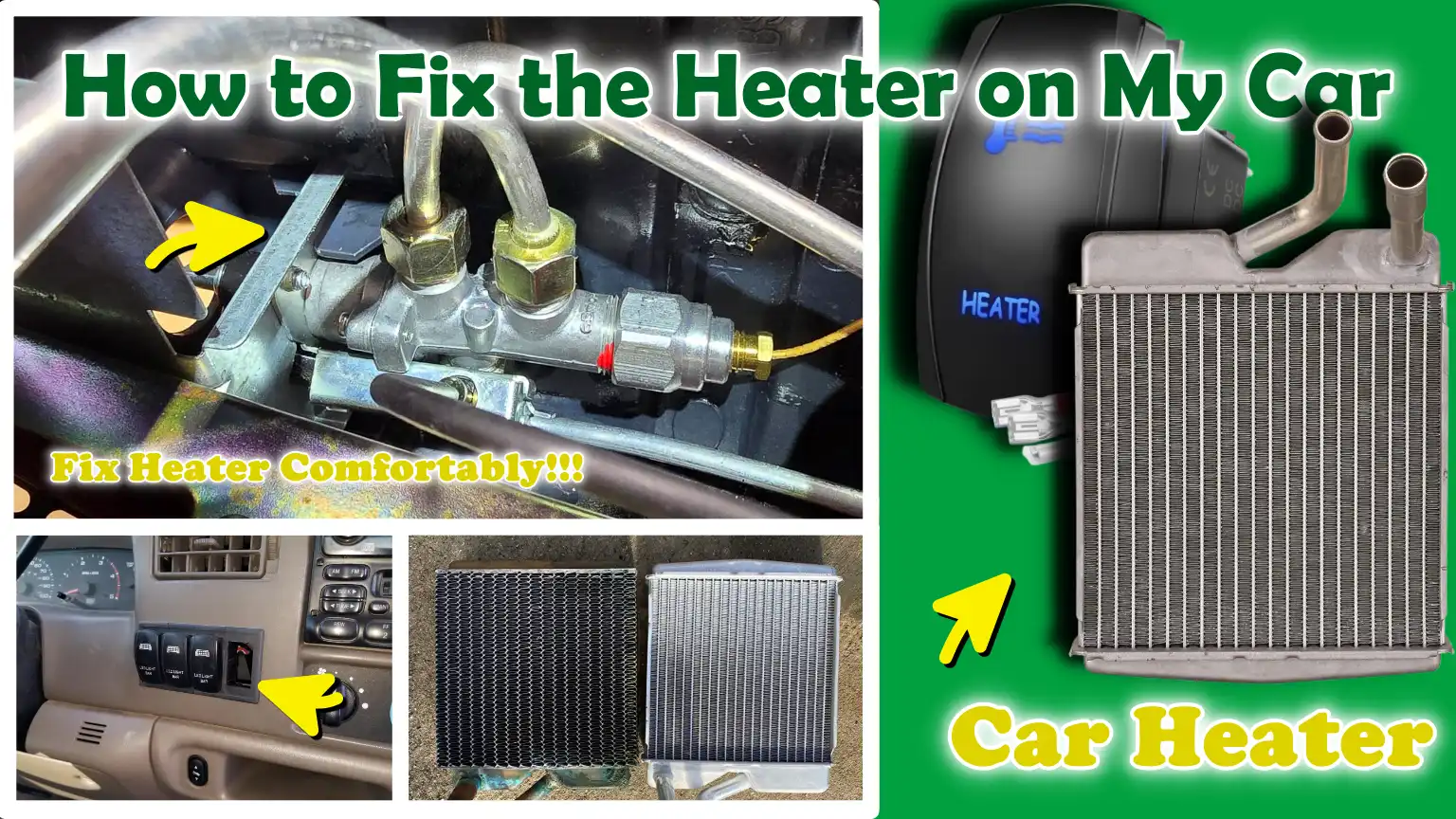
So, basically modern car heaters works by using the heat from the engine’s coolant, which literally passes through a small radiator known as heater core.
And, the blower motor then actually pushes that circulated warm air from the heater core into the cabin, so the issue could be anything from clogged heater core, low coolant levels, a faulty thermostat or it can be malfunctioning blower motor as well.
That’s why you need to understand everything about How to Fix the Heater on My Car, as in this guide you’ll learn about components and their respective functions that helps you to identify the problems accurately and decide whether you need to fix them or what.
Now, Let’s Understand About How Your Car’s Heater Works
Your car’s heater is an essential component of your vehicle that keeps the cabin warm during cold weather.
It utilizes heat generated by the engine and directs it into the interior of your car.
Understanding the key components of the heater system is crucial for diagnosing and resolving potential issues.
1. Heater Core
The heater core is a small radiator located inside the dashboard.
Hot engine coolant flows through it and the core absorbs heat from the coolant, transferring it to the surrounding air.
If the heater core becomes clogged or develops a leak, the air entering the cabin will be cold or its temperature will be inconsistent.
Knowing this helps you identify whether the heater core is the root cause of the lack of heat in the cabin.
2. Blower Motor
The blower motor is the fan responsible for pushing air through the heater core and into the cabin.
If the blower motor fails or its resistor stops functioning, you may experience reduced airflow, or no airflow at all.
Understanding the role of the blower motor makes it easier to troubleshoot issues related to airflow.
3. Thermostat
The thermostat regulates the flow of coolant to ensure the engine maintains its optimal operating temperature.
If it gets stuck in the closed position, the engine may overheat and the heater will be unable to generate heat.
Conversely, if it gets stuck in the open position, the engine will fail to reach its proper operating temperature, resulting in reduced heating output.
Understanding how the thermostat functions helps you determine whether replacing it will resolve your heating issues.
4. Coolant System
The coolant system circulates a mixture of water and antifreeze through the engine and the heater core, facilitating the transfer of heat from one location to another.
Low coolant levels, leaks, or trapped air within the system can prevent your heater from functioning correctly.
Checking and maintaining proper coolant levels is the simplest and most effective way to ensure that your heater delivers warm air.
5. HVAC Controls
HVAC controls allow you to adjust the cabin temperature, airflow direction and fan speed to suit your specific needs.
If there is an issue with the controls or the blend door actuator, heating or airflow may become inconsistent in certain areas.
Understanding how these controls interact with the rest of the heater system is crucial for accurately diagnosing and resolving problems.
6. How Cabin Heat is Generated and Delivered
When the engine burns fuel, it generates heat, which is subsequently absorbed by the coolant.
The heated coolant circulates through the heater core, where the blower motor pushes air across the hot core.
This warmed air is then directed into the cabin, providing you with comfort.
If any component of this system malfunctions, heat will not be delivered to the cabin effectively.
7. How System Knowledge Aids in Troubleshooting
Understanding how each component of your car’s heater functions helps you quickly identify the root cause of any issue.
Instead of guessing or blindly replacing parts, you can systematically inspect the heater core, blower motor, thermostat, coolant levels and controls one by one.
This saves time, money and hassle, while also ensuring that your car remains warm and safe.
Take Necessary Safety Precautions Before You Fix the Heater on Car
1. Ensure the Engine is Cool to Avoid Burns
Before inspecting or working on your car’s heater, always ensure that the engine is completely cool.
The engine, radiator and coolant can become extremely hot and touching them while they are hot poses a risk of severe burns.
Even the hoses carrying the coolant can become dangerously hot.
Waiting for the engine to cool down not only keeps you safe but also protects the components themselves from potential damage, as they can be susceptible to “thermal shock” caused by sudden temperature fluctuations.
2. Disconnect the Battery When Inspecting Electrical Components
When inspecting the blower motor, HVAC controls, or any other electrical components of the heater system, it is crucial to first disconnect the car’s battery.
This prevents accidental electric shocks, short circuits, or damage to the electrical system.
Working on live wires can be hazardous and may even cause the motor or fan to start unexpectedly; therefore, disconnecting the battery ensures a safe environment for troubleshooting and repairs.
3. Wear Gloves and Eye Protection
Always wear gloves and safety glasses (goggles) while working on your car’s heater.
Gloves protect your hands from sharp edges, hot surfaces and chemical exposure from coolant or cleaning agents.
Eye protection guards against injuries caused by splashes, debris, or sudden coolant leaks.
Using basic safety equipment helps prevent minor accidents, which could otherwise escalate into serious injuries, thereby allowing you to focus safely and effectively on heater repairs.
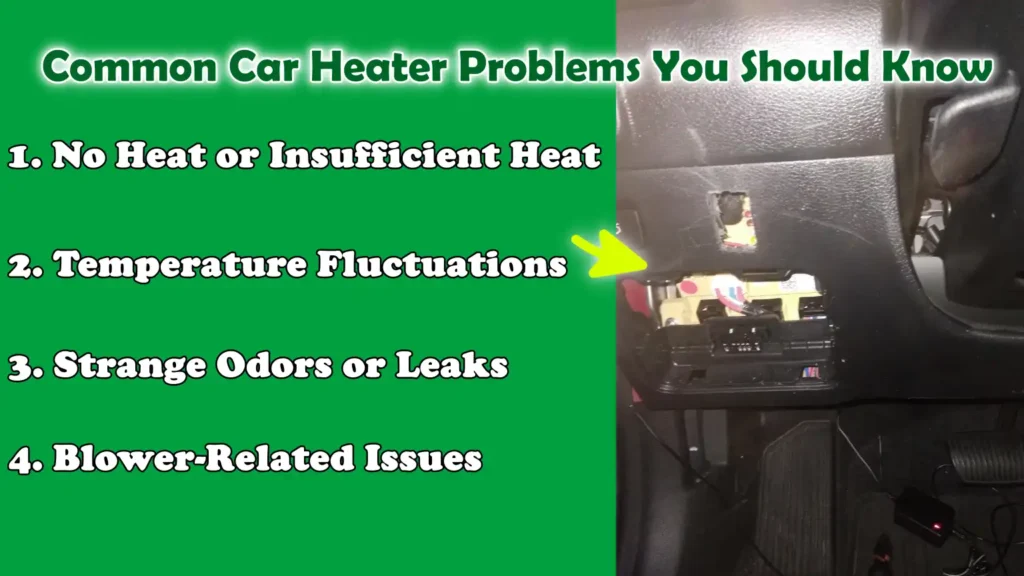
Common Car Heater Problems You Should Know
1. No Heat or Insufficient Heat
One of the most common problems car owners face is the heater failing to produce any heat at all, or merely emitting a faint flow of warm air.
This typically occurs when the system fails to effectively transfer sufficient heat from the engine to the cabin.
This issue can stem from several causes, including low coolant levels, trapped air within the cooling system, or a faulty thermostat.
Low coolant levels reduce the amount of heat reaching the heater core, while air pockets prevent the hot coolant from circulating properly.
Furthermore, if the thermostat becomes stuck in either an open or closed position, the engine cannot reach its optimal operating temperature, resulting in little to no heat reaching the cabin.
Understanding these underlying causes helps you pinpoint the root of the problem and implement the appropriate solution.
2. Temperature Fluctuations
If your car’s heater is not functioning consistently, alternating between blowing warm air and cold air, the issue may lie with the “blend door actuator” or a deteriorating “heater core.”
The blend door actuator regulates the mixture of warm and cold air entering the cabin; if it malfunctions, sudden and erratic temperature shifts can occur.
A partially clogged or leaking heater core can also cause uneven heating, as coolant is unable to flow properly through the system.
Recognizing temperature fluctuations as a distinct symptom can save you time and prevent you from replacing components that have no bearing on the actual problem.
3. Strange Odors or Leaks
Unpleasant odors or visible leaks emanating from your car’s heater are potential indicators of more serious underlying internal issues.
If the heater core leaks, coolant can seep into the cabin, resulting in a sweet odor and causing damp spots on the carpeting or dashboard.
The accumulation of mold or mildew within the HVAC system can also generate a strange, unpleasant smell when the heater is activated.
These issues are not only uncomfortable but can also have adverse effects on your health.
Furthermore, they serve as indicators that the system requires cleaning, repair, or replacement to restore its safe and efficient heating functionality.
4. Blower-Related Issues
The blower motor is responsible for circulating air from the heater core into the cabin.
If the blower motor or its resistor malfunctions, you may face problems such as reduced airflow, a complete absence of airflow, or limited options for fan speed settings.
A clogged cabin air filter can also restrict airflow and place undue strain on the blower motor, thereby diminishing the heater’s overall efficiency.
Understanding these blower-related issues helps you identify whether the problem is electrical, mechanical, or simply the result of neglected maintenance, enabling you to pursue an accurate and cost-effective solution.
How to Fix the Heater on My Car – Easy & Working Method
1. Check the Coolant Level
The first step in troubleshooting a car heater is to check the coolant level.
Coolant, a mixture of water and antifreeze, transfers heat from the engine to the heater core.
To check the level, locate the coolant reservoir, typically a transparent plastic tank situated near the radiator, and ensure that the coolant level falls between the ‘Minimum’ and ‘Maximum’ marks.
If the level is low, top it up with the correct type of coolant and inspect the system for any leaks; leaks may occur in the hoses, the radiator, or the heater core connections.
Maintaining the correct coolant level is crucial, as even a slight deficiency can prevent the heater from blowing warm air.
2. Bleed Air from the Cooling System
Trapped air within the cooling system can obstruct the flow of hot coolant to the heater core, resulting in little to no heat output from the heater.
To expel air bubbles, you may need to utilize the ‘bleed valve’ located on the radiator, or follow a procedure involving the removal of the radiator cap while allowing the engine to warm up, thereby purging the trapped air.
Indicators of a successful air-bleeding process include: a steady rise in the coolant level (without any visible air bubbles) and a consistent flow of heat from the heater.
Properly bleeding the air from the system ensures full coolant circulation and improves heater performance.
3. Inspect and Replace the Thermostat
The thermostat regulates the engine’s operating temperature by controlling the flow of coolant.
If the engine fails to reach its optimal operating temperature, the heater may be unable to generate sufficient heat.
To check the thermostat, observe the engine temperature gauge or measure the temperature by placing a thermometer on the upper radiator hose; if the engine remains cold or overheats excessively, the thermostat may be stuck.
The process of replacing a thermostat involves draining a small amount of coolant, removing the old thermostat, installing the new one and then refilling the system with coolant.
A properly functioning thermostat ensures that hot coolant reaches the heater core at the appropriate time.
4. Check the Heater Core
If the heater core is clogged or leaking, warm air will not reach the cabin.
To identify potential issues, check inside the cabin for any signs of coolant leakage; note whether a sweet odor is present when the heater is turned on; or verify if the heater fails to produce sufficient heat despite the coolant level being correct.
Flushing the heater core with water or a specialized cleaning solution can dislodge trapped debris; however, if the heater core is leaking, it may need to be replaced.
Maintaining the heater core in good condition is essential for keeping the cabin safely and effectively heated.
5. Check the Blower Motor and Resistor
The blower motor pushes air through the heater core into the cabin, while its resistor controls the fan speed.
If the fan fails to operate at a specific speed or stops working entirely, using a multimeter to test the blower motor or checking the voltage at the resistor can help diagnose the fault.
Replacing a defective blower motor or resistor restores proper airflow and ensures that the heater functions correctly across all fan settings.
A properly functioning blower is essential for evenly distributing warm air throughout the cabin.
6. Check HVAC Controls
Issues with the control panel or blend door actuators can result in uneven heating in certain areas, or a complete lack of heating altogether.
The inspection involves adjusting temperature and airflow settings, as well as verifying that the blend doors are moving and responding correctly.
Faulty actuators or control panels can be repaired or replaced to restore the proper blending of warm and cool air, thereby allowing the cabin temperature to be precisely adjusted to your preference.
Understanding the HVAC controls ensures that the system responds accurately to the driver’s inputs.
7. Check the Cabin Air Filter
The cabin air filter cleans incoming air before it enters the HVAC system and heater core.
A clogged or dirty filter restricts airflow, places strain on the blower motor and reduces heating efficiency.
To inspect the filter, locate the filter housing, typically situated behind the glove compartment or beneath the dashboard, and check for the presence of dust, leaves, or debris.
Cleaning or replacing the filter improves airflow and ensures that warm air continues to circulate throughout the cabin without obstruction.
Proper filter maintenance is a simple yet crucial step in ensuring optimal heater performance.
When You Should Go for Professional Mechanics
1. Persistent Issues After Attempting Self-Repair
If you have exhausted all self-troubleshooting methods such as: checking coolant levels, bleeding air from the system and inspecting the thermostat, heater core, blower motor and HVAC controls, yet the heater still fails to provide consistent warmth, it is a clear indication that the underlying issue may be more complex.
Persistent problems can point to hidden faults within the engine, cooling system, or electrical components, issues that require specialized tools and expertise to accurately diagnose and repair.
Attempting further repairs yourself without the proper knowledge could exacerbate the problem or lead to additional damage.
2. Leaks Inside the Cabin
A coolant leak inside the cabin is a serious issue that should never be ignored.
If the heater core or its associated hoses develop a leak, hot coolant can seep into the passenger compartment, resulting in slippery floorboards, a strong, sweet odor and a potential risk of exposure to toxic chemicals.
Repairing such leaks typically requires the removal of dashboard components; this process must be executed with extreme care to prevent further damage to the vehicle’s interior and electrical systems.
Professional service ensures that the leak is properly sealed or that the heater core is safely replaced.
3. Complex Electrical or HVAC Issues
Modern vehicles are equipped with highly sophisticated HVAC systems featuring electronic controls, blend door actuators and integrated sensors.
If the cabin temperature fluctuates erratically, if some air vents blow cold air while others blow hot air, or if the control panel fails to function correctly, these may be signs of a complex electrical or HVAC system malfunction.
Identifying these issues requires specialized diagnostic tools and technical expertise to properly inspect circuits, actuators and control modules.
Seeking professional assistance ensures that these problems are resolved safely and effectively, allowing the heating system to resume proper operation without incurring any further damage.
How to Maintain Car Heater for Longer Period of Time
Moreover, there’s research that shows that the well-designed HVAC system not only keeps passengers comfortably but also it actually contributes to the vehicle’s fuel economy and reliability as well, so this is also true in cabin thermal management as it focuses on the reducing heat loss and improves the heater performance, which literally enhances both comfort and engine efficiency as well.[¹]
1. Regular Coolant Checks and Flushing
Regularly checking your car’s coolant level and condition is the simplest and most effective way to prevent heater-related problems.
Coolant transfers heat from the engine to the heater core; if the coolant level is low or if it has become contaminated, heating performance may suffer, or the system could even sustain damage.
Performing a coolant flush at scheduled intervals removes rust, scale and debris that can clog the heater core and cooling system.
Keeping the coolant fresh and at the proper level ensures consistent heating in the cabin and extends the lifespan of both the engine and heater components.
2. Replace the Cabin Air Filter at Scheduled Intervals
The cabin air filter prevents dust, dirt, leaves and other debris from entering the HVAC system and heater core.
If the filter becomes clogged or dirty, airflow is restricted, the blower motor is put under strain and dirt can accumulate inside the heater core; this reduces heating efficiency and can lead to unpleasant odors.
Replacing the cabin air filter at scheduled intervals maintains strong airflow, ensures clean air inside the cabin and allows the heater to operate at its full potential.
3. Periodically Check Heater Functionality
Even if the heater appears to be working correctly, periodically checking its performance allows you to identify potential issues before they become serious problems.
During cold weather, turn on the heater and verify that it delivers consistent heat across all fan speeds, that the air temperature remains stable and that all vents are functioning properly.
Early detection of low airflow, strange odors, or irregular heating can help you avoid costly repairs and ensure that your car remains comfortable in all weather conditions.
4. Keep the HVAC System Clean
Keeping the HVAC system clean prevents the accumulation of mold, mildew and dust inside the heater core and ductwork (air passages).
This involves cleaning the vents, vacuuming accessible sections of the ducts and occasionally using cleaners specifically designed for HVAC systems.
A clean system improves airflow, eliminates odors and ensures that the heater delivers warm, clean air throughout the cabin.
Regular cleaning also reduces the strain on the blower motor and extends the overall lifespan of the heating system.
Read More:
- How to Check Coolant Level
- How to Replace AC Compressor
- How to Fix AC in Car Blowing Hot Air
- How to Recharge Car AC
- How to Fix a Coolant Leak
- How to Fix Car Overheating
- How to Flush a Radiator
Conclusion – How to Fix the Heater on My Car
If you wanted a consistent warmth in your vehicle’s cabin, then you need to make sure your heater works perfectly, as there are many things we have learned about the heater as it has heater core, coolant, blower and filters so you need to make sure they are tuned with themselves.
Ensuring that your car’s heater functions properly is crucial, not only for comfort but also for safety, particularly during cold weather, when clear visibility and a warm cabin help maintain focus and prevent distractions.
By understanding the key components of your heating system such as: the heater core, blower motor, thermostat, coolant system and HVAC controls, you can quickly identify issues and take effective steps to resolve them.
Regular maintenance, including checking coolant levels, flushing the system, replacing the cabin air filter and keeping the HVAC system clean, prevents most common issues from escalating into serious problems.
While some issues may require professional assistance, knowing the symptoms, root causes and step-by-step troubleshooting methods enables you to make informed decisions, save time and reduce repair costs.
So, that’s it from this guide about How to Fix the Heater on My Car, still now if you have confusion: just comment that damn question below.
Frequently Asked Questions
FAQ 1: Why is my car’s heater blowing cold air?
If your car’s heater is blowing cold air, it usually means that the system is not receiving hot coolant from the engine. This can happen if the coolant level is low, air is trapped in the cooling system, the thermostat is stuck, or the heater core is clogged. The cause could also be a broken blower motor or faulty HVAC controls. Checking the coolant level, bleeding air from the system and inspecting these components often helps resolve this issue.
FAQ 2: How can I check if my heater core is working?
You can check the heater core by starting the car and allowing it to warm up, then running the heater on its highest setting. Touch the hoses leading into and out of the heater core. Both should feel hot. If one hose is significantly cooler than the other, the heater core may be clogged or partially blocked. Signs such as a coolant leak inside the cabin or a sweet smell coming from the vents also indicate a faulty heater core.
FAQ 3: What should I do if my car’s heater isn’t blowing any air at all?
If the heater isn’t blowing any air at all, the problem often lies with the blower motor or the blower motor resistor. This can also be caused by a clogged cabin air filter. Testing the blower motor using a multimeter or checking for power at the resistor can help diagnose electrical issues. Replacing a faulty motor, resistor, or filter will typically restore airflow.
FAQ 4: How can I safely check my car’s coolant?
To safely check your car’s coolant, ensure that the engine is completely cool to avoid burns. Locate the coolant reservoir; it is typically a clear plastic container situated near the radiator. Verify that the coolant level falls between the ‘Minimum’ and ‘Maximum’ marks. If the level is low, add the recommended type of coolant and inspect the hoses, radiator, or heater core for any signs of leaks.
FAQ 5: Can I fix a stuck thermostat myself?
Yes, if you have some basic experience with DIY car repairs, you can replace a stuck thermostat yourself. First, allow the engine to cool down, then drain a small amount of coolant. Remove the old thermostat, install the new one and refill the cooling system with coolant. If you feel hesitant about performing this task, or if the thermostat is difficult to access, it would be safer to seek assistance from a professional.
FAQ 6: Why is a strange odor coming from my heater?
A strange odor emanating from your heater could be caused by mold or mildew buildup within the HVAC system, or by a leaking heater core. Mold thrives when moisture becomes trapped inside the vents or the heater core, particularly if the cabin air filter is dirty. A sweet, syrup-like scent is typically an indication that coolant is leaking into the cabin. Cleaning the HVAC system or replacing a leaking heater core will eliminate this odor.
FAQ 7: How do I know if the blend door actuator has failed?
The blend door actuator controls the mixture of hot and cold air flowing into the cabin. If the actuator fails, you may face issues such as temperature fluctuations; for instance cold air blowing from some vents while hot air blows from others, or strange clicking sounds coming from the dashboard. Inspecting and replacing the actuator typically restores proper airflow and precise temperature control.
FAQ 8: How often should I inspect or replace the cabin air filter?
The cabin air filter should be inspected at least once a year, or every 12,000 to 15,000 miles, depending on your driving conditions. If it is dirty or clogged with dust, leaves, or debris, it can restrict airflow, strain the blower motor and reduce the efficiency of the heater. Cleaning or replacing the filter ensures smooth airflow and a consistent supply of warm air inside the cabin.
FAQ 9: When should I seek professional help for heater-related problems?
If the problem persists despite your own troubleshooting efforts, if you notice a coolant leak inside the cabin, or if you face complex electrical or HVAC-related issues, it is advisable to seek professional assistance. Modern vehicles feature sophisticated HVAC systems and electronic controls that require specialized equipment for accurate diagnosis. A professional mechanic ensures safe and effective repairs without causing any additional damage.
FAQ 10: How can I prevent future problems with my car’s heater?
Regular maintenance is essential to prevent issues with your car’s heater. Frequently check coolant levels, flush the cooling system as recommended, replace the cabin air filter at scheduled intervals, periodically inspect heater components and keep the HVAC system clean. Addressing minor issues early on helps you avoid major, costly repairs and ensures that your heater operates reliably during cold weather.
References:
[1] Thermal Management of Vehicle Cabins, External Surfaces and Onboard Electronics: An Overview
https://www.sciencedirect.com/science/article/pii/S2095809918312529
Hello Folks, Dean Shali here to help you out to solve the problems with your lovely vehicle, as i have lots of experience and knowledge about automotive industry as i woks directly with the customers and repair vehicles and i love to help the people to keep their cars safe and running smoothly.