
Written By: Dean Shali
Fact Checked By: Sabré Cook
Reviewed By: Tamara Warren
You need to know that most of the battery problems are not just have the POWER LOSS literally, as they are about to have some hidden issues in draining the charge.
But, many people just assume that the battery itself is the primary issue, but in reality: the problem lies from the charging system, electrical drains or poor connections as well.
Basically, a healthy car battery should typically measure around 12.6 volts when fully charged and maintain enough power to start your engine in consistent way.
So, if it actually drops below this level in quick way, then it starts to struggles after sitting overnight or needs frequent jump-starts, then something is definitely wrong beyond normal wear.
As well as, now-a-days modern vehicles also have multiple electronic system that continue to draw small amounts of power even when the car is completely shut off, which literally makes diagnosing battery problems more important than ever.
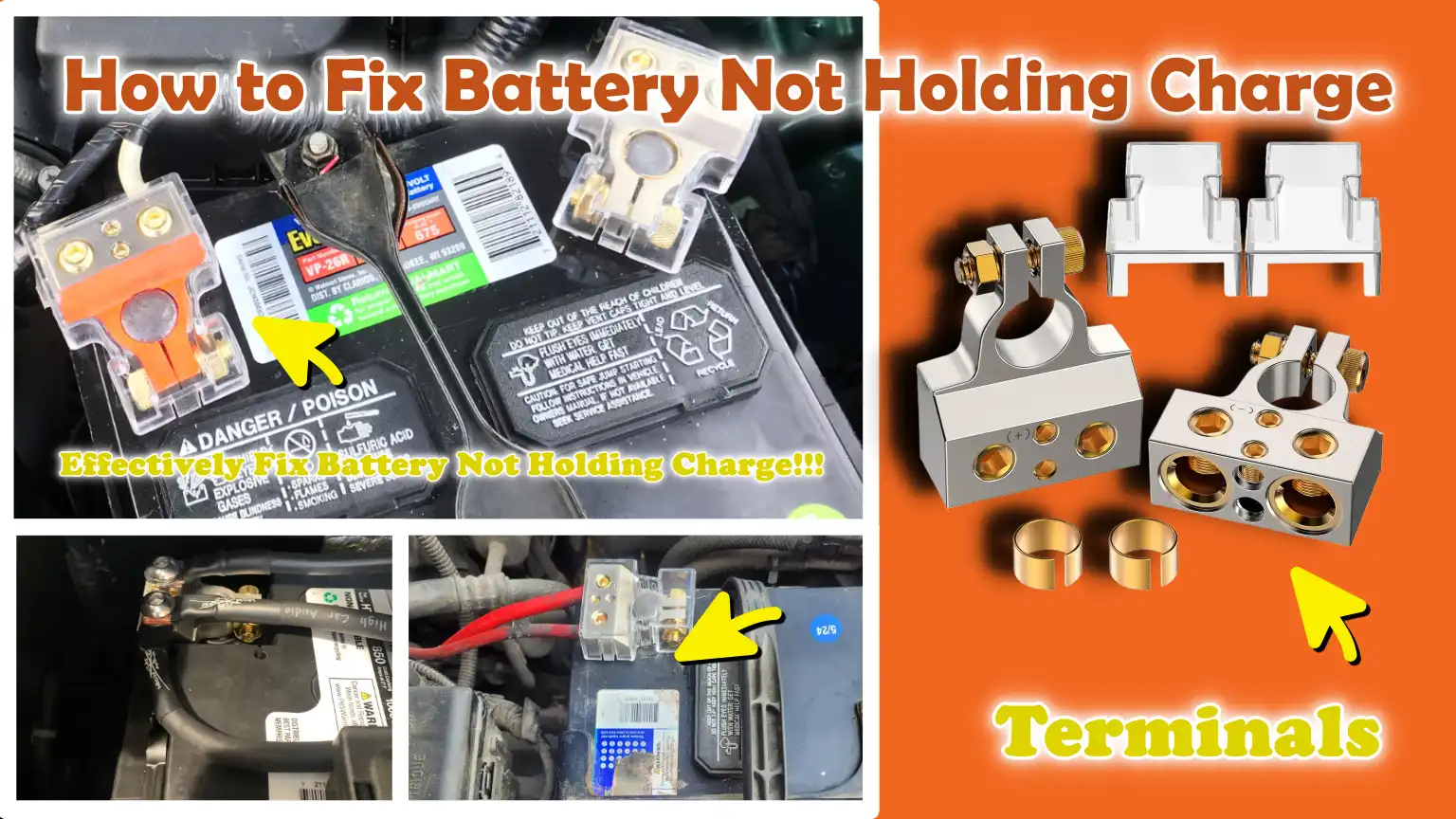
Now, in this guide you’ll learn How to Fix Battery Not Holding Charge, so that you can avoid reduce battery performance over the period of time.
How Does a Car Battery Hold a Charge?
1. Basic Information About 12V Lead-Acid Batteries
A typical car battery is a 12-volt lead-acid battery, composed of six interconnected cells.
Each cell generates approximately 2.1 volts of electricity, resulting in a total battery voltage of about 12.6 volts when fully charged.
Inside the battery, there are lead plates and a liquid solution known as the electrolyte; this solution is a mixture of sulfuric acid and water.
These plates are designed to store and release electricity in a controlled manner, ensuring that your car starts and runs properly.
When the battery is in good condition, it can retain this stored electricity for a considerable period, even when the vehicle is not in use.
However, as the battery ages or deteriorates, its ability to hold a charge begins to diminish, leading to difficulties in starting the vehicle and a noticeable lack of power.
2. The Role of Chemical Reactions and Stored Energy
The mechanism by which a battery maintains its charge is based on a simple chemical reaction occurring between the lead plates and the electrolyte.
When the battery is in use, such as: when you start the engine, a reaction takes place that converts chemical energy into electrical energy.
When the engine is running, this process is reversed; the chemical equilibrium within the battery is restored, thereby recharging the battery.
Over time, repeated cycles of charging and discharging can cause wear and tear on the battery’s internal components, such as: the accumulation of deposits on the plates, which reduces its capacity to store energy effectively.
This is why a battery that once functioned perfectly may eventually begin to lose its charge rapidly, even if it still registers a specific voltage reading.
3. The Importance of the Charging System (Alternator and Regulator)
A battery cannot maintain its charge on its own; therefore, the charging system plays a crucial role in sustaining its electrical power.
When the engine is running, the alternator generates electricity and feeds it back to the battery, thereby allowing the battery to recharge.
The voltage regulator ensures that the correct amount of voltage is supplied, typically between 13.7 and 14.7 volts, so that the battery charges properly without being overcharged or sustaining any damage.
If the alternator is weak or the regulator is not functioning correctly, the battery will not receive an adequate charge; this may lead one to believe that the battery itself is defective.
In many instances, a battery that fails to hold a charge is not actually faulty; rather, the root cause of the problem lies within the charging system.
Know, Common Symptoms of a Discharged Battery
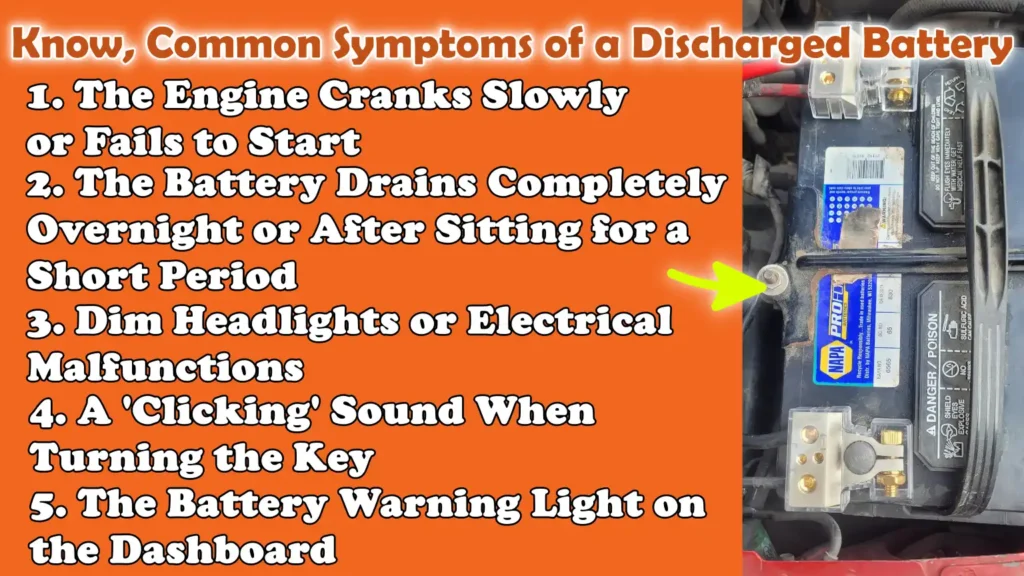
1. The Engine Cranks Slowly or Fails to Start
The first and most noticeable sign of a discharged battery is that the engine cranks slowly when you attempt to start the car.
This occurs because the battery is unable to supply sufficient power to spin the starter motor at its normal speed.
A healthy battery should deliver strong and consistent power; however, as it begins to weaken, the cranking sound becomes sluggish or uneven.
In more severe cases, the engine may fail to start altogether specially if the vehicle has been parked for several hours.
This typically indicates that the battery’s voltage has dropped below the level required to engage the starter motor, often falling to approximately 12 volts or less under load.
2. The Battery Drains Completely Overnight or After Sitting for a Short Period
If your battery drains after the car has been parked overnight, or even after sitting for just a few hours, it is a definitive sign that it is failing to hold a charge properly.
A fully charged battery should retain sufficient power for several days or weeks, even when not in use.
When a battery loses its charge rapidly, the cause may lie in internal wear and tear, chemical degradation, or a hidden electrical leak within the vehicle’s system.
This symptom is particularly significant as it often points to deeper underlying issues, such as: a “parasitic drain” (an electrical component that continues to draw power even when the vehicle is turned off) or a loss of battery capacity, indicating that the battery is no longer capable of efficiently storing energy.
3. Dim Headlights or Electrical Malfunctions
Dim headlights, weak interior lighting, or sluggish power windows are common indicators that the battery is struggling to supply adequate power.
Modern vehicles rely heavily on a stable voltage supply to power various systems, including lighting, infotainment and a wide array of sensors.
When the battery fails to charge properly, the voltage can drop below normal levels, preventing these systems from functioning correctly.
For instance, the headlights may appear significantly dimmer, particularly when the engine is off, or electrical components may respond sluggishly or erratically.
These symptoms often manifest before the battery fails completely.
4. A ‘Clicking’ Sound When Turning the Key
When you turn the ignition key or press the start button, you may hear a distinct ‘clicking’ sound.
This indicates that the battery lacks the necessary power to engage the starter motor.
This clicking sound originates from the starter relay or solenoid, which attempts to activate but is unable to do so due to low voltage.
This is a very common symptom of a weak or discharged battery.
While the issue can occasionally stem from a faulty starter motor, in the majority of cases, the problem is directly linked to a low battery charge or poor electrical connections.
5. The Battery Warning Light on the Dashboard
The battery warning light located on the dashboard serves as a crucial indicator.
It signals a malfunction within the charging system or an issue with the battery’s operational status.
The illumination of this light does not necessarily mean that the battery itself is defective; rather, it indicates that the system responsible for charging the battery is not functioning correctly.
This light may turn on if the alternator fails to generate the required voltage, or if there is a fault in the wiring or connections.
Ignoring this warning can lead to a sudden and complete loss of electrical power while driving, as a battery that is not being properly recharged will eventually drain completely.
Know, The Main Reasons Why a Battery Fails to Hold a Charge
1. Old or Worn-Out Battery
Car batteries do not last forever and the most common reason for a failure to hold a charge is age.
Most lead-acid car batteries are designed to last between 3 to 5 years under normal operating conditions.
As a battery ages, its internal components begin to wear out, particularly the lead plates located within each cell.
Due to repeated charging and discharging cycles, these plates gradually lose their ability to efficiently store and release energy.
Over time, this natural wear and tear diminishes the battery’s capacity, meaning it can no longer hold as much charge as it once could.
Even if the battery still registers some voltage, it may lack sufficient power to crank the engine or sustain an electrical load for an extended period.
2. Parasitic Drain – Constant Power Leakage
Parasitic drain occurs when a vehicle’s electrical components continue to draw power even after the engine has been turned off.
Modern vehicles feature numerous systems that remain active in the background, such as: clocks, security systems and electronic control units.
While these typically consume very little power, a problem arises when a specific component begins to draw excessive current.
Common causes include leaving interior lights on, faulty relays, malfunctioning electronic modules, or improperly installed aftermarket accessories.
This constant leakage of power gradually drains the battery, often resulting in it going completely dead overnight or after the vehicle has been parked for a short duration, even if the battery itself is in good condition.
3. Faulty Alternator
The alternator is responsible for recharging the battery while the engine is running; If it malfunctions, the battery does not receive sufficient power to maintain its charge.
A faulty alternator can generate low or irregular voltage, preventing the battery from fully recharging after each drive.
Consequently, the battery’s charge gradually depletes over time until it no longer retains enough power to start the engine.
Common symptoms of alternator problems include dimming or flickering lights, electrical malfunctions while driving and the illumination of the battery warning light on the dashboard.
In many instances, a battery that appears weak is actually being compromised by a failing alternator rather than suffering from an internal defect.
4. Corroded or Loose Battery Terminals
Battery terminals serve as the connecting points between the battery and the vehicle’s electrical system; to function correctly, they must be clean and securely tightened.
Corrosion, which typically manifests as a white or bluish powdery coating around the terminals, as it can obstruct the flow of electricity and create resistance.
Similarly, loose connections can disrupt the electrical pathway, preventing the battery from properly supplying or receiving power.
Even if the battery is fully charged, poor connections can create the illusion that the battery is weak or failing.
This can lead to issues such as difficulty starting the vehicle, fluctuations in power supply and improper charging, all of which degrade the battery’s overall performance.
5. Extreme Temperatures
Temperature plays a crucial role in determining a battery’s operational efficiency and lifespan.
Cold weather slows down the chemical reactions occurring within the battery, thereby reducing its capacity to deliver power, particularly when starting the engine.
This is why starting a vehicle tends to be more difficult during the winter months.
Conversely, excessive heat can cause even greater damage over time.
Elevated temperatures accelerate these chemical reactions; while this may sound beneficial, in reality, it causes the electrolyte inside the battery to deplete rapidly and evaporate.
This inflicts internal damage upon the battery and reduces its lifespan.
Both extreme cold and extreme heat can diminish the battery’s charge-retention capacity and degrade its overall performance.
6. Sulfation in Lead-Acid Batteries
Sulfation is a common issue facing in lead-acid batteries.
It occurs when tiny crystals of lead sulfate accumulate on the battery plates.
This typically happens when the battery is left in a partially charged or fully discharged state for an extended period.
These crystals reduce the surface area of the plates, making it difficult for the battery to store and release electrical energy.
As sulfation progresses, the battery’s ability to retain a charge diminishes, even if the battery is subsequently recharged.
In the early stages, this issue can be partially remedied through proper charging techniques; however, in severe cases, it can cause permanent damage to the battery, necessitating its replacement.
Tools
| Tool | Why It Is Needed | How to Use It |
|---|---|---|
| Multimeter | A multimeter helps you check a battery’s voltage and determine whether it is charging properly. It is one of the most essential tools for diagnosing whether a battery is weak, fully charged, or failing. | Set the multimeter to DC voltage. Place the red probe on the positive terminal and the black probe on the negative terminal. With the car turned off, a healthy battery should read approximately 12.6 volts. A lower reading indicates that the battery is weak or discharged. |
| Battery Charger | A battery charger is used to safely recharge a weak or completely discharged battery. It helps restore the battery’s charge rather than relying solely on jump-starting. | Connect the positive clamp to the positive terminal and the negative clamp to the negative terminal. If available, select the slow-charge mode and allow the battery to charge fully. Slow charging is preferable as it helps the battery recover more effectively. |
| Wrench Set | A wrench set is required to loosen or tighten battery terminals. Secure connections are crucial for proper electrical flow. | Before removing the terminals, use the correct-sized wrench to loosen them. After cleaning or inspection, tighten them firmly to ensure they do not shift or lose contact. |
| Battery Terminal Cleaner or Brush | This tool removes corrosion and dirt from battery terminals, which can obstruct electrical flow and reduce charging efficiency. | First, remove the battery terminals. Use a brush or cleaner to scrub away any white or blue-colored corrosion. Clean both the terminals and the connectors until they shine and are free of any deposits. |
| Safety Gloves and Glasses | These items protect your hands and eyes from battery acid, sparks, or debris while performing this task. Safety is paramount when working with batteries. | Wear gloves and safety goggles before handling the battery. This prevents skin irritation caused by acid and safeguards your eyes against sudden splashes or particles during the cleaning process. |
How to Fix Battery Not Holding Charge – Proper & Working Method
1. Inspect the Battery’s Exterior
To begin, carefully inspect the exterior of the battery, as any external damage is the clearest indication that the battery is failing to hold a charge properly.
Look for signs of swelling on the sides of the battery, cracks in the casing, or evidence of any liquid leakage.
A swollen battery typically indicates internal damage caused by heat or overcharging, while leakage signifies that the internal chemical electrolyte is escaping.
These issues are serious and cannot be repaired.
If you observe any of these signs, the battery should be replaced immediately, as it is no longer safe or reliable to use.
2. Clean the Battery Terminals
Dirty or corroded terminals can obstruct the flow of electricity and make even a healthy battery appear weak.
Corrosion often manifests as a white or light blue powdery substance around the terminals; this buildup creates a blockage that reduces charging efficiency.
To resolve this, disconnect the battery and clean the terminals using a solution of baking soda and water; this mixture helps neutralize the acid.
After cleaning, ensure that the terminals are dry and securely fastened.
A clean and secure connection ensures proper electrical flow, guaranteeing that the battery can charge and discharge effectively.
3. Check the Battery Voltage
Checking the battery’s voltage provides a clear insight into its current condition and its ability to hold a charge.
Using a multimeter, measure the voltage while the vehicle’s engine is turned off.
A fully charged battery should register a voltage of approximately 12.6 volts; this indicates that the battery is functioning correctly.
If the voltage drops below approximately 12.4 volts, it generally indicates that the battery is weak or partially discharged.
If the voltage is significantly low, the battery may be defective or lack the capacity to store sufficient energy.
This simple test helps you determine whether the battery needs to be recharged, subjected to further diagnostics, or replaced.
4. Properly Recharge the Battery
If the battery voltage is low, the next step is to properly recharge it using a battery charger.
Slow and steady charging is the best approach, as it facilitates the necessary internal chemical reactions required to fully restore the battery’s energy.
While fast charging or repeated jump-starts may offer a quick fix, they do not allow the battery to fully recover and can sometimes place excessive strain on it.
Allow the battery to charge completely and then re-test it to see if it is able to hold the charge.
Properly recharging the battery is essential for determining whether it remains fit for continued use.
5. Perform a Load Test
The battery’s voltage may appear normal, yet it could still fail under real-world operating conditions.
A load test reveals how well the battery performs while delivering power, such as: during engine startup.
During this test, the voltage is measured while a load is applied to the battery, thereby simulating actual usage conditions.
If the voltage drops too rapidly or falls below a safe threshold, it indicates that the battery is unable to maintain its charge under pressure and should be replaced.
This test is crucial because it identifies issues that would not be detected through a standard voltage check alone.
6. Check for a Parasitic Drain
If the battery continues to lose its charge even after being fully recharged, there may be a parasitic drain within the vehicle’s electrical system.
This occurs when certain electrical components continue to draw more power than normal, even after the vehicle has been turned off.
Using a multimeter, you can measure the current being drawn from the battery.
In most vehicles, normal consumption is typically less than 50 milliamperes.
If the reading exceeds this limit, it indicates that something is draining the battery’s power, such as: a faulty relay, a light that was left on, or an electronic module that failed to shut down properly.
Identifying and resolving this issue is crucial to prevent the battery from repeatedly discharging.
7. Check the Alternator Output
When the engine is running, the alternator is responsible for keeping the battery charged; therefore, it is essential to ensure that it is functioning correctly.
Start the engine and use a multimeter to measure the battery voltage again.
A properly functioning alternator should generate a voltage between approximately 13.7 and 14.7 volts.
If the reading falls below this range, it indicates that the battery is not charging properly.
Conversely, if the reading is excessively high, the battery could be overcharging, which may lead to damage.
In either scenario, the alternator or voltage regulator may be faulty; resolving this issue is therefore necessary to ensure that the battery can maintain its charge capacity.
8. Desulfate the Battery – Optional Step
In some cases, sulfation can diminish a battery’s charge-holding capacity; sulfation refers to the accumulation of crystals on the battery plates.
This typically occurs when a battery is left in a low-charge state for an extended period.
A smart charger equipped with a desulfator or repair mode can sometimes improve the battery’s performance by breaking down these crystals.
However, this method is effective only when the sulfation is mild.
If the damage is severe, the battery cannot be restored and will require replacement.
Before deciding to replace the battery, this step can prove to be a worthwhile last-ditch effort to salvage a deteriorating battery.
Know, When to Replace the Battery
As well as, the Sulfation is one of the most common and scientifically proven reasons that: why a battery actually stops holding a charge, so whenever a battery remains undercharged, crystals form on the internal plates, then it literally reduces the ability to store its energy, even the research shows that in early stages: this damage can sometimes be reversed using the proper charging methods, but in the advanced cases: it unfortunately leads to the permanent battery failure as well.[¹]
1. Batteries Older Than 3 to 5 Years
Car batteries have a finite lifespan and most standard lead-acid batteries last between 3 and 5 years under normal operating conditions.
As a battery ages, its internal components gradually wear down due to repeated charge and discharge cycles.
The internal chemical reactions become less efficient and the battery’s ability to effectively store energy diminishes.
Even if an aging battery occasionally manages to function, it is no longer reliable and the risk of sudden, unannounced failure increases significantly.
Replacing the battery within this timeframe helps prevent sudden breakdowns and ensures consistent, reliable performance.
2. Failure During a Load Test
A load test is the most accurate method for determining whether a battery is still capable of performing its intended function.
This test evaluates how well the battery performs under real-world operating conditions, such as: during engine startup.
When a load is applied to the battery, a healthy unit should maintain a stable voltage level.
If the voltage drops rapidly or falls below a safe threshold during the test, it indicates that the battery is unable to deliver sufficient power when needed.
In such cases, even if the battery displays some voltage while at rest, it is no longer robust enough to be relied upon and should be replaced.
3. Inability to Hold a Charge Even After a Full Recharge
If a battery is fully charged but rapidly loses its charge after sitting idle for a short period, it is a clear indication that it is no longer capable of effectively storing energy.
This is typically caused by internal damage to the battery, chemical degradation, or sulfation.
A properly functioning battery should retain its charge for several days or weeks, even when not in use.
If the battery’s charge drains rapidly, despite having been properly recharged, and provided there is no external electrical leakage, it indicates that the battery has reached the end of its useful life; in such cases, replacing it is the most prudent course of action.
4. Visible Damage or Swelling
Physical damage is one of the most critical indicators that a battery requires immediate replacement.
Swelling of the battery casing is often caused by excessive heat or overcharging and signals an internal defect.
Cracks or leaks in the casing can allow the electrolyte solution to escape, which not only degrades performance but also poses a safety hazard.
A compromised battery cannot function correctly and may fail abruptly.
Under such circumstances, continuing to use the battery is unsafe; therefore, to avoid further complications, it should be replaced without delay.
Know, Estimated Repair vs Replacement Costs
1. Cleaning Terminals: Very Low Cost
Cleaning battery terminals is one of the easiest and most inexpensive measures available, yet it can resolve many battery-related issues.
Corrosion on the terminals can obstruct the flow of electricity, making the battery appear weak even if it is otherwise in good condition.
In most cases, cleaning requires only basic household items, such as: baking soda, water and a brush, making the cost virtually zero.
Even if you decide to purchase a specialized cleaner or brush, the cost remains very low.
This small maintenance step can improve electrical connections, facilitate proper battery charging and prevent unnecessary battery replacements, making it one of the most cost-effective solutions available.
2. Charging: $0 to $50
When a battery runs out of power, recharging it is often the next logical step and the associated cost depends on how you go about it.
If you already own a battery charger, the cost will be next to nothing.
If you need to purchase or utilize a charger, the cost can range from a few dollars up to approximately $50, depending on the type of charger used.
Slow charging is generally recommended, as it restores the battery more effectively and safely.
If the battery was simply discharged, charging it may resolve the issue; however, if the battery fails to hold a charge even after being fully recharged, the underlying problem is likely more serious and a battery replacement may be necessary.
3. New Battery: $100 to $300
When an old battery is no longer able to hold a charge, replacing the car battery is a common solution; In the United States, the cost typically ranges from approximately $100 to $300, depending on the type of battery, the brand and the specific requirements of the vehicle.
Standard lead-acid batteries are generally lower in cost, whereas more advanced battery types may carry a higher price tag.
Although replacing a battery is typically more expensive than routine maintenance tasks, it proves to be a reliable and long-lasting solution when the existing battery becomes worn out or defective.
Investing in a high-quality battery can also enhance vehicle performance and reduce the likelihood of future issues.
4. Alternator Repair: $300 to $800
If the alternator is not functioning correctly, the battery will not charge properly, regardless of how new it may be.
In the United States, repairing or replacing an alternator can cost anywhere from $300 to $800; this expense varies depending on the type of vehicle and local labor rates.
This is a costly procedure, but it becomes essential if there is a fault within the charging system.
Neglecting alternator issues can lead to repeated battery failures, thereby increasing the total cost over time.
Having the alternator repaired ensures that the battery receives an adequate charge while the vehicle is running, thereby maintaining the overall health of the electrical system.
Read More:
- How to Diagnose Weak Battery Symptoms
- How to Test Battery Cold Cranking Amps
- How to Check Car Battery Voltage with Multimeter
- How to Check Parasitic Battery Drain
- How to Replace a Starter Motor
- How to Check Car Battery Health with a Multimeter
- How to Fix Car Not Starting
How to Prevent & Maintain Car Battery
1. Drive Regularly to Keep the Battery Charged
A car battery remains in good condition when it is used regularly, as driving allows the alternator to properly recharge it.
When a vehicle remains stationary for an extended period, the battery gradually loses its charge due to minor electrical drains and natural self-discharge.
Short trips are often insufficient to fully recharge the battery, which can cause it to gradually weaken over time.
Driving the vehicle for longer distances at least a few times a week helps maintain an optimal charge level and supports the internal chemical processes necessary for the battery to function correctly.
2. Turn Off All Electronics Before Exiting the Vehicle
If electrical components remain active even after the engine has been switched off, the battery can discharge rapidly, negatively impacting its ability to retain a charge.
Components such as headlights, interior lights, infotainment systems and charging ports continue to draw power if they are not properly turned off.
Although modern vehicles are designed to automatically shut down many systems, malfunctions or user habits can still lead to unnecessary power wastage.
Making it a habit to check and switch off all electronic devices before exiting the vehicle can prevent sudden battery discharge and extend the battery’s overall lifespan.
3. Clean the Terminals Every 6 Months
Battery terminals should be kept clean and free of corrosion to ensure a strong and stable electrical connection.
Over time, chemical reactions occurring at the terminals can lead to the accumulation of deposits, which increases electrical resistance and hinders the flow of current.
This can adversely affect both the battery’s charging efficiency and the vehicle’s ability to start.
Cleaning the terminals every six months ensures a proper flow of electricity and helps prevent issues that might make the battery appear weak, even if it is actually in good condition.
Regular cleaning is a simple step that enhances battery reliability and minimizes the risk of sudden, unexpected problems.
4. Check the Battery Before Winter and Summer
Extreme temperatures can significantly impact battery performance; therefore, it is crucial to inspect the battery before the onset of winter and summer.
Cold weather slows down the chemical reactions occurring inside the battery, thereby reducing its capacity to deliver the power required to start the vehicle.
Conversely, hot weather can accelerate internal wear and tear within the battery and deplete its fluid levels, ultimately shortening its lifespan.
Checking the battery prior to these seasonal shifts allows for the early detection of any weaknesses, enabling you to take necessary preventive measures before the battery fails under increased stress.
5. Use a Battery Maintainer for Long-Term Storage
When a vehicle is expected to remain unused for an extended period, a battery maintainer can help keep the battery in optimal condition.
The maintainer delivers a continuous, low-level charge, ensuring that the battery does not lose power over time while simultaneously preventing overcharging.
This is particularly beneficial for vehicles left idle for weeks or months, as it guards against deep discharge and sulfation, conditions that can cause permanent damage to the battery.
Using a battery maintainer ensures that the battery remains ready for use at all times and also contributes to extending its overall lifespan.
Conclusion – How to Fix Battery Not Holding Charge
Now, you have clearly understood that there’s literally a difference between a quick fix and a lasting solution: so just have the steps right and everything will fall in right place as well.
In many instances, the issue does not lie solely with the battery itself, but rather stems from a combination of factors, such as: loose connections, hidden electrical drains, or a fault within the charging system.
Understanding how a battery functions, and recognizing early warning signs, such as slow engine cranking, dimming lights, or frequent battery discharge, as it can help you take necessary corrective measures before the situation escalates.
A few simple steps, such as: cleaning the battery terminals, checking the voltage and inspecting the alternator, as it can often resolve the issue without the need for a complete battery replacement.
Furthermore, it is equally crucial to recognize when a battery has reached the end of its lifespan in order to prevent recurring malfunctions and issues such as sudden vehicle breakdowns.
Regular maintenance, proper charging habits and timely inspections play a pivotal role in extending the battery’s life and ensuring reliable vehicle performance.
Now, you can ask more questions related to this guide on: How to Fix Battery Not Holding Charge.
Frequently Asked Questions
FAQ 1: Why isn’t my car battery holding a charge?
A car battery may fail to hold a charge for several common reasons, such as old age, internal wear and tear, or a fault in the charging system. Over time, the ability of the battery’s internal chemical components to effectively store energy diminishes. In some cases, the issue lies not with the battery itself, but with other components that continue to draw power even when the car is turned off, a phenomenon known as “parasitic drain,” which is often caused by electronic systems. A weak alternator can also prevent the battery from charging while the vehicle is running, leading to repeated battery discharge. Identifying the exact cause is crucial, as simply replacing the battery may not resolve the underlying problem.
FAQ 2: Can a car battery that isn’t holding a charge be fixed?
In some instances, a battery that fails to hold a charge can be restored, though this depends largely on the battery’s current condition. If the issue stems from dirty terminals, loose connections, or a temporary state of discharge, it can often be remedied by cleaning the terminals and recharging the battery. Mild “sulfation” (buildup on the battery plates) can sometimes be reversed using a “smart charger.” However, if the battery is old, severely degraded, or fails a “load test,” it cannot be repaired and must be replaced. Assessing the battery’s condition helps you determine whether attempting a repair is a viable option.
FAQ 3: How can I tell if my battery is completely dead or simply needs to be recharged?
You can distinguish between the two by checking the battery’s voltage and observing its performance after recharging it. A battery that merely requires recharging will typically see its voltage return to a normal level (approximately 12.6 volts) and will retain that charge for a significant period. If the battery’s voltage begins to drop rapidly again, or if the engine fails to start even after the battery has been fully charged, it indicates that the battery is likely defective or has reached the end of its lifespan. A “load test” can provide more precise information, as it reveals how the battery actually performs under real-world driving conditions.
FAQ 4: How long should a car battery hold its charge when the vehicle is not in use?
A healthy car battery should retain its charge for at least a few weeks and sometimes even longer, depending on the specific vehicle and the surrounding environmental conditions. Modern vehicles consume a small amount of electricity even when the engine is turned off; however, this draw is typically so minimal that it does not cause the battery to discharge prematurely. If your battery completely discharges within a single day or overnight, it usually signals an underlying issue, such as a “parasitic drain” or a reduction in the battery’s overall capacity.
FAQ 5: What is a parasitic drain and how do I fix it?
A parasitic drain refers to a condition where a vehicle continues to draw an excessive amount of electricity even after the engine has been shut off. This can be caused by faulty wiring, a stuck relay, or electronic components that fail to power down correctly. To diagnose this issue, a multimeter is used to measure the rate at which electricity is being drawn from the battery. If the electrical draw exceeds the normal operating range, individual circuits are tested one by one to pinpoint the specific source of the power drain. Once faulty components have been identified, repairing or replacing them resolves the issue of the battery discharging prematurely.
FAQ 6: Can a faulty alternator prevent the battery from charging?
Yes, a faulty alternator can indeed manifest as if the battery is failing to charge. When the engine is running, the alternator is responsible for recharging the battery. If it is not functioning correctly, the battery does not receive adequate power and gradually discharges. This can lead to recurring difficulties in starting the vehicle, even if the battery itself is in good condition. To resolve this issue, it is crucial to check the alternator’s output.
FAQ 7: Is it better to replace the battery or attempt to repair it first?
Generally, it is advisable to identify and resolve the root cause of the problem before replacing the battery. Many battery-related issues stem from minor causes, such as corrosion, loose connections, or faults within the charging system. Correcting these issues can restore the battery’s performance, thereby eliminating the need for a replacement. However, if the battery is old, damaged, or fails to hold a charge even after proper inspection and recharging, replacing it remains the best option to ensure long-term reliability.
References:
[1] Desulfation of Lead Acid Battery with Pulse Charging
https://www.researchgate.net/publication/393436812_Desulfation_of_Lead_Acid_Battery_with_Pulse_Charging

Hello Folks, Dean Shali here to help you out to solve the problems with your lovely vehicle, as i have lots of experience and knowledge about automotive industry as i woks directly with the customers and repair vehicles and i love to help the people to keep their cars safe and running smoothly.