
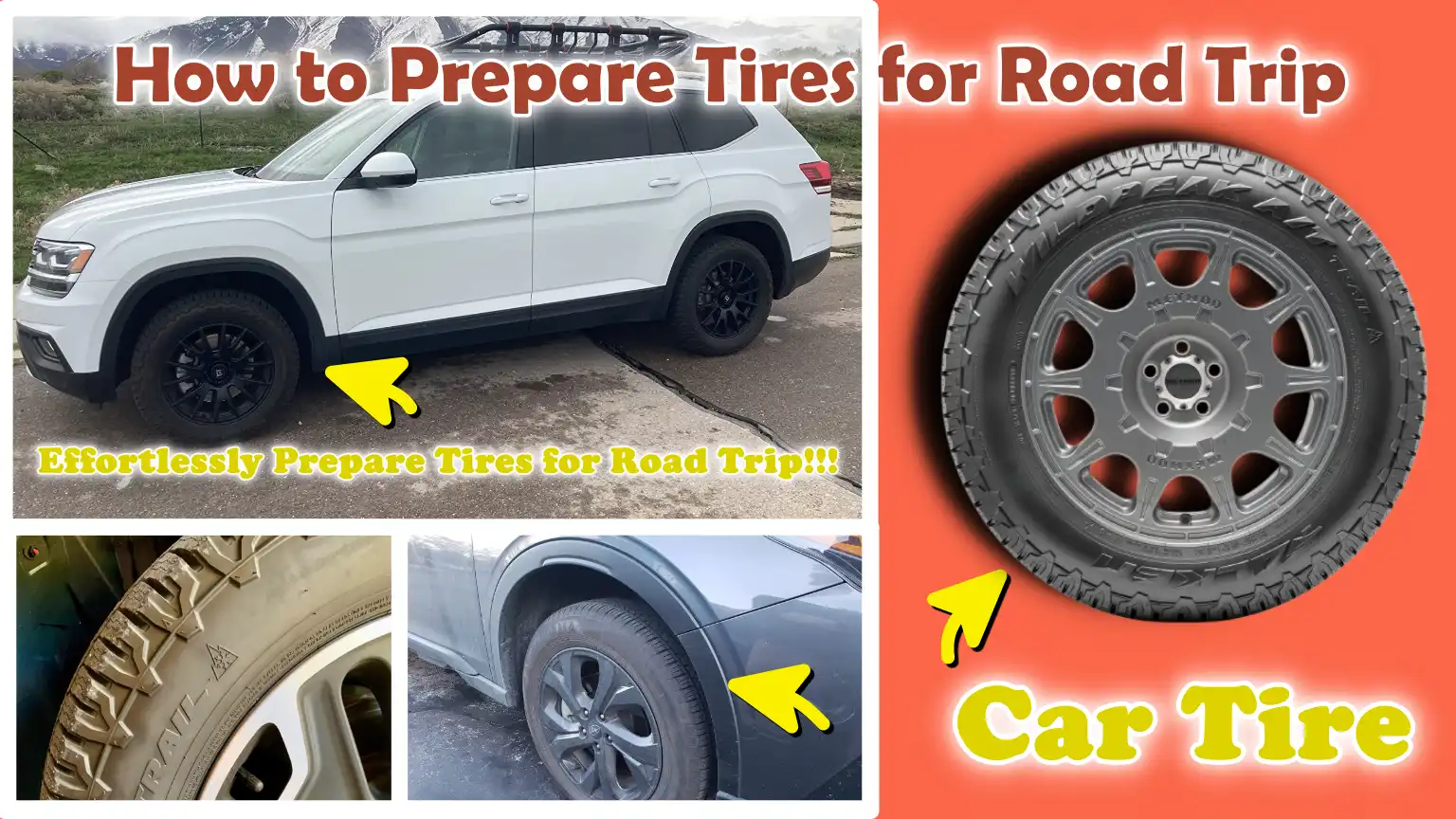
Written By: Dean Shali
Fact Checked By: Sabré Cook
Reviewed By: Tamara Warren
The TIRES are the actual hero that fight throughout the journey and bear all kinds of aggressive heating through the road, braking, speeding and extra weight adds up more pressure on it.
Which is why, when you confirm your route, having a perfect playlist and a full tank, just make sure to check the condition of the “TIRES” as well.
Because, each tire is the only part of your vehicle that actually touches the road and the total contact area of a all 4-tires combined is roughly the size of 4-adult hands only.
Basically, that small patch of the rubber literally carries the full weight of the vehicle, that even absorbs the heat from the pavement, handles sharp braking and maintains safe grip during the rain, curves and emergency maneuvers as well.
And, it is the fact that long highway trips actually creates more stress as tires flex continuously, as there’s internal temperatures that rises and loaded vehicles place extra pressure on the sidewalls, specially in the summer conditions.
Even though your tire is looking normal in the driveway but it can still have some hidden problems such as: internal separation, weak sidewalls or old rubber that has lost its strength over the period of time.
Now, that’s the proper guide about How to Prepare Tires for Road Trip, so that you can check air, treat depth, tire age, sidewall condition, spare readiness and whether the tires can safely handle your destination distance, speed, cargo and changing weather or not.
So, Why Is Tire Preparation Essential Before Any Road Trip?
Tire preparation is one of the most critical aspects of road trip safety, as tires serve as the sole point of contact between your vehicle and the road.
Every driving maneuver such as: braking, steering, accelerating and maintaining balance, relies entirely on the condition of your tires.
Even minor issues, such as low tire pressure or uneven tread wear, can significantly alter a vehicle’s handling and performance during long journeys.
When tires are properly prepared, you gain better control over the vehicle, reduce strain on the engine and maintain greater stability over long distances, particularly in areas where road conditions are constantly changing.
1. How Do Tires Impact Braking, Fuel Efficiency and Stability?
Tires have a direct impact on how quickly a vehicle can come to a stop, how efficiently it consumes fuel and how stable it feels at various speeds.
When tires feature adequate tread depth and are properly inflated, they maintain a firm grip on the road surface; this allows the vehicle to stop within a shorter distance when braking, thereby ensuring safety even during sudden emergency stops.
Conversely, if tires are underinflated or worn out, a larger portion of the tire surface comes into contact with the road; this increases rolling resistance, forcing the engine to work harder and consequently reducing fuel efficiency.
Poor tire condition can also adversely affect vehicle stability; it may cause the vehicle to pull slightly to one side or feel difficult to control, specially when driving at high speeds on a highway or changing lanes.
2. Common Causes of Tire Failure During Road Trips
Most instances of tire failure during road trips stem from underlying issues that were present in the tires even before the journey began.
Underinflation, that is, insufficient air pressure within the tires, is one of the most common causes of tire failure, as heat tends to build up inside the tire during long-distance travel.
Worn treads prevent tires from maintaining proper grip on the road, particularly on wet surfaces, thereby increasing the risk of the vehicle skidding.
If the vehicle is overloaded beyond the tires’ weight-bearing capacity, excessive stress is placed on the tire sidewalls, significantly heightening the risk of sudden tire failure.
The aging of the tire rubber also poses a hidden danger, as the structural integrity of the tire naturally deteriorates over time, even if it appears to be in good condition on the outside.
Minor punctures or previous repairs that were not executed properly can also give way under the strain of sustained high-speed driving on the highway.
3. The Risks of Neglecting Tire Inspections Before a Road Trip
Failing to inspect your tires before embarking on a road trip can expose you to sudden and severe hazards on the road.
Minor issues such as: a slow air leak, hairline cracks, or uneven tire wear, as it can become dangerous when subjected to prolonged high-speed driving.
If you neglect to inspect your tires, you may remain unaware of any underlying defects, only to discover the problem when a tire suddenly goes flat or suffers a blowout.
The consequences of such failures can include a loss of vehicle control, increased braking distances, or a complete vehicle breakdown in an unsafe location.
This can lead to increased repair costs and delays, problems that could have been easily avoided by performing a simple inspection before setting out on a journey.
4. Why Tires Face Greater Stress on Highways
Compared to city driving, tires experience significantly greater stress on highways, as vehicles travel at high speeds for extended periods without stopping.
Continuous operation generates heat within the tires and this heat is the primary factor that gradually degrades the structural integrity of the tire over time.
During long journeys, tires do not get sufficient time to cool down, causing their internal pressure and temperature to rise continuously.
The additional weight of passengers and luggage further increases the vehicle’s load, placing even greater strain on the tire sidewalls.
At high speeds, even minor tire defects can become extremely critical, as there is very little time to react in the event of a sudden failure; for this reason, highway driving poses a significant challenge regarding tire safety and durability.
Now, Just Check The Tire Pressure Correctly
Checking tire pressure correctly is one of the simplest, yet most crucial, steps in preparing for a road trip, as it directly impacts safety, fuel efficiency, tire longevity and vehicle handling.
Tire pressure is measured in PSI, standing for ‘Pounds per Square Inch’ and for every vehicle, the manufacturer specifies a recommended PSI range based on a balance of weight, handling and performance.
This value is not printed on the tire itself; rather, it is typically found on a sticker located inside the driver’s-side door frame or within the owner’s manual.
Maintaining the correct PSI ensures that the tire retains its proper shape on the road, thereby enabling it to adequately support the vehicle during long-distance driving.
So, there’s even studies from the NHTSA that clearly shows that underinflated tires can increase the rolling resistance, which forces the engine to work harder and also reduces the overall fuel economy, even at the same time: correct tire pressure improves the stability, that’s how it reduces heat buildup and extends tire lifespan, that makes it a key step before any road trip.[¹]
1. How to Determine the Correct PSI for Your Vehicle
The correct PSI for your vehicle is determined by the manufacturer and is specific to the vehicle model, weight distribution and intended driving conditions.
It is important to understand that the number printed on the tire’s sidewall does not indicate the recommended pressure for daily driving; instead, it represents the maximum safe pressure that the tire can withstand.
The actual recommended PSI is typically lower and is carefully selected to strike a balance between ride comfort, traction and fuel efficiency.
Using the correct PSI ensures that the tire distributes the vehicle’s weight evenly across the road surface, thereby preventing uneven tire wear and enhancing stability during braking and cornering.
2. Why It Is Important to Check Tire Pressure When Tires Are Cold
Tire pressure should always be checked when the tires are cold, as heat causes the air pressure inside the tires to rise, which can result in inaccurate readings.
Even after driving for a short distance, the friction generated between the tires and the road surface causes both the rubber and the internal air to heat up, resulting in a temporary increase in PSI.
If you measure tire pressure under these conditions, you might assume that the tires are properly inflated; however, under actual driving conditions, they may be underinflated.
Checking your tires before driving, or after the vehicle has been parked for several hours, yields a more accurate reading and ensures that the tires are properly inflated for safe performance during a road trip.
3. How Underinflation Affects Handling and Tire Wear
Underinflated tires fail to maintain their proper shape; this increases the contact area with the road surface and generates greater rolling resistance.
Consequently, the engine has to work harder, leading to increased fuel consumption over long distances.
Furthermore, the edges of the tires wear out faster than their central sections, thereby reducing the overall lifespan of the tire.
In terms of handling, underinflation makes the steering feel sluggish and less responsive, particularly when changing lanes on a highway or executing a sudden emergency maneuver.
Heat buildup is another serious concern, as flexible sidewalls generate increased internal friction, thereby heightening the risk of tire failure during long drives.
4. How Overinflation Can Affect Grip
Overinflated tires become excessively rigid and lose their natural ability to absorb irregularities in the road surface.
This reduces the size of the contact patch (the area touching the road), meaning that, at any given moment, only a small portion of the rubber remains in contact with the road.
Consequently, grip is compromised, particularly on uneven or wet roads, where traction is already limited.
When tires are overinflated, the center section of the tire wears down faster than the edges; this uneven wear pattern reduces the tire’s lifespan in a manner distinct from the wear caused by underinflation.
Ride quality may also feel harsher, as the tires are unable to effectively absorb shocks, thereby diminishing both comfort and control during long-distance travel.
5. The Best Time to Check Tires Before a Trip
The best time to check tire pressure before embarking on a road trip is early in the morning or after the vehicle has been parked for several hours.
This ensures that the tires are completely cool, yielding the most accurate PSI reading.
Checking at this time, prior to the start of the journey, provides ample opportunity to adjust the pressure if necessary, specially when the vehicle is fully loaded with passengers and luggage.
It also minimizes the risk of overlooking hidden pressure-related issues, which can become significantly more severe after prolonged driving on the highway.
Also, Check Tire Tread Depth
Tire tread depth is one of the most critical safety factors for any road trip, as it directly determines how effectively the tire maintains its grip on the road surface.
The tread consists of a pattern of grooves on the tire that help displace water, dirt and minor debris from the contact patch.
When the tread is deep and in good condition, the tire maintains better contact with the road, thereby improving braking performance, steering control and stability.
As the tread becomes shallower, the tire loses its ability to handle water effectively, increasing the risk of skidding, particularly when driving at high speeds on highways, where reaction times are extremely limited.
1. How Tread Depth Affects Traction
Traction depends significantly on the amount of remaining tread on the tire, as these grooves are responsible for maintaining grip under various road conditions.
On dry roads, the tread helps maintain consistent contact with the surface; however, on wet roads, it becomes even more critical, as it functions to channel water away from beneath the tire.
If the tread is worn down, water cannot be displaced quickly enough, resulting in reduced direct contact between the tire and the road surface.
This condition is referred to as “reduced traction,” and it can lead to increased braking distances, diminished stability while cornering and a heightened risk of skidding during sudden braking or lane changes.
2. Minimum Safe Tread Depth for Long-Distance Driving
For safe long-distance driving, specially on highways, tire tread depth must not fall below a minimum safe threshold, as the risk of “hydroplaning” (skidding on water) and losing control of the vehicle increases significantly at high speeds.
The generally accepted minimum safety limit is considered to be approximately 2/32 of an inch; However, many safety experts recommend replacing tires even before reaching this limit, specially before embarking on a long journey or when driving in wet weather.
When tread depth exceeds this minimum threshold, tires perform better even in emergency situations, particularly when roads are wet or uneven.
Maintaining tread depth above the minimum safe level ensures that the tires can effectively displace water and maintain traction, even under pressure.
3. How to Use a Tread Gauge
A tread gauge is a simple tool used to accurately measure the depth of a tire’s tread.
By inserting the gauge into the tire’s grooves, one can determine how much usable tread (the tire’s gripping surface) remains.
To use it correctly, measurements should be taken at several different points across the tire’s surface, as tire wear is often uneven.
This helps identify whether one part of the tire is wearing down faster than another; if this occurs, it may indicate an issue with wheel alignment or tire inflation pressure.
Consistently measuring the tread on all tires ensures that the vehicle’s traction remains balanced and that the vehicle remains easy to handle during long journeys.
4. The Simple Coin Test
If you do not have a tread gauge, you can get a rough estimate of your tread’s condition by performing a simple coin test.
By inserting a coin into the tire’s grooves and observing how much of it remains visible, drivers can gauge whether the tread is still deep enough for safe driving.
If a large portion of the coin remains visible, it generally indicates that the tread has worn down significantly and may require attention in the near future.
Although this method is not as precise as using a tread gauge, it offers a quick and easy way to identify tire wear before embarking on a road trip, particularly for drivers who do not regularly inspect the condition of their tires.
5. When Low Tread Becomes Dangerous in the Rain
Low tread becomes particularly hazardous during rainy weather, as water accumulates on the road surface so rapidly that worn-out tires are unable to displace it quickly enough.
This increases the risk of “hydroplaning”, a condition in which the tire loses contact with the road and, instead, begins to slide across a thin layer of water.
When this occurs, control over steering and braking is significantly diminished and the vehicle feels as though it is floating or sliding.
When tread depth is low, even a small amount of standing water on the road can prove dangerous; therefore, it is absolutely essential to carefully inspect the condition of your tires before driving in rainy weather or when traveling through regions where sudden rainfall is unpredictable.
How to Easily Inspect Tires for Visible Damage
Before embarking on a road trip, it is crucial to inspect your tires for any visible damage, as many serious tire failures originate from minor signs that are often overlooked during daily driving.
At first glance, tires may appear normal; however, a closer inspection can reveal underlying issues that compromise their structural integrity and increase the risk of a sudden blowout while traveling at high speeds on the highway.
As tires are constantly exposed to heat, road debris, heavy loads and pressure fluctuations, even minor surface damage can pose a serious safety risk during long-distance travel.
1. Cracks in the Sidewall
Cracks in the sidewall appear as fine lines on the outer rubber of the tire, often resulting from aging, prolonged exposure to sunlight, or dry weather conditions.
These cracks serve as an indication that the rubber is gradually losing its elasticity and structural strength over time.
While minor surface cracks may not seem like an immediate cause for concern, deeper or spreading cracks can diminish the tire’s ability to withstand the pressure and heat generated during long journeys.
Over time, this damage compromises the tire’s durability, significantly increasing the risk of a blowout under the sustained stress of highway driving.
2. Bulges or Blisters
The appearance of bulges or blisters on the tire’s surface is a serious warning sign, as it typically indicates that the tire’s internal structure has been compromised.
This can occur when the tire strikes a pothole, a curb, or another obstruction on the road with significant force.
A bulge forms when the internal layers of a tire separate from one another, causing the trapped air inside to exert outward pressure.
This condition is extremely dangerous because the weakened section of the tire can burst suddenly, particularly when the vehicle is traveling at high speeds.
Therefore, it is unsafe to continue driving without immediately replacing the tire.
3. Embedded Nails or Screws
Depending on their location and depth, nails, screws, or sharp objects embedded in a tire can cause air to leak out either slowly or rapidly.
In some instances, the object may remain lodged within the tire, effectively sealing the puncture for a time; however, this does not mean the tire is safe.
During long road trips, fluctuations in temperature and pressure can exacerbate the damage, creating the potential for a sudden tire blowout.
Even minor punctures should be carefully inspected, as they can weaken the tire over time and increase the likelihood of a roadside emergency.
4. Cuts and Punctures
Cuts and punctures on the tire’s surface are typically caused by sharp objects faced on the road such as: shards of glass, metal fragments, or debris.
While some minor punctures can be repaired, deep cuts that penetrate to the tire’s inner layers are far more serious and can compromise the tire’s structural integrity.
The risk is heightened if these cuts are located on the tire’s sidewall or near the edges, as these areas undergo significant flexing while the vehicle is in motion.
During long journeys, these weakened sections are subjected to constant stress, increasing the likelihood of tire failure due to the combined effects of load and heat.
5. Uneven Wear Patterns
Uneven wear patterns develop when different sections of a tire wear down at varying rates.
This condition can result from improper tire inflation pressure, wheel alignment issues, or faults within the suspension system.
For instance, if the inner or outer edges of the tire appear significantly more worn than the central tread section, it may indicate alignment-related problems.
Uneven wear compromises the tire’s overall grip, as it becomes unable to maintain consistent contact with the road surface.
This can adversely affect braking performance and stability, particularly when driving on highways, where consistent and uniform traction is critical for maintaining vehicle control.
6. Why Is It So Important To Address Sidewall Damage Immediately?
Addressing sidewall damage immediately is absolutely crucial, as the sidewall constitutes the most critical structural component of a tire.
Unlike the tread, which primarily provides grip, the sidewall supports the vehicle’s weight and absorbs shocks from uneven road surfaces.
Any cracks, bulges, or cuts in this area compromise the tire’s ability to safely maintain air pressure.
As the sidewall is under constant stress while the vehicle is in motion, damage to this section can deteriorate rapidly due to heat and pressure, potentially leading to a sudden tire failure without any prior warning.
For this reason, sidewall-related issues are considered far more dangerous than many tread-related problems and should never be overlooked before embarking on a road trip.
So, How to Check Tire Age Before Travel
Before embarking on a road trip, it is crucial to check the age of your tires, as tires do not remain safe indefinitely, even if their tread appears deep and their outer surface looks to be in good condition.
Over time, exposure to heat, sunlight, oxygen and storage conditions causes natural changes to occur within the rubber.
These factors gradually weaken the tire’s internal structure, thereby increasing the risk of sudden tire failure during long-distance driving.
Many drivers focus solely on tread depth; however, from a safety perspective, tire age is equally important, specially when you plan to travel on highways, where high speeds and heat place constant stress on the tires.
1. How to Read the DOT Date Code
The DOT date code is a small marking located on the sidewall of every tire, indicating when the tire was manufactured.
It typically appears as a four-digit number at the end of a longer code sequence.
The first two digits represent the week of manufacture, while the last two digits indicate the year.
For example, if the code is 3219, it means the tire was manufactured during the 32nd week of the year 2019.
This information helps you determine the tire’s actual age, regardless of how little it may have been used.
Knowing the tire’s date of manufacture is vital, as tire safety depends on both its age and its usage history.
2. Why Old Tires Can Fail Even with Good Tread
Old tires can fail even when their tread still appears deep, because the rubber within the tire gradually loses its structural integrity over time.
Exposure to heat, oxygen and UV rays causes the tire’s chemical composition to slowly degrade, making the rubber less flexible and more brittle.
This implies that even if the tire’s outer tread still appears to be in good condition, its internal layers may be deteriorating.
During long-distance highway travel, this hidden aging of the tire becomes even more hazardous, as sustained high speeds and heat exert immense pressure on components that have already been compromised.
Consequently, this can lead to sudden cracks, air leaks, or a complete tire blowout without any clear prior warning.
3. General Recommendations for Tire Replacement
Most tire manufacturers and safety experts recommend replacing tires every six to ten years, depending on how the tires are used, how they are stored and the type of road surfaces on which the vehicle is driven.
Even if the tire tread (surface grip) has not yet worn down completely, the tire’s age alone can render it unsafe for high-speed driving or long-distance travel.
As tires age, particularly after five years of use, regular inspections become even more critical.
This helps ensure that any hidden issues associated with tire aging do not pose a safety risk during road trips, situations where proper tire performance is absolutely essential.
4. Symptoms of Dry Rot
Dry rot is a condition in which a tire’s rubber dries out, cracks and loses its elasticity due to prolonged exposure to environmental factors.
It often manifests as small cracks appearing on the tire’s sidewalls or between the tread blocks.
In more severe cases, the rubber may feel hard to the touch, rather than exhibiting the normal flexibility expected when compressed.
Dry rot diminishes the tire’s ability to flex and absorb road shocks, thereby increasing the likelihood of tire failure when subjected to stress.
These symptoms should never be ignored, as they indicate that the tire is losing its structural integrity, even if the tread depth remains within acceptable limits.
5. Storage Conditions That Reduce Tire Lifespan
Poor storage conditions can significantly reduce a tire’s lifespan, even if the tire is not being actively used.
Exposure to direct sunlight, extreme heat, humidity and ozone gas emitted by electrical equipment can accelerate the rubber’s aging process.
Storing tires outdoors, or in locations subject to sudden temperature fluctuations, can lead to premature cracking and structural deterioration.
Tires left undisturbed for extended periods, or stored without proper protection, may suffer internal damage, which can manifest as serious issues when the tires are put back into service.
Proper storage in a cool, dry and shaded environment helps preserve the tires’ quality and extends their safe service life.
Now, How to Rotate Your Tires Before a Long Trip – If It Is Necessary
Rotating your tires before a long road trip is an essential maintenance step, as it ensures that wear is distributed evenly across all four tires.
As each tire on a vehicle is subjected to varying amounts of load, friction and steering pressure, they naturally wear down at different rates over time.
Regular rotation helps to balance this uneven wear, thereby improving vehicle stability, extending tire lifespan and making the vehicle easier to handle during long-distance driving, specially when consistent performance is critical.
1. How Rotation Helps Balance Wear
Tire rotation works by repositioning each tire to a different location on the vehicle, ensuring that no single tire is subjected to the same type of stress for an extended period.
For instance, in many vehicles, the front tires often bear the brunt of steering, braking and heavier loads, while the rear tires typically face less direct stress related to vehicle control.
By swapping their positions, wear becomes more uniform across all tires, thereby preserving tread depth and grip.
This balance is crucial for road trips, as uneven wear can cause the vehicle to feel unstable at high speeds and compromise braking efficiency.
2. Signs That It Is Time for a Tire Rotation
There are several signs indicating that a tire rotation is due, even if no immediate, severe damage is visible.
One common indicator is a discrepancy in tread depth between the front and rear tires, meaning that one set of tires appears more worn than the other.
Another indicator is a change in the driving experience such as: feeling slight vibrations, the vehicle pulling to one side, or the ride feeling less smooth at highway speeds.
In some cases, drivers may also notice that one or more tires are making more noise than the others.
These symptoms often emerge gradually, making them easy to overlook until they begin to impact the vehicle’s comfort and safety.
3. Differences in Wear Between Front and Rear Tires
In most front-wheel-drive vehicles, the front tires wear out faster than the rear ones because they handle the steering, braking and the majority of the engine’s power.
Due to this constant stress, the tire tread wears down more rapidly, particularly on the outer edges of the tires when the vehicle turns corners.
Conversely, wear on the rear tires is typically more even and uniform, as they are less involved in steering and power transmission.
Although wear patterns may differ in rear-wheel-drive or all-wheel-drive vehicles, uneven wear between sets of tires (axles) remains a common occurrence.
Understanding these differences clarifies why tire rotation is essential for maintaining balanced vehicle performance.
4. The Right Time Before a Long Journey
The best time to rotate your tires before a long trip is well in advance of your departure, ideally during a routine maintenance check, rather than at the last minute.
This allows ample time to observe the tires’ condition following the rotation and ensures that no underlying issues such as: imbalance or alignment problems, are present.
Performing a rotation immediately before a trip leaves insufficient time to address any necessary additional adjustments.
Planning ahead ensures that the tires are properly balanced and ready for sustained highway driving.
5. Why Can Failing to Rotate Tires Increase the Risk of a Tire Blowout?
Neglecting to rotate tires for extended periods can heighten the risk of tire failure, as uneven wear creates weak spots in the tire tread (surface).
When a specific tire becomes significantly more worn than the others, it is subjected to increased stress during driving, particularly at highway speeds, where heat and internal pressure continuously build up.
This uneven stress can accelerate the deterioration of the weakened tire, thereby increasing the likelihood of a sudden blowout or structural failure.
Over time, a lack of rotation can also adversely affect the vehicle’s alignment and balance; this places even greater strain on the already worn tires, further elevating the risk of failure during long-distance travel.
So, How to Check Wheel Alignment
Wheel alignment is a crucial part of tire maintenance, as it determines how your tires make contact with the road.
Proper alignment ensures that all wheels are oriented in the correct direction according to the vehicle’s design, resulting in even tire wear and making the vehicle easier to drive.
It is essential to check your alignment before embarking on a long road trip, as even a slight misalignment can lead to accelerated tire wear, reduced fuel efficiency and compromised vehicle stability at high speeds on the highway, precisely when vehicle control is most critical.
1. Signs of Misalignment
The most common sign of misalignment is uneven tire wear, particularly when one section of a tire wears down faster than another.
Another indicator is that the steering wheel does not remain centered while driving on a level road.
Drivers may also perceive that the vehicle feels slightly unstable or requires constant steering corrections to maintain a straight line.
These signs typically manifest gradually; consequently, many drivers remain unaware of alignment issues until the tires are severely worn or a distinct change in the vehicle’s handling becomes apparent.
2. Steering Pulling to One Side While Driving
Steering pull occurs when a driver holds the steering wheel straight, yet the vehicle drifts slightly to one side.
This is often caused by incorrect wheel angles, which create uneven resistance between the tires.
When the alignment is correct, the vehicle tracks straight with minimal effort; however, when the alignment is compromised, the vehicle may experience greater drag or resistance on one side compared to the other.
Driving on highways during long journeys can be quite exhausting, as the driver is constantly required to make minor steering corrections to keep the vehicle centered within its lane.
3. Uneven Tire Wear on the Edges
Uneven wear on the edges of a tire occurs when the inner or outer edge wears down faster than the central section.
This is a definitive sign of alignment issues, as it indicates that the tire is failing to maintain full and uniform contact with the road surface.
When the alignment is compromised, the tire may tilt slightly as it rolls, placing excessive pressure on one of its edges.
Over time, this reduces the lifespan of the tire tread and diminishes its overall grip, particularly while cornering or braking, moments when full tire-to-road contact is critical for vehicle stability.
4. How Misalignment Accelerates Tire Deterioration
Due to misalignment, tires tend to drag across the road surface rather than rolling freely; this increases friction, causing the tire tread to wear down rapidly and unevenly.
This excessive friction generates increased heat within the tire, which can weaken the rubber over time and compromise its structural integrity.
When tires wear unevenly, certain sections bear a heavier load than others, creating weak points that heighten the risk of tire failure during long-distance driving.
Fuel efficiency is also negatively impacted, as the engine is forced to work harder to overcome the resistance generated by misaligned wheels.
5. Should You Have Your Alignment Checked Before Long Highway Journeys?
It is crucial to have your wheels checked for alignment before embarking on a long highway journey, as even minor alignment issues become clearly apparent when driving continuously at high speeds on the highway.
A vehicle with slightly misaligned wheels may feel stable during short-distance city driving, but it can become difficult to control over long distances.
Furthermore, the constant stress placed on tires during highway driving can rapidly accelerate uneven wear, thereby increasing the risk of tire failure.
Ensuring proper alignment before setting out makes driving easier, reduces strain on the tires and enhances overall safety during long-distance travel.
Now, Understand How to Check Wheel Balance
Wheel balance is a critical factor in tire performance, as it ensures that the weight of the tire and wheel assembly remains evenly distributed while rotating.
When wheels are properly balanced, the tire spins smoothly at every speed, resulting in a more comfortable driving experience, reduced stress on suspension components and even tire wear.
It is beneficial to check wheel balance before embarking on a road trip, as highway driving involves sustained high-speed rotation of the tires; under such conditions, if the wheels are unbalanced, this issue can be significantly exacerbated and lead to substantial damage over time.
1. Symptoms of Unbalanced Tires
Unbalanced tires often exhibit clear warning signs, although many drivers initially overlook them.
One of the most common symptoms is vibration, which becomes increasingly noticeable as the vehicle’s speed increases.
This vibration may sometimes be felt in the steering wheel, the seats, or the vehicle’s floor, depending on which wheel is affected.
Another indicator is uneven or patchy tire wear, where certain sections of the tire wear down more rapidly than others.
Over time, unbalanced wheels can make the vehicle’s ride less stable and more fatiguing, particularly during long-distance highway driving, as even minor vibrations persist over extended periods.
2. Steering Wheel Vibration at High Speeds
Vibration in the steering wheel at high speeds is the most prominent sign of unbalanced wheels.
This occurs because even a slight irregularity in weight distribution causes the wheel to rotate unevenly, creating a distinct vibration that intensifies as the vehicle’s speed increases.
At low speeds, this imbalance may go unnoticed; however, once the vehicle reaches highway speeds, the vibration intensifies significantly, potentially compromising both driver comfort and vehicle control.
Persistent vibrations also place excessive strain on steering components; if left unaddressed, these parts may suffer premature wear and failure.
3. How Balancing Enhances Comfort and Tire Lifespan
Proper wheel balancing enhances comfort by allowing tires to rotate smoothly, free from any unnecessary wobbling or bouncing.
This smooth rotation minimizes vibrations within the vehicle cabin, making long journeys significantly more comfortable and less fatiguing for both the driver and passengers.
Furthermore, it promotes uniform tire wear, as the contact between the tire and the road remains consistent rather than fluctuating due to imbalances.
When tires wear evenly, they last longer and maintain superior grip, thereby enhancing safety during braking, cornering and high-speed driving.
Balanced wheels also reduce the stress placed on suspension components, thereby preserving the overall mechanical health of the vehicle.
4. When Is Wheel Balancing Necessary Before a Trip?
Having your wheels balanced before embarking on a long road trip is particularly important if you have previously experienced vibrations, noticed uneven tire wear, or if your tires have recently undergone repair or replacement.
This becomes even more critical when the vehicle is to be driven continuously at highway speeds for extended periods, as sustained rotation can amplify even minor imbalances.
If new tires have been installed shortly before a trip, wheel balancing is typically essential to ensure that the vehicle’s performance remains completely smooth right from the start of the journey.
Taking the time to check the wheel balance before setting out on a trip helps mitigate the risks of discomfort during long-distance driving, uneven tire wear and unnecessary mechanical strain on the vehicle.
Read More:
How to Check the Valve Stem and Valve Cap
The valve stem and valve cap are small components of the tire system; nevertheless, they play a crucial role in maintaining proper air pressure and ensuring the overall integrity of the tire.
The valve stem is a small rubber or metal tube through which air is added to or released from the tire, while the valve cap protects this opening from dust, moisture and dirt.
Although these parts are small, any defect or oversight regarding them can lead to a gradual loss of air from the tire, the accumulation of debris inside the valve, or difficulties in maintaining proper tire pressure during long road trips.
1. Why Valve Stems Are Important
Valve stems are essential because they serve as the primary means of regulating the air inside the tire; even a minor defect in them can cause the tire pressure to gradually decrease over time.
A properly functioning valve stem helps maintain a tight seal on the tire, preventing air from escaping while the vehicle is in motion.
As tire pressure directly impacts vehicle handling, braking performance and fuel efficiency, a compromised or defective valve stem can create issues that may not be immediately apparent but can become critical during long-distance travel, situations where maintaining stable tire pressure is absolutely vital.
2. Signs of Cracks in the Valve Stem
Cracks in the valve stem typically manifest as tiny fissures in the rubber surrounding the stem, or as dry, brittle rubber.
This condition often arises due to tire aging, exposure to heat and constant fluctuations in the internal tire pressure.
As the rubber degrades, the valve stem may lose its elasticity and develop minute cracks, allowing air to slowly leak out.
These cracks can worsen over time, particularly when driving on highways; as tires heat up and expand, internal pressure rises, placing increased stress on these compromised areas.
3. Air Leaks Around the Valve Stem
Air leakage around the valve stem is a common, yet often overlooked, cause of gradual air loss from a tire.
These leaks are not immediately apparent because they do not result in a sudden blowout; instead, air escapes slowly and continuously.
Drivers typically only identify them when they notice that a specific tire is consistently losing air faster than the others.
Such leaks are often caused by a loose valve stem, a worn-out seal, or a defect at the point where the stem connects to the wheel.
During long road trips, even a minor leak can evolve into a serious issue; it leads to underinflation, which generates excessive internal heat within the tire and accelerates tire wear.
4. Missing Valve Caps and the Risk of Contamination
Although a missing valve cap may seem like a trivial detail, it exposes the valve stem to dust, water and road debris.
This contamination can clog the valve mechanism or damage the sealing surface, making it difficult to maintain proper tire pressure.
In wet or dusty environments, particulate matter can infiltrate the valve, leading to slow air leaks or a complete failure of the seal.
Over time, this can result in recurring pressure loss and diminished tire performance, a matter of grave concern during long-distance travel, where maintaining consistent and accurate tire pressure is essential for both safety and stability.
5. Quick Inspection Methods
To quickly inspect the valve stems and caps, visually examine the stem of each tire to check for any cracks, signs of drying, or misalignment and ensure that all valve caps are securely fastened.
It is also essential to gently press on the valve area and listen for any air leaks or unusual “hissing” sounds; such a sound could indicate a compromised seal.
Ensuring that all stems are clean, intact and properly capped helps maintain stable tire pressure throughout the journey and reduces the risk of sudden air loss during long-distance driving.
So, How to Check the Condition of the Spare Tire
The spare tire is a component of vehicle safety preparedness that is often overlooked; yet, it becomes critically important when a regular tire fails during a journey.
Many drivers assume that the spare tire will always be ready for use; however, in reality, the spare tire’s pressure can decrease over time, or the tire itself may deteriorate due to aging and its storage environment.
As spare tires are typically not used for extended periods, any internal defects often go unnoticed until an emergency arises.
Checking it before embarking on a road trip ensures that, precisely when you need it most, you do not find yourself stranded with yet another defective tire.
1. Why Is The Spare Tire Often Overlooked?
The spare tire is frequently overlooked because it is typically stored underneath the vehicle, inside the trunk, or in other hard-to-reach locations; consequently, it is easy to forget about it during routine maintenance checks.
Unlike regular tires, they are not used in daily driving, leading drivers to assume that they will remain in good condition automatically.
This misconception regarding safety causes many people to neglect checking their spare tires for months or even years.
However, factors such as exposure to the elements, gradual air loss and rubber aging can adversely affect a spare tire, even if it remains unused.
2. Check the Spare Tire Pressure
Checking the spare tire’s pressure is crucial because air naturally leaks out over time, even if the tire is not being driven on.
A spare tire with low pressure may fail to function properly during an emergency and attempting to install or use it could be unsafe, or even impossible.
Maintaining the correct pressure ensures that the spare tire can support the vehicle’s weight and maintain its balance for a period of time, until a permanent repair can be made or the tire can be replaced.
Regular pressure checks guarantee that the spare tire remains ready for immediate use whenever the need arises.
3. Check the Spare Tire’s Tread and Age
The condition of the spare tire’s tread and its age should be inspected, just as you would inspect your regular tires.
Even if it has never been used, the rubber can deteriorate over time due to the effects of heat, humidity and weather exposure.
Reduced tread depth diminishes the tire’s grip, while aged rubber can develop cracks or become brittle, making it unsafe to drive on.
A spare tire may appear to be in good condition on the surface; however, if it is excessively old or has been stored in adverse conditions, it may still be unsafe.
Checking both the tread depth and the tire’s date of manufacture ensures that it will prove reliable in an emergency situation.
4. Ensure It Meets Your Vehicle’s Requirements
It is crucial to verify that the spare tire’s size, load rating (weight-carrying capacity) and type all align with your vehicle’s specific requirements.
Using an incorrect spare tire can negatively impact the vehicle’s handling, braking and overall stability, particularly if it differs significantly from your regular tires.
Some vehicles are equipped with a temporary, compact spare tire designed solely for short-distance driving at reduced speeds.
Understanding these limitations ensures that the spare tire is used safely and appropriately until a proper replacement tire can be installed.
5. Ensure That All Necessary Tools Are Present
Having just a spare tire is not sufficient to handle every situation faced on the road; therefore, it is crucial to ensure that all necessary tools are present and in proper working order.
These include a jack, a lug wrench and any other equipment required to safely remove and replace a tire.
If these tools are missing or defective, even a perfectly good spare tire becomes useless in an emergency situation.
Verifying that everything is present and functioning correctly before setting out on a journey ensures that, in the event of a flat tire, the problem can be resolved quickly and safely, even without any external assistance.
Tools to Carry
| Items | Why it is needed | How to use it |
|---|---|---|
| Tire Pressure Gauge | It helps verify whether the tire’s air pressure is correct, a crucial factor for safety, fuel efficiency and tire longevity. | Remove the valve cap, press the gauge firmly onto the valve stem and read the PSI value. Compare this reading against the recommended PSI specified on the sticker located on the vehicle’s door or in the owner’s manual. |
| Portable Inflator | If air pressure drops during a journey, this device is used to reinflate the tire. | Connect the inflator to a power source, attach the hose to the valve stem, set the required PSI and allow it to inflate until the correct pressure is reached. |
| Lug Wrench | It is used to loosen and tighten wheel nuts when changing a tire. | Place the wrench over each lug nut; turn it anti-clockwise to loosen the nut and turn it clockwise to tighten the nuts after changing the tire. |
| Jack | It lifts the vehicle off the ground, allowing the tire to be safely removed. | Position the jack under the vehicle at the designated lifting point, then slowly raise it until the tire is lifted clear of the ground. |
| Flashlight | It provides illumination when changing a tire at night or in low-light conditions. | Switch on the flashlight while performing repairs and use it to clearly view the tire area, tools and wheel nuts. |
| Tire Plug Kit | It is used to temporarily repair minor punctures caused by nails or screws. | Locate the puncture site, remove the embedded object if necessary, insert the plug tool fitted with a sealing strip and allow the hole to seal before reinflating the tire. |
| Gloves | It protects your hands from dirt, sharp edges and hot or rough surfaces while working on tires. | Wear gloves before handling tire tools or damaged tires to ensure a secure grip and maintain safety. |
| Reflective Triangle | It warns other drivers that your vehicle is stopped on the roadside. | Place the warning triangle at a safe distance behind the vehicle so that oncoming traffic detects the stopped car in advance. |
So, How to Check the Tire Load Capacity – Weight-Bearing Capability
Checking the tire load capacity is an essential step when preparing for a road trip, as every tire is designed to safely support only a specific maximum weight.
When a vehicle carries a load exceeding the tires’ capacity, this excess weight increases the internal pressure within the tires and places strain on the sidewalls, tread and internal structure.
Over time, this can lead to tire overheating, uneven wear, reduced traction and, in severe cases, a sudden tire blowout.
Load capacity becomes even more critical during long highway journeys, as heat accumulates continuously and the tires do not get sufficient time to cool down.
1. How Overloading Stresses Tires
Overloading stresses tires when they are forced to support a weight exceeding their designed limits; this increases the friction between the tire and the road surface.
This increased friction raises the tire’s internal temperature, which, over time, weakens the rubber and internal layers.
The excessive weight also causes the sidewalls to flex more than usual, increasing the likelihood of cracks forming or structural damage occurring.
When combined with high-speed driving, overloading becomes even more hazardous, as the tire is already under constant heat and pressure, thereby heightening the risk of a sudden, unannounced blowout.
2. Understanding Tire Load Ratings
A tire load rating is a numerical code printed on the tire’s sidewall; it indicates the maximum weight that a single tire can safely support.
This rating works in conjunction with the vehicle’s total weight capacity to ensure that driving conditions remain safe.
As every tire contributes to supporting the vehicle’s total weight, it is crucial that all four tires remain within their safe operating limits.
Understanding this rating helps drivers avoid exceeding safe limits when packing for a trip, particularly when carrying luggage, passengers and additional cargo.
3. The Impact of Cargo Weight
The weight of the cargo directly influences the amount of stress placed on each individual tire.
Heavy items placed in the trunk or on the roof increase the vehicle’s total weight, meaning that each tire must work harder to maintain stability and traction.
An uneven distribution of cargo can also create an imbalance, causing one side of the vehicle to bear a heavier load than the other.
This leads to uneven tire wear, reduced vehicle control and an increased risk of tire failure during long-distance journeys, specially when the sustained pressure of the load persists for hours on end.
4. Considerations Regarding Passenger Weight
Passenger weight also plays a significant role in tire safety, as the addition of every extra person to the vehicle increases its total weight.
When the vehicle is fully occupied, it may be necessary to adjust tire pressure to safely accommodate the increased load.
If passenger weight is overlooked, it can place excessive strain on the tires, leading to accelerated wear and reduced vehicle stability.
Proper tire maintenance ensures that the vehicle remains balanced even when operating at full passenger capacity, a common scenario during road trips.
5. The Impact of Towing on Tire Safety
Towing significantly increases the stress placed on tires, as it generates additional weight and drag at the rear of the vehicle.
This extra load affects braking distance, acceleration capabilities and the vehicle’s overall stability, particularly on highways.
Tires must support the combined weight of both the vehicle and the trailer, which leads to increased heat generation within the tires over time and accelerates their wear.
If a tire’s load-bearing capacity is insufficient for the specific towing conditions, the risk of tire failure increases, specially during long-distance journeys, when sustained pressure and heat can compromise the tire’s structural integrity.
How to Adjust Your Tires According to the Weather
Adjusting your tires according to the weather is crucial, as temperature, road surfaces and weather conditions directly influence how the rubber behaves and how safely your vehicle can operate.
Tires are not merely shaped pieces of rubber; they react to changes in heat, cold, moisture and altitude.
This means that the exact same set of tires can perform very differently depending on where and when you are driving.
Preparing your tires for specific weather conditions enhances grip, stability, braking distance and overall safety during road trips.
1. Summer Road Trips
During summer road trips, high temperatures cause tire pressure to rise and heat to build up within the rubber.
Hot asphalt can heat the tires even further, increasing the risk of overinflation and premature wear.
Underinflated tires become particularly dangerous in the summer, as they flex excessively, generating additional heat that can lead to tire failure.
In hot weather, specially during long highway journeys, maintaining proper tire pressure is essential for maintaining vehicle control, preventing premature tire wear and avoiding overheating.
2. Winter Travel
During winter travel, low temperatures cause tire pressure to drop, which can compromise grip and stability on snowy or icy roads.
Cold rubber also becomes somewhat stiffer, reducing its flexibility and traction.
Consequently, braking distances increase and the risk of skidding rises.
During the winter season, it is crucial to ensure that tires have adequate tread depth and correct air pressure, as these factors help maintain better contact with cold road surfaces and enhance vehicle control in low-traction conditions.
3. Driving in the Mountains
Driving in mountainous terrain places additional stress on tires due to steep inclines, sharp turns and constantly changing altitudes.
As vehicles ascend, temperature fluctuations can affect tire pressure; conversely, driving downhill increases the demand for braking, generating excessive heat within the tires.
The rugged surfaces of mountain roads also heighten the risk of tire damage.
To maintain stability and mitigate the stress placed on tires during these challenging driving conditions, robust tread and proper tire inflation are absolutely essential.
4. Desert Heat
Desert heat presents one of the most demanding environments for tires, as extreme temperatures can lead to a rapid buildup of heat within the tires, subsequently causing an increase in internal pressure.
Hot sand and uneven terrain also increase rolling resistance, the force required to keep the tires rotating, thereby placing even greater strain on the rubber.
In desert conditions, tires that are already worn or underinflated face a significantly higher risk of failure, as the heat exacerbates any pre-existing structural weaknesses within the tire.
For safe travel in such an environment, maintaining proper tire inflation and ensuring good tire grip (tread depth) are of paramount importance.
5. Traveling in Rainy Weather
Traveling during the rainy season increases the risk of hydroplaning; This occurs when a layer of water accumulates between the tires and the road surface.
When tires have good grip (possessing sufficient tread depth), they are able to effectively displace the water, thereby maintaining their hold and traction on the road.
However, worn-out tires lose this capability, resulting in reduced vehicle control during braking and cornering.
In wet weather, it is crucial to ensure that tires are in good condition and properly inflated to guarantee that the vehicle maintains contact with the road and responds safely, even during sudden maneuvers.
6. Choosing the Right Tires for the Terrain
Selecting the appropriate tires for the terrain ensures that the tire design is optimally suited for the specific driving environment.
Different types of tires are manufactured for various conditions such as: all-season, winter, or performance driving.
Using the correct type of tires based on terrain and weather conditions enhances the vehicle’s traction, handling and durability.
For instance, tires designed for cold weather perform better in icy conditions, whereas all-season tires offer balanced performance across a variety of conditions.
Choosing the right type of tires minimizes tire wear and improves safety during various types of road journeys.
How to Take a Test Drive Before Setting Out
Taking a short test drive before embarking on a long road trip is a simple yet highly effective way to detect tire-related issues that might not be apparent while the vehicle is stationary.
When a vehicle is driven, even if only for a few minutes, the tires begin to rotate under actual conditions of speed, load and friction; this brings to light issues such as imbalance, poor alignment, low air pressure, or internal tire damage.
Many tire-related problems manifest only when the vehicle is in motion; therefore, a brief local drive serves as a final safety check before heading out on a long highway journey.
1. Why a Short Local Drive Reveals Issues
A short local drive reveals issues because it gives the tires an opportunity to warm up and perform exactly as they would during a long journey.
While a visual inspection of a stationary vehicle cannot fully predict how a tire will perform under stress, driving the vehicle subjects the tires to rolling resistance, steering forces and braking pressures.
This makes it much easier to detect hidden problems such as: slow air leaks, uneven tire wear, or structural weaknesses within the tire’s internal framework.
It also helps confirm that recent maintenance tasks such as: inflating the tires or performing a tire rotation, have been executed correctly.
2. Pay Attention to Unusual Sounds
Paying close attention to unusual sounds during a test drive is crucial, as tires often provide advance warnings through audible cues.
A rhythmic thumping sound may indicate uneven tire wear or the presence of a “flat spot”, which is a specific area of wear, whereas a sharp buzzing or humming sound could signal issues related to alignment or the tire tread/surface.
Sounds resembling rubbing or scraping may sometimes point to mechanical or brake-related problems that are affecting the way the tires function.
These sounds are often more audible at lower speeds and can help identify a potential issue before it escalates into a major problem while driving on the highway.
3. Feel for Vibrations
Sensing vibrations while driving is another crucial check, as unbalanced or defective tires often generate noticeable tremors.
These vibrations may be felt in the steering wheel, the seat, or the floor, depending on which tire is at fault.
At higher speeds, vibrations typically intensify, signaling imbalance, uneven tread wear, or internal tire defects.
A smooth, vibration-free ride suggests that the tires are properly balanced and in good condition for long-distance travel.
4. Monitor Steering Performance
Observing steering performance helps determine whether the tires and alignment are working in proper harmony.
A properly functioning system should feel comfortable and reliable, with the vehicle responding promptly to even the slightest steering inputs.
If the vehicle pulls to one side or the steering feels heavy, it may indicate alignment issues or uneven tire pressure.
Precise steering response is essential when driving on the highway, as minor irregularities can become significantly more pronounced over long distances.
5.Re-check Tire Pressure After the Test Drive
It is crucial to re-check tire pressure after a test drive, as driving causes the tires to heat up, which in turn increases the air pressure.
This temporary fluctuation can result in slight variations in the PSI readings; therefore, re-checking the pressure after the test drive helps ensure that it remains stable.
If a significant discrepancy in pressure is observed in one tire compared to the others, it could indicate a slow leak or an air-related issue that requires attention before embarking on your journey.
This final check ensures that all tires are ready to deliver optimal performance during long-distance driving.
Know, Common When You Should Replace Your Tires Before a Trip
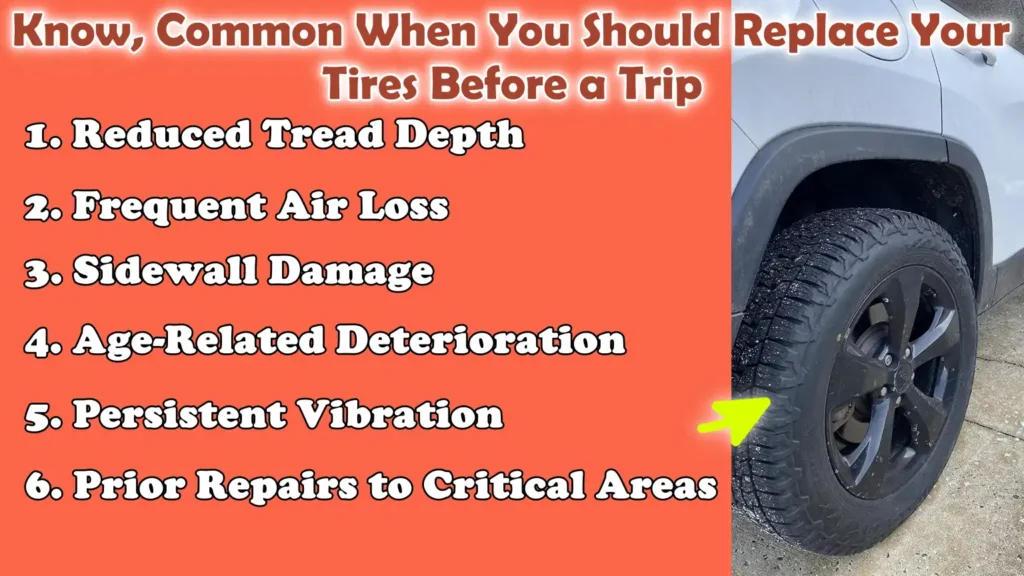
Before embarking on a road trip, it is crucial to know when to replace your tires, as certain issues cannot be safely resolved through simple repairs or adjustments.
Tires are designed with specific safety limits regarding their tread, age, structural integrity and repair history; once these limits are reached, the risk of tire failure during long-distance driving increases significantly.
Road trips typically involve sustained high speeds, increased heat generation and the hauling of heavy cargo, all factors that heighten the likelihood of sudden failure in compromised tires.
Recognizing early warning signs helps prevent vehicle breakdowns and enhances overall road safety.
1. Reduced Tread Depth
Shallow tread depth is the most obvious indication that tires require replacement, as the tread is directly responsible for grip, braking traction and water displacement.
When the tread wears down to a minimal depth, the tire loses its ability to effectively channel water away, thereby increasing the risk of hydroplaning on wet roads.
This also compromises braking performance and reduces steering stability at highway speeds.
Even if a tire appears visually sound, insufficient tread depth signifies diminished performance and heightened risk in sudden driving situations, particularly during rainy weather or emergency braking maneuvers.
2. Frequent Air Loss
Frequent loss of air pressure serves as a serious warning sign that the tire may harbor an internal defect or is experiencing a slow leak that cannot be easily repaired.
If tire pressure continues to drop even after inflation, it may indicate a hidden puncture, a faulty valve stem, or a structural weakness within the tire casing.
Driving with uneven tire pressure generates excessive heat and causes uneven tread wear, significantly increasing the risk of tire failure during long-distance journeys.
A tire that fails to retain air properly is unsafe for long-distance highway driving and should be inspected for replacement.
3. Sidewall Damage
Damage to the sidewall is particularly critical, as the sidewall is responsible for supporting the vehicle’s weight and absorbing road shocks.
Cracks, bulges, or cuts in this area compromise the tire’s structural integrity and significantly heighten the risk of sudden tire failure.
Unlike tread damage, sidewall issues typically cannot be safely repaired, as this section undergoes constant flexing while the vehicle is in motion.
During a road trip, the damage to a sidewall can deteriorate rapidly due to continuous stress and generated heat; therefore, replacing the tire before embarking on the journey remains the safest course of action.
4. Age-Related Deterioration
Age-related deterioration occurs even if the tire has not been heavily used.
Over time, exposure to heat, sunlight and oxygen causes the rubber to naturally harden and lose its elasticity.
This process weakens the tire’s internal structure and diminishes its capacity to withstand pressure and absorb shocks.
Older tires are more prone to cracking and internal separation, defects that may not be visible from the outside.
Consequently, tire age becomes a crucial factor when determining whether a tire is safe for long-distance driving.
5. Persistent Vibration
Persistent vibration while driving often signals underlying issues such as wheel imbalance, internal tire defects, or uneven tread wear.
While minor vibrations can often be resolved through wheel balancing or alignment, vibration that persists even after maintenance may indicate a serious structural flaw within the tire’s internal composition.
Vibration intensifies significantly when driving at high speeds on highways, which can adversely affect vehicle control, ride comfort and safety.
If a tire continues to vibrate despite necessary corrective measures, it may no longer be safe for long-distance travel.
6. Prior Repairs to Critical Areas
Tires that have undergone previous repairs in critical areas such as: the sidewall or shoulder, may not be reliable for long journeys.
Repairs performed on these specific sections are not designed to withstand the constant pressure and stress exerted on tires; consequently, they tend to weaken during extended periods of driving.
Even a minor puncture in the tire’s tread area can pose a risk if the puncture is large or if the repair was not executed correctly.
Before embarking on any road trip, it is essential to review the tire’s repair history, as frequent or improper repairs significantly increase the risk of tire failure while driving at high speeds.
Know, About the Mistakes to Avoid Regarding Tires When Preparing for a Trip
Preparing tires for a road trip requires great care, as even minor oversights during long journeys can lead to serious safety issues.
Many tire-related problems do not arise suddenly; rather, they are the result of improper inspection, ignoring warning signs, or incomplete preparation before setting out on a trip.
Understanding these common mistakes helps ensure that tires perform safely under highway conditions, where heat, high speeds and constant stress can exacerbate any underlying weaknesses.
1. The Mistake of Checking Tire Pressure After Driving
A common error is checking tire pressure after driving, when the tires have already heated up.
Driving generates friction between the tires and the road surface, which raises the temperature of the air inside the tires and causes the pressure reading to appear temporarily higher.
This can create the illusion that the tires are properly inflated, whereas in reality, they may be underinflated relative to actual driving conditions.
Accurate tire pressure can only be measured when the tires are cold; therefore, checking them after driving can lead to incorrect adjustments and potentially unsafe pressure levels during the journey.
2. Neglecting the Spare Tire
Neglecting the spare tire is another serious mistake, as it often serves as one’s only lifeline in the event of a puncture or a tire blowout.
Many drivers forget to check the spare tire’s pressure, its tread condition, or even its very presence in the vehicle before embarking on a trip.
If a spare tire is underinflated, damaged, or excessively old, it becomes useless in an emergency, leaving the driver stranded midway through their journey.
Although spare tires are rarely used, it is crucial to inspect them regularly to ensure they are fully ready for use precisely when they are needed most.
3. Overloading the Vehicle
Overloading a vehicle places immense strain on the tires, as it significantly increases the total weight they are required to support.
When a vehicle is loaded beyond its safe capacity, the tires overheat, wear out rapidly and lose their stability.
This can compromise braking distance and steering control, particularly when driving at high speeds on a highway.
Uneven weight distribution can also create an imbalance, causing one or more tires to bear a disproportionate amount of weight compared to the others, thereby increasing the risk of tire failure during long-distance journeys.
4. Delaying Repairs
Delaying tire repairs is a risky mistake, as minor issues often escalate into more serious problems over time.
A slow leak, a small puncture, or a visible crack may not seem significant initially; however, under the stress of highway driving, these issues can deteriorate rapidly.
The combination of heat and the constant pressure of driving can transform a minor defect into a major failure.
Completing necessary repairs before embarking on a journey ensures that the tires are robust enough to safely withstand the demands of long-distance travel.
5. Relying Solely on Visual Inspection
Relying exclusively on visual inspection is insufficient, as many tire-related issues are not visible from the outside.
Internal damage, air leaks and structural weak points may be present even when a tire appears to be in perfect condition from the outside.
A tire may look fine to the naked eye, yet it could suffer from low air pressure or internal wear, factors that significantly impact its performance.
To ensure proper tire readiness and complete safety, it is essential to measure tire pressure in addition to conducting a visual inspection.
6. Driving on Damaged Tires
Driving on damaged tires is one of the most dangerous mistakes one can make, as it significantly increases the risk of sudden tire failure.
Cracks, bulges, or punctures compromise a tire’s structural integrity and diminish its ability to withstand heat and pressure.
During long road trips, these vulnerabilities become even more critical due to sustained pressure and high speeds.
To avoid sudden breakdowns and safety hazards on the road, it is imperative to have any damaged tires repaired or replaced before embarking on a journey.
Know, The Final Tire Safety Checklist Before Starting a Journey
Creating a final tire safety checklist before embarking on a road trip is crucial, as it ensures that every essential aspect of tire health is inspected in an easy and systematic manner.
During long journeys, tires are subjected to constant pressure, heat and road friction; consequently, minor, overlooked issues can escalate into major hazards while on the highway.
Completing this final inspection guarantees that the vehicle is fully prepared for a safe and stable journey, thereby minimizing the risk of breakdowns, tire blowouts, or sudden handling issues once the trip has begun.
1. Pressure Check
Checking tire pressure is paramount, as correct air pressure supports the vehicle’s entire weight and maintains proper contact with the road surface.
When pressure is too low, tires heat up rapidly and wear unevenly; conversely, excessive pressure compromises both traction and ride comfort.
Checking tire pressure when the tires are cold yields the most accurate readings and ensures that every tire is inflated to the manufacturer-recommended level for safe, long-distance driving.
2. Tread Check
Inspecting the tire tread (surface pattern) ensures that the tires can maintain adequate grip on the road, particularly on wet or uneven surfaces.
Sufficient tread depth helps displace water from the tire’s surface, thereby reducing the risk of skidding or hydroplaning.
Worn tread diminishes braking capability and high-speed stability; therefore, before setting out on a long journey, it is essential to confirm that all tires retain sufficient usable tread depth.
3. Damage Inspection
Inspecting tires for any form of damage is crucial, as both visible and hidden defects can compromise the structural integrity of the tire.
Cracks, bulges, punctures, or cuts, all of these can affect a tire’s ability to withstand the pressure and heat generated during long-distance driving.
Under highway conditions, even minor surface imperfections can escalate into serious problems; therefore, a thorough inspection helps identify hazards that may not be immediately apparent at first glance.
4. Spare Tire Preparation
Ensuring that your spare tire (reserve tire) is ready for use is essential, as it serves as a backup in the event of a puncture or tire failure during your journey.
The spare tire must have the correct air pressure, its tread should be in good condition and it must be compatible with your vehicle.
If you do not have a usable spare tire, even a minor tire-related issue on the road can lead to significant delays or safety concerns.
5. Packing Emergency Tools
Carrying emergency tools ensures that if a minor tire-related issue arises during the trip, the driver can resolve it independently.
With the help of essential tools, immediate action can be taken regarding punctures or air pressure issues, saving you from having to wait for roadside assistance in unsafe or remote locations.
Having the right tools available enhances safety and minimizes vehicle downtime during sudden tire-related emergencies.
6. Checking Wheel Alignment
Checking wheel alignment ensures that the tires wear evenly and that the vehicle tracks straight without drifting to one side.
Poor alignment causes premature tire wear and reduces fuel efficiency; furthermore, it compromises steering control at highway speeds.
A properly aligned vehicle is easier to handle and minimizes the strain placed on the tires during long-distance driving.
7. Checking Weather Conditions Along the Route
It is crucial to check the weather conditions along your intended route, as temperature and road conditions have a direct impact on tire performance.
In hot weather, tire air pressure and heat levels can rise, whereas rain or cold weather can reduce tire traction.
Understanding the anticipated weather conditions helps drivers properly prepare their tires and make necessary adjustments to their driving habits to ensure safety throughout the entire journey.
Conclusion – How to Prepare Tires for Road Trip
So, having properly inspected tires can make the actual difference between having smooth journey or roadside problems throughout the journey.
Tires bear the entire weight of the vehicle, withstand constant friction against the road surface and adapt to changes in speed, temperature and load throughout the journey.
When tire pressure, tread depth, signs of wear, age, alignment and overall condition are thoroughly inspected, the likelihood of a tire failure while traveling at high speeds on the highway is significantly reduced.
Slightly low air pressure, uneven tread wear, or overlooked cracks in the sidewall, under the combined stresses of heat and continuous driving, even these minor issues can escalate into major problems.
Well-prepared tires enhance braking distance, fuel efficiency, steering control and the overall driving experience, particularly on long and challenging routes.
The fundamental principle is simple: most tire failures do not occur without warning; rather, they stem from minor warning signs that were overlooked prior to the journey.
By taking a few minutes to carefully inspect the tires and ensuring that the spare tire and necessary tools are ready, drivers can drastically minimize the risk of a breakdown and enhance the safety of everyone inside the vehicle.
So, that’s it from this guide and you can comment for more information.
Frequently Asked Questions
FAQ 1: How do I know if my tires are ready for a road trip?
Answer: Your tires are ready for a road trip when they have the correct air pressure, sufficient tread depth, no visible external damage and even wear across all four tires. They should be free of issues such as cracks, bulges, or recurring air leaks. A short test drive can also help confirm that there are no vibrations in the vehicle and that it does not pull to one side. If all these conditions are met, your tires are generally considered safe for long-distance highway driving.
FAQ 2: What is the correct tire pressure before a long drive?
Answer: The correct tire pressure is the specific PSI value recommended by your vehicle’s manufacturer, not the maximum pressure limit printed on the tire’s sidewall. This information can typically be found on a sticker located inside the driver’s door frame or in the vehicle’s owner’s manual. It is crucial to check tire pressure when the tires are cold; driving causes tires to heat up and their pressure to rise temporarily, which can lead to errors when attempting to adjust the pressure to the correct level.
FAQ 3: How much tread depth is considered safe for a road trip?
Answer: For safe driving on a road trip, tire tread depth should ideally exceed the legal minimum limit, which is approximately 2/32 of an inch in many regions. However, for enhanced safety on highways, specially during rainy weather or long-distance journeys, it is strongly recommended that you use tires with deeper tread. Good tread helps improve a tire’s grip and braking performance, while also assisting in displacing water from the tire’s surface, thereby reducing the risk of hydroplaning (skidding on water).
FAQ 4: Can I use old tires if their tread appears to be in good condition?
Answer: Old tires should be used with extreme caution, even if their tread looks good, because rubber naturally degrades over time. Exposure to heat, sunlight and air (oxygen) can cause tires to become harder and more brittle (prone to cracking). This can lead to cracks or structural damage within the tire’s interior that is not visible from the outside. Most experts recommend replacing tires after approximately six to ten years, depending on their condition and usage.
FAQ 5: Why do tire failures occur more frequently on highways?
Answer: Tire failures occur more frequently on highways because vehicle speeds are significantly higher, driving is continuous and greater heat is generated inside the tires. At high speeds, tires rotate faster and generate more friction, causing their internal temperature to rise. If a tire already has a weak spot, low air pressure, or existing damage, this additional stress during a long-distance journey can suddenly trigger a tire failure.
FAQ 6: What are the signs of a failing tire?
Answer: Signs of a failing tire include low air pressure or frequent air loss, visible cracks on the tire’s sidewall, bulges on the tire’s surface, uneven tread wear and persistent vibration while driving. The steering pulling to one side or strange noises coming from the road can also indicate a problem. These signs suggest that the tire may not be safe for long journeys; therefore, it should be inspected or replaced before embarking on a trip.
FAQ 7: Should I check my spare tire before setting out on a road trip?
Answer: Yes, you should always inspect your spare tire before embarking on a road trip, as this component is often the most overlooked aspect of vehicle safety. It must have the correct air pressure, its tread should be in usable condition and it should show no signs of external damage. If the spare tire is underinflated or damaged, it will prove useless in an emergency, leaving you stranded on the road.
References:
[1] Safety and Savings Ride on Your Tires
https://www.nhtsa.gov/tires/safety-and-savings-ride-your-tires
Hello Folks, Dean Shali here to help you out to solve the problems with your lovely vehicle, as i have lots of experience and knowledge about automotive industry as i woks directly with the customers and repair vehicles and i love to help the people to keep their cars safe and running smoothly.