
Written By: Dean Shali
Fact Checked By: Sabré Cook
Reviewed By: Tamara Warren
You need to understand this really simple thing that: an unused spare tire may look in shape but it can have hidden air loss, pressure loss problem, even it could be flat as well, cracked up or expired only after a puncture as well.
Most of the drivers only inspect of think about their spare tire only when they have sudden flat, usually on a highway or in the bad weather: which makes the condition adverse for easy help.
So, that’s the exact reason you carry spare tire that sometimes sits untouched for years, so it may be underinflated, cracked or too old to trust during journey.
There’s no doubt that, a spare tire can look completely brand new and still be unsafe to use, as rubber literally starts to age from the day the tire is manufactured, not form the day it touches the road.
As, there’s heat, oxygen, changing temperatures and also storage conditions that slowly hardens the rubber compounds, which then reduces the grip and increases the risk of cracking or sudden separation as well.
Which is why, the spare can have some hidden lose of strength even if the tread has never been used.
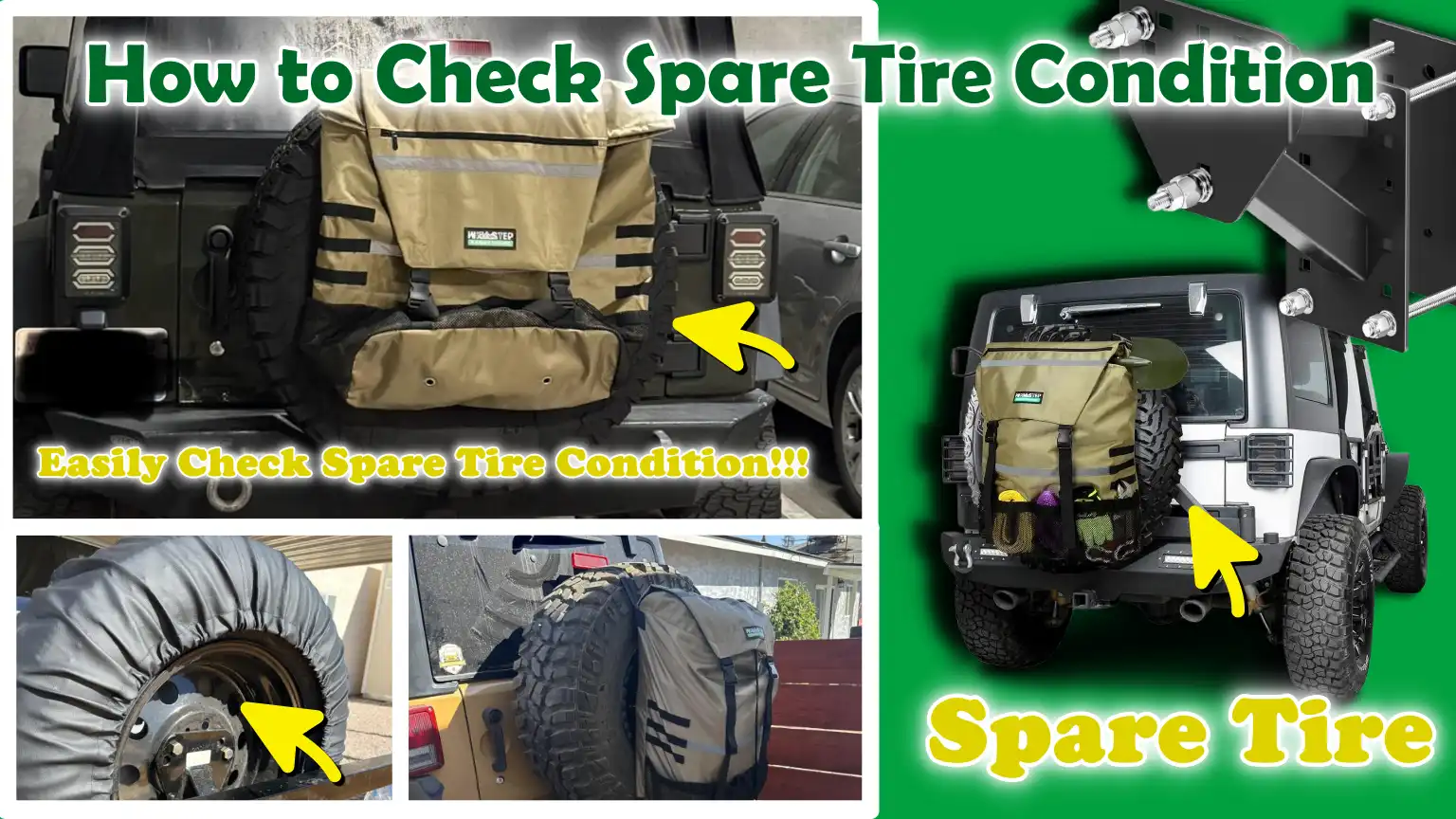
That’s why, you need to learn How to Check Spare Tire Condition, so that you can never have to face another problem after getting flat during journey.
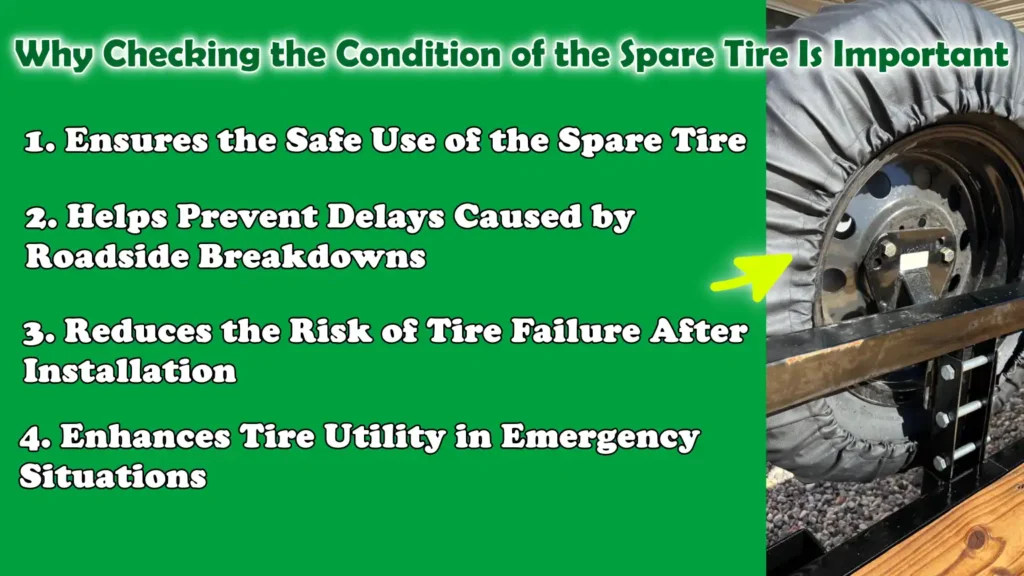
Why Checking the Condition of the Spare Tire Is Important
The spare tire is one of those safety components of a vehicle that people often overlook; yet, it becomes absolutely critical in the event of any tire-related emergency.
Many drivers assume that as the spare tire is not used on a daily basis, it naturally remains in good condition.
In reality, tires continue to deteriorate even when they are simply sitting idle and unused.
Exposure to heat, oxygen, moisture and temperature fluctuations causes the rubber to degrade naturally over time.
A spare tire that has been sitting in the trunk or mounted underneath the vehicle for several years may suffer from low air pressure, develop cracks, or become unsafe, even if its tread appears brand-new.
Regularly checking its condition ensures that it will function properly should a primary tire fail.
This simple habit can save you from being stranded on the road, minimize the risks associated with changing a tire during an emergency and help maintain overall driving safety.
1. Ensures the Safe Use of the Spare Tire
The purpose of a spare tire is to support the entire weight of the vehicle when a regular tire fails.
If the spare tire suffers from low air pressure, degraded rubber, or hidden internal structural damage, it cannot safely bear this load.
Many spare tires sit unchecked for years, during which time the rubber compound gradually hardens.
This can adversely affect the tire’s grip, flexibility and structural integrity.
Cracks may develop along the tire’s sidewalls, internal belts may weaken and air may leak from the valve stem.
These issues often go unnoticed until the tire is actually mounted and the vehicle is driven.
Checking your spare tire helps detect potential issues before an emergency arises.
A reliable spare tire should have the correct air pressure, adequate tread depth, no visible cracks and an undamaged wheel.
Verifying these factors ensures that the tire can be relied upon precisely when it is needed most.
2. Helps Prevent Delays Caused by Roadside Breakdowns
Getting a flat tire is stressful enough in itself, specially at night, in heavy traffic, or during adverse weather conditions.
The situation can become significantly worse if you discover that your spare tire is also flat or damaged.
This often results in a lengthy wait for roadside assistance, a tow truck, or a repair shop.
Many breakdown emergencies are unnecessarily prolonged simply because the spare tire was not checked in advance.
Even without a puncture, a spare tire can gradually lose air over several months due to natural air seepage.
Fluctuations in temperature also affect tire pressure, causing air levels to drop over time.
By regularly inspecting their spare tires, drivers can avoid the sudden complications that arise from a flat.
This ensures that the backup tire is immediately ready for use, thereby minimizing downtime during a roadside breakdown and reducing the risk of being stranded in unsafe locations.
3. Reduces the Risk of Tire Failure After Installation
If a spare tire is in poor condition, installing it does not guarantee safety.
A neglected spare tire may fail shortly after installation, particularly when driving at high speeds on a highway or when the vehicle is carrying a heavy load.
While aged rubber may appear sound on the surface, its internal layers may have deteriorated.
This can lead to tread separation, sidewall damage, or a sudden loss of air pressure while driving.
Temporary spare tires are particularly risky, as they are designed for short-term use and limited speeds.
These risks are further compounded if the spare tire is old or deteriorated.
Inspecting the tire before an emergency arises helps identify warning signs such as cracks, dried-out or degraded rubber, insufficient tread depth, or rim damage.
This significantly reduces the likelihood of a secondary tire failure, an event that can be even more dangerous than the initial puncture.
4. Enhances Tire Utility in Emergency Situations
Regular inspections can ensure that a spare tire remains reliable over the long term.
Tires that are checked frequently can be properly maintained by correcting air pressure, removing rust and replacing worn-out components before they develop into serious issues.
Maintaining the correct pressure prevents undue stress on the sidewalls and preserves the structural integrity of the tire, particularly when it is in storage.
Removing dirt, moisture, or rust from the wheel assembly protects both the rim and the mounting hardware.
Checking the tire’s age also helps determine when replacement is necessary, thereby ensuring that it does not become a safety hazard.
A well-maintained spare tire proves invaluable in any emergency situation, whether you are driving in the city or embarking on a long-distance journey.
As most people only realize the importance of a spare tire when they face trouble on the road, maintaining it proactively provides the assurance that your vehicle will remain fully prepared, even in the event of a sudden tire failure.
Know, Types of Spare Tires You May Have
Not all spare tires are created equal and it is crucial to understand which type of spare tire is equipped on your vehicle, as each type comes with its own distinct limitations, safety guidelines and driving conditions.
Many drivers assume that a spare tire is simply a smaller version of a standard tire; however, manufacturers actually produce various types of spare tires to accommodate factors such as available space, cost and the vehicle’s specific safety requirements.
Knowing exactly which type of spare tire you possess enables you to utilize it correctly in an emergency and helps you avoid unsafe driving situations.
1. Full-Size Spare Tire
A full-size spare tire is identical in size to your vehicle’s standard tires.
It is often mounted on a matching wheel and, provided it is used in accordance with the manufacturer’s recommendations, as it can generally be driven without any major restrictions (such as limits on speed or distance).
This type of spare tire offers the highest level of safety, as it provides the same level of traction, stability and braking capability as your standard tires.
However, if full-size spare tires remain unused for extended periods, they too can deteriorate over time; therefore, it is essential to inspect the tire pressure, tread condition and the overall integrity of the rubber before use.
2. Compact Temporary Spare – Donut
The compact temporary spare, often referred to as a “donut” spare, is smaller in size and lighter in weight than a standard tire and it is designed specifically for short-term use.
While it helps conserve space in the trunk, it comes with several strict limitations, typically including a lower maximum speed limit and a restricted driving distance.
Its compact size means that it offers less grip and stability compared to standard tires.
Therefore, its sole purpose is to safely transport you to a repair center, rather than for long-distance driving.
The air pressure in these spare tires tends to drop rapidly and due to their thinner construction, they wear out quickly; consequently, regular inspection is crucial.
3. Run-Flat Backup System
Run-flat tires are designed in such a way that, even after sustaining a puncture, the vehicle can continue to travel for a certain distance, typically at reduced speeds.
This system functions effectively because the tire’s sidewalls are reinforced, enabling them to support the vehicle’s weight even without full air pressure.
Many vehicles equipped with a run-flat system do not carry a traditional spare tire at all.
Although this reduces the need for roadside tire changes, it remains essential to pay close attention to run-flat tires, as they often cannot be repaired once damaged.
Their proper functioning relies heavily on the Tire Pressure Monitoring System (TPMS), which must always be maintained in good working order.
4. Matching Wheel Spare vs Emergency-Use-Only Spare
A matching wheel spare consists of a complete tire and wheel assembly that is identical to the tires originally installed on the vehicle; it delivers the same level of performance and safety while driving.
Once installed, it can generally be used just like a standard tire.
In contrast, an emergency-use-only spare tire is specifically designed for temporary use; its capabilities are limited in terms of speed and the distance it can cover.
The primary distinction between the two lies in safety and ease of use; while a matching spare offers greater convenience, an emergency spare serves merely as a temporary, stopgap solution.
Understanding what type of spare tire is installed in your vehicle helps you determine how far, and how safely, you can drive after a tire puncture.
Tools
| Tools | Why It Is Needed | How to Use It |
|---|---|---|
| Tire Pressure Gauge | Spare tires often lose air over time without any warning; therefore, using them in an emergency when they are under-inflated is unsafe. | Remove the valve cap, press the gauge onto the valve stem and read the PSI value. Compare this reading with the recommended pressure specified in your vehicle’s owner’s manual or on the tire label. |
| Flashlight | Spare tires are often stored under a seat, in the trunk, or beneath the vehicle, locations with poor lighting, making it difficult to detect any defects or damage. | Turn on a flashlight and carefully inspect the tire’s surface, sidewall and rim for any cracks, cuts, rust, or embedded objects. |
| Tread Depth Gauge or Coin | Tread depth indicates how effectively a tire can maintain traction on the road, particularly during rainy weather or in emergency driving situations. | To estimate the depth, insert a tread depth gauge into the grooves or place a coin within the tread pattern. If the tread is excessively shallow or unevenly worn, the tire may not be safe for use. |
| Clean Cloth | Dirt and debris can hide cracks, punctures, or damage within the rubber, thereby compromising the accuracy of the inspection. | Lightly wipe down the tire’s surface and sidewall prior to inspection to reveal any hidden damage. |
| Air Compressor or Portable Inflator | Spare tires often lose pressure while in storage; therefore, maintaining the correct air pressure is essential to ensure their safe use during an emergency. | Connect an inflator hose to the valve stem, activate the device and inflate the tire until it reaches the specified PSI level. |
How to Check Spare Tire Condition – Easy Guide
Checking a spare tire is not a difficult task, but performing it in the correct sequence helps you avoid overlooking hidden damage that could render the tire unsafe during an emergency.
Spare tires often sit unused for years; consequently, their air pressure may drop, cracks may develop, or their internal structure may weaken, even if there are no obvious external signs of damage.
A proper, step-by-step inspection ensures that the tire is fully prepared to support your vehicle in the event of a puncture and it also helps prevent potential breakdowns caused by a faulty backup tire.
1. Locate and Remove the Spare Tire
The first step is to locate where the spare tire is stored in your vehicle, as its placement can vary.
In many cars, it is situated beneath the trunk floor, inside the rear cargo compartment, or mounted underneath the vehicle.
Once you have located it, carefully remove any covers, straps, or securing mechanisms so that you can extract the tire without causing any damage.
This step is crucial, as removing the tire quickly and safely allows you to inspect it thoroughly, ensuring that no hidden areas are overlooked.
2. Check the Tire Sidewall for Cracks
After removing the spare tire, carefully inspect its sidewall (the outer edge of the tire).
Look closely for signs of “dry rot”, deterioration caused by dryness.
This manifests as tiny cracks in the rubber, which develop over time due to aging and exposure to heat and air.
These cracks are often most visible around raised lettering or along the curved edges of the tire.
Even minor cracks can compromise the structural integrity of the tire and increase the risk of failure when the tire is put into service.
3. Check the Tire Tread Depth
The tread is the part of the tire that makes contact with the road and it plays a crucial role in providing traction and ensuring safety.
By checking the tread depth, you can determine how much usable rubber remains, even if the tire has seen very little use.
Ensure that the wear is uniform across the entire surface of the tire, as uneven tread wear can be an indication of alignment issues or internal tire damage.
Additionally, keep an eye out for “flat spots”; these can develop when a tire remains stationary in one position for an extended period.
4. Check for Tire Punctures
Carefully inspect the entire surface of the tire for any punctures or embedded objects.
Look for nails, screws, cuts, or any sharp objects that may have accidentally penetrated the rubber.
Check both the upper surface (tread) and the sides (sidewalls), as damage to either of these areas can render the tire unsafe for use.
Even a small puncture can lead to a slow air leak or, under the weight of the vehicle, cause the tire to fail suddenly.
5. Check the Air Pressure
Use a pressure gauge to check the air pressure inside the spare tire.
Compare the reading against the recommended PSI value specified by the vehicle manufacturer; this information is typically found on a sticker located inside the driver’s door or in the owner’s manual.
Many spare tires gradually lose air over time, even if they are not being used.
If the air pressure is low, inflate it to the correct level to ensure that the tire can safely support the vehicle’s weight in an emergency.
6. Check the Condition of the Wheel Rim
The wheel rim is just as important as the tire itself.
Inspect it for rust, warping, dents, or any signs of corrosion, as these issues can prevent the tire from sealing properly.
A damaged rim can lead to a slow air leak or make it difficult to mount the tire in an emergency.
Additionally, check the valve stem, the small rubber or metal component used to inflate the tire, to ensure there are no cracks and that it is not leaking air.
7. Check the Age of the Spare Tire
Every tire has its date of manufacture printed on its sidewall in the form of a DOT code.
This code allows you to determine exactly how old the tire is, even if it looks brand new or appears unused.
The quality of rubber naturally degrades over time; therefore, even if an old spare tire’s tread appears to be in good condition, it may no longer be safe to use.
Checking the tire’s age helps you decide whether you can still rely on it or if it would be safer to replace it due to age-related deterioration.
8. Ensure All Necessary Components for Tire Installation Are Present
Finally, ensure that all the tools and components required to install the tire are present and in proper working order.
These include a jack, a lug wrench and any straps or bolts used to secure the spare tire in its designated storage location.
These tools are essential for safely removing a punctured tire and mounting the spare tire in its place.
If any of these items are missing or damaged, it could hinder the repair process.
Signs That Your Spare Tire Needs Replacing
A spare tire does not last forever, even if it has never been used.
Over time, heat, oxygen and storage conditions gradually degrade the rubber, rendering it unsafe precisely when you need it most.
Many drivers assume that a spare tire is always ready for use, but true safety depends on recognizing early warning signs.
Knowing when to replace a spare tire helps prevent emergency breakdowns and ensures that, in the event of a puncture, the backup tire can safely support the vehicle.
1. Cracks in the Sidewall
Cracks in the sidewall are one of the most common signs that a spare tire is aging and becoming unsafe.
These cracks appear as fine lines or fissures in the rubber, typically caused by “dry rot”, the drying out and deterioration of the rubber resulting from prolonged exposure to heat and air.
Even if the tire has never been driven on, these cracks can compromise its structural integrity.
When the tire is subjected to pressure during use, these weakened areas can expand and lead to sudden tire failure; therefore, visible cracks are a definitive indication that the tire needs to be replaced.
2. Uneven or Low Tread
The tread (the pattern on the tire’s surface) is crucial for grip and stability, even on a spare tire.
If the tread appears uneven or shows signs of abnormal wear, it can compromise the tire’s ability to perform safely on the road.
Shallow tread depth reduces traction (road grip), particularly on wet or slippery surfaces, and increases braking distances.
Uneven tread wear can also indicate that the tire was not stored properly or that internal structural issues have developed within it.
A spare tire with compromised tread should not be relied upon in an emergency and should be replaced.
3. The Tire Exceeding Its Recommended Service Life
Every tire has a natural service life, even if it is not used frequently.
Over time, due to the aging process, the rubber compounds begin to deteriorate from the inside out.
Most manufacturers recommend inspecting or replacing tires after a certain number of years, based on the DOT manufacturing date.
A spare tire that has become too old may appear sound on the outside, yet remain unsafe due to internal structural weaknesses.
Checking the tire’s age is crucial, as the mere passage of time can render a tire unreliable, even if no external damage is visible.
4. Repeated Loss of Air Pressure
If a spare tire is repeatedly losing air pressure, it is a clear indication of an internal issue.
A gradual loss of air may be caused by a faulty valve stem, minor punctures, or general leakage resulting from aging rubber.
Even if the tire is reinflated, recurring air loss suggests that it may not be able to hold pressure effectively when needed.
A spare tire must be fully inflated to properly support the vehicle during use; therefore, if the tire is consistently losing air, it is best to replace it.
5. Rim Damage
The wheel rim plays a critical role in properly sealing the tire and keeping it stable.
If the rim is bent, rusted, cracked, or worn, the tire may be unable to hold air effectively.
Furthermore, a damaged rim can make it difficult to mount the spare tire when changing a flat in an emergency situation.
Even if the tire itself is in good condition, a defective rim can render the entire spare tire system unsafe.
In such cases, it is crucial to replace or repair the rim to ensure that the spare tire functions properly when needed.
Know, Common Issues with Spare Tires
The purpose of a spare tire is to serve as a reliable backup in the event of a tire puncture emergency; however, spare tire systems in many vehicles often develop issues because they are frequently overlooked.
Unlike regular tires, which are inspected while driving or during routine servicing, a spare tire can sit unused for years, allowing minor issues to gradually escalate into major problems without anyone noticing.
Understanding common spare tire issues helps drivers avoid unexpected complications during emergencies and ensures that the spare tire actually functions when it is needed most.
As well as, there’s NHTSA’s tire aging research projects that includes controlled laboratory and real-world studies, that actually shows that tires undergo structural weakening over time due to the thermo-oxidative aging, so the research also found out that internal rubber components and belt structures that degrades even when tires are not actively driven, which can reduces the resistance to stress and increase the chance of failure under the load, so the study also used spare tires in aging comparisons, that confirms that unused tires stored for long periods still shows that measurable degradation similar to the regularly used tires as well.[¹]
1. Pressure Loss Due to Prolonged Storage
One of the most common issues associated with spare tires is the loss of air pressure resulting from prolonged storage.
Even when a tire is not in use, air naturally seeps out through the rubber and the valve stem over time.
Fluctuations in temperature also impact pressure levels, causing the pressure to gradually decrease.
A spare tire with low pressure cannot properly support the vehicle, which can make driving unsafe during an emergency or render the tire completely useless.
To ensure the tire is ready for immediate use, it is crucial to check its pressure periodically.
2. ‘Dry Rot’ Caused by Exposure to Heat
‘Dry rot’ occurs when a tire’s rubber ages, hardens and develops cracks due to exposure to heat, oxygen and sunlight.
Spare tires stored in a vehicle’s trunk or underneath the vehicle are at the highest risk of developing this problem, as they are neither rotated nor put into use on a regular basis.
This condition weakens the tire’s structural integrity and causes it to lose its elasticity, thereby increasing the likelihood of tire failure when subjected to the pressure of supporting the vehicle’s weight.
Even if the tire’s ‘tread’ (the outer surface) appears to be in good condition visually, driving on such a spare tire is unsafe due to ‘dry rot’.
3. Rusting of the Wheel or Mounting Bracket
The wheel or bracket responsible for securing the spare tire in place can also develop issues, particularly in regions characterized by high humidity, moisture, or the use of road salts.
Rust or ‘corrosion’ (metal degradation) can weaken metal components, making it difficult to retrieve the spare tire when it is needed.
In some instances, a compromised mounting system can even damage the tire itself or prevent it from being securely fastened.
To ensure the spare tire can be used safely and easily during an emergency, it is crucial to have any damaged wheels or brackets cleaned, repaired, or replaced.
4. Missing Jack or Lug Wrench
A spare tire is only useful if the necessary tools for installing it are also available.
Many drivers, often at the worst possible moment, discover that their jack or ‘lug wrench’ is missing, damaged, or unusable; and they only realize this after they have already suffered a flat tire.
Without these tools, safely removing a flat tire and installing the spare becomes an impossible task.
Consequently, a simple task like changing a tire turns into a major ordeal and causes significant delays.
Ensuring that all tools are present and in proper working order is an essential part of being fully prepared with your spare tire.
5. Incorrect Spare Tire Size
Another common issue is that the spare tire does not match the specific requirements of the vehicle.
Due to errors made during previous tire changes or servicing, some vehicles end up fitted with a spare tire of the incorrect size.
An ill-fitting spare tire can compromise the vehicle’s balance, braking and handling, rendering it unsafe to drive, even for short distances.
In emergency situations, using an incorrectly sized spare tire can increase the risk of causing further damage to the vehicle.
To ensure safe usage for a limited duration, it is crucial to verify that the spare tire matches the correct specifications.
Avoid These Mistakes When Checking Your Spare Tire
Checking a spare tire is simple, yet many drivers make minor errors that can lead to serious complications during an emergency.
The biggest issue is that, at first glance, a spare tire often appears to be in good condition, leading people to assume it is ready for use.
However, hidden problems such as: low air pressure, aged rubber, or structural defects in the wheel, as it can only be detected through a thorough inspection.
Understanding these common mistakes ensures that, should you ever suffer a flat tire, your spare tire is truly safe and reliable.
1. Checking Only the Exterior Appearance
A common mistake is relying solely on the tire’s exterior appearance.
A spare tire may look clean and intact on the outside, but internal issues such as: deteriorating rubber, air leaks, or structural damage, are not always visible to the naked eye.
Minor cracks or defects hidden beneath dust and grime can easily go unnoticed.
To perform a proper inspection, you must check the air pressure, tread depth and the tire’s age, rather than simply making a visual guess, to accurately assess its overall condition.
2. Neglecting the Tire’s Age
Another major mistake is overlooking the tire’s age.
Over time, tires naturally deteriorate, even if they have never been used.
Exposure to heat, oxygen and prolonged storage causes the rubber to gradually break down, becoming hard and less flexible.
An old spare tire, even if it looks brand new, may be compromised.
Checking the tire’s date of manufacture is crucial, as a tire can become unsafe simply due to its age, regardless of how good it may look visually.
3. Failing to Check Tire Pressure
Many drivers forget to check the air pressure in their spare tire because they do not use it on a daily basis.
However, tires naturally lose air over time, even if they are simply sitting in storage.
A spare tire with low pressure cannot properly support the vehicle during an emergency.
Without the correct air pressure, a spare tire may prove to be unsafe or useless once installed.
Regularly checking the air pressure ensures that the spare tire is always ready for use when needed.
4. Failing to Inspect the Wheel
The wheel upon which the spare tire is mounted is often overlooked during inspections, despite being just as important as the tire itself.
A damaged or rusted wheel can cause air leaks or make it difficult to mount the tire properly.
Rust, dents, or structural defects can prevent the tire from seating correctly.
Neglecting this step can lead to complications when attempting to install the spare wheel during a roadside emergency; therefore, the wheel should always be inspected carefully.
5. Assuming Unused Items Are in Good Condition
A very common mistake is assuming that a spare tire is safe simply because it has never been used.
In reality, even if a tire has never been driven on, it still ages and begins to deteriorate over time.
The rubber can dry out, crack, or suffer structural degradation, even if it has been stored properly.
Many drivers only discover these issues when they attempt to use their spare tire during an emergency.
Unthinkingly assuming that an unused tire is safe poses a serious safety risk; therefore, every spare tire should be inspected regularly, regardless of whether it has ever been used or not.
Read More:
Common Tips for Keeping Your Spare Tire Ready
A spare tire performs its function effectively only when it is properly maintained, rather than simply being stowed away and forgotten.
Many drivers assume that their spare tire will always work when needed; however, factors such as gradual air loss, temperature fluctuations, moisture and prolonged storage can diminish its reliability over time.
Keeping a spare tire ready means treating it as an active safety component of the vehicle, rather than merely as a dormant backup.
By adopting a few simple habits, you can significantly extend its lifespan and ensure that it functions safely during an emergency.
1. Maintain Proper Air Pressure
Maintaining proper air pressure is one of the most critical steps in spare tire care.
Tires naturally lose air gradually over time, even when they are not in use; a low-pressure spare tire will be unable to adequately support the vehicle’s weight during an emergency.
Regularly checking the pressure and maintaining it at the PSI recommended by the manufacturer ensures that the tire is robust enough for sudden deployment.
Correct pressure also helps protect the tire’s sidewall from damage and preserves the tire’s structural integrity even after prolonged storage.
2. Store in a Clean and Dry Place
A spare tire should always be stored in a clean and dry environment to minimize damage caused by moisture, dust and heat.
Excessive moisture can lead to rust on the wheel and valve stem, while accumulated dirt and dust can obscure cracks or surface damage on the tire.
Exposure to heat and direct sunlight accelerates the aging process of the tire’s rubber, causing it to dry out, deteriorate and lose its elasticity.
Storing a spare tire in a secure location such as: in the vehicle’s trunk or within a secure underbody mount, helps maintain its condition over the long term.
3. Re-check After Temperature Changes
Fluctuations in temperature can affect both the tire pressure and the rubber material itself.
In cold weather, air pressure may drop, while in hot weather, internal pressure within the tire material can increase.
If a spare tire is not checked regularly, these changes can gradually weaken it.
Re-checking the tire after significant weather shifts ensures that the air pressure remains at the correct level and also helps identify any new cracks or damage caused by the expansion and contraction of the rubber.
4. Rotate Full-Size Spare Tires Whenever Possible
If your vehicle is equipped with a full-size spare tire, incorporating it into your regular tire rotation schedule can extend its lifespan and ensure even wear.
This prevents the spare tire from deteriorating prematurely while sitting idle in one spot and over time, ensures that all of the vehicle’s tires wear evenly.
Tire rotation also aids in the timely detection of hidden issues such as: balancing problems or uneven tread wear.
By making a full-size spare tire part of your regular rotation schedule, you keep it in operational condition rather than letting it degrade while sitting in storage.
5. Always Keep Emergency Tools Handy
A spare tire is only useful if the tools required to install it are available at all times.
These tools typically include a jack, a lug wrench and any necessary adapters or safety equipment.
Without these items, even a perfectly good spare tire cannot be utilized in the event of a breakdown.
Keeping these tools organized and stored alongside the spare tire ensures that changing a tire during an emergency can be accomplished both quickly and safely.
Conducting regular checks to verify that all tools are present and in proper working order helps avoid delays during those critical moments when they are needed most.
Conclusion – How to Check Spare Tire Condition
Basically, having a spare tire is not just a backup option, as it is your last line of safety whenever everything else fails on the road.
When a tire suffers a puncture, particularly on a highway or in hazardous conditions, the spare tire is the sole element that keeps your journey moving forward.
Nevertheless, because it remains unused for extended periods, its air pressure may gradually deplete, cracks may develop, or it may simply become too old to function safely.
Many actual road accidents occur not because a primary tire failed, but because the spare tire was not properly inspected before it was needed.
Regular inspection of the spare tire ensures that it is fully prepared for use in any emergency situation.
Checking air pressure, looking for signs of drying or deterioration, verifying the condition of the tire tread and assessing the tire’s age, all these steps collectively help prevent sudden failures.
Even minor issues such as: low air pressure or cracks in the tread, as it can significantly impact how safely the vehicle can be driven after a tire change.
So, that’s all from this guide about How to Check Spare Tire Condition, now you can ask all the related questions below.
Frequently Asked Questions
FAQ 1: How do I know if my spare tire is still usable?
Answer: A spare tire is considered usable if it maintains proper air pressure, shows no visible cracks, has an intact tread (tire surface) and falls within the safe age limit based on its manufacturing date. Even if it has never been used, the rubber can still deteriorate and weaken over time. If you notice dry cracks on the tire’s sidewall, issues with frequent air loss, or a very old manufacturing date, the tire may no longer be safe to use. A good spare tire should look clean, feel firm to the touch and hold air properly without any visible damage or signs of weakness.
FAQ 2: How often should I check my spare tire?
Answer: In addition to checking your regular tires, you should inspect your spare tire at least once a month. It is also crucial to check it before embarking on long road trips or whenever the weather changes, as fluctuations in temperature can affect tire pressure. Regular inspections allow you to detect slow leaks, hairline cracks, or hidden damage before an emergency arises. As a spare tire is rarely used, it can deteriorate unnoticed; therefore, regular checks are essential.
FAQ 3: Can a spare tire go bad even without being used?
Answer: Yes, a spare tire can deteriorate even without ever being driven on the road. Over time, exposure to heat, oxygen and the surrounding environment causes the rubber to naturally break down. This process can lead to dry rot, cracks in the sidewall and a loss of the tire’s elasticity. Even tires that simply sit in storage gradually lose air pressure over time. This means that a spare tire can become unsafe not only due to use or damage but also due to its age and storage conditions.
FAQ 4: How much air should be in a spare tire?
Answer: The correct air pressure for a spare tire depends on the vehicle and the type of tire. For most full-size and temporary spare tires, the correct air pressure (in PSI) is listed on a sticker located inside the driver’s door or in the vehicle’s owner’s manual. It is best not to guess the air pressure, as underinflation can make the tire unsafe, while overinflation can damage its structural integrity. Always use a tire pressure gauge to check the pressure and adjust it to the correct level.
FAQ 5: What are the signs that indicate my spare tire needs to be replaced?
Answer: Common warning signs include visible cracks on the sidewall, low or uneven tread depth, frequent air loss and an excessively old manufacturing date. If the tire feels stiff rather than pliable, or shows signs of drying out and deterioration, it may need to be replaced. A damaged rim or valve stem can also render a spare tire unreliable. These symptoms generally mean that the tire is no longer safe for emergency use and should be replaced before it fails.
FAQ 6: Where is the spare tire typically stored in a car?
Answer: The location of the spare tire depends on the vehicle’s design. In many cars, it is stored in a compartment located beneath the trunk floor. In SUVs and trucks, it may be mounted underneath the rear of the vehicle. Some smaller cars store it inside a side panel or within the trunk area. Regardless of its specific location, it is essential to know exactly where it is stored and how to access it quickly in an emergency.
FAQ 7: Why does the air pressure in my spare tire decrease over time?
Answer: The air pressure in a spare tire gradually decreases over time because rubber is not completely airtight. A small amount of air naturally escapes through the tire material and the valve stem. Changes in temperature can also affect air pressure; pressure may drop in cold weather, while it can fluctuate in hot weather. If the valve stem is old or damaged, air may leak out more rapidly. This is why it is crucial to check tire pressure regularly, even if the tire is not currently in use.
References:
[1] What NHTSA Applied Research Has Learned From Industry About Tire Aging
https://www.nhtsa.gov/sites/nhtsa.gov/files/0703macisaac.pdf
Hello Folks, Dean Shali here to help you out to solve the problems with your lovely vehicle, as i have lots of experience and knowledge about automotive industry as i woks directly with the customers and repair vehicles and i love to help the people to keep their cars safe and running smoothly.