
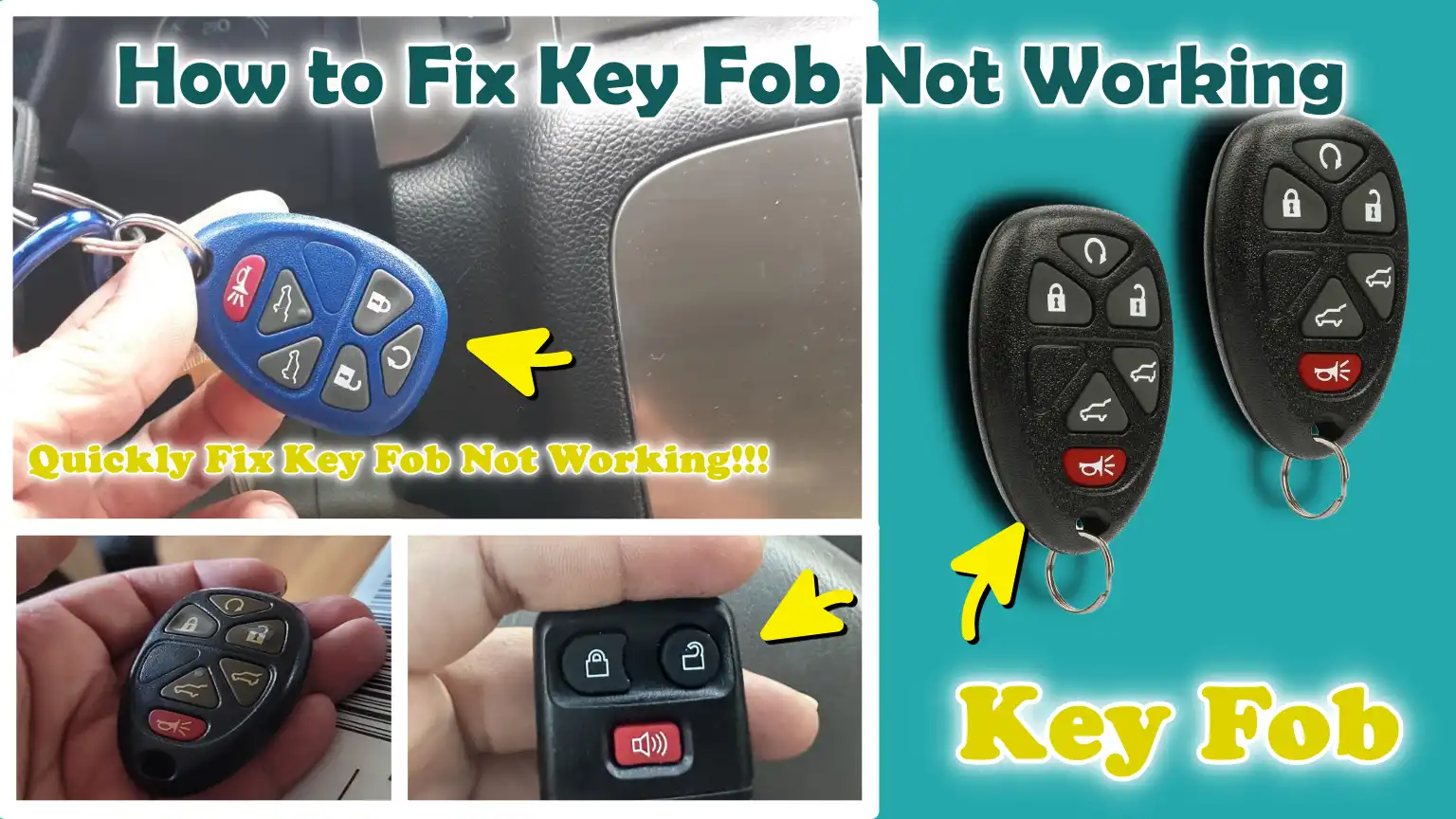
Written By: Dean Shali
Fact Checked By: Sabré Cook
Reviewed By: Tamara Warren
Basically, behind that simple button press; there’s coded wireless system that depends on the proper battery power signal strength and precise vehicle recognition as well.
As, modern car key fob may look just as a small “PLASTIC DEVICE”, but it is actually a highly advanced communication tool which is built with a tiny battery, a microchip, specific kind of radio frequency transmitters and there’s encrypted security coding which is designed to interact with your vehicle in seconds and enhances the security as well.
And, whenever you presses that damn button, then the key fob actually sends a coded signal to the car’s receiver, that then allows it to unlock the doors, release the trunk or authorize the engine to start.
Plus, this process actually depends on the battery power, signal accuracy, internal circuitry and vehicle-side sensors as well, that’s why even one weak point can cause the entire system to fail misrably.
In fact, most of the time “Key Not Detected” warning or unresponsive remote is simply a drained coin-cell battery, but there’s other things if not the battery only such as: signal interference, damaged internal contacts, software desynchronization or a weak vehicle battery can also trigger the same kind of symptoms.
So, in this guide we have shown you How to Fix Key Fob Not Working so that you can solve the issue by replacing the battery, cleaning the contact terminals, reprogramming the remote or check the signal blockages as well.
Know, Common Signs Shows That Your Key Fob Is Malfunctioning
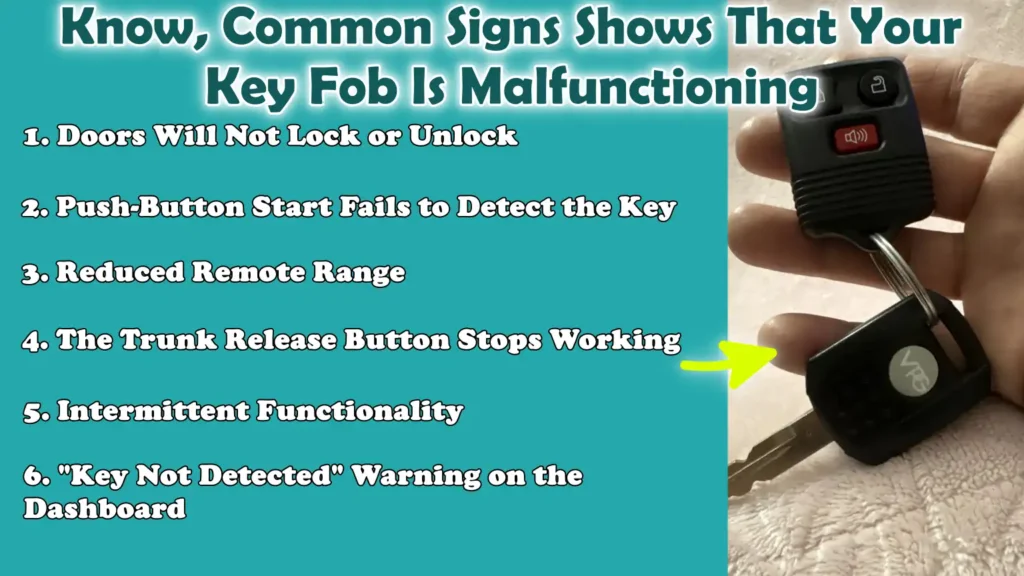
1. Doors Will Not Lock or Unlock
When a key fob begins to fail, one of the earliest and most noticeable signs is that the car doors stop responding to commands to lock or unlock.
This typically occurs because the internal coin battery within the fob has weakened, or the radio signal it emits is no longer strong enough to reach the vehicle’s receiver.
In many modern vehicles, the fob communicates using low-power radio frequency signals, which must be precise and consistent.
If the signal weakens even slightly, due to a dying battery, internal wear and tear, or electronic interference, the car may completely ignore the command, even if the buttons feel normal when pressed.
2. Push-Button Start Fails to Detect the Key
Another common symptom is when the Push-Button Start system refuses to recognize the key fob, even though it is present inside or in the immediate vicinity of the vehicle.
This happens because the car utilizes a proximity-based system that constantly scans for an encrypted signal transmitted by the fob.
If the fob’s battery level drops too low, the internal chip within the fob becomes unable to transmit a sufficiently strong identification signal.
In some instances, the vehicle’s own battery or internal antenna system may also be weak, thereby disrupting the communication process.
Consequently, the car displays a “Key not detected” message, even if the fob is physically located inside the vehicle.
3. Reduced Remote Range
A key fob that functions only when you are in very close proximity to the vehicle is another major warning sign.
Typically, depending on the vehicle model and the surrounding environment, most key fobs are capable of operating from a distance of several meters.
When the operating range diminishes significantly, it often indicates that the internal battery is nearing the end of its lifespan or that the functionality of the fob’s internal transmitter is deteriorating.
Environmental factors such as: buildings, metal structures, or electronic interference, as it can also reduce the range; however, a consistently shrinking operating range usually points to a hardware or electrical issue residing within the fob itself.
4. The Trunk Release Button Stops Working
When the button used to open the trunk (or boot) ceases to function, while all other features continue to work, it signals a potential internal malfunction within the key fob.
Modern key fobs utilize separate circuits for different functions; therefore, if a specific component suffers wear and tear or develops a fault, only that particular function will be affected, while all other features will continue to operate normally.
The command to open the trunk may fail to reach the vehicle due to accumulated dirt, worn-out button contacts, or a minor fault within the internal circuitry.
In some instances, this issue may be linked to the car’s trunk actuator or receiver module; however, the key fob itself should typically be the first component to be inspected.
5. Intermittent Functionality
Intermittent operation, that is, when the key fob works sporadically, as it can be a source of frustration and confusion for drivers.
This issue often arises when the internal battery’s voltage is unstable, preventing it from providing a consistent power supply to the transmitter.
Loose internal connections or worn-out button contacts can also lead to such erratic behavior.
In some instances, external radio frequency interference emanating from nearby electronic devices or smart gadgets can temporarily disrupt the communication link between the key fob and the vehicle, leading to unpredictable operation.
6. “Key Not Detected” Warning on the Dashboard
The “Key Not Detected” warning on the dashboard is the most definitive indication of a lost connection with the key fob.
This message appears when the vehicle’s immobilizer system fails to verify the presence of a valid, encrypted signal transmitted by the fob.
The root cause of this issue could be a weak key fob battery, a malfunctioning transponder chip within the key, or a fault in the car’s receiver system.
Occasionally, even a fully functional key fob may trigger this warning if the vehicle’s battery is low or if the system synchronization has been temporarily disrupted.
This warning should always be interpreted as a signal that you need to immediately inspect both the key fob and the vehicle’s electrical system.
So, Why Does a Key Fob Stop Working?
1. The Key Fob’s Internal Battery Has Died
The most common reason a key fob stops working is that its internal battery has died or has become weak.
Key fobs utilize very small batteries, the power of which gradually diminishes over time, typically within two to five years, depending on usage.
When the battery voltage drops below the required threshold, the fob’s indicator light may still illuminate when a button is pressed, or the device may appear to be functioning normally; however, it fails to transmit a radio signal strong enough for the car to detect.
Consequently, the fob’s effective range decreases, the car responds sluggishly, or the device may fail completely to unlock the doors or start the vehicle.
In most cases, simply replacing the battery restores the fob to full functionality immediately.
2. Faulty Key Fob Circuit Board
Inside every key fob lies a small electronic circuit board responsible for transmitting signals and managing encryption.
If this board sustains damage, whether from being dropped, developing hairline cracks internally, or suffering from faulty solder joints, the fob may cease functioning entirely or begin to behave erratically.
Even minor damage can disrupt the precise frequency signals required for effective communication with the vehicle.
Because these components are extremely small, internal damage is often invisible from the outside, making it difficult to pinpoint the exact cause of the malfunction without specialized diagnostic tools or component replacement.
3. Exposure to Water
Water damage is another major cause of key fob failure.
Even a small amount of moisture can lead to corrosion within the internal circuitry or cause short circuits in sensitive electronic components.
Exposure to rain, accidental washing, or dropping the fob into a liquid, all of these factors can gradually degrade its performance over time.
In some instances, the fob may continue to function for a while after drying out; however, internal corrosion continues to spread and eventually, the device fails completely.
Once the circuit board has corroded, repairs are often difficult, leaving replacement as the only viable solution.
4. Signal Interference
Key fobs operate using radio frequency signals, which can be susceptible to interference from external sources.
Devices such as mobile phones, Wi-Fi routers, radio towers, or parking structures constructed from heavy metal and concrete can weaken, or completely block, the fob’s signal.
When the level of interference is high, the vehicle may fail to recognize the fob, even if the fob itself is functioning correctly.
This issue is typically temporary and localized; meaning that as soon as you move away from the source of the interference, the fob should resume normal operation.
5. Vehicle Battery Issues
A weak or failing vehicle battery can also be the cause of key fob malfunctions.
The vehicle relies on a stable power supply to receive and process the signals transmitted by the fob.
When the car battery’s voltage drops too low, the receiver system cannot function properly, leading to issues such as a “key not detected” error or a failure to unlock the doors.
This is often mistakenly attributed to a faulty key fob; however, the actual problem lies not with the remote, but with the vehicle’s power system.
6. Key Fob Programming Failure
To communicate with a specific vehicle, a key fob must be properly programmed.
If this programming becomes corrupted or is accidentally reset, the vehicle’s immobilizer system will cease to recognize that specific fob.
In some vehicles, this can occur following a battery replacement, an electronic reset, or a software update.
When the programming is compromised, the fob may continue to transmit a signal; however, the vehicle will ignore it because it no longer recognizes the associated security code.
7. Worn Buttons or Internal Contacts
Over time, due to repeated use, the buttons on a key fob can become worn.
Inside the fob, small rubber pads and conductive contacts press against the circuit board to transmit commands.
If these components become worn, dirty, or dislodged, pressing a button may not produce the desired result.
This leads to inconsistent performance, for instance, you may need to press the button harder or multiple times before the vehicle responds.
In many cases, simply cleaning or replacing the button contacts is sufficient to restore proper functionality.
8. Issues with the Vehicle’s Receiver
Occasionally, the issue lies not with the key fob itself, but with the vehicle’s receiver system.
Vehicles utilize antennas and control modules to detect and authenticate the signals transmitted by the fob.
If these components malfunction or fail to operate correctly, the vehicle will not respond, even if the key fob is fully functional.
The symptoms of this issue can be identical to those of a faulty fob such as: the doors failing to unlock or the engine failing to start.
Tools
| Tools | Why It Is Needed | How to Use It |
|---|---|---|
| Replacement Coin Battery | The most common reason for a Key Fob not working is a weak or completely depleted battery. Replacing it often restores the Key Fob to full functionality immediately. | Carefully open the Key Fob, remove the old battery and insert the new one in exactly the same orientation. Before closing the unit, ensure that the positive (+) terminal of the battery aligns correctly with the corresponding marking inside the Fob. |
| Small Flat Screwdriver | This allows the Key Fob’s casing to be opened without damaging the plastic housing or the internal components. Many Key Fobs are sealed very tightly and may require the application of slight, gentle force to open. | Insert the edge of a flat object (such as a screwdriver) into the seam of the Fob and gently twist to separate the casing. Avoid applying excessive force to prevent breaking or damaging the internal circuit board. |
| Soft Cloth | A soft cloth is used to remove dust, dirt and moisture from the Key Fob’s components. Clean contacts facilitate better signal transmission and ensure that the buttons function correctly. | Gently wipe down the battery compartment, the buttons and the outer casing. If necessary, slightly dampen the cloth with water or rubbing alcohol, but avoid thoroughly soaking any of the internal components. |
| Electrical Contact Cleaner | This helps remove rust, grease and layers of oxidation from the metal contacts located inside the Fob. Dirty contacts can obstruct the flow of electricity or weaken signal transmission. | Spray a small amount onto the metal contact points and allow them to dry completely before reassembling the Fob. Do not over-spray and take care to ensure that the circuit board does not become completely saturated. |
| Multimeter – Optional | A multimeter checks the battery’s voltage and helps determine whether the battery still retains sufficient power for continued use. This eliminates the need for unnecessary battery replacements. | Set the device to DC voltage mode, place its probes (wires) against the battery terminals and verify whether the reading corresponds to the required voltage (typically around 3V for a coin battery). |
| Owner’s Manual | The manual provides precise instructions tailored to your specific vehicle model, including the battery type, the steps for programming the key fob and methods for starting the vehicle in an emergency situation. | If the key fob ceases to function entirely, consult the manual to identify the correct battery size, the steps for reprogramming it and the location of the access point for the hidden key. |
How to Fix Key Fob Not Working – Easy Guide
Fixing a broken key fob is generally a straightforward task: checking the power source, cleaning the internal contacts, inspecting for any physical damage and finally, verifying whether the car can once again recognize the signal.
Most key fob issues stem from a weak battery or poor electrical contacts; therefore, these simple initial steps often resolve the problem without the need to replace expensive parts or seek service from a dealership.
1. Replace the Key Fob Battery
Replacing the battery is the first and most crucial step, as a weak battery lies at the root of most key fob malfunctions.
Key fobs utilize small “coin cell” batteries, the power of which gradually diminishes over time; when the voltage drops too low, the signal becomes too weak for the car to properly recognize it.
To begin, you must carefully open the key fob using a small, flat tool or by utilizing the specific “release slot” built into the device; do not attempt to force it open, as the plastic casing can break easily.
Once the key fob is open, identify the correct battery type, either by examining the old battery or by checking the label located inside the battery compartment; using a battery of the wrong size or voltage will prevent the key fob from functioning correctly.
When inserting the new battery, ensure that it is oriented in the exact same direction as the old one, typically, the “positive” (+) terminal should face upward, as installing it upside down will prevent the internal circuitry from working.
After properly closing the key fob, immediately test it by locking and unlocking your car.
This will confirm that the signal has been restored and that the issue was indeed related to battery power.
2. Clean the Key Fob Contacts
If the problem persists even after replacing the battery, dust or corrosion accumulated on the internal contacts of the key fob may be disrupting the electrical flow.
To resolve this, you must first carefully open the key fob’s casing; here, too, apply very gentle pressure to avoid damaging the casing or the circuit board.
Once the key fob is open, closely inspect the metal battery terminals and the internal contact points; they may have accumulated dust, or show signs of oxidation or minor corrosion, specially if the key fob has been exposed to damp locations or humid environments.
Cleaning these terminals is crucial, as even a thin layer of dust can interfere with the electrical connection required to transmit a signal.
You can clean these contacts using a soft cloth or a small amount of “electrical contact cleaner”; ensure that everything is completely dry before reassembling the key fob.
After cleaning, close the fob securely to ensure the battery sits firmly in place, as a loose connection can cause the fob to function intermittently.
3. Check for Any External Damage
If the key fob still does not work, internal components may have been compromised due to external damage.
First, inspect the outer casing for any cracks or broken parts, as damage to the casing can allow dust or moisture to enter and harm the internal electronic components.
Next, firmly press the buttons to check if they feel loose, stuck, or uneven, as worn-out buttons often fail to send the correct signal to the circuit board.
Inside the fob, check the circuit board for any signs of external damage such as: burn marks, broken solder joints, or corrosion caused by water exposure.
Even minor internal damage can prevent the fob from sending a clear signal to the car, rendering the remote completely useless, even if the battery is in good condition.
4. Reprogram the Key Fob
Sometimes, a key fob stops working not due to a hardware malfunction, but because its programmed connection with the car has been lost.
This can occur after replacing the battery, performing a system reset, or following an electronic glitch within the car’s security system.
The key fob may need to be reprogrammed, as it is essential for the security codes of both the car and the fob to match in order to communicate properly.
In many vehicles, this issue can be resolved by performing a simple re-synchronization procedure.
This may involve inserting the key, turning the ignition on and off, or pressing specific buttons in a prescribed sequence; however, the exact method varies depending on the car model.
It is crucial to carefully follow the instructions provided for your specific vehicle, as taking incorrect steps will prevent the synchronization process from completing successfully.
Once reprogrammed, the fob’s connection with the car should be fully restored, allowing it to function normally to lock, unlock and start the vehicle.
5. Use the Backup Mechanical Key
If an electronic key fob ceases to function entirely, most modern vehicles feature a backup mechanical key designed to unlock the vehicle in an emergency.
This hidden key is typically housed within the fob itself and can be retrieved by sliding or pressing a specific release mechanism.
This mechanical key allows you to manually unlock the driver’s door, even when the electronic system is inoperable, a feature that is crucial in situations where the battery has completely drained.
Some vehicles also incorporate a hidden key slot or a backup reader located near the steering column or the start button, enabling the vehicle to recognize the fob even when its battery is low.
In vehicles equipped with push-start systems, holding the fob directly against the start button or a specific sensor area can sometimes temporarily enable the vehicle to start; this provides an opportunity to move the vehicle or take it in for service while you work on resolving the underlying issue.
So, How to Determine if the Problem Lies with the Car, Not the Key Fob
When a key fob stops working, it is crucial to determine whether the issue actually lies with the fob itself or with the car’s system, as both scenarios can manifest with identical symptoms such as: doors failing to unlock, the push-start system failing to recognize the key, or warning messages appearing on the dashboard.
Many drivers mistakenly replace their key fob, only to discover later that the actual problem was a weak car battery or a malfunction within the vehicle’s receiver system.
By following a simple, step-by-step diagnostic process, you can quickly pinpoint the root cause of the problem and avoid unnecessary expenses.
1. Test Your Spare Key Fob
The first and most reliable method for identifying the true source of the problem is to test your spare key fob, provided, of course, that you have a spare available.
Most cars are designed to operate using multiple programmed keys; if the spare fob functions correctly while the primary fob does not, it clearly indicates that the issue lies with the primary key fob, not with the car itself.
However, if both fobs cease to function in the same manner, there is a very high probability that the problem resides not in the remote, but within the car’s own systems.
This simple comparative test is one of the quickest ways to identify the source of the malfunction.
2. Check the Car Battery Voltage
A weak or failing car battery can have a direct impact on both the keyless entry and push-start systems; this is because modern vehicles rely heavily on a stable power supply to recognize and process key signals.
Even if the battery inside the key fob is fully functional, if the car battery’s voltage drops below the required threshold, the vehicle may fail to respond at all.
This often occurs when the car’s battery ages or becomes completely discharged because the lights or other electronic accessories were left on.
When fully charged, a healthy car battery should typically maintain a voltage of approximately 12.6 volts; if the voltage drops significantly below this level, communication issues may arise between the car and the key fob system.
If you are experiencing difficulty starting the car, or if electronic accessories are functioning sluggishly, there is a strong probability that the issue lies with the car’s battery itself.
3. Check the Door Receiver System
The door receiver system is responsible for receiving and decoding the signals transmitted by the key fob.
If this receiver, or its antenna, is damaged, loose, or malfunctioning, the car will fail to respond, even if the key fob itself is in perfect working condition.
In many vehicles, these receivers are located inside the door panels or near the rear of the car, where they capture low-power radio signals.
External physical damage, water intrusion, or faults within the internal wiring can disrupt this signal path.
If only specific doors unlock, or if none of the lock/unlock functions work with any key fob, the receiver system should be thoroughly inspected, as this may be the root cause of the problem.
4. Check the Functionality of the Push-Start Sensor
The push-button start system relies on a network of sensors located inside the vehicle to detect and verify the presence of the key fob through low-frequency communication.
If these sensors malfunction or their calibration becomes compromised, the vehicle will be unable to detect the key fob, even if the fob is physically present inside the car.
When this occurs, a “Key Not Detected” message often appears, or the engine will only start if the key fob is held in immediate proximity to the start button.
In some instances, signal interference, a weak vehicle battery, or a fault within the sensor module can disrupt this detection process.
Testing the system by moving the key fob to various locations inside the vehicle, or utilizing the emergency start location specified by the manufacturer, as it can help confirm that the root cause of the issue lies within the sensor system, rather than with the key fob itself.
How to Fix Key Fob Signal Problems
Key fob signal problems occur when the radio communication between your key and your car becomes weak, gets interrupted, or ceases entirely.
A key fob operates by transmitting a low-power, encrypted radio signal to the vehicle’s receiver, typically within a range of a few meters.
Because this signal is very subtle and precise, it can easily be affected by physical obstructions, electronic devices, or temporary glitches within the system itself.
When this happens, you may observe certain symptoms, such as the doors failing to respond, a reduction in the effective operating range, or the car only reacting when the fob is held in very close proximity.
Therefore, learning how to resolve signal issues is crucial; in many cases, the problem stems not from a defective key fob itself, but rather from external interference or a temporary communication failure.
Along with this, there’s studies that shows that modern keyless systems depends on the encrypted radio frequency signals between the key fob and the vehicle, so if this signal is weakened due to the battery drain or interference, the car may completely fail to recognize the key, which actually explains that common symptoms such as: “Key Not Detected” or non-responsive doors as well.[¹]
1. Move Away from Sources of Interference
One of the simplest and most effective solutions is to distance yourself from nearby sources of electronic interference.
Many everyday devices such as: mobile phones, wireless routers, Bluetooth devices and even smartwatches, as it can emit faint radio signals that interfere with the key fob’s operating frequency.
In crowded environments, where multiple devices are active simultaneously, the signal emitted by the key fob may become weak or experience delays.
If your key fob stops working, try moving a few meters away from your current location and attempting to use it again.
In many instances, simply changing your position is enough to restore communication, as the level of interference diminishes the further you move away from the interfering source.
2. Check for Signal Obstructions Caused by Parking Structures
Parking structures and underground garages are also a common cause of signal issues, as they are often constructed using thick concrete, reinforced steel bars and dense materials that block or attenuate radio signals.
These metal-rich structures either reflect or absorb the weak signals emitted by a key fob, preventing the car’s receiver from properly detecting them.
This is why many drivers observe that their key fob works perfectly fine outside a parking facility, but stops functioning the moment they enter the building.
If this occurs, moving the vehicle closer to an open exit or an upper level, where obstructions are minimal, often allows the signal to be received correctly.
Generally, the problem lies not with the key fob itself, but with the surrounding environment that interferes with the communication link.
3. Cell Towers and RF Interference
In certain areas, strong Radio Frequency (RF) signals emitted by cell towers, broadcast stations, or industrial equipment can temporarily disrupt key fob communication.
Although key fobs utilize specific encrypted frequencies, strong external signals operating nearby can still generate interference, particularly if they clash with the fob’s signal or create noise within the same frequency range.
This type of interference is often localized to a specific spot and may occur only in certain districts of a city or in close proximity to communication towers.
If your key fob functions correctly in other locations but fails to work at a specific site, RF interference may be the underlying cause.
Often, simply moving the vehicle a short distance away from its current location resolves the issue without the need for any repairs.
4. Resetting the Vehicle’s Receiver
Occasionally, the problem stems not from external interference, but rather from a minor glitch within the vehicle’s receiver system itself.
Modern vehicles are equipped with Electronic Control Units (ECUs) that constantly scan for signals transmitted by the key fob; much like any computer system, these units can sometimes freeze or lose synchronization.
When this occurs, the vehicle may cease to recognize the key, even if the fob itself is functioning perfectly.
This issue can often be resolved with a simple reset; to do so, completely shut down the vehicle, lock it, wait a few minutes and then try again.
In some instances, temporarily disconnecting the vehicle’s battery or following the manufacturer’s specific instructions for resetting the system will restore the receiver to proper working order.
Once the reset is complete, the vehicle should successfully re-establish a connection with the key fob and begin responding to commands for locking, unlocking and starting the engine.
How to Avoid Key Fob Problems
Preventing key fob problems is far easier and more cost-effective than fixing them, as most issues emerge gradually over time such as: a depleted battery, external damage, or exposure to the elements.
A key fob is a small electronic device that relies on a continuous power supply, clean internal contacts and robust signal transmission to communicate with your car.
By adopting a few simple habits, you can significantly extend its lifespan and minimize the likelihood of sudden failure.
1. Replace the Battery Every Few Years
One of the most crucial preventive measures is replacing the key fob’s battery every two to three years, even if it still appears to be functioning correctly.
The voltage in coin-cell batteries gradually diminishes over time; once it drops below a certain threshold, the signal strength becomes weak and unreliable.
This can result in a reduced operating range for the key fob, delayed response times, or, at the most inconvenient moments, the device failing completely.
Replacing the battery proactively ensures that the fob always possesses sufficient power to transmit a strong, stable signal to the vehicle’s receiver system, thereby preventing issues such as sudden lockouts or the inability to start the car.
2. Protect the Fob from Drops and External Damage
Key fobs contain delicate electronic circuit boards and tiny soldered connections that can be easily compromised by physical impact.
Dropping the fob, particularly onto a hard surface, as it can cause microscopic cracks to form within its internal components.
These cracks may not be visible from the outside, yet they can impair the fob’s ability to function correctly.
Even minor internal damage can disrupt signal transmission or prevent the buttons from operating properly.
Keeping the fob in a secure pocket or a protective cover helps safeguard its delicate internal components.
This reduces the risk of internal damage, which could ultimately lead to a major malfunction.
3. Keep Away from Moisture
Moisture is one of the most damaging elements for electronic devices and key fobs are no exception.
Water or moisture can gradually corrode the internal metal contacts and circuit board, potentially weakening signals or causing the device to fail completely.
Even brief exposure to moisture such as: rain or steam, as it can trigger the corrosion process over time.
Once corrosion begins, it can spread throughout the fob’s interior and permanently destroy its ability to communicate with the vehicle.
Keeping the fob dry and protecting it from contact with water significantly extends its lifespan and enhances its reliability.
4. Safeguard the Spare Fob
Most new vehicles come with a spare key fob and storing it properly is crucial to ensure its longevity.
An extra fob should be kept in a cool, dry place, away from powerful electromagnetic devices or sources of extreme heat.
If a spare fob is exposed to moisture, heat, or constant signal interference, even if it is not used daily, its battery and internal components can deteriorate.
Proper storage ensures that the spare fob functions perfectly when needed, particularly in emergency situations where the primary key fob suddenly stops working.
5. Protect Against Signal Blockers
Signal blockers and strong electromagnetic interference can disrupt the way a key fob communicates with the vehicle.
Devices such as mobile signal boosters, security systems, or certain specialized electronic equipment can sometimes interfere with the standard radio frequencies utilized by a key fob.
Although these effects are typically temporary, frequent exposure to areas with high levels of interference may cause the fob’s performance to become erratic over time.
Avoid placing the key fob in close proximity to electronic devices or in environments characterized by excessive signal noise, as doing so helps ensure a stable and reliable connection between the fob and the vehicle’s system.
Read More:
Conclusion – How to Fix Key Fob Not Working
Now, you have clearly understood that: a key fob is not just a remote, as it is literally a small security system that depends on the perfect timing, power and signal clarity to work in correct way; otherwise it will be just like a useless thing in your hand.
When it ceases to function, the issue is rarely a sudden, major malfunction; rather, it is typically a chain of minor problems such as: a weak battery, dirty internal contacts, signal interference, or a loss of programming synchronization between the fob and the vehicle.
In many instances, drivers assume the worst, believing the entire key fob has failed, whereas the problem can often be resolved through simple remedies, such as replacing the coin-cell battery, cleaning the contact points, or ensuring that the vehicle’s battery is robust enough to power the receiver system.
Understanding how these systems operate helps you avoid unnecessary replacement costs and provides a clear path to identifying the true root of the problem, rather than relying on guesswork.
The key takeaway is that most key fob issues can be resolved at home using basic tools, provided you adopt a systematic approach to troubleshooting, starting with the simplest checks and gradually progressing to the more complex ones.
Professional repair or replacement becomes necessary only if the internal circuitry has failed or if the vehicle’s receiver system has malfunctioned.
So, that’s it about this guide on How to Fix Key Fob Not Working and you can ask related questions as well.
Frequently Asked Questions
FAQ 1: Why is my key fob not working at all?
Answer: A key fob typically stops functioning completely when its internal coin battery has died or has become too weak to transmit a proper signal. It may also malfunction if its internal circuit board is damaged, if the fob’s programming has been erased, or if moisture has entered the device and damaged the electronics. In some cases, the issue lies not with the key fob itself, but rather with the car’s receiver system or a weak vehicle battery, which prevents the signal from being processed correctly. The best way to diagnose the problem is to first replace the battery and then re-test the fob before conducting any further in-depth investigation.
FAQ 2: How can I tell if my key fob battery is dying?
Answer: A key fob battery usually provides several warning signs before it dies completely. You may notice that its operating range has decreased, meaning the fob only works when you are in very close proximity to the car, or its response may become slow and intermittent. Eventually, the doors may stop locking or unlocking and you may receive a “Key Not Detected” message when attempting to use the push-button start feature. In most cases, provided the rest of the key fob is in good condition, simply replacing the small coin-cell battery will restore it to proper working order.
FAQ 3: Will the key fob work after replacing the battery?
Answer: Yes, in most situations, the key fob will begin working immediately after replacing the battery, as the issue is simply a lack of power. However, the battery must be installed correctly, ensuring that the polarity is correct and that the appropriate type of battery has been used. If the key fob still does not work even after replacing the battery, the issue may stem from dirty contacts, an internal malfunction, or a loss of synchronization between the key fob and the vehicle; in such cases, further diagnostics or a re-synchronization procedure may be required.
FAQ 4: Why does my key fob work sometimes, but not always?
Answer: Intermittent operation of the key fob typically indicates an unstable power supply or a connection issue within the device. This can occur when the battery is weak, though not yet completely depleted, resulting in irregular signal strength. It may also happen if the internal contacts are loose or dirty, or if external radio signals are causing interference in certain locations. In some instances, a failing car battery can also cause the vehicle to respond erratically to the key fob’s signal.
FAQ 5: Why is my car displaying a “Key not detected” message?
Answer: The “Key not detected” message appears when the vehicle fails to recognize the signal transmitted by the key fob. This can happen if the key fob’s battery is critically low, the fob itself is defective, or if there is signal interference in the immediate vicinity. It may also occur if the car’s battery is low or if the vehicle’s internal ‘push-to-start’ sensor system is not functioning correctly. Placing the key fob closer to the start button or utilizing the ’emergency start’ procedure often helps determine whether the issue lies with the fob or with the vehicle.
FAQ 6: Can a key fob be reprogrammed at home?
Answer: Many vehicles offer basic features that allow for the key fob to be reprogrammed or re-synchronized at home. Generally, this involves following a specific sequence of steps such as: turning the ignition on and off, or pressing specific buttons in a predetermined order. However, the exact procedure may vary depending on the vehicle’s make and model. If the programming is lost due to a system reset or an electronic malfunction, certain vehicles may require specialized tools to fully restore the programming, tools that are typically available only at dealerships or through professional locksmiths. Consulting the owner’s manual remains the safest and most reliable method for determining the correct procedure.
FAQ 7: Why does my key fob only work when I am very close to the car?
Answer: If your key fob only functions when you are in close proximity to the vehicle, it typically indicates that its internal battery is running low and is unable to transmit a sufficiently strong signal. This issue may also arise if the fob’s internal transmitter has begun to malfunction, or if there is signal interference in the surrounding area. In some instances, a reduced signal range may also be caused by a fault within the vehicle’s receiver antenna. Replacing the battery is the first and most effective step toward resolving this issue.
References:
[1] Radio frequency identification and tracking of vehicles and drivers by exploiting keyless entry systems
https://www.sciencedirect.com/science/article/abs/pii/S1874548222000713
Hello Folks, Dean Shali here to help you out to solve the problems with your lovely vehicle, as i have lots of experience and knowledge about automotive industry as i woks directly with the customers and repair vehicles and i love to help the people to keep their cars safe and running smoothly.