
Written By: Dean Shali
Fact Checked By: Sabré Cook
Reviewed By: Tamara Warren
It is really important that: your ABS should only respond to you, instead of surprising you, but if happens then something is already needing fix.
And, in modern anti-lock braking systems or ABS were actually developed to prevent the wheel lock-up and actually to help the drivers to maintain the control during the sudden stops that is needed to stop the vehicle safely without any slippage.
As well as, there’s studies in vehicle safety that shows that ABS can significantly reduce the risk of skidding and actually improve the steering control during the emergency braking.
But, ABS depends entirely on the accurate data from the wheel speed sensors and related components as well.
So, when even one of those signals becomes inconsistent due to the dirt, corrosion, wiring damage or any kind of mechanical wear then the system literally can react when it shouldn’t have to.
That leads to what’s known as “INTERMITTENT ABS ACTIVATION”, where the brakes pulse or engages in unexpectedly, which is often shown during the low speeds or on the dry roads.
Yes, it can feel actual confusing and sometimes even alarming, as the system literally designed to keep you safe but it is starting to behave in unpredictable way.
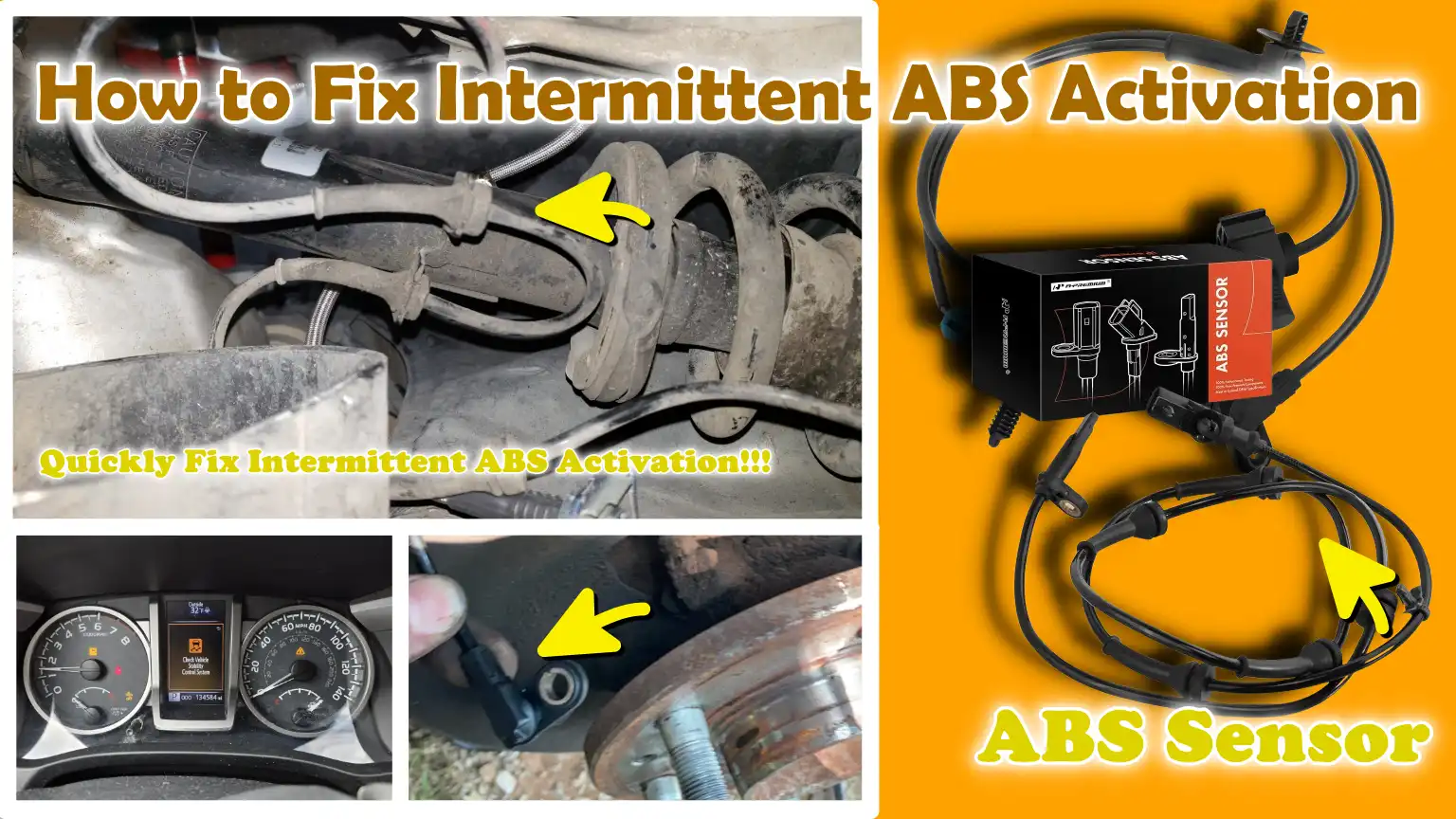
That’s why, in this guide you’ll learn How to Fix Intermittent ABS Activation so that you can know the real causes and fix the issue to restore the smooth and reliable braking again.
Know, Common Symptoms of Unwanted ABS Activation
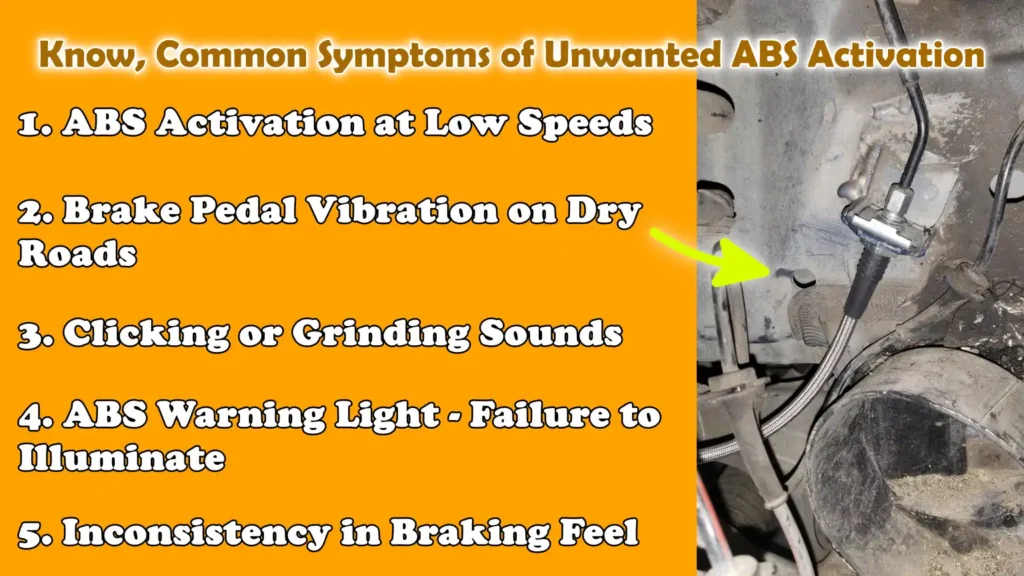
1. ABS Activation at Low Speeds
The most noticeable and troubling symptom manifests when the Anti-lock Braking System (ABS) activates at very low speeds, typically under 10 mph, even when the road is dry and there is no need for emergency braking.
This occurs because the system is receiving erroneous signals from one or more wheel speed sensors, leading it to believe that a wheel is about to lock up.
In reality, the wheel is rotating normally, but the faulty data compels the system to unnecessarily modulate (rapidly increase and decrease) the braking pressure.
This can result in increased stopping distances and the vehicle’s behavior may feel unpredictable when coming to a gradual halt in situations such as heavy traffic or while parking.
In most cases, this issue stems from an accumulation of dirt, corrosion, or a slight misalignment of the sensor, which compromises the sensor’s ability to accurately read the wheel’s speed.
2. Brake Pedal Vibration on Dry Roads
Experiencing vibration or pulsation in the brake pedal while driving on a dry, smooth road is often a definitive sign of unwanted ABS activation.
Under normal circumstances, this ABS-related vibration should only be felt during hard braking on slippery surfaces.
When this occurs without any loss of traction, it indicates that the system is erroneously modulating, that is, rapidly increasing and decreasing, the braking pressure due to incorrect wheel speed readings.
This vibration is generated by the rapid opening and closing of valves located within the ABS hydraulic unit; although these valves are designed to prevent skidding, their activation at inappropriate times disrupts normal braking performance.
Drivers often mistake this sensation for defective brake rotors; However, the key difference is that vibrations associated with the ABS are typically more rapid and tend to manifest specifically in certain low-speed situations.
3. Clicking or Grinding Sounds
Occasionally, when the ABS activates during braking, unusual sounds such as: clicking, buzzing, or a faint grinding noise, may be heard.
These sounds originate from the ABS module as it rapidly engages and disengages its internal components to regulate braking pressure.
While hearing these sounds is normal during emergency situations when the ABS is functioning correctly, hearing them while braking gently on dry roads is an indication of a potential issue.
This noise is a direct result of the system reacting to erroneous input data and is often accompanied by vibrations in the brake pedal.
Ignoring these sounds can complicate the diagnostic process, particularly because they may sound similar to issues associated with the mechanical braking system itself.
4. ABS Warning Light – Failure to Illuminate
In many instances, drivers expect the ABS warning light to illuminate whenever a problem arises; however, intermittent issues do not always trigger a warning.
The system is designed to detect persistent malfunctions; nevertheless, if a sensor or connection fails only sporadically, it may not generate a ‘trouble code’ or trigger the warning light.
This makes diagnosing the problem difficult, as the system appears to be functioning normally despite harboring an internal fault.
When the warning light does illuminate, it typically signals a major and persistent malfunction; however, the absence of an illuminated light does not guarantee that the system is functioning correctly.
For this very reason, tactile symptoms, those felt from within the vehicle, often provide more reliable indications of a problem than the visual cues displayed on the dashboard.
5. Inconsistency in Braking Feel
A change or inconsistency in the braking experience is another critical symptom that should not be overlooked.
The brake pedal may sometimes feel stiff, only to suddenly become soft or overly sensitive, depending on whether the ABS is inadvertently engaging.
This irregularity arises when the system modulates brake pressure based on input received from a faulty sensor, thereby disrupting the normal, steady braking feel that drivers expect.
Over time, this can erode driver confidence and make it difficult to predict how the vehicle will respond in a critical situation.
Consistent and uniform brake performance is paramount for safety and any deviation in the braking experience serves as a clear indication that the system requires inspection and repair.
Know, Main Causes of Intermittent ABS Activation
1. Dirty or Faulty Wheel Speed Sensors
Wheel speed sensors are one of the most common causes of intermittent ABS activation, as they are responsible for continuously measuring how fast each wheel is rotating and transmitting that data to the Anti-lock Braking System (ABS).
These sensors are typically mounted near the wheel hubs, making them susceptible to the accumulation of dust, brake dust, water and road debris.
Over time, dirt or debris accumulating on the sensor tip can weaken or distort the signal it transmits, leading the system to perceive that a wheel is decelerating or locking up, even if this is not actually the case.
Rusting around the mounting area can cause the sensor to shift slightly out of position, disrupting the precise spacing between the sensor and the tone ring, which results in inaccurate readings.
In some instances, the sensor itself may fail internally due to heat, vibration, or aging, causing the signal to cut out intermittently.
As the ABS relies on precise and consistent data, even a minor interruption in the sensor’s signal can trigger the system to activate unnecessarily.
2. Faulty or Rusted Tone Ring – Reluctor Ring
The tone ring, also known as the reluctor ring, works in conjunction with the wheel speed sensor.
It consists of a series of evenly spaced teeth that the sensor reads as the wheel rotates.
This process generates a signal that informs the system about the wheel’s rotational speed.
If the tone ring becomes damaged, loses some of its teeth, or suffers from excessive rust accumulation, the signal becomes corrupted.
Rust is a particularly common issue, as it can spread and alter the physical shape of the ring, thereby hindering the sensor’s ability to read it accurately.
Even a slight discrepancy in size can cause the system to misinterpret wheel speed, particularly at low speeds, where precision is critical.
When the signal becomes intermittent, the ABS may activate unnecessarily, as it perceives that a specific wheel is behaving differently than the others.
3. Wiring-Related Issues
The wiring connecting the wheel speed sensors to the ABS module plays a crucial role in maintaining a stable and accurate signal.
These wires are subject to constant vibration, as well as exposure to heat, moisture and varying road conditions, which increases their susceptibility to degradation over time.
Frayed or partially severed wires can result in intermittent signals; this means the system may receive accurate data one moment, only to receive erroneous data the next.
Loose connectors can disrupt communication between various components, particularly when the vehicle is traveling over rough terrain or poor road surfaces.
Furthermore, corrosion within the wiring harness or connectors can increase electrical resistance, thereby weakening the transmitted signal.
These issues are often overlooked because they are not always visually apparent; nevertheless, they remain a common cause of unpredictable ABS behavior.
4. Wheel Bearing Issues
Wheel bearings facilitate wheel rotation and help maintain proper alignment between the wheel speed sensor and the tone ring.
When a wheel bearing becomes worn or develops excessive play, it can introduce slight movement within the wheel hub assembly.
This movement alters the air gap between the sensor and the tone ring, thereby compromising the accuracy of the readings.
Even a minor misalignment can generate erratic signals that trigger the ABS at inappropriate times.
In many modern vehicles, the wheel speed sensor is integrated directly into the wheel bearing assembly; Therefore, any defect in the bearing can have a direct impact on the sensor’s operation.
Noises emanating from the wheel, vibrations, or looseness are often early indicators that the bearing itself may be the root cause of the problem.
5. Low Brake Fluid Levels or Hydraulic Issues
The ABS system requires adequate hydraulic pressure to function correctly.
When the brake fluid level drops, air can enter the system, thereby affecting how pressure is generated and regulated during braking.
Unlike brake fluid, air present in the brake lines is compressible; this leads to inconsistent or delayed pressure fluctuations, which can confuse the ABS module.
If pressure is not distributed evenly across the wheels, the system may erroneously interpret that a specific wheel is not braking effectively, causing the ABS to engage unnecessarily.
Worn components or leaks within the system can also lead to hydraulic malfunctions, compromising the system’s overall performance and stability.
To ensure consistent and optimal braking performance, it is essential to maintain proper fluid levels and verify that the system has been thoroughly bled to purge any trapped air.
6. Faulty ABS Control Module
The ABS control module functions as a central unit that processes data received from all sensors and determines how the braking system will respond.
If an internal fault develops within this module, it may misinterpret signals or transmit incorrect commands to the braking system.
Electronic malfunctions, potentially caused by heat, aging, or manufacturing defects, as it can lead to intermittent system operation, which is often difficult to diagnose.
Faults within the internal circuitry can disrupt communication between sensors and actuators, potentially causing the system to activate at inappropriate times.
Although such malfunctions are less common than issues related to sensors or wiring, they are typically more severe and often necessitate expert diagnosis or replacement of the module.
As this module governs the entire system, any internal defect can adversely affect the overall performance and reliability of the braking system.
Tools
| Tool Name | Why It Is Needed | How to Use It |
|---|---|---|
| OBD-II Scanner – ABS-Capable | This tool reads the fault codes stored within your Anti-lock Braking System (ABS). Rather than relying on guesswork, it helps you pinpoint the exact wheel or component that is causing the problem. Without it, you might end up replacing the wrong parts and wasting your money. | Plug the scanner into the OBD port located under the dashboard. Turn on the ignition without starting the engine. Select the ABS system scan option and read the codes. Note down the code numbers and clear them only after the repairs are complete. |
| Multimeter | A multimeter checks the electrical signals coming from the sensors and wiring. It helps you verify whether the wheel speed sensor is functioning correctly or if there is an issue with the wiring. | Set the multimeter to resistance or voltage mode. Disconnect the sensor connector. Place the probes on the terminals and compare the readings with those from the other wheels. If the readings are consistent, it indicates that the sensor is functioning properly. |
| Jack and Jack Stands | These tools are required to safely lift the vehicle, allowing you to access the wheels, sensors and wiring. You cannot properly inspect or repair ABS components without lifting the vehicle. | Use a jack to lift the vehicle at the designated lift points. Place jack stands beneath sturdy sections of the vehicle’s frame. Lower the vehicle onto the stands and ensure it is stable before beginning your work. |
| Brake Cleaner | Brake cleaner removes dirt, grease and rust from the sensors and surrounding components. Clean sensors provide accurate readings, which is essential for the proper functioning of the ABS. | Spray the cleaner directly onto the wheel speed sensor and the tone ring. Allow the dirt to drip away. If necessary, gently wipe the parts and allow them to dry completely before reassembling them. |
| Basic Hand Tools | These include simple tools such as sockets, wrenches and screwdrivers. These are required to remove wheels, sensors and other components for inspection and repair. | Use tools of the correct size to loosen bolts and remove parts. Keep the bolts organized so that you can reinstall them correctly. Once the repair is complete, ensure that everything is securely tightened. |
How to Diagnose for Intermittent ABS Activation – Easy Process
1. Scan for ABS Trouble Codes
The first and most critical step in diagnosing intermittent ABS activation issues within the Anti-lock Braking System (ABS) is to scan for stored trouble codes using an OBD-II scanner that supports ABS functionality.
This tool connects to the vehicle’s diagnostic port and communicates directly with the ABS control module, a module that records error data whenever it detects a fault originating from sensors or internal components.
Once connected, the scanner retrieves codes that typically point to a specific wheel speed sensor, wiring issues, or a system malfunction.
These codes are not mere conjectures but recorded events that aid in pinpointing the root cause of the fault.
Interpreting these codes is paramount, as they guide the entire diagnostic process and prevent the unnecessary replacement of parts.
Even if no warning light is currently illuminated, performing a scan can reveal hidden or intermittent faults that the system has detected but has not yet fully flagged on the dashboard.
2. Conduct a Visual Inspection
Following the scan, it is essential to conduct a thorough visual inspection, as many ABS issues stem from external wear and tear or contamination that is visible to the naked eye.
This involves examining all wheel speed sensors and the associated wiring located near each wheel hub.
Accumulations of dust, mud, brake dust, or corrosion can interfere with sensor signals and lead to inaccurate readings.
It is also crucial to check for loose connectors or signs of corrosion at the plugs, as prolonged exposure to moisture can degrade electrical connections over time.
Wires should be inspected for cracks, severed ends, or sections that appear stretched or pinched.
A simple visual inspection can often reveal issues that might not be fully detected through electronic scanning alone; therefore, it serves as a crucial initial step in the diagnostic process.
3. Inspect the Wheel Speed Sensors
Inspecting the wheel speed sensors ensures that they are transmitting accurate signals to the system.
This task is performed using a multimeter, configured to measure either resistance or voltage depending on the specific type of sensor being tested.
Each sensor is tested individually by disconnecting its connector and measuring its electrical output.
If the system is functioning correctly, the readings obtained from all four wheels should be consistent.
If the reading from a particular sensor differs significantly from the others, that sensor may be faulty or obstructed by accumulated debris.
Comparing the readings from the various wheels is essential, as it helps identify minor anomalies that might not immediately trigger a warning light.
As these sensors are responsible for providing real-time wheel speed data, even a slight malfunction can cause the ABS to activate unnecessarily.
4. Inspect the Tone Ring
The tone ring, also known as the reluctor ring, works in conjunction with the wheel speed sensor to generate precise data regarding wheel rotation.
During the inspection, it is critical to check for cracks, broken teeth, or excessive corrosion.
Any damage to the ring disrupts the signal pattern, causing the system to misinterpret the actual wheel speed.
Observing the ring while manually rotating the wheel can reveal irregularities in movement or unintended gaps.
If the ring is bent or deformed, the sensor will receive erratic signals, potentially leading to the inadvertent activation of the ABS.
Because the system relies on precise timing between the sensor and the ring, even a minor defect can result in braking-related issues.
5. Check Wheel Bearings
Wheel bearings play a crucial role in ABS performance, as they keep the wheel stable and maintain its alignment with the sensor system.
When a bearing becomes worn or loose, it creates excessive play within the wheel hub.
This movement alters the gap between the wheel speed sensor and the tone ring, leading to inaccurate readings.
Symptoms of a faulty bearing include unusual noises, vibrations, or slight looseness when the wheel is manually shaken.
In severe cases, the sensors may receive erratic signals, potentially causing the ABS to activate intermittently.
As some vehicles feature integrated sensor-bearing units, a bearing issue can directly compromise sensor accuracy and system stability.
6. Check Brake Fluid and System
In the final stage, the brake fluid level and the overall condition of the hydraulic system are inspected.
The correct brake fluid is crucial for maintaining uniform pressure throughout the entire braking system.
If the fluid level drops, air can enter the system; as air compresses differently than fluid, the braking pressure becomes inconsistent.
This can confuse the ABS module and prevent it from functioning correctly.
The clarity of the fluid should also be checked, as dark or contaminated fluid may indicate internal system wear or moisture accumulation.
If air is present in the system, bleeding the brakes is necessary to restore hydraulic balance.
A stable and well-maintained hydraulic system ensures that the ABS activates only when it is genuinely required, rather than due to pressure fluctuations.
How to Fix Intermittent ABS Activation – Method That Works
1. Clean the Wheel Speed Sensors
Cleaning the wheel speed sensors is often the simplest and most effective method for resolving intermittent ABS activation within the anti-lock braking system.
Brake dust, dirt, or rust particles can accumulate on these sensors, preventing them from accurately reading wheel speed.
To rectify this, you must first safely remove the sensor; disconnect its wiring and carefully detach it from the wheel hub assembly (by removing the mounting bolt), perform this gently and without applying excessive force, as these components are delicate and prone to breakage.
Once removed, the sensor tip should be cleaned using an appropriate brake cleaner to remove all debris without damaging the electronic surface.
After cleaning, it is essential to allow the sensor to dry completely before reinstalling it.
During reinstallation, ensure that the sensor is correctly seated and that the proper clearance is maintained between the sensor and the tone ring, as improper alignment can cause the issue to recur immediately.
2. Repair or Replace Damaged Wiring
Damaged wiring is another common cause of erroneous ABS activation, as it disrupts the flow of signals between the wheel sensors and the control module.
Minor issues such as: slight abrasions, exposed wires, or compromised insulation, as it can often be repaired using appropriate electrical tape or heat-shrink tubing; this restores the insulation and ensures the uninterrupted transmission of signals.
However, if the wiring is severely damaged, corroded, or subject to recurring faults, replacing the specific damaged section of the wiring harness is a more reliable solution.
This ensures stable electrical communication and prevents future signal loss issues, thereby safeguarding the integrity of the braking system.
After repairs, it is crucial to properly secure the wiring to prevent it from rubbing against the moving components of the suspension; otherwise, the issue may recur.
3. Replace a Faulty Wheel Speed Sensor
If cleaning and inspecting the wiring does not resolve the issue, or if diagnostic testing reveals irregularities or errors in the readings, the wheel speed sensor should be replaced.
These sensors are critical because they continuously transmit real-time wheel speed data to the ABS module; consequently, any malfunction in them can directly impact the vehicle’s braking performance.
To replace it, the old sensor must be carefully removed, including disconnecting its electrical plug, and a new sensor installed in its place.
It is essential to ensure that the new sensor is correctly positioned and securely fastened to maintain the proper clearance between the sensor and the tone ring.
Once installed, the system should be tested to verify that the readings are stable and that the issue of false ABS activation has been resolved.
4. Repair or Replace the Tone Ring
The tone ring, which works in conjunction with the wheel speed sensor, must be in pristine condition to generate accurate signals.
If the ring’s surface exhibits minor surface rust, carefully cleaning it can often restore its proper functionality, as smooth and uniformly spaced teeth are essential for consistent readings.
However, if the ring is cracked, bent, or has missing teeth, it must be replaced; such defects generate erratic signals that the system misinterprets as wheel slippage.
Replacing a tone ring typically involves removing components of the wheel hub or axle, depending on the vehicle’s design, after which the new ring is installed in the correct position.
Precise alignment is critical, as even a slight misalignment can lead to issues with ABS activation.
5. Replace Wheel Bearings – If Necessary
Wheel bearings should be replaced when they exhibit signs of excessive looseness, noise, or instability, as these conditions directly impact sensor accuracy.
Worn bearings allow the wheel hub to shift slightly, altering the gap between the sensor and the tone ring, which leads to inaccurate readings.
In many modern vehicles, the wheel speed sensor is integrated into the bearing assembly; this means that a fault in the bearing can directly compromise ABS performance.
If significant looseness or noise is detected during inspection, replacing the bearing is essential.
Although this procedure may be more expensive and labor-intensive than other repairs, replacing a faulty bearing ensures long-term stability and prevents the recurrence of ABS issues caused by mechanical looseness.
6. Address Hydraulic or Fluid-Related Issues
Hydraulic issues within the braking system can also cause the ABS to behave erratically, as the system relies on consistent fluid pressure to function correctly.
If air enters the brake lines, it can compress unevenly, creating irregularities in braking force that may confuse the ABS module.
To rectify this, it is essential to properly bleed the brake system to expel any trapped air and restore a smooth flow of fluid.
It is also crucial to refill the system exclusively with the specific type of brake fluid recommended by the manufacturer, as using the wrong fluid can adversely affect both performance and safety.
A well-maintained hydraulic system ensures that pressure is distributed evenly, thereby guaranteeing that the ABS activates only when it is genuinely required.
7. Replace the ABS Control Module – Last Resort
The ABS control module should be replaced only after all other components have been thoroughly inspected and confirmed to be functioning correctly, as it serves as the central electronic unit that governs the entire system.
This module processes signals received from the sensors and determines when to modulate the braking pressure.
If it develops an internal electronic fault or a communication glitch, the ABS may behave unpredictably, even if all other components are functioning perfectly.
Replacing it requires installing a new or reprogrammed module; furthermore, in most vehicles, the module requires software coding to synchronize with the car’s specific system configuration.
Due to this complexity, replacing the module is considered a last resort, a step taken only when it has been conclusively proven that the sensors, wiring, mechanical components and hydraulic system are all functioning properly.
Estimated, Cost Breakdown of Intermittent ABS Activation
1. Sensor Replacement – $100 to $300
Replacing a wheel speed sensor is one of the most common repairs for intermittent issues within the Anti-lock Braking System (ABS); in the United States, the cost typically ranges from $100 to $300, depending on the vehicle’s make and model.
If this work is performed at a repair shop, this price covers both the cost of the part and basic labor.
In some vehicles, the sensor is easily accessible, keeping costs low, whereas in others, suspension or brake components must be partially disassembled, thereby increasing the labor time required.
As wheel speed sensors are small electronic components, they are relatively inexpensive; however, to avoid unnecessary expenses, it is crucial to perform an accurate diagnosis before replacing them.
2. Wheel Bearings – $200 to $500
In the U.S., the cost of replacing a wheel bearing typically falls between $200 and $500, depending on whether it is a standard bearing or an integrated hub assembly.
A significant portion of this cost is attributed to labor, as this repair often requires the removal of the wheel, brake components and, in some cases, the axle.
In modern vehicles, the wheel speed sensor is often integrated directly into the bearing assembly itself; consequently, a faulty bearing can directly impact ABS performance.
This makes the replacement process more expensive, but simultaneously, it becomes even more critical for restoring proper braking stability.
If both the front and rear bearings require replacement at the same time, the total cost may increase.
3. ABS Module – $500 to $1,500
Replacing the ABS control module is one of the most expensive repairs; depending on the vehicle, the cost can range from $500 to $1,500 or even higher.
This module functions as a central electronic unit that governs the entire ABS system; consequently, once installed, it often requires specific programming or coding tailored to that particular vehicle.
For this reason, both the cost of the part itself and the specialized labor required for its installation contribute to its high price tag.
In many instances, technicians recommend replacing the module only after they have confirmed that all sensors, wiring and hydraulic components are functioning correctly.
As this is a critical safety-related component, proper installation and programming are essential to ensure its correct operation.
4. DIY Repair vs Professional Technician
The choice between performing a DIY repair and seeking professional service depends on your skill level, the tools you have available and the accuracy of your diagnosis.
DIY repairs can significantly reduce costs, particularly for simple tasks such as cleaning sensors or replacing easily accessible parts, but they require the right tools and a solid understanding of the system.
Professional technicians, while potentially more expensive, utilize modern diagnostic equipment to pinpoint the root cause of the problem and ensure that the repair is performed safely and correctly.
Many ABS-related issues require electrical testing and system scanning, tasks that can be difficult to perform without specialized tools.
In cases where the problems are complex or affect multiple components, professional repair offers greater reliability and helps prevent errors such as recurring malfunctions or the incorrect replacement of parts.
Know, About the Common Mistakes While Fixing Intermittent ABS Activation to Avoid Them
As well as, there’s study that clearly shows that wheel speed sensors are the foundation of ABS decision-making, so when these sensors actually becomes dirty or misaligned, then the system literally loses their accuracy, which directly explains why intermittent ABS activation which often happens at the low speeds or during the normal road conditions.[¹]
1. Ignoring Early Symptoms
One of the most serious mistakes drivers make regarding intermittent issues with the Anti-lock Braking System (ABS) is ignoring early warning signs such as: the ABS activating at low speeds, vibrations in the brake pedal, or the presence of unusual noises.
These symptoms often manifest before a complete system failure occurs and typically indicate that a sensor, wiring connection, or mechanical component has already begun to malfunction.
If these symptoms are ignored, minor issues can gradually escalate into major problems, potentially compromising braking performance, increasing stopping distances, or causing the ABS to behave unpredictably.
Early symptoms serve as the system’s way of signaling that something is not functioning or responding correctly; rather than waiting for a complete system failure, it is always safer and more cost-effective to address these issues immediately.
2. Replacing Parts Without Proper Diagnosis
Another common mistake involves replacing parts based solely on guesswork rather than conducting proper diagnostic testing.
Many individuals replace wheel speed sensors, brake components, or even the entire ABS module without first identifying the root cause of the problem.
The result is often unnecessary financial expenditure, while the underlying issue remains unresolved.
Frequent ABS activation can stem from a variety of causes such as: faulty wiring, a defective “tone ring,” or a malfunction within the hydraulic system.
Therefore, simply replacing a single component without a comprehensive understanding of the entire system can lead to recurring problems.
Proper diagnostic testing ensures that only the faulty component is repaired or replaced, thereby saving both time and money, and restores the system to proper working order.
3. Failing to Inspect the Wiring First
Despite being one of the most common causes of ABS-related issues, wiring problems are frequently overlooked.
The wires connecting the wheel speed sensors to the control module are exposed to heat, vibration, moisture and road debris, which can gradually degrade their insulation or connectors.
If these wires are not inspected during the initial diagnostic phase, mechanics may mistakenly replace sensors or other components, while the root cause of the problem remains unaddressed.
Even minor wear and tear in the wiring, or a slight trace of corrosion, can disrupt signals and trigger the ABS system unnecessarily.
Inspecting the wiring first helps eliminate a major potential source of error before resorting to more expensive or complex repair procedures.
4. Failing to Scan for ABS Codes
Failing to perform a diagnostic scan is another serious error that can lead to misdiagnosis.
The ABS systems in modern vehicles store error codes that help pinpoint exactly which specific component is malfunctioning or transmitting incorrect signals.
Without the appropriate scanning tool, it becomes extremely difficult to determine whether the issue stems from a specific wheel sensor, a wiring circuit, or an internal module failure.
A diagnostic scan guides the technician in the right direction and minimizes the need for guesswork, making the entire repair process more efficient and accurate.
Neglecting this step often necessitates a “trial-and-error” approach to repairs, which increases costs and delays the definitive resolution of the problem.
Read More:
- How to Clean ABS Wheel Speed Sensor
- How to Diagnose ABS Sensor Wiring Issues
- How to Test Electronic Brake Module (EBCM)
- How to Fix Parking Brake Dragging
- How to Adjust Parking Brake Cable
- How to Check Parking Brake Cable Tension
- How to Fix Brakes Dragging While Driving
- How to Diagnose Brake Dragging Issue
- How to Fix Internal Master Cylinder Leak
- How to Test Brake Master Cylinder Pressure
- How to Replace Brake Booster
- How to Fix Brake Booster Vacuum Leak
- How to Test Brake Booster Functionality
- How to Lubricate Brake Caliper Pins Properly
- How to Rebuild Brake Caliper at Home
- How to Check Brake Caliper Piston Movement
- How to Resurface Brake Rotors at Home
- How to Fix Brake Rotor Runout
So, Understand When to Contact a Mechanic
1. Lack of Diagnostic Tools
If you do not possess the appropriate diagnostic tools, pinpointing the exact cause of intermittent ABS activation issues within the Anti-lock Braking System (ABS) becomes extremely difficult.
Modern braking systems rely heavily on electronic data transmitted by wheel speed sensors and the ABS control unit; without a scanner capable of interpreting these signals, most problems can only be hypothesized, not confirmed.
While a general visual inspection can often be performed, it is insufficient to detect hidden electrical faults or intermittent signal dropouts.
In such cases, consulting a qualified mechanic ensures that the correct diagnostic equipment is utilized to accurately identify the problem, thereby preventing the unnecessary replacement of parts and minimizing the risk of a serious malfunction going unnoticed.
2. Suspected ABS Module Malfunction
When a malfunction in the ABS control module is suspected, professional service becomes essential, as this component is highly complex and cannot be easily diagnosed without specialized equipment.
This module processes all sensor data and regulates the modulation of braking pressure; consequently, any internal fault within it can lead to unpredictable braking behavior, even if all other components are functioning correctly.
Mechanics utilize advanced scan tools and manufacturer-level software to assess the module’s performance, check for communication errors and determine whether reprogramming or replacement is required.
As modules often require coding after installation, attempting to repair them without the necessary technical expertise can lead to system malfunctions or even total ABS failure; therefore, seeking a professional diagnosis remains the safest course of action.
3. Persistence of the Problem Even After Repairs
If the ABS issue persists even after cleaning the sensors, checking the wiring, or replacing components suspected of being faulty, it is a clear indication that the root cause of the problem has not been correctly identified.
Persistent symptoms such as: frequent activation at low speeds, brake vibration, or inconsistent braking feel, typically point to a serious malfunction within the complex interplay of multiple system components.
In such situations, repeated “trial-and-error” repairs can prove to be both costly and ineffective.
A professional mechanic can conduct a comprehensive system-level diagnosis, including live data monitoring and pressure testing, to uncover intricate issues that might otherwise go unnoticed during a standard visual inspection.
Seeking expert assistance at this stage ensures that the root cause of the problem is properly addressed and helps prevent further damage to the braking system.
How to Prevent Intermittent ABS Activation In Future
1. Regular Brake Inspections
Regular brake inspection is the most effective method for preventing intermittent issues within the Anti-lock Braking System (ABS) before they even begin.
During routine checks, technicians can identify early signs of wear such as: weak signals from wheel speed sensors, loose wiring, or uneven wear on brake components, which could otherwise trigger the ABS unnecessarily later on.
These inspections also help detect minor mechanical anomalies such as: corrosion or slight alignment issues, before they escalate into major problems.
By having your braking system inspected at scheduled intervals, you minimize the risk of sudden brake failure and ensure consistent, reliable braking performance over time.
2. Keep Sensors Clean
Wheel speed sensors play a crucial role in monitoring wheel rotation and keeping them clean is essential for accurate data readings.
Over time, brake dust, mud and road debris can accumulate on these sensors, hindering their ability to transmit accurate signals to the ABS system.
When sensor surfaces become dirty or partially obscured, the system may misinterpret wheel speed data and activate the ABS even when it is not required.
Regular cleaning using safe brake-cleaning products maintains signal accuracy and ensures that the system responds only when wheel traction has genuinely been compromised.
Clean sensors also reduce the risk of false warnings and enhance the overall reliability of the braking system.
3. Avoid Repeated Driving Through Deep Debris or Water
Repeated exposure to deep water, mud, or heavy road debris can significantly accelerate wear and the accumulation of grime on braking system components.
Water and debris can infiltrate sensitive parts located near the wheel hubs, potentially damaging sensors, wiring connections and tone rings.
Such exposure can lead to corrosion, electrical connection interruptions, or physical damage, thereby hindering the accurate detection of wheel speed.
When these signals become erratic, the ABS may trigger unnecessarily or function in an unpredictable manner.
While occasional exposure to such elements may be unavoidable, you can safeguard the system and extend the lifespan of critical components by avoiding deep or prolonged exposure to challenging road conditions.
4. Regular Fluid Maintenance
Maintaining the proper condition of the brake fluid is paramount to ensuring consistent hydraulic performance and the reliable operation of the ABS.
Over time, brake fluid naturally absorbs moisture, which can diminish its effectiveness and lead to uneven pressure distribution within the braking system.
If the fluid becomes contaminated or its level drops too low, air can enter the system and cause erratic braking responses.
This irregularity can confuse the ABS module and trigger the system to activate erratically.
Regular fluid checks and timely replacements help ensure a smooth flow of pressure, precise system response and consistent braking performance across all driving conditions.
Conclusion – How to Fix Intermittent ABS Activation
You need to understand that most of the ABS issues does not appears in sudden way, as even small kind of errors can change how it reacts on the road.
The Anti-lock Braking System (ABS) relies on precise and consistent inputs from wheel speed sensors, tone rings, wiring, hydraulic pressure components and the control module.
When even a single one of these components becomes unstable or transmits erroneous data, the system may react inappropriately, often during routine, low-speed braking.
This manifests as symptoms such as vibration in the brake pedal, sudden and unexpected ABS engagement, or irregularities in braking performance, even on dry roads where the wheels are not slipping.
Crucially, most of these issues stem not from sudden, catastrophic failures, but from minor anomalies that gradually worsen over time.
Accumulated dust on sensors, slight corrosion in connectors, worn wheel bearings, or weak electrical signals, all of these can gradually degrade the system’s performance.
The good news is that many of these problems can be quickly identified through proper inspection, simple cleaning procedures and basic diagnostic testing, before they lead to costly repairs or create unsafe driving conditions.
Adopting a systematic approach invariably yields the best results.
Starting with a diagnostic scan, followed by a visual inspection and sensor testing, helps pinpoint the true root cause of the problem rather than relying solely on guesswork.
In many instances, the issue lies not in a failure of the entire system, but in a single minor component that is operating outside its specified parameters or misinterpreting wheel speed data.
Also, you can ask all the related questions below in this guide.
Frequently Asked Questions
FAQ 1: What does intermittent ABS activation mean?
Answer: Intermittent ABS activation means that the Anti-lock Braking System (ABS) is engaging at times when it is not actually needed. Typically, this system should only activate when you are braking hard or when a wheel is slipping on a slippery surface. However, when there is a fault in the sensors, wiring, or other components, the system may perceive that a wheel is locking up, even if the road is dry. The result is a pulsating or vibrating sensation in the brake pedal and an inconsistent braking experience. This is generally an indication that the system is receiving erroneous data, rather than a sign of an actual mechanical failure within the brakes themselves.
FAQ 2: Is it safe to drive with intermittent ABS activation?
Answer: Driving with intermittent ABS activation is not immediately dangerous in every instance, but ignoring it is unsafe. The primary braking system will continue to function; however, the ABS may intervene at inappropriate times, potentially increasing stopping distances or reducing your control over the vehicle during sudden braking. This situation becomes particularly hazardous when sudden braking is required, as consistent and reliable brake performance is critical in such moments. Over time, this underlying issue may worsen, causing the ABS to activate more frequently and more aggressively. It is advisable to have the system inspected as soon as possible.
FAQ 3: Why does the ABS suddenly activate at low speeds?
Answer: The cause of sudden ABS activation at low speeds is typically an erroneous reading from the wheel speed sensors. These sensors may be dirty, misaligned, or defective, causing them to transmit incorrect signals to the system. In some cases, corroded tone rings, worn wheel bearings, or faulty wiring can also interfere with the accuracy of these signals. When the system does not receive consistent data, it may mistakenly perceive that one wheel is decelerating faster than the others, causing it to engage the ABS unnecessarily. This is why this issue frequently occurs while parking or driving slowly in traffic.
FAQ 4: Can dirty wheel speed sensors cause ABS-related problems?
Answer: Yes, a dirty wheel speed sensor is one of the most common causes of ABS-related issues. The sensor requires a clean surface to accurately read wheel movement. When dirt, brake dust, or rust accumulates, it weakens or distorts the signals sent to the system. This can cause the ABS to engage unnecessarily or trigger warning lights, even if the brakes are functioning correctly. In many cases, carefully cleaning the sensor with an appropriate cleaner resolves the issue, eliminating the need to replace any parts.
FAQ 5: Why does my brake pedal vibrate when the ABS engages?
Answer: When the ABS engages, the brake pedal vibrates because the system is rapidly adjusting the brake pressure to prevent the wheels from locking up. It releases and reapplies pressure multiple times per second, creating a pulsating sensation in the pedal. This is a normal occurrence during emergency braking when the ABS is functioning properly. However, if this vibration occurs during normal driving or light braking, it typically indicates that the system is engaging erroneously due to faulty sensor data or another internal issue within the braking system.
FAQ 6: Can low brake fluid levels cause ABS problems?
Answer: Low brake fluid levels can indeed lead to ABS issues, as this affects the hydraulic pressure within the braking system. When fluid levels drop or air enters the system, braking pressure becomes uneven and unstable. This can confuse the ABS module, causing it to activate erratically. Contaminated or old brake fluid can also compromise the system’s functionality. Maintaining the fluid at the correct level and replacing it at recommended intervals helps ensure consistent and reliable braking performance.
FAQ 7: How do I fix an intermittently activating ABS?
Answer: Fixing an intermittently activating ABS depends on identifying the root cause of the problem. In many cases, the first step is to scan the system for error codes using a diagnostic tool. Subsequently, the sensors, wiring and tone rings are visually inspected to detect any signs of wear or accumulated dirt. Cleaning the wheel speed sensors often resolves minor issues. If the problem persists, it may be necessary to test the sensors with a multimeter, inspect the wheel bearings, or examine the hydraulic system. In rare instances, a faulty ABS control module may need to be replaced.
References:
[1] Performance Review of Three Car Integrated ABS Types: Development of a Tire Independent Wheel Speed Control
https://www.mdpi.com/1996-1073/13/23/6183
Hello Folks, Dean Shali here to help you out to solve the problems with your lovely vehicle, as i have lots of experience and knowledge about automotive industry as i woks directly with the customers and repair vehicles and i love to help the people to keep their cars safe and running smoothly.