Written By: Dean Shali
Fact Checked By: Sabré Cook
Reviewed By: Tamara Warren
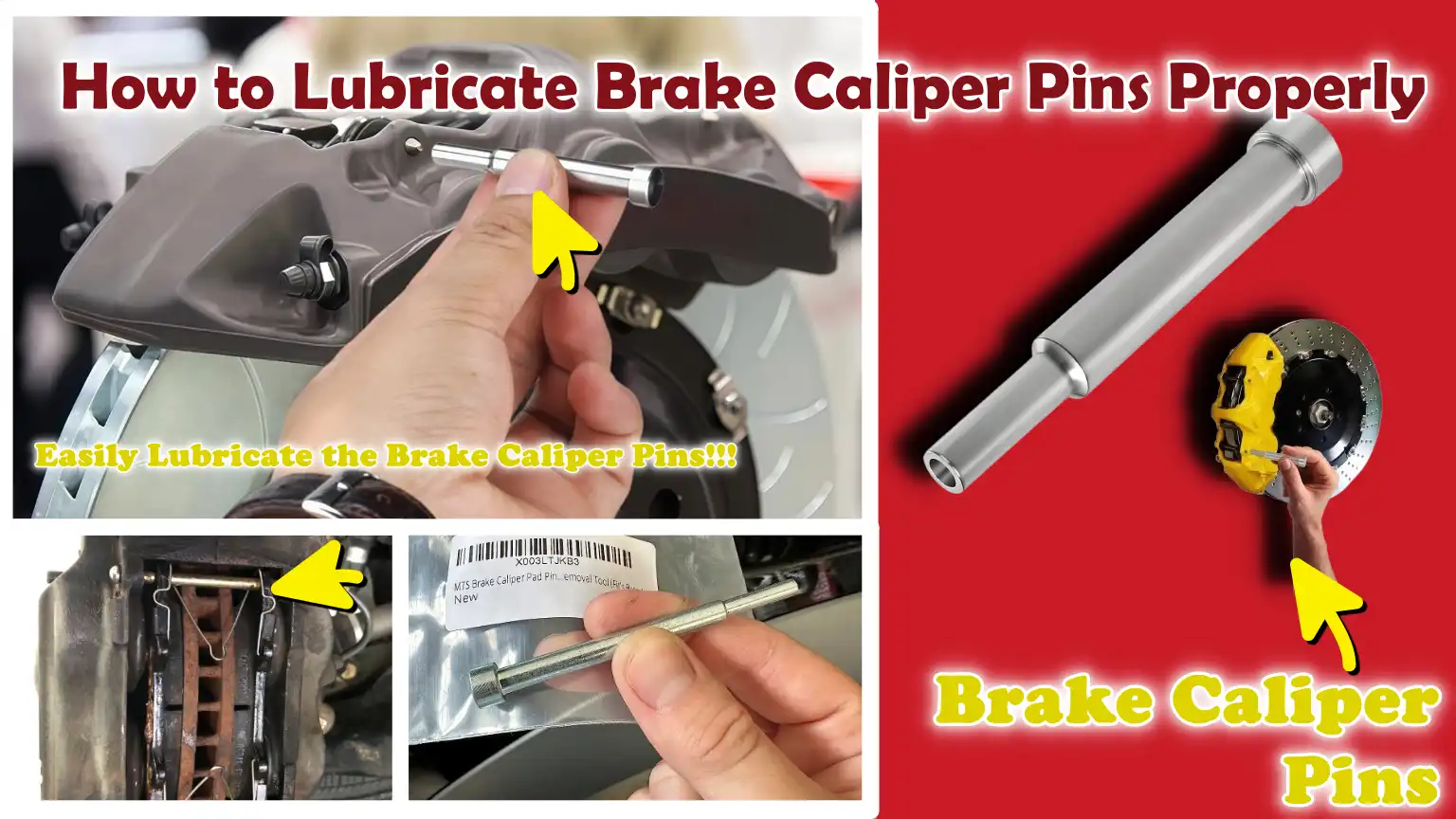
Basically, the brake caliper pins are also known as GUIDE PINS or SLIDE PINS, so basically these are the small but really essential parts that literally allows the brake caliper to move in smooth way every time you press that damn brake pedal.
And, in most of the vehicles there’s floating calipers, so these are the pins that helps to distribute the braking force in even way all across the both of the brake pads, which is really critical for stable and controlled stopping.
But, the thing is: over the time it gets through the heat generated from braking, moisture from the road and dirt buildup that can literally break down the grease on these pins or that cause them to dry out completely.
So, whenever that happens, then the caliper just can’t slide properly that’s how it leads to the uneven brake pad wear, brake drag, reduced fuel efficiency and even overheating of the rotor and wheel.
Now, in this guide you’ll learn How to Lubricate Brake Caliper Pins Properly so that you can restore smooth movement and improve the braking performance in extraordinary ratio.
Know, Why Lubricating Brake Caliper Pins Is Essential?
Brake caliper pins are designed to allow the caliper to slide freely back and forth, ensuring that when the brakes are applied, both brake pads exert equal pressure on the rotor.
In most vehicles, particularly those equipped with floating calipers, this sliding movement is crucial for balanced braking and for the brakes to disengage properly once pressure is released from the brake pedal.
Over time, the heat generated during braking, combined with exposure to water, road salt and dust, can degrade the grease applied to these pins or cause them to rust.
When lubrication is lost, the pins can become stiff or seize completely, directly impacting the overall functionality of the braking system.
Therefore, proper lubrication is not merely a routine maintenance task; it is a critical requirement for ensuring safety, performance and the longevity of brake components.
1. Prevents Uneven Brake Pad Wear
When caliper pins become dry or seized, the caliper is unable to move freely to apply equal pressure to both brake pads.
Consequently, one pad, typically either the inner or the outer one, depending on which pin has seized, exerts greater force on the rotor, while the other pad does less work.
This uneven pressure causes one brake pad to wear down significantly faster than the other, even if both were installed at the same time.
Over time, this can diminish braking efficiency and necessitate more frequent pad replacements.
In some instances, a worn pad may become dangerously thin, while the other still appears almost new; this discrepancy can confuse drivers and lead to misdiagnosis.
Proper lubrication facilitates the smooth movement of the pins, ensuring that equal pressure is applied to both pads and that they wear down at a uniform rate.
2. Ensures Smooth Caliper Movement
The primary function of caliper pins is to guide the caliper, allowing it to slide freely during braking and return to its resting position when the brake pedal is released.
When these pins are properly lubricated, the caliper can move without obstruction, thereby maintaining consistent contact between the pads and the rotor.
If the pins are dry, dirty, or corroded, this smooth movement is compromised.
The caliper may hesitate, bind, or fail to retract fully, issues that can negatively impact brake feel and responsiveness.
Drivers may experience stiffness, delayed braking response, or an uneven sensation in the brake pedal.
Keeping the pins clean and well-lubricated ensures that the caliper functions exactly as designed, delivering smooth and reliable braking every time.
3. Reduces Brake Drag and Overheating
Brake drag occurs when the brake pads remain in light contact with the rotor, even when the brake pedal is not being depressed.
This often happens when the caliper pins become seized, preventing the caliper from fully releasing.
The constant contact between the pads and the rotor generates friction, which produces heat and can cause the temperature of the braking system to rise rapidly.
Over time, this excessive heat can lead to “brake fade” (a reduction in braking effectiveness), diminish stopping power and even damage the rotor by causing it to warp.
This can also produce a sharp, burning odor and lead to reduced fuel efficiency, as the vehicle is constantly working against the drag imposed by the brakes.
Proper lubrication of the caliper pins allows the caliper to release fully, thereby eliminating unnecessary friction and keeping temperatures under control.
4. Enhances Braking Performance and Safety
To maintain control over the vehicle, particularly during sudden stops or emergency situations, a balanced braking force is essential.
When caliper pins are properly lubricated, both brake pads exert equal pressure on the rotor, resulting in stable and uniform braking.
If any part of the caliper fails to move correctly due to dry or seized pins, the braking force becomes uneven, potentially causing the vehicle to pull to one side.
This imbalance can erode driver confidence and increase stopping distances, specially at high speeds.
By keeping caliper pins clean and well-lubricated, you help maintain consistent braking performance, improve vehicle stability and enhance overall safety for both the driver and passengers.
Know About The Signs That Your Caliper Pins Need Lubrication
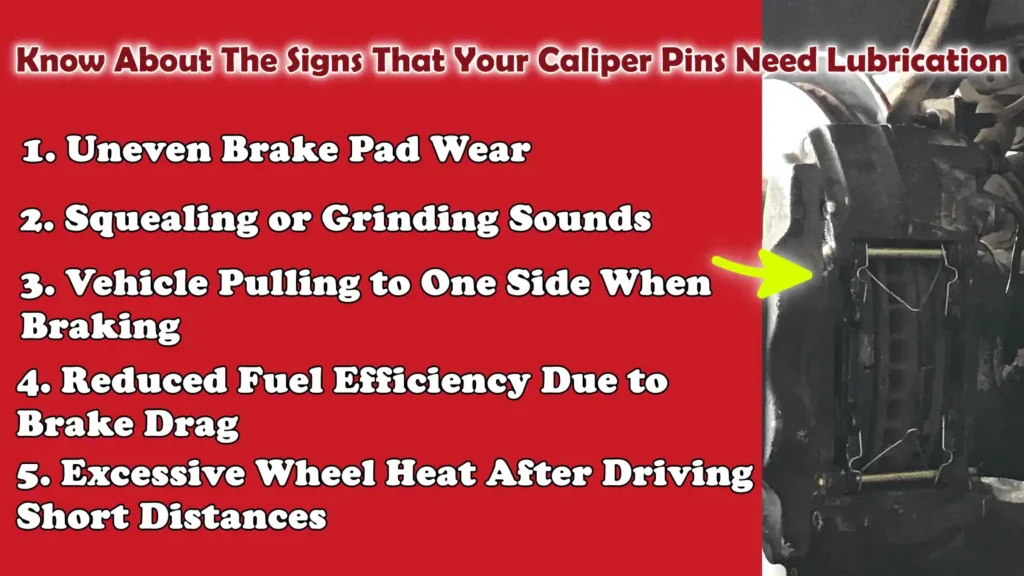
Brake caliper pins play a direct role in how smoothly and evenly your brakes operate.
Therefore, when they begin to dry out or seize up, warning signs typically manifest in the way your vehicle feels, sounds and performs.
These symptoms often emerge gradually, which is why many drivers overlook them or mistake them for other brake-related issues.
In reality, recognizing these early signs allows you to address a minor lubrication issue before it causes costly damage to the brake pads, rotors, or the caliper itself.
Understanding what to look out for will help you take timely action and ensure that your braking system continues to function safely and efficiently.
1. Uneven Brake Pad Wear
The most common and obvious sign of caliper pins with poor lubrication is uneven brake pad wear.
When the pins cannot slide freely, the caliper is unable to apply equal pressure to both pads.
Consequently, one pad presses against the rotor with greater force, while the other does less work.
Over time, the overworked pad wears down much faster, sometimes becoming so thin that very little friction material remains, while the other pad still retains a significant amount of material.
This uneven wear compromises braking efficiency and may force you to replace components prematurely.
If left unaddressed, this uneven contact can also damage the surface of the rotor.
2. Squealing or Grinding Sounds
Dry or seized caliper pins can also produce strange noises when the brakes are applied.
Squealing sounds often occur when brake pads fail to make uniform contact with the rotor, resulting in vibration and noise.
A grinding sound is a more serious symptom; it can occur when, due to uneven pressure, a specific pad wears down completely, causing metal components to begin scraping against the rotor.
These sounds often serve as early warning signs that something within the braking system is not functioning or moving correctly.
Proper lubrication restores smooth component movement and can eliminate these noises by ensuring uniform contact between parts.
3. Vehicle Pulling to One Side When Braking
If your vehicle pulls to one side while braking, it may be a strong indication that one part of the braking system is exerting more force than the other.
This often happens when the caliper pins on one side become seized, preventing that caliper from properly applying or releasing pressure.
Consequently, one wheel slows down more than the other, causing the vehicle to veer off course during braking.
This not only diminishes driving comfort but also compromises vehicle control and can be dangerous, particularly during sudden stops or on wet roads.
4. Reduced Fuel Efficiency Due to Brake Drag
When caliper pins are not properly lubricated, the caliper may fail to fully retract after braking, leaving the pads in light contact with the rotor.
This creates constant friction, known as “brake drag”, forcing the engine to work harder to propel the vehicle forward.
Over time, this additional resistance leads to increased fuel consumption.
Drivers may notice that their vehicle feels somewhat sluggish or that they need to apply more throttle to maintain their speed.
Resolving issues related to lubrication eliminates these unnecessary obstructions, allowing fuel efficiency to return to its normal levels.
5. Excessive Wheel Heat After Driving Short Distances
Excessive heat radiating from one or more wheels after driving for a short distance is another serious warning sign.
When caliper pins become jammed, the brake pads may remain pressed against the rotor, generating constant friction and heat.
This heat builds up rapidly and the wheel may feel extremely hot to the touch; occasionally, a burning odor may also be perceptible.
Excessive heat not only compromises braking performance but can also damage surrounding components such as: brake fluid, seals and bearings.
Proper lubrication ensures that the caliper releases fully, thereby preventing heat accumulation and allowing the braking system to operate within safe temperature limits.
Tools
| Tool / Material | Why It Is Needed | How to Use It Properly |
|---|---|---|
| Jack and Jack Stands | These are used to safely lift and support a vehicle, allowing you to access the wheels and brake components. Jack stands are particularly crucial because they stabilize the vehicle and prevent accidents. | Use a jack to lift the vehicle at the designated lift points, then place the jack stands under the frame or at the specified support locations. Gently lower the vehicle onto the stands before beginning any work. Never work underneath a vehicle that is supported solely by a jack. |
| Lug Wrench | This tool is required to loosen and remove lug nuts, enabling you to detach the wheel and access the brake caliper. | Loosen the lug nuts slightly before lifting the vehicle. Once the vehicle is raised, remove the nuts completely and take off the wheel. When reinstalling, tighten them evenly. |
| Socket Set | A socket set is needed to remove caliper bolts and guide pins, allowing you to access the caliper pins to clean and lubricate them. | Select the correct socket size that fits the bolt securely. Turn the bolts carefully to avoid damaging them. Keep the bolts organized so they can be reinstalled in their original positions. |
| Torque Wrench | This ensures that bolts are tightened to the exact specified torque, which is essential for safety and proper brake function. | After reassembly, use a torque wrench to tighten the caliper bolts and lug nuts to the torque specifications recommended by the manufacturer. Do not guess or overtighten them. |
| Brake Cleaner Spray | This removes old grease, dirt and brake dust from the caliper pins and surrounding components, providing a clean surface for applying fresh lubricant. | Spray directly onto the pins and wipe away the old grease with a cloth. Allow them to dry completely before applying new grease. Avoid prolonged spraying on rubber components. |
| Wire Brush or Clean Rag | This product is used to remove stubborn dirt, rust and old grease, contaminants that a standard brake cleaner alone cannot completely eliminate. | If rust or buildup is present, gently scrub the caliper pins with a wire brush. Use a clean cloth to thoroughly clean and dry all components before applying lubricant. |
| High-Temperature Silicone Brake Grease | This is the primary lubricant that allows the caliper pins to slide freely, even under the extreme heat conditions generated during braking. | Apply a thin, uniform layer across the entire surface of the caliper pins. Do not apply an excessive amount, as excess grease can attract dust or impede the movement of the pins. |
| Rubber-Safe Lubricant | This protects the rubber boots covering the caliper pins and maintains their flexibility, thereby preventing them from cracking or tearing. | If necessary, apply a light coating to the inner surfaces of the rubber boots as well. After reinstalling the pins, ensure that the boots are seated correctly to prevent dust and moisture from entering. |
Know, About The Safety Precautions Before You Begin
When working on your brake system, prioritizing safety is paramount, as even a minor error can lead to serious injury or damage.
Before you begin lubricating the caliper pins, it is essential to properly prepare both your vehicle and your workspace.
Brakes operate under conditions of extreme heat and pressure; therefore, if the vehicle is not properly supported, inherent risks always remain.
By observing a few simple yet critical precautions, you can prevent accidents, ensure the vehicle remains stable and guarantee that you complete the task safely and with confidence.
1. Park on Level Ground
Before commencing any work, always park your vehicle on a level and solid surface.
A level surface keeps the car stable and prevents it from rolling or shifting while you are lifting it or working on the brakes.
If the ground is uneven or sloped, the vehicle’s weight could suddenly shift to one side, particularly when a wheel has been removed.
This can upset the vehicle’s balance and significantly increase the risk of it slipping off its jack or stands.
A level surface ensures proper balance and provides you with greater control throughout the entire process.
2. Use Wheel Chocks
Wheel chocks are used to secure the wheels that remain in contact with the ground, thereby preventing the vehicle from rolling forward or backward.
Even if the car has been left in gear or the parking brake has been engaged, there is still a possibility of slight movement, specially when one section of the vehicle is being lifted.
Placing wheel chocks firmly against the tires provides an additional layer of safety, effectively locking the vehicle in place.
This becomes even more critical when you are working on the front or rear brakes; if the other wheels are not properly secured, lifting one section of the vehicle can upset its balance.
3. Allow the Brakes to Cool Down Completely
During normal driving, specially after frequent stops or long journeys, brakes generate a significant amount of heat.
The brake rotors, calipers and other surrounding components can become extremely hot, posing a risk of burns if touched before they have cooled down.
Before beginning any work, allow ample time for the brakes to cool down completely.
This not only protects you from injury but also facilitates the safe handling of parts and the proper application of grease, as high temperatures can negatively impact the performance of lubricants.
4. Always Support the Car with Jack Stands – Not Just the Jack
Hydraulic jacks are designed to lift vehicles, but they are not intended to hold a vehicle aloft for extended periods.
Relying solely on a jack can be dangerous, as its hydraulic pressure may bleed off or it could suddenly slip, causing the vehicle to crash down.
Jack stands are specifically engineered to safely support the weight of a vehicle and keep it stable while you work underneath or around it.
After lifting the vehicle with a jack, you must always place jack stands beneath sturdy support points and slowly lower the vehicle onto them.
This step is crucial for your safety and should never be overlooked, no matter how minor the task at hand.
How to Lubricate Brake Caliper Pins Properly – Easy Way
Properly lubricating brake caliper pins is a precise yet straightforward process that directly impacts your vehicle’s braking performance.
Each step plays a crucial role in ensuring that the caliper can move freely, apply uniform pressure and release correctly after braking.
Skipping steps or rushing through the process can lead to poor results or safety hazards; therefore, it is essential to follow this procedure carefully and understand why each step matters.
1. Loosen the Lug Nuts and Lift the Vehicle
To begin, slightly loosen the lug nuts while the vehicle is still on the ground, as this prevents the wheel from spinning.
Once loosened, use a jack to lift the vehicle, utilizing the lifting points recommended by the manufacturer; these points are typically located on the frame or pinch weld areas.
Using the correct lifting points is essential to prevent structural damage to the vehicle and to maintain stability.
After lifting the vehicle, place jack stands beneath sturdy support points and then lower the vehicle onto them.
This creates a stable working environment and minimizes the risk of the vehicle shifting while you are working on the brakes.
2. Remove the Wheel
Once the vehicle is safely lifted and supported, completely remove the lug nuts and take off the wheel.
Doing so exposes the brake assembly, which includes the caliper, rotor and pads.
With the wheel removed, you can easily access the caliper pins and inspect the overall condition of the braking components.
This step also provides an opportunity to better identify any visible issues, such as uneven wear or the accumulation of dirt and debris.
3. Locate and Remove the Caliper Bolts
The caliper is typically held in place by two bolts; in many designs, these bolts also serve as guide pins.
These bolts are located on the back of the caliper.
Using a socket of the correct size, carefully loosen and then remove these bolts.
To prevent damage to the bolt threads, it is essential to turn them slowly and steadily.
Once the bolts are removed, the caliper will become loose, giving you direct access to the pins.
These bolts are critical components; therefore, they should be handled with care and kept clean.
4. Pull Out the Caliper Pins
After removing the bolts, slide the caliper pins outward from their housings.
In some cases, the pins will slide out easily, while in others, they may feel somewhat stiff due to dried grease or accumulated dirt.
Pull the pins out slowly and in a perfectly straight line to avoid damaging their surfaces or the rubber boots.
Do not force them out, as this could cause the protective covers to twist or tear.
Removing them gently helps maintain the integrity of both the pins and the surrounding components.
5. Inspect the Pins and Rubber Covers
Carefully inspect each caliper pin for any signs of rust, pitting, or other surface damage.
Rust can create rough spots that hinder the smooth sliding of the pin, while pitting indicates deep corrosion, which may necessitate replacing the pin.
Additionally, inspect the rubber covers that protect the pins.
These covers are crucial because they keep dirt and moisture out while retaining the grease inside.
If the covers are torn, cracked, or have become brittle, they will fail to provide adequate protection, potentially leading to premature wear of the pins.
Identifying these issues early helps prevent future complications.
6. Thoroughly Clean the Pins
Use a brake cleaner to remove all old grease, dirt and debris from the caliper pins.
Spray the cleaner directly onto the pins and wipe them down with a clean cloth until the surface is completely clean and smooth.
If there are any stubborn deposits or light rust, gently scrubbing with a wire brush can help clean the surface.
Cleaning is a vital step, as applying new grease over old, dirty grease will prevent it from functioning effectively.
A clean surface ensures superior lubrication and smooth movement.
7. Apply the Correct Brake Grease
Apply a high-temperature, silicone-based brake grease to the caliper pins.
This type of grease is formulated to withstand the extreme heat generated during braking and is safe for use with rubber components.
Spread a thin, even layer of grease over the entire surface of each pin.
Avoid applying excessive grease, as this can attract dirt or prevent the rubber boots from seating properly.
Proper lubrication reduces friction and allows the pins to slide smoothly without obstruction.
8. Reinsert the Pins into the Boots
Carefully insert the lubricated pins back into their rubber boots and housing.
As you insert them, you should feel them move with complete ease and smoothness, without any resistance.
This is a good indication that the cleaning and lubrication process was performed correctly.
Ensure that the boots fit snugly around the pins, creating a tight seal to prevent moisture and dirt from entering.
Proper reinstallation ensures long-term protection and smooth operation.
9. Reinstall the Caliper and Wheel
Position the caliper back onto its mounting bracket and reinstall the bolts.
Tighten them firmly using a torque wrench, strictly adhering to the specific instructions provided by the manufacturer.
Applying the correct torque is critical; if the bolts remain loose, they could dislodge, whereas overtightening them can damage their threads.
Once the caliper is securely mounted, reinstall the wheel and tighten the lug nuts evenly.
Lower the vehicle back to the ground and give the lug nuts a final tightening to ensure that everything is securely fastened.
10. Test Drive Before Driving
Before driving the vehicle, pump the brake pedal several times to restore proper pressure within the braking system.
This helps the brake pads seat correctly against the rotors.
Next, drive at a low speed and apply the brakes gently to confirm that they are functioning properly.
The brakes should feel consistent and responsive, without any strange noises or resistance.
A test drive confirms that the work has been successfully completed and that the braking system is operating safely.
What Type of Grease Should You Use?
Choosing the right grease for brake caliper pins is crucial, as it directly impacts how freely the pins move and how long they remain protected.
Brake components operate under conditions involving extreme heat, high pressure and constant exposure to moisture and dust; therefore, not just any grease is suitable for this application.
Using the wrong type of grease can result in inadequate lubrication, damage to rubber components and, in a very short time, cause the caliper pins to seize up again.
The correct brake grease is specifically formulated to withstand these harsh conditions, maintain its consistency even at high temperatures and remain safe for use with all surrounding components.
1. Why Silicone-Based Brake Grease Is the Best Choice
Silicone-based brake grease is highly recommended because it is stable, long-lasting and safe for use within braking systems.
It does not degrade easily under heat and maintains a smooth, slippery consistency, allowing the caliper pins to slide freely without binding.
Another major advantage is that silicone grease does not react with rubber; this means it can be safely applied around the rubber boots that protect the caliper pins.
This type of grease also repels water and moisture, helping to prevent rust and corrosion on the metal surfaces of the pins.
Thanks to these properties, silicone-based grease provides consistent lubrication over time and contributes to reliable brake performance.
2. Avoid Petroleum-Based Grease
Petroleum-based grease may seem like a common choice, but it is not suitable for brake caliper pins.
Such grease can react with rubber components, potentially causing the rubber boots to swell, soften, or crack over time.
Once the boots become compromised, they can no longer effectively seal out dust and moisture, leading to accelerated contamination and deterioration of the pins.
Furthermore, petroleum-based grease does not perform well under extreme heat; it can degrade or become excessively thin, thereby diminishing its effectiveness.
While using the wrong type of grease may offer a temporary fix, it often leads to more severe issues down the road such as: seized pins and compromised braking performance.
3. The Importance of High-Temperature Resistance
Whenever you decelerate or bring your vehicle to a halt, the braking system generates a significant amount of heat.
If a standard grease is not specifically formulated to withstand high-temperature conditions, this heat can rapidly degrade its performance.
A suitable brake grease must possess the capacity to endure extreme heat, without melting, thinning, or losing its fundamental lubricating properties.
High-temperature resistance ensures that the grease remains in place and continues to protect the caliper pins, even during heavy braking or extended journeys.
Without this critical attribute, the grease may cease to function, resulting in increased friction, accelerated component wear and a heightened risk of pin seizure.
To maintain the smooth and reliable operation of the braking system, selecting a grease with robust heat-resistant capabilities is absolutely essential.
Know, About The Common Mistakes While Lubricating Brake Caliper Pins to Avoid Later On
Lubricating brake caliper pins is a straightforward task; however, minor errors can compromise braking performance, accelerate component wear and even pose a safety risk.
Many problems arise not because the task itself is difficult, but because essential details are overlooked or executed incorrectly.
Understanding these common mistakes will help you avoid repeating them and ensure that your brake system operates smoothly and reliably once the job is complete.
1. Using the Wrong Grease
One of the most common mistakes is using a grease that is not specifically designed for brake components.
General-purpose or petroleum-based greases may seem suitable, but they can break down under high heat and react adversely with rubber components.
This can lead to the deterioration of rubber boots, reduced lubrication effectiveness and, ultimately, the seizing of the caliper pins once again.
Brake systems require a high-temperature, silicone-based grease capable of withstanding extreme heat and maintaining its consistency over time.
Using the correct grease ensures smooth pin movement and provides long-term safety.
2. Applying Too Much Grease to the Pins
Applying an excessive amount of grease is another mistake that can exacerbate problems rather than resolve them.
Excess grease can accumulate inside the pin housing, creating hydraulic pressure when the pin is inserted.
This pressure can impede the pin’s movement and even prevent the caliper from sliding freely and correctly.
Furthermore, excess grease can attract dust and dirt, leading to the accumulation of a layer of grime over time.
A thin, uniform layer is all that is required to provide proper lubrication without any adverse effects.
3. Ignoring Damaged Boots
The rubber boots covering the caliper pins are crucial for keeping out dust, water and dirt, while also retaining the grease within.
Ignoring damaged boots is a serious error because, if the boots are torn or cracked, even fresh grease will not last very long.
Once contaminants enter, they can rapidly cause rust and wear on the pins.
This leads to the pins seizing up and their movement becoming erratic.
Always inspect the condition of the boots and replace them immediately if any damage is observed, ensuring long-term protection.
4. Failing to Properly Clean Off Old Grease
Applying fresh grease over old, dirty grease is futile and can compromise lubrication performance.
Old grease often contains dust, metal particles and moisture, which can hinder the smooth movement of the pins.
If not completely removed, the new grease will mix with these impurities and lose its effectiveness.
Thoroughly cleaning the pins with a brake cleaner and a clean cloth ensures that the pin surfaces remain smooth, allowing the new grease to function correctly.
5. Failing to Adhere to Torque Specifications
Failing to tighten bolts to the correct torque specification is an error that can impact both safety and performance.
If the bolts are too loose, they may loosen further over time, potentially causing the brake components to become unstable.
Conversely, if they are overtightened, their threads may become damaged, or excessive stress may be placed on the components.
Using a torque wrench in accordance with the manufacturer’s suggested specifications ensures that all components are tightened correctly.
This helps maintain proper alignment, prevents damage and ensures the safe and reliable operation of the braking system.
Read More:
- How to Rebuild Brake Caliper at Home
- How to Check Brake Caliper Piston Movement
- How to Resurface Brake Rotors at Home
- How to Fix Brake Rotor Runout
- How to Check Brake Disc Runout
- How to Prevent Brake Fluid Boiling
- How to Diagnose Brake Fluid Boiling
- How to Fix Brake Pedal Sinking Slowly
- How to Check Brake Pad Wear Sensor
- How to Measure Brake Pad Thickness Without Removing Wheel
- How to Replace Brake Pads
How Often Should You Lubricate Caliper Pins?
Properly lubricating brake caliper pins is an essential part of routine brake maintenance, as it ensures that the caliper can move freely and prevents issues such as uneven wear or seizing.
Unlike brake pads, which have a defined wear limit, caliper pins can gradually lose their lubrication over time due to exposure to heat, moisture and dirt.
Because this process occurs gradually, many drivers do not notice any issues until symptoms such as: uneven braking or noise, begin to manifest.
Regular inspections and lubrication can prevent these problems before they start, ensuring that the braking system continues to operate safely and effectively.
1. Recommended Interval
A common and reliable practice is to lubricate the caliper pins whenever you perform any brake-related work such as: replacing brake pads or servicing the calipers.
Under normal driving conditions, this typically translates to inspecting and lubricating the pins every 12,000 to 15,000 miles.
This interval helps maintain the smooth movement of the pins and prevents the grease from drying out or degrading.
Even if the brakes appear to be functioning correctly, periodic lubrication serves as a precautionary measure, reducing the risk of future problems and extending the lifespan of the brake components.
2. Driving Conditions
Driving habits and conditions play a significant role in determining how frequently caliper pins require attention.
Frequent stop-and-go driving, aggressive braking and driving in mountainous terrain, all of these conditions generate excessive heat within the braking system, which can accelerate the degradation of the grease.
Vehicles used for city driving or for hauling heavy loads may require more frequent inspections and lubrication, as the pins in such vehicles are subjected to greater stress.
Conversely, vehicles that operate primarily on highways at a steady speed may experience a slower rate of wear; nevertheless, to prevent any sudden mechanical failure, regular maintenance remains beneficial for these vehicles as well.
3. Weather – Corrosion-Prone Environments
Environmental conditions also have a profound impact on caliper pin lubrication.
In regions characterized by high humidity, frequent rainfall, or the use of road salt during winter, moisture can infiltrate the braking system and cause the pins to rust.
The accumulation of rust hinders the smooth movement of the pins and if left unaddressed, this issue can quickly lead to the pins becoming completely seized.
Under such circumstances, it may be necessary to perform lubrication at shorter intervals than the standard schedule to safeguard the pins and ensure their consistent, proper functioning.
Conducting regular inspections in such environments is particularly crucial to prevent long-term damage and to maintain the safety and efficiency of the braking system.
Can You Drive with Dry or Seized Caliper Pins?
Driving with dry or seized caliper pins is not advisable, as these small components directly determine how smoothly and uniformly your brakes operate.
When the pins are not properly lubricated, the caliper cannot move as it is designed to; this affects the amount of pressure the brake pads exert on the rotor and how they retract after braking.
Initially, this issue may not seem particularly serious, but over time, it can lead to distinct performance issues, accelerated component wear and compromised safety.
Understanding both the short-term and long-term implications helps you determine the urgency of the repair and why it should not be ignored.
1. Short-Term vs Long-Term Risks
In the short term, you may still be able to drive, but the braking system will not perform at its optimal level.
You might notice a slight pulling sensation, faint noises, or a feeling that the brakes are no longer operating as smoothly as they used to.
These early warning signs often appear manageable, which is why many drivers delay repairing this issue.
However, in the long term, as friction and heat accumulate, the situation can deteriorate significantly.
The pins may seize completely, causing constant pressure to be applied to one side of the braking system.
This leads to more severe complications, such as overheating, reduced braking efficiency and increased stopping distances.
What begins as a minor nuisance can, if left unaddressed, quickly escalate into a costly and unsafe situation.
2. Damage to Brake Pads and Rotors
Dry or seized caliper pins often exert uneven pressure on the brake pads, causing them to wear down unevenly.
One pad may wear out much faster than the other; in some cases, one pad may be completely worn out, while the other still appears to be in usable condition.
This uneven contact can also create rough spots or grooves on the rotor surface, reducing its effectiveness and potentially necessitating resurfacing or replacement.
The constant friction caused by a seized caliper can generate excessive heat, which may warp the rotor and damage other surrounding components.
Replacing pads and rotors is far more expensive than simply lubricating the pins, which is why timely maintenance is crucial.
3. Direct Impact on Safety
From a safety perspective, dry or seized caliper pins can compromise your ability to control the vehicle during braking.
Uneven braking force can cause the vehicle to pull to one side, particularly during sudden stops, which can be dangerous in traffic or emergency situations.
Reduced braking efficiency increases the vehicle’s stopping distance, thereby heightening the risk of accidents.
In severe cases, excessive heat can lead to “brake fade”, a condition in which the brakes lose their effectiveness due to repeated use.
Proper lubrication of the caliper pins ensures that both sides of the braking system operate simultaneously and uniformly, providing you with stable, reliable and safe braking every time you drive.
Follow Pro Tips for Better Results
To achieve the best results when lubricating brake caliper pins, simply applying grease is not enough; it is essential to pay attention to the finer details that enhance long-term performance and reliability.
These practical tips are grounded in an understanding of how brake systems actually wear down over time and how minute discrepancies between parts can impact overall braking efficiency.
By adopting these practices, you ensure smooth caliper movement, even brake wear and extended component lifespan, while simultaneously minimizing the likelihood of future issues.
Not only this, there’s research from the professional brake service documentation that shows that the proper lubrication is really essential for allowing the brake components to move in free way and perform correctly, so whenever the caliper pins are not lubricated properly, then the system literally experiences increased friction; which later leads tot he uneven wear, noise and overheating as well, that’s why you need to apply the correct high temperature lubricant that the caliper can return to its natural floating movement, that literally improves the braking efficiency and extends the life of the brake pads and rotors as well.[¹]
1. Always Replace Damaged Boots
Rubber boots are designed to shield caliper pins from dust, moisture and road debris, while also sealing the lubricant inside.
If these boots are torn, cracked, or have become hardened, they can no longer provide adequate protection.
Even if you apply fresh grease, it will quickly become contaminated if the boots are compromised.
This leads to accelerated component wear, corrosion and, ultimately, the pins seizing up once again.
Replacing damaged boots ensures that the lubrication remains clean and effective for an extended period, thereby maintaining smooth operation and preventing recurring problems.
2. Compare Both Pins – One Pin May Be More Seized Than the Other
Caliper pins do not always wear out or deteriorate at the same rate.
In many instances, one pin may move freely, while the other may become stiff or seized due to uneven exposure to heat, dust, or moisture.
This disparity can result in uneven braking force and accelerated wear on the components on one side of the brake system.
By comparing both pins during the inspection, you can identify which one is more worn or seized than the other.
Addressing this imbalance in a timely manner restores balanced movement and ensures that the caliper applies equal pressure to both brake pads.
3. Replace the Pins If They Show Signs of Uneven Wear
In some cases, caliper pins may exhibit patterns of uneven wear, particularly if one side has been subjected to greater stress.
If the pins are in good condition, free from deep damage or corrosion, swapping their positions can help equalize the wear over time.
This distributes the load more evenly across both pins, potentially extending their service life.
However, this measure should only be undertaken if the pins are clean, smooth and structurally sound.
If they show signs of excessive wear or damage, replacing them remains the best option to ensure that braking performance remains safe and reliable.
4. Use Only High-Quality Brake Grease
The quality of the grease used plays a crucial role in determining how well the caliper pins will function over time.
Premium-quality brake grease is specifically formulated to withstand extreme heat, provide protection against moisture and maintain its consistency without breaking down.
The use of low-quality or unsuitable grease can lead to premature drying, inadequate lubrication and damage to rubber components.
Consequently, the pins may seize up again in a very short time.
Choosing the correct, high-temperature-resistant and silicone-based brake grease ensures long-lasting lubrication, allows the pins to move freely and maintains consistent braking performance.
Conclusion – How to Lubricate Brake Caliper Pins Properly
So, a well-maintained brake system does not just stops your car, but this can lead to the expensive repairs as well.
These pins facilitate the smooth movement of the caliper, ensuring that both brake pads apply equal pressure and release properly after every stop.
When they are clean and properly lubricated, the braking experience is smooth, controlled and consistent.
However, even slight negligence can lead to systemic issues such as: uneven brake pad wear, excessive heat generation, reduced braking efficiency and safety hazards.
One of the most critical points to understand is that many brake-related problems stem not from defective components, but rather from a lack of proper movement within the system.
Dry or seized caliper pins are often the root cause of issues that go unnoticed such as: the vehicle pulling to one side, squealing noises during braking, or rapid brake pad wear.
In most cases, resolving this issue does not require the replacement of expensive parts; instead, it simply requires a thorough cleaning, inspection and the application of the appropriate high-temperature grease.
Thus, this stands as one of the most cost-effective maintenance practices you can adopt.
Regular inspection and lubrication of caliper pins also help extend the lifespan of other brake components such as: the pads and rotors.
By minimizing unnecessary friction and heat, you prevent damage that can accumulate gradually over time.
This not only enhances braking performance but also saves money by reducing the need for frequent component replacements.
Most importantly, this ensures that when you need to stop your vehicle suddenly, it responds reliably, a critical factor for your safety.
Ultimately, properly lubricating your caliper pins means maintaining control over your vehicle, avoiding preventable damage and ensuring that your braking system functions exactly as it was designed to.
So, that’s it about this guide on How to Lubricate Brake Caliper Pins Properly; even you can ask more questions below.
Frequently Asked Questions
FAQ 1: What are brake caliper pins and what do they do?
Answer: Brake caliper pins, also known as guide pins or slide pins, are metal rods that allow the brake caliper to move freely back and forth. In most modern vehicles equipped with floating calipers, these pins help keep the caliper properly positioned so that both brake pads apply equal pressure to the rotor. This equal pressure is essential for balanced braking, smooth deceleration and for the brakes to release properly when you take your foot off the brake pedal. If the pins do not move freely, the entire braking system can become unbalanced and less effective.
FAQ 2: How do I know if my caliper pins need lubrication?
Answer: There are several clear signs that point to dry or seized caliper pins. You may notice uneven wear on the brake pads, where one pad wears down significantly faster than the other. The vehicle may pull to one side when braking, or you might hear squealing or grinding noises. In some cases, the wheels may feel unusually hot after driving for a while; this is caused by “brake drag”, meaning the brakes are not fully disengaging. A decrease in fuel efficiency can also be an indicator, as the brakes are not fully releasing. These symptoms generally suggest that the pins are not moving properly and require cleaning and lubrication.
FAQ 3: Can I drive with dry or seized caliper pins?
Answer: You can drive for a short while, but ignoring this issue is not safe. Initially, the problem may seem minor, but over time, it can lead to serious damage. The brakes may not engage evenly, which can compromise vehicle control and increase your stopping distance. Continuous friction can generate excessive heat, potentially damaging the brake pads, rotors and other components. To avoid costly repairs and safety risks, it is always best to address the issue as soon as possible.
FAQ 4: What type of grease should I use for caliper pins?
Answer: You should always use a high-temperature, silicone-based brake grease specifically formulated for brake components. This type of grease can withstand the heat generated during braking and remains stable without breaking down. It is also safe for rubber components, such as caliper pin boots. You should avoid using general-purpose or petroleum-based greases, as these can damage rubber parts and lose their effectiveness under high-heat conditions.
FAQ 5: How often should I lubricate the brake caliper pins?
Answer: A good practice is to lubricate the caliper pins whenever you have your brakes serviced such as: when replacing brake pads. Generally, this is done every 12,000 to 15,000 miles, depending on your driving habits. If you frequently drive in heavy traffic, hilly terrain, or wet and humid weather, you may need to inspect and lubricate them more often. Regular maintenance helps prevent problems before they even start.
FAQ 6: What happens if I don’t lubricate the caliper pins?
Answer: If caliper pins are not lubricated, they can dry out, rust, or seize up over time. This prevents the caliper from moving freely, resulting in uneven pressure being applied to the brake pads. Consequently, one pad may wear out prematurely while the other remains in good condition. This can lead to brake drag (sticking brakes), excessive heat generation and a reduction in braking performance. In severe cases, this can cause damage to the rotors and other brake components, thereby increasing repair costs.
FAQ 7: Is applying lubricant to caliper pins a difficult task for beginners?
Answer: Applying lubricant to caliper pins is generally an easy task for beginners, provided it is performed carefully and with the aid of the correct tools. The process involves safely lifting the vehicle, removing the wheel, extracting the caliper pins, cleaning them and applying the appropriate grease. It does not require specialized mechanical skills, but paying close attention to safety and details is crucial. By following the correct procedures and working systematically, you can successfully complete this task.
FAQ 8: Can I apply too much grease to the caliper pins?
Answer: Yes, applying excessive grease can actually create problems rather than improving performance. Excess grease can accumulate inside the pin housing and generate hydraulic pressure when the pin is inserted. This can hinder the pin’s ability to slide freely and may even impede the proper movement of the caliper. Furthermore, excessive grease can attract dust and dirt, leading to the accumulation of a layer of grime over time. For proper lubrication, a thin and even coat of grease is sufficient.
References:
[1] LUBRICATION: CALIPER ASSEMBLY
https://cdn-brand.napacanada.com/wp-content/uploads/2023/01/02-Brake-Caliper-Assembly-Lubrication.pdf
Hello Folks, Dean Shali here to help you out to solve the problems with your lovely vehicle, as i have lots of experience and knowledge about automotive industry as i woks directly with the customers and repair vehicles and i love to help the people to keep their cars safe and running smoothly.