Written By: Dean Shali
Fact Checked By: Sabré Cook
Reviewed By: Tamara Warren
It is really important to make sure that: your vehicle’s brake pedal should stay firm even under pressure, but if it slowly sinks then you need to opt in for check up as something inside your braking system is “NOT HOLDING” as it should be.
Basically, modern braking systems works by using sealed brake fluid that actually transfers force from your foot to the brakes at the each wheel, so whenever that pressure cannot hold that in steady way, then the pedal begins to drop.
And, this usually happens due to the issues such as: having brake fluid leaks, air trapped in the brake lines or internal wear inside the master cylinder: which is responsible to maintain the necessary pressure.
Yes, there are literal signs of noticing it early on such as: slightly soft pedal, longer stopping distances or needing to press the pedal harder than usual before the brakes actually responds.
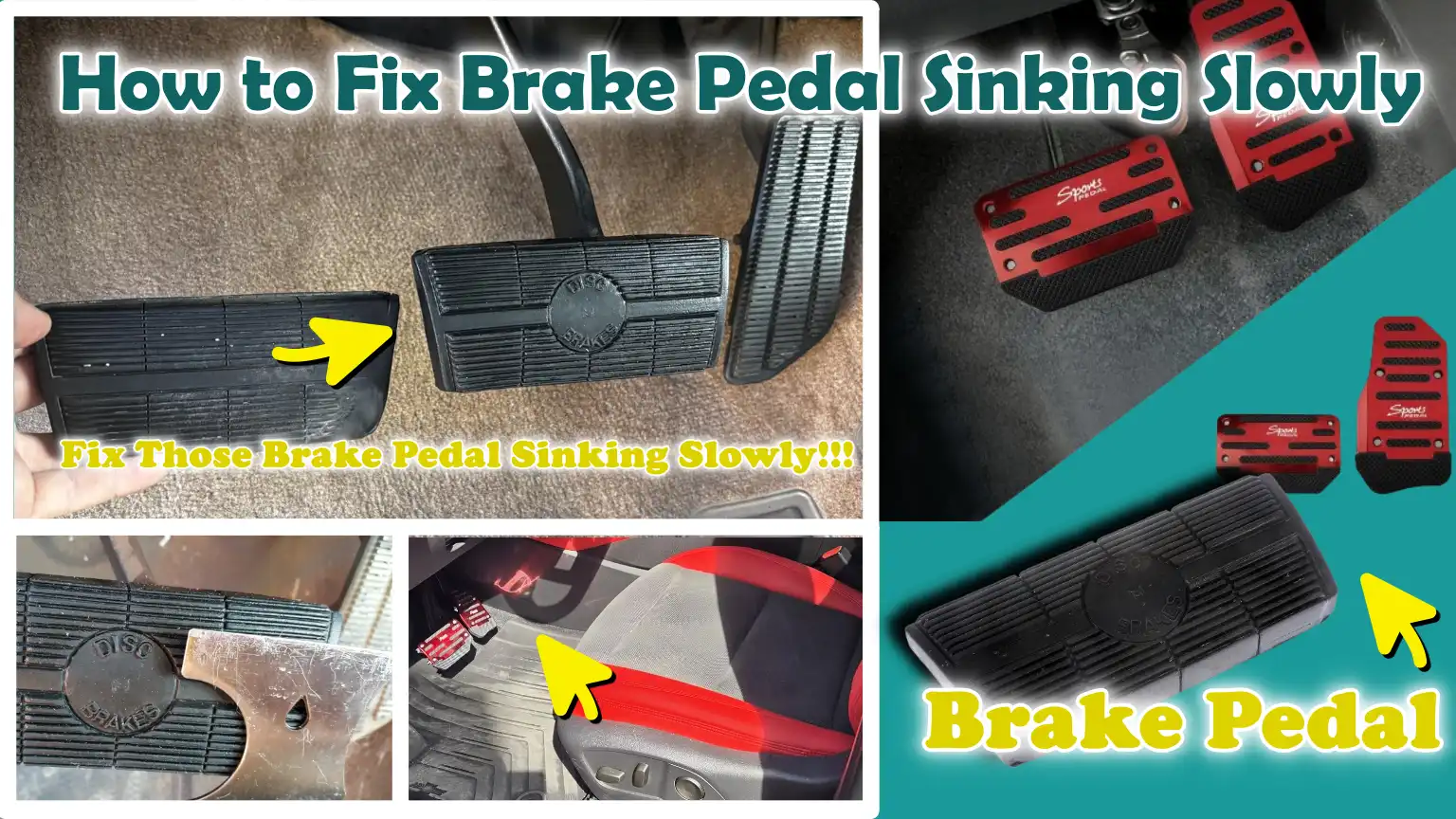
Now, in this guide you’ll learn How to Fix Brake Pedal Sinking Slowly, so that you can understand about the each symptoms and apply the correct fix accorindgly.
What Does It Mean When the Brake Pedal Sinks?
A sinking brake pedal means that when you press and hold the brake, it does not remain firmly fixed in place; instead, it gradually drifts downward toward the floor.
This occurs because the braking system fails to maintain the constant hydraulic pressure required to keep the brakes engaged.
In a properly functioning system, the brake fluid instantly builds and sustains pressure, allowing the vehicle to stop, and remain stopped, without requiring excessive force.
When the pedal sinks, it typically signals an underlying issue, such as a fluid leak, trapped air within the brake lines, or internal wear in critical components like the master cylinder.
This is not a normal occurrence; it clearly indicates that the braking system’s efficiency has been compromised and requires immediate attention.
1. Definition of a Soft or Sinking Brake Pedal
A soft or sinking brake pedal is one that feels weak or spongy (compressible when pressed), or that continues to drift downward even when constant pressure is applied.
Rather than feeling firm and stable, the pedal offers very little resistance, requiring significantly more force to slow the vehicle down.
This issue is often caused by trapped air in the brake lines, which compresses under pressure, or by a failure to maintain pressure due to brake fluid leaks or contamination.
In some instances, the internal seals within the master cylinder become worn, causing the fluid to leak internally rather than generating the necessary pressure.
The result is a reduction in braking power, preventing the pedal from performing as it should.
2. What is the difference between normal pedal travel and the abnormal “sinking” of the pedal?
Normal brake pedal travel is limited and consistent; this means that when the pedal is depressed, it moves downward only a short distance and becomes firmer as pressure increases.
This firmness indicates that the braking system is functioning correctly and is capable of maintaining pressure without any leaks or defects.
Conversely, the problem of the pedal “sinking” abnormally occurs when it continues to drift downward even after the initial resistance is felt, particularly when the vehicle is stationary and the pedal is held down.
This signals that pressure is gradually diminishing or cannot be sustained.
While a small amount of initial pedal travel is normal, a continuous downward drift is not; it should be viewed as a warning sign of a potentially serious internal issue.
3. Why is this issue so dangerous from a driving safety perspective?
A sinking brake pedal is dangerous because it directly compromises your ability to bring the vehicle to a rapid and reliable stop.
When the system fails to maintain pressure, braking force is diminished, requiring a greater distance to bring the vehicle to a complete halt, a situation that can prove extremely critical in emergency scenarios.
In some instances, the brakes may continue to function partially, creating a false sense of security; however, if the underlying internal issue worsens, they could fail abruptly.
This renders the problem unpredictable and hazardous, particularly when driving at high speeds or in heavy traffic.
It is absolutely crucial to address this issue as soon as possible, as a fully functional braking system remains one of the most critical safety features of any vehicle.
Know, Common Causes of a Slowly Sinking Brake Pedal
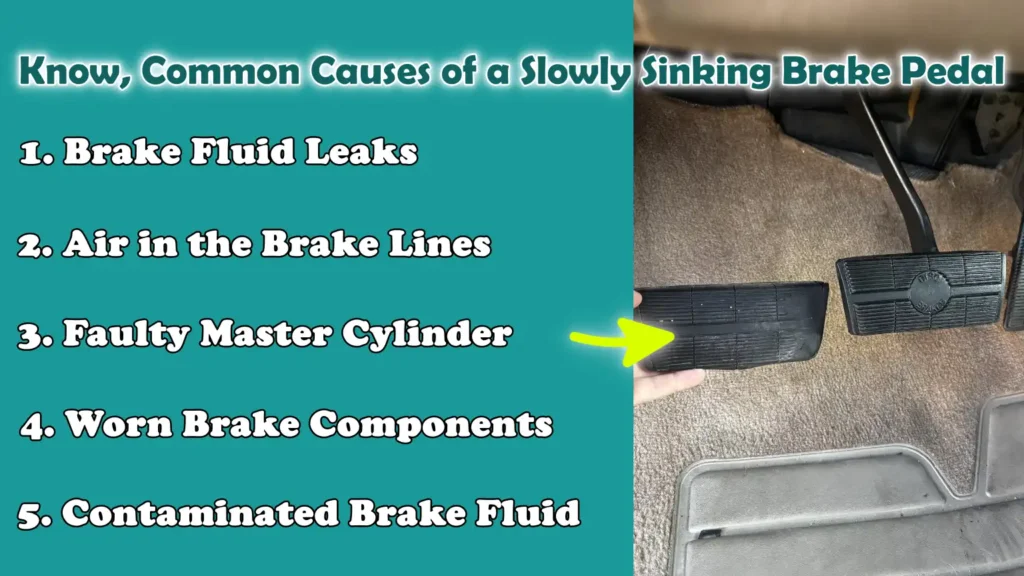
If the brake pedal slowly sinks, it generally indicates that the braking system is unable to maintain stable hydraulic pressure.
This invariably points to an internal issue that requires identification and repair.
The braking system functions as a closed and sealed circuit, wherein brake fluid transmits pressure from the pedal to the wheels.
Consequently, any condition that allows pressure to escape or diminish will cause the pedal to sink over time.
These causes can range from minor issues such as: trapped air, to severe problems involving internal malfunctions of critical components.
Understanding each cause in simple terms helps you accurately diagnose the problem and avoid unnecessary repairs, as each issue affects the braking system in a distinct manner.
1. Brake Fluid Leaks
A brake fluid leak is one of the most common and serious causes of a sinking brake pedal, as it directly reduces the volume of fluid available to generate hydraulic pressure.
Brake fluid can leak from damaged brake lines, worn rubber hoses, loose connections, leaking calipers, or faulty wheel cylinders.
As the system relies on a specific volume of fluid to function correctly, even a minor leak can compromise pressure when the pedal is depressed, causing the pedal to gradually sink.
Over time, a leak can worsen, potentially leading to a complete loss of braking capability.
Symptoms of a leak often include visible fluid spots beneath the vehicle, a dropping fluid level in the reservoir, or wet spots around the brake components.
2. Air in the Brake Lines
The presence of air in the brake lines can also cause the brake pedal to sink, as air behaves very differently from brake fluid.
While brake fluid is incompressible and can transmit pressure instantly, air compresses under pressure.
This means that when you press the brake pedal, a portion of the applied pressure is expended on compressing the trapped air rather than fully engaging the brakes.
Consequently, the pedal feels soft and may continue to sink downward under sustained pressure.
Air typically enters the system due to improper maintenance, low fluid levels, or leaks.
To restore normal braking capability, it is essential to purge this air through the proper procedure of brake bleeding.
3. Faulty Master Cylinder
The master cylinder plays a pivotal role in generating and maintaining hydraulic pressure.
When it begins to fail internally, the brake pedal may sink without any visible external leaks.
The master cylinder contains internal seals designed to keep the fluid under pressure; however, over time, these seals can wear out or deteriorate.
When this occurs, the brake fluid bypasses the seals internally rather than flowing through the system, causing the pressure to dissipate gradually.
This explains why the pedal may initially feel normal but slowly sinks downward when held down.
A faulty master cylinder is a serious issue that often requires replacement to fully restore the reliability of the braking system.
4. Worn Brake Components
Worn brake components such as: brake pads, rotors, or drums, as it can exacerbate the problem of a sinking brake pedal, as the system requires greater travel distance to generate full braking force.
When brake pads become excessively worn, the caliper piston must extend further outward to make contact with the rotor; this can cause the brake pedal to feel lower than usual.
While this factor alone may not always cause the pedal to sink continuously, when combined with other issues, it can significantly degrade the overall pedal feel.
Furthermore, worn components reduce braking efficiency, meaning you may need to press the pedal harder, or push it further down, to generate the same amount of stopping power.
5. Contaminated Brake Fluid
Brake fluid contamination is another critical factor that many drivers overlook, despite its potential to have a severe impact on braking performance.
Brake fluid is engineered to withstand high pressure and function effectively even at elevated temperatures; however, over time, due to its hygroscopic nature, it absorbs moisture from the air.
This absorbed moisture lowers the fluid’s boiling point and, under pressure, can create small pockets of vapor or compromise the fluid’s overall effectiveness.
Contaminated fluid may also contain dust or debris, which can cause damage to internal components.
Consequently, the braking system may struggle to maintain consistent hydraulic pressure, resulting in a pedal that feels soft or gradually sinks toward the floor.
Regularly replacing the brake fluid is essential to ensure that the braking system continues to operate correctly and safely.
Know, Common Symptoms Confirming the Problem
A brake pedal that gradually sinks typically presents several clear warning signs that help confirm the presence of a genuine issue within the braking system.
These symptoms are crucial because they indicate how effectively the system is maintaining pressure and how efficiently the brakes are functioning under actual driving conditions.
Paying attention to these signs early on allows you to identify the problem before it escalates into a more serious issue or leads to unsafe driving situations.
Each symptom points to a specific manner in which the system is losing pressure or functionality; understanding these signs in simple terms makes it easier to take appropriate corrective measures.
1. Pedal Gradually Sinks Toward the Floor When Held Down
One of the most reliable indicators appears when you hold the brake pedal down in a fixed position such as: when stopped in traffic, yet it continues to slowly drift downward.
In a properly functioning braking system, the pedal’s movement should cease once pressure is applied and it should remain firmly in place.
If it gradually sinks toward the floor, it signifies that the system is unable to consistently maintain pressure.
This typically points to issues such as an internal leak within the master cylinder or a loss of brake fluid elsewhere in the system.
The longer you hold the pedal down, the more pronounced its downward drift becomes; this clearly signals that pressure is escaping or that the system is failing to retain it.
2. Reduced Braking Power
A reduction in braking power is another primary symptom that often accompanies the issue of a sinking brake pedal.
You may notice that it takes longer to bring the car to a complete stop, or that you need to press the pedal harder than usual to slow down.
This occurs because, due to a lack of pressure, the braking system is unable to generate sufficient force on the wheels.
Even if the brakes are functioning to some extent, their effectiveness is significantly diminished; this can prove hazardous in situations where an immediate stop is required.
This symptom often develops gradually, making it easy to overlook in its early stages.
3. Illumination of the Brake Warning Light on the Dashboard
The brake warning light located on the dashboard can serve as an early indicator that something is amiss within the braking system.
This light may illuminate when brake fluid levels are low, when there is an imbalance within the system, or when a malfunction is detected in specific components.
Although the illumination of this light does not always guarantee the presence of an issue such as a “sinking brake pedal,” it frequently appears alongside other symptoms and should never be ignored.
It functions as an “internal” warning mechanism, helping drivers recognize that the braking system requires immediate inspection.
4. Visible Fluid Beneath the Car
The appearance of fluid beneath the car, particularly near the wheels or under the engine, is a definitive sign of a brake fluid leak.
Brake fluid typically ranges in color from clear to light brown and feels slightly oily to the touch.
As the braking system relies on a closed supply of fluid to maintain pressure, any visible leak indicates that the system is losing its ability to function correctly.
This directly leads to the problem of a sinking brake pedal, as there is insufficient fluid available to generate and maintain the necessary pressure when the brakes are applied.
Checking for leaks is a crucial step in identifying the root cause of the problem.
5. Spongy or Soft-Feeling Pedal
Before the pedal completely sinks all the way to the floor, the brake pedal often feels spongy or soft.
When you press the pedal, it may feel less firm than usual, or it may require being pushed down further than normal before the brakes engage.
This softness is typically caused by the presence of air inside the brake lines or by brake fluid that is not functioning properly.
As air is compressible, it diminishes the system’s ability to transmit force, making the pedal feel weak and less responsive.
Over time, this condition can worsen, causing the pedal to sink even further toward the floor; therefore, this is a critical early symptom that requires immediate identification and repair.
Tools
| Tool or Material | Why It Is Needed | How to Use It |
|---|---|---|
| Brake fluid – DOT 3 or DOT 4 | Brake fluid is the primary fluid responsible for transmitting hydraulic pressure from your foot to the brakes. If the fluid level is low or the fluid has aged, the system cannot generate the necessary pressure; this may cause the brake pedal to feel spongy or sink all the way to the floor. It is crucial to use the correct type of fluid, as different fluids possess varying heat resistance capabilities and performance characteristics. | Carefully open the brake fluid reservoir and check the fluid level. If the level is low, add the appropriate type of fluid, as specified on the cap or in the vehicle’s owner’s manual. Always ensure that, after refilling, the cap is clean and securely tightened to prevent dust or moisture from entering the system. |
| Wrench set | A wrench set is required to loosen and tighten various brake components, such as bleeder valves, brake lines and fittings. These components must be handled with care to avoid damage or leaks. | Select the correct wrench size that fits snugly onto the bolt or valve. Turn the wrench gradually to loosen or tighten the component. Do not apply excessive force, as overtightening or improper handling can damage the brake components. |
| Brake bleeder kit or clear hose | This tool helps expel trapped air from the brake lines, a common cause of a spongy brake pedal or one that sinks to the floor. The transparent hose allows you to visually observe air bubbles as they exit the system. | Connect the hose to the bleeder valve located on the brake caliper. Open the valve slightly and press the brake pedal to expel the fluid and air. Continue this process until air bubbles cease to appear and only clear fluid begins to flow from the hose. |
| Jack and jack stands | These tools are essential for safely lifting the vehicle, allowing you to access the wheels and brake components. Providing proper support is crucial to prevent accidents while working underneath or around the vehicle. | Use a jack at the designated lift points to raise the vehicle. Once the vehicle is lifted, place jack stands underneath it to provide secure support. Never rely solely on the jack while working; always use stands for safety. |
| Safety gloves and goggles | Brake fluid can be harmful to the skin and eyes and dust or debris may be dislodged while working on brake components. Safety gear protects you from injury and helps keep your workspace clean. | When handling brake fluid or components, wear gloves to protect your skin from direct contact. Wear safety goggles to protect your eyes, specially when bleeding the brakes or working underneath the vehicle, where fluid or debris could splash or fall onto you. |
How to Fix Brake Pedal Sinking Slowly – Easy Method
Fixing a brake pedal that slowly sinks requires a systematic and thorough diagnostic approach, as this issue is often linked to a loss of pressure within the braking system.
This system relies on sealed brake fluid to transmit hydraulic pressure; therefore, low fluid levels, trapped air, or internal system malfunctions can all cause the brake pedal to sink.
The goal of these steps is to first investigate the simplest and most common causes and, if necessary, to proceed with a deeper examination of the system.
By following these steps in the correct sequence, you can avoid overlooking the root cause of the problem and ensure that your brakes function firmly and reliably once again.
1. Check the Brake Fluid Level
Begin by checking the brake fluid level, as low fluid is one of the most common, and easily remedied, causes of this issue.
Open the vehicle’s hood and locate the brake fluid reservoir; this is typically a small, translucent container situated near the rear of the engine compartment.
The fluid level should fall between the ‘minimum’ and ‘maximum’ marks.
If the level is low, it indicates that there may not be enough fluid in the system to maintain the necessary pressure, which can cause the brake pedal to sink.
Carefully top up the reservoir using the specific type of brake fluid recommended on the reservoir cap.
If the fluid level drops again after refilling, it suggests there is a leak somewhere in the system that requires further investigation.
2. Check for Brake Fluid Leaks
After checking the fluid level, inspect the entire braking system for any signs of leaks, as even a minor leak can lead to a loss of pressure.
Look for wet spots or traces of fluid underneath the vehicle and around each wheel.
Check the brake lines, rubber hoses, calipers and the area surrounding the master cylinder for any visible signs of fluid leakage.
Brake fluid is typically clear or light brown in color and feels slightly slippery (oily) to the touch.
If a leak is detected, it is crucial to repair or replace the faulty component before proceeding; simply refilling the fluid will not resolve the issue and the brake pedal will continue to sink.
3. ‘Bleed’ the Brake System
If no major leaks are found, the next step is to ‘bleed’ the brake system to expel any trapped air.
The presence of air inside the brake lines compromises the system’s ability to effectively transmit hydraulic pressure, as air compresses under pressure; this causes the brake pedal to feel spongy (soft) or sink toward the floor.
The bleeding process involves opening small valves located near the wheels and allowing brake fluid to flow through the system until all air bubbles have been expelled.
This procedure restores proper fluid circulation and helps the brake pedal feel firm again.
It is essential to maintain the correct fluid level throughout the entire bleeding process to prevent new air from entering the system.
4. Inspect the Master Cylinder
If the brake pedal continues to sink even after bleeding the system, the master cylinder should be inspected, as this is the component responsible for generating and maintaining hydraulic pressure.
An easy way to check this is to firmly depress the brake pedal and hold it in that position.
If the pedal slowly sinks toward the floor and no external leaks are visible, it is often an indication that the internal seals within the master cylinder have worn out or failed.
These seals can allow brake fluid to leak internally, bypassing the piston, resulting in a loss of pressure, even if no fluid is leaking externally.
In such a scenario, the master cylinder is likely defective and will need to be replaced to restore proper braking performance.
5. Replace Defective Components
Once the root cause of the problem has been accurately identified, the final step is to replace all defective components affecting the brake system.
These may include leaking brake lines, worn hoses, faulty calipers, or a failing master cylinder.
Replacing the correct components is crucial, as attempting to repair the wrong part will not resolve the actual issue.
After replacing the components, the system should be re-inspected, and typically bled again, to ensure that no air remains trapped within the lines.
Proper repairs restore full hydraulic pressure, ensuring that the brake pedal remains firm and that the vehicle can stop safely and consistently.
How to Properly Bleed Brakes – In Detail Way
Brake bleeding is an essential procedure that removes trapped air from the braking system, thereby restoring robust hydraulic pressure within the system.
Brake fluid is designed to transmit pressure without compressing; however, during repairs, when fluid levels drop, or in the event of a leak, air can enter the system.
This trapped air compromises braking efficiency because, unlike fluid, air compresses when you depress the brake pedal.
This is why the brake pedal may feel soft (spongy) or appear to slowly sink toward the floor when pressed.
Proper bleeding restores firmness to the pedal and ensures that braking pressure is distributed evenly across all wheels.
It is crucial to perform this procedure with great care and in the correct sequence to ensure that all old, trapped air is completely expelled and no new air enters the system.
1. Brake Bleeding Procedure
To properly bleed the brakes, first ensure that the vehicle is safely raised and securely supported so that you can easily access each wheel.
Locate the brake fluid reservoir and fill it to the proper level, as the fluid level must not drop during this process.
Begin with the wheel located furthest from the master cylinder (typically a rear wheel) and then proceed sequentially toward the wheels situated closer to the master cylinder.
Attach a transparent hose to the bleeder valve located on the brake caliper and place the other end of the hose into a container to collect the fluid as it is expelled.
Instruct one person to slowly depress the brake pedal while a second person slightly opens the bleeder valve, allowing the fluid, along with any trapped air, to escape.
When the flow of fluid slows down, close the valve before releasing the pedal to prevent air from re-entering the system.
Continue repeating this process until air bubbles are no longer visible in the fluid and only clear fluid begins to flow out.
To purge the entire system of air, repeat these steps for each wheel, ensuring that you follow the correct sequence.
2. Common Mistakes to Avoid
When bleeding brakes, minor errors often lead to a variety of complications; these mistakes can result in air remaining trapped within the system or re-entering it.
A common error is allowing the brake fluid reservoir level to drop too low; if this occurs, air can enter the system, potentially rendering all your previous efforts futile.
Another mistake is opening the bleeder valve too wide, or releasing the brake pedal while the valve remains open; this, too, can allow air to infiltrate the system.
Using the wrong type of brake fluid, or mixing different types of fluid, as it can compromise brake performance and damage system components.
Failure to follow the correct bleeding sequence for the wheels may result in air remaining trapped in certain parts of the system.
Taking the time to execute each step carefully helps prevent these issues and ensures that the job is completed correctly.
3. How Long Does It Take?
The time required to properly bleed the brakes depends on the condition of the system and the experience level of the person performing the work; However, in most cases, this takes approximately thirty minutes to an hour.
If a significant amount of air is trapped in the system, or if multiple components have been replaced, it may take longer to restore firmness to the brake pedal.
Rather than rushing to complete the task quickly, it is crucial to proceed slowly and meticulously; rushing can leave air trapped in the system, potentially forcing you to repeat the entire process.
Once this procedure is completed correctly, the brake pedal should feel firm and stable, indicating that the system is now maintaining proper hydraulic pressure.
When to Replace the Master Cylinder
The master cylinder is the primary component responsible for generating and maintaining hydraulic pressure within the braking system; consequently, when it begins to fail, the entire system loses its ability to function correctly.
The master cylinder contains internal seals and chambers that, when you depress the brake pedal, push brake fluid forward through the lines.
Over time, these internal seals can wear out, crack, or lose their ability to hold pressure, particularly due to aging, exposure to heat, or degraded brake fluid.
When this occurs, instead of being pushed forward, the fluid may leak internally, causing the brake pedal to gradually sink toward the floor, even if no external leaks are visible.
Replacing the master cylinder becomes necessary when it is no longer capable of maintaining pressure, as neither bleeding the brakes nor replacing the fluid can rectify a fault within the internal seals.
1. Key Warning Signs
There are several clear indicators suggesting that the master cylinder may require replacement.
One of the most common signs is that when constant pressure is applied to the brake pedal, it gradually begins to sink downward, even if the system has been properly bled and checked for leaks.
Another indicator is that the pedal consistently feels soft or spongy; this is a condition that cannot be resolved through standard maintenance procedures.
In some instances, you may observe irregularities in braking performance or a delay in the brake’s response; this occurs when hydraulic pressure is not being distributed evenly.
The brake fluid level may appear normal, making it difficult to detect the internal issue; however, the actual problem lies within the internal components of the unit itself.
If these symptoms persist even after general repairs, the root of the problem is often the master cylinder itself.
2. Cost Estimate
The cost of replacing a master cylinder can vary depending on the type of vehicle, the quality of the replacement part and labor charges.
Generally, the cost of the part itself is moderate, while labor charges can significantly increase the total cost, as the replacement process requires careful installation followed by the proper bleeding of the braking system.
For those who wish to perform this task themselves, the primary costs involve the replacement part and brake fluid; however, having the right tools and technical knowledge is also essential to complete the job safely.
Although this expense may seem substantial, it is a necessary investment, as the master cylinder directly impacts braking performance and delaying its replacement could lead to more costly repairs in the future or render the vehicle unsafe to drive.
3. Overview of the Replacement Process
The process of replacing a master cylinder involves removing the old component and installing a new one, while also ensuring that air does not enter the system.
This procedure begins by draining the brake fluid and carefully disconnecting the brake lines to prevent leaks or contamination.
The old master cylinder, typically mounted near the brake booster, is removed from its position by loosening its mounting bolts.
Before installing the new unit, it is often “bench-bled” (pre-filled and primed) to minimize the possibility of air becoming trapped inside.
Once installed, the brake lines are securely reconnected and the entire braking system is bled to expel any trapped air and restore proper hydraulic pressure.
After replacement, the brake pedal should feel firm and stable, ensuring that the system is once again functioning properly.
Know, Safety Tips When Repairing Brake Problems
Extreme caution is required when working on the braking system, as brakes are among the most critical safety components of any vehicle.
Even a minor error made during inspection or repair can compromise the vehicle’s stopping capability and create hazardous conditions on the road.
As the braking system relies on sealed hydraulic pressure, clean fluid and correctly installed components, maintaining safety during the work process is just as important as fixing the problem itself.
Taking the proper precautions helps prevent personal injury, protects the vehicle from damage and ensures that the repairs are executed correctly, thereby guaranteeing that the brakes will function reliably once the work is complete.
1. Never Drive If the Brake Pedal Sinks
Driving is unsafe when the brake pedal sinks, as this indicates that the braking system is failing to maintain the necessary hydraulic pressure.
This directly reduces the vehicle’s stopping power, requiring a greater distance to slow down or bring the vehicle to a complete halt.
In some instances, the brakes may function partially at first; however, if the underlying internal issue worsens, they could fail suddenly and without warning.
This makes it difficult to accurately judge stopping distances, particularly in heavy traffic or at high speeds, where sudden braking is often required.
It is always advisable to stop driving and resolve the issue before using the vehicle again, as having reliable brakes is absolutely essential for your safety and the safety of others on the road.
2. Use Proper Jack Support
When working on brakes, it is often necessary to lift the vehicle to access the wheels and brake components; therefore, using proper support is absolutely critical.
Although a jack is used to lift a vehicle, it is not designed to support the vehicle’s entire weight for an extended period while you are working underneath it.
Therefore, after lifting the vehicle, it is essential to use ‘jack stands’ to support it securely.
Placing the stands beneath the correct support points ensures that the vehicle remains stable and minimizes the risk of it falling.
Working underneath or around a vehicle without proper support can result in serious injury; therefore, taking the time to secure it correctly is absolutely crucial.
3. Do Not Mix Different Types of Brake Fluid
Brake fluids such as DOT 3 and DOT 4 are formulated with specific properties, including boiling points and moisture-resistance capabilities, and mixing them incorrectly can adversely affect braking performance.
Although certain types of fluids may be compatible in some situations, it is always safest to use the specific fluid recommended by the vehicle manufacturer.
Mixing different fluids can alter how the system functions under heat and pressure and over time, it can also have a detrimental effect on seals and internal components.
Using clean and correct fluid ensures consistent braking performance and helps protect the system from long-term damage.
Read More:
- How to Check Brake Pad Wear Sensor
- How to Measure Brake Pad Thickness Without Removing Wheel
- How to Replace Brake Pads
- How to Replace Brake Rotors
- How to Bleed Car Brakes
Know, Estimated Cost of Fixing a Sinking Brake Pedal
The cost of fixing a sinking brake pedal can vary significantly depending on the root cause of the problem, as some issues are simple to resolve, while others require parts replacement and more extensive labor.
A sinking pedal typically indicates a loss of hydraulic pressure; therefore, the repair cost depends on whether the issue stems from low fluid levels, trapped air, or a faulty component such as the master cylinder.
In many cases, an initial inspection and simple remedies can keep costs low; however, ignoring the problem can lead to escalating repair expenses over time.
Understanding every aspect of potential costs enables you to make informed decisions and avoid spending money on unnecessary repairs.
1. Cost of a Fluid Top-up
Topping up the brake fluid is usually the most economical solution and is often the first step taken when fluid levels are low.
Brake fluid itself is not particularly expensive and, if done carefully, adding it to the reservoir is a simple process.
However, it is crucial to understand that low fluid levels are often a symptom of an underlying issue, such as worn brake pads or a minor leak.
While the cost of the fluid itself is minimal, a top-up should not be considered a complete solution until the true cause of the fluid depletion has been identified and repaired.
Regular inspections and maintaining proper fluid levels help prevent pressure loss and ensure that the braking system continues to function correctly.
2. Cost of Brake Bleeding
Brake bleeding is a common and moderately priced service designed to purge trapped air from the brake lines and restore proper hydraulic pressure within the system.
If this task is performed at a repair shop, the cost typically covers both the labor and the necessary new brake fluid.
The price may vary depending on the type of vehicle and the quantity of fluid required; however, compared to major repair jobs, this is generally an affordable procedure.
For those who prefer to tackle this task themselves, the expense primarily consists of the cost of the brake fluid, along with any common tools or hoses required for the bleeding process.
Proper bleeding is crucial, as even a minute amount of trapped air can cause the brake pedal to feel spongy or “sink” toward the floor; addressing this issue promptly can prevent more significant problems down the road.
3. Cost of Replacing the Master Cylinder
Replacing a master cylinder is a costly undertaking, as the expense encompasses both the price of the replacement part and the labor required to install it correctly.
The master cylinder is a critical component responsible for regulating hydraulic pressure; therefore, when it malfunctions, it typically requires complete replacement rather than a mere repair.
The cost of the part varies based on the vehicle model and the quality of the component, while labor charges add to the total expense, as the process involves carefully removing the old unit, installing the new one and then bleeding the system to purge any trapped air.
Although the cost is substantial, this repair becomes absolutely essential in the event of an internal failure, as it directly impacts the safety and performance of the vehicle’s braking system.
4. Labor vs DIY (Do It Yourself) Comparison
Choosing between professional repair services and a DIY approach depends on your skill level, the tools you have at your disposal and your overall confidence in your ability to perform the task.
Opting for professional labor increases the overall cost, but it ensures that the work is executed correctly and safely, particularly in complex tasks such as replacing a master cylinder.
Conversely, performing the work yourself can save money on labor costs; however, this requires the right knowledge and meticulous attention to every detail, as errors in brake-related work can pose a serious safety risk.
Simple tasks such as: topping up fluids or basic bleeding, are often manageable even for beginners, whereas more complex repairs are best left to experienced individuals or professionals.
Understanding this balance helps you determine which approach is best suited for you, enabling you to make an informed decision that weighs both cost and safety considerations.
How to Prevent Brake Pedal Problems in the Future
The primary way to prevent the issue of the brake pedal sinking to the floor is to periodically ensure that your braking system remains clean, properly sealed and well-maintained.
As the brake system operates under immense pressure and heat, minor issues such as: moisture contamination in the fluid or slight wear on components, as it can gradually degrade its performance.
Most brake-related problems do not manifest suddenly; they develop gradually and provide early warning signs that can be identified through regular inspections.
By adopting a few simple maintenance practices and paying close attention to any changes in pedal feel or braking performance, you can avoid major repairs and ensure that your brakes continue to function safely and reliably.
Also, there’s study that strongly supports about the importance of early diagnosis when you have to deal with issues such as: sinking brake pedal, as braking system can fail due to the poor maintenance or unnoticed faults, so identifying the symptoms such as: pressure loss of soft pedal feel early can prevent some serious accidents, so fixing these issues in time literally ensures that the braking system continues to perform well and sturdy under all the conditions.[¹]
1. Regular Brake Inspections
Regular brake inspections help identify minor issues before they escalate into serious problems.
During an inspection, key components such as: brake pads, rotors, calipers and brake lines, are examined for signs of wear, damage, or leaks.
A mechanic, or even you yourself, through careful visual inspection, as it can detect issues such as thinning brake pads or cracks in the hoses (lines), which could ultimately lead to a loss of brake pressure.
Inspections also include checking the level and condition of the brake fluid, which is crucial for maintaining proper hydraulic function.
By inspecting the system at regular intervals, you can catch early warning signs such as: uneven wear or minor leaks, and address them before they result in the brake pedal sinking to the floor.
2. Periodic Brake Fluid Replacement
Brake fluid plays a vital role in transmitting braking force; However, over time, it absorbs moisture from the air, which diminishes its effectiveness.
This occurs because brake fluid is designed to be ‘hygroscopic’ (moisture-absorbing); meaning it naturally draws in small amounts of moisture from the surrounding air.
As moisture levels rise, the fluid’s capacity to withstand heat and pressure decreases; consequently, this can cause the brake pedal to feel spongy (soft) or lead to degraded braking performance.
Replacing the brake fluid at recommended intervals maintains its quality and ensures that the system can properly sustain brake pressure.
Fresh fluid also protects internal components from corrosion and helps the braking system operate smoothly.
3. Timely Inspection for Leaks
Timely inspection for leaks is the most effective way to prevent issues such as the brake pedal sinking to the floor.
Brake fluid is designed to remain contained within a sealed system; therefore, any indication of a dropping fluid level points to a problem that requires immediate attention.
Minor leaks may occur in the brake lines, hoses, or connections, issues you might not immediately notice while driving.
Regularly checking for fluid spots underneath the vehicle or around the wheels, alongside monitoring the fluid level in the reservoir, can help detect leaks early.
Addressing these issues promptly prevents pressure loss and safeguards the braking system against more severe damage.
Conclusion – How to Fix Brake Pedal Sinking Slowly
So, it is the fact that having sinking brake pedal is not just the mechanical issue, as it is direct signal that your car is losing its ability to stop in safe way.
As brakes rely on a sealed hydraulic system to bring your vehicle to a halt, any loss of pressure, whether caused by leaks, trapped air in the lines, worn-out components, or internal malfunctions, as it can directly jeopardize your ability to stop safely.
What makes this issue even more critical is that it often develops gradually, making it easy to overlook in its early stages.
However, even the slightest change in the feel of the pedal serves as a crucial warning sign that should never be ignored.
The most effective way to address this issue is to adopt a clear and logical approach: begin with simple checks such as: verifying the brake fluid level and inspecting for any visible leaks, and then proceed to more detailed steps, such as bleeding the system or inspecting the master cylinder.
Each step helps pinpoint the root cause of the problem, enabling you to resolve the issue precisely rather than relying on guesswork.
In many instances, taking timely action can save both time and money, while also preventing more severe damage to the braking system.
It is also vital to remember that proper maintenance plays a crucial role in preventing this issue in the future.
Regular inspections, timely brake fluid changes and prompt attention to minor leaks can ensure that the system continues to perform exactly as intended.
Now, that’s it from this guide about How to Fix Brake Pedal Sinking Slowly, also you can ask questions below.
Frequently Asked Questions
FAQ 1: Why does my brake pedal slowly sink toward the floor when I am stopped?
Answer: When you press and hold the brake pedal and it slowly sinks toward the floor, it generally indicates that the braking system is unable to maintain consistent hydraulic pressure. In a properly functioning system, the brake fluid maintains pressure and holds the pedal firmly in a fixed position. If the pedal continues to sink, it often points to an internal issue such as: a brake fluid leak, trapped air within the brake lines, or worn internal components within the master cylinder. Even if the brakes still retain some capacity to stop the vehicle, this condition signals that pressure is leaking or not being maintained properly; this can negatively impact braking performance and should be investigated as soon as possible.
FAQ 2: Is it safe to drive with a sinking brake pedal?
Answer: Driving with a sinking brake pedal is unsafe, as it directly compromises your vehicle’s ability to stop effectively. When the pedal sinks, the pressure within the braking system drops; this means that, when needed, the brakes may not engage as quickly or as forcefully as required. In some instances, the brakes may still provide some stopping power, but if the underlying internal issue worsens, they could fail completely without warning. This increases the distance required to bring the vehicle to a complete stop and heightens the risk of accidents, particularly in emergency situations. To ensure your safety, it is always best to have this issue repaired before driving the vehicle again.
FAQ 3: Will bleeding the brakes fix the sinking pedal issue?
Answer: If the issue of the brake pedal sinking is caused by trapped air within the brake lines, bleeding the brakes can resolve the problem. Air compromises the system’s ability to effectively transmit pressure because air compresses under pressure; this is why the pedal feels spongy or sinks toward the floor. By properly bleeding the system to expel the trapped air, robust pressure is restored within the system, resulting in a firmer pedal feel. However, if the problem stems from a brake fluid leak or a faulty master cylinder, simply bleeding the brakes will not resolve the issue. In such cases, repairing or replacing the defective components is necessary.
FAQ 4: How do I know if my master cylinder is failing?
Answer: A failing master cylinder often exhibits specific warning signs, such as the brake pedal slowly sinking toward the floor when held down, even if no external fluid leaks are visible. You may also experience a spongy or inconsistent feel in the pedal, or notice a reduction in braking responsiveness when attempting to stop the vehicle. This occurs because the internal seals within the master cylinder have worn out; consequently, instead of building pressure, the brake fluid bypasses these seals and leaks past them. An easy way to check for this is to firmly depress the brake pedal and hold it in that position. If the pedal slowly sinks toward the floor and no external leaks are visible, the master cylinder may not be generating sufficient pressure and likely requires replacement.
FAQ 5: How long does it take to fix this problem?
Answer: The time required to resolve the issue of a sinking brake pedal depends on the root cause of the problem. Simple procedures such as: topping up the brake fluid or bleeding the brakes, are often completed within thirty minutes to an hour. If the issue involves detecting and repairing a leak, or replacing components like brake lines or the master cylinder, the process may take several hours or even longer, depending on its complexity. It is crucial to allow sufficient time for a thorough inspection, as rushed repairs may fail to fully resolve the problem, allowing it to persist.
References:
[1] Brake Failure Detection and Emergency Braking System
https://www.researchgate.net/publication/364081917_Brake_Failure_Detection_and_Emergency_Braking_System
Hello Folks, Dean Shali here to help you out to solve the problems with your lovely vehicle, as i have lots of experience and knowledge about automotive industry as i woks directly with the customers and repair vehicles and i love to help the people to keep their cars safe and running smoothly.