Written By: Dean Shali
Fact Checked By: Sabré Cook
Reviewed By: Tamara Warren
You need to understand that: engine oil plays a critical role that keeps your engine running smoothly by lubricating moving parts, as it reduces friction, controls heat and carries away harmful debris as well.
However, when that oil becomes contaminated with fuel, coolant, dirt, water or tiny metal particles, as it can no longer protect the engine effectively.
Also, there’s studies and industry data that consistently shows that poor lubrication and contaminated oil are among the leading causes of premature engine wear and failure as well.
But, do you know? what makes this problem really scary is that contamination often starts quietly, without showing any obvious warning signs, meanwhile the internal damage slowly build up over the time.
That’s why, you need to understand the warning signs by simple changes such as: milky appearance, unusual smell, thicker texture or rising oil level that can indicate some serious underlying issues such as: coolant leaks or fuel dilution as well.
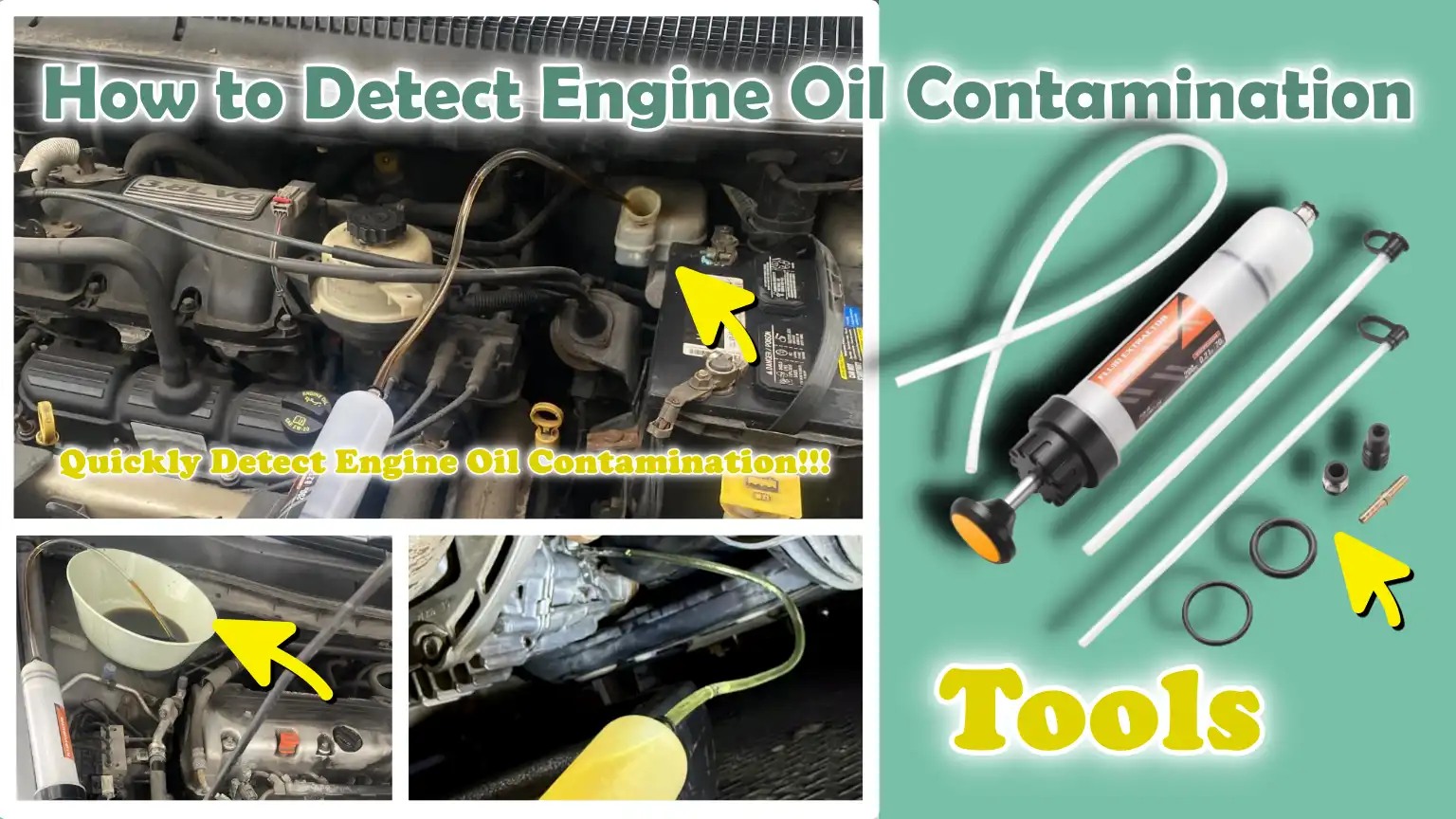
Now, in this guide you’ll learn How to Detect Engine Oil Contamination, so that you can learn how to recognize the most common symptoms of engine oil contamination, understand what actually causing them and follow practical steps to fix that problem effortlessly.
What is Engine Oil Contamination?
1. Definition and Explanation
Engine oil contamination occurs when unwanted substances mix with the oil circulating inside your engine, thereby diminishing the oil’s ability to protect the engine’s moving parts.
Clean engine oil is formulated to create a thin, protective film between metal components, preventing them from rubbing directly against one another; furthermore, it aids in regulating temperature and flushing out minute particles.
When contaminants such as: fuel, coolant, water, dirt, or metal shavings, infiltrate the oil, this protective film weakens or breaks down entirely.
Consequently, friction increases, heat accumulates rapidly and the engine’s internal components begin to wear out long before their projected lifespan.
Over time, contaminated oil may thicken into a sludge-like consistency or become excessively thin; both scenarios are detrimental, as the oil is then unable to flow properly or provide adequate lubrication to the engine’s components.
For this reason, if left undetected, even minor oil contamination can have a severe impact on the overall health of the engine.
2. How Do Contaminants Enter the Oil System?
Contaminants can enter the engine oil through several common pathways, many of which are linked to everyday driving conditions or mechanical issues.
When fuel injectors malfunction, or when the engine runs “too rich” (operates with an excessive fuel mixture), fuel can seep into the oil and dilute it; this frequently occurs during short trips, when the engine does not have sufficient time to reach its optimal operating temperature.
If the head gasket is compromised, or if a hairline crack develops within the engine block, coolant can leak into the oil; In such situations, these two fluids intermix.
If the air filter is not properly maintained or has become compromised, dirt and dust can infiltrate the engine, particularly when the vehicle is operated in dusty environments.
Condensation can lead to the accumulation of water or moisture inside the engine; this occurs specially when the vehicle is driven for short distances and fails to reach its full operating temperature.
Furthermore, the natural wear and tear of the engine inevitably generates tiny metal particles; however, if these particles are found in excessive quantities, it may signal a significant underlying issue within the engine.
All these impurities diminish the effectiveness of the oil and if left unaddressed, they can rapidly cause damage to the engine.
3. The Distinction Between Normal Wear and Harmful Contamination
Distinguishing between normal engine wear and harmful contamination is crucial, as not every change observed in the oil necessarily indicates a serious problem.
Normal wear results in the formation of minute metal particles; these particles are typically so small that they pose no threat to the engine and modern engine oil filters are specifically designed to trap and remove the majority of them.
Over time, due to heat and continuous use, the engine oil may also begin to darken in color; this is a completely normal occurrence and does not always signify that the oil has degraded.
Conversely, contamination refers to the presence of substances in the oil that do not belong there, substances capable of inflicting far more severe damage to the engine.
For instance, if the oil appears viscous, milky, or creamy, it often indicates that coolant has mixed with the oil, whereas a strong odor of fuel suggests that fuel has diluted the oil.
The accumulation of thick sludge or the appearance of a granular texture can indicate that the oil has become contaminated or has severely degraded.
Unlike normal wear and tear, contamination alters the oil’s composition and performance in a way that compromises lubrication and increases the risk of engine failure.
Understanding this distinction helps drivers take the necessary corrective measures at the appropriate time.
Know, Common Causes of Engine Oil Contamination
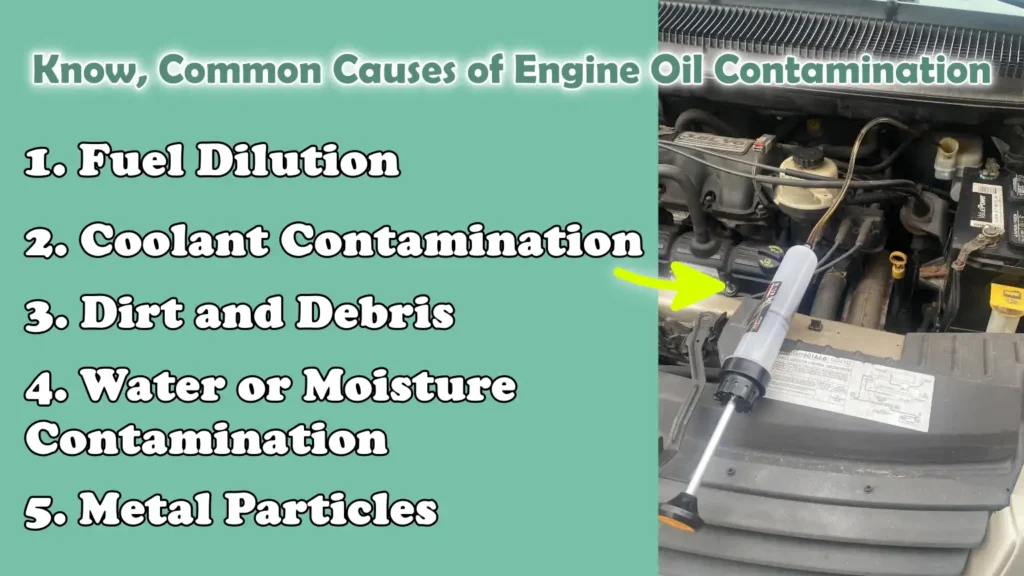
1. Fuel Dilution
Fuel dilution occurs when unburned fuel mixes with the engine oil, thereby reducing the oil’s ability to protect engine components.
This typically happens during short trips, when the engine fails to reach its full operating temperature, resulting in incomplete fuel combustion.
Faulty or leaking fuel injectors can also allow excessive fuel to enter the combustion chamber, which subsequently seeps into and mixes with the oil.
When fuel mixes with oil, it reduces the oil’s viscosity (thickness), meaning the oil becomes thinner than it is designed to be.
Diluted oil is unable to form a robust protective film between metal components, leading to increased friction, wear and heat generation.
Over time, if left unaddressed, this can degrade engine performance, compromise lubrication and accelerate engine damage.
2. Coolant Contamination
Coolant contamination occurs when engine coolant mixes with the oil; this is a serious issue that can cause rapid and extensive damage to the engine.
One of the most common causes of this is a faulty head gasket.
The head gasket typically serves to keep the coolant and oil separated, but it can fail due to excessive heat or aging.
Cracks in the engine block or cylinder head can also allow coolant to leak into the oil system.
When coolant mixes with oil, it forms a milky or creamy emulsion that is unable to properly lubricate engine components.
This mixture compromises the effectiveness of the oil, exacerbates the risk of rust formation within the engine’s internal components and can lead to engine overheating and internal mechanical damage.
If left unaddressed, coolant contamination can result in total engine failure.
3. Dirt and Debris
Contamination by dirt and debris occurs when external particles such as: dust, sand, or fine grit, infiltrate the engine oil.
This is frequently caused by poor air filtration, specifically a clogged, damaged, or substandard air filter, which allows unfiltered air to enter the engine.
Driving in dusty or rugged (off-road) environments significantly heightens the risk of this type of contamination.
Once inside, these particles act as microscopic abrasives, grinding against engine components and accelerating wear.
Over time, this can inflict damage upon critical parts such as pistons, cylinders and bearings.
The primary function of clean oil is to minimize friction; however, when mixed with dust, it actually increases friction and rapidly accelerates engine wear.
4. Water or Moisture Contamination
Contamination by water or moisture typically results from the formation of condensation inside the engine.
This is more prevalent in vehicles driven for short distances, where the engine does not reach a sufficient operating temperature to allow the moisture to evaporate.
Consequently, water vapor condenses into liquid form and mixes with the oil.
Over time, this can cause the oil to take on a milky appearance and diminish its ability to provide effective lubrication.
Frequent short-distance trips exacerbate this issue, as moisture continues to accumulate without evaporating.
The presence of water in the oil can also lead to rust and corrosion within the engine; if left unaddressed, this can damage metal components and significantly reduce the engine’s lifespan.
5. Metal Particles
Metal particles in engine oil are typically the result of normal wear and tear; however, excessive quantities of such particles can be an indication of serious internal issues.
As engine components such as: pistons, bearings and gears, move in contact with one another, tiny fragments of metal may break off and mix into the oil.
Under normal operating conditions, these particles are very small and are effectively captured by the oil filter.
However, if friction increases, lubrication diminishes, or internal damage occurs, larger or more numerous metal particles may appear.
This can be a sign of worn-out components or deteriorating engine parts.
When an excessive amount of metal particles circulates within the oil, they can cause further damage by scratching and abrading other engine surfaces, thereby initiating a compounding cycle of damage and significantly increasing the risk of engine failure.
Know About the Specific Signs of Engine Oil Contamination
1. Changes in Oil Color
The easiest and most reliable method to detect oil contamination is to observe the color of the engine oil.
Fresh engine oil is typically light brown or amber (golden) in color; over time, through normal use, its color naturally darkens, this is a completely normal process.
However, certain specific changes in color can be clear indicators of contamination.
If the oil appears milky or creamy, it usually indicates that coolant has mixed with the oil; this is often caused by a leak in the head gasket or a crack in the internal engine components.
Such a mixture compromises lubrication efficiency and can lead to accelerated wear of engine parts.
Conversely, if the oil appears excessively dark, thick, or sludge-like, it may be a sign of oxidation; in this scenario, the oil has degraded due to prolonged exposure to high temperatures and a failure to change it at the recommended intervals.
Sludge accumulation restricts oil flow, preventing the engine from receiving adequate lubrication and thereby increasing the risk of overheating and excessive wear.
2. Unusual Odors Emitting from the Oil
The scent of engine oil can provide vital clues regarding its condition.
Clean oil typically possesses a mild and neutral odor, whereas degraded oil often emits a strong or unusual smell.
If the oil smells like fuel (petrol), it indicates that petrol has mixed into the oil; this is typically caused by incomplete combustion, frequent short-distance driving, or a faulty fuel injector.
Such contamination dilutes the oil and diminishes its protective capabilities.
On the other hand, if the oil emits a burnt odor, it signifies that the oil has been subjected to excessive heat and is degrading due to thermal stress.
Burnt oil loses its effectiveness, which can lead to increased friction inside the engine and potentially cause damage.
Paying attention to these changes in the oil’s odor can help in detecting problems in a timely manner.
3. Thick or Sludge-like Texture
The texture of engine oil is another crucial indicator of its condition.
Good (healthy) oil should feel smooth to the touch and flow easily so that it can properly coat the engine’s components.
When oil becomes thick, sticky, or sludge-like, it typically indicates that it has degraded or has become contaminated with impurities such as dust, moisture, or oxidized particles.
Sludge forms when the oil is not changed at regular intervals, or when the engine is operated under strenuous conditions such as: in extremely high temperatures or during frequent stop-and-go driving.
Such thickened oil fails to circulate properly within the engine, resulting in reduced lubrication and increased friction between the engine’s moving parts.
Over time, this sludge can clog the oil passages, thereby placing the engine at risk of severe damage.
4. Increase in Oil Level
A sudden rise in the engine oil level is a major warning sign that something is amiss inside the engine.
Typically, the oil level should remain stable between oil changes, with only minor fluctuations.
If the level rises without any additional oil being added, it often indicates that another fluid is mixing with the oil.
A common cause for this is fuel dilution, wherein excess fuel seeps into the oil system and raises the level.
A coolant leak can also be a contributing factor to this issue, particularly in cases where a gasket has failed.
An elevated oil level is hazardous because it compromises the oil’s ability to provide adequate lubrication and can lead to the formation of foam; This causes air to become entrained in the oil, further diminishing its effectiveness.
To protect the engine from damage, this condition must be rectified immediately.
5. Engine Performance Issues
Contaminated engine oil directly impacts engine performance, as it fails to properly lubricate and protect the engine’s internal components.
This can lead to a variety of performance-related issues, such as “rough idling,” where the engine feels unstable or shaky while running.
A loss of power is another common symptom, as increased friction and poor lubrication force the engine to work harder than usual.
In more severe cases, poor engine condition can disrupt combustion, resulting in an engine “misfire.”
These performance issues often develop gradually; consequently, they sometimes go unnoticed until the problem becomes critical.
Identifying these changes in their early stages can help prevent further damage.
6. Warning Lights
Modern vehicles are equipped with sensors that monitor engine performance and oil condition, while warning lights can provide early alerts regarding potential issues.
The ‘Check Engine Light’ may illuminate when the engine detects a performance anomaly such as: a misfire or improper combustion, caused by a malfunction.
The ‘Oil Pressure Warning Light’ is even more critical, as it indicates that the oil is not circulating properly or that its pressure has dropped below a safe level.
Degraded oil can reduce pressure by becoming excessively thin or by allowing sludge to accumulate within the oil passages.
Ignoring these warning lights can result in severe damage to the engine; therefore, they should always be taken seriously and investigated as soon as possible.
How to Check for Oil Contamination – Beginner Friendly Guide
1. Check the Dipstick
The dipstick is the quickest and most practical way to check the condition of your engine oil and it can reveal several signs of contamination in just a few minutes.
To obtain an accurate reading, the engine should be turned off and allowed to cool for a few minutes so that the oil settles properly.
When you pull out the dipstick, carefully observe the oil’s color, consistency and odor.
Good oil typically appears light brown to dark amber in color and flows easily, whereas contaminated oil may look milky, excessively dark, or unusually thick.
Rub a small amount between your fingers to feel its texture, as gritty or sticky oil could indicate an accumulation of dirt or sludge.
Smelling the oil is also crucial; a strong odor resembling fuel suggests fuel contamination, while a burnt smell indicates engine overheating and oil degradation.
This simple check helps identify early warning signs before they escalate into serious engine problems.
2. Check Under the Oil Cap
Looking under the oil filler cap is another easy, yet often overlooked, method for detecting contamination.
When you remove the cap, check its underside and the visible internal engine components for any unusual deposits.
Any milky or creamy substance found under the cap typically indicates that coolant has mixed with the oil, which could signal a head gasket issue or an internal leak.
Deposits of thick, dark sludge suggest that the oil has not been changed regularly or has been subjected to excessive heat and oxidation.
These deposits can restrict oil flow and compromise its lubricating capabilities.
This component provides a quick visual indication of what is happening inside the engine, requiring no specialized tools.
3. Perform a Blotter Spot Test
The blotter spot test is a simple yet effective method that helps you assess the condition of your oil using a clean piece of paper.
Place a small drop of engine oil from the dipstick onto the paper and allow it to spread naturally for a few hours.
Clean oil will spread evenly, forming a light, uniform circle, whereas contaminated oil often exhibits an irregular pattern.
Dark spots in the center may indicate the presence of dirt or metal particles, while a lighter outer ring could signal fuel dilution.
If the oil leaves behind a thick, viscous residue or fails to spread properly, it may be degrading or developing sludge.
This test is beneficial because it allows you to visually identify various types of contaminants and gain a better understanding of the oil’s overall condition.
4. Monitor Changes in Oil Levels
Periodically monitoring your engine’s oil level is a crucial step in detecting oil contamination.
Under normal operating conditions, the oil level should remain relatively constant between oil changes, with only minor fluctuations.
If you notice a sudden rise in the oil level, even though you haven’t added any oil, it often indicates that another fluid such as: fuel or coolant, is mixing with the oil.
This is a serious issue, as it compromises the oil’s ability to provide proper lubrication.
Conversely, a sudden drop in the oil level could indicate an external oil leak or excessive oil consumption.
Regularly checking and comparing your oil levels helps you detect these anomalies at an early stage, enabling you to take necessary corrective measures before any damage occurs.
5. Conduct Oil Analysis – Lab Testing
The most accurate and professional method for detecting contamination in engine oil is ‘Oil Analysis,’ as it identifies even minute details that are invisible to the naked eye.
In this process, a small sample of used oil is sent to a laboratory, where it is analyzed to determine the presence of fuel, coolant, water, metal particles, or other impurities.
The results of the analysis not only reveal the specific type of contamination present in the oil but also provide insights into its severity and potential source.
For instance, elevated levels of certain metals may indicate wear and tear in specific engine components, while the presence of coolant confirms an internal oil leak within the engine.
This technique is widely utilized in professional maintenance operations, allowing for the detection of issues at a very early stage, thereby facilitating accurate diagnosis and timely repairs.
How to Detect Engine Oil Contamination By Using Advanced Diagnostic Methods
1. Used Oil Analysis – UOA
Used Oil Analysis (UOA) is one of the most accurate and detailed methods for understanding what is happening inside your engine, and it does not even require you to open up the engine.
In this method, a small sample of the engine oil is sent to a laboratory, where it is examined using specialized equipment.
The lab checks for the presence of metals, fuel, coolant, water and other impurities that often go unnoticed during routine inspections.
For instance, high levels of iron, aluminum, or copper may indicate wear in specific engine components such as: cylinders, pistons, or bearings.
This analysis can also detect fuel dilution, which reduces the oil’s viscosity, as well as coolant contamination; both of these conditions can cause severe internal damage to the engine.
Furthermore, this analysis assesses the oil’s remaining effectiveness, including its viscosity and its ability to protect engine components.
This method is widely utilized in professional maintenance operations, as it helps identify issues at a very early stage, often before any obvious symptoms become apparent, thereby enabling timely repairs and extending the engine’s lifespan.
2. Compression Test
The compression test is a practical diagnostic method used to assess the internal condition of an engine and identify potential leaks; such leaks can lead to oil contamination.
This test measures the pressure inside each cylinder while the engine is being cranked, thereby revealing how effectively the engine maintains a seal during the combustion process.
In a healthy engine, the pressure remains consistent across all cylinders; Conversely, low or uneven pressure may indicate issues such as worn piston rings, faulty valves, or a compromised head gasket.
As a result of these problems, fuel or coolant can find their way into areas where they do not belong, eventually mixing with the engine oil.
By identifying weak or leaking cylinders, a compression test helps pinpoint the root cause of these contaminants, rather than merely treating the symptoms.
This proves to be an invaluable diagnostic step whenever poor engine performance is suspected in conjunction with the presence of contaminants in the oil.
3. Cooling System Pressure Test
A cooling system pressure test is used to detect internal leaks within the cooling system that could allow coolant to mix with the engine oil.
During this procedure, which is performed while the engine is off, the cooling system is pressurized using a specialized tool; the system is then monitored to determine whether it maintains that pressure or if the pressure drops over time.
A drop in pressure typically indicates the presence of a leak somewhere within the system such as: a faulty head gasket, a cracked cylinder head, or a defective seal.
These leaks allow coolant to seep into the oil passages, thereby contaminating the oil.
This method is particularly useful as it can detect internal leaks that are not visible from the outside.
By identifying coolant leaks in a timely manner, this test helps prevent severe engine damage, damage that can result from the intermingling of oil and coolant.
Such a mixture compromises lubrication and significantly increases the risk of engine overheating or component failure.
7. Effects of Contaminated Engine Oil
1. Increased Engine Wear
Contaminated engine oil significantly accelerates the rate of wear on engine components because it is no longer able to adequately protect metal surfaces.
Clean oil forms a thin protective film between moving parts such as: pistons, bearings and camshafts, preventing direct metal-to-metal contact.
When contaminants like dust, fuel, coolant, or metal particles mix with the oil, this protective film becomes compromised or uneven.
Consequently, parts begin to rub against one another more directly, leading to accelerated wear.
Dust and debris can act as tiny abrasive particles, scratching surfaces and causing damage to critical components over time.
This increased wear not only reduces the engine’s lifespan but, if left unaddressed, can also necessitate costly repairs.
2. Reduced Lubrication
One of the most serious consequences of contaminated oil is the loss of proper lubrication.
Engine oil must maintain a specific consistency, known as viscosity, to flow easily and effectively form a protective film over all moving parts.
When fuel mixes with the oil, it thins it out; conversely, sludge, dust, or oxidation can cause it to thicken.
Both scenarios are detrimental, as the oil is unable to circulate as intended.
Thin oil fails to provide adequate protection under high pressure, while thick oil struggles to reach critical engine components quickly.
This compromised lubrication leads to increased friction within the engine, resulting in elevated temperatures and placing excessive stress on the components.
Over time, poor lubrication can cause components to wear unevenly, thereby reducing the engine’s overall efficiency.
3. Risk of Overheating
Engine oil also plays a crucial role in regulating temperature, as it absorbs heat generated by moving parts and dissipates it.
When the oil becomes contaminated, its ability to regulate heat is compromised.
Increased friction resulting from poor lubrication generates excessive heat, while degraded oil is unable to effectively dissipate that heat.
The problem is further exacerbated in cases where coolant mixes with the oil, as the oil loses its capacity to function correctly.
Due to this mixture, the engine may run hotter than normal, significantly increasing the risk of overheating.
Persistent overheating can lead to damaged seals, warped metal components and other complex internal engine issues, all of which negatively impact the engine’s performance and reliability.
4. Risk of Catastrophic Engine Failure
If the issue of contaminated engine oil is not addressed in a timely manner, it can ultimately result in catastrophic engine failure.
As wear increases, lubrication diminishes and temperatures rise, the engine’s internal components begin to break down.
Bearings may fail, pistons may seize and critical components may sustain irreparable damage.
In severe cases, the engine may cease to function entirely, necessitating a complete rebuild or replacement.
Such failures are often extremely costly and could have been prevented had the problem been detected early and proper maintenance been performed.
Understanding how degraded oil affects the engine highlights the importance of regular inspections and timely intervention to prevent long-term damage.
How to Address Engine Oil Contamination Issues
1. Immediate Actions
If the Contamination Is Severe, Stop Driving the Vehicle Immediately
When engine oil contamination becomes excessive such as: when the oil turns milky, emits a strong fuel-like odor, or becomes excessively thick and sludge-like, the most critical step is to stop driving the vehicle immediately.
Severe contamination indicates that the oil has lost its ability to properly lubricate and protect the engine’s internal components.
Continuing to drive in this condition accelerates friction, heat buildup and wear and tear, potentially causing severe internal damage to the engine.
In extreme cases, components such as bearings or pistons may fail completely, leading to engine seizure.
Stopping the vehicle in a timely manner helps prevent a minor contamination issue from escalating into a major problem that could subsequently require costly repairs.
Drain and replace the oil.
Draining and replacing the contaminated oil is the first and most essential step in protecting the engine from further damage.
The oil should be drained while the engine is slightly warm, allowing it to flow out easily and carry away the maximum amount of contaminants.
Along with the oil, the oil filter must also be replaced, as it traps dirt, metal particles and sludge; if left unchanged, these contaminants could re-enter the fresh oil supply.
Fresh oil restores proper lubrication within the engine, helps reduce friction and allows the engine to operate more safely.
However, it is crucial to understand that this step merely removes the contaminated oil; it does not resolve the underlying issue that caused the contamination in the first place, that root cause must be addressed separately.
2. Address the Root Cause
Repair Gasket Leaks
If coolant contamination is detected in the engine oil, one of the most common causes is a leaking or damaged gasket.
The gasket seals various engine components and prevents coolant and oil from mixing.
When it fails, coolant can infiltrate the oil system, creating a milky emulsion that fails to provide proper lubrication to the engine.
Resolving this issue typically requires replacing the gasket and inspecting the engine surfaces to ensure they have not warped.
Proper repair is crucial, as even a minor leak can quickly re-contaminate fresh oil, leading to recurring problems.
Replace Faulty Injectors
Fuel contamination in engine oil is often caused by faulty or leaking fuel injectors.
These injectors allow an excessive amount of fuel to enter the combustion chamber, from where it subsequently mixes with the oil.
This issue is more prevalent in engines that run “rich” (i.e., with an excess of fuel) or those frequently used for short trips, journeys during which the fuel does not burn completely.
Replacing or repairing faulty injectors restores proper fuel delivery and prevents fuel from mixing with the oil.
Ensuring proper engine tuning and efficient combustion also plays a vital role in preventing this type of contamination.
Improve Filtration
When contamination is caused by dirt and debris, upgrading the filtration system becomes essential.
A damaged, clogged, or low-quality air filter can allow dust and fine particles to enter the engine, where they eventually mix with the oil.
Replacing the air filter with a high-quality unit, and ensuring it is installed correctly, helps prevent harmful particles from entering the engine.
Furthermore, using a high-quality oil filter and replacing it regularly ensures that minor contaminants are captured before they can circulate through the engine.
Proper filtration is one of the simplest, yet most effective, methods for keeping engine oil clean.
3. Flush the Engine – When Necessary
When to Flush the Engine
An engine flush can be beneficial when excessive sludge has accumulated inside the engine due to extended intervals between oil changes or poor maintenance.
During this process, a cleaning solution is introduced into the engine; this solution breaks down the sludge and accumulated grime, allowing them to drain out along with the old oil.
This can improve oil flow, restore proper lubrication and clean internal components.
Flushing is most beneficial when the engine is still in relatively good condition but has simply developed some deposits over time.
When Not to Flush the Engine
Engine flushing is not always the right solution, particularly in older engines or those that have sustained significant internal damage.
In some instances, accumulated sludge actually serves to fill tiny cracks; abruptly removing it can expose leaks or exacerbate pre-existing issues.
If the engine suffers from a serious mechanical problem such as: a severely compromised gasket or excessive wear, flushing will not resolve the issue; on the contrary, it may cause further damage.
In such situations, rather than relying on flushing, it is advisable to first repair the underlying problem and only then proceed with a careful engine oil change.
How to Prevent Contamination in Engine Oil
Not only this, engine oil is actually designed to create a protective layer between the moving parts, but the research shows that contamination directly weakens this protection, so when substances such as: fuel, coolant or dirt actually enter the oil, then its chemical balance changes, then it literally reduces its ability to lubricate and protect engine components, that leads to the faster wear and increased mechanical stress, so detecting the oil contamination early is really important as once the oil loses its protective properties, then the internal damage can begin much sooner than most of the drivers expect it.[¹]
1. Change the Oil Regularly
The most effective way to prevent engine oil contamination and safeguard the overall health of the engine is to change the oil regularly.
Over time, during the engine’s normal operation, small amounts of dust, residual fuel particles, moisture and metal shavings accumulate in the engine oil.
If the oil is not changed at the scheduled intervals, this debris continues to build up, thereby diminishing the oil’s ability to lubricate and protect the engine components.
Replacing the oil with fresh fluid restores its proper viscosity, improves temperature regulation and ensures that harmful particles are flushed out of the system.
Adhering to the oil change schedule recommended by the manufacturer, or adjusting it based on driving conditions (such as heavy traffic or extreme temperatures), helps keep the oil clean and minimizes the risk of damage caused by contaminants.
2. Use High-Quality Oil and Filters
Using high-quality engine oil and filters plays a crucial role in preventing oil contamination and extending the lifespan of the engine.
High-quality oil is formulated with additives that help resist degradation, prevent sludge formation and suspend contaminants within the oil itself, allowing the filter to effectively capture and remove them.
Low-quality oil can break down rapidly under heat and pressure, making the engine susceptible to performance issues caused by contaminants.
Similarly, a high-quality oil filter is essential, as it captures dust, metal particles and other impurities before they can circulate through the engine.
A defective or clogged filter may allow contaminants to pass through or restrict oil flow; in either scenario, the engine components risk sustaining damage.
Choosing the correct oil grade and a reliable filter provides the engine with superior protection and ensures clean, efficient performance.
3. Avoid Excessive Short Trips
Frequent short trips can increase the risk of oil contamination, primarily due to the accumulation of fuel and moisture.
When an engine runs for very brief periods, it often fails to reach its full operating temperature.
Consequently, fuel and water vapor do not fully evaporate; instead, they mix with the oil.
Over time, this leads to fuel dilution and moisture buildup within the oil, both of which compromise the oil’s effectiveness.
Occasionally taking longer trips allows the engine to heat up fully, burning off these unwanted substances and keeping the oil clean.
By minimizing excessive short trips, or by consolidating several minor errands into a single longer journey, the likelihood of oil contamination is significantly reduced.
4. Maintain the Cooling System
Keeping the cooling system in good condition is crucial to prevent coolant from contaminating the engine oil.
The cooling system regulates engine temperature and continuously circulates coolant through sealed channels; these channels are distinct from the oil system.
If components such as the head gasket, radiator, or hoses fail, coolant can leak into the oil, creating a damaging mixture that compromises lubrication.
Regularly checking coolant levels, inspecting for leaks and ensuring the system is functioning correctly helps prevent such contamination.
Proper maintenance of the cooling system also mitigates the risk of overheating, which can damage engine components and increase the likelihood of internal leaks.
5. Inspect the Air Intake System
The air intake system plays a vital role in preventing dust and debris from entering the engine, thereby directly contributing to keeping the engine oil clean.
The air entering the engine must pass through an air filter, which traps dust, sand and other particles.
If the air filter is clogged, damaged, or improperly installed, unfiltered air can enter the engine and introduce contaminants into the oil.
Regular inspection of the air filter, and its timely replacement, ensures that only clean air reaches the engine.
In environments with high levels of dust or pollution, more frequent inspections may be necessary.
A well-maintained air intake system minimizes the entry of harmful particles and helps keep the oil clean for longer periods.
Read More:
- How to Flush Engine Oil System
- How to Change Transmission Fluid
- How to Check Transmission Fluid
- How to Check Coolant Level
- How to Replace a Radiator Fan
- How to Fix a Coolant Leak
When to Consult a Mechanic?
1. Persistent Contamination
If the engine oil remains dirty even after being changed and the filter has been cleaned, it is a clear indication that there is an internal engine issue requiring professional attention.
Oil operates within a closed system; therefore, once replaced, it should, under normal circumstances, remain clean for a considerable period.
If the oil quickly turns milky, emits a fuel-like odor, or becomes unusually thick again, it generally implies that another fluid or contaminant is still infiltrating the system.
This may be caused by hidden issues such as: internal leaks, worn components, or system malfunctions, that are not apparent during routine inspections.
A trained mechanic possesses the necessary tools and expertise to conduct a comprehensive examination, pinpoint the true source of the contamination and resolve the issue before it causes severe damage to the engine.
2. Recurring Oil-Related Issues
Recurring oil-related problems such as: the frequent need for oil changes, sudden fluctuations in oil levels, or persistent sludge accumulation, signal that the engine is not operating under normal conditions.
These issues often point toward deeper mechanical or systemic malfunctions rather than merely routine maintenance requirements.
For instance, a recurring fuel-like odor in the oil could indicate underlying issues within the fuel system, whereas persistent thickening or sludge formation may signal engine overheating or inadequate oil circulation.
Ignoring these recurring problems can trigger a cycle in which the oil is replaced, yet the underlying issue continues to inflict damage upon the engine’s internal components.
In such instances, consulting a mechanic ensures that the root cause of the problem is accurately identified and resolved, rather than merely treating the symptoms.
3. Signs of Internal Engine Damage
Certain signs clearly indicate that contaminants have already inflicted damage upon the engine’s internal components, necessitating an immediate inspection by a professional.
These signs include knocking or other unusual noises emanating from the engine, rough idling, a noticeable decline in engine power, excessive smoke emitting from the exhaust, or the illumination of warning lights related to oil pressure or engine performance.
In more severe cases, the engine may repeatedly overheat or fail to start properly.
These symptoms often signal that critical components such as: bearings, pistons, or seals, have worn out or deteriorated due to inadequate lubrication caused by contaminated oil.
A mechanic can perform advanced diagnostics to assess the extent of the damage and recommend the necessary repairs.
Taking immediate action at this stage can prevent total engine failure and help minimize the overall cost of repairs.
Conclusion – How to Detect Engine Oil Contamination
In the end, it’s been clear that your engine’s health often comes down to one simple thing: the condition of its “OIL”, so maintain it.
Clean oil is essential because it reduces friction, regulates heat and protects every moving component within the engine.
When this oil becomes contaminated with fuel, coolant, dirt, or moisture, it loses its ability to perform its functions effectively.
This leads to increased friction and elevated temperatures, causing gradual damage that often goes unnoticed until it becomes severe.
The most crucial point to understand is that contamination typically begins as a minor issue and presents early warning signs such as: changes in the oil’s color, odor, texture, or level.
By learning to recognize these signs and performing simple, regular checks, you can detect problems in their early stages and avoid costly repairs.
Taking immediate action, addressing the root cause of the problem and adhering to proper maintenance practices can significantly extend the lifespan of your engine.
Now, that’s it from this guide about How to Detect Engine Oil Contamination, also you can ask more questions in the comment section below.
Frequently Asked Questions
FAQ 1: In simple terms, what does engine oil contamination mean?
Engine oil contamination means that unwanted substances such as: fuel, coolant, dirt, water, or metal particles, as it have mixed into the oil circulating inside your engine. The function of clean oil is to protect and lubricate engine components; however, when it becomes contaminated, it is unable to perform its job effectively. Over time, this can lead to increased friction, excessive heat generation and damage to the engine.
FAQ 2: How can I tell if my engine oil is contaminated?
You can usually detect contamination by observing the oil’s color, smell and consistency. If the oil appears milky, it is possible that coolant has mixed into it. If it smells like fuel, it may have been diluted by fuel. Thick, sticky, or sludge-like oil is often an indication that the oil has degraded or that dirt has accumulated within it. You may also notice issues with engine performance, such as rough running or a reduction in power.
FAQ 3: What are the most common causes of engine oil contamination?
The most common causes include frequently making short trips, as which prevents the engine from reaching its optimal operating temperature, as well as faulty fuel injectors, leaking head gaskets, poor air filtration and moisture accumulation inside the engine. Driving conditions and a lack of regular maintenance also play a significant role in how quickly the oil degrades.
FAQ 4: Is it safe to drive with contaminated engine oil?
Driving with contaminated oil is not safe, specially if the contamination is severe. The oil is unable to properly lubricate the engine components, leading to increased friction and heat. This can cause severe damage to the engine very quickly. In some cases, even driving the vehicle for a short distance can exacerbate the problem.
FAQ 5: Can contaminated oil permanently ruin my engine?
Yes, if left unaddressed, contaminated oil can permanently ruin an engine. It can cause bearing wear, piston damage, severe overheating and even complete engine failure. The longer the oil remains contaminated, the more expensive the repairs will be.
FAQ 6: How often should I check my engine oil for contamination?
It is a good practice to check your engine oil at least once a month, or before embarking on a long journey. Regular checks help you identify early changes in the oil’s color, level, or odor. Early detection is crucial for preventing serious engine problems.
FAQ 7: What does milky-colored engine oil indicate?
Oil that appears milky or creamy is usually a sign that coolant has mixed with the oil. This is often caused by a leaking head gasket or internal engine damage. This type of contamination is serious and must be repaired immediately to avoid major engine failure.
FAQ 8: Why does my engine oil smell like fuel?
If your engine oil smells like fuel, it usually indicates fuel dilution. This can be caused by faulty injectors, incomplete combustion, or frequent short trips where the fuel does not burn completely. The presence of fuel in the oil reduces its viscosity and compromises its protective capabilities.
References:
[1] A Review On The Contamination Of Used Engine Oil
https://www.researchgate.net/publication/346573076_A_Review_On_The_Contamination_Of_Used_Engine_Oil
Hello Folks, Dean Shali here to help you out to solve the problems with your lovely vehicle, as i have lots of experience and knowledge about automotive industry as i woks directly with the customers and repair vehicles and i love to help the people to keep their cars safe and running smoothly.