Written By: Dean Shali
Fact Checked By: Sabré Cook
Reviewed By: Tamara Warren
Every single day, your car is literally under the ATTACK, as literally sunlight also breaks down the clear coat through the UV radiation, dust and pollution out there; that leads to the creation of tiny scratches that unfortunately dull the surface.
And, if your car is under the attack of the bird droppings or tree sap as well, then it can chemically damage the paint within the matter of hours if left untreated in quick fashion.
Basically, there’s smooth, glossy finish starts to wear out, because the thin protective layer that wears down over the unfortunate nature factor.
That’s the real reason, many cars starts to look very older than they actually are, even when they are regularly washed.
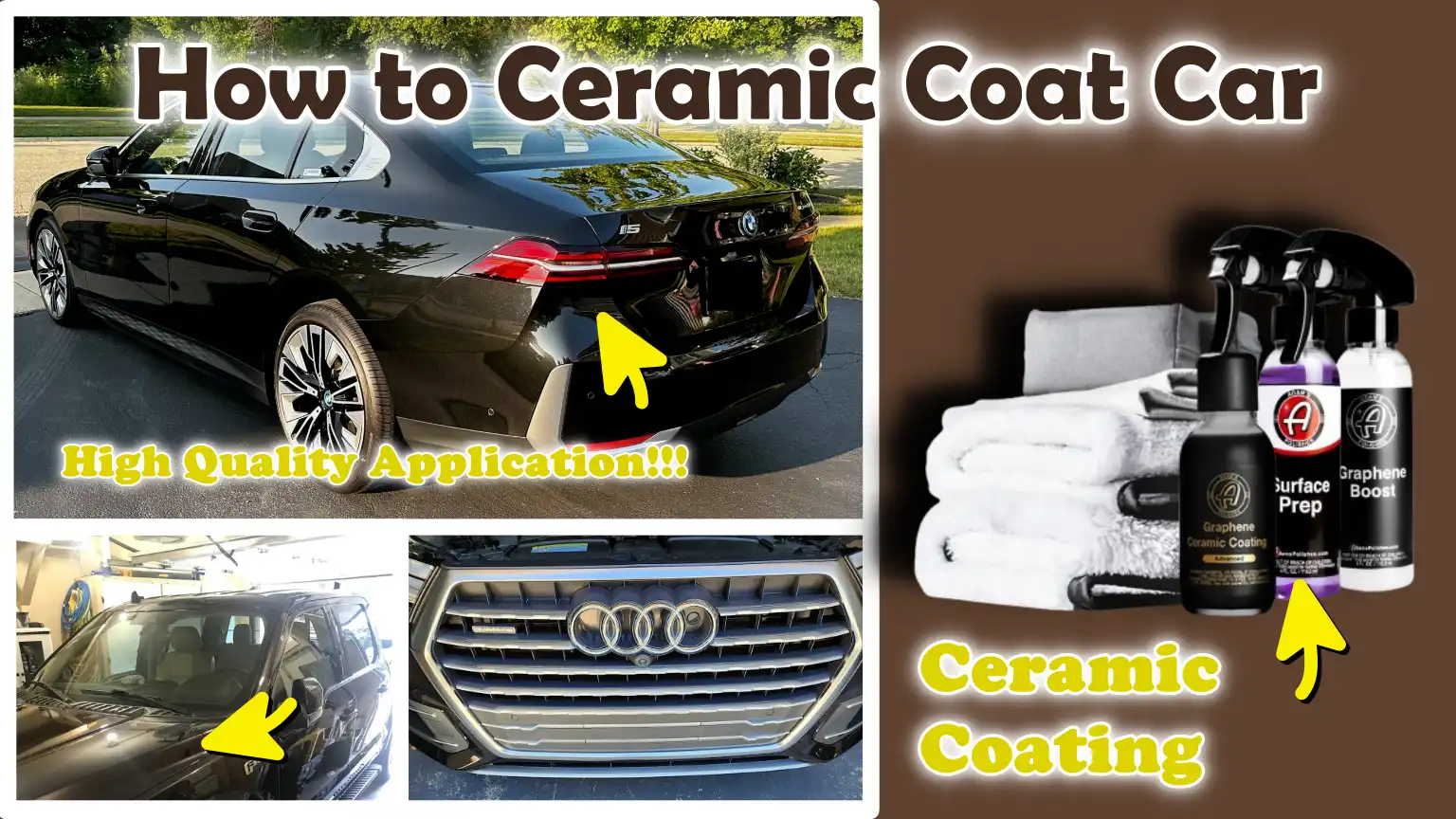
So, in this guide you’ll learn about How to Ceramic Coat Car, so that you can maintain your vehicle’s mirror look for years, with significantly less effort.
What is Ceramic Coating for Cars?
1. Definition of Ceramic Coating
Ceramic coating is a liquid protective layer applied to a car’s painted surface to shield it from damage and preserve its shine over the long term.
It is typically composed of silicon dioxide, derived from natural substances such as quartz and sand.
When applied correctly, it forms a clear, thin and durable layer over the car’s “clear coat” (the transparent layer situated atop the paint).
Unlike traditional products, this layer does not wash away; furthermore, depending on its quality and maintenance, it can last for months or even years.
Its primary objective is to protect the paint from common issues such as: fading, oxidation, water spots, dirt accumulation and minor chemical stains, while simultaneously enhancing the surface’s overall gloss and smoothness.
2. How It Works (Nanotechnology and Bonding with Paint)
Ceramic coating operates at a microscopic level using nanotechnology; this means that the particles within the coating are extremely minute, enabling them to fill the microscopic pores and imperfections present in the car’s paint.
Once applied, the coating does not merely sit atop the paint; rather, it chemically bonds with the “clear coat.”
This bond creates a semi-permanent layer that, instead of serving merely as a temporary covering, becomes an integral part of the surface itself.
Consequently, the coating becomes highly resistant to water, dirt and contaminants.
Its most distinctive feature is its “hydrophobic” (water-repellent) property, which causes water droplets to bead up on the surface and slide off easily, carrying away dirt and grime in the process.
This not only keeps the car clean for a longer period but also significantly reduces the effort required to wash it.
3. The Difference Between Coatings, Waxes and Sealants
Ceramic coatings differ significantly from waxes and paint sealants in terms of durability, protection and their bond with the paint.
Wax is a natural or synthetic product that sits on top of the paint as a surface layer, providing temporary shine and protection; it typically lasts only a few weeks.
Sealants are synthetic products designed to last longer than waxes, often for several months, but they, too, do not form a strong bond with the paint.
In contrast, a ceramic coating establishes a chemical bond with the paint, making it far more durable and resistant to environmental damage.
While waxes and sealants primarily enhance the paint’s appearance and offer limited protection, a ceramic coating provides a much more robust protective shield against UV rays, chemicals and dirt.
However, it requires more meticulous preparation and application, as errors made during the process can be permanent.
4. Types of Ceramic Coatings – DIY vs Professional
There are two main types of ceramic coatings available: DIY coatings and professional-grade coatings.
DIY coatings are designed for car owners who wish to apply the product themselves at home.
They are easy to use, offer a greater margin for error during application and are generally less expensive; however, they typically do not last as long as professional options.
Professional coatings are applied by trained detailers in a controlled environment and often involve multiple layers and advanced preparation steps (such as paint correction).
These coatings are generally more durable, last longer and provide superior overall protection; however, they also come with a significantly higher price tag.
Choosing between these two depends on your budget, your skill level and how much time and effort you are willing to invest in the process.
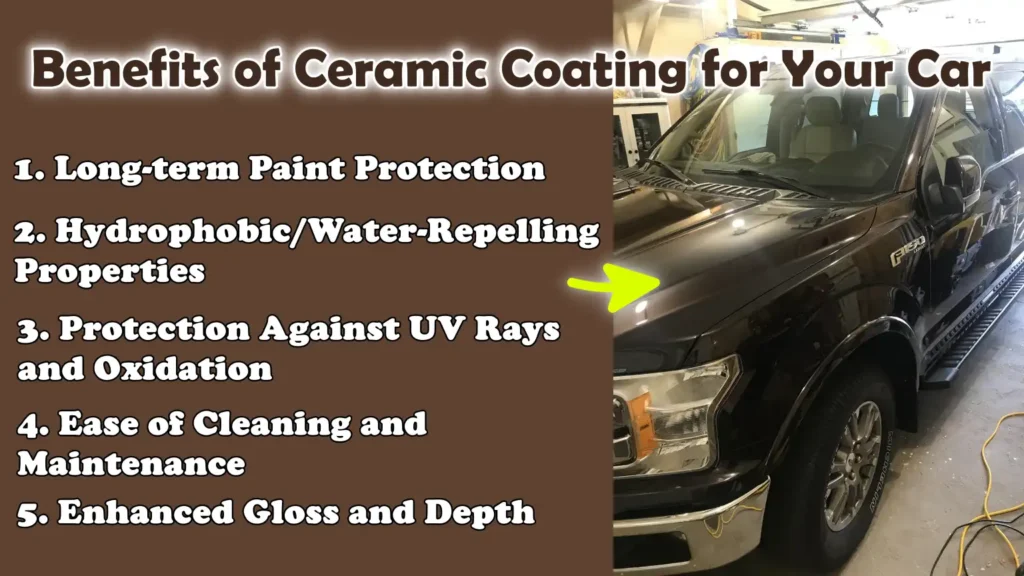
Benefits of Ceramic Coating for Your Car
1. Long-term Paint Protection
Ceramic coating provides long-lasting protection because it forms a strong, semi-permanent layer that bonds with your car’s clear coat.
This layer acts as a shield against common damaging elements such as road grime, bird droppings, tree sap and mild chemical stains.
Unlike wax, which wears off quickly, a ceramic coating remains on the surface for a significantly longer period and does not degrade easily under normal conditions.
It helps minimize the risk of minor scratches caused by dust and improper washing techniques and it also prevents dirt from adhering directly to the paint.
Over time, this protection helps maintain your car’s finish in its pristine condition and can even boost its resale value, as the paint remains in excellent shape.
2. Hydrophobic/Water-Repelling Properties
One of the most distinctive benefits of a ceramic coating is its hydrophobic nature, meaning it effectively repels water.
When water comes into contact with the coated surface, instead of spreading out and adhering to it, it beads up into small droplets and quickly rolls off.
Consequently, dirt, dust and grime are carried away along with the water, keeping the car clean for a longer duration.
This also reduces the likelihood of water spots forming, as less water remains on the surface.
This feature is particularly beneficial during rainy seasons or when washing the car, as it allows the vehicle to dry faster and more easily, while also minimizing water streaks on the surface.
3. Protection Against UV Rays and Oxidation
Prolonged exposure to sunlight can damage your car’s paint, as it causes the clear coat to begin breaking down; Over time, this causes the paint color to fade, the shine to diminish and oxidation to set in.
A ceramic coating creates an additional protective layer that helps block harmful UV rays and slows down the natural process of paint degradation.
By preventing the paint from being directly exposed to sunlight and oxygen, this coating helps preserve the car’s original color and finish.
This is particularly crucial for vehicles that remain parked outdoors for extended periods, as, without proper protection, they face a higher risk of paint fading and surface damage.
4. Ease of Cleaning and Maintenance
A ceramic coating makes the daily cleaning of your car significantly easier, as dust and dirt do not adhere firmly to the surface.
The smooth, slick layer created by the coating reduces friction; consequently, removing dirt requires less effort during a car wash.
This means that vigorous scrubbing is unnecessary, thereby reducing the risk of creating swirl marks on the surface.
In many cases, a simple rinse with water or a gentle wipe is enough to make the car look brand new again.
Over time, this reduces the amount of time, water and cleaning supplies required for vehicle maintenance, making daily car ownership even more convenient.
5. Enhanced Gloss and Depth
A ceramic coating significantly enhances your car’s aesthetic appeal by boosting its gloss and depth.
This coating fills in microscopic imperfections on the surface, rendering it even smoother and more reflective.
The result is a deep, luxurious shine that makes the paintwork appear even more magnificent and vibrant, much like a mirror finish.
Dark-colored cars benefit particularly from this effect, as the coating adds a deep, rich luster to the paint, making the color appear even more profound and captivating.
This finish looks even sharper and more lustrous on light-colored cars, making the vehicle appear like a well-maintained, premium car for an extended period.
Know, The Common Things to Know Before Applying a Ceramic Coating
1. The Surface Must Be Completely Clean
Before applying a ceramic coating, the car’s surface must be thoroughly clean and free of any dirt, grease, or hidden contaminants.
Even if the car appears clean after a regular wash, tiny particles such as: brake dust, industrial fallout, or tree sap, may still be embedded in the paint.
These are not always visible to the naked eye, but they significantly impact how well the coating adheres to the surface.
Proper cleaning typically involves washing with a pH-neutral shampoo, followed by the use of a clay bar to extract embedded impurities.
In many cases, a final wipe-down with an isopropyl alcohol solution is also necessary to remove oils and residues.
If the surface is not completely clean, the coating will not bond properly and the final result will not be as durable or smooth as expected.
2. The Coating Locks In Imperfections
A ceramic coating does not hide scratches, swirl marks, or blemishes.
Instead, it seals the paint in the exact condition it is in at the time of application.
This means that if there are any visible imperfections on the surface, they will remain visible, and may even appear more pronounced, after the coating is applied due to the enhanced gloss.
For this reason, many people choose to polish the paint before applying the coating to remove minor scratches and improve the overall finish of the paintwork.
Paint correction can significantly enhance the final appearance of the paint, but it requires the right tools and techniques.
Skipping this step can lead to disappointment, as the coating serves to lock in, and thereby accentuate, both the flaws and the virtues of the paintwork.
3. Time, Patience and Environment Matter
Applying a ceramic coating is not a task to be rushed; every step requires meticulous attention.
From washing and decontamination to the actual application and curing of the coating, each stage takes time and should not be hurried.
The coating should be applied in small sections and leveled out properly before it begins to dry.
If rushed, the coating may be left with streaks or uneven patches that are difficult to correct later.
Temperature and humidity also play a crucial role, as they influence how quickly the coating dries and cures.
Exercising patience and paying close attention to timing ensures a smooth, uniform and long-lasting finish.
4. Indoor vs Outdoor Application
The environment in which you apply a ceramic coating has a significant impact on the final result.
It is always preferable to apply the coating indoors (such as in a garage), as this allows for better control over dust, sunlight, temperature and humidity.
Direct sunlight can cause the coating to dry too rapidly, making it difficult to spread and level it properly.
In an outdoor environment, while the coating is still fresh, there is also a higher risk of dust and debris settling on the surface, which can compromise the quality of the finish.
If an indoor space is unavailable, it is essential to choose a shaded, clean and low-wind location to minimize these risks as much as possible.
5. Cost vs Effort Comparison
Although a ceramic coating can save money over time, it requires an initial investment of both capital and effort.
DIY (Do-It-Yourself) coating kits are more affordable and offer the convenience of performing the work yourself; However, achieving professional-quality results still requires the right tools, appropriate preparation products and many hours of dedicated effort.
On the other hand, professional coatings tend to be more expensive, as they involve expert-level preparation, paint correction and a controlled application process, factors that often result in long-lasting protection.
Choosing between these two options depends on how much time you are willing to invest, your level of experience and the kind of results you expect.
Understanding this balance helps you make a practical decision that aligns with your specific needs.
Tools
| Tool / Material | Why It Is Needed | How to Use It Properly |
|---|---|---|
| Ceramic Coating Kit | This is the core product that creates a robust protective layer over your car’s paint. | Apply a few drops to the applicator and spread them in straight lines over small sections; then, gently wipe away any excess before it dries. |
| Microfiber Towels | This is used to dry, wipe and level the coating without damaging the surface. | Always use a clean towel, fold it into sections and wipe gently without applying excessive pressure. |
| Applicator Pads | This helps spread the coating over the surface as a thin, uniform layer. | When needed, wrap it in a soft cloth, apply drops of the coating and move it over small sections in a cross-hatch pattern. |
| Car Shampoo – pH Neutral | This cleans away dirt and grime without stripping the protective layer or leaving behind any residue. | Dilute it with water, wash using a soft mitt, rinse thoroughly and do not allow it to dry on the surface. |
| Clay Bar Kit | This removes hidden contaminants that cannot be eliminated through a standard wash. | On a wet surface, use a lubricant spray and rub gently until the paint feels smooth to the touch. |
| Polishing Compound and Machine | This refines the paint finish prior to coating, ensuring a clean and glossy result. | Apply a small amount of the compound, run the machine at a low speed and work evenly across each panel. |
| Isopropyl Alcohol (IPA) Solution | This prepares the surface to ensure that the coating bonds properly with the paint. | Lightly spray it onto the surface before applying the coating and wipe it down with a microfiber towel. |
| Gloves and Proper Lighting | Gloves protect your hands, while a light source helps you clearly see the coating application process. | Wear gloves while applying the coating and use a bright light to check for any missed spots or streaks. |
How to Ceramic Coat Car – Easy Method
1. Thoroughly Wash the Car
The first and most crucial step is to properly wash the car to remove all loose dirt, dust and surface grime.
Use a pH-neutral car shampoo, as it cleans effectively without causing any damage or degrading the paintwork.
You should avoid using common household detergents, as they can strip away the car’s existing protective layers and leave the surface rough.
While washing, pay extra attention to areas where dirt tends to accumulate the most such as: the lower panels and around the wheels.
Rinse the car thoroughly to ensure that no soap residue or dirt remains.
Keeping the surface clean during this stage prevents scratching in subsequent steps and establishes a solid foundation for further preparation.
2. Remove Contaminants Using a Clay Bar
Even after washing, some hidden contaminants may remain on the paintwork that cannot be removed by soap alone.
These include tiny particles such as: industrial fallout, brake dust and tree sap, that adhere to the surface over time.
A clay bar is used to gently extract these deeply embedded contaminants.
As you glide the clay bar over a properly lubricated surface, it lifts these particles away, leaving the paint feeling smooth to the touch.
This step is vital, as any remaining contaminants can interfere with the adhesion of the ceramic coating and compromise its effectiveness.
3. Polish the Paint – Optional, but Recommended
Polishing is not always strictly mandatory; however, it is highly recommended if you desire the absolute best results.
Over time, swirl marks, minor scratches and faded spots accumulate on a car’s paintwork, diminishing its overall luster.
Polishing eliminates these imperfections and restores the surface’s shine.
This process is performed using a polishing compound, ideally with the aid of a machine, which ensures that the product is distributed evenly across the surface.
A smooth and clean surface allows a ceramic coating to be far more effective in enhancing gloss.
If the polishing step is skipped, any visible imperfections will persist and may even become more pronounced after the coating is applied.
4. Wipe Down with IPA Solution
Before applying the ceramic coating, it is crucial to remove any residual oils, polishing residues, or invisible films remaining on the surface.
An Isopropyl Alcohol (IPA) solution is used for this purpose, as it provides a deep clean without damaging the paintwork.
Lightly spray the solution onto a section of the surface and wipe it down with a clean microfiber towel.
This step ensures that the surface is thoroughly clean and fully prepared for the coating application.
Without this step, the coating will not adhere properly, which can compromise its durability and result in an uneven finish.
5. Apply the Ceramic Coating
The application of the ceramic coating must be performed with care and in a systematic manner.
Use an applicator pad and apply a small amount of the coating to it.
Spread the coating over the paintwork using a crosshatch pattern; this involves moving your hand in both horizontal and vertical straight lines to ensure an even application.
Work in small sections to ensure the coating is spread uniformly before it begins to dry.
Depending on the specific product being used, the instructions may vary slightly; Therefore, it is crucial to strictly adhere to the application times and methods specified by the manufacturer.
Applying excessive product or working too hastily can result in streaks in the coating, leading to an uneven appearance.
6. Level and Polish the Coating
After applying the coating, it is essential to level it out before it dries.
This is accomplished using a clean microfiber towel, which allows you to gently wipe away excess product and smooth the surface.
Proper leveling creates a smooth, uniform layer of coating, free from any high spots or streaks.
If excess coating is not removed in a timely manner, it may harden, making it difficult to correct later.
In this step, careful and methodical wiping is vital to achieve a uniform finish and a professional-quality result.
7. Allow Sufficient Time for the Coating to Cure
Once the coating has been applied, it requires time to cure and bond fully with the paintwork.
During this period, the vehicle must be kept dry and protected from water, dust and other contaminants.
Most coatings require at least 24 to 48 hours before being exposed to moisture, although full curing may take several days.
During this time, avoid driving the vehicle or subjecting it to harsh conditions such as: inclement weather.
Proper curing of the coating is critical, as it allows the product to attain its full strength and durability, thereby ensuring long-term protection and a stable finish.
Kno, The Common Mistakes to Avoid During Ceramic Coat Your Car
1. Skipping Paint Preparation
One of the most common and costly mistakes is failing to properly prepare the paint surface before applying a ceramic coating.
Even if the car appears clean, its surface may still harbor hidden dirt, oils and fine particles that prevent the coating from adhering correctly.
Without thorough washing, claying and surface decontamination, the coating will apply unevenly and may not last as long as expected.
In many cases, poor preparation leads to spotting in the finish, reduced durability and a rough surface texture.
Investing time in thoroughly cleaning and preparing the surface ensures that the coating bonds correctly and delivers optimal performance for the long term.
2. Applying Too Much Coating
Using an excessive amount of product does not equate to better protection, a mistake often made by beginners.
Ceramic coatings are designed to be applied in very thin layers; applying too much can result in thick layers that do not spread evenly.
Excess product often leads to visible streaks, uneven gloss and difficulty in leveling the coating during application.
It also results in material waste without offering any improvement in performance.
Applying a small amount and spreading it evenly over a specific section provides better control and ensures a smooth, uniform finish across the entire surface.
3. Working in Direct Sunlight
Applying a ceramic coating in direct sunlight or on a hot surface can lead to significant issues during the application process.
Heat causes the coating to dry or cure much faster than usual, leaving very little time to properly spread and level it.
This can result in streaks, high spots and uneven bonding, imperfections that are difficult to correct later on.
Direct sunlight can also raise the surface temperature, which affects how the coating reacts with the paintwork.
Working in a shaded area or an indoor space with a stable temperature provides better control and yields a more uniform, professional result.
4. Improperly Leveling the Coating
Leveling the coating is a critical step that ensures the product forms a smooth, seamless layer over the paintwork.
If the coating is not properly leveled using a microfiber towel, excess product may remain on the surface; upon drying, this can result in visible marks known as “high spots.”
These marks may appear as streaks or blotches and once they have cured, correcting them may require polishing.
Proper leveling involves gently wiping the surface at the right moment, before the coating fully cures, to remove excess product and achieve a uniform finish.
Skipping or rushing this step can negatively impact both the appearance and the effectiveness of the coating.
5. Touching the Surface During Curing
After applying the coating, it takes some time for it to fully cure and bond with the paintwork.
Touching the surface during this period can leave fingerprints, smudges, or blemishes that may become permanently embedded once the coating hardens.
Even a light touch can disrupt the coating layer and compromise its smoothness.
Exposure to water, dust, or other contaminants during the curing process can also ruin the finish.
Keeping the car in a clean, dry and secure location, without touching it, ensures that the coating cures properly, thereby delivering the expected durability and shine.
How Long Does a Ceramic Coating Last?
1. DIY Coatings – 6 months to 2 years
DIY ceramic coatings are designed for car owners who wish to protect their vehicles themselves.
Their durability typically ranges from 6 months to 2 years, depending on the quality of the product and the method of application.
These coatings are generally easy to use and offer a greater margin for error; however, they contain a lower concentration of active ingredients compared to professional-grade coatings.
Consequently, they do not bond as strongly with the paint surface and tend to wear off more quickly over time.
Frequent washing, exposure to harsh weather conditions and improper maintenance can further reduce their lifespan.
Nevertheless, if applied to a properly prepared surface and maintained using gentle washing techniques, DIY coatings can provide excellent protection, water repellency and enhanced gloss for a considerable period.
2. Professional Coatings – 2 to 5+ years
Professional ceramic coatings are applied by trained detailers and are designed for exceptional longevity, typically lasting anywhere from 2 to 5 years and in some cases, even longer.
These coatings utilize robust, high-durability formulas and are often applied in a controlled environment, following an extensive paint correction process aimed at rectifying imperfections in the paintwork.
This allows the coating to bond more effectively, creating a harder and more resilient protective layer on the surface.
Due to their inherent strength, professional coatings offer superior protection against UV rays, chemicals and environmental contaminants.
They also retain their hydrophobic (water-repellent) properties and high-gloss finish for a significantly longer duration.
However, these coatings are not permanent and they require proper care to last for their full intended lifespan.
3. Factors Affecting Durability – Maintenance and Environment
The actual longevity of any ceramic coating depends heavily on how the car is used and how it is maintained.
Regular maintenance plays a crucial role here, as using proper washing techniques, specifically pH-neutral shampoos and clean microfiber towels, helps preserve the coating.
Harsh washing methods, automatic car washes and strong chemicals can gradually degrade the protective layer.
Environmental conditions also have a profound impact.
Cars frequently exposed to intense sunlight, heavy pollution, road salts, or adverse weather conditions may experience faster coating wear compared to vehicles that are garaged or driven in milder climates.
Driving habits, parking conditions and the frequency with which the vehicle is cleaned, all these factors influence how long the coating remains effective.
With proper care and attention, even a standard coating can last longer than expected; conversely, due to poor maintenance, the lifespan of even a premium-quality professional coating can be significantly reduced.
How to Maintain Ceramic Coat After Applying It
1. Use a pH-Neutral Car Shampoo
After applying a ceramic coating, it is crucial to use a pH-neutral car shampoo for regular washing, as it cleans the surface without damaging the protective layer.
Harsh detergents or aggressive cleaners can gradually degrade the coating and diminish its effectiveness over time.
A pH-neutral shampoo is balanced to remove dirt, dust and road grime while simultaneously preserving the integrity of the coating.
This helps maintain the hydrophobic effect, where water beads up and slides off easily, and also safeguards the smooth, glossy finish for the long term.
2. Avoid Automatic Car Washes
Automatic car washes may seem convenient, but they can damage a ceramic-coated surface due to their abrasive brushes and harsh cleaning chemicals.
These brushes often carry residual dirt from previous vehicles, which can inflict fine scratches and swirl marks on your paintwork.
Over time, repeated exposure to these conditions can negatively impact the clarity and performance of the coating.
Hand washing is always the safer option, as it offers greater control and minimizes the risk of surface damage, thereby ensuring that the coating lasts longer and delivers optimal performance.
3. Use Only Microfiber Towels
Microfiber towels are designed to be soft and safe for car paint, making them an excellent choice for drying and wiping down ceramic-coated surfaces.
Using coarse cloths or low-quality materials can cause minor scratches that mar the smooth finish.
Microfiber towels trap dirt within their fibers rather than dragging it across the paint surface, thereby minimizing the risk of damage.
Using clean, high-quality towels during the drying and maintenance stages helps preserve both the coating and the overall aesthetic appeal of the vehicle.
4. Use a Maintenance Spray – Optional
Maintenance sprays are not strictly essential, but they can help extend the lifespan of a ceramic coating and enhance its performance.
These sprays are specifically formulated to work in conjunction with coated surfaces; they can boost water-repelling properties, restore slickness and further enhance the shine.
When used occasionally after washing, they add a thin protective layer that supports the primary coating.
This proves particularly beneficial as the coating begins to lose some of its hydrophobic properties over time.
Using the correct type of spray ensures compatibility and helps maintain consistent results.
5. Regular and Gentle Washing
Regular washing is crucial for keeping a ceramic-coated car in pristine condition, as dust and dirt can accumulate over time.
Although the coating simplifies the cleaning process, neglecting regular maintenance can allow a layer of grime to build up, thereby diminishing the coating’s effectiveness.
Washing the vehicle gently, using the proper techniques, prevents dirt from becoming deeply embedded in the surface, ensuring that the coating continues to perform at its full potential.
Keeping the car clean not only preserves its appearance but also helps the coating function more effectively and last longer by minimizing damage caused by environmental exposure.
Know, The Difference Between DIY vs Professional Ceramic Coating
1. Cost Comparison
The price difference between DIY and professional ceramic coating is one of the most critical factors for most car owners.
DIY coating is more affordable because you pay only for the product and basic tools, making it an excellent option for those on a limited budget.
However, even with DIY, purchasing necessary preparation supplies such as: clay bars, microfiber towels and cleaning solutions, still entails some expense.
Professional ceramic coating comes at a significantly higher cost, as it involves skilled technicians, state-of-the-art equipment, a controlled working environment and often the application of multiple layers of coating.
This higher price tag also covers extensive preparatory steps such as: paint correction, which ultimately yield a superior result.
While DIY offers initial cost savings, a professional service often delivers a more consistent and long-lasting benefit.
2. Required Skill Level
DIY ceramic coating requires patience, an eye for detail and a basic understanding of car detailing techniques.
Although many products are designed with beginners in mind, the process still involves meticulous surface preparation, precise application and strict adherence to timing during the leveling and curing stages.
Minor errors such as: uneven coating application or missed spots, as it can negatively impact the final result.
In contrast, professional coating is performed by trained detailers who possess the experience to handle various paint conditions and know exactly how to achieve a uniform finish.
They also utilize specialized lighting and tools to identify imperfections that an inexperienced individual might overlook.
While DIY is certainly feasible for beginners, it requires a willingness to learn and a meticulous approach to the task at hand.
3. Differences in Durability
The durability of a ceramic coating depends on two primary factors: the quality of the product itself and the proficiency with which it is applied.
DIY coatings typically last anywhere from a few months to a few years, as they are designed for ease of application and tend to have a thinner consistency.
Professional coatings are generally more robust and can endure for many years, a testament to the use of high-quality formulations and their application under controlled conditions.
Furthermore, professional application often involves precise paint correction and the layering of multiple coats, resulting in superior bonding and overall enhanced performance.
While DIY coatings still offer substantial protection, professional coatings provide a higher level of defense against environmental damage and maintain their efficacy over a longer period.
4. When to Choose a Professional Service
The choice between DIY and professional coating depends on your expectations, level of experience and the time you have available.
If you desire a flawless finish, long-lasting durability and minimal risk of errors, a professional service is the optimal choice.
This is particularly beneficial for new cars, luxury vehicles, or situations where the paintwork requires correction prior to the coating application.
Conversely, if you are willing to invest the time, adhere to proper procedures and accept that results may vary depending on your skill level, a DIY coating is a viable option.
This is best suited for individuals who enjoy working on their cars and are seeking a cost-effective method to enhance both the protection and aesthetic appeal of their vehicle.
Understanding your specific needs and limitations will help you determine which option will yield the best results for you.
Is Getting a Ceramic Coating Worth It?
Even, there’s research about the modern ceramic coatings that shows that coatings combine durability with visual enhancement, that literally helps to reduce the oxidation, fading and chemical damage as well, so this makes the ceramic coating a more advanced and long-lasting solution compared to the traditional methods such as: wax or sealants as well.[¹]
1. Cost vs Benefits Analysis
Initially, a ceramic coating may seem expensive; however, its true value becomes apparent once you understand the benefits it delivers.
Unlike waxes or sealants, which typically last only a few weeks or months, a ceramic coating provides long-term protection.
If applied and maintained correctly, it can last for years.
This reduces the need for frequent waxing, minimizes the effort required for cleaning and helps guard against damage caused by sunlight, dust and chemicals.
Consequently, over time, you end up spending less time and money on recurring maintenance.
Although the upfront cost may be high (specially if you have it applied by a professional), its long-lasting protection, enhanced aesthetics and reduced maintenance requirements make it a smart investment for many car owners.
2. Who Benefits the Most? (Daily Drivers, Luxury Car Owners, Enthusiasts)
Ceramic coating is particularly beneficial for those who drive their cars daily, as it helps shield the vehicle’s paintwork from dust, pollution and the elements.
For daily drivers, it simplifies the cleaning process and helps keep the car looking “brand new” for an extended period.
It is also a popular choice among owners of luxury or high-end vehicles, where preserving the condition of the original paint is of paramount importance.
Car enthusiasts, who pay close attention to the appearance and details of their vehicles, benefit significantly from the deep gloss and smooth finish that a ceramic coating provides.
Furthermore, this benefit is not limited solely to luxury vehicles; Even standard vehicles can enjoy long-term protection and an enhanced aesthetic appeal if they undergo a proper ceramic coating application.
3. Long-Term Benefits
The true value of ceramic coating becomes apparent over time, as it shields your car’s paintwork from deterioration as the years go by.
By minimizing paint fading, oxidation and surface damage, it helps preserve the car’s original color and luster.
Should you decide to sell the vehicle in the future, this can translate into a higher resale value.
It also simplifies daily car maintenance, as dust and dirt do not adhere easily to the surface, making the car-washing process quicker and more efficient.
While it does not render the car completely “maintenance-free,” it certainly significantly reduces the effort required to keep it clean and protected.
From a long-term perspective, the combination of its durability, protective qualities and ease of maintenance makes it an excellent choice for those looking to safeguard their investment and preserve their car’s pristine shine.
Read More:
- How to Protect Car Paint
- How to Remove Bad Smell from Car
- How to Restore Faded Car Paint
- How to Polish Car Headlights
- How to Remove Scratches from Car Paint
- How to Wax Car By Hand
- How to Wash Car Properly
Conclusion – How to Ceramic Coat Car
So, ceramic coating is actually beneficial for vehicle’s protection as it maintains the original look and avoid early paint damage as well.
Sunlight, dust, pollution, water spots and microscopic particles, all play a role in diminishing the longevity and aesthetic appeal of your car’s paint; and a ceramic coating helps mitigate this damage far more effectively than traditional methods such as waxes or sealants.
It creates a durable surface that repels water, prevents dust accumulation and keeps the paint looking clean and glossy for an extended period.
However, the most crucial point to understand is that the final outcome depends heavily on proper surface preparation and the correct application techniques.
A well-prepared surface and strict adherence to the application process can yield professional-grade results, whereas errors made during preparation or application can compromise both the performance and the aesthetic quality of the coating.
To ensure that it continues to perform at its best, it also requires regular, albeit simple, maintenance.
When executed correctly, a ceramic coating saves time, reduces effort and helps preserve your car’s resale value by keeping the paintwork in excellent condition for many years to come.
So, that’s it from this one How to Ceramic Coat Car, still having confusion: just comment for more.
Frequently Asked Questions
FAQ 1: What is ceramic coating and how does it actually protect a car?
Ceramic coating is a liquid layer applied to your car’s paint, which subsequently cures to form a durable, protective surface. It works by bonding with your car’s clear coat meaning it doesn’t merely sit on top like wax does. Once applied, it helps shield the paint from sunlight, dust, water and chemical contaminants. It also creates a slick surface that makes it difficult for dust to adhere, keeping the car cleaner for longer and making the washing process significantly easier.
FAQ 2: Can I apply ceramic coating myself at home?
Yes, provided you follow the correct steps and take your time, you can apply ceramic coating yourself. Many products are designed with beginners in mind and come with clear, detailed instructions. However, the most critical part is the preparation, not just the application itself. Before applying the coating, you must thoroughly wash the car, remove any contaminants and sometimes even polish the paintwork. If you skip these steps or rush the process, the results may not last as long or look as good as you had hoped.
FAQ 3: How long does ceramic coating actually last?
The lifespan of a ceramic coating depends on the specific product used and how well it is maintained. DIY coatings typically last anywhere from 6 months to 2 years, whereas professional-grade coatings can last from 2 to 5 years or even longer. Regular washing using the right products, along with avoiding harsh conditions, can help extend its lifespan. Conversely, poor maintenance or exposure to strong chemicals can compromise its durability.
FAQ 4: Does a ceramic coating make a car completely scratch-proof?
No, a ceramic coating does not make your car completely scratch-proof. It can help minimize very minor scratches caused by dust or improper washing techniques, but it cannot protect against deep scratches, dents, or collisions. It is best understood as a protective layer that mitigates damage, rather than something that prevents every type of physical harm.
FAQ 5: Is a ceramic coating better than wax or a sealant?
In terms of durability and protection, a ceramic coating is generally superior to waxes and sealants. Wax provides shine and protection for only a few weeks, while sealants typically last for a few months. A ceramic coating lasts for a significantly longer period and offers stronger protection against water, UV rays and dirt. However, compared to wax or sealants, it requires more extensive preparation and a more meticulous application process.
FAQ 6: What happens if a ceramic coating is not applied correctly?
If a ceramic coating is not applied correctly, it may result in streaks, uneven patches, or marks known as “high spots.” As the coating hardens over time, removing these imperfections can be difficult and correcting them may require polishing. Therefore, it is crucial to apply the coating in small sections, ensure uniform coverage and strictly adhere to the recommended curing times during the process.
FAQ 7: Do I still need to wash my car after applying a ceramic coating?
Yes, you will still need to wash your car regularly even after applying a ceramic coating. The coating helps prevent dirt from adhering to the surface, but it does not completely prevent dirt from accumulating. Regular and gentle washing helps maintain the performance of the coating, keeping the car looking clean and glossy. The good news is that, compared to a car without a coating, cleaning becomes significantly faster and easier.
FAQ 8: Can a ceramic coating be removed if necessary?
Yes, a ceramic coating can be removed, but it is not an easy task. As it bonds with the paint, it cannot simply be washed off. Removing it typically requires polishing or machine correction to break down the coating layer. This process must be performed with great care to ensure that the underlying paint remains undamaged.
FAQ 9: Is investing in a ceramic coating worthwhile for an average car?
If you desire long-term protection and ease of maintenance, investing in a ceramic coating can be a worthwhile decision, even for an average car. It helps keep the paintwork in excellent condition, reduces the effort required for cleaning and preserves the car’s aesthetic appeal over time. Although the initial cost may seem high, it can save time and minimize the need for frequent detailing or waxing.
FAQ 10: What is the biggest mistake beginners make regarding ceramic coatings?
The biggest mistake beginners make is failing to properly prepare the vehicle before applying the coating. Many people focus solely on the application technique, but the condition of the paint before application is ultimately what determines the final result. If the surface is not clean and smooth, the coating will not perform effectively and may even permanently seal in existing surface imperfections.
References:
[1] Development of Car Coating Materials over the Past Decade for Paint Protection Applications, An Overview on the Different Types of Paint Protections
https://www.mdpi.com/2073-4360/17/23/3114
Hello Folks, Dean Shali here to help you out to solve the problems with your lovely vehicle, as i have lots of experience and knowledge about automotive industry as i woks directly with the customers and repair vehicles and i love to help the people to keep their cars safe and running smoothly.