Written By: Dean Shali
Fact Checked By: Sabré Cook
Reviewed By: Tamara Warren
The diagnosis is all about catching the problem way before it gets worsen or failure of something, even most of the clutch failures actually starts with small signs that gets ignored without diagnosis.
Because, the clutch is the important parts of a manual transmission vehicle, as it literally controls how power from the engine is transferred to the wheels, so without having a properly working clutch, your vehicle even move efficient way or you’ll have to deal with shift gears problems daily.
Yeah, clutch components naturally wear out as well due to the friction, heat and driving habits as well, but you need to diagnose if they are working perfectly in 50,000 to 100,000 kilometers of service as most of the clutches typically lasts in between that range.
So, if you’re facing problems such as: slipping, unusual noises, difficulty in shifting gears or changes in pedal feel then don’t just ignore them as a small thing, otherwise it can lead to more serious damage that includes total transmission failure as well; and obviously is more expensive to repair.
Now, in this guide you’ll learn How to Diagnose Clutch Problems, so that you can learn about identifying real symptoms, about their causes and beginner friendly steps to diagnose the clutch issue in accurate way.
How the Clutch System Works – The Basics of It
The clutch is an essential component of any vehicle equipped with a manual transmission.
Its primary function is to smoothly engage and disengage the engine from the wheels.
Without a clutch, shifting gears would be impossible; furthermore, whenever you attempted to move the vehicle forward, it would either lurch violently or stall completely.
Understanding how the clutch operates allows you to identify potential issues early on and ensures that you can provide better care for your vehicle.
1. The Clutch Disc
The clutch disc is a round, flat component coated with friction-generating material.
It is situated between the engine’s flywheel and the pressure plate.
When you depress the clutch pedal, the disc separates from the flywheel, thereby interrupting the transfer of power, allowing you to shift gears.
When you release the pedal, the disc re-engages with the flywheel, enabling the engine’s power to flow to the transmission.
Over time, the friction material wears down, causing the clutch to slip or making it difficult to engage gears.
2. The Pressure Plate
The pressure plate is a heavy metal plate that firmly presses the clutch disc against the flywheel.
It ensures that when the clutch is engaged, the engine’s power is transmitted effectively to the drivetrain.
Springs located within the pressure plate help maintain this necessary pressure.
If the pressure plate weakens or its springs fail, the clutch may begin to slip, resulting in a loss of vehicle speed even if the engine is running smoothly.
3. The Flywheel
The flywheel is a large, smooth metal disc attached to the engine’s crankshaft.
It provides a stable surface for the clutch disc to engage with and helps maintain engine speed while the vehicle is in motion.
Furthermore, the flywheel absorbs engine vibrations and facilitates smoother gear shifting.
A faulty or warped flywheel can generate vibrations, prevent the clutch from engaging properly and accelerate the wear rate of the clutch disc.
4. Release (Throw-out) Bearing
The release bearing, also known as the throw-out bearing, is situated between the pressure plate and the clutch pedal.
Its function is to ensure that when the pedal is depressed, the pressure plate effectively disengages the clutch disc.
A worn or defective release bearing often produces squealing or grinding noises and the clutch pedal may feel rough or uneven when depressed.
5. Clutch Master and Slave Cylinders – Hydraulic System
Modern vehicles frequently utilize hydraulic systems to actuate the clutch.
The clutch master cylinder, which is connected to the pedal, transmits hydraulic fluid to the slave cylinder when the pedal is depressed.
Subsequently, the slave cylinder actuates the release bearing, thereby disengaging the clutch.
If the hydraulic system develops a leak or air becomes trapped within it, the pedal may feel soft or spongy and the clutch may fail to fully engage or disengage.
6. A Simple Explanation of Engagement and Disengagement
When the clutch pedal is released, the clutch engages.
The pressure plate firmly presses the clutch disc against the flywheel, allowing the engine’s power to propel the vehicle forward.
When you depress the clutch pedal, the clutch disengages; This causes the pressure plate to retract from the disc, thereby interrupting the transfer of power and allowing you to shift gears smoothly and without any friction.
The proper functioning of all these components ensures ease of driving, efficient power transmission and a long lifespan for the clutch.
Know, Common Symptoms of Clutch Problems
Identifying clutch problems in a timely manner is crucial to avoid severe damage and costly repairs.
Clutch issues typically develop gradually and the specific symptoms depend on the underlying cause of the problem.
By paying close attention to your car’s behavior and the feel of the clutch pedal, you can detect issues before the clutch fails completely.
1. Slipping Clutch
A clutch slips when the clutch disc fails to engage fully with the flywheel; this causes the engine RPM to rise, but the vehicle’s speed does not increase in proportion.
You may notice that the vehicle struggles to gain momentum, even though the engine sounds as if it is working harder than usual.
This condition is often accompanied by a burning smell, as the friction material on the clutch disc becomes excessively hot.
Clutch slippage is typically caused by worn-out friction material, contamination by oil or fluid, or a weakened pressure plate; this issue should be repaired immediately to prevent further damage to the transmission.
2. Stiff or Stuck Clutch Pedal
If the clutch pedal feels unusually stiff or stuck when depressed, it typically signals a mechanical issue such as: a stretched or worn clutch cable, or a faulty pressure plate.
A stiff pedal makes it difficult to disengage the clutch, which can result in the vehicle starting with a jolt or difficulty shifting gears.
Ignoring this symptom can place excessive strain on other transmission components and increase the risk of sudden clutch failure.
3. Soft or Spongy Clutch Pedal
A clutch pedal that feels soft or spongy often indicates a problem within the hydraulic system.
Air trapped in the hydraulic lines, a low clutch fluid level, or a leak in the master or slave cylinder can prevent the clutch from fully engaging or disengaging.
This renders gear shifting unreliable and can lead to issues such as clutch slippage or an incomplete transfer of power.
A soft clutch pedal should be inspected immediately, as this issue can deteriorate rapidly and compromise both the vehicle’s safety and its drivability.
4. Difficulty Shifting Gears
If you hear a grinding sound or feel resistance while shifting gears, it may indicate that the clutch is not fully disengaging.
Gears failing to engage, or difficulty moving the gear shifter smoothly, can be signs of worn clutch components or a problem within the hydraulic system.
Driving the vehicle in this condition can cause further damage to the transmission’s synchronizers and gears, thereby increasing repair costs.
Paying attention to the smoothness of gear shifting allows you to identify clutch-related issues before they escalate.
5. Noises Emanating from the Clutch
If you hear unusual noises such as: squeaking, rattling, or chirping sounds, while pressing or releasing the clutch pedal, it often signals that a component has worn out or is defective.
The release bearing, pressure plate, or even the clutch disc can produce such noises when they are failing.
Ignoring these sounds can lead to more extensive damage, including total clutch failure and costly transmission repairs.
Addressing unusual noises in a timely manner can save you both time and money, while also ensuring that your car remains safe to drive.
How to Diagnose Clutch Problems – Easy 6 Steps
Detecting clutch problems early can help you avoid expensive repairs and prevent hazardous situations on the road.
By carefully observing symptoms and performing a few simple checks, you can determine whether your clutch is worn out, failing, or functioning correctly.
This step-by-step guide outlines practical methods that anyone can use, even those with limited mechanical knowledge, to identify potential issues.
1. Perform a Visual Inspection
Begin by visually inspecting the clutch system.
Check for any fluid leaks near the clutch master cylinder, slave cylinder, or hydraulic lines, as leaking fluid can compromise clutch performance and indicate a serious internal issue.
If your vehicle utilizes a mechanical system, inspect the clutch cable; look for any signs of breakage, stretching, or general wear and tear.
A visual inspection is a crucial first step, as it can help you identify obvious faults before proceeding to more detailed diagnostic procedures.
2. Assess the Feel of the Clutch Pedal
Gently press and release the clutch pedal to gauge its response.
Determine whether the pedal feels excessively stiff, which could signal a mechanical issue, such as a weak pressure plate or a cable problem, or if it feels overly soft and spongy, which may point to hydraulic issues, such as trapped air in the lines or low fluid levels.
Understanding the pedal’s operation provides immediate insight into the condition of the clutch system and helps identify the potential root causes of any problems.
3. Check for Clutch Slippage
To check for clutch slippage, attempt to accelerate the vehicle in a high gear while maintaining moderate engine speed.
If the engine RPM (revolutions per minute) rises but the vehicle’s speed does not increase in proportion, the clutch may be slipping.
Another simple check is the handbrake test; in this method, you gently engage the handbrake and attempt to accelerate the vehicle.
If the clutch is functioning correctly, the vehicle will begin to pull forward without the engine revving excessively.
Detecting slippage early helps prevent further wear and protects the transmission.
4. Pay Attention to Unusual Sounds
Listen for any unusual sounds that occur while pressing or releasing the clutch pedal.
Sounds such as squeaking, rattling, or chirping are often indications that components like the release bearing or pressure plate have worn out.
Listening carefully while performing other checks can help you pinpoint exactly which part of the clutch system is failing, providing clear evidence that repairs or replacements are now required.
5. Check the Engagement Point
With the vehicle stationary, slowly release the clutch pedal and observe the clutch’s engagement point.
If the engagement point is very high, meaning the clutch engages very close to the floor, it may indicate that the clutch disc is excessively worn.
Conversely, if the engagement point is very low, meaning the clutch engages almost immediately, it could signal an issue with the pedal adjustment or a hydraulic problem.
Correctly identifying the bite point helps determine whether the clutch will continue to function safely or if it requires immediate attention.
6. Check the Hydraulic System – If Applicable
For vehicles equipped with a hydraulic clutch system, check the fluid level in the master cylinder and ensure that no air is trapped within the system.
Low fluid levels prevent the clutch from disengaging completely, while air bubbles reduce hydraulic pressure and cause the pedal to feel spongy.
Regular inspection and maintenance of the hydraulic system ensure smooth clutch operation and help prevent sudden malfunctions while driving.
Learn Some Advanced Diagnostic Methods As Well
To pinpoint clutch issues with greater precision, advanced diagnostic methods go far beyond mere visual inspections and basic pedal tests.
These techniques are particularly valuable when initial checks reveal potential problems, but you need to accurately assess the true condition of the clutch.
Advanced diagnostics can detect minor issues, quantify the extent of wear and help ensure that your vehicle remains safe and reliable before costly failures occur.
1. Road Tests Under Various Conditions
Conducting a road test allows you to observe the clutch’s performance under actual driving conditions.
Test the vehicle on level roads, on inclines and during rapid acceleration from a standstill.
Pay close attention to how the engine responds during gear shifts and whether the clutch engages smoothly or slips under load.
Variations in performance across different scenarios can reveal issues that might go undetected while the vehicle is stationary.
A controlled road test helps determine whether symptoms such as: slipping, harsh engagement, or delayed response, are consistent and severe.
2. Clutch Wear Inspection – Requires Component Disassembly
In some instances, partially disassembling the transmission system becomes necessary to accurately assess the extent of clutch wear.
Removing the transmission or inspection cover allows you to examine the clutch disc, pressure plate and flywheel for thickness, surface condition and signs of overheating or scoring.
This method provides an opportunity for a direct visual inspection of component wear, something that cannot be determined solely through pedal feel or external observation.
Technicians often measure the thickness of the clutch disc and inspect the friction material to determine whether it requires replacement.
3. Use of Diagnostic Tools – For Modern Vehicles
Modern vehicles are frequently equipped with electronic sensors and onboard diagnostic systems that monitor clutch operation.
By utilizing diagnostic tools, one can assess parameters such as pedal travel, hydraulic pressure and engagement points.
Some advanced scanners can read error codes related to clutch sensors, hydraulic malfunctions, or transmission-related issues.
These tools facilitate rapid problem identification, minimize the need for guesswork and ensure accurate repairs.
The use of diagnostic tools is particularly beneficial for newer vehicles featuring complex clutch and transmission systems, making the troubleshooting process faster and more precise.
What are The Common Causes of Having Clutch Problems
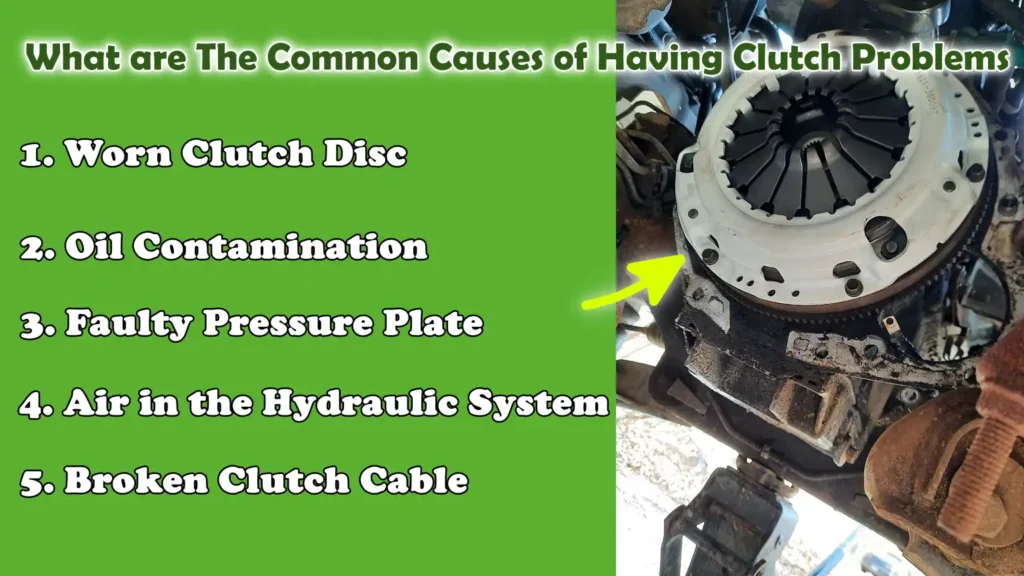
Clutch problems can arise from a variety of causes and understanding the root cause helps you address issues before they escalate.
Identifying the precise cause allows you to prevent future malfunctions and ensures that the vehicle operates smoothly and safely.
Every component of the clutch system plays a specific role; wear and tear on any of these parts can adversely affect the performance of the entire system.
1. Worn Clutch Disc
The clutch disc is constructed from a material that gradually wears down through normal use.
Over time, this wear diminishes the disc’s ability to effectively grip the flywheel, causing the clutch to slip and disrupting the transmission of power from the engine to the transmission.
A worn clutch disc often results in a higher clutch engagement point, reduced vehicle acceleration and a burning odor during heavy use.
Regular inspections, along with an awareness of the disc’s typical lifespan (usually between 50,000 and 100,000 kilometers), help prevent sudden breakdowns.
2. Oil Contamination
The presence of oil or grease on the clutch disc or flywheel can significantly reduce friction, causing the clutch to slip.
This contamination by oil or grease may stem from leaking engine seals, leaking transmission fluid, or improper handling during repairs.
When oil reaches the friction surfaces, it prevents the clutch from engaging properly, impairs acceleration and can even lead to clutch overheating.
To restore optimal clutch performance, it is essential to identify the oil-affected components and either clean or replace them.
3. Faulty Pressure Plate
The pressure plate exerts the necessary force to firmly press the clutch disc against the flywheel.
A weak or defective pressure plate fails to grip the clutch disc properly, leading to clutch slippage, vehicle vibration, or a failure of the clutch to engage correctly.
Causes of pressure plate failure include worn-out springs, overheating, or manufacturing defects.
A faulty pressure plate can significantly reduce the lifespan of the clutch and replacing it is essential to ensure the reliable operation of the vehicle.
4. Air in the Hydraulic System
In vehicles equipped with hydraulic clutch systems, air trapped within the lines compromises the hydraulic fluid’s ability to effectively transmit pressure.
This causes the clutch pedal to feel soft or spongy when depressed, prevents the clutch from fully disengaging and makes shifting gears difficult.
Regular maintenance, including bleeding the system to purge air bubbles, is crucial for ensuring proper clutch function and smooth vehicle operation.
5. Broken Clutch Cable
In older or mechanically actuated clutch systems, a cable is used to connect the clutch pedal to the clutch mechanism.
Over time, this cable may stretch, fray, or snap completely.
A broken clutch cable prevents the clutch from disengaging properly, making gear shifting impossible and creating a risk of the vehicle stalling.
Timely replacement of worn cables ensures the safe and reliable operation of the clutch system.
Read More:
When to Repair and When to Replace the Clutch
Knowing when to repair or replace a clutch is crucial for maintaining a vehicle’s safety and performance, as well as for avoiding costly damage to the transmission.
Some issues can be resolved through simple maintenance, while others indicate that the clutch has reached the end of its useful life.
Understanding this distinction allows you to make the right decisions and ensures that your car continues to run without interruption.
Plus, there’s research into how clutch friction materials deteriorate and that shows that the wear is not uniform, as there’s microscopic changes in material structure that directly influences the performance and are the root cause of the symptoms such as: slipping and burning smells, that’s why when you recognize these mechanisms then it helps you to explain why early diagnosis actually matters that much.[¹]
1. Minor Repairs
Some clutch issues can be resolved through relatively simple repairs without the need to replace the entire clutch assembly.
Common minor repairs include topping up or replacing hydraulic fluid, bleeding the system to purge trapped air and, in mechanically operated vehicles, adjusting or replacing a worn clutch cable.
If the individual clutch components are otherwise in good condition, these procedures can restore proper pedal feel and ensure correct clutch engagement.
Minor repairs are typically quicker and less expensive than a full clutch replacement, making them an effective solution for addressing early-stage issues.
2. Signs That a Full Clutch Replacement Is Needed
A full clutch replacement becomes necessary when wear or damage affects the system’s core components, including the clutch disc, pressure plate, or flywheel.
Symptoms indicating the need for a clutch replacement include persistent clutch slippage even after adjustment, a burning odor, an unusually high or low clutch engagement point, difficulty shifting gears and strange noises (such as grinding or rattling sounds).
Replacing the entire clutch ensures that all worn-out components are renewed, thereby guaranteeing full power transfer and ensuring that the vehicle operates safely and reliably.
Delaying a clutch replacement can lead to even more severe damage, including transmission-related issues, the repair costs for which are significantly higher.
3. Average Clutch Lifespan
The average lifespan of a clutch varies depending on driving habits, the type of vehicle and driving conditions.
Most clutches last between 50,000 and 100,000 kilometers; however, frequent stop-and-go driving, hauling heavy loads and improper clutch usage (such as resting one’s foot on the clutch pedal while driving) can significantly reduce its lifespan.
Regular maintenance and early detection of issues can extend the clutch’s life, prevent sudden failure and reduce repair costs over the vehicle’s entire service life.
Understanding the normal limits of wear allows drivers to anticipate the need for a clutch replacement before total failure occurs.
Cost of Diagnosing and Repairing Clutch Problems
Understanding the costs associated with diagnosing and repairing clutch problems is crucial for budgeting and making informed decisions regarding vehicle maintenance.
The cost of clutch repair depends on the severity of the issue, the type of vehicle and whether the situation requires merely a minor adjustment or the replacement of the entire clutch assembly.
Knowing what to expect helps drivers take prompt action and prevent further damage, damage that could otherwise lead to increased expenses.
1. Diagnostic Costs
Diagnosing clutch problems typically begins with a professional inspection, which may involve a visual examination, an assessment of the pedal feel, a road test and, in some cases, the use of specialized diagnostic tools.
Diagnostic fees can vary depending on the mechanic or service center; generally, these range from a nominal fee for a basic check to a higher amount if a more detailed examination or the removal of certain components is required.
Accurate diagnosis is essential, as it identifies the root cause of the problem and helps avoid unnecessary repairs.
2. Repair vs Replacement Costs
Minor repairs such as: bleeding the hydraulic system to remove air, topping up or replacing clutch fluid, or repairing a worn clutch cable, are typically cost-effective and represent only a small fraction of the cost of replacing the entire clutch assembly.
Conversely, replacing the complete clutch assembly, which may include the clutch disc, pressure plate, release bearing and sometimes the flywheel, is significantly more expensive.
Depending on the vehicle’s make, model and local labor rates, the cost of a full clutch replacement can be moderate for standard vehicles, whereas it may be substantially higher for high-performance or luxury cars.
3. Factors Affecting Cost
Several factors influence the total cost of repairing or replacing a clutch.
Labor charges are a primary consideration, as replacing a clutch necessitates removing the transmission, a process that involves a significant amount of labor.
The cost and quality of replacement parts also play a role; original manufacturer parts tend to be more expensive than other options available in the market.
The type of vehicle, driving conditions and any additional issues discovered during inspection such as: resurfacing the flywheel or repairing the hydraulic system, as it can also impact the final cost.
Understanding these factors helps you estimate expenses and plan the repair efficiently.
What are the Tips for Having Safe Diagnosis
Clutch problems can often be diagnosed at home or in a workshop, but safety must always be the top priority.
Working carefully and adhering to basic precautions reduces the risk of injury and helps prevent further damage to your vehicle.
Understanding and implementing these safety measures ensures that you can effectively inspect and test your clutch without incurring any unnecessary risks.
1. Work on a Cold Vehicle
Before performing any inspection or maintenance, always ensure that the engine and its surrounding components are cool.
Hot engines, transmissions, or exhaust systems can pose a burn hazard; furthermore, certain components may become brittle or expand when hot, increasing the likelihood of damage.
Waiting for the vehicle to cool down not only keeps you safe but also aids in performing a more accurate diagnosis, as hot components may behave differently under load or movement.
2. Use Jack Stands Correctly
If you need to lift the vehicle to inspect the clutch or transmission, always use high-quality jack stands and ensure that the car is stable on a level surface.
Never rely solely on a hydraulic jack to support the vehicle, as it can fail and cause serious injury.
Correctly positioning the jack stands beneath the manufacturer-recommended lifting points ensures stability while you work and provides safe access to the clutch system and related components.
3. Avoid Driving with a Faulty Clutch
Continuously driving a car with a faulty clutch can be extremely dangerous.
A clutch that slips, sticks, or fails to disengage properly can lead to issues such as loss of vehicle control, stalling in traffic, or the inability to shift gears during an emergency situation.
Even short trips can exacerbate the damage, potentially driving up repair costs.
If you notice significant signs of clutch problems, it is safer to have the vehicle inspected, or towed to a repair shop, rather than attempting to drive it there.
How to Prevent Future Clutch Problems Easily
Preventing clutch problems from occurring is always preferable to repairing or replacing a worn-out clutch.
This begins with understanding how your driving habits and maintenance practices impact this system.
By adopting the right techniques, you can extend the lifespan of your clutch, make gear shifting smoother and avoid costly repair expenses.
Paying regular attention to your clutch ensures safe driving and reliable vehicle performance over the long term.
1. Proper Driving Habits
Your driving style has a direct impact on the longevity of your clutch.
Shifting gears gradually and deliberately reduces excessive wear on the clutch disc and pressure plate.
Avoid sudden acceleration, unnecessarily revving the engine to high RPMs when starting from a standstill and “popping” (suddenly releasing) the clutch; these actions generate heat and friction, causing components to wear out rapidly.
Engaging the clutch in a controlled manner and shifting gears smoothly allows the clutch to operate efficiently, thereby minimizing the risk of clutch slippage or premature failure.
2. Avoid “Riding the Clutch”
“Riding the clutch”, that is, resting your foot lightly on the pedal or keeping it slightly depressed while driving, creates constant friction between the clutch disc and the flywheel.
This continuous friction generates heat, causing the friction material to wear out prematurely; this can lead to clutch slippage or a loss of power transmission.
To preserve the life of your clutch and ensure that gears engage smoothly and correctly, it is essential to completely remove your foot from the clutch pedal once you have finished shifting gears.
3. Regular Maintenance Checks
Regular maintenance is crucial for preventing clutch-related problems.
Periodically checking hydraulic fluid levels, inspecting for any leaks and ensuring that the clutch cable or linkages are in good condition, all these measures help prevent minor issues from escalating into major mechanical failures.
Furthermore, paying attention to any unusual noises during daily driving and monitoring the feel of the pedal helps in identifying early signs of clutch wear.
Regular maintenance enables timely intervention, extends the lifespan of the clutch and ensures that your vehicle continues to operate safely and efficiently.
Conclusion – How to Diagnose Clutch Problems
Without a doubt, if you maintain your clutch system perfectly then it actually gives you smooth power transfer and reliable performance today and everyday without affecting your safety and your wallet as well.
So, by understanding how the clutch system operates, recognizing common signs of wear or malfunction and following step-by-step inspection procedures, you can identify issues early and protect your vehicle from costly damage.
Regular inspections, proper driving habits and timely maintenance are the keys to extending the lifespan of your clutch and ensuring smooth gear shifting.
Whether your vehicle features a hydraulic or a mechanical system, knowing when to repair minor issues and when to replace worn-out components can save you both time and money.
Paying attention to your clutch not only enhances vehicle performance but also improves overall driving safety, providing you with confidence and control on the road.
Now, that’s all about this guide about How to Diagnose Clutch Problems, in a case of having doubts unsolved just comment that damn down below.
Frequently Asked Questions
FAQ 1: What are the early signs of clutch failure?
Early signs of clutch failure often involve a change in the feel of the pedal such as: the pedal becoming soft, spongy, or unusually stiff. You may also experience slippage while accelerating; this occurs when the engine RPM (revs) increases, but the vehicle does not gain speed as expected. A burning smell, strange noises such as: squealing or rattling, when depressing the pedal and difficulty shifting gears are also common early indicators. Recognizing these signs in a timely manner can prevent major damage to the transmission.
FAQ 2: How long does a clutch typically last?
A clutch typically lasts between 50,000 and 100,000 kilometers, depending on your driving habits and the type of vehicle. Frequent stop-and-go traffic, hauling heavy loads, “riding the clutch” (driving with your foot resting on the pedal), or aggressive driving can significantly reduce its lifespan. Conversely, smooth driving, proper pedal usage and regular vehicle maintenance can extend the life of the clutch. Keeping an eye on clutch-related symptoms and ensuring proper maintenance of the clutch system helps ensure it lasts for its intended lifespan.
FAQ 3: Can I drive with a slipping clutch?
Driving with a slipping clutch is not advisable, as it results in reduced power transfer, increased fuel consumption and potential further damage to the transmission. A slipping clutch may also emit a burning odor and make the vehicle feel sluggish. While driving for short distances may be possible, continuing to do so can cause the problem to escalate rapidly and become much more severe. It is safer to have the clutch inspected and repaired before attempting to drive for longer distances.
FAQ 4: Why do clutches fail?
A clutch can fail for several reasons. Wear on the clutch disc is the most common cause, as the associated friction material gradually deteriorates over time. Contamination of the clutch disc or flywheel with oil can also prevent the clutch from functioning correctly. A faulty pressure plate, air entering the hydraulic system, or a broken clutch cable can also lead to clutch-related issues. Poor driving habits such as: resting your foot on the clutch pedal while driving or shifting gears abruptly that accelerate the wear process, potentially causing the clutch to fail prematurely.
FAQ 5: How do I know if my clutch is slipping?
You can check whether your clutch is slipping by driving the vehicle in a high gear at a medium engine speed. If the engine RPM (revolutions per minute) increases but the vehicle’s speed does not rise proportionately, it indicates that your clutch is slipping. Another method to check this is the ‘handbrake test,’ in which you gently engage the handbrake while accelerating. With a properly functioning clutch, the car should move forward smoothly without the engine over-revving (making a loud noise). If the clutch slips during these tests, it requires attention.
FAQ 6: Why does my clutch pedal feel soft or spongy?
A soft or spongy clutch pedal typically indicates a hydraulic issue, such as trapped air in the lines, low fluid levels, or a leak in the master or slave cylinder. When the hydraulic system fails to generate the necessary pressure, the clutch cannot disengage fully, making gear shifting difficult. Bleeding the system to purge the air and ensuring that the fluid level is correct can often restore the proper feel to the pedal.
FAQ 7: Why does my clutch pedal feel difficult to press?
A stiff or hard clutch pedal often indicates underlying mechanical issues. In vehicles equipped with cable-operated clutches, the cable may stretch or become damaged. In hydraulic systems, issues with the pressure plate or springs can create excessive resistance. A stiff pedal makes it difficult to fully disengage the clutch, causing the vehicle to start with a jerk; if left unaddressed, this can lead to damage to the transmission.
FAQ 8: When should I replace the clutch rather than repairing it?
You should replace the clutch when its core components such as: the clutch disc, pressure plate, or flywheel that shows a signs of wear or damage. Persistent slipping, a burning odor, unusual noises and inconsistent clutch engagement points are all indicators that the clutch requires a complete replacement. Minor repairs such as: topping up fluid or bleeding the system, as it can resolve initial or minor issues; however, once the core components are worn out, replacing them is the only way to ensure reliable performance and prevent further damage.
References:
[1] The Research on Wear Mechanism of Micro-Automobile Clutch Friction Material
https://www.scientific.net/KEM.426-427.653
Hello Folks, Dean Shali here to help you out to solve the problems with your lovely vehicle, as i have lots of experience and knowledge about automotive industry as i woks directly with the customers and repair vehicles and i love to help the people to keep their cars safe and running smoothly.