
Written By: Dean Shali
Fact Checked By: Sabré Cook
Reviewed By: Tamara Warren
Actually, you need to maintain the fresh, rust free and properly functioning coolant into your radiator system, otherwise it won’t keep the engine at a safe temperature and that result into the overheating even on the short trips as well.
Because, it is law of nature that: over the period of time and usage the coolant gets dirt, rust and even old coolant can build up inside the radiator that reduces the efficiency and puts your engine at some serious risk.
So, what does flushing the radiator does: it literally removes harmful deposits and replaces old coolant with fresh fluid to ensure smooth engine performance, that leads to the better fuel efficiency and you can have longer lifespan for your car as well.
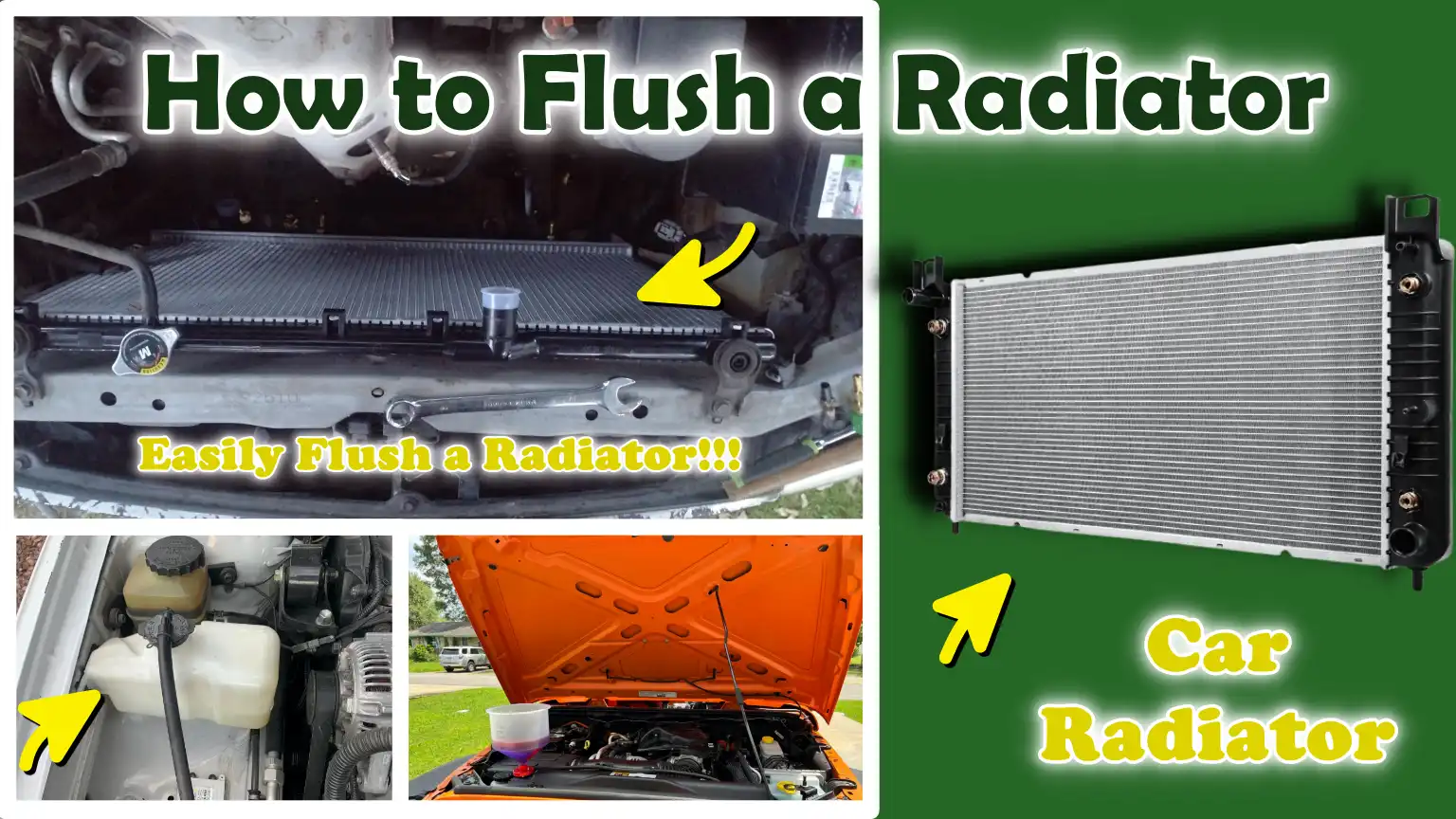
Now, this is the ultimate guide about How to Flush a Radiator, so that you can maintain a reliable vehicle and keep your engine cool under all the conditions.
Just check your coolant level and conditions; whenever you notice if your engine is frequently overheating, having discolored or rusty coolant, strange smell coming off it or you just noticed that there’s reduced heating inside the cabin.
Common Signs That Shows That Your Radiator Needs Flushing
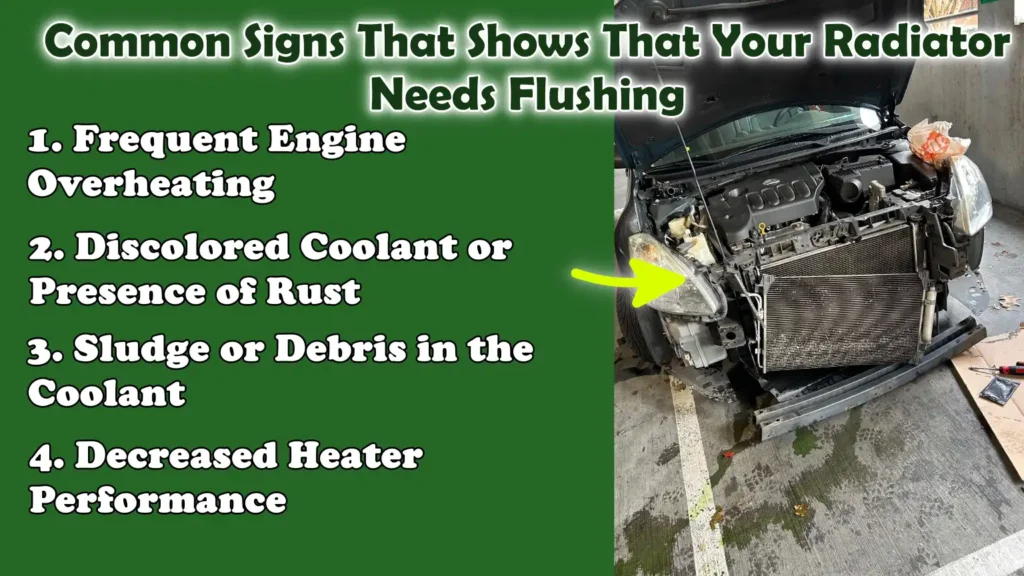
1. Frequent Engine Overheating
If your engine temperature repeatedly rises above normal levels, it is one of the clearest indications that your radiator is not functioning correctly.
The primary function of a radiator is to dissipate heat from the engine by circulating coolant through a network of thin metal tubes; however, when these tubes become clogged with dirt, rust, or deposits from old coolant, heat cannot escape effectively.
Consequently, the engine begins to overheat, particularly in heavy traffic, during long-distance travel, or in hot weather conditions.
Frequent overheating is not merely a minor inconvenience; if elevated temperatures persist, they can cause severe damage to modern engines, such as warped components or blown gaskets.
Flushing the radiator clears these internal blockages and restores proper coolant flow, thereby enabling the engine to maintain a safe and stable operating temperature.
2. Discolored Coolant or Presence of Rust
Healthy coolant typically appears brightly colored, often green, orange, or pink, depending on its specific type, and should look clear and clean.
If you notice that your coolant has turned brown, cloudy, or rust-colored, it signals that corrosion is occurring within the cooling system.
This corrosion develops when the coolant degrades over time and loses its protective properties, allowing rust to form on the metal components inside the radiator and engine.
These rust particles then mix with the coolant and circulate throughout the entire system, thereby diminishing its ability to effectively transfer heat.
This not only reduces cooling efficiency but also causes increased wear and tear on critical components, such as the water pump.
Flushing the radiator removes this contaminated fluid and replaces it with fresh coolant, thereby restoring proper protection and cooling performance.
3. Sludge or Debris in the Coolant
When coolant is left unchanged for an extended period, it can degrade into a thick, viscous substance known as “sludge.”
This sludge forms from a combination of dirt, rust and the chemical breakdown of the coolant itself.
Instead of flowing freely, the coolant becomes heavy and begins to clog the narrow passages within the radiator and engine.
You may observe this sludge when inspecting the radiator cap or coolant reservoir; the fluid will appear thick or contain visible particles.
This buildup can obstruct coolant flow, diminish cooling efficiency and even clog the thermostat or heater core.
In such situations, flushing the radiator is essential, as it eliminates the debris and restores proper fluid circulation throughout the entire system.
4. Decreased Heater Performance
Many people are unaware that a car’s heater is directly linked to its cooling system.
It utilizes the hot coolant circulating from the engine to deliver warm air into the cabin.
If your heater is producing insufficient heat or takes an unusually long time to warm up, it may be an indication that the coolant is not circulating properly.
This often occurs when sludge, air bubbles, or blockages impede the flow of coolant through the heater core.
Consequently, less heat reaches the cabin, even if the engine itself is operating at a high temperature.
Flushing the radiator eliminates these blockages and improves coolant flow, thereby not only ensuring proper engine cooling but also restoring strong and consistent heating inside the cabin.
Tools
| Tool / Material | Why It Is Needed | How to Use It |
|---|---|---|
| Safety gloves | Protect your hands from hot coolant, dirt and harmful chemicals that can cause skin irritation. | Put these on before touching the radiator or any part of the cooling system. Keep them on while draining, flushing and refilling the coolant to avoid direct contact. |
| Safety goggles | Protect your eyes from splashes of coolant or dirty water, which can cause severe eye irritation. | Put these on when opening the radiator cap or draining fluids. Always wear them when working near pressurized or flowing fluids. |
| Wrench set | This tool helps you open and close the radiator drain plug, or remove components if necessary. | Select the correct wrench size and gently loosen the drain plug located at the bottom of the radiator. Do not apply excessive force to avoid causing damage. |
| Pliers | This tool is used to loosen tight hose clamps and remove hoses when necessary. | Use the pliers to grip the clamp and slide it away from the hose; then, carefully pull the hose off without tearing it. |
| Drain container | This safely collects old coolant, preventing it from spilling onto the ground and harming the environment. | Place the container directly beneath the drain plug before opening it. Ensure the container is large enough to hold all of the old coolant. |
| Radiator flush solution | This cleans rust, dirt and sludge from the interior of the radiator and cooling system. | Pour the solution into the radiator, fill it with water and run the engine for the specified amount of time so that the solution can dissolve accumulated debris before the coolant is drained. |
| Clean water | This helps flush out any remaining dirt and cleaning solution from the system. | After draining the old coolant, fill the radiator with clean water, run the engine for a short while and then drain the water again to flush out any remaining impurities. |
| Funnel | This makes it easier to pour coolant into the radiator and prevents it from spilling over. | Place the funnel over the radiator’s opening and pour the coolant slowly to avoid creating air bubbles or making a mess. |
| Hose – Water Pipe | This provides a continuous flow of water, flushing out dirt and debris from inside the radiator. | Insert the hose into the radiator opening and let the water run until clean water begins to flow out. |
| Fresh coolant | This keeps the engine cool, prevents rust formation and protects the cooling system from damage. | If necessary, dilute it with distilled water and then slowly pour it into the radiator. Start the engine and continue adding coolant as the level drops; doing so ensures that all air pockets have been purged from the system. |
How to Take All The Necessary Precautions and Ensure Safety
1. Perform Work Only When the Engine Is Cold
Before beginning any work on the radiator, always ensure that the engine is completely cool.
When the car is running, immense heat and pressure build up inside the cooling system; the internal coolant can become even hotter than its normal boiling point because it remains sealed under pressure.
If you open the radiator cap while the engine is still hot, the pressure can release suddenly and violently, causing scalding-hot coolant to erupt and creating a serious risk of burns.
It is best to wait at least 30 to 45 minutes after shutting off the engine, and in some cases, depending on weather and driving conditions, it may take even longer.
A simple method is to gently touch the radiator hose (pipe); if it still feels hot or hard, the system is not yet ready to be opened.
Working on a cold engine ensures your safety and allows you to handle components without risk.
2. Avoid Contact with Hot Coolant
Coolant may look like colored water, but it is a chemical mixture designed to withstand extreme temperatures and protect engine components.
When hot, it can cause severe burns to the skin; even when cool, it can cause irritation to the skin and eyes.
Direct contact should always be avoided, as coolant contains chemicals that can be harmful if absorbed through the skin or accidentally ingested.
When draining or flushing the radiator, there is always a possibility of coolant spilling or dripping, particularly when loosening the cap or hoses.
Maintaining a safe distance, using the proper tools and wearing protective clothing help to minimize this risk.
Working with caution not only ensures your physical safety but also keeps the entire process clean, organized and under control.
3. Dispose of Used Coolant Properly
Used coolant should never be dumped on the ground, poured down drains, or mixed with household waste, as it is toxic and can harm soil, water sources, animals and humans.
Many coolants contain chemicals that do not break down easily and can contaminate the environment for extended periods.
It is essential to collect all drained coolant in a clean, sealed container and transport it to an appropriate disposal or recycling center.
Many service stations and recycling centers accept used coolant and dispose of it safely.
Proper waste disposal is not only a responsible practice but, in many places, a legal requirement as well.
The objective is to prevent environmental damage and health-related hazards.
4. Prevent Coolant Spills to Protect the Environment
Preventing coolant spills while flushing a radiator is crucial for both your personal safety and environmental protection.
Even a small amount of coolant can spread very quickly; if it seeps into soil or concrete, cleaning it up can be extremely difficult.
Coolant emits a sweet scent that can attract animals, but if accidentally ingested, it can prove to be highly toxic.
To prevent spills, always position the drain container correctly, loosen the drain plug slowly and pour the coolant carefully when refilling the system.
If a spill does occur, it should be cleaned up immediately using absorbent materials, such as rags or sand.
Adopting these precautions ensures a safe workplace, protects the environment and guarantees that the entire flushing operation is carried out responsibly.
How to Do Preparation First
1. Park the car on a level surface and allow the engine to cool down
Parking the car on a level surface ensures that the coolant drains evenly from the radiator, preventing any old fluid from remaining trapped inside.
If the car is tilted, some coolant may remain trapped, thereby reducing the effectiveness of the flush.
Allowing the engine to cool down is crucial because, when the engine is hot, the cooling system operates under extremely high pressure.
Due to this pressure, the temperature of the hot coolant can exceed its normal boiling point; if the system is opened prematurely, the coolant may erupt violently, posing a serious risk of burns.
Waiting until the engine has completely cooled ensures that the process remains safe and controlled.
2. Remove the Radiator Cap
Removing the radiator cap is necessary to release any residual pressure and allow air to enter the system.
This step is vital because, without the intake of air, the coolant cannot drain properly and a vacuum (negative pressure) inside the radiator can create a blockage.
Removing the cap slowly ensures that the pressure is released gradually rather than abruptly.
This action also prepares the system to drain the coolant easily and facilitates the subsequent process of refilling the coolant.
3. Place a Container Beneath the Drain Plug
Placing a container beneath the drain plug ensures that all the old coolant is safely collected.
Coolant is a toxic fluid that, if spilled on the ground, can harm the soil, water sources and animals.
A properly positioned container prevents the coolant from spreading and makes its subsequent disposal much easier.
This container must be large enough to accommodate the entire volume of coolant, as most vehicles hold several liters of coolant.
How to Drain the Old Coolant
1. Open the Radiator Drain Plug
The drain plug, typically located at the bottom of the radiator, is opened to allow the old coolant to drain out.
This step utilizes gravity to draw the fluid out of the system.
Using the correct tool ensures that the plug is not damaged during this process.
Opening it slowly helps control the flow of the coolant, preventing it from gushing out suddenly and forcefully.
2. Allow the Coolant to Drain Completely
It is crucial to allow the coolant to drain completely; if even a small amount of old fluid remains inside, it can mix with the new coolant and compromise its effectiveness.
Old coolant contains rust, debris and chemicals that are no longer capable of adequately protecting the engine.
Waiting until the coolant flow has ceased completely ensures that the majority of the contaminants have been flushed out of the system.
3. Dispose of the Old Coolant Safely
The old coolant should be collected in a sealed container and transported to a recycling center or a designated waste disposal facility.
It contains hazardous chemicals that do not break down easily and can contaminate water sources.
Proper disposal protects the environment and ensures compliance with safety regulations.
How to Do Radiator Flushing
1. Close the Drain Plug
Before introducing any flushing fluid, it is essential to securely close the drain plug to prevent any leaks.
If left open or loose, the flushing solution will simply drain out directly instead of circulating through the system.
A secure seal ensures that the interior of the radiator is thoroughly cleaned.
2. Fill the radiator with a flushing solution or water.
Filling the radiator with a flushing solution or clean water helps remove residual dirt and deposits.
Flushing solutions are specifically formulated to break down rust and sludge present within the cooling system.
If the system is not heavily soiled, clean water can also help flush out loose debris.
3. Run the engine for the specified duration.
Running the engine allows the fluid to circulate throughout the entire cooling system, including the radiator, engine block and heater core.
This circulation is crucial because it carries the cleaning fluid into tight spaces where dirt often accumulates.
Adhering to the specified time limit ensures effective cleaning without causing damage to any components.
4. Turn off the engine, allow it to cool down and then drain it again.
After circulation, the engine should be turned off and the system allowed to cool down before being drained again.
This minimizes the risk of injury from hot fluids and ensures a safe working environment.
Draining the system a second time flushes out the cleaning fluid along with the loosened dirt, rust and sludge, leaving the radiator clean on the inside.
How to Fill with Fresh Coolant
1. Tighten the Drain Plug Securely
Before refilling, it is crucial that you securely tighten the drain plug to prevent any leaks.
If even a small gap remains open, coolant may leak while the engine is running, potentially leading to engine overheating.
The system’s proper pressure is maintained only when the plug is securely sealed.
2. If Necessary, Mix the Coolant with Distilled Water
Many coolants require mixing with distilled water to achieve the correct balance.
This mixture helps dissipate heat more effectively and prevents the coolant from freezing or boiling under extreme cold or hot conditions.
Using distilled water is essential because it does not contain minerals that could accumulate inside the radiator and cause blockages.
3. Fill the Radiator Slowly to Prevent Air Bubbles
Pouring the coolant slowly helps prevent air from becoming trapped inside the system.
Air bubbles can obstruct the flow of coolant and reduce cooling efficiency.
Filling slowly allows the fluid to settle properly and reach all parts of the system.
4. Start the Engine, Check for Leaks and Add More Coolant as Needed
Starting the engine after filling the coolant allows it to circulate throughout the entire system and settle into place.
As it circulates, the coolant level may drop slightly, which is normal.
Checking for leaks ensures that all connections are securely sealed.
Adding more coolant as needed maintains the correct fluid level, which is vital for effective cooling.
How to Bleed Air from the Radiator
1. How to Remove Air Bubbles
Air bubbles may form while filling the coolant; Purging trapped air is crucial for ensuring the proper circulation of coolant.
To accomplish this, the engine is allowed to run for a short period with the radiator cap removed, or, if available, a ‘bleed valve’ is utilized.
As the engine warms up, the trapped air escapes in the form of bubbles, allowing the coolant to fill the voids.
Removing this air ensures that the engine temperature remains consistent.
2. Signs of Trapped Air
Trapped air within the system can cause fluctuations in engine temperature, potentially leading to overheating or a malfunctioning heater.
You may observe erratic readings on the temperature gauge or hear gurgling sounds emanating from within the cooling system.
These signs indicate that the coolant is not circulating properly.
Purging the air restores proper coolant flow, thereby ensuring that the engine continues to operate without interruption.
How to Care and Maintain Good Working Radiator
1. Regularly Check the Coolant Level
Regularly checking the coolant level is one of the simplest, yet most crucial steps in keeping your engine safe.
Over time, due to evaporation and normal usage, the coolant level naturally decreases; however, if the level drops rapidly, it could be an indication of a leak or an internal issue.
Most cars feature a coolant reservoir with clearly marked minimum and maximum levels, making it easy to check the coolant level without having to open the radiator itself.
To avoid risks associated with pressure and heat, you should always allow the engine to cool down completely before performing a check.
Maintaining the coolant at the correct level ensures that there is sufficient fluid available to absorb heat from the engine and dissipate it.
If the coolant level drops too low, the engine can overheat rapidly, as there is insufficient coolant to perform its function effectively.
Regular checks allow you to detect problems early and prevent serious damage to the engine.
2. Inspect Hoses and Clamps
Radiator hoses and clamps play a vital role in transporting coolant between the engine and the radiator; even a minor defect in these components can lead to issues such as leaks or engine overheating.
Over time, due to heat, pressure and general wear and tear, hoses can deteriorate; they may develop cracks, swell, or become soft and pliable.
Clamps, too, can become loose or corroded, creating the potential for gradual leaks, leaks that are not always easy to detect in their early stages.
By carefully inspecting the hoses and checking for any signs of unusual softness or hardness, you can identify symptoms of wear and tear before a failure actually occurs.
Clamps must be tightened and secured firmly to maintain the proper pressure within the cooling system.
A faulty hose or a loose clamp can fail suddenly while driving, leading to a rapid loss of coolant and creating a risk of engine overheating.
Regular inspections ensure that the cooling system remains sealed, secure and reliable.
3. Flush the Radiator at Manufacturer-Recommended Intervals
To ensure the long-term health of the engine and maintain its cooling efficiency, it is crucial to flush the radiator at the appropriate intervals.
Over time, coolant loses its protective properties and begins to degrade, allowing rust and debris to accumulate within the radiator and engine passages.
Most manufacturers recommend flushing the radiator every two to three years, or after a specific mileage milestone, depending on the type of coolant being used.
Adhering to this procedure ensures that old coolant is replaced before it can cause any damage.
Regular flushing clears out accumulated debris, improves heat exchange and protects metal components from corrosion.
Neglecting this maintenance can lead to clogged passages, reduced cooling capacity and the need for costly repairs.
Consistently following the recommended maintenance schedule keeps the cooling system clean, efficient and reliable.
Common Mistakes to Avoid During Flushing a Radiator
Plus, there’s experimental research that shows that the proper coolant actually performs much better than the plain water in both cooling efficiency and the corrosion protection as well, this literally provides that the flushing the radiator and refilling it with the correct type of coolant is really important to prevent damage and maintain that stable engine temperature as well.[¹]
1. Flushing a Hot Engine
Flushing the radiator while the engine is still hot is one of the most dangerous mistakes anyone can make.
When the engine is running, immense pressure builds up inside the cooling system; because the system is sealed, the internal coolant can reach extremely high temperatures without boiling.
If the radiator cap or drain plug is opened at this moment, the pressure can release suddenly and violently, causing hot coolant to spray outward, potentially causing severe burns to the skin and eyes.
Even several minutes after shutting off the engine, the elapsed time may not be sufficient for the engine to cool down completely specially in hot weather or after a long drive.
Before beginning any work, it is absolutely essential that you wait until the engine has cooled down completely and is safe to touch.
This simple precaution protects you from injury and also safeguards components that could warp or crack if exposed to sudden thermal shock (rapid changes in temperature).
2. Using the Wrong Type of Coolant
Using the wrong type of coolant can lead to the gradual deterioration of the entire cooling system over time.
Different vehicles are designed to utilize specific coolant formulations and each type of coolant possesses a unique chemical composition engineered to protect metal components, regulate temperature and prevent corrosion.
If the incorrect coolant is used, it may fail to provide adequate protection and, when mixed with residual coolant, can form thick deposits or a gel-like substance inside the radiator.
These deposits can clog narrow passageways, obstruct the flow of coolant and cause the engine to overheat.
In some cases, this can even cause damage to essential components such as the water pump and seals.
By always consulting your vehicle’s owner’s manual and using the correct type of coolant, you ensure optimal performance, extend the lifespan of the cooling system and maintain a stable engine temperature under all driving conditions.
3. Improper Disposal of Used Coolant
Improperly disposing of used coolant is a serious error that impacts both safety and the environment.
Coolant contains toxic chemicals that, if poured onto the ground or down drains, can contaminate the soil and water.
Its sweet scent can attract animals and children; however, accidentally ingesting even a small amount can be harmful.
Many people overlook the importance of safe disposal, but it is crucial to collect all used coolant in a sealed container and transport it to an appropriate recycling or disposal facility.
This ensures that hazardous substances are handled correctly and do not cause long-term environmental damage.
Disposing of waste responsibly is not merely a good habit; it is a critical component of safe vehicle maintenance.
Know, When You Should Consult to the Professional
1. Radiator Leaks
A leak in the radiator is a clear indication that the cooling system requires expert attention, particularly if the leak originates from the radiator core, its seams, or connected components.
Minor leaks may manifest as drips beneath the vehicle, white or green deposits around the joints, or a persistent drop in coolant levels even after refilling.
While minor leaks in hoses can sometimes be easily repaired, fixing a radiator leak often necessitates specialized tools, pressure testing, or the complete replacement of the unit.
Driving with a leak depletes the coolant level, directly compromising the engine’s ability to regulate heat and potentially leading to rapid overheating.
A professional mechanic can pinpoint the exact location of the leak, pressure- test the system and determine whether a repair is a safe option or if a replacement is required.
Seeking expert assistance in a timely manner can prevent sudden breakdowns and protect the engine from severe damage.
2. Persistent Overheating
If your vehicle is consistently overheating, even after you have flushed the radiator and refilled it with fresh coolant, it signals a deeper underlying issue within the cooling system.
Persistent overheating may be caused by a faulty thermostat, a malfunctioning water pump, blockages within the engine’s internal passages, or a problem with the cooling fan.
All these components work in tandem to regulate engine temperature; if even one of them fails, the entire system is unable to function effectively.
Persistent overheating poses a significant risk, as modern engines are designed to operate within a specific temperature range; If the temperature exceeds this limit, internal engine components such as: gaskets, seals and metal surfaces, can deteriorate rapidly.
A professional mechanic possesses the necessary tools and expertise to accurately diagnose the root cause of this issue and resolve it.
Ignoring this problem, or repeatedly attempting minor repairs yourself, can significantly increase future repair costs.
3. Rusted or Damaged Radiator
If a radiator has accumulated excessive rust or sustained structural damage, it will be unable to function effectively, regardless of how frequently it is flushed.
Rust forms when old coolant loses its protective properties, causing corrosion to begin on metal components; this compromises the radiator’s structural integrity and diminishes its ability to dissipate heat.
Symptoms of rust may include rust spots, flaking metal, bent radiator fins, or cracks in the radiator’s outer casing.
Radiators can also sustain damage from road debris or prolonged use; this directly impacts airflow through the radiator, thereby reducing its overall cooling capacity.
In such instances, simply flushing the system will not restore the radiator’s functionality, as its internal and external structures have already been compromised.
A specialist can inspect the radiator’s condition, identify hidden defects and determine whether it requires repair or complete replacement.
Timely replacement of a faulty radiator ensures reliable cooling and minimizes the risk of sudden engine failure.
Read More:
- How to Replace Shocks and Struts
- How to Fix Car Overheating
- How to Diagnose Wheel Bearing Noise
- How to Reduce Road Noise in a Car
- How to Rotate Car Tires
Conclusion – How to Flush a Radiator
When you maintain the radiator neat, clean and properly working then it actually provide protection for your vehicle’s engine, as cooling system care actually decides how reliable your car runs on the road.
The cooling system is responsible for regulating engine temperature; even a minor issue such as: contaminated coolant or a clogged radiator, can compromise its efficiency and lead to engine overheating.
Over time, coolant degrades, loses its protective properties and allows rust and debris to accumulate within the system.
This buildup obstructs coolant flow, reduces heat exchange and increases the risk of engine damage.
By flushing the radiator at the appropriate intervals and using the correct coolant, you restore proper coolant circulation, enhance cooling efficiency and protect critical engine components from rust and wear.
Now, if you still have questions regarding this guide on How to Flush a Radiator, just let us know by commenting below.
Frequently Asked Questions
FAQ 1: What is a radiator flush and why is it necessary?
A radiator flush is a procedure in which old coolant, dirt, rust and sludge are removed from your car’s cooling system and replaced with fresh coolant. This is necessary because, over time, coolant degrades and loses its ability to protect the engine from heat and corrosion. When the radiator becomes dirty or clogged, it cannot properly cool the engine, which can lead to overheating and potentially cause severe damage to the engine. Flushing the radiator keeps the system clean, improves cooling efficiency and ensures that the engine continues to operate at a safe temperature.
FAQ 2: How often should you get a radiator flush?
Most vehicles require a radiator flush every two to three years, or after a specific mileage interval; this depends on the type of coolant used and the driving conditions. Some modern coolants have a longer lifespan, but it is always best to consult your vehicle’s owner’s manual to determine the correct service interval. Regular flushing prevents the accumulation of dirt and debris within the system and ensures that the coolant continues to provide full protection to the engine.
FAQ 3: What are the signs indicating that your radiator needs a flush?
Common signs include frequent engine overheating, coolant that appears dirty or rusty, the presence of sludge or particles in the coolant and the car’s cabin heater failing to function properly. You may also notice a sweet odor or observe that the temperature gauge is rising higher than normal. These signs indicate that the coolant is no longer clean or effective and the cooling system requires attention.
FAQ 4: Can I perform a radiator flush at home?
Yes, provided you follow the correct procedures and safety precautions, you can flush your radiator right at home. This requires a few basic tools, the appropriate coolant and careful handling of the cooling system. It is absolutely crucial that the engine has cooled down completely before you begin the work and that all the old coolant is collected and disposed of safely. If you have any doubts or notice any serious issues, it is best to seek professional assistance.
FAQ 5: What happens if you don’t flush your radiator?
If you neglect to flush your radiator, dirt and rust will accumulate inside the system over time. This can obstruct the flow of coolant, reduce heat exchange efficiency and lead to engine overheating. Old coolant can also degrade, potentially causing damage to metal components, hoses and seals. Neglecting this maintenance task can result in costly repairs or even total engine failure.
FAQ 6: Can flushing the radiator fix an overheating problem?
If the overheating issue is caused by contaminated coolant or blockages within the system, flushing the radiator can indeed resolve the problem. By clearing away accumulated debris, the coolant is able to flow properly and dissipate heat more effectively. However, if the overheating persists even after flushing, the issue may be related to other components, such as the thermostat, water pump, or cooling fan.
FAQ 7: Is it ever safe to open the radiator cap?
No, it is not safe to open the radiator cap while the engine is hot. The cooling system operates under pressure; Opening the cap may cause hot coolant to suddenly and rapidly surge out, posing a risk of severe burns. To ensure safety, always wait until the engine has completely cooled down before attempting to open the radiator cap.
FAQ 8: What type of coolant should I use?
The correct coolant depends on your specific vehicle, as different engines require different types of coolant with specific chemical properties. Using the wrong coolant can cause damage or reduce cooling efficiency. To ensure proper protection and performance, it is always best to consult your vehicle’s owner’s manual and use only the specific coolant recommended therein.
FAQ 9: Why is my coolant level dropping after a flush?
It is normal for the coolant level to drop slightly after a flush, as trapped air within the system escapes once the engine is running. As the air vents out, the coolant settles and its level may decrease. You should re-check the level after running the engine and top it up if necessary. If the level continues to drop consistently, there may be a leak somewhere in the system that requires investigation.
FAQ 10: Can I use water instead of coolant?
Using plain water exclusively for an extended period is not recommended, as it does not provide the same level of protection as coolant. Coolant is specifically formulated to prevent corrosion, regulate boiling and freezing points and protect engine components. While water may be used temporarily in an emergency, a proper mixture of coolant and distilled water is essential for the safe and proper operation of your vehicle.
References:
[1] The Effect of Using Variations of Radiator Coolant on the Effectiveness of Engine Cooling and the Rate of Corrosion of Radiator Materials in 1300 cc Cars
https://www.mdpi.com/2673-4591/84/1/11
Hello Folks, Dean Shali here to help you out to solve the problems with your lovely vehicle, as i have lots of experience and knowledge about automotive industry as i woks directly with the customers and repair vehicles and i love to help the people to keep their cars safe and running smoothly.