
Written By: Dean Shali
Fact Checked By: Sabré Cook
Reviewed By: Tamara Warren
You need to understand this simple thing: if you fix suspension noise early on then you can actually save ton of money, even it improves the overall safety and extends the life of your car; so yeah all over the wining thing.
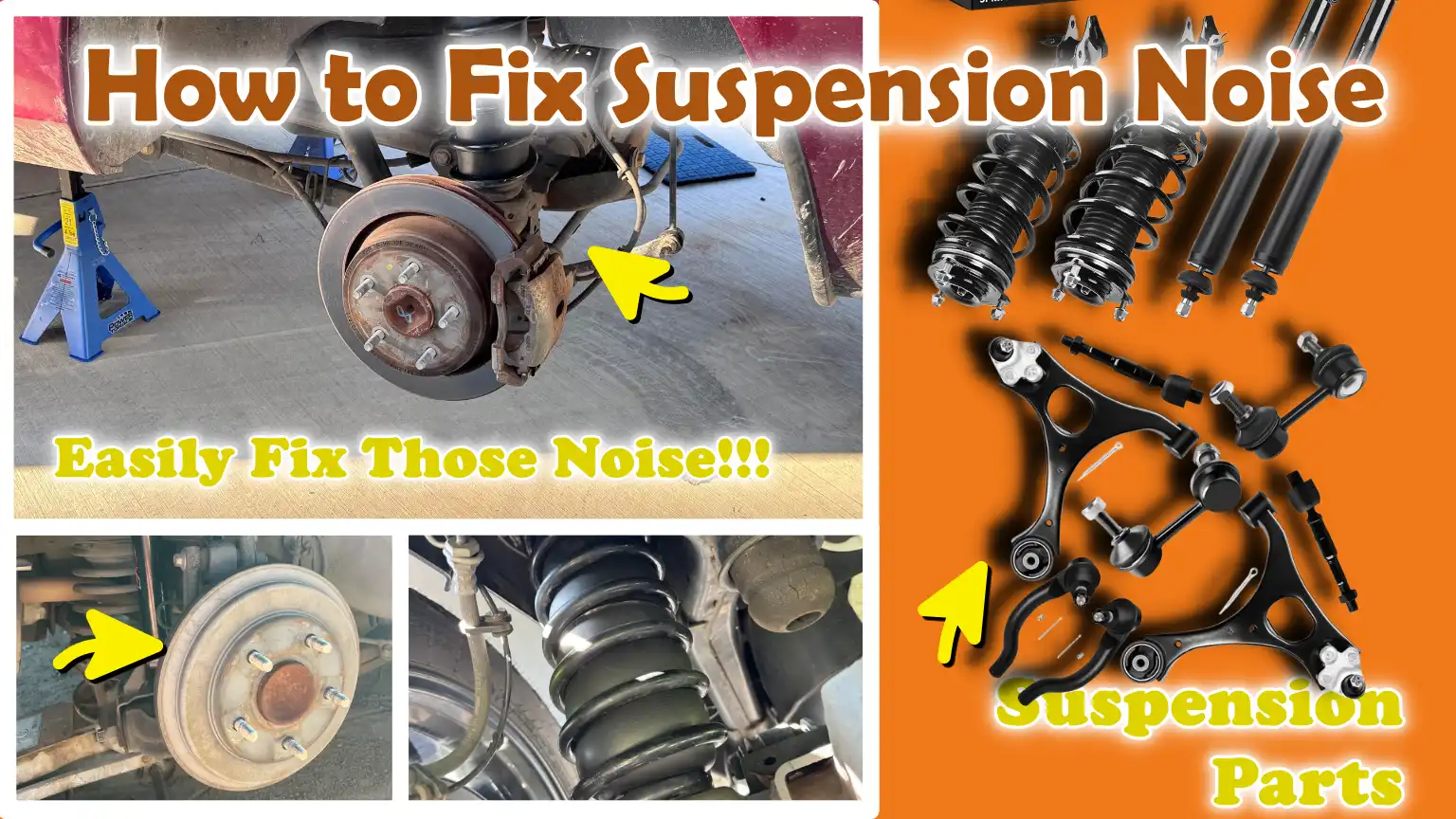
Just, don’t ignore it until the problem becomes a serious and negligible to avoid, as it gets expensive as the noise increases, there are lots of components are available in the suspension system of the car such as: shocks, struts, bushings, ball joints and control arms as well.
Basically, all these things works together to absorb the road impact and literally keeps your ride stable and smooth throughout the journey.
So, whenever any of these parts begin to wear out, loosen up or just missing that mandatory lubrication then it naturally produce the noticeable sounds such as: squeaks, knocking, clunking or rattling as well.
Without a question, these noises are irritating and affects the vehicle’s handling, braking performance and tire life as well, which is why critical to solve as quick as possible for us.
That’s why in this guide you’ll learn How to Fix Suspension Noise, that includes right tools with basic knowledge so that you can quickly identify the problematic parts and fix them by recognizing different types of suspension noise.
Understand, Why Does the Suspension Make Noise?
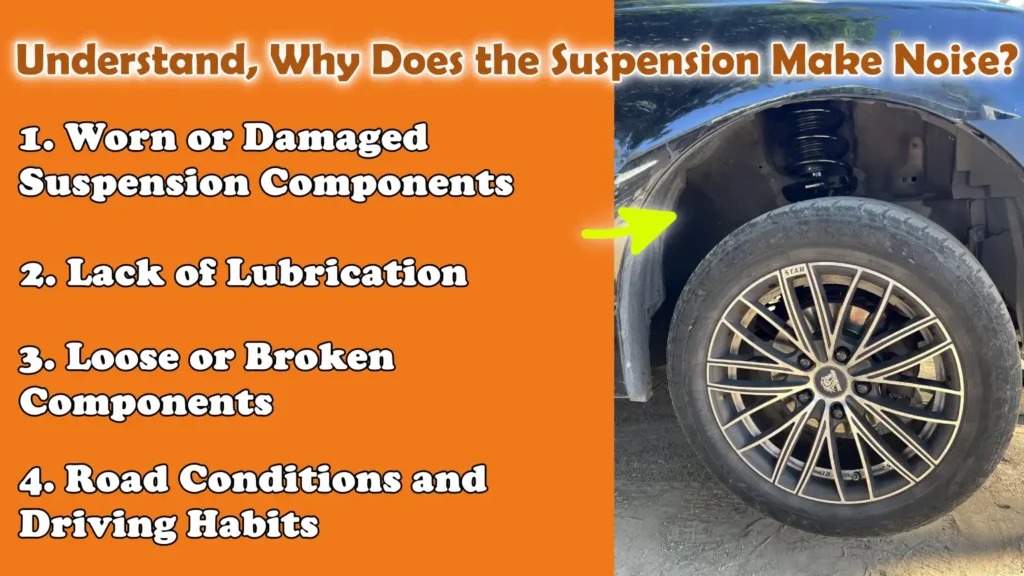
1. Worn or Damaged Suspension Components
The most common reason for noises emanating from the suspension system is the wear and tear or deterioration of critical components such as: shock absorbers, struts, bushings, ball joints and control arms over time.
These components are under constant stress, as they support the vehicle’s weight and absorb shocks and impacts from the road surface.
Over time, rubber bushings may crack, metal joints may loosen and shock absorbers may lose their ability to effectively dampen vibrations.
When this occurs, you may hear knocking or rattling sounds, particularly while driving on rough or uneven roads.
Simply put, when these components lose their structural integrity, they begin to move beyond their intended limits, generating noise and negatively impacting both driving comfort and safety.
2. Lack of Lubrication
Many suspension components rely on proper lubrication to function smoothly and silently.
Parts such as bushings and joints are designed to minimize friction; however, when lubrication dries out or becomes depleted, these components begin to rub against one another.
This typically results in squeaking or creaking noises, specially when the vehicle is moving slowly or passing over speed bumps.
A lack of lubrication not only causes noise but also accelerates the wear and deterioration of components, as the resulting friction subjects the parts to increased heat and stress.
Regular maintenance and the use of appropriate lubricants can often reduce or prevent such noises.
3. Loose or Broken Components
The suspension system is held together by numerous bolts, nuts and connecting links; if any of these components become loose or break, it can result in rattling or knocking sounds.
For instance, a loose sway bar link or a worn mounting bolt may shift out of place while the vehicle is in motion, producing a noise whenever pressure is exerted on the suspension.
Broken components are even more critical, as they can compromise the vehicle’s handling and responsiveness on the road.
Even a minor loose component, if left unaddressed, can escalate into a major issue; therefore, inspecting and tightening these parts is a crucial step in eliminating suspension-related noises.
4. Road Conditions and Driving Habits
The way you drive and the roads you travel on, have a direct impact on your suspension system.
Frequently driving over rough roads, potholes, or speed bumps places excessive stress on suspension components, accelerating their wear and deterioration.
Sudden braking, taking sharp turns and hauling heavy loads also increase the strain on the system.
Over time, this stress causes damage to components or causes them to loosen, ultimately resulting in the emergence of noises.
Simply put, driving at high speeds and navigating poor road surfaces accelerates suspension wear, thereby increasing the likelihood of noises developing much sooner than expected.
Common Types of Sounds from the Suspension System and Their Significance
1. Clunking Noise
One of the most noticeable and serious sounds emanating from the suspension system is a knocking sound; this typically indicates that a component has become loose, worn out, or is not seated correctly in its position.
This sound often occurs while driving on rough roads, hitting potholes, or during acceleration and braking.
In many cases, it is caused by worn ball joints, damaged control arms, or loose mounts, components responsible for maintaining the structural integrity and stability of the suspension.
Ball joints act as pivot points that facilitate smooth movement; when they become worn, excessive play develops within them, resulting in a knocking sound.
Control arms connect the wheels to the vehicle’s frame; if their bushings or joints are worn, they may shift out of place and make contact with other components.
Loose mounts can also cause metal parts to vibrate and strike against one another.
Such sounds should never be ignored, as they can compromise steering control and the vehicle’s overall stability.
2. Squeaking or Creaking Sounds
Squeaking or creaking sounds are typically softer in nature, yet quite common; they often indicate friction between components that are designed to move smoothly in relation to one another.
These sounds are frequently heard while driving at low speeds, passing over speed bumps, or turning the steering wheel.
The primary cause of these noises is typically dried-out or worn-out bushings, rubber components designed to reduce friction and absorb vibrations.
Over time, particularly in hot or dusty environments, as these rubber parts can dry out, crack, or lose their elasticity.
When this occurs, the surrounding metal components begin to rub against one another, producing creaking or squeaking sounds.
A lack of lubrication further exacerbates this issue.
Although this noise may seem minor, it serves as an early warning sign that parts are wearing out and require attention to prevent further damage.
3. Knocking Sounds
A knocking sound typically signals a serious issue within the suspension system, often related to faulty shock absorbers or struts.
These components are responsible for controlling the vehicle’s vertical movement after traversing potholes or rough terrain.
When shock absorbers or suspension components become worn, they lose their ability to effectively absorb impacts, causing the vehicle to bounce more than usual.
This excessive movement can generate knocking sounds as the components collide or shift against one another more frequently than normal.
You may hear this noise more distinctly while driving on rough roads or whenever the vehicle feels less stable than usual.
Simply put, when shock absorbers or struts cease to function correctly, the suspension is unable to properly regulate movement, resulting in increased noise and reduced ride comfort.
4. Rattling Sounds
A rattling sound often indicates that something within the suspension system has come loose; typically, this manifests as the sound of small parts shifting or vibrating while the vehicle is in motion.
This type of noise is usually heard when driving on rough roads or at low speeds.
It is frequently caused by loose suspension components such as: sway bar links, worn connectors, or bolts that have not been properly tightened.
These components are designed to hold the suspension system firmly together; however, when they become loose, they can move independently and generate a rattling sound.
Even if the noise seems minor, ignoring it can lead to more serious problems, as loose parts may wear out rapidly or even break.
Timely inspection and tightening of these components can help prevent further damage and ensure that the suspension system continues to function correctly.
Tools
| Tool / Material | Why It Is Needed | How to Use It |
|---|---|---|
| Jack and Jack Stands | These tools are used to safely lift a car off the ground, allowing you to inspect and work on the suspension components located underneath. The jack lifts the vehicle, while the stands securely hold it in place. This is crucial, as working underneath a car without proper support can be extremely dangerous. | Position the jack directly beneath the designated lifting points on the car and slowly raise the vehicle. Once the car is lifted, place the jack stands beneath sturdy sections of the frame and lower the car onto them. Never rely solely on the jack while working underneath the vehicle. |
| Lug Wrench | This tool is required to loosen and tighten wheel nuts, enabling you to remove the tires and access the suspension components located behind them. Without removing the wheels, most suspension parts cannot be properly inspected. | Place the wrench onto the wheel nuts and turn it to loosen them before lifting the car. Once the car is lifted, completely remove the nuts and take off the wheel. Later, use the wrench again to securely tighten the nuts back into place. |
| Socket Set | A socket set allows you to loosen and tighten bolts and nuts of various sizes within the suspension system. This is essential, as suspension components are connected to one another using sturdy fasteners. | Select the correct socket size that fits snugly onto the bolt or nut. Attach it to the handle and turn it to loosen or tighten the fastener. Always ensure that the socket fits correctly to prevent it from slipping. |
| Pry Bar | This tool is used to check for any looseness or movement in suspension components, such as ball joints and bushings. It allows you to apply gentle pressure to these parts, making it easier to detect whether there is excessive play or movement. | Position the pry bar between two components and gently push inward or pull outward. If you feel excessive movement or hear a “clicking” sound, it may indicate that the component is worn out or damaged. Use only controlled force. |
| Lubricant Spray | Lubricant spray reduces friction between moving parts and helps prevent squeaking or rattling noises caused by dryness. It also protects components from rust and wear. | Apply a small amount of spray to bushings, joints, or metal components suspected of making noise. Wipe away any excess spray and avoid spraying on the brakes or tires. |
| Flashlight | A flashlight allows you to clearly inspect suspension components in the dark or in tight spaces underneath the car. Adequate lighting is essential for a thorough inspection and to ensure safety. | Turn on the flashlight and focus it on the specific area you are inspecting. Move it around to check for any cracks, leaks, or loose components. The bright light makes it easy to identify even minor issues. |
| Safety Gloves | When working on a car, gloves protect your hands from dirt, sharp edges and hot or rough surfaces. Additionally, they improve your grip on tools. | Put on your gloves before starting any work. Ensure that they fit your hands properly so that you can use your tools safely, comfortably and without slipping. |
How to Fix Suspension Noise – Easy & Beginner’s Friendly Guide
Diagnosing and resolving suspension noises requires a meticulous, step-by-step approach, as different types of sounds can originate from various parts of the system.
The suspension is an interconnected system; therefore, even a minor fault in one component can impact other parts and generate noise.
By adopting the correct methodology, you can pinpoint the true root cause of the problem, rather than relying on guesswork or replacing parts unnecessarily.
This process not only saves money but also enhances safety, as suspension-related issues can adversely affect steering control, braking stability and tire wear.
Most importantly, to accurately identify the underlying cause and ensure that the repair is executed correctly, every component must be logically inspected, examined and tested.
How to Identify the Type of Noise
The first and most crucial step is to determine the specific type of noise your vehicle is emitting, as each distinct sound offers clues regarding the nature of the underlying problem.
A “knocking” sound often suggests that something is loose, whereas “squeaking” or “creaking” noises typically point to a dry component or friction.
A “clunking” sound may indicate worn shocks or internal damage, while a “rattling” sound often originates from small, loose parts.
Accurately identifying the noise allows you to focus your attention on the right area, thereby preventing you from wasting time on components that are not actually the source of the problem.
1. When Does the Noise Occur? – When Turning, Braking, or Driving on Rough Roads
Pay close attention to when the noise occurs, as pinpointing the timing can provide crucial clues regarding the root cause of the problem.
If the noise appears while driving over rough roads or potholes, it typically indicates that the shock absorbers, struts, or bushings have worn out.
If the noise occurs while turning, it may be related to the ball joints or control arms.
Noises heard during braking could signal that a component of the suspension system has come loose or shifted out of place.
Paying attention to these nuances accelerates the diagnostic process and makes it much easier to pinpoint the exact issue.
2. Location of the Noise – Front, Rear, Left, Right
Identifying the type of noise is just as important as understanding exactly where it is coming from.
Try to determine whether the sound is originating from the front or the rear of the vehicle and whether it is coming from the left or the right side.
For instance, noise emanating from the front suspension is often linked to steering components, whereas noise from the rear may be associated with the shock absorbers or their mounts.
Pinpointing the precise location of the issue allows you to focus your inspection on a specific area, thereby enabling a much faster diagnosis.
How to Do Visual Inspection
A visual inspection is the simplest, yet often the most effective method for identifying suspension-related problems.
Many issues such as: cracks, fluid leaks, or worn-out components that can be detected without the need for any specialized tools.
As suspension components are constantly exposed to dust, water and road shocks, they eventually begin to show clear signs of wear and tear.
By carefully inspecting each component, you can identify potential issues before they escalate into serious problems.
1. Check for Worn, Broken, or Leaking Components
Carefully inspect all visible suspension components for any signs of wear or damage.
Rubber components may appear torn or cracked, while metal parts may show signs of rust or structural weakness.
If shock absorbers or struts are failing, they may leak fluid; this is a clear indication that they need to be replaced.
Ignoring minor cracks or leaks can lead to major problems, so it is crucial to take them seriously.
2. Inspect Bushings, Mounts and Joints
Bushings, mounts and joints are key components that connect and support the suspension system.
These parts are designed to dampen vibrations and ensure a smooth ride, but they do wear out over time.
Check to see if the bushings appear dried out or deteriorated, if the mounts are loose, or if there is excessive play in the joints.
Any looseness or visible wear in these components can generate noise and compromise the vehicle’s ride comfort.
How to Tighten The Loose Components
Loose components are a very common cause of suspension-related noise particularly rattling and knocking sounds.
Over time, bolts and fasteners can loosen due to constant vibration and road shocks.
Tightening these components is often a quick and effective way to instantly eliminate noise, provided that the looseness is indeed the root cause of the problem.
1. Inspect Bolts and Fasteners
Check all accessible bolts and fasteners within the suspension system to ensure they are properly tightened.
Even a slightly loose bolt can allow components to shift and generate noise.
Ensure that every fastener is securely tightened, but avoid overtightening them, as excessive force can strip the threads or damage the components themselves.
2. Focus on Control Arms and Sway Bar Links
Control arms and sway bar links are under constant tension and are common areas where looseness can occur.
These components help maintain stability and balance while driving; therefore, if they are loose, they can generate significant noise and compromise the vehicle’s handling.
Inspecting and tightening these specific components often provides an immediate solution to the problem.
How to Apply Lubricant to Suspension Components
Lubrication plays a crucial role in ensuring that suspension components operate smoothly and silently.
A lack of lubrication increases friction, resulting in noises such as squeaking or creaking.
Applying the correct lubricant can reduce friction and restore the smooth operation of components.
1. Apply Lubricant to Bushings and Joints
Spray lubricant onto bushings, joints and other moving parts where friction is likely to occur.
This minimizes direct contact between surfaces and eliminates noise.
Proper lubrication also protects components from wear and extends their lifespan.
2. When Lubrication Resolves the Squeaking Issue
If the noise ceases after applying lubricant, it confirms that dryness was the primary cause.
However, this is often a temporary solution, as worn-out components may still require replacement.
Rather than serving as a permanent repair for damaged parts, lubrication is best utilized as a quick fix or a preventive measure.
How to Inspect and Replace Worn Bushings
Bushings are small yet critically important components that absorb vibrations and maintain the proper alignment of parts.
When they become worn, they lose their elasticity and fail to effectively dampen movement, resulting in noise and discomfort.
1. Symptoms of Worn Bushings
Worn bushings may exhibit cracks, dryness, or breakage and can lead to excessive looseness between components.
While driving, you may hear squeaking noises or feel increased vibration.
These signs clearly indicate that the bushings are no longer functioning correctly.
2. Replacement Basics
Replacing bushings involves removing the old, worn-out parts and installing new ones in their designated locations.
It is crucial to use the correct size and type of bushing for your specific vehicle.
Proper installation ensures that the suspension remains stable and operates silently.
How to Inspect the Ball Joints
Ball joints are critical components that facilitate the smooth movement of the suspension and steering systems.
They serve as pivot points and are essential for the safe operation of the vehicle.
When they become worn, they can generate significant noise and compromise vehicle control.
1. How to Check for Looseness
Employ a simple method to check for movement in the joint by applying gentle pressure to it.
If you observe any obvious looseness or hear a “clicking” sound, it indicates that the ball joint is worn out.
Excessive looseness is a clear indication that the component is no longer safe.
2. When Replacement is Necessary
Ball joints should be replaced immediately upon detecting signs of wear, as their failure can result in a complete loss of vehicle control.
Driving with a defective ball joint is unsafe; therefore, timely replacement is absolutely essential.
How to Inspect Shock Absorbers and Struts
Shock absorbers and struts control how your vehicle responds to rough terrain and help keep the vehicle stable.
They are designed to absorb energy and prevent excessive bouncing.
1. Signs of Failure – Leaks, Bouncing
If fluid is leaking from the shocks or struts, or if the vehicle continues to bounce excessively after passing over uneven surfaces, it indicates that they are worn out.
You may also hear knocking or rattling sounds due to a lack of proper control over the suspension’s movement.
2. Replacement Guidelines
When shocks or struts fail, they should be replaced to restore the vehicle’s ride quality and safety.
It is often recommended to replace them in pairs to ensure that the vehicle’s balance and performance remain consistent.
How to Inspect Sway Bar Links and Mounts
Sway bar links and mounts help stabilize the vehicle; specifically, they reduce excessive leaning (body roll) when the vehicle takes a turn.
These parts are under constant stress and can wear out or become loose over time.
1. Symptoms of Failure
Worn sway bar links often produce knocking or rattling sounds, particularly on rough roads.
You may also notice a decrease in the vehicle’s stability while cornering.
2. How to Replace Them
Replacing sway bar links involves removing the worn parts and securely installing new ones in their place.
It is crucial to tighten them properly to ensure they function correctly and to prevent any future noises.
How to Take the Vehicle for a Test Drive
Once all inspection and repair work is complete, it is essential to take the vehicle for a test drive to confirm that the issue has been resolved.
This step ensures that no further noises are present and that the suspension system is functioning correctly.
1. Confirm That the Noise Has Stopped
Drive the vehicle on various types of road surfaces and listen carefully for any lingering noises.
If the noise has ceased, it indicates that the problem has been completely resolved.
2. What to Check During the Test Drive
During the test drive, pay close attention to the vehicle’s ride comfort, stability and handling.
Ensure that you do not experience any unusual vibrations or noises while driving and that the vehicle feels completely smooth and under control.
This final check serves as a guarantee that your suspension system is in good condition and is entirely safe for use.
Know, When to Replace Suspension Components Instead of Repairing Them
While many noises emanating from the suspension can be mitigated or temporarily resolved by tightening components or applying lubricant, there are specific situations where replacing the parts is the only safe and long-lasting solution.
Suspension components are designed to withstand constant stress, heavy loads and road shocks; however, once they wear beyond a certain limit, they can no longer function effectively.
Continuing to use defective parts can lead to issues such as poor vehicle handling, uneven tire wear, increased braking distances and in severe cases a complete loss of vehicle control.
Understanding when simple repairs are insufficient helps you avoid recurring problems and ensures that your vehicle remains safe, stable and comfortable.
1. Severely Worn or Damaged Components
When suspension components become excessively worn, cracked, bent, or begin to leak, they cannot be restored to their original condition through simple repairs alone.
For instance, if a shock absorber is leaking fluid, it has lost its ability to effectively absorb shocks; similarly, a torn bushing can no longer properly dampen vibrations.
Metal components such as: control arms or joints, that can also weaken over time and sustain structural damage.
In such instances, replacing the component is essential, as the damage compromises the overall functional integrity of the vehicle’s suspension system.
Continuing to use severely worn-out components not only results in persistent noise but also places excessive strain on surrounding parts, potentially leading to further mechanical failures down the line.
2. Recurrence of Noise Even After Temporary Repairs
If noise persists within the suspension system even after applying lubricants, tightening fasteners, or making minor adjustments, as it is a clear indication that the components are worn out and require replacement.
While temporary repairs may briefly dampen the noise, they do not address the root cause of the internal wear or damage.
For instance, if a squeaking sound returns almost immediately after applying lubricant, it often signifies that the bushings are so severely worn that they are no longer capable of functioning effectively.
The recurring nature of the noise is a definitive sign that the component has reached the end of its service life and can no longer perform its intended function properly.
Replacing such components in a timely manner helps prevent recurring issues and safeguards the suspension system against further damage.
3. Safety Concerns
The most critical reason for replacing suspension components rather than merely repairing them, is safety.
Components such as ball joints, control arms and shock absorbers play a pivotal role in maintaining a vehicle’s handling, stability and braking capabilities.
Should these components fail while the vehicle is in motion, it could lead to serious accidents particularly at high speeds or on uneven terrain.
Even if the noise seems minor, it may be a symptom of a significant underlying issue that compromises the vehicle’s overall stability.
Replacing worn-out parts ensures that your car responds precisely to steering and braking inputs, providing you with enhanced control and confidence on the road.
Understand About The Cost of Fixing Suspension Noises
The cost of fixing suspension noises depends on the nature of the problem, the specific parts required and whether you choose to perform the repairs yourself or hire a professional.
A suspension system consists of numerous interconnected components and even a minor defect in a single part can impact the others; therefore, conducting a thorough diagnosis before incurring any expenses is crucial.
In many instances, timely repairs prove to be more cost-effective, as neglecting worn-out parts can lead to damage in adjacent components.
Understanding these various financial aspects helps you plan more effectively and avoid unnecessary expenses, while also ensuring that your vehicle remains safe and comfortable to drive.
1. DIY Repairs vs Professional Repairs
Fixing suspension noises yourself can result in significant cost savings, particularly if the issue is minor such as: loose bolts or dry bushings.
For minor tasks, standard tools and a basic understanding of mechanics are often sufficient and your only expense will be the cost of the parts and supplies.
However, more complex repairs such as: replacing ball joints, control arms, or struts that require specialized tools, experience and strict adherence to safety protocols.
While professional repairs may entail higher costs, they offer the assurance of an accurate diagnosis and proper installation, aspects that are absolutely vital for safety.
If you lack confidence in your abilities or do not possess the appropriate tools, seeking the assistance of a professional is generally the safer and more reliable option.
2. Average Cost of Parts – Bushings, Shocks, Ball Joints
The cost of suspension components varies depending on the type of vehicle and the quality of the parts you choose.
Bushings are generally the most affordable components and are often used to resolve minor issues related to squeaking noises or vehicle handling.
Shock absorbers and struts are typically more expensive, as they play a crucial role in controlling vehicle motion and absorbing impacts.
Ball joints fall somewhere between these two categories, yet they are vital for both steering and vehicle stability.
Generally, standard bushings can be quite economical, whereas shocks, struts and larger components can be significantly more expensive specially if multiple parts need to be replaced simultaneously.
Choosing high-quality parts is essential, as cheaper alternatives may fail prematurely and necessitate frequent repairs.
3. Estimating Labor Costs
When it comes to resolving suspension-related noises particularly in cases involving complex repairs, labor costs often constitute a significant portion of the total expense.
Minor tasks, such as tightening bolts or applying lubricant, require very little time and incur minimal cost; however, replacing components like shock absorbers, struts, or ball joints demands considerably more effort and time.
A mechanic may need to remove the wheels, disassemble various components and ensure proper wheel alignment after installing the new parts.
Labor rates can vary based on location, the specific workshop and the complexity of the work involved.
Although labor costs increase the overall expense, the proper installation of parts is paramount; for if suspension components are not installed correctly, it can adversely affect safety, vehicle handling and tire longevity.
How to Maintain & Prevent Any Future Suspension Noise
Preventing noise from the suspension system is far easier and more cost-effective than fixing it, specially once it has escalated into a serious issue.
The suspension system is under constant stress from road shocks, vehicle weight and daily driving; consequently, minor issues can develop over time without any obvious warning.
By adopting a few simple maintenance habits and paying attention to early warning signs, you can keep your suspension system in excellent condition for the long haul.
A well-maintained suspension not only operates silently but also enhances driving comfort, handling, braking performance and tire longevity.
Taking preventive measures allows you to avoid sudden breakdowns and minimize the likelihood of costly repairs.
1. Regular Inspections
Regular inspection of suspension components is the most effective way to prevent both noise and damage.
By examining parts such as bushings, shocks, ball joints and mounts at regular intervals, you can identify minor issues before they evolve into major problems.
Keep an eye out for signs such as cracks, leaks, looseness, or uneven wear.
Even if the vehicle feels normal to drive, components may still exhibit early signs of wear that could soon lead to the onset of noise.
Regular inspections ensure that all components continue to function correctly, thereby keeping your driving experience smooth and stable.
2. Proper Lubrication
Proper lubrication is essential to ensure that suspension components operate smoothly and silently.
Many components particularly bushings and joints, that actually rely on low friction to function correctly.
When lubrication dries up, friction increases, leading to squeaking or grinding noises.
Applying the right lubricant at the right time reduces wear and tear, prevents rust formation and extends the lifespan of the components.
Regular lubrication is a small step, yet it plays a crucial role in keeping the suspension system quiet and efficient.
3. Avoiding Driving on Poor Roads
Driving habits have a direct impact on how quickly suspension components wear out.
Frequently driving on poor roads characterized by potholes or uneven surfaces, places excessive stress on the system, causing parts to deteriorate rapidly.
Sudden braking, taking sharp turns and hauling heavy loads also increase the strain on suspension components.
By driving gently, slowing down on rough roads and avoiding placing unnecessary stress on the vehicle, you can minimize wear and prevent the onset of noise.
Mindful driving helps maintain the health of the suspension system over time.
4. Timely Replacement of Worn-Out Parts
To prevent noise and avoid further damage, it is essential to replace worn-out suspension components in a timely manner.
When parts such as bushings, shocks, or ball joints begin to wear out, they lose their ability to function correctly and can adversely affect surrounding components.
Delaying their replacement often leads to additional complications and increased repair costs.
Replacing parts promptly ensures that the suspension system continues to operate exactly as it was designed to, keeping your vehicle’s ride smooth, stable and noise-free.
Furthermore, it enhances safety by maintaining proper vehicle control and handling.
Read More:
- How to Replace Shocks and Struts
- How to Rotate Car Tires
- How to Align Car Wheels
- How to Check Tire Pressure
Know More About The Common Mistakes to Avoid
Accurately identifying and fixing noises emanating from the suspension can be a straightforward task; however, many people make minor errors that lead to major complications, financial waste and safety hazards.
Suspension systems are intricately interconnected; therefore, a single misstep can impact multiple components and, rather than resolving the root cause, may create new problems.
Understanding these common mistakes helps you avoid damage, improve the accuracy of repairs and keep your vehicle safe and stable.
By adopting the correct approach and paying close attention to small details, you can address suspension noises more effectively and prevent their recurrence.
Along with this, there’s finding that shows that why suspension noise often feels consistent and repeatable under the certain conditions such as: driving over the bumps and something like that, as it is true that the specific kinds of components generates the noise at the certain vibration levels, that’s why you need to first identify and then repair the exact part that can effectively eliminate the issue instead of applying temporary fixes here and there.[¹]
1. Ignoring Early Warning Noises
One of the biggest mistakes is ignoring minor noises right from the start.
Many drivers continue to operate their vehicles under the assumption that a particular sound is insignificant; however, noises originating from the suspension are typically early indicators of wear and tear or loose components.
Over time, a minor issue such as: a worn bushing or a loose bolt, that can escalate into a major mechanical failure, potentially leading to a loss of vehicle control and compromising safety.
Addressing these issues in a timely manner not only simplifies the repair process but also reduces overall costs.
Paying attention to the sounds your vehicle makes and taking immediate action can prevent major damage and keep your suspension system in optimal condition.
2. Using the Wrong Tools
Using incorrect or poor-quality tools can damage suspension components and render the repair process unsafe.
Suspension components are designed to fit together with extreme precision; therefore, removing or installing them correctly requires tools of the exact size and type.
If a tool does not fit properly, it may slip, damage the bolt, or even cause injury.
Using the correct tools ensures that components are handled with care and installed securely.
Employing the right tools makes the job easier and more precise, thereby minimizing the risk of future complications.
3. Improperly Tightening Bolts
Failure to properly tighten bolts is a common cause of suspension noises and if left unaddressed, it can lead to serious issues.
If bolts are too loose, suspension components may shift out of position, resulting in rattling or knocking sounds.
Conversely, if bolts are overtightened, their threads may strip, or excessive stress may be placed on the suspension components.
Properly tightening bolts ensures that all parts remain securely in place and function exactly as designed.
To maintain stability and avoid recurring noise issues, it is crucial to inspect all fasteners and verify that they have been tightened according to the correct specifications.
4. Replacing Parts Without Proper Diagnosis
Replacing components without identifying the true source of the noise is another common mistake that results in a waste of both time and money.
Suspension noises can originate from a variety of different components; merely guessing the source of the problem often leads to the unnecessary replacement of parts that are not actually defective.
Proper diagnosis involves identifying the nature of the sound, determining when it occurs and pinpointing its exact source.
By first identifying the true root cause of the problem, you can replace only those components that are necessary, thereby resolving the issue effectively.
This approach saves money and ensures that the suspension system functions correctly, without any lingering issues.
Conclusion – How to Fix Suspension Noise
A quiet suspension system is the sign of having the ultimate safety, otherwise you need to understand about the suspension noise and fix them for smooth and stress free drive.
The suspension system plays a pivotal role in keeping your car stable, balanced and comfortable on the road; even a minor fault in this system can adversely affect steering control, braking distance and tire wear.
Sounds such as knocking, squeaking, thumping, or rattling serve as early warning signs that something is amiss; recognizing these sounds enables you to take the necessary corrective measures in a timely manner.
By carefully identifying the type and source of the noise, conducting a thorough inspection and repairing or replacing worn-out components, you can effectively resolve this issue without incurring unnecessary expenses.
Regular maintenance, proper lubrication and sensible driving habits also play a crucial role in preventing the recurrence of these problems.
That’s it from this guide about How to Fix Suspension Noise, also you can ask questions and queries in comment.
Frequently Asked Questions
FAQ 1: What does noise coming from the suspension mean?
Noises emanating from the suspension generally indicate that one or more components of your vehicle’s suspension system have become worn, loose, or damaged. The suspension system comprises parts such as shocks, struts, bushings, ball joints and control arms; all of these work to keep your vehicle stable and absorb road shocks. When these components begin to wear out or lose their lubrication, they start to produce sounds such as knocking, squeaking, or rattling noises. These sounds serve as early warning signals indicating that a specific issue requires attention before it escalates into a major problem.
FAQ 2: Is it safe to drive with suspension noise?
Driving with suspension noise may seem fine initially, but it is not always safe specially if the noise is loud or appears to be worsening. Minor noises, such as a faint squeak, may not be particularly serious; however, sounds like knocking or clunking could signal a serious underlying issue, such as loose components or excessive wear. These issues can compromise your steering control, braking performance and overall vehicle stability. To avoid safety hazards and prevent costly repairs in the future, it is always a prudent step to identify and address the problem in a timely manner.
FAQ 3: What is the most common cause of suspension noise?
The most common causes of suspension noise are worn bushings or loose components. Bushings are rubber components designed to reduce vibration and facilitate the smooth operation of a vehicle; however, over time, they can dry out, crack, or lose their elasticity. Loose bolts, worn ball joints and faulty shock absorbers are also very common causes of this issue. In many cases, general wear and tear resulting from daily driving and navigating rough roads is the primary culprit behind these problems.
FAQ 4: How do I know if my suspension is failing?
If you hear unusual noises, experience a lack of driving comfort, or face difficulties handling the vehicle, it is a sure sign that your suspension is failing. Common symptoms include knocking sounds on uneven surfaces, excessive bouncing of the vehicle, uneven tire wear and the vehicle pulling to one side. You may also feel a loss of control while turning corners or applying the brakes. If your car feels unstable or emits recurring noises, it is a clear indication that your suspension system requires inspection.
FAQ 5: Can suspension noises resolve on their own?
Suspension noises typically do not resolve on their own, as they are caused by worn or damaged components. In some instances, changes in weather or driving conditions may temporarily dampen the noise, but this does not address the root cause of the problem. Ignoring such noises can lead to the issue worsening over time. Rather than waiting for the noise to disappear on its own, it is always best to identify the underlying cause and have it properly repaired.
FAQ 6: How much does it cost to fix suspension noises?
The cost of fixing suspension noises depends on the nature of the problem and the specific parts required for the repair. If you decide to perform the repairs yourself, simple tasks such as: tightening bolts or applying lubricant, that will incur very little cost. However, replacing components like shock absorbers, struts, or ball joints can be quite expensive. If you enlist the help of a professional, labor charges will also be added to the total cost. Addressing the problem early on is less expensive than waiting until multiple components have become damaged.
FAQ 7: Can I fix suspension noises myself?
Yes, if the problem is minor and you possess the necessary tools and knowledge, you can fix suspension noises yourself. Tasks such as tightening loose components or applying lubricant to bushings can easily be performed at home. However, more complex tasks such as: replacing ball joints or struts, that requires specialized tools and experience. If you are unsure, it is safer to seek professional assistance to avoid errors and ensure that the repairs are executed correctly.
FAQ 8: How long does it take to fix suspension noises?
The time required to fix suspension noises depends on the nature of the problem. Simple tasks, such as applying lubricant or tightening components, may take less than an hour. More complex repairs such as: replacing shocks or ball joints, that can take several hours. If multiple components are damaged, the process may take even longer. Accurately diagnosing the problem early on saves time and ensures that the repairs are performed correctly.
References:
[1] Optimization of the lower arm of a vehicle suspension system for road noise reduction by sensitivity analysis
https://www.sciencedirect.com/science/article/abs/pii/S0094114X13001298
Hello Folks, Dean Shali here to help you out to solve the problems with your lovely vehicle, as i have lots of experience and knowledge about automotive industry as i woks directly with the customers and repair vehicles and i love to help the people to keep their cars safe and running smoothly.