
Written By: Dean Shali
Fact Checked By: Sabré Cook
Reviewed By: Tamara Warren
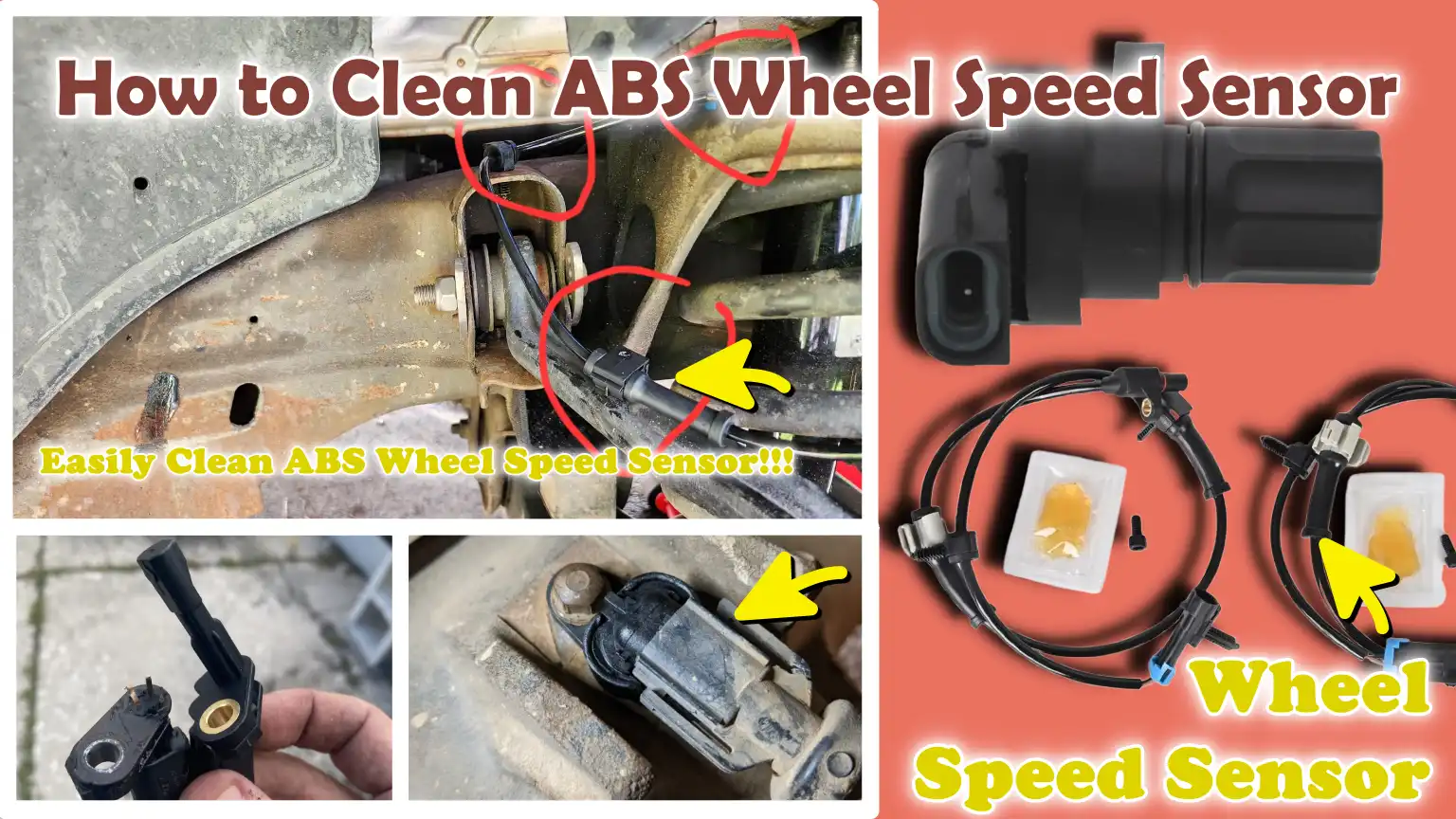
Yes, ABS sensor is literally smaller than your finger but it decides whether your car stops in safe way or just slides out of control during emergency braking situation.
Because, vehicle actually makes dozens of split-second decisions that keeps you safe during journey.
Plus, it is the ABS wheel speed sensor that constantly measures how fast each of the wheel is rotating and sending that data to the Anti-Lock Braking System, in that way it allows it to prevent the wheel lockup and maintain the control during the sudden stops.
But, in reality those sensors actually have to operate in one of the harshest environments on the vehicle: as they exposed to the brake dust, road salt, moisture and microscopic metallic particles from the normal brake wear as well.
And, over the period of time that harmless looking contamination starts to interfere with the sensor’s ability to read the wheel speed accurately that’s how it leads to the unexpected ABA activation, warning lights, reduced traction control performance and even longer stopping distances in the critical moments as well.
Yes, there’s studies in automotive diagnostics that shows that the sensor contamination is literally one of the most common causes of ABS-related faults, so don’t just misdiagnose it as a complete component failure.
Additionally, the good news is that in many cases: the issue is not having a “BROKEN PART” but that part gets a “Dirt On It”.
Now, that’s the proper guide that shows you How to Clean ABS Wheel Speed Sensor so that you can improve the safety and braking precision.
Know, The Signs That Tells Your ABS Wheel Speed Sensors Need Cleaning
1. The ABS Warning Light Illuminates on the Dashboard
The most common and initial sign of a dirty ABS wheel speed sensor is the illumination of the ABS warning light on the dashboard.
This light activates when the system detects that it is not receiving accurate or reliable data regarding wheel speed.
The sensor monitors the rotational speed of each wheel and transmits this information to the control module; however, when dirt, brake dust, or tiny metal particles accumulate on the sensor tip, the signal becomes weak or erratic.
Consequently, the system may interpret this as a malfunction, even if the sensor itself is not defective.
In many cases, this warning appears suddenly, without any noticeable change in the driving experience; for this reason, it is often overlooked.
However, once this light illuminates, the ABS system may partially or completely deactivate, thereby compromising your ability to maintain vehicle control during hard braking, particularly on wet or slippery roads.
2. Erratic or Premature ABS Activation
A properly functioning ABS system is designed to activate only during hard braking maneuvers, specifically when a wheel is on the verge of locking up.
If a sensor is dirty, it may transmit erroneous signals, leading the system to mistakenly believe that a wheel is slipping when, in reality, it is not.
This can cause the ABS to activate prematurely or at inappropriate times, for instance, during normal braking at low speeds.
Drivers often perceive this phenomenon as a sudden vibration or pulsation in the brake pedal, occurring in situations where such a response is not expected.
This behavior can be disorienting and potentially hazardous, as it compromises braking efficiency and increases the vehicle’s stopping distance.
The root cause of this issue is often not a mechanical fault within the braking system itself, but rather the transmission of erroneous data resulting from dirt accumulation on the sensors.
3. Traction Control-Related Issues
ABS wheel speed sensors also play a crucial role in the traction control system, which helps prevent wheel slippage during vehicle acceleration.
When a sensor becomes dirty, it may transmit erratic or delayed signals, leading the system to perceive that one wheel is rotating faster than the others.
This can trigger the traction control system to engage abruptly, reduce engine power, or make it difficult to maintain a consistent vehicle speed.
In some instances, the traction control warning light may illuminate alongside the ABS light.
As these systems rely on the same data, a malfunction in a single sensor can simultaneously impact multiple safety features.
Cleaning the sensor often restores proper communication, allowing both systems to resume normal operation.
4. Inaccurate Speedometer Readings
In certain vehicles, the wheel speed data provided by ABS sensors is also utilized to determine the vehicle’s actual speed.
When dust or grime accumulates on a sensor, the resulting signal may become erratic or intermittent.
Consequently, the speedometer may begin to behave erratically, manifesting as minor fluctuations in speed, displaying incorrect readings, or temporarily dropping to zero.
Although this issue may initially appear minor, it serves as a clear indication that the sensor is not functioning correctly.
Inaccurate speed data can also adversely affect other systems such as: transmission shifting and stability control; therefore, it is essential to address this issue promptly to prevent potential complications regarding the vehicle’s overall performance.
5. Clicking or Grinding Sounds from the Wheels
Strange noises emanating from the vicinity of the wheels such as: clicking, grinding, or a faint scraping sound, as it can sometimes indicate that the ABS sensor has become dirty or that its path is obstructed.
Such noises typically occur when dust or debris accumulates around the sensor or the “tone ring” (a rotating component read by the sensor).
As the wheel rotates, this accumulated debris can interfere with its movement or make slight contact with it, thereby generating the noise.
Furthermore, if the ABS system activates prematurely due to erroneous signals from the sensor, the brakes may engage abruptly; this sudden braking action can produce a grinding or buzzing sound.
While such noises can certainly stem from various other brake-related issues, people often overlook the fact that they may serve as a warning sign indicating that the sensor assembly requires inspection and cleaning.
Know, The Benefits of Cleaning ABS Wheel Speed Sensors

1. Accurate Wheel Speed Readings Are Restored
The function of an ABS wheel speed sensor is to measure how fast each wheel is rotating and to transmit that information instantly to the vehicle’s control system.
This data is used to determine when a wheel is about to lock up during braking.
When dust, brake dust, or tiny metal particles accumulate on the sensor tip, particularly on magnetic sensors, they can distort or weaken the signals being transmitted.
Cleaning the sensor removes these deposits, allowing the sensor to accurately read wheel movement once again.
When the signal becomes stable and precise, the ABS system can make correct decisions, which is crucial for effective braking control.
Accurate readings also benefit other systems that rely on this same data, resulting in smoother overall vehicle operation.
2. Braking Performance and Stability Are Improved
When the sensor is clean and transmitting accurate information, the ABS system can function exactly as it was designed to.
It instantly detects wheel slippage and adjusts brake pressure to prevent the wheels from locking up.
The result is improved overall braking performance, specially during sudden stops or on slippery surfaces, such as wet roads or loose gravel.
A dirty sensor may react belatedly or inaccurately, potentially increasing stopping distances and reducing vehicle control.
By cleaning the sensor, you enable the system to react more quickly and precisely, thereby enhancing stability during braking and maintaining the vehicle’s balance.
This is particularly critical in emergency situations, where even a slight delay can make a significant difference.
3. Avoid Unnecessary Parts Replacement
Many issues related to the ABS are often mistakenly attributed to sensor failure, whereas the actual problem is merely the accumulation of dust.
As the symptoms of a dirty sensor can closely mimic those of a faulty one such as: warning lights illuminating or erratic vehicle behavior, replacing parts without proper diagnosis is a common occurrence.
Cleaning the sensor first helps determine whether dust is indeed the root cause of the problem, thereby preventing the unnecessary replacement of components that are otherwise in perfect working order.
This not only saves time but also ensures that repair efforts are focused directly on resolving the actual issue.
In many instances, simply cleaning the sensor is sufficient to fully restore its functionality, thereby eliminating the need for new parts altogether.
4. Cost Savings on Repairs
Replacing ABS sensors, diagnosing electrical faults, or visiting a repair shop can quickly become a costly undertaking.
Labor charges, diagnostic fees and the cost of new parts can add up to a significant sum, even if the underlying problem is minor.
Cleaning ABS wheel speed sensors is a low-cost maintenance procedure that often resolves the issue without incurring any major expenses.
It requires only a few basic tools and very little time.
By addressing the problem early on and keeping the sensors clean, you can avoid more serious complications that may arise over time due to erroneous signals.
Thus, cleaning stands as one of the most economical methods for maintaining your vehicle’s braking system.
5. Enhances Vehicle Safety
The ABS is a critical safety feature designed to help you maintain control over your vehicle during braking, particularly in emergency situations.
It works in conjunction with other systems, such as traction control and stability control; All these systems rely on precise data regarding wheel speed.
When sensors become dirty, these systems fail to function correctly, thereby compromising your ability to safely drive and stop the vehicle.
Cleaning the sensors restores these systems to full operational capacity, ensuring that all safety features perform exactly as intended.
This boosts your confidence while driving and reduces the risk of losing control of the vehicle in challenging situations, making it an essential part of regular vehicle maintenance.
Tools
| Tools | Why It Is Needed | How to Use It Properly |
|---|---|---|
| Jack and Jack Stands | These are used to safely lift and support the vehicle, allowing you to access the wheels and sensor components. Using a jack alone is unsafe, as it may fail or slip out of position. | When lifting the vehicle, place the jack at the specific points indicated in your car’s owner’s manual. Once the vehicle is raised, position the jack stands beneath sturdy support points and lower the vehicle onto them. Always ensure the vehicle is stable before beginning any work. |
| Lug Wrench | This tool is required to loosen and remove the lug nuts that firmly secure the wheel in place. Typically, it is impossible to access the ABS sensor without first removing the wheel. | Loosen the lug nuts slightly before lifting the vehicle. Once the vehicle is raised, remove them completely and take off the wheel. When reinstalling the wheel, tighten the lug nuts in a crisscross pattern to ensure even pressure distribution. |
| Socket Set | A socket set helps in removing the bolt that secures the ABS sensor in place. Different vehicles use bolts of varying sizes; therefore, it is essential to have a set containing sockets of various dimensions. | Select the correct socket size that fits the bolt snugly. Turn the bolt gently to avoid damaging it. Store the bolt in a safe location so it can be reused during reinstallation. |
| Clean Microfiber Cloth | This is used to gently wipe away dirt, dust and grease from the sensor without scratching or damaging it. Ordinary cloths may leave lint on the sensor’s surface or cause scratches. | Carefully wipe the surface of the sensor using this cloth. Do not apply excessive force. Ensure that the cloth is clean to prevent spreading further dirt. |
| Soft Brush or Toothbrush | A soft brush helps remove stubborn dirt and debris from small crevices, particularly around the tip of the sensor and its mounting area. Using a stiff brush could damage the sensor. | Gently brush the sensor and the surrounding components. Work with a light touch to avoid damaging delicate parts. Focus on removing accumulated dirt without applying excessive pressure. |
| Brake Cleaner Spray | This spray is designed to rapidly clean brake components; it effectively removes oil, dust and grime without leaving any residue. It is particularly useful for cleaning hard-to-reach areas. | Lightly spray the sensor and the surrounding parts. Allow it to air-dry completely. Avoid spraying directly inside electrical connectors or using an excessive amount of liquid. |
| Protective Gloves and Safety Glasses | These items protect your hands and eyes from dirt, chemicals and sharp edges. Injury may occur if brake cleaner or brake dust comes into contact with your skin or eyes. | Wear gloves before you begin working to keep your hands clean and protected. Wear safety glasses to shield your eyes, specially when spraying cleaner or using a brush to remove dirt. |
Take All The Necessary Safety Precautions Before Starting
1. Park on a Level, Stable Surface
Before beginning any work on your vehicle, it is crucial to ensure that it is parked on a level and solid surface.
Level ground helps maintain the vehicle’s stability while it is being lifted, preventing it from suddenly rolling or shifting.
Uneven or soft surfaces such as: dirt, gravel, or sloped driveways, as it can render the vehicle unstable, particularly when jacks and stands are in use.
Even the slightest movement can be hazardous when working near or underneath the vehicle.
A level surface ensures that the vehicle’s weight is distributed evenly, making the lifting process safer and more controlled.
Taking a few extra moments to select the proper location can prevent serious accidents and significantly enhance the overall safety of the procedure.
2. Engage the Parking Brake
Engaging the parking brake is a simple yet vital step that helps prevent the vehicle from moving while you are working on it.
In most vehicles, the parking brake locks the rear wheels, adding an extra layer of safety, even if the vehicle is already in ‘Park’ mode or engaged in a gear.
Without this precaution, the vehicle could roll slightly, specially when lifted, potentially becoming unstable or even falling off the jack stands.
This becomes even more critical when you are removing wheels, as doing so alters the vehicle’s balance.
Always ensure that the parking brake is fully engaged before lifting the vehicle and double-check it if necessary.
This small step significantly reduces the risk of unintended vehicle movement.
3. Disconnect the Battery – Optional, but Recommended
Disconnecting the battery is not always strictly necessary, but it is a sound safety precaution, specially when you are working on electrical components such as ABS sensors.
The ABS system is integrated into the vehicle’s electrical network; even at low voltages, there remains a risk of short circuits if wires or connectors are not handled with care.
By disconnecting the battery, you cut off power to the system, thereby minimizing the likelihood of electrical damage or the accidental triggering of warning lights.
This also protects sensitive electronic components from sudden voltage fluctuations.
If you choose to do this, always disconnect the negative terminal first for safety and reconnect it last.
4. Use the Correct Lifting Points
Every vehicle is designed with specific lifting points that are robust enough to safely support its weight.
Positioning the jack at the correct points is critical, as placing it incorrectly can result in damage to the vehicle’s frame, bent metal components, or the vehicle slipping off the jack.
The correct jack placement points are typically outlined in the owner’s manual and are often located on reinforced sections of the frame or near the wheels.
Once the vehicle has been raised, jack stands should also be placed beneath these reinforced sections to safely support the vehicle’s weight.
Lifting the vehicle correctly not only protects your vehicle from damage but also ensures your safety while working underneath or around it.
5. Avoid Damaging the Sensor Wiring
The ABS wheel speed sensor is connected via a thin wiring harness that transmits essential signals to the control system.
This wiring is frequently exposed to heat, dust and vibration, making it far more delicate than it might appear at first glance.
Excessively pulling, twisting, or bending the wires can cause internal damage that is not visible from the outside.
This can result in signal loss, trigger warning lights, or cause the sensor to fail completely.
When handling the sensor, always grasp the connector rather than the wire and handle it gently.
Maintaining the integrity of the wiring is just as important as cleaning the sensor; for if the connection is compromised, even a thoroughly cleaned sensor will fail to function.
Understand, Where is the ABS Wheel Speed Sensor Located?
1. Common Mounting Locations – Near the Wheel Hub or Brake Rotor
The ABS wheel speed sensor is typically mounted in close proximity to the wheel hub or brake rotor, as it requires the ability to accurately read the precise speed of the rotating wheel.
In most vehicles, the sensor is secured to the steering knuckle or a nearby bracket and is positioned such that its tip faces a rotating component known as the “tone ring” or “reluctor ring.”
This ring features evenly spaced teeth or notches that pass by the sensor as the wheel rotates; this movement allows the sensor to measure speed with great precision.
Due to this specific design, the sensor is situated in a location where it remains very close to the rotating components without actually making physical contact with them.
This area is frequently exposed to brake dust, road grime, water and minute metal particles, which can easily cause the sensor to become contaminated over time.
Although the sensor itself is compact in size, its mounting location requires careful attention; if debris accumulates in this area, it can compromise the sensor’s ability to accurately detect wheel movement.
2. Differences Between Front and Rear Sensors
While the fundamental purpose of both front and rear ABS sensors remains the same, their mounting methods and designs may vary slightly depending on the specific vehicle model.
Front sensors are often easier to locate, as they are typically mounted near the front wheel hub assembly and become readily visible once the wheel has been removed.
In some modern vehicles, they may be positioned near the brake rotor or integrated directly into the wheel bearing assembly itself.
Conversely, rear sensors may be mounted near the rear wheel hubs or, in some instances, situated within the axle assembly, particularly in vehicles featuring a “solid axle” rear design.
In certain designs, rear sensors are less conspicuous and accessing or locating them may necessitate the removal of other vehicle components.
Despite these variations, both front and rear sensors operate on the same fundamental principle to measure wheel speed; furthermore, dust and dirt affect both types of sensors in an identical manner.
3. Easy Identification Methods
Identifying an ABS wheel speed sensor becomes significantly easier when you know exactly what to look for.
Typically, this sensor is a small cylindrical or rectangular component with an attached wire.
This wire leads to a connector mounted on the suspension system or the vehicle’s frame.
It is usually secured in place by a single bolt and is positioned in close proximity to the rotating components of the wheel assembly.
This bundle of wires (wiring harness) is often routed along the control arm or strut and is fastened at various points using clips to ensure it remains secure.
When inspecting the rear side of the wheel, focus your attention on the area surrounding the hub or brake rotor and look for any visible wires, as they frequently lead directly to the sensor itself.
The tip of the sensor is typically positioned very close to a metal ring featuring teeth or notches; this serves as a clear indication that you have successfully located the correct component.
Recognizing these visual cues allows you to quickly and safely locate the sensor before commencing the cleaning process.
How to Clean ABS Wheel Speed Sensor – Easy & Effective Method
1. Lift the Vehicle
To begin, prepare the vehicle so that you can safely access the wheel area where the ABS sensor is located.
Before lifting the vehicle and while the tire is still resting on the ground, slightly loosen the lug nuts; doing this prevents the wheel from spinning.
Next, use a jack to lift the vehicle, placing it only at the specific lifting points recommended by the manufacturer.
Once the vehicle is raised, position jack stands beneath sturdy support points and gently lower the vehicle onto them.
This step is crucial, as it ensures the vehicle remains stable while you work, thereby preventing accidents.
Once the vehicle is properly lifted and secured, the remainder of the task becomes much safer and easier.
2. Remove the Wheel
Once the vehicle is safely lifted, completely remove the loosened lug nuts and carefully detach the wheel.
Removing the wheel provides you with clear access to the brake assembly and the ABS wheel speed sensor; this sensor is typically mounted near the hub or rotor.
Store the lug nuts in a safe place to ensure they do not get lost.
With the wheel removed, you will be able to see the vehicle’s components more clearly and work without any obstructions.
3. Locate the ABS Sensor
To find the ABS sensor, look near the wheel hub or brake rotor.
It is typically a small component with a wire attached to it; this wire runs along the suspension components and leads to a connector.
If it is not immediately visible, trace the wiring leading away from the hub assembly, as it often leads directly to the sensor.
The tip of the sensor is positioned in close proximity to a rotating ring featuring teeth or notches; it is through this component that the sensor detects the wheel’s speed.
Taking a moment to correctly identify the sensor ensures that you do not inadvertently damage any other part of the vehicle.
4. Disconnect the Sensor – If Necessary
In some vehicles, you may need to disconnect the sensor from its electrical connector before removing it from its mounting location.
Carefully locate the connector, depress its release tab and gently pull it free.
It is crucial to remember to pull directly on the connector itself, rather than on the wire, as the wire can easily snap or become damaged.
Disconnecting the sensor makes it easier to handle and allows you to clean it more thoroughly without placing any strain on the wiring harness.
5. Remove the Sensor
The sensor is typically secured in place by a small mounting bolt.
Use a tool of the appropriate size to loosen this bolt and set it aside in a safe location.
Once the bolt has been removed, gently pull the sensor out of its housing.
Occasionally, the sensor may feel stuck due to an accumulation of dirt, rust, or debris in the surrounding area.
In such instances, gently wiggle the sensor without applying excessive force, as the sensor housing can be fragile.
Carefully removing the sensor helps prevent damage and ensures that it can be cleaned effectively.
6. Clean the Sensor
Begin the cleaning process by wiping the sensor with a clean microfiber cloth to remove any loose dirt and dust.
If stubborn grime has accumulated, use a soft-bristled brush to gently scrub it away; ensure that you do not scratch the surface.
Next, you may use a small amount of ‘brake cleaner spray’ to remove grease and fine particles.
If the sensor is equipped with a ‘magnetic tip,’ it may attract tiny metal particles generated by brake wear; therefore, ensure that you thoroughly remove all such particles.
The sensor must be cleaned with extreme care and precision, as it is a highly sensitive component and a clean surface is essential for its proper functioning.
7. Clean the Mounting Area
Cleaning the sensor alone is not sufficient, as dirt can also accumulate in the area where the sensor is mounted.
Use a cloth or brush to remove debris from the mounting hole and the surrounding area.
Pay special attention to the ‘tone ring’ or ‘reluctor ring’, which the sensor reads and ensure that no dirt has accumulated on its surface that could interfere with its operation.
Even a trace amount of dirt remaining in this area after cleaning can negatively impact the sensor’s ability to take accurate readings.
Cleaning the mounting area ensures that the sensor will function correctly once it is reinstalled.
8. Inspect the Sensor
Before reassembling everything, carefully inspect the sensor and its wiring.
Check for any visible signs of damage, such as cracks, corrosion, or worn insulation on the wires.
If the sensor has sustained physical damage or is heavily corroded, simple cleaning may not resolve the issue and the unit may need to be replaced.
This step of the inspection is crucial, as it helps you verify whether the sensor is still functioning correctly or if it requires further repair or replacement.
9. Reinstall the Sensor
Once the sensor and its mounting location have been cleaned and inspected, carefully place the sensor back into its original position.
Ensure that it seats properly and aligns correctly with the tone ring.
Reinsert the mounting bolt and tighten it firmly; however, avoid overtightening, as this could damage the sensor or its threads.
If the electrical connector was disconnected, reconnect it; ensure that it seats securely in place and produces an audible “click.”
Proper installation of the sensor is essential for maintaining a stable connection and ensuring accurate readings.
10. Reinstall the Wheel
Finally, place the wheel back onto the hub and hand-tighten the lug nuts to hold it in place.
Slowly lower the vehicle back down to the ground and then fully tighten the lug nuts in the correct sequence to ensure even pressure distribution.
Proper tightening ensures that the wheel remains secure and free from vibrations.
Once everything has been reassembled, the vehicle is ready for testing; you can now verify whether the ABS system is functioning correctly following the sensor cleaning.
Learn, How to Reset the ABS Light After Cleaning?
1. Start the vehicle and check if the light turns off
After cleaning and reinstalling the ABS wheel speed sensor, the first step is to start the vehicle and carefully observe the dashboard.
In many vehicles, the ABS system performs a brief self-check whenever the engine is started.
During this process, the control module verifies whether it is receiving normal and stable signals from all wheel speed sensors.
If the cleaning has successfully removed the debris and restored proper signal flow, the ABS warning light may turn off automatically within a few seconds.
This occurs because the system now recognizes that the previously detected fault is no longer present.
However, in some instances, the light may remain illuminated even after the underlying issue has been resolved, as a fault code may still be stored in the system’s memory.
This does not necessarily imply that the problem persists; rather, it indicates that additional steps may be required to clear the warning.
2. Drive the vehicle for a short distance to allow the system to recalibrate
If the ABS light does not turn off immediately after starting the vehicle, the next step is to drive the vehicle for a short distance.
The ABS system often requires real-time wheel speed data to fully verify that all sensors are functioning correctly.
As you drive, the sensors begin continuously transmitting speed signals to the control module, enabling the module to compare wheel speeds and confirm that everything is operating normally.
This process is sometimes referred to as “recalibration” or “re-learning,” although it typically occurs automatically without any human intervention.
During this brief drive, it is best to maintain a steady speed and apply the brakes gently to allow the system to gather accurate data.
In many cases, once the system is satisfied with the sensor readings and detects no further issues, the ABS light will turn off automatically.
3. If the light remains illuminated, use an OBD2 scanner
If the ABS warning light persists even after driving the vehicle, it may be necessary to use an OBD2 scanner to read and clear any stored trouble codes.
Whenever the ABS system detects an issue, it stores a corresponding fault code; these codes may remain in the system’s memory even after the original problem has been resolved.
An OBD2 scanner connects to the vehicle’s diagnostic port and communicates with the control module to retrieve and display these codes.
Once you have verified that the sensor is clean and functioning correctly, the stored codes can be cleared using the scanner.
Clearing the codes resets the system and, provided there are no underlying malfunctions, the warning light will turn off.
If the light illuminates again after the codes have been cleared, it may indicate a more significant issue such as: a faulty sensor, wiring problems, or another system malfunction, that requires further investigation.
Know, Common Mistakes During Cleaning ABS Wheel Speed Sensor
You need to really understand this thing: the ABS system are only as reliable as the data they actually receiving from the wheel speed sensors, as there’s even research that shows that these sensors continuously sends the signals that actually helps the system to prevent wheel lockup and maintain the control, so whenever the dirt or debris interferes with this signal, then the entire braking system can lose their accuracy, that’s the reason you need proper cleaning and maintain it as it is really important.[¹]
1. Using Harsh Tools That Damage the Sensor
The ABS wheel speed sensor is a small and sensitive electronic component, designed to provide highly precise signal readings.
Using harsh or sharp tools such as: metal brushes, screwdrivers, or scraping tools, as it can easily scratch the sensor’s surface or damage its protective coating.
Even minor scratches can affect how the sensor reads the tone ring, potentially resulting in weak or inaccurate signals.
The sensor tip, specially if it is magnetic, must remain smooth and clean to function correctly.
Vigorous cleaning can also cause cracks in the plastic housing, allowing moisture to ingress and subsequently lead to sensor failure.
To protect the sensor while removing debris, always use soft materials such as: a microfiber cloth or a soft-bristled brush and clean gently.
2. Pulling on the Wiring Harness
The wiring harness connected to the ABS sensor transmits vital electrical signals to the control module and it is far more delicate than it appears.
Pulling directly on the wires, rather than on the connector itself, as it can stretch or sever the internal conductors; this damage is often not visible from the outside.
Such damage can sometimes lead to intermittent signal loss, trigger warning lights, or cause the sensor to fail completely.
Connectors are designed with clips or tabs that must be pressed or released before they can be safely disengaged.
Handling the wiring with care ensures that the electrical connection remains strong and reliable even after the cleaning process is complete.
3. Failing to Inspect the Tone Ring
The tone ring, also known as the reluctor ring, is the rotating component that the ABS sensor reads to measure wheel speed.
It typically features evenly spaced teeth or notches; any damage to this ring or the accumulation of dirt on it can adversely affect the sensor’s readings.
Many people focus solely on cleaning the sensor and neglect to inspect the tone ring.
If the ring is rusted, cracked, has broken teeth, or is heavily encrusted with dirt, the sensor will continue to transmit inaccurate data even after being cleaned.
Taking the time to inspect this component ensures that the entire system, not just the sensor, is functioning correctly.
4. Spraying Excessive Cleaner into Connectors
Brake cleaner spray is highly effective at removing dirt and grease; however, using it excessively, particularly near electrical connectors, as it can lead to problems.
Excess liquid can seep inside the connector and damage the electrical contacts, potentially causing connection failures or corrosion over time.
Furthermore, if not used correctly, certain cleaners can strip away protective coatings or leave behind unwanted residue.
It is essential to apply a light spray and focus only on the specific areas that require cleaning.
To avoid unnecessary damage, refrain from spraying directly onto wiring connectors or sensitive electronic components.
5. Failing to Properly Secure the Vehicle
Working on a vehicle that has not been properly secured can be one of the most serious mistakes you make.
Relying solely on a jack, without the use of jack stands, is extremely dangerous, as the jack could suddenly fail or slip at any moment.
If the vehicle shifts or falls while you are working on it, you could sustain serious injuries or the vehicle could suffer significant damage.
Using jack stands to provide proper support ensures that the vehicle’s weight remains safely and stably supported.
Taking the time to properly secure the vehicle creates a stable working environment, allowing you to focus on your work without facing any unnecessary risks.
Understand, When Cleaning Is Not Enough
1. Signs That the Sensor Needs Replacement
While cleaning can help when dirt is interfering with the signal, it cannot repair internal damage to the sensor.
An ABS wheel speed sensor can fail due to heat, moisture, vibration, or general wear and tear over time.
If cracks are visible in the sensor housing, if the metal components are heavily corroded, or if the mounting is loose, causing the sensor to shift out of position, it will be unable to accurately read wheel speed, even after cleaning.
Another clear indication is when the ABS warning light illuminates again immediately after being reset, or when the system repeatedly displays the same fault code.
In many cases, a failing sensor sends a weak or erratic signal, which can cause the ABS system to activate unnecessarily, disable traction control, or result in inconsistent braking performance.
As these sensors are sealed electronic components, they cannot be repaired internally; therefore, in the event of any physical or electrical damage, replacement is the only reliable solution.
2. Issues Related to the Tone Ring or Wiring
The ABS system relies not only on the sensors but also on the tone ring and the associated wiring responsible for transmitting signals.
The tone ring, which rotates along with the wheel, must have evenly spaced teeth or notches to ensure accurate readings by the sensor.
If the ring is damaged, warped, broken, or covered in rust and debris, it can generate erroneous signals, even if the sensor itself is clean and fully functional.
In some instances, missing or worn teeth can disrupt the signal, leading to erratic operation of the ABS system.
Wiring-related issues are also common and can often be difficult to diagnose initially.
Due to constant exposure to vibration, heat and varying road conditions, wires can become frayed, break, or suffer from internal damage.
A faulty wire can interrupt the transmission of signals between the sensor and the control module, potentially causing a warning light to illuminate or leading to a system failure.
In such instances, simply cleaning the sensor will not resolve the issue, as the root cause lies hidden within the supporting components.
3. Persistent ABS Issues Even After Cleaning
If the ABS warning light remains illuminated, or repeatedly lights up, even after cleaning the sensors and resetting the system, it typically indicates a deeper internal issue that requires attention.
Modern vehicles store fault codes within their control modules; these codes can precisely pinpoint specific problems within the system, such as sensor malfunctions, wiring faults, or communication errors.
When problems persist, it becomes essential to use a diagnostic tool to retrieve these codes and accurately identify the true root cause of the issue.
Continuing to drive with unresolved ABS problems can compromise braking safety, particularly in emergency situations, where this system is designed to prevent the wheels from locking up.
Persistent issues should not be ignored, as they can adversely affect not only the ABS but also the traction control and stability systems.
At this stage, undergoing a proper inspection and necessary repairs is crucial to restore the system’s full functionality and ensure safe driving conditions.
Read More:
- How to Diagnose ABS Sensor Wiring Issues
- How to Test Electronic Brake Module (EBCM)
- How to Fix Parking Brake Dragging
- How to Adjust Parking Brake Cable
- How to Check Parking Brake Cable Tension
- How to Fix Brakes Dragging While Driving
- How to Diagnose Brake Dragging Issue
- How to Fix Internal Master Cylinder Leak
- How to Test Brake Master Cylinder Pressure
- How to Replace Brake Booster
- How to Fix Brake Booster Vacuum Leak
- How to Test Brake Booster Functionality
- How to Lubricate Brake Caliper Pins Properly
- How to Rebuild Brake Caliper at Home
- How to Check Brake Caliper Piston Movement
- How to Resurface Brake Rotors at Home
- How to Fix Brake Rotor Runout
How to Maintain & Prevent ABS Wheel Speed Sensor from Future Problems
1. Regular Brake Inspections
Regular brake inspection is the most effective method for preventing issues related to ABS wheel speed sensors.
During normal driving, brake pads wear down and generate fine dust and tiny metal particles may shed from the brake rotors.
These materials naturally accumulate around the wheel hub, where the sensor is located.
By inspecting the brakes at regular intervals, you can identify early signs of buildup, uneven wear, or contamination before they begin to affect the sensor’s functionality.
A standard inspection involves checking the brake pads, rotors and surrounding components for excessive dust or debris.
Keeping the brake system in good condition helps minimize the amount of debris that reaches the sensor and interferes with its readings.
2. Cleaning During Brake Service
Cleaning the ABS sensor and its surrounding area during routine brake service is a simple yet highly effective maintenance step.
Whenever brake pads or rotors are being replaced, the wheel assembly is already disassembled, providing easy access to the sensor.
This is the ideal time to gently clean the sensor tip, remove metal particles and clear away debris from the mounting area and tone ring.
Doing this regularly prevents dirt and grime from accumulating to a level where they could disrupt the signal.
As the sensor operates based on precise measurements, even a small amount of contamination over time can make a significant difference.
Making sensor cleaning a regular part of your brake service routine helps maintain consistent, optimal performance and prevents the need for major repairs down the road.
3. Avoid Frequent Driving in Deep Mud or Heavy Dirt
Driving through deep mud, standing water, or heavy dirt exposes the ABS sensors to conditions that significantly increase the risk of contamination.
Mud and dust can adhere to the sensor components, forming a hardened layer, while water can carry fine particles that accumulate around the sensor and the tone ring.
Over time, this buildup can interfere with the sensor’s ability to accurately read wheel speed.
Although avoiding such conditions is not always possible, refraining from frequently driving in such environments can help protect the sensors.
After driving in challenging conditions, it is a good practice to wash the wheel area or inspect it for excessive dirt accumulation.
Keeping this area clean ensures that the sensor continues to function correctly and helps prevent long-term issues.
4. Periodically Inspect the Wiring
The wiring connected to the ABS sensor is just as critical as the sensor itself, as it transmits signals to the control system.
This wiring often runs alongside suspension components and is exposed to heat, vibration and road conditions, which can lead to wear and tear over time.
Regular inspections help identify issues such as cracks in the insulation, loose connectors, or chafing against other components.
Even a minor break in the wiring can interrupt the signal and trigger a warning light or indicate a system malfunction.
By regularly inspecting the wiring and promptly addressing minor issues, you can prevent major electrical problems and ensure that the ABS system continues to operate reliably.
Conclusion – How to Clean ABS Wheel Speed Sensor
Basically, a clean ABS sensor literally does more than fix a warning light, as it actually restores that trust between you and your braking system by giving intact performance.
This sensor is responsible for transmitting accurate wheel speed data to the ABS system, thereby helping to prevent wheel lock-up and maintain control during braking.
Over time, brake dust, dirt and tiny metal particles can accumulate on the sensor, interfering with its ability to transmit accurate signals.
This can trigger a warning light, compromise braking responsiveness and degrade the performance of systems such as traction control and stability control.
The key takeaway is that many of these issues are not caused by a faulty component, but rather by contamination, specifically dirt and dust, which can be resolved through careful cleaning.
By recognizing the symptoms, employing proper cleaning techniques and avoiding common mistakes, you can restore the sensor’s functionality without the need to replace any unnecessary parts.
Regular inspections and routine maintenance can also help prevent these issues from recurring.
It is essential to remember that the ABS system relies on precise data to function correctly and even the slightest interference can jeopardize overall safety.
Taking the time to clean and maintain your ABS sensors not only enhances braking performance but also helps you avoid costly repairs in the future.
Now, that’s it from this guide on How to Clean ABS Wheel Speed Sensor and now you can ask related queries in the comment box.
Frequently Asked Questions
FAQ 1: What exactly does an ABS wheel speed sensor do?
Answer: An ABS wheel speed sensor measures how fast each wheel is rotating and transmits that information to the ABS control system. This data helps the system determine when a wheel is about to lock up during braking. If a wheel begins to lock, the system rapidly adjusts the brake pressure to keep the wheel rotating, thereby helping you maintain control of the vehicle. Without accurate data from the sensors, the ABS system cannot function correctly, which can negatively impact both braking performance and safety.
FAQ 2: Can a dirty ABS sensor really cause problems?
Answer: Yes, a dirty ABS sensor can cause a variety of issues because, when dust, brake dust, or metal particles accumulate on it, it cannot accurately read the wheel’s speed. This can result in incorrect signals being sent to the control module. Consequently, you may notice warning lights illuminating, experience unusual sensations during braking, or observe issues related to traction control. In many cases, the sensor itself is not defective but simply obstructed by dust or grime; therefore, cleaning it proves to be an effective solution.
FAQ 3: How often should I clean my ABS wheel speed sensors?
Answer: There is no fixed schedule for this; however, it is good practice to inspect and clean the ABS sensors during routine brake maintenance, or whenever you notice issues such as illuminated warning lights or unusual behavior during braking. As the sensors are exposed to dust and dirt, it is natural for grime to accumulate on them over time. Cleaning them while replacing brake pads or rotors is a practical approach, as the wheel is already removed at that point, allowing for easy access to the sensors.
FAQ 4: Can I clean the ABS sensor without removing it?
Answer: It is possible to clean the sensor without removing it, but this is not always the most effective method. When the sensor remains installed, you can only clean its outer surface; dust and debris trapped inside the mounting cavity may remain there. Removing the sensor allows for a more thorough cleaning and also provides an opportunity to inspect the mounting hole and the tone ring. For best results, it is generally recommended to remove the sensor.
FAQ 5: What happens if I ignore a dirty ABS sensor?
Answer: Ignoring a dirty ABS sensor can negatively impact braking performance and pose safety risks. The ABS system may fail to function correctly, potentially resulting in longer stopping distances and reduced vehicle control during sudden or emergency braking situations. Over time, erroneous signals can also adversely affect the traction control and stability systems. In some cases, this issue can escalate into a more complex problem, potentially necessitating costly repairs later on.
FAQ 6: Is it safe to drive with the ABS warning light illuminated?
Answer: Generally, it is safe to drive for a short period, but it is not advisable to ignore this warning. When the ABS warning light illuminates, the anti-lock braking system may be disabled; this means that while your brakes will still function, they will lack the additional safety feature that prevents the wheels from locking up. Driving on wet or slippery surfaces can be particularly hazardous, as these are precisely the conditions where the ABS provides the greatest benefit. It is best to have the issue diagnosed and repaired as soon as possible.
FAQ 7: Can cleaning the sensor turn off the ABS light?
Answer: Yes, if the issue stems from dirt or debris, cleaning the sensor can indeed cause the ABS warning light to turn off. Once the sensor resumes transmitting accurate data, the system will automatically clear the warning after the vehicle is restarted or driven for a short distance. In some instances, if the warning light does not turn off automatically, you may need to use a diagnostic tool to clear the ‘fault codes’ stored within the system.
FAQ 8: What is a ‘Tone Ring,’ and why is it so important?
Answer: The ‘tone ring’ (also known as a ‘reluctor ring’) is a rotating component featuring evenly spaced teeth or notches; the ABS sensor reads these specific teeth. As the wheel rotates, the sensor detects these teeth to calculate the wheel’s speed. If the tone ring is dirty, damaged, or has broken teeth, the sensor cannot read the data correctly, even if the sensor itself is perfectly clean. Therefore, it is crucial to inspect and clean the tone ring area in conjunction with the sensor itself.
FAQ 9: Can I use just any type of cleaner on an ABS sensor?
Answer: To clean an ABS sensor, it is best to use ‘brake cleaner’ or cleaning products specifically formulated for automotive components, as these effectively remove dirt and grease without leaving behind any residue. Avoid using harsh chemicals or water-based cleaners, as these can damage the sensor or trap moisture inside it. Always apply cleaning sprays gently and take care to ensure that the cleaning agent does not seep into the electrical connectors, as this could cause damage.
References:
[1] Design of Teaching Platform for ABS Wheel Speed Sensor
https://www.researchgate.net/publication/358790742_Design_of_Teaching_Platform_for_ABS_Wheel_Speed_Sensor
Hello Folks, Dean Shali here to help you out to solve the problems with your lovely vehicle, as i have lots of experience and knowledge about automotive industry as i woks directly with the customers and repair vehicles and i love to help the people to keep their cars safe and running smoothly.