Written By: Dean Shali
Fact Checked By: Sabré Cook
Reviewed By: Tamara Warren
It is true that when the catalytic converter fails to work efficiently then it silently reduces your car’s power and even increases emission that’s why you should spot it early on and fix it before its too late for repair.
Basically, Catalytic Covers works by converting all the dangerous gases such as: carbon monoxide, nitrogen oxides and several unburned hydrocarbons into actually less harmful substances such as: carbon dioxide, nitrogen and water vapor as well, that’s why its been respected by the nature as well.
And, over time it can get wear out as well, become clogged or get damaged by the engine misfires, oil contamination of there can be physical impact from the road debris as well that can make it feel bad.
So, whenever it looses effectiveness then your car may show some common warning signs such as: poor acceleration, reduces in fuel efficiency, rattling noises, strange exhaust smells or you can see check engine light turned on as well.
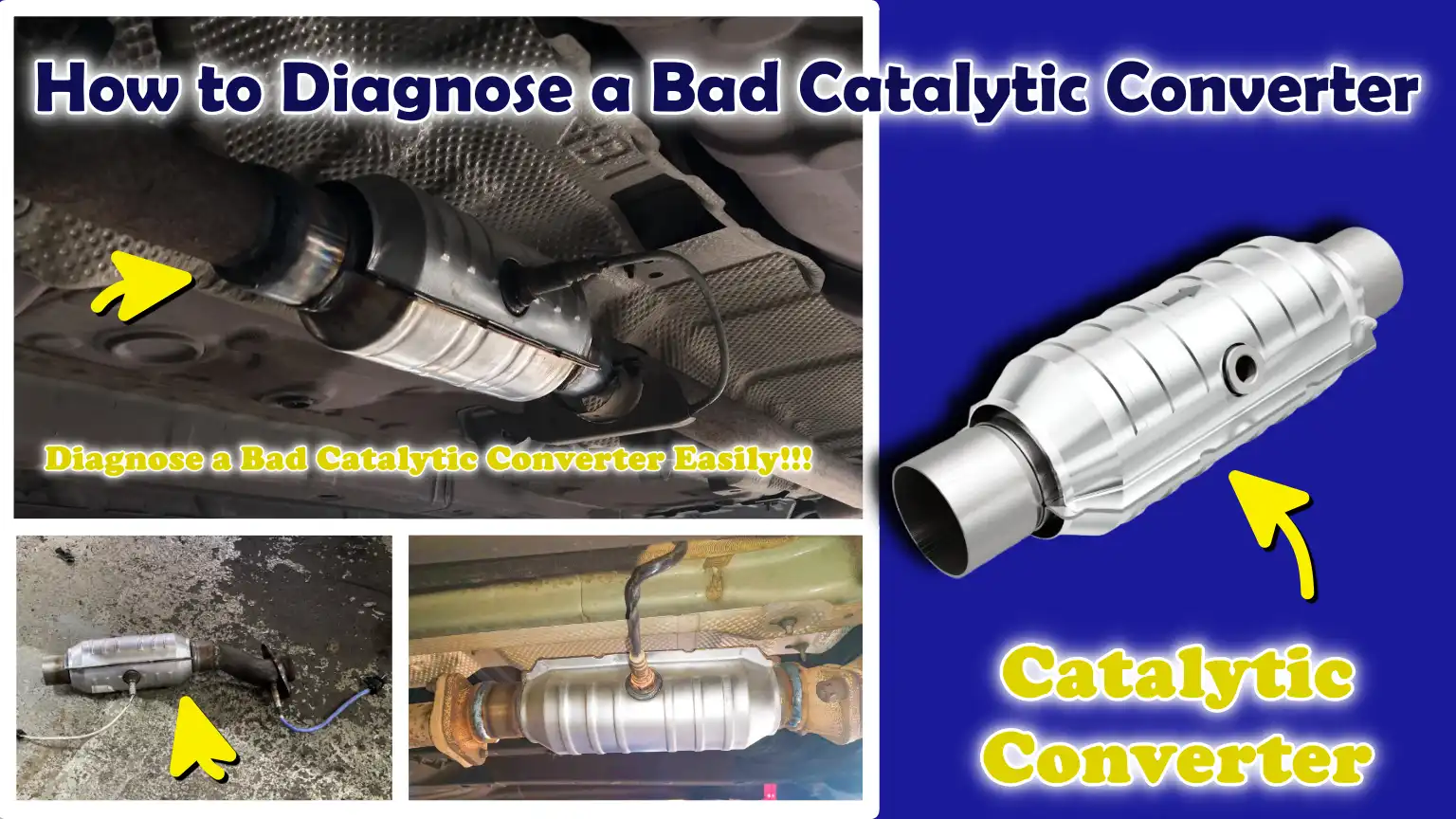
Now, this is the proper guide that will shows you How to Diagnose a Bad Catalytic Converter, so that you can diagnose the exact problem and repair it quickly or if necessary replce it as well.
Now, Let’s Understand About the Catalytic Converter
1. Function
The catalytic converter is an essential component of your car’s exhaust system that helps protect both your vehicle and the environment.
Its primary function is to take harmful gases emitted by the engine such as: carbon monoxide, nitrogen oxides and unburned hydrocarbons, and convert them into less harmful substances, such as carbon dioxide, nitrogen and water vapor.
This chemical process not only reduces pollution but also ensures that your car meets emission standards and operates more efficiently.
2. Components
Inside the catalytic converter, there is a honeycomb-like structure made of ceramic or metal.
This design maximizes the surface area, allowing exhaust gases to flow through it and react with precious metals such as platinum, palladium and rhodium.
These metals act as catalysts, accelerating the chemical reactions that transform toxic gases into safer ones.
Although it is compact and tucked away beneath the car, this component remains critically important for both engine performance and environmental protection.
3. Lifespan
Under normal driving conditions, a typical catalytic converter lasts between 70,000 and 100,000 miles.
Its lifespan can be shortened by factors such as engine misfires, contamination by oil or coolant, excessive idling, or physical damage caused by road debris.
Regular maintenance of your engine and exhaust system can help extend the converter’s lifespan and prevent its premature failure.
4. Consequences of Failure
When a catalytic converter begins to fail, it can lead to a variety of distinct and clearly observable problems.
The car’s fuel efficiency may decrease, meaning it will require more fuel to cover the same distance.
Engine performance may also decline, resulting in sluggishness or hesitation when accelerating while driving.
A deteriorating converter can also increase harmful emissions, thereby raising the likelihood of your vehicle failing emissions tests.
Ignoring these issues could lead to hefty engine repair costs or cause damage to other components of the exhaust system.
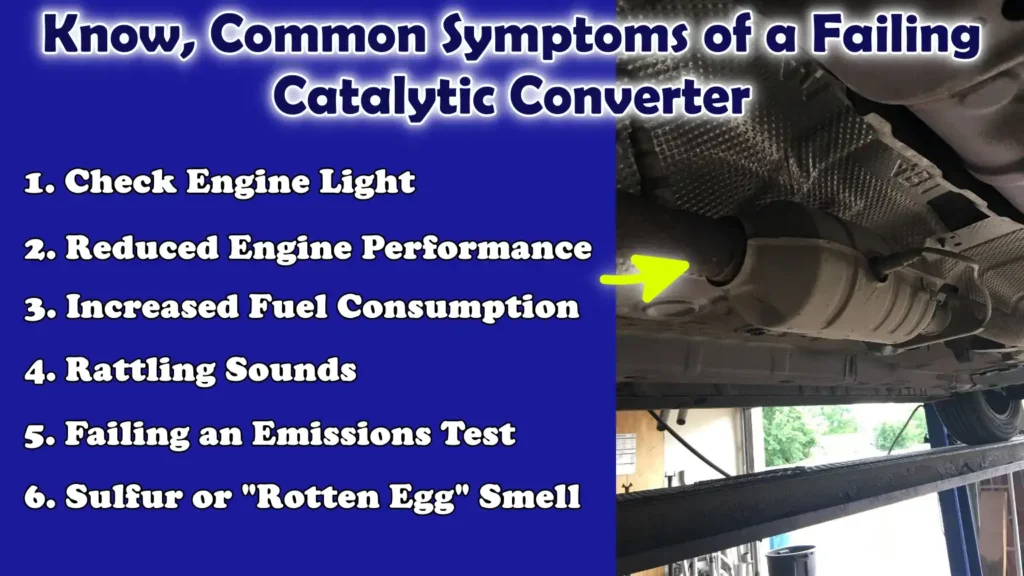
Know, Common Symptoms of a Failing Catalytic Converter
1. Check Engine Light
One of the earliest and most common signs of a failing catalytic converter is the illumination of the ‘Check Engine Light’ on your dashboard.
Modern vehicles utilize OBD-II sensors to monitor the converter’s functionality; if it is not operating correctly, the system triggers a diagnostic code.
These codes, often displayed as P0420 or P0430, indicate that the catalytic converter is not reducing emissions as effectively as it should.
Addressing this warning promptly can prevent further damage to the engine and help avoid costly repair bills.
2. Reduced Engine Performance
A failing catalytic converter can diminish your engine’s power and cause it to respond more sluggishly than usual.
You may notice a decrease in acceleration, hesitation when pressing the gas pedal, or difficulty maintaining speed while driving uphill.
This occurs because a clogged or defective converter restricts the flow of exhaust gases, forcing the engine to work harder and thereby reducing its overall performance.
3. Increased Fuel Consumption
When a catalytic converter is failing, your vehicle will often consume more fuel than usual.
This happens because the engine cannot operate efficiently when exhaust gases are not being processed correctly.
Drivers may find themselves needing to refuel more frequently, even if their driving habits have not changed; over time, this can lead to increased operating costs.
4. Rattling Sounds
A rattling or knocking sound coming from underneath the vehicle may indicate that the internal components of the catalytic converter have become loose or damaged.
Over time, the honeycomb-like structure inside the converter can break down due to heat, debris, or external impact, resulting in a metallic rattling sound while the vehicle is in motion.
5. Failing an Emissions Test
Vehicles with a failing catalytic converter are highly likely to fail emissions tests.
As the converter is unable to effectively neutralize harmful gases, the levels of pollutants such as: carbon monoxide and nitrogen oxides, in the exhaust fumes exceed legal limits.
Consequently, your vehicle may fail inspection, potentially resulting in fines or a mandatory order to perform repairs.
6. Sulfur or “Rotten Egg” Smell
A strong odor resembling sulfur or rotten eggs emanating from the exhaust pipe is a definitive sign of a failing catalytic converter.
This smell occurs when the converter is unable to properly process the hydrogen sulfide present in the exhaust gases.
This is often one of the most easily identifiable, and unpleasant, symptoms, signaling an immediate need for inspection or replacement.
Tools
| Tool | Why It Is Needed | How to Use It |
|---|---|---|
| OBD-II Scanner | Checks the car’s engine codes such as: P0420 or P0430 to determine whether the catalytic converter is failing. | Connect the scanner to the OBD-II port; which is typically located under the dashboard, turn on the ignition and read the displayed codes. Use these codes to determine whether the converter is functioning correctly. |
| Digital Multimeter | Measures voltage, resistance and temperature to inspect the sensors and electrical signals associated with the catalytic converter. | Set the multimeter to the appropriate mode (voltage or resistance), connect the probes to the sensor or wire and take a reading. Compare the reading against the specifications provided by the manufacturer. |
| Infrared Thermometer | Checks the temperature difference between the inlet and outlet of the catalytic converter to detect any blockages or malfunctions. | With the engine running, direct a thermometer toward the front and rear sections of the converter. A properly functioning converter typically registers a higher temperature at the outlet compared to the inlet. |
| Mechanics Gloves and Safety Goggles | Protects hands and eyes from burns, debris and hazardous chemicals during inspection or testing procedures. | Wear gloves when handling hot or sharp components and wear safety goggles to prevent dust, metal shards, or chemicals from entering the eyes. |
| Flashlight and Inspection Mirror | Facilitates a visual inspection of the catalytic converter and hard-to-reach sections of the exhaust system to detect any damage, leaks, or soot accumulation. | Shine a flashlight directly onto the converter and use a mirror to view its underside or rear sections. Look for cracks, discoloration, or loose components. |
How to Diagnose a Bad Catalytic Converter – Fix In 7 Steps
1. Check Engine Codes
The first step in identifying a faulty catalytic converter is to check the engine codes using an OBD-II scanner.
Modern cars are equipped with sensors that monitor the performance of the converter.
By reading the OBD-II codes, you can identify specific issues such as: P0420 or P0430, which indicate that the catalytic converter is not functioning correctly.
Understanding these codes helps determine whether further investigation or repairs are necessary, providing a clear starting point for the diagnostic process.
2. Visual Inspection
Conducting a thorough visual inspection is crucial for identifying obvious signs of damage.
Look for cracks, discoloration, melted sections, or any external damage caused by debris or impact on the catalytic converter.
Check the joints and the surrounding exhaust system for leaks, soot, or rust, as these may indicate that the converter is not sealing properly or has begun to deteriorate.
Early detection of visible issues can save time and prevent more serious engine-related problems.
3. Temperature Check
Using an infrared thermometer, you can compare the temperatures at the inlet and outlet of the catalytic converter.
A properly functioning converter typically shows a higher temperature at the outlet compared to the inlet, as it is actively converting harmful gases into less harmful substances.
If the temperatures at both points are nearly identical, it may be a sign of a clogged or failing converter that is obstructing proper exhaust flow or preventing the necessary chemical reactions from taking place.
4. Backpressure Test
The backpressure test measures how easily exhaust gases flow through the catalytic converter.
By installing a pressure gauge upstream (before) the converter, you can detect excessive backpressure, which often indicates an internal blockage.
A clogged converter restricts exhaust flow, leading to reduced engine performance, increased fuel consumption and, if left unaddressed, the potential for long-term engine damage.
5. Rattle Test
Gently tapping on the catalytic converter can reveal internal damage or loose components.
Over time, due to heat, debris, or physical impact, the converter’s internal honeycomb-like structure may break down.
A rattling or knocking sound is a clear indication that the converter is failing and may need to be replaced to restore proper function and prevent further engine issues.
6. Exhaust Gas Odor
Pay attention to any unusual odors emanating from the exhaust.
A sulfur-like or “rotten egg” smell is a common symptom of a failing catalytic converter.
This occurs when the converter is unable to properly process the hydrogen sulfide present in the exhaust gases.
Identifying this odor early allows you to address the problem before it escalates or affects other engine components.
7. Performance Observation
Finally, observe the vehicle’s performance while driving.
Hesitation, stalling, misfiring, or sluggish acceleration can all be signs that the catalytic converter is not functioning correctly.
Monitoring these performance-related issues in conjunction with other diagnostic steps helps confirm the problem and clarifies whether the converter requires repair or replacement.
How to Confirm the Diagnosis of a Catalytic Converter
1. Using Multiple Tests Simultaneously for Accuracy
To accurately confirm a faulty catalytic converter, it is essential to employ a combination of various diagnostic tests rather than relying on a single test alone.
Checking engine codes, performing visual inspections, measuring temperatures, conducting backpressure tests, listening for rattling sounds and noting odors emanating from the exhaust, each of these steps provides a distinct piece of information.
When all these tests collectively point toward the same issue, you can state with greater certainty that the converter is indeed failing.
Conducting multiple tests simultaneously minimizes the risk of misdiagnosis and ensures that you are addressing the root cause of the problem, rather than merely treating the symptoms of a separate engine-related issue.
2. When to Consult a Professional Mechanic
Even after conducting a thorough inspection, there are situations where consulting a professional mechanic remains the safest option.
Complex issues such as: minor internal defects, electrical sensor malfunctions, or erratic exhaust system behavior, may require specialized tools and expertise to be accurately identified.
Mechanics can perform more advanced diagnostic tests and offer expert advice on the most appropriate course of action: whether to repair, clean, or replace the component.
Consulting a professional also helps prevent additional damage to the engine or exhaust system, which can result from misguided attempts at DIY repairs.
3. The Importance of Accurate Diagnosis Before Replacement
Accurately diagnosing the issue before attempting to replace a catalytic converter is crucial to avoid unnecessary expenses and to ensure that the repair is effective.
Failing to confirm the root cause before replacing the converter may result in the actual problem remaining unresolved, particularly if the underlying issue stems from engine misfires, a faulty oxygen sensor, or a fuel system malfunction.
A thorough and accurate diagnosis protects your vehicle from recurring failures, enhances engine performance, reduces emissions and extends the lifespan of a new or repaired converter.
Taking the time to confirm the problem ensures a long-lasting and cost-effective solution for both your car and the environment.
Know, The Potential Causes of Catalytic Converter Failure
1. Engine Misfires or Unburnt Fuel Entering the Exhaust
A primary cause of catalytic converter failure is engine misfiring or the entry of unburnt fuel into the exhaust system.
When fuel within the engine cylinders fails to combust completely, it enters the catalytic converter at extremely high temperatures.
This can cause the internal components to overheat excessively, melt the honeycomb-like internal structure and compromise the converter’s ability to process harmful gases.
Frequent misfires or improper engine tuning can exacerbate this damage and over time, may lead to total component failure.
2. Contamination by Oil or Coolant
Contamination by engine oil or coolant can severely impair the functionality of a catalytic converter.
Worn piston rings, valve seals, or leaks in the head gasket can allow oil or coolant to enter the exhaust system.
These substances form a coating on the converter’s internal surfaces, thereby inhibiting the chemical reactions necessary to reduce harmful emissions.
Prolonged contamination can lead to a clogged converter and a significant reduction in engine performance; therefore, early detection is crucial.
3. Wear and Tear Over Time
Like any mechanical component, a catalytic converter has a finite lifespan.
Under normal driving conditions, most converters last between 70,000 and 100,000 miles.
Over time, exposure to extreme temperatures, chemical reactions and vibrations causes the internal honeycomb structure and catalytic metals to gradually degrade.
Age-related wear and tear leads to reduced efficiency, increased emissions and potentially sluggish engine performance, all of which indicate that the converter requires inspection or replacement.
4. Physical Damage Caused by Road Debris or Accidents
The catalytic converter can also sustain damage from physical impacts caused by road debris, potholes, or vehicle accidents.
Dents, cracks, or internal component breakage can obstruct exhaust flow and prevent the converter from functioning properly.
Even minor damage can result in rattling noises, reduced engine efficiency and increased emissions; therefore, it is crucial to regularly inspect the vehicle’s undercarriage for signs of physical damage.
When You Should Replace Bad Catalytic Converter
1. Severe Internal Damage or Blockages
If the catalytic converter has sustained severe internal damage or has become completely clogged, it must be replaced.
Over time, the honeycomb-like internal structure of the converter can break down or become blocked due to heat, contaminants, or unburned fuel.
A clogged converter restricts exhaust flow, which can lead to engine overheating, reduced performance and increased fuel consumption.
When severe internal damage is confirmed, whether through visual inspection or by the sound of rattling, replacing the unit becomes essential to restore proper engine function and prevent further damage.
2. Persistent OBD-II Codes Despite Repair Efforts
If OBD-II codes related to the catalytic converter such as: P0420 or P0430, continue to appear in your vehicle even after other engine-related issues have been resolved, it is a definitive sign that the converter itself is failing.
Persistent codes indicate that the converter is unable to maintain the necessary emissions efficiency.
In such cases, replacement is typically the most reliable solution, as attempts to repair or clean a severely worn or damaged converter often fail to restore its full functionality.
3. Repeated Failure of Emissions Tests
Repeated failure of emissions tests is a clear indication that the catalytic converter is no longer functioning correctly.
Elevated levels of pollutants such as: carbon monoxide, nitrogen oxides, or unburned hydrocarbons, demonstrate that the converter is failing to properly process the exhaust gases.
Failing an emissions test is not only a violation of legal requirements, but it also signals that, if the converter is not replaced immediately, it could cause long-term damage to both the engine and the exhaust system.
In this scenario, replacing it ensures compliance with environmental standards and helps the vehicle operate safely and efficiently.
How to Maintain & Prevent The Catalytic Converter From Malfunction
As well as, you need to understand that catalytic converters are actually necessary for reducing the dangerous pollutants from vehicle exhaust, as with the catalytic coatings of platinum, palladium and rhodium it leads to the chemical reactions that turns the carbon monoxide, hydrocarbons and nitrogen oxides into the very less harmful substances such as: water vapor, nitrogen gas and carbon dioxide as well, so this conversion mechanism is very important to control the emission and that helps to meet the air quality standards and protects the public health from those toxic gases as well.[¹]
1. Regular Engine Maintenance
Regular maintenance of your vehicle’s engine is the most effective way to prevent catalytic converter problems.
Replacing worn-out spark plugs and keeping oxygen sensors in good condition ensures that the engine burns fuel completely and efficiently.
Proper combustion prevents unburnt fuel from entering the exhaust system, thereby protecting the catalytic converter from overheating and premature failure.
Regular engine maintenance also helps maintain the vehicle’s overall performance and fuel efficiency.
2. Avoiding Prolonged Engine Misfires
Prolonged engine misfires are a major cause of catalytic converter failure.
A misfire occurs when fuel does not burn properly inside the engine cylinders, allowing unburnt fuel to reach the converter.
This can generate excessive heat, cause internal damage and reduce its operational efficiency.
Paying attention to symptoms of misfires such as: engine hesitation, rough idling, or unusual odors from the exhaust, and addressing them immediately can save the converter from severe damage.
3. Using the Correct Fuel and Avoiding Contaminants
Using the specific fuel recommended by your vehicle manufacturer is crucial for keeping the catalytic converter in good condition.
Low-quality fuel or fuel containing impurities can create deposits that clog the converter and reduce its ability to process harmful gases.
Furthermore, avoiding contamination caused by leaks of engine oil or coolant helps prevent the formation of deposits on the converter’s internal surfaces; such deposits can interfere with chemical reactions and degrade performance.
4. Regular Inspection of Older Vehicles
In older vehicles, the likelihood of problems associated with the catalytic converter increases due to the wear and tear that naturally occurs with aging.
Conducting regular inspections of the exhaust system (including the converter) helps detect early signs of damage, leaks, or blockages.
Checking for unusual noises, discoloration, or strange odors can help catch potential issues before they escalate into serious problems.
Regular inspections, combined with proper engine maintenance, significantly extend the lifespan of the catalytic converter and help the vehicle operate efficiently.
Read More:
- How to Replace a Muffler
- How to Fix an Exhaust Leak
- How to Replace an Exhaust System
- How to Fix Grinding Gears
- How to Replace a Clutch
Conclusion – How to Diagnose a Bad Catalytic Converter
Now, it’s been clear that catalytic converter can have a big impact on your car’s performance, efficiency and the very air we breathe in, that’s why you need to detect it as early possible and fix it with the help of this guide.
A defective converter can lead to reduced engine power, decreased fuel efficiency, increased emissions and, if left unaddressed, even long-term engine damage.
By recognizing common symptoms such as: an illuminated “Check Engine” light, unusual odors, rattling noises and sluggish acceleration, and by performing step-by-step diagnostic tests, including visual inspections, temperature checks and backpressure measurements, you can promptly identify issues.
Accurate diagnosis ensures that you replace the converter only when absolutely necessary, thereby saving you both time and money while avoiding unnecessary repairs.
By maintaining your vehicle through regular engine servicing, preventing prolonged engine misfires, using high-quality fuel and conducting routine inspections, you can significantly extend the lifespan of your catalytic converter.
So, that’s all from this guide on How to Diagnose a Bad Catalytic Converter, now you can ask related questions in comment.
Frequently Asked Questions
FAQ 1: What is a catalytic converter and why is it important?
A catalytic converter is a vital component of your car’s exhaust system that helps reduce harmful gases emitted by the engine. It converts hazardous gases such as: carbon monoxide, nitrogen oxides and unburned fuel into safer substances like carbon dioxide, nitrogen and water vapor. This not only protects the environment but also ensures that your car operates efficiently and meets established emission standards. If the catalytic converter fails, your engine will not function properly, will consume more fuel and will generate higher levels of pollution.
FAQ 2: What are the signs of a failing catalytic converter?
There can be several clear signs indicating a failing catalytic converter. The ‘Check Engine’ light may illuminate, signaling a problem via an OBD-II diagnostic code. You may notice a decline in engine performance, such as sluggishness or hesitation while driving. Fuel efficiency (mileage) may decrease, leading to increased fuel costs. You might hear rattling noises coming from inside the converter, detect a strong sulfur-like or “rotten egg” odor from the exhaust, or the vehicle may fail an emissions test. Identifying these signs early is crucial to prevent further damage and avoid costly repairs.
FAQ 3: How can I determine if my catalytic converter is failing?
You can assess the condition of your catalytic converter in several ways. First, use an OBD-II scanner to read diagnostic codes and check if any codes related to the converter are present. Perform a visual inspection to look for cracks, discoloration, or melted components. Use an infrared thermometer to compare the temperatures at the inlet and outlet; if the temperature remains consistent, it may indicate an internal blockage. A backpressure test can reveal whether the exhaust flow is restricted, while gently tapping on the converter can help detect loose internal components. Paying attention to unusual odors emanating from the exhaust and monitoring engine performance can also help determine if the converter is failing.
FAQ 4: Can a catalytic converter be repaired, or must it be replaced?
Some minor issues with a catalytic converter such as: slight blockages or surface deposits, as it can sometimes be cleaned or repaired. However, most severe problems including internal damage, a fractured honeycomb structure, or severe clogging, which necessitate the replacement of the entire unit. Replacing a faulty converter ensures proper engine performance, fuel efficiency and compliance with emissions regulations. Accurate diagnosis of the underlying issue is crucial; simply replacing the converter without addressing root causes such as: engine misfires or a faulty oxygen sensor may not resolve the problem.
FAQ 5: How long does a catalytic converter typically last?
Most catalytic converters are designed to last between 70,000 and 100,000 miles under normal driving conditions. Factors such as engine misfires, oil or coolant leaks, the use of low-quality fuel and damage caused by road debris can significantly reduce its lifespan. Regular engine maintenance and careful driving habits can help extend the lifespan of the catalytic converter and prevent its premature failure.
FAQ 6: Can a failing catalytic converter affect my car’s fuel economy?
Yes, a failing catalytic converter can directly impact fuel economy. If the converter becomes clogged or damaged, the engine has to work harder to expel exhaust gases, leading to increased fuel consumption. Reduced efficiency often manifests as more frequent trips to the gas station or rising fuel costs, even if driving habits remain unchanged. Repairing or replacing the converter restores proper exhaust flow and improves fuel efficiency.
FAQ 7: Is it safe to drive with a failing catalytic converter?
Driving with a failing catalytic converter is not recommended. A damaged or clogged converter can compromise engine performance, cause the engine to overheat, increase emissions and even damage other engine components. In some cases, it may also generate hazardous gases or cause the engine to stall. It is best to identify the problem early and take appropriate measures such as: repair or replacement to keep your car safe and efficient.
FAQ 8: How can I prevent catalytic converter problems?
You can prevent catalytic converter problems by performing regular engine maintenance, which includes replacing spark plugs and oxygen sensors when necessary. Avoid prolonged engine misfires, use high-quality fuel and prevent contamination caused by oil or coolant leaks. Older vehicles should be inspected regularly to detect early signs of damage or clogging. Following these steps helps extend the lifespan of the converter, ensures that your car continues to run efficiently and reduces harmful emissions.
References:
[1] Chapter 2 Catalytic converter functionality diagnosis by means of temperature measurements
https://www.sciencedirect.com/science/chapter/bookseries/abs/pii/S0167299198809476
Hello Folks, Dean Shali here to help you out to solve the problems with your lovely vehicle, as i have lots of experience and knowledge about automotive industry as i woks directly with the customers and repair vehicles and i love to help the people to keep their cars safe and running smoothly.