
Written By: Dean Shali
Fact Checked By: Sabré Cook
Reviewed By: Tamara Warren
At first, you need to really understand: why actually your steering wheel is vibrating at all, as it often a first step toward fixing this situation as well.
Moreover, some are common warning signs such as: wheel imbalance, tire wear, brake rotor damage or if there’s worn out suspension parts as well.
Literally, these are all directly influences how your vehicle handles and stays stable on the road.
Also, there’s automotive maintenance study that shows that even a small imbalance in a tire can become noticeable at the speeds above 60 to 80 km/h, as if it continuously causing that vibrating effect then it reduces the driving comfort and control as well.
Otherwise, if you are facing that your steering wheel vibrates during the braking session then it often indicate there’s warped brake rotors which can happen due to the heat and friction, but if the shaking is constant at all the speed levels then it may indicates some deeper issues such as: suspension wear or bent rims as well.
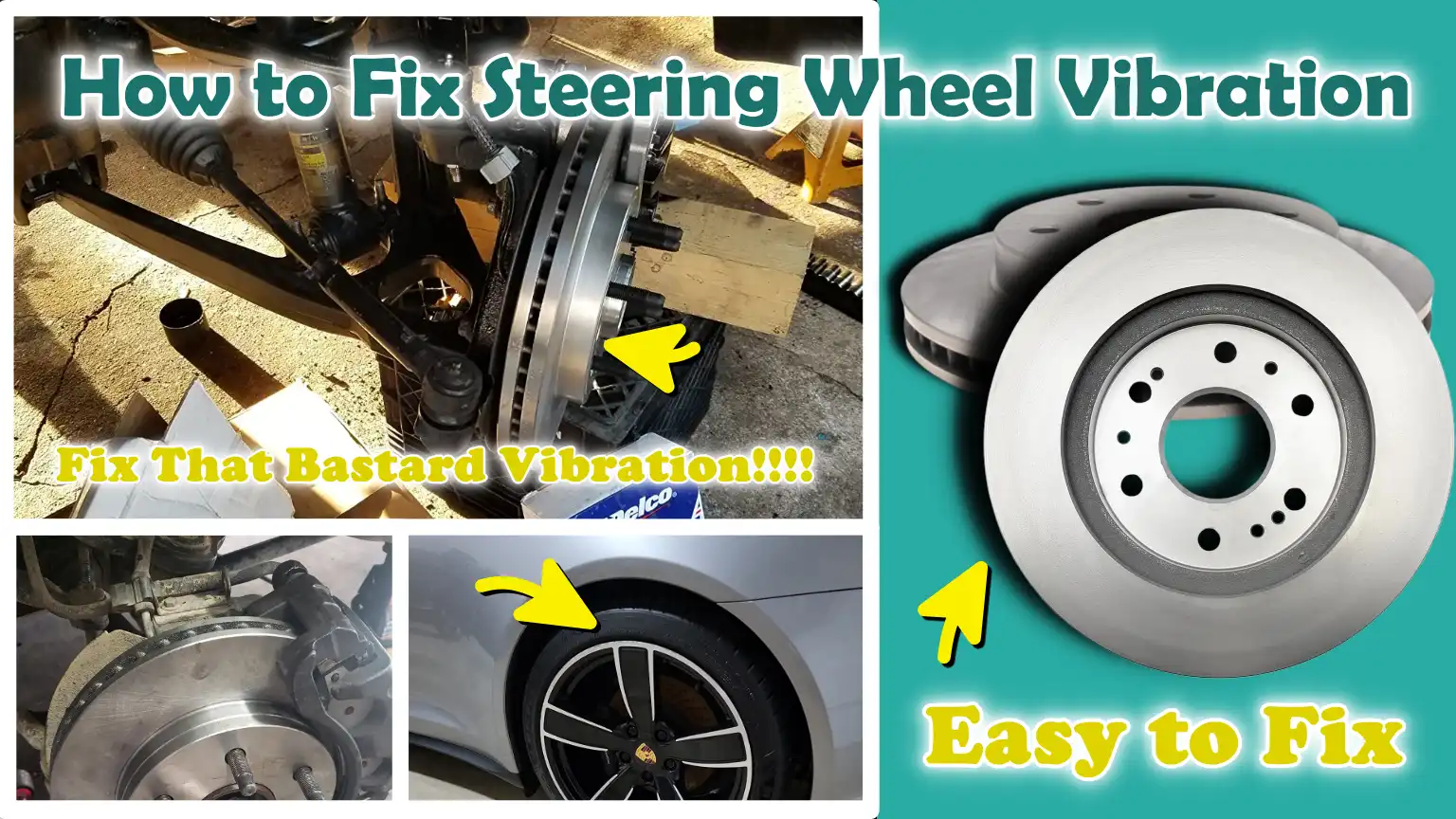
That’s why, this guide is all about How to Fix Steering Wheel Vibration to understand about the exact symptom and cause and then follow the clear patterns that helps you to fix that in easy way.
What are the Common Symptoms of Steering Wheel Vibration
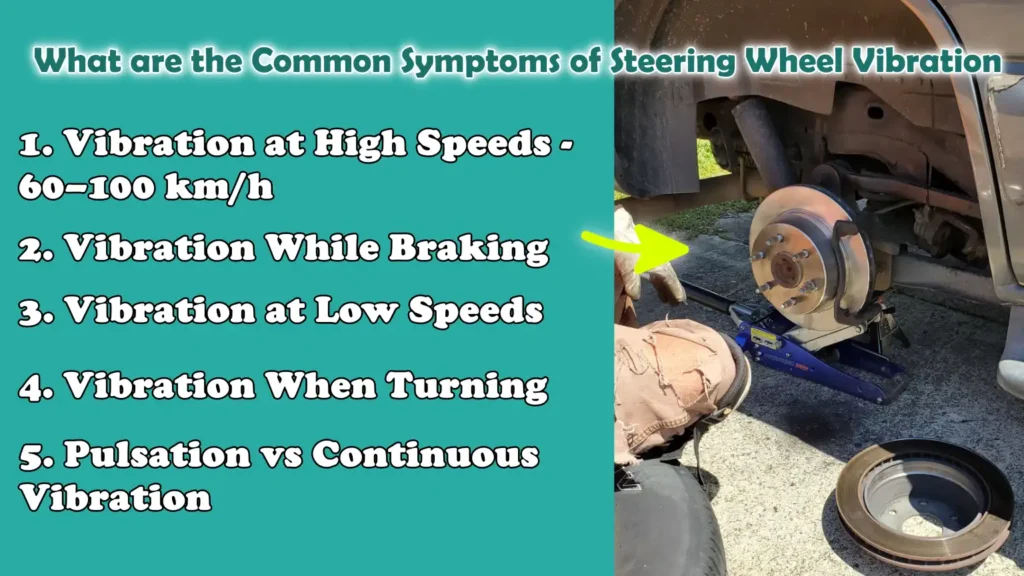
1. Vibration at High Speeds – 60–100 km/h
When the steering wheel begins to shake primarily at speeds between 60 and 100 km/h, it is usually a clear indication of an unbalanced wheel or an uneven distribution of weight within the tire.
At higher speeds, even a minor imbalance becomes more pronounced because the wheels are rotating rapidly, thereby amplifying the intensity of the vibration.
This type of vibration often feels consistent and intensifies as speed increases; conversely, it may subside when you decelerate.
In many cases, the root cause lies in a missing wheel weight, uneven tire wear, or a minor structural defect within the tire itself.
Promptly addressing this issue through proper wheel balancing restores a smooth driving experience and prevents unnecessary strain on suspension components.
2. Vibration While Braking
If the steering wheel vibrates primarily when you apply the brakes, the most common culprit is a warped or uneven brake rotor.
Repeated braking, particularly during long journeys or in heavy traffic conditions, as it can cause brake rotors to become uneven due to heat accumulation.
When the rotor surface is not perfectly flat, the brake pads are unable to make uniform contact, resulting in a pulsating sensation transmitted through the steering wheel.
This symptom is critical because it directly impacts braking efficiency and safety.
Ignoring it can lead to increased stopping distances and uneven brake wear; therefore, inspecting the rotors and subsequently resurfacing or replacing them, is often a necessary corrective step.
3. Vibration at Low Speeds
Vibration at low speeds such as when driving slowly in traffic or while parking: is less common, but it can point to issues such as bent wheels, defective tires, or problems within the steering system.
Unlike high-speed vibration, this type of vibration is felt even when the vehicle is moving slowly and it may feel irregular rather than consistent.
The cause could also be uneven tire pressure or internal damage to the tires.
As this vibration occurs at low speeds, it often indicates a physical or structural issue rather than a balancing problem; therefore, it should be carefully inspected to prevent further damage.
4. Vibration When Turning
If the steering wheel shakes while turning, it may be linked to worn suspension or steering components such as: tie rods, ball joints, or control arm bushings.
These components help keep the wheels stable and properly aligned while the vehicle is in motion.
When these parts become worn or loose, the steering system loses its stability: particularly when taking turns, as this places increased stress on them.
This can result in vibration or instability felt through the steering wheel.
In some cases, this issue may also be related to problems within the power steering system.
It is crucial to address this problem immediately, as it can compromise your ability to safely control the vehicle.
5. Pulsation vs Continuous Vibration
Understanding the distinction between pulsation and continuous vibration helps in more accurately identifying the root cause of the problem.
Pulsation is typically perceived as a rhythmic or intermittent vibration, as often felt while braking and is frequently caused by issues related to the brake rotors.
Continuous vibration, on the other hand, feels steady and uniform and particularly at specific speeds and is primarily caused by wheel imbalance or tire-related issues.
Recognizing this distinction facilitates the identification of the precise underlying problem, enabling you to select the correct solution without resorting to unnecessary repairs.
Know, The Main Causes of Steering Wheel Vibration
1. Wheel Imbalance
The most common cause of steering wheel vibration is wheel imbalance, particularly at moderate to high speeds.
The weight of every wheel and tire is distributed in a specific manner; when this balance is even slightly disrupted, a centrifugal force is generated as the wheel rotates.
This force increases with speed, which is why vibration is often felt at speeds between 60–100 km/h.
Even a difference of a few grams in the wheel’s weight such as a dislodged wheel weight, accumulated dirt, or uneven tire wear, as it can induce vibration in the steering wheel.
Proper wheel balancing resolves this issue by evenly distributing the weight around the tire; this ensures a smoother ride and reduces the strain placed on the suspension and steering components.
2. Wheel Alignment Issues
Wheel alignment refers to the angles and directions in which your wheels are positioned; when this alignment is incorrect, it can compromise your control over the vehicle and also cause vibration.
A primary indicator of this problem is that the vehicle pulls to one side, even when you are holding the steering wheel straight.
Improper alignment causes uneven tire wear meaning certain sections of the tire wear down faster than others, as it result it in an irregular tire surface that generates vibration while driving.
This issue often arises from hitting potholes or curbs, or simply due to the general wear and tear that occurs from regular driving over time.
Proper alignment not only eliminates vibrations but also improves fuel efficiency and extends the lifespan of your tires.
3. Warped Brake Rotors
Warped brake rotors are a major cause of vibration, a vibration that becomes particularly noticeable when you apply the brakes.
Brake rotors are designed to remain perfectly flat; however, the excessive heat generated by frequent or hard braking can cause them to warp or result in an uneven surface.
When this occurs, the brake pads are unable to make proper contact with the rotor, resulting in a pulsating sensation or vibration felt in the steering wheel whenever you depress the brake pedal.
This issue is common in vehicles frequently driven in heavy traffic or hilly terrain, where frequent braking is required.
To resolve the problem of warped rotors, they are typically either resurfaced (machined flat) or completely replaced to restore a smooth braking experience.
4. Worn Suspension Components
The suspension system plays a crucial role in maintaining your car’s stability and ensuring smooth steering; when components within this system become worn, distinct vibrations may be felt throughout the entire vehicle.
Components such as ball joints, tie rods and bushings help link and control the movement of the wheels.
Over time, these parts can wear out, loosen, or develop excessive play, thereby diminishing their ability to keep the wheels stable.
Loose steering linkages can also cause the steering to feel unstable, particularly when driving on rough roads or while turning.
This type of vibration often feels less uniform compared to other types of vibrations; nevertheless, it is a greater cause for concern, as it directly impacts the vehicle’s handling and safety.
5. Tire-Related Issues
Tire-related issues are another major cause of steering wheel vibrations and they can manifest in several ways.
Uneven tire wear creates an irregular surface that does not roll smoothly along the road, resulting in vibrations at various speeds.
When a vehicle remains stationary for extended periods or when sudden braking occurs, flat spots can develop on the tires, leading to a thumping or jarring sensation while driving.
Incorrect tire pressure: whether too low or too high, as it can also affect how the tire makes contact with the road surface, potentially causing instability and vibrations.
To prevent these issues and ensure a comfortable driving experience, regular tire inspections and maintenance are essential.
6. Bent Wheels or Rims
Bent wheels or rims are typically the result of impact damage such as: striking potholes, speed bumps, or curbs at high speeds.
When a wheel becomes bent, it is unable to rotate in a perfectly circular motion, generating a distinct type of vibration that transmits directly to the steering wheel.
This type of vibration can occur at both low and high speeds and if left unaddressed, it often worsens over time.
In some instances, the damage may not be externally visible, yet the vibration will persist.
To restore proper wheel rotation and eliminate this issue, it is necessary to repair or replace the damaged rim.
7. Defective Wheel Bearings
Wheel bearings facilitate the smooth rotation of the wheels with minimal friction; when they deteriorate, they can generate noise and vibration.
Defective wheel bearings often produce a humming or grinding sound that intensifies as speed increases, accompanied by vibrations felt through the steering wheel.
Worn bearings cause irregular wheel movement, thereby compromising stability and ride comfort.
This issue should not be ignored, as a completely failed bearing can severely compromise both wheel mobility and safety.
Replacing worn bearings is the only effective solution to restore the vehicle to proper operating condition.
How to Diagnose Steering Wheel Vibrations – Easy Steps
How to Identify When It Occurs
The first and most crucial step is to carefully observe when the steering wheel vibration occurs, as this provides a major clue in pinpointing the root cause of the problem.
If the vibration occurs only at high speeds typically between 60–100 km/h: the cause is often unbalanced wheels or tire-related issues.
If the vibration occurs primarily when you depress the brake pedal, it usually points to a problem with the brake rotors.
In some cases, the vibration may be constant or may occur only while turning; this could be an indication of wear in the suspension or steering components.
Paying attention to these patterns accelerates the diagnostic process and helps avoid unnecessary repairs, making the troubleshooting process more accurate and efficient.
How to Inspect the Tires
Tires are one of the most common causes of vibration, so a thorough inspection of them is essential.
To begin, check the tire pressure using an accurate gauge, as both underinflated and overinflated tires can make uneven contact with the road surface and generate vibrations.
Next, carefully examine the tire tread (surface) for any signs of uneven wear such as: one section of the tire being more worn than another, or the presence of flat spots or rough patches.
These signs often point to underlying issues, such as alignment problems or unbalanced wheels.
Furthermore, inspect for any visible damage such as: cuts, bulges, or embedded foreign objects, as these can affect the way the tire rotates.
To ensure a comfortable ride and maintain steering stability, it is crucial that the tires are in good condition.
How to Check Wheel Balance
Wheel balance issues are not always visible to the naked eye, but there are specific signs that can help you identify them.
If the steering wheel shakes continuously at a specific speed and the vibration subsides as soon as you slow down; it is a clear indication that the wheels are unbalanced.
This occurs because an uneven distribution of weight within the wheel generates an additional force during rotation, which intensifies as the vehicle’s speed increases.
Sometimes, this issue can also be caused by missing wheel weights or an accumulation of dirt inside the rims.
While a visual inspection may offer some clues, achieving proper wheel balance often requires specialized professional equipment.
These tools can precisely measure the weight distribution of a rotating wheel and facilitate the necessary adjustments.
How to Check the Brakes
Inspecting the brakes is essential, particularly if you distinctly feel a vibration while decelerating.
While driving at a safe speed, gently apply the brakes and observe how the steering wheel responds.
If you feel a pulsating or rhythmic vibration in the steering wheel, it is often a sign that the brake rotors have become warped.
This happens because the uneven surfaces of the rotors prevent the brake pads from making proper contact, resulting in intermittent vibration.
In more severe cases, a pulsating sensation may even be felt in the brake pedal.
Such issues have a direct impact on braking performance; therefore, for the sake of both safety and driving comfort, it is crucial to identify and rectify these problems immediately.
How to Inspect the Suspension
The suspension system connects the wheels to the vehicle and maintains the vehicle’s overall balance; consequently, any looseness or wear within this system can lead to vibrations.
Carefully inspect for worn or loose components such as: ball joints, tie rods and bushings, as these parts govern wheel movement and alignment.
When these components become worn, they are unable to hold the wheels firmly in place, resulting in vehicle vibrations: particularly on rough roads or while turning.
You may also hear strange “knocking” or “rattling” sounds while driving over uneven surfaces.
A thorough inspection of these components ensures that the steering system remains stable and responsive, thereby minimizing vibrations and enhancing your overall control over the vehicle.
How to Fix Steering Wheel Vibration – Clear Solutions
1. Wheel Balancing
The easiest and most effective method for fixing steering wheel vibration is wheel balancing, specially when this issue occurs while driving at high speeds.
This process corrects the uneven distribution of weight within the tire and wheel assembly, allowing the wheel to rotate smoothly without any undue stress.
If you experience persistent vibration while driving at speeds between 60–100 km/h, or if you have recently had new tires installed, you should consider having your wheels balanced.
It is also recommended as part of routine maintenance, typically every 5,000 to 10,000 kilometers.
This procedure usually takes less than an hour and is not particularly expensive; however, it provides immediate driving comfort and helps protect suspension components and tires from long-term damage.
2. Wheel Alignment
Wheel alignment becomes necessary when your vehicle does not track straight or when you observe uneven wear patterns on your tires.
If the steering wheel does not feel centered, or if the vehicle pulls to one side, these are clear indications that the alignment needs to be corrected.
Proper alignment ensures that all four wheels are set at the correct angles, maintaining uniform contact with the road surface.
This not only reduces vibration but also improves fuel efficiency, extends tire life and enhances your overall control over the vehicle.
Specialized tools are used to perform the alignment, a process that typically takes about an hour; thus, it serves as a highly effective solution for both vehicle performance and safety.
3. Replace or Resurface Brake Rotors
Brake rotor repair becomes necessary when you experience vibration while applying the brakes; this typically indicates that the rotors have become warped or uneven due to heat and friction.
The resurfacing process involves smoothing the rotor’s surface to restore uniform contact with the brake pads; however, this is only feasible if the rotor’s thickness remains within safe limits.
If the damage is severe or the rotors have become excessively thin, replacement is the better option.
While resurfacing is a more economical choice, replacing the rotors provides a longer-lasting solution and enhances braking performance.
It is crucial to address this issue as soon as possible, as it directly impacts your vehicle’s ability to come to a safe stop.
4. Replace or Rotate Tires
Tire-related repairs depend entirely on the condition of the tires.
If the tires have not worn down evenly, rotating their positions helps equalize the wear and reduces vibration.
To maintain balanced performance, it is generally recommended to rotate the tires every 8,000 to 10,000 kilometers.
However, if the tires exhibit excessive wear, cracks, bulges, or flat spots, they cannot be repaired and may require replacement.
Driving on worn-out tires not only causes vibration but also significantly increases the risk of a blowout and loss of vehicle control.
Choosing high-quality tires and maintaining proper tire pressure can go a long way in ensuring a comfortable ride.
5. Suspension Component Repair
Worn suspension components such as: tie rods, ball joints and control arms, as it can cause steering instability and vibrations, particularly on rough roads or while cornering.
These components are responsible for maintaining proper wheel alignment and securely connecting the wheels to the vehicle’s frame.
Over time, constant movement and road shocks cause them to wear down, leading to looseness and reduced control.
Repairing or replacing these components restores stability to the vehicle and ensures that the wheels operate in a controlled and predictable manner.
Although such repairs can be somewhat costly, they are essential for safe driving and for preventing further damage to other vehicle components.
6. Wheel Bearing Replacement
Wheel bearings facilitate the smooth, low-friction rotation of the wheels; when they fail, they often generate noise and vibration.
A common symptom of a faulty bearing is a humming or grinding sound that intensifies as the vehicle’s speed increases, often accompanied by a slight vibration felt in the steering wheel.
This issue cannot be temporarily patched up; the bearings must be completely replaced.
Ignoring worn bearings can lead to more serious problems, such as loose or wobbling wheels.
Replacing them ensures smooth wheel rotation and eliminates both noise and vibration, thereby enhancing overall driving safety.
7. Repairing or Replacing Bent Rims
Rims often become bent due to impacts with potholes, curbs, or rough roads; consequently, a distinct vibration may be felt in the steering wheel.
Whether a rim can be repaired or requires replacement depends on the severity of the damage.
Minor bends can often be corrected using specialized tools that reshape the metal, thereby restoring its proper rotational balance.
However, if the damage is extensive or compromises the structural integrity of the rim, replacement is the safer option.
Driving with a bent rim can lead to premature tire wear and increased vibration; therefore, addressing this issue promptly ensures that the vehicle remains comfortable and stable to drive.
Difference Between The DIY Solutions vs Professional Repairs
1. What You Can Do at Home
By utilizing a few basic tools and a cautious approach, you can diagnose and resolve some of the causes of steering wheel vibration right at home.
One of the most crucial steps is regularly checking your tire pressure, as incorrect pressure alters the tire’s contact with the road, which can easily lead to vibration or instability.
Using a simple pressure gauge, you can compare the current pressure against the level recommended by the vehicle manufacturer, information typically found on the driver-side door panel.
Maintaining the correct pressure not only reduces vibration but also improves fuel efficiency and extends the lifespan of your tires.
Another useful step is to visually inspect your tires and wheels.
By carefully examining the tire surfaces, you can identify signs of uneven wear, cracks, bulges, or objects lodged in the tire treads: all of which can be potential causes of vibration.
You can also check to see if any wheel weights are missing or if there is any visible damage to the rims.
Although these checks may seem simple, they are highly effective in catching early signs of trouble and can help you determine whether further action is required.
2. Why You Might Need a Mechanic
Resolving certain issues that cause steering wheel vibration requires professional-grade equipment and expertise; attempting to address these problems at home is typically neither practical nor safe.
Wheel alignment is one such task, involving the precise adjustment of wheel angles using computerized equipment to ensure they are perfectly aligned with both the road and one another.
Improper alignment can lead to persistent vibrations, uneven tire wear and difficulty in handling the vehicle; therefore, this procedure should always be performed by a trained technician.
Wheel balancing is another process that requires specialized machinery capable of detecting even the slightest imbalance in tire weight and correcting it with precision, a task that cannot be accomplished manually.
It is best to leave suspension repairs to professionals, as they involve critical components such as: tie rods, ball joints and control arms, that directly impact steering and safety.
To maintain the vehicle’s stability and safety, it is essential to properly inspect these components, utilize the correct tools and employ appropriate installation techniques.
Seeking professional assistance for these issues ensures that the root cause of the problem is accurately addressed, thereby preventing potential future damage or safety hazards.
Let’s Just Know the Breakdown of Repair Costs
1. Wheel Balancing
Wheel balancing is one of the most economical methods for correcting steering wheel vibrations, yet its results are immediate and clearly noticeable.
This process involves attaching small weights to the wheels to ensure that the mass is distributed evenly, thereby maintaining smooth wheel rotation at all speeds.
As it requires only basic tools and takes less than an hour to complete, its cost is typically quite affordable compared to other repairs.
Regular balancing not only eliminates vibrations but also prevents uneven tire wear and reduces the strain on suspension components, resulting in long-term cost savings.
2. Wheel Alignment
Wheel alignment falls into the medium-cost category, as it requires specialized machinery and trained technicians to precisely adjust the angles of the wheels.
This service ensures that all wheels are parallel to one another and positioned correctly according to the manufacturer’s specifications.
Although the cost is higher than that of balancing, alignment offers numerous benefits, such as improved handling, increased fuel efficiency and extended tire longevity.
Neglecting alignment issues can lead to accelerated tire wear; consequently, this service proves to be a cost-effective investment over time.
3. Brake Rotor Replacement
Replacing brake rotors is considered a medium-to-high-cost repair, depending on the type of vehicle and the quality of the parts used.
Rotors wear down due to the constant heat and friction generated during braking; when they become warped or excessively thin, replacing them becomes mandatory to restore smooth braking performance.
In some cases, resurfacing the rotors may be a more economical option; however, this is only feasible if the rotors still fall within safe operating limits.
While replacing rotors may initially seem expensive, it ensures safe braking and protects other brake components such as: brake pads and calipers from damage.
4. Suspension Repair
Suspension repair is typically one of the most expensive types of repairs, as it involves numerous components that work in tandem to maintain the vehicle’s stability and control.
Components such as ball joints, tie rods, control arms and bushings can wear out over time due to constant motion and road shocks.
Replacing these parts requires both high-quality components and skilled workmanship, which drives up the total cost.
Nevertheless, having suspension repairs performed is crucial, as it directly impacts steering control, ride comfort and safety.
Delaying these repairs can lead to even more severe damage in the future and potentially result in significantly higher costs.
5. Tire Replacement
The cost of replacing tires can vary significantly depending on the brand, size and type of tires you choose.
Generally, standard tires are more economical, whereas premium or performance tires can be considerably more expensive.
Tires naturally wear out over time; driving on worn or damaged tires can cause vibrations, reduce traction and increase the risk of accidents.
Although replacing tires may seem costly, it is an essential investment for both safety and performance.
Choosing the right tires and ensuring they are properly inflated and regularly rotated, as it can help extend their lifespan and minimize overall costs.
How to Prevent Steering Wheel Vibration
As well as, there’s studies that shown that the wheel alignment that plays a major role in steering stability, so whenever the alignment and angles are not correct, then the forces actually distributed in uneven way, that causes vibration specially at the higher speeds, so that’s why you need to maintain and check for proper alignment as it enhances comfort and gives you full control and safety during journey.[¹]
1. Regular Tire Rotation
The simplest and most effective method to prevent steering wheel vibration is regular tire rotation.
During driving, front and rear tires wear out differently due to weight distribution, steering forces and braking pressure.
If tires are not rotated (i.e., their positions are not swapped), certain sections wear down faster than others; this results in an uneven surface, which can subsequently cause vibration.
Rotating your tires every 8,000 to 10,000 kilometers ensures that wear is distributed evenly across all four tires, thereby improving balance and extending the lifespan of the tires.
This simple maintenance measure also helps make the ride more comfortable and minimizes the likelihood of vibration caused by uneven tire wear.
2. Avoid Driving Over Potholes and Rough Roads
Driving habits play a crucial role in preventing vibration-related issues.
Driving at high speeds over potholes, curbs, or rough roads can damage the wheels, warp the rims and disrupt the wheel alignment.
Even a single severe jolt can cause hidden damage that later manifests as vibration in the steering wheel.
Driving cautiously, as it slowing down on rough terrain and avoiding sudden impacts: helps protect critical components such as tires, suspension parts and rims.
Over time, driving gently not only reduces vibration-related problems but also lowers repair costs and keeps the vehicle in better overall condition.
3. Maintain Correct Tire Air Pressure
Maintaining the correct air pressure in your tires is crucial for ensuring a comfortable and stable driving experience.
When tire pressure is too low, the “contact patch” the portion of the tire that touches the ground, spreads unevenly across the road surface; this increases friction and compromises the vehicle’s stability.
Conversely, when tire pressure is too high, the tire becomes rigid and loses proper contact with the road surface, which can also generate vibrations.
In both scenarios, tire wear can become uneven: a common cause of steering wheel vibrations.
Checking your tire pressure at least once a month using a reliable gauge and maintaining it within the recommended range, ensures uniform tire wear, improved fuel efficiency and a more comfortable driving experience.
4. Regular Alignment and Balancing
Regular wheel alignment and balancing are essential preventive measures to ensure that your car runs smoothly.
Over time, normal driving conditions, minor road impacts and daily usage can gradually compromise the alignment and balance of your wheels, as it can changes whose initial symptoms may not be immediately apparent.
Having your alignment and balance checked every few months or during routine servicing, as it allows these minor discrepancies to be corrected before they escalate into severe vibrations.
Proper alignment ensures that the wheels are pointing in the correct direction, while balancing ensures an even distribution of weight.
Together, these two measures enhance vehicle stability, minimize tire wear and prevent vibrations in the steering wheel.
5. Regular Vehicle Inspections
Regular vehicle inspections help detect minor issues before they escalate into major causes of vibration.
Periodically checking components such as tires, suspension parts, brakes and wheels allows you to identify early signs of wear and tear.
For instance, overlooking worn bushings, loose tie rods, or faulty brake components can lead to a gradual increase in vibration.
A brief check performed during a service appointment or even a simple inspection conducted at home, as it can make a significant difference.
Keeping all components in good condition ensures that the vehicle operates stably, safely and without any unnecessary vibrations.
Read More:
- How to Fix Uneven Tire Wear
- How to Align Car Wheels
- How to Rotate Car Tires
- How to Check Tire Pressure
- How to Replace Brake Rotors
When You Should Call a Professional Mechanic Urgently
1. Severe Vibration at All Speeds
If your steering wheel shakes violently at all speeds, whether you are driving slowly or quickly, as it is a serious warning sign that must not be ignored.
Such persistent vibration typically indicates a major underlying issue, such as severely worn tires, badly warped wheels, or loose suspension components.
Unlike mild vibrations, which may only be felt at specific speeds, this type of vibration compromises the vehicle’s overall stability and can make driving unsafe.
Continuing to drive in this condition can exacerbate the damage and increase the risk of sudden mechanical failure; therefore, it is crucial to stop driving and have the vehicle inspected by a professional as soon as possible.
2. Vibration Accompanied by Noise
When vibration is accompanied by unusual noises such as: grinding, humming, or knocking sounds, it often signals internal mechanical problems that require immediate attention.
For instance, a humming or grinding sound accompanying the vibration may indicate worn wheel bearings, while a knocking sound could point to loose suspension components.
These sounds serve as vital clues, indicating that parts are not functioning correctly and may be wearing out rapidly.
Ignoring these warning signs can lead to further damage and increased repair costs; therefore, to ensure safe driving, it is best to diagnose and resolve the issue as quickly as possible.
3. Loss of Steering Control
Any indication of reduced steering control or vehicle instability constitutes a serious safety concern that demands immediate attention.
If the steering feels loose, unresponsive, or difficult to control, the cause may be the wear or deterioration of steering components such as: tie rods or ball joints.
These components are crucial for maintaining the vehicle’s proper alignment and control; their failure can lead to hazardous situations, particularly at high speeds.
Even minor changes in steering performance should be taken seriously, as they often signal underlying issues that, if ignored, can quickly escalate into major problems.
4. Signs of Brake Failure
Brake failure which often accompanied by vibration: is one of the most dangerous situations a driver can faced and should never be ignored.
If you experience vibration while braking along with reduced stopping power, a brake pedal that feels loose or spongy, or if the vehicle takes a longer distance to come to a halt, it could indicate serious issues, such as warped rotors, worn brake pads, or a malfunction within the braking system itself.
Brakes constitute one of the most critical safety mechanisms in any vehicle; any indication of their failure can put both you and others at risk.
Immediate inspection and repair are absolutely essential to ensure that the vehicle can stop safely and perform reliably under all driving conditions.
Conclusion – How to Fix Steering Wheel Vibration
When you smoothens the steering wheel then it literally enhances the comfort and that also signals that your entire vehicle is working in perfect balance as well, so good job there.
Vibration in the steering wheel is not merely a minor inconvenience related to comfort; it is a clear indication that something in your vehicle requires attention.
As detailed in this guide, the underlying causes can range from minor issuessuch as unbalanced wheels or improper tire pressure to more serious problems, such as worn-out suspension components or defective brake rotors.
Crucially, these issues often manifest in specific ways; by correctly interpreting these symptoms, you can pinpoint the true root of the problem without confusion.
Addressing this issue in a timely manner not only restores a comfortable and stable driving experience but also prevents further damage to critical vehicle components, thereby saving you both time and money in the long run.
Routine maintenance practices such as: tire rotation, wheel alignment and periodic inspections, as it literally plays a vital role in preventing these vibrations from recurring.
Most importantly, never ignore severe or unusual vibrations, specially if they compromise your control over braking or steering, as they can have a direct impact on your safety.
By remaining vigilant, taking prompt action and properly maintaining your vehicle, you can ensure a comfortable, controlled and safe driving experience every time you get behind the wheel.
So, that’s it from this guide about How to Fix Steering Wheel Vibration, so you can easily fix that issue in better way and the comment section is available only for your unsolved queries.
Frequently Asked Questions
FAQ 1: Why does the steering wheel vibrate while driving?
Steering wheel vibration typically occurs because a component of the wheels or suspension system is not functioning correctly. The most common cause is an unbalanced wheel meaning the weight of the tire is not distributed evenly. Other causes include uneven tire wear, improper wheel alignment, a bent rim, or worn-out suspension components. In some cases, brake-related issues such as: a warped brake rotor, as itcan also cause vibration, particularly when you are decelerating. Each specific cause produces a slightly different type of vibration; therefore, paying attention to when the vibration occurs helps in identifying the root cause of the problem.
FAQ 2: Why does my steering wheel shake when driving at high speeds?
When your steering wheel shakes while driving at high speeds, the most common cause is an unbalanced wheel. At lower speeds, this imbalance may go unnoticed; however, as speed increases, the centrifugal force generated by the uneven weight distribution intensifies, resulting in vibration. This issue typically manifests at speeds between 60 and 100 km/h. Other potential causes include uneven tire wear or minor damage to the wheels. Having the wheels balanced is usually the quickest and most effective way to resolve this issue.
FAQ 3: Why does my steering wheel vibrate when braking?
If the vibration occurs primarily while braking, the most common cause is a warped brake rotor. Over time, the heat generated during braking can cause the rotor surface to become uneven, preventing it from making proper contact with the brake pads. The result is a pulsating sensation or vibration felt in the steering wheel. In some cases, worn brake pads can also exacerbate this issue. This problem should be addressed as soon as possible, as it directly impacts your vehicle’s ability to stop safely.
FAQ 4: Can bad tires cause steering wheel vibration?
Yes, bad tires are one of the primary causes of steering wheel vibration. Tires that exhibit uneven wear, or those with flat spots or internal damage, do not roll smoothly across the road surface. Consequently, this generates vibrations that you can feel through the steering wheel. Improper tire pressure can also aggravate this issue, as it alters the tire’s contact with the road surface. Regular tire inspections and proper maintenance can help prevent this problem.
FAQ 5: Is it safe to drive with a vibrating steering wheel?
Ignoring steering wheel vibration is not entirely safe, specially if the vibration is severe or occurs frequently. While mild vibration may not pose an immediate threat, it often worsens over time and can lead to more serious issues such as: tire damage, suspension failure, or compromised braking performance. If the vibration causes you to lose control of the vehicle, or if it occurs specifically while braking, it is crucial that you have your vehicle inspected as soon as possible.
FAQ 6: How do I know if I need a wheel alignment or balancing?
If you experience excessive vibration in the steering wheel at high speeds and the vibration subsides when you slow down, you likely need wheel balancing. Conversely, if your vehicle pulls to one side or you notice uneven tire wear, wheel alignment is typically required. Both of these services are essential for a comfortable driving experience and sometimes both may be needed simultaneously to fully resolve the issue.
FAQ 7: How much does it cost to fix steering wheel vibration?
The cost depends on the root cause of the vibration. Simple remedies, such as wheel balancing, are generally inexpensive, while wheel alignment incurs a moderate cost. More extensive repairs such as: replacing brake rotors, repairing the suspension, or replacing tires, as it can be more expensive, depending on the specific parts used and the labor involved. Addressing the problem early on is always cheaper than waiting, as it helps prevent further damage to other components.
FAQ 8: Can I fix steering wheel vibration myself at home?
You can resolve some minor issues yourself at home, such as checking and adjusting tire pressure or performing a general visual inspection of your tires and wheels. However, most repair tasks such as: wheel balancing, alignment, brake repairs and suspension work require specialized tools and expertise. It is crucial to recognize your limitations and seek professional assistance when necessary to ensure that the problem is resolved correctly and safely.
References:
[1] Influence analysis of dynamic changes of wheel alignment parameters on high-speed rocking vibration of steering wheel
https://www.sciencedirect.com/science/article/abs/pii/S0263224123006437
Hello Folks, Dean Shali here to help you out to solve the problems with your lovely vehicle, as i have lots of experience and knowledge about automotive industry as i woks directly with the customers and repair vehicles and i love to help the people to keep their cars safe and running smoothly.