
Written By: Dean Shali
Fact Checked By: Sabré Cook
Reviewed By: Tamara Warren
Notice, if your car actually leaning left or right even on the straight road, then more or less it is the wheels that has bad alignment.
Without a doubt, aligning the wheel in a proper way is very important and alignment means that the wheels of your vehicle are set at the correct angles so that they can make the proper contact with the road no-matter the conditions are.
So, whenever the alignment is in good shape, then your car drives in the straight, tires actually wears evenly and you’ll feel smooth and really stable steering wheel.
But, because of the hitting on that goddamn potholes, driving over the rough roads or bumping into the road blockers can cause misalignment of your wheels.
Moreover, according to the automotive service experts: if there’s even a small misalignment with your tires then it can actually cause tires to wear up to 30% to 40% faster then it normally were, which again leads to the costly replacement much sooner than they used to.
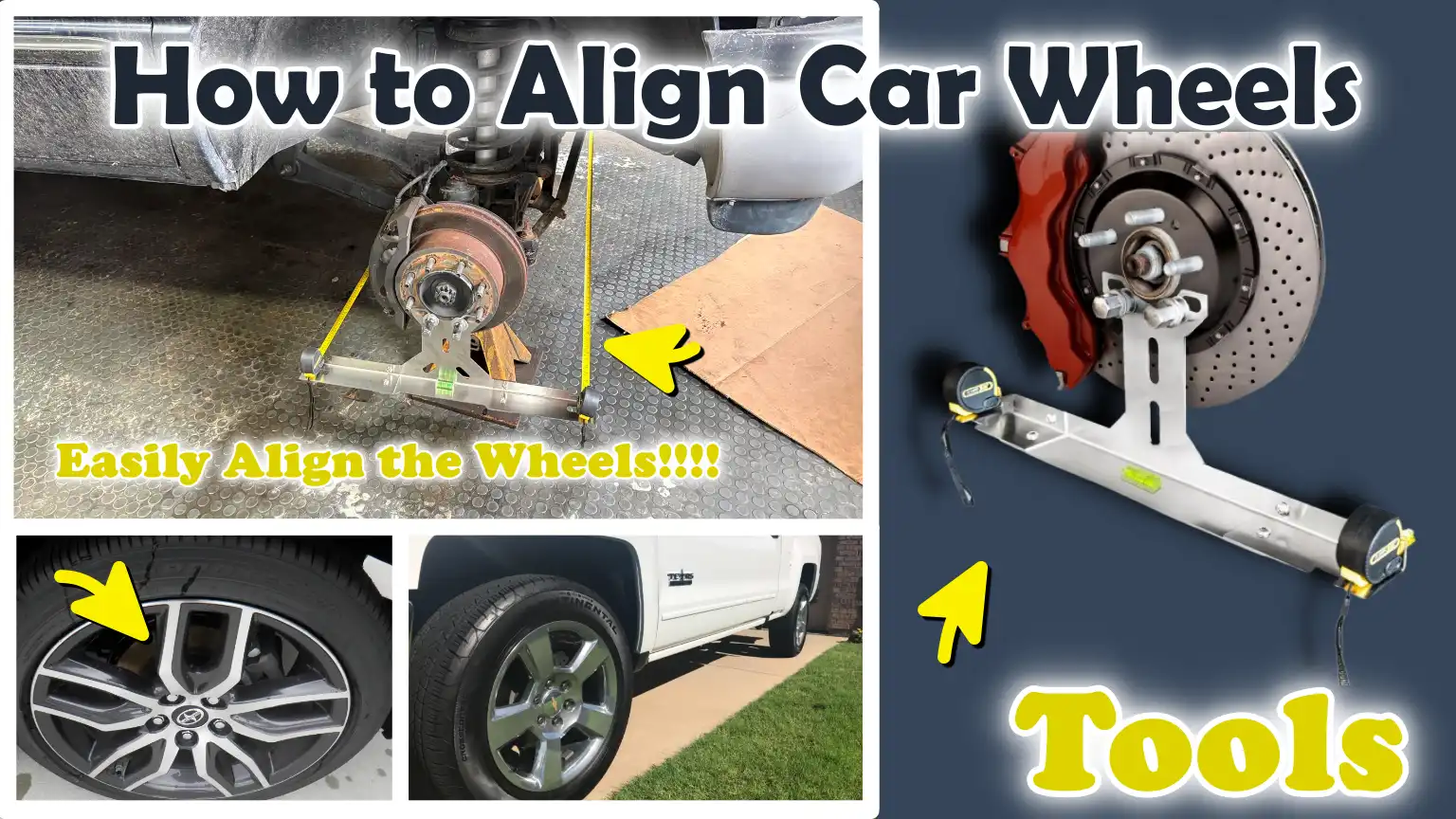
So, this is the proper beginner friendly guide that shows you How to Align Car Wheels, so that you can easy detect and fix if you find out warning signs of it.
What is Wheel Alignment?
Wheel alignment refers to the precise adjustment of a car’s wheels to ensure they are positioned correctly relative to the road surface and the vehicle’s suspension system.
Every vehicle is designed with specific alignment angles to ensure that the tires maintain uniform contact with the road and track in the proper direction.
When wheels are properly aligned, the vehicle travels in a straight line, the steering feels balanced and tire wear is distributed evenly across the entire tread.
However, common driving conditions such as potholes, speed bumps, rough roads and minor impacts with curbs, can gradually shift the wheels out of their correct positions.
Even a slight deviation in alignment can impact how the car performs on the road.
Automotive engineers design wheel alignment settings with great precision, as proper alignment enhances safety, extends tire life and contributes to the vehicle’s overall operational efficiency.
If the wheels are not properly aligned, the tires may drag slightly against the road surface rather than rolling freely.
This generates excessive friction, which can lead to premature tire wear and reduced fuel efficiency.
Understanding wheel alignment helps drivers identify issues early on and maintain better control, comfort and safety while driving.
1. Definition of Wheel Alignment
Wheel alignment is a procedure involving the adjustment of a vehicle’s wheel angles in accordance with the manufacturer’s specifications.
Simply put, it ensures that all four wheels are pointing in the correct direction and are positioned at the proper angles relative to the road and the vehicle’s frame.
The objective of wheel alignment is to ensure that, while the vehicle is in motion, the tires maintain the optimal possible contact with the road surface.
When the alignment is correct, the wheels remain parallel to one another and perpendicular to the ground, allowing the car to travel in a straight line without drifting or pulling to either side.
Alignment does not involve adjusting the tires themselves; instead, it focuses on the suspension components that connect the wheels to the vehicle.
These components include tie rods, control arms and other suspension elements that hold the wheels in place.
By adjusting these parts, mechanics can correct the angles of the wheels, ensuring that the vehicle drives exactly as it was designed to.
2. The Three Main Alignment Angles
Wheel alignment is based on three essential angles that determine how the wheels are positioned and how they interact with the road.
These angles are known as camber, caster and toe.
Each angle plays a specific role in how the car handles, how stable it feels and how evenly the tires wear over time.
Camber refers to whether the wheel tilts inward or outward when viewed from the front of the vehicle.
If the top of the wheel tilts outward, it is called positive camber; if the top tilts inward, towards the vehicle as it is called negative camber.
Vehicles are often designed with a slight degree of camber to enhance stability while cornering, although excessive camber can lead to uneven tire wear.
Caster refers to the angle of the steering axis when viewed from the side of the vehicle.
It helps maintain stability in a straight line and assists the steering wheel in returning to its center position after making a turn.
Positive caster meaning the steering axis is tilted slightly toward the driver; is commonly used in modern vehicles because it enhances stability at higher speeds.
“Toe” refers to the direction in which the wheels are pointing when viewed from above.
If the leading edges of the wheels point slightly inward toward each other, this is known as toe-in.
If the leading edges point outward, it is called toe-out.
Correct toe alignment is crucial, as even a slight deviation can cause tires to wear out rapidly and unevenly and the vehicle may feel unstable.
3 How These Angles Affect Driving
Alignment angles, camber, caster and toe; directly influence how a vehicle performs on the road.
One of the most noticeable effects is tire wear.
When alignment angles are incorrect, the tires do not roll evenly across the road surface.
Instead, certain sections of the tire tread are subjected to greater pressure than others.
Consequently, the tires wear unevenly, which can shorten their lifespan and necessitate premature replacement.
Steering control is another area significantly impacted by wheel alignment.
Correct caster and toe settings help center the steering wheel and enable the driver to maintain a straight path with minimal effort.
When alignment is off, drivers may perceive the steering wheel as feeling loose, stiff, or slightly off-center.
In some instances, the car may even pull to the left or right while driving.
Common Signs That Shows Your Car Needs a Wheel Alignment
Wheel alignment issues often develop gradually, so many drivers fail to notice them until the symptoms become more pronounced.
When wheels are not set at the correct angles, the tires fail to maintain uniform contact with the road surface.
This can adversely affect the car’s handling, steering feel and the rate at which the tires wear down.
Most alignment problems stem from everyday driving conditions such as hitting potholes, driving on rough roads, bumping into curbs while parking, or hauling heavy loads over extended periods.
Even minor collisions can alter the suspension angles that govern wheel alignment.
According to automotive service experts, driving with poor alignment can significantly reduce tire lifespan and increase rolling resistance, potentially leading to a slight decrease in fuel efficiency.
Fortunately, when alignment is off, vehicles typically provide clear warning signs.
By recognizing these signs in a timely manner, drivers can rectify the issue before serious damage occurs to the tires or driving safety is compromised.
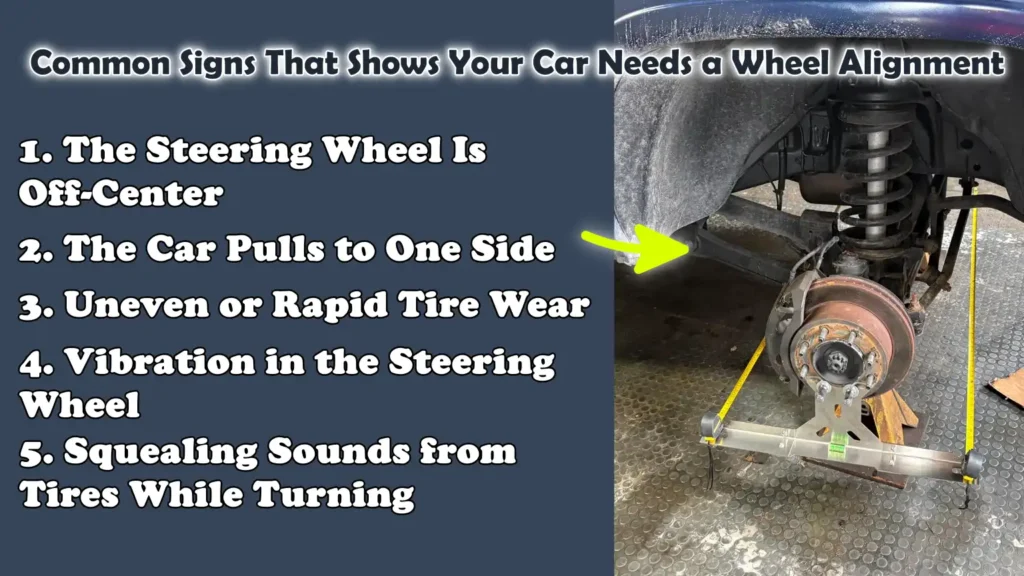
1. The Steering Wheel Is Off-Center
The most common indicator of wheel alignment issues is that the steering wheel does not remain straight while driving on a flat, straight road.
When the wheels are properly aligned, the steering wheel should remain centered as the car moves forward (without turning).
If the car is traveling in a straight line, yet the steering wheel appears tilted slightly to the left or right, it usually signifies that the alignment angles have shifted.
This occurs because the front wheels are no longer pointing in exactly the same direction.
When this occurs, drivers may feel the need to constantly make steering wheel corrections to keep the vehicle moving in a straight line.
Over time, this can make driving more fatiguing and may also indicate that the wheels’ ‘toe angle’ requires adjustment.
2. The Car Pulls to One Side
Another clear indication of poor wheel alignment is that the vehicle consistently pulls to the left or right while driving.
On a flat, straight road, a properly aligned vehicle should track straight ahead without drifting.
If the driver has to grip the steering wheel tightly to prevent the car from drifting to one side, there is a strong possibility that the alignment is off.
This sensation of pulling occurs when the wheels are not pointing in the same direction or when the ‘camber angles’ are uneven.
In some cases, this issue may become even more pronounced at higher speeds, as it affects the vehicle’s stability.
If left uncorrected, this constant pulling to one side can place excessive stress on the tires and suspension components.
3. Uneven or Rapid Tire Wear
The pattern of tire wear is one of the most reliable indicators for detecting alignment issues.
When wheels are properly aligned, the tire tread (the part that makes contact with the road) wears evenly across its entire width.
However, when alignment angles are incorrect, the pressure from the road is not distributed evenly across the tire’s surface, causing certain sections to bear a heavier load than others.
This results in uneven tire wear; this may manifest as excessive wear on the inner edge, the outer edge, or on one specific side of the tire.
Another common consequence of poor alignment is rapid tire wear, as the tires are constantly scrubbing slightly to one side instead of rolling straight ahead.
This excessive friction generates heat, causing the rubber tread of the tires to wear down gradually.
If drivers notice any unusual patterns in the way their tires are wearing, it is often an indication that the vehicle’s wheel alignment needs to be checked.
4. Vibration in the Steering Wheel
Vibration in the steering wheel can also be linked to wheel alignment issues, particularly when misalignment prevents the tires from making proper contact with the road surface.
When wheels are not properly aligned, irregular movement may be observed in the tires as they rotate.
This movement travels through the suspension system and can be felt directly in the steering wheel.
Drivers may notice that the vibration intensifies at certain speeds, specially while driving on highways.
Although vibration can sometimes be caused by unbalanced tires or worn suspension components, alignment issues are frequently the primary culprit behind this problem.
If the steering wheel shakes or feels unstable while driving, it is advisable to have both the condition of the tires and the wheel alignment checked.
5. Squealing Sounds from Tires While Turning
A loud noise emanating from the tires while turning can be an indication that the wheel alignment is incorrect.
Tires are designed to roll smoothly over the road surface; however, when the alignment angles are off, the tires may slide slightly rather than rolling naturally.
This slippage can generate a loud or screeching sound, particularly when the vehicle is turning at moderate speeds.
This noise occurs because the rubber tread of the tire scrapes forcefully against the road surface at an improper angle.
While tire noise can also occur during high-speed driving or when taking sharp turns, the recurring occurrence of loud noises during routine turns may signal that the ‘toe alignment’ requires adjustment.
Addressing alignment-related issues in a timely manner can prevent excessive tire wear and enhance both driving comfort and vehicle control.
What are The Benefits of Proper Wheel Alignment
Proper wheel alignment is an essential part of vehicle maintenance, directly impacting safety, performance and long-term operating costs.
When a car’s wheels are correctly aligned, the tires make contact with the road surface at the precise angle and rotate smoothly without any unnecessary resistance.
As a result, the vehicle handles more effortlessly and stability is maintained while driving.
Modern vehicles are designed with highly precise alignment specifications to ensure that weight is distributed evenly across all tires and that the suspension system functions optimally.
If alignment is neglected over time, the tires fail to roll in a straight line, leading to increased friction against the road surface.
This excessive friction can reduce tire lifespan, decrease fuel efficiency and place undue stress on suspension components.
Proper alignment ensures that the car performs exactly as the manufacturer intended.
It also provides the driver with better vehicle control, minimizes wear and tear on expensive components and ultimately makes the driving experience more comfortable over time.
1. Extended Tire Lifespan
The most significant benefit of proper wheel alignment is an extended tire lifespan.
Tires are designed to wear evenly across their entire surface area.
When wheels are correctly aligned, the vehicle’s weight is distributed uniformly across all tires, ensuring that they wear in a normal and predictable manner.
However, when alignment angles such as camber or toe: are incorrect, certain sections of the tire surface are subjected to greater pressure than others.
Due to this uneven pressure, the inner or outer edges of the tires wear down significantly faster than the rest of the tread surface.
In some cases, improper alignment can reduce a tire’s lifespan by thousands of miles.
As tires are one of the most expensive components of regular vehicle maintenance, keeping wheels properly aligned allows drivers to save money and extend the useful life of their tires.
2. Improved Fuel Economy
Proper wheel alignment also contributes to better fuel economy.
When wheels are not correctly aligned, the tires do not roll straight along the road surface.
Instead, as the vehicle moves forward, they drag slightly or roll at a slight angle.
This increases the rolling resistance between the tires and the road.
Consequently, the engine has to work harder to propel the vehicle, which can lead to increased fuel consumption over time.
While this difference may not seem significant during short trips, its impact becomes clearly evident during long-distance journeys or daily commuting.
Proper alignment ensures that the tires roll freely and minimizes unnecessary resistance, allowing the vehicle to operate more efficiently and utilize fuel more effectively.
3. Enhanced Handling and Safety
Wheel alignment plays a crucial role in a vehicle’s overall performance and its responsiveness to steering inputs.
When the alignment is correct, the vehicle tracks in a straight line and responds precisely when the driver turns the steering wheel.
Proper alignment helps maintain stability while changing lanes, taking turns and driving on highways.
It also assists the steering wheel in automatically returning to its center position after a turn has been completed.
If the wheels are not properly aligned, the vehicle may drift to one side or feel unstable, making it more difficult to drive and, in certain situations, increasing the risk of losing control.
Proper alignment ensures that all four tires maintain optimal contact with the road surface, thereby enhancing traction and overall safety.
4. A More Comfortable Driving Experience
Another major benefit of proper alignment is a more comfortable and refined driving experience.
When the wheels are correctly aligned, the vehicle tracks straight and the driver does not need to constantly correct the steering.
This makes driving less fatiguing, particularly during long journeys.
Proper alignment also minimizes the vibrations and jolts that can sometimes be felt when the tires make uneven contact with the road.
A properly aligned vehicle feels more balanced and stable, allowing the driver to maintain better control with less effort.
Over time, this enhanced comfort can make the daily driving experience more enjoyable and less stressful.
5. Reduced Stress on the Suspension
A vehicle’s suspension system is responsible for supporting the vehicle’s weight, absorbing shocks from the road and keeping the wheels in their correct position.
When the wheels are misaligned, the suspension components are forced to work harder to compensate for the incorrect angles.
This can place excessive strain on components such as tie rods, ball joints, control arms and bushings.
The constant stress on these parts can cause them to wear out faster than expected, potentially leading to increased repair costs.
Proper wheel alignment helps the suspension system function as intended.
Tools
| Tool / Equipment | Why It Is Needed | How to Use It |
|---|---|---|
| Car Jack | A car jack is used to lift a vehicle off the ground, allowing you to safely access the wheels and suspension components. Without lifting the vehicle, it is difficult to inspect or repair alignment components such as tie rods. Lifting the vehicle also allows the wheels to rotate freely, making them easier to service. | Position the jack beneath the vehicle’s designated lifting point; this is typically located near the frame or a pinch weld area. Slowly pump or turn the jack handle until the vehicle is raised high enough to allow access to the wheels. Always lift the vehicle on a level and stable surface to eliminate the risk of it slipping. |
| Jack Stands | Jack stands are essential for safety purposes. After the vehicle has been lifted using a jack, these stands support the vehicle’s weight. A car jack alone is not designed to support the weight of a vehicle for extended periods; therefore, jack stands prevent the vehicle from falling while you are working underneath it or around the wheels. | Once the vehicle has been lifted with the jack, place the jack stands beneath the vehicle’s frame or designated support points. Slowly lower the vehicle until its entire weight rests securely on the stands. Before beginning any work, always ensure that the stands are completely stable. |
| Wrench Set | During the alignment process, a wrench set is required to loosen or tighten various bolts and nuts. Most wheel alignment procedures involve adjusting tie rod nuts, suspension bolts and locking nuts; these are the fasteners that hold the alignment settings in place. | Select the correct wrench size for the specific bolt or nut you are working on. To loosen components, turn the wrench anti-clockwise; to tighten them, turn it clockwise. Adjust the components carefully to ensure the bolts are securely fastened, but avoid overtightening them. |
| Tape Measure | You can use a tape measure to measure the distance between the front and rear edges of the tires. This measurement indicates the wheels’ ‘toe alignment’: that is, whether the wheels are angled inward or outward. Taking precise measurements is crucial for achieving proper alignment. | Stretch the tape measure tightly across the front edges of both front tires and note the distance. Next, measure the distance between the rear edges of those same tires. By comparing these two measurements, you can determine whether the wheels’ alignment is ‘toe-in’ or ‘toe-out.’ |
| String or Alignment Tool | A string or alignment tool can be used to create a straight line along the sides of the vehicle. This line helps determine whether the wheels are perfectly straight and if they are exactly parallel to the vehicle’s frame. This is a common method for performing a simple wheel alignment check at home. | Pull a string taut along the side of the vehicle so that it remains parallel to the bodywork and lightly touches both the front and rear wheels. Check the distance between the string and the front wheel. If the distance between the front and rear edges of the wheel is not equal, the wheel may need to be adjusted. |
| Torque Wrench | A torque wrench ensures that bolts and nuts are tightened precisely according to the torque specifications recommended by the vehicle manufacturer. Proper torque is essential because bolts that are too loose may come undone, whereas bolts that are overtightened can damage the threads or the components themselves. | Attach the torque wrench to the bolt or nut and set it to the specified torque value. Rotate the wrench until you hear a distinct “click” or receive another indication that the correct tightness has been achieved. This ensures that the components are securely and correctly fastened. |
| Safety Gloves and Glasses | When working on a vehicle, safety gloves and safety goggles help protect your hands and eyes. During the alignment process, you may come into contact with metal parts, tools, or dirty components, posing a risk of cuts, scrapes, or eye irritation. | Wear gloves to protect your hands before handling tools or suspension components. Wear safety goggles to prevent dust, rust particles, or debris from entering your eyes while inspecting or adjusting the wheels. |
What are the Safety Precautions Before Wheel Alignment
Before commencing any wheel alignment work, prioritizing safety is absolutely essential.
Aligning a car’s wheels often involves lifting the vehicle, working in close proximity to heavy components and adjusting the suspension parts that hold the wheels in place.
Depending on the size of the vehicle, its weight can range from 1,200 to over 2,000 kilograms; therefore, even a minor error while lifting or securing the car could lead to a serious accident.
Adhering to proper safety precautions helps prevent the vehicle from rolling, falling, or shifting from its position while work is in progress.
Professional mechanics always follow established safety protocols before performing an alignment, as the work is conducted in close proximity to the wheels and underneath the vehicle.
By properly preparing the car and parking it in a secure location, you create a stable and controlled environment for the work to be performed.
These simple precautions not only ensure the safety of the person performing the work but also protect the vehicle and its components from potential damage.
1. Park on Level Ground
The first and most critical step before performing a wheel alignment is to park the car on a level and uniform surface.
A level surface helps maintain the vehicle’s balance and stability, particularly when it is being lifted or adjusted.
If the car is parked on a slope or uneven terrain, gravitational forces could cause it to roll slightly or shift from its position; this can result in inaccurate alignment measurements and significantly increase the risk of an accident.
As wheel alignment involves making very precise adjustments, it is imperative that the vehicle remains perfectly level to ensure accurate measurements of the wheel angles (such as toe, camber and caster).
Flat surfaces such as a concrete garage floor or a paved driveway: are ideal, as they provide a stable base for jacks and jack stands.
Avoid working on soft ground such as soil, grass, or gravel: as jacks or other lifting equipment can sink into or become unstable on such surfaces.
2. Use Wheel Chocks
Wheel chocks are simple safety devices placed in front of or behind the tires to prevent the vehicle from rolling.
Even if the car is parked on level ground, slight movement can still occur when the vehicle is being lifted or when force is applied while loosening bolts.
Wheel chocks act as a barrier, firmly holding the tires in place and keeping the car securely stabilized.
They become even more critical when only a portion of the vehicle is being lifted; without them, the remaining tires still in contact with the ground could allow the car to slide forward or backward.
Chocks are typically made of sturdy rubber, plastic, or metal and are designed to provide a strong grip on the road surface.
By securely placing wheel chocks against the tires that remain on the ground, you significantly reduce the risk of the vehicle suddenly shifting while you are working on it.
3. Secure the Car with Jack Stands
When a vehicle is lifted such as to perform a wheel alignment: relying solely on a car jack is never safe.
Jacks are designed to lift vehicles, but they are not built to support the vehicle’s full weight for extended periods.
Therefore, jack stands are used to support the vehicle after it has been lifted.
Jack stands are sturdy metal supports designed to hold a car securely and evenly in place while you are working on it.
After lifting the car using a jack, jack stands should be positioned beneath the vehicle’s frame or at specific support points recommended by the manufacturer.
Once the stands are correctly positioned, the vehicle should be slowly lowered so that its entire weight rests upon them.
This creates a stable foundation, ensuring that the car will not fall even if the jack slips or fails.
Using jack stands is one of the most critical safety precautions to observe when working underneath or around a raised vehicle.
4. Turn Off the Engine and Engage the Parking Brake
Before beginning any alignment work, the vehicle’s engine must always be turned off and the parking brake fully engaged.
Turning off the engine ensures that the tires do not inadvertently shift due to engine power or internal movement within the drivetrain.
Engaging the parking brake locks the rear wheels in place, providing an additional layer of safety to prevent the vehicle from rolling.
This step is particularly important for vehicles equipped with a manual transmission or when working on a slightly uneven surface.
The parking brake functions by tightening the braking components located within the rear wheels, thereby keeping the vehicle firmly anchored in place.
Using wheel chocks and jack stands in conjunction with the parking brake creates multiple layers of safety, ensuring that the car remains stable throughout the entire alignment process.
Adhering to these precautions ensures that the alignment work can be performed safely and correctly.
How to Align Car Wheels – Proper & Easy Steps
Wheel alignment is a process in which the angles of a vehicle’s wheels are adjusted to ensure they are positioned correctly relative to the road and the car’s suspension system.
When wheels are properly aligned, the tires roll straight, the steering feels stable and tire wear remains uniform across the entire tread surface.
Modern alignment machines used in professional workshops measure alignment angles with great precision; however, basic alignment checks and adjustments can also be performed manually using simple measurement methods.
The objective is to ensure that the wheels are pointing in the correct direction and maintain consistent contact with the road surface.
Careful alignment improves vehicle handling, prevents uneven tire wear and ensures that the car tracks straight without drifting to one side.
Performing each step in the correct sequence ensures that the measurements are accurate and that the adjustments are executed safely.
1. Check Tire Pressure
Before making any adjustments to the alignment, it is essential to check the air pressure in all four tires.
Tire pressure directly influences how the tires sit on the road and how measurements are taken during the alignment process.
If one tire has lower air pressure than the others, it may appear slightly smaller or compressed, which can lead to inaccurate alignment readings.
For most vehicles, the recommended tire pressure is listed on a label located inside the driver-side door frame or within the owner’s manual.
Maintaining the correct pressure ensures that each tire retains its proper shape and maintains optimal contact with the road surface.
By inflating all tires to their recommended pressure, you establish a solid foundation for obtaining accurate alignment measurements.
2. Lift the Vehicle
After checking the tire pressure, it is necessary to lift the vehicle to gain easy access to the wheels and suspension components.
A car jack is used to lift the vehicle; it should be placed at the lifting points recommended by the manufacturer.
These points are typically located on the vehicle’s frame.
Once the vehicle has been lifted, jack stands should be placed beneath the frame to provide secure support for the car.
Jack stands are crucial because they firmly hold the vehicle in a fixed position while adjustments are being made.
This step allows the wheels to rotate freely and provides sufficient clearance to access the suspension components responsible for controlling the alignment.
3. Inspect the Suspension Components
Before correcting the alignment angles, it is essential to inspect the suspension components that govern the position of the wheels.
Components such as tie rods, ball joints and control arms connect the wheels to the steering and suspension systems.
For proper alignment to function effectively, these components must be in good condition.
If any of these parts are worn, bent, or loose, the alignment settings, even after being corrected: will not function properly.
Tie rods control the direction of the front wheels; ball joints allow the wheels to pivot relative to the suspension; and control arms help maintain the wheels’ position relative to the vehicle’s frame.
A thorough inspection of these components ensures that any adjustments made to the alignment will be effective and stable.
4. Measure the Current Alignment
After confirming that the suspension components are in good condition, the next step is to measure the current alignment of the wheels.
A common manual method is the “string method,” which involves stretching a taut string along the sides of the vehicle to establish a straight reference line.
By comparing the distance between the front and rear edges of the tires relative to the string, one can determine whether the wheels are angled inward or outward.
Some individuals also utilize simple alignment gauges or measuring tools to assess these angles with greater precision.
These measurements help identify the extent to which the wheels are out of alignment and determine the specific adjustments required to correct them.
5. Correct the Toe Angle
The toe angle refers to the direction in which the front edges of the tires point when viewed from above.
If the front edges of the tires angle slightly inward toward each other, this is referred to as “toe-in.”
Conversely, if they angle outward, it is called “toe-out.”
Toe alignment is typically corrected using tie rods, which connect the steering rack to the front wheels.
To perform this adjustment, the locking nuts attached to the tie rods must first be loosened.
The tie rods can then be rotated slightly to alter the direction of the wheels.
By carefully rotating the rods, the wheels are shifted inward or outward until the correct alignment measurements are achieved.
Precise and subtle adjustments are crucial, as a deviation of even a few millimeters can have a significant impact on tire wear and steering stability.
6. Adjust Camber – If Adjustable
Camber refers to the angle at which a wheel appears tilted when viewed from the front of the vehicle.
If the top of the wheel tilts outward, it is called ‘positive camber’; conversely, if it tilts inward toward the vehicle, it is called ‘negative camber.’
In some vehicles, camber can be adjusted using specific bolts or slots located within the suspension components.
To adjust the camber, the camber bolt is slightly loosened and the wheel assembly is shifted inward or outward until the desired angle is achieved.
Correct camber ensures that the vehicle’s weight is distributed evenly across the entire tire contact patch, thereby enhancing vehicle stability while cornering.
However, not all vehicles offer the facility to manually adjust camber, as some models feature a fixed suspension design.
7. Properly Tighten All Bolts
Once the necessary alignment adjustments have been completed, it is crucial to firmly tighten all bolts and locking nuts.
This step is vital because if the bolts remain loose, the wheels could shift out of position while driving, potentially compromising the alignment.
A ‘torque wrench’ is typically used to tighten these components, ensuring that they are fastened precisely according to the specific torque specifications prescribed by the vehicle manufacturer.
Applying the correct torque ensures that the bolts are sufficiently tight to securely hold the components in place without damaging their threads or the components themselves.
Proper tightening ensures that the alignment settings remain consistent over time.
8. Lower the Vehicle and Take a Test Drive
Once all adjustments are complete and the bolts have been tightened, the vehicle can be carefully lowered back down to the ground.
First, the jack stands are removed and then the vehicle is slowly lowered using the jack.
Once the vehicle is back on the ground, it is essential to take a short test drive to verify the results of the alignment.
During the test drive, the driver should observe whether the steering wheel is perfectly centered and if the vehicle tracks straight without pulling to either side.
If the vehicle feels completely smooth to drive and the steering feels stable, it is a good indication that the alignment has been adjusted correctly.
Know, Different Types of Wheel Alignment
Wheel alignment is not a one-size-fits-all process for every vehicle.
Different cars feature varying suspension designs, which means the method used to adjust their wheels may also differ.
To ensure that a vehicle tracks straight and remains stable while driving, mechanics perform specific types of alignments based on the number of adjustable wheels and the design of the suspension system.
The primary objective of every type of alignment is to ensure that the wheels are oriented correctly and maintain proper contact with the road surface.
Proper alignment improves steering response, ensures even tire wear and enhances vehicle stability while driving.
Modern alignment machines used in service centers utilize sensors and computer systems to measure alignment angles with extreme precision.
Nevertheless, the fundamental principle remains the same: the wheels must be adjusted in such a way that they follow the vehicle’s centerline and remain parallel to one another.
There are three common types of wheel alignment: Front-End Alignment, Thrust Alignment and Four-Wheel Alignment; each type is applied according to the vehicle’s specific design and alignment requirements.
1. Front-End Alignment
Front-End Alignment sometimes referred to as Two-Wheel Alignment: focuses exclusively on adjusting the vehicle’s front wheels.
This type of alignment is typically performed on older vehicles or on vehicles equipped with a solid rear axle, where the rear wheels cannot be adjusted.
As the entire responsibility for steering the vehicle rests solely on the front wheels, it is crucial that they be aligned with absolute precision.
This ensures that the vehicle travels in a straight line and responds correctly when the driver turns the steering wheel.
During a front-end alignment, mechanics inspect and adjust the camber, caster and toe angles of the front wheels in accordance with the vehicle manufacturer’s specifications.
These adjustments help ensure that both front wheels point in the same direction and maintain the correct angles relative to the road surface.
Proper front-end alignment enhances steering precision and promotes even wear on the front tires.
If the front wheels are not properly aligned, the driver may face issues such as the vehicle pulling to one side, a crooked steering wheel, or rapid tire wear.
2. Thrust Alignment
Thrust alignment is a more modern alignment method that ensures the rear wheels are correctly positioned relative to the vehicle’s centerline.
In this type of alignment, the primary focus is on aligning the front wheels in the direction that the rear wheels are pointing.
The imaginary line indicating the direction of the rear wheels is referred to as the ‘thrust line.’
If the rear wheels are even slightly misaligned, the vehicle may travel at a slight angle rather than moving in a straight line.
Consequently, the steering wheel may not appear centered even while the vehicle is moving forward.
Thrust alignment resolves this issue by aligning the front wheels with the direction of the rear wheels.
This type of alignment is frequently utilized in vehicles where the rear suspension cannot be fully adjusted, yet still influences the vehicle’s overall direction.
By aligning the front wheels with the rear thrust line, mechanics can improve steering balance and help the vehicle track straight.
3. Four-Wheel Alignment
Four-wheel alignment is the most comprehensive and precise alignment method utilized in modern vehicles.
Many of today’s vehicles feature independent suspension systems on both the front and rear wheels; this means that all four wheels can be adjusted individually.
In a four-wheel alignment, a mechanic measures and adjusts the camber, caster and toe angles of both the front and rear wheels.
This ensures that every wheel is positioned correctly relative to the vehicle’s frame and the road surface.
Four-wheel alignment yields the most accurate results because it corrects the alignment angles of the entire vehicle, rather than just the front wheels.
This type of alignment helps maintain the vehicle’s proper balance, improves stability while cornering and ensures that all four tires wear evenly.
It is typically recommended for vehicles equipped with all-wheel drive, independent rear suspension, or performance-oriented suspension systems.
By aligning all four wheels simultaneously, the vehicle delivers enhanced stability, smoother steering and a more comfortable driving experience.
DIY Wheel Alignment vs Professional Alignment
Wheel alignment can be performed in two primary ways: by conducting basic alignment checks and adjustments at home, or by taking the vehicle to a professional repair shop.
The objective of both methods is to correct the angles of the wheels to ensure the vehicle tracks straight and that tire wear is uniform.
However, these two approaches can differ significantly in terms of the required precision, the tools utilized and the technical expertise involved.
Basic alignment adjustments such as toe correction: can sometimes be performed by experienced car owners themselves using simple measurement techniques.
Conversely, professional service centers employ advanced computerized equipment capable of measuring alignment angles with a much higher degree of precision.
Understanding the distinctions between these two methods helps drivers determine which option is most suitable for their specific situation, a decision that depends on the severity of the alignment issue, the tools available to them and the required level of accuracy.
1. DIY Alignment
DIY (Do-It-Yourself) wheel alignment typically involves checking and adjusting wheel angles at home using simple tools.
Many vehicle owners attempt DIY alignment when they notice minor issues such as the steering wheel being slightly off-center, or the vehicle drifting slightly to one side.
Basic methods often involve the “string method” or estimating “toe alignment” by measuring the distance between the front and rear edges of the tires.
These techniques help determine whether the front wheels are angled inward (toe-in) or outward (toe-out).
Although DIY alignment may not always offer the same level of precision as professional equipment, it can still be a useful method for correcting minor discrepancies or performing routine checks.
For those who prefer working on their own vehicles, learning basic alignment techniques can be beneficial, it helps them gain a better understanding of how suspension and steering systems function.
Advantages
A major advantage of DIY alignment is cost savings.
The price of professional wheel alignment services can range from modest to substantial, depending on the type of vehicle and the service center; therefore, performing basic adjustments at home can help reduce maintenance expenses.
Another benefit is convenience.
Car owners can check and adjust their alignment without needing to schedule an appointment or wait at a repair shop.
DIY alignment also provides drivers with a better understanding of their vehicle’s suspension and steering components, which can be helpful in identifying other potential issues (such as worn tie rods or loose suspension parts).
In some cases, minor “toe adjustments” performed at home can improve steering balance and help mitigate problems associated with uneven tire wear.
Disadvantages
Despite its advantages, DIY alignment also has some significant drawbacks.
The most notable limitation is the lack of precision measuring tools.
While simple methods such as using string or tape that can provide approximate measurements, they are insufficient for accurately measuring complex alignment angles like camber and caster.
Another challenge is that certain vehicles require specialized tools or adjustable suspension components, which can be difficult to manage without professional-grade equipment.
Furthermore, if measurements are not taken with extreme care, incorrect adjustments can actually exacerbate alignment issues.
For these reasons, DIY alignment is generally best suited for basic checks or minor tweaks, rather than for comprehensive alignment procedures.
2. Professional Alignment
Professional wheel alignment is performed at automotive service centers, where specialized equipment is utilized to measure wheel angles with extreme precision.
During this process, the vehicle is positioned on an alignment rack and sensors are attached to each wheel.
These sensors are connected to a computer system that measures the camber, caster and toe angles of all four wheels in real time.
The computer compares these measurements against the specifications prescribed by the manufacturer for that specific vehicle model.
Subsequently, mechanics adjust the suspension components until the wheel angles precisely match those specifications.
Professional alignment is particularly essential after replacing suspension parts, installing new tires, or addressing severe alignment-related issues.
Laser Alignment Machines
Modern alignment shops utilize advanced laser- or camera-based alignment machines to measure wheel angles.
These systems employ highly sensitive sensors and digital cameras to detect even the slightest deviations in alignment angles.
These devices project reference lines and use computerized calculations to determine whether the wheels are in the correct position.
Because these systems measure angles with extreme precision, they enable technicians to make highly accurate adjustments.
This technology also makes the alignment process faster and more reliable compared to older manual methods.
High Precision
The greatest benefit of professional wheel alignment is the high level of precision it offers.
Professional machines can measure wheel angles down to very small fractions of a degree, ensuring that the vehicle meets the exact specifications established by the manufacturer.
This level of precision helps improve vehicle handling, extend tire life and maintain the proper performance of the suspension system.
When the alignment is adjusted precisely, the car tracks straight, the steering feels more stable and tire tread wear occurs evenly across the entire surface.
For vehicles equipped with modern suspension systems, particularly those featuring four-wheel independent suspension; professional alignment is often the best method for achieving the most accurate and reliable results.
How Often Should You Get Your Wheels Aligned?
Wheel alignment should be checked regularly because, under normal driving conditions, the angles of the wheels can gradually shift.
Even if a vehicle is in good condition, the minor bumps and jolts faced during daily driving can, over time, slightly displace suspension components.
These subtle changes can affect how the tires make contact with the road and how effectively the steering system operates.
When wheel alignment is off, the vehicle may begin to drift slightly to one side, the steering wheel alignment may become skewed and tires may start to wear unevenly rather than uniformly.
Many drivers do not realize that changes in alignment can occur gradually and may not initially present any obvious warning signs.
Timely alignment checks help prevent excessive tire wear, improve driving stability and protect critical suspension components.
Vehicle manufacturers and automotive service experts generally recommend checking wheel alignment after a specific mileage interval or following any driving incident that may have impacted the suspension system.
1. Recommended Intervals – Every 6,000–10,000 Miles
Most automotive experts recommend having wheel alignment checked every 6,000 to 10,000 miles; this interval often coincides with tire rotation or the vehicle’s regular maintenance schedule.
Within this timeframe, mechanics can detect minor alignment discrepancies before they cause damage to the tires or lead to steering-related issues.
When the alignment is correct, tires wear evenly across their entire surface.
However, even a slight deviation in wheel alignment can cause tires to wear excessively on one edge or develop irregular wear patterns.
Checking the alignment during routine maintenance ensures that the wheels remain in their proper positions and maintain uniform contact with the road surface.
Regular alignment checks also help maintain vehicle stability and improve fuel efficiency, as properly aligned wheels reduce unnecessary rolling resistance.
2. After Hitting Potholes or Curbs
Wheel alignment should also be checked following any forceful impact: such as driving into a deep pothole or striking a curb while parking or turning.
In many regions, roads are uneven and sudden jolts can knock the wheels out of their standard alignment.
When a tire strikes a pothole with force, the impact travels through the suspension system, potentially causing alignment components to bend slightly or shift out of place.
Even if this shift is minor, it can affect the wheel angles.
Drivers may notice symptoms such as the vehicle pulling to one side, the steering wheel being off-center, or abnormal tire wear.
Checking the alignment after such incidents ensures that the wheels are in the correct position and helps prevent minor issues from escalating into major mechanical problems.
3. After Replacing Suspension or Steering Parts
Another crucial time to have a wheel alignment performed is after replacing suspension or steering components.
Components such as tie rods, ball joints, control arms, struts and shocks play a crucial role in maintaining the wheels in their correct positions.
When these parts are replaced or repaired, the angles of the wheels may shift slightly during the installation process.
As alignment settings depend on the precise positioning of these components, mechanics typically check the alignment following any suspension or steering repairs.
This ensures that the new parts are functioning correctly and that the wheels have returned to the angles recommended by the manufacturer.
Performing an alignment after these repairs protects the new components, ensures precise steering response and prevents premature tire wear caused by wheel misalignment.
Read More:
- How to Fix Uneven Tire Wear
- How to Rotate Car Tires
- How to Check Tire Pressure
- How to Replace Brake Rotors
Common Mistakes to Avoid During Proper Wheel Alignment
Wheel alignment requires precise measurements and accurate adjustments to ensure that the wheels are oriented correctly and maintain stable contact with the road.
Even minor errors during the alignment process can lead to uneven tire wear, compromised steering control and reduced vehicle stability.
Many drivers particularly novices: attempt to address alignment issues without adhering to proper procedures; this often fails to resolve the problem, or in some instances, may even exacerbate it.
A vehicle’s suspension system is designed to hold the wheels at very precise angles and these angles must be adjusted with extreme care, strictly in accordance with the manufacturer’s specifications.
Avoiding common errors during the alignment process ensures accurate results, protects critical vehicle components and enhances the overall driving experience.
Understanding these mistakes also empowers readers to approach alignment checks with greater confidence and safety.
1. Neglecting Tire Pressure
One of the most common mistakes made when checking or adjusting wheel alignment is overlooking tire pressure.
Tire pressure plays a pivotal role in how the tire makes contact with the road surface and how alignment measurements are recorded.
If the air pressure in a single tire is lower than that of the others, that tire will compress slightly; this alters the angle at which the wheel meets the ground.
Consequently, this can lead to inaccurate alignment readings and result in adjustments that are, in reality, entirely unnecessary.
Maintaining the correct tire pressure ensures that all tires retain their proper shape and that their contact with the road remains exactly as intended.
The tire pressure levels recommended by vehicle manufacturers are typically specified on a label located inside the driver’s door frame or within the vehicle’s owner’s manual.
Checking and correcting tire pressure prior to performing an alignment ensures that the resulting measurements are accurate and consistent.
2. Adjusting Only One Side
Another common mistake involves adjusting the alignment on only one side of the vehicle without checking the other side.
Wheel alignment functions as a balanced system; it requires that both wheels on the same axle be adjusted simultaneously to maintain proper direction and stability.
If only one wheel is adjusted, the vehicle may continue to pull to one side, or the steering wheel may fail to return to its correct center position.
For instance, when adjusting ‘toe alignment’ using tie rods, it is essential to attend to both front wheels, as the steering system links them together.
Adjusting only one side may correct the measurements for that specific wheel, but it can create an imbalance on the opposite side.
For proper alignment, it is necessary to compare the measurements of both wheels and make small, symmetrical adjustments to ensure the vehicle tracks straight and the steering remains centered.
3. Failing to Inspect the Suspension
Many alignment issues stem not merely from incorrect wheel angles, but also from worn or defective suspension components.
Failing to inspect the suspension prior to performing an alignment is another common error.
Components such as tie rods, ball joints, control arms and bushings hold the wheels in their proper positions and allow them to move in a controlled manner while the vehicle is in motion.
If any of these components are loose, worn, or bent, the wheels may shift out of position even after an alignment has been performed.
Consequently, the alignment will not remain accurate for very long.
Inspecting suspension components before making any alignment adjustments helps identify underlying mechanical issues.
Addressing worn parts beforehand ensures that the alignment settings remain stable and effective.
4. Improper Torquing
Incorrectly tightening bolts and nuts during the alignment process is another common error that can lead to serious problems.
Suspension and steering components are secured in place by bolts, which must be tightened using a specific amount of force.
If these bolts are not tightened correctly, the components may shift out of position while driving, causing the wheel alignment to become compromised once again.
Conversely, overtightening the bolts can strip their threads or weaken the metal components.
Using a torque wrench ensures that every bolt is tightened precisely according to the torque specifications recommended by the manufacturer.
Proper tightening preserves the alignment settings and ensures that the correct wheel angles are maintained, even under normal driving conditions.
Know, The Cost of Wheel Alignment
Wheel alignment is considered one of the most essential maintenance services for ensuring a vehicle’s safety and proper operation.
Although alignment is not required as frequently as oil changes or tire rotations, it plays a crucial role in extending tire lifespan and maintaining precise steering control.
When wheels are properly aligned, the tires roll smoothly along the road, resulting in even wear across their tread surfaces.
If alignment issues remain uncorrected for an extended period, tires can wear out much faster than usual, potentially leading to increased costs for tire replacement.
For this reason, wheel alignment is often regarded as a form of preventive maintenance: a service that can actually save money in the long run.
The cost of wheel alignment depends on various factors, such as the type of vehicle, the equipment utilized and whether the service is performed at home or by a professional mechanic.
Understanding these cost-related factors helps drivers make informed decisions regarding the proper maintenance of their vehicles.
Even, there’s mechanical engineering study that investigated relation between wheel alignment and vehicle performance which is found that proper alignment significantly improves fuel efficiency and reduces tire wear, as this research clearly shows that vehicles with the correct alignment angles experiences very less mechanical resistance and also it improves the suspension component life as well, so these results actually shows that the maintaining the proper alignment literally improves the driving safety and contributes to the long-term vehicle efficiency and lowers the maintenance costs very much.[¹]
1. Average Price Range
The average cost of a wheel alignment can vary depending on the specific type of alignment performed and the location of the service center.
At many automotive repair shops, the price for a basic front-end alignment typically ranges from approximately $50 to $100 USD.
A full four-wheel alignment: which involves adjusting all four wheels and is often recommended for modern vehicles equipped with independent suspension systems, may cost between $100 and $200 USD.
Pricing can also vary based on the type of vehicle; larger vehicles, such as SUVs and trucks, sometimes incur higher costs because their suspension systems are heavier and require more time to adjust.
Some service centers also offer lifetime alignment packages, wherein a driver pays a one-time fee and can subsequently have their alignment checked and adjusted multiple times over an extended period.
These packages can be beneficial for drivers who travel frequently or drive on rough roads, conditions that can significantly impact wheel alignment.
2. Factors Influencing Cost
Several factors can influence the total cost of a wheel alignment service.
A primary factor is the type of vehicle and its suspension design.
Vehicles with advanced suspension systems or performance-oriented designs often require more complex adjustments, which can increase the time required to perform the service.
Another factor is the specific type of alignment required.
A standard front-end alignment typically costs less than a full four-wheel alignment, as it involves measuring and adjusting fewer components.
The condition of the suspension system can also affect the price.
If a mechanic discovers any worn-out components such as tie rods, ball joints, or control arm bushings: these parts may need to be repaired or replaced before the alignment can be properly completed.
The technology utilized by the repair shop is another key consideration.
Modern alignment machines equipped with cameras, sensors and computer systems: provide highly precise measurements; however, the use of such advanced equipment may result in a slightly higher service cost.
3. Comparing DIY vs Professional Alignment Costs
When comparing a Do-It-Yourself (DIY) alignment with a professional alignment service, the primary difference in cost depends on the type of tools required and the desired level of precision.
DIY alignment methods typically utilize simple tools, such as tape measures, string and a few basic hand tools.
As these tools are inexpensive and often already present in a home garage, the direct cost of performing a DIY alignment is very low.
However, these methods typically yield only approximate measurements and are primarily useful for making minor ‘toe’ adjustments or quickly diagnosing clearly visible alignment issues.
On the other hand, professional alignment services utilize modern alignment racks and computer-based measurement systems capable of detecting even the slightest deviations in wheel angles.
This allows mechanics to adjust ‘camber,’ ‘caster,’ and ‘toe’ angles with great precision, restoring them to the manufacturer’s specifications.
While a professional alignment costs more than a simple DIY check, it offers superior accuracy and long-term reliability.
For vehicles equipped with modern suspension systems or those experiencing significant alignment issues: a professional alignment is typically the most effective and dependable solution.
How to Maintain and Keep Wheels Properly Aligned
Keeping your car’s wheels properly aligned is a crucial part of long-term vehicle maintenance.
Due to common driving conditions such as potholes, rough roads, carrying heavy loads and the daily stress placed on suspension components, wheel alignment can gradually deteriorate over time.
Even a slight deviation in alignment can prevent tires from tracking perfectly straight, leading to uneven tire wear, reduced fuel efficiency and steering instability.
Many drivers do not realize that good maintenance habits can significantly reduce the likelihood of alignment-related issues.
By adopting a few simple practices, drivers can help keep their wheels in the correct position for an extended period.
Good maintenance habits not only preserve the tires but also reduce the stress placed on critical suspension and steering components.
Taking small, preventive measures on a regular basis can enhance driving comfort, extend tire life and minimize the risk of costly repairs.
1. Regular Tire Rotation
Regular tire rotation is one of the most effective methods for balancing tire wear and maintaining wheel alignment.
Tire rotation involves swapping the positions of the tires currently mounted on the vehicle so that, over time, each tire is subjected to varying load distributions and exposed to different driving conditions.
For instance, front tires often wear out faster than rear tires because they handle steering duties and bear a greater load during braking.
Rotating tires at regular intervals typically every 5,000 to 8,000 miles: ensures that wear is distributed evenly across all four tires.
This uniform wear pattern helps mechanics detect alignment-related issues early on, as it becomes easier to identify abnormal tire wear patterns.
Tire rotation also provides technicians with additional opportunities to inspect the tires and suspension components, thereby helping to maintain proper alignment and overall vehicle performance.
2. Avoid Driving Over Potholes and on Rough Roads
Driving cautiously on poor road surfaces can also play a crucial role in maintaining proper wheel alignment.
Potholes, curbs and rough roads place significant stress on the tires and suspension system.
When a wheel strikes a pothole at high speed, the force of the impact can slightly displace suspension components from their normal positions.
Even a minor shift in these components can affect the wheel alignment angles.
Over time, repeated impacts can cause the wheel alignment to gradually deteriorate, potentially leading to steering issues or uneven tire wear.
Driving slowly on rough roads, avoiding potholes and parking carefully without bumping into curbs: can help protect the suspension system.
These simple driving habits reduce unnecessary stress on the vehicle and help maintain proper alignment over the long term.
3. Regular Suspension Inspections
Regular inspections of the suspension system constitute another essential step in maintaining proper wheel alignment.
The suspension system comprises components such as tie rods, ball joints, control arms, shocks and bushings, all of which function to maintain the wheels in their proper positions.
During vehicle operation, these components are subjected to constant movement and stress, meaning they can gradually wear down over time.
When suspension components become loose or worn out, the wheels may shift slightly from their designated positions: even if their alignment was previously perfect.
Regular inspections or routine maintenance checks performed by a mechanic allow for the identification of worn components before alignment issues even arise.
Timely replacement of defective parts ensures that the wheels remain in their correct positions, thereby guaranteeing that the vehicle continues to operate smoothly and safely.
Conclusion – How to Align Car Wheels
Literally, when you make even such a small change in the wheel alignment even then it can make a really big difference in how your car drives, handles and protects its tires over the period of time and use.
That’s why, without a doubt wheel alignment plays a crucial role in keeping a vehicle safe, efficient and comfortable to drive.
When wheels are properly aligned, the tires make proper contact with the road and rotate smoothly without any unnecessary friction.
This not only improves steering control but also ensures that the vehicle tracks in a straight line while driving.
Proper alignment results in even tire wear, thereby extending their lifespan and eliminating the need for premature replacement.
It also contributes to fuel efficiency; when the wheels are in the correct position, the engine does not have to work as hard to propel the vehicle forward.
Over time, normal driving conditions such as: hitting potholes, driving on rough roads, or minor bumps against curbs; can gradually throw the wheel alignment off balance.
For this reason, having the alignment checked regularly is an essential part of vehicle maintenance.
Recognizing signs of misalignment such as: the steering wheel being off-center, the vehicle pulling to one side, or uneven tire wear; helps drivers identify issues before they become severe.
Promptly addressing alignment-related problems can prevent further damage to suspension components and enhance driving stability.
While basic alignment checks can sometimes be performed at home, professional alignment services yield more precise results through the use of advanced measurement equipment.
Whether checked at home or by a professional technician, maintaining proper wheel alignment ensures that the vehicle performs exactly as the manufacturer intended.
By checking alignment regularly, adopting careful driving habits and inspecting suspension components when necessary, drivers can keep their vehicles running smoothly and safely for many years to come.
Now, you can comment down about this guide on: How to Align Car Wheels, so that you can have more insights and knowledge regarding this.
Frequently Asked Questions
FAQ 1: What does it mean to align a car’s wheels?
Wheel alignment refers to adjusting the angles of the wheels so that they match the precise positioning specified by the manufacturer. When wheels are properly aligned, they point in the correct direction and sit at the proper angles relative to the road and the car’s suspension system. This ensures that the tires maintain uniform contact with the road surface. Proper alignment ensures the vehicle tracks straight, improves steering control and prevents uneven tire wear. If the alignment is poor, the car may pull to one side, the steering wheel may appear crooked and the tires may wear out faster than usual.
FAQ 2: Why is wheel alignment important for a car?
Wheel alignment is crucial because it directly impacts the safety, performance and longevity of your vehicle’s tires. When wheels are properly aligned, the tires roll smoothly and uniformly along the road. This reduces unnecessary friction and helps maintain better control over the vehicle while driving. Proper alignment also contributes to fuel efficiency, as the engine does not have to work as hard to propel the car forward. If alignment issues are ignored, tires can wear out very quickly and the vehicle may become difficult to control; specially at high speeds.
FAQ 3: How can you tell if your car needs a wheel alignment?
There are several common signs indicating that your car may require a wheel alignment. One of the most prominent signs is when the vehicle begins to pull to one side while you are driving on a straight road. Another indicator is if the steering wheel is off-center, even when the car is traveling in a straight line. Drivers may also notice uneven tire wear, where the inner or outer edges of the tires wear down faster than the rest of the tread. In some cases, the steering wheel may vibrate slightly, or a squealing sound may be heard from the tires while turning. These symptoms generally suggest that the wheel angles are not properly set.
FAQ 4: Can you perform a car wheel alignment at home?
Basic wheel alignment checks can be performed at home, particularly for simple adjustments like “toe alignment.” Some people use a string or tape measure to check whether the wheels are angled inward or outward. However, a complete wheel alignment is often more complex, as it involves adjusting angles such as “camber,” “caster,” and “toe.” Professional repair shops utilize computerized alignment machines that measure these angles with a high degree of precision. While a basic DIY check can help identify minor issues, a professional alignment is generally recommended for the most accurate results.
FAQ 5: How long does a wheel alignment take?
At most automotive service centers, a wheel alignment typically takes between 30 minutes and one hour. The exact duration depends on the type of alignment being performed and the condition of the vehicle. A simple front-end alignment may take less time, whereas a full four-wheel alignment may require more measurements and adjustments. If faulty suspension components are discovered during the inspection, the process may take longer, as these parts must be repaired or replaced before the alignment can be completed.
FAQ 6: How often should you get a wheel alignment?
Most automotive experts recommend checking your wheel alignment every 6,000 to 10,000 miles, or whenever your tires are rotated. It is also a good idea to have your alignment checked after hitting potholes, driving on rough roads, or bumping into a curb. These impacts can cause suspension components to shift slightly and alter the wheel angles. Regular alignment checks help prevent uneven tire wear and ensure that the vehicle tracks straight and handles smoothly.
FAQ 7: Does wheel alignment save fuel?
Yes, proper wheel alignment can help save fuel. When the wheel alignment is incorrect, the tires do not roll straight along the road surface. Instead, they drag slightly or travel at an angle, creating additional resistance. This resistance forces the engine to work harder to propel the vehicle forward. Proper alignment reduces this resistance and allows the vehicle to operate more efficiently, which can help lower fuel consumption over time.
FAQ 8: Can incorrect wheel alignment damage tires?
Yes, if left uncorrected, incorrect wheel alignment can cause significant damage to your tires. When the alignment angles are off, the tire tread (surface) can wear unevenly. For instance, one edge of the tire may wear down much faster than the rest of the tread. This uneven wear reduces the lifespan of the tires, potentially necessitating their premature replacement. Over time, severely misaligned wheels can also adversely affect the suspension system and compromise the vehicle’s driving stability.
References:
[1] 181_ Effect of Wheel Alignment , Speed and Road Condition on fuel efficiency of a light duty vehicle
https://www.researchgate.net/publication/361542284_181_Effect_of_Wheel_Alignment_Speed_and_Road_Condition_on_fuel_efficiency_of_a_light_duty_vehicle
Hello Folks, Dean Shali here to help you out to solve the problems with your lovely vehicle, as i have lots of experience and knowledge about automotive industry as i woks directly with the customers and repair vehicles and i love to help the people to keep their cars safe and running smoothly.