
Written By: Dean Shali
Fact Checked By: Sabré Cook
Reviewed By: Tamara Warren
So, whenever this signal loses its sync, then your car may stop responding even if your key fob battery is doing fine.
Now-a-days, most of the modern cars uses them as their primary way to lock, unlock and sometimes even start the engine as well.
Basically, these devices works through the short-range radio signals that actually communicates with a receiver inside the car and when everything is perfectly synced then the system responds instantly and securely.
But, if that key fob lose their synchronization for several common reasons such as: battery replacement job, signal interference or software resets as well, then it causes “Key Fob Not Working’ complaints, so that is not always hardware failure, but even simple desynchronization between the key fob and the vehicle’s onboard security module can make that happen.
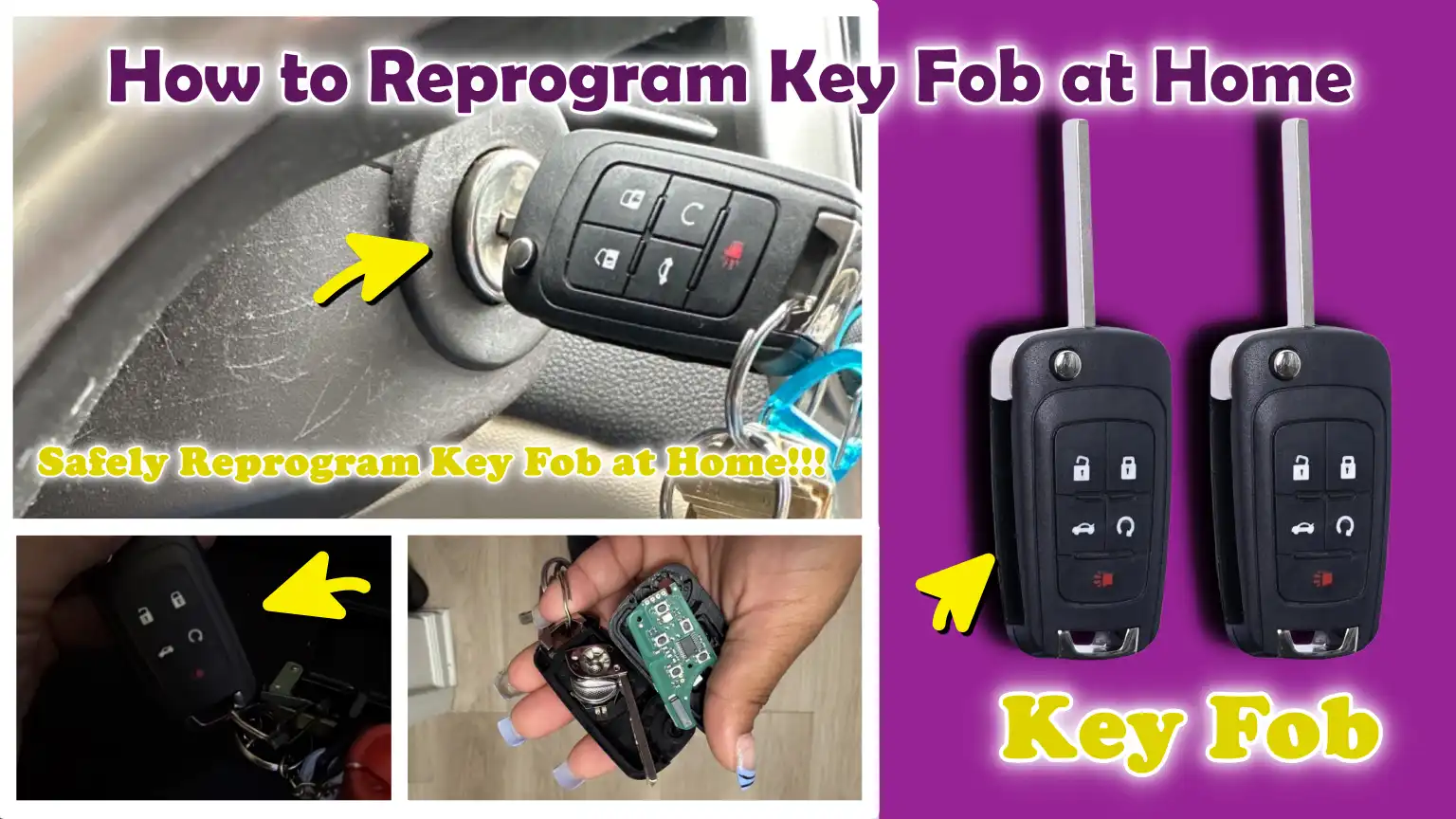
Now, with this guide you’ll learn How to Reprogram Key Fob at Home so that you can safely restore full function within the matter of minutes rather than spending time and money at the service center.
Now, Understand About Key Fob Types
Not all key fobs function in the same way; therefore, before attempting to reprogram a key fob, it is crucial to understand the specific type of key fob utilized by your vehicle.
Some key fobs merely control the door locks, while others incorporate advanced anti-theft and engine start systems.
This is precisely why programming procedures can vary significantly across different vehicles.
Identifying your specific key fob type ensures that you follow the correct procedure and avoid unnecessary complications during the programming process.
1. Standard Key Fob – Lock, Unlock, Trunk
The Standard Key Fob is the most common type of remote system found in many vehicles.
These remotes typically control functions such as locking and unlocking the doors, opening the trunk and activating the panic alarm.
They operate by transmitting a short-range radio signal to the vehicle whenever a button is pressed.
Because these systems are relatively simple, many vehicle owners can reprogram them at home by following a specific ignition cycle sequence or a distinct pattern of button presses.
A weak battery is one of the most common causes of issues faced with Standard Key Fobs.
Drivers may experience problems such as reduced signal range, delayed response times, or buttons that work only intermittently.
In many cases, simply replacing the battery and resynchronizing the key fob is sufficient to completely resolve the issue.
2. Smart Key/Proximity Fob
Smart Keys, also known as Proximity Keys, allow drivers to unlock and access their vehicles without having to press any buttons.
When the key fob is brought within close proximity to the vehicle, the vehicle automatically recognizes the key by wirelessly communicating with its internal sensors.
Many modern vehicles utilize this system, as it enhances both convenience and security.
These systems are more advanced than standard key fobs, which implies that their programming can also be more complex.
Certain vehicles require specialized tools, as the smart key communicates directly with the vehicle’s security and immobilizer systems.
Common issues include “Key Not Detected” warnings, failure to unlock, or difficulty starting the vehicle.
3. Push-to-Start System Fob
Push-to-Start key fobs are designed for vehicles that utilize a start button rather than a traditional ignition key.
Before allowing the engine to start, the vehicle verifies the presence of an authorized key inside the cabin.
This system relies on continuous communication between the key fob and the vehicle’s onboard computer.
If this synchronization is disrupted, the vehicle may refuse to start, even if you have the key in your possession.
Drivers may receive warning messages or face issues where the key is only intermittently recognized.
In some cases, simply reprogramming or resynchronizing the key fob can quickly resolve the issue.
4. Why Do Programming Methods Vary Depending On the Vehicle Type and Manufacturer?
Programming methods vary because every manufacturer employs distinct security systems and software.
Older vehicles often utilize simpler programming procedures, whereas newer vehicles feature encrypted systems specifically designed to prevent theft.
Consequently, while some key fobs can be programmed at home, others require specialized equipment or proprietary dealership tools.
The vehicle model, model year and specific security features also influence the programming method required.
Even two vehicles from the same brand may require different approaches.
Understanding the intricacies of your specific system is the best way to avoid errors and successfully complete the programming process.
Signs Shows That Your Key Fob Needs Reprogramming
Key fobs typically stop working gradually rather than failing completely all at once.
Many drivers assume that the problem always lies with the battery; however, in reality, a key fob can lose its synchronization with the vehicle over time.
This can occur after replacing the battery, following a power interruption, due to signal interference, or after a prolonged period of disuse.
When the communication link between the key fob and the car becomes unstable, several warning signs begin to appear.
Recognizing these symptoms early can help drivers resolve the issue promptly and avoid the unnecessary expense of replacing the entire unit.
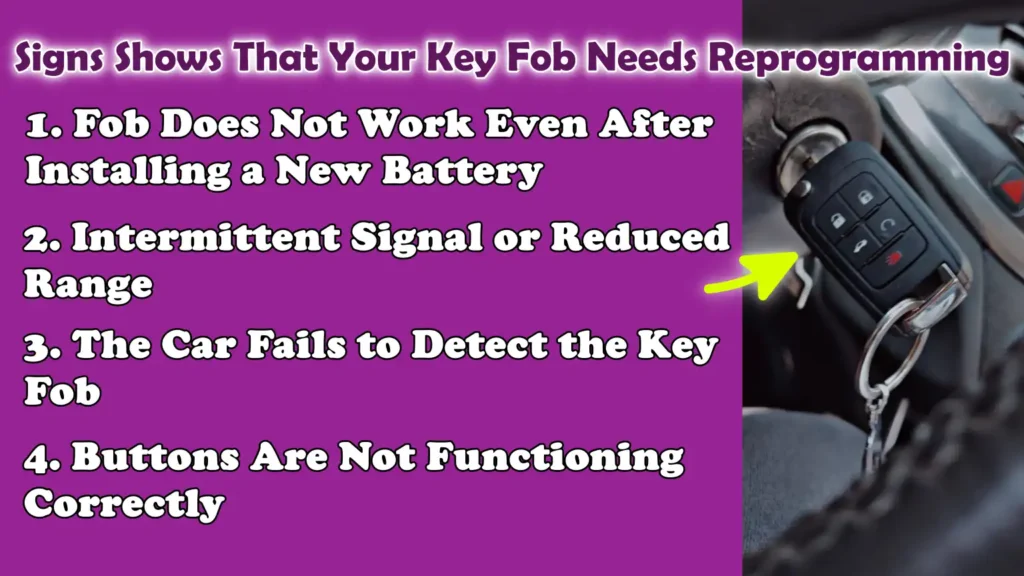
1. Fob Does Not Work Even After Installing a New Battery
The most obvious sign of a programming or synchronization issue is when the key fob fails to work even after a new battery has been installed.
In many cases, the battery is functioning perfectly fine, but the vehicle is unable to recognize the coded signal transmitted by the remote.
Drivers may repeatedly press the lock or unlock buttons, yet receive no response from the car.
This often happens after a battery replacement, as some key fobs temporarily lose their stored communication settings during the brief interruption in power.
Reprogramming helps re-establish the communication link between the remote and the vehicle’s onboard receiver.
2. Intermittent Signal or Reduced Range
A key fob that works only sporadically, or one that requires the driver to stand in very close proximity to the vehicle, may also be in need of reprogramming.
Reduced range is sometimes caused by low battery power, but it can also occur when the signal connection between the car and the key fob becomes unstable.
Drivers may observe that the remote works perfectly one moment, only to stop functioning the very next.
Electronic interference from nearby devices, faulty internal circuitry, or a loss of synchronization, all these factors can compromise signal reliability.
If the problem persists even after replacing the battery, the next recommended step is often reprogramming.
3. The Car Fails to Detect the Key Fob
Modern vehicles equipped with smart key or push-to-start systems constantly scan their surroundings for an authorized key.
When the system fails to detect the fob, drivers may see warning messages on the dashboard such as “Key Not Detected” or “No Key Found”.
In some instances, the doors may unlock, but the engine will not start because the immobilizer system is unable to verify the key’s identity.
This issue is typically linked to a glitch in the communication between the smart key and the vehicle’s security module.
Reprogramming or resynchronizing the fob often resolves this problem, allowing the vehicle to correctly recognize the key and resume proper operation.
4. Buttons Are Not Functioning Correctly
Malfunctioning buttons are another clear indication that your key fob may require reprogramming.
Some buttons may work perfectly fine, while others fail to respond at all or only work after being pressed multiple times.
For instance, the lock button might function flawlessly, yet the trunk release or unlock button may fail to operate correctly.
This does not necessarily mean that the buttons themselves are defective.
In many cases, a delayed or erratic response from the buttons is caused by poor connectivity or the loss of specific segments of the programming data.
Reprogramming refreshes the connection between the remote and the vehicle, thereby restoring the buttons to proper and reliable functionality.
What You Actually Needs Before You Begin
Before attempting to reprogram a key fob at home, it is crucial to have everything fully prepared, as even a minor error can disrupt the programming process.
Many vehicles allow only a very limited window of time to complete the programming steps; therefore, staying organized helps avoid failed attempts and confusion.
Key fob systems rely on communication between the remote and the vehicle’s onboard computer, meaning that weak batteries, incorrect procedures, or a lack of necessary tools can prevent successful synchronization.
Knowing exactly what you need before you start can save time, minimize frustration and increase the likelihood of completing the programming process correctly on the very first attempt.
1. The Vehicle Owner’s Manual
The vehicle owner’s manual is one of the most useful resources during key fob programming, as manufacturers often include model-specific instructions, warnings and emergency procedures within it.
Different vehicles utilize different programming methods and the manual helps you identify the correct steps for your specific model and production year.
Some manuals also provide details regarding dashboard warning messages, key recognition issues and backup start-up procedures for smart keys.
Even if online instructions are available, the owner’s manual remains essential, as it contains information specifically designed for the vehicle’s factory-installed security systems.
2. A Working Key Fob and a Backup Key – If Available
Having a working key fob or a backup key available is extremely helpful, as many vehicles require at least one recognized key during the programming process.
Some vehicles will not enter programming mode until a previously programmed key has been recognized.
If synchronization is lost during the programming of the primary key, or if the process fails midway, a backup key becomes crucial.
In many situations, drivers only realize the importance of a spare key when they find themselves locked out of their vehicle or unable to start it.
Having both keys close at hand helps make the programming process smoother and more secure.
3. A Fresh Battery in the Fob
Having a fresh battery is essential before initiating any key fob programming process, as low battery voltage can interfere with signal transmission between the fob and the vehicle.
Even if an old battery is still partially functional, low power can diminish signal strength and lead to erratic communication during programming.
This may lead drivers to believe that the programming has failed, whereas the actual issue lies with the battery’s low power.
Installing a new battery ensures that the key fob transmits a stable and reliable signal throughout the entire process.
4. Access to the Car’s Interior
Most methods for programming keys at home require the driver to be seated inside the vehicle, as many procedures involve turning the ignition on and off, pressing door lock buttons, or following instructions displayed on the dashboard.
Being inside the vehicle also ensures that the onboard system can properly recognize the key fob during the synchronization process.
In some cars, opening or closing a door during programming can interrupt and halt the entire procedure.
Therefore, having uninterrupted access to the vehicle’s interior before beginning the programming is absolutely essential.
5. The Knowledge That Some Cars Require Dealer-Specific Tools
It is important to understand that not all vehicles can be fully programmed at home.
Many modern vehicles are equipped with advanced, encrypted immobilizer systems designed to enhance security and prevent vehicle theft.
With these systems, adding keys or reprogramming them often requires specialized diagnostic tools, factory software, or dealer-level access.
In some cases, DIY programming methods can only enable basic remote functions, while the full programming required to start the engine still necessitates professional equipment.
Being aware of this beforehand allows you to set realistic expectations and avoid unnecessary frustration should manual programming methods prove ineffective for your vehicle.
How to Reprogram Key Fob at Home – Effective Methods
In many vehicles, a key fob can be reprogrammed right at home, without the need for specialized dealership equipment or advanced diagnostic tools.
Although the specific procedure may vary slightly for each manufacturer, most systems operate on a similar basic framework.
First, the vehicle is placed into a specific “Programming Mode”; next, the key fob is synchronized (paired) with the vehicle; and finally, the system is returned to its normal operational state.
By carefully understanding each step, drivers can avoid errors and increase the likelihood of successfully programming the key fob.
1. How to Enter Programming Mode
Programming Mode is a temporary state in which the vehicle’s onboard computer is configured to receive signals from a new or resynchronized key fob.
Most vehicles will not recognize programming commands until this mode has been properly activated.
Precise timing is crucial during this process, as many vehicles allow only a few seconds between each step; if the timing is missed, the system will automatically reset.
Steps Using the Ignition Cycle – Key ON/OFF Sequence
Many older vehicles utilize an “Ignition Cycle” to enter Programming Mode.
This typically involves inserting the key into the ignition and turning it between the “ON” and “OFF” positions multiple times in a specific sequence.
This sequence acts as a security command, signaling to the vehicle that it should prepare to synchronize the key.
In some vehicles, the key must be turned rapidly from one position to another, while in others, a brief pause between each cycle is required.
If the timing is not executed correctly, the vehicle will fail to fully enter Programming Mode.
The Sequence of Door Lock/Unlock Buttons for Entry
In some vehicles, the driver is required to press the interior door lock and unlock buttons during the programming process.
This specific combination of buttons serves to verify that the individual programming the key is physically present inside the vehicle and possesses the legitimate authority to access it.
In many systems, all doors must remain closed during this step, as opening a door could interrupt the programming sequence.
Adhering to the correct sequence of instructions is crucial, as different vehicles utilize varying security protocols.
Awaiting the Confirmation Signal
Once the correct sequence has been completed, the vehicle typically emits a “confirmation signal,” indicating that the programming mode has been successfully activated.
Common signals include the automatic locking and unlocking of the doors, the flashing of dashboard lights, or the sounding of a brief chime.
These signals are vital, as they confirm that the vehicle is now fully prepared to receive signals from the key fob.
If no confirmation signal is received, you may need to repeat the programming steps with even greater precision.
2. Key Fob Programming
After successfully entering the programming mode, the next step involves synchronizing the key fob with the vehicle’s onboard security system.
During this process, the vehicle stores the remote’s unique coded signal within its internal memory.
Modern key fobs often employ encrypted communication protocols to prevent theft; therefore, proper synchronization is essential for normal operation.
Pressing the Lock/Unlock Button on the Fob
In most vehicles, once the programming mode has been activated, the driver is required to press either the lock or the unlock button on the key fob.
This action transmits the remote’s unique identification code to the vehicle’s receiver.
Some vehicles respond immediately, while others may require the button to be pressed multiple times.
Staying in close proximity to the vehicle during this step helps maintain strong signal communication.
Holding Down a Button to Confirm Synchronization
In some vehicles, the driver must hold down a specific button for a few seconds to complete the synchronization process.
Holding down the button provides the onboard computer with sufficient time to fully recognize and store the signal being transmitted by the remote.
Once synchronization is successful, many vehicles provide confirmation by locking and unlocking their doors, flashing their lights, or emitting an audible signal.
Programming Multiple Fobs – If Necessary
If the vehicle utilizes more than one key fob, it is generally necessary to program all remotes during the same session.
Many systems erase their previous memory upon entering programming mode, overwriting it with data received from the newly recognized remotes.
This means that if an additional key is not programmed during this process, it may cease to function subsequently.
Having every key fob on hand before beginning helps prevent this issue.
3. Exiting Programming Mode
Once programming is complete, the vehicle should return to its normal operating mode.
Exiting programming mode correctly is crucial, as it finalizes the synchronization process and prevents accidental changes to system settings.
Turning Off the Ignition
Most vehicles exit programming mode when the ignition is turned off.
This signals the onboard computer to stop accepting new programming commands and to save the synchronized key fob data to memory.
Some vehicles exit this mode automatically after a period of inactivity, while others require the ignition to be turned off manually.
Removing the Key and Checking the System
After removing the key from the ignition, the final step is to carefully check the entire system.
Drivers should verify the functionality of the lock and unlock features, trunk release, panic alarm and, if available, the push-button start.
Performing a check immediately after programming ensures that the vehicle properly recognizes the key fob and that all functions are operating normally.
Know, Vehicle-Specific Methods to Reprogram Key Fob at Home
Key fob programming is not uniform across all vehicles, as manufacturers utilize distinct security systems, onboard computers and communication technologies.
Even if two vehicles appear identical on the outside, their internal key programming procedures can be entirely different.
For some vehicles, programming can be easily performed at home using specific ignition cycles and button sequences; whereas for others, professional diagnostic tools that connect directly to the vehicle’s computer system are required.
Understanding these varying methods helps drivers avoid confusion and clarifies why certain procedures work for some vehicles while failing to work for others.
As well as, research from the Egyptian Informatics Journal shows that keyless entry systems have become standard in modern vehicles as they actually improves the convenience and security while it reduces the dependence on traditional mechanical keys, so this study shows that communication issues between the key fob and vehicle can develop as signals can interrupts, battery can be failed or synchronization problems as well, that’s why you need to reprogram it as it actually restores normal operation as well.[¹]
1. Push-Start Vehicles vs Traditional Key Ignition Vehicles
Vehicles equipped with traditional key ignition systems typically employ simpler remote systems, as the engine is started by turning a mechanical key within the ignition cylinder.
In many of these cars, the key fob primarily serves functions such as locking/unlocking doors, opening the trunk and controlling the alarm system.
Because the security systems involved are less complex, manufacturers often allow owners to reprogram these remotes at home by following specific ignition on/off sequences or door-locking procedures.
Push-start vehicles are significantly more advanced, as the engine is started electronically through communication between the smart key and the vehicle’s immobilizer system.
Rather than requiring a key to be turned, the car continuously verifies the presence of an authorized smart key within the cabin.
These systems utilize encrypted wireless communication to prevent theft, thereby making the programming process considerably more complex.
Many push-start vehicles require specialized scanning tools or dealer software, as the key must be digitally paired with the vehicle’s security module.
Drivers may perceive that, compared to traditional systems, push-start systems are more susceptible to issues such as weak batteries, signal interference and synchronization-related glitches.
2. Differences Among European, American and Asian Vehicles
Vehicle manufacturers from different regions often adopt distinct approaches regarding key fob technology and security design.
European vehicles are generally known for utilizing advanced, encrypted immobilizer systems that incorporate rigorous security measures.
European brands often require professional diagnostic tools for key programming, as their systems are deeply integrated with anti-theft software and onboard electronic modules.
While this enhances security, it makes performing key programming at home significantly more challenging.
Many American vehicles, particularly older models, typically support manual programming methods involving specific ignition cycles and door-locking sequences.
These systems are often more user-friendly for DIY reprogramming; however, newer American vehicles are now also shifting toward more robust, encrypted smart key systems.
Some manufacturers still grant owners limited programming access for basic remote functions, while restricting access to programming related to engine-start authorization.
Asian automakers are often known for striking a balance between convenience, reliability and security.
Many Japanese and Korean vehicles, specially older models, offer relatively straightforward programming methods for standard key fobs.
However, newer Asian vehicles equipped with push-button start systems now utilize advanced immobilizer technology similar to that found in European systems.
This means that some modern models may even require dealership-specific tools to be fully programmed and synchronized.
3. Examples of Brands That Often Require Specialized Procedures
Different automotive brands often employ their own unique programming methods and security protocols.
Certain older vehicles from brands such as Ford Motor Company and General Motors frequently support simple ignition-cycling procedures, which many owners can perform themselves at home.
These methods typically involve turning the ignition key multiple times and pressing a specific button on the remote within a designated, limited timeframe to initiate the programming process.
Brands like Toyota Motor Corporation and Honda Motor Co., Ltd. sometimes utilize more intricate procedures, involving a specific sequence of opening and closing doors, as well as precise timing of the ignition.
These methods can appear challenging, as precise timing between the various steps is critical for successfully entering the programming mode.
Luxury European manufacturers such as: BMW, Mercedes-Benz Group and Audi, often employ highly encrypted smart key systems that interface directly with advanced immobilizer modules.
In many instances, these vehicles cannot be fully programmed without dealer-level diagnostic tools and secure software access.
While this more robust security framework helps prevent unauthorized duplication and vehicle theft, it also significantly limits opportunities for owners to perform self-programming compared to many mainstream vehicles.
Read More:
Basic Tips to Avoid Key Fob Problems in the Future
Key fobs are small electronic devices that can fall victim to daily wear and tear due to constant use, temperature fluctuations, accidental drops and battery depletion.
Although modern key fobs are designed to last for many years, they can still gradually develop several common issues such as: a weakening battery, moisture damage, external wear and tear, or a lack of proper maintenance.
By adopting a few simple precautions, the likelihood of sudden malfunctions, weak signals, or synchronization-related problems can be significantly reduced.
Proper care of your key fob not only enhances its reliability but also helps drivers avoid the expensive costs associated with replacing or reprogramming the device in the future.
1. Replace the Battery Every 1 to 2 Years
The power of a key fob’s battery gradually diminishes over time, even if the remote still appears to be functioning normally.
Most key fobs are powered by small “coin-cell” batteries, which slowly lose their charge due to daily use and constant wireless communication with the vehicle.
A weak battery can result in reduced signal range, delayed response when buttons are pressed, or the vehicle failing to recognize the key fob entirely.
Replacing the battery every one or two years is a simple precautionary measure that helps maintain a strong and stable connection between the key fob and the vehicle.
By installing a fresh battery before the old one is completely depleted, you also minimize the risk of synchronization errors, which can occur when the device is operating on low voltage.
2. Protect Against Water and External Damage
Although the exteriors of many key fobs are constructed with protective casings, internally, they remain sensitive electronic devices.
Exposure to water can damage the small internal circuit board, battery contact points and signal components located inside the remote.
Even a minuscule amount of moisture, whether from rain, an accidental spill, or general humidity, as it can lead to internal corrosion over time.
Another common cause of key fob failure is physical damage; repeated drops can fracture internal solder joints or damage delicate electronic components.
Keeping your key fob dry and protecting it from severe impacts extends its lifespan and ensures that it continues to function reliably.
3. Store Your Spare Key Fob in a Safe Place
A spare key fob proves invaluable in emergencies, in the event of programming glitches, or when the battery suddenly dies.
Many drivers only realize the importance of a spare key fob when they find themselves locked out of their vehicle or when their primary key fob malfunctions.
Storing your spare key fob in a safe and dry location ensures that it will function correctly when you need it most.
It is also crucial to periodically check your spare key fob, as its internal battery can weaken over time, even if the device is not in use.
A properly maintained spare key fob can save you a significant amount of time, stress and towing expenses during difficult situations.
4. Regular Signal Checks
Regularly checking your key fob allows you to detect minor issues before they escalate into major problems or cause the device to fail completely.
Drivers should periodically test various functions such as: locking, unlocking, opening the trunk, remote start and push-button start, from different distances.
A gradual decrease in signal range or a delay in response time often indicates a weakening battery or an issue with communication.
By recognizing these warnings in a timely manner, drivers can replace the battery or resync the key fob before the issue becomes severe.
Regular checks also ensure that both of your key fobs, the primary one and the spare, are fully functional and ready for daily use.
Conclusion – How to Reprogram Key Fob at Home
So, whenever key fob does not works then it not always means that you have to replace it, as it can be struggling with weak communication rather than any damaged hardware.
This compact device seamlessly combines convenience, security and rapid access to the vehicle.
From remotely locking doors to starting the engine with the push of a button, these wireless remotes maintain constant communication with the vehicle’s onboard computer and anti-theft systems.
Due to this sophisticated technology, even minor issues such as: a weak battery, synchronization errors, electrical glitches, or signal interference, as it can prevent the key fob from functioning correctly.
Fortunately, many of these issues do not indicate permanent damage and can often be resolved at home using simple reprogramming methods.
Before initiating any programming procedure, identifying the specific type of key fob used by your vehicle is one of the most critical steps.
Standard remotes, smart proximity keys and push-start systems, each operates differently and employs distinct security protocols.
This is precisely why programming procedures vary depending on the vehicle manufacturer and the specific model.
Some vehicles can be quickly and automatically resynchronized through an ignition cycle or by pressing specific buttons, while others, due to their robust, encrypted security systems, require advanced diagnostic tools.
And, that’s all about this guide and you can ask all the related questions below.
Frequently Asked Questions
FAQ 1: Can I really reprogram a key fob at home?
Answer: Yes, many vehicles allow for basic key fob reprogramming right at home, without the need for specialized dealership equipment. Older vehicles and certain standard remote systems often support manual programming methods, which may involve ignition cycling sequences, specific door-locking procedures, or various button combinations. However, newer vehicles equipped with advanced smart-key or push-button start systems may require professional diagnostic tools due to their robust anti-theft security systems. The success of home programming depends primarily on the vehicle’s make, model, year and the specific type of key system being used.
FAQ 2: Why is it necessary to reprogram a key fob?
Answer: Reprogramming a key fob becomes necessary when its connection with the vehicle is lost. This can occur after replacing the battery, if the vehicle’s battery has been disconnected, following an electrical system reset, due to signal interference, or after a prolonged period of disuse. In some cases, drivers purchase new key fobs that require synchronization with the vehicle to function correctly. Reprogramming re-establishes the communication link between the remote and the vehicle’s onboard security system.
FAQ 3: What are the signs indicating that my key fob needs to be reprogrammed?
Answer: Common signs include: the key fob failing to work even after installing a new battery, reduced signal range, delayed response when locking or unlocking the vehicle, buttons failing to function properly, or the appearance of a warning message such as: “Key Not Detected”, on the dashboard. Some vehicles won’t even start because the immobilizer system fails to recognize the key. These symptoms often point to synchronization issues between the remote and the vehicle.
FAQ 4: Can a dead key fob battery cause programming issues?
Answer: Yes, a weak or dead battery is the most common cause of key fob programming failure. Key fobs use small batteries to transmit radio signals to the vehicle. If the battery voltage is too low, the signal may become unstable during the programming process, or so weak that the vehicle cannot detect it at all. Installing a new battery before initiating the programming process significantly increases the likelihood of successful synchronization.
FAQ 5: Do all vehicles use the same programming method?
Answer: No, every manufacturer designs its key fob system differently. Some vehicles utilize simple methods such as: cycling the ignition on and off, while others require specific door-locking sequences or advanced diagnostic tools. Older vehicles are generally easier to program at home, whereas newer vehicles equipped with smart keys and push-button start systems often employ encrypted security protocols that require professional-grade equipment.
References:
[1] Design and hardware implementation of LED block cipher for vehicles keyless entry systems
https://www.sciencedirect.com/science/article/pii/S1110866525000805
Hello Folks, Dean Shali here to help you out to solve the problems with your lovely vehicle, as i have lots of experience and knowledge about automotive industry as i woks directly with the customers and repair vehicles and i love to help the people to keep their cars safe and running smoothly.