Written By: Dean Shali
Fact Checked By: Sabré Cook
Reviewed By: Tamara Warren
Even without doing anything wrong, your tires can lose up to 1 PSI per month and even small changes in the tire pressure can badly affect the safety and fuel efficiency as well.
Just understand this simple but crucial aspect of tires that: if tires are underinflated or overinflated then it can literally starts to affect your car’s handling, braking, fuel consumption and reduces overall tire lifespan as well.
And, according to the U.S. Department of Transportation: the underinflated tires actually contributes to the thousands of the accidents each year, also it decreases the fuel efficiency by upto 10%, that actually costs drivers hundreds of dollars in annual way.
Plus, having proper tire pressure not only prevents from blowouts and uneven tire wear but it also improves the traction on the wet or slippery roads, that’s why it becomes really crucial factor of safety during the harsh weather conditions.
Now-a-days, there’s Tire Pressure Monitoring System, which is known as TPMS sensor comes with the vehicle itself that gives you alert after the pressure is dropped below a critical level.
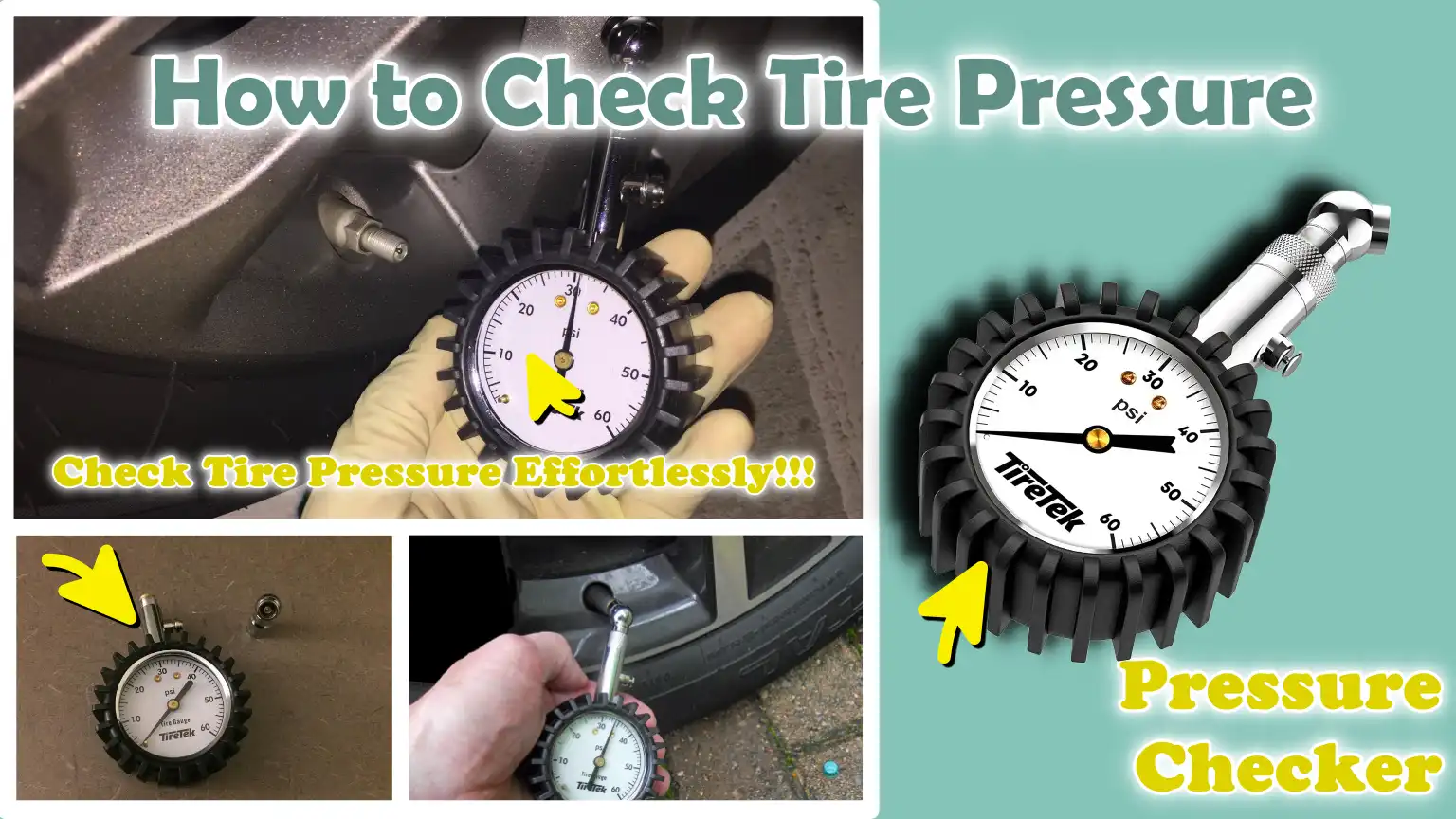
But, why we should wait till the last breath of your tire pressure, just learn How to Check Tire Pressure, so that you can easily measure your tire pressure by using manual and digital gauges and inflate them to their good marks.
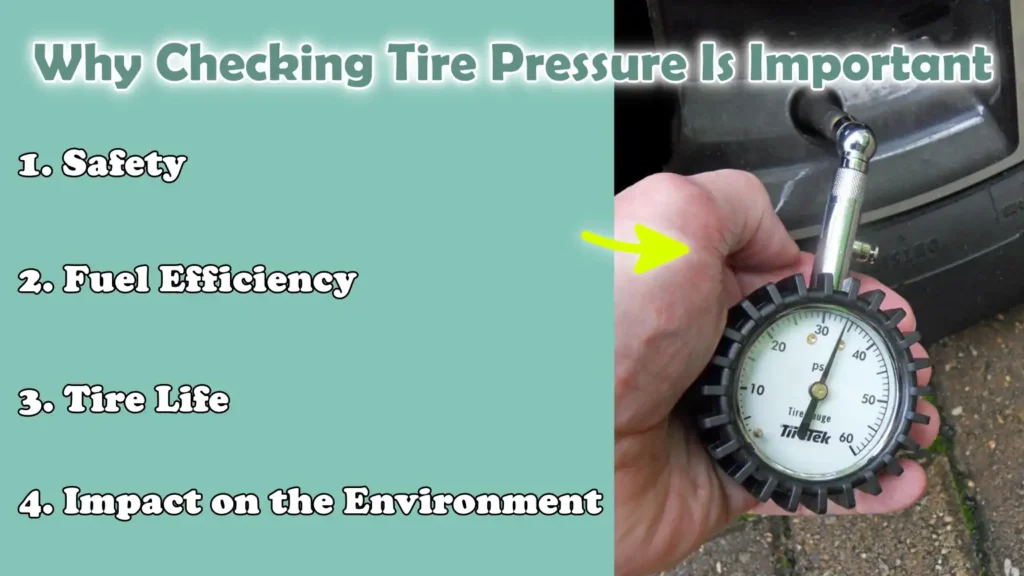
Why Checking Tire Pressure Is Important
1. Safety
Proper tire pressure plays a vital role in keeping a vehicle safe on the road.
Underinflated tires can alter the vehicle’s behavior while driving.
When tires are underinflated, they flex excessively, which causes heat to accumulate inside the tire.
Over time, this heat can weaken the tire’s internal structure and increase the risk of a tire blowout, specially at highway speeds.
Proper tire pressure helps tires maintain their correct shape and full contact with the road surface, improving traction and control.
This is specially important when braking suddenly, making sharp turns, or driving on wet roads.
Studies by transportation safety agencies show that improperly pressured tires can significantly increase stopping distances and reduce vehicle stability.
When tires are inflated to the PSI level recommended by the vehicle manufacturer, braking performance improves, steering becomes more predictable and the overall risk of accidents is reduced.
Simply checking tire pressure regularly can help drivers maintain better control of their vehicle and avoid dangerous tire failures.
2. Fuel Efficiency
Tire pressure also directly impacts how much fuel a vehicle uses.
When tires are underinflated, they create more rolling resistance, which means the engine has to work harder to move the vehicle forward.
Rolling resistance is the force that slows a tire down when it travels on the road.
If a tire is underinflated, it exerts pressure on a larger surface area, increasing friction and the engine has to burn more fuel to maintain the same speed.
Research by the Transportation and Energy Agencies has shown that driving with low tire pressure can reduce fuel efficiency by several percent and in some cases, even up to ten percent, depending on the low tire pressure.
Over time, this wasted fuel can cost drivers a lot of money.
By properly inflating tires, the vehicle can run more smoothly and efficiently.
The engine doesn’t have to work as hard, which helps save fuel and reduces unnecessary wear on engine parts.
Therefore, checking tire pressure monthly can improve fuel efficiency and help drivers spend less on fuel throughout the vehicle’s life.
3. Tire Life
Maintaining proper tire pressure is one of the most effective ways to extend tire life.
Tires are designed to have even tread wear when inflated to the correct pressure.
However, when tire pressure is too low, the outer edges of the tire wear faster because more weight is placed on the tread edges.
Conversely, when a tire is overinflated, the center of the tread wears faster because the tire becomes too stiff and only the center can make firm contact with the road.
Uneven tire wear not only shortens tire life but can also reduce grip and driving comfort.
Premature tire replacement can be costly for vehicle owners.
Regularly checking tire pressure ensures even wear across the tread surface, thereby extending tire life.
This simple maintenance step helps drivers get the most out of their tires, ensuring consistent performance and road grip.
4. Impact on the Environment
Correct tire pressure not only benefits the driver and vehicle, but also the environment.
When vehicles use more fuel than necessary due to underinflated tires, they produce more carbon dioxide and other emissions, which contribute to air pollution and climate change.
Fuel production and consumption are major sources of greenhouse gases worldwide and even small improvements in fuel efficiency can make a big difference over time.
When millions of vehicles drive with properly inflated tires, overall fuel consumption on the roads is significantly reduced.
This means fewer emissions are released into the atmosphere.
Furthermore, tires that last longer due to the correct pressure don’t need to be replaced as frequently.
This reduces the number of waste tires going to landfills or recycling sites.
Simply by maintaining the recommended tire pressure, drivers can contribute to lower fuel consumption, fewer emissions and a smaller environmental footprint, while also saving money and improving driving safety.
When to Check Tire Pressure
1. How Often to Check
Regularly checking tire pressure is one of the most important habits for keeping your vehicle safe and efficient.
Most automotive experts and vehicle manufacturers recommend checking tire pressure at least once a month, as tires lose air over time, even if there are no visible leaks.
In fact, studies show that tires can lose approximately 1 to 2 PSI (pounds per square inch) of air per month due to normal air permeation (the slow passage of air molecules through the tire material).
Small drops in pressure may not be noticeable while driving, but they can still affect fuel efficiency, tire wear and vehicle handling.
In addition to checking tire pressure once a month, it’s specially important to check tire pressure before embarking on a long trip.
Long-distance driving heats up tires and requires them to maintain constant pressure for many hours.
If tires begin a journey with low pressure, the increased heat and friction can increase the risk of tire damage or even a blowout.
Checking and adjusting the pressure a few minutes before a long drive ensures that tires are safe and ready to perform well throughout the trip.
2. Before the Weather Changes
Changes in weather temperature directly affect tire pressure because air expands when heated and contracts when cooled.
This means that tire pressure can change even if there are no leaks or damage to the tires.
A common rule among automotive experts is that tire pressure changes by approximately 1 PSI for every 10°F (about 5–6°C) change in temperature.
In colder months, the air inside tires becomes denser and the pressure decreases, which can lead to under-inflation if the pressure is not adjusted.
This is why many drivers see their tire pressure warning light illuminate on winter mornings.
On the other hand, very hot weather can slightly increase tire pressure, which can lead to overinflation if the tire is already inflated close to its maximum limit.
Checking tire pressure at the beginning of each season helps drivers maintain the correct PSI recommended by the vehicle manufacturer.
It also ensures that tires maintain proper road grip, which is specially important in winter, when roads can be slippery due to rain, snow, or ice.
3. After driving on uneven terrain or carrying heavy loads
Tire pressure should also be checked after situations that put increased stress on tires, such as driving on uneven roads or carrying heavy loads.
Uneven terrain, including gravel roads, potholes, construction areas, or uneven surfaces, can put excessive stress on tires and wheels.
These impacts can sometimes cause small air leaks, damage the valve stem, or slightly change the way the tire sits on the rim.
Even if there’s no visible damage, it’s a good practice to check tire pressure afterward to make sure everything is within the safe recommended range.
Carrying heavy loads, such as luggage, construction materials, or multiple passengers, can also affect tire pressure and tire performance.
When a vehicle carries more weight than usual, the tires are subjected to more pressure on the road surface.
If tires are not properly inflated, the excess weight can cause excessive tire bending, heat buildup and accelerate tire wear.
In some vehicles, manufacturers recommend slightly higher tire pressure when carrying heavy loads to safely handle the extra weight.
Checking tire pressure after such situations helps ensure that the tires remain strong, balanced and can support the vehicle without the risk of premature wear or failure.
Tools
| Tool | Why It Is Needed | How to Use It |
|---|---|---|
| Manual Tire Pressure Gauge | This helps you determine the correct tire pressure so you can compare it to the recommended PSI listed in your vehicle’s manual or on a sticker on the driver’s door. Without checking the pressure, it’s impossible to know if your tire is too low or too high. | First, remove the small cap from the tire valve. Place the gauge firmly on the valve stem to prevent air from escaping. Press it straight and quickly. The gauge will display a pressure reading. Compare the reading to the recommended PSI for your vehicle. |
| Digital Tire Pressure Gauge | This is essential for drivers who want to measure pressure quickly and accurately. The digital display eliminates guesswork and makes it easy to read the correct PSI value, specially for beginners. | Turn on the gauge using the power button. Remove the tire valve cap and press the gauge firmly onto the valve stem. The tire pressure will immediately appear on the screen. Check that the reading matches the recommended PSI and adjust the pressure if necessary. |
| Air Compressor | This is important if the tire pressure is lower than the stated level. Driving with low tire pressure can reduce fuel efficiency, cause uneven tire wear and increase the risk of tire failure. | First, check the tire pressure with a pressure gauge. If the pressure is low, connect the compressor hose to the valve stem. Inflate in small increments. Stop and check the pressure with the gauge again until the tire reaches the correct PSI. |
| Tire Pressure Monitoring System (TPMS) | This helps alert drivers to extremely low tire pressure before it becomes dangerous. This improves safety and helps prevent accidents caused by underinflated tires. | When tire pressure drops below a safe level, a warning light appears on the vehicle’s dashboard. If the light comes on, the driver should check each tire with a gauge and add air if necessary. |
How to Prepare Your Vehicle
1. Park on a Level Area and Turn Off the Engine
Before checking tire pressure, it’s important to ensure the vehicle is parked properly so that the readings are accurate and safe to measure.
Always park on a flat and level surface, such as a driveway, parking space, or smooth roadside area.
When a car is parked on a slope or uneven ground, the weight of the vehicle falls more heavily on some tires than others.
This uneven weight can slightly alter the way the tires touch the ground and affect the pressure reading.
Parking on a flat surface allows all four tires to rest naturally and evenly, allowing you to measure the actual pressure within each tire.
The engine should also be completely turned off before starting the tire inspection.
Turning off the engine keeps the vehicle in one place and prevents any movement as you walk around the car and check each tire valve.
This step also reduces vibration and ensures a safe vehicle inspection.
This simple vehicle preparation creates a stable environment, making tire pressure readings more reliable and easier to check.
2. Wait for tires to cool down for accurate readings
Another important step before checking tire pressure is to let tires cool down.
Tires heat up naturally during driving as they constantly bend and rub against the road surface.
This friction generates heat within the rubber and the air inside the tire also heats up.
As the air temperature inside the tire increases, so does the pressure.
Therefore, if you check tire pressure immediately after driving, the reading will often be higher than the actual cold pressure recommended by the vehicle manufacturer.
Automotive experts say that tire pressure typically increases by about one PSI for every 10 degrees Fahrenheit increase in temperature.
For the most accurate results, tire pressure should be checked when the tires are cold.
Cold tires mean the vehicle has been parked for at least three hours or driven at low speed for less than a mile.
When tires cool, the air inside them returns to its normal temperature and the pressure reading shows the correct level.
Checking tire pressure under these conditions ensures you’re comparing the measurement to the recommended PSI listed in your vehicle’s manual or on the driver’s door label, helping you maintain optimal tire performance, safety and fuel efficiency.
How to Find the Recommended Tire Pressure
1. Understanding Recommended PSI
Before measuring or adjusting tire pressure, it’s important to know the correct pressure level for your vehicle.
Tire pressure is measured in units called PSI, which stands for pounds per square inch.
PSI indicates the amount of air pressure inside the tire and how strongly the air presses against the tire’s inner walls.
Every vehicle manufacturer carefully calculates the correct PSI level so that the tires can safely support the vehicle’s weight while also striking the best balance between safety, comfort, fuel efficiency and tire life.
Many drivers mistakenly assume the correct pressure is the number printed on the tire’s sidewall, but that number actually represents the maximum pressure the tire can safely hold, not the recommended operating pressure.
The correct PSI for your vehicle is determined by the car manufacturer and depends on factors such as vehicle weight, suspension design and tire size.
Knowing the correct PSI before checking your tires ensures you inflate them to the safest and most efficient level for normal driving.
Finding the Recommended Tire Pressure in the Vehicle Owner’s Manual
One of the most reliable places to find recommended tire pressure is the vehicle’s owner’s manual.
The owner’s manual is designed to provide drivers with essential information about proper vehicle maintenance and includes detailed specifications for tire pressure.
In the manual, you’ll usually find a section on tires or vehicle maintenance that lists the correct PSI for both front and rear tires.
This information is carefully tested and approved by the vehicle manufacturer to ensure optimal driving performance and safety.
The manual may also contain additional information about tire pressure when the vehicle is carrying heavy loads or traveling at high speeds.
Checking the owner’s manual helps drivers understand the correct pressure value and ensures that tires are inflated according to the manufacturer’s guidelines.
Checking the Driver’s Side Door Jamb Label
Another quick and easy place to find the recommended tire pressure is the label on the driver’s side door jamb.
The door jamb is a vertical metal frame visible when the driver’s door is opened.
Most modern vehicles have a small sticker or label on this area that provides important tire information.
This label typically lists the recommended PSI for the front and rear tires and the correct tire size for the vehicle.
Because the label is affixed directly to the vehicle, drivers can quickly check the recommended tire pressure without having to open the owner’s manual.
Many mechanics and tire experts consider this label the fastest and most accurate way to confirm the correct PSI when checking or inflating tires.
2. Understanding the Difference Between Front and Rear Tire Pressure
In many vehicles, the recommended tire pressure for the front tires may be slightly different from the pressure for the rear tires.
This difference occurs because the vehicle’s weight isn’t always distributed equally between the front and rear tires.
In most passenger cars, the engine is located in the front, meaning the front tires weigh more than the rear tires.
Because of this increased weight, the front tires sometimes require slightly higher air pressure to properly support the load and maintain good steering control.
In other types of vehicles, such as trucks or cargo vehicles, a heavier load may require higher pressure in the rear tires.
The PSI values listed in the owner’s manual or on the door label account for this weight difference.
Following the correct pressure levels for both front and rear tires helps ensure balanced handling, even tire wear, improved fuel efficiency and safe driving performance.
How to Check Tire Pressure Using a Manual Gauge
1. Remove the Valve Cap
The first step when using a manual tire pressure gauge is to remove the small valve cap from the tire valve.
Every tire has a valve stem, which is a small rubber or metal tube that allows air to be filled or removed.
The valve cap is a small protective cover that prevents dirt, dust, moisture and road debris from entering the valve.
Although the cap itself doesn’t hold air inside the tire, it plays an important role in protecting the valve from damage and leaks.
To begin checking the pressure, simply use your fingers to twist the cap anti-clockwise until it comes off.
It’s best to keep the cap somewhere safe, such as in your pocket or somewhere clean, so it won’t get lost.
Keeping the valve clean and secure helps maintain accurate tire pressure and ensures the gauge can properly connect to the valve when measuring air inside the tire.
2. Press the gauge firmly onto the valve stem.
After removing the valve cap, the next step is to firmly attach a manual tire pressure gauge to the valve stem.
A manual gauge allows a small amount of air to be drawn from the tire into the gauge, which then measures the pressure and displays it on a small scale or sliding indicator.
To get an accurate reading, the gauge must be pressed directly onto the valve stem to create a tight seal.
If the connection is not tight, air can escape through the edges, causing the gauge to show an inaccurate reading.
When the gauge is pressed firmly, you may hear a slight hiss of air, which is normal.
This simply means the gauge is measuring the pressure inside the tire.
Holding the gauge steady for a second or two allows the gauge’s internal mechanism to respond to the air pressure and display the measurement accurately.
Using consistent pressure and keeping the gauge upright helps ensure the reading reflects the correct air pressure inside the tire.
3. Read the Pressure and Compare to the Recommended PSI
Once the gauge measures the pressure, the next step is to carefully read the result and compare it to the recommended PSI for your vehicle.
On most manual gauges, the pressure reading is displayed on a small scale or sliding bar that protrudes from the gauge body.
The numbers on the scale indicate PSI, which stands for pounds per square inch.
This number tells you how much air pressure is inside the tire.
After reading the value, compare it to the recommended tire pressure listed in the vehicle’s owner’s manual or on a label inside the driver’s side door.
If the measured pressure is lower than the recommended PSI, the tire needs more air and should be inflated using an air compressor.
If the pressure is higher than the recommended value, you should deflate the tire slightly until it reaches the correct level.
Checking and adjusting pressure in this way helps ensure that the tire maintains proper contact with the road, improves fuel efficiency, reduces uneven tire wear and supports safe and stable driving conditions.
How to Check Tire Pressure Using a Digital Gauge
1. Turn on the device and press it onto the valve stem
A digital tire pressure gauge is a modern and easy-to-use tool designed to measure tire pressure quickly and accurately.
Before using the gauge, the device must be turned on using its power button.
Most digital gauges run on a small battery and have a small screen that lights up when the device is activated.
After turning it on, remove the valve cap from the tire valve to expose the valve stem.
The valve stem is the small tube on the tire that allows air to flow in and out of the tire.
Once the valve is open, place the digital gauge directly onto the valve stem and press firmly so that the nozzle of the gauge forms a tight seal around the valve.
When the seal is tight, the gauge releases a small amount of air pressure from the tire into a sensor inside the device.
This sensor instantly measures the air pressure and displays the result.
Holding the gauge upright and steady for a moment helps prevent air from escaping and ensures the reading is as accurate as possible.
2. Read the Digital Display
Once the gauge is connected to the valve stem, the pressure reading will appear on the digital screen within a second or two.
Pressure is typically displayed in PSI, which stands for pounds per square inch.
This is the most common unit used to measure tire pressure.
Some digital gauges may also display pressure in other units, such as bar or kPa, but PSI is the value most vehicle manufacturers use in their recommendations.
One of the biggest advantages of digital gauges is that the numbers on the screen are clear and easy to read, reducing the chance of misreading the pressure.
These digital gauges are specially helpful for those who may have difficulty understanding older manual gauges.
Accurate readings are crucial, as even small changes in pressure can affect vehicle performance.
Accurately reading the digital display helps drivers quickly understand whether the tire pressure is correct or needs adjustment.
3. Record the pressure and compare it to the indicated PSI
When the pressure number appears on the screen, it’s important to compare that value to the vehicle’s recommended PSI.
The recommended tire pressure is usually found in the vehicle’s owner’s manual or on a label on the driver’s side door.
This recommended PSI is carefully selected by vehicle manufacturers to strike the best balance between safety, fuel economy, tire life and driving comfort.
If the pressure displayed on the digital gauge is lower than the indicated number, the tire needs more air and should be inflated with an air compressor.
If the reading is higher than the indicated PSI, the tire should be slightly deflated until the correct pressure is reached.
Some drivers also like to record or memorize the pressure reading for each tire so they can monitor changes over time.
Regularly comparing measured pressure to the stated PSI helps ensure all tires are properly inflated, which improves traction, reduces uneven tire wear, improves fuel economy and keeps the vehicle stable and safe during everyday driving.
How to Adjust Tire Pressure
1. If the pressure is too low, inflate the tire with an air compressor.
If the tire pressure reading shows that the tire is underinflated below the recommended PSI, the tire needs to be inflated to bring it to the correct level.
Low tire pressure is common because tires gradually lose air over time due to natural air leakage and minor temperature changes.
When tires are underinflated, they create more friction with the road surface, which can lead to excessive heat buildup inside the tire.
This excess heat can weaken the tire’s structure and increase the risk of tire failure, specially during long drives or high speeds.
An air compressor is used for inflating.
Air compressors are commonly found at fuel stations, auto repair shops and as small portable devices that drivers can keep in their vehicles.
To inflate the tire, the compressor hose is connected to the tire’s valve stem.
Once connected, the compressor forces compressed air into the tire.
It’s best to inflate the tire slowly, in small increments, rather than constantly inflating.
This careful approach prevents overinflating the tire and helps you control the pressure more accurately.
2. Deflate if the pressure is too high
Sometimes, tires become overinflated.
Overinflated tires can also cause problems because they become too stiff and lose their ability to absorb road shock.
When a tire is too stiff, the center of the tire touches the road more than the edges.
This causes the center of the tire to wear faster than the rest of the tire, reducing tire life.
Overinflated tires can also reduce traction because less of the tire’s surface is in contact with the road.
To reduce the pressure, some air must be removed from the tire.
This can be done by gently pressing a small metal pin inside the valve stem.
When the pin is pressed, air slowly escapes from the tire.
It’s important to release air slowly and carefully so the pressure doesn’t drop too far below the recommended level.
3. Recheck the Correct Pressure
After inflating or deflating a tire, always recheck the tire pressure using a tire pressure gauge.
This step is important because it ensures that the tire now has the correct amount of air.
Even small changes in tire pressure can affect vehicle handling, how quickly tires wear out and how much fuel the vehicle uses.
By rechecking the pressure, you can ensure that the tire matches the PSI recommended by the vehicle manufacturer.
If the pressure is still slightly low or high, minor adjustments can be made until the correct value is reached.
Rechecking also ensures that the gauge reading is accurate and that no air leaks occurred during the inflation process.
4. Replace the Valve Cap
Once the tire pressure is properly adjusted and confirmed, the final step is to replace the valve cap on the tire valve.
The valve cap may seem like a small and unimportant part, but it plays a vital role in protecting the valve stem.
The cap prevents dirt, dust, water and road debris from entering the valve hole.
If these things get into the valve, they can damage the sealing mechanism and cause a gradual air leak over time.
Replacing the valve cap keeps the valve clean and functioning properly, maintaining stable tire pressure over the long term.
Simply screw the cap onto the valve stem by turning it clockwise until it is secure.
This final step completes the tire pressure adjustment process and ensures that the tire is properly protected and maintained.
Amazing Tips for Measuring Tire Pressure Accurately
1. Always Check Tire Pressure When They’re Cold
One of the most important tips for measuring tire pressure correctly is to check them when they’re cold.
Tires heat up naturally during driving due to friction between the rubber and the road surface and the tire’s constant rotation.
This heat causes the air inside the tire to expand, temporarily increasing the pressure.
When the pressure increases due to heat, the reading on the gauge will be higher than the tire’s actual resting pressure.
For this reason, vehicle manufacturers recommend always measuring tire pressure when the tires are cold.
A cold tire means the vehicle has been parked for several hours, usually at least three hours, or the vehicle has been driven less than a mile at low speed.
When the tire cools down, the air inside returns to its normal temperature and pressure level.
Measuring tire pressure in this condition provides the most reliable results, allowing you to accurately compare the readings to the PSI recommended by the vehicle manufacturer.
Correct cold tire pressure helps maintain proper tire grip, stable handling and even tire wear.
2. Use the Same Gauge Consistently for Reliable Results
Another helpful tip for accurately measuring tire pressure is to use the same tire pressure gauge whenever possible.
Tire gauges, whether manual or digital, are designed to be precise measuring tools, but manufacturing tolerances or differences in calibration can cause slight variations between gauges.
If a driver uses one gauge today and another the next, the readings may appear slightly different, even if the tire pressure hasn’t changed.
By consistently using the same gauge, drivers can more reliably track tire pressure and more easily notice real changes.
Using a reliable gauge also helps you learn how the tool works and how to accurately read its readings.
Over time, this habit increases accuracy and confidence when checking tire pressure.
Many experienced drivers and mechanics keep a personal tire gauge in their vehicle so they can always use the same measuring tool whenever they check the pressure.
3. Don’t Rely on Visual Inspection
A common mistake many drivers make is trying to determine tire pressure solely by looking at the tire.
An under-inflated tire may appear flat or sagging, but most tires can lose significant air without showing any noticeable signs.
Modern tires are designed with strong sidewalls, allowing them to maintain their shape even when the pressure is below the stated level.
Because of this, a tire may appear normal when it is actually several PSI below the correct pressure level.
Driving with even slightly low pressure can cause problems such as reduced fuel efficiency, tire wear and reduced handling performance.
Scientific studies in the automotive industry show that many road vehicles have at least one tire that is several PSI underinflated, even if the tire appears fine from the outside.
Therefore, using a tire pressure gauge is the only reliable way to determine the actual air pressure inside a tire.
Measuring pressure with the right tool ensures that the tire is inflated to the correct level, which helps maintain safe driving conditions, improved fuel economy and longer tire life.
Read More:
- How to Replace Brake Rotors
- How to Bleed Car Brakes
- How to Stop Brakes from Squeaking
- How to Replace Brake Pads
Know, Common Mistakes to During Tire Pressure Checkup
Also, there’s transportation research that shows that the tire pressure directly affects the vehicle’s efficiency, as according to the North American Council for Freight Efficiency: the tires that are underinflated by just 10 PSI can actually increase the fuel consumption by up to 1%, as it is because the tire deforms more under the low pressure, that’s why it increases the rolling resistance and energy loss is the product of this phenomenon; that’s why you need to maintain proper tire inflation that actually improves the fuel economy and reduces the tire wear and minimizes the risk of the tire-related breakdowns as well.[¹]
1. Checking Tire Pressure When Tires Are Hot
One of the most common mistakes drivers make is checking tire pressure immediately after driving, when the tires are still warm.
During driving, tires constantly bend and rub against the road surface.
This movement generates heat inside the tire.
As the temperature inside the tire increases, the air inside expands, temporarily increasing the tire pressure.
Due to this natural effect, a tire that normally has the correct pressure may show a higher reading when it’s hot.
If a driver checks the pressure in this condition and inflates to the recommended PSI, some of the air in the tire may be lost when it cools down.
Automotive experts say that every 10 degrees Fahrenheit increase in temperature can increase tire pressure by approximately one PSI.
For this reason, tire pressure should always be measured when the tires are cold, meaning the vehicle has been parked for at least a few hours or driven only a short distance.
Checking cold tires ensures that the pressure reading reflects the correct air pressure level recommended by the vehicle manufacturer.
2. Using a Worn or Incorrect Gauge
Another mistake that can lead to inaccurate tire pressure is using a worn or incorrect tire pressure gauge.
Tire gauges are measuring tools and like any measuring device, their accuracy can change over time.
If a gauge is old, worn, or poorly made, it may show a reading slightly higher or lower than the actual tire pressure.
Even a small error of two or three PSI can impact tire performance on the road.
Inaccurate readings can cause drivers to over-inflate or under-inflate tires, which can shorten tire life and impact vehicle handling.
Using a good-quality gauge and keeping it in good condition provides reliable pressure readings.
Many drivers prefer to keep a personal gauge in their vehicle so they can use the same tool every time they check tire pressure.
Having a consistent gauge helps drivers monitor changes in actual pressure and maintain the correct level of air pressure.
3. Ignoring the Tire Pressure Monitoring System Warning Light
Modern vehicles often come equipped with a tire pressure monitoring system, commonly known as TPMS.
This system uses electronic sensors inside the wheels to monitor tire pressure and alerts the driver if the pressure drops below a safe level.
When the system detects a significant drop in pressure, a warning light appears on the dashboard.
Some drivers ignore this warning light or assume it’s unnecessary, but doing so can be risky.
The TPMS light typically illuminates when tire pressure drops approximately 25 percent below the recommended level.
At this point, the tires may already be so underinflated that it can impact vehicle safety and performance.
Driving with low tire pressure can increase stopping distances, impair steering control and cause tires to overheat.
Whenever the TPMS warning light appears, drivers should check all four tires with a tire pressure gauge as soon as possible and adjust the pressure if necessary.
Responding promptly to this warning helps prevent tire damage and improve driving safety.
4. Not Checking the Spare Tire
Many drivers remember to check their vehicle’s four main tires but forget about the spare tire.
The spare tire is often stored in the trunk or under the vehicle and may not be used for long periods of time.
Because tires naturally lose air, the spare tire can also gradually lose air without the driver’s knowledge.
If a tire gets punctured and a spare tire is needed, using a low-pressure spare tire may not be safe.
This could put the driver in trouble, specially if the problem is far from a repair shop.
Checking the spare tire periodically ensures it is ready for use in an emergency.
Most vehicle manufacturers recommend checking the spare tire pressure at the same time as regular tires, usually once a month.
Maintaining the correct spare tire pressure ensures it can safely support the vehicle until the damaged tire is repaired or replaced.
Conclusion – How to Check Tire Pressure
When your tires are properly inflated then you can feel that your car is stopping in quick manner, handling becomes better and fuel efficiency also increases.
Tires are the only part of a car that directly touches the road and their condition significantly impacts braking, steering control, fuel efficiency and overall stability.
When tire pressure is too low, tires create more friction with the road, which increases heat and wears them out faster.
This increased friction also forces the engine to work harder, leading to increased fuel consumption and wasteful use over time.
On the other hand, overinflated tires become too stiff and can lose grip on the road surface, specially during sudden turns or emergency braking.
By using a reliable gauge and adjusting it to the PSI recommended by the vehicle manufacturer, drivers can ensure their tires remain in good condition and maintain proper contact with the road.
Regularly checking tire pressure plays a major role in preventing unexpected tire failure.
Underinflated tires are one of the main causes of tire blowouts because excessive bending of the rubber generates heat, weakening the tire’s internal structure.
This risk increases during long drives, high speeds, or hot weather.
Taking just a few minutes each month to measure tire pressure, check it before a long trip and adjust it if necessary can significantly reduce this risk.
Additionally, properly inflated tires wear evenly across the tread, extending their lifespan and allowing drivers to get the most out of their tires.
This not only saves money on premature tire replacement, but also helps improve the environment by reducing unnecessary tire waste and fuel consumption.
Now, that’s all from this guide on How to Check Tire Pressure, so you can give us feedback about this guide or ask the questions as well.
Frequently Asked Questions
FAQ 1: What is the correct tire pressure for most cars?
The correct tire pressure for most passenger cars is typically between 30 and 35 PSI, which refers to the air pressure per square inch inside the tire. However, the correct number is not the same for every vehicle, as different cars have different weights, tire sizes and suspension designs. The best place to find the recommended tire pressure is on a label on the driver’s side door frame or in the vehicle’s owner’s manual. This number is carefully chosen by the vehicle manufacturer to strike the best balance between safety, fuel efficiency, comfort and tire life. It’s important to follow the manufacturer’s recommendation, rather than the maximum pressure printed on the tire sidewall, as the sidewall number only indicates the maximum pressure the tire can safely hold, not the correct pressure for everyday driving.
FAQ 2: How often should tire pressure be checked?
To keep tires safe and working properly, tire pressure should be checked at least once a month. Tires naturally lose a little air over time, even when they’re in good condition. On average, a tire can lose about one to two psi per month due to normal air leakage from the rubber. Changes in temperature can also affect tire pressure. Pressure may decrease in cold weather, while it may increase slightly in warm weather. Because these changes are gradual, many drivers don’t notice them while driving. Regular monthly checks ensure that tires always stay within the recommended pressure level. It’s also a good idea to check tire pressure before embarking on long road trips or carrying heavy loads.
FAQ 3: Why is checking tire pressure important for safety?
Checking tire pressure is crucial for safety because the amount of air inside a tire affects how well it grips the road. When a tire is underinflated, it softens and flexes more during driving. This increased flexing generates heat within the tire, which can weaken the internal structure and increase the risk of a tire blowout. Low tire pressure can also increase stopping distances and reduce steering control, specially during sudden braking or sharp turns. Overinflating a tire can also cause problems because it makes the tire too stiff, reducing the contact area between the tire and the road surface. Maintaining proper tire pressure helps tires maintain their proper shape and ensures stable handling, reliable braking and better traction on the road.
FAQ 4: Can temperature affect tire pressure?
Temperature has a significant impact on tire pressure because air expands when heated and contracts when cooled. A general guideline is that tire pressure changes approximately one PSI for every 10 degrees Fahrenheit change in temperature. During colder months, the air inside tires becomes denser and the pressure decreases, which is why many drivers see their tire pressure warning light illuminate on winter mornings. In warmer weather, air expands slightly, which can increase tire pressure. Because of this natural change, tire pressure should be checked more frequently when the weather changes. Adjusting the pressure during this time helps maintain the correct level recommended by the vehicle manufacturer.
FAQ 5: Can I check tire pressure without a gauge?
It’s technically possible to determine if a tire is low on air, but measuring tire pressure alone isn’t a reliable method. Modern tires are designed with strong sidewalls, allowing them to maintain their shape even if the pressure is several PSI lower than the stated level. This means a tire may appear normal when it’s actually underinflated. The only reliable way to determine the correct tire pressure is to use a tire pressure gauge. The gauge measures the air pressure inside the tire and displays the reading in PSI. This handy tool allows the driver to compare the reading to the stated pressure and make adjustments if necessary.
FAQ 6: What happens if tire pressure is too low?
When tire pressure is too low, the tire becomes softer and more of the tire surface touches the road. This increased contact creates more rolling resistance, forcing the engine to work harder and consuming more fuel. Low tire pressure causes the outer edges of the tire tread to wear faster than the center. Over time, this uneven wear reduces tire life and may require early replacement. Another serious problem caused by low pressure is heat buildup inside the tire. When a tire bends excessively during driving, heat accumulates within the rubber layers. Excessive heat can damage the tire’s internal structure and increase the risk of a tire blowout, specially during long highway trips.
References:
[1] Tire Pressure Inflation
https://nacfe.org/research/technology/tires-rolling-resistance/tire-pressure-inflation/
Hello Folks, Dean Shali here to help you out to solve the problems with your lovely vehicle, as i have lots of experience and knowledge about automotive industry as i woks directly with the customers and repair vehicles and i love to help the people to keep their cars safe and running smoothly.