
Written By: Dean Shali
Fact Checked By: Sabré Cook
Reviewed By: Tamara Warren
Actually, the TPMS light is triggered because of there’s safety hazard that needs to be fixed before something dangerous or mishappening during sweet journey.
So, the TPMS is known as “TIRE PRESSURE MONITORING SYSTEM”: which itself says everything that it keeps your tire pressure and safety in-check.
As, whenever this safety feature sense the air pressure in your vehicle’s tire falls below the that recommended level then it literally gives you alert in terms to avoid anything worse than this.
Without a doubt, maintaining the proper tire pressure is really important as underinflated or overinflated tires can affect the fuel efficiency, tire longevity, even handling and that means overall road safety in question as well.
If the TPMS light is up and alive then it clearly signs that there’s low pressure in tire, a malfunctioning sensor, sudden temperature changes or even if can be triggered by a dead sensor battery as well.
Just Don’t Ignore This At All Cost: as it could potentially lead to uneven tire wear, decreased traction, higher fuel consumption and in some extreme cases it can blow out the tires which is clearly compromis your safety in huge way.
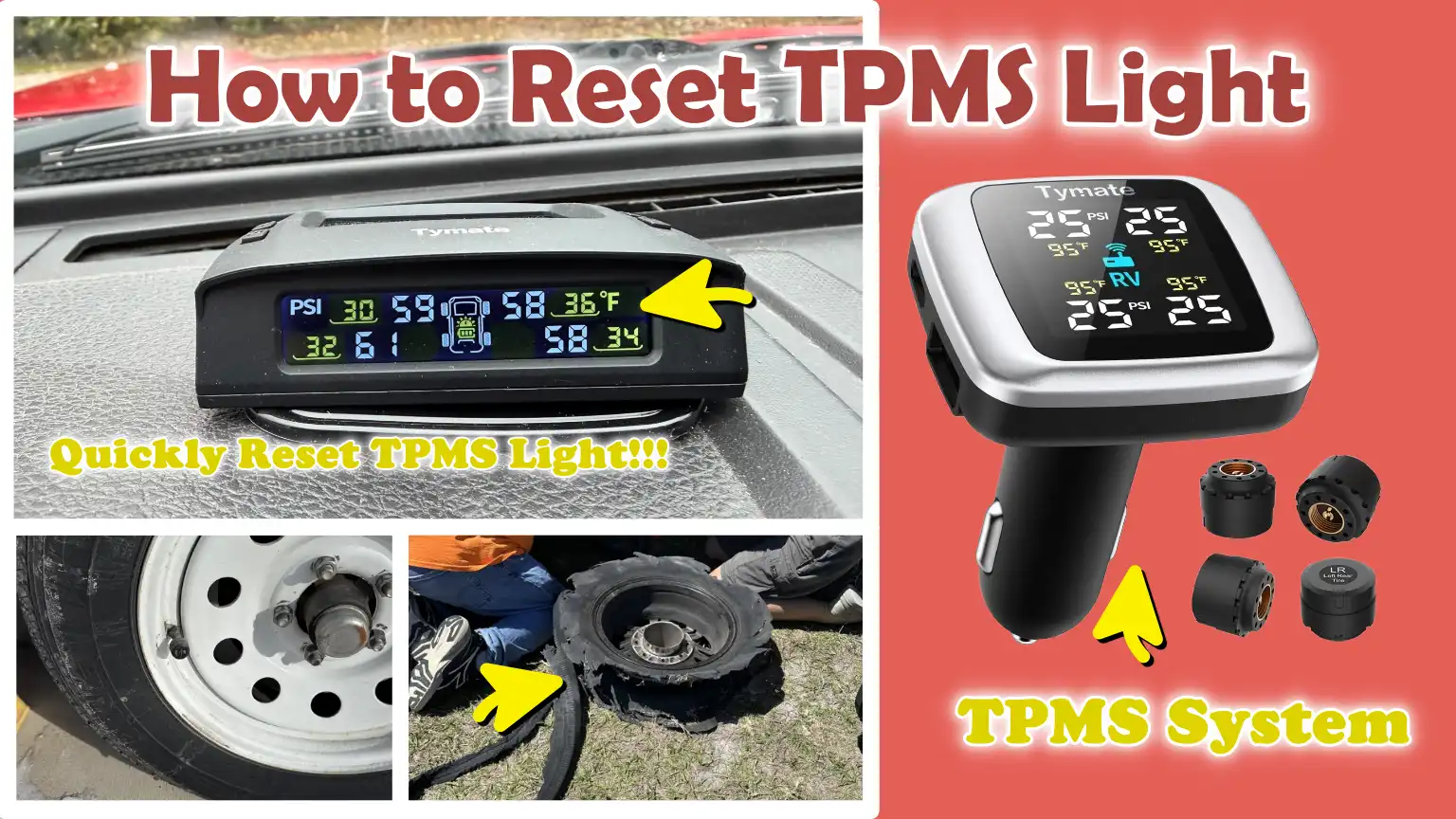
Now, in this guide you’ll learn How to Reset TPMS Light, so that you can quickly understand the motive behind the trigger and address it in proper way.
Now, At First We Should Understand About TPMS
1. What is TPMS?
TPMS stands for Tire Pressure Monitoring System.
It is an advanced safety feature found in modern vehicles that continuously monitors the air pressure in each tire and alerts the driver if the pressure drops below a predetermined level.
This system is designed to prevent accidents caused by under-inflated or over-inflated tires, while also helping to conserve fuel and extend tire lifespan.
By providing real-time information regarding tire conditions, TPMS ensures that drivers can take the necessary steps to address minor tire issues before they escalate into major safety hazards.
Definition and Function
TPMS is a combination of sensors, a receiver and a warning system that work together to monitor tire pressure.
These sensors, which are installed either inside the tire or within the wheel assembly, measure air pressure and, in some cases, temperature.
These readings are transmitted to a central receiver located inside the vehicle; if the pressure in any tire falls below the level specified by the manufacturer, the receiver activates a warning light on the dashboard.
The primary function of TPMS is to enhance safety, minimize tire wear, improve fuel efficiency and prevent tire blowouts by ensuring that correct tire pressure is maintained at all times.
Differences Between Direct TPMS and Indirect TPMS
Direct TPMS measures the actual air pressure by utilizing sensors installed inside each tire and transmits this data to the vehicle’s onboard computer.
It provides precise readings for each individual tire and can alert the driver immediately if an issue arises.
On the other hand, Indirect TPMS does not utilize pressure sensors.
Instead, it monitors data related to wheel speed and rotation via the vehicle’s Anti-lock Braking System (ABS).
When a tire spins faster than the others due to low pressure, the system detects this discrepancy and issues a warning.
Direct TPMS is more precise and is widely used in newer vehicles, whereas Indirect TPMS is simpler and more cost-effective, although it may not detect gradual air loss as quickly.
2. Why Does the TPMS Light Turn On?
The TPMS light can illuminate for several reasons and understanding these causes is crucial for effectively resolving the issue.
Low Tire Pressure
Low tire pressure is the most common reason for the TPMS light to turn on.
When a tire loses air, whether due to a slow leak, a puncture, or a gradual decline in pressure over time, the system detects that the pressure has dropped below the specified PSI level and alerts the driver.
Driving with underinflated tires can compromise handling, increase fuel consumption and lead to uneven tire wear rather than uniform wear.
Tire Rotation or Replacement
When tires are rotated or replaced, the system may detect changes in the tires’ positions or configuration, which can trigger the TPMS light.
In some vehicles, it is necessary to manually reset or recalibrate the system following tire maintenance so that it can accurately recognize the new tire positions or newly installed tires.
Faulty TPMS Sensors
TPMS sensors can fail for various reasons, such as aging, sustaining damage during tire installation, or exposure to harsh weather conditions.
A faulty sensor may transmit incorrect readings or fail to send any data at all, causing the warning light to illuminate even if the tire pressure remains within the normal range.
In such instances, the defective sensor requires either repair or replacement.
Extreme Temperature Fluctuations
Tire air pressure naturally fluctuates in response to changes in temperature.
In cold weather, tire pressure may drop, triggering the TPMS light, while in hot weather, the pressure may rise slightly.
These temperature fluctuations, driven by weather conditions, often explain why the TPMS light illuminates temporarily and then automatically turns off once the tire pressure returns to normal levels.
Sensor Battery Issues
Each direct TPMS sensor contains a small internal battery that powers the device.
Over time, typically after 5 to 10 years of use, these batteries may run out of power.
When a sensor’s battery fails, the system is unable to accurately read the tire pressure, causing the TPMS warning light on the dashboard to illuminate.
To restore the system to proper working order, it is necessary to replace either the sensor itself or its battery.
3. Risks of Ignoring the TPMS Light
Ignoring the TPMS warning light can lead to several risks that impact safety, vehicle performance and financial costs.
Reduced Fuel Efficiency
Low tire pressure increases rolling resistance, forcing the engine to work harder and consume more fuel.
Maintaining correct tire pressure with the help of the TPMS maximizes fuel efficiency and results in fuel cost savings over time.
Tire Wear and Damage
Driving on tires with incorrect pressure can cause them to wear unevenly or prematurely.
Underinflation increases friction on the tire’s sidewalls, while overinflation places excessive stress on the central tread area.
Ignoring the TPMS light can significantly reduce the lifespan of your tires and lead to the expensive cost of replacing them.
Increased Risk of Accidents
The most serious risk of ignoring a TPMS warning is the loss of vehicle control.
Underinflated or damaged tires can compromise vehicle handling, increase braking distances and heighten the risk of a tire blowout specially at high speeds.
Properly monitoring and acting upon TPMS alerts helps prevent accidents and ensures safe driving for both the vehicle’s occupants and other road users.
How to Prepare to Reset the TPMS Light
1. Check Tire Pressure
Before attempting to reset the TPMS light, it is essential to ensure that all tires have the correct pressure.
Checking tire pressure is the first and most critical step, as the system will not reset properly if the pressure is low or uneven.
To begin, use a reliable tire pressure gauge to obtain an accurate reading for each tire.
Compare the measured pressure against the PSI recommended by the manufacturer; this information is typically found in the vehicle’s owner’s manual or on a sticker located inside the driver-side door frame.
If any tire’s pressure falls below the recommended level, inflate it gradually until it reaches the correct PSI.
Maintaining proper pressure enhances driving safety, improves fuel efficiency and helps prevent uneven tire wear.
Furthermore, it enables the TPMS system to accurately detect the correct pressure levels and successfully reset the warning light.
2. Check for Any Tire Defects or Punctures
Even if the tire pressure appears normal, it is crucial to carefully inspect each tire for any defects, punctures, or signs of abnormal wear before attempting to reset the TPMS light.
Look for cracks, cuts, embedded nails, or bulges on the tire sidewalls and tread (the tire’s surface).
Minor punctures or slow leaks can cause the TPMS light to remain illuminated even after a reset; therefore, identifying and repairing these issues is absolutely essential.
Tires in poor condition not only trigger TPMS warnings but also compromise the vehicle’s handling stability, increase the risk of a blowout and reduce the overall lifespan of the tires.
By thoroughly inspecting the tires before performing a reset, you ensure that the system is operating with properly functioning tires, thereby enhancing both safety and performance.
3. Check the TPMS Sensor Battery and Condition
To successfully reset the TPMS light, it is essential that the TPMS sensors themselves are functioning correctly.
Each direct TPMS sensor contains a small internal battery that powers the unit and facilitates the transmission of tire pressure data to the vehicle’s onboard computer.
Over time, these batteries may lose their charge, a process that typically occurs after 5 to 10 years of use.
If a sensor’s battery is depleted or weak, the system cannot accurately detect tire pressure; consequently, the warning light may remain illuminated even if the tires are properly inflated.
Furthermore, sensors can sustain physical damage during tire repair or installation procedures.
Before attempting to reset the TPMS light, ensure that all sensors are functioning properly; if a sensor is defective or has ceased to function entirely, it must be replaced.
Verifying the proper condition of the sensors guarantees that the TPMS system will accurately monitor tire pressure and reset correctly following any repairs.
How to Reset TPMS Light – Easy & Beginner Friendly Method
1. Manual Reset via Vehicle Button
Many vehicles feature a dedicated button for resetting the TPMS, allowing drivers to manually turn off the warning light after correcting the tire pressure.
This button is typically located beneath the steering wheel, near the fuse box, or, depending on the vehicle model, inside the glove compartment.
To perform a manual reset, first ensure that the tires are inflated to the specific pressure (PSI) recommended by the manufacturer.
Turn the ignition to the “On” position without starting the engine; then, press and hold the TPMS reset button until the dashboard light begins to flash and eventually turns off.
This process typically takes a few moments; the light may remain illuminated for a short period while the system recalibrates itself to the correct tire pressure.
For many vehicles, particularly older models lacking infotainment-based reset capabilities, a manual reset serves as a simple and effective solution.
2. Reset via Vehicle Menu/Infotainment System
Modern vehicles often provide the capability to reset the TPMS through a central infotainment system or a digital dashboard menu.
Popular brands such as Honda, Toyota and Ford typically feature built-in options to recalibrate or reset the TPMS after tire pressure adjustments have been made.
To perform this reset, navigate to the vehicle’s settings menu, locate the section related to tires or vehicle maintenance and select the TPMS reset option.
Some systems may require you to press and hold an on-screen button for a few seconds or to confirm that all tires are at the correct pressure.
Resetting via the infotainment system is convenient, provides clear confirmation of the reset status and is often faster and more precise than using a physical button.
3. Drive Cycle Reset
A drive cycle reset causes the TPMS light to turn off automatically once the system detects that the tires have the correct pressure during normal driving.
This method is effective when the sensors need to recalibrate themselves after the tire pressure has been corrected.
To perform a drive cycle reset, drive the vehicle at a steady speed, typically between 30 and 60 miles per hour, for a certain distance, usually for about 10 to 20 minutes.
During this time, the TPMS system monitors the tire pressure readings; if all tires have the correct pressure, it automatically resets the warning light.
This method is simple and requires no tools, although it may take longer than manual or infotainment-based reset procedures.
4. Using an OBD2 or TPMS Reset Tool
When manual and infotainment-based resets do not work, professional tools such as: an OBD2 scanner or a dedicated TPMS reset device that can be utilized.
These tools are essential when the light remains illuminated due to a faulty sensor or a major system malfunction.
To use a TPMS reset tool, connect the device to the vehicle’s OBD2 port, select the TPMS reset or “sensor re-learn” function and follow the on-screen instructions to recalibrate each tire sensor.
These tools are frequently used by mechanics or experienced drivers and help save time when multiple sensors require repair or replacement.
Using professional tools ensures accurate readings and a successful reset, even in complex cases.
5. When to Replace Sensors
Sometimes, simply resetting the TPMS light is not sufficient, as the sensors themselves may be defective or may have reached the end of their service life.
Symptoms of a faulty sensor include a continuously flashing TPMS light, inaccurate or incomplete pressure readings, or sensors that are more than 5 to 10 years old.
To replace a sensor, it is necessary to remove the defective unit from the wheel, install the new sensor and complete a “re-learn” or reset procedure so that the system can recognize the new sensor.
The cost of replacing a sensor varies depending on the vehicle model and the type of sensor; however, replacing a faulty sensor is crucial for maintaining proper tire pressure monitoring and ensuring the overall safety of the vehicle.
Ensuring that all sensors are functioning correctly guarantees that the TPMS system can provide timely alerts to the driver regarding any future issues related to tire pressure.
Know & Solve The Common Issues That Comes With You Reset The TPMS Light
1. TPMS Light Remains On Even After Resetting
Occasionally, the TPMS light remains illuminated even after performing a manual, infotainment system, or drive-cycle reset.
This typically occurs when the underlying issue has not been fully resolved.
Common causes include: tires not being inflated to the manufacturer-recommended PSI, a minor leak that went undetected during inspection, or a faulty sensor unable to transmit accurate pressure readings.
To diagnose the problem, first re-check the tire pressure using a reliable gauge and ensure that all tires, including the spare tire, if applicable, are at the correct pressure.
If the light persists, inspect each sensor to determine if it is malfunctioning or if its battery has died.
In some instances, it may be necessary to perform a complete “re-learn” procedure using a TPMS reset tool to synchronize all sensors with the vehicle’s onboard system.
2. Intermittent TPMS Warnings
Intermittent TPMS warnings occur when the indicator light suddenly turns on and off while driving.
This may be caused by temperature fluctuations, particularly in cold weather, when tire pressure temporarily drops, or by a minor leak that causes pressure loss only under specific driving conditions.
Intermittent warnings may also indicate that one or more sensors are not consistently transmitting uniform readings.
To resolve this issue, regularly monitor your tire pressure, adjust it as needed and observe whether the light illuminates again.
If the warning persists, have the sensors inspected, as a faulty or improperly installed sensor could be the source of irregular signals, thereby compromising the system’s reliability.
3. TPMS Sensor Errors
TPMS sensor errors occur when a sensor fails to communicate correctly with the vehicle’s monitoring system.
Signs of such errors include: a flashing TPMS light, a failure to display pressure readings, or the appearance of messages indicating a sensor malfunction.
Sensor errors can be caused by a depleted battery, physical damage to the sensor during tire installation, corrosion, or an electronic fault.
To diagnose the issue, it is necessary to inspect each sensor and replace any that are defective.
After replacing a sensor, performing the TPMS ‘re-learn’ or reset procedure is mandatory to ensure that the vehicle correctly recognizes the new sensors.
Maintaining sensors in good working order is paramount, as even a single faulty sensor can compromise the accuracy of the entire tire monitoring system.
4. The Impact of Adverse Weather on TPMS
Adverse weather conditions can affect the operation of the TPMS, as air pressure naturally fluctuates in response to changes in temperature.
In cold weather, the air inside the tires contracts, causing the pressure to drop and triggering the warning light; conversely, in hot weather, tire pressure may increase slightly.
These fluctuations are normal and may cause the TPMS light to illuminate temporarily.
Drivers should periodically check their tire pressure during weather transitions and adjust it according to the manufacturer’s recommendations.
By understanding how weather affects tire pressure, vehicle owners can avoid unnecessary anxiety and ensure that the TPMS functions correctly, thereby maintaining tire safety and efficiency throughout the year.
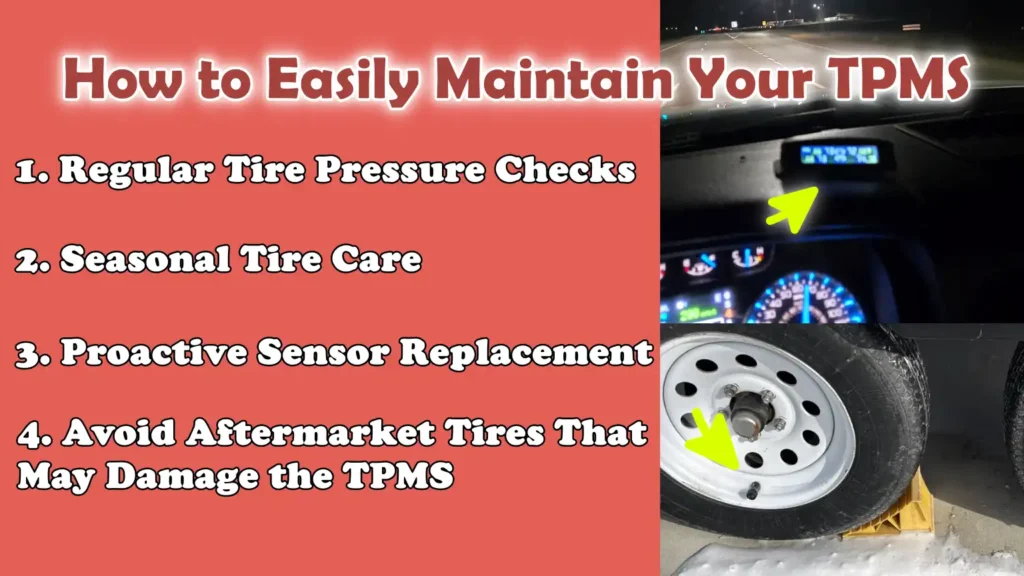
How to Easily Maintain Your TPMS
Plus, there’s comprehensive review of the tire pressure monitoring research, that shows that how TPMS actually plays a fundamental safety role as it continuously monitors the tire pressure and alerts the drivers to unsafe changes before they compromise the vehicle performance or safety as well, so the study literally shows that maintaining correct tire pressure through the TPMS can actually reduce the risk of accidents caused by the blowouts or loss of control, as well as it improves the fuel efficiency and tire longevity, that’s why TPMS has become a key safety requirement in modern vehicle now-a-days.[¹]
1. Regular Tire Pressure Checks
Maintaining the correct air pressure in your tires is the most crucial step in ensuring that your TPMS functions correctly.
Over time, tires naturally lose a small amount of air and even a slight drop in pressure can trigger the TPMS warning light.
It is advisable to check your tire pressure at least once a month, and definitely before embarking on a long journey.
Use a reliable tire pressure gauge and compare the reading against the PSI recommended by the manufacturer; this information can typically be found in your vehicle’s owner’s manual or on a sticker located on the door frame.
Regular checks help detect gradual air loss, prevent issues associated with under- or over-inflation and ensure that the TPMS provides an accurate warning when a genuine problem arises, ultimately enhancing safety, fuel efficiency and tire longevity.
2. Seasonal Tire Care
Tire pressure fluctuates with temperature, making seasonal tire care essential for maintaining the accuracy of your TPMS.
In cold weather, air pressure drops due to the contraction of air, which can cause the TPMS light to illuminate even if the tires were previously inflated to the correct pressure.
In hot weather, air expands, resulting in a slight increase in pressure.
During seasonal transitions, keep these temperature-induced changes in mind and adjust your tire pressure according to the manufacturer’s guidelines.
Additionally, inspect your tires for signs of wear, cracks, or any damage caused by extreme weather conditions.
Proper seasonal care ensures consistent TPMS performance throughout the year, thereby minimizing the risk of false warnings or tire damage.
3. Proactive Sensor Replacement
TPMS sensors have a limited lifespan, typically ranging from 5 to 10 years depending on usage and battery life.
Replacing aging sensors before they fail helps prevent sudden TPMS warnings and ensures that the system continues to function correctly.
Symptoms indicating the need for sensor replacement include intermittent warnings, flashing indicator lights, or discrepancies in pressure readings.
When replacing sensors, it is crucial to use manufacturer-approved or compatible parts and to follow the correct ‘re-learn’ or ‘reset’ procedure.
Proactive sensor maintenance reduces the need for frequent visits to a mechanic, ensures reliable tire monitoring and maintains the vehicle’s overall safety.
4. Avoid Aftermarket Tires That May Damage the TPMS
Not all aftermarket tires are fully compatible with TPMS sensors and calibration systems.
Using tires with dimensions, pressure ratings, or construction that deviate from the manufacturer’s specified specifications can compromise the accuracy of the TPMS.
This may result in false warnings, improper sensor calibration, or even physical damage to the sensors during tire installation.
When purchasing new tires, ensure that they meet the specifications recommended by the vehicle manufacturer and confirm with your tire installer that the TPMS sensors will function correctly after installation.
Choosing the right tires ensures accurate tire pressure monitoring, prevents system errors and safeguards both the sensors and the overall safety of your vehicle.
Read More:
- How to Fix Traction Control Light
- How to Reset ABS Warning Light
- How to Fix Central Locking Not Working
- How to Fix Power Windows Not Working
- How to Fix a Blown Fuse in a Car
- How to Fix Car Electrical Problems
How to Ensure Safety By Taking Necessary Precautions
1. Avoid Driving on Underinflated Tires
Driving on underinflated tires is extremely dangerous, as it can compromise vehicle stability, increase braking distances and place excessive stress on the tire structure, potentially leading to a tire blowout.
Even if the TPMS warning light is ignored or reset without correcting the air pressure, the tires remain unsafe.
Maintaining proper tire inflation pressure not only helps prevent accidents but also improves fuel efficiency and extends the lifespan of the tires.
Always check and adjust tire pressure before embarking on long journeys or driving at high speeds; furthermore, never treat the TPMS light as a trivial matter, always regard it as a critical safety warning.
2. Do Not Attempt to Remove Sensors Yourself Unless You Are Skilled
TPMS sensors are delicate electronic components installed inside the tire or wheel assembly.
Attempting to remove, repair, or replace these sensors without the proper knowledge and tools can result in sensor damage, inaccurate readings, or permanent system failure.
While a DIY attempt might initially save some time, it can ultimately lead to increased repair costs or render the vehicle unsafe to drive.
Undertake sensor-related tasks only if you possess the appropriate tools, comprehensive knowledge and experience; otherwise, it is safer to seek the assistance of trained specialists for such procedures.
3. Consult a Specialist If the TPMS Light Persists
If the TPMS warning light remains illuminated even after checking tire pressure, resetting the system and inspecting the sensors, it is imperative to consult a professional mechanic or an authorized service center.
Persistently illuminated warning lights may signal an underlying issue such as: a faulty sensor, wiring problems, or a system malfunction, that requires specialized diagnostic equipment to investigate.
Experts can accurately identify and resolve the problem, ensuring that the sensors and TPMS system are fully functional; this provides you with the peace of mind that your vehicle is safe to drive.
Ignoring continuously lit warning lights can lead to tire damage, diminished vehicle performance and an increased risk of accidents; therefore, consulting an expert remains the safest course of action.
Conclusion – How to Reset TPMS Light
Yes, it is true that every TPMS alert is not a headache at all, as it is literally the opportunity to prevent any possible accidents, improvement in fuel efficiency and extend the life of your tires if you address it in time.
The TPMS light is not merely a warning; it serves as a vital safety indicator that protects you from potential tire damage, blowouts, reduced fuel efficiency and even accidents.
By regularly checking tire pressure, inspecting for any tire damage, maintaining the sensors and following the correct reset procedures, you ensure that your vehicle’s tire monitoring system operates at peak performance at all times.
Promptly addressing the root cause of an illuminated TPMS light, and exercising caution during the reset process, not only saves you time and money but also enhances your confidence and safety on the road.
Now, that’s all about this guide about How to Reset TPMS Light, comment for more info.
Frequently Asked Questions
FAQ 1: What does the TPMS light on my dashboard mean?
The TPMS light on your dashboard serves as a warning from your car, indicating that one or more of your tires do not have the correct air pressure. This could mean that the tire pressure is low, a sensor is not functioning properly, or the air inside the tires has been affected by sudden changes in temperature. This system is designed to alert you before a major issue arises, helping you avoid tire failure, uneven tire wear, reduced fuel efficiency and potential accidents. When this light illuminates, it is crucial to inspect your tires and take the necessary steps rather than ignoring it.
FAQ 2: How do I reset the TPMS light?
Depending on your vehicle, the TPMS light can be reset in several ways. Many cars feature a manual TPMS reset button, which you press after inflating the tires to the correct pressure. In some newer vehicles, you can reset the light through the infotainment system or dashboard menu, where you can select the TPMS reset option after checking the tire pressure. If these methods do not work, the light sometimes resets automatically after driving at a steady speed for a certain period. In more complex cases, a professional TPMS reset tool or an OBD2 scanner may be required to recalibrate the sensors.
FAQ 3: Why does the TPMS light remain on even after resetting it?
If the TPMS light remains illuminated even after being reset, it generally indicates that the underlying issue has not been fully resolved. It is possible that the tire pressure is still incorrect, a sensor is not functioning properly, or one of the tires is slowly leaking air. Occasionally, a sensor’s battery may have died or become weak, preventing it from communicating properly with the vehicle’s system. It is crucial to re-check the pressure in all tires, inspect the tires for any signs of damage and ensure that the sensors are functioning correctly. If the light remains illuminated, it may be necessary to have the issue diagnosed and repaired by a professional mechanic.
FAQ 4: Can I drive with the TPMS light on?
While it is possible to drive with the TPMS light illuminated, it is not advisable, as it signals a potential safety concern. Driving on underinflated or damaged tires can compromise your vehicle’s handling, increase braking distances and heighten the risk of a tire blowout. It can also lead to uneven tire wear and increased fuel consumption. If the TPMS light comes on, it is best to immediately check your tire pressure and make any necessary adjustments before driving long distances or at high speeds.
FAQ 5: How often should I check my tire pressure to properly maintain the TPMS?
It is recommended that you check your tire pressure at least once a month, as well as before embarking on any long journeys. Over time, tires naturally lose air and fluctuations in temperature can also affect tire pressure. Regular checks ensure that your TPMS system is functioning correctly, help prevent issues associated with under- or overinflated tires and contribute to improved safety, fuel efficiency and tire longevity. Always use a reliable tire pressure gauge and compare the readings against the PSI specifications recommended by the vehicle manufacturer.
FAQ 6: What are the signs of a faulty TPMS sensor?
A faulty TPMS sensor may cause the warning light to flash, remain continuously illuminated, or display inaccurate tire pressure readings. Other indications include a failure to display pressure readings for one or more tires, or TPMS warnings that appear and disappear intermittently without any actual change in tire pressure. Sensor failure can be attributed to a depleted battery, external damage sustained during tire installation, or internal electronic malfunctions. To restore the system’s accuracy, it is essential to replace the defective sensor and properly reset the system.
FAQ 7: Can extreme weather conditions affect TPMS performance?
Yes, extreme weather conditions can affect tire pressure and trigger the TPMS warning light. In cold temperatures, the air inside the tires contracts, causing the pressure to drop and potentially activating the warning light. Conversely, in hot temperatures, tire pressure may increase slightly. These fluctuations are normal; adjusting your tire pressure according to weather conditions can help you avoid unnecessary TPMS warnings and ensure safe driving throughout the year.
FAQ 8: When should TPMS sensors be replaced?
TPMS sensors typically last between 5 and 10 years, depending on battery life and usage. They should be replaced if they fail to provide accurate readings, trigger persistent warning lights, or exhibit erratic behavior. Replacing sensors before they fail completely ensures that your TPMS system operates reliably, thereby helping to prevent tire damage and keeping your vehicle safe on the road.
References:
[1] Tire pressure monitoring methods for vehicles: Review and research perspectives
https://www.sciencedirect.com/science/article/abs/pii/S0263224125017385
Hello Folks, Dean Shali here to help you out to solve the problems with your lovely vehicle, as i have lots of experience and knowledge about automotive industry as i woks directly with the customers and repair vehicles and i love to help the people to keep their cars safe and running smoothly.