Written By: Dean Shali
Fact Checked By: Sabré Cook
Reviewed By: Tamara Warren
The dashboard lights have just one work: is to give you data and keep you safe with their assessment; so whenever these light turns on then you need to know there’s something weird or safety hazard is going on with your vehicle; specially if it is the Traction Control Light then clearly is about issue with ABS system.
Also, it’s been clear that modern vehicles literally relies heavily on the advanced safety systems and the Traction Control System (TCS) is one of the most important one as well.
Literally, it works closely with the Anti-Lock Braking System; which is famously known as ABS system and wheel speed sensors so that it can prevent your tires from slipping, that becomes specially helpful when you drive on wet, muddy or uneven roads.
So, when the traction control light turns on: then it has something to tell you about there’s something that is struggling to maintain proper grip and stability during drive.
And, in many cases, this light actually triggered by the common issues such as: having dirty or faulty wheel speed sensors, brake fluid levels are low now, having uneven tire pressure or if there’s minor electronic glitches as well.
However, there could be possibility of having more serious problems like: dealing with ABS failure or a totally damaged control module that triggered this light on.
Moreover, there’s automotive safety studies that shows that the loss of traction is actually one of the leading causes of skidding and loss-of-control accidents, that particularly in the poor road conditions: which actually makes this warning highly important to address in quick way.
But the good thing is that: you’ve got this beginner friendly guide about How to Fix Traction Control Light, so that you can learn to identify the exact cause of the warning by just understanding about the symptoms that your car is actually showing and apply simple but effective fixes to restore your safety without expensive repairs.
At First, Understand What is the Traction Control System (TCS)?
1. A Simple Explanation of Traction Control
The Traction Control System, or TCS, is a safety feature found in most modern cars.
It helps prevent the wheels from slipping while driving.
Slipping typically occurs when the road is wet, icy, or uneven, or when you accelerate too rapidly.
Traction control automatically adjusts engine power or applies the brakes to ensure that your wheels maintain proper contact with the road.
This system helps keep the car stable and prevents you from losing control of the vehicle while driving.
2. How It Works with ABS and Sensors
Traction control works in conjunction with the Anti-lock Braking System (commonly known as ABS) and a set of sensors located at each wheel.
These sensors constantly monitor the rotational speed of every wheel.
If one wheel begins to spin faster than the others (indicating that it is slipping), the traction control system will react.
It may reduce engine power, apply the brake to the slipping wheel, or perform both actions simultaneously.
By doing so, it ensures that the car continues to move safely in its intended direction.
This coordination between TCS, ABS and the wheel sensors ensures optimal traction (specially in slippery conditions) and helps the driver maintain control of the vehicle without sudden skidding.
3. Why It Is Important for Safety
Traction control is crucial for safety while driving, as losing traction on the road can lead to dangerous situations such as: skidding, spinning out, or even accidents.
Studies indicate that cars equipped with a properly functioning traction control system are less likely to lose control in wet or icy conditions, thereby significantly reducing the risk of collisions.
This is particularly crucial when executing sudden maneuvers, taking turns, or driving on slippery surfaces.
By preventing wheel slippage and helping to maintain proper control over the vehicle, the traction control system provides an additional layer of safety, protecting both the driver and the passengers.
Understanding how it works, and reacting promptly when the traction control light illuminates, as it can help prevent accidents and avoid costly repair expenses.
What Does the Traction Control Light Mean?
1. A Solid Light vs a Flashing Light
While driving, the traction control light on your dashboard may either remain continuously lit or flash.
A continuously lit light typically indicates a problem within the traction control system itself, or in a related component such as: a wheel sensor, the ABS module, or the braking system.
This signals that the system has detected a malfunction and may not be able to effectively manage wheel slippage.
Conversely, a flashing light often appears when the traction control system is actively engaged.
For instance, the light may flash when the wheels are slipping on wet, icy, or loose surfaces; this indicates that the system is working to keep your car stable.
Understanding the distinction between a solid light and a flashing light helps drivers determine whether they are facing a warning or simply observing the system’s normal operation.
2. When It Is Normal and When It Is a Problem
The traction control light is considered normal when it flashes briefly while driving on slippery roads or during rapid acceleration.
This indicates that the system is functioning exactly as intended, namely, preventing wheel spin and maintaining traction.
However, it becomes a problem when the light remains continuously lit on your dashboard for an extended period, or when it illuminates repeatedly even in the absence of slippery conditions.
A continuously lit warning light can signal a variety of issues, such as a faulty sensor, low brake fluid levels, uneven tire pressure, or a malfunction within the electrical system.
Ignoring a continuously lit traction control light can increase the risk of wheel slippage, loss of vehicle control, or an accident.
Therefore, it is crucial to identify the root cause of the problem and have it rectified as soon as possible.
3. Understanding the Dashboard Symbol
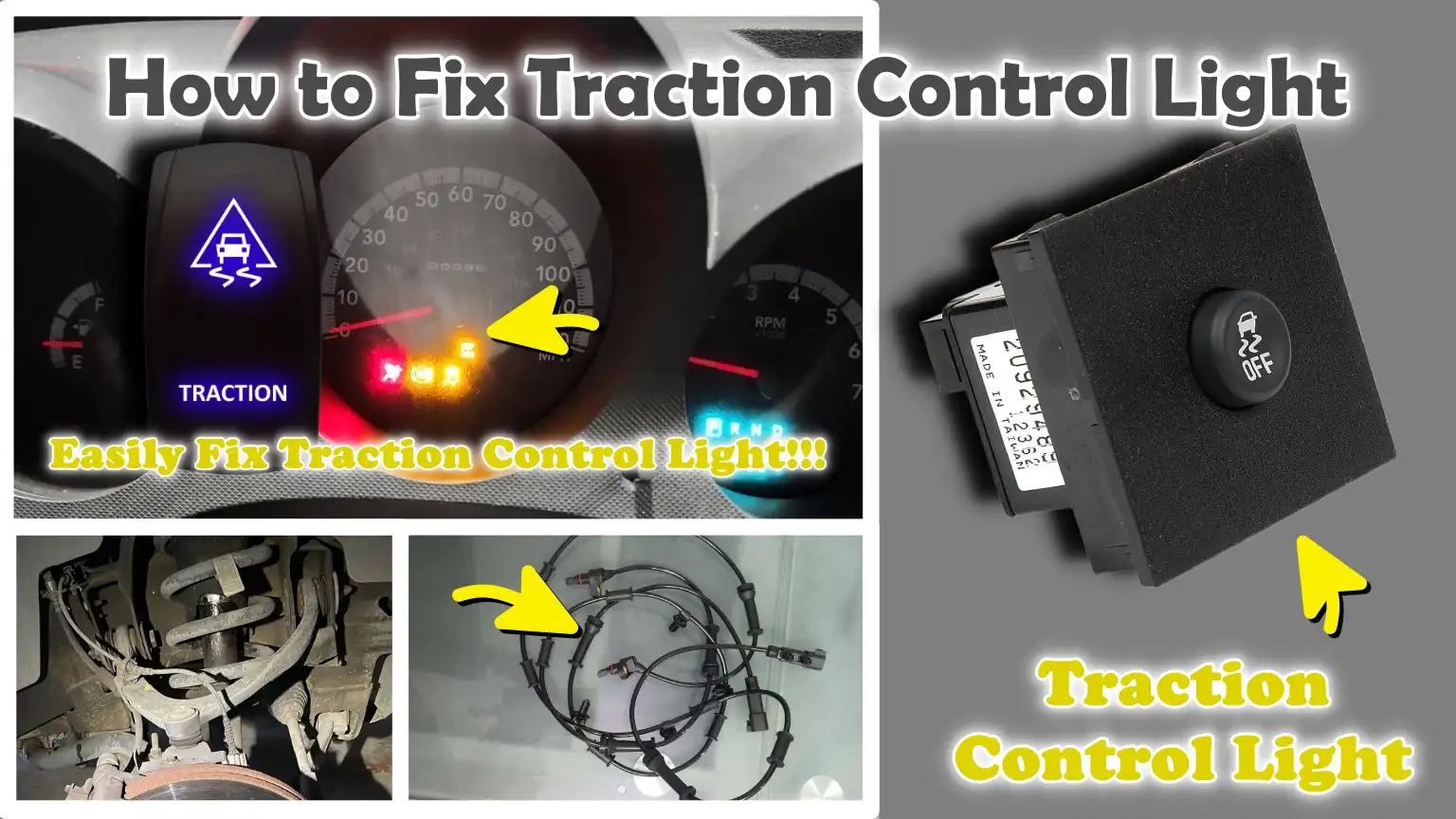
The traction control light is typically represented by a symbol depicting a car with wavy lines beneath it; these lines indicate that the vehicle’s wheels are slipping.
Depending on the vehicle manufacturer, this symbol may also be accompanied by the letters “TCS” or “ESP.”
When this symbol appears on your dashboard, it alerts you that the traction control system is either actively engaged or has detected a malfunction.
Understanding the significance of this symbol and taking appropriate action accordingly is essential for maintaining safe driving conditions.
Recognizing this light, interpreting its message and taking timely action can prevent further damage to the vehicle and mitigate safety risks on the road.
Know About The Common Causes for the Traction Control Light Illuminating
1. Faulty Wheel Speed Sensor
Wheel speed sensors are small devices mounted on each wheel that constantly monitor how fast the wheels are rotating.
The traction control system relies on these sensors to detect whether or not a wheel is slipping.
If a sensor becomes dirty, damaged, or stops functioning, it may send incorrect signals to the system.
This can cause the traction control light to illuminate, as the system is unable to accurately determine the wheel’s speed.
Faulty wheel speed sensors are one of the most common reasons for this warning light to turn on and can often be identified using an OBD-II scanner.
2. Faulty Steering Angle Sensor
The steering angle sensor measures the direction in which the driver is turning the steering wheel and transmits this information to the traction control and stability systems.
If this sensor malfunctions, the system cannot determine whether the vehicle is understeering or oversteering while cornering.
This may trigger the traction control light, warning the driver that the system responsible for maintaining vehicle stability may not be functioning correctly.
Issues related to the steering angle sensor are often caused by external damage, electrical faults, or improper wheel alignment following service.
3. Faulty ABS System
The Anti-lock Braking System, or ABS, works in conjunction with the traction control system to prevent wheel lock-up and maintain traction.
If a fault develops within the ABS such as: a worn pump, a broken sensor, or a defective control module, it can also impact the traction control system.
The traction control light may illuminate because the system relies on the ABS to properly regulate braking and power distribution in the event of wheel slippage.
Issues related to the ABS typically require inspection and repair by a qualified professional.
4. Low Brake Fluid Level
Brake fluid is essential for both optimal braking performance and the proper functioning of the traction control system.
The system monitors hydraulic pressure to determine the precise amount of braking force to apply to each wheel.
If the brake fluid level drops, the system cannot function correctly, causing the traction control light to illuminate.
A low fluid level is often caused by leaks in the brake lines, worn brake pads, or a lack of regular vehicle maintenance.
Checking and topping up the fluid level often resolves this issue; however, if the fluid level drops repeatedly, you should have the vehicle inspected by a qualified professional.
5. Worn Tires or Uneven Tire Pressure
Traction control relies on the tires maintaining a firm grip on the road surface.
Worn tires, or tires with uneven air pressure, can disrupt the way the wheels rotate, potentially confusing the system.
If the grip (tread depth) of one or more tires has significantly diminished, or if their air pressure is incorrect, the traction control light may turn on, signaling a compromise in vehicle stability.
Regular tire maintenance, including rotation, balancing and pressure checks, is crucial for preventing false warnings and ensuring vehicle safety.
6. Faulty Traction Control Module
The traction control module is a central computer that manages the entire system by processing data received from wheel speed sensors, steering angle sensors and the ABS.
If this module malfunctions due to an electronic fault, water damage, or internal defects, the entire system will cease to function correctly.
A faulty module can cause the traction control light to remain illuminated continuously, even if all other components of the system are functioning perfectly.
Diagnosing this specific issue typically requires specialized equipment and the assistance of a professional technician.
7. Wiring or Electrical Issues
The traction control system relies on precise communication between its sensors and control module.
Internal system issues such as: damaged wiring, loose connections, or corrosion, as it can disrupt this communication, causing the traction control light to turn on.
Electrical problems typically arise due to wear and tear, exposure to moisture, or involvement in an accident.
Inspecting the wiring harnesses and connectors for any signs of damage is a crucial step toward diagnosing the problem and restoring the system’s proper functionality.
How to Fix Traction Control Light – Beginner Friendly Clear Instrustions
1. Restart Your Car
Sometimes, the traction control light illuminates due to a minor glitch in the vehicle’s computer system.
Restarting your car can resolve minor electronic malfunctions and clear any false warnings.
Turn off the engine, wait a few seconds and then restart the car.
If the light turns off after restarting, it may have simply been a minor system error; however, if the light remains on, further investigation is required.
2. Check the Traction Control Button
Many vehicles feature a traction control button that allows drivers to manually disable the system; this is often utilized when driving in deep snow or mud.
Ensure that the system hasn’t been accidentally switched off.
If the button is depressed and the light is illuminated, press it again to reactivate the traction control system.
Checking this simple step can save you from unnecessary hassle.
3. Check the Wheel Speed Sensors
Wheel speed sensors are crucial for detecting wheel rotation and preventing slippage.
An accumulation of dust, dirt, or corrosion on these sensors can lead to inaccurate readings, causing the traction control light to turn on.
Inspect each wheel sensor and carefully clean them using a dry cloth or a recommended cleaning solution.
Ensure that they are securely connected and show no signs of external physical damage.
4. Check Tire Pressure
Fluctuations in tire pressure or low tire inflation can confuse the traction control system, as the wheels may begin to rotate at different speeds.
Using a reliable tire pressure gauge, ensure that all tires are inflated to the specific pressure (PSI) recommended by the vehicle manufacturer.
Restoring tire pressure to the correct level often allows the system to resume proper operation, thereby turning off the warning light.
5. Scan for Error Codes – OBD-II Scanner
By using an OBD-II scanner, you can read the diagnostic trouble codes stored in your car’s onboard computer.
These codes provide specific insights into why the traction control light is illuminated, whether due to a faulty sensor, an ABS issue, or an electronic malfunction.
This step is crucial for accurate diagnosis and eliminates the need for guesswork during the repair process.
6. Check Brake Fluid Level
The traction control system works in conjunction with the braking system; therefore, a low brake fluid level can adversely affect its performance.
Open the brake fluid reservoir and check the fluid level.
If it falls below the recommended mark, top it up with the appropriate type of brake fluid.
A low fluid level may indicate a leak somewhere in the system or worn-out brake pads; for safe driving, it is essential to investigate and resolve these issues immediately.
7. Inspect the ABS System
The traction control system relies on the ABS to regulate wheel braking.
Check the ABS system for any warning signs, such as the ABS light illuminating, unusual noises while braking, or fluid leaks.
Any issues related to the ABS must be addressed immediately, as they directly impact the functionality of the traction control system and the overall safety of the vehicle.
8. Reset the System
After resolving potential issues, it may be necessary to reset the traction control system.
In some vehicles, manually resetting the system simply requires turning the ignition off and then back on; however, in other vehicles, a diagnostic tool or OBD-II scanner may be required to clear the error codes.
Resetting the system ensures that it can properly monitor wheel movement and respond accurately to wheel slippage without issuing any false warnings.
When to Go for Car Mechanic
1. Warning Signs You Should Not Ignore
There are certain warning signs indicating that your traction control system may be experiencing a serious issue requiring professional assistance.
If the traction control light on your dashboard remains illuminated even after performing basic checks such as: restarting the vehicle, verifying tire pressure and inspecting sensors, it is a clear indication that the system is not functioning correctly.
Other warning signs include unusual noises emanating from the brakes, difficulty applying the brakes, wheel slippage despite proper tire pressure, or the simultaneous illumination of multiple warning lights.
Ignoring these signs can compromise your vehicle’s stability, increase the risk of skidding and potentially lead to accidents, particularly on slippery or wet surfaces.
2. Complex Issues Such as Module Failure
Some traction control issues are too complex to be resolved using simple DIY (Do-It-Yourself) methods.
The traction control module, the central computer responsible for managing the system, as it can fail due to electronic malfunctions, water damage, or internal component failure.
When this occurs, the system is unable to effectively respond to wheel slippage, even if all other sensors and components are functioning correctly.
Other complex issues include ABS system failure, damaged wiring harnesses, or the simultaneous failure of multiple sensors.
Diagnosing and safely repairing these issues requires specialized diagnostic equipment and professional expertise.
3. Cost Estimates
The cost of repairing traction control issues can vary significantly depending on the root cause of the problem.
Replacing a faulty wheel speed sensor or topping up the brake fluid are relatively inexpensive solutions, often costing less than a hundred dollars, including labor charges.
However, repairing or replacing an ABS system or traction control module can cost several hundred dollars, or even more.
Professional mechanics typically charge a diagnostic fee to accurately pinpoint the problem before commencing any repair work.
Understanding these potential costs helps drivers make informed decisions regarding timely repairs, thereby preventing minor issues from escalating into major, expensive problems.
Can You Drive with the Traction Control Light On?
1. Explanation of Safety Risks
Driving with the traction control light illuminated indicates that the system may not be functioning correctly.
The traction control system helps prevent wheel slippage, maintain vehicle stability and improve handling, particularly on wet, icy, or uneven roads.
Without it, the likelihood of your vehicle skidding or losing control increases when accelerating rapidly, taking sharp turns, or driving in slippery conditions.
Even minor changes in road traction such as: wet leaves, rain, or gravel, as it can make it difficult to maintain control of the vehicle.
This elevates the risk of accidents, specially in emergency situations where precise vehicle handling is critical.
Ignoring a continuously illuminated traction control warning light can also lead to further damage to related systems, such as the ABS and brake components.
2. When It Is Safe to Drive and When It Is Dangerous
If the road is dry, the weather is clear and you are driving at a moderate speed, it may be acceptable to drive for a short distance even with the traction control light on.
In such scenarios, the absence of system assistance poses no immediate threat to safety.
However, driving becomes dangerous when roads are slippery, due to heavy rain, snowfall, or icy conditions, or when you are performing sudden maneuvers or accelerating rapidly.
In these situations, the lack of traction control can result in excessive wheel spin, skidding and a loss of vehicle stability.
The safest course of action is to promptly diagnose and repair the issue and to avoid driving in hazardous conditions until the traction control system is fully operational again.
How to Reset the Traction Control Light?
1. Basic Reset Methods
In many vehicles, the traction control light can be reset using simple methods without the need for any specialized tools.
A common approach involves turning off the ignition and then restarting the vehicle after a few seconds.
This can resolve false warnings or temporary electronic glitches caused by minor system errors or malfunctions.
Another basic method is to drive the vehicle slowly over a short distance on a level surface; some systems automatically reset once they detect normal wheel rotation speeds and confirm that no faults are present.
If the warning light was triggered by a minor or intermittent issue, these simple methods often suffice to resolve the problem.
2. Disconnecting the Battery
Disconnecting the vehicle’s battery is another method for resetting the traction control system.
By disconnecting the battery for a few minutes, the vehicle’s onboard computer clears any “fault codes” stored in its memory, which may cause the warning light to turn off.
Once the battery is reconnected, the system reboots; if the underlying issue was minor or temporary, the light may remain off.
However, this method does not address the root cause of persistent problems and it is crucial to ensure that the battery is disconnected and reconnected safely to prevent any potential electrical damage.
3. Using Diagnostic Tools
The most reliable method for resetting the traction control light is to use a professional diagnostic tool or an OBD-II scanner.
These devices can read specific ‘error codes’ stored in the vehicle’s computer, pinpoint the root cause of a warning and, once the underlying issue has been resolved, safely clear those codes.
This process ensures that the system has been properly reset, thereby minimizing the risk of future malfunctions or communication errors between sensors and control modules.
By utilizing diagnostic tools, mechanics or knowledgeable drivers can monitor recurring system issues, thereby guaranteeing the vehicle’s long-term safety and proper operation.
Estimated Cost of Repairing the Traction Control Light
1. Sensor Replacement Costs
The most common cause for the traction control light illuminating is a faulty wheel speed sensor or steering angle sensor.
Replacing these sensors is generally the most affordable repair task and the cost varies depending on the vehicle’s make and model.
On average, the cost of a wheel speed sensor part can range from $50 to $150, while a steering angle sensor may cost slightly more.
If more than one sensor requires replacement, the cost increases accordingly.
Timely replacement of sensors can prevent further damage to the traction control system and ensure the vehicle’s safety.
2. ABS Repair Costs
The traction control system works in conjunction with the ABS to prevent wheel lock-up and maintain vehicle stability.
If a fault develops within the ABS system or if it malfunctions, the traction control light may turn on.
Repairing or replacing ABS components can be significantly more expensive than replacing sensors.
The cost depends on the specific issue such as: a faulty ABS pump, module, or control unit, and the total expense for parts and labor (mechanic’s fees) can range from $300 to over $1,000.
Complex ABS repairs often require specialized diagnostic tools and expertise to ensure that the system functions correctly following the repair.
3. Labor Charges – Mechanic’s Fees
Labor charges vary based on the complexity of the repair and the repair shop’s hourly rates.
A simple sensor replacement may take one to two hours, whereas repairing an ABS module or replacing a traction control module could take several hours.
On average, labor costs can range from $75 to $150 per hour.
It is essential to choose a professional and experienced mechanic to ensure that the repairs are performed correctly; this helps prevent recurring issues and guarantees that the traction control system is fully functional and the vehicle is safe to drive.
How to Maintain & Prevent Traction Control Light
Plus, there’s a landmark safety evaluation by the NHTSA that found out that stability control technologies are closely related to the traction control contributed to the dramatic reduction in the single-vehicle crashes and fatal loss-of-control incidents as well, that shows the real-world lifesaving potential of these systems.[¹]
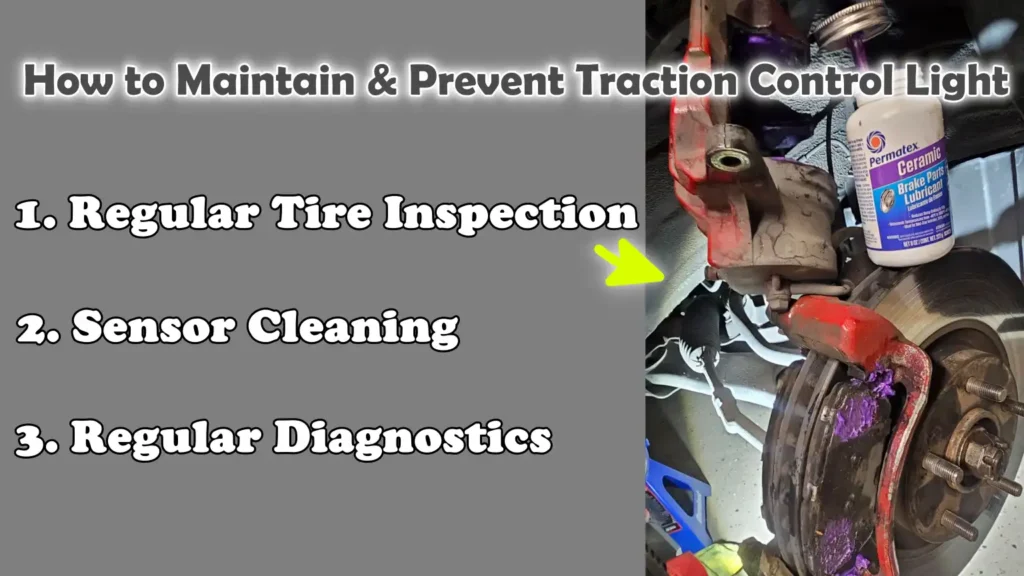
1. Regular Tire Inspection
Tires are a critical component of the traction control system, as the system relies on proper tire grip to function effectively.
Regularly inspecting your tires for tread depth, wear patterns and any signs of damage can prevent issues related to uneven wheel rotation, a condition that may trigger the traction control warning light.
Maintaining the correct tire pressure, as specified by the manufacturer, is equally important; under-inflated or over-inflated tires can confuse the system and compromise vehicle stability.
Periodically rotating the tires and replacing them when worn ensures consistent grip across all wheels, helping the system operate efficiently under various driving conditions.
2. Sensor Cleaning
Wheel speed sensors, steering angle sensors and ABS sensors are essential for the proper functioning of the traction control system.
The accumulation of dust, dirt, or corrosion on these sensors can lead to inaccurate readings, potentially triggering false warning lights.
Regularly inspecting and cleaning these sensors, using a recommended cleaning solution or a dry cloth, helps prevent such issues.
Ensuring that the sensors are securely connected and free from external damage also enhances system reliability and reduces the likelihood of receiving sudden traction control warnings while driving.
3. Regular Diagnostics
Performing regular diagnostic checks on your vehicle allows you to identify potential issues before they escalate into serious problems.
By using an OBD-II scanner to check for stored error codes, you can monitor the health of the traction control system, the ABS and other related components.
Many professional mechanics include these checks as a standard part of routine vehicle maintenance.
Regular inspections facilitate the early detection of sensor malfunctions, module issues, or electrical problems, thereby enabling timely repairs.
This helps maintain safety, prevents costly repairs and ensures that the traction control system continues to function efficiently.
Read More:
- How to Reset ABS Warning Light
- How to Fix Central Locking Not Working
- How to Fix Power Windows Not Working
- How to Fix a Blown Fuse in a Car
- How to Fix Car Electrical Problems
Conclusion – How to Fix Traction Control Light
Whenever there’s flicker of the traction control light then it is the direct message from your car’s safety system, that is reminding you to act it before it becomes a bigger and dangerous problem.
This warning light is not merely a minor indicator; it can signal issues ranging from minor glitches such as: dirt accumulation or a faulty wheel speed sensor, to major problems like ABS failure or a malfunction within the traction control module.
By recognizing the significance of this light, identifying its common causes and adopting clear, step-by-step remedial measures, drivers can prevent accidents, maintain vehicle control on slippery or uneven terrain and avoid costly repairs.
Regular maintenance, including tire inspections, sensor cleaning and routine diagnostics, ensures that the traction control system operates effectively and reliably.
Now, that’s it from this guide about How to Fix Traction Control Light, if there’s still confusion left in mind: comment box is open for you.
Frequently Asked Quesitons
FAQ 1: Why is my traction control light on?
The traction control light illuminates when the system detects a problem or when it is actively working to prevent the wheels from slipping. The cause could be a faulty wheel speed sensor, low brake fluid levels, uneven tire pressure, a malfunction in the ABS system, or electrical issues. Occasionally, it may flash briefly while driving on slippery surfaces, which is normal behavior. However, if the light remains continuously illuminated, it serves as a warning that the system is not functioning correctly and should be inspected to ensure safe driving.
FAQ 2: Can I drive with the traction control light on?
If the road is dry and you are driving at moderate speeds, you can drive for a short distance with the traction control light illuminated; however, doing so is not advisable in slippery or hazardous conditions. This system helps prevent the vehicle from skidding or losing traction particularly on wet, icy, or uneven roads. Driving with the light on in these conditions increases the risk of accidents. For your safety, it is best to have the system inspected and repaired as soon as possible.
FAQ 3: How do I reset the traction control light?
There are several ways to reset the traction control light. Simple methods include turning the vehicle off and then restarting it, or driving slowly on a level surface. Disconnecting the battery for a few minutes can also clear temporary warning signals. The most reliable method, once the underlying issue has been resolved is to use an OBD-II scanner or a professional diagnostic tool to read and clear any error codes. Resetting the system ensures that it is functioning correctly without displaying any false warnings.
FAQ 4: What are the common reasons for the traction control light to turn on?
fThe traction control light can illuminate due to a variety of issues. The most common causes include a faulty wheel speed sensor, a defective steering angle sensor, malfunctions in ABS components, low brake fluid levels, worn or uneven tires, a faulty traction control module, or wiring and electrical issues. To properly resolve the problem, it is crucial to identify the exact underlying cause, either by using an OBD-II scanner or through a professional inspection.
FAQ 5: How much does it cost to fix the traction control light?
The cost of repairing the traction control light depends on the root cause of the problem. Replacing a wheel speed sensor is relatively inexpensive, typically costing between $50 and $150. ABS repairs or module replacements tend to be more expensive, ranging from $300 to over $1,000, depending on the specific components involved and the amount of labor required. Labor charges may vary based on the complexity of the repair and the shop’s hourly rates. Taking prompt action can prevent minor issues from escalating into major, costly repairs.
FAQ 6: What maintenance can prevent traction control problems?
Regular preventive maintenance can ensure that the traction control system functions correctly. Regularly check your tire pressure and tread depth, rotate your tires and replace them when they become worn. Clean the wheel speed sensors and inspect the steering angle and ABS sensors to remove any dirt or corrosion. Performing regular diagnostics using an OBD-II scanner can help detect issues early on. Maintaining the brake fluid at the recommended level is also essential for the system to operate properly.
FAQ 7: Does the condition of the tires affect the traction control system?
Yes, tires are one of the most critical factors for traction control. Worn-out tires or uneven tire pressure can cause the system to misinterpret wheel speed, potentially triggering the warning light. Proper tire maintenance ensures consistent grip and helps the traction control system function effectively, particularly in wet or slippery conditions. To avoid false warnings, it is essential to perform regular inspections, maintain correct tire pressure and replace tires when necessary.
FAQ 8: How long can I ignore the traction control light?
Ignoring the traction control light for an extended period is unsafe. Even if the vehicle remains drivable, the system may partially or completely shut down, thereby increasing the risk of skidding and losing control. Ignoring it can also lead to further damage to the ABS or traction control module, resulting in higher repair costs. It is best to have the system inspected and repaired as soon as the light illuminates.
FAQ 9: Can a low battery trigger the traction control light?
Yes, a weak or failing battery can sometimes trigger the traction control light. The system requires a consistent power supply to operate; when voltage is low, sensors and control modules may fail to function correctly. If this light illuminates alongside other electrical warning indicators, it is advisable to check the battery to ensure it is fully charged, or to replace it if necessary.
References:
[1] Statistical Analysis of the Effectiveness of Electronic Stability Control (ESC) Systems – Final Report
https://crashstats.nhtsa.dot.gov/Api/Public/ViewPublication/810794
Hello Folks, Dean Shali here to help you out to solve the problems with your lovely vehicle, as i have lots of experience and knowledge about automotive industry as i woks directly with the customers and repair vehicles and i love to help the people to keep their cars safe and running smoothly.