Written By: Dean Shali
Fact Checked By: Sabré Cook
Reviewed By: Tamara Warren
Did you know that having a “WEAK CAR BATTERY” is literally a leading cause of having winter breakdowns, that leads thousands stranded every year, that’s why you need to prepare early to prevent this comfortably.
Without a doubt, winter driving is one of the most challenging experiences for car owners in the United States, as drivers have to face preventable car breakdowns, icy accidents and costly repairs, why? simply because their vehicles weren’t prepared for freezing temperatures, snow or road salt.
Yes, cold weather also affects your car in multiple ways such as: having batteries lose up to 50% of their cranking power in subzero conditions, tire traction can also be decreases as pressure drops, engine oil literally thickens and windshield wipers starts to struggle to clear front and ice from windshield.
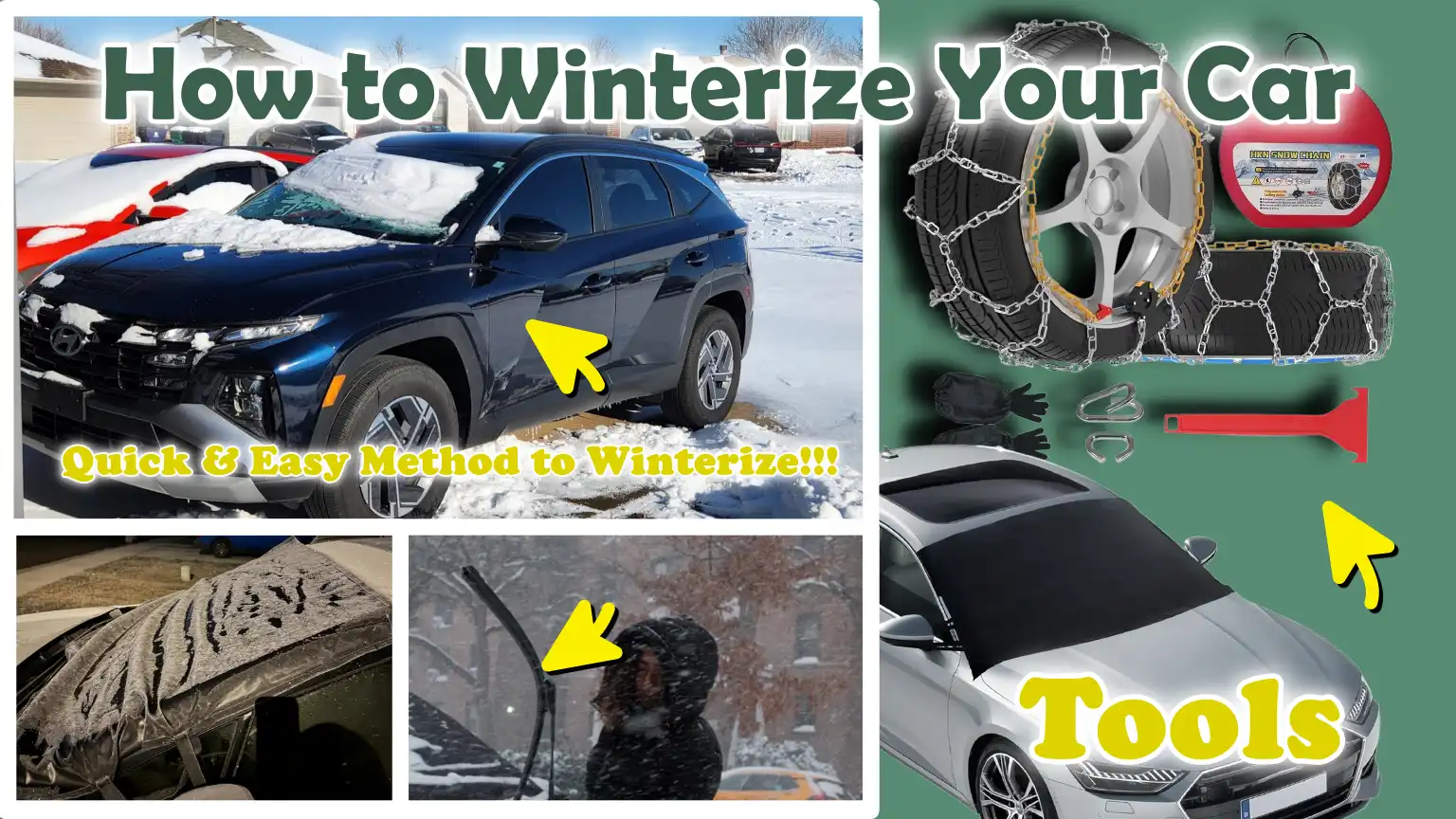
But, in this guide you’ll learn How to Winterize Your Car, so that you can dramatically improve the vehicle safety, reliability and vehicle longevity with easy methods.
Understand, When Should You Prepare Your Car for Winter?
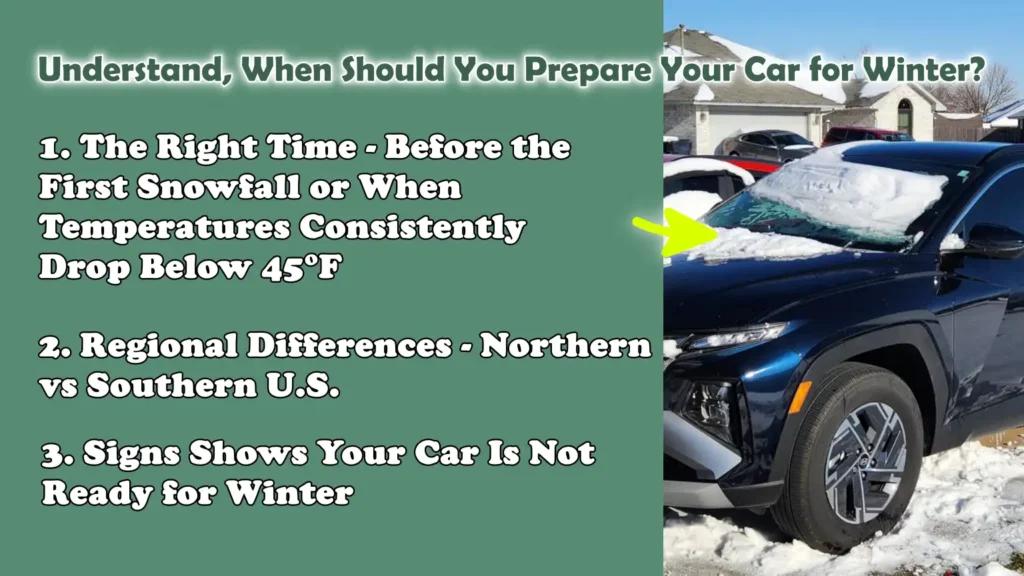
1. The Right Time – Before the First Snowfall or When Temperatures Consistently Drop Below 45°F
The best time to start preparing your car for winter is when the first snowfall is anticipated or when temperatures consistently drop below 45 degrees Fahrenheit.
Cold weather affects many parts of your vehicle, from battery performance to tire traction and engine fluids.
As temperatures drop, battery capacity diminishes, reducing the power available to start the car.
In cold weather, engine oil thickens, making it more difficult for the engine to run smoothly.
Even windshield washer fluid can freeze, potentially impairing visibility.
Preparing your car in advance ensures that all these systems continue to function properly and prevents minor issues from escalating into major, costly repairs later on.
Preparing for winter ahead of schedule also gives you the opportunity to inspect your tires, replace worn-out parts and apply protective treatments to the car’s exterior before the worst of the weather arrives.
2. Regional Differences – Northern vs Southern U.S.
The type of winter preparation required for your car depends largely on where you live within the United States.
In the northern states, heavy snowfall, icy conditions and prolonged sub-zero temperatures make it absolutely essential to thoroughly prepare your car for winter.
Drivers in these regions often require winter tires, antifreeze with a lower freezing point and additional underbody protection to guard against corrosion caused by road salt.
Southern states, though generally warmer, as it can still occasionally experience freezing temperatures at night, creating conditions where ice may form on the roads.
In these regions, checking the battery, maintaining proper fluid levels and ensuring proper tire maintenance are absolutely essential.
Understanding local weather patterns helps you focus on the most critical steps for winter preparation, allowing you to avoid unnecessary tasks while ensuring that your car remains safe and reliable.
3. Signs Shows Your Car Is Not Ready for Winter
Several warning signs indicate that your car is not prepared for winter weather.
Difficulty starting the engine on cold mornings, dim headlights, sluggish windshield wipers and a malfunctioning heater, all these signs suggest that your vehicle requires attention.
Low tire pressure, worn-out tires, or faulty brakes can make driving on icy roads extremely dangerous.
Rusting on the undercarriage or fading paint are indications that salt and moisture are already causing damage to your vehicle.
If you observe any of these signs, it is a clear signal that you must take immediate steps to prepare for the winter season.
Addressing these issues before the coldest months arrive enhances safety, prevents breakdowns and extends the overall lifespan of your vehicle.
Important Car Maintenance Checklist for Winter – Brief Overview
1. Check the Battery
During winter, your car’s battery is one of the components most affected by the cold, as freezing temperatures diminish both its overall efficiency and its starting power.
A weak or aging battery can make starting the engine in bitter cold extremely difficult, potentially leaving you stranded on the road.
Checking the battery with a voltmeter, or having it tested at a professional workshop, ensures that it retains sufficient power to handle “cold starts.”
Batteries typically last between three and five years; if your battery is nearing this age, or if it exhibits symptoms such as slow cranking, corrosion on the terminals, or dimming headlights, it is prudent to replace it before the onset of winter.
2. Check the Tires
Tires are critical for maintaining traction and safety on icy or snow-covered roads.
Tire pressure drops in cold weather, which can negatively impact the car’s handling and braking performance.
Regularly checking your tire pressure and inflating them to the recommended levels ensures optimal contact between the tires and the road surface.
It is also essential to check the tire tread depth, as worn-out tires pose a significantly higher risk of slipping on slick surfaces.
Tires specifically designed for winter, featuring specialized rubber compounds and tread patterns, offer superior traction and control in sub-zero temperatures compared to standard “all-season” tires.
3. Top Up Fluids
Fluids are the lifeblood of your car and the winter season can have a significant impact on them.
In cold temperatures, engine oil thickens, reducing its lubricating properties and placing increased strain on the engine; therefore, using the correct grade of oil for winter is crucial.
Coolant (or antifreeze) prevents the engine from freezing, while windshield washer fluid containing antifreeze properties ensures that your windshield remains clear and clean, even in icy weather.
You should also check the levels of your brake fluid and transmission fluid, as low levels can negatively impact braking performance and gear-shifting capabilities, factors that are essential for safe driving during the winter season.
4. Replace Wiper Blades
Clear visibility is paramount for safe driving in winter.
In cold weather, wiper blades can stiffen or wear out, rendering them less effective at clearing snow, frost, or slush from your windshield.
Installing wiper blades specifically designed for winter ensures that they remain flexible and effective, even in sub-zero temperatures.
Furthermore, inspecting your wiper system and ensuring that the washer fluid lines are not frozen helps maintain clear visibility, a factor that is particularly critical during snowstorms or heavy winter rains.
5. Check the Heater/Defroster
A fully functional heating and defrosting system is essential for both comfort and safety during the winter months.
Cold weather places significant strain on your car’s heater and if there is a malfunction in the system, condensation can form on the windows, thereby reducing visibility.
Checking both the heater and the front and rear defrosters ensures that they are functioning correctly, thereby keeping the cabin warm and the windows clear.
This step allows you to detect any leaks or malfunctions in a timely manner, helping you avoid the discomfort associated with freezing temperatures and preventing unsafe driving conditions.
6. Protect the Exterior
The winter season brings with it snow, frost and road salt, elements that can cause significant damage to your car’s paintwork and underbody.
Regularly washing your car removes accumulated salt, while applying wax or a paint sealant creates a protective barrier that guards against rust and corrosion.
Cleaning the underbody helps prevent rust formation and applying a protective coating to exposed components can significantly extend the lifespan of your vehicle.
Maintaining the exterior not only preserves the car’s aesthetic appeal but also helps you avoid costly repairs resulting from winter-related damage.
How to Check and Prepare Your Car Battery
1. Why Cold Weather Affects Batteries
Car batteries are particularly sensitive to cold weather because low temperatures slow down the chemical reactions responsible for generating electricity.
When temperatures drop below freezing, a battery can lose up to 50% of its cranking power (the power required to start the engine), making it difficult to get the engine running.
Even a fully charged battery struggles to deliver the same amount of energy it would in warmer weather.
Cold temperatures also thicken the engine oil, increasing internal engine resistance and requiring more power to turn over the motor.
This combination of reduced battery capacity and increased engine demand is the primary reason why most car batteries fail on bitterly cold winter mornings.
Understanding this helps drivers realize just how crucial it is to perform proactive battery maintenance to avoid getting stranded in the cold.
2. How to Check Your Battery
Checking your car battery is an essential part of winter preparation and can help prevent sudden breakdowns.
The first step is to check the voltage; with the car turned off, a fully charged battery should register approximately 12.6 volts.
If the voltage is significantly lower than this, it indicates that the battery likely lacks sufficient charge to reliably start your engine in cold weather.
For a more thorough assessment, a “load test” can be performed, either using a professional battery tester or at a service center.
This test simulates real-world conditions to determine whether the battery can meet the power demands required to start the engine in freezing temperatures.
Regular checks ensure that your battery is prepared for cold temperatures and save you the hassle of needing a last-minute jump-start.
3. When to Replace Your Battery
Batteries typically last between three and five years and their age plays a crucial role in how they perform during the winter season.
Even if a battery appears to be functioning normally, older batteries are more prone to sudden failure in cold weather.
Some signs indicating the need for a battery replacement include: slow engine cranking, dimming headlights, corrosion on the terminals, or a frequent need for jump-starts.
If you observe any of these symptoms, it is prudent to replace the battery before the onset of winter.
A new and properly maintained battery guarantees reliable starting, minimizes the risk of getting stranded and ensures that your vehicle continues to run without interruption when temperatures drop.
How to Switch to Winter Tires or Check Tire Condition
1. Winter Tires vs All-Season Tires
Winter tires are specifically designed to perform well in cold temperatures, snow and ice, making them an essential part of preparing your car for the winter season.
Unlike all-season tires, winter tires utilize a softer rubber compound that remains flexible even in temperatures below 45 degrees Fahrenheit.
This flexibility helps the tires maintain superior grip on snowy or icy roads, thereby reducing the likelihood of skidding or losing control.
Furthermore, winter tires feature deeper tread patterns and specialized sipes that channel away snow and slush from the tire’s surface, thereby enhancing traction.
All-season tires, which are suitable for milder weather conditions, often stiffen in cold temperatures and provide significantly less grip, resulting in increased stopping distances and a heightened risk of accidents.
Switching to winter tires before temperatures drop consistently ensures safer driving during the most challenging months of winter.
2. Check Tire Pressure Regularly
Cold weather causes a drop in tire air pressure; typically, pressure decreases by approximately one pound per square inch for every 10-degree Fahrenheit drop in temperature.
Low tire pressure reduces the contact area between the tire and the road, which can negatively impact handling, increase braking distances and lead to uneven tread wear.
Checking your tire pressure at least once a month, and inflating the tires to the manufacturer’s recommended levels, helps maintain stability, improves fuel efficiency and prevents premature tire wear.
Properly inflated tires are particularly crucial on snowy or icy roads, where every bit of traction counts toward safe driving.
3. Check Tread Depth
During the winter season, tire tread depth is one of the most critical safety factors, as it directly impacts traction and the tire’s ability to displace water or slush.
An easy way to check tread depth is the “Penny Test.”
Insert a penny (coin) into a tread groove with Lincoln’s head facing downward.
If the top of Lincoln’s head remains visible, the tread depth is less than 2/32 of an inch, which is considered unsafe.
For winter driving, a minimum tread depth of 4/32 of an inch is recommended to maintain control on snow or ice.
Worn tires with shallow tread are at a higher risk of slipping and hydroplaning; therefore, inspecting your tires, and replacing them if necessary, is absolutely essential for safe travel during the winter season.
How to Check Essential Fluids and Top Them Up
1. Antifreeze – Coolant
Antifreeze, also known as coolant, is one of the most critical fluids that must be checked before the onset of winter.
It prevents the engine from freezing in extreme cold and also protects it from overheating while running.
For most vehicles, a proper 50/50 mixture of antifreeze and water provides protection down to approximately -34 degrees Fahrenheit, while also raising the fluid’s boiling point to prevent overheating.
If the coolant level is low or the mixture is incorrect, dropping temperatures can lead to cracks in the engine block, damaged hoses, or radiator failure.
Checking and topping up the coolant level ensures that the engine operates safely and helps avoid costly repairs caused by frozen or overheated components.
2. Engine Oil
Engine oil is another essential fluid that is affected by cold weather.
As temperatures drop, the oil thickens and does not flow easily, which increases friction and strain when starting the engine.
Using an oil specifically formulated for winter such as: 5W-30 or an oil with the viscosity recommended by the vehicle manufacturer, ensures that the oil remains fluid enough to properly lubricate the engine components.
Regularly checking the oil level and replacing old or dirty oil improves engine performance, reduces wear and tear and provides protection against cold-related damage, which is a common occurrence during the winter months.
3. Windshield Washer Fluid
Clear visibility is essential for safe driving during winter; therefore, maintaining your windshield washer fluid is a top priority.
Standard washer fluids can freeze at low temperatures, rendering you unable to clear away snow, hail, or road grime.
Using an antifreeze fluid specifically formulated for winter conditions keeps your windshield clear and aids visibility during snowstorms, hailstorms and freezing rain.
Regularly checking and refilling the washer fluid level ensures that the wiper system functions correctly, thereby helping to prevent accidents caused by poor visibility.
4. Brake Fluid and Transmission Fluid
Brake fluid and transmission fluid are critical for vehicle control and safety, particularly during the winter season.
Low brake fluid levels can compromise braking efficiency, potentially requiring a greater distance to bring the vehicle to a stop on icy or wet roads.
Transmission fluid lubricates the moving components within the transmission, facilitating smooth gear shifts and providing protection against cold-related damage.
Maintaining proper levels of both these fluids ensures reliable braking and smooth vehicle operation; consequently, this reduces the risk of accidents and costly mechanical failures while driving in winter conditions.
How to Check Your Brakes for Safe Winter Driving
1. The Importance of Braking Performance on Icy Roads
Brakes are one of the most critical systems for safe driving and their performance becomes even more vital during the winter season.
Icy, snow-covered, or wet roads can significantly reduce traction (grip on the road), thereby increasing stopping distances and heightening the risk of skidding.
Properly functioning brakes help you maintain control over your vehicle in slippery conditions and avoid accidents.
Winter driving places additional strain on brake components, as low temperatures can cause brake pads and rotors to become less responsive.
Ensuring that your brakes are in optimal condition before the season begins is essential for stopping safely, avoiding collisions and keeping both the driver and passengers secure.
2. Signs of Worn Brake Pads or Rotors
Recognizing the signs of brake wear can help you avoid hazardous situations during the winter.
Grinding, squealing, or scraping noises when applying the brakes indicate that the brake pads are worn out and may no longer be generating sufficient friction.
Vibrations in the brake pedal or steering wheel while braking may signal that the rotors have warped, which compromises braking efficiency.
Increased stopping distances or a brake pedal that feels soft or spongy are also warning signs pointing to a malfunction within the braking system.
Checking your brake pads, rotors and brake fluid levels before the onset of winter ensures that your brakes respond promptly and consistently on icy roads, providing you with greater confidence and safety while driving in challenging conditions.
How to Replace Wiper Blades and Check Defrosters
1. Install Winter Wiper Blades
Wiper blades are essential for maintaining clear visibility during snow, hail and freezing rain.
Standard wiper blades can become stiff and brittle in cold temperatures, leading to streaking on the windshield or an inability to clean it effectively.
Winter wiper blades are specifically designed with sturdy frames and softer rubber compounds that remain flexible even in freezing conditions.
They conform better to the windshield’s surface and remove snow and ice more effectively than standard blades.
Installing winter wiper blades before temperatures drop ensures that your windshield remains clear, thereby reducing the risk of accidents caused by poor visibility.
These blades also tend to last longer in harsh weather, as they are engineered to resist the cracks and wear typically caused by exposure to ice and road salt.
2. Check Front and Rear Defrosters
Defrosters are crucial for keeping windows clear and ensuring good visibility during the winter season.
Both the front and rear defrosters prevent fogging and ice accumulation on the windshield and rear window; this is particularly important when driving early in the morning or in the evening, when temperatures are at their lowest.
Checking these systems before the onset of winter ensures that they are heating up properly and are free of any electrical or mechanical faults.
A malfunctioning defroster can make it difficult to see the road, thereby increasing the risk of a collision.
Ensuring that the heating elements and vents are functioning properly helps keep the windows clear, enhances safety and allows you to drive with complete confidence, even in conditions of heavy frost, fog, or snowfall.
How to Check Your Heating System
1. Cabin Heater Performance
A properly functioning cabin heater is essential for comfort and safety during the colder months.
The heater warms the vehicle’s interior and helps melt ice accumulated on the windshield, thereby improving visibility and reducing the risk of accidents.
The heating system relies on hot coolant circulating through the heater core and a well-maintained system ensures consistent airflow and accurate temperature control.
Checking your heater before the onset of winter ensures that the fan, vents and heater core are all functioning correctly, allowing your car to quickly reach a comfortable temperature.
A robust and reliable heater also helps optimize driver reaction times in emergency situations, by keeping the cabin warm and the windows clear, which is particularly crucial during long journeys in freezing conditions.
2. Signs of Heater Malfunction
There are several warning signs indicating that your car’s heating system is not functioning correctly.
Weak airflow from the vents, or uneven heating throughout the cabin, may signal a clogged heater core or a faulty blower motor.
If the system produces very little or no heat even after the engine has reached its optimal operating temperature, this could indicate a leak in the coolant system, a defective thermostat, or trapped air within the heating system.
Unusual noises while the heater is running, or a burning smell, are also signs of potential issues.
Identifying and resolving these problems before winter begins ensures that your car remains comfortable, safe and fully operational, even in extreme cold, helping you avoid the discomfort and potential safety hazards associated with driving on icy roads.
How to Protect Your Car’s Exterior from Winter Damage
1. Wash and Wax Your Car
During winter, roads are frequently treated with salt and de-icing chemicals, which can rapidly accelerate rust formation and deterioration on your car’s body and undercarriage.
Regularly washing your car during the winter months removes these harmful substances and helps protect metal surfaces from long-term damage.
Applying wax to your car before the first snowfall creates a protective layer over the paint, thereby reducing the risk of scratches, fading and rust caused by salt and debris.
A clean and waxed exterior not only preserves the car’s aesthetic appeal but also helps maintain its resale value by preventing structural damage caused by corrosive substances.
2. Apply a Paint Sealant or Ceramic Coating
Applying a paint sealant or ceramic coating provides an additional layer of protection against winter hazards.
These coatings form a robust barrier that repels water, snow and road salt, thereby minimizing the likelihood of rust and paint degradation.
Ceramic coatings are particularly effective as they bond with the car’s paint at a molecular level, offering long-lasting protection and making it easier to remove snow, mud and grime.
Adopting these protective measures ensures that your car’s exterior remains resilient, glossy and shielded from the adverse effects of cold weather and winter chemicals.
3. Clean the Undercarriage
During the winter season, the car’s undercarriage is one of the most vulnerable areas, as it is constantly exposed to salt, water and dirt.
Salt accumulation can lead to rust on the frame, suspension components, brake lines and exhaust system, potentially causing serious mechanical issues.
Regularly cleaning the undercarriage removes these damaging elements and helps prevent damage that could be expensive to repair.
Paying attention to this often-overlooked area ensures that your car remains mechanically sound, safe to drive and protected from the hidden hazards of winter roads.
How to Prepare a Car Emergency Kit for Winter – Important Items to Include
1. Blanket
A warm blanket is one of the most essential items to keep in your car’s emergency kit during winter, as it helps protect you from hypothermia should you become stranded in freezing temperatures.
If you are not adequately protected, waiting for roadside assistance can be difficult, and even dangerous.
Wool or thermal blankets effectively retain body heat and can be used to wrap yourself or your passengers, providing much-needed warmth even in extreme cold.
Keeping a blanket in your car ensures that you are prepared for sudden weather changes or unexpected delays, particularly during long winter journeys or when traveling through remote areas.
2. Flashlight
A reliable flashlight is crucial for illumination and safety during a winter emergency.
Due to reduced daylight hours and bad weather, drivers often face dark roadsides, snowstorms, or poorly lit areas.
A flashlight allows you to inspect your vehicle, signal for help, or safely navigate around obstacles.
Carrying spare batteries ensures that the flashlight functions exactly when you need it most, helping you avoid hazardous situations caused by poor visibility.
3. Jumper Cables
Cold temperatures can weaken your car’s battery and make it difficult to start the engine; therefore, jumper cables are an essential component of any winter emergency kit.
If your battery fails, jumper cables allow you to jump-start your vehicle using the battery of another car.
Knowing how to properly connect and use jumper cables saves time and prevents you from getting stranded in freezing temperatures.
Keeping these items in your car provides an immediate solution to one of the most common car-related issues faced during the winter season.
4. Ice Scraper
An ice scraper is essential for maintaining clear visibility while driving in winter.
Frost, ice and snow can accumulate rapidly on your windshield and windows, obstructing your view and making driving hazardous.
Using an ice scraper ensures that you thoroughly clear all glass surfaces before beginning your journey.
A scraper with a sturdy handle and a sharp blade is most effective at removing thick ice or frozen layers.
Properly clearing your windshield is crucial for safety and helps prevent accidents caused by poor visibility.
5. Snow Shovel
If your car gets stuck in snow or a snowdrift, a small snow shovel comes in very handy.
Winter storms can quickly deposit heavy snow, leaving vehicles stranded; in such situations, a shovel helps you clear the snow surrounding your tires and carve a path to get moving again.
Lightweight, collapsible shovels are perfect for keeping in your car’s trunk, as they do not take up much space.
Having a snow shovel on hand allows you to clear sudden snow accumulations yourself, thereby reducing the risk of being stranded for hours.
6. First Aid Kit
In the event of a winter emergency, while you are waiting for assistance, having a basic first aid kit to treat minor injuries is absolutely essential.
During cold weather, the risk of slipping, falling, or sustaining minor injuries while attending to your vehicle increases.
Keeping items such as bandages, antiseptic wipes and pain relievers in your kit allows you to administer immediate first aid until professional help arrives.
A well-stocked first aid kit enhances your preparedness and overall safety on wintry roads.
7. Non-Perishable Food and Water
If you find yourself stranded for an extended period during the winter season, non-perishable food and bottled water are essential for survival.
High-energy snacks such as: granola bars or nuts, provide the necessary calories to maintain body heat, while water prevents dehydration, which can occur even in cold weather.
Keeping these essentials in your vehicle ensures that, while awaiting assistance, you and your passengers have the necessary supplies to stay safe and maintain your energy levels.
How to Check Lights and Visibility
1. Headlights, Brake Lights and Fog Lights
For safe driving during winter, it is crucial that your lights function properly, as visibility is often reduced due to snow, fog and early sunsets.
Headlights illuminate the road ahead and make your car visible to other drivers, while brake lights signal when you are slowing down, helping to prevent rear-end collisions.
Fog lights improve visibility during dense fog or heavy snowfall, helping you identify road edges and obstacles.
Ensuring that all lights are working correctly before the onset of winter helps you drive safely in low-visibility conditions and minimizes the risk of accidents caused by poor lighting.
2. Clean Lenses for Maximum Brightness
Dirty, hazy, or scratched lenses can significantly diminish the brightness of your lights, making it difficult to see, and be seen by others, in winter conditions.
Regularly cleaning your headlights, taillights and fog lights removes the accumulation of dirt, salt and grime that builds up during the colder months.
Using a mild cleaning solution or a headlight restoration kit can restore lens clarity and improve light output.
Clean, bright lenses enhance your visibility when driving at night or during stormy weather, ensuring that other drivers can spot your vehicle, a critical factor for maintaining safety on slippery or snow-covered roads.
How to Inspect Belts, Hoses and Engine Components
1. Cracks and Wear in Cold Weather
Belts and hoses are vital components that keep your engine running smoothly and they are particularly susceptible to failure in cold weather.
Low temperatures can cause rubber and synthetic materials to stiffen, increasing the likelihood of cracks, breakage, or wear.
If not properly inspected, serpentine belts, timing belts, radiator hoses and other engine hoses run the risk of snapping or leaking.
Even minor cracks or weak spots can worsen in freezing conditions, potentially leading to sudden breakdowns and leaving your vehicle stranded in difficult situations.
Regular inspections ensure that these components remain in good condition and are prepared to withstand the challenges of winter driving.
2. Preventing Breakdowns
Inspecting belts, hoses and engine components in advance is a proactive measure to avoid sudden breakdowns during the winter season.
A worn belt can snap, causing the alternator, water pump, or power steering system to fail; conversely, a compromised hose can leak coolant, leading to engine overheating or freezing.
Maintaining proper tension on belts and checking hoses for leaks, bulges, or softness significantly reduces the risk of mechanical failure.
By addressing these issues before the onset of winter, you enhance reliability, avoid costly repair bills and improve your safety while driving on icy, snowy, or slippery roads.
Proper maintenance of these components ensures that your car operates efficiently and safely, even in the most severe winter conditions.
Read More:
- How to Prepare Your Car for a Long Trip
- How to Ceramic Coat Car
- How to Protect Car Paint
- How to Remove Bad Smell from Car
- How to Restore Faded Car Paint
- How to Polish Car Headlights
How to Keep Your Fuel Tank at Least Half Full
1. Prevent Fuel Lines from Freezing
During the winter, it is crucial to keep your fuel tank at least half full, as this helps prevent the fuel lines from freezing.
When the fuel level is low, more air enters the fuel system, causing moisture to accumulate inside the lines.
As temperatures drop, this moisture can freeze and obstruct the flow of fuel to the engine, potentially causing the vehicle to stall or making it difficult to start.
Keeping the tank sufficiently full ensures that the fuel circulates continuously, thereby reducing the likelihood of ice forming in the fuel lines and ensuring that your engine starts reliably, even on the coldest mornings.
2. Avoid Condensation
Keeping your fuel tank sufficiently full also helps prevent condensation from forming inside the tank.
Condensation occurs when the warm air present in the empty space of the tank cools rapidly, causing water droplets to form and mix with the fuel.
Over time, this water can lead to rust within the fuel system, reduce fuel efficiency and cause issues with engine performance.
By keeping your fuel tank at least half full, you minimize the empty space where condensation can occur, protect the fuel system from corrosion and ensure the smooth and consistent operation of your engine throughout the winter months.
What are the Important Winter Accessories – Optional
1. Remote Starter System
A remote starter system can significantly enhance comfort and safety during the winter months, as it allows you to start your car from the warmth of your home.
This provides ample time for the engine, and the cabin, to warm up, ensuring a comfortable interior environment and melting away any ice accumulated on the windshield before you begin driving.
Far beyond mere convenience, a remote starter reduces the need to manually scrape ice and snow off the vehicle, thereby minimizing the risk of slips or accidents while preparing the car for departure.
This accessory is particularly useful in regions experiencing extreme cold or for those who commute early in the morning, as it helps alleviate the strain placed on the engine by freezing temperatures and improves overall driving safety.
2. All-Weather Floor Mats
All-weather floor mats are designed to protect your car’s interior from snow, mud, slush and road salt.
Unlike standard carpet mats, these mats are constructed from durable, waterproof materials that trap moisture and dirt, thereby preventing stains, rust and unpleasant odors.
In winter, if the car’s floor is not adequately protected from wet, salt-covered footwear, it can deteriorate rapidly.
Installing all-weather mats ensures that your vehicle’s interior remains clean and protected, guarding against long-term damage caused by winter conditions; furthermore, they make the cleaning process quick and effortless.
3. Car Cover
A car cover serves as an extra layer of protection against the harsh conditions of the winter season such as: snowfall, freezing ice and freezing rain.
Car covers help prevent ice from accumulating on the windows, thereby reducing the need to scrape it off, and shield the vehicle’s paint and trim from the damaging road salts used during the winter months.
Using a high-quality, weather-resistant cover can also protect the vehicle from minor scratches and dust carried by strong winter winds.
Although it is an optional accessory, a car cover is particularly beneficial for vehicles that remain parked outdoors for extended periods, as it helps preserve both the appearance and overall condition of your car throughout the entire winter season.
Know, About Common Car Problems in Winter and How to Avoid Them
1. Dead Battery
One of the most common problems drivers face during winter is a dead battery.
This occurs because cold weather reduces the battery’s chemical activity and cranking power.
Even a fully charged battery may struggle to start a car in freezing temperatures, specially if it is more than three to five years old.
To avoid a dead battery, it is essential to inspect it regularly, maintain proper voltage levels and replace it at the first signs of deterioration (such as a slow-cranking engine or dimming lights).
Keeping jumper cables or a portable battery booster in your car also serves as a safety net, ensuring you have a backup available should the battery suddenly fail.
2. Frozen Locks
Frozen locks are another common winter nuisance that can prevent you from accessing your vehicle.
Moisture trapped inside the lock mechanism can freeze overnight, making it difficult, or even impossible, to turn the key.
Using a silicone-based lubricant or a lock de-icer can prevent ice buildup and ensure that the lock opens smoothly.
Slightly warming the key before inserting it into the lock, or utilizing a remote keyless entry system (if available), are additional ways to avoid getting locked out in freezing weather.
Regular maintenance and preventive measures help keep your car doors functioning properly and minimize the hassles associated with the winter months.
3. Foggy Windows
Fog forms on windows when the warm, humid air inside the vehicle comes into contact with the cold surfaces of the windows.
This significantly impairs visibility and makes driving unsafe.
To prevent fog from forming on the windows, ensure that your heater and defroster are functioning correctly and use a windshield washer fluid specifically formulated for low temperatures.
Applying an anti-fog treatment to the windows or keeping a clean microfiber cloth inside the car also helps keep the glass clear.
Maintaining proper air ventilation inside the vehicle and minimizing sources of moisture (such as wet clothing or snow-covered footwear) are also highly effective measures for preventing fog buildup.
4. Low Tire Pressure
In cold weather, tire air pressure drops by approximately one pound per square inch for every 10-degree Fahrenheit decrease in temperature.
Low tire pressure reduces traction, increases braking distances and heightens the risk of uneven tire wear or a tire blowout.
Regularly checking tire pressure, and maintaining it at the level recommended by the vehicle manufacturer, is essential for proper vehicle handling, fuel efficiency and minimizing the risk of accidents on icy or frozen roads.
Monitoring tire pressure more frequently during the winter months is crucial for maintaining vehicle performance and safety in cold-weather conditions.
Just, Avoid These Mistakes When Preparing Your Car for Winter
As well as, according to the US National Highway Traffic Safety Administration, the winter weather conditions actually contributes to the hundreds of fatal and tends of thousands of injury crashes every year, with the snow and ice dramatically increases accident risk and stops the distances during the cold months, so this data actually shows that real safety importance of winterizing a vehicle to address the predictable hazards such as: slippery roads and reduced visibility, rather than just waiting until winter hits hard.[¹]
1. Neglecting Tire Pressure
Ignoring tire pressure during the winter months can lead to reduced traction, increased stopping distances and uneven tire wear.
Cold temperatures naturally lower the air pressure inside tires, making it difficult to drive on snow or ice.
Drivers who fail to check and adjust their tire pressure may experience poor grip, thereby increasing the risk of skidding or accidents.
Regularly monitoring and maintaining tire pressure, in accordance with the manufacturer’s recommendations, ensures optimal performance, safety and fuel efficiency when driving in winter conditions.
2. Using Water Instead of Washer Fluid
Using plain water in the windshield washer system is a common mistake that can cause nozzles to freeze and spray lines to clog in cold weather.
Water freezes at 32°F, leaving you unable to clear snow, frost, or road salt accumulation from your windshield.
Using an antifreeze washer fluid, specifically formulated for winter use, ensures that your windshield remains clear and your visibility is maintained, even in extreme cold.
This simple precaution is essential for safe driving and helps prevent accidents caused by impaired visibility.
3. Neglecting Battery Checks
Failing to inspect and test your car battery before the onset of winter can leave you stranded in freezing temperatures.
Cold weather diminishes a battery’s capacity and even a fully charged battery can fail unexpectedly.
Symptoms of a weak battery include slow engine cranking and dim headlights.
Checking the battery voltage, cleaning the terminals and replacing aging batteries in a timely manner prevents sudden breakdowns and ensures that your car starts reliably, even during the coldest months.
4. Delaying Maintenance
Putting off routine maintenance before winter, or ignoring minor issues, increases the risk of breakdowns and costly repairs.
Belts, hoses, brakes, fluids and wiper systems, all face additional strain in cold weather.
Delayed maintenance can lead to problems such as engine overheating, brake failure, or reduced visibility in icy conditions.
Timely inspection of these components ensures that your car is fully prepared to tackle the challenges of winter safely and efficiently, thereby minimizing the likelihood of accidents or expensive roadside repairs.
Winter Driving Tips for Maximum Safety
1. Accelerate and Brake Gently
The most important rule for driving in winter is to accelerate and brake gently.
On icy, wet, or slippery roads, sudden acceleration can cause the wheels to spin, creating a risk of losing control of the vehicle.
By pressing the accelerator gently and releasing the brakes gradually, your tires maintain better traction, allowing you to drive with greater control in slippery conditions.
Practicing gentle acceleration and braking reduces the risk of collisions and makes your car’s reaction to changing road conditions more predictable.
2. Maintain a Greater Distance from the Vehicle Ahead
In winter, maintaining a greater distance from the vehicle ahead is crucial, as the stopping distance required on snow and ice increases significantly.
While a gap of approximately three seconds is typically sufficient during normal driving, winter conditions often necessitate a gap of six to ten seconds to ensure you can bring your vehicle to a safe stop if traffic suddenly slows down.
Maintaining a larger distance between vehicles provides you with more reaction time, thereby reducing the likelihood of rear-end collisions and creating a safety buffer against unexpected hazards such as black ice or sudden snowfall.
3. Do Not Use Cruise Control on Icy Roads
Using cruise control on icy or frosty surfaces is dangerous, as it can cause the tires to lose traction or slip without warning.
Cruise control maintains a constant speed, preventing the driver from naturally adjusting their pace in response to the slipperiness of the road.
In winter, it is essential to maintain full manual control over the accelerator to react immediately to changes in speed or obstacles faced on the road.
Disengaging cruise control allows you to safely adjust your speed, maintain tire traction and navigate turns or slippery surfaces without losing control.
Conclusion – How to Winterize Your Car
Driving in winter can be challenging; however, with proper preparation, knowledge and attention to detail, you can ensure that your vehicle operates safely and smoothly, even when roads are cold, snowy, or icy.
Preparing your vehicle for winter is not merely a matter of comfort; it also safeguards critical components such as: the battery, brakes, tires and fluids, which are particularly vulnerable to damage in extreme cold.
Regular maintenance, including checks of belts, hoses, lights and the wiper system, helps prevent common winter-related malfunctions and ensures that your vehicle performs reliably, even on slippery surfaces.
Keeping your fuel tank sufficiently full, installing winter-specific accessories where necessary and always carrying an emergency kit provide peace of mind in the event of unexpected difficulties.
By adopting safe winter driving practices such as: accelerating and braking gradually, maintaining a greater distance from the vehicle ahead and avoiding the use of cruise control on icy roads, you minimize risks and enhance your control over your vehicle.
Now, that’s it from this guide about How to Winterize Your Car, just comment for more information.
Frequently Asked Questions
FAQ 1: What does it mean to winterize a car?
Winterizing a car means preparing it to withstand cold temperatures, snow, ice and slippery road conditions. This involves inspecting and maintaining essential systems such as the battery, tires, brakes, fluids and lights. It also includes installing winter-specific items, such as non-freezing washer fluid, snow-clearing wiper blades and emergency supplies. Winterizing ensures that your car remains safe, reliable and comfortable throughout the challenging winter season.
FAQ 2: When should I start winterizing my car?
The best time to winterize your car is before the first snowfall or before temperatures consistently drop below 45 degrees Fahrenheit. It is crucial to monitor weather patterns in your area and take proactive steps specially in colder regions where snow and ice arrive early. Starting early gives you ample time to inspect the vehicle, replace worn-out parts and purchase winter supplies before conditions become hazardous.
FAQ 3: How can I prevent my car battery from failing in the winter?
Cold temperatures weaken a car battery and reduce its capacity to start the engine. To prevent battery failure, perform regular voltage checks and watch for signs of trouble, such as slow engine cranking or dimming lights. Clean any corrosion from the battery terminals, ensure the battery is securely mounted and replace it if it is more than three to five years old. For added protection, it is also a good idea to keep jumper cables or a portable battery booster in your car as a backup.
FAQ 4: What is the importance of using winter tires?
Winter tires are designed to provide superior grip in cold, icy and snowy conditions compared to all-season tires. Their rubber compound remains flexible even at low temperatures, allowing the tires to maintain better contact with the road surface. They also feature specialized tread patterns that channel away snow, slush and water, thereby reducing the risk of skidding. Using winter tires improves vehicle control, reduces braking distances and enhances safety in both everyday driving and emergency situations.
FAQ 5: How often should I check my tire pressure during the winter?
As temperatures drop, tire pressure naturally decreases that drops by approximately one pound per square inch (PSI) for every 10-degree Fahrenheit decrease in temperature. This can impact tire traction and vehicle handling, making regular checks essential. It is recommended that you check your tire pressure at least once a month, as well as before embarking on any long-distance trips. Properly inflated tires provide better traction on icy roads, help improve fuel efficiency and reduce the risk of a tire blowout.
FAQ 6: Why should I keep my vehicle’s fuel tank at least half full during the winter?
Keeping your vehicle’s fuel tank at least half full helps prevent the fuel lines from freezing and minimizes the issue of moisture accumulation (condensation) inside the tank. When fuel levels are low, moisture can form within the fuel lines and the tank; this moisture can freeze and obstruct the flow of fuel to the engine. In extremely cold weather, this can cause your vehicle to stall or fail to start. Keeping the fuel tank sufficiently full also ensures that you have enough fuel available should you get stuck in traffic or snow.
FAQ 7: Which fluids should I check before winter?
Before winter, it is essential to check the antifreeze (coolant) to ensure the engine does not freeze; check the engine oil to verify it is of the correct grade for winter conditions; check the windshield washer fluid to confirm it possesses anti-freezing properties; and also check the brake fluid and transmission fluid. Maintaining the correct levels and quality of these fluids ensures smooth engine operation, clear visibility and helps prevent mechanical failures in cold weather conditions.
FAQ 8: What should I include in a winter emergency car kit?
A winter emergency car kit should contain a warm blanket, a flashlight with extra batteries, jumper cables, an ice scraper, a small shovel for clearing snow, a first-aid kit and non-perishable food and water. These items prove invaluable if you get stranded during snowfall or icy conditions. They help keep you safe, warm and prepared until help arrives or until you are able to safely resume driving.
References:
[1] Winter Driving Tips
https://www.nhtsa.gov/sites/nhtsa.gov/files/2023-11/Winter-Weather-Driving-Tips-2023-2024.pdf
Hello Folks, Dean Shali here to help you out to solve the problems with your lovely vehicle, as i have lots of experience and knowledge about automotive industry as i woks directly with the customers and repair vehicles and i love to help the people to keep their cars safe and running smoothly.