Written By: Dean Shali
Fact Checked By: Sabré Cook
Reviewed By: Tamara Warren
Every year, millions of cars are parked for weeks or months to come with the simple assumption that doing nothing will also keep them safe.
But the thing is: most of the drivers don’t actually realize that: a car that sits still can actually deteriorate faster than one that’s driven in regular days.
So, within just a few weeks, a vehicle’s battery literally begins to lose charge due to the natural electrical drain, also fuel starts to oxidize and break down and even tires can develop flat spots from constant pressure in one position for long period of time.
Not only this, there’s moisture that can quietly build up inside the cabin and engine as well; that literally leads to the formation of mold, corrosion and long-term damage that isn’t visibility at all until it’s too late to fix.
Moreover, rubber seals and hoses, which are actually designed to be flexible; but can dry out and cracked-up when they’re not in use.
And, this isn’t rare at all, rather predictable and backed by how modern vehicles are engineered.
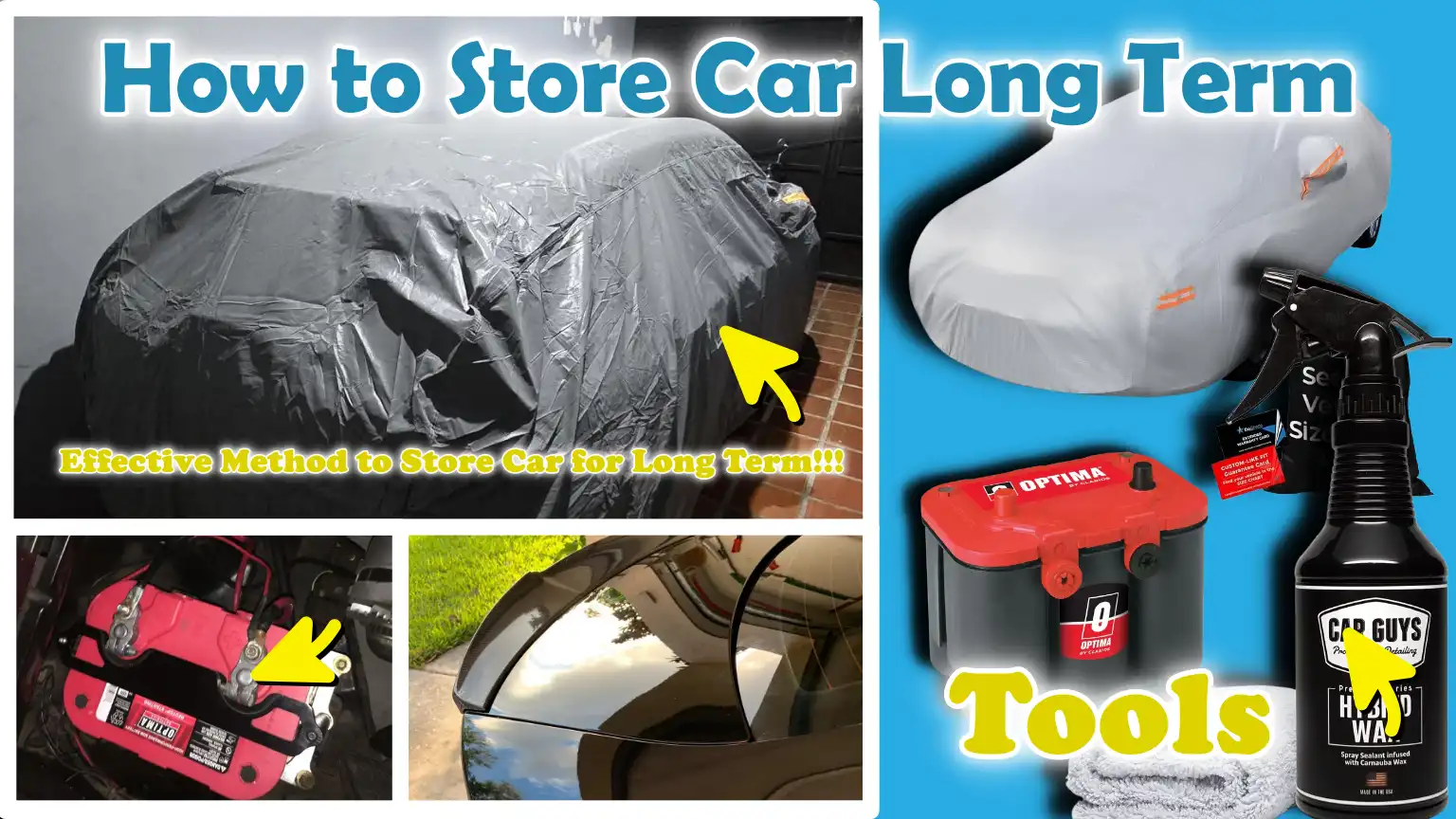
That’s why, we have come up with this guide on How to Store Car Long Term, so that you can completely prevent these issues and keep your car in near-perfect condition and doesn’t matter how long it sits.
When Should You Store a Car for the Long Term?
Storing a car for the long term generally implies leaving the vehicle unused for a period exceeding 30 days; in many instances, this duration can extend to several months or even a full year.
Most modern vehicles are designed for regular operation; consequently, when they remain stationary, various internal systems within the vehicle gradually begin to undergo changes.
The battery charge naturally begins to deplete, as minor electrical systems continue to draw power even when the car is switched off.
Fuel degrades upon exposure to oxygen, which can subsequently lead to difficulties in starting the engine.
Tires remain static in a single position and may gradually lose their perfectly round shape, potentially causing vibrations when the vehicle is driven again.
Moisture can also accumulate within the engine, exhaust system and cabin, thereby increasing the risk of rust, mold growth and unpleasant odors.
For these reasons, long-term car storage should not be viewed merely as standard parking.
It is a deliberate process that becomes necessary under specific circumstances; understanding when to undertake this process helps protect the vehicle from damage rather than exposing it to unnecessary risks.
1. The Right Circumstances for Storage
There are several common scenarios in which storing a car for an extended period proves to be a sensible and safe option.
Seasonal vehicles such as: convertibles, sports cars, or classic automobiles, which are typically not driven during the winter months in colder regions, serve as the most common examples of this.
Individuals traveling for work, those deployed in the military, or those embarking on extended vacations often find themselves needing to leave their vehicles unused for months at a time.
Another common situation arises when an individual owns multiple vehicles but regularly uses only one, leaving the others parked and idle for long periods.
Storing a car for an extended period is a beneficial strategy when the vehicle is not immediately needed, provided, of course, that it remains a valuable asset, such as a family’s second car or a “collector’s item” (a vehicle purchased as a hobby).
In such circumstances, proper storage truly safeguards the vehicle, as it minimizes unnecessary wear and tear caused by daily driving, road debris and adverse weather conditions.
When executed correctly, this process helps preserve the vehicle’s overall condition, reliability and resale value over time.
2. When Not to Store a Car – Better Alternatives
There may also be situations where storing a car for a prolonged period is not the most appropriate course of action.
If the vehicle is to remain undriven for only a short duration such as: a week or two, it is generally preferable to drive it regularly every few days rather than undertaking the extensive preparations typically required for long-term storage.
Driving the vehicle offers several benefits: it keeps fluids circulating, maintains the battery charge and prevents vehicle components from drying out.
If possible, arranging for a trusted individual to drive the car occasionally can be a simple yet effective solution.
In modern vehicles, which feature complex electronic systems, leaving a car unattended without any maintenance can sometimes lead to issues that are even more difficult to resolve than those resulting from regular, light-duty driving.
Another scenario where a vehicle should not be left unattended for an extended period is when the parking location is neither secure nor stable, for instance, in areas characterized by excessive humidity, frequent flooding, or severe infestations of rodents and insects.
In such cases, utilizing a secure parking facility or driving the vehicle periodically may prove to be a more prudent approach than leaving it completely unattended.
3. Considerations for Storing a Car Indoors vs Outdoors
The location where a vehicle is stored has a profound impact on how well it remains preserved over time.
Indoor storage such as: in a garage or a dedicated storage unit, is generally the best option, as it shields the vehicle from direct sunlight, rain, snow and temperature fluctuations.
A stable indoor environment minimizes the risks of paint deterioration, interior fading, moisture accumulation and rust formation.
Climate-controlled storage facilities offer even greater protection by maintaining consistent levels of temperature and humidity, a feature that is particularly beneficial for long-term vehicle storage.
If indoor space is unavailable, outdoor storage remains an option, although it entails greater risks.
Exposure to sunlight can damage the paint and interior components, while rain and humidity increase the risk of rust.
The vehicle may also accumulate dust, dirt and debris and the risk of pest infestation is higher.
When storing a vehicle outdoors, use a high-quality, breathable car cover and choose a secure, clean parking location.
How to Store Car Long Term – Easy & Effective Method
1. How to Thoroughly Clean the Car – Inside and Out
Before storing a car for an extended period, cleaning it properly is one of the most crucial steps; if any dirt, moisture, or debris remains, it will continue to cause damage to the vehicle even while it is parked.
The car may appear clean on the outside, but microscopic particles on the surface and hidden debris inside, if left uncleaned for weeks or months, as it can gradually cause harm.
Preserving a car over the long term is not just about protecting the engine; it is also about maintaining the paintwork, the interior components and the overall condition of the vehicle.
In a properly cleaned car, the likelihood of stains, odors, rust, or long-term damage occurring during storage is significantly reduced.
Why Dirt and Impurities Cause Damage Over Time
Dirt consists of more than just dust; it often includes microscopic particles such as salt, road grime, bird droppings, tree sap and airborne pollutants.
These substances can gradually react with the car’s paint and metal surfaces, particularly when exposed to moisture or temperature fluctuations.
For instance, bird droppings and insect residue are slightly acidic; if left uncleaned for too long, they can degrade the paint’s protective layer (the clear coat).
Road salt and grime can trap moisture against metal components, thereby increasing the risk of rust formation.
Even inside the vehicle, small food scraps and spills can attract insects or rodents, potentially leading to issues with odors or mold growth.
Over time, these minor issues can escalate into permanent stains, rust-related damage, or damage to the car’s interior components, repairs for which can prove to be quite expensive.
Exterior Wash + Wax – Paint Protection
Washing the car’s exterior removes all the harmful impurities that can accumulate on the surface over months.
A proper wash should cover the car body, wheels, undercarriage and all those hidden crevices where dirt tends to gather.
After washing, applying a layer of wax or paint sealant adds an extra level of protection.
Wax creates a thin barrier that helps prevent moisture, dirt and airborne pollutants from coming into direct contact with the paint; this slows down the processes of paint fading and oxidation.
This protective layer is particularly useful during long-term storage, when the vehicle is not being washed regularly.
It also helps maintain the paint’s luster and overall condition, ensuring that when the vehicle is finally put back into use, it still looks brand new and impeccably well-maintained.
Interior Cleaning/Vacuuming and Sanitization
Before storing a vehicle, it is crucial to pay special attention to its interior as well.
Over time, dust, dirt and bacteria can accumulate, particularly on seats, carpets and within small crevices.
Vacuuming removes loose particles that could otherwise generate foul odors or attract pests.
Cleaning surfaces such as the dashboard, steering wheel and door panels prevents dirt buildup and helps keep these components in good condition.
Sanitization is beneficial as it eliminates bacteria and reduces the likelihood of unpleasant odors developing within the car’s enclosed cabin.
Keeping the car’s interior clean is not merely for aesthetic purposes; it also helps maintain air quality and protects fabric, leather and plastic components from deteriorating over time.
Removing Food, Trash and Moisture-Generating Items
Before storing a vehicle, any leftover food items, wrappers, or trash inside it must be completely removed, as they can quickly lead to problems.
Food attracts insects and rodents, which can damage the wiring, upholstery and insulation.
Even small crumbs of food can, over time, create an environment where pests thrive.
Moisture is another major concern, as it can foster the growth of mold and mildew, in addition to generating foul odors.
Items such as wet floor mats, damp cloths, or spilled liquids should be dried out or completely removed.
Keeping the vehicle’s interior dry and free of organic matter creates an environment that is much safer for long-term storage; this helps prevent hidden issues that would otherwise only surface after the vehicle has remained unused for months.
Read More:
2. How to Change the Oil and Top Up Fluids
Before storing a car for an extended period, it is crucial to ensure that all essential fluids are fresh and at the correct levels, as these fluids protect the vehicle’s internal components even when the car is not in use.
Many people assume that fluids only matter when the vehicle is being driven; however, in reality, they remain inside the engine, transmission and braking systems throughout the entire storage period.
If these fluids are old, contaminated, or low, they can gradually cause damage to the components rather than protecting them.
Changing the oil and checking all other fluids helps maintain a stable internal environment within the vehicle, thereby preventing parts from degrading, rusting, or drying out over time.
This simple step can save you from costly repairs and ensures that the vehicle runs smoothly when it is put back into service.
Why Old Engine Oil Damages Internal Components
Engine oil serves not only to lubricate moving parts but also to dissipate heat, trap contaminants and protect metal surfaces from wear and corrosion.
Over time, the oil degrades due to heat and contamination caused by microscopic metal particles, dust and fuel residues.
As the oil ages, it loses its ability to adequately protect the engine.
If a car is stored with contaminated oil, these impurities remain inside the engine and can accumulate on internal components such as bearings, pistons and cylinder walls.
Furthermore, moisture can combine with old oil to create an acidic environment, which can lead to the gradual corrosion of metal surfaces.
This means that damage can begin to occur even when the engine is not running.
Replacing old oil with fresh oil prior to storage ensures that all internal components are coated with a clean, protective layer of lubricant.
Fluids to Check
Engine Oil
Fresh engine oil is crucial for long-term storage, as it forms a protective coating on the engine’s internal components.
When a car remains stationary and unused, this layer helps prevent direct metal-to-metal contact and mitigates the risk of rust caused by atmospheric moisture.
After changing the oil, it is also beneficial to run the engine for a few minutes to ensure that the new oil has circulated thoroughly throughout the entire system.
This guarantees that all internal parts remain properly coated and protected throughout the storage period.
Coolant
Coolant plays a vital role in regulating engine temperature and preventing corrosion within the cooling system.
It contains additives that inhibit the accumulation of rust and debris inside the radiator, water pump and engine passages.
Over time, these additives degrade, rendering the coolant less effective.
If a vehicle remains parked for an extended period with old coolant still in the system, it can lead to gradual corrosion.
Ensuring that the coolant is at the proper level and in good condition helps protect the engine from internal damage and keeps the cooling system ready for use when the vehicle is restarted.
Read More:
Brake Fluid
Brake fluid is designed to transmit hydraulic pressure from the brake pedal to the braking system; however, it possesses a characteristic that causes it to absorb moisture from the air over time.
While this is a significant factor during normal operation, when a vehicle remains parked for an extended period, the moisture present in the brake fluid can compromise its effectiveness and increase the risk of corrosion within the brake components.
If the fluid is already old or degraded, the likelihood of complications arising increases significantly.
Ensuring that the brake fluid is clean and at the proper level helps maintain the safety and reliability of the braking system, even if the vehicle has remained unused for an extended period.
Transmission Fluid
Transmission fluid lubricates and cools the moving components within the transmission, whether it is an automatic or a manual system.
It also facilitates the smooth operation of the gears.
Over time, dirt and debris can accumulate in the transmission fluid, thereby reducing its effectiveness.
If a vehicle is left parked with degraded fluid, the internal components do not receive adequate protection.
Verifying that the transmission fluid is clean and at the correct level helps protect the vehicle against wear, corrosion and seizing when it is brought back into service after a long period of inactivity.
Read More:
Windshield Washer Fluid
Compared to other fluids, windshield washer fluid may seem less critical; nevertheless, it plays a vital role.
It helps keep the windshield clean and often contains additives that prevent it from freezing and inhibit bacterial growth.
Keeping the washer fluid reservoir filled ensures that the system remains ready for use at all times and prevents the pump from running dry later on.
It also helps prevent the accumulation of debris within the system, which could ultimately lead to clogged nozzles.
3. The Importance of Moisture-Free Fluids
When a car is stored for an extended period, moisture poses one of the greatest hidden threats, as it can lead to rust, corrosion and a decline in the performance of various systems.
Fluids containing moisture, or those exposed to humid conditions, as it can gradually damage internal components, even when the vehicle is not in operation.
Engine oil, brake fluid and coolant are particularly susceptible to moisture contamination.
When fluids are clean and properly maintained, they act as a protective shield, safeguarding metal surfaces against air and water.
Ensuring that all fluids remain in good condition, and that their moisture content is kept to an absolute minimum, is a crucial step toward preventing long-term damage and maintaining the vehicle’s reliability.
3. How to Protect the Fuel System
When a vehicle is stored for an extended period, its fuel system becomes one of its most vulnerable components, as fuel does not remain stable over time.
When a vehicle sits idle without use, the quality of the fuel present in the tank, fuel lines and engine components begins to deteriorate.
If left unaddressed, this can lead to starting difficulties, poor engine performance, clogged injectors and, in the long run, even engine damage.
Protecting the fuel system before storing the vehicle is crucial, as it ensures that when the vehicle is restarted, the engine receives clean and usable fuel.
By taking a few simple steps, you can prevent fuel-related issues and ensure that the engine runs smoothly, even after months of disuse.
Why Does Fuel Deteriorate Over Time?
Fuel is a chemical mixture that reacts with air, temperature and moisture over time.
When fuel sits in a tank for weeks or months, it begins to lose its lighter and more volatile components through a process known as “evaporation.”
Furthermore, the oxygen present in the air reacts with the fuel, causing it to oxidize and form a sticky residue, often referred to as “gum” or “varnish.”
These residues can accumulate inside fuel injectors, carburetors and fuel lines, making it difficult for the engine to receive a proper supply of fuel.
Modern fuels containing ethanol pose an additional risk, as ethanol can absorb moisture from the air.
This can lead to “phase separation”, a condition in which water and ethanol settle at the bottom of the tank, increasing the likelihood of corrosion and poor engine performance.
These changes occur gradually but continuously; This is why, after sitting for an extended period, untreated fuel often becomes a common source of problems.
Add a Fuel Stabilizer
A fuel stabilizer is a specially formulated additive designed to slow down the process of chemical degradation in fuel.
It works by minimizing oxidation and helping the fuel retain its original properties over time.
Adding a stabilizer before storing the vehicle can extend the fuel’s shelf life by several months, sometimes even up to a year, depending on the specific product used.
It helps prevent the formation of “gum” and “varnish”, substances that can clog critical engine components.
To ensure the stabilizer functions effectively, it is crucial to add the correct amount based on the size of the fuel tank.
Using a stabilizer is the simplest and most effective method for protecting the fuel system when storing a vehicle for an extended period.
Fill the Tank to Prevent Condensation
Filling the fuel tank nearly to capacity before storing a vehicle is a vital step that is often overlooked.
When there is a significant amount of empty space inside the tank, the trapped air may contain moisture.
As temperatures fluctuate, this moisture can condense on the tank’s interior surfaces in the form of water droplets.
Over time, this water can either mix with the fuel or settle at the bottom of the tank, thereby increasing the risk of rust and fuel degradation.
A full tank leaves very little room for air, thereby minimizing the potential for condensation to form.
This keeps the fuel clean and protects the tank’s interior and fuel system components from rust and damage.
Run the Engine After Adding Stabilizer
After adding the fuel stabilizer, it is crucial to run the engine for a few minutes to ensure that the stabilized fuel circulates thoroughly throughout the entire fuel system.
This allows the stabilizer to reach the fuel lines, injectors and other components, rather than remaining confined solely within the tank.
If this step is skipped, parts of the system may retain unstabilized fuel, which can degrade over time.
Running the engine ensures that all components are protected and that the stabilizer is able to perform its function effectively.
This final step completes the fuel preparation process and helps ensure that the vehicle’s engine starts easily, even after being stored for an extended period.
4. How to Disconnect or Maintain the Battery
When a vehicle remains unused for an extended period, the car battery is often one of the first components to deteriorate.
This occurs because the battery’s power gradually diminishes, even while the vehicle is turned off.
Modern vehicles are equipped with numerous small electronic systems such as: clocks, security systems and control modules, that continuously consume small amounts of electricity.
Over the course of a few days or weeks, this gradual drain can deplete the battery’s charge to such a low level that the vehicle fails to start.
If a battery remains in a low-charge or fully discharged state for a prolonged period, it can suffer permanent damage and lose its capacity to hold a charge.
Taking appropriate measures before parking a vehicle for an extended duration helps preserve the battery’s health, mitigates the risk of sudden failure and ensures that the vehicle starts easily when needed.
Causes of Battery Discharge
There are two primary reasons for battery discharge: first, the natural, gradual loss of charge over time; and second, the continuous consumption of electricity by the vehicle’s electronic systems.
Even if the battery is completely disconnected from the vehicle, its charge will still gradually deplete over time due to internal chemical reactions.
When the battery remains connected to the vehicle, various small internal electronic systems continue to draw power, thereby accelerating the rate at which the battery discharges.
Temperature also plays a significant role; extreme heat or extreme cold can cause the battery’s charge to deplete even more rapidly.
If the battery’s voltage drops too low, a process known as “sulfation” can begin within the battery.
During this process, lead sulfate crystals accumulate on the battery plates, thereby reducing the battery’s capacity to store energy.
This is why the batteries in vehicles that remain parked and unused for several weeks or months often end up completely ruined or severely discharged.
Disconnecting the Battery
When a vehicle is parked for an extended period, a simple way to minimize power consumption is to disconnect the battery.
Removing the battery connection shuts down most minor electrical systems that draw power, thereby allowing the battery to retain its charge for a longer duration.
This method is particularly useful when you know you will not be using the car for several months and do not have access to a power source to recharge the battery.
Furthermore, while the car is stationary, this practice reduces the risk of any electrical faults or malfunctions occurring.
However, disconnecting the battery may cause certain electronic settings such as: the clock time, radio presets and the vehicle’s internal system memory, to reset.
In some vehicles, doing so may also affect the security system, or you may need to reconfigure certain settings after reconnecting the battery.
Although this method is simple and effective, it cannot completely halt the natural process of gradual self-discharge that occurs within a battery.
Use a Trickle Charger or Battery Maintainer
Using a trickle charger or battery maintainer is another method for maintaining the battery at an optimal charge level while it is in storage.
Battery maintainers are designed to supply a very low and controlled amount of power to the battery, just enough to offset the charge that the battery naturally loses over time.
Unlike standard chargers, maintainers monitor the battery and automatically adjust the charging output, thereby preventing overcharging.
This approach is considered one of the most effective ways to extend a battery’s lifespan, particularly when the battery is to be stored for an extended period.
This ensures that the battery remains fully charged, the risk of sulfation is minimized and the vehicle is ready to start at any moment.
Although this method requires access to a power outlet and a proper setup, it offers the most consistent protection.
Pros and Cons of Each Method
Both disconnecting the battery and using a battery maintainer are effective strategies, yet they cater to different needs depending on specific circumstances.
Disconnecting the battery is simple, requires no additional equipment and works well when electricity is unavailable; however, it may result in slight self-discharge of the battery and could cause the vehicle’s settings to reset.
A battery maintainer offers superior protection by keeping the battery fully charged and in optimal condition, though it necessitates a power source and a proper connection.
Choosing the right method depends on the intended duration of vehicle storage, the availability of electricity and the importance of keeping the vehicle fully prepared for immediate use.
5. How to Protect the Tires
When a car is stored for an extended period, the tires are often overlooked; however, even when the vehicle is not in motion, they remain susceptible to potential issues.
The entire weight of the car rests on the tires at all times and when a vehicle remains stationary in one spot for weeks or months, this constant pressure can gradually alter the shape of the tires.
Furthermore, over time, minor air leaks and fluctuations in temperature can cause the internal air pressure within the tires to decrease naturally.
If the tires are not properly prepared for storage, they may lose their structural integrity, develop vibrations, or even become unsafe for future use.
Protecting the tires before storing the car helps preserve their structure, enhances safety and eliminates the need for premature replacement.
What is Flat Spotting?
Flat spotting occurs when a tire remains stationary under the weight of a car for a prolonged period, causing the section of the tire in contact with the ground to become slightly flattened.
Tires are designed to remain somewhat flexible while the vehicle is in motion, thereby maintaining their circular shape; however, when they are not in use, this flexibility diminishes.
Over time, the rubber of the tire can flatten at the specific point where it makes contact with the ground.
In some instances, particularly when the tire rubber is soft or the ambient temperature is low, this flat spot may become more pronounced.
When the car is subsequently driven, these flat spots can generate vibrations, create an unusual sensation while driving and become a source of annoyance.
In mild cases, driving the vehicle for a short while may allow the tires to return to their original shape; However, in more severe cases, the damage can be permanent.
Recommendation: Increase Tire Air Pressure
Slightly increasing the air pressure in the tires before storing a car is a simple and effective way to mitigate the risk of “flat spotting.”
When tire pressure is maintained at a level slightly higher than normal, yet still remains within the safe limits specified by the manufacturer, the tires are better able to support the vehicle’s weight without excessive deformation.
This additional pressure helps preserve the structural integrity of the tires over time.
It is crucial to ensure that the air pressure is not raised beyond the safe limit; however, maintaining a pressure slightly above standard driving levels can make a significant difference when a car remains stationary for an extended period.
Proper tire inflation also reduces the stress placed on the tire sidewalls and helps prevent issues associated with “under-inflation.”
This problem typically arises when a vehicle remains parked for a long time, causing the tire pressure to gradually decrease on its own.
Use of Tire Cradles or Jack Stands
If a vehicle is to be stored for an extended duration, reducing the weight bearing down on the tires can provide an additional layer of protection.
Tire cradles are specialized support devices designed to distribute the vehicle’s weight more evenly across the tire’s surface, thereby helping the tires retain their original shape.
Another approach involves using jack stands to lift the vehicle slightly off the ground, thereby relieving most, or all, of the weight from the tires.
This method is particularly beneficial for vehicles that are to be stored for several months or longer.
By relieving the pressure on the tires, these methods prevent the formation of “flat spots,” reduce the stress on the rubber compound and extend the overall lifespan of the tires.
Avoid Prolonged Use of the Parking Brake
When a vehicle remains stationary for an extended period, keeping the parking brake engaged can lead to various issues, as the brake components remain pressed against one another for a prolonged duration.
Due to this constant contact, the brake pads or shoes may adhere to the rotors or drums, particularly in humid or wet environments.
Over time, rust can form between the contact surfaces, making it difficult to disengage the brakes when the vehicle is put back into use.
Instead of relying solely on the parking brake, it is advisable to use “wheel chocks” to secure the vehicle; if the vehicle has a manual transmission, engage a gear; or if it has an automatic transmission, shift it into “Park” mode.
This ensures that the vehicle remains stable and prevents unnecessary strain on the braking system while the vehicle is parked.
6. How to Protection Against Moisture and Interior Damage
When a car is stored for an extended period, moisture becomes one of the most common and damaging issues, as it can silently accumulate within the confines of the vehicle.
When the car is not in use, there is no airflow; consequently, even the slightest amount of internal moisture can settle on the vehicle’s surfaces over time.
This can lead to mold, mildew, unpleasant odors and even damage to electronic components and interior trim.
Soft surfaces such as: carpets, seats and headliners, absorb moisture readily, while metal components within the cabin gradually begin to rust.
Preventing moisture accumulation is crucial, as once mold or deep-seated odors develop, they are often difficult and expensive to eliminate.
By taking a few simple steps to control moisture and safeguard the interior, you can ensure that the car remains clean, fresh and in excellent condition throughout the entire storage period.
Use Moisture Absorbents
Moisture absorbents offer a simple yet effective method for controlling internal humidity while storing a car.
Substances such as silica gel and baking soda work by drawing excess moisture out of the air, thereby keeping the vehicle’s interior dry.
Silica gel is particularly effective, as it can absorb large quantities of moisture without leaking; meanwhile, baking soda helps to neutralize odors in addition to absorbing moisture.
Placing these moisture absorbents inside the cabin, specifically on the floor or beneath the seats, helps prevent the development of damp conditions.
By reducing moisture levels, these products minimize the risk of mold growth, foul odors and damage to upholstery and interior surfaces.
Keep the Windows Slightly Open (If Safe)
Allowing a small amount of airflow inside the car can help prevent moisture from becoming trapped within.
Cracking the windows slightly creates a channel for air to circulate in and out, thereby reducing the issue of moisture accumulation inside the cabin.
This is particularly helpful in regions where temperature fluctuations lead to condensation.
However, this measure should only be taken when the car is being stored in a safe and secure location, such as an enclosed garage or a secure storage unit.
If the car is being stored outdoors or in an unsecured area, keeping the windows completely closed remains the safer option to prevent dust, rain, or insects from entering the vehicle.
Use a Sunshade
Sunshades help protect the car’s interior from heat and sunlight; if the car is parked in a location exposed to direct sunlight, these elements can cause long-term damage to the vehicle.
Prolonged exposure to the sun can cause dashboard components to fade, plastic surfaces to crack and leather upholstery to dry out over time.
Sunshades block direct sunlight from entering through the windshield, thereby keeping the interior temperature stable and reducing the risk of material deterioration.
By keeping the interior temperature lower, the likelihood of moisture accumulation, caused by temperature fluctuations, is also reduced; therefore, whether the car is stored indoors or outdoors, a sunshade is a highly useful accessory.
Tips for Protecting Leather and Fabric
The leather and fabric upholstery inside a car require special care when the vehicle is being stored for an extended period; if neglected, these materials can dry out, crack, or begin to develop unpleasant odors.
Conditioning products are beneficial for leather surfaces, as they keep them supple and help maintain their natural moisture.
Without proper conditioning, leather can become stiff and eventually develop cracks over time.
Fabric seats and carpets should be thoroughly cleaned and dried before storage to prevent the accumulation of mold and mildew.
Using specialized protective sprays designed for fabrics creates an additional layer of defense against moisture and stains.
Keeping these items clean and protected ensures that when the car is put back into use, its interior remains comfortable, aesthetically pleasing and safeguarded against damage for the long term.
7. How to Ensure Protection Against Pests and Rodents
When a car is left parked for an extended period, it can become an attractive haven for pests and rodents, as it offers them warmth, shelter and protection from the elements.
Small animals such as: mice, squirrels and various insects, often seek out quiet, secluded spots to build their nests and a parked car provides them with just such an environment.
Once inside, they can cause extensive damage by gnawing through wires, insulation and soft materials.
Modern vehicles are particularly at risk, as the insulation used in their wiring systems is sometimes made of materials that rodents can easily chew through.
This type of damage is not always visible from the outside, but it can lead to electrical malfunctions, trigger warning lights on the dashboard, or even make it difficult to start the car.
Taking preventive measures against pests before parking your vehicle is crucial; once they have gained entry and established a foothold, evicting them and repairing the resulting damage can be both difficult and costly.
Why Cars Attract Rodents
Cars attract rodents because they provide a secure, enclosed space that remains significantly warmer than the outside environment.
After a vehicle has been driven, the engine compartment retains heat for some time, making it a cozy and comfortable spot for small animals.
The car’s interior also contains soft materials such as: seat padding and carpeting, that rodents can utilize to build their nests.
Furthermore, if there is any scent of food inside the car, even if it comes merely from small crumbs or food scraps, it can attract pests even more rapidly.
Furthermore, a car that remains parked in the same spot for weeks or months creates a stable and secure environment for rats, a place where they remain undisturbed.
Consequently, it becomes an ideal habitat for them.
Common Entry Points
Rats can infiltrate a car’s interior through even the tiniest of spaces and many of these entry points are often overlooked.
The exhaust pipe (muffler) is one of the most common entryways, as it remains open and connects directly to the vehicle’s internal systems.
In the engine compartment, gaps and holes surrounding wires, hoses and vents also provide easy access for small animals.
Air intake vents located near the windshield, as well as open spaces beneath the vehicle, can also serve as entry points for rats.
As rats are capable of squeezing through extremely tight spaces, they require only a minuscule opening to gain access to the vehicle’s interior and roam freely throughout it.
Using Steel Wool in the Exhaust
Placing steel wool inside the exhaust pipe is a simple yet effective method for blocking one of the primary entry points for rats.
The steel wool acts as a physical barrier, preventing animals from entering and is also easy to remove later.
It is crucial to remember to remove the steel wool before starting the engine; if left inside, it could obstruct airflow.
This method works because rats are unable to chew through the coarse texture of steel wool; thus, it proves to be a reliable, albeit temporary, solution for keeping rats at bay while the vehicle remains parked for extended periods.
Rodent Repellents
Rodent repellents help keep pests at bay by creating an environment that they find unappealing.
These remedies come in various forms, such as sprays, electronic devices and products featuring natural scents.
Strongly scented items such as: mint or other natural oils, are frequently used, as rodents tend to steer clear of such fragrances.
By placing these repellents around the engine compartment, underneath the vehicle and in storage areas, the likelihood of pests infiltrating the car is significantly reduced.
While these measures alone may not guarantee complete protection, they prove highly effective when used in conjunction with other preventive strategies.
Avoid Food Scents
Eliminating all food sources and completely eradicating food odors is the most critical step in preventing pest infestations.
Even small food scraps, wrappers, or spilled beverages can, over time, attract rodents and other pests.
Once they discover a food source, the likelihood of them lingering inside the vehicle, and venturing into other areas, increases significantly.
Thoroughly cleaning the vehicle’s interior, and ensuring that no food residue or lingering food odors remain, helps prevent pests from being attracted to the car in the first place.
A clean and odor-free environment makes the vehicle less appealing to rodents, thereby helping to keep it safe and secure, particularly when it is parked for extended periods.
8. How to Cover the Car Properly
When a car is stored for an extended period, covering it is an essential step, as it protects the vehicle from dust, dirt, moisture and environmental damage.
Even if the car is kept indoors, fine dust particles can still accumulate on its surface over time, gradually damaging the paintwork.
In an outdoor environment, these risks are significantly higher, as the car is directly exposed to sunlight, rain, bird droppings and pollution.
A suitable cover acts as a protective shield, minimizing direct contact with these elements and helping to preserve the car’s finish and overall condition.
However, not all covers offer the same level of protection; therefore, selecting the right type of cover is crucial to ensure that moisture does not become trapped underneath, potentially causing damage to the surface.
Benefits of a Breathable Car Cover
A breathable car cover is designed to allow air to circulate freely while simultaneously shielding the car from external elements.
This feature is vital because it prevents moisture from becoming trapped between the cover and the car’s surface.
When moisture gets trapped, it can lead to condensation, which over time may result in mold, mildew, or even rust.
Breathable materials help dissipate this moisture, ensuring the surface remains dry.
These covers also assist in regulating temperature, thereby protecting the paintwork and interior components from heat-related damage.
Furthermore, they create a soft barrier that helps guard against scratches caused by dust particles accumulating on the cover.
Using a breathable cover ensures that the car remains secure and does not develop any new issues during storage.
Indoor vs Outdoor Covers
Car covers are manufactured with varying specifications, depending on whether the vehicle is being stored indoors or outdoors.
Indoor covers are generally lightweight and their primary purpose is to provide protection against dust, minor debris and light scratches.
They are made from soft materials that are safe for the paintwork and help keep the surface clean within enclosed spaces.
Outdoor covers, on the other hand, are more robust and are designed to withstand various weather conditions such as: rain, sunlight, wind and dirt.
They often feature multiple layers that offer water resistance and protection against the sun’s damaging ultraviolet (UV) rays, rays that can cause paint to fade and damage interior materials.
Choosing the right type of cover based on where the car is stored ensures that the vehicle receives optimal protection and is shielded from unnecessary wear and tear or potential hazards.
What Not to Use – Plastic Tarps
Plastic tarps may seem like a convenient and inexpensive solution, but they are not suitable for covering a car over the long term.
Unlike breathable covers, plastic materials do not allow for air circulation, meaning that moisture can become trapped underneath them.
This trapped moisture can lead to condensation, significantly increasing the risk of rust forming on metal surfaces and mold growing inside the car.
Plastic tarps can also trap heat, which can cause damage to the car’s paint and interior components over time.
Furthermore, when the wind blows, these tarps can rub against the car’s surface, potentially causing scratches or scuff marks.
For these reasons, it is best to avoid using plastic covers and, instead, opt for a purpose-built car cover that offers both protection and proper airflow.
9. How to Choose the Right Storage Location
The location where a car is stored plays a crucial role in how well it is preserved over time.
Even if all preliminary steps have been executed correctly, a poor storage environment can still cause damage to the vehicle.
Factors such as temperature fluctuations, humidity, direct sunlight exposure and the level of security all impact the condition of the vehicle during long-term storage.
A stable and clean environment helps minimize the risks of rust, paint deterioration, interior wear and tear and mechanical issues.
Choosing the right location is not merely a matter of convenience; it directly influences how well the car is preserved and how easily it can be returned to service later on.
Garage vs Storage Unit vs Outdoor Parking
A home garage is often the most convenient and cost-effective option, as it provides basic protection against weather, sunlight and dust.
It also offers easy access for routine inspections.
However, not all garages are completely sealed; therefore, if the space is not properly maintained, dust, humidity, or pests can still become causes for concern.
A dedicated storage unit offers a more controlled environment, particularly if it is specifically designed for vehicle storage.
These units are typically cleaner, more secure and better shielded from external elements, making them a robust option for long-term storage.
Outdoor parking offers the least amount of protection, as the car remains directly exposed to sunlight, rain, wind and temperature fluctuations.
Over time, such exposure can lead to paint fading, rubber deterioration and an increased risk of rust.
While avoiding outdoor storage may not be feasible in all situations, taking additional protective measures is essential to mitigate these risks.
Benefits of Climate-Controlled Storage
Climate-controlled storage provides one of the best environments for preserving a vehicle over the long term, as it maintains stable temperature and humidity levels.
Excessive heat can cause fluids to degrade rapidly, rubber components to dry out and interior parts to suffer damage.
Cold temperatures can diminish battery performance and increase the risk of fluids thickening.
Humidity levels are particularly critical; high humidity can lead to rust on metal components and the growth of mold inside the cabin.
Climate-controlled facilities mitigate these risks by consistently maintaining uniform conditions, thereby helping to preserve both the mechanical and exterior aspects of the car.
This type of storage is specially beneficial for valuable, classic, or infrequently used vehicles that require extra care when being stored for extended periods.
Security Considerations
Security is a crucial factor when selecting a storage location, as a parked vehicle can be vulnerable to theft or vandalism.
A secure location minimizes the risk of damage and offers peace of mind while the vehicle remains in storage for an extended period.
Indoor spaces such as: garages and dedicated storage units, are generally more secure, as they restrict public access and keep the vehicle out of sight.
Features such as locked doors, surveillance systems and limited entry points add an additional layer of security.
Even within a private garage, it is essential to ensure that doors are properly secured and that the space is fully protected.
For outdoor storage, choosing a well-lit and visible location can help mitigate risks, although it does not offer the same level of security as an enclosed space.
Taking security seriously ensures that the vehicle remains safe and in pristine condition throughout the entire storage duration.
10. What are The Insurance and Registration Considerations
When a car is stored for an extended period, many people focus solely on its physical protection while overlooking its legal and financial security.
Insurance and registration are crucial, as even a stationary vehicle remains vulnerable to risks such as theft, fire, adverse weather conditions, or accidents.
Maintaining the appropriate type of coverage ensures that, should an unforeseen event occur, you will not have to bear the financial burden of the damages out of your own pocket.
Furthermore, understanding registration regulations can help you avoid legal complications, fines, or unnecessary expenses.
By taking a few simple steps before storing your vehicle, you can save money while simultaneously ensuring that your car remains fully protected.
Storage Insurance vs Comprehensive Coverage
Comprehensive insurance coverage typically provides protection against both risks associated with driving and other hazards such as theft, vandalism, or natural disasters.
If a car is not going to be driven for a prolonged period, some owners consider opting for “storage insurance”; this type of policy generally focuses exclusively on risks unrelated to the act of driving.
This form of coverage can help reduce costs, as it eliminates “liability” and “collision” coverage, components that are typically only required when the vehicle is being operated on the road.
However, opting for storage insurance also implies that the vehicle cannot be legally driven until comprehensive coverage is reinstated.
The choice between comprehensive coverage and storage coverage depends on the duration for which the car will remain unused and the degree to which it needs to be kept ready for immediate use.
In many instances, maintaining at least “comprehensive coverage” is a prudent decision, as it safeguards the vehicle against common risks even while it is parked.
Informing Your Insurance Provider
It is crucial to inform your insurance provider before placing your car in storage, as they can advise you on the best coverage options tailored to your specific situation.
Insurance policies may contain specific stipulations and altering the way the car is used, without notifying the insurer, as it can, in some instances, impact your coverage.
Through clear communication, you can modify your policy, avoid paying for unnecessary coverage and ensure that your vehicle receives appropriate protection.
Insurers can also inform you about the requirements necessary to maintain coverage while the car is in storage; this helps prevent any misunderstandings or complications should you need to file a claim in the future.
Legal Considerations in the U.S.
In the United States, regulations regarding vehicle registration and insurance vary from state to state; however, most states require that any vehicle operating on public roads be properly registered and insured.
If a car is placed in storage and is not being driven, some states allow owners to reduce or temporarily suspend certain requirements, while other states mandate minimum coverage even for parked vehicles.
Failure to comply with state regulations may result in fines, penalties, or difficulties when attempting to reactivate the vehicle for use later on.
It is essential to check local regulations before placing a car in storage to ensure that all proper procedures are followed.
Storing your vehicle in accordance with state laws ensures that it can be returned to the road without any delays or legal complications.
What Is The Monthly Checklist During Storage
Even after preparing a car for long-term storage, it remains essential to inspect it regularly, as minor issues can arise over time without going unnoticed.
Even a vehicle that is not in use can be affected by temperature fluctuations, humidity and the natural wear and tear of fluids and components.
Conducting a simple monthly inspection allows for the early detection of problems such as: a draining battery, fluid leaks, or pest infestations, enabling these issues to be resolved before they escalate into costly repairs.
Regular checks do not take much time, yet they play a crucial role in maintaining the car’s condition and ensuring that everything remains in proper working order throughout the entire storage period.
1. To Start the Car or Not – Myth vs Reality
Many people believe that occasionally starting a car during storage is always a good idea; however, this is not entirely true.
Starting the engine for very brief periods, without actually driving the vehicle, as it can often do more harm than good.
When an engine runs for only a short duration, it may not reach its full operating temperature; this means that any moisture present within the engine and exhaust system may not fully evaporate.
This can lead to moisture accumulation and increase the risk of internal corrosion.
In reality, if you do decide to start the car, you should let it run until it reaches its normal operating temperature, and ideally, you should take it for a short drive as well.
If driving the vehicle is not possible, it is often better to simply leave the car properly stored rather than starting it intermittently without a specific purpose.
2. Move the Car Slightly – If Possible
Periodically moving the car a short distance helps alleviate the pressure placed on the tires and reduces the risk of “flat spotting” (where a section of the tire becomes flattened).
When a car remains stationary in the same spot for weeks, the vehicle’s entire weight rests on the exact same section of each tire, which can lead to tire deformation.
Shifting the car slightly forward or backward alters the contact point between the tires and the ground, thereby helping them retain their proper shape.
This practice is particularly beneficial when the car is being stored for an extended period, though it should only be attempted when doing so is safe and practical.
Even a minor adjustment to the car’s position can make a significant difference in maintaining the condition of the tires.
3. Check for Leaks, Pests and Battery Condition
Regularly checking for leaks is crucial, as fluids can gradually seep from seals or joints over time.
Inspecting the area beneath the car for traces of oil, coolant, or other fluids allows for the early detection of potential issues.
Checking for pests is equally important, as rodents or other insects can infiltrate the vehicle and damage the wiring and interior components, damage that often goes unnoticed.
The battery should also be monitored to ensure it is maintaining a proper charge.
If the battery remains connected, checking its condition helps prevent it from becoming completely discharged.
These simple checks play a vital role in maintaining the overall health of the vehicle while it is in storage.
4. Inspect the Cover and Surrounding Environment
The car cover and the environment of the storage location should be inspected regularly to ensure they are providing adequate protection for the vehicle.
Due to wind or other disturbances, the cover may shift from its position, potentially exposing parts of the car to dust, moisture, or sunlight.
Regularly checking that the cover is properly fitted and in good condition helps ensure continuous protection.
The surrounding area should also be inspected for signs of moisture accumulation or the presence of pests.
Maintaining a stable and clean environment within the storage space plays a crucial role in safeguarding the vehicle over the long term.
How to Restart a Car After Long-Term Storage
Restarting a car after it has been parked for an extended period requires great care, as various systems may have remained dormant for weeks or months.
During this time, fluids can settle, the battery may lose its charge and components such as tires and seals may undergo slight changes in condition.
Attempting to start the car without proper inspection can lead to unnecessary wear and tear or even damage.
Proceeding slowly and cautiously ensures that the vehicle can be safely returned to normal operation.
By following the correct procedures, you can minimize strain on the engine, prevent sudden malfunctions and ensure that the car runs smoothly once again.
1. Initial Inspection
Before starting the engine, it is essential to conduct a thorough visual inspection and perform a few basic mechanical checks, as this helps identify potential issues that may have arisen while the car was in storage.
Even if the car was stored properly, minor changes can occur over time; identifying these issues in advance can prevent major problems down the road.
The objective of this step is to ensure that the vehicle is safe and ready for operation before you attempt to drive it or start the engine.
Check Fluids, Tires and Battery
The first step should be to check the fluid levels, as they play a crucial role in protecting the engine and other systems.
The engine oil should be at the correct level and appear clean, while the coolant level should be sufficient to effectively regulate the engine’s temperature.
For safe driving, the brake fluid and transmission fluid levels should also fall within the recommended ranges.
Additionally, you should verify that the tires have the correct air pressure and inspect them for any signs of deformation or cracks that may have developed during the storage period.
You should check the battery’s charge level and connections, as a weak or completely discharged battery is one of the most common issues face after a car has been parked for an extended period.
Ensuring that these basic components are functioning correctly guarantees that the remainder of the startup process can proceed safely.
Inspect for Damage Caused by Rodents or Pests
No matter how well-maintained a car is, it remains susceptible to damage caused by rodents or pests; therefore, it is crucial to look for any signs of activity in areas such as the engine bay, underneath the vehicle and inside the cabin.
You should inspect wires, hoses and insulation for any bite marks or damage, as rodents frequently gnaw on these components.
The presence of nests, droppings, or unusual odors may also indicate an infestation.
Identifying and rectifying these issues before starting the car is essential; otherwise, driving with compromised wiring or damaged parts could lead to electrical malfunctions or engine failure.
2. Initial Startup Procedure
Particular care should be taken when starting the engine for the first time after a prolonged period of inactivity, as internal components remain stationary and may require some time to resume normal operation.
Proceeding slowly and patiently minimizes strain on the engine and allows internal fluids to circulate properly before any load is applied.
Tips for a Gentle Startup
When starting the car, it is essential to avoid any sudden or forceful actions.
The ignition key should be turned, or the start button pressed, in the standard manner, without depressing the accelerator pedal.
This allows the engine to start at its own pace and enables oil pressure to build up gradually.
Once the engine has started, allow it to settle into a stable idle without revving it.
This ensures that oil reaches all internal engine components, thereby guaranteeing that all parts begin functioning correctly after a long period of dormancy.
Let the Engine Idle
It is essential to let the engine idle (run without acceleration) for a few minutes, as this allows it to reach its normal operating temperature.
During this time, the engine oil circulates fully, the coolant begins to regulate the temperature and internal components expand to settle into their normal working state.
Idling also helps burn off any moisture that may have accumulated within the engine and exhaust system.
This step prepares the car for driving and minimizes the risk of damage caused by sudden movements or loads.
Warning Signs to Watch Out For
When the engine is running, it is crucial to monitor its behavior closely.
Unusual noises such as: knocking or rattling sounds, warning lights illuminated on the dashboard, rough idling, or strong odors can all be indicators of an internal issue.
Smoke emitting from the exhaust or fluids leaking from beneath the vehicle should also be taken seriously.
Identifying these signs early allows you to address the problem before it escalates into a major issue.
Paying attention at this stage ensures that the vehicle remains safe to drive.
3. Tips for the Initial Drive
Once the engine is running smoothly and no major issues are apparent, the vehicle can be driven cautiously to allow all its systems to return to normal operation.
The initial drive should be a slow and gradual process, giving the vehicle sufficient time to readjust to normal operating conditions after a prolonged period of inactivity.
Brake Inspection
Gently test the brakes at low speeds to ensure they are functioning correctly.
After a vehicle has been parked for an extended period, a thin layer of rust may form on the brake rotors; this may initially cause some noise or make the brakes feel slightly less effective when applied.
Gradual braking helps clean the surface of the rotors, allowing them to return to normal performance.
Before driving at higher speeds, it is essential to verify that the vehicle comes to a smooth and immediate stop when the brakes are applied.
Tire Condition Check
During the initial drive, keep a close watch on the tires to check for any vibrations or unusual movements.
If the tires have developed “flat spots” due to remaining stationary in one place for an extended period, you may experience significant vibration while driving at certain speeds.
In some cases, driving the vehicle for a short distance allows the tires to regain their normal shape; however, if the problem persists, further inspection of the tires may be required.
Ensuring that the tires are stable and balanced is crucial from the perspectives of both safety and comfort.
The Approach to Driving Slowly and Gently
You should always begin driving slowly and gently to allow all of the vehicle’s systems to return to their normal operating state.
Initially, avoid sudden acceleration or driving at high speeds, as the engine, transmission and other components require some time to resume functioning normally.
Driving slowly and gently ensures the proper circulation of all fluids (such as oil), maintains lubrication within the components and prepares the vehicle once again for daily use.
Adopting this cautious approach ensures reliable vehicle performance and minimizes the risk of sudden mechanical issues arising after the car has been parked for a prolonged period.
Know, Common Mistakes While Storing Your Car for Longer Period of Time
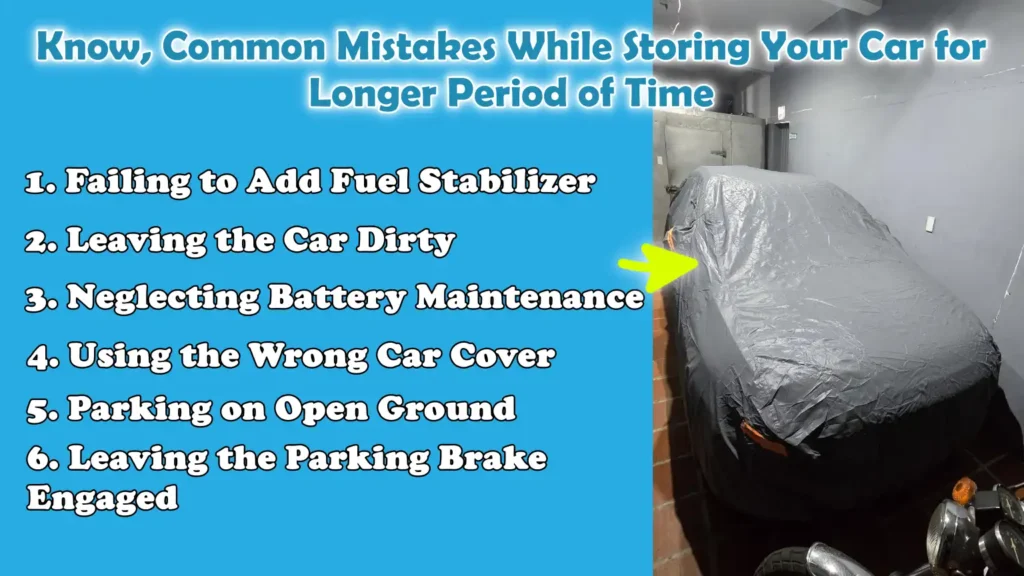
When a car is stored for an extended period, many problems arise not from major technical malfunctions, but from minor oversights that often go unnoticed.
These mistakes may seem trivial at first, but weeks or months later, they can lead to serious damage, costly repairs and a decline in the vehicle’s performance.
Understanding what not to do is just as important as knowing the correct procedures.
Avoiding these common errors safeguards the engine, internal components and the overall condition of the vehicle, ensuring that when the car is brought out of storage, it remains reliable and ready for use.
1. Failing to Add Fuel Stabilizer
One of the most common mistakes is leaving the fuel untreated before storing the car.
Over time, due to exposure to air and temperature fluctuations, fuel naturally begins to degrade.
Without a stabilizer, the fuel can lose its potency and develop gummy deposits that can clog fuel injectors and lines.
This can make starting the engine difficult and negatively impact the vehicle’s performance when it is eventually put back into service.
Adding a fuel stabilizer slows down this degradation process, keeping the fuel usable for longer periods and significantly reducing the risk of engine-related issues.
2. Leaving the Car Dirty
Storing a car without thoroughly cleaning it can cause long-term damage to both its exterior and interior components.
The dirt accumulated on the vehicle’s surface often contains harmful substances such as: road salt, bird droppings and environmental pollutants, that can gradually degrade the paintwork.
Inside the cabin, accumulated dust, food crumbs and dropped items can create an environment conducive to foul odors, mold growth and insect infestations.
Over time, these minor issues can evolve into stubborn stains or cause permanent damage to the vehicle’s interior components and fittings.
Thoroughly cleaning the car before storing it helps prevent these problems and ensures that the vehicle remains in excellent condition.
3. Neglecting Battery Maintenance
Battery-related issues are among the most common problems that arise after a car has been stored for an extended period.
Many people leave the battery connected without any maintenance; consequently, due to natural self-discharge and minor electrical leaks, the battery gradually loses its charge.
If the battery discharges excessively, it may fail to start the car and could even sustain permanent damage.
Simple measures such as: disconnecting the battery or using a battery maintainer, help preserve the battery’s charge and extend its lifespan.
Furthermore, there’s research that shows that heat literally speeds up battery damage, while in extreme cold it reduces its effectiveness, that’s why you need to store a car in a controlled environment such as: garage or climate-controlled unit, as it can significantly improve the battery health and overall vehicle condition as well.[¹]
4. Using the Wrong Car Cover
Using the wrong type of car cover can cause more harm than good.
Non-breathable covers trap moisture underneath them, potentially leading to issues such as condensation, rust and mold.
Some covers may be too abrasive or ill-fitting, causing scratches on the paint surface as the vehicle shifts or moves.
An ideal car cover should protect the vehicle from dust and external elements while simultaneously maintaining proper airflow.
Choosing the right cover, based on the specific storage conditions of the vehicle, helps prevent unnecessary damage.
5. Parking on Open Ground
Parking a vehicle directly on open ground such as: soil or grass, increases the risk of exposure to moisture.
Such ground surfaces can release moisture into the air, particularly when temperatures fluctuate, causing dampness to accumulate beneath the vehicle.
Over time, this moisture can lead to rust on metal components, specially in the vehicle’s undercarriage.
Parking on a solid, dry surface such as: concrete or asphalt, mitigates this risk and provides a more stable environment for the vehicle.
6. Leaving the Parking Brake Engaged
Leaving the parking brake engaged for extended periods can cause the brake components to seize.
When brake pads or shoes remain pressed against the rotors or drums, particularly in humid weather, rust can form between the contact surfaces.
This can make it difficult to disengage the brakes later and may even cause damage to the braking system.
Instead of relying solely on the parking brake, securing the vehicle by leaving it in gear or utilizing other methods to keep it stationary is a safer practice when parking for extended periods.
Read More:
- How to Winterize Your Car
- How to Prepare Your Car for a Long Trip
- How to Ceramic Coat Car
- How to Protect Car Paint
- How to Remove Bad Smell from Car
- How to Restore Faded Car Paint
- How to Polish Car Headlights
Know, Pro Tips for Long-Term Car Storage – Expert Section
When a car needs to be stored for an extended period, ranging from a few months to a year or more, basic preparations alone may not be sufficient to ensure its complete protection.
In such cases, adopting more advanced techniques can provide enhanced protection for the engine’s internal components, the storage environment and the fuel system.
These expert-level methods are employed to prevent the damage that accumulates gradually over time, specifically, damage caused by moisture, exposure to air and chemical changes occurring within the vehicle.
Although these methods may require a little extra effort, they can make a significant difference in maintaining engine health, preventing corrosion and ensuring that the car starts and runs smoothly even after a prolonged period of inactivity.
1. Engine Cylinder Fogging – For Very Long-Term Storage
Engine cylinder fogging is a technique used to protect the engine’s internal components from corrosion and deterioration during periods of prolonged inactivity.
Inside the engine, metal surfaces such as: cylinder walls and piston rings, are typically coated with a thin layer of oil while the engine is running.
However, when a car remains stationary for an extended period, this protective layer can gradually drain away or dry up.
Fogging oil is a specialized lubricant designed to be sprayed into the engine to create a protective coating over its internal parts.
This coating acts as a protective barrier, preventing airborne moisture from coming into direct contact with the metal components.
This method is particularly beneficial for vehicles that will not be started at all for several months, as it helps preserve the engine’s internal integrity and minimizes the risk of damage when the vehicle is finally restarted.
2. Use of Desiccant Packs
Desiccant packs are materials designed to absorb moisture from the air, thereby keeping the car’s storage environment dry.
In an enclosed space like a car, even a small amount of moisture can accumulate over time and lead to mold, mildew and rust.
Desiccants such as: silica gel, are highly effective because they can absorb moisture without leaking and retain it within their structure.
Placing these packs in the car’s cabin, trunk and other enclosed areas helps reduce humidity levels and protects interior materials such as fabric, leather and electronics.
This method is simple yet highly effective in preventing moisture-related damage, particularly in environments where humidity levels tend to fluctuate.
3. Sealing Gaps in the Garage
Sealing gaps in the storage area is a crucial step in creating a controlled and secure environment for the car.
Small openings in a garage or storage space can allow moisture, dust, insects and rodents to enter.
Over time, this can lead to dirt accumulation, pest-related damage and increased humidity surrounding the vehicle.
Sealing gaps around doors, windows and walls helps maintain a clean and stable environment.
It also aids in better temperature regulation and reduces the likelihood of external elements causing damage to the car.
A well-sealed storage space serves as an additional layer of protection and reinforces the effectiveness of all other car storage measures.
4. Using a Fuel System Cleaner After Storage
After a prolonged period of storage, using a fuel system cleaner can help restore smooth engine performance.
Even after proper preparation, a certain amount of grime can accumulate within the fuel system over time.
Fuel system cleaners are designed to remove this buildup and clean components such as fuel injectors and intake valves.
Adding a cleaner to the fuel after a period of storage helps improve fuel flow, combustion efficiency and overall engine responsiveness.
This step is particularly beneficial when the engine feels somewhat rough or sluggish upon restarting.
It serves as a final measure to restore the vehicle to its normal operating condition after an extended period of inactivity.
Conclusion – How to Store Car Long Term
Now, you know that a car may stay still for months, but time never stops working on it, that’s why you have to do something before storage that literally decides whether it comes back to life smoothly or with hell lot of problems.
When a vehicle sits idle, certain natural processes such as: fuel degradation, moisture accumulation, battery discharge and rubber deterioration, quietly begin to take place in the background.
These changes may not be immediately apparent, but over time, they can lead to starting difficulties, diminished performance and the need for costly repairs.
Therefore, proper car storage is not merely an option, but a precautionary measure that directly influences how well your vehicle withstands periods of inactivity.
The most crucial point to understand is that every system of the vehicle requires attention prior to storage.
Clean surfaces guard against rust and internal damage; fresh fluids protect internal components; and a stable fuel system ensures that the engine remains in proper working order.
Attending to the battery, preserving the tires and controlling moisture levels, all work in concert to mitigate the stress placed upon the vehicle.
Even minor tasks such as: selecting the appropriate car cover or parking in a dry location, as it can make a significant difference when a car remains idle for months on end.
Remaining vigilant during the storage period and adhering to the correct procedures when bringing the car back into service, is equally vital.
Regular inspections allow for the timely detection of minor issues, while a careful restart process ensures that the engine and other systems resume normal operation without any jolts or damage.
Now, that’s it from this guide about How to Store Car Long Term, but still have confusion related to this guide just comment for more.
Frequently Asked Questions
FAQ 1: What happens if you do not properly store a car for an extended period?
If a car is simply left unattended without any specific preparation, various issues will gradually begin to emerge. The fuel may start to degrade, potentially clogging the fuel system; the battery charge may deplete and cease functioning entirely; and moisture will begin to accumulate both inside and outside the vehicle. This moisture can lead to rust on metal components and the growth of mold within the cabin. Furthermore, remaining stationary in one spot for a prolonged period can cause “flat spots” to form on the tires. These issues may not be immediately apparent, but after a few months, the car may become difficult to start, unsafe to drive, or expensive to repair.
FAQ 2: How long can a car remain parked without being driven?
Generally, a car can be safely parked for approximately two to four weeks without any special preparation. Beyond this timeframe, issues such as battery discharge and reduced tire pressure may begin to arise. After one to two months, fuel quality begins to deteriorate and moisture-related problems can become significantly more severe. If you intend to keep a car parked for longer than a month, it is always advisable to properly prepare it for storage to prevent these issues from escalating over time.
FAQ 3: Should you periodically start a car while it is being stored for a long period?
There is often a misconception regarding the practice of periodically starting a car during storage. Simply starting the engine and letting it idle for a few minutes is not particularly beneficial and in some cases, it may actually worsen the situation because the engine does not reach its full operating temperature. This can lead to the accumulation of moisture inside the engine. If you plan to start your car, you should run it long enough for all its systems to reach their full operating temperature. If this is not possible, it is often better to store the car properly and avoid starting it at all.
FAQ 4: Is it better to disconnect the battery or use a ‘battery maintainer’?
Both methods work, but they serve slightly different purposes. Disconnecting the battery is a simple way to prevent it from discharging; however, its charge will still gradually diminish over time. A ‘battery maintainer’ (also known as a ‘trickle charger’) keeps the battery at the correct charge level without overcharging it. If you have access to a power source, this is generally the better option, as it keeps the battery ready for use at any time and also extends its lifespan.
FAQ 5: Should the fuel tank be filled completely before storing the car?
Yes, it is crucial to fill the fuel tank completely before storing the vehicle. A full tank leaves less room for air, thereby reducing the likelihood of moisture (condensation) forming inside the tank. Moisture can introduce water into the fuel, potentially causing damage to the fuel system. Adding a ‘fuel stabilizer’ to a full tank helps keep the fuel fresh and prevents it from deteriorating.
FAQ 6: Can tires get damaged during long-term storage?
Yes, if a vehicle remains parked in the same spot for an extended period, ‘flat spots’ can develop on the tires. This occurs because the weight of the vehicle rests continuously on the same section of the tire. Over time, this can distort the tire’s shape and cause vibrations while driving. This issue can be prevented by slightly increasing the tire pressure, occasionally moving the vehicle a short distance back and forth, or by using tire supports.
FAQ 7: Is storing a car indoors always preferable to keeping it outdoors?
Storing a car indoors is generally preferable, as it protects the vehicle from seasonal conditions such as rain, sunlight and temperature fluctuations. It also minimizes the impact of dust and moisture on the vehicle. However, if indoor storage facilities are unavailable, a car can still be safely stored outdoors that provides appropriate measures are taken, such as using a high-quality, breathable car cover and selecting a safe, dry location for the vehicle. The primary objective is to mitigate the adverse effects of moisture and the external environment on the car.
FAQ 8: Why is moisture such a significant concern when storing a car?
Moisture is a major cause of damage when a car is stored for extended periods, as it can degrade various components of the vehicle. It can lead to rust on metal parts, mold growth inside the cabin and even electrical malfunctions if moisture penetrates the wiring system. Temperature fluctuations and poor ventilation can further exacerbate the problem of moisture accumulation. To maintain the vehicle in good condition, it is crucial to adopt proper storage practices including the use of car covers and moisture-absorbing agents to control humidity levels.
Referenes:
[1] The Assessment of Electric Vehicle Storage Lifetime Using Battery Thermal Management System
https://www.mdpi.com/2313-0105/9/1/10
Hello Folks, Dean Shali here to help you out to solve the problems with your lovely vehicle, as i have lots of experience and knowledge about automotive industry as i woks directly with the customers and repair vehicles and i love to help the people to keep their cars safe and running smoothly.