
Written By: Dean Shali
Fact Checked By: Sabré Cook
Reviewed By: Tamara Warren
Whenever you hear that squeak, grind or vibration from your vehicle’s brake then it is the obvious signal that you need to check, as something is fishy under your vehicle.
And, because the brake pads are really important for safety for your vehicle, that’s why it gets really annoying and dangerous if they slows you down or not able to stop your car in safe manner.
Don’t worry about it, as it is quiet natural that brake pads wear down due to the friction, but you should not ignore if they are worn enough to gets replacement, otherwise they can lead to the longer stopping distances, unusual noises, vibrations or even it damage to the brake rotors as well.
Which is why, regular inspection and timely replacement is necessary to make sure the safety of your and your passengers is intact and it also save your money by preventing other costly repairs later on.
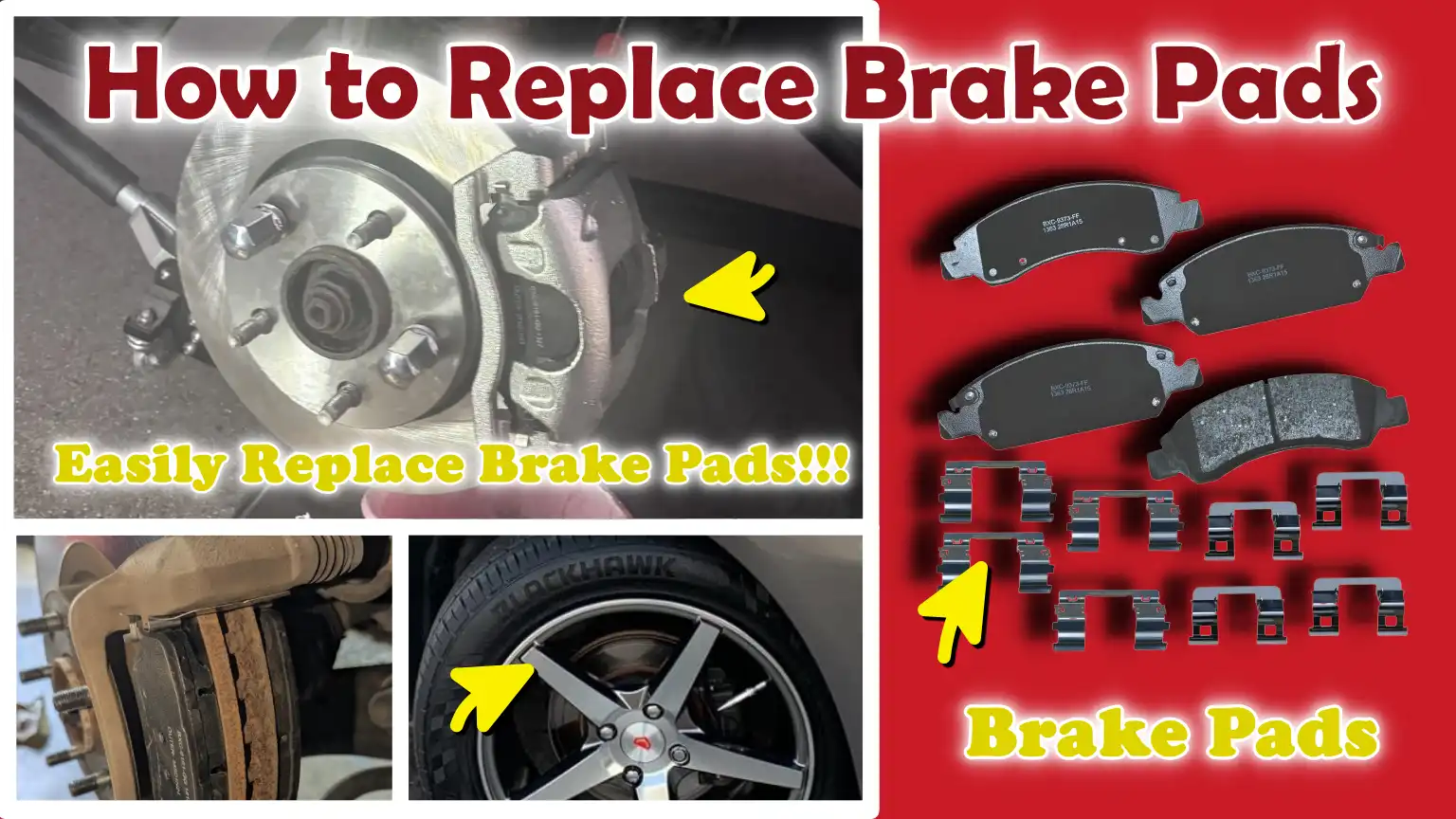
So, this is the guide that’ll show you all about How to Replace Brake Pads, so that you can easily replace those brake pads without having issue with anything at all.
Tools
| Tool / Material | Why It Is Needed | How to Use It |
|---|---|---|
| Car Jack | To safely remove the wheel and access the brake system, you must raise the car. | Place the jack under the car’s designated lift point and slowly raise the car until the wheel is off the ground. |
| Jack Stands | It is unsafe to lift a car with a jack alone for extended periods of time. Jack stands prevent the car from falling. | After raising the car with the jack, place the stands under the frame and slowly lower the car onto them. |
| Lug Wrench | The wheel must be removed to access the brake pads and brake caliper. | Turn the lug nuts anti-clockwise to loosen and remove them, then remove them from the wheel hub. |
| Socket Set and Wrench | The brake caliper is held in place by bolts, which must be removed to access the brake pads. | Select the correct socket size, attach it to a ratchet and carefully loosen the caliper bolts. |
| C-Clamp or Brake Caliper Tool | New brake pads are thicker than the old ones, so the piston needs to be pressed down to make room. | Place the clamp in front of the caliper piston and slowly tighten until the piston slides back into the caliper. |
| Screwdrivers | Helpful for removing clips, springs, or gently removing old brake pads. | Carefully insert the tip to lift clips or remove pads from their slots without damaging the parts. |
| Brake Cleaner | Clean brake parts improve performance and prevent damage to new pads. | Lightly spray the rotor and caliper parts, then let it dry before installing new pads. |
| New Brake Pads | Old pads wear out over time and need to be replaced for safe braking. | Slide the new pads into the caliper bracket where the old pads were installed. |
| Anti-Squeal Lubricant or Brake Grease | Reduces noise, vibration and squeaking during braking. | Apply a thin layer to the back of the brake pad; not the surface of the pad. |
| Gloves and Safety Goggles | Brake dust and chemicals during repairs can cause skin and eye irritation. | Wear gloves when handling parts and goggles when cleaning or spraying brake cleaner. |
How to Be On The Safe Side
1. Work on a Flat and Stable Surface
Before beginning any brake repair, it’s crucial to park the vehicle on a flat and stable surface.
Level ground balances the car and prevents it from rolling or sliding while working.
Sloping driveways, soft soil, or uneven roads can cause the vehicle to suddenly move, which can be very dangerous when removing the wheels.
A solid concrete floor or flat paved surface is generally the safest place to replace brake pads.
Jacking up the vehicle is safer when it’s stable and jack stands can hold the car firmly.
Taking a few minutes to position the car in the right position greatly reduces the risk of an accident and makes the entire repair process more controlled and safe.
2. Wear the Right Safety Gear
Working on the braking system exposes you to brake dust, metal particles, grease and cleaning chemicals, so it’s important to wear safety gear.
Sturdy work gloves protect your hands from sharp edges of metal parts like brake rotors, calipers and brackets.
Safety goggles protect your eyes from dust and brake cleaner spray, which can cause irritation or injury if they get into your eyes.
Brake dust can contain small particles created by friction during braking and these particles should not come into contact with your skin or eyes.
Using simple protective equipment keeps you safe, improves work comfort and helps prevent injuries during repairs.
3. Never Rely on a Jack
Car jacks are designed primarily for lifting a vehicle, not for supporting its full weight for long periods of time.
Hydraulic jacks can gradually lose pressure or slip if the ground is not completely stable.
If you’re working near the wheel area and the jack fails, the vehicle could suddenly fall, causing serious injury.
For this reason, professional mechanics always use jack stands after lifting a vehicle.
Once the car is jacked up, place sturdy jack stands under the frame or fixed support points.
Then, slowly lower the car onto the stands so they bear the weight.
This simple safety step provides strong support and keeps the car stable while changing the brake pads.
4. Apply the Parking Brake and Block the Wheels
Before lifting the car, always apply the parking brake to prevent it from rolling.
On most vehicles, the parking brake locks the rear wheels, keeping the car in place while you work.
In addition to using the parking brake, placing wheel chocks or solid blocks behind the wheels that remain on the ground adds another layer of safety.
Wheel chocks prevent the car from rolling forward or backward, specially if the car is on a slight incline.
This small precaution is crucial, as even the slightest movement while lifting can destabilize the car.
Properly securing the car ensures that you can confidently work on the braking system without unnecessary risk.
How to Prepare the Vehicle Itself
1. Loosen the lug nuts before lifting the vehicle
Before lifting the vehicle, while the tire is touching the ground, slightly loosen the lug nuts on the wheel.
Lug nuts are strong metal nuts that securely hold the wheel to the wheel hub.
When the tire is on the ground, the weight of the vehicle prevents the wheel from rotating, making loosening these nuts much easier and safer.
If you try to loosen them after lifting the vehicle, the wheel may easily spin, making the job difficult or unsafe.
Using a lug wrench, turn each lug nut slightly anti-clockwise to break the tight seal, but do not remove them completely.
Most vehicles have four, five, or sometimes six lug nuts on each wheel and they are tightened tightly to secure the wheel while driving.
Loosening them first helps you avoid unnecessary stress later and prepares the wheel for easy removal after lifting the vehicle.
2. Raise the vehicle and secure it with jack stands
After loosening the lug nuts, the next step is to carefully raise the vehicle using a car jack.
The jack should be placed under the correct lifting point specified by the vehicle manufacturer, which is usually located on the car’s frame or in the pinch weld area near the wheel.
Lifting from the correct point helps prevent damage to the vehicle’s body and ensures that the weight is properly supported.
Slowly raise the vehicle until the wheel you’re working on is completely off the ground.
After raising the vehicle, place jack stands under the car’s sturdy frame area to support its weight.
Jack stands provide strong and stable support because they are designed to lift heavy objects for long periods of time.
Once the stands are in place, slowly lower the vehicle so that the weight rests securely on them.
This step is important because it stabilizes the car while you work on the brake system and prevents it from falling.
3. Remove the wheel to access the brake assembly
Once the vehicle is safely supported on jack stands, the lug nuts that were loosened earlier can now be fully removed.
Use a lug wrench to unscrew each nut and tighten them securely to prevent damage.
After removing all the lug nuts, carefully pull the wheel straight off the hub.
Sometimes, due to dirt, rust, or pressure from prolonged use, the wheel may appear slightly stuck, but a gentle tug or tap can help loosen them.
Removing the wheel exposes the brake assembly, which contains essential components such as the brake rotor, brake caliper and brake pads.
The brake pads are located inside the caliper and apply pressure to the rotor to slow the car when the brake pedal is pressed.
After removing the wheel, you can now easily access these parts, making it possible to inspect them and begin the brake pad replacement process safely and effectively.
How to Inspect the Brake System
1. Checking Brake Pad Wear
Brake pads are the main friction components that apply pressure to the brake rotor to slow or stop the vehicle.
Because they work by generating friction, they wear out over time.
Carefully inspecting brake pads before replacing them is a crucial step.
A good brake pad typically has several millimeters of friction material attached to a metal backing plate.
Most experts recommend replacing brake pads when the friction material becomes approximately 3 millimeters or less thick, as thinner pads reduce braking power and increase stopping distance.
When inspecting, also look for uneven wear, deep grooves, cracks, or glazing on the pad surface.
Uneven wear may indicate a problem with the brake caliper or slide pin, while cracks may be caused by excessive heat generated during hard braking.
Some brake pads also have a small metal wear indicator that makes a loud squeaking sound when the pad becomes too thin.
Inspecting the condition of the pads helps you understand how worn they are and ensures that new replacement pads will effectively fix the braking problem.
2. Check for Damage or Marks on the Brake Rotors
Brake rotors, also known as brake discs, are large round metal discs that rotate with the wheel.
When you press the brake pedal, the brake pads stick to the rotor, slowing the wheel.
This constant friction can wear down the rotors over time.
During the inspection, look for deep marks, scratches, cracks, rust, or rough areas on the rotor surface.
Light marks on the surface are normal, but deep marks can reduce braking performance and cause vibrations when stopping.
Excessive heat from hard braking can also slightly warp the rotors, causing vibrations in the steering wheel or brake pedal.
Another important consideration is the thickness of the rotor, as rotors gradually become thinner as they wear.
Many rotors have a minimum thickness measurement marked on their metal surface and if the rotor becomes thinner than this limit, it should be replaced.
Carefully inspecting the rotor ensures that the braking surface is smooth and strong enough to work properly with new brake pads.
3. Check the Caliper, Slides and Brake Hardware
The brake caliper is the part that holds the brake pads and presses them against the rotor when the brake pedal is pressed.
For the braking system to function properly, the caliper must move smoothly on its slide pins and apply equal pressure to both brake pads.
When inspecting, check that the caliper slides move smoothly without sticking or binding.
The slide pins must be clean and lightly lubricated for the caliper to function properly.
If these pins become dry or rusty, the brake pads may not wear properly, or you may feel a pull on the brake rotor even when the pedal is not pressed.
Brake hardware, such as clips, springs and mounting brackets, is also important to check, as these parts keep the brake pads aligned and stable during operation.
Worn or damaged hardware can cause noise, vibration, or improper pad wear.
Carefully inspecting these parts helps ensure the entire brake system is functioning properly, ensuring the safety and proper operation of your new brake pads.
How to Remove Old Brake Pads
1. Locate and Remove the Caliper Bolts
The brake caliper is the part that holds the brake pads and presses them against the rotor when you press the brake pedal.
It is usually attached to the brake assembly by two strong bolts located behind the caliper.
These bolts hold the caliper firmly in place so it can apply consistent pressure when braking.
To remove the old brake pads, the first step is to locate these caliper bolts and loosen them using the appropriate socket and ratchet from a socket set.
Most vehicles use bolts that are tightly tightened because the braking system must handle high force and heat during operation.
Slowly turn the bolts anti-clockwise until they loosen.
After removing the bolts, it is important to store them in a safe place so they can be reused when reassembling them.
Removing these bolts can cause the caliper to move away from the rotor, which is necessary to access the brake pads.
2. Slide the caliper off the rotor and support it properly
After removing the caliper bolts, the caliper can be gently lifted or slid off the brake rotor.
The rotor is a round metal disc attached to the wheel hub and the caliper clamps onto it.
When removing the caliper, it must be handled carefully as it is connected to the brake line, which carries brake fluid from the master cylinder to the caliper piston.
The brake line is flexible, but it should never be pulled, twisted, or tugged forcefully on the caliper.
To prevent damage, mechanics typically hang the caliper using a strong wire, hook, or zip tie attached to a nearby suspension part, such as a coil spring or control arm.
Supporting the caliper secures the brake hose and prevents unnecessary strain, which could cause leaks or damage the braking system.
3. Remove the old brake pads from the caliper bracket
Once the caliper is safely removed, the old brake pads are clearly visible inside the caliper bracket.
Brake pads are designed to slide in small metal guides or clips inside the bracket.
These pads have a friction surface that applies pressure to the rotor to create the stopping force needed to slow the vehicle.
Over time, this friction material wears away due to the heat and friction generated by braking.
To remove the pads, simply slide them out of the bracket slots, or if they are slightly stuck due to dust or rust, gently pry them off with your hands or a screwdriver.
When removing the pads, it’s helpful to see how they were installed so that new pads can be installed in the same orientation.
Inspecting the old pads also provides useful information about wear patterns, which can help identify potential problems in the braking system.
4. Check the caliper pins and slides and clean them if necessary
Before installing new brake pads, it’s important to check the condition of the caliper slide pins and the areas where the caliper moves.
Slide pins allow the caliper to move smoothly from side to side so that both brake pads apply equal pressure to the rotor.
If these pins become dirty, dry, or rusty, the caliper may not rotate properly, which can lead to improper brake pad wear or reduced braking performance.
During inspection, carefully remove the slide pins and see if they rotate freely inside their rubber boots.
If there is dirt, old grease, or rust, the pins should be cleaned with brake cleaner and wiped with a clean cloth.
After cleaning, a thin layer of special brake grease can be applied to help the pins rotate smoothly again.
Ensuring that the caliper slides operate smoothly helps the braking system function properly and ensures even wear and optimal performance from new brake pads.
How to Install New Brake Pads
1. Apply Anti-Squeal Lubricant to the Back of the New Pads
Before installing new brake pads, it’s important to apply a thin layer of anti-squeal lubricant or special brake grease to the back of the pad.
The back of the brake pad is the metal plate inside the caliper, not the friction surface that touches the rotor.
This lubricant helps reduce vibration between the brake pad and caliper, which is one of the main causes of squealing or loud brake noise.
Modern braking systems generate a lot of heat and pressure during operation and small vibrations can travel through the metal parts of the brake assembly.
Brake grease acts as a cushion, absorbing these vibrations and keeping the braking system quiet and smooth.
It’s important to apply grease only to the back metal surface and never to the surface of the pad that touches the rotor, as any lubricant on the friction material can reduce braking power and create a dangerous driving situation.
2. Insert the new pads into the caliper bracket
After applying lubricant, the new brake pads can be placed into the caliper bracket.
The caliper bracket is a metal frame that holds the brake pads in place and allows them to move slightly when the brakes are applied.
Each brake pad has a metal backing plate and a layer of thick friction material that applies pressure to the rotor to create stopping force.
New brake pads are always thicker than worn pads because they contain new friction material that hasn’t yet been used.
When inserting the pads, they should slide easily into the bracket clips or guides where the old pads were installed.
Some vehicles also have small metal clips or shims that help align the pads and reduce noise.
Positioning the pads correctly ensures that they exert even pressure on the rotor when the brake pedal is applied.
Correct placement is crucial as it allows the braking system to distribute pressure evenly and provide reliable stopping performance.
3. Compress the caliper piston using a C-clamp or caliper tool
Because new brake pads are thicker than worn pads, the caliper piston must be pushed back into its housing to fit around the rotor.
The caliper piston is a round metal part inside the caliper that moves outward when brake fluid pressure is applied.
This movement pushes the brake pad against the rotor during braking.
Over time, as the brake pads wear, the piston gradually moves outward to maintain contact with the pad.
When installing new pads, the piston must be pushed back so the caliper can fit the thicker pads.
A C-clamp or a special brake caliper compression tool is typically used for this step.
The tool is placed in front of the piston and gradually tightened so that the piston easily retracts into the caliper body.
This should be done slowly and evenly to avoid damaging the piston seal or brake components.
Properly pressing the piston in ensures that the caliper will fit snugly on the rotor and new pads.
4. Reinstall the caliper on the new pads
Once the piston is fully pressed in and the new pads are seated in the bracket, the brake caliper can be reinstalled on the rotor and pads.
The caliper should be carefully slid into place without applying force.
Because the piston has been pushed back, there should now be enough space for the caliper to fit snugly around the new brake pads.
The caliper should be aligned with the mounting points where the bolts were previously removed.
During this step, it is also important to ensure that the brake hoses connected to the caliper are not bent or stretched.
Proper alignment of the caliper ensures that it moves smoothly on its slide pins and applies equal pressure to both brake pads when braking.
Properly reinstalling the caliper secures the braking system structure and prepares it for final tightening.
5. Tighten the caliper bolts to the correct torque specification
The final step in installing new brake pads is to tighten the caliper bolts according to the vehicle manufacturer’s torque specifications.
Torque refers to the correct amount of force applied to the bolts.
If the bolts are too loose, the caliper may move or vibrate during braking, which can reduce braking performance and cause noise.
If the bolts are overtightened, the threads may be damaged or the bolts may be difficult to remove during subsequent maintenance.
Many professional mechanics use a torque wrench to ensure the bolts are tightened to the correct level specified in the vehicle’s service manual.
Properly tightened caliper bolts secure the brake assembly and allow the caliper to function properly while driving.
Ensuring that the bolts are properly tightened is an important safety step that helps maintain reliable braking performance and long-term durability of the brake system.
How to Reassemble the Wheel
1. Reassemble the Wheel and Tighten the Lug Nuts by Hand
After properly installing the new brake pads and calipers, the next step is to reinstall the wheel onto the wheel hub.
The wheel hub is the central metal part that holds the wheel and connects it to the vehicle’s suspension and drivetrain.
Carefully lift the wheel and align the wheel’s holes with the wheel studs, which are sturdy threaded bolts protruding from the hub.
Once the wheel is properly aligned, slide it onto the studs until it rests flat on the hub surface.
This correct alignment is important because it ensures the wheel turns smoothly without wobble while driving.
After installing the wheel, place each lug nut back onto the wheel stud and begin tightening them by hand.
Hand-tightening the lug nut first ensures that the threads are properly aligned and prevents cross-threading, which can damage the stud or nut.
At this stage, the lug nuts should be tight enough so that the wheel remains in place even when the vehicle is raised.
Carefully tightening the wheel at this stage maintains proper wheel alignment and prepares the vehicle for the final tightening process.
2. Lower the vehicle and fully tighten the lug nuts in a star pattern
Once the wheel is in place and the lug nuts are lightly tightened, the vehicle can be carefully lowered back to the ground.
Using a car jack, slowly raise the vehicle slightly to remove the jack stands, then slowly lower the car until the tire is completely on the ground.
When the weight of the vehicle is on the tire, the wheel becomes stable and the lug nuts prevent it from rotating when fully tightened.
At this stage, the lug nuts should be tightened using a lug wrench in a star pattern, which means tightening the nuts in a crisscross pattern around the wheel rather than in a circular motion.
This method distributes pressure evenly across the wheel and ensures that the wheel sits flat on the hub.
Improper tightening can cause the wheel to tilt slightly, causing vibration while driving, or apply incorrect pressure to the wheel studs.
Applying even pressure to all lug nuts maintains wheel balance and keeps the wheel firmly attached to the vehicle.
Many professional mechanics also recommend using a torque wrench to tighten the lug nuts to the manufacturer’s recommended torque level to avoid under- or over-tightening.
Properly tightening a wheel is an important safety step as it ensures a stable and secure wheel while driving.
How to Test the Brakes
1. Pump the Brake Pedal to Install New Brake Pads
After reinstalling the wheels and lowering the vehicle to the ground, the first and most important step is to pump the brake pedal several times before driving.
When the brake caliper piston is first pressed to make room for the new pads, it moves further away from the rotor.
Because of this, the brake pedal may feel softer or lower than normal when first pressed.
Pumping the brake pedal gradually pushes the caliper piston outward until the new brake pads are fully in contact with the brake rotor.
This process is called brake pad placement.
This helps restore normal brake pedal pressure and ensures that the braking system is ready to function properly.
Most drivers will notice that the brake pedal becomes firmer after a few pumps.
This simple step is crucial because driving without installing brake pads can result in poor braking during stops.
2. Check the Brake Fluid Level in the Master Cylinder
When the brake pedal feels firm again, it’s a good idea to check the brake fluid level in the master cylinder reservoir.
The master cylinder is the main component that transmits hydraulic pressure to the calipers via brake fluid when the brake pedal is pressed.
Brake fluid plays a vital role in the braking system as it transmits the force applied by your foot to the brake pads, stopping the vehicle.
The reservoir is usually located near the firewall in the engine compartment and is often made of clear plastic with minimum and maximum level markings.
When changing brake pads, the fluid level may fluctuate slightly as the caliper piston is pushed back into its housing.
To ensure proper hydraulic pressure, the fluid level should be between the indicated marks.
If the level is low, carefully add the correct type of brake fluid recommended by the vehicle manufacturer.
Maintaining the correct fluid level helps ensure the braking system responds quickly and reliably to pedal pressure.
3. Test drive at low speed in a safe area
After confirming that the brake pedal feels firm and the brake fluid level is correct, the next step is to take a slow, controlled test drive.
This test should be conducted in a quiet and open area, such as an empty parking lot or a quiet residential street with little traffic.
Start by driving at a low speed and gently apply the brakes several times to confirm that the vehicle stops easily.
New brake pads often require a short break-in period called bedding, in which the pad surface gradually adapts to the rotor surface.
During this process, gentle braking helps create an even contact layer between the pad and rotor.
Avoid sudden and hard braking during the first few stops unless it’s essential for safety.
This careful test drive helps confirm that the brake system is functioning properly and allows the driver to get used to how the new brakes feel.
4. Listen and feel for strange sounds or vibrations
When testing the brakes, it’s important to pay close attention to any unusual sounds or vibrations coming from the wheels.
New brake pads may emit a slight odor or make a very slight noise during the first few stops as the surfaces adjust, which is usually normal.
However, a loud grinding sound, sharp vibrations in the steering wheel, or a twitching brake pedal can indicate that something isn’t installed properly.
These symptoms can sometimes be caused by loose bolts, poorly fitted brake pads, or rotor problems.
Braking action should feel smooth and controlled, without pulling the vehicle to one side.
Listening carefully and feeling how the brakes respond can help identify problems early.
If the brakes operate quietly and the vehicle stops evenly, the installation was successful and the braking system is functioning safely and properly.
How to Maintain The Brake Pads for the Long Period of Time
Moreover, there’s research published in Applied Sciences that actually shows that the replacement of the worn brake pads and discs can actually improve the vehicle’s braking efficiency in significant way. And in the controlled vehicle testing: the braking efficiency literally increased from 59% to 72% after just installing the new brake components, that actually shows a right from the replacement there’s 13% improvement in stopping performance, so this finding is yet again clearly shows that why it is really important to have routine brake pad replacement and maintenance is essential for having perfect braking power and that reduces stopping distance as well, that leads to the better safety in the real life driving conditions.[¹]
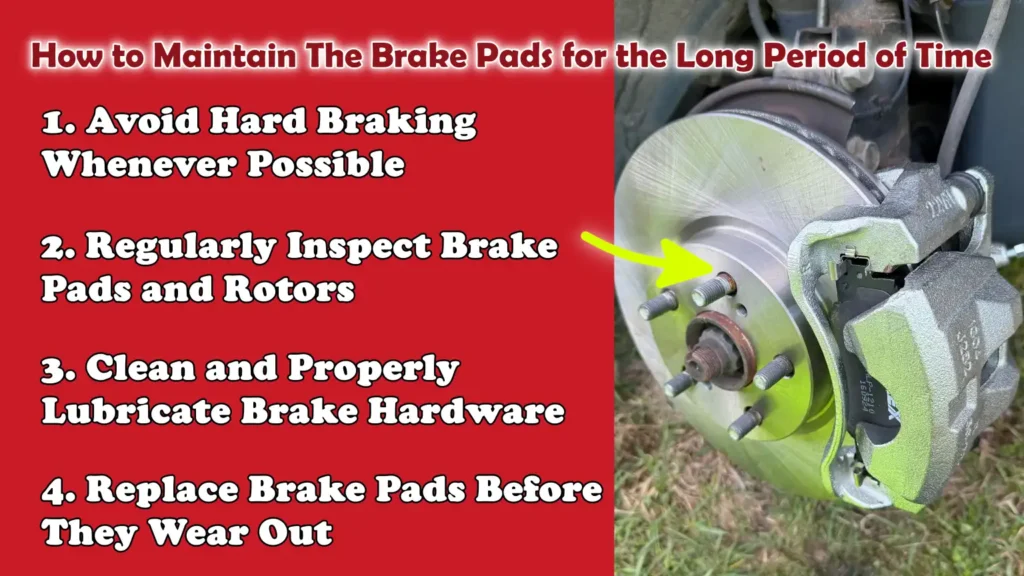
1. Avoid Hard Braking Whenever Possible
Driving habits significantly impact how long brake pads and rotors last.
Hard braking, which occurs when the brake pedal is suddenly and forcefully pressed, creates excessive friction and heat between the brake pad and rotor.
This heat can rapidly wear down the friction material on the brake pad and, over time, can also roughen or warp the rotor surface.
Modern brake systems are designed to handle high temperatures, but repeated hard braking puts increased strain on the entire braking system.
A smooth driving style can significantly extend the life of brake parts.
Drivers can minimize brake wear by maintaining a safe distance from the vehicle ahead, slowing down gradually and anticipating stops at traffic lights or intersections.
Gentle and steady braking not only protects brake pads but also improves overall vehicle control and fuel efficiency.
2. Regularly Inspect Brake Pads and Rotors
Regular inspection is one of the most effective ways to keep your braking system safe and functioning properly.
Brake pads wear down over time because they are designed to release material to create the friction needed to stop the vehicle.
Periodically inspecting your brake pads helps ensure they still have enough thickness to provide strong braking performance.
Many automotive experts recommend inspecting the braking system during regular tire rotation or at least every 10,000 to 15,000 kilometers, depending on driving conditions.
During the inspection, the brake rotor should also be checked for deep grooves, cracks, excessive rust, or uneven wear.
A smooth rotor surface helps the brake pads make even contact and provide consistent stopping power.
Early detection of wear and damage allows drivers to correct problems before serious or costly repairs occur.
3. Clean and Properly Lubricate Brake Hardware
The braking system contains many small but essential parts that help the brake pads move smoothly and apply consistent pressure.
These parts include the caliper slide pins, mounting clips and other hardware that guide the brake pads when braking.
Over time, dust, road grime, moisture and rust from the brake pads can accumulate around these parts.
When this buildup occurs, the brake pads cannot slide smoothly, causing brake wear, reduced braking power, or noise.
Cleaning these parts during brake maintenance helps the braking system function smoothly.
Special high-temperature brake grease can also be applied to certain metal contact points and slide pins to reduce friction and prevent sticking.
Proper cleaning and lubrication ensures smooth caliper rotation and ensures that both brake pads apply equal pressure to the rotor.
4. Replace Brake Pads Before They Wear Out
One of the most important maintenance procedures is replacing brake pads before they wear out completely.
Brake pads have a layer of friction material that gradually thins with each use of the brakes.
When this material becomes too thin, the metal backing plate of the brake pad can begin to directly contact the rotor.
This metal-to-metal contact can cause a loud grinding noise and accelerate the wear of the rotor surface.
Worn rotors often require resurfacing or replacement, which is much more expensive than simply replacing the brake pads.
Most automotive professionals recommend replacing brake pads when the thickness of the friction material reaches approximately three millimeters.
Replacing the pads at the right time protects the rotors, maintains good braking performance and keeps the entire braking system running safely and efficiently for longer.
Read More:
Conclusion – How to Replace Brake Pads
Now, you have clear understanding that the reliable braking does not happen by chance, as you actually need to do proper care and inspect and replace them the components if needed badly.
The braking system uses friction between the brake pads and rotors to slow the wheels and over time, this constant friction wears down the pads.
If worn pads are ignored for too long, they can reduce braking performance, increase stopping distances and even damage other expensive parts like brake rotors and calipers.
By learning how to properly replace brake pads, vehicle owners can maintain strong braking power, prevent unnecessary repair costs and improve overall driving safety.
This process involves careful preparation, using the right tools, following the correct safety precautions, inspecting brake components and installing new pads correctly so the braking system works smoothly.
Testing the brakes after installation and maintaining the system through regular inspections and good driving habits are equally important.
When brake maintenance is performed timely and correctly, it not only protects the vehicle but also ensures the safety of everyone on the road.
With the right knowledge, attention to detail and regular care, a vehicle’s braking system can remain reliable for thousands of miles.
Now, that’s it about this guide and you can ask more questions regarding this guide on How to Replace Brake Pads.
Frequently Asked Questions
FAQ 1: What are brake pads and why are they important?
Brake pads are an essential part of a vehicle’s braking system. They are flat pieces of friction material that apply pressure to the brake rotor when the brake pedal is pressed. This friction slows the rotating wheels and ultimately stops the car. Every time you use the brakes, the pads rub against the rotor, gradually wearing them down. Because of this constant friction, brake pads are considered a normal wear item and require periodic replacement. If brake pads become excessively worn, the vehicle’s braking power can be reduced and stopping distances can be longer, which can be dangerous in an emergency. Good brake pads help the vehicle stop smoothly, quietly and safely.
FAQ 2: How do you know if brake pads need replacing?
There are several clear warning signs that indicate brake pad replacement may be necessary. One of the most common signs is a loud noise when braking. Many brake pads have a small metal wear indicator that makes this sound when the pad is too thin. Another sign is a grinding sound, which means the brake pad material has worn away completely and the metal backing plate is touching the rotor. Drivers may also notice that the car takes longer to stop or that the brake pedal feels softer than usual. In some cases, vibrations in the steering wheel or brake pedal can also indicate worn brake parts. Regular inspections can help detect these signs early and prevent more serious brake damage.
FAQ 3: Can you change brake pads yourself at home?
Yes, many vehicle owners can change brake pads at home if they have basic tools, mechanical knowledge and follow proper safety procedures. Replacing brake pads is considered one of the most common DIY automotive repairs. This process typically involves safely lifting the vehicle, removing the wheel, removing the brake caliper, removing the old pads, installing new pads and reassembling the parts. While this process isn’t overly complicated, it does require attention to every detail and patience. Following a reliable guide and using the right tools helps ensure the brakes are properly installed and working safely.
FAQ 4: What tools are needed to change brake pads?
Brake pad replacement requires some basic tools for a safe and effective operation. A car jack and jack stands are needed to lift and support the vehicle. A lug wrench is used to remove the wheel nuts so the wheel can be removed. A socket set and ratchet are needed to remove the bolts holding the brake caliper in place. A C-clamp or brake caliper compression tool is typically used to push the caliper piston back so that new, thicker brake pads can be fitted. Additionally, brake cleaner is often used to remove dust and dirt from brake parts. These tools are readily available and commonly used for many vehicle maintenance tasks.
FAQ 5: How long does it take to change brake pads?
The time required to change brake pads can vary depending on the type of vehicle and the experience level of the person performing the work. For those familiar with basic car maintenance, changing brake pads on one axle can take approximately one to two hours. Beginners may take longer as they will need to work more carefully and learn each step of the process. Some vehicles may have slightly different brake designs, which can make it more time-consuming to reach certain parts. It’s important to work slowly and carefully rather than rushing, as the braking system is directly linked to vehicle safety.
FAQ 6: Is it necessary to replace the brake rotor when replacing brake pads?
Brake rotors don’t need to be replaced every time you replace the brake pads, but they should always be carefully inspected. If the rotor surface is smooth and within the manufacturer’s thickness limit, it can usually be used with new brake pads. However, if the rotor has deep grooves, cracks, excessive corrosion, or is too thin, it may need to be rebuilt or replaced. In some cases, warped rotors can cause vibrations during braking. Installing new brake pads on worn rotors can damage them and reduce braking performance, so rotor inspection is an important part of brake maintenance.
References:
[1] Experimental Study of the Correlation between the Wear and the Braking System Efficiency of a Vehicle
https://www.mdpi.com/2076-3417/13/14/8139
Hello Folks, Dean Shali here to help you out to solve the problems with your lovely vehicle, as i have lots of experience and knowledge about automotive industry as i woks directly with the customers and repair vehicles and i love to help the people to keep their cars safe and running smoothly.