Written By: Dean Shali
Fact Checked By: Sabré Cook
Reviewed By: Tamara Warren
Every car on the road tells a silent: not just through its design or performance, but also through the condition of its paint.
But, most of the people actually doesn’t realize that the car paint literally begins to degrade from the very first day it is exposed to the environment.
Not only this, there’s scientific studies on the automotive coatings that shows that ultraviolet-radiation from the sun breaks down the clear coat layer at a molecular level, that actually leads to the oxidation, fading and loss of gloss over the time.
In Addition to it, there’s constant exposure to the airborne pollutants, microscopic dust particles, bird droppings that contains acidic compounds and even improper washing technique is what attacks the car’s surface quiet rigously.
So, the thing is you just need to know How to Protect Car Paint, so that you can add protective layers such as: wax, sealants or ceramic coatings to significantly slow down this damage and preserve both the appearance and value of your vehicle for years to come.
\What Damages Car Paint? – Understanding the Enemies
Car paint is designed to protect your vehicle; yet, it faces constant attacks from daily environmental and human factors.
Modern automotive paint typically consists of multiple layers, topped by a ‘clear coat’ that provides both shine and protection.
However, this clear coat is not permanent; over time, it can gradually deteriorate when exposed to sunlight, dirt and physical abrasion.
Most damage does not occur suddenly.
It accumulates gradually through repeated exposure, which is why many car owners fail to notice it until the paint begins to look faded, lifeless, or scratched.
Understanding the causes of this damage is the first and most crucial step toward preventing it.
1. UV Rays and Sunlight
Sunlight is one of the biggest and most potent culprits behind paint damage.
Ultraviolet (UV) rays penetrate the clear coat and break down its chemical structure through a process known as ‘oxidation.’
Simply put, oxidation means that the surface loses its natural oils and begins to dry out, resulting in diminished shine and paint that appears faded or chalky.
Dark-colored cars are particularly vulnerable because they absorb more heat, which accelerates this process.
Over time, constant exposure to sunlight can cause the paint to lose its original color and smooth finish.
This is why cars that are regularly parked outdoors without any protection age much faster than those kept in the shade or in covered spaces.
2. Dirt, Dust and Road Debris
Dirt and dust may seem harmless, but in reality, they contain tiny particles that can inflict scratches upon your car’s surface.
When these particles rub against the paint, whether during cleaning or simply due to airflow, they create very fine scratches known as ‘micro-scratches.’
When these tiny scratches accumulate in large numbers in a circular pattern, they are referred to as ‘swirl marks,’ which are particularly visible in sunlight.
Road debris such as: sand, small stones and pebbles, can cause even deeper scratches if it strikes the surface at high speeds while the vehicle is in motion.
This type of damage is extremely common and often occurs without the driver even realizing it.
3. Bird Droppings and Tree Sap
Bird droppings and tree sap are not only unsightly, but they are also chemically damaging to your car’s paint.
Bird droppings contain uric acid, which is highly corrosive and can begin to damage the clear coat within just a few hours specially in hot weather.
Tree sap is sticky and can harden over time, making it difficult to remove and potentially damaging the underlying paint.
If these substances are allowed to remain on the surface for too long, they can cause ‘etching’; this means they eat away at the clear coat, leaving behind permanent marks or stains.
Repairing this type of damage often requires polishing, or, if the damage is severe, the entire car may need to be repainted.
4. Acid Rain and Pollution
Acid rain forms when airborne pollutants combine with moisture and fall onto surfaces, including your car.
This water contains acidic elements that can gradually weaken the paint over time.
Beyond acid rain, industrial pollution, vehicle exhaust fumes and airborne chemicals can also accumulate on your car’s surface, forming a layer of grime.
These pollutants can react with the paint, causing its color to fade, its texture to become rough and, over time, leading to rust formation.
Even if the damage is not immediately visible, repeated exposure to such environments can compromise the integrity of the clear coat, leaving the paint more vulnerable to other forms of damage.
5. Improper Washing Techniques
The most common cause of paint damage is the use of improper washing techniques, an issue of which many car owners remain completely unaware.
Using dirty sponges, old rags, or simply a bucket of water can trap dirt particles and drag them across the paint surface, resulting in scratches.
Failing to rinse off loose surface dirt before washing the car can produce a similar effect.
Even drying the car with coarse or soiled towels can leave marks on the surface.
Over time, these minor errors accumulate, leading to the appearance of swirl marks and paint discoloration.
Adopting proper washing techniques is crucial; after all, if even routine cleaning is performed incorrectly, it ultimately causes more harm than good.
Know, Common Types of Car Paint Protection – Choose the Right Method
Protecting your car’s paint involves more than simply applying a single product; rather, it entails selecting the method best suited to your specific needs such as: the level of protection required, its expected longevity and the amount of effort you are willing to invest.
Car paint protection works by creating a protective layer over the vehicle’s clear coat, thereby shielding it from sunlight, dust, chemicals and various other forms of damage.
Some methods prioritize shine and short-term protection, while others are engineered for long-term strength and durability.
Understanding the mechanics of each method enables you to make a more informed decision and avoid wasting your time and money on solutions that do not align with your particular requirements.
1. Car Wax
Car wax is one of the oldest and most widely utilized methods for protecting automotive paint.
It is typically formulated using natural ingredients such as: Carnauba wax, though it may also incorporate synthetic components.
When applied to the vehicle’s surface, the wax forms a thin protective film that rests atop the clear coat.
This layer helps to reflect sunlight, minimize oxidation and impart a deep, lustrous shine to the vehicle.
Furthermore, the wax causes water to bead up on the surface, making it more difficult for dust and dirt to adhere to the paintwork.
The primary advantage of car wax is its ease of application and its ability to instantly enhance the vehicle’s aesthetics, giving the paint a brighter and smoother appearance.
However, its protective effect is temporary, as the layer gradually wears away due to exposure to heat, washing and environmental elements.
In most cases, to maintain its effectiveness, wax must be reapplied every few weeks, a task that can consume a significant amount of time for those fully dedicated to the long-term care of their vehicle.
2. Paint Sealants
Paint sealants represent a more modern approach to protection compared to traditional waxes.
These products are formulated using synthetic polymers designed to bond more firmly with the painted surface.
Unlike natural waxes, which tend to sit somewhat loosely on the surface, sealants create a stronger, more durable layer that can last for several months.
This synthetic protection offers superior defense against UV rays, oxidation and chemical contaminants.
Sealants also provide a sleek, glossy finish, although their shine may appear slightly more artificial compared to the warm glow of natural waxes.
The primary difference between sealants and waxes lies in their durability and strength, as sealants are engineered to provide long-term protection and do not require frequent reapplication.
For many car owners, sealants offer a balanced solution that combines ease of use with reliable performance.
3. Ceramic Coatings
Ceramic coatings represent a modern and highly durable method for protecting a car’s paintwork.
They consist of liquid polymers that chemically bond with the clear coat to form a semi-permanent protective layer.
Once cured, this layer becomes extremely hard and provides robust protection against environmental damage.
A key feature of ceramic coatings is their hydrophobic effect, meaning they effectively repel water.
Water beads up into small droplets and slides off the surface, carrying dust and dirt along with it, making the car significantly easier to clean.
A ceramic coating offers robust protection against exposure to UV rays, oxidation and mild chemicals.
Unlike waxes or sealants, which require frequent reapplication, a properly applied ceramic coating can last for years, provided it receives proper maintenance.
However, its application necessitates meticulous surface preparation and the initial cost can be quite substantial, particularly if the work is entrusted to a professional.
While it may not be entirely scratch-proof, it significantly reduces the likelihood of minor surface damage.
4. Paint Protection Film – PPF
Paint Protection Film, often referred to as PPF, is a transparent and durable film that is physically applied over a car’s paintwork.
Unlike waxes, sealants, or ceramic coatings, which are liquid-based, PPF acts as a solid physical barrier between the paint and external elements.
It is typically composed of flexible materials, such as polyurethane, capable of withstanding the impact of small stones, road debris and other physical objects.
This makes it one of the most effective options for safeguarding against paint chipping, scratches and surface damage, particularly in high-impact areas such as the front bumper, hood and side mirrors.
Many modern PPF products also feature “self-healing” properties, meaning that minor scratches can automatically repair themselves when exposed to heat.
In addition to physical protection, this film also shields against UV rays and chemical stains.
Although PPF offers the highest level of protection, it is also the most expensive option and typically requires professional installation to ensure a proper fit and finish.
How to Protect Your Car’s Paint – Easy Beginner Friendly Guide
Protecting your car’s paint involves more than just applying a product; it is a comprehensive process that begins with proper cleaning and concludes with regular maintenance.
Each step builds upon the previous one and if you skip even a single part, the effectiveness of the entire protection system may be compromised.
The objective is to safely remove dirt, properly prepare the surface, repair any existing damage and then apply a protective layer that shields the paint from future harm.
When executed correctly, this process not only enhances your car’s appearance but also extends the lifespan of the paint and helps maintain its value over time.
1. Wash Your Car Properly
The first and most crucial step is to wash your car in a manner that prevents damage.
The dirt and dust particles accumulated on the surface are abrasive; this means that if they are rubbed directly against the paint, they can cause scratches.
The “Two-Bucket Method” is highly recommended, as it significantly mitigates this risk.
One bucket contains clean, soapy water, while the second bucket is used to rinse the wash mitt after every pass, ensuring that dirt is not transferred back onto the paint.
This simple technique drastically reduces the likelihood of swirl marks forming on the paintwork.
It is also essential to use microfiber towels or wash mitts, as they are soft and designed to safely trap dirt within their fibers rather than dragging it across the surface.
Proper washing should always begin with rinsing the car with water to remove any loose dirt; Subsequently, the vehicle should be washed gradually from top to bottom; finally, to prevent water spots or streaks, the car should be carefully dried using a clean microfiber towel.
2. Decontaminate the Surface
Even after a thorough wash, the painted surface is not entirely clean, as tiny particles of dirt may still remain adhered to it.
These include industrial fallout, brake dust and other microscopic contaminants that typically cannot be removed through standard washing alone.
This is where a ‘clay bar treatment’ plays a crucial role.
A clay bar is a pliable material that is used in conjunction with a lubricant and gently rubbed over the paint; in doing so, it lifts and extracts embedded contaminants from the paint’s surface.
Once this process is completed correctly, the surface feels completely smooth to the touch, a clear indication that it is now entirely free of impurities.
This step is vital because if any dirt particles remain on the surface, they can hinder the proper adhesion of protective products to the paint, thereby reducing their effectiveness.
A clean and smooth surface ensures that the subsequently applied protective layer will last longer and perform more efficiently.
3. Polishing – If Necessary
Polishing is not always mandatory, but it becomes essential when the paint exhibits visible imperfections such as: swirl marks, minor scratches, or fading.
These defects are typically caused by improper washing techniques or environmental damage accumulated over time.
Polishing involves the use of fine abrasives to remove a very thin layer of the clear coat; It levels the surface and restores its smoothness and luster.
This process helps eliminate swirl marks and enhances the clarity of the paint, making it appear more brilliant and brand-new.
It is crucial to understand that polishing must be performed with care, as excessive or aggressive polishing can reduce the thickness of the clear coat.
When executed correctly, and only when necessary, polishing prepares the surface for enhanced protection and significantly improves the final aesthetic result.
Step 4: Apply a Protective Layer
Once the surface is clean, smooth and restored, the next step is to apply a protective layer that shields the paint from future damage.
Several options are available for this purpose, including waxes, sealants and ceramic coatings; each offers varying levels of durability and performance.
Waxes provide a natural shine and basic protection, though they require frequent reapplication.
Sealants, due to their synthetic composition, offer more robust and long-lasting protection.
Ceramic coatings provide the most advanced protection by forming a durable, semi-permanent bond with the paint, guarding against UV rays, chemicals and water.
The choice of product depends on the desired duration of protection and the amount of effort you are willing to invest in maintenance.
To ensure maximum effectiveness, it is essential to apply the protective layer evenly and allow it to cure properly.
5. Maintain Protection
Applying protection is not the final step; rather, maintaining it is what guarantees excellent results over the long term.
Regular washing using proper techniques helps prevent the accumulation of dirt and impurities, which can weaken the protective layer.
Avoiding harsh chemicals and utilizing mild cleaning products helps preserve the integrity of the coating over time.
By periodically inspecting the surface, watching for signs such as diminished water beading or reduced gloss, you can determine when it is time to reapply the protective coating.
Parking in shaded areas, using a car cover whenever possible and promptly removing damaging substances like bird droppings can also extend the lifespan of the protection.
Consistent maintenance is the key factor that keeps your car clean, shiny and well-protected over time.
Best Practices for Preserving Paint Long-Term
Preserving paint over the long term is not achievable through a single product or a one-time effort; rather, it relies on consistent habits adopted over time that mitigate cumulative damage.
A car’s paint is constantly exposed to sunlight, moisture, dust and temperature fluctuations, factors that, if not properly managed, can gradually weaken its outermost layer (the clear coat).
The primary objective is to minimize exposure to damaging elements and to handle the surface in a manner that prevents unnecessary scratches.
A few simple daily and weekly tasks, when executed correctly, can significantly extend the lifespan of the paint, maintain its luster and reduce the need for costly repairs or repainting in the future.
1. Advice on Car Washing Frequency
Washing your car at the appropriate frequency plays a crucial role in preserving its paintwork.
Dirt, dust, bird droppings and environmental pollutants do not merely rest on the surface; if left to sit for extended periods, they can bond with the paint and gradually cause damage.
Generally, in most situations, washing your car once every one to two weeks is considered optimal, as this ensures that harmful contaminants are removed before they can firmly bond to the surface.
In areas with high pollution levels, excessive dust, or frequent rainfall, more frequent washing may be required.
Conversely, washing a car too frequently without using proper techniques can also be detrimental; therefore, the focus should always be on safe and gentle cleaning methods, rather than solely on the frequency of washing.
Regular car washing keeps the surface clean, minimizes the risk of exposure to harsh chemicals and preserves the integrity of any protective layers applied to the paint.
2. Drying Methods That Prevent Scratches
The task of drying a car is often overlooked, yet it is one of the most common stages where paint damage occurs.
When water is allowed to air-dry naturally, it can leave behind mineral deposits that result in water spots, stains that can be difficult to remove later.
Conversely, improper drying techniques such as: using coarse cloths or wiping vigorously, can inflict microscopic scratches on the surface.
The safest approach is to use clean, soft microfiber towels; these towels are designed to absorb water without dragging dirt across the paintwork.
Rather than wiping with force, it is better to dry the car by gently patting or lightly wiping the surface.
Keeping the towels clean and free of dust and debris is equally important, as even a tiny particle trapped in the fabric can scratch the paint.
Proper drying techniques not only prevent stains and scratches but also help maintain the car’s smooth, glossy finish.
3. Parking Habits That Minimize Damage
Where and how you park your car has a direct impact on the condition of its paintwork.
Prolonged exposure to direct sunlight accelerates the oxidation process, causing the paint to fade and lose its luster over time.
Parking in shaded areas, garages, or covered spaces reduces the impact of UV rays and keeps the paint cool, thereby slowing down the aging process of the finish.
It is also essential to avoid parking under trees, as falling sap, twigs and bird droppings can cause both chemical and physical damage to the paintwork.
In crowded areas, parking away from other vehicles reduces the risk of accidental scratches, dents and door-related damage.
By making minor adjustments to your parking habits, you can significantly minimize the daily wear and tear on your car’s paintwork.
4. Seasonal Care Tips – Summer vs Winter
Different seasons present distinct challenges for car paint and adapting your care routine accordingly helps ensure long-term protection.
In summer, high temperatures and intense sunlight increase the risk of UV damage and oxidation; therefore, greater emphasis should be placed on regular car washing, maintaining protective coatings and parking in shaded areas whenever possible.
In winter, the threats shift toward moisture, road salt and grime, which can adhere to the car’s surface and, if not removed promptly, lead to rust and corrosion.
Frequent car washing during the winter months helps remove these harmful contaminants and prevents them from accumulating.
Seasonal variations also impact the longevity of protective products; consequently, depending on the conditions, waxes, sealants, or other coatings may need to be reapplied more frequently.
Understanding these seasonal effects allows you to tailor your care plan accordingly and keep your car’s paint protected throughout the year.
Know, Common Mistakes to Avoid During Applying Paint Protection
Many car owners focus on cleaning their vehicles regularly, yet their car’s paint still appears dull, scratched, or faded, often due to small errors made in their daily routines.
Car paint, specifically its “clear coat” (the glossy top layer), is sensitive to both chemical and physical contact.
Repeated minor mistakes can gradually damage the paint surface, even if no immediate visible signs appear; this is precisely why these errors are often overlooked.
Understanding what not to do is just as important as knowing the correct techniques; by avoiding these common mistakes, you can protect your car’s paint from long-term damage and preserve its shine and durability.
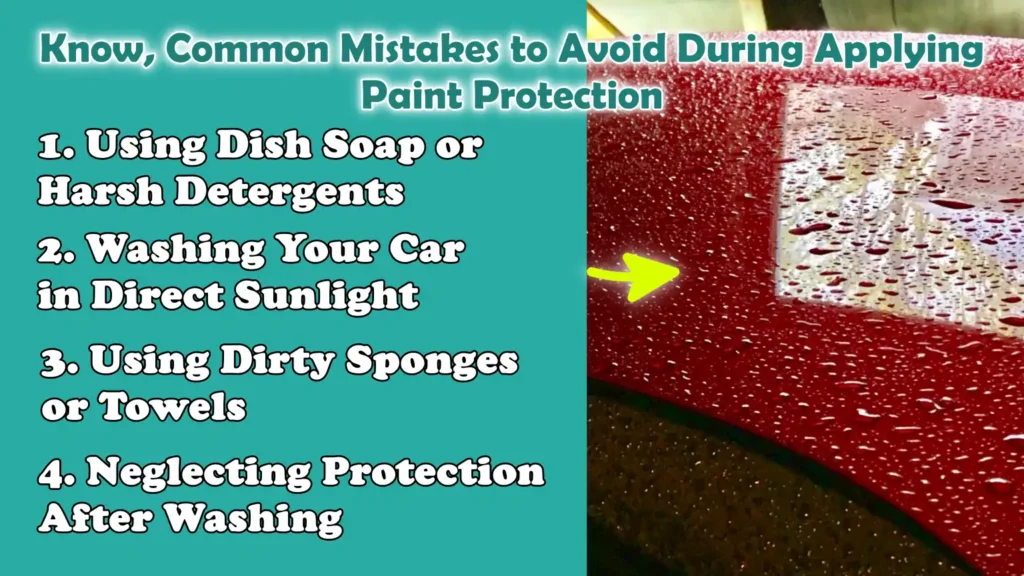
1. Using Dish Soap or Harsh Detergents
Cleaning your car with dish soap or harsh household detergents may seem like a quick and effective solution, but these products are not specifically formulated for automotive paint.
They are designed to strip away grease and oil, which means they can also remove the protective layers such as: wax or sealants, present on your car’s surface.
Over time, this leaves the car’s paint directly exposed to sunlight, moisture and dirt, significantly increasing the risk of oxidation and fading.
Furthermore, harsh chemicals can dry out the clear coat, making it more susceptible to cracking and losing its luster.
Car-specific shampoos are formulated to clean the paint without stripping away its protective layers; therefore, they are a much safer choice for routine washing.
2. Washing Your Car in Direct Sunlight
Washing your car in direct sunlight is a common mistake that can lead to a variety of problems.
When a car’s surface is hot, water and soap evaporate very rapidly, leaving you with insufficient time to rinse them off properly.
This rapid drying process leaves behind water spots and soap residue on the car, which may require extra effort to remove later.
Heat also increases the likelihood of streaking and uneven cleaning, as cleaning products (such as soap) do not spread or rinse off effectively on a hot surface.
In some cases, minerals present in the dried water can bond with the paint, leaving behind long-lasting marks on the car’s finish.
By washing your car in a shaded area or during the cooler parts of the day, you can make the cleaning process more controlled and safer for your vehicle.
3. Using Dirty Sponges or Towels
The quickest way to damage your car’s paint is by using dirty or poor-quality cleaning tools.
Sponges, cloths, or towels that have trapped dust and dirt particles act like sandpaper when rubbed against the car’s surface.
This creates tiny scratches, known as micro-scratches, which accumulate over time to form visible swirl marks.
Even if the car appears clean immediately after washing, these minute scratches diminish the paint’s luster and overall clarity.
It is crucial to use clean, high-quality microfiber towels or wash mitts, as they are designed to trap dirt within their fibers rather than dragging it across the paint surface.
Regularly rinsing and cleaning your tools during the washing process further minimizes the risk of scratching.
4. Neglecting Protection After Washing
Many people believe that simply washing a car constitutes proper paint care; however, cleaning without applying some form of protection actually leaves the surface exposed.
After washing, once dirt has been removed from the paint, the surface remains vulnerable, as there is no barrier to shield it from environmental damage.
Without a protective layer such as: wax, a sealant, or a ceramic coating, the paint is directly exposed to UV rays, pollution and moisture, which can rapidly diminish its shine and durability.
Protective products create a barrier that helps repel water, prevent dirt accumulation and slow down the oxidation process.
Skipping this step means that the benefits of washing will be short-lived and over time, the paint will begin to deteriorate at an accelerated pace.
Read More:
- How to Remove Bad Smell from Car
- How to Restore Faded Car Paint
- How to Polish Car Headlights
- How to Remove Scratches from Car Paint
- How to Wax Car By Hand
- How to Wash Car Properly
How Often Should You Protect Your Car’s Paint?
The frequency with which you should protect your car’s paint depends on the type of product used, driving conditions and how well the vehicle is maintained.
Car paint protection is not permanent, as every protective layer gradually wears down due to sunlight, washing, heat, humidity and environmental contaminants.
Many people assume that once protection is applied, it will last forever; however, in reality, every method has a limited lifespan.
Understanding how long each type of protection lasts helps you reapply it at the right time, before the paint is left completely unprotected.
An easy way to check this is to observe how water behaves on the surface.
When water stops forming small beads and begins to spread out flat, it generally indicates that the protective layer is weakening and requires attention.
1. When to Reapply Wax
Car wax provides a basic level of protection and is known for enhancing shine, but it has the shortest lifespan among all protective methods.
In most cases, wax lasts for four to eight weeks, depending on weather conditions, washing frequency and the quality of the product used.
High temperatures, frequent rain and regular washing can strip away the wax layer much faster.
As wax sits on top of the paint rather than bonding strongly with it, it gradually diminishes with use.
To maintain continuous protection and a good appearance, it is generally recommended to reapply wax every one to two months.
Regular reapplication ensures that the paint retains a protective barrier against UV rays, dust and minor contaminants.
2. Durability of Sealants
Paint sealants are designed to outlast waxes, as they are composed of synthetic materials that bond more effectively with the paint surface.
On average, a high-quality sealant can provide protection for approximately four to six months and in some instances, under ideal conditions, it may last even longer.
Sealants offer superior resistance to heat, UV rays and chemical exposure, making them a more durable choice for daily use.
However, their lifespan can still be influenced by factors such as harsh weather conditions, frequent washing with strong chemicals and a lack of proper maintenance.
Regularly observing the surface for signs such as: diminished water beading or a reduction in surface slickness, can help determine when it is time to reapply the sealant.
Maintaining this protective layer ensures continuous protection and reduces the need for frequent reapplication compared to waxes.
3. Lifespan of Ceramic Coatings
Among commonly used methods, ceramic coatings offer the longest-lasting form of paint protection.
Unlike waxes and sealants, ceramic coatings form a semi-permanent bond with the clear coat, creating a robust and durable protective layer.
Depending on the quality of the product and the application process, a ceramic coating can last anywhere from one to five years, or even longer with proper care.
It provides excellent resistance against UV rays, oxidation, chemical stains and water, thereby helping to preserve the paintwork in superior condition over time.
However, it is crucial to understand that ceramic coatings are not entirely maintenance-free.
Regular washing and proper care are still required to maintain their effectiveness.
Over time, the coating may lose some of its hydrophobic (water-repellent) properties and maintenance products may occasionally be required to restore its performance.
A properly maintained ceramic coating significantly reduces the frequency with which it needs to be reapplied and provides long-term protection for the paintwork.
Difference Between DIY vs Professional Paint Protection
Whether to undertake paint protection yourself or to have it done by a professional depends on your budget, your skill level and the duration of protection you desire.
The objective of both approaches is to shield the clear coat from damage; however, the difference lies in the level of preparation, the quality of application and the durability of the results.
Paint protection involves more than just applying a product; it also entails thoroughly cleaning the surface, removing contaminants and, sometimes, correcting paint imperfections before applying the protective layer.
If these initial steps are not executed correctly, even the finest product will fail to perform effectively.
Understanding the pros and cons of both methods enables you to make an informed decision tailored to your specific needs, ensuring that neither your effort nor your money goes to waste.
1. The DIY Approach
The Do-It-Yourself (DIY) approach is popular because it is cost-effective and grants car owners complete control over the entire process.
Basic protection methods such as: waxes and paint sealants, are easy to use and can be applied at home with the help of simple tools.
Entry-level ceramic coatings designed specifically for DIY application are also available.
The primary advantage of this method is the savings on labor costs, allowing you to perform regular maintenance on your car without relying on a professional.
However, the results depend heavily on your technique and your ability to pay attention to minute details.
If the car is not washed thoroughly, or if contaminants remain on the surface, the protective layer will fail to bond properly and will peel off prematurely.
Improper application of the product can also result in streaks or patchy coverage.
Furthermore, without proper polishing, pre-existing swirl marks and scratches on the paint will remain visible even after the protective coating has been applied.
In short, while excellent results can be achieved through DIY methods, obtaining effective and long-lasting protection requires patience, the right knowledge and meticulous attention to detail.
2. Professional Services
Professional paint protection services offer superior quality and durability, as they involve trained technicians, advanced tools and a controlled environment.
Before applying any protective layer, professionals typically undertake extensive preparation; this may include deep cleaning, clay bar treatments and machine polishing to rectify paint imperfections.
This ensures that the surface is perfectly smooth and ready for strong adhesion.
Professional-grade products, particularly ceramic coatings and paint protection films, are often more durable and longer-lasting than the options available to the general public.
These coatings can provide protection for several years and offer excellent defense against UV rays, chemicals and minor scratches.
The primary drawback is the higher cost, as professional services encompass both materials and labor.
However, the superior finish, longevity and reduced need for frequent re-application make it a worthwhile investment for those seeking maximum protection and a nearly flawless aesthetic.
Estimated, Cost of Car Paint Protection
The cost of protecting a car’s paint can vary significantly depending on the method used, the quality of the products and whether the work is performed at home or by professionals.
Many car owners focus solely on the initial cost; however, it is crucial to understand that paint protection is an investment that can prevent far greater expenses in the future.
Modern car paint systems feature a clear coat, which can be expensive to repair once damaged.
Repainting an entire vehicle, or even a single panel, can cost significantly more than simply maintaining proper protection on a regular basis.
Choosing the right option depends on your budget, the desired duration of protection and the amount of time and effort you are willing to invest in its maintenance.
1. Budget Ranges for Each Method
The cost of various paint protection methods varies based on their durability and complexity.
Car wax is the most affordable option and is typically used to provide basic protection and shine.
If applied at home, the cost is minimal; however, as it lasts only a few weeks, it requires frequent reapplication, thereby increasing the total effort involved over time.
Paint sealants fall into the mid-range price category and offer superior durability, often lasting for several months.
Consequently, they prove to be a balanced choice in terms of both cost and performance.
Ceramic coatings are more expensive, particularly when applied by professionals, as they require meticulous surface preparation and precise application techniques.
Nevertheless, they provide long-lasting protection that can endure for several years, thereby reducing the need for frequent reapplication.
Paint Protection Film (PPF) represents the most expensive option, as it involves applying a physical protective layer directly over the paint, a process that often demands skilled craftsmanship and meticulous attention to detail.
Although the initial outlay is high, it offers robust protection against paint chipping and scratches, particularly in areas most vulnerable to paint damage.
2. Long-Term Savings vs Repainting
When comparing the cost of paint protection to that of repainting, the long-term savings become clearly evident.
Repainting a car or repairing severe paint damage involves not only significant material costs but also expenses related to labor, color matching and, most importantly, the loss of the vehicle’s original factory finish.
Factory paint is applied in a controlled environment and is generally far more durable than most aftermarket paint jobs; for this reason, preserving it is always the superior choice.
Regularly adopting protective measures helps prevent paint oxidation, fading and surface damage, thereby reducing the need for costly repairs.
While options such as ceramic coatings or paint protection films may seem expensive initially, over time they can significantly lower maintenance costs by reducing the need for frequent detailing and shielding the vehicle from major damage.
Simply put, spending a modest amount regularly on protection is far more economical than paying a large sum later to repair damaged surfaces or to have the entire vehicle repainted.
Common Signs Shows That Your Car’s Paint Needs Protection
Car paint does not deteriorate overnight; it displays clear warning signs before serious damage occurs.
These signs emerge gradually as the protective layer atop the paint, known as the ‘clear coat’, begins to weaken due to exposure to sunlight, dust and daily use.
Many car owners overlook these early indicators because, from a distance, the vehicle may still appear to be in good condition.
However, ignoring these signs allows the damage to penetrate deeper into the paint layers, making subsequent repairs far more difficult and expensive.
Recognizing these changes early enables you to take timely action and implement protective measures before permanent damage such as: oxidation or deep scratches, sets in.
Also, there’s modern research that clearly shows that car paint protection is not just about the appearance only, as it is about the long-term durability as well and the automotive coatings act as a shield against multiple environmental threats such as: UV rays, acid rain and surface wear as well, also advanced solutions such as: ceramic coatings provide the stronger resistance and longer protection if we compare it to the traditional wax, that makes an perfect thing for preserving both the look of vehicle and lifespan of your vehicle’s paint as well.[¹]
1. Fading Color or Loss of Gloss
The most common sign that your car’s paint requires protection is a loss of gloss.
When the car’s surface begins to look dull, flat, or less lustrous than before, it generally indicates that the ‘clear coat’ has started to degrade.
This occurs primarily due to prolonged exposure to the sun’s ultraviolet (UV) rays, which triggers a process known as ‘oxidation.’
Oxidation strips away the paint’s natural shine, leaving the surface feeling dry or slightly chalky to the touch.
Darker colors may begin to look lighter, while vibrant colors may lose their depth.
This change often happens gradually, so it may not be immediately apparent; however, once it becomes clearly visible, it serves as a distinct signal that the paint is no longer adequately protected and requires immediate attention.
2. Water Failing to Bead Up
The way water behaves on your car’s surface is a simple and reliable method for assessing the condition of your paint’s protection.
When a protective layer such as: wax, a sealant, or a ceramic coating, is functioning correctly, water forms into small, round beads that easily slide off the surface.
This occurs because the surface is smooth and ‘hydrophobic’ (water-repellent), meaning it actively repels water.
If you observe that water no longer forms beads but instead spreads flatly across the surface, it is a clear indication that the protective layer has worn off.
This leaves the paint directly exposed to moisture and dirt, thereby increasing the risk of stains, water spots and long-term damage.
At this stage, it becomes essential to reapply a protective layer to restore the surface’s protective capabilities.
3. Visible Scratches or Swirl Marks
The appearance of fine scratches or swirl marks is another sure sign that your car’s paint requires protection.
These marks typically result from improper washing or drying techniques, or from exposure to dust and dirt particles.
Swirl marks often appear as circular patterns, which are most clearly visible under direct sunlight or bright lighting.
Although these marks may seem minor at first glance, they diminish the paint’s gloss and smoothness, making the surface appear old and faded.
The presence of these marks also indicates that the paint is no longer adequately protected against abrasion and grime.
Correcting these imperfections through proper polishing, followed by the application of a protective layer, helps restore the surface to a like-new condition and prevents further damage.
Pro Tips for Maximum Shine and Protection
Achieving long-lasting shine and robust paint protection requires more than just taking basic steps; it depends on paying attention to small yet crucial details that consistently yield superior results over time.
The visual appeal of a car’s paintwork is directly contingent upon the smoothness and cleanliness of its surface; consequently, even minor refinements in maintenance can produce visibly stunning results.
Professional detailers prioritize keeping the surface clean, protected and low-friction, qualities that prevent dust and grime from adhering easily, thereby allowing the paint to retain its luster for an extended period.
These simple yet effective techniques help prolong the lifespan of protective coatings, minimize the risk of damage and keep the car in near-showroom condition without the need for frequent, intensive effort.
1. Use a ‘Quick Detailer’ Between Car Washes
‘Quick Detailers’ are specially formulated sprays designed to provide light surface cleaning and enhance shine without the need for a full wash.
They are particularly useful when the car has accumulated light dust, fingerprints, or minor smudges that do not warrant a complete cleaning session.
These products contain lubricating agents that allow you to safely wipe down the surface without causing scratches, provided, of course, that the dust accumulation is not excessive.
Beyond mere cleaning, ‘Quick Detailers’ also deposit a thin layer of shine and boost the ‘hydrophobic’ (water-repelling) properties of the existing protective coating, causing water droplets to bead up and slide off even more effectively.
Using these products between washes ensures that your car always looks fresh and tidy, preventing the accumulation of small particles that could otherwise turn into stubborn grime, the kind that becomes difficult to remove later.
However, these products should not be used on heavily soiled surfaces, as doing so increases the risk of scratching the paintwork.
2. Invest in High-Quality Products
The quality of the products used on your car directly impacts its level of protection and the final finish of its paintwork.
High-quality car shampoos are formulated to clean effectively without stripping away protective layers, while premium waxes, sealants and coatings contain purer ingredients that provide more robust and long-lasting protection.
Inferior products may contain harsh chemicals or “fillers” which, while they might provide a temporary shine, offer no genuine, durable protection.
Over time, the use of low-quality materials increases the risk of damaging the paint rather than protecting it.
Investing in reliable products ensures that the paint is cleaned safely, receives effective protection and is maintained with consistently excellent results.
This reduces the need for frequent corrective work and helps preserve the car’s original luster for the long term.
3. Layer Protective Products for Optimal Results
Layering protective products involves applying a combination of different protective treatments to enhance the car’s protection and performance.
For instance, a base layer such as: a sealant or a ceramic coating, can be applied to ensure longevity, followed by a layer of wax to boost shine and add an extra shield of protection.
Each layer serves a distinct purpose; Some prioritize durability, while others focus on enhancing surface aesthetics.
If executed correctly, layering can improve water repellency, minimize dirt accumulation and extend the lifespan of the protective coating.
It is crucial that each layer is applied properly and allowed sufficient time to cure, or fully set, before the subsequent layer is applied.
Although layering does not render the paint completely immune to damage, it establishes a robust protective mechanism that helps preserve both the paint’s luster and its integrity over the long term.
Conclusion – How to Protect Car Paint
Without a doubt, there’s difference between a well-kept car and a worn-out one as it protects the glossy finish may catch others attention as well.
Modern car paint systems are designed to be durable, but they do not last forever; and once the “clear coat” (the uppermost layer) begins to deteriorate, repairing that damage becomes quite difficult and expensive.
What makes paint protection effective is not a single product or a one-time measure, but rather a continuous process involving proper washing techniques, careful usage, timely application of protective measures and regular maintenance.
Every method, whether it be wax, sealants, ceramic coatings, or paint protection films, works by creating a barrier that minimizes direct contact between the paint and damaging elements.
The stronger and better-maintained this barrier is, the longer your car’s shine and finish will endure.
Recognizing early signs of damage such as: fading color, a loss of “water beading” (where water droplets no longer sit on the paint surface), or visible scratches, allows you to take action before the problem escalates.
Simple practices such as: adopting proper washing techniques, avoiding harsh chemicals and maintaining protective layers, can make a significant difference over time.
Many car owners underestimate how quickly unprotected paint can deteriorate; yet, the reality is that consistent care can extend the lifespan of the paint by several years and help preserve the vehicle’s overall resale value.
Simply put, protecting your car’s paint is not an overly difficult task, but it does require awareness and consistent effort.
Now, that’s all from this guide How to Protect Car Paint, also you can ask related questions in below.
Frequently Asked Questions
FAQ 1: What is the best way to protect car paint?
The best way to protect car paint is to follow a comprehensive process rather than relying on a single product. This involves properly washing the car using safe methods, removing accumulated surface contaminants and then applying a protective layer such as: wax, a sealant, or a ceramic coating. Each of these steps plays a crucial role: cleaning removes damaging dirt, surface preparation smooths the finish and the protective layer acts as a barrier against sunlight, moisture and pollution. Among the various options, ceramic coatings offer the longest-lasting protection; however, basic methods like waxing can also be effective, provided they are applied regularly and correctly.
FAQ 2: How often should I protect my car’s paint?
The frequency depends on the type of protection you use and the environmental conditions your car is exposed to. Wax generally needs to be reapplied every one to two months, as it wears off relatively quickly. Paint sealants last longer and may only require reapplication every four to six months. Ceramic coatings can last for several years, although they still require proper maintenance to remain effective. An easy way to check the condition of the protection is to observe how water behaves on the surface. If water droplets stop beading up and instead begin to spread out, it generally indicates that the protective layer has deteriorated and needs to be reapplied.
FAQ 3: Is getting a ceramic coating a worthwhile investment for car paint protection?
For many car owners, investing in a ceramic coating is highly worthwhile, as it provides long-term protection and significantly reduces the effort required for maintenance. It forms a strong bond with the paint, creating a durable layer that protects the finish from UV rays, oxidation and chemical damage. It also possesses a hydrophobic (water-repelling) effect, meaning that water and dirt slide off more easily, making the car easier to clean. However, it is more expensive than wax or sealants and requires thorough surface preparation prior to application. For those seeking long-lasting results and who are willing to make an upfront investment, a ceramic coating is a highly effective option.
FAQ 4: Can I protect my car’s paint without waxing?
Yes, car paint can be protected without waxing; you can utilize alternative options such as paint sealants, ceramic coatings, or paint protection films. Compared to wax, sealants offer longer-lasting synthetic protection, while ceramic coatings provide an even stronger and more durable layer of defense. Paint protection film acts as a physical barrier, shielding the paint from scratches and wear and tear. Although wax is not the only option available, it remains popular due to its ease of application and its ability to quickly enhance the paint’s shine. The best option for you depends on your budget and the duration of protection you desire.
FAQ 5: Does washing a car damage the paint?
If done correctly, washing a car does not damage the paint; however, improper washing techniques are among the most common causes of paint damage. Using dirty sponges, coarse cloths, or incorrect methods can result in minor scratches and swirl marks. Washing the car without first removing loose dirt and debris can also cause particles to rub against the surface, leading to damage. Safe washing practices such as: using clean microfiber towels and adopting proper washing techniques, as it help prevent this issue. When performed correctly, washing actually protects the paint, as it removes damaging dirt and contaminants.
FAQ 6: Why does car paint fade over time?
Car paint fades primarily due to prolonged exposure to the sun’s ultraviolet (UV) rays, which causes oxidation within the clear coat. This process degrades the surface and diminishes its luster, making the paint appear dull or chalky. Other factors such as: pollution, acid rain and a lack of protective care, as it also contribute to paint fading. Over time, these elements weaken the paint layer and alter its appearance. Regular protection and proper maintenance can slow down this process and keep the paint looking fresh for longer.
FAQ 7: How do I know if my car’s paint needs protection?
There are several clear signs indicating that your car’s paint requires protection. If the surface looks dull or has lost its shine, it suggests that the clear coat is deteriorating. If water no longer beads up on the surface but instead spreads out flat, it is a sign that the protective layer has worn off. Visible swirl marks or minor scratches also indicate that the paint is no longer adequately protected. Identifying these signs early allows you to apply protective measures before the damage becomes severe and difficult to repair.
References:
[1] Development of Car Coating Materials over the Past Decade for Paint Protection Applications, An Overview on the Different Types of Paint Protections
https://www.mdpi.com/2073-4360/17/23/3114
Hello Folks, Dean Shali here to help you out to solve the problems with your lovely vehicle, as i have lots of experience and knowledge about automotive industry as i woks directly with the customers and repair vehicles and i love to help the people to keep their cars safe and running smoothly.