
Written By: Dean Shali
Fact Checked By: Sabré Cook
Reviewed By: Tamara Warren
Every long road trip actually have their own excitement factors, but the reality is that thousands and thousands of roadside breakdowns happens each year simply because the car owner denied “BASIC VEHICLE CHECKS”.
As, most of the failures are not happens suddenly, as they are really predictable, as if there’s low tire pressure, worn or ineffective brake, aging batteries and low fluid levels as these are the quiet build up into the serious problems long before the car stops moving.
Also, there’s studies in the automotive safety and roadside assistance that consistently shows that a large percentage of breakdowns are actually preventable with some simple pre-trip inspections that literally takes less than an hour.
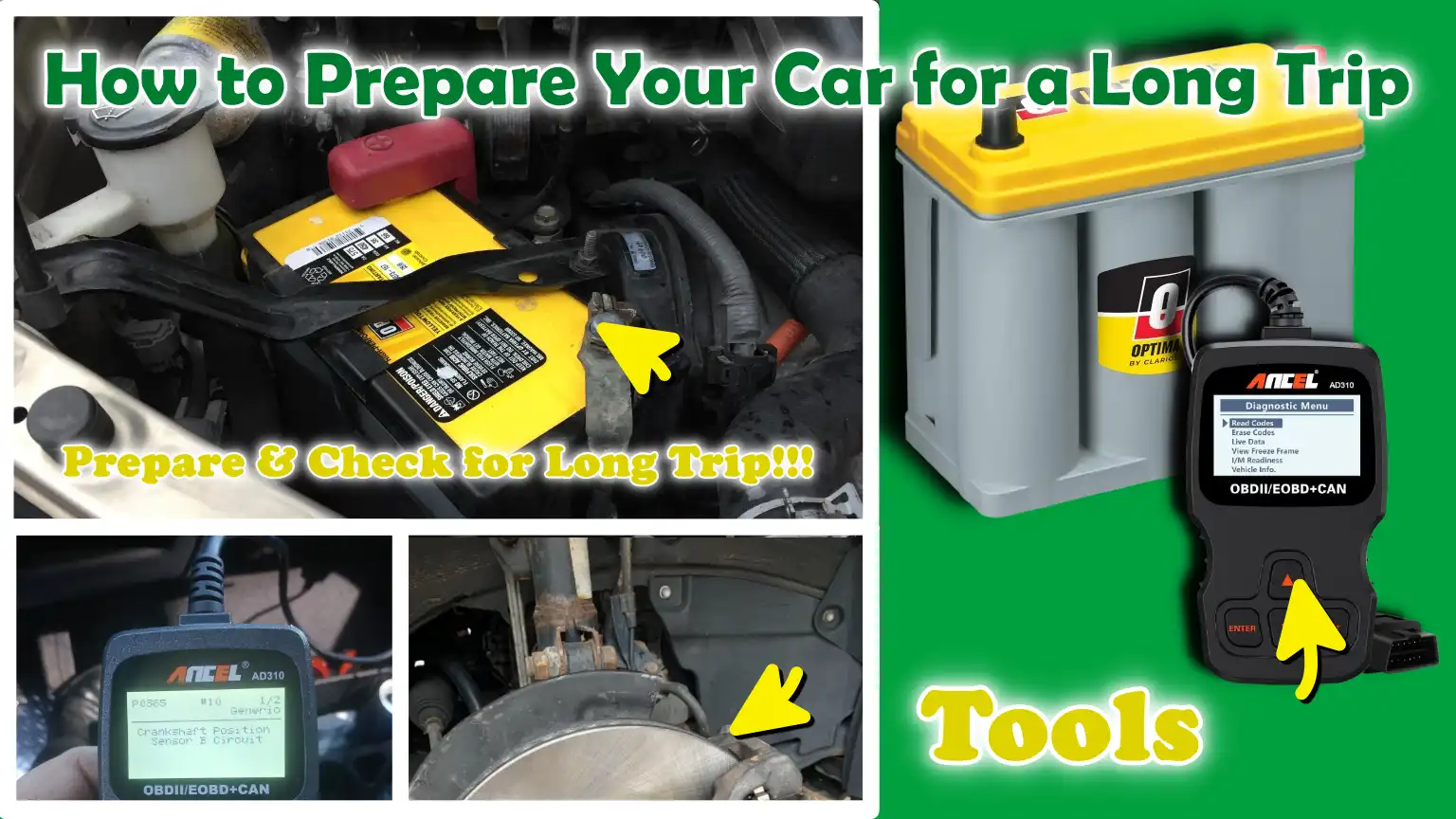
So, don’t be that careless driver who ignore this checks and to do it in a quick way, learn How to Prepare Your Car for a Long Trip.
Why Is It Essential To Prepare Your Car for a Long Journey?
1. Avoid Sudden Breakdowns
Most cars do not break down suddenly; problems typically begin as minor issues that drivers often overlook such as: low engine oil levels, a weak battery, worn-out belts, or underinflated tires.
While these issues may not significantly impact short, city-based trips, during long journeys, when the engine runs continuously for hours and its components are under constant strain, these minor glitches can quickly escalate into major mechanical failures.
For instance, low coolant levels can lead to engine overheating, while a weak battery may fail completely due to the repeated stress of starting and stopping.
By inspecting and rectifying these issues before your trip, you significantly reduce the risk of getting stranded on the road, particularly in remote areas where assistance is not readily available.
2. Improve Fuel Efficiency and Performance
A well-prepared car runs more smoothly and utilizes fuel more efficiently because all its systems are functioning exactly as they should.
Properly inflated tires reduce “rolling resistance” (the force required to rotate the tires); this means the engine does not have to work as hard, thereby helping to conserve fuel.
Clean air filters ensure better airflow to the engine, which optimizes fuel combustion and enhances the car’s overall performance.
Fresh engine oil minimizes friction between the engine’s moving parts, allowing the engine to operate smoothly and efficiently.
When these fundamentals are properly attended to, your car delivers better mileage, smoother acceleration and a more reliable driving experience throughout the entire journey.
3. Enhance Passenger Safety
Preparing your car before a long journey is one of the most critical aspects of safety.
It is essential that vital systems such as: brakes, tires and lights, are functioning correctly to ensure safe driving at high speeds and over long distances.
Worn brake pads can compromise the vehicle’s stopping power, thereby increasing the risk of accidents, while defective or underinflated tires pose a significant risk of blowouts.
The proper functioning of headlights, brake lights and turn indicators is crucial for maintaining visibility on the road and communicating with other drivers, specially when driving at night or in adverse weather conditions.
When your car undergoes a comprehensive inspection and maintenance, the likelihood of accidents is significantly reduced, thereby ensuring the safety of everyone inside the vehicle.
4. Minimize Long-Term Repair Costs
Ignoring minor issues before starting on a long journey often leads to major, expensive problems down the road.
For instance, continuing to drive with low engine oil levels can cause damage to the engine’s internal components; repairing this damage is far more costly than simply topping up or changing the engine oil.
Similarly, uneven tire wear can necessitate premature tire replacement, while neglecting the brake system can result in damage to the rotors in addition to the brake pads.
Conducting regular inspections and minor repairs before setting out on a trip allows for the timely detection of issues, thereby preventing major breakdowns and reducing overall maintenance costs.
In the long run, investing a little time and effort in preparation can save a significant amount of money and also extend the lifespan of your vehicle.
How to Prepare Your Car for a Long Trip – Pre-Trip Vehicle Inspection Checklist
1. Check Engine Oil and Fluids
Engine Oil Level and Condition
Engine oil is one of the most critical fluids in your car, as it lubricates moving parts, reduces friction and helps regulate engine temperature during long journeys.
If the oil level is low, or if the oil appears very dark, thick, or dirty, it indicates that it is no longer adequately protecting the engine.
Driving long distances with oil in poor condition can lead to increased heat and wear inside the engine, potentially causing severe damage.
Checking the oil using the dipstick, and ensuring it is at the correct level and remains clean, helps the engine run smoothly, improves performance and prevents overheating during continuous driving.
Coolant Level
Coolant is responsible for maintaining the engine at a safe operating temperature by absorbing heat and preventing overheating, specially during long trips when the engine runs for extended periods.
If the coolant level is low or the fluid has aged, the cooling system may fail to function properly, causing the engine temperature to rise rapidly.
Overheating is one of the most common causes of vehicle breakdowns on highways and can lead to costly repairs.
Ensuring that the coolant is at the proper level and in good condition helps stabilize the engine temperature and allows the vehicle to operate safely.
Brake Fluid
Brake fluid is essential for safe stopping, as it transmits the force applied by your foot on the brake pedal to the braking system.
If the brake fluid level is low or the fluid is contaminated, the brakes may feel weak, spongy, or less responsive; this can increase stopping distances and pose a serious safety risk.
During long journeys, where frequent braking may be required, particularly in heavy traffic or on hilly terrain, the proper condition of the brake fluid is absolutely critical.
Checking and maintaining the correct fluid level ensures reliable braking performance and superior vehicle control.
Transmission Fluid
Transmission fluid facilitates the smooth operation of the transmission system by lubricating internal components and enabling precise gear shifting.
If the fluid level is low or the fluid has degraded, you may experience jerking or delays during gear changes; this can make driving uncomfortable and place excessive strain on the transmission.
Over time, this can lead to major mechanical issues that are costly to repair.
Ensuring that the transmission fluid is clean and at the correct level helps guarantee smooth driving, enhanced performance and long-term reliability.
Windshield Washer Fluid
Windshield washer fluid plays a vital role in maintaining clear visibility by cleaning dirt, dust and debris from the windshield.
During long journeys, specially on highways, the windshield can quickly become soiled by insects, road dust, or adverse weather conditions.
If the washer fluid runs out, cleaning the windshield becomes difficult, which can impair visibility and increase the risk of accidents.
Keeping the washer fluid reservoir topped up ensures that you maintain a clear view of the road at all times, making your driving experience safer and more comfortable.
2. Check Tires and Wheels
Tire Pressure – Including the Spare Tire
Tire pressure has a direct impact on safety, fuel efficiency and the overall driving experience, specially during long journeys, when tires are under constant stress.
When tire pressure drops below the recommended limit, the tire generates increased friction against the road surface; this causes the tire to overheat, significantly increasing the risk of a blowout at high speeds.
It also forces the engine to work harder, resulting in reduced fuel efficiency and uneven tire wear.
Conversely, if tires are overinflated, their contact patch with the road surface is reduced, which can compromise traction and diminish vehicle stability.
Checking the spare tire is equally important, as it is often overlooked; if it has lost air pressure over time, it may prove useless in an emergency situation.
Maintaining the correct pressure in all tires ensures better vehicle control, enhances safety and makes for a more comfortable driving experience.
Tread Depth and Wear Patterns
Tread depth is crucial for maintaining adequate grip between the tire and the road surface, particularly on wet or slippery roads.
Deep and healthy tread helps to channel water away from the tire, thereby reducing the risk of “hydroplaning” (skidding on water) and improving braking performance.
If the tread is worn down, the tires lose their ability to grip the road effectively, resulting in longer braking distances and reduced overall vehicle stability.
Wear patterns also provide valuable insights into the condition of your vehicle; For instance, if the tires are not wearing evenly, it could indicate improper tire inflation pressure, an alignment issue, or a fault within the suspension system.
Carefully inspecting both the tread depth and the wear patterns ensures that your tires remain safe, reliable and fully prepared for long-distance journeys.
Wheel Alignment and Balancing
Wheel alignment and balancing are crucial for maintaining proper vehicle control and ensuring that the tires wear evenly over time.
Proper alignment means that all wheels are positioned correctly, allowing the vehicle to travel in a straight line without drifting to one side; this improves steering control and reduces driver fatigue during long trips.
If the alignment is incorrect, the tires will not wear evenly and the vehicle will become difficult to handle, particularly at high speeds.
Balancing ensures that the weight of the wheels and tires is distributed evenly, thereby eliminating vibrations in the steering wheel and making the driving experience more comfortable.
If the wheels are not properly balanced, the tires may wear out prematurely and the vehicle’s stability could be compromised.
Checking the alignment and balancing before starting on a long journey results in a more comfortable driving experience, provides better vehicle control and extends the lifespan of the tires.
3. Check Battery Health & Condition
Battery Charge Level
The battery charge level is crucial, as it provides the necessary power to start the engine and operate essential electrical systems such as: lights, ignition and onboard electronics.
If the battery is not fully charged or is weak, the car may struggle to start, particularly after being parked for an extended period, whether during a trip or in adverse weather conditions.
A low charge level can also impact the performance of electrical components while driving, potentially causing lights to dim or systems to malfunction.
Checking the battery charge before a long trip ensures that the battery can consistently store and supply adequate power, thereby minimizing the risk of unexpected starting difficulties and enhancing overall reliability.
Corrosion on Terminals
Corrosion on battery terminals is a common issue that can disrupt the flow of electricity between the battery and the vehicle.
It typically manifests as a white, green, or blue powdery substance accumulating around the battery connections.
This buildup creates resistance, making it difficult for the battery to deliver power efficiently; consequently, the engine may crank slowly or fail to start altogether.
Over time, corrosion can also cause damage to the battery cables and connectors.
Cleaning the terminals and ensuring a secure connection facilitates proper electrical flow, improves battery performance and helps prevent sudden power failures during long drives.
Battery Age
The age of the battery plays a significant role in its reliability, as most car batteries have a finite lifespan, typically ranging from three to five years, depending on usage patterns and environmental conditions.
As a battery ages, its capacity to store a charge diminishes, thereby increasing the likelihood of it failing without warning.
During long trips, an aging battery can pose a serious risk, as it may be unable to effectively meet the demands of continuous use or repeated starting cycles.
Checking the battery’s age, and replacing it if it is nearing the end of its lifespan, ensures reliable performance, minimizes the risk of a vehicle breakdown and provides peace of mind when undertaking long-distance journeys.
4. Check the Brakes
Condition of Brake Pads and Rotors
Brake pads and rotors are the primary components responsible for generating the friction necessary to slow down or stop your car; their condition has a direct impact on your safety during long journeys.
Over time, as brake pads make contact with the rotors, they undergo wear and tear; if they become excessively thin, they lose their ability to deliver strong and consistent braking performance.
Worn rotors may develop grooves, exhibit uneven surfaces, or even become slightly warped, all of which can compromise braking efficiency and lead to vehicle instability.
If these components are not in good condition, the stopping distance required to bring the vehicle to a halt may increase, particularly at high speeds on highways.
Checking the thickness of the brake pads and the surface condition of the rotors before starting on a long trip ensures reliable braking performance and helps prevent hazardous situations.
Brake Responsiveness
Brake responsiveness refers to how quickly and effectively your car reacts when you depress the brake pedal.
A properly functioning braking system should feel firm and engage immediately without requiring excessive pedal pressure.
If the brakes feel soft or spongy, or if there is a delay in their engagement, it may indicate underlying issues such as: trapped air in the brake lines, worn components, or low brake fluid levels.
During long journeys, specially in heavy traffic or hilly terrain, prompt and reliable brake responsiveness is crucial for maintaining vehicle control and avoiding accidents.
Ensuring proper brake responsiveness boosts driver confidence and contributes to a safe, comfortable driving experience over long distances.
Unusual Sounds or Vibrations
Unusual sounds heard or vibrations felt while applying the brakes are often early warning signs of underlying mechanical issues that should not be ignored.
Squealing or squeaking noises may indicate worn-out brake pads, while grinding sounds can signal that the pads have completely worn down and metal components are rubbing against one another, a condition that can lead to severe damage.
Vibrations felt in the brake pedal or steering wheel often point to warped rotors or uneven wear.
These issues can compromise braking efficiency and make it difficult to maintain control of the vehicle.
Identifying and rectifying such problems prior to long journeys ensures consistent braking performance, prevents further damage and enhances overall driving safety.
5. Check Lights and Electrical Components
Headlights and Tail Lights
Headlights and tail lights are crucial for visibility on the road and for communicating with other drivers, specially during long journeys, which may involve driving at night, in fog, or in adverse weather conditions.
Headlights help you clearly see the road ahead, while tail lights ensure that your vehicle is visible to drivers following behind you.
If these lights are dim, misaligned, or malfunctioning, driving safely becomes extremely difficult and other drivers may fail to spot your vehicle in time.
Regularly checking that both headlights and tail lights are clean, bright and functioning correctly ensures optimal visibility, reduces the risk of accidents and enhances overall road safety.
Brake Lights and Indicators
Brake lights and indicators play a vital role in signaling your actions to other drivers on the road.
Brake lights illuminate when you press the brake pedal, alerting vehicles following behind you that you are slowing down, while indicators clearly signal your intention to turn or change lanes.
If these lights are not functioning properly, other drivers may be unable to react in time, thereby increasing the likelihood of a collision, particularly on highways or in heavy traffic.
Ensuring that all brake lights and indicators are in proper working order helps maintain clear communication among drivers and fosters a safe driving environment during long-distance travel.
Interior Lights
Interior lights may seem less critical, but they provide essential visibility within the vehicle’s cabin, specially when driving at night or when stopped in dimly lit areas.
They assist you in locating necessary items, reading maps, or checking the vehicle’s controls without any hindrance.
If the interior lights are not functioning, it can be a source of inconvenience and make it difficult to safely perform minor tasks while on the road.
Ensuring that the interior lighting is operational enhances comfort and convenience, factors that are crucial during long journeys.
Horn and Dashboard Alerts
The horn and dashboard alert systems are essential safety features that enable you to react promptly to situations and stay informed about the condition of your vehicle.
The horn allows you to warn other drivers or pedestrians in emergency situations, thereby helping to prevent accidents.
Dashboard alerts provide immediate information regarding issues such as low fuel, engine problems, or system malfunctions.
Ignoring these alerts can lead to serious mechanical issues or sudden vehicle breakdowns.
Ensuring that the horn is functioning correctly and that all dashboard warning lights are operational helps you remain aware of your vehicle’s status and enhances overall safety during long trips.
Important Maintenance Before a Long Drive
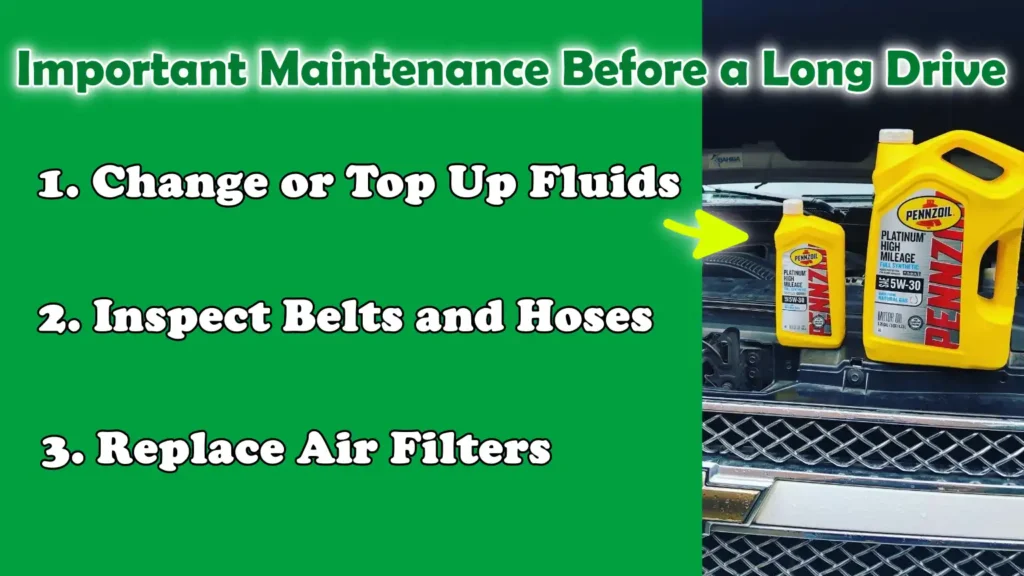
1. Change or Top Up Fluids
Fluids are the lifeblood of your car and ensuring they are at the correct levels and in good condition is crucial before any long drive, as the engine and other systems will be running continuously for an extended period.
If it is time for an engine oil change, it should be done, as engine oil loses its lubricating and cooling properties over time; old or dirty oil can increase friction, reduce performance and even cause damage to the engine under heavy use.
Fresh oil helps the engine run more smoothly, stay cool and withstand the demands of a long drive on the highway.
Coolant is equally important, as it regulates the engine’s temperature; if the coolant is old, dirty, or low, it will fail to prevent the engine from overheating, which is one of the most common causes of roadside breakdowns.
In some cases, a coolant flush may be necessary to remove contaminants and restore proper cooling efficiency.
Ensuring that all essential fluids are clean and properly filled helps maintain performance, prevent overheating and minimize the risk of serious mechanical issues during your journey.
2. Inspect Belts and Hoses
Belts and hoses are vital components that help keep various engine systems functioning correctly; yet, they are often overlooked because they typically do not show obvious signs of wear or deterioration until it is too late.
Belts such as: the serpentine belt, drive critical components like the alternator, water pump and air conditioning system.
If a belt becomes worn, cracked, or loose, it can snap suddenly, potentially causing multiple systems to fail simultaneously.
Hoses transport essential fluids such as: coolant, from one location to another and are constantly exposed to heat and pressure, which can cause them to deteriorate over time.
Cracks, bulges, or leaks in hoses are clear warning signs that they could fail during a long drive, potentially leading to fluid loss and engine overheating.
Loose connections can also result in leaks or compromise the system’s efficiency.
Carefully inspecting belts and hoses before your trip, and replacing any worn components, helps prevent sudden breakdowns and ensures that all systems continue to operate smoothly throughout the entire journey.
3. Replace Air Filters
Air filters play a crucial role in maintaining a clean environment for both your engine and your cabin; replacing them before a long trip can significantly improve both performance and comfort.
The engine air filter prevents dust, dirt and debris from entering the engine; when it becomes clogged, it restricts airflow, forcing the engine to work harder, which, in turn, reduces fuel efficiency and power.
A clean engine air filter maintains proper airflow, leading to better combustion and allowing the engine to run more efficiently.
On the other hand, the cabin air filter purifies the air entering the car’s interior through the ventilation system, removing dust, pollen and pollutants.
A dirty cabin filter can reduce airflow from the vents and degrade the air quality inside the vehicle, potentially causing discomfort during long journeys.
Replacing both filters enhances engine performance, improves fuel economy and ensures a healthier, more comfortable environment for passengers throughout the entire trip.
These Items Are Essential for Your Emergency Kit
1. First Aid Kit
A first aid kit is crucial for handling minor injuries that may occur during a long journey such as: cuts, burns, or scrapes.
By including basic medical supplies like bandages, antiseptic wipes and pain relievers, you can quickly manage the situation until proper medical assistance becomes available.
Prompt treatment reduces the risk of infection and prevents minor injuries from escalating into major complications, specially when you are traveling through remote areas where medical aid is not easily accessible.
2. Jumper Cables
Jumper cables are indispensable because a dead battery is the most common reason for a car failing to start while traveling.
With their help, you can safely connect your battery to another vehicle’s battery to regain the power needed to start your engine.
Even a healthy battery can drain if the lights are accidentally left on or if you make frequent short stops.
Therefore, carrying jumper cables ensures that you are prepared for sudden battery-related issues, eliminating the need to rely on professional assistance.
3. Portable Air Compressor
A portable air compressor helps you maintain the correct tire pressure at any time.
This is vital for safe driving, fuel efficiency and extending the lifespan of your tires.
Tires can gradually lose air due to temperature fluctuations or minor leaks.
Driving on underinflated tires increases the risk of tire damage or a blowout.
With a portable compressor, you can quickly reinflate your tires and continue your journey without having to search for a service station.
4. Tire Repair Kit
A tire repair kit helps you temporarily fix minor punctures caused by nails or other sharp objects.
This allows you to get back on the road immediately without having to install a new tire.
These kits are particularly useful when you are far away from a tire repair shop.
By sealing the leak and restoring the necessary air pressure in the tire, these kits prevent you from getting stranded midway and ensure that you can safely reach the nearest service center.
5. Flashlight with Extra Batteries
A reliable flashlight comes in very handy during nighttime emergencies or in low-light conditions (such as fog or darkness).
With its help, you can inspect your vehicle, change a tire, or signal for assistance.
Carrying extra batteries ensures that the flashlight remains functional whenever needed; relying on a weak or faulty light source in the dark can make even simple tasks difficult and unsafe.
6. Reflective Warning Triangle
A reflective warning triangle is a simple yet highly effective safety device.
If your vehicle is parked on the roadside, it alerts other drivers to your presence.
Placing it at an appropriate distance from your vehicle enhances visibility and gives oncoming drivers sufficient time to slow down or change lanes, thereby reducing the risk of accidents, specially on highways or in low-light areas.
7. Basic Tool Kit
A basic tool kit contains the essential tools you might need to fix minor mechanical issues during your journey such as: tightening loose parts, reconnecting battery terminals, or making minor adjustments.
Keeping tools such as screwdrivers, pliers and wrench sets on hand allows you to fix minor issues on the spot, saving you time and helping you avoid unnecessary delays or situations requiring a tow truck.
Important Documents to Carry
1. Driving License
A valid driving license is the most crucial document you should always carry with you, as it legally authorizes you to operate a vehicle and serves as proof of your driving competence.
During long journeys, you may pass through various checkpoints or be stopped by traffic authorities; in such situations, the absence of a license can result in fines, delays in your travel, or even a prohibition on continuing your journey.
It also serves as a form of identification in numerous scenarios such as: when checking into a hotel or during an emergency, making it absolutely essential to keep it readily accessible at all times.
2. Vehicle Registration
The vehicle registration document serves as proof that your car is legally registered with the relevant authorities and is authorized to be driven on public roads.
This document contains vital information about the vehicle, such as its registration number, owner’s details and technical specifications.
Carrying this document during long-distance travel is mandatory, as it may be requested during routine inspections; failing to carry it can lead to fines or other complications.
Furthermore, in the event of any dispute or incident on the road, this document helps establish legal ownership of the vehicle.
3. Insurance Papers
Vehicle insurance papers serve as proof that your vehicle is financially protected against accidents, damage, or other unforeseen events, an aspect that becomes even more critical during long-distance travel, as such journeys often entail higher risks.
In the unfortunate event of an accident or damage, these documents are indispensable for filing an insurance claim and securing financial assistance to cover vehicle repairs or medical expenses.
Driving without valid insurance can result in legal penalties and you may be held solely responsible for bearing all associated costs; therefore, ensuring that your insurance policy is active, and carrying proof of it with you, provides you with both legal protection and peace of mind.
4. Roadside Assistance Information
During long journeys, having information regarding Roadside Assistance is crucial, as it provides immediate professional help in the event of a vehicle breakdown, a flat tire, battery issues, or the need for towing services.
These services are designed to assist you when you are unable to resolve a problem on your own; in such situations, having contact information readily available during difficult circumstances saves you precious time.
Many roadside assistance programs operate 24 hours a day; therefore, knowing how to contact them ensures that you never feel completely alone or stranded, even if you happen to be in an unfamiliar or remote area.
How to Plan Your Route and Stops
1. Utilize Navigation Tools
Using reliable navigation tools is essential for making a long journey easy and stress-free, as they help you select the best routes, avoid traffic and reach your destination with ease.
GPS apps provide real-time updates on traffic conditions, road closures and estimated arrival times, enabling you to make quick decisions and avoid delays.
However, relying solely on internet-based systems can be risky in areas with limited network coverage; therefore, keeping offline maps as a backup is crucial.
Offline maps allow you to navigate even without a signal, ensuring that you do not get lost in remote areas.
The effective use of navigation tools not only saves time but also reduces fuel consumption by helping you avoid unnecessary detours and heavy traffic.
2. Identify Refueling Stops
Planning your refueling stops in advance is a prudent step that helps you avoid one of the most preventable problems during a long journey, running out of fuel.
Although highways often feature gas stations, the distances between them can vary, specially in sparsely populated regions, and waiting until your fuel level is critically low can create unnecessary stress and risk.
By identifying gas stations along your route beforehand, you can refuel at the appropriate times and select reliable locations.
Generally, it is safer to refuel when your tank is approximately one-quarter full, rather than waiting until it is nearly empty.
This habit ensures that you always maintain a comfortable fuel reserve, minimizing the likelihood of getting stranded.
3. Plan Breaks for Rest
During a long drive, planning regular breaks for rest is crucial for both safety and comfort, as fatigue is a primary cause of delayed reaction times and driving errors.
Driving continuously for several hours can lead to exhaustion, distraction and delayed decision-making, all factors that increase the risk of accidents.
Taking a break every two to three hours allows you to stretch, relax your muscles and refresh your mind, ensuring that you remain alert and focused on the road.
Short breaks also provide an opportunity to check your vehicle, use the restroom and stay hydrated.
By planning these breaks in advance, you ensure a safer and more comfortable journey, free from unnecessary stress or fatigue.
Pack Smartly for Your Trip
1. Organize Your Luggage Properly
Properly stowing luggage in your car is crucial for both safety and driving performance, specially on long journeys, where the vehicle may have to carry a heavy load for extended periods.
An even distribution of weight helps maintain the car’s proper balance, thereby improving stability, steering control and braking performance.
When weight is unevenly distributed such as: having heavy items placed on one side or excessive weight concentrated at the rear, it can lead to handling difficulties, increased tire wear and even reduced fuel efficiency, as the engine is forced to work harder.
It is also essential to ensure that necessary items such as: documents, emergency tools, water, or snacks, are easily accessible so they can be retrieved without having to unpack your entire luggage.
This not only saves time during stops but also minimizes the potential for distraction and stress while driving, allowing you to focus fully on the road.
2. Essentials for Comfort
Long journeys can be exhausting if basic comfort needs are not properly planned for; therefore, packing the right essentials can completely transform the overall travel experience.
Snacks and water help maintain energy levels and prevent dehydration, as dehydration can lead to distraction and increased fatigue while driving.
Travel pillows and blankets provide passengers with additional comfort, particularly during long stretches on the road or when stopping to rest, helping to alleviate physical strain and discomfort.
Phone chargers are equally essential, as navigation, communication and emergency calls all rely on a charged phone; and if a phone’s battery runs out, it can create unnecessary complications during the journey.
By preparing these essential comfort items in advance, you ensure a more comfortable, enjoyable and stress-free journey for everyone in the vehicle.
How to Check Weather and Road Conditions
1. Keep an Eye on the Weather Forecast
Checking the weather forecast before and during your trip is crucial, as weather conditions have a direct impact on driving safety, visibility and vehicle performance.
Rain, fog, snow, or extreme heat can rapidly alter road conditions and if you are unprepared, the risk of accidents increases.
For instance, heavy rain can reduce tire traction and increase the likelihood of hydroplaning, while fog can impair visibility and make judging distances difficult.
High temperatures can also place excessive strain on your engine and tires, increasing the risk of overheating or tire failure.
By monitoring accurate weather updates, you can schedule your driving, choose safer routes and pack necessary supplies such as: extra water or appropriate clothing.
Staying informed helps you make better decisions and avoid hazardous situations on the road.
2. Stay Informed About Road Closures or Construction Work
Staying informed about road closures, construction zones, or alternative routes is essential for avoiding delays, saving fuel and ensuring a smooth journey.
Road construction zones often feature lane restrictions, uneven surfaces and sudden shifts in traffic flow; if you are not vigilant, these factors can slow you down and increase the risk of accidents.
Sudden road closures may force you to take lengthy detours, resulting in wasted time and increased fuel consumption.
By utilizing navigation tools or traffic updates, and checking road conditions in advance, you can plan alternative routes and avoid congested or restricted areas.
This preparation helps you stay on schedule, reduces stress and ensures a safe and more efficient journey from start to finish.
Safety Tips for Long Drives
1. Avoid Driving When Tired
Driving while fatigued is one of the most dangerous risks during a long journey, as fatigue directly impacts your reaction time, decision-making ability and overall situational awareness on the road.
When you do not get adequate rest before driving, your brain functions more slowly, much in the same way it does under the influence of alcohol, making it difficult to react instantly to sudden situations, such as a vehicle braking or unexpected obstacles.
Fatigue can also lead to “microsleeps”, brief moments where you lose focus or doze off for a few seconds without even realizing it.
Given the high speeds typically maintained on highways, even a lapse of a few seconds can prove extremely dangerous.
Getting a full night’s sleep before your trip and recognizing the early signs of fatigue such as: frequent yawning, heavy eyelids, or difficulty concentrating, helps you maintain control and significantly reduces the risk of accidents.
2. Adhere to Speed Limits
Adhering to speed limits is absolutely essential for maintaining safety, as these limits are established based on factors such as road conditions, traffic flow and visibility.
When driving at high speeds, you have less time to react to unexpected situations and your stopping distance increases, which can lead to serious accidents.
It is also crucial to adjust your speed according to current conditions such as: rain, fog, heavy traffic, or poor road surfaces, even if the posted speed limit technically permits you to drive faster.
Slowing down in such situations improves your control over the vehicle, reduces the risk of skidding or losing traction and provides you with more time to make safe decisions.
Maintaining a safe and controlled speed not only protects you and your passengers but also ensures the safety of other drivers on the road.
3. Stay Alert
Remaining constantly alert during long drives is absolutely essential for safe driving, as reacting to ever-changing road conditions requires focus and concentration.
Distractions such as: using a phone, adjusting vehicle settings, or engaging in activities that divert your eyes or attention away from the road, as it can significantly increase the risk of accidents.
Even a momentary lapse in attention can cause you to miss critical cues, such as brake lights, road signs, or sudden lane changes.
Taking breaks at regular intervals throughout your journey refreshes both your mind and body; this reduces fatigue and enhances concentration.
During these brief stops, you can stretch, drink water and refocus your attention, a process that is vital for maintaining continuous alertness.
By staying alert and minimizing distractions, you enhance your ability to drive safely over long distances and react promptly to changing conditions.
The Essential Pre-Trip Checklist
1. Double-Check Fluids and Tire Pressure
Before starting on your journey, taking a final look at fluid levels and tire pressure is crucial, as even minor irregularities can impact safety and performance during a long drive.
Fluids such as engine oil, coolant and brake fluid must be at the correct levels to ensure proper engine function, effective cooling and reliable braking.
Tire pressure should also be maintained at the recommended levels; underinflated tires can overheat and wear out prematurely, while overinflated tires can compromise traction and vehicle stability.
Double-checking these items just before your trip helps identify any issues that may have been previously overlooked, ensuring that your vehicle is fully prepared for sustained driving.
2. Ensure the Fuel Tank Is Full
A major advantage of starting your journey with a full fuel tank is that it minimizes the need for immediate stops and provides an added layer of safety, specially in areas where gas stations are scarce, widely spaced, or temporarily closed.
Running low on fuel can create unnecessary stress and risk, particularly in unfamiliar territory or during late-night hours.
With a full tank, you can focus more on driving and spend less time searching for fuel, making the start of your journey smoother and more relaxing.
3. Confirm Navigation Setup
Ensuring that your navigation system is properly set up before you begin your journey helps prevent confusion and getting lost while driving.
Entering your destination in advance, reviewing the selected route and confirming that the GPS signal is functioning correctly can save time and prevent you from taking wrong turns.
If network coverage is poor, it is also beneficial to have a backup plan, such as offline maps.
A properly configured navigation system helps you keep your focus on the road rather than making adjustments while driving.
4. Secure All Luggage
Properly securing all luggage is essential for both safety and comfort, as loose items can shift during braking or turning, potentially distracting the driver or even causing injury.
Heavy items should be placed in stable locations where they will not move while the vehicle is in motion, as shifting weight can compromise the vehicle’s balance and handling capabilities.
Properly organized and secured luggage also prevents internal noise and clutter, creating a quieter and more comfortable driving environment.
Ensuring that everything is in its place before setting off allows you to begin your journey with full confidence and without any unnecessary distractions.
Common Mistakes to Avoid Before Gong for Long Trip
As well as, when you skip the vehicle maintenance that might seem like a way to save the money as well, but research from NHTSA shows the opposite, as poor maintenance can lead to the serious safety risks, which increases fuel consumption and expensive repairs later on. And, in fact the long-term cost of neglecting your car that can be much higher than regular servicing, that makes pre-trip inspection a smart and necessary step before any long drive as well.[¹]
1. Ignoring Warning Lights
Ignoring illuminated warning lights on the dashboard before starting on a long journey is one of the most serious mistakes drivers make, as these lights are designed to alert you to developing issues within the vehicle’s critical systems such as: the engine, battery, brakes, or oil pressure.
Even if the vehicle appears to be operating normally, a warning light often signals an underlying internal issue that could worsen under the strain of long-distance driving.
For instance, an engine warning light could indicate anything from a minor sensor malfunction to a major engine failure; ignoring it can lead to reduced vehicle performance, increased fuel consumption, or even a sudden breakdown.
Paying attention to these warnings and having them checked before your trip helps prevent unexpected breakdowns and ensures that your vehicle is safe to drive.
2. Overloading the Vehicle
Loading your vehicle with excessive weight can adversely affect its acceleration, braking capability and handling on the road.
Every vehicle has a specific weight-carrying capacity and exceeding this limit places undue stress on the suspension, tires and braking system.
This can result in longer braking distances, compromised stability while cornering and accelerated tire wear, or even a tire blowout.
An overloaded vehicle also forces the engine to work harder, leading to reduced fuel efficiency and an increased risk of the engine overheating during long journeys.
Keeping the vehicle’s weight within safe limits and distributing it correctly helps maintain the vehicle’s balance, ensures better control and makes the driving experience safer overall.
3. Failing to Inspect Tires
Failing to properly inspect tires before a long journey is a common mistake that can pose a serious safety risk, as tires play a direct role in the vehicle’s road traction, braking performance and overall stability.
Worn treads, improper tire pressure, or hidden defects increase the likelihood of tire blowouts, reduced traction and extended braking distances, specially when driving at high speeds on a highway.
Even tires that appear to be in good condition at first glance may harbor issues such as uneven wear or minor punctures, which can worsen over time.
Taking a few moments to carefully check the condition, air pressure and alignment of your tires helps prevent accidents and makes the driving experience more comfortable and reliable.
4. Not Carrying Emergency Tools
Failing to carry basic emergency tools means that, during a long journey, even a minor and easily resolvable issue can escalate into a major predicament.
Situations such as a dead battery, a flat tire, or a minor mechanical glitch are common occurrences.
If you have the right tools, these problems can often be fixed quickly; however, without them, you may be left waiting for assistance or a towing service.
This situation can be particularly difficult in remote areas or late at night, when help is not readily available.
Keeping essential tools and emergency supplies in your car allows you to resolve issues immediately, avoid delays and continue your journey without any major interruptions.
Read More:
- How to Ceramic Coat Car
- How to Protect Car Paint
- How to Remove Bad Smell from Car
- How to Restore Faded Car Paint
- How to Polish Car Headlights
Pro Tips for a Comfortable Road Trip
1. Leave Early to Avoid Traffic
Starting your journey at the very beginning of the day is the easiest way to enhance your driving experience, as traffic is typically lighter in the morning hours.
Less traffic means fewer stops, smoother driving and the ability to maintain a consistent speed, which conserves fuel and places less strain on your brakes and engine.
Driving early provides you with greater flexibility to handle situations such as delays, road construction, or sudden stops.
Furthermore, you complete a significant portion of your journey while you are still fully refreshed and alert.
This minimizes fatigue later in the day, making the trip feel less stressful and more under control.
2. Carry Cash for Tolls
Nowadays, carrying cash during long journeys is essential, as not all toll roads, parking lots, or small service stops accept digital payments or credit/debit cards.
In some regions, electronic payment systems may fail due to technical glitches or a lack of network coverage; if you are unprepared for such situations, you may face delays.
Having cash on hand ensures that you can pass through toll booths quickly and access essential services without any interruptions.
It also serves as a reliable backup payment option in situations where other payment methods are unavailable.
3. Download Content for Offline Entertainment
Downloading entertainment content such as: music, podcasts, or videos, before starting on your journey helps make the trip even more enjoyable, specially when you are passing through areas with weak or non-existent internet connectivity.
Continuous entertainment helps ward off boredom, keeps passengers engaged and makes the long hours spent on the road feel much shorter.
For drivers, listening to soothing music or podcasts can be helpful in maintaining focus and reducing fatigue.
However, it is crucial to avoid listening to anything that could significantly distract your attention.
Preparing offline content in advance ensures that your journey remains comfortable and enjoyable, even in the absence of a continuous internet connection.
4. Share Your Travel Details with Someone
Sharing your complete travel itinerary with a trusted individual is a vital safety precaution.
Many drivers overlook this step, yet it can prove invaluable in emergency situations.
By informing someone of your planned route, intended stops and estimated time of arrival, you establish a fundamental safety backup, ensuring that someone knows your whereabouts.
Should any unexpected delays occur during the trip, or if you are unable to make contact on schedule, that person can take appropriate action or notify authorities if necessary.
This simple step adds an extra layer of safety and peace of mind, particularly when starting on a long journey through unfamiliar territory.
Conclusion – How to Prepare Your Car for a Long Trip
Now, you have understood that road trip does not begin on the highway, as it actually begins with how well you prepare your car before you leave your sweet home.
Most vehicle-related issues on the road do not arise suddenly; instead, they stem from minor irregularities that escalate over time such as: low fluid levels, worn-out tires, a weak battery, or the neglect of warning signals.
By investing time in inspecting your vehicle, performing basic maintenance and meticulously planning your itinerary, you directly reduce the likelihood of breakdowns, accidents and unexpected expenses.
A well-prepared vehicle operates more efficiently, consumes less fuel and responds more reliably across various driving conditions, factors that become particularly critical during long-distance highway travel.
A few simple measures such as: checking tire pressure, verifying proper braking performance and carrying essential tools, as it can make a significant difference in terms of both safety and comfort.
Furthermore, mapping out your route, taking breaks at regular intervals and remaining alert while driving contribute to the safety not only of yourself but of everyone traveling with you.
Ultimately, preparation is what transforms a long journey into a comfortable and enjoyable experience, allowing you to focus on the thrill of the trip rather than worrying about potential complications.
Now, you can ask more questions related to this guide on How to Prepare Your Car for a Long Trip.
Frequently Asked Questions
FAQ 1: How far in advance should I start preparing my car for a long trip?
It is best to start preparing your car at least one week before your trip. This gives you ample time to thoroughly inspect everything and address any potential issues. It allows you to schedule maintenance, replace worn-out parts, or attend to any warning signs without feeling rushed. However, you should also perform a final check just one day before your departure to ensure that fluid levels, tire pressure and battery condition are all in good order. Preparing in advance helps reduce stress and allows you to avoid last-minute complications.
FAQ 2: What is the most important thing to check before starting on a long drive?
There isn’t a single “most important” item, as several systems work in tandem to ensure your car’s safety; however, tires and fluids are among the most critical components. Tires affect the vehicle’s grip, braking and stability, while fluids such as: engine oil and coolant, as it help the engine run smoothly and prevent it from overheating. If any of these elements are not in good condition, serious problems could arise during a long drive. For complete safety, checking the brakes, battery and lights is equally important.
FAQ 3: Should I have my car professionally inspected before going on a long trip?
If your car hasn’t been serviced recently, or if you are planning a very long journey, getting it professionally inspected is a wise decision. A mechanic can identify hidden issues that might be overlooked during routine checks such as: internal wear and tear, alignment problems, or early signs of mechanical failure. While you can perform basic checks at home, having your vehicle inspected by a professional boosts your confidence and significantly reduces the likelihood of a sudden breakdown.
FAQ 4: How often should I stop during a long road trip?
Generally, it is advisable to stop at least once every two to three hours during a long drive. Taking breaks at regular intervals helps reduce fatigue, improves concentration and ensures that you remain physically comfortable. Driving for extended periods without rest can slow down your reaction time and increase the risk of making errors. Taking short breaks gives you the opportunity to stretch, hydrate and refresh your mind, allowing you to complete the remainder of your journey with full alertness and safety.
FAQ 5: What signs indicate that my car is not ready for a long journey?
There are several warning signs indicating that your car may not be ready, such as strange noises coming from the engine or brakes, vibrations while driving, warning lights illuminated on the dashboard, poor fuel efficiency, or difficulty starting the vehicle. Other signs include low fluid levels, worn-out tires, or a malfunctioning air conditioning system. These issues may seem minor at first, but they can escalate into major problems during a long trip. If you notice any of these signs, it is crucial to have them addressed before starting on your journey.
FAQ 6: Is it safe to drive an older or vintage car over long distances?
Yes, it is safe to undertake a long journey in an older car, provided it has undergone proper maintenance and inspection prior to the trip. The age of the car itself is not the primary concern; rather, its overall condition is what matters most. If the engine, brakes, tires and other essential components are functioning correctly, an older vehicle can be just as reliable as a brand-new one. However, when driving older vehicles over long distances, it may be necessary to exercise extra caution during inspections and perhaps even replace worn-out parts to ensure both safety and performance.
FAQ 7: How does tire pressure affect long-distance driving?
Tire pressure plays a crucial role in safety, fuel efficiency and comfort during long journeys. Underinflated tires generate increased friction against the road surface, causing them to overheat and heightening the risk of a blowout. They also reduce fuel efficiency and make the vehicle more difficult to control. Conversely, overinflated tires reduce traction on the road and can lead to uneven tire wear. Maintaining the recommended tire pressure makes the vehicle easier to handle, provides a more comfortable ride and minimizes the risk of tire-related issues.
FAQ 8: Why is it important to carry an emergency kit in the car?
An emergency kit helps you handle unexpected situations such as: a flat tire, a dead battery, or minor injuries so that you do not have to rely entirely on the assistance of others. During long journeys, particularly in remote areas, immediate assistance may be difficult to obtain; in such situations, having basic tools, a first-aid kit and safety supplies on hand saves time and reduces stress. Being prepared for emergencies allows you to take immediate action and safely continue your journey.
References:
[1] AUTO REPAIR AND MAINTENANCE, Program to Reduce Consumer Loss
https://crashstats.nhtsa.dot.gov/Api/Public/ViewPublication/803355
Hello Folks, Dean Shali here to help you out to solve the problems with your lovely vehicle, as i have lots of experience and knowledge about automotive industry as i woks directly with the customers and repair vehicles and i love to help the people to keep their cars safe and running smoothly.