Written By: Dean Shali
Fact Checked By: Sabré Cook
Reviewed By: Tamara Warren
In terms of maintaining and protecting your engine from some serious heating issues even on the short trip, you need to make sure about correct coolant level in your car.
Also, coolant is known as “Antifreeze”, literally that is the liquid mixture of water and special chemicals that circulates through your engine and absorbs heat and prevent it from overheating or freezing in the extreme temperatures as well.
So, without having enough coolant, the engine just can’t maintain the appropriate heating level and that leads to the overheating problems, even it can cause warped cylinder heads, blown out head gaskets or even you can see total engine failure if your luck is not that good.
Just keep these symptoms in mind such as: rising engine temperature more frequently than ever seen, dashboard warning lights is alive, steam from the radiator and poor heater performance during the cold weather conditions.
So, with this guide you can easily can easily understand How to Check Coolant Level and follow the safe steps to ensure your car runs efficiently and avoid sudden breakdowns during the happy journeys.
What is Coolant and Why is it Important?
1. Definition of Coolant
Coolant, often also referred to as antifreeze, is a specialized fluid used in car engines to regulate temperature and protect internal components.
It is typically formulated by blending chemicals such as ethylene glycol or propylene glycol with water and includes additives designed to prevent rust and corrosion.
This mixture circulates within a closed system, comprising the engine, radiator and hoses, carrying heat away from the engine’s hot parts.
Plain water alone cannot perform this task effectively, as it is prone to boiling or freezing easily and offers no protection against damage to metal surfaces.
Coolant is engineered to remain stable across an extreme range of temperatures, whether very high or very low, making it absolutely essential for the engine’s safety and longevity.
2. How it Prevents Overheating and Freezing
When an engine is running, the combustion of fuel and friction between moving parts generate a significant amount of heat.
The coolant absorbs this heat and transports it to the radiator, where, after being cooled by airflow, it flows back into the engine.
This continuous cycle maintains the engine at a safe operating temperature and prevents it from overheating.
Furthermore, coolant protects the engine during cold weather by lowering the freezing point of the fluid within the system.
This ensures that the fluid does not turn into ice during the winter season; if this were to happen, the expansion of the ice could cause cracks and damage to the engine components.
By performing these two functions, coolant maintains a stable temperature within the engine throughout the year.
3. How Low Coolant Levels Can Damage the Engine
If the coolant level drops too low, the engine loses its ability to regulate heat effectively.
Without sufficient coolant, heat builds up rapidly, causing the engine temperature to rise above safe limits.
This can lead to severe problems, such as the warping of metal components, head gasket failure, or even total engine failure.
In some cases, the engine can overheat within just a few minutes, particularly during long journeys or in hot weather.
Low coolant levels can also result in reduced lubrication within certain parts of the system, accelerating wear and tear on components.
Over time, even minor negligence can necessitate expensive repairs, costs that could have been easily avoided through regular inspections and maintenance.
4. Common Misconceptions About Coolant
Many people believe that coolant requires attention only during the summer months; however, this is not true, as it plays a crucial role in protecting the engine during cold weather as well.
Another common misconception is that water can serve as a complete substitute for coolant; this is incorrect, as water alone can neither prevent corrosion nor effectively regulate extreme temperatures.
Some drivers also assume that coolant never needs to be replaced; however, over time, the protective chemicals contained within it break down and become less effective.
There is also confusion regarding the mixing of different types of coolant, which can sometimes negatively impact vehicle performance or trigger chemical reactions that damage the cooling system.
Understanding these points helps car owners make better decisions and maintain their vehicles more safely and effectively.
Know About Common Signs Indicating That Your Coolant Level May Be Low
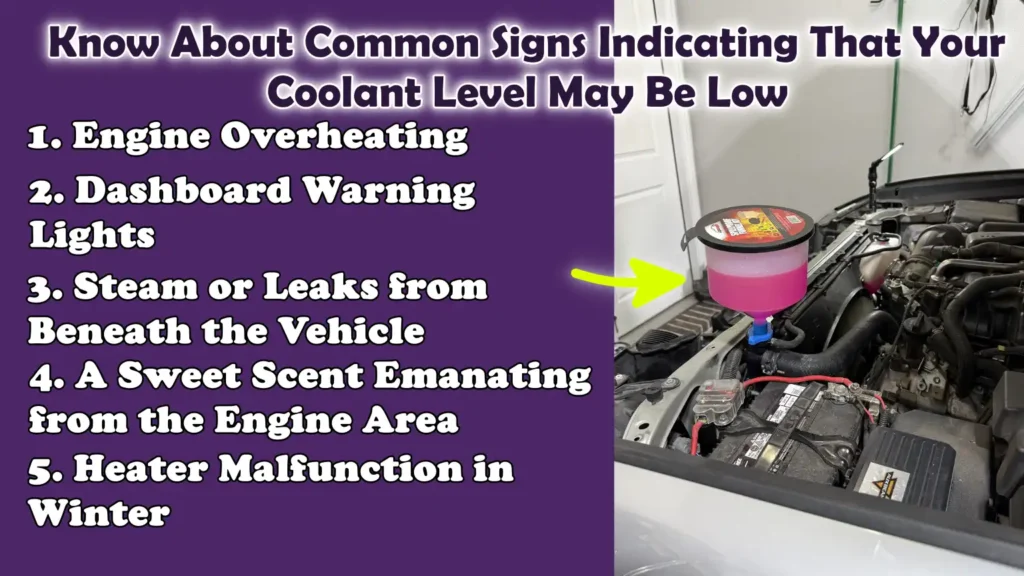
1. Engine Overheating
The most common and serious sign of low coolant is engine overheating.
The engine relies on coolant to absorb and dissipate excess heat; when the coolant level drops, this cooling process is disrupted or ceases to function effectively.
Consequently, the engine temperature rises rapidly, particularly during long journeys, heavy traffic, or hot weather.
You may observe the temperature gauge needle climbing toward the ‘red zone’ (danger mark), or the engine may simply feel unusually hot.
If this condition persists, it can cause damage to critical components such as the cylinder head or engine block.
Even brief periods of engine overheating can result in significantly higher repair costs; therefore, this warning sign should never be ignored.
2. Dashboard Warning Lights
Modern vehicles are equipped with sensors that monitor engine temperature and coolant levels.
When a malfunction occurs, a warning light illuminates on the dashboard, often shaped like a thermometer, or accompanied by a temperature-related warning message.
This light serves as an ‘early warning system,’ designed to prevent severe damage.
If the coolant level is low, this system can issue a warning by detecting rising temperatures or a deficiency in the fluid.
Ignoring this warning can further exacerbate the condition of the engine.
Whenever this light illuminates, it is crucial that you safely pull your vehicle over to the side of the road and check the coolant level as soon as possible.
3. Steam or Leaks from Beneath the Vehicle
Steam rising from beneath the engine hood (bonnet) is a clear and immediate indication that the engine is overheating, this is often caused by low coolant levels or a leak within the cooling system.
When coolant escapes and comes into contact with hot engine components, it turns into steam; this steam may be visible while driving or even after the vehicle has been parked.
You may also observe fluid dripping from beneath the vehicle, depending on the type of coolant used, this typically appears as a bright green, orange, or pink liquid.
This leak could originate from hoses, the radiator, or other engine components.
The loss of coolant due to a leak compromises the cooling system’s ability to regulate engine temperature; therefore, this issue must be repaired immediately to prevent further damage.
4. A Sweet Scent Emanating from the Engine Area
Due to its chemical composition, coolant emits a distinct, sweet scent.
If you detect an unusual odor coming from the engine compartment, or even from inside the car’s cabin, it could be a sign of a coolant leak.
Often, this odor becomes perceptible before any visible signs of a leak appear; thus, it serves as an “early warning signal.”
In some instances, if there is a leak in the heater core, this scent may enter the cabin through the air vents.
Although it may not appear to be a serious issue at first glance, it generally indicates that coolant is escaping from the system; if left unaddressed, coolant levels can drop significantly, potentially leading to engine overheating later on.
5. Heater Malfunction in Winter
A car’s heating system relies on hot coolant circulating through a component known as the heater core.
When the coolant level is low, there may not be enough hot fluid available to generate warm air inside the cabin.
Consequently, the heater may only emit cold or lukewarm air, particularly during cold weather.
This issue is often overlooked because it does not appear to be directly linked to engine performance; however, in reality, it is a definitive sign of a coolant-related problem.
If other symptoms manifest alongside the heater malfunction, it confirms the need to check the coolant level and top it up if necessary.
How to Make Sure Safety By Taking Basic Precautions Right Before Inspection
1. Never Open the Radiator Cap When the Engine Is Hot
Opening the radiator cap while the engine is still hot is extremely dangerous, as the cooling system operates under immense pressure during operation.
When the engine is hot, the coolant expands, causing the pressure inside the radiator and hoses to rise.
If you remove the cap too soon, this pressure can release suddenly, causing scalding-hot coolant to erupt outward rapidly, potentially resulting in severe burns and injuries.
Even if the engine does not feel excessively hot to the touch on the outside, the coolant inside may still be at a very high temperature.
Before touching the radiator cap, it is always essential to turn off the engine and allow sufficient time for it to cool down completely.
This simple precaution can prevent accidents and ensure a safe inspection.
2. Wear Gloves and Eye Protection
Wearing basic safety gear, such as gloves and eye protection, reduces the risk of injury while working around the engine.
Coolant contains chemicals that can cause irritation if they come into contact with, or splash onto, your skin or eyes.
In some instances, minor leaks or sudden pressure releases can cause fluids to spurt out unexpectedly.
Gloves act as a barrier against hot surfaces and hazardous fluids, while eye protection shields your eyes from sudden splashes of liquid.
Even during a routine inspection, these small safety measures ensure that you remain safe and can complete the procedure with caution and confidence.
3. Park the Car on Level Ground
Parking on a flat, level surface is crucial for ensuring both accuracy and safety when checking the coolant level.
When a car is parked on an incline, the coolant inside the reservoir may shift to one side, leading to an inaccurate reading, the displayed level may appear higher or lower than the actual level.
Failure to observe this precaution can result in issues such as overfilling the coolant or failing to detect a critically low coolant level.
A level surface ensures that the fluid settles evenly, allowing you to accurately read the markings on the reservoir.
It also helps keep the vehicle stable while working underneath the engine, thereby reducing the risk of the vehicle shifting or causing an accident.
4. If the vehicle has been driven recently, wait for the engine to cool down.
After driving, the engine and cooling system remain hot for some time, even after the vehicle has been switched off.
To avoid burns and ensure an accurate reading, it is crucial to wait for the engine to cool down before checking the coolant level.
As the engine cools, the coolant contracts and returns to its normal level, providing a more precise measurement within the reservoir.
Checking the level too soon can not only be unsafe but may also provide misleading information regarding the actual coolant level.
Allowing the engine to cool for at least 20 to 30 minutes makes this process safer and ensures reliable results when checking or adding coolant.
Tools
| Tool | Why It Is Needed | How to Use It |
|---|---|---|
| Clean Rag or Paper Towel | A clean cloth helps you wipe away dirt, dust, or spilled coolant from the reservoir area, allowing you to clearly see the fluid level markings. It also keeps the area clean and prevents any contaminants from entering the system. | Before opening the hood, use the cloth to clean the area surrounding the coolant tank cap. After checking or refilling the coolant level, wipe up any spills to ensure the engine bay remains clean and safe. |
| Coolant – Correct Type | If the coolant level is low, it needs to be refilled. It is crucial to use the correct type of coolant, as different coolants possess different chemical properties; using the wrong coolant can negatively impact cooling performance or cause damage to the engine. | Consult your car’s owner’s manual to determine the correct type of coolant for your vehicle. When the engine is cool, gently open the coolant reservoir cap and then slowly fill the reservoir up to the “Max” line. Do not fill the coolant beyond the “Max” line. |
| Gloves | Gloves protect your hands from heat, dirt and the harmful chemicals present in coolant. They also provide a better grip when opening caps or handling tools. | Put on gloves before opening the hood. Always wear gloves when touching the coolant reservoir, its cap, or any part of the engine to avoid direct contact with fluids or hot surfaces. |
| Flashlight – Optional | A flashlight helps you clearly see the coolant level markings, specially in low-light conditions or in the deeper, less visible areas of the engine bay. | Turn on a flashlight and shine it onto the coolant reservoir so that you can see the “Min” and “Max” lines. This allows you to check the coolant level with complete accuracy, without any guesswork. |
How to Check Coolant Level – Beginner’s Friendly Guide
How to Locate the Coolant Reservoir
The coolant reservoir is a plastic container situated within the engine bay; it is typically semi-transparent, allowing you to easily check the fluid level inside simply by looking at it.
It often features markings or labels related to the coolant and is connected to the radiator via a hose.
In most vehicles, it is located near the radiator or along the side of the engine compartment.
Locating this reservoir is crucial, as modern vehicles are designed to allow you to check the coolant level through this tank rather than by directly opening the radiator cap.
Knowing its exact location enables you to perform regular checks quickly and safely, without touching hot or delicate engine components.
How to Check the Markings – Full, Min or Max
The coolant reservoir features clear markings that indicate the safe operating range for the fluid level.
These markings are typically labeled “Min” and “Max,” or “Low” and “Full.”
These indicators are designed to help you determine whether your engine has sufficient coolant to operate safely.
When the engine is cold, the coolant level should fall somewhere between these two markings.
If the level drops below the minimum mark, it indicates that the system lacks sufficient fluid to properly cool the engine.
Reading these markings accurately is essential, as both low coolant levels and overfilling can lead to issues within the cooling system.
How to Visually Check the Level
Once you have located the markings, carefully observe the coolant level against the side of the reservoir.
As the container is semi-transparent, you can usually check the fluid level without opening the cap.
This visual inspection allows you to quickly determine whether the coolant is at a safe level.
You should also pay attention to the color and clarity of the coolant.
A healthy coolant typically has a bright color such as: green, orange, or pink, depending on its specific type.
If the fluid appears dirty, rusty, or contains visible particles, it may need to be replaced.
This simple visual check provides essential information regarding both the coolant level and its overall condition.
How to Know If the Level is Low, Identify the Required Coolant Type
If the coolant level drops below the minimum mark, it is crucial to use the correct type of coolant before adding more.
Different vehicles require different coolant formulations; using the wrong type can reduce effectiveness or trigger chemical reactions that may damage the system.
The correct coolant type can typically be identified by consulting the vehicle’s owner’s manual or by checking the reservoir cap.
Some coolants come pre-mixed, while others must be diluted with water in a specific ratio.
Choosing the right coolant ensures proper temperature regulation, prevents corrosion and protects the engine over the long term.
So, If Necessary: Slowly Add Coolant
Once you have obtained the correct coolant, slowly and carefully open the reservoir cap; ensure that the engine has completely cooled down.
Gently pour the coolant into the reservoir until it reaches the recommended level.
Pouring the coolant slowly prevents it from spilling over and allows sufficient time for the fluid to settle properly within the system.
It is crucial not to rush this step, as pouring the coolant too quickly can create air bubbles or cause the fluid to overflow.
Working at a steady pace ensures that the coolant fills evenly and safely.
Do Not Overfill and Re-Check the Level After a Few Minutes
Overfilling the coolant reservoir can be detrimental because the coolant expands as the engine runs and heats up.
If there is excess fluid, it may spill out or create excessive pressure within the system, potentially leading to leaks or damage.
After adding the coolant, wait a few minutes and re-check the level to ensure it has settled and falls within the correct range.
This brief waiting period allows the coolant to settle, providing you with a more accurate reading.
Maintaining the coolant level between the “Minimum” and “Maximum” marks is the safest way to ensure the engine remains properly cooled.
How to Securely Close The Reservoir
Once you have completed the inspection and added coolant as needed, it is essential to close the reservoir cap firmly and tightly.
The cooling system operates under pressure; a loose or improperly secured cap can cause coolant leaks or compromise the system’s efficiency.
A properly secured cap helps maintain the correct pressure, which is vital for proper coolant circulation and for keeping the engine temperature under control.
Double-checking the cap ensures that the task is complete and that the system will function safely while the vehicle is in operation.
Additional Tips for Betterment With the Coolant Thing
1. Regularly Check Coolant Levels
Regularly checking your coolant level is the easiest way to avoid engine problems and costly repairs.
Even if the level appears correct, it is still advisable to check it at least once a month specially before long trips or during adverse weather conditions.
Routine checks allow you to detect gradual leaks, evaporation, or other issues early on, enabling you to take necessary action before the engine overheats.
Regular monitoring ensures that your engine always maintains the correct amount of coolant, allowing it to operate efficiently and safely.
2. Inspect Hoses and the Radiator for Leaks
Coolant leaks often originate from the cooling system’s hoses, radiator, or connections.
Over time, hoses can crack, loosen, or deteriorate, while radiators may develop small punctures or corrosion.
Regularly inspecting these components allows you to detect leaks before they escalate into serious problems.
Look for wet spots around connections, discoloration, or any residue buildup.
Detecting leaks in a timely manner not only prevents coolant levels from dropping but also safeguards other engine components from damage caused by overheating or a loss of pressure.
3. Do Not Mix Different Types of Coolant Unless They Are Compatible
Using the correct type of coolant is crucial; mixing different types can negatively impact engine performance or trigger chemical reactions that may lead to engine damage.
Some coolants are formulated with specific additives designed to provide corrosion protection, efficiently dissipate heat and ensure durability.
Mixing incompatible formulas can render these additives ineffective or result in the formation of a thick sludge, which can clog hoses and reduce cooling efficiency.
Before adding or mixing coolant, always consult your vehicle’s owner’s manual or follow the manufacturer’s instructions to ensure that the system functions correctly and remains safe.
4. Maintain a Maintenance Log for Your Vehicle
Keeping a written or digital log of your vehicle’s coolant checks and other maintenance tasks helps you monitor the health of your engine over time.
Record inspection dates, coolant top-ups, the type of coolant used and any issues observed.
This log serves as a reference for identifying recurring problems, planning future maintenance in advance and communicating clearly with a mechanic should repairs become necessary.
Maintaining detailed records ensures long-term optimal engine performance and minimizes the likelihood of sudden breakdowns, thereby providing you with peace of mind while driving.
Know, Common Mistakes to Avoid Them Later On
Even, there’s scientific analysis that confirms that the coolant is actually major component of the engine’s heat management system, as it actually absorbs the combustion heat and redistributes it in safe manner, that’s why well-maintained coolant literally contributes directly to the efficiency of engine and make it durable, this is the reason that you need to check and maintain the good coolant level all the time.[¹]
1. Checking Coolant Levels While the Engine is Hot
One of the most dangerous mistakes car owners make is checking the coolant level while the engine is still hot.
When the engine is running or has been recently shut off, the cooling system is under pressure; removing the cap at such a time can cause boiling coolant and steam to erupt, posing a risk of severe burns or injury.
Even if the engine feels only slightly warm to the touch, the fluid inside it may be at an extremely high temperature.
Always wait for the engine to cool down completely before opening the reservoir or radiator cap; this ensures both your personal safety and an accurate measurement of the coolant level.
2. Overfilling the Reservoir
Overfilling the coolant is another common mistake that can lead to engine damage.
During normal driving, as the coolant heats up, it expands; consequently, overfilling the reservoir can cause the coolant to spill over or create excessive pressure within the system.
This can result in coolant leaks, damaged hoses, or even damage to the radiator.
To avoid this, always pour the coolant slowly and stop filling once it reaches the ‘Maximum’ mark indicated on the reservoir.
Checking the coolant level again after a few minutes ensures that it has settled properly, thereby preventing potential problems caused by overfilling.
3. Ignoring Coolant Leaks or Changes in Color
Some car owners overlook coolant leaks or changes in the fluid’s appearance, a mistake that can prove costly.
Coolant can leak from hoses, radiator connections, or the heater core, causing the coolant level to drop and subsequently leading to engine overheating.
An abnormal coolant color such as: brown, rust-like, or cloudy, often indicates the presence of impurities, the onset of corrosion, or the degradation of the chemical additives contained within it.
Ignoring these warning signs can lead to severe engine damage over time.
Regularly checking the coolant level and condition allows for the timely detection of these issues, enabling corrective measures to be taken before major repairs become necessary.
4. Using Plain Water Instead of the Correct Coolant Mixture
Many people mistakenly assume that plain water can be used as a substitute for coolant; however, doing so places the engine’s safety at serious risk.
Water alone cannot prevent the coolant from freezing in cold weather, boiling in hot weather, or causing corrosion within the cooling system.
A proper coolant mixture contains antifreeze and various chemical additives that regulate temperature, protect metal surfaces and maintain the overall efficiency of the system.
Using the specific type of coolant recommended in the vehicle’s owner’s manual ensures that the engine remains protected, operates efficiently and is safeguarded against the long-term damage caused by the use of incorrect fluids.
Read More:
- How to Fix Car Overheating
- How to Flush a Radiator
- How to Diagnose Wheel Bearing Noise
- How to Reduce Road Noise in a Car
Understand, When You Have to Call The Professional
1. Persistent Drop in Coolant Level
If you observe that the coolant level continues to drop even after topping it up, it is a clear indication of an internal issue requiring professional assistance.
A persistent loss of coolant may signal hidden leaks in the hoses, radiator, or water pump, problems that often go unnoticed during routine inspections.
Ignoring this issue can lead to severe engine damage, such as overheating, warped components, or a blown head gasket.
A qualified mechanic can accurately diagnose the cause of the coolant loss and perform the necessary repairs to ensure the cooling system functions correctly and safely.
2. Unusual Coolant Color or Contamination
If the coolant appears discolored, rusty, or contains floating particles, it serves as a warning that the system may be contaminated or deteriorating.
These changes can result from internal corrosion within the radiator, the breakdown of additives in the coolant, or contamination by other fluids.
Operating a vehicle with contaminated coolant can compromise the system’s heat-absorbing capacity, cause blockages in the hoses and accelerate wear on engine components.
A professional inspection and system flush are often required to restore the cooling system to proper working order and prevent long-term damage.
3. Engine Overheating Despite Full Coolant Level
If your engine continues to overheat even after you have confirmed that the coolant level is full, it indicates a more serious mechanical issue that cannot be resolved simply by adding fluid.
Potential causes for this include a faulty thermostat, a clogged radiator, a defective water pump, or a blown head gasket.
Diagnosing these specific issues accurately requires specialized tools and expertise.
Continuing to drive under such conditions can lead to complete engine failure.
Consulting a professional ensures that the root cause of the problem is identified and resolved, thereby safeguarding your engine and helping you avoid costly repair expenses.
Conclusion – How to Check Coolant Level
Literally, with the simple coolant check today you can prevent some engine disaster things tomorrow, that makes it one of the most important habit that gives solid defense line against heat and corrosion as well.
Coolant plays a crucial role in regulating engine temperature; it prevents the engine from overheating in hot weather and freezing in cold conditions.
Neglecting this can lead to severe engine damage such as: a warped cylinder head, a blown gasket, or complete engine failure, resulting in significant repair costs.
By taking a few simple steps such as: locating the coolant reservoir, reading the markings on it, inspecting the coolant and safely topping it up when necessary, car owners can ensure that their cooling system is functioning properly.
Adopting additional good habits alongside these checks such as: inspecting hoses, avoiding the use of incompatible coolants and maintaining vehicle maintenance records, will further extend the engine’s lifespan and enhance its reliability.
Recognizing signs of low coolant levels or coolant degradation and knowing when to seek expert assistance, helps drivers avoid sudden breakdowns and ensures a safe, comfortable and optimal driving experience.
Now, that’s everything you need to know about How to Check Coolant Level, but if you still have confusion related to this: just comment down below.
Frequently Asked Questions
FAQ 1: What is coolant and why is it important?
Coolant, also known as antifreeze which is a specialized fluid created by blending water with various chemicals. It plays a crucial role in regulating your engine’s temperature. It prevents the engine from overheating during the summer and freezing during the winter. Coolant also protects the internal metal components of the engine from rust and corrosion. If the coolant level drops too low, the engine can overheat, potentially sustaining severe damage that is often very expensive to repair. Regularly checking and maintaining the coolant at the proper level ensures that your engine remains safe and functions correctly.
FAQ 2: How often should I check my coolant level?
It is best to check your coolant level at least once a month, or specifically before embarking on a long journey. Over time, coolant can gradually leak or evaporate; regular checks allow you to detect these issues early, thereby preventing potential damage to the engine. Frequent checks are particularly important during the summer months or in extremely cold winter weather, as the cooling system is under increased stress during these periods.
FAQ 3: Can I check the coolant while the engine is hot?
No, you should never open the radiator or coolant reservoir while the engine is hot. The system is under pressure and the coolant inside may be boiling. Opening it at this stage could result in hot fluid or steam spraying onto you, posing a risk of severe burns. Always wait for the engine to cool down completely before checking the coolant level or adding more coolant.
FAQ 4: What are the signs of low coolant?
Some common signs of low coolant levels include a rapid rise in engine temperature, a warning light illuminating on the dashboard, visible steam or fluid leaking from underneath the car, a sweet scent emanating from the engine area, or the heater failing to function properly in cold weather. If you observe any of these signs, you should immediately check your coolant level to prevent the engine from overheating or sustaining potential damage.
FAQ 5: What type of coolant should I use?
The specific type of coolant your car requires depends on its make and model; therefore, always consult your car’s owner’s manual or read the label affixed to the coolant reservoir. Using the correct type of coolant is crucial, as different coolants contain specific chemical additives that facilitate heat transfer and prevent corrosion. Mixing different types of coolants or using plain water as a substitute, as it can compromise the coolant’s effectiveness and ultimately cause damage to the engine.
FAQ 6: How do I add coolant to my car?
First, ensure that the engine has completely cooled down. Carefully open the coolant reservoir (tank) and check the fluid level against the “Minimum” and “Maximum” markings. If the level is low, slowly pour the correct type of coolant into the reservoir until it reaches the recommended level. Do not overfill it; wait a few minutes before re-checking the level to ensure the coolant has settled properly. Once filled, securely tighten the reservoir cap.
FAQ 7: Can I use water instead of coolant?
You should not use plain water instead of coolant, as it does not provide protection against freezing, boiling, or corrosion. Coolant contains special chemical additives that safeguard the engine and help maintain its proper operating temperature. Using only water can lead to engine overheating, corrosion and damage to its components. In an extreme emergency, you may use water temporarily; however, you should replace it with the correct coolant as soon as possible.
FAQ 8: What should I do if my coolant level keeps dropping?
If your coolant level is consistently dropping even after you have topped it up, it indicates a leak or another issue within the cooling system. Potential causes include: a cracked hose (pipe), a faulty radiator, a leak from the water pump, or a blown head gasket. It is crucial to have the system inspected by a professional mechanic to pinpoint the root cause of the problem and have it repaired before any major damage occurs to the engine.
FAQ 9: Is it necessary to change the coolant periodically?
Yes, coolant does not last forever. Over time, the chemical additives present in the coolant break down, reducing its ability to protect the engine against heat and corrosion. Most manufacturers recommend changing the coolant every 2 to 5 years, depending on the type of coolant being used and the specific requirements of your vehicle. Periodically changing the coolant ensures that the system functions correctly and prevents the accumulation of rust, sludge, or debris inside the engine.
References:
[1] THE ROLE OF COOLANT IN THE ENERGY BALANCE OF INTERNAL COMBUSTION ENGINES
https://www.researchgate.net/publication/385781526_THE_ROLE_OF_COOLANT_IN_THE_ENERGY_BALANCE_OF_INTERNAL_COMBUSTION_ENGINES
Hello Folks, Dean Shali here to help you out to solve the problems with your lovely vehicle, as i have lots of experience and knowledge about automotive industry as i woks directly with the customers and repair vehicles and i love to help the people to keep their cars safe and running smoothly.