
Written By: Dean Shali
Fact Checked By: Sabré Cook
Reviewed By: Tamara Warren
Just understand this simple rule: a car just cannot start without a working battery, that’s the single thing that makes them most essential components of any vehicle.
Literally, it is responsible for supplying the electrical power to start the engine and other systems such as: lights, radio, dashboard displays and safety features as well.
But, most of the car batteries actually lasts between 3 to 5 years of time, that’s why you need to maintain them perfectly as its life also depends on the driving habits, weather conditions of your area and maintenance as well.
Not only this, it is just natural thing that over the period of time and usage: batteries naturally loses their ability to hold a charge due to the chemical reactions inside them: that literally leads to the slow engine starts or complete failure as well.
That’s why, we have come up with this guide about How to Replace Car Battery: so that you can have straightforward process and helps you to inform some crucial aspects to reduce the risk of injury or vehicle damage as well.
How to Identify the Problem First
Understand this simple thing, that automotive batteries do no last forever; as most of the lead-acid car batteries operates reliably for about 3 to 5 years time, but this is also influenced by the heat, cold and how often the vehicle is driven, so there’s industry data that shows that almost 4 to 10 drivers replaces their vehicle’s batteries within the span of 3 years time, that clearly shows that the you need to do regular inspection and replace them before failures actually occurs.1
1. The Role of the Car Battery in Starting and Electrical Systems
The car battery is the main source of electrical power in the vehicle.
Its primary function is to provide the energy needed to start the engine by powering the starter motor.
Once the engine is running, the battery continues to support vital electrical systems such as headlights, interior lights, dashboard displays, radio, power windows and safety systems.
Although the alternator helps recharge the battery while driving, the battery is still essential because it stores electricity and provides power whenever the car needs it.
Without a properly functioning battery, the engine may not start and many of the vehicle’s electronic features will not function properly.
2. Symptoms of Battery Failure
A failing car battery usually shows clear warning signs before it is completely drained.
A common symptom is a slow or weak engine start, with the engine taking longer than usual to start.
Dim headlights, flickering interior lights, or electrical features not working properly can also indicate a battery problem.
In some cases, a clicking sound may be heard when trying to start the car, which often means the battery doesn’t have enough power.
Visible signs like corrosion on the battery terminals, swelling on the battery case, or a foul odor near the battery area are also sure signs that the battery is about to die.
3. The Dangers of Ignoring a Bad Battery
Ignoring a weak or failing battery can lead to serious and inconvenient problems.
The most common danger is a sudden breakdown, in which the car won’t start at all, often in an unsafe or inconvenient location.
A bad battery can also put increased strain on the alternator and other electrical components, leading to more expensive repairs.
In modern vehicles, low battery power can cause warning lights to come on or electronic systems to malfunction.
Fixing battery problems quickly helps prevent unexpected failures, protects the vehicle’s other systems and ensures the car remains safe and reliable to drive.
How to Evaluate the Readiness for Replacement
1. Determining Whether Replacement Is Necessary or Optional
Before replacing a car battery, it’s important to determine whether the battery truly needs to be replaced or whether the problem can be fixed in another way.
A battery that’s more than three to five years old and frequently struggles to start usually needs replacing rather than charging.
If the battery loses power quickly, requires frequent jump-starts, or fails a battery test at an auto service center, replacement is necessary.
In some cases, such as when a light is accidentally on or the car hasn’t been driven for a long time, the battery may simply be discharged and can be recharged.
Understanding this difference helps prevent unnecessary expenses and ensures vehicle reliability.
2. Evaluate Personal Skill Level and Time Required
Replacing a car battery doesn’t require advanced mechanical skills, but it does require basic knowledge, attention and ample time to work safely.
Most battery replacements take fifteen to thirty minutes when done calmly and correctly.
People should be comfortable using simple tools, following safety steps and lifting light weights, as car batteries can be heavy.
Rushing through the process or working without understanding the steps can increase the risk of mistakes.
Taking the time to evaluate personal confidence and available time helps ensure the job is completed safely and correctly.
3. Understanding the Location and Design of the Battery for the Vehicle
The battery isn’t located in the same location in all vehicles and this is crucial before starting.
In many cars, the battery is located under the hood, but in some models, it may be in the trunk, under the seat, or under a protective cover.
Different vehicles also use different battery sizes, terminal positions and mounting designs.
Some modern cars may require additional steps, such as removing a panel or resetting electronic systems after replacement.
Knowing the exact location and design of the battery for a specific vehicle helps avoid confusion, prevent damage to surrounding parts and ensure the correct replacement procedure is followed.
Tools
| Item Name | What It Is | Why It Is Needed |
|---|---|---|
| Car Battery – Correct Type | The power source that starts the engine and runs the electrical system. | Using the correct size and type of battery ensures proper fit, proper power supply and prevents electrical damage. |
| Vehicle Owner’s Manual | A guide provided by the vehicle manufacturer. | This helps prevent you from choosing the wrong battery and provides instructions specific to your vehicle. |
| Wrench or Socket Tool | A hand tool used to loosen and tighten bolts. | This allows the battery connection to be safely removed and reinstalled. |
| Battery Terminal Cleaner or Wire Brush | A tool used to clean metal connections. | Clean connections allow for faster power flow and prevent starting problems. |
| Protective Gloves | Thick rubber or cloth gloves. | These protect your hands from acid, dirt and sharp edges. |
| Safety Glasses | Eye Protection Made Of Clear Plastic. | These protect the eyes from acid splashes and loose debris. |
| Baking Soda and Water | A mild cleaning solution. | It safely neutralizes battery acid and removes corrosion. |
| Old Cloth or Paper Towels | Absorbent cleaning supplies. | Keeps the work area clean and dry, improving safety. |
How to Ensure Safety By Controlling Power Shutdown
1. The Importance of Disconnecting Electrical Currents
Before replacing a car battery, it’s essential to disconnect all electrical currents flowing through the vehicle.
Even when the engine is off, the battery continues to store electricity, which can cause sparks, damage electronic parts, or cause injury if handled carelessly.
Disconnecting electrical currents protects the vehicle’s sensitive systems, such as computers, sensors and control units that manage engine performance and safety features.
Turning off the engine, removing the key and ensuring all lights and accessories are off ensures the vehicle is completely shut down.
This step creates a safe working environment and reduces the risk of electric shock or accidental system damage.
2. The Correct Way to Disconnect Battery Terminals
One of the most important safety steps when replacing a battery is disconnecting the battery terminals in the correct order.
The negative terminal should always be disconnected first because it is connected to the vehicle’s metal body.
Removing it first breaks the electrical path and reduces the risk of sparks.
After safely removing the negative terminal, the positive terminal can be disconnected without danger.
Using the correct tool and loosening the clamp slowly helps prevent sudden movement or damage.
This method ensures that the battery is completely disconnected from the vehicle’s electrical system before removing it.
3. Avoiding Accidental Short Circuits
A short circuit occurs when electrical current flows through an unintended path, often caused by a metal tool touching both battery terminals or metal parts of the vehicle at the same time.
A short circuit can cause sparks, damage to the electrical system, or burns.
To avoid this, tools and battery cables should be handled carefully.
Metal objects should be kept away from the battery terminals and disconnected cables should be placed where they cannot fall back onto the battery.
Working slowly and carefully helps maintain control and ensures the replacement process is safe and without damage.
How to Remove Car Battery
1. Opening the Securing Mechanism
Once the battery terminals are safely disconnected, the next step is to remove the parts holding the battery in place.
Most car batteries are secured with metal brackets, clamps, or straps designed to prevent movement during driving.
These securing mechanisms must be carefully loosened using the appropriate tool, usually a wrench or socket.
Removing them slowly helps prevent the tool from slipping or damaging surrounding parts.
It’s important to remember the location of each part so it can be reinstalled later.
Fully opening the securing mechanism ensures the battery can be removed without any obstruction or sudden movement.
2. Safe Lifting and Removal Methods
Car batteries are heavy and can weigh between thirty and fifty pounds, so proper lifting is crucial.
The battery should be lifted straight up using both hands, keeping the back straight and knees bent to avoid strain.
Avoid tilting the battery, as this could cause residual acid to leak from the vent.
Moving slowly and maintaining a firm grip prevents the battery from falling, which could cause injury or damage.
Using proper lifting techniques helps keep the body safe and stable while removing the battery.
3. Temporary Handling and Storing the Old Battery
After removal, the old battery should be placed on a flat, stable surface, away from children, pets and metal objects.
Never leave it directly on concrete for extended periods, as this could discharge the battery.
Storing the battery upright prevents leaks and reduces the risk of acid spillage.
The battery should be stored in a safe place until it can be properly recycled or returned to the store.
Temporary handling reduces environmental hazards and ensures the area remains safe during the replacement process.
How to Prepare the New Car Battery
1. Inspecting the Cables, Connectors and Battery Tray
Before installing a new battery, it’s important to carefully inspect the battery cables, connectors and battery tray.
The cables should be free of cracks, loose wires, or hard parts that could obstruct proper electrical flow.
The connectors should fit snugly and show no signs of excessive corrosion or damage.
The battery tray, which supports the battery, should be sturdy and free of cracks or excessive corrosion.
A clean and sturdy tray helps secure the battery and prevents it from moving during driving.
This inspection step ensures that the new battery will connect properly and perform as expected.
2. Cleaning Corrosion and Residue
Corrosion around battery terminals is a common problem and usually appears as a white or green powdery substance.
This buildup can obstruct electrical flow and cause problems starting even with a new battery.
Cleaning the corrosion with a mild solution like baking soda and water safely neutralizes the remaining acid.
Gently scrubbing the affected areas and thoroughly drying them will restore clean metal contact surfaces.
Removing any remaining corrosion also prevents further electrical resistance and helps extend the life of the new battery.
3. Fixing Minor Problems Before Installation
Minor problems should be fixed before installing a new battery.
Tighten loose connectors, adjust damaged cable ends and clean or treat small spots of corrosion on the battery tray.
Fixing these problems quickly can prevent poor connections and reduce the risk of battery movement or electrical failure.
Taking time during this replacement ensures that the new battery is installed in a clean, safe and reliable environment, improving overall vehicle performance and safety.
How to Install and Reassemble the New Battery
1. Correct Positioning and Alignment
To properly install the new battery, it must be placed in the battery tray as carefully as the old battery.
The positive and negative terminals must be aligned with the correct cables to avoid cross-connections.
The battery must be placed evenly and without any movement in the tray, as improper placement can cause damage over time.
Proper alignment ensures that the cables reach the terminals easily and the battery fits the vehicle’s design.
This step is crucial because a properly positioned battery ensures safe power flow and reduces stress on the cables.
2. Reinstalling the Battery to Prevent Dislodgement
Once the battery is properly installed, secure it using the original hold-down brackets, clamps, or straps.
These parts prevent the battery from dislodging while the vehicle is in motion, specially during turns, stops, or rough driving.
A loose battery can vibrate, which could damage internal battery components or loosen connections.
Tightening the securing mechanism firmly, but not too tightly, keeps the battery stable without cracking the case.
Properly tightening the battery increases its life and protects surrounding vehicle parts.
3. Safely Repairing Electrical Connections
To maintain safety and prevent sparks, reconnect the battery cables in the correct order.
The positive terminal should be connected first, followed by the negative terminal.
Each connector should be placed firmly on the terminal and tightened until it is snug and secure.
Loose connections can cause power loss, starting problems, or electrical system errors.
After reconnecting, carefully check the cables to ensure they are securely connected.
Securely securing the electrical connections completes the installation and prepares the vehicle for proper operation.
How to Ensure & Confirm Ideal Performance After Replacing Battery
1. Do Initial Engine Start and Electrical Test
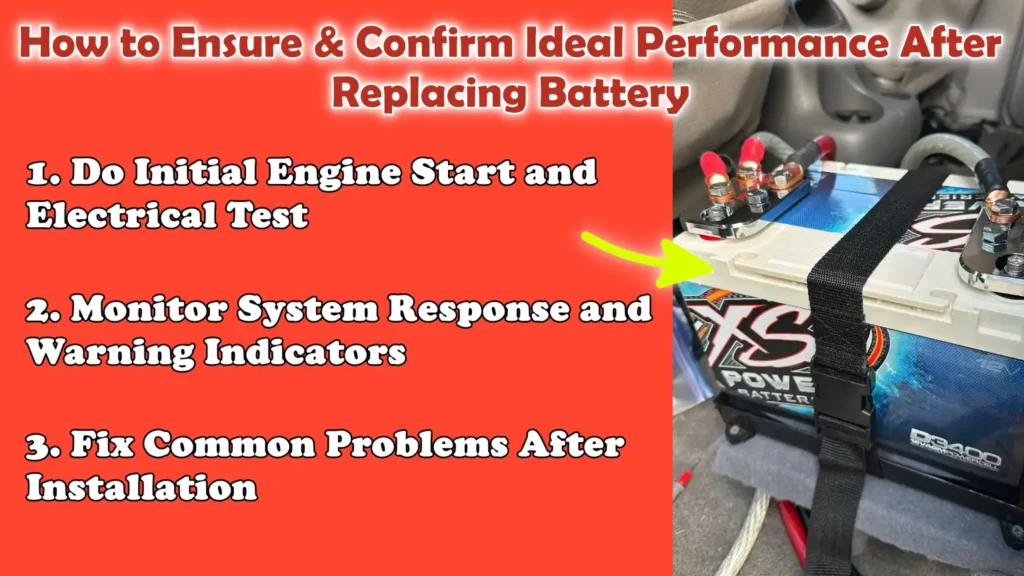
After the new battery is installed and all connections are secure, start the engine to confirm that the battery is functioning properly.
A healthy battery will allow the engine to start smoothly and quickly, without any hesitation or strange noises.
After the engine is running, basic electrical systems such as the headlights, interior lights, radio and dashboard display should be tested to ensure they are receiving proper power.
Bright and steady lights and responsive electronics indicate that the battery is supplying power properly.
This initial test helps confirm that the installation was successful and the vehicle is ready for normal operation.
2. Monitor System Response and Warning Indicators
After starting the vehicle, pay attention to dashboard warning lights and system messages.
Most warning lights should flash briefly and then turn off, indicating that the vehicle’s systems are functioning properly.
If the battery, charging, or engine warning light remains on, it could indicate a connection problem or a problem with the charging system.
Listening for strange noises and observing the vehicle’s reaction during idling can also help identify potential problems.
Monitoring these signs in the first few minutes helps identify problems early before driving.
3. Fix Common Problems After Installation
If the engine won’t start or the electrical systems aren’t working as expected, simple checks can often fix the problem.
Loose or improperly connected terminals are the most common cause and should be checked first.
Ensuring the battery is properly installed and the terminals are clean and tight often resolves starting problems.
In some vehicles, it may take time for the electronic systems to reset after a battery replacement.
Addressing these common problems calmly and carefully helps ensure the new battery works reliably and doesn’t cause unnecessary stress or damage to the vehicle.
Conclusion For: How to Replace Car Battery
Now, you have successfully replaced your dead battery, now what?
Do not throw them into regular trash, as it literally contains lead, acid and other harmful materials that can actually harm the people and the environment as well.
As well as, most car batteries are designed for recycling and many auto parts stores and service centers accept old batteries for safe disposal.
Also, recycling allows valuable materials like lead and plastic to be reused, while also preventing toxic materials from entering soil and water.
Plus, responsible handling of old batteries protects the environment and complies with legal and safety guidelines.
And, proper disposal is an essential final step in the battery replacement process.
Along with this, properly replacing a car battery provides long-term benefits, increasing vehicle reliability and safety.
A properly installed battery provides consistent power, ensuring smooth engine starts and reliable operation of electronic systems.
Now, that’s it from this guide on How to Replace Car Battery and you can ask questions regarding this below.
Frequently Asked Questions
Question No. 1 :- What Does a Car Battery Do and Why Is It Important?
Answer: A car battery provides the electrical power needed to start the engine and operate vital systems like lights, dashboard displays, radio and safety features. When the engine is off, the battery supplies all electrical power. Even when the engine is running, the battery supports the electrical system and helps maintain stable voltage. Without a working battery, the engine cannot start and many of the vehicle’s systems will not function properly.
Question No. 2 :- How Do I Know if My Car Battery Needs Replacing?
Answer: Car batteries usually show warning signs before they are completely worn out. Common signs include slow engine starts, dim headlights, flickering interior lights, or a clicking sound when turning the key. Batteries that are more than three to five years old and struggle to hold a charge often need replacing. Visible corrosion on the terminals or swelling in the battery case also indicate battery failure.
Question No. 3 :- Is Replacing a Car Battery Difficult for Beginners?
Answer: Replacing a car battery is generally easy and doesn’t require advanced mechanical skills. Most people can complete the task in about fifteen to thirty minutes using basic tools. Understanding the correct steps, following safety precautions and working carefully are essential. With proper preparation, even beginners can safely and successfully replace a car battery.
Question No. 4 :- Why Is It Important to Disconnect the Negative Terminal First?
Answer: The negative terminal is connected to the vehicle’s metal body, which serves as ground. Disconnecting it first breaks the electrical circuit and reduces the risk of sparks or short circuits. If the positive terminal is removed first and a tool touches the metal, it could cause a dangerous spark. Removing the negative terminal first makes the process safer.
Question No. 5 :- Can I Install the New Battery in Any Direction?
Answer: No, the new battery must be installed in the correct position and orientation. The positive and negative terminals must be aligned with the correct cables in the vehicle. Improperly installing the battery can cause reverse connections, electrical damage, or trouble starting. Proper alignment also ensures that the battery sits flat and securely in the tray.
Question No. 6 :- What if the Battery Isn’t Properly Secured?
Answer: If the battery isn’t properly secured, it may move while driving. This movement can damage internal components, loosen electrical connections, or cause acid leaks. Over time, vibration can shorten the battery’s life and create safety risks. Properly securing the battery can prevent these problems and ensure reliable performance.
References:–
- How Often to Replace a Car Battery: Every 3-5 Years on Average
https://carinterior.alibaba.com/question/how-often-do-you-need-to-change-your-car-battery ↩︎
Hello Folks, Dean Shali here to help you out to solve the problems with your lovely vehicle, as i have lots of experience and knowledge about automotive industry as i woks directly with the customers and repair vehicles and i love to help the people to keep their cars safe and running smoothly.