Written By: Dean Shali
Fact Checked By: Sabré Cook
Reviewed By: Tamara Warren
Literally, whenever you start your car, there’s a thin film of oil that begins to circulate through the engine, that protects dozens of fast-moving metallic parts that operates under the extreme heat and pressure.
Basically, this oil is not just a lubricant, as it is the engine’s cooling system, cleaning agent and first line of defence against any wear as well.
Just like the other things, over the period of time and usage, even the highest-quality oil begins to break down.
As, there’s heat, oxidation and microscopic contaminants are available that turns it into a thicker substance that leaves behind that sludge and varnish inside the critical passages.
Even, there’s studies in automotive maintenance that consistently shows that restricted oil flow is actually the major contributor to premature engine wear and efficiency loss.
So, what actually makes this more concerning is that a standard oil change that often removes only the old oil, not the deposits left behind.
That’s why, your fresh oil can mix with the existing contamination almost immediately, that is where you need to understand about an engine oil system flush as it is really important from that time.
Just, do this thing correctly, as it literally can helps you to restore the proper oil circulation and improves the engine performance as well, otherwise it can loosen debris and create such a serious problems.
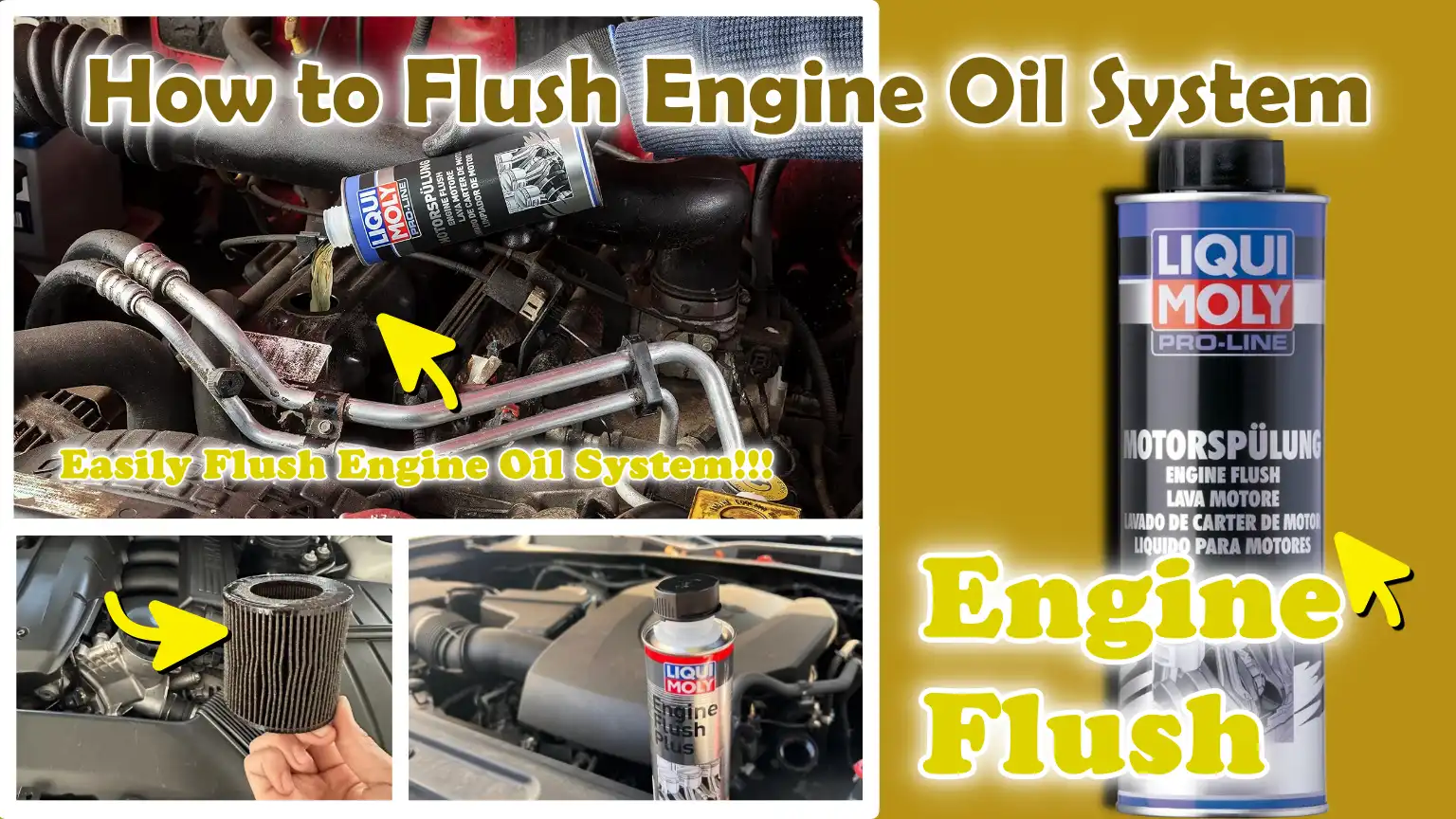
Now, in this guide you’ll learn everything about How to Flush Engine Oil System, so that you can follow the safe and practical method to flush your engine oil system in the right way and quick in time as well.
Know, What is an Engine Oil System Flush?
An engine oil system flush is a cleaning procedure designed to remove accumulated dirt, sludge and harmful deposits from inside your engine; this process is performed prior to adding fresh oil.
Over time, due to heat and continuous use, engine oil begins to degrade and starts carrying tiny particles of metal, carbon and dust.
These particles accumulate in narrow oil passages, around engine components and in areas that a standard oil change procedure cannot fully clean.
The purpose of a flush is to circulate a specialized cleaning solution through the engine, which dissolves and loosens these deposits so they can be drained out along with the old oil.
This restores proper oil flow, which is crucial, as adequate lubrication reduces friction, prevents the engine from overheating and protects engine components from premature wear.
1. Engine Oil Change vs Engine Flush
Although changing the engine oil and performing an engine flush may sound similar, they serve distinct purposes.
The oil change process simply involves draining the old oil from the oil pan and replacing it with fresh oil and a new filter.
While this effectively removes a significant portion of the dirty oil, it does not thoroughly clean the engine’s internal components, nor does it remove deposits adhering to the internal surfaces.
In contrast, an engine flush goes a step further; it thoroughly cleans the engine’s interior before fresh oil is introduced.
It targets the residual sludge and deposits that cannot be removed solely through a standard oil change procedure.
This is why an engine flush is sometimes recommended when an engine has not been properly maintained, shows clear signs of internal contamination, or exhibits symptoms of restricted oil flow.
2. How Sludge, Varnish and Deposits Form Inside the Engine
As engine oil ages and begins to degrade, sludge, varnish and various other deposits naturally begin to form inside the engine.
High temperatures cause the oil to oxidize; this means it reacts with oxygen and gradually thickens over time.
Furthermore, residual fuel, moisture and microscopic particles generated by engine wear mix into the oil, thereby diminishing its effectiveness.
When the oil is not changed at the proper intervals, these impurities adhere to the engine’s internal surfaces, forming a thick, dark sludge.
Varnish is a hard, thin film that forms when certain oil components burn, leaving behind a sticky residue on metal parts.
These deposits can clog narrow oil passages and obstruct oil flow, a hazardous situation, as even the slightest interruption in oil circulation hinders proper lubrication, increases friction and accelerates the wear and tear of engine components.
Know, Benefits of Flushing Your Engine Oil System
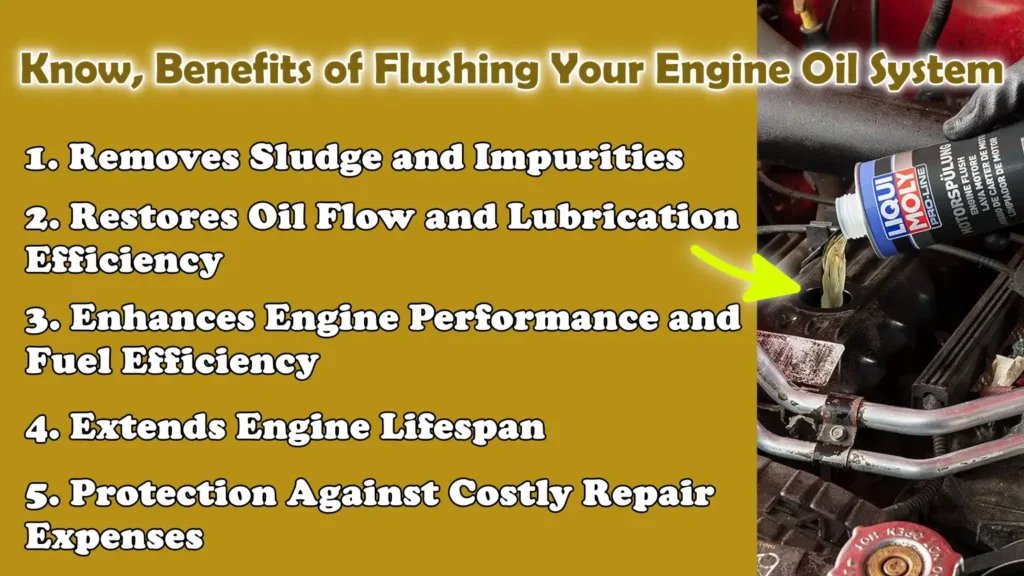
Flushing your engine oil system can yield tangible benefits, provided it is performed at the right time and for the right reasons.
Over time, dirt, carbon and minute metal particles accumulate in the engine oil, gradually forming deposits within the engine’s internal components.
These impurities can compromise the engine’s smooth operation and its overall longevity.
A proper engine flush helps clear away these harmful deposits, thereby enabling fresh oil to perform its function more effectively.
When the engine’s internal parts are clean, the engine runs more smoothly, enjoys enhanced protection against wear and tear and maintains its performance over time.
1. Removes Sludge and Impurities
A primary benefit of an engine flush is that it eliminates accumulated sludge and impurities from the engine, substances that cannot be completely removed through a standard oil change alone.
Sludge forms when old oil breaks down and combines with heat, moisture and dirt to create a thick, viscous substance.
This sludge can accumulate in the engine’s narrow passageways and around its components, making it difficult for the oil to reach critical engine parts.
The flush works by loosening and dissolving these deposits, allowing them to drain out along with the old oil; this cleanses the engine and mitigates the risk of deposits negatively impacting engine performance.
2. Restores Oil Flow and Lubrication Efficiency
Clean oil requires clear pathways to circulate freely within the engine; even minor obstructions in these channels can diminish its effectiveness.
When sludge and deposits accumulate, they can partially obstruct oil passages, thereby restricting the flow of oil to critical engine components.
This can lead to increased friction and heat within the engine.
An engine flush helps eliminate these obstructions, allowing oil to circulate more freely and uniformly throughout the engine.
Improved oil flow translates to superior lubrication, which reduces wear and tear on the engine’s moving parts and helps maintain the engine at a safe operating temperature.
3. Enhances Engine Performance and Fuel Efficiency
A clean engine generally runs more smoothly, as its internal components are able to move freely without obstruction.
When oil flow is optimized and friction is minimized, the engine does not have to work as hard to generate power.
The result is improved acceleration, smoother engine operation and, in some cases, enhanced fuel efficiency.
Although the benefits may not always be immediately or obviously apparent, restoring proper lubrication and reducing internal engine friction allows the engine to operate closer to its true performance potential.
4. Extends Engine Lifespan
Engines are designed for longevity; however, their actual lifespan depends significantly on proper maintenance.
When dirt and sludge accumulate, they accelerate wear on critical components such as bearings, pistons and camshafts.
Over time, this cumulative wear can lead to a decline in engine performance and, in severe cases, even result in total engine failure.
By removing harmful deposits and improving lubrication, an engine flush helps minimize unnecessary wear and tear; Furthermore, when performed in conjunction with regular oil changes, it contributes to extending the overall lifespan of the engine.
5. Protection Against Costly Repair Expenses
Neglecting sludge accumulation and poor oil circulation can eventually lead to serious mechanical issues that prove expensive to repair.
Clogged oil passages, increased friction and excessive heat can damage internal components, potentially necessitating major repairs or even a complete engine replacement.
By keeping the oil system clean and functioning optimally, an engine flush helps mitigate the risk of these problems occurring.
While it may not be a magic bullet for every engine, its timely application serves as a preventive measure, helping to avert major, and significantly more costly, issues in the future.
When Should You Flush Your Engine?
Knowing the right time to flush your engine’s oil system is crucial, as doing so at the wrong moment can cause more harm than good.
An engine flush is not something that should be performed routinely, like a standard oil change.
Instead, it is beneficial only in specific situations where there is clear evidence of dirt accumulation or degraded oil quality.
Modern engines are designed to remain clean, provided that oil changes are performed on schedule; however, when maintenance is delayed or oil quality deteriorates, harmful deposits begin to form inside the engine.
Flushing should only be considered when there are clear warning signs or a known reason to cleanse the system; it should not be regarded as a standard part of routine maintenance.
1. Signs That Your Engine May Need a Flush
One of the most common indicators is dirty or thickened oil, oil that appears significantly darker and heavier than usual.
This may signal that the oil has degraded and contains an excessive amount of impurities.
Another sign is increased engine noise, specifically ticking or tapping sounds, which can occur when the oil is failing to circulate properly to lubricate the engine’s moving parts.
A decline in performance is also a warning sign; the engine may feel sluggish, less responsive, or less efficient than before.
In some cases, a poor maintenance history serves as a strong indicator, particularly if oil changes have been skipped or significantly delayed over a prolonged period.
These conditions increase the likelihood of sludge accumulating inside the engine, a type of deposit that may require a flush to remove.
2. Situations Where Flushing Is Recommended
There are certain situations in which flushing an engine can be particularly beneficial and appropriate.
When purchasing a used car specially if its previous maintenance history is unknown, flushing can help remove potential deposits and give the engine a fresh start.
Another situation where flushing is advantageous is when you are switching from conventional oil to synthetic oil; as synthetic oils possess stronger cleaning properties, they can loosen pre-existing deposits, making a proactive, controlled flush a useful measure.
In some instances, manufacturers may also suggest flushing under specific conditions, although in most cases, they do not recommend it as a routine service procedure.
It is always crucial to consult the owner’s manual and adhere to the suggested maintenance schedule, as unnecessary flushing sometimes carries the risk of causing harm rather than providing a benefit.
When You Should NOT Flush Your Engine?
While an engine flush can be beneficial under the right circumstances, there are times when it should be avoided entirely.
If an engine is already in poor condition, flushing it may exacerbate existing problems rather than resolve them.
The cleaning process works by dislodging accumulated grime; if the engine cannot safely withstand this sudden agitation, it may lead to clogged oil passages, leaks, or even internal damage.
Therefore, it is crucial to understand when flushing is not the appropriate choice and when safer alternatives such as: regular oil changes, are the better option for protecting the engine.
1. High-Mileage Engines with Excessive Sludge Buildup
High-mileage engines that have not been properly maintained often accumulate thick layers of sludge over the course of many years.
In some cases, this sludge settles in areas where it is not currently causing any issues.
When such an engine is flushed, the process can dislodge large chunks of this accumulated sludge simultaneously.
These dislodged particles then begin circulating within the oil system, clogging narrow oil passages or becoming lodged in the oil pickup screen.
This can restrict oil flow and significantly increase the risk of severe engine damage.
For such engines, a gradual cleaning approach, achieved through frequent oil changes, is typically a safer strategy.
2. Engines with Existing Leaks or Worn Seals
If an engine is already leaking oil or has worn seals, performing a flush may worsen the problem.
Over time, sludge and deposits can sometimes fill in small cracks or gaps around worn components, effectively acting as a temporary seal.
When the flush removes these deposits, these cracks reopen and the oil leakage intensifies.
Clear indications of this can manifest as oil depletion, a drop in oil levels and a reduction in lubrication efficiency.
For engines known to already suffer from leaks or issues related to aging seals, it is advisable to address these mechanical problems first rather than using an engine flush.
3. The Risk of Dislodged Debris
The primary function of an engine flush is to loosen and expel dirt and deposits; however, this process carries certain inherent risks.
If a large amount of debris is dislodged simultaneously, it can begin circulating within the system and clog critical oil passages, the very channels responsible for delivering oil to vital components such as bearings and camshafts.
Even a minor blockage can compromise lubrication, leading to increased friction and heat.
This is particularly hazardous for engines that have already accumulated a significant amount of dirt and sludge.
In short, the sudden mobilization of accumulated grime can cause more damage than simply leaving it undisturbed.
4. When a Standard Oil Change Is Safer
In many instances, a regular oil change remains the safest and most effective option.
Fresh engine oil already contains cleaning additives designed to gradually remove accumulated dirt, bit by bit, without causing sudden blockages within the engine system.
For engines operating under normal conditions, and showing no significant signs of excessive sludge buildup, timely oil changes are typically sufficient to keep the system clean.
A standard oil change allows you to avoid the risks associated with engine flushing while still providing the benefits of safety and gradual cleaning.
For this reason, it is the most preferred choice for most well-maintained engines.
Tools
| Tool/Material | Why It Is Needed | How to Use It Properly |
|---|---|---|
| Engine Flush Solution | This is a cleaning fluid designed to help break down sludge, dirt and deposits accumulated inside the engine. It is specifically formulated to be mixed with the old oil, prior to draining the old oil, in order to cleanse the internal components of the engine. | Pour the correct amount of this product into the engine’s oil filler cap while the old oil is still present in the engine. Start the engine and let it idle (run without driving) for approximately 10 to 15 minutes. Do not drive the vehicle during this time. |
| Fresh Engine Oil – Correct Grade | After draining the dirty oil and flush solution, fresh oil is required to refill the engine. Using the correct grade of oil ensures proper lubrication, cooling and protection for the engine. | Once all the old oil has drained out, use a funnel to pour in the new oil. Always consult your car’s owner’s manual to determine the correct type and quantity of oil required. Pour the oil slowly and check the level using the dipstick. |
| New Oil Filter | The oil filter traps dirt and fine particles. After flushing, the old filter may contain loosened debris; therefore, replacing the filter is essential to keep the new oil clean. | If necessary, use a wrench to remove the old filter. Apply a small amount of fresh oil to the rubber seal of the new filter, then tighten it by hand until it sits firmly in place. Do not overtighten it. |
| Oil Drain Pan | This item is used to safely collect the old oil and flush fluid as they are drained from the engine. It prevents oil spills and facilitates the proper disposal of the used oil. | Position the drain pan underneath the oil drain plug before loosening it. Ensure that the pan is large enough to accommodate the entire volume of oil. After draining the oil, transfer the used oil into a sealed container for proper disposal. |
| Funnel | Using a funnel allows you to pour oil and flush solution into the engine without spilling, thereby keeping the engine components clean. | Position the funnel at the oil filler opening and slowly pour the liquid through it. After use, remove it carefully to prevent any residual oil from dripping onto the ground. |
| Wrench/Socket Set | These tools are required to remove the oil drain plug and sometimes to remove the oil filter as well specially if it is overtightened. | Use a wrench or socket of the correct size to carefully loosen the drain plug. Turn it slowly to avoid damaging the bolt. Once all the oil has drained out, tighten the plug securely, but be careful not to overtighten it. |
| Jack and Jack Stands – If Needed | These items are used to safely lift the car if there is insufficient clearance beneath the vehicle to access the drain plug. | Lift the car by placing a jack at the designated lift points and then position jack stands underneath the vehicle to support it. Never work underneath a car that is supported solely by a jack. |
| Gloves and Safety Gear | These items protect your hands and eyes from hot oil, chemicals and dirt during this procedure. | Put on gloves before you begin working and keep them on while handling the oil and tools. Safety glasses can help protect your eyes from oil splashes. |
Know, Methods for Flushing an Engine
There are several different ways to flush an engine’s oil system and the choice of method depends on the extent of cleaning the engine requires.
Some methods are simple and can be performed at home, while others require specialized tools or professional-grade equipment.
The appropriate method depends on the engine’s condition, the amount of accumulated sludge and the skill level of the person performing the work.
Understanding these various methods allows you to select a safe and effective approach, rather than adopting a method that may not be suitable for your engine’s specific condition.
1. Chemical Engine Flush – Most Common
The chemical engine flush is the most widely used method because it is simple and does not require disassembling the engine.
This method involves using a specialized cleaning solution, which is added to the engine oil just before the old oil is drained.
This solution contains detergent and dispersant additives that help break down accumulated sludge, varnish and carbon deposits within the engine.
After adding the solution, the engine is allowed to idle for a short period, typically 10 to 15 minutes, to ensure that the cleaning solution circulates thoroughly throughout the entire oil system.
During this process, the chemicals loosen and dissolve the deposits, causing them to mix with the old oil.
When the oil is drained, all this loosened debris is expelled along with it.
This method is effective for light to moderate levels of contamination; however, it should be used with caution, as excessive or improper use can dislodge a large amount of debris all at once.
2. Manual Flush – Advanced
A manual flush is a more advanced and comprehensive cleaning method that involves directly accessing and cleaning the internal components of the engine.
In this process, the oil pan is removed to allow for the manual (hand-based) cleaning of sludge and deposits.
This method facilitates the direct removal of heavy accumulations that chemical flushes are unable to fully dissolve.
In some instances, mechanics also clean the oil pickup screen and other engine components to ensure proper oil circulation.
This approach is typically recommended for engines that have accumulated excessive internal grime or have become heavily contaminated.
However, this procedure requires mechanical expertise, specialized tools and a significant amount of time.
As this method involves disassembling certain engine components, it is crucial to properly replace gaskets and seals during reassembly to prevent oil leaks.
3. Professional Flush Service
A professional flush service is performed at an automotive workshop, where specialized machinery is utilized to achieve a more thorough cleaning of the oil system.
These machines circulate a cleaning fluid through the engine’s interior in a controlled manner, thereby removing accumulated grime more uniformly than standard chemical flushes.
Technicians monitor the entire process to ensure that the cleaning is conducted safely and that no damage is inflicted upon the engine’s internal components.
This option is frequently chosen by individuals seeking a more controlled and reliable cleaning method, particularly those who are hesitant to perform the task themselves.
Although this method is more expensive than the “DIY” approach, it minimizes the risk of errors and is often recommended for engines requiring meticulous care.
How to Flush Engine Oil System – Easy, Yet Effective
If performed carefully and in the correct sequence, flushing your engine oil system at home can be both safe and effective.
The objective is to remove the old oil, along with any loosened dirt and deposits, and subsequently replace it with fresh oil and a new filter.
Every step matters; skipping a step or rushing through the process can diminish its benefits or even lead to complications.
By adopting a clean, organized procedure, you can improve oil circulation, protect engine components and help your engine run more smoothly.
1. Warm Up the Engine
Before beginning the flush, it is essential to warm up the engine for a few minutes.
Warm oil flows more easily than cold oil because heat reduces its viscosity.
This allows the oil to carry away more dirt and impurities as it circulates.
Let the engine idle (run without driving) for approximately 5 to 10 minutes, but be careful not to let it overheat.
A slightly warm engine ensures better oil drainage and makes the cleaning process more effective.
2. Add the Engine Flush Solution
Once the engine has warmed up, turn it off and pour the engine flush solution into the system through the oil filler cap.
This solution is designed to mix with the old oil and break down the sludge and grime accumulated inside the engine.
It is crucial to use the exact amount specified on the product label.
Adding too much or too little solution can reduce its effectiveness or create unnecessary risks.
This step prepares the system for an internal cleaning.
3. Let the Engine Idle
After adding the flush solution, restart the engine and let it idle for approximately 10 to 15 minutes.
During this process, the cleaning solution circulates throughout the entire engine, working to loosen dirt and deposits.
Driving the vehicle during this step is generally not recommended, as the oil, now mixed with cleaning chemicals, may not provide adequate protection against the load placed on the engine.
Allow the engine to run only at idle speed and keep an eye out for any unusual noises or warning lights.
4. Drain the Old Oil
Once the engine idling process is complete, shut off the engine and allow it to cool down slightly so that the oil is not too hot to handle.
Place a drain pan beneath the oil drain plug and carefully remove the plug to allow the oil and cleaning solution to drain out.
Ensure that all the oil drains out completely, as this is the stage where most of the loosened dirt and impurities are expelled.
Used oil should never be disposed of carelessly; it must be collected in a suitable container and taken to a recycling center or auto shop that accepts used oil for safe disposal.
5. Replace the Oil Filter
Replacing the oil filter after flushing is a crucial step.
The old filter may contain trapped dirt and loosened debris and reusing it could cause the fresh oil to degrade prematurely.
Remove the old filter and install a new one that matches your vehicle’s specifications.
Before installation, applying a small amount of fresh oil to the filter’s rubber seal ensures a proper fit and prevents oil leaks.
6. Add Fresh Engine Oil
After securely tightening the drain plug and installing the new filter, add fresh engine oil in the correct grade and quantity recommended by the manufacturer.
Using the correct viscosity is crucial, as it ensures proper lubrication and engine protection across varying temperatures.
Pour the oil slowly and check the level using the dipstick to ensure you have neither overfilled nor underfilled it.
7. Start the Engine and Inspect
Once everything is in place, start the engine and let it run for a few minutes.
This allows the new oil to circulate throughout the entire system and reach all engine components.
Check under the vehicle and around the oil filter for any signs of oil leaks.
Additionally, listen for the sound of the engine running smoothly and keep an eye out for any warning lights.
After letting it run for a while, turn off the engine and check the oil level again; if more oil is needed to reach the correct level, add it.
This final step ensures that the flushing process is complete and the engine is ready for normal use.
Follow, Post-Flush Maintenance Tips
Once the engine oil system flush is complete, the job is not entirely finished; the driving performed in the weeks immediately following plays a crucial role in keeping the engine clean and protected.
Although flushing removes a significant amount of dirt and deposits, some very fine particles may still remain inside and continue to circulate with the fresh oil.
Proper post-flush care helps ensure that the cleaning process remains effective and that the engine continues to run smoothly without accumulating new deposits.
Paying close attention during this period can prevent future problems and help sustain the benefits gained from the flush.
1. Monitor Oil Condition After Flushing
Monitoring the condition of your engine oil after a flush is vital, as the fresh oil can pick up and carry away any residual contaminants remaining inside the engine.
Regularly checking the oil level and color using the dipstick is a simple way to gauge what is happening inside the engine.
If the oil darkens sooner than expected, it may indicate that residual deposits are being cleared out, a phenomenon considered normal in some cases.
However, if the oil becomes excessively thick or dirty, or if its level drops rapidly, it could signal a deeper internal issue that requires immediate attention.
Regular checks allow you to catch problems early and make more informed decisions regarding maintenance.
2. Change the Oil Sooner Than Usual – Optional Follow-Up Change
In many cases, it can be beneficial to perform an additional oil change after a flush, even before your scheduled maintenance interval arrives.
This is because the initial batch of fresh oil can effectively flush out any remaining loose particles that were not completely expelled during the original flushing process.
After covering a short distance, ranging from a few hundred to a thousand miles, performing a second oil change can help eliminate any residual contaminants left over from the previous change, resulting in an even cleaner engine.
While this step is not always strictly necessary, it remains a prudent measure, particularly for engines where significant buildup was observed prior to the flush.
3. A Regular Oil Change Schedule
Following an engine flush, the most critical step is to adhere to a consistent and proper oil change schedule.
Fresh oil is the single most effective means of preventing the recurrence of sludge and deposits.
Modern engine oils contain additives designed to help keep the engine clean over time; however, these additives perform optimally only when the oil is changed at the appropriate intervals.
Following the manufacturer’s recommended schedule, whether based on mileage or elapsed time, helps ensure proper oil circulation, adequate lubrication and overall engine health.
Regular oil changes minimize the need for future flushing and contribute to maintaining the engine’s long-term reliability.
Know, Common Mistakes to Avoid During Flushing Engine Oil System
Flushing the engine oil system can be beneficial, but minor errors can diminish its advantages or even cause damage.
Many problems arise not because the flushing method itself is flawed, but rather because it is performed too frequently, executed incorrectly, or carried out without adhering to basic guidelines.
Understanding these common mistakes helps you safeguard your engine, maintain proper lubrication and avoid unnecessary risks.
Instead of rushing or relying on guesswork, a cautious and informed approach invariably yields better results.
Also, there’s modern research that confirms that engine oil does not last forever, as it ages, then it becomes contaminated with soot and literally loses its protective additives, that actually leads to higher friction and increased wear on engine parts; that’s why simply adding new oil is sometimes not enough, specially if contamination has already build up inside the system of your vehicle’s engine.[¹]
1. Overuse of Engine Flush Products
Excessive use of engine flush products is one of the most common mistakes.
These products are designed for occasional cleaning, not for daily application.
Frequent flushing not only removes harmful deposits but also strips away the thin protective layers that help older engines run smoothly.
This can also place undue stress on seals and internal components.
Most modern engines do not require regular flushing, provided the oil is changed on schedule.
Flushes should be used only when there is a clear necessity; this helps prevent unnecessary wear and tear and ensures the engine’s longevity.
2. Revving the Engine During a Flush
Revving the engine while the flush solution is circulating inside is risky and should always be avoided.
During a flush, the oil mixes with cleaning chemicals, thereby reducing its capacity to protect components operating under high pressure.
Increasing engine speed heightens both pressure and friction, which can accelerate wear and tear or even lead to damage.
The correct approach is to allow the engine to remain in an idle state (running at a low, steady speed), enabling the cleaning solution to circulate safely through the internal components without subjecting them to excessive pressure.
3. Forgetting to Replace the Oil Filter
Forgetting to replace the oil filter after a flush can quickly negate the benefits of the cleaning process.
An old filter may harbor accumulated dirt, sludge and loose particles that were trapped within it during engine operation.
If the same filter is reused, these impurities can mix with the fresh oil and recirculate back into the engine.
A new oil filter ensures that the fresh oil remains clean and effectively captures any residual particles.
This simple step plays a crucial role in maintaining the results of the flush.
4. Using the Wrong Type of Oil
Using the wrong type or grade of engine oil after a flush can compromise the engine’s protection.
Engine oil is formulated with a specific thickness (known as viscosity) and additives to meet the engine’s unique requirements.
If the oil is too thin or too thick, it may fail to flow properly or provide adequate protection to the engine across varying temperatures.
This can lead to increased friction within the engine, reduced efficiency and premature wear.
Always using the specific oil recommended by the manufacturer ensures that the engine receives proper lubrication and remains in good condition for the long term.
5. Ignoring Manufacturer’s Instructions
Ignoring the manufacturer’s instructions is a mistake that can lead to serious complications.
Every engine is designed with specific tolerances, materials and maintenance requirements in mind.
Some manufacturers do not recommend engine flushing at all, unless a specific issue arises.
Following the owner’s manual helps you understand what is safe for your engine and what should be avoided.
Adhering to these instructions ensures that maintenance-related decisions are based on proven standards rather than guesswork.
Read More:
- How to Change Transmission Fluid
- How to Check Transmission Fluid
- How to Check Coolant Level
- How to Replace a Radiator Fan
- How to Fix a Coolant Leak
Estimated, Cost of Engine Flushing
Understanding the costs associated with an engine oil system flush helps you decide whether to perform the task yourself or opt for a professional service.
The total cost can vary depending on the type of vehicle, the quality of the products used and the location where the service is performed.
Although flushing is not a mandatory requirement for every engine, knowing the estimated cost range allows you to plan more effectively and avoid overspending.
In most cases, the expense depends on the price of the cleaning products, the type of engine oil used and, if the service is performed at a shop, the associated labor fees.
1. Estimated Cost of DIY – Do It Yourself
Performing an engine flush at home is typically the more economical option, as you only have to pay for the supplies.
The cost of an engine flush solution usually ranges from ten to twenty-five dollars, depending on the brand and quality.
The combined cost of fresh engine oil and a new oil filter typically falls between thirty and eighty dollars, depending on the type of oil, the engine size and the quality of the filter.
Synthetic oils are generally more expensive, but they offer superior performance and protection.
Overall, the total cost of a DIY flush usually remains within a reasonable range, making it an affordable option for those who feel comfortable performing basic car maintenance tasks themselves.
2. Cost of Professional Service
A professional engine flush service is more expensive because it involves labor, specialized equipment and expertise.
Most repair shops charge between one hundred and two hundred and fifty dollars for this service, depending on the vehicle and the specific method employed.
Some shops utilize advanced flushing machines that provide a more controlled cleaning process, which can increase the cost.
The advantage of choosing a professional service is that trained technicians handle the procedure, thereby minimizing the risk of errors.
This option is often preferred by those who are unsure about doing it themselves, or who want the added assurance that the work has been done correctly.
Is Engine Flushing Beneficial?
Engine flushing can be useful, but it is not something that every engine requires.
Its importance depends on the condition of the engine, how well it has been maintained and whether there are any signs of sludge accumulation or obstructions in the oil flow.
Modern engines, in which high-quality oil is changed regularly, are designed to remain clean on their own, as engine oil already contains cleaning additives.
In such cases, flushing may not offer any significant benefit and can sometimes even introduce unnecessary risks.
However, for engines that have not been properly maintained or show clear signs of contamination, a correctly executed flush can help clean internal components and improve oil circulation.
The key is to understand when it is helpful and when it is unnecessary.
1. Benefits vs Risks
The primary benefit of an engine flush is its ability to remove sludge, dirt and accumulated impurities that may remain in the engine even after a regular oil change.
This can improve oil flow, reduce friction and allow the engine to run more smoothly.
When used correctly, it can also contribute to better engine performance and extend the lifespan of engine components.
On the other hand, there are certain risks that must be considered.
Flushing can dislodge a large volume of debris simultaneously, potentially leading to clogged oil passages or filters.
It can also expose worn-out seals and cause oil leaks in older engines.
If used too frequently or without a valid reason, it may cause more harm than good.
It is precisely because of this balance between benefits and risks that engine flushing should be performed with great caution.
2. Expert Opinions
Many automotive experts agree that engine flushing is not a standard part of routine engine maintenance, but rather a procedure that should be performed only under specific circumstances.
Most manufacturers and mechanics recommend focusing on regular oil changes as the primary method for keeping an engine clean.
Experts often advise flushing only when there are clear indications of sludge accumulation, degraded oil condition, or a lack of reliable information regarding the engine’s maintenance history.
They also emphasize the importance of following correct procedures and avoiding harsh methods that could potentially damage the engine.
Expert advice often highlights that taking preventive measures through regular maintenance is far more effective than attempting to rectify problems later through cleaning procedures.
3. When It Is Truly Beneficial
Engine flushing is truly beneficial only when performed under the right conditions.
It can be helpful when you are purchasing a used car and are unaware of its service history; or, in certain specific cases, when you are switching to a different type of engine oil; or when signs of internal engine contamination become apparent such as: the oil becoming excessively thick or a decline in engine performance.
It is also useful when a moderate amount of grime has accumulated inside the engine, which can be safely and easily removed.
In such situations, a controlled flush can improve oil circulation and help the engine operate more efficiently.
However, for engines that are well-maintained and undergo timely oil changes, simply adhering to the manufacturer’s recommended maintenance schedule is usually sufficient and flushing is generally unnecessary.
Conclusion – How to Flush Engine Oil System
Basically, a clean engine is not the result of one action, but you need to make series of smart decisions over the time that’s called “MAINTENANCE”.
An engine oil flush is not a routine service required by every vehicle.
It is a specialized cleaning procedure that should be employed only when there are clear indications of sludge accumulation, contamination, or a history of inadequate maintenance.
Understanding this distinction is what separates prudent maintenance from unnecessary risk.
Modern engine oils already contain detergents and cleaning agents designed to prevent the buildup of sludge and deposits, provided, of course, that the oil is changed at the recommended intervals.
This means that for the vast majority of well-maintained engines, regular oil changes are sufficient to keep the system clean and functioning properly.
However, when oil maintenance has been neglected, or when internal deposits have already formed, a carefully executed engine flush can help restore proper oil flow and improve lubrication.
The result is a smoother-running engine and enhanced protection for its internal components.
Furthermore, it is crucial to remember that flushing is not always safe for every engine.
High-mileage engines with significant sludge buildup, worn seals, or pre-existing oil leaks may suffer damage from flushing.
In such cases, a gradual cleaning approach, achieved through regular oil changes, is often the safer alternative.
Now, that’s all from this guide and you can ask for more questions and answers below the comment section.
Frequently Asked Questions
FAQ 1. What is an engine oil system flush and how does it work?
An engine oil system flush is a process in which a specialized cleaning solution is added to the old engine oil to remove accumulated dirt, sludge and other deposits from inside the engine. Subsequently, the engine is allowed to run at an ‘idle’ speed (in neutral gear) for a short period, allowing the solution to circulate throughout the entire engine, breaking down and dislodging the accumulated grime. Afterward, the oil and the cleaning solution are drained out together, carrying the loosened debris along with them. This effectively cleans the internal components of the engine specifically those areas that cannot be thoroughly cleaned through a standard oil change alone.
FAQ 2. Is an engine flush truly necessary for every car?
An engine flush is not necessary for every car. If your vehicle has been well-maintained and you have consistently used high-quality oil during regular oil changes, the engine typically remains quite clean and does not require flushing. Modern engine oils already contain cleaning agents that prevent the accumulation of dirt and sludge. Flushing is beneficial only in specific situations, for instance, when visible sludge is present in the engine, the vehicle has not been properly maintained in the past, or there are signs of restricted oil flow.
FAQ 3. Can performing an engine flush damage my engine?
Yes, if an engine flush is performed incorrectly or under inappropriate circumstances, it can lead to engine problems. In engines with excessive sludge buildup, performing a flush can dislodge large chunks of debris; these fragments may clog the oil passages and damage the engine’s lubrication system. Furthermore, this process can sometimes dislodge old or worn-out seals, thereby increasing the likelihood of oil leaks. Therefore, it is crucial to assess the current condition of your engine before deciding to perform an engine flush.
FAQ 4. How often should you flush your engine oil system?
Engine flushing should not be performed routinely; for instance, every time you change the oil. There is no fixed schedule for flushing, as it depends entirely on the condition of the engine. Most experts recommend flushing only when there is a clear necessity such as: when sludge has accumulated inside the engine, or when you are purchasing a used car and are unaware of its maintenance history. For most vehicles, regular oil changes are sufficient to keep the engine clean.
FAQ 5. What signs indicate that your engine requires a flush?
Some common signs include: the engine oil becoming excessively dark or thick, ticking or other unusual noises emanating from the engine, a decline in engine performance and reduced fuel efficiency (mileage). Another significant indicator is if you have never had an oil change performed before, or if you have delayed doing so. All these situations may signal that sludge and debris have accumulated inside the engine, necessitating an engine flush to clear them out.
FAQ 6. Can I drive my car after adding an engine flush solution?
No, you should not drive your car after adding an engine flush solution. This cleaning solution compromises the oil’s protective capabilities, meaning that the engine will not receive adequate protection when subjected to operational stress. The correct procedure is to let the engine idle for approximately 10 to 15 minutes and then drain the oil. Driving the vehicle during this process may increase the risk of damage to the engine.
FAQ 7. What is the difference between an oil change and an engine flush?
During an oil change, the old oil is drained out and replaced with fresh oil and a new filter. Primarily, this process removes only the liquid oil from the oil pan; however, it does not clean away any dirt or deposits accumulated inside the engine. In contrast, an engine flush involves dissolving and cleaning away the dirt and sludge accumulated inside the engine before the oil is changed. Therefore, it is a more thorough cleaning process compared to a standard oil change.
FAQ 8. Is it advisable to perform an engine flush before switching to synthetic oil?
In some cases, performing an engine flush before switching to synthetic oil can be beneficial specially if the engine has been running on conventional oil for a long time and has accumulated deposits. Synthetic oils possess superior cleaning properties capable of removing accumulated dirt from within the engine. Performing a controlled flush prior to the switch helps eliminate pre-existing sludge, allowing the engine to run more smoothly. However, if the engine is already clean and has been well-maintained, an engine flush may not be necessary.
References:
[1] Chemical and physical assessment of engine oils degradation and additive depletion by soot
https://www.sciencedirect.com/science/article/abs/pii/S0301679X21002024
Hello Folks, Dean Shali here to help you out to solve the problems with your lovely vehicle, as i have lots of experience and knowledge about automotive industry as i woks directly with the customers and repair vehicles and i love to help the people to keep their cars safe and running smoothly.