Written By: Dean Shali
Fact Checked By: Sabré Cook
Reviewed By: Tamara Warren
Every jerk, resistance of grind noise actually your car’s way of saying something is not synchronize within the transmission or just worn out parts and needs to be fixed.
And, having grinding gears in a car are actually one of the most common signs that something is wrong with the transmission or clutch system probably.
So, whenever you hear a harsh, metal-on-metal sound while shifting the gears, then it usually means that the gears are not meshing properly, which can be happen due to the worn synchronizers, damaged gear teeth, low or contaminated transmission fluid or just your gear linkage is maligned now.
That’s why, you shouldn’t ignore these unusual sounds as it can lead to some serious consequences such as: complete transmission failure, clutch damage, sudden breakdowns or leads to the costly repairs that could ruin your savings of thousands of dollars.
Additionally, it also affects your car’s performance by making shifting jerky, totally unpredictable and unsafe for a reason and these things are just enough to shorten the lifespan of other engine components as well.
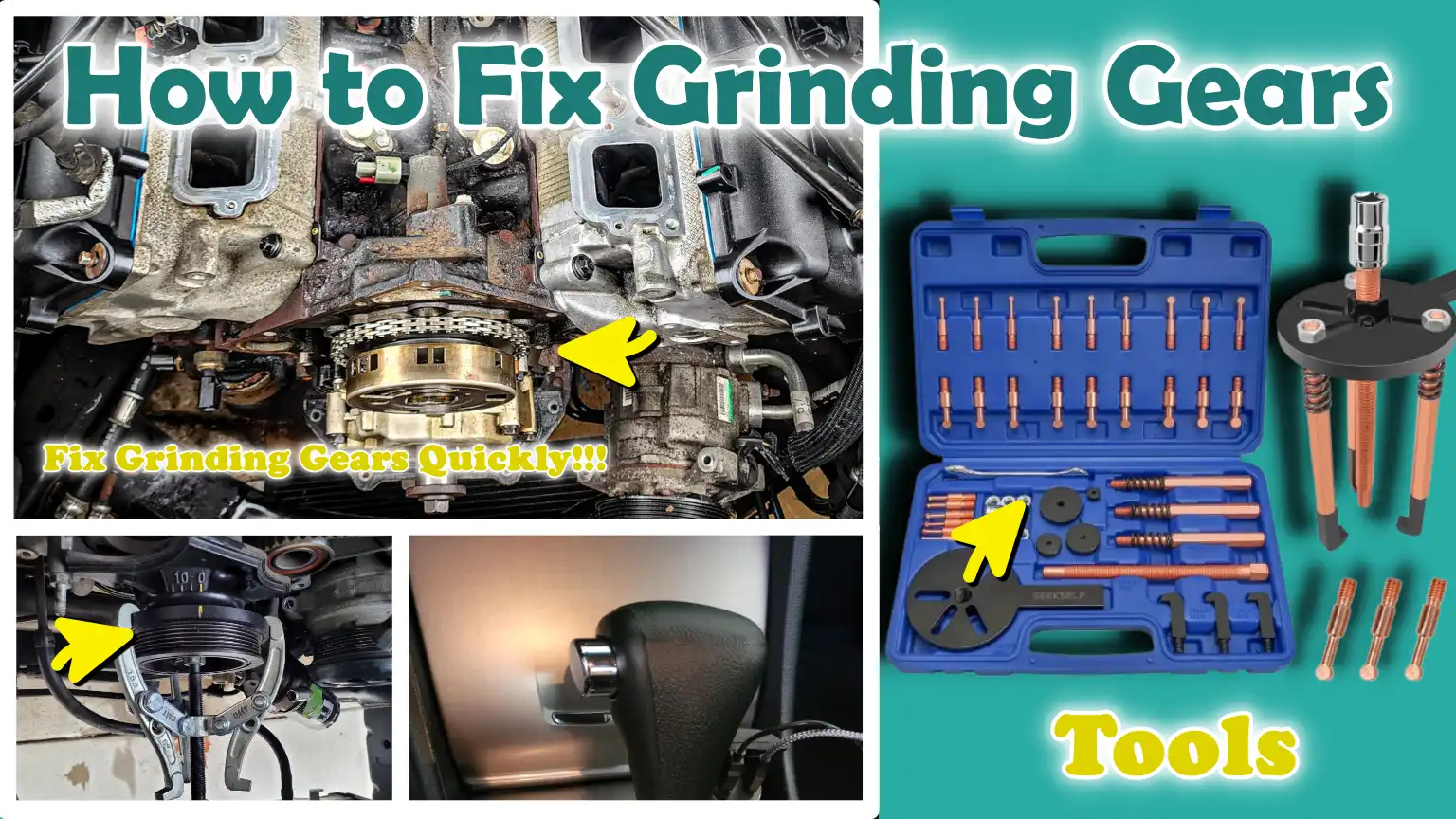
So, in this guide you’ll learn How to Fix Grinding Gears, which includes basic symptoms to taken care of and working solutions to fix grinding gears to maintain smooth operation again.
Now, Let’s Understand About The Gear Grinding
Gear grinding is a common mechanical issue that typically indicates that the internal components of the transmission are not functioning together correctly.
In a properly functioning system, gears rotate and engage without any noise, as they are correctly aligned and lubricated by transmission fluid.
When grinding occurs, it is often a sign of excessive friction, poor alignment, or worn-out components.
This problem is most evident in manual transmissions, but it can also occur in automatic or semi-automatic systems.
It is crucial to understand what gear grinding is, its root causes and how it manifests in actual driving conditions, as early detection can prevent severe damage, costly repairs and unsafe driving situations.
1. What is Gear Grinding?
Gear grinding is the loud, harsh, metal-on-metal sound you hear when gears fail to engage properly during a shift.
This happens when gear speeds are not properly synchronized or when components such as: synchronizers, become worn and fail to perform their function.
Instead of a smooth and quiet shift, you may feel resistance in the gear lever, hear grinding or clashing noises, or experience difficulty in engaging the car into gear.
In many cases, grinding serves as a warning sign that internal components are wearing out and require attention before they fail completely.
2. Common Causes
One of the most common causes of gear grinding is a low level of transmission fluid or fluid contamination.
This fluid serves as both a lubricant and a coolant; When it becomes contaminated or drops below the proper level, it fails to adequately protect the moving parts.
This increases friction and generates excessive heat, which can lead to gear damage over time.
Worn clutch components are another major culprit, particularly in vehicles equipped with manual transmissions.
If the clutch fails to disengage completely when the pedal is depressed, the gears continue to spin when they shouldn’t, resulting in a grinding sensation during gear shifts.
Faulty synchronizers or damaged gears also play a significant role.
Synchronizers are responsible for matching the rotational speeds of the gears before they engage; when they wear out, the gears clash against one another rather than meshing smoothly.
Similarly, broken or worn gear teeth fail to align correctly, leading to persistent grinding.
Misaligned linkages present yet another potential issue.
The linkage connects the gear lever to the transmission; if it is not properly aligned, the gears may fail to engage fully or correctly, resulting in resistance and grinding noises.
3. Signs and Symptoms
One of the early signs of gear grinding is the presence of unusual noises.
These may include grinding, whining, or knocking sounds, which typically occur during gear shifts, particularly when engaging first gear or reverse.
If left unaddressed, these noises often become louder and more distinct over time.
Difficulty shifting gears is another clear symptom.
You may notice that the gear lever feels stiff, gets stuck, or requires excessive force to move.
This typically indicates an internal obstruction or a misalignment in the gears.
Gear slippage or hesitation may also occur.
This means the car is unable to properly engage a gear, or takes a moment to respond after a gear shift, which can adversely affect the vehicle’s speed and control.
Experiencing vibrations or jolts while driving is also a common occurrence.
This happens when the transmission is unable to transfer power smoothly, causing the vehicle to feel unstable or rough while in motion.
Over time, if these symptoms are not addressed early on, they can worsen and lead to more serious mechanical failures.
How to Make Sure You Stay On The Safe Side
Before attempting to fix a grinding noise in the gears, prioritizing safety is absolutely essential.
This is because working on any vehicle involves potential hazards such as moving parts, heavy components and electrical risks.
Even the slightest lapse in judgment can result in personal injury or cause further damage to the vehicle.
By taking a few simple precautions, you can ensure your safety, perform repairs smoothly and avoid costly mistakes.
Having a safe workspace allows you to diagnose and resolve the issue with greater precision, free from interruptions or hazards.
1. Ensure the Vehicle or Machine is on a Level Surface
Before beginning any inspection or repair work, always ensure that the vehicle is parked on a level and stable surface.
A level surface keeps the vehicle steady and prevents it from rolling unexpectedly.
If the ground is uneven or sloped, the vehicle could shift while you are working, which can be extremely dangerous, specially if you are positioned underneath the vehicle or near the wheels.
A stable position also helps you obtain accurate readings when checking fluid levels or inspecting components.
2. Use Wheel Chocks, the Parking Brake and Gloves
Engaging the parking brake is the first step in securing the vehicle and preventing it from moving.
Additionally, placing wheel chocks behind the tires adds an extra layer of safety, as they physically prevent the wheels from rolling.
This becomes even more critical when working on manual-transmission vehicles or when the vehicle has been raised.
Wearing gloves is also highly beneficial, as it protects your hands from sharp edges, hot surfaces and dirty or contaminated fluids.
It also helps you maintain a better grip on tools and parts, thereby reducing the likelihood of them slipping from your hands.
3. Disconnect the Battery When Necessary
In many instances, particularly when working near the transmission, starter, or electrical connections, disconnecting the battery is a prudent measure.
This eliminates the risk of sudden electric shocks, short circuits, or the unexpected movement of components such as the starter motor.
Disconnecting the battery also safeguards the sensitive electronic systems found in modern vehicles.
This simple step can prevent serious safety hazards and protect critical electrical components from damage.
4. Wear Protective Gear for Your Hands and Eyes
When working on any vehicle, using the appropriate safety gear is absolutely essential.
Safety gloves protect your hands from cuts, scrapes, burns and exposure to harmful fluids, while safety goggles shield your eyes from dust, metal particles, or splashing liquids.
When working with worn-out gears, the transmission housing may contain small metal fragments or debris; if these come into contact with your skin or eyes, they can pose a serious hazard.
Wearing the right safety gear ensures that you can work with complete confidence and security, free from the risk of injury.
How to Identify the Problem First
Accurately identifying the source of a gear-grinding noise is crucial, as this sound can stem from a variety of different issues within the transmission or clutch system.
By pinpointing the root cause of the problem early on, you can resolve it quickly and avoid costly damage.
A proper diagnosis involves checking the condition of the fluid, observing the vehicle’s behavior while driving and carefully inspecting key mechanical components such as the clutch, linkages and internal gears.
Each step provides useful clues; by considering all these factors collectively, you can determine whether the issue is minor such as: a low fluid level, or more serious, such as worn gears or synchronizers.
1. Check the Transmission or Clutch Fluid
The first and simplest step is to check the transmission fluid, as it plays a vital role in lubrication, cooling and ensuring the smooth operation of the gears.
The fluid level should always remain within the specified range; a low fluid level increases friction and heat, which can lead to grinding noises.
The color of the fluid also reveals a great deal about its condition.
Clean fluid is typically red or light brown, whereas dark or black fluid indicates that it has aged and accumulated contaminants.
A burnt odor is another warning sign, suggesting that the fluid has overheated and is no longer capable of adequately protecting the gears.
If the fluid is dirty, low in volume, or emits a burnt smell, it should be replaced immediately to prevent further damage.
2. Checks to Perform During the Test Drive
By carefully test-driving the vehicle and closely observing its behavior, you can identify the source of the problem with even greater precision.
Pay particular attention to which gear produces the grinding sound, as this can pinpoint exactly which specific components have failed.
For instance, if the grinding occurs in only a single gear, it may indicate that the teeth on that specific gear have worn down; conversely, if the grinding occurs across multiple gears, it could signal a larger underlying issue such as: a fault within the clutch or synchronizer assembly.
It is also crucial to note when the grinding occurs, for example, during a cold start (when the vehicle is first started), while accelerating, or when the vehicle is under heavy load.
These specific conditions can help you determine whether the problem is related to temperature, pressure, or mechanical wear.
3. Inspect the Clutch in Manual Transmission Vehicles
In vehicles equipped with a manual transmission, the clutch is a critical component that facilitates smooth and seamless gear shifting.
If the clutch is worn out or improperly adjusted, it may fail to completely disengage the engine from the transmission, resulting in grinding noises during gear changes.
To inspect the clutch, look for symptoms such as the pedal feeling unusually soft or stiff, strange noises occurring when the clutch is depressed, or difficulty engaging gears even after fully depressing the pedal.
A worn clutch plate, issues with the pressure plate, or improper alignment, all of these factors can contribute to grinding noises.
Repairing or replacing these components is crucial for the proper functioning of the vehicle.
4. Inspect the Gear Linkage
The gear linkage connects the gear lever to the transmission, ensuring that the correct gear engages smoothly.
If the linkage is loose, misaligned, or worn out, gears may not engage fully, potentially leading to grinding noises and a sensation of resistance during gear shifts.
Inspecting the linkage involves checking for signs of wear, looseness, or improper adjustment in the cables, rods, or hydraulic systems.
Even a slight misalignment can affect how gears engage; therefore, adjusting the linkage can often resolve gear-shifting issues without the need for major repairs.
5. Inspect the Synchronizers and Gear Teeth
Synchronizers and gear teeth are internal transmission components that ensure gears engage smoothly and silently.
Synchronizers synchronize the speeds of the gears before they engage; when they become worn, the gears clash against one another, resulting in a grinding noise.
Over time, gear teeth can wear down, chip, or become damaged, preventing proper alignment and causing persistent grinding sounds.
Inspecting these components typically requires opening up the transmission and if clear signs of wear or damage are evident, repair or replacement becomes necessary.
If these parts are severely damaged, professional repair services are often required to restore the transmission to proper working order.
How to Fix Grinding Noises Coming from the Gears
To resolve grinding noises emanating from the gears, it is crucial to understand the root cause of the problem and the appropriate methods for fixing it.
In many cases, this issue begins as a minor anomaly such as: low fluid levels or a slight misalignment, but if left unaddressed, it can lead to severe internal damage within the transmission.
The primary approach to resolving this issue involves adopting a systematic process: start with simple checks and if necessary, proceed to more complex repairs.
By identifying the problem early and employing the correct techniques, you can restore smooth gear shifting, eliminate the noise and avoid costly breakdowns.
1. Change or Top Up the Transmission Fluid
Transmission fluid is essential for the proper functioning of the gears, as it reduces friction, keeps the system cool and protects internal components from wear and tear.
To check the fluid, park the vehicle on a level surface and locate the dipstick or inspection plug, depending on your vehicle model.
The fluid level should fall within the designated range and its color should be clear, not excessively dark.
If the fluid level is low, topping it up with the specific type of fluid recommended by the vehicle manufacturer can immediately improve the gear-shifting process.
If the fluid appears dirty or emits a burnt odor, it should be completely drained and replaced with fresh fluid.
To change the fluid, you must remove the drain plug, allow the old fluid to drain completely and then refill the system with new fluid up to the correct level.
This simple remedy often reduces, or completely eliminates, grinding noises caused by insufficient lubrication.
2. Repair the Gear Linkage
The gear linkage plays a crucial role in ensuring that gears engage correctly when you shift the gear lever.
If the linkage is loose or misaligned, gears may not engage fully, resulting in grinding noises and difficulty in shifting.
To repair the linkage, you must inspect the cables, rods, or hydraulic connections that link the gear lever to the transmission.
These components should be tightened, aligned and adjusted according to the vehicle’s specific requirements.
Proper alignment ensures that every gear engages smoothly and without obstruction.
Even a minor adjustment can make a significant difference in the shifting experience and often resolves friction-related issues without the need for major repairs.
3. Replace Worn Clutch Components
In vehicles equipped with a manual transmission, the clutch is responsible for disengaging the engine from the transmission during gear shifts.
When clutch components become worn, they fail to disengage completely, leading to a grinding sound during shifting.
Common symptoms of a worn clutch include a soft or slipping pedal, difficulty engaging gears and a burning odor.
Replacing the clutch requires removing the transmission to access components such as the clutch plate, pressure plate and release bearing.
For optimal performance, these components should be replaced as a complete set.
When a new clutch is installed correctly, it facilitates smooth gear engagement and eliminates the grinding noise caused by incomplete disengagement.
4. Repairing or Replacing Faulty Gears or Synchronizers
When a grinding noise stems from internal faults such as: worn synchronizers or broken gear teeth, the repair process becomes more complex.
Synchronizers help match the speeds of gears before they mesh; when they become worn, the gears begin to clash rather than engaging smoothly.
Broken gear teeth can also disrupt proper alignment, resulting in a persistent grinding noise.
Correcting these issues typically requires disassembling the transmission, inspecting the internal components and replacing the defective parts.
As this procedure demands specialized tools and technical expertise, it is often best left to a professional mechanic.
Ignoring these problems can lead to total transmission failure; therefore, timely repairs are crucial.
5. Lubrication and Preventive Maintenance
Proper lubrication and regular maintenance are essential for protecting gears against wear.
Using the correct type of transmission fluid ensures that all moving parts remain protected and operate smoothly.
Regularly checking fluid levels and replacing old or contaminated fluid helps maintain adequate lubrication and prevents overheating.
In some instances, approved additives can enhance lubrication and reduce wear; however, these should only be used if specifically recommended for your vehicle.
Good driving habits such as: shifting gears smoothly and avoiding forceful shifting, also help reduce the strain placed on the transmission.
Through regular care and timely maintenance, the lifespan of your gearbox can be extended, ensuring that it operates smoothly and without any issues.
What are the Post-Repair Testing Procedures
After repairing grinding gears, it is crucial to thoroughly test the vehicle to ensure that the underlying problem has been completely resolved.
Even if the repair appears successful, minor issues may still persist; if left unaddressed immediately, these issues could escalate over time.
Testing helps verify that all components are functioning correctly, gears are engaging properly and there are no unusual noises or obstructions.
Exercising caution and patience during the testing phase can prevent future damage and ensure that the repair has successfully restored the transmission to its normal operating condition.
1. Methods to Verify if the Grinding Has Stopped
Start the vehicle and allow the engine to run for a few minutes so that all components reach their normal operating temperature.
While the vehicle is stationary, fully depress the clutch and shift through all the gears, one by one, to check if they engage smoothly without any resistance or noise.
Pay close attention to the feel of the gear lever; it should move freely and easily, without any stiffness or the need for excessive force.
Listen carefully for any grinding, clicking, or unusual sounds.
If everything appears normal at this stage, it is a good indication that the repair was successful.
Conversely, if you still feel resistance or hear any noises, it may indicate that the internal issue has not been fully resolved.
2. Recommendation for a Short Test Drive
Following the initial checks, take the vehicle out for a short, controlled test drive in a safe area with minimal traffic.
Start at a low speed and gradually shift through all the gears, ensuring that each gear engages smoothly.
Experiment with various driving techniques such as: gradually increasing speed, maintaining a steady pace and applying light load, to observe how the transmission performs under different conditions.
During this process, it is crucial to avoid driving at high speeds, as the primary objective is to carefully scrutinize the manner in which the gears engage.
A successful repair will result in gears shifting smoothly and silently, without any grinding or hesitation.
3. Monitoring for Recurrence and Other Symptoms
Even after a successful test drive, continue to monitor the vehicle over the next few days, as certain issues may resurface under specific driving conditions.
Pay close attention to any warning signs, such as delayed gear shifts, faint noises, vibrations, or gear slippage.
These symptoms may indicate an underlying internal issue that still requires attention.
Additionally, keep an eye on fluid levels and check for any leaks, as low fluid levels can lead to a recurrence of the problem.
Regular monitoring ensures the longevity of the repair and confirms that the transmission continues to function correctly.
How to Prevent Gears from Grinding In Future
Preventing gear wear is always easier and less expensive than repairing a damaged transmission.
Most gear-related problems develop gradually, stemming from a lack of maintenance, poor driving habits, or the neglect of early warning signs.
By performing simple, regular maintenance on your vehicle, you can ensure that the transmission and clutch continue to operate smoothly and trouble-free for the long term.
Proper maintenance not only prevents noise and damage but also enhances driving comfort, safety and fuel efficiency.
Understanding and adhering to basic preventive measures helps you avoid costly repairs and ensures that your vehicle remains reliable under all driving conditions.
Even, there’s studies that clearly shows that the grinding gears are not just a simple noise that can be avoided, but it is actually a result of having internal wear which caused vibration and poor lubrication as well, that is why it becomes really important to check the transmission fluid and maintain the proper clutch function and fix issues early to prevent synchronizer damage and complete gearbox failure as well.[¹]
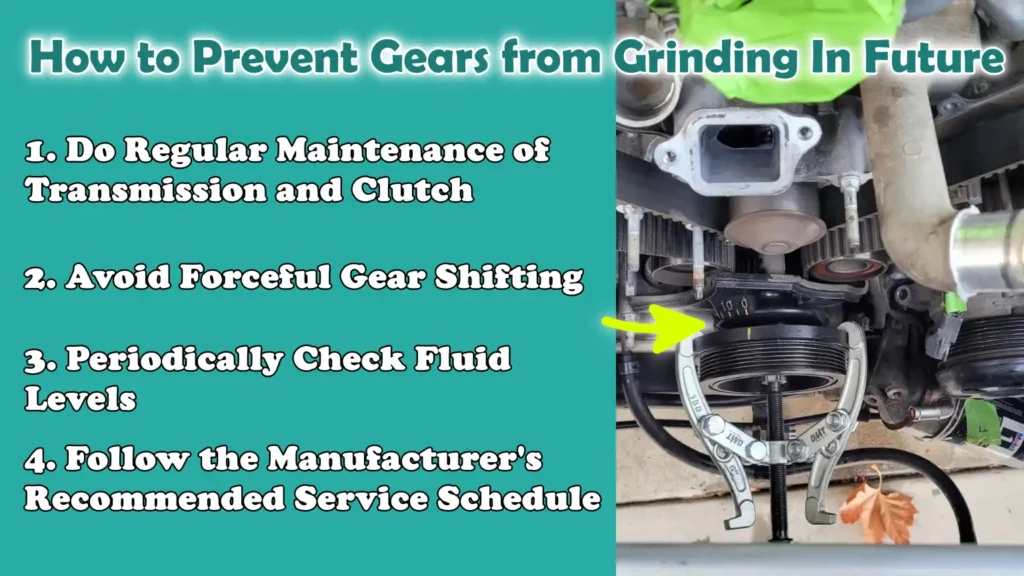
1. Do Regular Maintenance of Transmission and Clutch
Regular maintenance of the transmission and clutch systems is crucial for the smooth operation of the gears.
Over time, clutch plates, pressure plates and internal transmission components naturally wear down due to friction and heat.
Regular inspections help identify early signs of wear such as: slight resistance when shifting gears or faint noises.
Timely servicing of these components ensures their continued proper functioning and helps prevent sudden mechanical failures.
Keeping all parts clean, correctly adjusted and in good condition reduces the strain on the gearbox and extends its lifespan.
2. Avoid Forceful Gear Shifting
Your driving habits have a significant impact on the health of your transmission.
Forceful gear shifting such as: jerking the gear lever, shifting gears too rapidly without fully depressing the clutch, or skipping gears while the vehicle is under heavy load, places excessive stress on the gears and synchronizers.
This can cause gears to wear out rapidly and increases the likelihood of damage.
Shifting gears smoothly and in a controlled manner ensures that they engage correctly, thereby reducing the stress placed on internal components.
Taking a little extra time to shift gears properly can make a significant difference in maintaining the vehicle’s optimal performance over the long term.
3. Periodically Check Fluid Levels
Transmission fluid is one of the most critical elements in preventing gear wear.
It lubricates moving parts, dissipates heat and facilitates smooth gear shifting.
Over time, due to minor leaks or normal usage, fluid levels may drop and the quality of the fluid may also deteriorate.
Regularly checking both the fluid level and its condition helps you detect potential issues at an early stage.
Clean fluid, maintained at the correct level, ensures that the transmission operates without interruption; conversely, low fluid levels or contaminated fluid can increase friction, potentially leading to overheating and damage to the gears.
4. Follow the Manufacturer’s Recommended Service Schedule
Every vehicle manufacturer provides a recommended service schedule designed to keep the vehicle in peak condition.
This schedule outlines the necessary intervals for changing transmission fluid, inspecting the clutch and checking other related components.
Adhering to these guidelines ensures that essential maintenance is performed in a timely manner, before any potential issues can arise.
Skipping or delaying scheduled servicing can lead to hidden problems that may escalate over time into serious damage.
Consistently adhering to the service schedule ensures that the gears operate smoothly, enhances the vehicle’s reliability and safeguards its overall health.
Read More:
- How to Replace a Clutch
- How to Diagnose Clutch Problems
- How to Change Transmission Fluid
- How to Fix a Slipping Transmission
- How to Check Transmission Fluid
When You Should Consult to the Mechanic
Sometimes, grinding noises emanating from the gears cannot be resolved merely through simple inspections or minor repairs; furthermore, continuing to drive, or attempting to fix the problem without the proper tools, as it can exacerbate the damage.
Modern transmissions are highly complex systems containing numerous moving parts that must operate in perfect synchronization; even a minor internal fault can bring the entire system to a standstill.
It is crucial to understand when to stop driving and when to consult a professional, as doing so saves time, reduces repair costs and, most importantly, ensures your safety.
A trained mechanic possesses the specialized tools, experience and expertise necessary to diagnose hidden issues and repair them correctly.
1. Persistent Grinding Noises Even After Minor Repairs
If grinding noises persist even after checking and replacing the transmission fluid, adjusting the linkages, or inspecting the clutch, it typically indicates that the root cause of the problem lies much deeper within the transmission itself.
Persistent grinding is often a sign that internal components such as: synchronizers or gear teeth, have become worn out or damaged.
In such situations, minor repairs will not resolve the issue, as the core components are no longer functioning correctly.
Continuing to drive under these conditions can lead to further wear and tear on other components, thereby increasing the overall cost of repairs.
A professional inspection can accurately pinpoint the true cause of the problem and prevent further damage.
2. Signs of Major Gearbox or Clutch Failure
There are certain distinct warning signs that point to a major malfunction within the gearbox or clutch, issues that necessitate the assistance of a specialist.
These include loud, persistent grinding noises; gears slipping out of place while driving; a strong burning odor; or extreme difficulty in shifting gears.
In manual transmission vehicles, a failing clutch may fail to disengage properly, making it nearly impossible to shift gears smoothly.
In severe cases, the vehicle may experience a loss of power or cease moving entirely, even if the engine remains running.
These symptoms indicate that critical components have worn out or broken and require repair or replacement by a qualified technician.
3. Safety Concerns or Complex Repairs
Working on a transmission or clutch system can be hazardous, particularly when it involves lifting the vehicle, removing heavy components, or handling intricate internal parts.
Complex repairs such as: replacing synchronizers, rebuilding a gearbox, or installing a new clutch, require specialized tools and technical expertise.
Attempting these repairs without the proper knowledge can lead to improper component installation, potentially causing further damage to the vehicle or resulting in personal injury.
Furthermore, driving a vehicle with severe transmission issues can be dangerous, as the vehicle may suddenly lose power or fail to function at a critical moment.
Seeking professional assistance ensures that repairs are performed safely and correctly, providing you with peace of mind and maintaining the reliable performance of your vehicle.
Conclusion – How to Fix Grinding Gears
It is true that healthy transmission actually works silently, so if there’s any kind of grinding sound is available then it is clear signs that you need to fix something.
A noise that may initially seem minor while shifting gears can, if left unaddressed, rapidly escalate and lead to severe damage; this can have an adverse impact on the synchronizers, gear teeth, clutch components and even the vehicle’s overall performance.
Fortunately, many common causes such as: low or contaminated transmission fluid, misaligned linkages, or premature clutch wear, as it can be accurately identified and rectified during their early stages.
By carefully diagnosing the issue, employing appropriate repair methods and conducting post-repair inspections, you can restore smooth gear shifting and avoid incurring major repair expenses.
It is also crucial to remember that regular maintenance and good driving habits play a pivotal role in preventing gear-grinding issues from developing in the first place.
Simple measures such as: regularly checking fluid levels, shifting gears gently and adhering to the prescribed service schedule, as it can help safeguard your transmission for the long term.
Furthermore, knowing when to seek professional assistance, particularly when the problem is complex or poses a safety risk, is equally important.
Taking timely action not only saves money but also ensures a safer and more reliable driving experience.
Now, that’s all from this guide on How to Fix Grinding Gears, ask unsolved queries in the comment box.
Frequently Asked Questions
FAQ 1: What does it mean when gears grind in a car?
Gear grinding means that when you attempt to shift gears, the gears inside your transmission fail to engage smoothly with one another. Instead of sliding easily into place, they rub against each other, producing a loud, metallic grinding sound. This typically occurs when components such as synchronizers, clutch parts, or gear teeth become worn out or are not functioning correctly. It serves as a clear warning that something inside the transmission requires attention.
FAQ 2: Is it safe to drive a car when the gears are grinding?
It is not safe to drive a car for an extended period when the gears are grinding. Although the vehicle may still be drivable, the grinding causes excessive wear on critical components, which could lead to a sudden mechanical failure. You may also experience difficulty shifting gears, which can be dangerous in traffic or during an emergency situation. It is always best to have this issue repaired before it escalates into a serious safety hazard.
FAQ 3: What is the most common cause of gear grinding?
The most common cause of gear grinding is low or dirty transmission fluid, as this reduces lubrication and increases friction between moving parts. In cars with manual transmissions, a worn-out or faulty clutch is also a major culprit, as it fails to completely disengage the engine from the transmission. Other causes include worn synchronizers, damaged gear teeth and improperly adjusted gear linkages.
FAQ 4: Can low transmission fluid cause gears to grind?
Yes, a low transmission fluid level is one of the primary causes of gear grinding. Transmission fluid helps lubricate and cool the gears, allowing them to operate smoothly. When the fluid level is low or the fluid is dirty, it fails to adequately protect the gears, leading to increased friction, heat and grinding noises. If detected early, simply checking and replacing the fluid is often enough to resolve the issue.
FAQ 5: How much does it cost to fix a gear grinding problem?
The cost of repairing a gear grinding issue depends on the root cause of the problem. Simple solutions such as: changing the transmission fluid or repairing the linkage are generally inexpensive. However, if the issue involves replacing the clutch or repairing internal transmission components such as: synchronizers or gears, the cost can be significantly higher. In severe cases, the entire transmission may need to be repaired or replaced, which is a costly undertaking.
FAQ 6: Can a gear grinding problem fix itself?
A gear grinding problem does not resolve itself and typically worsens over time. Occasionally, the noise may seem to subside for a while, but the internal damAge continues to accumulate. Ignoring this issue can lead to even more serious complications, such as the complete failure of the transmission. It is best to have the problem diagnosed and repaired immediately as soon as you notice it.
FAQ 7: How can I tell if my clutch is the cause of the gear grinding?
If your clutch is the cause of the gear grinding, you will notice difficulty engaging gears even after fully depressing the clutch pedal. The pedal may feel soft, stiff, or inconsistent and you might even detect a burning smell after driving. These signs indicate that the clutch is not disengaging properly, which leads to grinding noises when shifting gears.
FAQ 8: When should I consult a mechanic if I hear grinding noises while shifting gears?
If the grinding noise persists even after performing preliminary checks such as: verifying fluid levels or adjusting the linkage, then you should consult a mechanic. If you hear loud or persistent grinding noises, experience gear slippage, or faced significant difficulty in shifting gears, it generally indicates that internal damage has occurred. A professional mechanic can thoroughly inspect the transmission and resolve complex issues safely and accurately.
References:
[1] Analysis of automotive transmission gearbox synchronizer wear due to torsional vibration and the parameters influencing wear reduction
https://www.sciencedirect.com/science/article/abs/pii/S1350630719303474
Hello Folks, Dean Shali here to help you out to solve the problems with your lovely vehicle, as i have lots of experience and knowledge about automotive industry as i woks directly with the customers and repair vehicles and i love to help the people to keep their cars safe and running smoothly.