Written By: Dean Shali
Fact Checked By: Sabré Cook
Reviewed By: Tamara Warren
So, just notice that whenever you revs your engine but your car barely moves, then it is the transmission which is struggling internally or somewhere.
And, whenever transmission slips, then it clearly means that the power generated by the engine is not being properly transferred to the wheels, that literally affects your car’s ability to accelerate, maintain speed and operate safely in the much needed time.
Also, there are several factors that can cause this thing such as: facing low or burnt transmission fluid, worn out internal components, overheating problem or even electronic control problems in the modern vehicles.
Along with this, there’s common symptoms are available so that you can have clear indication of slipping transmission rather than other things to be checked such as: engine revving without acceleration, having delayed gear engagement, rough shifting, burning smells and listening unusual noises.
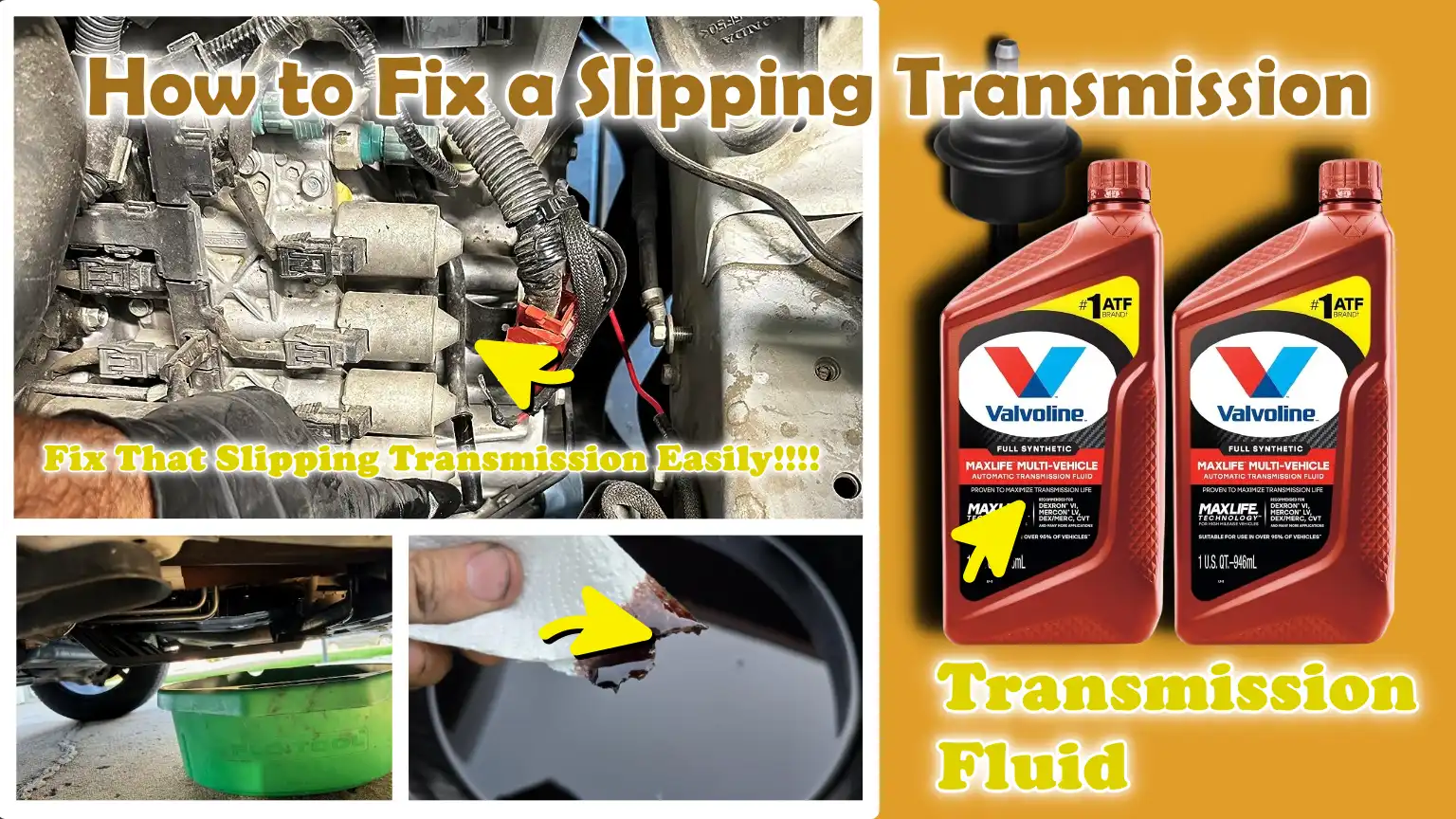
But, don’t worry about it anymore as we have come up with this guide that clarifies the doubts about How to Fix a Slipping Transmission, as you’ll learn to repair possible leaks and address the worn out parts in easy way.
What Does It Mean When a Transmission Slips?
1. Definition in Simple Terms
Transmission slip occurs when your car’s transmission fails to properly transmit engine power to the wheels.
This means that even if the engine is running normally, the car may struggle to gain speed, hesitate, or shift gears suddenly and unexpectedly.
Essentially, the transmission is “losing its grip” on the power, which can make driving feel erratic and unsafe.
This issue is common in both automatic and manual cars and often begins gradually, making early detection crucial.
Transmission slip is not merely an inconvenience; if ignored, it can lead to severe internal damage within the transmission, potentially requiring costly repairs or a complete transmission replacement.
2. What Is the Difference Between Normal Gear Shifting and Slipping?
In a car with a properly functioning transmission, gears shift smoothly in response to your speed and engine power.
You may feel a momentary pause during a gear shift, but the car continues to respond consistently to your inputs.
In contrast, when a transmission slips, the gears fail to engage properly during a shift.
You may notice the engine revving louder than usual without any corresponding increase in the car’s speed, or the car may suddenly drop into a lower gear.
Other symptoms include a delay in shifting gears while accelerating, or feeling a sudden jolt, a “jerk”, during a gear shift.
Understanding these distinctions is vital, as it helps you identify transmission problems before they become severe and expensive.
3. How Do Automatic and Manual Transmissions Differ in Their Operation?
The symptoms of transmission slip manifest slightly differently in automatic versus manual transmissions.
In an automatic transmission, symptoms of slipping typically manifest as delayed or erratic gear shifts, the engine revving excessively without a corresponding increase in speed, or a sudden loss of power.
This is often caused by low transmission fluid levels, worn-out clutch packs, or a malfunction in the solenoids that control gear shifting.
In a manual transmission, slipping is often felt when the clutch fails to engage fully; the engine revs loudly, yet the car fails to accelerate properly.
This can occur when the clutch plate is worn out or has not been adjusted correctly.
Understanding how your specific type of transmission behaves when slipping occurs can help you diagnose the problem more accurately and take appropriate steps to rectify it before serious damage ensues.
What Are The Common Symptoms of Transmission Slippage
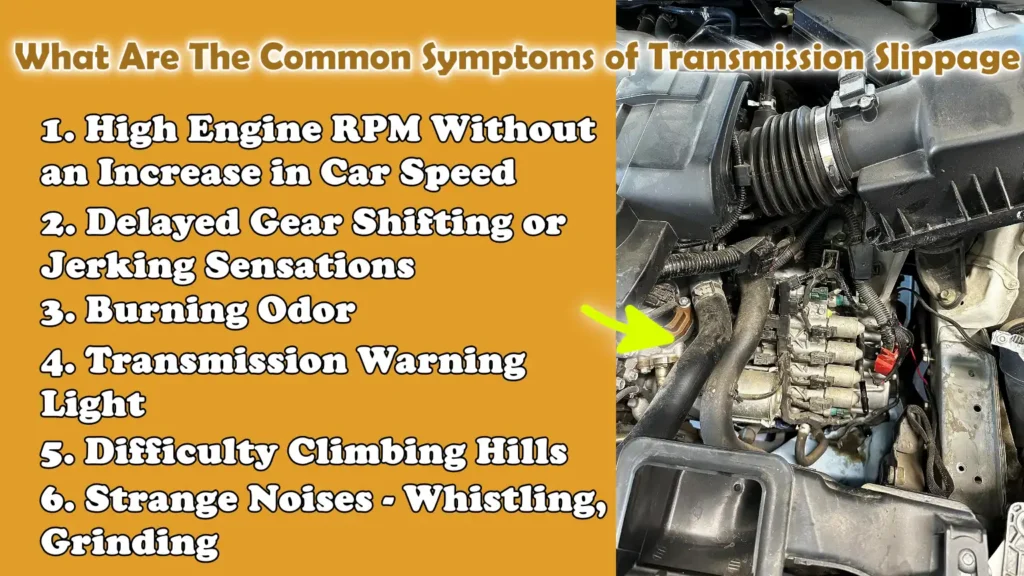
1. High Engine RPM Without an Increase in Car Speed
The clearest indication of transmission slippage occurs when the engine sounds as though it is under immense strain, revving loudly, yet the car’s speed fails to increase.
This happens because the transmission is unable to effectively transmit the engine’s power to the wheels.
It may feel as though the car is stuck in a single gear, or that the engine is spinning rapidly without propelling the vehicle forward.
This symptom is often caused by low or degraded transmission fluid levels, worn-out clutch packs in automatic transmissions, or a faulty torque converter.
Early detection of this symptom can prevent internal damage and help you avoid costly repairs.
2. Delayed Gear Shifting or Jerking Sensations
If your car takes longer than usual to shift gears, or if you experience jerks, hesitation, or unusual movements while shifting, your transmission may be slipping.
Typically, gear shifts occur very smoothly; however, a slipping transmission struggles to engage the correct gear at the precise moment.
The underlying causes may include worn internal components, low fluid levels, or, in automatic transmissions, a faulty gear-selector solenoid.
In manual cars, a worn or improperly adjusted clutch can also cause similar delays.
Paying immediate attention to these warning signs improves the driving experience and helps prevent further damage.
3. Burning Odor
A strong, unusual burning smell emanating from your car could be a sign that the transmission is overheating.
This often occurs when the transmission fluid becomes old, burnt, or degraded, leading to excessive friction between internal components.
Overheating can cause the transmission to deteriorate rapidly and significantly shorten its lifespan.
A burning smell should never be ignored, as it serves as one of the clearest warning signs that immediate action is required to prevent further damage such as: checking the fluid level and inspecting for any leaks.
4. Transmission Warning Light
Modern cars are equipped with sensors that detect transmission-related issues and illuminate a warning light on the dashboard.
If this light turns on, it may indicate that the transmission is slipping, overheating, or suffering from another internal malfunction.
Ignoring the transmission warning light can exacerbate the damage and result in significantly higher repair costs.
By using a diagnostic scanner or consulting a professional mechanic, you can pinpoint the root cause of the problem and have the necessary repairs performed in a timely manner.
5. Difficulty Climbing Hills
A slipping transmission can make it extremely difficult for your car to ascend hilly terrain or maintain speed while carrying heavy loads.
Even if the engine’s RPM (revolutions per minute) increases, the vehicle struggles to gain momentum, making driving on inclines both difficult and unsafe.
This symptom indicates that the transmission is failing to transmit full power to the wheels; this could be caused by worn-out parts, low transmission fluid levels, or a faulty torque converter.
Addressing this issue immediately can prevent hazardous situations, such as the vehicle stalling or losing traction while attempting to climb a hill.
6. Strange Noises – Whistling, Grinding
Strange noises emanating from your car such as: whistling, grinding, or knocking sounds, are another common symptom of a slipping transmission.
These noises often occur when internal gears, clutch packs, or bearings become worn out or damaged.
In automatic cars, such unusual sounds can also be caused by malfunctions in the solenoids or the pump.
Paying attention to these warning sounds allows you to detect problems early, thereby helping you avoid major damage, otherwise, you may end up having to rebuild or replace the entire transmission.
Know, The Main Causes of Transmission Slippage
1. Low Transmission Fluid Levels
Transmission fluid serves as the lifeblood for both automatic and manual transmissions; therefore, low fluid levels can directly lead to slippage.
This fluid lubricates moving parts, assists in transmitting power from the engine to the wheels and keeps the transmission cool.
Without adequate fluid, internal components can overheat and wear out prematurely, thereby compromising the transmission’s ability to engage gears properly.
Low fluid levels may result from leaks in seals, gaskets, or transmission lines, or simply from a neglect of routine maintenance.
Regularly checking the fluid level, and topping it up with the correct type of transmission fluid, is crucial for preventing slippage and extending the lifespan of your transmission.
2. Worn or Burnt Transmission Fluid
Over time, transmission fluid degrades due to heat and friction.
When the fluid becomes burnt or contaminated with debris, it loses its ability to effectively lubricate, cool and transmit hydraulic pressure.
Symptoms of degraded fluid include a dark or black color, a strong burnt odor, or a thick and gummy consistency.
Operating a transmission with burnt fluid can generate excessive heat, accelerate component wear and ultimately result in slippage.
To prevent such issues, it is essential to change the transmission fluid regularly and to strictly adhere to the maintenance schedule recommended by the manufacturer.
3. Clutch-Related Issues – Manual Transmissions
In manual transmissions, the function of the clutch is to temporarily disengage the engine from the wheels, thereby allowing for smooth gear shifting.
Slippage can occur due to worn-out clutch plates or improper clutch adjustment; the result is that while the engine RPM increases, the vehicle fails to gain full momentum.
When the clutch slips, the driver may experience a loss of acceleration, difficulty maintaining speed, or a burning odor.
Addressing clutch wear immediately, whether through adjustment or replacement, as it can prevent long-term damage to the transmission and ensure a smooth driving experience.
4. Worn Transmission Bands
Transmission bands are internal components within an automatic transmission that assist in controlling the gear-shifting process.
Over time, these bands can stretch or wear out, causing the transmission to slip between gears or fail to engage gears properly.
Worn bands compromise the transmission’s ability to apply adequate pressure to the clutch packs, leading to delayed gear shifts, jerking sensations during shifting and an overall decline in vehicle performance.
Regular maintenance and inspections can detect worn bands before they escalate into major problems.
5. Faulty Torque Converter
In an automatic transmission, the torque converter utilizes fluid dynamics to transmit power from the engine to the transmission.
When it malfunctions, the transmission may slip because the engine’s full power is not being effectively transferred to the wheels.
Symptoms of this issue include overheating, jerking sensations during acceleration and delayed gear engagement.
Torque converter problems can stem from worn components, low or degraded transmission fluid levels, or internal damage.
Replacing or repairing a faulty torque converter is crucial to ensure proper power transfer and to prevent further damage to the transmission.
6. Solenoid Issues
Solenoids are electronically controlled valves located inside an automatic transmission; they regulate fluid flow to ensure that the correct gear is engaged.
A faulty solenoid can cause the transmission to slip because the necessary hydraulic pressure required for gear engagement is not being applied correctly.
Common symptoms include delayed shifting, erratic shifting patterns and the illumination of the transmission warning light on the dashboard.
Solenoid issues are typically diagnosed using an OBD-II scanner and professional repair or replacement is required to restore the transmission’s functionality.
7. Worn Gears or Internal Damage
When a transmission’s gears, bearings, or other internal components become worn or damaged, the transmission may slip, even if the fluid levels are correct and the clutch is functioning properly.
This type of issue is typically severe and indicates that the transmission has reached the end of its service life or may require a complete overhaul.
Causes include prolonged neglect, overheating, or operating the vehicle under heavy loads.
Repairing worn gears or internal damage is often expensive, but it is crucial for preventing total transmission failure and ensuring the safe operation of the vehicle.
How to Identify a Slipping Transmission – With Easy Steps
1. Check the Transmission Fluid Level
The first step in identifying a slipping transmission is to check the transmission fluid level.
Transmission fluid is crucial for lubricating moving parts, transmitting engine power to the wheels and keeping the transmission cool.
To check it properly, park your car on level ground, keep the engine running (or follow the manufacturer’s specific instructions) and, if your vehicle is equipped with a transmission dipstick, use it to check the level.
A low fluid level is a common cause of slipping and topping up the fluid often resolves minor slipping issues.
Always ensure that you use the specific type of transmission fluid recommended for your vehicle.
2. Inspect the Condition of the Fluid
Once you have verified the fluid level, it is essential to inspect its condition.
Healthy transmission fluid is typically bright red and clear, whereas burnt or degraded fluid appears dark and thick, or emits a strong, burnt odor.
Contaminated or burnt fluid fails to provide proper lubrication or generate the necessary hydraulic pressure, which can lead to issues such as slipping, shifting difficulties and overheating.
If the fluid shows signs of degradation, it should be drained and replaced immediately to prevent further damage to the transmission.
3. Check for Leaks
Transmission fluid leaks are another major cause of slipping.
Common areas where leaks occur include the transmission pan, fluid lines, seals, gaskets and the area surrounding the torque converter.
Even a minor leak can gradually deplete the fluid level, creating a risk of slipping, overheating and internal damage.
Checking for leaks involves looking for fluid puddles beneath the vehicle, inspecting the area around the transmission housing for wet spots and periodically monitoring the fluid level.
Identifying and repairing leaks in a timely manner can prevent major transmission-related issues and costly repairs.
4. Scan for Error Codes
Modern vehicles are equipped with sensors that monitor transmission performance and electronically detect malfunctions.
By using an OBD-II scanner, you can identify error codes associated with transmission-related issues such as: slipping, solenoid failure, or overheating.
These codes provide vital information regarding the root cause of the slipping, making the diagnostic process faster and more accurate.
Even if your car exhibits no obvious external symptoms, scanning for codes ensures that no internal electronic issues go unnoticed, thereby helping you take the appropriate corrective measures.
5. Inspection During a Test Drive
Finally, conducting a careful test drive can help confirm the presence of transmission slipping.
Pay close attention to specific symptoms, such as delayed acceleration, sudden gear shifts, the engine revving without a corresponding increase in speed, jerking or irregularities during gear changes and unusual noises such as: whining or grinding sounds.
Testing the vehicle under various conditions such as: starting from a complete stop, accelerating gradually and driving on inclines, as it can help identify specific patterns of slipping.
These inspections, combined with fluid analysis and error code analysis, provide a comprehensive assessment of your transmission’s condition and guide you toward the correct repair measures.
How to Fix a Slipping Transmission – Totally Beginner Friendly
1. Top Up or Replace the Transmission Fluid
Topping up or replacing the transmission fluid is often the simplest and most effective solution for minor slipping issues.
Topping up works when the fluid level is low, provided the existing fluid is still clean and in good condition, as it restores the proper hydraulic pressure and lubrication within the transmission.
If the fluid is old, burnt, or degraded, a complete fluid replacement is necessary, as compromised fluid cannot perform its essential functions.
Fresh fluid improves gear shifting, reduces overheating and prevents further wear on internal components.
To prevent slipping from recurring, it is crucial to maintain the correct fluid level regularly and use the appropriate type of fluid.
2. Fix Fluid Leaks
If the transmission is slipping due to a fluid leak, the problem must be addressed at its source.
Leaks can be caused by worn seals, damaged gaskets, or broken transmission lines.
Replacing these components stops further fluid leakage and ensures that the transmission maintains the necessary pressure required for proper operation.
Fixing leaks not only resolves slipping issues but also prevents overheating and reduces the risk of permanent internal damage to the transmission.
Identifying and repairing leaks promptly is essential for maintaining the health of the transmission and avoiding costly repairs.
3. Replace the Transmission Filter
The transmission filter plays a vital role in keeping the internal fluid clean and preventing contaminants from circulating within the transmission.
A clogged or dirty filter can restrict fluid flow, reduce hydraulic pressure and lead to slipping or difficulties in shifting gears.
Replacing the transmission filter ensures proper fluid circulation, protects internal components and maintains smooth operation.
As part of regular maintenance, periodic filter replacement is essential for extending the lifespan of your transmission and preventing common issues such as slipping.
4. Adjust or Replace the Clutch – Manual Cars
In manual transmissions, clutch-related issues are a common cause of slipping.
If the clutch pedal or linkage has shifted out of position, a simple adjustment may resolve the problem, thereby restoring the proper connection between the engine and the transmission.
However, if the clutch plate is worn out or damaged, a complete replacement is necessary.
Symptoms of a worn clutch include the engine revving excessively without a corresponding increase in speed, a burning odor and difficulty maintaining speed.
Properly adjusting or replacing the clutch ensures smooth gear engagement, prevents slipping and improves overall vehicle control.
5. Replace Transmission Bands
In automatic transmissions, transmission bands help regulate gear engagement and maintain hydraulic pressure.
When these bands become worn or stretched, the transmission may slip between gears or fail to properly engage a specific gear.
If the bands are only slightly stretched, an adjustment can sometimes restore the correct tension.
In more severe cases, replacing the worn bands is necessary to ensure proper gear engagement and prevent further damage.
Proper maintenance and timely repair of transmission bands are crucial for safe and reliable driving.
6. Repair or Replace Solenoids
Solenoids are electronically controlled valves that regulate fluid flow and gear engagement within an automatic transmission.
A faulty solenoid can lead to delayed gear shifting, sudden gear changes and transmission slippage.
To diagnose solenoid-related issues, error codes are typically scanned using an OBD-II scanner.
Repairing or replacing a defective solenoid restores proper fluid flow, enabling the transmission to shift gears smoothly.
Addressing solenoid-related problems promptly prevents slippage issues from worsening and avoids placing excessive strain on other transmission components.
7. Repairing or Replacing the Torque Converter
The torque converter transmits engine power to the transmission using hydraulic fluid.
When it malfunctions, slippage occurs because the engine’s full power fails to reach the wheels.
Symptoms of a faulty torque converter include jerking during acceleration, delayed gear engagement, overheating and increased fuel consumption.
Repairing or replacing the torque converter is essential to restore proper power transfer and prevent further damage to the transmission.
Addressing torque converter issues early on saves both money and hassle in the long run.
8. Repairing or Replacing the Entire Transmission
When minor interventions fail to resolve slippage issues, repairing or replacing the entire transmission may become necessary.
This is typically required when internal components such as: gears, clutches, or bearings, have become excessively worn or damaged.
Repairing the transmission involves replacing worn parts and rectifying all internal faults to restore it to a like-new condition.
Know, The Basic Cost of Fixing a Slipping Transmission
1. Cost of Changing the Fluid
One of the simplest remedies for a slipping transmission is changing the transmission fluid, a solution that also happens to be the most cost-effective.
Typically, the cost of a minor fluid top-up ranges from INR 1,000 to 5,000, while a complete fluid change, including a filter replacement, as it can cost anywhere from INR 5,000 to 12,000; this depends on the type of transmission and the quality of the fluid used.
Often, this procedure is sufficient to resolve minor slipping issues caused by low fluid levels or degraded fluid quality.
Regular fluid changes not only prevent slipping problems but also extend the lifespan of the transmission and help avoid costly repairs in the future.
2. Minor Repairs vs Major Repairs
Minor repairs such as: fixing leaks, replacing filters, or adjusting the clutch, are generally less expensive, costing between INR 5,000 and 25,000, depending on the vehicle and labor charges.
Major repairs, which involve replacing components like transmission bands, solenoids, or torque converters, are significantly more expensive, often costing between INR 25,000 and 80,000.
The exact cost depends on the severity of the issue, the specific parts required and whether the vehicle is equipped with an automatic or manual transmission.
Timely inspections and prompt attention to minor repairs can prevent the need for major overhauls, thereby resulting in substantial cost savings.
3. Cost of Rebuilding vs Replacing
When a transmission sustains significant internal damage, it becomes necessary to either completely rebuild or replace it.
Rebuilding involves replacing worn-out internal components and restoring the transmission to a like-new condition; this process typically costs between INR 80,000 and 150,000.
Replacing the entire transmission, whether with a remanufactured unit or a brand-new one, is the most expensive option; depending on the vehicle’s make and model, this can cost anywhere from INR 150,000 to 300,000 or even more.
Although these measures are costly, they become essential when simpler solutions fail to restore the transmission’s proper functionality or guarantee its long-term durability.
4. Cost Differences – Manual vs Automatic
Automatic transmissions are generally more complex than their manual counterparts, which means that both their repair and replacement costs tend to be higher.
Minor repairs on automatic cars can range from INR 10,000 to 50,000, whereas similar repairs on cars with manual transmissions may cost between INR 5,000 and 30,000.
This distinction also applies to rebuilding or replacing the entire transmission; working on an automatic transmission incurs significantly higher costs due to the presence of hydraulic, electronic and torque converter systems.
Understanding this cost disparity helps car owners plan their maintenance budgets and make informed decisions regarding their repair options.
Read More:
- How to Change Transmission Fluid
- How to Check Transmission Fluid
- How to Check Coolant Level
- How to Replace a Radiator Fan
- How to Fix a Coolant Leak
Can You Drive with a Slipping Transmission?
1. It Is Not Recommended At All
Driving with a slipping transmission is generally not advised, as it indicates that the power generated by the engine is not being fully transmitted to the wheels.
Even minor slipping can rapidly worsen, leading to reduced vehicle speed, difficulty shifting gears, or a complete transmission failure.
Continuing to drive in this condition increases the risk of costly repairs and can significantly shorten the overall lifespan of your transmission.
The safest course of action is to address this issue immediately, even if the vehicle appears to be functioning normally on the surface.
2. Risks Involved – Damage, Safety
Driving a vehicle with a slipping transmission entails several serious risks.
From a mechanical standpoint, slipping causes excessive wear on internal components such as: gears, clutch packs and bands, potentially leading to permanent damage.
The safety risks are equally severe; the vehicle may stall unexpectedly, struggle to accelerate, or fail to respond properly in emergency situations, thereby increasing the likelihood of an accident.
Furthermore, slipping transmissions can overheat, creating a risk of further mechanical damage or fluid leaks; in severe cases, this could even lead to a fire within the engine or transmission.
3. When It Might Be Acceptable – Temporarily
In very rare instances, driving with a slipping transmission for a short period may be safe, provided that the symptoms are very mild, fluid levels are correct and the vehicle is being driven only for short, low-stress trips (such as driving it directly to a repair shop).
Even under such circumstances, it is crucial to drive with extreme caution, avoid sudden acceleration and constantly monitor the vehicle for any worsening symptoms.
However, this should be considered merely a temporary measure and repairs should be carried out as soon as possible to prevent serious damage or unsafe driving conditions.
How to Prevent Transmission Slip In Future
As well as, you need to know that Automatic Transmission Fluid which is also known as ATF, is specially formulated to lubricate the friction surface, that supports torque converter operation and it actually to ensure smooth valve moment in the hydraulic control system, so without the correct fluid or if the fluid degrades over the period of time, then these essential functions actually deteriorate that leads to the poor gear engagement and slipping. That’s why it is recommended to use the manufacturer-specified fluid and adhering tot he service intervals which is really important to prevent transmission problems in the future.[¹]
1. Regular Fluid Checks
The most effective way to prevent transmission slip is to regularly check the transmission fluid.
Transmission fluid lubricates moving parts, transmits power from the engine to the wheels and helps keep the system cool.
Low fluid levels or degraded fluid quality can lead to slipping, overheating and the premature wear of internal components.
By frequently checking the fluid level and condition, you can identify minor issues before they escalate into major problems.
Maintaining the correct fluid level ensures smooth gear shifting and extends the lifespan of the transmission.
2. Scheduled Maintenance
To avoid transmission issues, it is crucial to adhere to the maintenance schedule recommended by the manufacturer.
Scheduled servicing such as: fluid changes, filter replacements and inspections of seals, bands and clutch components, helps identify early signs of wear or damage.
Regular maintenance ensures the transmission operates efficiently, reduces the risk of slipping and helps avoid costly repairs.
Neglecting scheduled maintenance increases the likelihood of fluid degradation, component wear and sudden transmission failure.
3. Avoid Overheating
Overheating is one of the primary causes of transmission slip and long-term damage.
Excessive heat can degrade the transmission fluid, reduce its lubricating properties and increase friction between internal components.
To prevent overheating, avoid placing excessive loads on the vehicle, refrain from aggressive driving and ensure that the cooling system is functioning correctly.
Installing an auxiliary transmission cooler can be beneficial during hot weather or when towing heavy loads.
Keeping the transmission within its safe operating temperature range is crucial for reliable performance and longevity.
4. Proper Driving Habits
Your driving style has a direct impact on the health of your transmission.
Aggressive acceleration, frequent hard braking, towing loads beyond capacity, or, in manual vehicles, riding the clutch can increase wear and tear and lead to slippage.
Driving in a smooth and controlled manner, which includes gradual acceleration and the use of appropriate gears, reduces the stress placed on the transmission.
Careful driving habits not only prevent slippage but also improve fuel efficiency and extend the overall lifespan of your vehicle’s drivetrain.
5. Using the Correct Transmission Fluid
To prevent transmission slippage, it is essential to use the specific type of transmission fluid recommended by the manufacturer.
Different transmissions require specific fluids to maintain the correct viscosity, lubrication and hydraulic pressure.
Using the wrong fluid can negatively affect gear-shifting performance, cause overheating and accelerate wear and tear on internal components.
To ensure optimal transmission performance and longevity, always consult your vehicle’s owner’s manual and select a high-quality, appropriate fluid.
When You Should Go to Mechanic
1. Warning Signs You Should Not Ignore
As soon as you notice any warning signs indicating a malfunction in the transmission, it is crucial to consult a mechanic immediately.
These signs include: the engine revving continuously without the vehicle gaining appropriate speed, delays or jerking sensations when shifting gears, a burning smell, strange grinding or whistling noises and the illumination of the transmission warning light on the dashboard.
Ignoring these symptoms can lead to severe internal engine damage, overheating, or complete transmission failure.
Timely inspection by a professional can help you avoid costly repairs, ensure your vehicle’s safety and maintain its reliable performance.
2. DIY vs Professional Repair: How to Decide
While some minor transmission issues can be resolved at home such as: topping up fluid levels or checking for leaks, more complex problems require professional expertise.
Diagnosing and repairing malfunctions caused by worn clutch plates, faulty solenoids, torque converter issues, or damage to internal components is difficult without the right tools, experience and technical knowledge.
Attempting these repairs without the necessary expertise can exacerbate the problem and result in significantly higher repair costs.
Consulting a certified mechanic ensures an accurate diagnosis, safe repairs and the long-term reliability of your transmission; therefore, for serious issues, seeking professional assistance remains the safest option.
Conclusion – How to Fix a Slipping Transmission
So, when the transmission slips then it doesn’t about that it reduces the performance, but literally it damaged critical components over the period of time that is why you need to prevent by taking early actions.
Recognizing early warning signs such as: delayed gear shifting, strange noises, engine revving without an increase in speed and a burning odor, as it can save you from costly repairs and prevent permanent damage.
Understanding the underlying causes such as: low or burnt transmission fluid, worn-out clutch plates, faulty solenoids, or worn internal components, helps you take the appropriate steps to rectify or avoid the problem.
Regular maintenance, proper driving habits, timely fluid checks and the use of the correct transmission fluid are all essential measures for keeping your transmission in good condition.
Now, that’s all from this guide on How to Fix a Slipping Transmission, even now you can ask questions in the comment box for more information related.
Frequently Asked Questions
FAQ 1: Can low transmission fluid cause slipping?
Yes, low transmission fluid is one of the most common causes of slipping in both automatic and manual transmissions. Transmission fluid lubricates moving parts, transmits power from the engine to the wheels and assists in gear engagement. When the fluid level drops, the transmission cannot maintain the necessary hydraulic pressure, causing gears to slip or engage with a delay. This can occur due to leaks, long intervals between fluid checks, or a lack of attention to maintenance. Topping up the fluid to the correct level and checking for leaks is often sufficient to resolve slipping issues caused by low fluid levels.
FAQ 2: Will changing the transmission fluid fix slipping?
If the transmission fluid is old, burnt, or degraded, changing it can resolve slipping issues. Over time, transmission fluid loses its ability to lubricate and transmit power efficiently, leading to slipping, shifting difficulties, or excessive heat generation. Replacing old fluid with the correct type restores proper hydraulic pressure and lubrication, which often resolves minor slipping problems. However, if internal components such as: clutches, bands, or solenoids are worn out or damaged, simply changing the fluid may not fully resolve the issue and further repairs may be required.
FAQ 3: How far can I drive with a slipping transmission?
Driving with a slipping transmission is risky and is not recommended for long distances. Even minor slipping can deteriorate rapidly, potentially causing further damage to internal components, generating excessive heat, or leading to total transmission failure. If you absolutely must drive the vehicle for a short distance to attend to an urgent matter such as: reaching a repair shop, drive slowly, avoid sudden acceleration and keep a close watch on worsening symptoms. Driving regularly without having the issue repaired can result in severe damage and render the vehicle unsafe to operate; therefore, it is always best to have a slipping transmission fixed as soon as possible.
FAQ 4: Can transmission additives help fix a slipping transmission?
Transmission additives may temporarily improve the performance of a slipping transmission by increasing fluid viscosity, removing accumulated debris, or reducing friction. While some additives can help resolve minor fluid-related issues, they do not offer a permanent solution for mechanical problems such as: faults in the clutch, bands, solenoids, or torque converter. Using additives as a supplement to proper maintenance and repairs may provide temporary relief; however, to ensure the long-term health of the transmission, it is essential to identify and address the root cause of the problem.
FAQ 5: Is it worth repairing a slipping transmission?
Whether or not it is worthwhile to repair a faulty transmission depends on the root cause of the problem, its severity and the age of the vehicle. Minor issues such as: low or burnt fluid levels, small leaks, or routine adjustments are typically worth repairing, as they significantly improve vehicle performance at a relatively low cost. However, in cases of severe issues such as: worn internal gears, a faulty torque converter, or extensive clutch damage the entire transmission may need to be rebuilt or replaced, which can be a costly undertaking. Assessing the estimated repair costs relative to the vehicle’s market value and overall condition will help you determine whether repairing the transmission is the most prudent course of action.
FAQ 6: What are the symptoms of a faulty transmission?
Common symptoms of a transmission malfunction include the engine revving excessively without a corresponding increase in vehicle speed, delayed or jerky gear shifts, a burning odor, unusual grinding or whining noises, difficulty climbing inclines and the illumination of the transmission warning light. Symptoms of failure differ between automatic and manual transmissions; automatic cars may experience delayed engagement or irregular shifting, whereas manual cars, often due to a worn clutch, may fail to move forward despite the engine revving. Timely identification of these symptoms allows for prompt repairs, thereby preventing more severe and extensive damage.
References:
[1] Automatic transmission fluid
https://en.wikipedia.org/wiki/Automatic_transmission_fluid
Hello Folks, Dean Shali here to help you out to solve the problems with your lovely vehicle, as i have lots of experience and knowledge about automotive industry as i woks directly with the customers and repair vehicles and i love to help the people to keep their cars safe and running smoothly.