
Written By: Dean Shali
Fact Checked By: Sabré Cook
Reviewed By: Tamara Warren
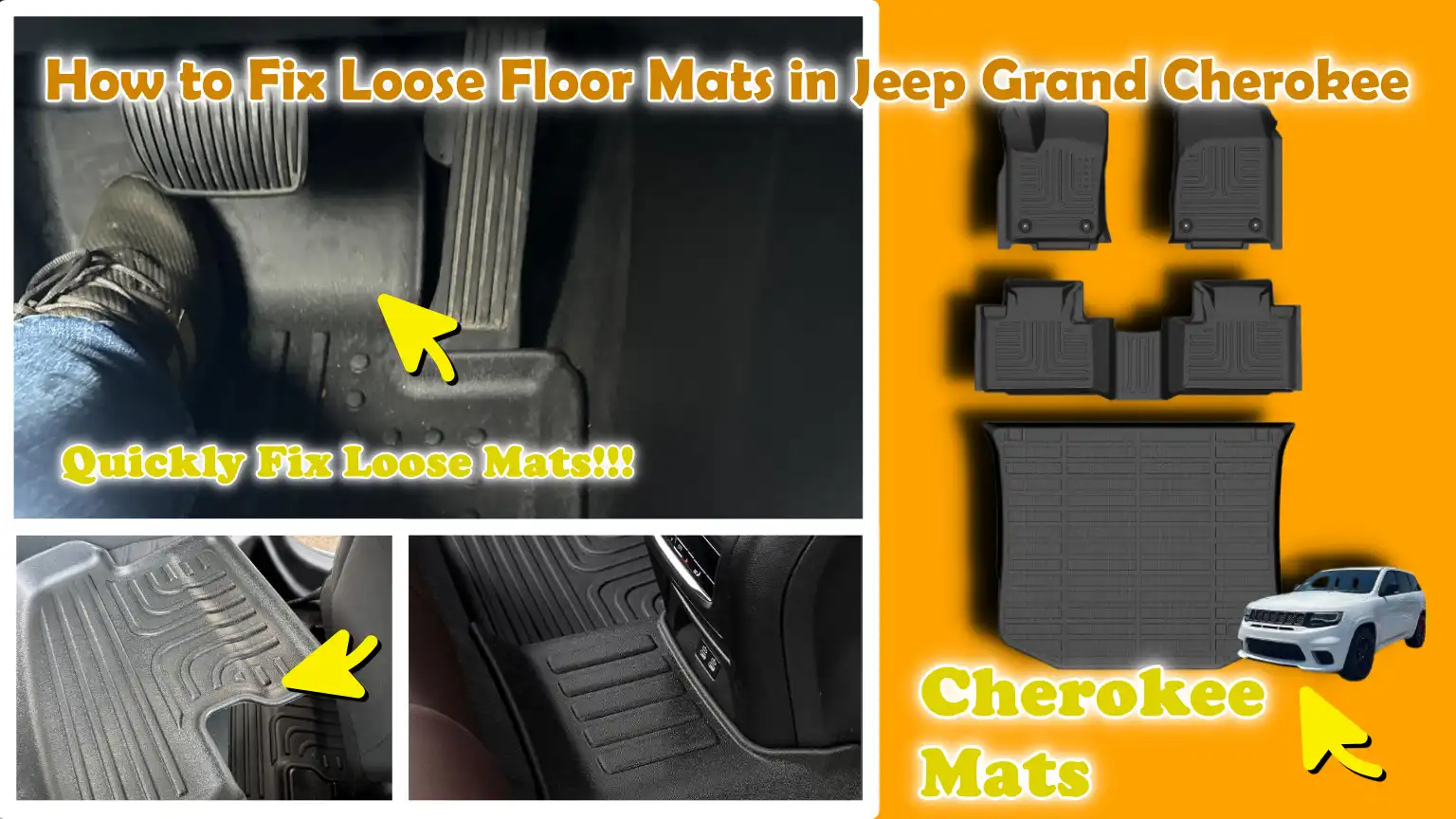
Having secured and 100% stable floor mats are the essential to keep your safety and comfort intact, otherwise a loose floor mat literally have chances to slide under the pedals and that creates a serious driving hazard.
So, if the floor mat is sliding around or bunching up then it can interfere with the accelerator, brake or clutch pedals, that increases the risk of possible accidents, specifically in the emergency situations.
But, many Jeep Grand Cherokee owners actually face this very often, as sometimes they are not fit perfectly, hooks or clips can wear out over the time or doesn’t installed it with the proper method.
As well as, it is important to secure floor mats as it not only prevents accidents but also provide much needed protection to your vehicle’s interior from all kinds of dirt, spills and wear as well.
And, in this guide you’ll learn How to Fix Loose Floor Mats in Jeep Grand Cherokee, so that you can learn practical solutions such as: having OEM clips, anti-slip pads, trimming or replacing mats with the high-quality, custom-fit options.
Understand, Why Floor Mats Become Loose?
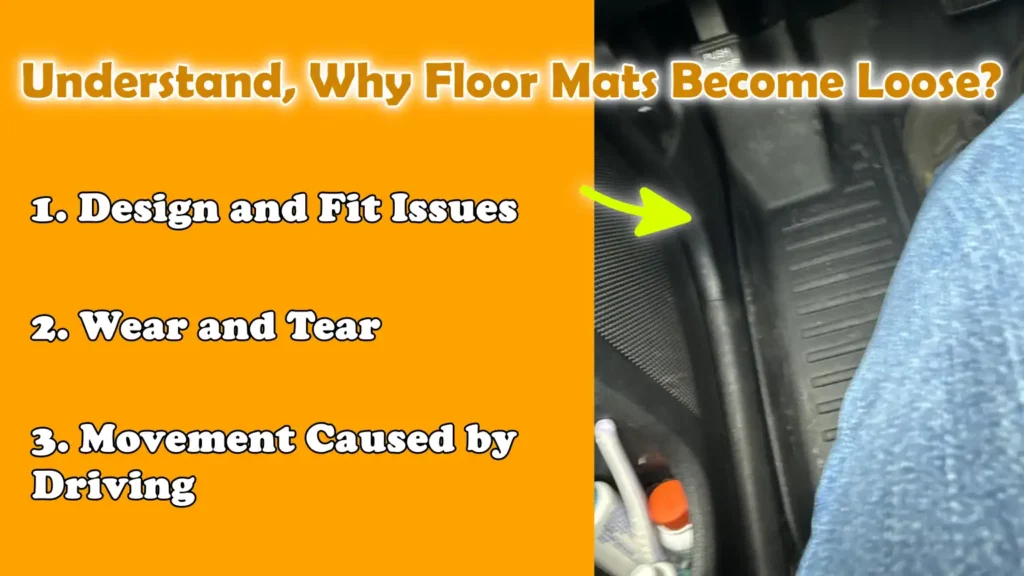
Loose floor mats are a common issue in the Jeep Grand Cherokee, impacting both safety and comfort while driving.
Understanding why mats become loose helps owners avoid hazards, protect the vehicle’s interior and maintain an optimal driving experience.
Mats can shift or slide out of place for various reasons, including design flaws, wear and tear and the manner in which the vehicle is used.
Identifying the root cause of the problem is the first step toward finding a reliable and long-lasting solution.
1. Design and Fit Issues
A primary reason for loose mats is their design and fit.
Generic floor mats, designed to fit a wide range of vehicles, often do not align precisely with the specific contours of the Jeep Grand Cherokee’s floorboard.
Due to this improper fit, they may shift or bunch up, particularly in the area surrounding the pedals.
OEM (Original Equipment Manufacturer) mats, which are designed specifically for Jeep models, feature precise dimensions and anchor points that securely hold them in place.
Choosing the right type of mat is crucial to mitigate the issue of slipping and to prevent potential accidents caused by mats interfering with vehicle controls.
2. Wear and Tear
Over time, floor mats naturally begin to deteriorate, causing their grip to loosen.
Repeated contact with footwear can cause the edges of the mats to curl, or their hooks and clips may break after prolonged use.
Once these fastening points become compromised, the mats lose their stability and can slide around while the vehicle is in motion.
Even high-quality mats eventually begin to show signs of wear and tear; therefore, it is crucial to inspect them regularly to identify signs of damage and ensure that the mats do not pose a safety risk.
3. Movement Caused by Driving
Daily driving contributes significantly to floor mats shifting out of place.
Due to the pressure exerted by the feet on the accelerator, brake and clutch pedals, mats can gradually slide from their original position if they are not properly secured.
Sudden or forceful foot movements, particularly when braking or accelerating, as it can cause the mats to bunch up beneath the pedals.
This issue is more likely to occur in vehicles that lack a secure anchoring system; furthermore, improper placement or adjustment of the mats can exacerbate this problem.
Ensuring that the mats are properly secured using clips, fasteners, or anti-slip pads can significantly mitigate such movement.
How to Identify the Type of Loose Mat
Before attempting to fix loose floor mats in a Jeep Grand Cherokee, it is essential to identify the specific type of mats you are dealing with.
Understanding whether the mats are Original Equipment Manufacturer (OEM) or aftermarket, inspecting their anchor points and assessing their overall condition can help you determine the best method for securing them properly.
Taking the time to check these details ensures that any adjustments or repairs you make will be both safe and durable.
1. Check Whether the Mats Are OEM or Aftermarket
The first step in resolving the issue of loose mats is determining whether they are OEM mats or aftermarket products.
OEM mats are designed specifically for the Jeep Grand Cherokee and feature precise dimensions, integrated anchor points and durable materials that fit the vehicle’s floor perfectly.
Aftermarket mats, on the other hand, are often manufactured to fit a variety of vehicles and may not align correctly with the contours of the floor or the existing clips.
Identifying the type of mat helps you decide whether minor adjustments will suffice or if it is necessary to replace the mats with a set that fits properly.
2. Inspect the Anchor Points
Anchor points are crucial for keeping mats securely in place and inspecting them is a critical step when troubleshooting loose mats.
Check for retaining clips, hooks, or grommets designed to keep the mats stable.
Over time, these components can wear out, bend, or break, causing the mats to shift out of position while driving.
By assessing the condition and placement of these anchor points, you can reposition, replace, or reinforce them, thereby ensuring that the mats remain firmly anchored beneath your feet.
3. Assess the Condition of the Mats
The overall condition of the mats is another crucial factor.
Look for signs of wear and tear such as: curling edges, cracks, discoloration, or fraying threads.
Mats that are excessively worn or damaged are more prone to shifting, even if they have been installed correctly.
Assessing the condition of the mats helps you determine which course of action, repair, replacement, or a complete overhaul, is the most effective and safe option for keeping your Jeep’s interior secure and clean.
Effective Solutions for Securing Loose Floor Mats
To secure loose floor mats in a Jeep Grand Cherokee, it is essential to understand the type of mats involved, the location of their anchor points and the available remedies.
The appropriate approach depends on whether the mats are OEM (Original Equipment Manufacturer) products, aftermarket accessories, worn out, or simply improperly installed.
Adopting the correct method ensures that the mats remain securely in place, do not interfere with the pedals and protect your vehicle’s interior from dirt and damage.
1. Re-engage OEM Clips or Hooks
For mats equipped with OEM clips or hooks, the first step is to locate the existing attachment points within the Jeep Grand Cherokee.
These clips are designed to hold the mats firmly in place and prevent them from shifting while the vehicle is in motion.
Once located, the mats should be properly aligned and fitted into these attachment points.
Re-engaging the mats in this manner restores their original stability, ensuring they remain in their designated position, thereby reducing the risk of pedal interference and enhancing overall safety.
2. Use Floor Mat Retainers or Fasteners
If your mats do not feature pre-installed hooks, floor mat retainers or fasteners can serve as an effective solution.
Clip-on fasteners secure the mats to the floor in areas where standard clips are absent, providing additional stability.
Velcro-based solutions are also available; these adhere the mats firmly to the vehicle’s floor without requiring any permanent modifications to the vehicle itself.
These fasteners are particularly useful for aftermarket mats, which may not fit perfectly and may require additional support to prevent them from sliding.
3. Anti-Slip Pads or Grips
Placing anti-slip pads or rubber grips underneath the mats is a simple yet highly effective method for preventing them from shifting out of place.
These pads create friction between the mat and the vehicle’s floor, ensuring that the mat remains firmly anchored, even under significant foot pressure.
A major advantage of using anti-slip pads is that they require no permanent modifications to the vehicle, making them a convenient and cost-effective solution for both OEM and aftermarket mats.
4. Trim or Adjust Mats for a Proper Fit
In some instances, mats, particularly aftermarket options, may be slightly oversized relative to the dimensions of the vehicle’s floor.
Mats can be properly fitted through custom trimming tailored to your specific needs, thereby minimizing the likelihood of edges curling or the mat bunching up in the middle.
Properly adjusting the mats ensures that they cover the entire floor area, remain securely in place and do not interfere with the pedals.
By carefully trimming the mats to match the contours of the floor, you can ensure that even non-OEM mats function safely and effectively.
Learn, How to Install Floor Mats in Jeep Grand Cherokee so that you don’t have to struggle with fitment or adjustment issues.
5. Replace Old or Worn-Out Mats
When mats become worn, damaged, or lose their original shape, replacing them is often the best course of action.
Investing in OEM Jeep Grand Cherokee mats guarantees a perfect fit, precise anchor points and long-lasting durability.
For those seeking premium materials or additional features such as: deep grooves to trap dust and moisture, high-quality, custom-fit mats are also available.
Replacing old mats not only restores stability but also enhances the overall appearance and cleanliness of your vehicle’s interior.
If your mats are old enough to be replaced, then you can check out our proper guide about Best Floor Mats for Jeep Grand Cherokee, so that you can choose that works and fits perfectly.
What are the Safety Steps to Fix Loose Floor Mats in Jeep Grand Cherokee
Ensuring the security of your Jeep Grand Cherokee’s floor mats is crucial; if the mats are not properly installed, it can directly impact driving performance and increase the risk of accidents.
By following a few simple precautions, you can avoid pedal interference, maintain control over your vehicle and keep both the driver and passengers safe.
Plus, there’s analysis of safety defect investigations over the multiple decades that indicates that floor mat having interference with vehicle controls in a documented safety concern Between 1960 and recent years, as millions of vehicles have been recalled due to the pedal entrapment issues which is related to the floor mats, as some of the highest volumes involves pedal interference, so this historical context shows that the problem is not unique to any single model and that reinforces why vehicle owner must understand that proper mat fitment and regularly maintain secure floor mats in place.[¹]
1. Ensure Mats Do Not Interfere with Pedals
One of the most critical safety considerations is ensuring that the floor mats never interfere with the accelerator, brake, or clutch pedals.
Even a slight shift in the mat’s position can prevent a pedal from fully returning to its original resting place, potentially leading to unintended acceleration or delayed braking.
Properly installed mats, particularly those that are OEM or custom-fit, are less likely to shift, thereby ensuring that the pedals operate smoothly and safely while driving.
2. Check Mat Positioning After Cleaning or Driving
The positioning of floor mats should always be checked after cleaning, vehicle maintenance, or a long journey.
Mats can become dislodged when removed for washing or due to the pressure exerted by feet during driving.
By ensuring that the mats are firmly secured to their anchor points and lie perfectly flat on the vehicle’s floor, drivers can prevent sudden shifts that could obstruct pedal operation.
Regular checks also help identify curled edges or improperly fitted mats, thereby mitigating safety risks.
3. Replace Mats Immediately If Hooks Are Broken or Worn
Worn, broken, or missing hooks and clips compromise the mats’ ability to remain securely in place.
Mats with damaged anchor points are more prone to shifting or bunching up underfoot, thereby creating a potential hazard.
Promptly replacing defective mats or hooks restores stability and ensures that the floor mats effectively fulfill their safety function.
Utilizing high-quality OEM mats or certified custom-fit replacements guarantees proper fitment and secure anchoring, factors that are essential for long-term safety and comfort.
How to Maintain a Proper Fit Over Time
Proper maintenance of the floor mats in your Jeep Grand Cherokee is crucial for safety, comfort and longevity.
By adopting consistent care practices, drivers can ensure that the mats remain firmly in place, protect the vehicle’s interior and minimize the risk of pedal obstruction.
1. Regularly Clean the Mats and Anchor Points
Cleaning the floor mats and their anchor points is essential for preventing slippage and reducing wear and tear.
Dirt, dust and moisture can accumulate beneath the mats, reducing friction and allowing the mats to slide easily.
Regular cleaning also helps maintain the appearance and cleanliness of your Jeep’s interior.
Anchor points such as: hooks, clips, or grommets, should be wiped clean to ensure they are functioning correctly and securely holding the mats in place.
By keeping both the mats and anchors clean, you ensure a stable and safe driving environment.
Learn, How to Clean Jeep Grand Cherokee Floor Mats, so that you don’t have to deal with odor problems and fitment issues as well.
2. Avoid Using Mats from Other Vehicles That Do Not Fit Properly
Using mats designed for other vehicles is not recommended, as they often do not match the specific dimensions and contours of the Jeep Grand Cherokee’s floor.
Mats that are too large, too small, or incorrectly shaped can slide under the pedals, curl up, or bunch together, creating potential hazards while driving.
Choosing OEM mats, or high-quality, custom-fit mats designed specifically for your Jeep, ensures a perfect fit and reliable anchor alignment, thereby reducing the risk of the mats shifting out of place and enhancing overall safety.
3. Periodically Inspect for Wear and Tear
Floor mats naturally wear down over time and regular inspections are crucial to maintaining long-term safety.
Keep an eye out for signs of curling edges, cracks, fraying threads, or broken hooks and clips.
Worn-out mats are more prone to shifting unexpectedly, which can obstruct pedal operation and compromise driving safety.
Periodic inspections allow drivers to address these issues early on, by repairing or replacing the mats as needed.
By keeping a close watch on the condition of your mats, you ensure that they remain effective, secure and protective for the interior of your Jeep Grand Cherokee.
Conclusion – How to Fix Loose Floor Mats in Jeep Grand Cherokee
Now, you have clearly understood the important of having really stable floor mat, as it ensures your pedals responds exactly when needed.
Loose mats are not merely a minor nuisance, they can slide beneath the pedals, interfere with driving and, if left unaddressed, even lead to accidents.
By identifying the type of mats, checking anchor points and implementing solutions such as: re-engaging OEM clips, using anti-slip pads, trimming the mats for a proper fit, or replacing old ones, you can restore stability and safety to your vehicle’s interior.
Regular maintenance, including cleaning the mats and checking for signs of wear and tear, ensures that they remain firmly in place for years to come, thereby minimizing the risk of sudden slippage.
Adopting these practices not only enhances safety and convenience but also improves the cleanliness, longevity and overall driving experience of your Jeep’s interior.
Now, if you still have confusion related to this guide on How to Fix Loose Floor Mats in Jeep Grand Cherokee, then just comment that damn question.
Frequently Asked Questions
FAQ 1: Why do floor mats come loose in a Jeep Grand Cherokee?
Floor mats in a Jeep Grand Cherokee can come loose for several reasons. A common cause is the use of generic or aftermarket mats that do not fit the vehicle properly, increasing the likelihood of them sliding around. Over time, mats also undergo wear and tear such as: curling edges or broken clips and hooks that cause them to lose their ability to stay firmly in place. Daily driving habits such as: pressing down hard on the accelerator, brake, or clutch pedals, as it can also dislodge mats if they are not properly secured. Identifying the root cause of loose mats is the first step toward preventing accidents and ensuring that the mats remain securely in place.
FAQ 2: How can I tell if my floor mats are OEM or aftermarket?
To determine whether your floor mats are OEM (Original Equipment Manufacturer) or aftermarket, first look directly on the mats themselves for manufacturer branding, part numbers, or labels. OEM mats are designed specifically for the Jeep Grand Cherokee; they feature precise dimensions and come with pre-installed hooks or clips that anchor them in place. Aftermarket mats may lack these specific features and often have a generic shape that does not perfectly conform to the contours of the vehicle’s floor. Identifying the type of mats you have helps you decide whether you need to make adjustments, use additional fasteners, or replace the mats entirely to ensure proper safety and a secure fit.
FAQ 3: What is the safest way to fix loose floor mats?
The safest way to secure loose floor mats is to first fasten them properly using any existing OEM clips or hooks. If the mats lack hooks or the clips are damaged, they can be securely anchored using floor mat retainers or fasteners. Anti-slip pads or rubber grips placed underneath the mats provide additional stability without requiring any permanent modifications. For mats that are oversized or worn out, trimming them or replacing them with high-quality OEM or custom-fit mats that ensures that they remain firmly in place while driving. Always ensure that, once secured, the mats do not interfere with the operation of the pedals.
FAQ 4: Can I use floor mats from another vehicle in my Jeep Grand Cherokee?
Using floor mats from a different vehicle is not recommended, as they often do not match the precise shape and dimensions of the Jeep Grand Cherokee’s floor. If the mats do not fit correctly, they may bunch up, slide around, or get lodged beneath the pedals, creating a safety hazard. If you wish to use aftermarket mats, it is crucial to ensure that they are specifically designed for your Jeep model and feature the appropriate anchoring options for proper installation. Choosing mats made specifically for your vehicle ensures a proper fit and minimizes the risk of accidents or damage to the vehicle’s interior.
FAQ 5: How often should I inspect or maintain my floor mats?
It is advisable to inspect and maintain your floor mats regularly particularly after cleaning them or following long journeys. Inspect the mats for signs of wear and tear such as: fraying edges, curled corners, cracks, or broken hooks. Cleaning both the mats and their anchor points helps prevent the accumulation of dust or debris, thereby maintaining grip and eliminating the risk of slipping. Regular maintenance ensures that your mats remain securely in place, your vehicle’s interior stays protected and your driving experience remains both safe and comfortable. Promptly replacing worn-out or damaged mats is one of the most effective ways to prevent accidents.
FAQ 6: Are anti-slip pads effective for keeping floor mats in place?
Yes, anti-slip pads are highly effective for securely keeping floor mats in place. They create friction between the mat and the vehicle’s floor, ensuring that the mats do not slide, even with significant foot movement. Rubberized or textured pads can be placed underneath both OEM and aftermarket mats and they do not require any permanent modifications to the vehicle. Anti-slip pads offer a convenient and cost-effective solution for enhancing safety and stability while driving.
References:
[1] Fixated on Floor Mats
https://safetyresearch.net/fixated-on-floor-mats/
Hello Folks, Dean Shali here to help you out to solve the problems with your lovely vehicle, as i have lots of experience and knowledge about automotive industry as i woks directly with the customers and repair vehicles and i love to help the people to keep their cars safe and running smoothly.