
Written By: Dean Shali
Fact Checked By: Sabré Cook
Reviewed By: Tamara Warren
Without a doubt, rough shifting is really really uncomfortable but rather it is more of the dangerous side; and indeed that’s how your car gives you first warning of having bad transmission fluid with the dropped on the effectiveness.
Don’t overlook transmission fluid change, as it directly controls how smoothly your gears shift and how long your transmission literally lasts.
So, basically it works as a lubricant, coolant and the hydraulic fluid as well: which literally means that it reduces the friction, prevents overheating and helps to transfer the power inside the transmission system in balance.
But, because of the constant usage this fluid naturally breaks down and there’s heat, pressure and contamination from the metallic particles problems that can lead to serious problems such as: gear slipping, delayed shifting, overheating and if you ignore these symptoms then transmission won’t work at all.
Yes, there’s studies available in automotive maintenance that shows that the regular fluid changes can significantly extends the transmission life and that literally prevents repairs that can cost thousands of dollars, just because of having good fluid.
Most of the vehicle literally requires a transmission fluid changes with every 30,000 to 60,000 miles, but if you also drives in the heavy traffic, towing field or extreme weather conditions then you’ll have to shorten this time interval.
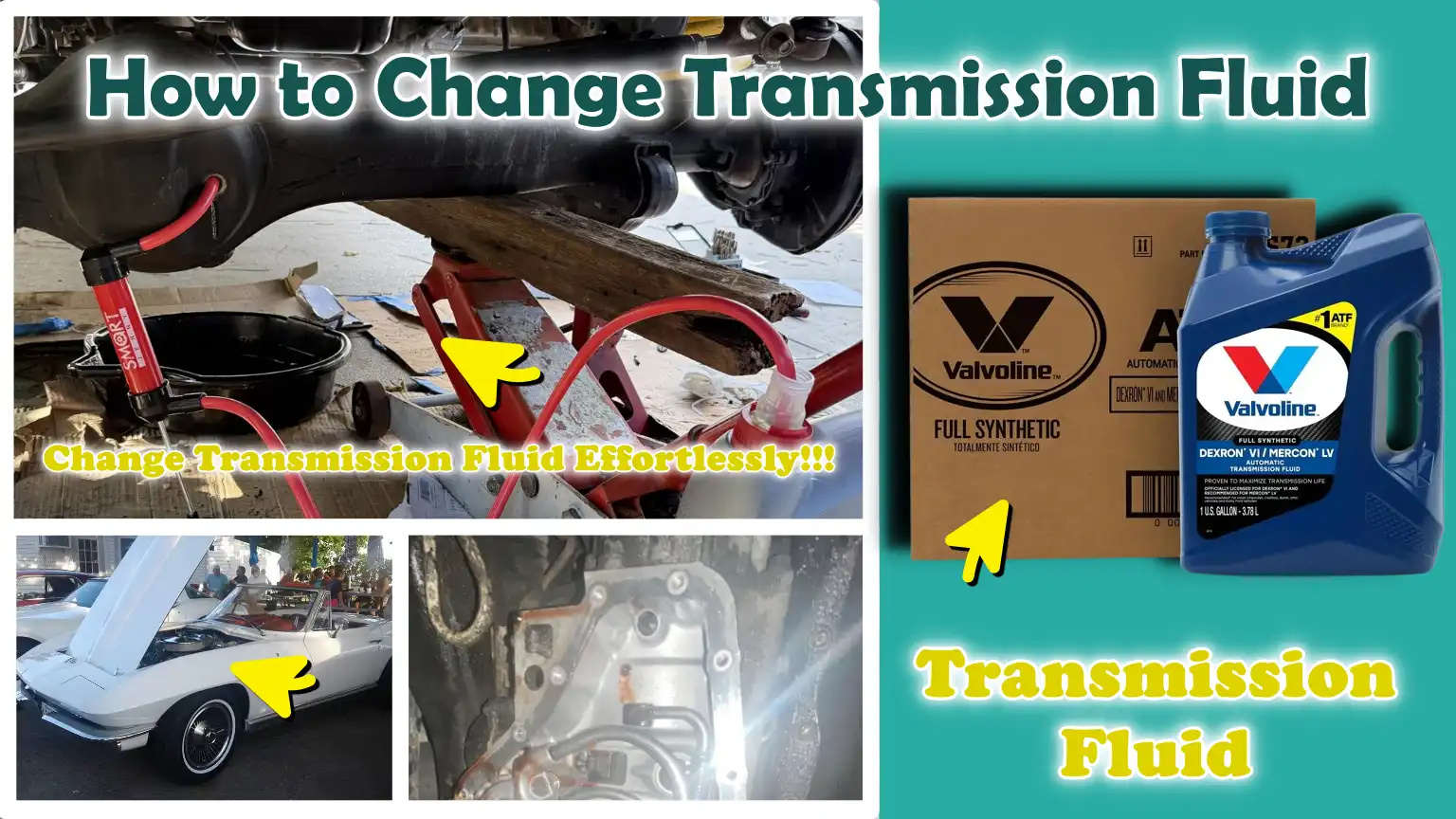
Now, in this guide you’ll learn easy method about How to Change Transmission Fluid, as after this guide you’ll know warning signs and why the fluid condition matters that much and there’s working methods as well that helps your way to perfectly working transmission system.
Understand: What is Transmission Fluid and Why is it Important?
Transmission fluid is a specialized type of liquid that helps your car’s transmission function correctly.
It acts as the lifeblood of your transmission system, facilitating gear shifts, transmitting power from the engine to the wheels and keeping everything cool, even under high stress.
Without this fluid, metal components would grind against one another, leading to severe damage very quickly.
1. The Role of Transmission Fluid – Lubrication, Cooling, Hydraulic Pressure
Transmission fluid performs three primary functions.
First, it lubricates all the moving parts inside the transmission to prevent them from wearing out prematurely.
Second, it helps keep the transmission cool by dissipating heat away from the metal components, a crucial task, as significant heat can be generated inside the transmission while the vehicle is in operation.
Third, it acts as a hydraulic fluid, generating the necessary pressure to assist with gear shifting and ensure the smooth operation of an automatic transmission.
All of these functions are vital to ensuring that your car runs safely and efficiently.
2. The Difference Between Clean and Dirty Fluid
Clean transmission fluid is typically bright red or pink in color, has a smooth consistency and possesses a slightly sweet scent.
It flows freely, allowing the transmission to operate without friction or overheating.
Conversely, dirty or old transmission fluid turns a dark brown or black color and may emit a burnt odor.
Over time, due to the accumulation of metal particles and debris, as well as degradation caused by heat, the fluid can become thick or gritty.
When the fluid becomes contaminated, it fails to provide adequate lubrication or cooling; furthermore, the hydraulic pressure required for gear shifting may diminish, leading to issues such as slipping gears, jerky shifting and delayed response.
3. Consequences of Neglecting Fluid Changes
Failing to change the transmission fluid can lead to serious and costly problems.
When the fluid is not replaced regularly, internal components experience accelerated wear, heat levels rise and the transmission may overheat or suffer complete failure.
Ultimately, this may necessitate expensive repairs or the replacement of the entire transmission unit.
Even minor negligence can result in issues such as shifting difficulties, strange noises, a burning odor and reduced fuel efficiency.
Regular maintenance, specifically checking and changing the transmission fluid, helps prevent these problems, ensures smooth gear shifting and extends the lifespan of your vehicle’s transmission system.
Signs That Shows You Need to Change Your Transmission Fluid
Transmission fluid is crucial for your car’s performance and knowing when to change it can save you from expensive repairs and help your vehicle run smoothly.
By recognizing these symptoms early on, you can take action before a major malfunction occurs and ensure that your transmission lasts for a long time.
1. Slipping Gears
The first sign indicating that your transmission fluid requires attention is slipping gears.
This occurs when the transmission fails to engage properly, causing the car to suddenly shift gears on its own.
The reason for gear slippage is that old or degraded fluid fails to maintain the precise hydraulic pressure necessary for shifting gears.
If left unaddressed, this leads to uneven wear on the gears, diminished vehicle performance and ultimately, total transmission failure.
2. Delayed Shifting
Delayed shifting is another significant symptom of poor transmission fluid.
You may notice that your car hesitates slightly before shifting gears, or responds sluggishly when you press the accelerator.
This delay is caused by fluid that has lost its lubricating and hydraulic properties, making it more difficult to actuate the transmission components properly.
Over time, delayed shifting can place excessive strain on the transmission, increase heat buildup and accelerate internal wear.
3. Burning Smell
A burning smell emanating from your vehicle is a serious warning sign that the transmission fluid is overheating or has degraded.
Transmission fluid can burn when it has become excessively old or degraded, or when the transmission is under excessive strain.
This odor is not merely unpleasant; it also signals that the fluid is no longer capable of protecting the transmission from friction and heat, thereby increasing the risk of severe internal damage and costly repairs.
4. Dark or Dirty Fluid Color
Transmission fluid should typically be bright red or pink and transparent.
When the fluid turns dark brown or black, or when visible particles are present within it, it indicates that it has become contaminated and is no longer functioning correctly.
Contaminated fluid loses its ability to lubricate, cool and maintain hydraulic pressure, which can lead to shifting difficulties, overheating and internal wear.
Regularly checking the fluid’s color is a simple way to determine when it needs to be replaced.
5. Strange Noises
Unusual noises emanating from the transmission such as: humming, buzzing, or knocking sounds, as it can also indicate that the fluid has aged or degraded in quality.
These sounds occur when the transmission’s internal components fail to receive adequate lubrication or cooling, resulting in friction and mechanical stress.
Ignoring these noises can lead to more serious mechanical issues and necessitate expensive repairs.
How Often Should You Change Your Transmission Fluid?
Changing your transmission fluid at the right time is one of the most crucial steps in ensuring your vehicle runs smoothly and avoiding costly repairs.
Regular fluid changes help maintain proper lubrication, hydraulic pressure and cooling, factors that protect your transmission from wear and overheating.
The frequency of these changes depends on several factors, including mileage, the type of transmission and the manufacturer’s recommendations.
1. General Mileage Guidelines – 30,000 to 60,000 Miles
For most vehicles, transmission fluid should be changed every 30,000 to 60,000 miles.
Vehicles driven primarily in city traffic, those that tow heavy loads, or those subjected to frequent stop-and-go driving may require more frequent fluid changes.
Adhering to these general mileage guidelines helps prevent the fluid from degrading, becoming contaminated, or losing its ability to properly lubricate and cool the transmission.
2. Differences Between Manual and Automatic Transmissions
Manual and automatic transmissions operate differently and this distinction affects how often their fluid needs to be changed.
Automatic transmissions utilize transmission fluid for both lubrication and hydraulic pressure, making them more sensitive to fluid quality.
Manual transmissions often use a thicker gear oil that does not degrade as quickly; consequently, the interval between fluid changes is typically longer.
Understanding these differences ensures that every type of transmission receives the specific maintenance required to guarantee its reliable operation and maximize its lifespan.
3. Manufacturer Recommendations
Vehicle manufacturers provide the most precise guidance regarding transmission fluid maintenance, as they are the ones who design the transmission systems and specify the type of fluid that should be used.
These recommendations can be found in your vehicle’s owner’s manual and often include information such as fluid change intervals based on mileage, recommended fluid types and specific considerations for severe driving conditions.
Adhering to the manufacturer’s instructions is the surest way to safeguard your transmission and preserve your vehicle’s warranty.
Tools
| Tool / Material | Why It Is Needed | How To Use It |
|---|---|---|
| Transmission Fluid – Correct Type for Your Vehicle | Keeps the transmission lubricated, cool and functioning properly. Using the correct type of fluid helps prevent damage and ensures smooth gear shifting. | Use a funnel to pour the fluid into the transmission via the dipstick tube or fill port. Always consult your owner’s manual to determine the correct type and quantity of fluid required. |
| Socket Wrench Set | Used to safely and easily remove the transmission pan bolts or drain plug. | Select the correct socket size, attach it to a wrench and turn it anti-clockwise to loosen the bolt. When reinstalling the pan, ensure that the bolts are securely tightened. |
| Drain Pan | Collects the old transmission fluid during the draining process, preventing spills and keeping the workspace clean. | Position it directly beneath the transmission pan or drain plug. Ensure the pan is large enough to hold the entire volume of fluid being drained. |
| Funnel | Facilitates the addition of new transmission fluid without spilling or wasting it. | Insert the funnel securely into the fill port or dipstick tube. Monitor the fluid level periodically while pouring. |
| Jack and Jack Stands | Safely lifts the vehicle, providing easy access to the transmission pan located underneath. | Use a jack to lift the vehicle, then place jack stands beneath a sturdy section of the frame to ensure the vehicle remains securely supported while you work. Never rely solely on the jack. |
| Gloves and Safety Glasses | Protects your hands from hot fluids and chemicals and shields your eyes from fluid splashes. | Wear gloves to avoid burns or skin irritation. Wear safety goggles to protect your eyes from fluid splashes while draining or refilling the transmission fluid. |
How to Ensure Safety Before You Actually Change the Transmission Fluid
You can change the transmission fluid yourself at home, but safety should always be your top priority.
Transmission fluid can become extremely hot while the car is running and working underneath the vehicle can be hazardous if proper precautions are not followed.
Knowing and adhering to safety measures will prevent accidents and make the entire process smoother and more efficient.
1. Allow the Engine to Cool Down
Before beginning any work, it is essential to allow the engine and transmission to cool down completely.
Hot fluid can cause severe burns and touching hot metal components can be dangerous.
Allowing the vehicle to cool for at least 30 minutes after driving ensures that the fluid and surrounding parts are at a safe temperature to touch.
2. Use the Right Lifting Equipment
Accessing the transmission pan often requires lifting the car off the ground.
Always use a reliable jack to lift the vehicle and securely support it using jack stands rated for your car’s weight.
Never rely solely on the jack, as it could fail and result in serious injury.
Using the correct lifting equipment ensures stability while working underneath the vehicle.
3. Work on a Level Surface
For the sake of both safety and accurate fluid measurement, it is crucial to work on a flat, level surface.
Working on a sloped or uneven surface increases the risk of the vehicle shifting or falling and can also lead to errors when checking fluid levels.
Before you begin, always park your car on a driveway or garage floor that is solid and level.
4. Wear Protective Clothing and Gear
Wearing protective clothing and gear is essential to prevent burns, skin irritation and eye injuries.
Gloves protect your hands from contact with hot fluids and chemicals, while safety goggles prevent fluid splashes from reaching your eyes.
Wearing appropriate clothing and closed-toe shoes while working around a car serves as an additional layer of protection.
How to Change Transmission Fluid – Beginner Friendly Steps
Changing your transmission fluid may seem daunting, but by following a clear, step-by-step process, it can be done safely and effectively right at home.
Understanding each step, and the reasoning behind it, helps prevent errors, ensures optimal fluid performance and extends the lifespan of your transmission.
This guide explains every part of this process in simple, easy-to-understand terms.
1. Locate the Transmission Pan or Drain Plug
The first step is to locate the transmission pan or drain plug underneath your vehicle.
The transmission pan is typically situated beneath the transmission and consists of a flat metal cover secured by bolts.
Some vehicles feature a drain plug, which allows the fluid to be drained without having to remove the entire pan.
Knowing the exact location is crucial, as it enables you to position the drain pan correctly and prevent the fluid from spilling.
If you are unsure of the precise location of the transmission pan or plug, consult your vehicle’s owner’s manual.
2. Drain the Old Transmission Fluid
Next, place a drain pan beneath the transmission pan or plug to collect the old fluid.
Gently remove the drain plug, or carefully loosen the bolts securing the pan.
Allow all of the fluid to drain completely into the pan.
Draining the fluid removes dirt, debris and metal particles that accumulate over time, a vital step in maintaining the health of your transmission.
Be patient, as it may take several minutes for all of the fluid to drain out.
3. Remove and Clean the Transmission Pan – If Applicable
If your vehicle features a removable transmission pan, remove it completely once the fluid has drained out.
Thoroughly clean the pan, removing any accumulated dirt, sludge, or metal shavings from the bottom.
Inspect the pan for any signs of damage and replace the gasket with a new one if necessary.
Cleaning and replacing the gasket ensures a proper seal, preventing fluid leaks after reinstallation.
4. Replace the Transmission Filter – If Applicable
Many vehicles are equipped with a transmission filter designed to trap contaminants before they can circulate through the transmission system.
Replacing the filter is crucial, as a clogged or dirty filter can restrict fluid flow, potentially leading to shifting issues or internal damage.
Install the new filter according to the manufacturer’s instructions, ensuring it fits securely and remains in place while the pan is being reinstalled.
5. Reinstall the Pan and Tighten the Bolts
Once the filter is in place and the pan has been cleaned, carefully reinstall the transmission pan.
Ensure that the new gasket is seated correctly to prevent any leaks.
Tighten the bolts gradually, using a criss-cross or alternating pattern to distribute the pressure evenly and prevent the pan from warping.
Proper tightening is essential; overtightening can damage the pan or bolts, while undertightening can result in fluid leaks.
6. Add New Transmission Fluid
After reinstalling the pan, use a funnel to add new transmission fluid through the dipstick tube or fill port.
Always use the specific type and quantity of fluid recommended in your vehicle’s owner’s manual.
Pour slowly and frequently monitor the fluid level, as overfilling or underfilling can lead to shifting difficulties or damage to the transmission.
Using the correct fluid ensures proper lubrication, cooling and hydraulic pressure.
7. Check the Fluid Level
After adding the new fluid, if your vehicle is equipped with a transmission dipstick, use it to check the fluid level.
Ensure that the vehicle is parked on level ground and follow the manufacturer’s instructions regarding whether the fluid should be checked while the engine is hot or cold.
The fluid level should fall within the specified range; it should be neither overfilled nor underfilled.
Maintaining the correct fluid level is crucial for smooth gear operation and for preventing overheating.
8. Take a Test Drive and Re-check
Finally, take your vehicle for a short test drive to allow the new fluid to circulate thoroughly throughout the entire transmission system.
Pay attention to how the gears shift and listen for any unusual noises.
After the drive, re-check the fluid level and inspect the area around the transmission pan for any leaks.
This step ensures that the transmission is functioning correctly and that the maintenance procedure was successful.
Know, About The Transmission Fluid Types
Selecting the correct transmission fluid is crucial for a vehicle’s health and performance.
Different types of transmissions and driving conditions require fluids with specific properties to ensure proper lubrication, cooling and hydraulic pressure.
Understanding the distinctions between fluid types helps prevent damage, facilitates smooth gear shifting and extends the lifespan of the transmission.
1. Automatic Transmission Fluid – ATF
Automatic Transmission Fluid, or ATF, is designed specifically for vehicles equipped with automatic transmissions.
It not only lubricates moving parts but also acts as a hydraulic fluid that enables smooth gear shifting.
ATF must maintain its viscosity even under high heat and pressure and it typically contains additives to prevent oxidation, foaming and wear.
Using the correct ATF is vital, as using the wrong type can lead to delayed shifting, gear slippage and severe internal damage.
2. Manual Transmission Fluid
Manual transmissions require a different type of fluid, often referred to as gear oil, which is thicker than ATF.
This fluid provides lubrication to the gears, bearings and synchronizers located inside the transmission.
Unlike automatic transmissions, manual gear systems do not rely on hydraulic pressure; therefore, the primary objective of this fluid is to reduce friction and heat.
Using the correct manual transmission fluid ensures smooth gear engagement and protects the transmission from wear and tear over time.
3. Synthetic vs Conventional
Transmission fluids are available in both synthetic and conventional varieties.
Traditional fluids are formulated from natural oils and perform well under normal driving conditions; however, they can degrade rapidly when exposed to extreme heat or heavy loads.
Synthetic fluids are designed to withstand high temperatures, oxidation and wear, making them more stable over time and ideal for demanding driving conditions.
Opting for synthetic fluids can extend the lifespan of the transmission, reduce maintenance frequency and help the system operate more efficiently.
4. OEM vs Aftermarket Fluids
OEM (Original Equipment Manufacturer) fluids are specifically designed by the vehicle manufacturer for a particular model, ensuring compatibility and optimal performance.
Aftermarket fluids are produced by third-party companies; while they may meet, or even exceed, OEM specifications, their quality can vary.
Using OEM or high-quality aftermarket fluids ensures that the transmission receives the necessary lubrication, cooling and hydraulic properties.
This minimizes the risk of leaks, gear slippage and premature wear, while also ensuring continued compliance with warranty terms.
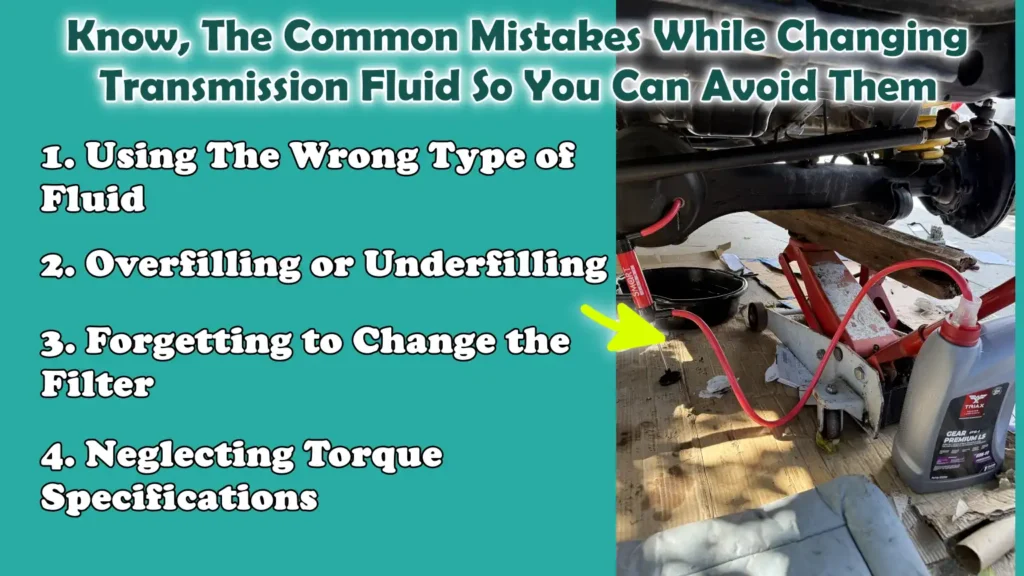
Know, The Common Mistakes While Changing Transmission Fluid So You Can Avoid Them
Even in a task as simple as changing transmission fluid, common mistakes can lead to complications.
Understanding these errors helps you safeguard your transmission, save money and ensure that your vehicle continues to run smoothly for years to come.
Exercising caution at every step can prevent costly repairs and maintain optimal gear performance.
Plus, there’s scientific testing on the transmission oil that actually shows that as the fluid ages and degrades, basically its physical properties such as: viscosity and friction behavior also changes in ways that increase the internal wear, so these changes literally makes it harder for the fluid to protect the metallic surfaces and maintain smooth gear interaction that is why you need to do regular fluid replacement as it literally improves the transmission health of your vehicle.[¹]
1. Using The Wrong Type of Fluid
One of the most serious mistakes is using the incorrect type of transmission fluid.
Automatic transmissions require ATF (Automatic Transmission Fluid) with specific viscosities and additives, whereas manual transmissions utilize a thicker gear oil.
Using the wrong fluid can result in reduced lubrication, slipping gears and damage to internal components.
Before adding any fluid to the system, always consult your vehicle’s owner’s manual to identify the correct fluid specifications.
2. Overfilling or Underfilling
Incorrect fluid levels constitute another common issue.
Overfilling the transmission can lead to foaming, leaks and increased pressure, while underfilling can result in insufficient lubrication and overheating.
In both scenarios, the risk of internal wear increases and gear-shifting performance is negatively impacted.
Checking and adding fluid gradually, while monitoring the dipstick, ensures that the fluid level remains within the range specified by the manufacturer.
3. Forgetting to Change the Filter
If your vehicle is equipped with a transmission filter, neglecting to replace it can also lead to problems.
A clogged or dirty filter restricts fluid flow, which can lead to shifting difficulties, engine overheating and accelerated wear on gears and bearings.
Whenever you replace the fluid, installing a new filter ensures a steady flow of clean fluid throughout the entire system and extends the lifespan of the transmission.
4. Neglecting Torque Specifications
Improperly tightening the transmission pan bolts is another common mistake.
Overtightening the bolts can warp the pan or damage the bolts themselves, while undertightening can result in leaks.
When reinstalling the pan, adhering to the torque specifications recommended by the manufacturer ensures a proper seal, prevents leaks and maintains the structural integrity of the transmission assembly.
Read More:
- How to Check Transmission Fluid
- How to Check Coolant Level
- How to Replace a Radiator Fan
- How to Fix a Coolant Leak
Let’s Now, Understand Cost of Changing Transmission Fluid
Understanding the cost of changing transmission fluid can help you plan your vehicle’s maintenance and avoid unexpected expenses.
Changing transmission fluid is an essential part of keeping your vehicle running smoothly and knowing what to expect financially allows you to choose whether to perform the task yourself or enlist the help of a professional service.
Costs vary depending on the type of vehicle, the type of fluid used and the service location; however, being informed ensures that you receive high-quality results without overspending.
1. DIY (Do It Yourself) Costs
Changing transmission fluid yourself can be a cost-effective option.
The primary expense involves purchasing the correct type and quantity of transmission fluid, which typically costs between $20 and $60, depending on your vehicle and whether you choose conventional or synthetic fluid.
Additional costs may include a new transmission filter, a gasket and basic tools, if you do not already own them.
Performing this task at home can save you hundreds of dollars compared to professional services; however, it is crucial to pay close attention to the fluid type, fluid levels and safety precautions to avoid causing damage.
2. Professional Service Costs
Having your transmission fluid changed by a professional mechanic or service center is more convenient, but it is typically more expensive.
Labor and service fees can drive the total cost of a standard fluid change into the $100 to $300 range.
The cost increases if the service includes replacing the filter, replacing the pan gasket, or performing a complete flush of the transmission system.
Professional service guarantees that the work is performed in accordance with the manufacturer’s instructions, a benefit that proves particularly helpful when you are unfamiliar with the process or wish to ensure compliance with warranty terms.
3. Factors Affecting Cost
Several factors influence the cost of a transmission fluid change.
The type of vehicle and transmission, the quantity and type of fluid required, the complexity of accessing the transmission pan and whether additional components such as: filters or gaskets, need to be replaced: all of these factors impact the final price.
Driving conditions such as: towing or heavy city traffic, as it can also affect the frequency with which fluid changes are required, thereby indirectly influencing overall maintenance costs.
Understanding these factors enables you to establish a realistic budget and choose an option that strikes the right balance between cost, convenience and reliability.
Difference Between DIY vs Professional Service of Changing Transmission Fluid
Deciding whether to change your transmission fluid yourself or hire a professional depends on your comfort level, the tools you have available and your understanding of the process.
Both options have their own advantages and disadvantages and knowing when to choose which option can save you time, money and potential damage to your vehicle.
By understanding these differences, you can make an informed decision that keeps your transmission in good condition and ensures your vehicle continues to run smoothly.
1. When to Do It Yourself
Changing transmission fluid yourself is best suited for car owners who feel comfortable working on their vehicles and who possess the necessary tools such as: a jack, jack stands, wrenches and a drain pan.
It is also an excellent option for those looking to save money and who are willing to carefully follow instructions.
DIY maintenance is ideal for routine fluid changes where the transmission is easily accessible, the specific type of fluid required is clearly identifiable and no complications arise such as: seized bolts or leaks.
By prioritizing safety and proper technique, performing this task yourself can be effective, cost-efficient and personally satisfying.
2. When to Visit a Mechanic
If you are unfamiliar with vehicle maintenance, lack the proper tools, or find it difficult to access your transmission, it is best to consult a professional mechanic.
Professional service is also recommended if the transmission requires a flush, the filter needs replacing, or the pan gasket is damaged.
A mechanic possesses the experience, equipment and expertise to complete this process safely and in accordance with the manufacturer’s instructions.
Enlisting the help of a professional ensures that the work is performed correctly, helps avoid errors that could damage the transmission and preserves any existing warranty coverage.
3. Pros and Cons
The primary advantage of DIY servicing is cost savings, as you pay only for parts and fluids, which can be significantly cheaper than the labor fees charged at a service center.
You also gain the experience of performing the work yourself and maintain complete control over the entire process.
The downsides include the risk of errors such as: using the wrong fluid, overfilling the system, or failing to tighten bolts correctly, which can lead to serious transmission problems.
Professional servicing offers reliability, convenience and a reduced risk of errors, although it comes at a higher cost and may require scheduling an appointment in advance.
By weighing these pros and cons, you can choose the option that best aligns with your budget, your skill level and the specific needs of your vehicle.
Bonus Tips for Better Transmission Performance
Keeping your transmission in top condition requires doing much more than just changing the fluid every now and then.
By adopting best practices and paying attention to the details, you can significantly extend the lifespan of your transmission, improve shifting performance and avoid costly repairs.
By understanding the factors that affect transmission health, you can take proactive steps to ensure that your vehicle runs smoothly and reliably.
1. Regular Maintenance Schedule
The most effective way to safeguard your transmission is to adhere to a regular maintenance schedule.
This involves checking fluid levels and condition at prescribed intervals, as well as changing the fluid in accordance with the manufacturer’s instructions.
Regular maintenance helps protect the transmission against wear, overheating and internal damage, ensuring that it remains properly lubricated and cooled.
Consistency in maintenance reduces the risk of sudden breakdowns and extends the overall lifespan of the transmission.
2. Avoid Aggressive Driving
Driving habits have a direct impact on transmission performance.
Aggressive driving such as: sudden acceleration, hard braking and frequently towing heavy loads, increases heat and stress on the transmission.
Excessive heat can cause the fluid to degrade rapidly, diminishing its effectiveness in lubricating and protecting the gears.
By avoiding aggressive driving and operating your vehicle gently, you minimize internal wear and help ensure that your transmission continues to function properly for years to come.
3. Monitor for Leaks
Transmission fluid leakage is a common issue that, if left unaddressed, can lead to serious complications.
By regularly inspecting the underside of your vehicle and the area surrounding the transmission pan, you can quickly detect signs of a leak.
Leaks cause the fluid level within the system to drop, potentially leading to problems such as slipping gears, overheating and accelerated component wear.
Promptly repairing any leaks ensures that the transmission remains fully lubricated and continues to function correctly.
4. Use High-Quality Fluid
Using high-quality transmission fluid, whether it is an OEM product or a trusted aftermarket alternative, is essential for maintaining optimal performance.
High-quality fluids provide superior lubrication, greater thermal stability and enhanced hydraulic efficiency, thereby reducing the risk of wear and overheating.
Choosing the correct type of fluid and avoiding low-quality alternatives ensures that the transmission operates smoothly, shifts gears reliably and enjoys a longer service life.
Compared to the potential costs of transmission repairs, investing in high-quality fluid represents a relatively minor expense.
Conclusion – How to Change Transmission Fluid
You should always keep you transmission fluid fresh and nice, as it literally plays critical role in protecting your gears, prevents overheating and ensures smooth and reliable driving experience as well.
Transmission fluid not only lubricates moving parts but also keeps the system cool and provides the necessary hydraulic pressure for proper gear function.
By following the correct procedures, using the appropriate type of fluid and observing safety precautions, you can extend the lifespan of your transmission, enhance shifting performance and prevent common issues such as gear slippage, overheating, or unusual noises.
Regular inspections, timely fluid changes and paying attention to warning signs help you maintain your vehicle’s reliability and functionality.
Now, that’s it from this guide on How to Change Transmission Fluid, so even now you can ask unsolved queries in comment section.
Frequently Asked Questions
FAQ 1: Can I change my transmission fluid myself?
Yes, if you have the right tools such as: a jack, jack stands, wrenches, a drain pan and a funnel, you can change your transmission fluid yourself. You also need to know the specific type and quantity of fluid required for your vehicle. Carefully following the instructions step-by-step, observing safety precautions and avoiding haste will ensure that the process is both safe and effective. Changing the fluid yourself can save money compared to professional service; however, to prevent injury, it is crucial to work on a level surface and wear safety gloves and goggles.
FAQ 2: How do I know if my transmission fluid needs to be changed?
There are several signs indicating that your transmission fluid may need to be changed. If gears are slipping or there is a delay in shifting gears, it may mean that the fluid is no longer providing the necessary hydraulic pressure. A burning smell, or the fluid becoming dark and dirty, suggests that the fluid has degraded and is no longer providing proper lubrication or cooling. Unusual noises coming from the transmission such as: humming or knocking sounds, as it can also serve as a warning that the vehicle requires maintenance or repair. Regularly checking the fluid and keeping an eye out for these symptoms can help prevent serious damage to the transmission.
FAQ 3: What happens if I overfill or underfill the transmission fluid?
Overfilling the transmission fluid can lead to foaming, leaks and excessive pressure, whereas underfilling can result in insufficient lubrication and overheating. In both cases, gears, bearings and other internal components can experience accelerated wear and tear, potentially leading to gear slippage, shifting difficulties, or severe damage to the transmission. Always carefully check the fluid level using the dipstick and add fluid gradually to maintain the correct level specified by your vehicle’s manufacturer.
FAQ 4: Should the transmission filter be replaced when changing the fluid?
Yes, if your vehicle is equipped with a transmission filter, replacing it is essential. The filter removes dirt and metal particles from the fluid, preventing them from circulating within the transmission and causing wear or damage. A clogged or dirty filter can restrict fluid flow, reduce hydraulic pressure and lead to shifting difficulties or overheating issues. Installing a new filter when changing the fluid ensures that the system receives clean fluid and operates correctly.
FAQ 5: Is synthetic transmission fluid superior to conventional fluid?
Synthetic transmission fluid is engineered to provide superior protection against heat, oxidation and wear, making it more stable than conventional fluid. It can extend the lifespan of the transmission, reduce maintenance requirements and help the system operate more efficiently particularly under heavy loads or in extreme temperature conditions. While conventional fluid performs adequately under normal driving conditions, synthetic fluid offers the benefits of enhanced protection and improved performance. Always consult with your vehicle’s service expert.
References:
[1] Influence of a transmission oil degradation on physico-chemical properties and tribological performance
https://www.sciencedirect.com/science/article/abs/pii/S0301679X23008721
Hello Folks, Dean Shali here to help you out to solve the problems with your lovely vehicle, as i have lots of experience and knowledge about automotive industry as i woks directly with the customers and repair vehicles and i love to help the people to keep their cars safe and running smoothly.